
Quick answer: resin bonded bridge cost has no universal figure. It depends on the number and position of missing teeth, supporting enamel, bridge design, material, laboratory work, diagnostics, temporary replacement, location, clinician expertise, payment system, and follow-up. Compare itemized written estimates only after an examination, and ask whether adjustments, rebonding, maintenance, and alternatives are included.
resin bonded bridge cost is often searched under several names: adhesive bridge cost, resin-retained bridge cost, Maryland bridge cost, or simply the price of a bonded bridge. These terms usually describe a fixed false tooth supported by one or more thin retainers bonded mainly to the enamel on the back of adjacent teeth. Unlike a conventional bridge, it often requires little or no removal of healthy tooth structure.
That conservative design can make an adhesive bridge an appealing option for a carefully selected gap, especially when the neighboring tooth is largely intact. It does not mean every missing tooth can be restored this way or that every quote covers the same work. The number of retainers, material, laboratory technique, bite, space, temporary tooth, diagnostic records, and future maintenance can all alter the estimate.
This guide explains resin bonded bridge cost without inventing a universal fee or presenting a remote diagnosis. Pricing and public dental systems vary by country, city, clinic, and date. Official UK patient guidance reviewed on August 22, 2026 confirms that private dental prices vary between practices and that patients should receive clear cost information. Your dentist must first determine whether an adhesive bridge is clinically suitable.
1. What is a resin-bonded bridge?
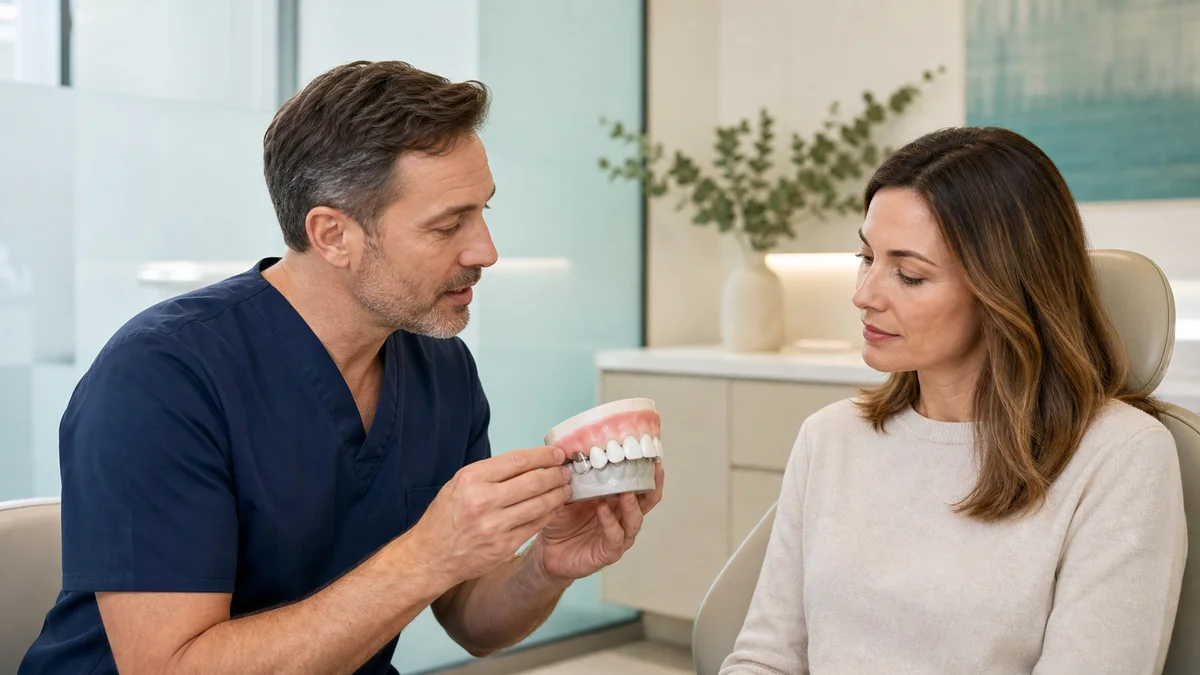
A resin-bonded bridge replaces a missing tooth with an artificial tooth, called a pontic, connected to a thin wing or retainer. The retainer is bonded to an adjacent supporting tooth with a dental resin cement. It is also called a resin-retained, adhesive, or Maryland bridge, although material and design details differ. The bridge remains fixed in the mouth and is not intended to be removed by the patient.
Leeds Teaching Hospitals describes adhesive bridges as using a small metal wing bonded to the back of a neighboring tooth, with very little or no drilling in many cases. UCLH similarly notes that adhesive bridges depend mainly on special cement and require minimal, if any, tooth preparation. Modern designs may use metal, ceramic, fiber-reinforced, or other laboratory materials, so resin bonded bridge cost must be linked to the exact case and clinician’s judgment.
Understanding the restoration is essential to interpreting resin bonded bridge cost. A quote for a chairside temporary tooth is not the same as a laboratory-made definitive bridge. A one-wing design is not identical to a multi-unit or two-retainer design. Ask the dentist to name the proposed design, supporting tooth, material, and number of replacement teeth.
2. Why resin bonded bridge cost cannot be a single online price
Online figures often omit the clinical assessment and assume one uncomplicated missing front tooth. In practice, resin bonded bridge cost may include examination, radiographs, photographs, a digital scan or impression, diagnostic models, occlusal analysis, shade selection, laboratory design, try-in, bonding, bite adjustment, review, and maintenance instructions. A patient who needs gum treatment, orthodontic space correction, or caries management will have a different pathway.
Location changes overhead, laboratory pricing, taxes, regulation, and the way fees are displayed. Public systems and insurance benefits create another layer. In England, current NHS information places bridges within Band 3 treatment when clinically necessary and available under the NHS course of care; private prices remain practice-specific. That public charge structure should not be used as a private international price for a particular adhesive bridge.
A responsible answer to resin bonded bridge cost is therefore an itemized range after an examination, not an anonymous promise. The General Dental Council says a written treatment plan should state the proposed treatment, provide a realistic indication of cost, and clarify which elements are NHS or private when care is mixed.
3. The 15 main factors that shape an estimate
The following factors usually explain why resin bonded bridge cost differs between patients and practices:
- Number of missing teeth: Replacing one small tooth is different from a longer span.
- Tooth position: Front and back teeth experience different loading and aesthetic demands.
- Condition of the supporting tooth: Enamel quantity, fillings, cracks, shape, and alignment affect bonding.
- Bite and available space: Heavy contacts or limited clearance may require design changes or another option.
- Bridge design: One retainer, two retainers, cantilever, or multi-unit arrangements require different planning.
- Material: Metal-ceramic, all-ceramic, or other options differ in laboratory technique and indication.
- Diagnostic records: Radiographs, photographs, scans, models, and bite records may be necessary.
- Tooth preparation: Some cases need no drilling; others need conservative enamel preparation.
- Laboratory complexity: Shade matching, framework design, and individual characterization take time.
- Temporary replacement: A removable or bonded temporary tooth may be required while the bridge is made.
- Foundation care: Gum, decay, root-canal, or orthodontic treatment may need to come first.
- Clinician and laboratory expertise: Case planning and technical execution influence the service provided.
- Geography and practice setting: Local operating and regulatory costs vary.
- Payment pathway: Private care, public care, insurance, membership, or financing use different rules.
- Aftercare: Reviews, adjustments, cleaning support, rebonding, and remake policies may be priced differently.
A lower resin bonded bridge cost may exclude parts that another quote includes. A higher estimate is not automatic proof of better treatment. Compare the clinical design, materials, records, temporary provision, follow-up, and responsibility for complications on the same basis. That like-for-like comparison makes resin bonded bridge cost more useful than a headline fee.
4. What should an itemized quote include?
An itemized resin bonded bridge cost estimate should make the planned pathway understandable before you consent. It may include several of the following items, depending on need:
- Consultation, oral examination, and written treatment plan;
- Necessary radiographs or other diagnostic records;
- Photographs, impressions, or digital scans;
- Diagnostic model, wax-up, or trial smile where indicated;
- Treatment of active decay or gum disease before bridgework;
- Orthodontic or restorative space correction if required;
- Temporary tooth replacement during laboratory production;
- Laboratory fee, bridge material, shade matching, and customization;
- Try-in, adhesive bonding, finishing, and bite adjustment;
- Initial review, hygiene instruction, and planned maintenance;
- Terms for debonding, repair, rebonding, or remake.
Ask whether the quoted amount is an estimate or a fixed total for the stated plan, what findings could change it, and when you will be told about a change. Avoid interpreting the lowest headline resin bonded bridge cost as the total until these components are clear. Costs must be discussed before treatment, and changes should be agreed rather than appearing only at the final visit.
5. Suitability changes value as much as price
A treatment can be inexpensive yet poor value if it is not suitable for the bite or supporting tooth. Therefore resin bonded bridge cost begins with suitability, not a sales price. Adhesive bridges often perform best when there is adequate enamel for bonding, favorable tooth alignment, manageable loading, good oral hygiene, and a short replacement span. The space and artificial tooth must be shaped so they can be cleaned. The patient’s expectations about appearance, longevity, and maintenance must also be realistic.
Factors that may complicate suitability include a heavily restored or poorly positioned supporting tooth, active gum disease, extensive decay, limited enamel, an unfavorable bite, severe grinding or clenching, a long gap, insufficient space, or unrealistic aesthetic expectations. None of these can be confirmed from a price list. A dentist may recommend a different bridge design, implant, removable denture, orthodontic space closure, or accepting the space.
For that reason, resin bonded bridge cost should be considered only after diagnosis and options. Cambridge University Hospitals explains that bridge choice depends on the space, available tooth structure, bite, and tooth-nerve status. A conservative option is valuable when it preserves healthy tissue, but conservative does not mean risk-free or permanent.
6. Resin bonded bridge cost versus a conventional bridge
A conventional bridge usually requires more removal of tooth tissue because the supporting tooth or teeth receive crown-like retainers. It can be appropriate when adjacent teeth already have large restorations or crowns. An adhesive bridge often preserves more enamel, which may reduce biological intervention, but it may be more prone to debonding in some situations.
The comparison should not stop at the initial resin bonded bridge cost. Include the condition of the neighboring teeth, risk to the tooth nerve, likelihood and complexity of repair, cleaning, appearance, expected loading, and what would happen if the restoration fails. Leeds Teaching Hospitals notes that adhesive bridge debonding is a common complication and may often be managed by cleaning and rebonding, although individual situations differ.
A conventional bridge quote may include multiple crowns and more preparation, while an adhesive bridge may involve a technically demanding framework and bonding procedure despite less drilling. The cheapest first step is not necessarily the lowest lifetime resin bonded bridge cost, and a higher initial fee does not guarantee longer service.
7. Resin bonded bridge cost versus a dental implant
An implant-supported crown does not rely on an adjacent tooth, but it involves surgery, healing, sufficient bone and soft tissue, implant components, and long-term maintenance. Bone grafting or other preparatory procedures may be needed. Treatment can take longer and has a different risk profile. The resin bonded bridge cost pathway is non-surgical and can often be completed more quickly, but it depends on a neighboring tooth and adhesive retention.
When comparing implant fees with resin bonded bridge cost, make the scopes equivalent. An implant estimate may separate removal, graft, implant body, abutment, temporary tooth, final crown, imaging, sedation, and reviews. A bridge estimate may combine laboratory and bonding stages. Compare total pathways, not a single component advertised as “implant” or “bridge.”
Clinical priorities matter more than price alone. UCLH patient information describes adhesive bridges as often preferred for young patients with missing teeth because they can require little tooth preparation. Implant timing can depend on growth, bone, tissue, and other factors. Only an individualized evaluation can balance these options.
8. Resin bonded bridge cost versus a removable denture or no replacement
A removable partial denture can replace one or several teeth and may be easier to alter if more teeth are lost, but it must be removed and cleaned and may feel bulkier. It has its own maintenance, adjustment, and replacement needs. Accepting the space may be reasonable in selected areas when appearance, function, tooth movement, and bite are not problematic.
Use this decision table to compare more than resin bonded bridge cost:
| Option | Typical support | Main planning advantage | Cost questions to ask |
|---|---|---|---|
| Resin-bonded bridge | Bonded mainly to enamel on an adjacent tooth | Often minimal tooth preparation and fixed replacement | Material, laboratory, temporary tooth, rebonding, remake |
| Conventional bridge | Crown-like retainers on prepared neighboring teeth | May suit teeth already heavily restored | Number of units, core treatment, nerve risk, maintenance |
| Implant-supported crown | Implant placed in bone | Does not use the adjacent tooth for support | Surgery, grafting, components, temporary tooth, reviews |
| Removable partial denture | Teeth and/or oral tissues | Can replace several teeth and may be modifiable | Material, adjustments, relines, repairs, replacement |
| Orthodontic space closure | Movement of existing teeth | May avoid a prosthetic tooth in suitable cases | Full orthodontic plan, retention, reshaping, duration |
| No replacement | No prosthesis | Avoids treatment where the space is acceptable | Monitoring and future consequences |
9. Materials and laboratory choices
Material is another major resin bonded bridge cost variable because it affects aesthetics, framework thickness, bonding protocol, laboratory technique, and indication. Traditional resin-retained bridges often use a metal retainer with a tooth-colored pontic. Some contemporary cases use ceramic or other materials. A material that is highly aesthetic in one position may not provide the best design in another.
Ask whether resin bonded bridge cost includes a technician’s individual shade characterization, digital design, try-in, modification, and remake if the laboratory result does not meet agreed specifications. “Metal-free” should not automatically be interpreted as clinically superior, and “metal wing” does not automatically mean the bridge will be visible. The location, enamel, bite, and smile line influence the decision.
The laboratory should work from the dentist’s prescription and clinical records. A technician manufactures the restoration; the dentist examines, diagnoses, prepares if necessary, tries in, bonds, adjusts, and follows the patient. Direct-to-consumer laboratory treatment that bypasses clinical assessment can miss decay, gum disease, bite risk, or unsuitable support.
10. Appointment stages and where fees arise
A straightforward resin bonded bridge cost pathway may begin with examination and records, followed by planning and any required pre-treatment. The dentist then prepares the supporting enamel if indicated and takes an impression or digital scan. A laboratory makes the bridge. At a later visit the dentist assesses fit, appearance, contacts, and bite before bonding it. A review may be scheduled after placement.
If the bridge does not fit, the shade is not acceptable, or the bite requires redesign, additional laboratory work may be needed. A clear resin bonded bridge cost estimate explains whether routine modifications are included. It should also identify fees that belong to independent services, such as specialist consultation, orthodontics, or treatment of disease discovered during assessment.
Some patients need a temporary replacement while the bridge is being fabricated; others can manage without one. A temporary tooth may affect the gum shape or space and must not compromise bonding surfaces. Ask how it is made, worn, cleaned, and priced.
11. Public care, insurance, and private pricing
In England, official NHS guidance groups clinically necessary bridges within Band 3. The current public patient charge is set nationally for a course of treatment, not as a private per-unit price for every bridge design. Availability, clinical necessity, and local service capacity matter. The NHS page also advises that private alternatives, risks, benefits, and costs can be discussed with the dentist.
Private resin bonded bridge cost varies by practice. The UK Competition and Markets Authority states that private dental prices differ between practices and recommends understanding what you will pay. Elsewhere, dental insurance may classify a bridge as a major restorative service, apply a deductible or coinsurance, use an annual maximum, restrict networks, or require preauthorization. The brand name alone does not prove coverage.
Before relying on insurance, ask the practice for procedure details and the insurer for a written pre-treatment estimate. Confirm waiting periods, missing-tooth clauses, frequency limits, least-expensive-alternative rules, network status, and remaining benefit. An insurer response is usually an estimate, not a clinical recommendation or unconditional payment guarantee.
12. What makes a quote transparent?
A transparent resin bonded bridge cost quote connects money to a named clinical plan. It identifies the missing tooth, supporting tooth or teeth, bridge design, material, private or public status, included records, temporary provision, laboratory work, bonding appointment, reviews, and exclusions. It also states what could change after examination or during treatment.
Use these questions before consenting:
- Why is a resin-bonded bridge suitable for my tooth, enamel, space, and bite?
- Which tooth will support it, and will any tooth structure be removed?
- Is the design one-wing or multi-retainer, and why?
- What material and laboratory process are planned?
- Are examination, imaging, scans, temporary teeth, and reviews included?
- What alternatives are reasonable, including no replacement?
- What is the main failure mode, and what happens if the bridge debonds?
- Are rebonding, repair, or remake included for any period, and what exclusions apply?
- How will insurance or public funding be confirmed?
- Will I receive a written treatment plan and updated estimate before changes?
13. Debonding, repair, and lifetime cost
The most familiar complication of an adhesive bridge is loss of bond. It may become mobile or come away. Sometimes it can be cleaned and rebonded, but the dentist must check the bridge, enamel, bite, caries, and cause before reuse. A patient should not glue it back with a household adhesive; this can harm tissues, alter fit, and make professional rebonding more difficult.
Long-term resin bonded bridge cost may therefore include unscheduled assessment, rebonding, repair, polishing, or eventual replacement. Ask how the practice handles these events and whether a service policy is conditional on reviews or protective measures. Do not assume “guarantee” means every future event is covered; obtain any terms and exclusions in writing.
A bridge that repeatedly debonds may need a design review rather than repeated cementation alone. Changes in bite, supporting tooth, oral habits, or the framework can matter. The appropriate response requires examination, and no article can predict an individual restoration’s lifespan.
14. Daily care protects both the bridge and its value
Protecting long-term resin bonded bridge cost value starts with daily care. Brush the bridge and supporting tooth with fluoride toothpaste as advised. The artificial tooth does not decay, but the supporting tooth can. Plaque can also inflame the gum around and beneath the pontic. Your dentist or hygienist may demonstrate floss threaders, super floss, interdental brushes, or another method suited to the space.
Avoid testing the bridge with hard objects. Tell the dentist if it feels loose, the bite changes, food persistently traps, the gum bleeds, or pain develops. Do not delay assessment simply because a rebonding fee might affect resin bonded bridge cost; an early review may prevent more complex damage.
- Attend the review schedule recommended for your caries and gum risk.
- Clean beneath the false tooth and around the supporting enamel every day.
- Seek advice if the bridge moves, fractures, chips, or feels high in the bite.
- Discuss clenching or grinding and whether any protective strategy is appropriate.
- Keep laboratory and material records if you move or receive care elsewhere.
15. Planning treatment away from home
When comparing clinics in another city or country, include travel, accommodation, records, a temporary tooth, possible laboratory revision, and access to aftercare. A short stay may not leave time for a new impression, shade correction, or bite adjustment. A low advertised resin bonded bridge cost can become less attractive if important stages are excluded or follow-up is inaccessible.
Ask how the clinic will share radiographs, scans, the laboratory prescription, material information, and treatment notes with your local dentist. Clarify who assesses a debonded bridge after you return home and whether remote communication is only advisory. Final treatment decisions require an in-person examination.
You can review Redent Klinik’s approach to restorative planning on the Redent Klinik English website. To ask about required records, visit timing, written estimates, and follow-up coordination, use the Redent Klinik contact page. Contact does not guarantee suitability, price, availability, or a particular result.
Frequently asked questions about resin bonded bridge cost
Is resin bonded bridge cost lower than an implant?
It often involves fewer surgical and component stages, but no universal comparison is valid. An implant quote may include surgery, grafting, abutment, crown, imaging, and temporary teeth, while a bridge quote may include laboratory work and bonding. Compare complete, itemized pathways after both options are clinically assessed.
Does resin bonded bridge cost include a temporary tooth?
Not always. Some patients need a removable or bonded temporary replacement during laboratory production, while others do not. Ask whether temporary provision, adjustments, repairs, and removal are included. The temporary should be part of the written plan rather than an unexpected addition.
Does insurance cover resin bonded bridge cost?
Some dental plans contribute to bridges as major restorative care, but benefits vary by exact contract. Check deductibles, coinsurance, annual maximums, waiting periods, missing-tooth clauses, frequency rules, networks, and prior authorization. Request a written pre-treatment estimate using the proposed procedure details.
Is a Maryland bridge the same as a resin-bonded bridge?
The terms are often used interchangeably in patient conversations, especially for an adhesive bridge with a wing behind a supporting tooth. However, design and material can vary. Ask the dentist to describe the specific retainer, material, preparation, and supporting tooth rather than relying only on the label.
Why do resin bonded bridge cost quotes vary so much?
Quotes may cover different diagnostic records, materials, laboratories, numbers of units, temporary teeth, clinician time, follow-up, and repair terms. Patient complexity and geography also matter. Compare like with like using a written itemized plan and ask which circumstances could change the estimate.
Can a resin-bonded bridge be fitted without drilling?
Some designs require no tooth preparation, while others use minimal enamel preparation to improve position or resistance. The decision depends on the supporting tooth, enamel, space, bite, and framework. “No drilling” should not be promised before examination and design.
What happens if the bridge falls off?
Keep the bridge safe and contact a dentist. Do not use household glue. The dentist will assess the bridge, supporting tooth, cement, bite, and reason for failure. Rebonding may be possible, but damage, decay, design issues, or repeated failure can require another plan.
How long will a resin-bonded bridge last?
No exact lifespan can be guaranteed. Case selection, enamel bonding, design, bite, habits, hygiene, material, and maintenance affect service. Official NHS patient guidance describes successful long-term use but also notes debonding as a recognized complication. Individual prognosis belongs in the consent discussion.
Can resin bonded bridge cost change after treatment starts?
It can change if examination or treatment reveals additional needs, the laboratory design changes, or an alternative becomes necessary. A provider should explain the reason, options, and revised cost before proceeding whenever possible. Ask for updates in writing and clarify consent for any change.
Conclusion: compare plans, not headline numbers
resin bonded bridge cost is meaningful only when tied to a clinically suitable design and a written scope. Confirm the supporting tooth, material, laboratory work, records, temporary replacement, bonding, reviews, maintenance, and handling of debonding. Compare those elements across alternatives rather than using a single advertised number.
A resin-bonded bridge can preserve healthy tooth structure in appropriate cases, but it is not automatically right for every gap. Seek an examination, ask for alternatives and realistic limitations, receive an itemized estimate, and keep funding decisions separate from clinical judgment. This article is educational and cannot diagnose your condition or guarantee cost or outcome.
Sources
- Leeds Teaching Hospitals NHS Trust — Bridges: patient information
- University College London Hospitals NHS Foundation Trust — Adhesive bridges and missing teeth
- Cambridge University Hospitals NHS Foundation Trust — Bridge alternatives and case factors
- NHS Business Services Authority — NHS England dental charges from April 1, 2026
- UK Competition and Markets Authority — Choosing and paying for dental care, 2026
- General Dental Council — Written treatment plans and realistic cost information
- American Dental Association — Oral health and dental benefits resources
- World Health Organization — Oral health fact sheet
Official clinical and pricing sources were reviewed on August 22, 2026. Public charges, private fees, insurance benefits, and service availability can change; confirm the current written terms with the provider and payer.