
When people think about achieving a perfect smile, they often imagine braces or clear aligners. However, many patients are surprised to learn that retainers to make teeth straight can also play an important role in improving and maintaining dental alignment. Whether you have completed orthodontic treatment or are dealing with minor tooth shifting, understanding how retainers to make teeth straight work can help you make informed decisions about your oral health 😊.
Retainers are custom-made dental devices designed to hold teeth in their corrected position after orthodontic treatment. But in some cases, retainers to make teeth straight can also gently guide slightly misaligned teeth back into place. This makes them a valuable solution for people experiencing minor relapse or movement over time.
To understand how retainers to make teeth straight function, it’s important to know that teeth are not fixed permanently in the jawbone. They are supported by periodontal ligaments, which allow slight movement. This means that even after braces, teeth can gradually shift if not properly maintained. That’s where retainers to make teeth straight become essential—they apply light, consistent pressure to stabilize or slightly adjust tooth positioning.
There are different types of retainers available, and each type contributes differently when using retainers to make teeth straight. For example, removable clear retainers (similar to aligners) can sometimes be adjusted to apply gentle corrective force. Fixed retainers, on the other hand, are bonded behind the teeth and are mainly used to maintain alignment rather than actively straighten teeth.
Patients often ask whether retainers to make teeth straight can completely replace orthodontic treatments. The answer depends on the severity of misalignment. For mild cases—such as slight crowding or small gaps—retainers to make teeth straight can be effective over time. However, for more complex dental issues, treatments like braces or clear aligners may still be necessary.
One of the biggest advantages of using retainers to make teeth straight is convenience. Unlike braces, retainers are typically more comfortable, less visible, and easier to maintain. This makes them a popular option for adults who want subtle improvements without committing to full orthodontic treatment.
It is also important to highlight that consistency is key. Wearing retainers to make teeth straight as recommended by your dentist ensures optimal results. Skipping wear time can reduce their effectiveness and allow teeth to shift further, potentially requiring more intensive treatment later.
Additionally, maintaining good oral hygiene is crucial when using retainers to make teeth straight. Because retainers sit directly on the teeth, they can trap bacteria if not cleaned properly. Regular brushing, flossing, and cleaning your retainer will protect your teeth and gums while supporting the alignment process.
For those considering this option, consulting a dental professional is the best first step. Clinics like Redent Klinik Contact Page provide expert evaluations to determine whether retainers to make teeth straight are suitable for your specific case. Professional guidance ensures that your treatment plan is both safe and effective.
Furthermore, staying informed through trusted organizations such as the American Dental Association can help you better understand how orthodontic retention works and why it is so important for long-term dental health.
In summary, retainers to make teeth straight are not just passive devices used after braces—they can actively support minor tooth corrections and prevent relapse. With proper use, professional guidance, and consistent care, they can help you maintain a confident, healthy smile for years to come 😁.
How Retainers to Make Teeth Straight Actually Work
Understanding how retainers to make teeth straight work is essential if you are considering this option for improving your smile. Many people assume that retainers are only used after braces, but in reality, retainers to make teeth straight can play a more active role in guiding teeth into better alignment, especially in mild cases. These devices apply controlled, gentle pressure over time, allowing teeth to shift gradually into a more desirable position 😊.
The Science Behind Tooth Movement
To fully understand how retainers to make teeth straight function, it’s important to look at the biological process of tooth movement. Teeth are not rigidly fixed in the jawbone. Instead, they are held in place by periodontal ligaments, which are flexible connective tissues. When consistent pressure is applied—such as with retainers to make teeth straight—these ligaments allow the teeth to slowly move.
This process involves two key mechanisms: bone resorption and bone formation. On the side where pressure is applied, bone breaks down slightly to allow the tooth to move. On the opposite side, new bone forms to stabilize the tooth in its new position. This is exactly how retainers to make teeth straight can gently correct minor misalignment over time.
Why Gentle Pressure Matters
Unlike braces, which can apply stronger and more targeted force, retainers to make teeth straight rely on subtle, consistent pressure. This makes them ideal for small adjustments rather than major corrections. The gradual nature of this movement also makes the process more comfortable for patients, reducing discomfort and sensitivity.
Types of Retainers and Their Mechanism
Different types of retainers work in slightly different ways when used as retainers to make teeth straight. Choosing the right type depends on your dental condition and your dentist’s recommendation.
Clear Plastic Retainers
Clear retainers, often similar in appearance to aligners, are one of the most effective retainers to make teeth straight. They fit snugly over the teeth and can be slightly adjusted to apply pressure where needed. These retainers are especially useful for correcting minor shifts after orthodontic treatment.
Hawley Retainers
Hawley retainers consist of a metal wire and an acrylic base. While they are mainly used to maintain alignment, they can also be modified to function as retainers to make teeth straight by adjusting the wire to apply gentle force on specific teeth.
Fixed Retainers
Fixed retainers are bonded to the back of the teeth and are typically used to prevent movement rather than actively straighten teeth. However, they still play a crucial role in supporting the results achieved by retainers to make teeth straight by keeping teeth stable over time.
Consistency: The Key to Success
One of the most important factors in how retainers to make teeth straight work is consistency. Wearing your retainer as instructed—usually for several hours a day or overnight—is critical. Inconsistent use can reduce the effectiveness of retainers to make teeth straight and may even allow teeth to shift further out of alignment.
Patients who follow their dentist’s recommendations closely often see noticeable improvements. Over time, the steady pressure from retainers to make teeth straight can lead to a more aligned and aesthetically pleasing smile.
Limitations You Should Know
While retainers to make teeth straight can be effective, they are not a universal solution. They work best for minor crowding, small gaps, or slight relapse after braces. For more complex orthodontic issues, treatments such as braces or clear aligners may be required.
It’s also important to note that the effectiveness of retainers to make teeth straight depends on individual factors such as age, bone density, and the degree of misalignment. A professional dental evaluation is necessary to determine whether this approach is suitable for you.
Supporting Your Treatment for Better Results
To maximize the effectiveness of retainers to make teeth straight, proper care and maintenance are essential. Always keep your retainer clean to avoid bacteria buildup, and store it safely when not in use. Regular dental check-ups will ensure that your retainer continues to function correctly and that your teeth are moving as expected.
If you are unsure whether retainers to make teeth straight are right for you, consulting a professional is the best step. You can reach out through the Redent Klinik Contact Page for personalized advice and treatment planning. Additionally, trusted resources like the American Dental Association provide valuable information about orthodontic care and retention.
In conclusion, retainers to make teeth straight work by applying gentle, continuous pressure that encourages gradual tooth movement. While they are not a replacement for all orthodontic treatments, they are a powerful tool for maintaining and improving dental alignment when used correctly. With patience, consistency, and professional guidance, they can help you achieve a straighter and healthier smile 😁.
Types of Retainers to Make Teeth Straight Explained
When considering retainers to make teeth straight, it is crucial to understand that not all retainers function in the same way. Different types of retainers are designed for specific purposes, and choosing the right one can significantly impact your results. While some retainers are primarily used to maintain alignment after orthodontic treatment, others can actively contribute to minor corrections. Knowing the differences helps patients make informed decisions and achieve better outcomes 😊.
Overview of Retainer Categories
There are three main categories of retainers to make teeth straight: removable clear retainers, Hawley retainers, and fixed (bonded) retainers. Each type offers unique benefits and limitations depending on your dental condition.
Why Choosing the Right Type Matters
The effectiveness of retainers to make teeth straight depends heavily on selecting the appropriate type. Using the wrong retainer may result in slow progress or no improvement at all. A dentist evaluates factors such as tooth position, bite alignment, and patient lifestyle before recommending the best option.
Clear Plastic Retainers (Essix Retainers)
Clear retainers are among the most popular retainers to make teeth straight due to their nearly invisible appearance and comfortable fit. These retainers are made from transparent plastic and are custom-molded to fit snugly over your teeth.
How They Work
Clear retainers function by applying uniform pressure across the teeth. In some cases, dentists can adjust or replace them in stages to gradually shift teeth, making them effective retainers to make teeth straight for mild misalignment.
Advantages
- Virtually invisible 👌
- Comfortable and smooth design
- Effective for minor adjustments
- Easy to remove for eating and cleaning
Limitations
Despite their benefits, clear retainers to make teeth straight are not suitable for complex orthodontic issues. They also require discipline, as they must be worn consistently to be effective.
Hawley Retainers
Hawley retainers are a traditional option and remain widely used in orthodontics. They consist of a durable acrylic base that sits on the roof of the mouth or along the lower jaw, combined with a metal wire that wraps around the teeth.
How They Work
Unlike clear retainers, Hawley retainers can be manually adjusted by a dentist. This makes them versatile retainers to make teeth straight, as the wire can be tightened to apply targeted pressure on specific teeth.
Advantages
- Durable and long-lasting 💪
- Adjustable for minor corrections
- Allows natural contact between teeth
Limitations
Hawley retainers to make teeth straight are more visible than clear retainers and may feel bulkier in the mouth. Some patients also find them less aesthetically pleasing.
Fixed (Bonded) Retainers
Fixed retainers are permanently attached to the back of the teeth using a thin wire. While they are not typically used as active retainers to make teeth straight, they play a crucial role in maintaining alignment.
How They Work
These retainers hold teeth in place continuously, preventing relapse after orthodontic treatment. Although they do not actively move teeth, they support the long-term effectiveness of other retainers to make teeth straight.
Advantages
- Always in place—no need to remember wearing them ⏰
- Excellent for preventing relapse
- Invisible from the front
Limitations
Cleaning around fixed retainers to make teeth straight can be challenging, and they require careful oral hygiene to avoid plaque buildup.
Which Retainer Is Best for You?
The best type of retainers to make teeth straight depends on your specific needs. For mild alignment issues, clear retainers are often the first choice. If more control is needed, Hawley retainers may be recommended. Fixed retainers are ideal for maintaining results after correction.
A professional evaluation is essential to determine the most effective solution. You can consult experts through the Redent Klinik Contact Page to receive personalized guidance tailored to your dental condition.
Expert Recommendations and Guidelines
Dental professionals emphasize that retainers to make teeth straight should always be used under supervision. Improper use can lead to ineffective results or even damage. Trusted organizations like the American Dental Association recommend regular dental check-ups to monitor progress and ensure optimal outcomes.
Final Thoughts on Retainer Types
In summary, understanding the different types of retainers to make teeth straight is key to achieving a healthier, straighter smile. Each type has its strengths and limitations, but when chosen correctly and used consistently, they can deliver excellent results. Whether you are maintaining your smile or making small improvements, the right retainer can make a significant difference 😁.
Can Retainers to Make Teeth Straight Replace Braces?
This is one of the most common questions patients ask: can retainers to make teeth straight actually replace braces? The short answer is—sometimes, but not always. While retainers to make teeth straight can be effective for minor corrections and maintaining alignment, they are not a universal substitute for full orthodontic treatment. Understanding when they work and when they don’t is key to making the right decision for your smile 😊.
Understanding the Difference Between Retainers and Braces
To evaluate whether retainers to make teeth straight can replace braces, it’s important to understand how these two treatments differ. Braces are designed to move teeth significantly by applying continuous, controlled force using brackets and wires. In contrast, retainers to make teeth straight apply lighter pressure and are typically intended for stabilization or minor adjustments.
Force and Movement Capabilities
Braces can correct complex issues such as severe crowding, large gaps, bite misalignment, and jaw positioning. On the other hand, retainers to make teeth straight are limited to small movements. They are best suited for slight shifting that occurs after orthodontic treatment or for very mild alignment concerns.
When Retainers Can Replace Braces
There are specific situations where retainers to make teeth straight can serve as an alternative to braces. These cases usually involve minimal tooth movement and do not require major structural changes.
Minor Relapse After Braces
If you previously had braces and noticed slight shifting over time, retainers to make teeth straight can help guide your teeth back into position. This is one of the most common and effective uses of retainers.
Small Gaps or Slight Crowding
For patients with minor spacing issues or mild crowding, retainers to make teeth straight may provide gradual improvement. These cases typically require consistent wear and patience, as changes occur slowly over time.
Early Intervention Cases
In some younger patients, dentists may use retainers to make teeth straight as an early intervention method to prevent worsening alignment issues. This approach can sometimes delay or reduce the need for braces later.
When Braces Are Still Necessary
Despite their benefits, there are many situations where retainers to make teeth straight cannot replace braces. Attempting to use retainers alone in these cases may lead to unsatisfactory results.
Severe Misalignment
If teeth are significantly crooked or overlapping, braces or clear aligners are usually required. Retainers to make teeth straight simply do not have the القوة needed to reposition teeth dramatically.
Bite Problems
Issues such as overbite, underbite, or crossbite involve jaw alignment and require comprehensive orthodontic treatment. Retainers to make teeth straight cannot correct these structural problems.
Rotated Teeth
Teeth that are rotated or twisted often need precise force applied from multiple angles. This level of correction is beyond the capability of most retainers to make teeth straight.
Pros and Cons of Using Retainers Instead of Braces
Advantages
- More comfortable than braces 😊
- Less visible, especially clear retainers
- Lower cost compared to full orthodontic treatment
- Convenient and removable
Disadvantages
- Limited effectiveness for complex cases
- Requires strict discipline to wear regularly
- Slower results compared to braces
- May not provide permanent correction if misused
What Dentists Recommend
Dental professionals typically recommend a personalized approach. In many cases, retainers to make teeth straight are used as part of a broader treatment plan rather than a standalone solution. A dentist will evaluate your teeth, bite, and overall oral health before determining whether retainers alone are sufficient.
If you’re unsure about your situation, you can consult experts through the Redent Klinik Contact Page. A professional assessment ensures that you choose the most effective and safe treatment option.
Expert Guidance and Trusted Resources
Organizations like the American Dental Association emphasize the importance of proper diagnosis and treatment planning. Using retainers to make teeth straight without professional guidance can lead to ineffective results or even worsen alignment issues.
Final Verdict
So, can retainers to make teeth straight replace braces? The answer depends on the complexity of your dental condition. For minor adjustments and maintenance, they can be highly effective. However, for significant alignment problems, braces or aligners remain the gold standard.
In conclusion, retainers to make teeth straight are a powerful tool—but only when used in the right context. With proper guidance, realistic expectations, and consistent use, they can help you maintain or slightly improve your smile without the need for more intensive treatment 😁.
Who Should Use Retainers to Make Teeth Straight?
Not everyone needs full orthodontic treatment, and this is where retainers to make teeth straight can become a highly practical solution. Understanding who is an ideal candidate for retainers to make teeth straight helps ensure realistic expectations and better results. While these devices are not suitable for every case, they can be extremely effective for specific groups of patients who have mild alignment concerns or want to maintain their smile after treatment 😊.
Ideal Candidates for Retainers
The success of retainers to make teeth straight largely depends on selecting the right candidates. Dentists typically recommend them for individuals whose dental issues are minimal and do not require major correction.
Patients with Minor Tooth Movement
If your teeth have slightly shifted over time, especially after previous orthodontic treatment, retainers to make teeth straight can help guide them back into alignment. This is one of the most common and successful uses of retainers. Small gaps, mild crowding, or slight rotations can often be improved without braces.
Post-Braces or Post-Aligner Patients
Anyone who has completed orthodontic treatment is a strong candidate for retainers to make teeth straight. After braces or aligners are removed, teeth naturally tend to move back toward their original positions. Retainers help stabilize the results and can even make minor corrections if small shifts occur.
Adults Seeking Subtle Improvements
Many adults prefer a discreet way to enhance their smile. Retainers to make teeth straight, especially clear ones, offer a nearly invisible option for those who want minor improvements without committing to braces. This makes them ideal for professionals or individuals concerned about aesthetics.
Age Considerations
Age plays an important role in determining whether retainers to make teeth straight will be effective. While they can be used at almost any age, results may vary depending on bone density and tooth flexibility.
Teenagers
Teenagers often benefit from retainers to make teeth straight because their teeth and jaw structures are still developing. This allows for easier movement and faster results when addressing minor alignment issues.
Adults
Adults can also use retainers to make teeth straight, but the process may take longer due to denser bone structure. However, with consistent use, adults can still achieve noticeable improvements, especially in cases of slight misalignment.
Cases Where Retainers May Not Be Suitable
Although retainers to make teeth straight are effective in many situations, they are not a one-size-fits-all solution. Some dental conditions require more advanced orthodontic treatment.
Severe Crowding or Misalignment
If teeth are significantly crowded or overlapping, retainers to make teeth straight will not provide enough force to correct the issue. In such cases, braces or clear aligners are usually recommended.
Bite Issues
Problems like overbite, underbite, or crossbite involve jaw alignment and cannot be corrected with retainers to make teeth straight. These conditions require comprehensive orthodontic care.
Rotated or Impacted Teeth
Teeth that are heavily rotated or impacted need more precise and stronger forces than retainers to make teeth straight can provide. Attempting to treat these issues with retainers alone may lead to ineffective results.
Lifestyle Factors to Consider
Using retainers to make teeth straight successfully also depends on your lifestyle and commitment level. Since most retainers are removable, discipline is essential.
Consistency and Responsibility
Patients must be willing to wear their retainers as prescribed. Skipping usage reduces the effectiveness of retainers to make teeth straight and may allow teeth to shift further.
Oral Hygiene Habits
Good oral hygiene is critical when using retainers to make teeth straight. Cleaning both your teeth and the retainer regularly prevents bacteria buildup and ensures a healthy treatment process.
Professional Evaluation Is Essential
Before deciding to use retainers to make teeth straight, a professional dental assessment is necessary. Dentists evaluate your teeth, gums, and bite to determine whether retainers alone will be effective.
If you want expert guidance, you can visit the Redent Klinik Contact Page to get personalized recommendations based on your specific needs.
Trusted Advice and Guidelines
According to the American Dental Association, orthodontic treatments should always be tailored to the individual. While retainers to make teeth straight are a useful tool, they must be used appropriately to avoid complications or ineffective outcomes.
Final Thoughts
In conclusion, retainers to make teeth straight are best suited for individuals with minor alignment issues, those who have completed orthodontic treatment, and adults seeking subtle improvements. They offer a convenient and effective solution when used correctly and consistently.
However, not everyone is a candidate. Understanding your specific dental condition and consulting with a professional ensures that retainers to make teeth straight are the right choice for you. With proper use, they can help maintain and even enhance your smile over time 😁.
How Long to Wear Retainers to Make Teeth Straight
One of the most important questions patients ask is how long they need to wear retainers to make teeth straight. The answer depends on several factors, including the condition of your teeth, your treatment history, and how consistently you wear your retainer. While some people expect quick results, the truth is that retainers to make teeth straight require patience, consistency, and proper guidance to achieve the best outcome 😊.
Initial Phase: Active Correction Period
When using retainers to make teeth straight for minor corrections, the first phase is the most critical. During this period, the retainer actively applies gentle pressure to shift teeth into better alignment.
Daily Wear Requirements
Most dentists recommend wearing retainers to make teeth straight for 20–22 hours per day in the initial stage. This means you should only remove them when eating, drinking (except water), or cleaning your teeth. Consistent wear ensures that the pressure remains steady, allowing teeth to move gradually.
Expected Timeline
The active correction phase typically lasts between a few weeks to several months, depending on how much movement is needed. For very minor adjustments, retainers to make teeth straight may show visible results within a few weeks. However, more noticeable improvements may take 2–6 months.
Transition Phase: Stabilizing the Results
Once your teeth have shifted into the desired position, the next step is stabilization. This phase is crucial because teeth have a natural tendency to move back to their original positions.
Reduced Wear Schedule
During this stage, dentists usually recommend wearing retainers to make teeth straight for fewer hours per day, often switching to nighttime use only. This helps maintain the new alignment while allowing your teeth to settle.
Why Stabilization Matters
Even after successful correction, the surrounding bone and tissues need time to adapt. Continuing to wear retainers to make teeth straight ensures that the results are long-lasting and prevents relapse.
Long-Term Maintenance
Many people are surprised to learn that wearing retainers to make teeth straight is often a long-term commitment. While the frequency decreases over time, completely stopping use can lead to unwanted shifting.
Nighttime Use for Life
In most cases, dentists recommend wearing retainers to make teeth straight at night indefinitely. This simple habit can preserve your smile and prevent the need for future orthodontic treatment.
Monitoring Changes Over Time
Regular dental check-ups are essential to monitor the effectiveness of retainers to make teeth straight. If any shifting is detected, adjustments can be made early to avoid more complex issues.
Factors That Affect Wear Duration
The time required for retainers to make teeth straight varies from person to person. Several factors influence how long you need to wear them.
Severity of Misalignment
The more significant the misalignment, the longer you may need to use retainers to make teeth straight. Minor cases resolve faster, while more noticeable shifts require extended wear.
Age and Bone Density
Younger patients often experience quicker results because their bones are more adaptable. Adults can still benefit from retainers to make teeth straight, but the process may take slightly longer.
Consistency of Use
One of the biggest factors is how consistently you wear your retainer. Skipping days or wearing it irregularly can significantly delay results and reduce the effectiveness of retainers to make teeth straight.
Common Mistakes to Avoid
To get the best results, it’s important to avoid common mistakes when using retainers to make teeth straight.
Inconsistent Wear
Not wearing your retainer as instructed is the most common mistake. This can cause teeth to shift back, undoing the progress made with retainers to make teeth straight.
Poor Maintenance
Failing to clean your retainer can lead to bacteria buildup, bad odor, and even oral health issues. Proper hygiene supports the effectiveness of retainers to make teeth straight.
Professional Guidance Is Key
Every patient’s situation is unique, so professional advice is essential. Dentists provide personalized timelines and adjustments based on your progress. If you need expert support, you can visit the Redent Klinik Contact Page to get tailored recommendations.
Additionally, trusted organizations like the American Dental Association emphasize the importance of long-term retention to maintain orthodontic results.
Final Thoughts
In summary, the duration of wearing retainers to make teeth straight depends on your individual needs, but it generally involves an initial intensive phase followed by long-term maintenance. Consistency, patience, and proper care are essential for achieving and preserving results.
By following your dentist’s recommendations and maintaining a regular routine, retainers to make teeth straight can help you enjoy a straight, healthy smile for years to come 😁.
Step-by-Step Process of Using Retainers to Make Teeth Straight
Using retainers to make teeth straight is not just about wearing a device—it’s a structured process that requires proper planning, consistency, and professional supervision. When followed correctly, this step-by-step approach ensures that retainers to make teeth straight deliver safe, gradual, and effective results. Understanding each stage helps you stay committed and achieve the best possible outcome 😊.
Step 1: Professional Consultation and Assessment
The journey with retainers to make teeth straight always begins with a dental consultation. A dentist evaluates your teeth, bite, and overall oral health to determine whether retainers are suitable for your case.
What Happens During the Evaluation
Your dentist may take digital scans, X-rays, or impressions of your teeth. These records help identify whether retainers to make teeth straight will be effective or if more advanced orthodontic treatment is needed.
Personalized Treatment Plan
Based on the findings, a customized plan is created. This ensures that retainers to make teeth straight are used correctly and efficiently for your specific alignment needs.
Step 2: Custom Retainer Fabrication
Once your dentist confirms that retainers to make teeth straight are appropriate, the next step is creating your custom retainer.
Precision Fit Matters
Each retainer is designed to fit your teeth perfectly. This precise fit allows retainers to make teeth straight to apply the right amount of pressure where needed.
Material Selection
Depending on your case, your dentist may recommend clear plastic or Hawley retainers. Both types can function as retainers to make teeth straight when used properly.
Step 3: Initial Fitting and Instructions
After fabrication, your dentist will fit the retainer and provide detailed instructions on how to use it.
Checking Comfort and Fit
The retainer should feel snug but not painful. Proper fit ensures that retainers to make teeth straight can work effectively without causing discomfort.
Usage Guidelines
You will be instructed on how many hours per day to wear your retainer. Typically, retainers to make teeth straight require full-time wear initially, followed by reduced usage over time.
Step 4: Active Wearing Phase
This is the most important stage, where retainers to make teeth straight begin to gently shift your teeth into better alignment.
Daily Routine
You should wear your retainer consistently, usually 20–22 hours per day. Removing it only for meals and cleaning ensures that retainers to make teeth straight maintain constant pressure.
Monitoring Progress
During this phase, you may notice gradual improvements. Teeth move slowly, so patience is essential when using retainers to make teeth straight.
Step 5: Regular Dental Check-Ups
Follow-up appointments are crucial to ensure that retainers to make teeth straight are working as intended.
Adjustments and Modifications
Your dentist may adjust the retainer to improve effectiveness. These modifications allow retainers to make teeth straight to continue guiding teeth accurately.
Tracking Alignment Changes
Regular check-ups help detect any issues early. This ensures that retainers to make teeth straight deliver consistent and safe results.
Step 6: Transition to Maintenance Phase
Once the desired alignment is achieved, the focus shifts from correction to maintenance.
Reduced Wear Time
You may transition to wearing retainers to make teeth straight only at night. This helps stabilize the new tooth positions.
Preventing Relapse
Teeth naturally tend to shift back, so continued use of retainers to make teeth straight is essential to preserve results.
Step 7: Long-Term Care and Maintenance
The final step involves maintaining both your retainer and your oral health.
Cleaning Your Retainer
Keeping your retainer clean prevents bacteria buildup and ensures that retainers to make teeth straight remain safe to use. Use gentle cleaning solutions and avoid hot water that could damage the material.
Storage and Protection
Always store your retainer in its case when not in use. Proper storage helps extend the lifespan of retainers to make teeth straight.
Common Mistakes to Avoid During the Process
Even when following the steps, mistakes can reduce effectiveness. Avoiding these ensures better outcomes with retainers to make teeth straight.
Skipping Wear Time
Inconsistent use is the biggest reason for failure. To achieve results, retainers to make teeth straight must be worn as instructed.
Ignoring Dental Advice
Professional guidance is essential. Ignoring instructions can delay progress and reduce the effectiveness of retainers to make teeth straight.
Get Professional Support
If you are considering this treatment, expert guidance is key. You can visit the Redent Klinik Contact Page for personalized consultation and support.
Additionally, reliable information from the American Dental Association can help you better understand the proper use of retainers to make teeth straight.
Final Thoughts
Following a structured process is the best way to ensure success with retainers to make teeth straight. From consultation to long-term maintenance, each step plays a critical role in achieving and preserving alignment.
With patience, consistency, and professional care, retainers to make teeth straight can help you achieve a healthier, straighter smile that lasts for years 😁.
Benefits of Retainers to Make Teeth Straight
Choosing retainers to make teeth straight offers a wide range of advantages for patients who want to improve or maintain their smile without undergoing intensive orthodontic procedures. While often underestimated, retainers to make teeth straight can provide both functional and aesthetic benefits when used correctly and consistently. Understanding these benefits can help you decide whether this option aligns with your dental goals 😊.
Improved Aesthetic Appearance
One of the most noticeable benefits of retainers to make teeth straight is the improvement in your smile’s appearance. Even minor adjustments can significantly enhance confidence and overall facial aesthetics.
Subtle and Natural Changes
Unlike braces, which make visible changes over time, retainers to make teeth straight offer a more subtle transformation. This is ideal for patients who want gradual improvements without drawing attention to their treatment.
Boost in Self-Confidence
A straighter smile often leads to increased confidence in social and professional settings. By using retainers to make teeth straight, many patients feel more comfortable smiling, speaking, and interacting with others.
Comfort and Convenience
Another major advantage of retainers to make teeth straight is the comfort they provide compared to traditional orthodontic appliances.
Less Irritation
Retainers are generally smoother and less intrusive than braces. This means fewer issues with irritation or sores inside the mouth when using retainers to make teeth straight.
Removability
Most retainers to make teeth straight are removable, allowing you to take them out while eating or brushing your teeth. This makes daily life more convenient and flexible.
Cost-Effective Solution
Compared to full orthodontic treatments, retainers to make teeth straight are often more affordable, especially for minor corrections.
Lower Initial Cost
The cost of retainers to make teeth straight is generally significantly lower than braces or clear aligners. This makes them an attractive option for budget-conscious patients.
Reduced Need for Future Treatments
By addressing minor alignment issues early, retainers to make teeth straight can help prevent more serious problems that would require expensive treatments later.
Prevention of Tooth Relapse
Teeth naturally tend to shift over time, especially after orthodontic treatment. Retainers to make teeth straight play a crucial role in preventing this relapse.
Maintaining Orthodontic Results
After braces or aligners, using retainers to make teeth straight ensures that your teeth remain in their corrected positions. This protects the time and investment you’ve already made in your smile.
Long-Term Stability
Consistent use of retainers to make teeth straight helps stabilize teeth over the long term, reducing the risk of shifting and maintaining alignment for years.
Support for Oral Health
Straighter teeth are not just about aesthetics—they also contribute to better oral health. Retainers to make teeth straight can support healthier teeth and gums.
Easier Cleaning
Aligned teeth are easier to brush and floss. By using retainers to make teeth straight, you can reduce plaque buildup and lower the risk of cavities and gum disease.
Improved Bite Function
Even minor corrections achieved with retainers to make teeth straight can improve how your teeth come together, enhancing chewing efficiency and reducing strain on the jaw.
Discreet Treatment Option
Many patients prefer treatments that are not easily noticeable. Retainers to make teeth straight, especially clear ones, provide a discreet solution.
Nearly Invisible Design
Clear retainers are virtually invisible, making retainers to make teeth straight an excellent choice for adults and professionals who want a subtle treatment.
Confidence During Treatment
Because they are less noticeable, patients feel more confident wearing retainers to make teeth straight in public or at work.
Flexibility and Adaptability
Another benefit of retainers to make teeth straight is their adaptability to different needs and lifestyles.
Customized Solutions
Each retainer is tailored to the patient’s dental structure. This customization ensures that retainers to make teeth straight provide targeted and effective results.
Adjustable for Minor Corrections
In some cases, dentists can modify retainers to apply additional pressure, allowing retainers to make teeth straight to address minor changes over time.
Professional Support and Guidance
To maximize these benefits, it’s important to work with a dental professional. You can consult experts through the Redent Klinik Contact Page for personalized advice on using retainers to make teeth straight.
Trusted organizations like the American Dental Association also highlight the importance of proper retention in maintaining long-term dental health.
Final Thoughts
In summary, retainers to make teeth straight offer numerous benefits, from improved appearance and comfort to better oral health and cost savings. They are a practical and effective solution for maintaining and enhancing your smile.
With consistent use and proper care, retainers to make teeth straight can help you achieve lasting results and enjoy a confident, healthy smile for years to come 😁.
Common Mistakes When Using Retainers to Make Teeth Straight
While retainers to make teeth straight can be highly effective, many patients fail to achieve optimal results due to avoidable mistakes. Understanding these common errors is essential if you want retainers to make teeth straight to work properly and deliver long-lasting improvements. Even small habits can significantly impact the success of your treatment, so being aware of what to avoid can make a big difference 😊.
Inconsistent Wearing Habits
The most frequent mistake people make with retainers to make teeth straight is not wearing them consistently. Since these devices rely on continuous gentle pressure, irregular use reduces their effectiveness.
Skipping Days or Hours
Missing even a few hours regularly can slow down progress. Retainers to make teeth straight need to be worn as prescribed—usually full-time in the beginning—to maintain steady pressure on the teeth.
Wearing Only Occasionally
Some patients assume that occasional use is enough. However, inconsistent use prevents retainers to make teeth straight from guiding teeth properly, allowing them to shift back instead.
Poor Retainer Hygiene
Neglecting hygiene is another critical issue when using retainers to make teeth straight. Since retainers sit directly on your teeth, they can trap bacteria and plaque if not cleaned properly.
Not Cleaning Daily
Failing to clean your retainer daily can lead to bad odor, discoloration, and bacterial buildup. This not only affects your oral health but also reduces the effectiveness of retainers to make teeth straight.
Using Incorrect Cleaning Methods
Using hot water or harsh chemicals can damage the retainer. Proper cleaning ensures that retainers to make teeth straight remain safe and functional over time.
Improper Storage
Another common mistake is not storing retainers correctly when they are not in use. This can lead to damage or loss.
Leaving Retainers Exposed
Placing retainers on surfaces without protection exposes them to bacteria and increases the risk of damage. Always store retainers to make teeth straight in their designated case.
Accidental Damage
Many retainers are damaged by being wrapped in napkins or placed in pockets. Proper storage helps maintain the integrity of retainers to make teeth straight.
Ignoring Discomfort or Fit Issues
Some patients experience discomfort or notice that their retainer no longer fits properly but ignore these signs.
Tight or Loose Fit
If your retainer feels too tight or too loose, it may indicate changes in tooth position. Continuing to use poorly fitting retainers to make teeth straight can reduce effectiveness or cause discomfort.
Delaying Dental Visits
Ignoring these issues without consulting a dentist can lead to further misalignment. Regular check-ups ensure that retainers to make teeth straight are functioning correctly.
Stopping Use Too Early
Many patients stop wearing their retainers once they see initial results. This is a major mistake.
Incomplete Stabilization
Even after teeth appear straight, they need time to stabilize. Discontinuing retainers to make teeth straight too soon increases the risk of relapse.
Long-Term Consequences
Stopping early can undo progress, requiring additional treatment later. Consistent use of retainers to make teeth straight is essential for maintaining results.
Eating or Drinking with Retainers
Using retainers incorrectly during meals is another common issue.
Damage from Food
Eating while wearing retainers to make teeth straight can cause cracks or warping. It also increases the risk of trapping food particles.
Staining from Beverages
Drinking colored or sugary beverages while wearing retainers to make teeth straight can lead to staining and bacterial buildup.
Ignoring Professional Guidance
Some patients attempt to manage their treatment without professional input, which can lead to poor results.
Self-Adjusting Retainers
Trying to modify retainers to make teeth straight without professional help can damage the device and harm your teeth.
Skipping Follow-Ups
Regular dental visits are crucial. Dentists monitor progress and ensure that retainers to make teeth straight are working as intended.
Not Replacing Old or Damaged Retainers
Over time, retainers wear out and lose effectiveness.
Worn-Out Materials
Old retainers may no longer apply the necessary pressure. Replacing them ensures that retainers to make teeth straight continue to function properly.
Cracks and Deformation
Damaged retainers cannot maintain proper alignment. Prompt replacement is essential for successful use of retainers to make teeth straight.
Get Expert Help for Best Results
To avoid these mistakes, professional guidance is essential. You can consult specialists through the Redent Klinik Contact Page for personalized advice and support.
Additionally, reliable information from the American Dental Association can help you better understand the correct use of retainers to make teeth straight.
Final Thoughts
In conclusion, avoiding common mistakes is just as important as wearing your retainer itself. From consistent use to proper hygiene and professional care, every step contributes to the success of retainers to make teeth straight.
By staying disciplined and informed, you can maximize the benefits of retainers to make teeth straight and maintain a healthy, confident smile for years to come 😁.
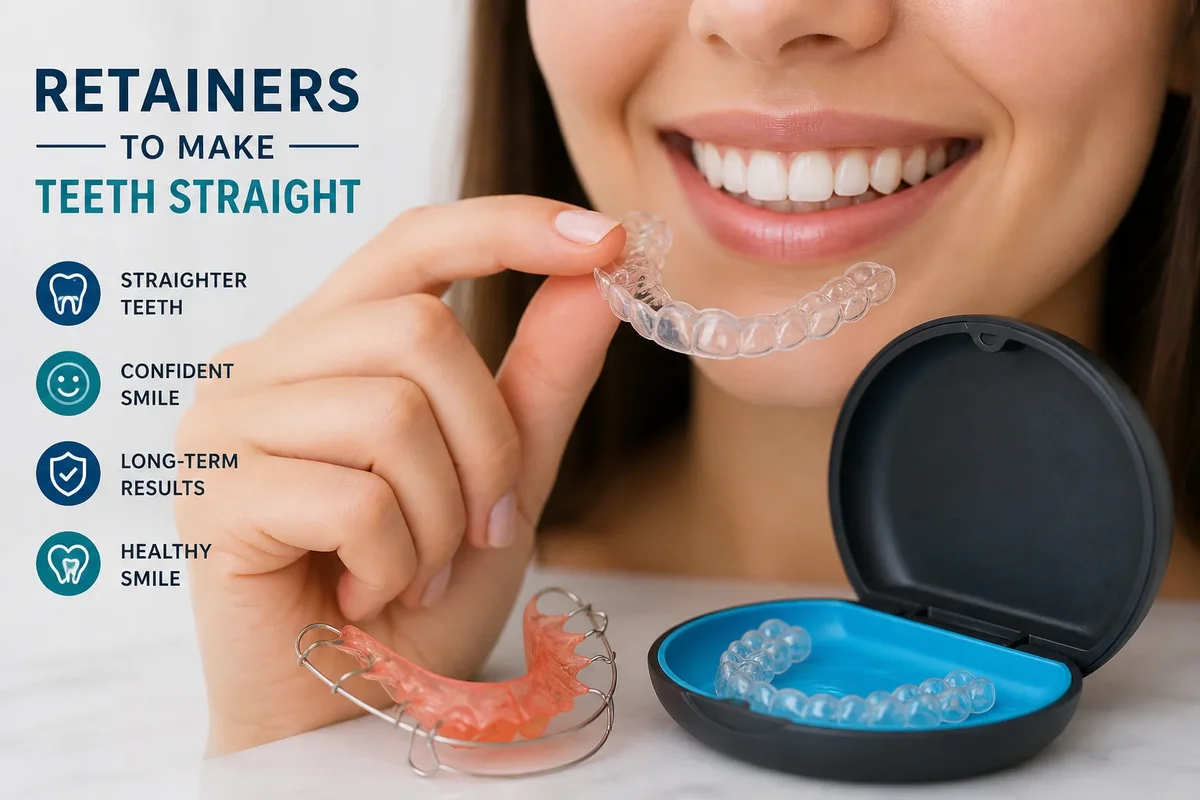
Cost of Retainers to Make Teeth Straight and What to Expect
Understanding the cost of retainers to make teeth straight is an important part of planning your dental care. While retainers are generally more affordable than braces or clear aligners, the total cost can vary depending on several factors, including the type of retainer, the complexity of your case, and the dental clinic you choose. Knowing what to expect financially helps you make an informed decision and avoid unexpected expenses 😊.
Average Cost of Retainers
The price of retainers to make teeth straight can differ significantly based on the type you select. Below is a general cost breakdown based on common dental market estimates:
Clear Plastic Retainers
- Per set: $150 – $500
- Replacement cost: $100 – $300
Clear retainers are among the most popular retainers to make teeth straight due to their discreet appearance. However, they may need replacement more frequently because they can wear out over time.
Hawley Retainers
- Per retainer: $200 – $600
- Replacement cost: $150 – $400
Hawley retainers are durable and adjustable, making them reliable retainers to make teeth straight. Their longer lifespan can make them more cost-effective in the long run.
Fixed (Bonded) Retainers
- Installation: $250 – $700 per arch
- Repair costs: $100 – $300
Fixed retainers are permanently attached and are typically used to maintain alignment rather than actively function as retainers to make teeth straight. However, they still play a role in preserving results.
Factors That Influence Cost
Several variables can affect how much you pay for retainers to make teeth straight. Understanding these factors helps you better estimate your total investment.
Type of Retainer
Different materials and designs come with different price points. Clear retainers to make teeth straight may cost less initially but require more frequent replacement, while Hawley retainers may have a higher upfront cost but last longer.
Customization and Complexity
The more customized your retainer needs to be, the higher the cost. If your dentist needs to modify retainers to make teeth straight for minor corrections, this may increase the overall price.
Geographic Location
Dental costs vary by region and clinic. Clinics in metropolitan areas or specialized practices may charge more for retainers to make teeth straight compared to smaller clinics.
Are Retainers Covered by Insurance?
Insurance coverage for retainers to make teeth straight depends on your dental plan.
Post-Orthodontic Coverage
If retainers are part of a completed orthodontic treatment, some insurance plans may cover part of the cost. However, standalone use of retainers to make teeth straight for minor corrections is less likely to be covered.
Out-of-Pocket Expenses
Many patients pay for retainers to make teeth straight out of pocket. Some clinics offer payment plans to make the process more affordable.
Long-Term Cost Considerations
While the initial price of retainers to make teeth straight may seem manageable, it’s important to consider long-term expenses.
Replacement Costs
Retainers can wear out, break, or get lost. Replacing retainers to make teeth straight over time adds to the total cost, especially for clear retainers.
Maintenance and Repairs
Fixed retainers may require occasional repairs. Proper care reduces the need for frequent maintenance of retainers to make teeth straight.
Cost vs. Value
When evaluating retainers to make teeth straight, it’s important to consider value rather than just price.
Preventing Future Expenses
Using retainers to make teeth straight can prevent teeth from shifting and eliminate the need for expensive orthodontic treatments in the future.
Protecting Your Smile Investment
If you have already invested in braces or aligners, retainers to make teeth straight protect that investment by maintaining your results.
How to Choose the Right Option
Selecting the best retainers to make teeth straight involves balancing cost, effectiveness, and durability.
Consulting a Professional
A dental professional can recommend the most cost-effective option based on your needs. You can visit the Redent Klinik Contact Page for personalized advice and treatment planning.
Comparing Options
Discuss different types of retainers to make teeth straight with your dentist to understand their benefits, costs, and lifespan before making a decision.
Trusted Guidance and Resources
Reliable organizations like the American Dental Association provide valuable information about orthodontic retention and dental care costs, helping patients make informed decisions about retainers to make teeth straight.
Final Thoughts
In conclusion, the cost of retainers to make teeth straight is relatively affordable compared to other orthodontic treatments, but it varies depending on multiple factors. From initial purchase to long-term maintenance, understanding these costs ensures better planning and fewer surprises.
By choosing the right type and following professional advice, retainers to make teeth straight can be a cost-effective solution for maintaining and improving your smile. With proper care, they provide lasting value and help you avoid more expensive treatments in the future 😁.