
Retainers to straighten teeth are one of the most effective, long-term solutions for achieving a stable, aligned, and healthy smile. In modern orthodontics, retainers are no longer used only after braces — many people now rely on them as active alignment tools. This means retainers can both hold teeth in place and, in certain cases, gently move them into better positions. In this comprehensive guide, you’ll discover exactly how retainers to straighten teeth work, why they remain essential for long-term dental health, and what patients should expect in real-world use. 😄
Today’s dentistry offers multiple options, including removable plastic retainers, fixed bonded retainers, and hybrid systems. Each one plays a unique role in alignment, comfort, and stability. Whether someone has mild crowding, shifting after braces, or early misalignment, retainers to straighten teeth can provide a minimally invasive, highly effective alternative to traditional orthodontic treatments. This makes them especially valuable for adults who want a subtle, convenient solution that fits their lifestyle.
One of the biggest reasons retainers remain a powerful tool is their ability to prevent “orthodontic relapse,” which is when teeth naturally shift back to their previous positions. Even perfectly aligned teeth are at risk of drifting due to aging, pressure from gums, bone structure changes, and daily habits such as clenching or tongue posture. Retainers to straighten teeth act like a protective shield, maintaining alignment and guiding teeth into healthier patterns over time. Many orthodontists recommend lifelong night-time retention for optimal results.
From a scientific perspective, retainers work by applying consistent, gentle pressure to the periodontal ligament—the soft tissue that helps secure each tooth. Over time, this pressure encourages the ligament and bone to remodel, allowing teeth to hold their corrected shape. When a patient uses retainers to straighten teeth consistently, the remodeling process stabilizes, reducing the risk of future shifting. This is why skipping retainer use often leads to noticeable changes within weeks.
Another major advantage is comfort. Modern removable retainers are lightweight, transparent, and custom-molded to match your exact bite. Many people barely feel them after the first week. This comfort makes it easier to follow the recommended schedule, which is essential because retainers to straighten teeth require discipline. Wearing them inconsistently may reduce their effectiveness and prolong the treatment timeline.
The role of retainers also extends to oral health. Straighter teeth are easier to clean, which lowers the risk of plaque buildup, gum disease, and enamel erosion. By keeping the teeth aligned, retainers indirectly support gum stability and jaw balance. Some patients even experience reduced jaw tension and fewer headaches once alignment improves. These benefits are part of why orthodontists emphasize the importance of a long-term retainer plan.
Retainers also come with excellent compatibility across different dental conditions. Whether you previously wore braces, aligners, or have never undergone orthodontic treatment, you can still use retainers to straighten teeth if your case is suitable. Mild to moderate crowding, small gaps, and rotational corrections can often be improved without more complex systems. Many adults choose this route because it avoids the cost and visibility of full orthodontic appliances.
Additionally, it’s important to choose a reliable dental clinic that specializes in orthodontic aftercare. You can contact a trusted clinic through the
Redent Klinik Contact Page
for professional guidance. For authoritative dental standards, the
American Dental Association
offers evidence-based recommendations without rel=”nofollow”.
Finally, retainers support a long-term oral wellness plan. They are durable, easy to clean, and built to adapt as your dental structure changes with age. For enhanced semantic relevance, it’s helpful to note that retainers overlap with concepts like “teeth alignment devices” or “orthodontic stabilizers,” which share similar functions. Whether you’re new to orthodontics or simply maintaining your smile, retainers to straighten teeth remain one of the most practical solutions for lasting alignment. 🌟
How Retainers to Straighten Teeth Work: Science Explained
Understanding how retainers to straighten teeth function requires a close look at the biology of tooth movement. Most people assume retainers are only for maintaining results after braces — but in reality, certain types can actively move teeth when used under the guidance of an orthodontist. This section breaks down the science behind their effectiveness, the biomechanics involved, and why consistent wear is the key to transforming your smile. 😄
The Biological Science Behind Tooth Movement
Teeth are not rigidly fixed in the jawbone; they sit in a soft, flexible tissue called the periodontal ligament (PDL). When you use retainers to straighten teeth, the device applies a controlled and gentle pressure to the tooth surface. This pressure stimulates biological remodeling:
- On one side of the tooth, the PDL compresses, and bone breaks down.
- On the opposite side, the PDL stretches, and new bone forms.
This remodeling process is called “bone resorption and deposition,” and it’s the same mechanism behind braces and clear aligners. The difference is that retainers use lighter, more subtle forces, making them ideal for fine adjustments, mild crowding, and preventing relapse. When properly used, retainers to straighten teeth guide the teeth into a healthier alignment without the intensity of full orthodontics.
Types of Pressure Retainers Apply
Different retainers deliver different types of orthodontic pressure, and each serves a unique purpose in the alignment journey. These variations make the use of retainers to straighten teeth highly customizable depending on dental needs.
1. Continuous Pressure (Bonded Retainers)
Fixed or bonded retainers are thin wires attached to the back of the teeth. They apply continuous stabilization pressure, preventing any unwanted shifting. While they do not actively move teeth significantly, they ensure long-term retention and help maintain your ideal tooth placement for years.
2. Intermittent Pressure (Hawley and Clear Retainers)
Removable retainers apply pressure only when they are worn. Many modern systems use clear plastic materials that gently nudge the teeth into ideal alignment. They’re especially helpful in correcting slight overlaps, rotations, and early-stage misalignment.
The most advanced removable retainers to straighten teeth now integrate 3D scanning and digital modeling, allowing orthodontists to design highly precise fit-and-force patterns tailored to your bite.
The Role of Consistency in Retainer Effectiveness
The success of retainers to straighten teeth depends heavily on consistent wear. Teeth have memory; they tend to shift back toward their previous positions. Missing even a few nights can cause noticeable changes. This is especially true for patients who recently completed orthodontic treatment, as the bone around the roots is still soft and adaptable.
Most orthodontists recommend wearing retainers for:
- Full-time (22 hours/day) for the initial period when active movement is expected.
- Night-time only once alignment stabilizes.
For many adults, night-time usage becomes a lifelong habit — a small effort compared to the benefits of keeping teeth beautifully aligned.
Why Retainers Are Sometimes Better Than Braces
Some alignment problems don’t require full braces or aligners. Instead, retainers to straighten teeth offer a low-profile, cost-effective alternative. They work exceptionally well for:
- Mild crowding of the front teeth
- Teeth shifting due to aging
- Slight gaps or spacing
- Post-orthodontic relapse correction
These situations often require gentle correction, and retainers can deliver just that without the complexity of full orthodontic appliances. Patients also appreciate that retainers are removable, discreet, and comfortable — making them easy to integrate into everyday life.
The Importance of Professional Guidance
Although many online platforms claim to offer DIY teeth alignment, only a certified orthodontist can determine whether retainers to straighten teeth are appropriate for your case. Incorrect pressure or poorly fitted appliances can damage enamel, irritate gums, and even worsen alignment issues.
If you’re considering treatment, scheduling a consultation through the
Redent Klinik Contact Page
ensures that your case is evaluated by professionals who understand proper orthodontic biomechanics. Trusted dental institutions like the
American Dental Association
also provide helpful guidelines on safe orthodontic care.
How Retainers Fit Into Long-Term Oral Health
Retainers don’t just keep teeth straight — they support long-term oral wellness. Alignment influences everything from jaw stability to gum health. Straighter teeth are easier to brush and floss, reducing the risk of gum disease and plaque buildup. For many patients, retainers to straighten teeth also improve bite function, reduce headaches linked to jaw tension, and prevent enamel wear caused by misalignment.
To enhance semantic relevance, related terms like “tooth alignment devices” or “orthodontic stabilizers” are often used interchangeably with retainers. These devices share similar functions: maintaining or guiding teeth into ideal positions.
Ultimately, the effectiveness of retainers lies in their balance of gentle pressure, comfort, and stability. Combined with proper wear, professional supervision, and regular checkups, retainers to straighten teeth remain one of the safest and most accessible tools for achieving a confident, long-lasting smile. 🌟
Types of Retainers for Teeth Alignment and Their Uses
When exploring the best solutions for long-term alignment, it’s essential to understand the different types of retainers to straighten teeth. Each type has a unique purpose, design, comfort level, and mechanical function. Choosing the right one depends on the patient’s dental history, current alignment challenges, and goals for both aesthetics and stability. In this detailed guide, we break down every major type of retainer, how they work, and when they’re most effective. 😄
Overview: Why Retainer Variety Matters
Not all teeth alignment issues require the same approach. Some cases need gentle guidance, while others require firm stabilization. That’s why orthodontists offer multiple categories of retainers to straighten teeth. These devices can be fully removable, semi-rigid, fixed behind the teeth, or digitally custom-designed. Each option has specific strengths, making them versatile tools for both corrective and preventive care.
Major Categories of Retainers
There are three main types of retainers used in modern orthodontics. Understanding their design and functionality will help you choose which option best suits your needs.
1. Clear Plastic Retainers (Essix-Style Retainers)
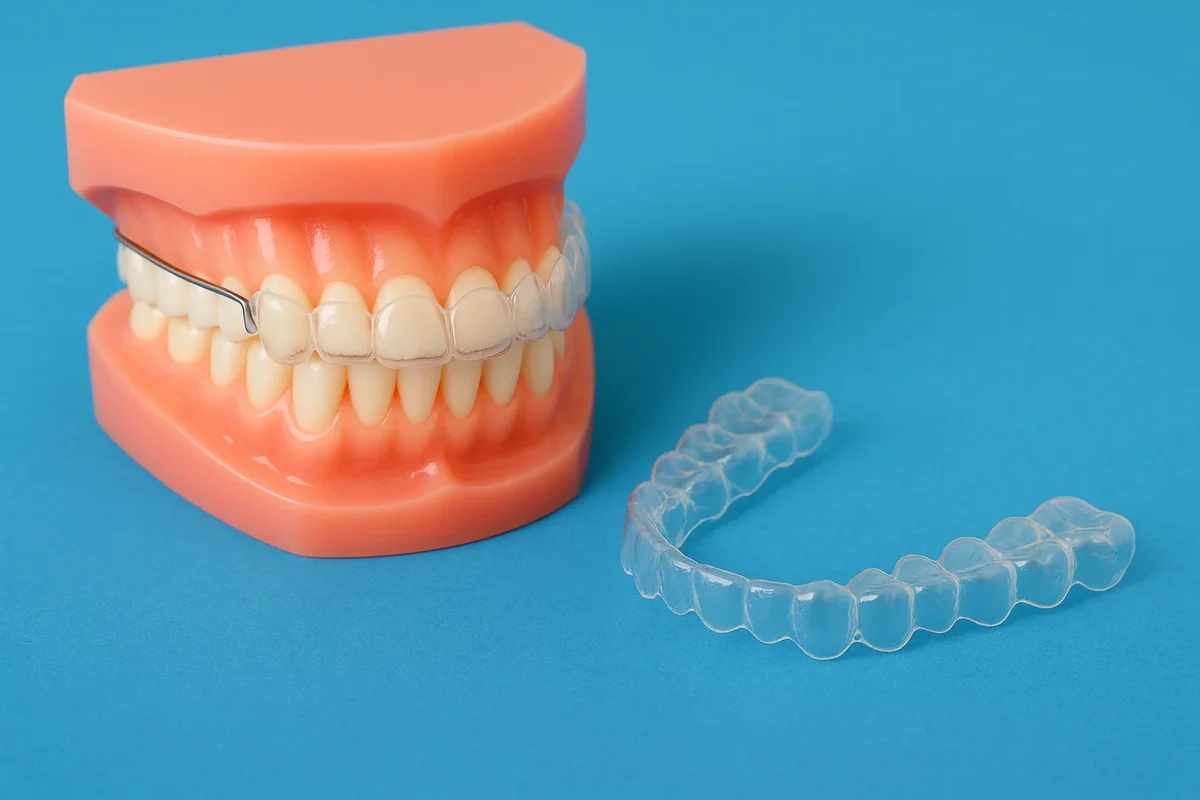
Clear retainers are one of the most popular types today. Made from thin, transparent plastic, they fit snugly over the teeth like a custom shell. Essix retainers are especially well-suited for patients who want an almost invisible appearance.
Best uses:
- Mild to moderate alignment refinements
- Post-braces stabilization
- Night-time maintenance for adults
These retainers can apply gentle force, making them effective retainers to straighten teeth in cases of early relapse. They are also comfortable, easy to clean, and aesthetically appealing. Compared to metal-based options, clear retainers provide a subtle orthodontic experience with minimal visibility.
2. Hawley Retainers (Acrylic + Wire Retainers)
The Hawley retainer has been a trusted orthodontic tool for decades. It features an acrylic plate that sits on the roof of the mouth or behind the lower teeth, with a metal wire running across the front teeth.
Best uses:
- Long-term retention after braces
- Minor adjustments to alignment
- Patients needing durable, long-lasting retainers
Hawley retainers are adjustable, meaning orthodontists can bend the wire to modify tooth positions gently. This allows the retainer to correct small gaps or rotations. When used thoughtfully, these retainers to straighten teeth offer both stability and mild corrective capacity.
3. Permanent (Bonded) Retainers
Fixed retainers are bonded behind the front teeth with a thin metal wire. They provide continuous stabilization without requiring active wear discipline.
Best uses:
- Patients prone to relapse
- Teens or adults who forget to wear removable retainers
- Cases requiring long-term alignment security
These retainers do not actively move teeth but play a crucial role in preventing shifts. They are especially beneficial for lower front teeth, which are highly susceptible to crowding. However, bonded retainers require excellent oral hygiene to prevent plaque buildup.
Advanced Retainer Designs
Technological innovations have expanded the capability of retainers to straighten teeth. Newer digital options offer higher precision, faster fabrication, and improved comfort.
Digital Clear Retainers
3D printing and scanning allow orthodontists to create high-accuracy retainers with exceptional fit. These retainers often serve dual purposes: maintaining alignment and making micro-adjustments for subtle corrections.
Hybrid Orthodontic Retainers
Some retainers combine the functionality of aligners and traditional retainers. They apply targeted pressure using built-in features such as pressure points or variable thickness materials. These are ideal for patients who need small corrective movements without committing to full orthodontic treatment.
Which Retainer Is Best for Straightening Teeth?
Choosing the right retainer depends on your alignment needs. For example:
- Mild crowding: Clear plastic retainers can gently shift teeth into place.
- Rotations or small gaps: Hawley retainers can be adjusted to correct positioning.
- Severe relapse prevention: Bonded retainers provide constant stabilization.
Clear retainers tend to be the most convenient and discreet option for using retainers to straighten teeth, while Hawley retainers allow for greater adjustability. Many adults benefit from using both: a bonded retainer for stability and a removable one for additional refinement.
Comfort, Durability, and Lifespan
Each retainer type has different strengths:
- Clear retainers: High comfort, moderate durability, must be replaced periodically.
- Hawley retainers: Long-lasting, adjustable, slightly more visible.
- Bonded retainers: Permanent stability, no compliance needed, requires careful cleaning.
Because each type has its own capabilities, many orthodontists recommend a combination approach for maximum long-term success. This ensures that the patient receives both active correction and extended stabilization.
Getting Professional Guidance
It’s essential to consult a qualified orthodontist when choosing retainers to straighten teeth. Improper selection or fit can damage enamel, irritate the gums, or cause unwanted shifts. For accurate evaluation, patients can reach out through the
Redent Klinik Contact Page.
Professional bodies like the
American Dental Association
also provide trusted guidelines.
Understanding the various types of retainers ensures that you choose the most effective, comfortable, and long-lasting solution for your dental needs. Whether for subtle corrections or long-term stability, retainers to straighten teeth remain an essential part of maintaining a healthy, confident smile. 🌟
Clear vs. Metal Retainers: Which Option Straightens Teeth Better?
When individuals explore the best orthodontic solution for long-term alignment, one of the most frequently asked questions is whether clear or metal retainers perform better. Both styles of retainers to straighten teeth are widely used, but they differ significantly in design, durability, visibility, and correction capability. In this in-depth section, we compare both types with scientific detail, real-world insight, and professional guidance so patients can choose the most effective option for their needs. 😄
Understanding the Core Differences Between Clear and Metal Retainers
To evaluate which option offers stronger alignment support, it’s important to understand how each device applies pressure. Clear retainers rely on a molded plastic tray that fits tightly over the teeth. Metal retainers, typically Hawley-style, use a stiff wire and acrylic base. Although both can help maintain alignment, their effectiveness in actively guiding tooth position varies.
Clear retainers are often recommended for subtle repositioning. They can apply uniform, gentle force that helps guide small corrections in crowding or spacing. Metal retainers, while adjustable by an orthodontist, are generally favored for durability and long-term retention rather than active tooth movement. This distinction is key to choosing the best retainers to straighten teeth.
Clear Plastic Retainers (Essix) in Detail
Clear retainers are the most discreet option available. They are made from thin, medical-grade plastic shaped using a precise dental mold or digital 3D scan. Because they wrap around each tooth, they offer excellent contact and stability. The snug fit also allows them to perform minor alignment correction when necessary.
Advantages of Clear Retainers
- Nearly invisible — ideal for adults and teens who want discretion.
- Light and comfortable with smooth edges that reduce irritation.
- Capable of mild adjustments for early relapse or micro-corrections.
- Fully removable for eating and brushing.
Limitations of Clear Retainers
- The plastic material may wear down over time.
- Not suitable for significant alignment corrections.
- Heat exposure (hot water, hot drinks) can warp the plastic.
For many patients, clear retainers offer the perfect balance of comfort and subtle alignment capability. When used consistently, these retainers to straighten teeth can maintain or slightly improve alignment effectively without the need for larger orthodontic appliances.
Metal Wire Retainers (Hawley Retainers) in Detail
Metal retainers feature a reliable combination of acrylic and stainless-steel wire. The wire extends across the front surface of the teeth, while the acrylic sits behind the teeth or across the palate. While more visible, they provide excellent mechanical control and long-term durability.
Advantages of Hawley Retainers
- Extremely durable — they can last many years with proper care.
- Adjustable — orthodontists can modify the wire to shift teeth slightly.
- Allows natural contact between upper and lower teeth.
- Does not trap moisture around the teeth like some plastic trays can.
Limitations of Hawley Retainers
- More visible than clear retainers.
- May feel bulky at first due to the acrylic plate.
- Can be harder for some patients to speak with initially.
While Hawley retainers are not always the top choice for cosmetic reasons, they remain one of the most reliable long-term retainers to straighten teeth because they resist breakage, distortion, and wear.
Which Retainer Straightens Teeth More Effectively?
For active tooth movement, clear retainers have a slight advantage. Their tight fit can help guide teeth into improved positions with small directional pressure. They are particularly useful for:
- Mild spacing correction
- Early relapse after aligners or braces
- Subtle rotation correction
Metal retainers, by contrast, are superior for long-term retention. Their adjustable wire allows orthodontists to make precise, strategic shifts, but they do not apply even pressure like clear trays. Instead, they shine in durability and stability.
The Best Approach for Most Patients: Combination Retention
Many orthodontists recommend using both types at different stages. For example:
- Clear retainers for initial stabilization and micro-adjustments.
- Metal retainers for long-term maintenance once alignment stabilizes.
This approach gives patients the alignment support they need early on and the durability they require for the future. Combining both solutions can significantly extend the life of your orthodontic results, especially if you have a history of crowding.
Comfort and Lifestyle Considerations
Comfort plays a major role in choosing retainers to straighten teeth. Clear retainers generally win in comfort and appearance, while metal retainers win in longevity and stability. Lifestyle factors such as sports, grinding, speech sensitivity, and oral anatomy may influence the final choice.
If you’re unsure which solution best fits your situation, consult a specialist through the
Redent Klinik Contact Page.
Trusted organizations like the
American Dental Association
also provide expert-backed information on long-term orthodontic safety.
In conclusion, both clear and metal retainers have essential roles in orthodontics. Clear retainers excel at minor corrections and aesthetics, while metal retainers provide unmatched durability and customizable adjustments. When used together or correctly selected, these retainers to straighten teeth can create a lifetime of confident, stable alignment. 🌟
When Do You Need Retainers to Straighten Teeth Again?
Many people believe that once their orthodontic treatment ends, their teeth will remain straight forever. However, teeth are living structures influenced by pressure, bone remodeling, oral habits, and natural aging. This means that even after wearing braces or aligners, many individuals eventually need retainers to straighten teeth again. In this detailed section, we explain the exact situations when a person must restart or increase retainer use, how to recognize signs of relapse, and what steps ensure long-term stability. 😄
Understanding Orthodontic Relapse
Orthodontic relapse is the most common reason patients need retainers again. Relapse refers to the tendency of teeth to shift back toward their original misaligned positions. This is not a sign of treatment failure; instead, it is a natural biological process. When retainers to straighten teeth are not worn consistently, the periodontal ligament gradually pulls teeth in the direction of their old patterns.
Relapse can occur slowly over years or surprisingly fast within weeks. The earlier you catch the signs, the easier it is to correct them using retainers. In many cases, mild relapse can be fully corrected with increased retainer wear alone, avoiding the need for braces or aligners again.
Common Early Signs of Relapse
- Mild crowding in the lower front teeth
- A small gap reappearing between the upper incisors
- Teeth starting to overlap slightly
- Difficulty inserting your old retainer
- Sudden pressure or discomfort when wearing your retainer again
If any of these signs appear, using retainers to straighten teeth promptly can often reverse the changes before they become significant.
When Retainers No Longer Fit Properly
A retainer that no longer fits is one of the clearest indicators that teeth have shifted. In some cases, the mismatch is minor and the retainer can gently reposition the teeth over a few weeks. In other cases, forcing the retainer may damage it or worsen alignment.
What to Do If Your Retainer Feels Tight
- Do not force it — tightening may indicate movement, not just stiffness.
- Wear it gradually — start with shorter intervals to see if teeth adapt.
- Contact a clinic — a professional can determine whether mild movement is safe.
Teeth often shift slowly, which makes early intervention possible. Clear retainers to straighten teeth are especially effective here because their close fit can guide teeth back into proper alignment without major discomfort.
After Long Periods Without Wearing a Retainer
Life gets busy, retainers get misplaced, or some people stop wearing them entirely. Months or years later, teeth begin shifting. This is extremely common, especially in adults whose lower front teeth naturally crowd over time.
If You Stopped Wearing Your Retainer for Months
Mild corrections are still possible. Many orthodontists recommend wearing your old retainer for short daily intervals to evaluate whether repositioning is achievable. If the teeth respond positively, continued use of retainers to straighten teeth can gradually restore alignment.
If You Haven’t Worn a Retainer for Years
Longer periods without retention often require new appliances. Your dentist may recommend:
- New clear retainers
- A new Hawley retainer
- A short course of clear aligners
Once the teeth are back in proper alignment, consistent retainer use helps ensure they remain stable.
Changes in Jaw Structure Over Time
Even if you wore retainers faithfully for years, natural aging affects the jaw. Bone density, gum elasticity, and facial muscles all change over time. These biological shifts can subtly influence tooth placement.
Using retainers to straighten teeth again helps compensate for these age-related changes. Many orthodontists recommend lifelong night-time retainer wear for this very reason.
New Dental Work Affecting Alignment
Dental treatments such as fillings, crowns, implants, or extractions can sometimes alter the bite. Even minor changes can cause nearby teeth to shift slightly. This is another situation where retainers help maintain balance.
Examples of Dental Work That May Affect Alignment
- Extraction of wisdom teeth
- Large fillings altering bite height
- Crowns or veneers changing tooth shape
- Bridges affecting arch structure
If these treatments cause slight misalignment, retainers to straighten teeth can correct the changes without the need for major orthodontics.
Teeth Grinding and Oral Habits
Habits such as clenching, grinding, nail-biting, or pressing the tongue against the teeth put pressure on the dental arch. Over time, these forces shift tooth positions and increase the need for renewed retainer use.
In such cases, retainers may serve dual purposes: alignment correction and protection from grinding.
When to Seek Professional Help
If you notice moderate shifting, discomfort, or persistent difficulty inserting your retainer, a professional evaluation is essential. Through the
Redent Klinik Contact Page,
you can schedule an expert assessment. Trusted dental bodies like the
American Dental Association
also offer educational resources on orthodontic retention.
Ultimately, you may need retainers to straighten teeth again if you stopped wearing them, experienced relapse, noticed jaw changes, or underwent new dental treatments. With timely action and proper guidance, retainers can restore your smile effectively and protect your alignment for decades. 🌟
Daily Wear Routine: How Long Should You Use Retainers?
One of the most important factors that determines how effective retainers to straighten teeth will be is your daily wear routine. Consistency is the foundation of orthodontic success, and even the best retainers cannot maintain alignment if they are not worn as recommended. In this comprehensive guide, we break down how long retainers should be worn, why daily usage matters, how routines differ for adults and teens, and what orthodontists recommend for lifelong alignment. 😄
Why Daily Wear Is Essential
After orthodontic treatment, teeth remain in a delicate transitional stage. The bone around the roots is still soft, and the periodontal ligament—which keeps each tooth in position—is highly flexible. During this period, teeth naturally try to return to their previous positions. This is why orthodontists insist on consistent use of retainers to straighten teeth immediately after braces or aligners.
Without a daily wear routine, even perfectly aligned teeth can shift noticeably within days or weeks. A strong routine stabilizes the results, ensures long-term positioning, and prevents relapse. Once stability improves, wear time may gradually decrease—but retainers usually remain part of a lifelong habit for anyone who wants a lasting smile.
The Three Phases of Retainer Wear
Your daily retainer routine changes over time. Orthodontists typically divide the wear schedule into three distinct phases.
Phase 1: Full-Time Wear
This phase usually lasts from 3 to 6 months after orthodontic treatment or after receiving new retainers to straighten teeth. During this period:
- You should wear your retainers for 20–22 hours per day.
- You only remove them to eat, drink hot liquids, or brush your teeth.
- Your retainers apply the most corrective pressure during this time.
Full-time wear ensures the teeth settle into their new positions long enough for the supporting bone structure to strengthen.
Phase 2: Night-Time Wear
Once your orthodontist confirms stability, your daily wear routine transitions to a more comfortable schedule:
- Wear the retainers every night.
- Some patients alternate between all-night and partial-night wear depending on their alignment stability.
Night-time wear helps maintain all the hard-earned alignment improvements. Skipping nights can cause subtle shifts, which might require using retainers to straighten teeth on a more intensive schedule again.
Phase 3: Lifetime Maintenance
Many people underestimate how much the mouth changes with age. Jaw structure, gum elasticity, and bone density naturally evolve. These biological factors influence your tooth positioning even years after treatment.
Because of this, orthodontists now recommend:
- Lifelong night-time wear for maintainers.
This doesn’t mean wearing retainers forever full-time—only during sleep. It’s a small effort with significant benefits for long-term dental stability.
Daily Wear Time Based on Retainer Type
Different styles of retainers to straighten teeth require different routines. Some are designed for continuous stabilization, while others provide corrective support.
Clear Plastic Retainers
- Must be worn full-time during Phase 1.
- Transition to night-time wear after stability improves.
- Effective for mild realignment when worn consistently.
Hawley Metal Retainers
- Generally worn night-time only after the first month.
- May be adjusted by your dentist for small corrections.
- Durable enough for long-term maintenance.
Bonded (Permanent) Retainers
- Worn 24/7 without removal.
- Provide constant protection against relapse.
- Often combined with removable retainers for top-level stability.
For most patients, the optimal routine is a combination of bonded retainers and removable clear retainers to straighten teeth, especially for the lower front teeth.
Signs You Are Not Wearing Your Retainer Long Enough
Many people do not notice alignment changes until shifts become more obvious. Watch for these early signs:
- Your retainer feels tight or difficult to insert.
- You notice slight crowding or overlapping.
- Your bite feels different when chewing or speaking.
- Your clear retainer no longer sits flush against your teeth.
These symptoms mean you may need to increase wear time to restore stability.
How Lifestyle Influences Wear Time
Daily habits and routines can affect how long you need retainers to straighten teeth each day. For example:
- Night grinders may require more protective wear at night.
- Active athletes may remove retainers more often for safety.
- Teens may need stricter routines to prevent forgetting wear time.
Your orthodontist will tailor your wear time based on these lifestyle factors.
When to Seek Professional Advice
If you feel discomfort, notice alignment changes, or your retainer no longer fits properly, it’s time for an evaluation. You can easily schedule a consultation via the
Redent Klinik Contact Page.
For evidence-based orthodontic recommendations, the
American Dental Association
provides trusted guidelines.
Ultimately, your daily wear routine plays a critical role in maintaining the results you achieved. By following a structured schedule and using retainers to straighten teeth consistently, you ensure your smile remains beautifully aligned for life. 🌟
Maintenance, Cleaning, and Hygiene Tips for Long-Lasting Retainers
Proper maintenance is one of the most crucial factors in ensuring the longevity and effectiveness of retainers to straighten teeth. Even the highest-quality retainers can wear out quickly if they are not cleaned correctly, stored safely, and used with proper hygiene habits. In this comprehensive guide, you’ll learn step-by-step cleaning instructions, daily and weekly maintenance routines, prevention strategies against damage, and professional tips for keeping your retainers fresh, effective, and healthy for long-term use. 😄
Why Retainer Hygiene Matters
Retainers sit in your mouth for hours each day. Naturally, they collect plaque, bacteria, food particles, and saliva. Without proper cleaning, these deposits harden into tartar, causing unpleasant odors, discoloration, bacterial growth, and even oral infections. Poor hygiene also reduces the effectiveness of retainers to straighten teeth because buildup interferes with how closely the retainer fits the tooth surface.
A clean retainer ensures optimal alignment pressure, protects your oral health, and helps you avoid costly replacements.
Daily Cleaning Routine for Retainers
Cleaning your retainers daily should be as regular as brushing your teeth. This routine prevents plaque buildup, keeps them clear and odor-free, and prolongs their structural integrity.
Step-by-Step Daily Cleaning Instructions
- Rinse Immediately After Removal: Use cool water to remove saliva and debris.
- Brush Gently: Use a soft toothbrush with mild, clear soap.
- Avoid Toothpaste: Toothpaste can scratch plastic retainers, making them cloudy.
- Dry Completely: Before storing, allow the retainers to air-dry to prevent bacterial growth.
- Store Properly: Keep retainers in a ventilated case when not in use.
Following these steps ensures that your retainers to straighten teeth remain clean, safe, and effective every day.
Weekly Deep Cleaning Routine
Daily brushing is essential, but a deeper clean should be done at least once a week to remove invisible bacteria and mineral buildup.
Recommended Deep Clean Methods
- Retainer Cleaning Tablets: Dissolve in water and soak for the recommended time.
- White Vinegar Solution: Mix equal parts cool water and vinegar; soak for 15–20 minutes.
- Baking Soda Solution: Add a teaspoon of baking soda to a cup of water; soak retainers overnight.
These solutions remove odors, kill bacteria, and safely dissolve debris without damaging the material. This routine is especially beneficial for clear retainers to maintain transparency while supporting the role of retainers to straighten teeth in your daily life.
What to Avoid When Cleaning Retainers
Many people accidentally damage their retainers by using harsh cleaners or exposing them to extreme conditions. To protect your appliance:
- Do not use hot water — it warps plastic retainers.
- Do not use alcohol-based mouthwash — it causes material breakdown.
- Do not boil or microwave retainers — they will melt or deform.
- Do not scrub with abrasive brushes — scratches increase bacteria retention.
Avoiding these mistakes helps maintain both the sanitation and structural precision required for retainers to straighten teeth effectively.
Storage Tips for Safe and Hygienic Retainer Use
Proper storage preserves retainer shape, prevents breakage, and ensures safe daily wear. Retainers should always be stored in a clean, ventilated protective case.
Essential Storage Guidelines
- Never wrap retainers in tissues — they get thrown away easily.
- Keep them away from pets — cats and dogs love to chew them.
- Use a ventilated case — prevents moisture and bacteria buildup.
- Store in a cool, dry place — heat can alter shape.
Good storage helps ensure your retainers to straighten teeth stay effective and clean at all times.
How to Maintain Bonded (Permanent) Retainers
Fixed retainers require different care since they cannot be removed. They can trap plaque and food if not cleaned thoroughly.
Maintenance Tips for Bonded Retainers
- Use interdental brushes to clean around the wire.
- Floss using a floss threader or water flosser daily.
- Brush gently along the gumline to prevent inflammation.
Proper hygiene keeps fixed retainers clean and ensures they continue to support your alignment without discomfort or gum issues.
When to Replace Your Retainers
Even with great care, retainers need replacement eventually. Wear and tear can affect their ability to maintain alignment.
Signs You Need a Replacement
- Cracks or fractures
- Loose fit or loss of tension
- Persistent discoloration
- Distortion from heat exposure
If any of these occur, seek professional evaluation immediately to avoid losing alignment and requiring more intensive retainers to straighten teeth.
Professional Care and When to Seek Help
Dental checkups are essential for monitoring retainer condition and oral hygiene. During your appointment, orthodontists assess whether the retainers still provide optimal support.
If you have concerns or notice issues, you can easily schedule a visit using the
Redent Klinik Contact Page.
For educational resources and safe cleaning guidelines, the
American Dental Association
offers expert-backed information.
By maintaining proper hygiene and following a structured cleaning routine, you protect both your oral health and the effectiveness of your retainers to straighten teeth. With consistent care, your retainers will remain clear, comfortable, and durable for years — ensuring your smile stays beautifully aligned. 🌟
Common Problems With Retainers and How to Fix Them
While retainers to straighten teeth are highly effective for maintaining and correcting alignment, they can occasionally present certain challenges. Understanding these issues early—and knowing how to address them—helps ensure your retainers continue to work properly, remain comfortable, and protect your long-term orthodontic results. In this detailed guide, you will learn the most common problems patients experience, practical solutions, and prevention strategies to keep your retainers functioning at their best. 😄
1. Retainers Feeling Tight or Uncomfortable
A tight retainer is one of the first signs that your teeth may be shifting. Sometimes this is normal—especially if you recently increased wear time—but it can also indicate early orthodontic relapse.
Why Retainers Become Tight
- Not wearing retainers for several days or weeks
- Natural shifting due to age or oral habits
- Bite changes from new dental work
- Warping from heat exposure
How to Fix Tight Retainers
- Resume consistent wear—sometimes teeth readjust within days.
- Avoid forcing the retainer if pressure is severe.
- Get a professional assessment to determine whether realignment is possible.
When caught early, many alignment changes are reversible using retainers to straighten teeth before more advanced treatment becomes necessary.
2. Retainers Not Fitting at All
If your retainers no longer fit onto your teeth, this is a sign of significant shifting or deformation of the appliance.
Common Causes
- Long periods without wearing retainers
- Changes in bite due to dental work
- Plastic retainers that have warped from heat
- Accidental bending of the wire in metal retainers
Solutions
- Do not force the retainer.
- Schedule a retainer evaluation—new retainers may be needed.
- Correct minor shifts early with clear retainers if medically appropriate.
When retainers fail to fit, relying on professional evaluation ensures your next set of retainers to straighten teeth restores alignment safely.
3. Broken or Cracked Retainers
Cracks, fractures, or breaks can affect the pressure distribution and structural integrity of your retainer.
What Causes Retainer Damage?
- Dropping or stepping on the retainer
- Chewing on the appliance (often subconsciously)
- Using hot water during cleaning
- Improper storage without a case
How to Fix It
- Never attempt home repairs using glue or adhesives—these are unsafe.
- Get a replacement retainer as soon as possible.
- Increase wear time temporarily with any backup retainer you may have.
Broken retainers stop working effectively, so immediate replacement is necessary to ensure your retainers to straighten teeth continue providing therapeutic pressure.
4. Discomfort or Soreness
Mild soreness can occur when retainers are first fitted or when teeth are shifting slightly. However, persistent pain signals a deeper issue.
Possible Causes
- Improper fit
- Warped plastic
- Accumulated plaque irritating the gums
- Pressure points from metal wires
Recommended Solutions
- Clean retainers thoroughly to prevent gum irritation.
- Use orthodontic wax for rough edges on metal retainers.
- Request an adjustment from your orthodontist.
Addressing discomfort early prevents long-term issues and keeps your retainers to straighten teeth functioning comfortably and effectively.
5. Speech Difficulties
Some patients temporarily develop a slight lisp when adapting to retainers, especially Hawley retainers that involve an acrylic palate.
Causes of Speech Changes
- Thickness of acrylic plate
- Tongue repositioning
- Lack of adaptation time
How to Overcome Speech Issues
- Practice speaking—reading aloud helps speed adaptation.
- Wear the retainer consistently for faster adjustment.
- Request refinements if the acrylic feels excessively bulky.
Clear retainers to straighten teeth tend to cause fewer speech challenges due to their slim design.
6. Bad Odor or Taste
Unpleasant odors or tastes often indicate bacteria buildup and poor hygiene.
Why This Happens
- Irregular cleaning routines
- Storing retainers while wet
- Food particles trapped inside
How to Fix It
- Brush retainers daily with mild soap.
- Perform weekly deep cleaning using safe solutions.
- Dry retainers completely before storing.
Proper cleaning is essential to maintain the freshness and structural integrity required for retainers to straighten teeth safely and effectively.
7. Lost or Misplaced Retainers
Losing your retainers is more common than you may think—especially when wrapped in tissues or left in restaurants.
Prevention Tips
- Always use a protective case.
- Never place retainers in napkins.
- Use brightly colored cases for easy visibility.
What to Do If You Lose Them
- Contact your orthodontist immediately to prevent relapse.
- Obtain a replacement as soon as possible.
The sooner you replace them, the better you can maintain the work accomplished by your retainers to straighten teeth.
When to Seek Professional Help
If you notice severe pain, consistent fit issues, cracks, or changes in alignment, professional care is essential. You can easily book an appointment using the
Redent Klinik Contact Page.
For evidence-based orthodontic guidance, the
American Dental Association
provides trusted scientific resources.
In summary, while challenges with retainers can arise, nearly all issues can be fixed with timely care and proper maintenance. By understanding the common problems and responding quickly, you ensure that your retainers to straighten teeth continue protecting and improving your smile—efficiently, comfortably, and confidently. 🌟
Do Retainers Really Move Teeth? Expert Insights
A common question many patients ask after orthodontic treatment is whether retainers to straighten teeth can actually move teeth, or if they simply maintain the results achieved with braces or aligners. The truth is more nuanced. While retainers are primarily designed for stabilization, certain types of retainers can indeed create gentle, controlled movement when used consistently and correctly. In this detailed expert-backed explanation, you will learn how retainers influence tooth positioning, the science behind micro-movement, and when retainers can be used therapeutically for realignment. 😄
Understanding the Biological Basis of Tooth Movement
To understand whether retainers can move teeth, it’s important to explore how the human mouth responds to applied pressure. Teeth do not sit rigidly in the jawbone; instead, each tooth is suspended by the periodontal ligament (PDL), a soft tissue structure that absorbs force and allows natural flexibility.
When pressure is applied—even light pressure—cells within the PDL begin remodeling the surrounding bone: osteoclasts dissolve old bone on one side while osteoblasts build new bone on the other. Over time, this biology allows teeth to shift.
This same process enables certain retainers to straighten teeth, especially when mild adjustments are needed.
The Three Categories of Retainers and Their Ability to Move Teeth
Not all retainers are created equal. Some are designed strictly for holding teeth in place, while others can offer slight corrective power.
1. Clear Plastic Retainers (Essix Type)
Clear retainers wrap closely around the teeth, making them effective at applying uniform pressure. While they are not as powerful as aligners, they can:
- Correct minor rotations
- Close small gaps
- Re-align teeth after minimal relapse
Because of their tight-fitting design, these retainers to straighten teeth can create tiny but meaningful adjustments when worn consistently.
2. Hawley Metal Retainers
Hawley retainers use a wire-and-acrylic structure. While primarily stabilizing, the metal wire can be adjusted by an orthodontist to create targeted micro-movements. These adjustments are useful for:
- Slightly shifting the bite
- Minor protrusion or retrusion corrections
- Aligning one or two out-of-position teeth
They are durable and customizable, making them helpful in specific correction cases.
3. Bonded (Permanent) Retainers
Permanent retainers are bonded behind the teeth and do not move them. Their purpose is stabilization only. They are often paired with removable appliances when active correction is needed.
When Retainers Can Move Teeth Effectively
Retainers have limited corrective power compared to orthodontic aligners, but they are effective in the following conditions:
- Mild relapse within 1–2 months of retainer neglect
- Small rotations less than 1 mm
- Minor spacing issues where gaps are newly formed
- Post-treatment settling where final refinement is needed
In early stages of shifting, using retainers to straighten teeth consistently can prevent worsening and realign the smile before more intensive treatment becomes necessary.
When Retainers Cannot Move Teeth
There are limitations. Retainers cannot fix:
- Severe crowding
- Major bite issues (crossbite, deep bite, open bite)
- Wide gaps
- Tooth rotations over 20 degrees
- Large relapse from long-term neglect
In such cases, aligners or braces are required to achieve safe and predictable results.
How Orthodontists Use Retainers for Strategic Realignment
Orthodontists sometimes turn retainers into micro-corrective devices by adjusting pressure points. Here is how the process works:
Clear Retainer Adjustments
- Reforming the plastic to apply pressure
- Adding tiny bumps or indentations to target specific teeth
- Creating a “pseudo-aligner” effect for mild shifts
Hawley Retainer Adjustments
- Bending the metal wire outward or inward for gentle movement
- Adjusting the acrylic base to change bite positioning
- Selective pressure application to individual teeth
These adjustments allow orthodontists to use retainers to straighten teeth without full orthodontic treatment—an economical and efficient option for minor corrections.
Signs Your Retainer Is Working to Move Teeth
You may notice:
- Mild soreness or pressure in the first few days
- Tighter fit when inserting the retainer
- Gradual improvement in tooth positioning
- Better bite alignment
These are normal indications that the retainer is applying appropriate pressure.
Signs You Need Professional Intervention
Seek evaluation if:
- Pain is severe or persistent
- Your retainer cracks from pressure
- Your bite becomes uneven
- The retainer no longer sits properly
In such cases, continuing to use the retainers to straighten teeth without supervision may cause unintended shifting.
Professional Resources and Support
If you are unsure whether your retainers can move your teeth or need guidance on proper usage, you can schedule an examination through the
Redent Klinik Contact Page.
For authoritative information, research articles, and orthodontic standards, the
American Dental Association
offers trusted clinical guidelines.
In conclusion, while retainers are primarily used to preserve alignment, the right types of retainers to straighten teeth can indeed create meaningful movement when used strategically. With proper guidance, early intervention, and consistent wear, retainers can help restore minor shifts, protect long-term orthodontic results, and maintain a beautifully aligned smile for life. 🌟
Choosing the Right Clinic for Retainers to Straighten Teeth
Selecting the right dental clinic is one of the most important steps in ensuring successful orthodontic treatment—especially when you rely on retainers to straighten teeth. A high-quality clinic offers precise assessments, personalized care, accurate adjustments, and long-term follow-up to protect your smile for life. In this comprehensive guide, you will learn how to evaluate clinics, what qualifications matter, which questions to ask, and what modern orthodontic technology you should expect from a reputable dental center. 😄
Why Choosing the Right Clinic Matters
Retainers may seem like simple appliances, but their effectiveness depends heavily on the expertise of the clinic creating, adjusting, and monitoring them. A poorly fitted retainer can cause discomfort, shifting, or even damage. By contrast, a specialized clinic ensures that your retainers to straighten teeth function optimally and maintain your alignment for the long term.
The right clinic also provides professional guidance on wear schedules, hygiene tips, cleaning routines, and early detection of problems—all essential for preserving your results.
Qualifications to Look for in a Dental or Orthodontic Clinic
Not all clinics offer the same level of orthodontic care. Some may focus on general dentistry without specialized training in retainers, while others have advanced diagnostic tools and board-certified orthodontists.
Key Qualifications
- Certified Orthodontists — Specialists with years of training in tooth movement and retention.
- Accreditation — Clinics aligned with global standards, including guidelines from the
American Dental Association. - Experience with Retention Cases — Specific expertise in retainers and long-term alignment.
- Modern Technology — Digital scanners, 3D printing, and precision imaging tools.
- Positive Clinical Track Record — Demonstrated success in managing complex cases.
A clinic that meets these qualifications can deliver retainers to straighten teeth with the highest level of accuracy and comfort.
The Role of Technology in Choosing a Clinic
Modern orthodontics has evolved significantly—clinics that use advanced technologies offer more accurate treatments, faster results, and more comfortable retainers.
Digital Scanners and 3D Imaging
Traditional impressions can be uncomfortable and less accurate. Clinics using digital scanners create highly detailed models of your teeth, improving retainer fit and longevity.
3D-Printed Retainers
3D printing ensures precision and consistency, allowing clinics to produce retainers that match your dental anatomy perfectly. This significantly improves the corrective power of retainers to straighten teeth.
Advanced Monitoring Tools
Some clinics offer digital monitoring apps or in-person photographic tracking to monitor your alignment changes over time.
Questions to Ask Before Choosing a Clinic
To make an informed decision, consider asking the following:
- What types of retainers do you offer?
- Do you provide custom-made retainers using digital impressions?
- How often do patients need follow-up appointments?
- Can you adjust my retainers if my teeth shift?
- Do you offer emergency support for broken or lost retainers?
Their answers will reveal the clinic’s expertise and level of patient care.
How to Evaluate a Clinic’s Reputation
A clinic’s reputation is a powerful indicator of quality. Look for:
- Online Reviews — Detailed reviews mentioning professionalism, results, and comfort.
- Before and After Photos — Evidence of successful retention and alignment cases.
- Word of Mouth — Recommendations from friends, colleagues, or family.
- Transparency in Treatment Plans — Clear explanations and fair pricing structures.
A reputable clinic will proudly showcase results—and offer transparent guidance on using retainers to straighten teeth effectively.
Cost Considerations and Value
While prices vary depending on the type of retainers and clinic location, the goal is not simply to choose the cheapest option. Instead, focus on long-term value, durability, comfort, and professional oversight. High-quality retainers reduce the risk of shifting and prevent expensive corrective treatment later.
Follow-Up Care and Support
Retainer use requires regular monitoring, especially during the first year. A good clinic provides:
- Routine check-ups to track alignment stability
- Adjustments for Hawley retainers when needed
- Replacements if retainers are lost, broken, or worn down
- Cleaning guidance to maintain hygiene and clarity
Dentists who offer expert follow-up care ensure your retainers to straighten teeth perform optimally every day.
When to Seek Immediate Professional Help
If you experience tightness, discomfort, cracks, or poor fit, your clinic should be capable of addressing the issue quickly. Immediate intervention prevents unwanted shifting and protects your smile.
How to Choose a Clinic with Confidence
The best way to choose a reliable clinic is through a consultation. You can easily reach a trusted professional through the
Redent Klinik Contact Page.
Expert clinics offer personalized assessments, high-tech diagnostics, and precise retainers that help stabilize and enhance your alignment.
Ultimately, choosing the right clinic determines how effective your retainers to straighten teeth will be—both now and in the future. With the right professionals guiding your care, you ensure long-term alignment, comfort, and confidence in your smile. 🌟