
Understanding root canal cost is one of the first steps for anyone dealing with tooth pain, a deep cavity, or an infection that may require endodontic treatment. The short answer is that root canal cost varies widely because every patient’s situation is different. The location of the affected tooth, the complexity of the root canal system, the severity of the infection, the need for additional procedures, and the dentist’s or endodontist’s experience can all influence the final treatment plan. Rather than focusing on a single advertised number, it is more helpful to understand what contributes to the overall cost and what that means for your own dental health.
In many situations, paying attention to root canal cost is only one part of the decision. A root canal is designed to remove infected or damaged pulp from inside the tooth while preserving the natural tooth structure whenever possible. Keeping your own tooth often supports normal chewing, maintains your bite, and may reduce the need for more extensive restorative treatments later. Although every case is unique, many patients find that saving a natural tooth can be a practical long-term solution when the tooth is considered restorable after a professional examination.
If you are searching online because you have severe tooth pain, lingering sensitivity to hot or cold, swelling, or discomfort when biting, it is important to remember that symptoms alone cannot determine whether you need a root canal. Likewise, no website can accurately predict your personal root canal cost without clinical findings. A dentist typically performs a comprehensive examination, reviews your symptoms, evaluates dental X-rays, and determines whether root canal therapy, another treatment, or no treatment at all is the most appropriate option.
One of the biggest misconceptions about root canal cost is that every treatment follows the same pricing structure. In reality, treatment for a front tooth is often different from treatment for a molar because molars usually contain more canals and require additional time and technical precision. If a previous root canal has failed and retreatment is necessary, the procedure may also become more complex. Similarly, if the tooth requires a crown after treatment to restore strength and function, that restoration is generally planned separately during the overall treatment discussion.
When comparing treatment options, it is helpful to consider value rather than only the initial expense. Choosing the lowest available root canal cost without understanding what is included may not always provide the best long-term outcome. Factors such as modern imaging, high-quality materials, careful treatment planning, follow-up care, and restoration of the treated tooth can all contribute to successful treatment. Asking your dental provider exactly what is included in the proposed treatment plan helps you make an informed decision.
Another important point is timing. Delaying treatment solely because of concerns about root canal cost may allow an infection to progress in some cases. An untreated dental infection can become more complicated, potentially requiring additional procedures that may increase the overall complexity of care. This does not mean that every painful tooth requires immediate root canal treatment, but it does highlight why an early professional assessment is valuable whenever persistent symptoms develop.
If cost is your primary concern, discussing available payment options during your consultation may be worthwhile. Some dental clinics provide staged treatment planning, financing solutions, or help patients understand their dental insurance benefits where applicable. Final fees should always be based on an individual examination rather than assumptions made from general online estimates.
Patients who travel internationally for dental care often compare root canal cost across different countries. While treatment fees may vary significantly between regions, quality should remain an important consideration alongside affordability. A complete diagnosis, transparent treatment planning, appropriate sterilization protocols, and clear communication about the expected procedure are all essential regardless of location.
If you are considering treatment abroad, clinics such as Redent Klinik Contact Page can provide a personalized evaluation after reviewing your dental condition. Rather than offering guaranteed pricing before an examination, a responsible clinic explains how individual findings influence treatment recommendations and estimated costs. This allows patients to understand both the financial considerations and the clinical reasons behind the proposed plan.
Reliable information is equally important when researching dental procedures. Professional organizations such as the American Dental Association offer educational resources that help patients better understand common dental treatments, preventive care, and oral health recommendations. Combining trustworthy educational information with a professional clinical examination provides a stronger foundation for making treatment decisions.
Ultimately, the best way to understand your own root canal cost is through an individualized consultation. Every tooth, every patient, and every treatment plan is different. Looking beyond a single advertised price helps you evaluate the overall value of preserving your natural tooth, understand potential additional procedures, and prepare for the next steps with realistic expectations.
Practical next step: If you have ongoing tooth pain, swelling, prolonged sensitivity, or have been told you may need a root canal, schedule a comprehensive dental examination instead of relying on online price estimates alone. A personalized assessment can determine whether root canal treatment is appropriate, explain the factors affecting your individual root canal cost, and help you choose the treatment option that best fits your oral health needs.
Root Canal Cost at a Glance: The Quick Answer
If you are searching for root canal cost, you are probably looking for a straightforward answer before deciding whether to schedule a dental appointment. The most important thing to understand is that there is no single price that applies to every patient. Root canal cost depends on the condition of the tooth, the number of root canals, whether the affected tooth is located at the front or back of the mouth, the need for additional restorations such as a crown, and the findings of a professional examination. Because every case is unique, dentists typically provide a personalized treatment plan instead of promising a fixed fee before evaluating the tooth.
For most patients, the real question is not simply, “What is the root canal cost?” but rather, “Is this treatment the right investment for my oral health?” In many situations, preserving a natural tooth can provide functional and long-term benefits compared with removing the tooth, provided the tooth is considered restorable. However, the correct treatment always depends on the clinical findings, your overall oral health, and your individual goals.
Why There Is No Standard Root Canal Cost
One reason people see different estimates online is that every root canal procedure is different. A front tooth usually has fewer canals than a molar, making treatment less complex in many cases. Molars often require additional treatment time because they contain multiple canals that must be carefully cleaned, shaped, and sealed.
Other factors that may influence root canal cost include:
- The location of the affected tooth.
- The complexity of the root canal anatomy.
- Whether infection has spread beyond the tooth.
- The need for retreatment of a previously treated tooth.
- Whether a dental crown is recommended afterward.
- The diagnostic imaging required.
- The experience of the treating dentist or endodontist.
- Regional differences in dental fees.
These variables explain why two patients with seemingly similar symptoms may receive different treatment recommendations and different estimated costs.
Looking Beyond the Initial Price
When comparing root canal cost, it is helpful to evaluate what is actually included in the proposed treatment plan. A lower advertised price may not include diagnostic imaging, temporary restorations, follow-up visits, or the final crown if one is necessary. Understanding the complete treatment plan helps you compare options more accurately.
Instead of focusing only on the initial expense, consider questions such as:
- Will the treatment preserve the natural tooth?
- Does the proposed plan include restoration after the root canal?
- Are additional procedures likely?
- Has the dentist explained why this treatment is recommended?
These questions often provide more useful guidance than comparing prices alone.
When Paying More May Reflect Greater Complexity
Complex Cases May Require Additional Expertise
Some teeth have curved canals, previous dental work, fractures, or extensive infection that increase the technical difficulty of treatment. In these situations, a higher root canal cost may reflect the additional time, equipment, and expertise required rather than simply a higher fee.
Advanced Technology Can Influence Treatment Planning
Modern diagnostic tools, including digital radiographs and three-dimensional imaging when clinically appropriate, may improve treatment planning in selected cases. While advanced technology can affect root canal cost, it may also provide valuable information about the condition of the tooth and surrounding tissues.
Is a Root Canal Always the Best Choice?
Not every damaged tooth should automatically receive root canal treatment. If the tooth cannot be restored because of extensive decay, severe fracture, or inadequate remaining tooth structure, another treatment approach may be recommended. On the other hand, if the tooth is considered restorable, preserving it may help maintain chewing efficiency and reduce the need for more extensive tooth replacement options.
This is why an examination is essential before making decisions based solely on root canal cost. An accurate diagnosis helps determine whether root canal therapy is appropriate or whether another solution may better meet your needs.
Should You Delay Treatment Because of Cost?
Many people postpone treatment after researching root canal cost. While financial planning is understandable, delaying evaluation may allow an underlying dental problem to become more complicated in some situations. A cavity may become deeper, an infection may progress, or the tooth may become more difficult to restore over time.
This does not mean every painful tooth requires immediate root canal treatment. However, persistent symptoms such as prolonged sensitivity, swelling, spontaneous pain, or discomfort when chewing deserve professional assessment rather than continued observation without diagnosis.
Choosing a Dental Clinic
When evaluating treatment providers, look beyond the quoted root canal cost. Consider whether the clinic explains your diagnosis clearly, discusses available treatment options, answers your questions, and provides a transparent treatment plan. If you are exploring treatment in another country, clinics such as Redent Klinik Contact Page can provide an individualized assessment based on your specific dental condition instead of relying on generalized online estimates.
For additional educational information about dental procedures and oral health, the American Dental Association offers reliable patient resources that complement advice received during your dental consultation.
Making the Right Decision
The best decision is rarely based on root canal cost alone. Instead, consider the overall health of the tooth, the likelihood of preserving it, the expected treatment process, and your long-term oral health goals. A personalized evaluation allows you to compare benefits, limitations, and alternative treatments with realistic expectations.
What to check next: Before committing to treatment, ask your dentist what is included in the proposed treatment plan, whether a crown may be recommended after the root canal, what factors influence your individual root canal cost, and whether there are reasonable alternative treatment options for your specific situation. If you experience persistent pain, swelling, or signs of infection, request a professional dental evaluation promptly rather than relying solely on online information.
What Factors Affect Root Canal Cost?
When people compare root canal cost online, they often expect to find one simple price. In reality, there is no universal fee because every tooth presents different clinical challenges. Understanding what influences root canal cost can help you make a more informed decision and avoid comparing treatment plans based solely on advertised prices. A personalized examination remains the most reliable way to determine what treatment is appropriate and how much your individual case may cost.
Instead of asking, “What is the average root canal cost?” it is usually more useful to ask, “Why does my treatment plan differ from someone else’s?” The answer often lies in factors such as the type of tooth involved, the severity of the infection, whether additional procedures are needed, and the long-term restoration required after the root canal.
The Type of Tooth Makes a Significant Difference
One of the biggest influences on root canal cost is the location of the affected tooth. Teeth are not identical, and the complexity of treatment varies considerably throughout the mouth.
Front Teeth
Front teeth usually have a single root canal. Because their anatomy is generally simpler, treatment may require less clinical time than more complex teeth. However, this does not mean every front tooth procedure is straightforward. Trauma, previous restorations, or unusual anatomy can still increase complexity.
Premolars
Premolars often contain one or two canals. Depending on the internal anatomy, the procedure may require additional cleaning, shaping, and sealing compared with a front tooth. This can influence the overall root canal cost.
Molars
Molars typically have multiple canals and are located farther back in the mouth, making access more challenging. Because treatment usually requires more time and technical precision, molars often involve a higher root canal cost than simpler cases.
The Condition of the Tooth
The current health of the tooth also plays an important role. A tooth with early pulp damage may require a less complicated procedure than one affected by extensive infection or previous dental work.
Your dentist will usually evaluate:
- The depth of decay.
- Whether infection has reached the root tip.
- The amount of healthy tooth structure remaining.
- Existing fillings or crowns.
- Possible cracks or fractures.
- The surrounding bone and supporting tissues.
Each of these findings may influence treatment planning and, consequently, root canal cost.
Diagnostic Imaging and Examination
Before recommending treatment, a dentist needs accurate diagnostic information. Clinical examination and dental imaging help determine whether root canal therapy is appropriate or whether another option should be considered.
Digital X-rays are commonly used, while three-dimensional imaging may be recommended in selected complex cases. Although additional imaging can affect root canal cost, it may also provide important information that improves diagnosis and treatment planning.
Whether Additional Procedures Are Needed
A root canal is only one part of restoring a damaged tooth. Depending on your situation, additional procedures may be recommended before or after the root canal.
Dental Crown
Many teeth, particularly molars, may benefit from a crown after root canal treatment because the remaining tooth structure can become weaker. The crown is usually planned separately and should be considered when evaluating the overall financial commitment rather than only the initial root canal cost.
Core Build-Up
If significant tooth structure has been lost, a build-up may be necessary before placing the final restoration. This procedure helps support the crown and improve long-term function.
Retreatment
If a previous root canal has failed or infection has returned, retreatment may be more technically demanding than initial treatment. Removing old filling materials and addressing persistent infection can increase treatment complexity.
The Experience of the Treating Professional
Some root canals are completed by general dentists, while others are referred to endodontists who focus on root canal therapy. Cases involving complicated anatomy, previous treatment failures, or difficult access may benefit from specialist care.
The professional performing the treatment, their experience, and the technology available within the clinic may all influence root canal cost. Higher fees do not automatically indicate better care, but they may reflect increased clinical complexity, advanced equipment, or specialist expertise.
Regional and Geographic Differences
Dental treatment fees vary between countries, cities, and healthcare systems. Some patients compare root canal cost internationally while considering dental tourism. Although affordability can be an important factor, treatment quality, communication, aftercare, and comprehensive diagnosis should also be considered before making a decision.
If you are exploring treatment abroad, requesting a preliminary assessment from a reputable clinic can provide a better understanding of your options. Clinics such as Redent Klinik Contact Page may review available information before explaining which additional examinations are required to prepare a personalized treatment plan.
Looking at Long-Term Value Instead of Only Price
The lowest advertised root canal cost is not always the most economical choice over time. Ask yourself whether the proposed treatment includes proper diagnosis, quality materials, appropriate restoration, and follow-up recommendations. Preserving a healthy natural tooth, when clinically appropriate, may reduce the need for more extensive restorative procedures later.
Reliable patient education is also valuable when comparing treatment options. The American Dental Association provides educational resources that explain common dental procedures and help patients better understand professional recommendations.
Making an Informed Decision
Understanding what influences root canal cost allows you to evaluate treatment plans more realistically. Instead of comparing numbers alone, compare the complete scope of care, the expected outcome, and the condition of the affected tooth. A personalized examination provides information that cannot be replaced by online averages or generalized estimates.
What to check next: During your consultation, ask which factors specifically affect your individual root canal cost, whether a crown or other restoration is likely to be recommended, how complex your tooth anatomy appears, and whether there are clinically appropriate alternatives. Seek professional advice promptly if you have persistent pain, swelling, sensitivity, or signs of infection that do not improve.
Who Needs a Root Canal and Is the Cost Worth It?
When people search for root canal cost, they are often trying to answer two questions at the same time: “Do I actually need a root canal?” and “Is paying for the treatment worth it?” These questions are closely connected because the value of root canal treatment depends on whether it is the most appropriate solution for your specific dental condition. The answer is not determined by price alone. Instead, it depends on the health of the affected tooth, the likelihood of preserving it, your overall oral health, and the recommendations made after a professional examination.
In many situations, root canal treatment is recommended when the soft tissue inside the tooth, known as the pulp, becomes inflamed or infected. This may happen because of deep decay, repeated dental procedures, cracks, trauma, or untreated cavities. When the tooth can still be restored successfully, preserving the natural tooth may offer important functional and long-term advantages. For that reason, evaluating root canal cost should always include considering what you gain from saving your own tooth whenever it is clinically appropriate.
Common Signs That May Indicate a Root Canal Is Needed
Although only a dentist can diagnose whether root canal treatment is necessary, certain symptoms commonly lead patients to seek professional evaluation. These symptoms do not automatically mean a root canal is required, but they should not be ignored.
- Persistent or severe tooth pain.
- Lingering sensitivity to hot or cold temperatures.
- Pain when biting or chewing.
- Swelling around the affected tooth.
- A pimple-like bump on the gums.
- Darkening or discoloration of a tooth.
- Recurring discomfort that comes and goes.
If you experience one or more of these symptoms, delaying an examination because of concerns about root canal cost may allow the underlying problem to become more complicated. Early diagnosis helps determine whether root canal therapy, another restorative procedure, or a different form of treatment is more appropriate.
When a Root Canal May Be Recommended
The Tooth Can Still Be Saved
A dentist may recommend root canal treatment when the infection or inflammation has reached the pulp but the remaining tooth structure is still strong enough to support restoration. In these situations, preserving the natural tooth may help maintain normal chewing, reduce shifting of neighboring teeth, and avoid more extensive replacement procedures.
The Infection Is Affecting the Pulp
When bacteria reach the pulp tissue, the tooth often cannot heal on its own. Removing the infected tissue and sealing the canals may help eliminate the source of infection while allowing the tooth to remain functional. Whether this approach is suitable depends entirely on the clinical findings.
When a Root Canal May Not Be the Best Option
There are situations where root canal cost becomes less relevant because root canal treatment may no longer be the most appropriate choice. Examples include:
- A tooth with severe structural damage that cannot be restored.
- A vertical root fracture extending below the gum line.
- Extensive loss of supporting bone in combination with other dental problems.
- Cases where another treatment offers a better long-term prognosis.
These situations demonstrate why professional diagnosis is essential before making decisions based on online information alone.
Is Root Canal Cost Worth Paying?
The answer depends on the condition of your tooth and your treatment goals. Looking only at root canal cost can be misleading because the procedure is designed to preserve your natural tooth whenever possible. Keeping a natural tooth may help maintain bite alignment, support efficient chewing, and reduce the need for additional restorative work.
When comparing treatment options, consider questions such as:
- Can the tooth be restored successfully?
- Will preserving the tooth benefit long-term oral function?
- Would extraction create the need for replacement treatment?
- What are the advantages and limitations of each option?
Answering these questions with your dentist provides a more meaningful evaluation than comparing treatment fees alone.
Thinking Beyond Immediate Expenses
Some patients postpone treatment because they are worried about root canal cost. While financial planning is understandable, untreated infection may become more extensive in certain cases. Delayed care could increase treatment complexity or reduce the likelihood that the natural tooth can be preserved. This does not mean every painful tooth requires immediate root canal therapy, but persistent symptoms should be evaluated without unnecessary delay.
How Personal Factors Affect the Decision
Your Age and Oral Health
Overall oral health, existing restorations, gum health, and long-term dental goals all influence whether root canal treatment represents good value. Younger patients who can preserve a healthy natural tooth may have different priorities than patients with multiple complex restorative needs.
Your Lifestyle
People who rely heavily on efficient chewing for work, travel, or everyday comfort may place greater value on preserving their natural teeth. Discussing lifestyle considerations during treatment planning helps ensure recommendations align with your individual needs rather than focusing solely on root canal cost.
Getting Reliable Information Before Deciding
When researching root canal cost, it is important to rely on trustworthy educational resources as well as professional advice. The American Dental Association provides evidence-based information about dental procedures that can help patients better understand their treatment options.
If you are considering treatment and would like an individualized assessment, the Redent Klinik Contact Page offers an opportunity to arrange a consultation. A personalized evaluation can determine whether root canal treatment is suitable, explain the clinical findings, and discuss the factors that influence your specific treatment plan rather than relying on generalized online estimates.
Making the Right Choice for Your Situation
The decision should never be based solely on root canal cost. Instead, consider whether the tooth is restorable, whether preserving it supports your long-term oral health, and whether alternative treatments may be more appropriate. A comprehensive examination allows your dentist to explain the benefits, limitations, expected procedure, and potential future needs before you make an informed decision.
What to check next: If you have persistent tooth pain, prolonged sensitivity, swelling, or have been told you may need root canal treatment, ask your dentist whether the tooth is restorable, whether a crown may be recommended afterward, what factors influence your individual root canal cost, and whether any reasonable alternatives should also be considered. Request professional advice whenever symptoms continue, worsen, or interfere with normal eating or daily activities.
How the Root Canal Procedure Works and What You’re Paying For
Understanding the treatment process can make it much easier to evaluate root canal cost. Many patients focus only on the final fee without realizing how many clinical steps are involved in diagnosing, treating, disinfecting, and restoring an infected tooth. A root canal is a carefully planned procedure that aims to remove infected or inflamed pulp, preserve as much healthy tooth structure as possible, and prepare the tooth for long-term function. While every treatment plan is different, knowing what happens during each stage helps you understand what your investment covers and why costs vary from one patient to another.
Rather than thinking of root canal cost as payment for a single appointment, it is more accurate to view it as the combined value of diagnosis, professional expertise, specialized equipment, treatment time, infection control, restorative planning, and follow-up recommendations. The exact services included differ between clinics, so asking what is covered in your treatment plan is always worthwhile before making a decision.
Step 1: Comprehensive Examination and Diagnosis
Every successful treatment begins with an accurate diagnosis. Before recommending a root canal, the dentist evaluates your symptoms, performs a clinical examination, and reviews diagnostic images. This stage determines whether root canal therapy is the most appropriate option or whether another treatment may better address the problem.
During this appointment, the dentist may assess:
- The location and intensity of pain.
- Sensitivity to temperature.
- Swelling or signs of infection.
- Condition of existing fillings or crowns.
- The amount of healthy tooth structure remaining.
- Bone surrounding the affected tooth.
Because accurate diagnosis is essential, this evaluation contributes to root canal cost and should not be viewed as a separate or unnecessary step.
Step 2: Local Anesthesia and Tooth Isolation
Once treatment is recommended, the dentist administers local anesthesia to help keep the procedure as comfortable as possible. Modern anesthetic techniques allow many patients to undergo root canal treatment with minimal discomfort during the procedure.
The tooth is then isolated using a dental dam. This protective barrier helps keep the treatment area clean and dry while reducing the risk of bacteria entering the root canal system. Proper isolation is an important part of quality treatment and is one of the many professional standards reflected in root canal cost.
Step 3: Cleaning the Root Canal System
Accessing the Tooth
The dentist creates a small opening through the top of the tooth to reach the pulp chamber and root canals. Using specialized instruments, infected or inflamed tissue is carefully removed.
Shaping the Canals
After cleaning begins, the canals are shaped to prepare them for filling. This stage requires precision because every tooth has unique internal anatomy. Curved canals, additional branches, or narrow passages may increase treatment complexity and therefore influence root canal cost.
Disinfection
The cleaned canals are irrigated with disinfecting solutions that help reduce bacterial contamination. Thorough cleaning is one of the most important stages of treatment because it supports the long-term health of the tooth.
Step 4: Filling and Sealing the Canals
After cleaning and shaping are complete, the canals are filled with a biocompatible material and sealed. The purpose of sealing is to reduce the chance of bacteria re-entering the canal system. Depending on the clinical situation, the tooth may receive a temporary restoration until the final restoration is placed.
Although this stage may appear straightforward, achieving a proper seal requires careful technique and contributes to the overall root canal cost.
Step 5: Restoring the Tooth
Completing the root canal is not always the final stage of treatment. Many teeth—especially premolars and molars—may require a permanent restoration such as a crown to improve strength and protect the remaining tooth structure during everyday chewing.
Why a Crown May Be Recommended
After pulp tissue is removed, the tooth may become more susceptible to fracture depending on how much natural structure remains. A crown is often recommended to provide additional protection and restore normal function.
When researching root canal cost, it is important to ask whether the quoted fee includes the final restoration or whether it will be planned separately. Comparing complete treatment plans rather than individual procedure prices provides a more realistic understanding of the total investment.
Why Different Clinics May Quote Different Costs
Patients are sometimes surprised when estimates differ between dental providers. Variations in root canal cost may reflect differences in:
- Diagnostic equipment.
- Clinical experience.
- Complexity of the tooth.
- Time required for treatment.
- Materials used during the procedure.
- Restoration planning.
- Follow-up care.
A higher fee does not automatically mean better care, just as a lower fee does not necessarily represent better value. Understanding exactly what is included helps you make a fair comparison.
Questions Worth Asking Before Treatment
Before accepting any treatment plan, consider asking:
- What is included in the quoted root canal cost?
- Will I likely need a crown afterward?
- How many appointments are expected?
- Are follow-up visits included?
- What alternative treatments are available?
Clear communication allows you to understand both the financial and clinical aspects of treatment before making a decision.
Choosing Quality Alongside Affordability
When evaluating root canal cost, remember that preserving a natural tooth often depends on careful diagnosis, precise technique, and appropriate restoration. Choosing a clinic based solely on the lowest advertised fee may not provide enough information about the overall quality of care.
If you would like an individualized treatment assessment, the Redent Klinik Contact Page can be used to arrange a consultation. A personalized evaluation allows the dental team to explain your diagnosis, discuss available treatment options, and clarify which factors influence your specific treatment plan. For additional educational information about dental procedures, the American Dental Association provides reliable patient resources that complement professional advice.
Understanding the Value of the Entire Procedure
Looking at the complete treatment process makes it easier to understand why root canal cost varies from one patient to another. Diagnosis, cleaning, disinfection, sealing, restoration, and follow-up all contribute to preserving the tooth whenever possible. Evaluating the complete scope of care instead of focusing only on the initial fee helps patients make more confident and informed decisions.
What to check next: Before beginning treatment, ask your dentist which procedures are included in your quoted root canal cost, whether a crown is likely to be recommended, how many visits are anticipated, and what factors could affect the final treatment plan. Seek professional advice promptly if you experience severe pain, swelling, prolonged sensitivity, or if a previously treated tooth begins causing discomfort again.
Risks, Delaying Treatment, and Hidden Costs to Consider
When researching root canal cost, many people focus only on the price of the procedure itself. However, an equally important consideration is the potential cost of delaying treatment or choosing an option that does not address the underlying problem. While every dental situation is different, postponing evaluation because of financial concerns or uncertainty may allow an untreated condition to become more complex. Understanding the possible risks, the limitations of waiting, and the hidden costs associated with delayed care can help you make a more informed decision about your oral health.
It is important to remember that not every painful tooth requires root canal therapy, and not every infection progresses at the same rate. Only a comprehensive dental examination can determine the appropriate course of action. Nevertheless, persistent symptoms should never be ignored simply because you are unsure about root canal cost. Early assessment often provides more treatment options than waiting until symptoms become severe.
Why Delaying Evaluation Can Matter
One of the most common reasons patients postpone treatment is concern about root canal cost. While budgeting for dental care is understandable, delaying an examination may result in changes that influence both treatment complexity and future dental needs.
Potential consequences of postponing professional evaluation may include:
- Progression of dental infection.
- Increasing pain or sensitivity.
- Damage to surrounding tooth structure.
- Formation of dental abscesses.
- Reduced likelihood of preserving the natural tooth.
- The need for additional restorative procedures.
These outcomes are not inevitable, but they illustrate why obtaining a diagnosis sooner rather than later is generally advisable when symptoms persist.
Hidden Costs Beyond the Initial Procedure
When comparing root canal cost, it is useful to think beyond the immediate treatment fee. Choosing to delay treatment may sometimes lead to additional expenses that were not initially expected.
Emergency Dental Visits
If discomfort suddenly becomes severe, patients may require emergency dental appointments outside their original treatment plan. Emergency care may involve temporary pain management, drainage of infection, or urgent diagnostic imaging before definitive treatment can begin.
Additional Restorative Work
If the tooth deteriorates while treatment is postponed, additional restorative procedures may become necessary. Depending on the condition of the tooth, treatment could involve more extensive reconstruction before or after root canal therapy.
Tooth Replacement
If a tooth eventually cannot be restored, extraction and replacement options such as bridges, removable dentures, or dental implants may become part of the discussion. These alternatives often involve separate planning, additional appointments, and different financial considerations beyond the original root canal cost.
Risks Associated With Root Canal Treatment
Like any dental procedure, root canal treatment has potential limitations and risks. Fortunately, many patients complete treatment successfully, but understanding possible outcomes helps create realistic expectations.
Possible considerations include:
- Complex root canal anatomy.
- Previously undetected fractures.
- Persistent infection requiring additional treatment.
- Need for retreatment in selected cases.
- Requirement for a protective crown afterward.
These possibilities do not mean complications are expected. Instead, they explain why dentists perform careful examinations before recommending treatment and why individualized planning influences root canal cost.
When Waiting May Be Reasonable
Not every dental symptom requires immediate root canal treatment. In some situations, a dentist may recommend monitoring the tooth, adjusting an existing restoration, or using another conservative approach before considering root canal therapy.
This highlights an important point: online information cannot determine whether you personally need treatment. A professional diagnosis helps distinguish between conditions that require prompt intervention and those that can be monitored safely.
Financial Concerns Should Be Discussed Openly
Many patients hesitate to discuss finances during their consultation. In reality, dentists are accustomed to explaining treatment priorities and available options. If root canal cost is affecting your decision, let your dental provider know. Depending on the clinic and healthcare system, payment plans, staged treatment, or insurance guidance may be available.
Having an open conversation allows you to balance financial considerations with your oral health rather than delaying care because of uncertainty.
Comparing Risks With Alternative Treatments
Extraction Is Not Automatically Simpler
Some patients assume removing the tooth is always less expensive than root canal treatment. However, extracting a tooth may create new decisions about replacement if maintaining chewing function or preventing tooth movement becomes a priority. Comparing only the immediate root canal cost without considering future restorative needs may provide an incomplete picture.
Preserving the Natural Tooth
When the tooth is considered restorable, preserving it may offer functional benefits for many patients. Maintaining natural teeth can support bite stability and help preserve normal chewing ability. Whether this is the best approach depends on the individual clinical situation rather than a general rule.
Choosing a Clinic Based on More Than Price
When evaluating root canal cost, ask whether the treatment plan includes clear diagnosis, appropriate imaging, explanation of risks, and restoration planning. Transparent communication is often just as important as the quoted fee.
If you are considering an individualized evaluation, the Redent Klinik Contact Page provides an opportunity to arrange a consultation and receive recommendations based on your specific dental condition instead of generalized online estimates.
For additional educational guidance about oral health and dental treatment, the American Dental Association offers reliable patient information that complements advice provided during your consultation.
Making a Balanced Decision
The best decision rarely depends on root canal cost alone. Consider the current condition of your tooth, the likelihood of preserving it, the possible consequences of delaying treatment, and the expected long-term outcome. A personalized assessment provides information that online articles cannot replace and helps you understand both the benefits and limitations of every available treatment option.
What to check next: If you have ongoing tooth pain, swelling, prolonged sensitivity, or recurring discomfort, schedule a professional dental examination instead of relying on symptoms alone. During your consultation, ask how delaying treatment could affect your specific situation, what factors influence your individual root canal cost, whether additional procedures might be needed, and which treatment option best supports your long-term oral health goals.
Root Canal vs Tooth Extraction: Which Option Offers Better Value?
One of the most common questions patients ask after learning about root canal cost is whether it would be more practical to remove the tooth instead. At first glance, extraction may appear to be the less expensive option because the immediate procedure is often simpler. However, making a decision based only on the initial treatment fee can overlook important long-term considerations. The better value depends on the condition of the tooth, your oral health, your functional needs, and the treatment plan recommended after a professional examination.
In many situations, dentists aim to preserve a natural tooth whenever it is considered restorable. A healthy natural tooth contributes to efficient chewing, helps maintain the alignment of neighboring teeth, and supports normal bite function. Nevertheless, there are cases where extraction becomes the more appropriate recommendation because the tooth cannot be predictably restored. Understanding the advantages and limitations of each option allows you to compare more than just root canal cost.
When a Root Canal May Be the Better Choice
If the tooth can be restored successfully, root canal treatment may allow you to keep your natural tooth for many years with appropriate care. Preserving the natural tooth often avoids the immediate need for replacement options and maintains the existing bite relationship.
Advantages of Preserving the Natural Tooth
- Maintains normal chewing function.
- Helps preserve natural bite alignment.
- Reduces the likelihood of neighboring teeth shifting.
- Keeps the original tooth root in place.
- May avoid more extensive restorative planning.
These potential benefits explain why evaluating root canal cost should include consideration of the overall treatment outcome rather than focusing only on the procedure itself.
When Extraction May Be Recommended
Although preserving a tooth is often desirable, it is not always possible. Extraction may be recommended when the tooth has severe structural damage, extensive fractures, advanced decay that cannot be restored, or other conditions that significantly reduce the long-term prognosis.
Your dentist may also consider factors such as:
- The remaining amount of healthy tooth structure.
- Bone support around the tooth.
- Existing periodontal disease.
- Previous unsuccessful treatment.
- Your overall oral health goals.
In these situations, comparing only root canal cost may not be helpful because root canal therapy may no longer be the most appropriate treatment.
Comparing Immediate and Long-Term Costs
Immediate Financial Considerations
Extraction often involves a lower initial fee than root canal therapy. However, the extracted tooth leaves an empty space unless no replacement is needed for your specific situation. Whether replacement is recommended depends on the location of the tooth, your bite, chewing requirements, and your dentist’s assessment.
Future Treatment Costs
If the missing tooth should be replaced, additional treatment may include options such as:
- Dental implants.
- Dental bridges.
- Removable partial dentures.
Each option involves its own treatment planning, appointments, maintenance requirements, and financial considerations. Therefore, evaluating root canal cost without considering possible future replacement expenses may not provide an accurate comparison.
Function Matters as Much as Cost
The purpose of dental treatment is not only to relieve symptoms but also to maintain long-term oral function whenever possible. Keeping a healthy natural tooth may help preserve chewing efficiency and bite stability. However, if the tooth has little chance of long-term success, extraction followed by an appropriate replacement strategy may offer a more predictable solution.
This decision should always be based on clinical findings rather than assumptions made from online price comparisons.
Questions to Ask Before Choosing Either Option
When discussing treatment with your dentist, consider asking:
- Can my tooth realistically be restored?
- What is the long-term outlook for this tooth?
- Would extraction create additional treatment needs?
- Will I likely need a crown after root canal treatment?
- What factors influence my individual root canal cost?
These questions help you evaluate overall value instead of comparing only initial fees.
Considering Quality of Life
Eating and Speaking
Natural teeth generally provide efficient chewing and contribute to normal speech patterns. Depending on the location of the missing tooth, extraction without replacement may eventually affect oral function or comfort. Your dentist can explain whether replacement is advisable in your individual case.
Appearance
If the affected tooth is visible when smiling, preserving it may also support natural aesthetics whenever restoration is feasible. In contrast, replacement options can often provide attractive results when extraction becomes necessary. The most suitable approach depends on the condition of the tooth rather than on root canal cost alone.
Making an Informed Financial Decision
Patients sometimes choose extraction because the initial treatment appears less expensive. Others prefer root canal therapy because they wish to preserve their natural teeth whenever possible. Neither decision is automatically correct for everyone. Instead, compare the expected longevity of the tooth, future restorative needs, oral function, maintenance requirements, and the complete financial picture before deciding.
If you are considering treatment and would like an individualized assessment, the Redent Klinik Contact Page allows you to arrange a consultation tailored to your specific dental condition. Rather than providing generalized estimates, a professional evaluation explains whether the tooth is restorable, discusses available treatment options, and outlines the factors affecting your individual treatment plan.
For additional educational resources about dental procedures and oral health, the American Dental Association provides reliable patient information that complements advice received during a clinical consultation.
Choosing the Option That Fits Your Situation
Comparing root canal cost with extraction is not simply a matter of comparing two prices. The real decision involves balancing tooth preservation, long-term oral function, expected durability, future treatment needs, and your personal priorities. A comprehensive examination allows your dentist to explain the advantages and limitations of each option so you can make a decision based on your individual circumstances rather than online averages.
What to check next: Ask your dentist whether your tooth is considered restorable, what the expected long-term prognosis is for both root canal treatment and extraction, whether replacement would be recommended if the tooth is removed, and what factors specifically influence your individual root canal cost. Seek professional advice promptly if pain, swelling, or signs of infection continue or worsen while you are deciding between treatment options.
Insurance, Financing, and Ways to Manage Root Canal Cost
For many patients, understanding root canal cost is only part of the decision-making process. The next question is often how to pay for treatment without creating unnecessary financial stress. Fortunately, there are several ways to manage dental expenses depending on where you live, your insurance coverage, the policies of your dental clinic, and your personal budget. Although every healthcare system is different, knowing what questions to ask before treatment can help you plan ahead and avoid unexpected surprises.
It is important to remember that no clinic can accurately guarantee your final root canal cost before completing a professional examination. The complexity of the affected tooth, whether additional procedures are necessary, and the type of final restoration all influence the treatment plan. Because of these variables, financial planning should always be based on your personalized estimate rather than general online averages.
Does Dental Insurance Cover Root Canal Treatment?
Dental insurance policies differ significantly between providers and countries. Some plans contribute toward endodontic treatment, while others have waiting periods, annual maximums, exclusions, or percentage-based reimbursement instead of full coverage.
Before scheduling treatment, consider contacting your insurance provider to ask:
- Is root canal treatment included in my policy?
- Does coverage vary depending on the tooth being treated?
- Are crowns covered separately?
- Is pre-authorization required?
- What annual benefit limits apply?
- Will treatment by a specialist affect reimbursement?
Understanding these details allows you to estimate your potential out-of-pocket expenses instead of relying solely on published root canal cost information.
Understanding What May Not Be Included
When reviewing a treatment estimate, ask whether the quoted root canal cost includes every stage of treatment or only the endodontic procedure itself. Depending on your clinical needs, additional services may be recommended separately.
Examples may include:
- Initial consultation.
- Diagnostic imaging.
- Temporary restoration.
- Permanent filling.
- Core build-up.
- Dental crown.
- Follow-up appointments.
Comparing complete treatment plans rather than individual procedure prices provides a clearer understanding of the overall financial commitment.
Payment Plans and Financing Options
Monthly Payment Arrangements
Some dental clinics offer payment plans that allow patients to spread treatment expenses over time. Availability varies by country, clinic policy, and financial provider. If managing root canal cost is a concern, ask whether installment options are available before delaying treatment.
Healthcare Financing Providers
In some regions, third-party healthcare financing companies work with dental practices to provide structured repayment plans. Eligibility, repayment terms, and approval requirements depend on the provider and local regulations.
Clinic-Specific Financing
Some clinics offer internal payment arrangements for selected treatments. Rather than assuming financing is unavailable, discuss your concerns openly during your consultation. Financial transparency helps both you and your dental provider develop a treatment plan that fits your circumstances.
Planning Ahead Can Reduce Stress
Many patients first research root canal cost only after experiencing significant pain. Whenever possible, arranging a consultation early allows you to understand both the clinical recommendations and the financial aspects before treatment becomes urgent.
Planning ahead also gives you time to:
- Review insurance benefits.
- Compare treatment plans.
- Ask questions about additional procedures.
- Discuss payment options.
- Schedule treatment at an appropriate time.
Considering Treatment Abroad
Some patients compare root canal cost internationally while exploring dental tourism. Lower treatment fees in another country can be attractive, but affordability should be balanced with quality, communication, diagnosis, infection control standards, and follow-up planning.
Before traveling for dental treatment, consider asking:
- Will I receive a detailed treatment plan before traveling?
- What services are included in the quoted fee?
- How are unexpected findings handled?
- What follow-up care is recommended?
- Who should I contact after returning home if questions arise?
These discussions provide greater clarity than comparing advertised prices alone.
Avoid Choosing a Clinic Based Only on Price
Although affordability is important, selecting a dental provider based solely on the lowest advertised root canal cost may not always result in the best overall experience. Instead, evaluate the complete treatment plan, the qualifications of the dental team, diagnostic procedures, communication, and restoration planning.
A transparent consultation should explain:
- Why treatment is recommended.
- What alternatives exist.
- What additional procedures may become necessary.
- Which services are included in the estimate.
- What follow-up appointments may be required.
Why Personalized Estimates Matter
Every tooth presents different challenges, so online averages should only be viewed as general educational information. Your individual root canal cost depends on your diagnosis rather than national averages or promotional advertisements.
If you are considering treatment, the Redent Klinik Contact Page allows you to request a personalized consultation. After evaluating your dental condition, the clinical team can explain your treatment options, discuss the factors influencing your individual treatment plan, and answer questions about the expected process. This approach provides more meaningful information than relying solely on generalized online pricing.
For additional educational guidance about oral health, preventive care, and dental procedures, the American Dental Association offers reliable patient resources that support informed decision-making alongside professional dental advice.
Making Financial Decisions With Confidence
Managing root canal cost is easier when you understand exactly what your treatment involves and what financial resources may be available. Insurance, financing, payment plans, and early consultation can all help reduce uncertainty. Rather than postponing care because of unanswered questions, use your consultation as an opportunity to discuss both the clinical and financial aspects of treatment in detail.
What to check next: Before beginning treatment, ask your dentist whether your estimated root canal cost includes diagnostic imaging, temporary and permanent restorations, follow-up visits, and a crown if one may be recommended. Also check your insurance benefits, ask about available payment options, and request professional advice if pain, swelling, or persistent sensitivity continues while you are deciding on treatment.
Frequently Asked Questions About Root Canal Cost
Many people researching root canal cost have similar concerns before deciding whether to schedule a dental consultation. While online resources provide useful background information, they cannot replace a professional examination or provide a personalized treatment estimate. The answers below address some of the most common questions patients ask when comparing treatment options, understanding expenses, and deciding on the next step.
Is There an Average Root Canal Cost?
There is no single average root canal cost that accurately applies to every patient. Treatment fees vary depending on several clinical and practical factors, including the tooth involved, the complexity of the root canal system, the extent of infection, whether additional restorative work is required, and the region where treatment is provided.
Instead of relying on a single online number, request a personalized treatment estimate after a clinical examination. This provides a much more accurate understanding of your likely treatment needs and associated costs.
Why Does Root Canal Cost Differ Between Teeth?
Not all teeth have the same internal anatomy. Front teeth generally have fewer canals than molars, while molars often contain multiple canals that require additional treatment time and technical precision.
As complexity increases, root canal cost may also increase because the procedure becomes more time-consuming and technically demanding.
Does Root Canal Cost Usually Include a Crown?
Not always. Some treatment plans include only the root canal procedure, while the permanent crown is planned separately if it is clinically recommended. Since many molars and heavily restored teeth benefit from crown placement after root canal treatment, ask your dentist exactly what is included in the proposed treatment plan.
Understanding this distinction helps prevent misunderstandings when comparing root canal cost between different dental providers.
Can I Delay Treatment If the Pain Goes Away?
A reduction in pain does not necessarily mean the underlying dental problem has resolved. In some situations, symptoms decrease because the nerve inside the tooth has become severely damaged. Only a professional examination can determine whether treatment is still necessary.
If you initially searched for root canal cost because of pain, swelling, or prolonged sensitivity, it is generally advisable to schedule an evaluation even if symptoms temporarily improve.
Is Root Canal Treatment More Affordable Than Replacing a Missing Tooth?
The answer depends on your individual situation. Although extraction may have a lower initial fee, replacing a missing tooth with a bridge, removable denture, or dental implant may involve additional treatment planning and expenses.
Comparing only the initial root canal cost without considering future restorative needs may provide an incomplete financial picture. Your dentist can explain the expected costs and benefits of each option based on the condition of your tooth.
Can Every Tooth Be Saved With a Root Canal?
No. Some teeth have extensive fractures, severe structural damage, or other conditions that make restoration unpredictable. In these situations, another treatment approach may be recommended.
A comprehensive examination is necessary before deciding whether paying the expected root canal cost is the most appropriate investment for your oral health.
Will Dental Insurance Reduce Root Canal Cost?
Insurance coverage varies depending on your provider, policy, and country. Some dental insurance plans contribute toward endodontic treatment, while others include waiting periods, annual limits, or percentage-based reimbursement.
Before treatment, ask your insurance provider:
- Whether root canal treatment is covered.
- If specialist treatment affects reimbursement.
- Whether crowns are included separately.
- What annual benefit limits apply.
Reviewing these details helps you estimate your out-of-pocket root canal cost more accurately.
Is the Lowest Root Canal Cost Always the Best Choice?
Not necessarily. A lower advertised fee may not include diagnostic imaging, temporary restorations, follow-up appointments, or the final crown if one is recommended. Comparing complete treatment plans rather than prices alone allows you to make a more informed decision.
When evaluating dental providers, consider:
- Clinical experience.
- Communication and transparency.
- Diagnostic procedures.
- Restoration planning.
- Follow-up recommendations.
These factors contribute to the overall value of treatment beyond root canal cost.
How Can I Prepare Financially?
If financial planning is important, request a detailed written treatment estimate during your consultation. Ask whether additional procedures are expected, whether payment plans are available, and what services are included in the quoted fee.
Preparing in advance allows you to make decisions with greater confidence instead of waiting until symptoms become more severe.
Should I Seek a Second Opinion?
In some situations, obtaining a second opinion may help if:
- You have been offered multiple treatment options.
- The diagnosis is unclear to you.
- You have concerns about preserving the tooth.
- You want to compare comprehensive treatment plans rather than price alone.
Seeking another professional opinion can improve your understanding of the available choices without delaying necessary care unnecessarily.
Where Can I Find Reliable Information?
Educational resources from recognized professional organizations provide helpful background information before your appointment. The American Dental Association offers evidence-based patient education covering dental procedures, oral health, and preventive care.
If you would like an individualized assessment, the Redent Klinik Contact Page allows you to arrange a consultation where your dental condition can be evaluated and the factors affecting your specific treatment plan can be discussed in detail.
Final Thoughts on Common Questions
Understanding root canal cost involves much more than comparing online price estimates. Every treatment plan is influenced by diagnosis, tooth condition, restorative needs, and long-term oral health goals. Asking informed questions during your consultation helps you compare treatment options realistically and make decisions based on your personal clinical situation rather than generalized averages.
What to check next: Before agreeing to treatment, ask your dentist whether your estimated root canal cost includes all planned procedures, whether a crown is likely to be recommended, what alternative treatments are available if the tooth cannot be restored, and whether insurance or payment options may help manage expenses. Request professional advice promptly if you continue to experience pain, swelling, or sensitivity that does not resolve.
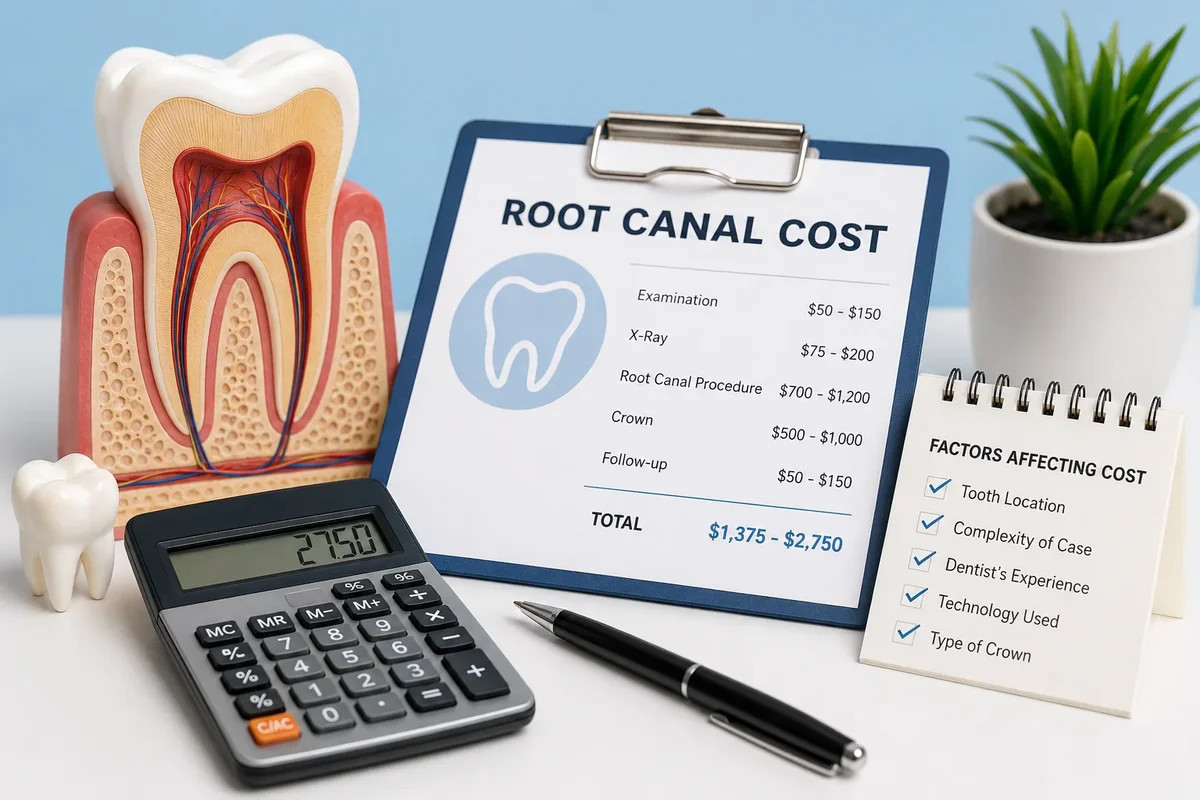
Your Next Step: When to Schedule a Professional Dental Evaluation
After learning about root canal cost, many patients reach the same point: they understand the general information but are still unsure what they should do next. This is completely normal because every dental situation is different. While educational resources can explain how root canal treatment works and what factors influence pricing, they cannot determine whether your tooth actually requires treatment. The most valuable next step is a professional dental evaluation that provides answers specific to your oral health rather than relying on averages or assumptions.
The purpose of a consultation is not simply to calculate root canal cost. It is to determine the cause of your symptoms, evaluate whether the affected tooth can be preserved, discuss available treatment options, and explain the advantages and limitations of each choice. This personalized approach allows you to make a confident decision based on clinical findings instead of generalized information found online.
When You Should Schedule an Evaluation
Some dental symptoms deserve prompt professional attention because they may indicate inflammation, infection, or structural damage that requires diagnosis. Although these symptoms do not automatically mean you need a root canal, they should not be ignored.
Consider arranging a dental appointment if you experience:
- Persistent tooth pain lasting more than a day or two.
- Lingering sensitivity to hot or cold foods and drinks.
- Pain when chewing or biting.
- Swelling around a tooth or gum tissue.
- A tooth that has darkened following trauma.
- A pimple-like bump on the gums.
- Repeated episodes of discomfort in the same tooth.
Seeking evaluation early may provide more treatment options than waiting until symptoms become severe. Even if your concern initially centers on root canal cost, understanding the diagnosis should always come before comparing treatment fees.
What Happens During the Consultation?
A comprehensive examination allows the dentist to understand both your symptoms and the condition of the affected tooth. Depending on your situation, the appointment may include:
- A review of your dental and medical history.
- Discussion of your symptoms.
- Clinical examination of the affected tooth.
- Assessment of surrounding teeth and gums.
- Digital dental X-rays or other diagnostic imaging when appropriate.
- Explanation of available treatment options.
Only after completing this evaluation can your dentist explain the factors influencing your individual root canal cost and whether root canal therapy is the most suitable treatment.
Questions Worth Asking During Your Appointment
Preparing questions in advance helps you understand your treatment plan and compare options more effectively.
Questions About Diagnosis
- What is causing my symptoms?
- Can my tooth be preserved?
- Is root canal treatment the most appropriate option?
- Are there reasonable alternatives?
Questions About Treatment
- How many appointments are expected?
- Will I likely need a crown after treatment?
- What is the expected recovery process?
- What follow-up care will be required?
Questions About Costs
- What is included in my estimated root canal cost?
- Are diagnostic imaging and follow-up visits included?
- Will additional restorative procedures affect the total cost?
- Are payment plans or financing options available?
These discussions provide a clearer understanding of both the clinical and financial aspects of treatment.
Making a Decision Based on Value
Although root canal cost is understandably important, the best decision usually involves balancing several factors rather than choosing the lowest available price.
Consider:
- The condition of the tooth.
- The likelihood of preserving it successfully.
- The expected long-term function.
- The need for additional restorations.
- Your overall oral health goals.
- Your financial planning preferences.
Looking at treatment from this broader perspective often leads to more satisfying long-term decisions than comparing fees alone.
Planning for Future Oral Health
Once treatment has been completed, maintaining good oral hygiene and attending regular dental examinations remain essential. Preventive care cannot eliminate every dental problem, but it may reduce the likelihood of future complications and help identify issues before they become more extensive.
Daily habits that support oral health include:
- Brushing twice daily with fluoride toothpaste.
- Cleaning between teeth every day.
- Attending routine dental examinations.
- Limiting frequent sugary snacks and drinks.
- Seeking prompt evaluation when new symptoms develop.
These preventive measures complement professional dental care and may reduce the likelihood of needing complex treatment in the future.
Choosing a Trusted Dental Provider
When selecting a clinic, look for clear communication, transparent treatment planning, and personalized recommendations rather than advertisements focused only on root canal cost. A reputable dental provider should explain your diagnosis, discuss alternative treatments when appropriate, answer your questions openly, and provide a treatment estimate based on your individual examination.
If you are considering a personalized consultation, the Redent Klinik Contact Page offers an opportunity to arrange an evaluation tailored to your specific dental needs. Rather than providing guaranteed pricing before examination, the dental team can assess your condition, explain available treatment options, and discuss the clinical factors that influence your individual treatment plan.
For additional educational information about oral health and dental procedures, the American Dental Association provides evidence-based patient resources that complement professional dental advice.
Final Decision Guidance
Researching root canal cost is an excellent first step, but it should be followed by a personalized clinical evaluation before making any treatment decision. Every tooth has unique characteristics, and every patient has different priorities. The right choice depends on accurate diagnosis, realistic expectations, and a clear understanding of the benefits, limitations, and possible alternatives.
What to check before moving forward: Confirm your diagnosis, ask what is included in your estimated root canal cost, determine whether a crown or additional procedures are likely to be recommended, review available payment options, and discuss the expected long-term outlook for the tooth. Request professional dental advice promptly if you experience persistent pain, swelling, prolonged sensitivity, or any symptoms that interfere with eating, sleeping, or daily activities, as early evaluation often allows for more informed treatment planning.
Disclosure: this page may contain affiliate links. We may earn a commission if you use them, at no extra cost to you.