
Root canal Medicaid coverage is available in many situations, but the exact benefits depend on the state where you live, your eligibility category, and whether the treatment is considered medically necessary. The short answer is that root canal Medicaid coverage is often available for children through comprehensive dental benefits, while adult coverage varies significantly from one state to another. Some Medicaid programs pay for root canal treatment on selected teeth, some cover only emergency dental care, and others may not include root canal therapy for adults at all. Because every Medicaid program follows both federal guidelines and state-specific rules, the best first step is to verify your individual benefits before scheduling treatment.
If you have been told that you may need a root canal, it is natural to wonder whether delaying treatment to check insurance is a good idea. In many cases, waiting too long can allow an infection to worsen, increasing the likelihood that the tooth cannot be saved. Understanding root canal Medicaid coverage early allows you to make informed decisions, compare treatment options, and avoid unnecessary surprises. Although coverage may reduce your out-of-pocket expenses, it is still important to confirm whether examinations, X-rays, crowns, follow-up appointments, or specialist referrals are included in your benefits.
A root canal is performed to remove infected or damaged tissue from inside a tooth while preserving the natural tooth structure whenever possible. Saving a natural tooth often helps maintain normal chewing, speech, and jaw function. Whether root canal Medicaid coverage applies to your situation depends on several factors, including the condition of the tooth, whether the treatment is considered clinically appropriate, and the policies of your state’s Medicaid program. In some situations, a dentist may recommend another treatment if a tooth cannot be predictably restored after root canal therapy.
Many patients assume that Medicaid works exactly like private dental insurance, but that is not always the case. Medicaid dental benefits are administered differently across states, meaning two people with similar dental problems may have different levels of coverage depending on where they live. For this reason, it is helpful to ask your dental office whether they accept Medicaid, whether prior authorization is required, and whether your treatment plan qualifies under your specific benefits. Knowing these details before treatment can help you plan both financially and clinically.
Another important point about root canal Medicaid coverage is that approval for treatment does not automatically mean every related procedure is included. For example, after a successful root canal, many teeth—especially molars—benefit from a protective crown. Depending on your Medicaid plan, the crown may have different coverage rules than the root canal itself. Your dentist can explain which procedures are recommended for long-term tooth preservation and which services should be confirmed with your insurance provider before treatment begins.
If you are experiencing severe tooth pain, swelling, prolonged sensitivity to hot or cold foods, discomfort while biting, or a recurring dental abscess, you should arrange a dental examination as soon as possible. These symptoms do not always mean a root canal is necessary, but they should not be ignored. A professional examination, including appropriate diagnostic imaging, is the only reliable way to determine whether root canal treatment, another restorative procedure, or tooth removal is the most suitable option.
For patients who are comparing different treatment possibilities, it is important to remember that preserving a healthy natural tooth is often preferable when it is clinically appropriate. However, every situation is unique. A dentist evaluates the amount of remaining tooth structure, the extent of infection, periodontal health, and the expected long-term prognosis before recommending treatment. This personalized assessment is far more valuable than relying on general information found online, even when researching root canal Medicaid coverage.
If you are considering treatment internationally or would like a comprehensive evaluation with transparent treatment planning, experienced dental teams such as Redent Klinik can explain your available treatment options, expected procedures, and possible restorative solutions based on your individual needs. If you would like to discuss your situation directly, you can contact the clinic through the Redent Klinik Contact Page. Educational resources from the American Dental Association can also help you better understand common dental procedures and preventive care recommendations.
Ultimately, root canal Medicaid coverage should be viewed as one part of your overall treatment decision rather than the only deciding factor. Coverage is important, but so are the condition of your tooth, the timing of treatment, and your long-term oral health goals. A treatment that preserves a tooth today may help reduce the need for more complex restorative procedures in the future when performed at the appropriate time.
Next step: Schedule a dental examination if you have ongoing tooth pain or signs of infection, ask your dental office to verify your root canal Medicaid coverage before treatment begins, request a written treatment plan showing which procedures may be covered, and discuss any remaining costs or alternative treatment options so you can make a well-informed decision based on your individual clinical needs.
Does Root Canal Medicaid Coverage Pay for Treatment?
The answer is often yes, but root canal Medicaid coverage depends on several important factors that vary from one state to another. Medicaid is administered at the state level, meaning dental benefits are not identical across the United States. Some state Medicaid programs provide comprehensive dental care for adults, including root canal treatment when it is considered medically necessary. Others offer only limited emergency dental benefits or cover root canals only for specific teeth. Understanding how root canal Medicaid coverage works in your location is essential before making treatment decisions, especially if you are trying to preserve a natural tooth while managing treatment costs.
Rather than assuming a procedure will or will not be covered, the best approach is to confirm your individual benefits before treatment begins. A dental office that accepts Medicaid can often help verify your eligibility and explain which parts of your treatment plan may be covered. This simple step can help you prepare financially while avoiding unnecessary delays if additional documentation or prior authorization is required.
Why Coverage Differs Between States
One of the biggest reasons patients become confused about root canal Medicaid coverage is that Medicaid is not a single nationwide dental insurance plan. Federal law establishes minimum requirements, but each state determines many of its own adult dental benefits. As a result, two patients with the same dental problem may receive different levels of coverage simply because they live in different states.
Children enrolled in Medicaid generally receive broader dental benefits through the Early and Periodic Screening, Diagnostic, and Treatment (EPSDT) program. Adult benefits, however, vary considerably. Some states include preventive care, fillings, crowns, and root canals, while others focus mainly on emergency treatment intended to relieve pain or infection.
This is why checking your own Medicaid benefits is always more reliable than relying on information shared by friends or online forums. Even information published a year ago may no longer reflect current state policies.
What Root Canal Medicaid Coverage May Include
When root canal Medicaid coverage applies, it may include several parts of your treatment rather than only the root canal procedure itself. However, the exact services depend on your Medicaid plan and your dentist’s clinical findings.
Diagnostic Examination
Most treatment begins with a comprehensive dental examination. During this appointment, your dentist evaluates symptoms, reviews your medical history, performs clinical testing, and determines whether the tooth is suitable for root canal treatment.
Dental X-Rays
X-rays are commonly needed to evaluate infection, identify the number of root canals, and assess surrounding bone. Coverage for diagnostic imaging may differ from treatment coverage, making benefit verification worthwhile.
Root Canal Procedure
If the tooth can reasonably be preserved, the actual root canal treatment may be included under root canal Medicaid coverage when clinical requirements are met.
Final Restoration
Many teeth require a permanent filling or crown after root canal therapy. Some Medicaid programs cover crowns only under specific circumstances, while others may have additional eligibility requirements or limitations.
When Root Canal Treatment May Be Recommended
A dentist recommends root canal therapy when the dental pulp has become inflamed or infected but the remaining tooth structure can still be restored successfully. Common reasons include:
- Deep tooth decay reaching the pulp.
- Large fractures affecting the nerve.
- Repeated dental procedures on the same tooth.
- Dental trauma.
- Persistent infection or abscess.
Even when root canal Medicaid coverage is available, treatment is recommended only if preserving the tooth is expected to provide a predictable long-term outcome. If the tooth has extensive structural damage or severe periodontal disease, another treatment option may be more appropriate.
When Coverage Alone Should Not Determine Your Decision
It can be tempting to choose whichever treatment is fully covered, but treatment decisions should also consider long-term oral health. For example, extraction may sometimes have lower immediate costs than saving a tooth, yet losing a natural tooth can affect chewing efficiency, neighboring teeth, bite stability, and future restorative needs.
Your dentist will evaluate:
- The amount of healthy tooth remaining.
- The severity of infection.
- The likelihood of successful restoration.
- Your general oral health.
- Your long-term treatment goals.
This balanced approach helps ensure that decisions are based on clinical suitability rather than insurance coverage alone.
Questions You Should Ask Before Treatment
To better understand your root canal Medicaid coverage, consider asking your dental office the following questions before your appointment:
- Does my Medicaid plan cover this specific tooth?
- Is prior authorization required?
- Will diagnostic X-rays be included?
- Is a crown recommended after treatment?
- If so, is the crown covered?
- Will I need referral to an endodontist?
- Are there any expected out-of-pocket expenses?
Having these answers beforehand allows you to compare treatment options more confidently and reduces unexpected financial concerns.
How Redent Klinik Supports Treatment Planning
Patients seeking a second opinion or a comprehensive treatment evaluation may benefit from discussing their situation with an experienced dental team. Redent Klinik focuses on individualized treatment planning based on clinical examination rather than assumptions about insurance alone. If you would like professional guidance regarding possible treatment options, consultation planning, or restorative solutions, you can contact the clinic through the Redent Klinik Contact Page.
Educational information about maintaining oral health and understanding common dental procedures is also available from the American Dental Association.
Making an Informed Decision
Ultimately, root canal Medicaid coverage is one factor among many when deciding how to manage an infected tooth. Insurance benefits may reduce treatment costs, but they should be considered together with your dentist’s clinical findings, the long-term condition of the tooth, and your personal oral health goals. Choosing treatment based only on immediate expenses may not always provide the most beneficial long-term result.
Many patients find that taking time to understand both their dental diagnosis and their Medicaid benefits leads to better treatment planning and greater confidence throughout the process.
What to check next: Before scheduling treatment, verify your root canal Medicaid coverage, ask whether prior authorization or specialist referral is required, confirm whether crowns or follow-up care are included, and request professional dental advice promptly if you have persistent tooth pain, swelling, sensitivity, or signs of infection.
How Does Root Canal Medicaid Coverage Work and Who Qualifies?
Understanding root canal Medicaid coverage begins with knowing that Medicaid is a joint federal and state health program, but dental benefits are primarily determined at the state level. This means there is no single nationwide rule that guarantees identical dental coverage for every enrollee. While federal law establishes certain minimum requirements, each state decides which adult dental services to include, how they are administered, and under what circumstances they are approved. As a result, root canal Medicaid coverage can differ considerably depending on where you live, your age, your eligibility category, and the clinical condition of your tooth.
If you have recently been told that you may need root canal treatment, it is understandable to wonder whether Medicaid will help pay for it. The answer often depends on whether the procedure is considered medically necessary, whether your dentist participates in Medicaid, and whether your state’s dental program includes endodontic treatment for adults. Instead of assuming you either qualify or do not qualify, it is much more practical to verify your benefits before delaying treatment. Early verification can reduce uncertainty and help you prepare for the next steps in your care.
Why Eligibility Is More Than Simply Having Medicaid
Many patients believe that enrolling in Medicaid automatically means every medically recommended dental treatment is covered. In reality, root canal Medicaid coverage depends on several eligibility factors beyond enrollment itself. Even if two people have Medicaid, their benefits may differ because they belong to different eligibility groups or live in different states.
Eligibility may vary according to:
- Your state of residence.
- Your age.
- Your Medicaid eligibility category.
- Whether you receive standard Medicaid or a managed care dental plan.
- The specific clinical diagnosis.
- The tooth involved in treatment.
Because of these variables, the most reliable source of information is your Medicaid plan combined with confirmation from your dental office.
Children and Adult Coverage Can Be Different
One of the most important aspects of root canal Medicaid coverage is understanding the distinction between pediatric and adult dental benefits.
Coverage for Children
Children enrolled in Medicaid generally receive comprehensive dental services through the Early and Periodic Screening, Diagnostic, and Treatment (EPSDT) benefit. If a root canal is clinically appropriate and helps preserve a child’s permanent tooth, treatment is often covered when medically necessary.
Coverage for Adults
Adult dental benefits vary much more widely. Some states provide extensive dental services, including examinations, fillings, root canals, crowns, and preventive care. Other states provide only limited emergency treatment designed primarily to relieve pain or control infection. Therefore, root canal Medicaid coverage for adults should always be confirmed before treatment planning begins.
When a Root Canal May Meet Coverage Requirements
A dentist evaluates several clinical factors before recommending root canal treatment. Medicaid programs that include endodontic care often require documentation demonstrating that preserving the tooth is appropriate.
Examples of situations where treatment may be considered include:
- Deep decay affecting the dental pulp.
- Persistent infection inside the tooth.
- Dental trauma causing pulp damage.
- Repeated restorative procedures that have affected the nerve.
- An abscess that can potentially be resolved while preserving the tooth.
Even when root canal Medicaid coverage exists, treatment approval is based on clinical findings rather than patient preference alone. If a tooth cannot be restored predictably because of severe structural damage or advanced periodontal disease, another treatment option may be recommended.
Why Prior Authorization May Be Required
Some Medicaid plans require prior authorization before certain dental procedures are performed. This process allows the insurance program to review clinical documentation submitted by your dentist before approving treatment.
The documentation may include:
- Clinical examination findings.
- Dental X-rays.
- Photographs when appropriate.
- A written treatment plan.
- Evidence supporting medical necessity.
Prior authorization does not necessarily mean treatment will be delayed significantly, but understanding the process helps patients prepare realistic expectations. Your dental office can often assist by submitting the required information on your behalf.
How Your Dentist Helps Determine Eligibility
Your dentist plays an important role in determining whether root canal Medicaid coverage may apply. During the examination, they evaluate whether the tooth has enough healthy structure remaining to justify root canal treatment and whether preserving the tooth is expected to provide a favorable long-term outcome.
The evaluation commonly includes:
- Reviewing your symptoms.
- Clinical examination.
- Pulp vitality testing when appropriate.
- Diagnostic X-rays.
- Assessment of surrounding bone and gums.
- Discussion of restorative options after treatment.
This evaluation benefits both the patient and the insurance process because it ensures treatment recommendations are based on clinical evidence instead of assumptions.
Questions That Can Help You Make Better Decisions
Before scheduling treatment, consider asking your dental provider several practical questions regarding root canal Medicaid coverage:
- Does my Medicaid plan include root canal treatment for this tooth?
- Will prior authorization be needed?
- Does the office participate in my Medicaid plan?
- Are X-rays and examinations covered separately?
- If I need a crown afterward, will that be covered?
- Will treatment require referral to an endodontic specialist?
- Are there alternative treatments if coverage is limited?
Having these discussions before treatment begins helps patients make informed decisions while minimizing unexpected administrative or financial concerns.
Considering Your Long-Term Oral Health
Although root canal Medicaid coverage can make treatment more affordable for eligible patients, coverage should not be the only consideration. Preserving a healthy natural tooth often provides important functional benefits, including maintaining chewing efficiency, supporting neighboring teeth, and helping preserve normal bite alignment. At the same time, every tooth must be evaluated individually because not every damaged tooth is suitable for root canal treatment.
If you would like a comprehensive treatment evaluation or another professional opinion regarding tooth preservation, restorative options, or long-term planning, Redent Klinik offers individualized consultations based on clinical examination. You can request further information through the Redent Klinik Contact Page. Additional educational resources about dental care and oral health are available through the American Dental Association.
Making the Right Next Step
The most effective way to understand your root canal Medicaid coverage is to combine benefit verification with a professional dental examination. Insurance eligibility explains what may be covered, while your dentist determines whether root canal treatment is the most appropriate option for your individual condition. Together, these two pieces of information provide the foundation for making a confident and informed treatment decision.
What to check next: Verify your Medicaid dental benefits, confirm that your dental provider participates in your plan, ask whether prior authorization is necessary, review whether any restorative treatment after the root canal is included, and request professional dental advice promptly if you experience persistent tooth pain, swelling, prolonged sensitivity, or signs of infection.
What Factors Affect Costs Even with Root Canal Medicaid Coverage?
Many people assume that if they qualify for root canal Medicaid coverage, they will not have to think about treatment costs at all. In reality, the total amount you may pay depends on several factors beyond whether Medicaid contributes to the procedure. While root canal Medicaid coverage can significantly reduce expenses for eligible patients, every treatment plan is unique. The tooth involved, your state’s Medicaid program, whether prior authorization is required, and the type of restoration needed afterward can all influence the final financial picture.
The good news is that understanding these factors before treatment begins allows you to make informed decisions instead of reacting to unexpected expenses. Rather than focusing only on the immediate cost of a root canal, it is helpful to consider the complete treatment process, including diagnosis, restoration, follow-up care, and the long-term value of preserving your natural tooth whenever it is clinically appropriate.
Why the Total Cost Is More Than the Root Canal Procedure
When discussing root canal Medicaid coverage, many patients think only about the treatment performed inside the tooth. However, a successful outcome often involves several additional steps that may or may not be covered in the same way.
A complete treatment plan may include:
- Initial dental examination.
- Diagnostic X-rays.
- Pulp vitality testing if necessary.
- The root canal procedure itself.
- Temporary restoration.
- Permanent filling or dental crown.
- Follow-up evaluations.
Depending on your Medicaid plan, some of these services may require separate approval or have different coverage rules. Asking for a written treatment plan before beginning care helps you understand which services are expected and whether any personal contribution may be required.
How the Tooth Being Treated Can Affect Costs
Not every root canal is equally complex. Even when root canal Medicaid coverage applies, the amount of work involved can differ depending on which tooth requires treatment.
Front Teeth
Front teeth generally contain fewer root canals and may involve a less complex procedure than larger teeth. They are also easier to access during treatment.
Premolars
Premolars often have more complex root anatomy than front teeth, requiring additional cleaning and shaping of the canals.
Molars
Molars typically contain multiple canals and more complicated internal anatomy. They also experience greater chewing forces, making a protective crown more commonly recommended after treatment. Whether the crown is included under root canal Medicaid coverage depends on your individual Medicaid benefits.
Why Restoring the Tooth Matters
Finishing the root canal is only one part of preserving a tooth. Once infected tissue has been removed, the remaining tooth structure must usually be restored to help protect it from future damage.
Your dentist may recommend:
- A permanent filling.
- An onlay.
- A full dental crown.
Many patients are surprised to learn that restoration coverage may differ from root canal Medicaid coverage. Because coverage rules vary, asking about both procedures during treatment planning helps avoid confusion later.
Specialist Versus General Dentist
Some root canals can be completed by a general dentist, while others may require referral to an endodontist, a dentist who specializes in root canal treatment.
A referral may be appropriate when:
- The tooth has complex root anatomy.
- A previous root canal requires retreatment.
- The canals are difficult to locate.
- Complications are expected.
- Advanced equipment is beneficial.
Before scheduling treatment, ask whether the specialist accepts your Medicaid plan because provider participation can influence how root canal Medicaid coverage applies.
Prior Authorization Can Influence Timing
Many Medicaid programs require prior authorization for selected dental procedures. This process allows the insurance program to review clinical information before approving treatment.
Your dentist may submit:
- Clinical examination findings.
- Dental X-rays.
- Treatment recommendations.
- Evidence supporting medical necessity.
Understanding this process helps patients plan their appointments more effectively while recognizing that approval requirements differ among Medicaid programs.
Why Delaying Treatment May Increase Overall Costs
Although verifying root canal Medicaid coverage is important, delaying an examination because of uncertainty can sometimes allow an infection to worsen. As dental disease progresses, treatment options may become more limited. A tooth that could previously have been restored may eventually require extraction if extensive damage occurs.
This does not mean every painful tooth automatically requires a root canal, but it does highlight the importance of obtaining an early professional evaluation. Prompt diagnosis often provides more treatment choices than waiting until symptoms become severe.
Questions to Ask Before Beginning Treatment
Before making your final decision, ask your dental office several practical questions about root canal Medicaid coverage:
- Which parts of my treatment plan are covered?
- Is prior authorization required?
- Will a crown likely be recommended afterward?
- Is the crown covered under my Medicaid plan?
- Will I need referral to an endodontist?
- Are there any expected out-of-pocket expenses?
- Are payment arrangements available if needed?
These discussions help you understand the entire treatment journey rather than focusing only on the procedure itself.
Looking Beyond Immediate Costs
While financial considerations are important, treatment decisions should also reflect your long-term oral health. Saving a natural tooth, when clinically appropriate, may help preserve chewing function, maintain normal bite alignment, and reduce the need for more extensive restorative procedures in the future. A dentist will balance these clinical considerations with your insurance benefits before recommending the most appropriate option.
If you would like an individualized assessment of your treatment options, Redent Klinik provides comprehensive consultations based on clinical examination rather than insurance assumptions alone. You can learn more or request an appointment through the Redent Klinik Contact Page. Additional patient education about dental treatment and preventive oral health is available from the American Dental Association.
Making a Cost-Conscious and Health-Focused Decision
The purpose of root canal Medicaid coverage is to help eligible patients access necessary dental care, but coverage is only one part of successful treatment planning. Understanding every stage of care—from diagnosis through final restoration—allows you to make better decisions while avoiding unnecessary surprises. A thorough discussion with your dental provider ensures that both your oral health needs and your available benefits are considered together.
What to check next: Before treatment begins, verify your root canal Medicaid coverage, ask for a written treatment plan that includes examinations, X-rays, restorations, and possible specialist referrals, and request professional dental advice promptly if you develop persistent tooth pain, swelling, sensitivity, or signs of dental infection.
When Is a Root Canal the Best Option Instead of Tooth Extraction?
Choosing between saving a tooth and removing it is one of the most important decisions you may face after being diagnosed with significant tooth damage or infection. Many patients researching root canal Medicaid coverage are trying to answer two questions at the same time: “Will Medicaid help pay for treatment?” and “Should I save the tooth or have it extracted?” While insurance benefits are an important part of the decision, they should not be the only factor. A dentist will first determine whether the tooth can be restored predictably and whether preserving it is likely to provide good long-term function. Understanding how root canal Medicaid coverage fits into this clinical decision helps you choose the option that best supports both your oral health and your financial situation.
In many situations, preserving a natural tooth offers significant advantages. Natural teeth help maintain proper chewing efficiency, support surrounding teeth, preserve jaw function, and contribute to normal speech. However, every tooth must be evaluated individually because not every infected tooth can be saved successfully. Your dentist considers the condition of the tooth, surrounding bone, gum health, and the expected long-term prognosis before recommending root canal treatment.
Why Dentists Often Try to Preserve a Natural Tooth
When clinically appropriate, saving a natural tooth is generally preferred over extraction. Although root canal Medicaid coverage may influence treatment affordability, the primary goal is always to preserve healthy oral function whenever possible.
Keeping your natural tooth may help:
- Maintain efficient chewing.
- Reduce unnecessary stress on neighboring teeth.
- Preserve natural bite alignment.
- Support jawbone function.
- Avoid gaps that may require future replacement.
These long-term benefits explain why dentists often recommend root canal treatment when the remaining tooth structure is healthy enough to support restoration.
When a Root Canal May Be the Better Choice
Several clinical situations may make root canal treatment the preferred option. Even when root canal Medicaid coverage is available, treatment recommendations are based on dental examination findings rather than insurance benefits alone.
Deep Tooth Decay
When decay reaches the dental pulp but the remaining tooth structure is still strong enough to restore, root canal treatment may remove infection while preserving the tooth.
Dental Trauma
A cracked or injured tooth may suffer nerve damage without losing enough structure to require extraction. In these cases, root canal treatment may help maintain the natural tooth.
Persistent Infection
When infection is confined within a tooth that can still be restored, root canal therapy may eliminate infected tissue while preserving the outer tooth.
Large Existing Restorations
Teeth with extensive fillings sometimes develop pulp inflammation over time. If enough healthy tooth remains after treatment, root canal therapy may allow continued function.
When Extraction May Be More Appropriate
Although preserving natural teeth is often desirable, extraction may occasionally be the better clinical choice. Your dentist may discuss alternatives if the tooth cannot provide a predictable long-term outcome.
Examples include:
- Extensive fractures extending below the gum line.
- Insufficient remaining tooth structure.
- Advanced periodontal disease causing severe mobility.
- Significant bone loss around the tooth.
- Repeated unsuccessful restorative attempts.
Even if root canal Medicaid coverage exists, treatment should only be performed when there is a reasonable expectation that the tooth can function successfully after restoration.
How Long-Term Costs Influence the Decision
Patients sometimes focus only on the immediate financial difference between root canal treatment and extraction. However, replacing a missing tooth may involve additional procedures in the future depending on your oral health goals.
Potential replacement options may include:
- Dental bridges.
- Dental implants.
- Partial dentures.
Each option has its own clinical indications, maintenance requirements, and possible costs. Therefore, understanding your root canal Medicaid coverage should be part of a broader conversation about long-term oral health rather than simply today’s treatment expense.
Questions Your Dentist Will Consider
Before recommending treatment, your dentist evaluates several important clinical factors.
- Can the infection be removed successfully?
- Is enough healthy tooth structure remaining?
- Can the tooth support a long-term restoration?
- Are the surrounding gums healthy?
- Is there adequate supporting bone?
- Would extraction provide a more predictable result?
These questions help ensure that treatment recommendations are individualized rather than based solely on insurance availability.
How Root Canal Medicaid Coverage Fits into Treatment Planning
While root canal Medicaid coverage can make treatment more accessible for eligible patients, it should complement—not replace—clinical decision-making. Your dentist will first determine which treatment best protects your oral health and then discuss how your Medicaid benefits apply to that recommendation.
During treatment planning, it is useful to ask:
- Does Medicaid cover treatment for this specific tooth?
- Will prior authorization be necessary?
- Will I need a crown afterward?
- Is the crown included in my benefits?
- If extraction is recommended, what replacement options should I consider?
Having these conversations before treatment helps patients understand both their clinical options and their financial responsibilities.
Why Early Evaluation Is Important
Many patients delay seeing a dentist because they hope symptoms will improve or because they are uncertain about root canal Medicaid coverage. Unfortunately, untreated infections often become more extensive over time. Early diagnosis may preserve treatment options that could become unavailable if damage progresses.
This does not mean every painful tooth requires root canal treatment, but prompt evaluation allows your dentist to determine the cause of your symptoms before the condition worsens.
Individualized Care Matters
Every patient’s dental situation is different. Age, oral hygiene, existing restorations, bite forces, general health, and the location of the tooth all influence treatment recommendations. A personalized examination provides much more useful guidance than relying on general online information alone.
If you would like a comprehensive assessment of your treatment options, Redent Klinik offers individualized consultations focused on preserving long-term oral health whenever clinically appropriate. You can request additional information through the Redent Klinik Contact Page. General educational resources about dental health, prevention, and restorative procedures are also available through the American Dental Association.
Making the Right Decision for Your Situation
The goal of root canal Medicaid coverage is to improve access to necessary dental care, but the final treatment decision should always combine insurance information with professional clinical evaluation. Preserving a natural tooth can provide important long-term benefits when the tooth is restorable, while extraction may be the more appropriate option in situations where long-term success is unlikely. Working together with your dentist allows you to choose the treatment that best fits your oral health, functional needs, and available benefits.
What to check next: Ask your dentist whether your tooth is realistically restorable, verify your root canal Medicaid coverage, discuss whether a crown or additional treatment may be recommended afterward, and seek professional dental advice promptly if you notice swelling, severe pain, prolonged sensitivity, or signs of an active dental infection.
What Happens During a Root Canal and What Should You Expect?
If you have recently been told that you may need root canal treatment, it is natural to have questions about the procedure itself as well as root canal Medicaid coverage. Many patients worry that the treatment will be complicated or painful, while others are primarily concerned about whether Medicaid will help cover the necessary care. Understanding both the treatment process and how root canal Medicaid coverage may apply can help you make a more informed decision without relying on misconceptions or outdated information.
A modern root canal is designed to remove infected or inflamed tissue from inside a tooth while preserving as much healthy tooth structure as possible. Advances in dental techniques, local anesthesia, and diagnostic technology have made the procedure more comfortable and predictable than many people expect. Although every patient’s situation is unique, knowing the general treatment process can help reduce anxiety and prepare you for discussions with your dentist about timing, restoration, and insurance verification.
The First Step: A Comprehensive Dental Examination
Before recommending root canal treatment, your dentist performs a detailed examination to determine whether saving the tooth is the most appropriate option. Even when root canal Medicaid coverage is available, treatment should only proceed after confirming that the tooth has a reasonable long-term prognosis.
The examination commonly includes:
- A review of your symptoms.
- A clinical examination of the affected tooth.
- Diagnostic dental X-rays.
- Evaluation of surrounding gum and bone health.
- Tests that help assess the condition of the dental pulp.
This information allows your dentist to determine whether root canal treatment, another restorative procedure, or extraction is the most suitable approach.
Preparing for the Procedure
Once treatment has been recommended, your dentist will explain each step and discuss how root canal Medicaid coverage applies to your treatment plan. Depending on your Medicaid program, certain procedures may require benefit verification or prior authorization before treatment begins.
During this consultation, patients commonly discuss:
- Expected treatment appointments.
- Whether referral to an endodontist is necessary.
- Possible restorative treatment afterward.
- Insurance verification.
- Questions about recovery.
Asking these questions before treatment helps patients understand both the clinical and administrative aspects of care.
What Happens During a Root Canal?
Local Anesthesia
Most root canal procedures begin with local anesthesia to numb the treatment area. The goal is to improve patient comfort throughout the procedure. Your dentist will ensure the tooth is adequately numb before treatment starts.
Accessing the Tooth
A small opening is created in the top of the tooth to allow access to the infected or inflamed pulp inside the root canals.
Cleaning the Root Canals
Using specialized instruments, the dentist carefully removes infected tissue and shapes the internal canals. The canals are then cleaned thoroughly to reduce bacteria and prepare the tooth for sealing.
Filling the Canals
After cleaning is complete, the canals are sealed with a biocompatible filling material designed to help protect the tooth from future contamination.
Temporary or Permanent Restoration
Depending on the individual case, the tooth may receive a temporary filling initially. A permanent filling or crown is often recommended afterward, particularly for back teeth that experience significant chewing forces.
Whether these restorative procedures are included under root canal Medicaid coverage depends on your specific Medicaid plan, making benefit verification an important part of treatment planning.
Will You Need More Than One Appointment?
Some root canals can be completed during a single visit, while others require multiple appointments. Several factors influence the treatment schedule.
Examples include:
- The complexity of the root canal system.
- The severity of infection.
- The presence of swelling.
- The need for additional disinfection between visits.
- Referral to a specialist.
Your dentist will recommend the most appropriate schedule based on your clinical findings rather than following a standard timetable.
Recovery After Treatment
Most patients experience mild tenderness for a short period after root canal treatment, particularly when chewing. Recovery varies depending on the condition of the tooth before treatment and the complexity of the procedure.
Your dentist may recommend:
- Following postoperative instructions carefully.
- Avoiding chewing hard foods on the treated tooth until restoration is complete.
- Maintaining good oral hygiene.
- Attending any recommended follow-up appointments.
If symptoms increase rather than improve, or if swelling develops, patients should contact their dental provider promptly for further evaluation.
Why Completing the Restoration Is Important
One of the most overlooked parts of treatment is restoring the tooth after the root canal has been completed. Removing infection solves one problem, but the remaining tooth must still be protected against fracture and future bacterial contamination.
Your dentist may recommend:
- A permanent filling.
- An onlay.
- A full-coverage crown.
Because restoration plays an important role in long-term success, ask your dental office whether the recommended restoration is included under your root canal Medicaid coverage before treatment begins.
Questions to Ask Before Your Appointment
Being prepared can help you feel more confident throughout treatment. Consider asking your dentist:
- Is my tooth suitable for root canal treatment?
- Will treatment likely require one or multiple visits?
- Do I need referral to an endodontist?
- Will I need a crown afterward?
- What does my root canal Medicaid coverage include?
- Will prior authorization be required?
- When can I return to normal eating?
Having these answers beforehand helps reduce uncertainty and supports informed decision-making.
Individualized Treatment Planning
No two root canal cases are identical. Factors such as tooth anatomy, infection severity, existing restorations, bite forces, and overall oral health all influence treatment recommendations. Insurance benefits are important, but they should always be considered alongside a thorough clinical evaluation.
If you would like a personalized consultation regarding tooth preservation or restorative treatment options, Redent Klinik provides comprehensive evaluations tailored to each patient’s clinical condition. Additional information is available through the Redent Klinik Contact Page. General educational resources about root canal treatment and oral health are also available from the American Dental Association.
Knowing What to Expect Helps You Make Better Decisions
Understanding both the clinical process and root canal Medicaid coverage allows patients to prepare more confidently for treatment. While every procedure is customized to the individual, knowing the general sequence—from examination through restoration—helps reduce uncertainty and encourages timely care when preserving a natural tooth is clinically appropriate.
What to check next: Confirm your root canal Medicaid coverage, ask whether prior authorization or specialist referral is needed, verify whether the final restoration is included in your treatment plan, and request professional dental advice promptly if you experience persistent pain, swelling, drainage, or other symptoms suggesting ongoing infection.
What Are the Risks, Limitations, and Possible Complications?
While root canal treatment is a well-established procedure that helps preserve many natural teeth, every dental treatment has potential risks and limitations. Understanding these possibilities is just as important as understanding root canal Medicaid coverage. Insurance can help eligible patients access treatment, but it does not determine whether a root canal is the most appropriate clinical option. Instead, your dentist will evaluate the condition of your tooth, surrounding tissues, and overall oral health before recommending treatment.
Many patients researching root canal Medicaid coverage are primarily concerned about whether Medicaid will pay for the procedure. However, asking about success rates, possible complications, long-term maintenance, and alternative treatments is equally important. Making an informed decision means understanding both the benefits and the potential limitations before treatment begins.
Although most root canal procedures are completed without significant problems, no dental procedure can guarantee a particular outcome. The condition of the tooth before treatment, the extent of infection, existing restorations, oral hygiene habits, and regular dental follow-up all influence long-term success.
Understanding the Main Goal of Root Canal Treatment
The objective of a root canal is to remove infected or inflamed pulp tissue while preserving the remaining healthy tooth whenever possible. If the tooth can be restored successfully after treatment, keeping the natural tooth often supports normal chewing function and bite stability.
Even when root canal Medicaid coverage applies, your dentist will first determine whether preserving the tooth offers a realistic long-term prognosis. If the remaining tooth structure is too weak or extensive damage is present, another treatment may provide a more predictable outcome.
Common Risks Associated with Root Canal Treatment
Every dental procedure involves some degree of risk, although many complications are uncommon and can often be managed with appropriate follow-up care.
Persistent Infection
In some situations, bacteria may remain inside complex root canal anatomy despite careful cleaning. Additional treatment or retreatment may occasionally be recommended if symptoms continue or new infection develops.
Hidden Canal Anatomy
Some teeth contain additional or unusually shaped canals that may be difficult to identify. Modern imaging and magnification have improved detection, but anatomical variation remains one of the reasons treatment complexity differs from patient to patient.
Tooth Fracture
A tooth that has required root canal treatment may already have significant structural damage caused by decay, trauma, or previous restorations. For this reason, many back teeth benefit from a protective crown after treatment. Ask whether your root canal Medicaid coverage also includes the recommended restoration.
Instrument Separation
Specialized instruments are used to clean root canals. Although uncommon, instrument separation can occasionally occur because of canal anatomy or other procedural factors. If this happens, your dentist will explain the situation and discuss appropriate management options.
Temporary Discomfort
Mild tenderness during chewing or sensitivity for a short period after treatment is relatively common. Symptoms generally improve as healing progresses, but every patient recovers differently.
Limitations of Root Canal Treatment
Even with successful treatment and appropriate root canal Medicaid coverage, not every tooth can or should be preserved. Some limitations are related to the condition of the tooth rather than the procedure itself.
Examples include:
- Extensive cracks extending below the gum line.
- Severe loss of supporting bone.
- Advanced periodontal disease.
- Insufficient healthy tooth structure for restoration.
- Repeated treatment failures on the same tooth.
When these factors are present, extraction and another restorative solution may provide a better long-term prognosis.
How Restoring the Tooth Reduces Future Problems
Completing the root canal is only part of successful treatment. Once infection has been removed, the remaining tooth often requires additional protection.
Your dentist may recommend:
- A permanent filling.
- An onlay.
- A full-coverage dental crown.
Failure to restore the tooth appropriately may increase the likelihood of fracture or reinfection. Since restorative coverage may differ from root canal Medicaid coverage, it is worthwhile to confirm your benefits before treatment begins.
How Patients Can Reduce the Risk of Complications
Although no treatment is completely risk-free, patients can take several practical steps to support healing and improve long-term outcomes.
- Attend scheduled follow-up appointments.
- Maintain consistent brushing and flossing habits.
- Avoid chewing extremely hard foods on a temporary restoration.
- Complete any recommended permanent restoration promptly.
- Seek evaluation if symptoms worsen instead of improve.
These habits cannot eliminate every risk, but they may contribute to healthier long-term function after treatment.
Questions Worth Asking Before Treatment
Before proceeding with treatment under root canal Medicaid coverage, ask your dentist several practical questions.
- Is my tooth likely to have a favorable long-term prognosis?
- Will I need a crown afterward?
- Does my Medicaid plan include that restoration?
- Would treatment by an endodontist be recommended?
- What symptoms should prompt immediate follow-up?
- What alternatives exist if the tooth cannot be restored?
These discussions help patients understand not only what is planned but also why a particular treatment has been recommended.
Balancing Benefits and Risks
Patients sometimes focus entirely on root canal Medicaid coverage because insurance influences affordability. However, clinical suitability should always remain the primary consideration. Preserving a natural tooth can offer important long-term functional advantages when restoration is realistic, but extraction may occasionally provide a more predictable outcome if the tooth is severely compromised.
Making this decision requires a careful clinical examination rather than relying solely on symptoms or insurance information found online.
Individual Evaluation Supports Better Decisions
Every patient’s dental condition is different. The severity of infection, the location of the tooth, bite forces, previous restorations, oral hygiene, and overall health all influence treatment planning. An individualized evaluation helps determine whether root canal treatment remains the most appropriate choice.
If you would like a personalized assessment of your treatment options, Redent Klinik provides comprehensive consultations focused on preserving healthy teeth whenever clinically appropriate. You can request additional information through the Redent Klinik Contact Page. Reliable educational information about root canal therapy and preventive dental care is also available through the American Dental Association.
Making a Well-Informed Decision
Understanding the risks and limitations of treatment allows you to view root canal Medicaid coverage within the larger context of your oral health. Insurance benefits may improve access to care, but successful treatment depends on appropriate diagnosis, careful clinical planning, proper restoration, and ongoing dental maintenance. Taking time to discuss these factors with your dentist helps ensure your treatment decision reflects both your health needs and your long-term goals.
What to check next: Before proceeding, confirm your root canal Medicaid coverage, ask whether your tooth is expected to have a favorable long-term prognosis, verify whether any recommended crown or restoration is included in your benefits, and seek professional dental advice immediately if you develop increasing pain, swelling, fever, drainage, or other symptoms that may indicate an active or worsening dental infection.
What Alternatives Are Available If Root Canal Medicaid Coverage Is Limited?
Discovering that your root canal Medicaid coverage is limited or does not include every part of your recommended treatment can be frustrating. Fortunately, limited insurance benefits do not necessarily mean you have no treatment options. The right choice depends on the condition of your tooth, your oral health goals, and your financial situation. Rather than making a quick decision based only on insurance, it is helpful to understand the alternatives your dentist may discuss and the advantages and limitations of each approach.
The purpose of evaluating alternatives is not to replace root canal treatment whenever coverage is unavailable. Instead, it is to identify the treatment that best balances your oral health needs with practical considerations. In many situations, preserving a natural tooth remains the preferred option if it can be restored predictably. In other cases, another treatment may provide a better long-term outcome. Understanding how root canal Medicaid coverage affects your available choices allows you to plan confidently with your dental provider.
Why Insurance Should Not Be the Only Deciding Factor
Many patients understandably focus first on whether root canal Medicaid coverage will reduce treatment expenses. While financial planning is important, insurance alone should not determine whether a tooth is saved or removed. A dentist first evaluates whether the tooth has a realistic chance of long-term success. If preserving the tooth is clinically appropriate, treatment recommendations are based on oral health rather than insurance limitations.
When discussing alternatives, your dentist considers:
- The amount of healthy tooth remaining.
- The severity of infection.
- The condition of surrounding bone and gums.
- Your chewing function.
- Your overall treatment goals.
This personalized evaluation helps ensure that any alternative treatment is selected for clinical reasons rather than cost alone.
Alternative 1: Tooth Extraction
Extraction is one of the most common alternatives when root canal treatment is not recommended or when a tooth cannot be restored successfully.
When Extraction May Be Appropriate
- The tooth has extensive structural damage.
- A fracture extends below the gum line.
- Advanced periodontal disease has weakened support.
- Repeated treatment attempts have been unsuccessful.
- The tooth has a poor long-term prognosis.
Although extraction may relieve infection or pain, removing a tooth can also affect chewing efficiency, neighboring teeth, and bite alignment. For this reason, dentists generally consider replacement options when appropriate.
Alternative 2: Dental Bridge
If extraction becomes necessary, a dental bridge may be considered to replace the missing tooth. A bridge uses neighboring teeth as support for an artificial tooth positioned in the gap.
Potential advantages include:
- Restoring chewing function.
- Helping maintain appearance.
- Reducing movement of neighboring teeth.
Whether bridge treatment is covered depends on your individual Medicaid benefits, which may differ from root canal Medicaid coverage. Coverage should always be verified before treatment planning begins.
Alternative 3: Dental Implant
A dental implant is another possible replacement option after extraction. Implants replace the missing tooth root with a titanium post that supports a crown once healing is complete.
However, not every patient is an ideal implant candidate. Factors such as bone quality, general health, healing ability, and financial considerations all influence treatment planning.
Many Medicaid programs have different coverage policies for implants than for root canal Medicaid coverage, so it is important to discuss insurance benefits separately if implant treatment is being considered.
Alternative 4: Partial Denture
A removable partial denture may replace one or several missing teeth when fixed treatment is not appropriate or desired.
Potential considerations include:
- Lower initial cost than some fixed options.
- Removal for cleaning.
- Adaptation period for some patients.
- Periodic adjustment over time.
Your dentist can explain whether this solution fits your oral health needs and whether your Medicaid benefits include removable prosthetic treatment.
Alternative 5: Monitoring in Selected Situations
Not every tooth with symptoms immediately requires root canal treatment. In selected situations, your dentist may recommend monitoring before deciding on definitive treatment.
Monitoring may be appropriate when:
- Symptoms are uncertain.
- Additional diagnostic testing is required.
- The pulp may recover after recent dental treatment or trauma.
Regular follow-up appointments are important because delaying necessary treatment without professional supervision may allow dental disease to progress.
How to Compare Your Options
If your root canal Medicaid coverage is limited, comparing treatment options systematically can make decision-making easier. Consider discussing the following questions with your dentist:
- Can my natural tooth be predictably preserved?
- What are the long-term advantages of saving the tooth?
- If extraction is recommended, what replacement options are appropriate?
- Which treatments are covered by my Medicaid plan?
- What maintenance will each option require?
- How will each treatment affect chewing and oral function?
These discussions allow you to evaluate both clinical outcomes and financial planning together.
Why Early Evaluation Creates More Choices
Many patients postpone dental care while trying to understand root canal Medicaid coverage. Unfortunately, delaying evaluation may reduce the number of available treatment options. An infection that could have been managed conservatively may eventually cause additional structural damage, making tooth preservation more difficult.
Seeking an examination early does not commit you to immediate treatment. Instead, it provides valuable information about your current condition, available treatment options, and insurance considerations before problems become more complex.
Working with Your Dental Team
Choosing among several treatment possibilities can feel overwhelming, especially when insurance benefits vary. A detailed consultation allows your dentist to explain the expected advantages, limitations, maintenance requirements, and long-term implications of each option.
If you would like a comprehensive evaluation focused on preserving oral health while considering your individual circumstances, Redent Klinik provides personalized treatment planning based on clinical examination. You can request additional information through the Redent Klinik Contact Page. Educational resources about restorative dentistry and oral health are also available through the American Dental Association.
Choosing the Most Appropriate Path Forward
Limited root canal Medicaid coverage does not automatically determine which treatment is best. Instead, it becomes one factor among many that your dentist considers when creating a personalized treatment plan. Whether preserving the natural tooth, replacing a missing tooth, or monitoring the situation is recommended, the goal remains the same: supporting long-term oral health with a solution that is clinically appropriate for your individual needs.
What to check next: Confirm the details of your root canal Medicaid coverage, ask your dentist whether your tooth is suitable for preservation, discuss all reasonable alternatives along with their long-term implications, and request professional dental advice promptly if you experience ongoing pain, swelling, difficulty chewing, or any symptoms suggesting that an infection may be progressing.
How Can You Manage Treatment Costs Beyond Root Canal Medicaid Coverage?
Even if you qualify for root canal Medicaid coverage, you may still have questions about managing treatment expenses. Depending on your state’s Medicaid program, certain parts of your treatment may be covered while others may require additional planning. For example, your benefits may include the root canal procedure itself but have different rules for diagnostic imaging, crowns, specialist treatment, or follow-up care. Understanding these possibilities before treatment begins can help you make informed financial decisions without delaying necessary dental care.
Managing costs successfully is not only about finding the lowest price. It is also about choosing the treatment that offers the most appropriate long-term outcome for your oral health. A well-planned treatment completed at the right time may help reduce the likelihood of more extensive dental procedures later. By combining a professional examination with a clear understanding of root canal Medicaid coverage, you can evaluate both your clinical needs and your available financial options.
Start by Understanding Your Complete Treatment Plan
One of the most effective ways to avoid unexpected expenses is to request a written treatment plan before any procedure begins. Rather than focusing only on the root canal itself, ask your dentist to explain every stage of treatment.
A complete treatment plan may include:
- Initial examination.
- Dental X-rays.
- Pulp testing when appropriate.
- The root canal procedure.
- Temporary restoration.
- Permanent filling or crown.
- Follow-up appointments.
Reviewing each part individually allows you to identify which services are included under your root canal Medicaid coverage and which services, if any, may require additional financial planning.
Verify Your Medicaid Benefits Before Scheduling Treatment
Coverage details vary considerably among state Medicaid programs. Even patients living in neighboring states may have different dental benefits. Because of this variation, confirming eligibility before treatment is one of the most practical steps you can take.
Ask your dental office:
- Does my Medicaid plan cover this specific root canal?
- Is prior authorization required?
- Will treatment by a specialist be covered?
- Are restorations such as crowns included?
- Will follow-up appointments be covered?
These questions provide a clearer picture of how your root canal Medicaid coverage applies to your individual treatment plan.
Discuss Payment Options for Non-Covered Services
If your Medicaid benefits do not include every recommended procedure, your dental office may discuss available payment options. Every practice has its own policies, so asking about financial arrangements before treatment begins can reduce uncertainty.
Depending on the provider, possible options may include:
- Monthly payment arrangements.
- Third-party healthcare financing.
- Phased treatment planning when clinically appropriate.
- Alternative restorative solutions.
The most appropriate approach depends on your treatment needs, your oral health priorities, and the policies of your dental provider.
Understand Why a Crown May Be Recommended
Many patients are surprised to learn that the root canal procedure is often only one part of preserving a tooth. After infected tissue has been removed, the remaining tooth may require additional protection, particularly if it is a molar that experiences heavy chewing forces.
Your dentist may recommend:
- A permanent filling.
- An onlay.
- A full-coverage crown.
Because restorative benefits may differ from root canal Medicaid coverage, asking about restoration coverage before treatment helps you plan appropriately.
Consider the Long-Term Value of Preserving a Tooth
Although financial considerations are important, treatment decisions should also reflect long-term oral health. Saving a natural tooth may help preserve chewing efficiency, maintain bite alignment, and reduce the need for future replacement procedures when restoration is clinically appropriate.
Conversely, if a tooth cannot be restored successfully, your dentist may discuss alternative treatment options that better suit your clinical situation. Evaluating both the immediate and long-term implications helps patients make balanced decisions.
Seek a Second Opinion When Appropriate
If you are uncertain about the recommended treatment or your root canal Medicaid coverage, obtaining a second professional opinion can provide additional clarity. Another dentist may confirm the original recommendation or explain alternative treatment approaches based on your individual clinical findings.
A second opinion can be particularly valuable when:
- Several treatment options are available.
- The tooth has extensive structural damage.
- Specialist referral has been recommended.
- You have questions about long-term prognosis.
Seeking additional information allows patients to feel more confident before proceeding with treatment.
Do Not Delay Evaluation Because of Cost Concerns Alone
Patients sometimes postpone dental care while researching root canal Medicaid coverage or comparing treatment expenses. Although careful planning is sensible, delaying professional evaluation can sometimes allow dental disease to progress.
Early diagnosis may provide:
- More treatment options.
- Better preservation of natural tooth structure.
- Earlier management of infection.
- Improved treatment planning.
Scheduling an examination does not require immediate treatment, but it provides the information needed to make an informed decision before the condition becomes more complicated.
Work Together with Your Dental Team
Open communication is one of the most valuable tools for managing both treatment and costs. Your dentist can explain the expected clinical benefits, possible alternatives, estimated treatment sequence, and how your insurance benefits fit into the overall plan.
If you are seeking individualized treatment planning or would like another professional evaluation, Redent Klinik offers comprehensive consultations focused on preserving long-term oral health whenever clinically appropriate. You can request additional information through the Redent Klinik Contact Page. Educational information about restorative dentistry and preventive oral care is also available through the American Dental Association.
Making a Financially and Clinically Informed Decision
The purpose of root canal Medicaid coverage is to help eligible patients access appropriate dental care, but successful treatment planning requires looking beyond insurance alone. By understanding your benefits, reviewing your complete treatment plan, discussing payment options for any non-covered services, and considering the long-term value of preserving a healthy natural tooth, you can make a decision that reflects both your oral health needs and your financial circumstances.
What to check next: Verify your root canal Medicaid coverage, request a written treatment plan showing every recommended procedure, ask whether restorations or specialist care are covered, discuss available payment arrangements if necessary, and seek professional dental advice promptly if your symptoms worsen or if you are uncertain which treatment option is most appropriate for your situation.
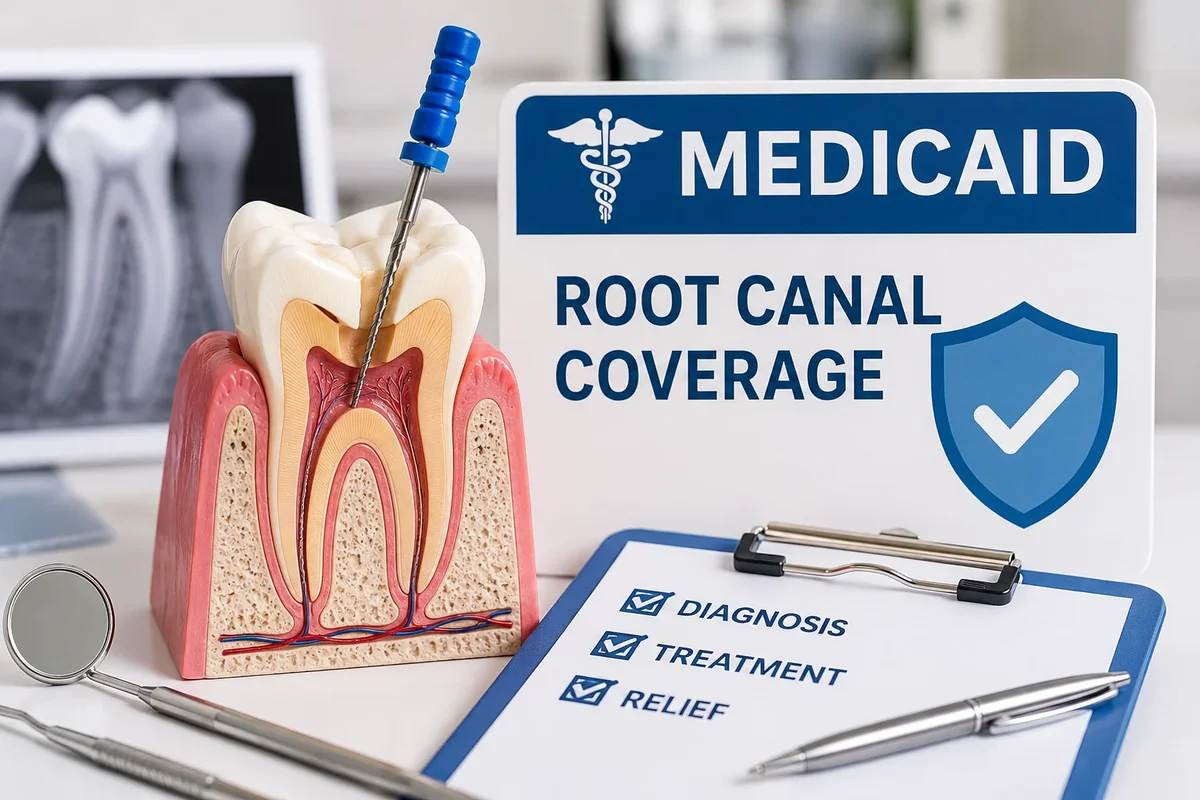
Frequently Asked Questions and Your Next Best Step
By the time you reach this point, you have likely learned that root canal Medicaid coverage is not determined by a single nationwide rule. Instead, coverage depends on your state’s Medicaid program, your eligibility, the condition of your tooth, and whether the recommended treatment meets your plan’s clinical requirements. While these details may initially seem complicated, most patients can make confident decisions by combining a professional dental examination with benefit verification before treatment begins.
This final section answers some of the most common questions patients ask about root canal Medicaid coverage. The goal is not only to provide information but also to help you understand what actions are most useful before making treatment decisions. Every patient’s situation is unique, so these answers should complement—not replace—a personalized consultation with a qualified dental professional.
Does Medicaid Always Cover Root Canal Treatment?
No. Root canal Medicaid coverage varies significantly among state Medicaid programs. Some states provide comprehensive adult dental benefits, while others offer only limited or emergency dental services. Coverage may also depend on the specific tooth being treated, medical necessity, and other program requirements.
Before scheduling treatment, ask your dental office to verify your individual Medicaid benefits rather than relying on general information found online.
Will Every Tooth Be Covered?
Not necessarily. Some Medicaid programs apply different coverage rules depending on the location of the tooth or the clinical circumstances. Even when root canal Medicaid coverage is available, your dentist must determine whether preserving the tooth is clinically appropriate.
The recommendation will depend on factors such as:
- The amount of healthy tooth remaining.
- The severity of infection.
- The condition of surrounding bone.
- The expected long-term prognosis.
Will I Need a Crown After a Root Canal?
Many patients do, especially when treatment involves a back tooth that experiences heavy chewing forces. A crown may help protect the remaining tooth structure from fracture.
However, restorative benefits may differ from root canal Medicaid coverage. It is important to ask whether your Medicaid plan also includes the recommended permanent restoration.
Can I Delay Treatment While I Verify My Coverage?
Verifying insurance is an important step, but delaying a dental examination because of uncertainty may allow infection or structural damage to progress. An examination does not obligate you to proceed immediately with treatment, but it provides the information necessary to understand your condition and your available options.
If you have severe pain, facial swelling, drainage, or difficulty chewing, arranging a professional evaluation promptly is generally the safest course of action.
What Happens If My Medicaid Benefits Are Limited?
Limited root canal Medicaid coverage does not necessarily mean treatment is impossible. Your dentist may discuss alternative treatment plans, phased care when clinically appropriate, payment arrangements available through the practice, or other restorative options based on your individual circumstances.
The appropriate solution depends on your diagnosis, oral health goals, and the condition of the affected tooth.
Can a General Dentist Perform a Root Canal?
Many general dentists perform root canal treatment successfully, particularly for straightforward cases. More complex situations may require referral to an endodontist, a dentist who specializes in root canal procedures.
Your dentist may recommend referral when:
- The root anatomy is unusually complex.
- Retreatment is necessary.
- The tooth has significant structural challenges.
- Advanced equipment would improve treatment planning.
If referral is recommended, ask whether the specialist participates in your Medicaid plan and whether your root canal Medicaid coverage applies to specialist care.
What Questions Should I Ask Before Treatment?
Preparing questions in advance helps patients make informed decisions and understand both the clinical and financial aspects of treatment.
Useful questions include:
- Is my tooth suitable for root canal treatment?
- Does my Medicaid plan cover this procedure?
- Will prior authorization be required?
- Will I need a crown afterward?
- Is the crown covered?
- Are there reasonable alternatives if coverage is limited?
- What follow-up appointments will be needed?
These discussions help prevent misunderstandings and ensure that your treatment plan reflects your individual needs.
How Can You Prepare for Your Dental Appointment?
Before your visit, gather any information that may help your dental office verify your root canal Medicaid coverage. Bringing your Medicaid identification, previous dental records if available, and a list of current symptoms can make the consultation more productive.
It is also helpful to write down:
- When the pain began.
- Whether hot or cold temperatures trigger discomfort.
- If swelling has occurred.
- Whether chewing causes pain.
- Any previous treatment performed on the tooth.
This information assists your dentist in reaching an accurate diagnosis and recommending the most appropriate treatment.
Your Next Best Step
The most practical approach is to combine benefit verification with a comprehensive dental examination. Root canal Medicaid coverage is valuable because it may improve access to treatment for eligible patients, but insurance alone cannot determine whether root canal therapy is the right clinical solution. Your dentist’s evaluation remains the foundation for deciding whether preserving the tooth, restoring it, or considering another treatment will best support your long-term oral health.
If you are looking for a personalized consultation regarding root canal treatment, restorative dentistry, or long-term treatment planning, Redent Klinik provides individualized evaluations tailored to each patient’s clinical needs. You can request further information through the Redent Klinik Contact Page. Reliable educational resources about dental procedures, prevention, and oral health are also available through the American Dental Association.
Final Thoughts
Understanding root canal Medicaid coverage empowers you to ask better questions, prepare financially, and make treatment decisions with greater confidence. Because Medicaid benefits differ among states and every dental condition is unique, there is no substitute for a thorough clinical examination combined with personalized benefit verification. Taking these steps early can help you understand your options before dental problems become more advanced.
What to check next: Verify your root canal Medicaid coverage directly with your Medicaid plan or dental office, request a written treatment plan explaining every recommended procedure, confirm whether restorations, specialist referrals, or follow-up visits are included, and arrange a professional dental consultation as soon as possible if you experience persistent tooth pain, swelling, prolonged sensitivity, drainage, or any signs of an active dental infection.
Disclosure: this page may contain affiliate links. We may earn a commission if you use them, at no extra cost to you.