
If you are searching for root canal price, the most important answer is that there is no single fixed amount that applies to every patient. The final root canal price depends on several clinical factors, including which tooth requires treatment, the complexity of the infection, whether retreatment is necessary, the technology used during the procedure, and whether additional restorative work such as a dental crown is recommended afterward. Because every tooth and every patient are different, a professional examination is the only reliable way to determine the most appropriate treatment plan and provide an accurate cost estimate.
For many people, comparing root canal price starts with one practical question: is it worth saving the natural tooth? In many situations, preserving a healthy natural tooth can help maintain normal chewing function, support neighboring teeth, and reduce the need for more complex restorative procedures later. However, this decision should always be based on a clinical assessment rather than cost alone. A dentist evaluates the condition of the tooth, surrounding bone, gum health, previous dental work, and overall oral health before recommending the most suitable option.
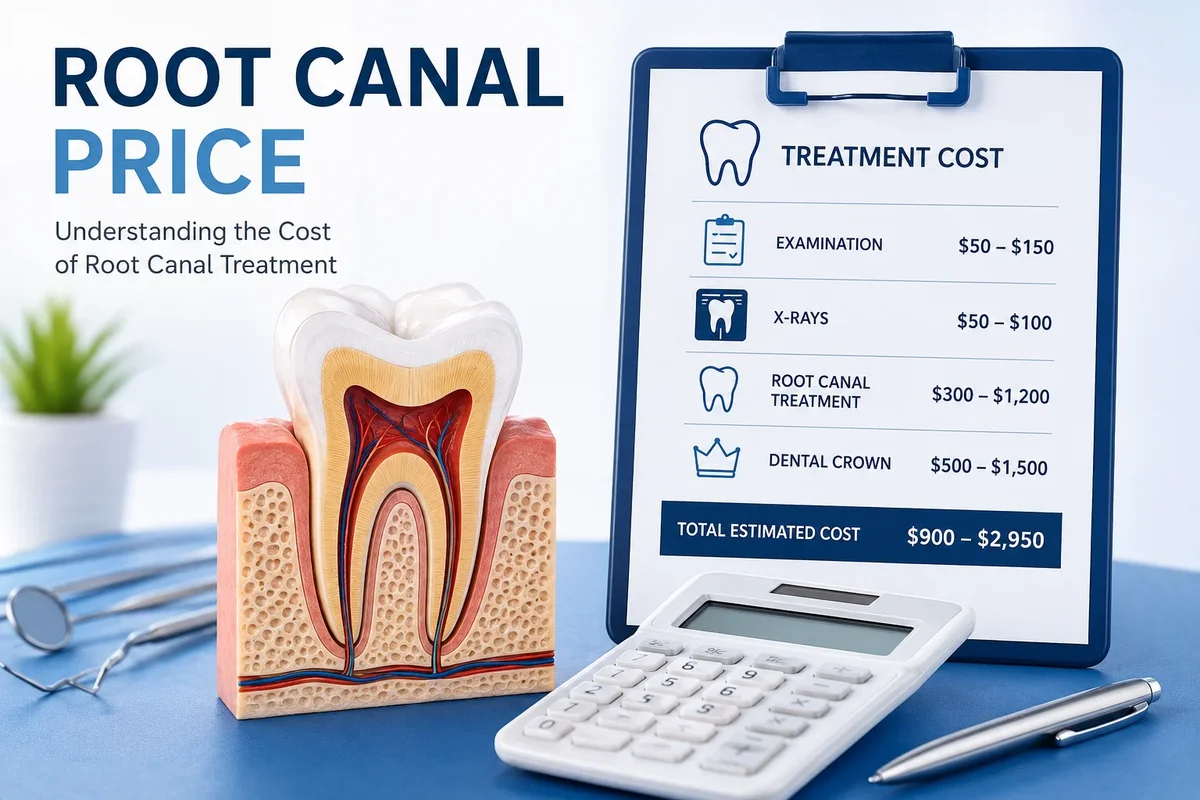
It is also important to understand what is usually included when discussing root canal price. Some treatment estimates may only cover the root canal procedure itself, while others may include diagnostic X-rays, digital imaging, local anesthesia, temporary fillings, follow-up appointments, or permanent restorations. In many cases, a tooth that has received root canal therapy benefits from a dental crown because the tooth structure may become weaker after infection and treatment. Since treatment plans vary, asking exactly what is included in the quoted root canal price helps you compare options more accurately.
Many patients delay treatment because they worry about the root canal price. While cost is understandably an important consideration, postponing treatment may allow infection to progress further. As dental infections become more advanced, treatment may become more complex, additional procedures may become necessary, or in some situations the tooth may no longer be suitable for preservation. Early assessment often provides more treatment choices than waiting until symptoms become severe.
Another common misconception is that a higher root canal price always guarantees better treatment. In reality, quality depends on many factors beyond cost, including the dentist’s clinical experience, careful diagnosis, appropriate treatment planning, sterilization standards, modern equipment, and long-term follow-up. Rather than focusing only on the number itself, patients often benefit from understanding the overall value of treatment and the level of care provided throughout the process.
If you have persistent tooth pain, prolonged sensitivity to hot or cold, swelling around the gums, tenderness while chewing, or discoloration of a tooth, these symptoms may indicate that professional dental evaluation is appropriate. However, similar symptoms can also result from other dental conditions. Only a comprehensive examination can determine whether root canal treatment is necessary and whether the estimated root canal price applies to your particular situation.
When researching root canal price, it is also helpful to remember that every country, city, and dental clinic may use different treatment protocols, technologies, and laboratory partners. Geographic location, operating costs, specialist involvement, and restoration materials can all influence the final treatment estimate. For this reason, online price ranges should be viewed as general educational information rather than personal quotations.
Patients frequently ask whether dental insurance reduces the overall root canal price. The answer depends entirely on the insurance provider, policy terms, annual limits, waiting periods, and the specific procedure being performed. Some plans contribute toward diagnostic imaging and root canal treatment, while others may also provide benefits for the crown placed afterward. Reviewing your individual policy before beginning treatment helps avoid unexpected expenses.
Another factor that influences root canal price is the complexity of the tooth itself. Front teeth generally have fewer canals than molars, while molars often contain multiple narrow canals that require additional treatment time and technical precision. This difference in complexity is one reason why treatment estimates may vary between different teeth within the same patient.
Reliable information is an essential part of making an informed treatment decision. Educational resources from organizations such as the American Dental Association can help patients better understand root canal therapy, oral health, and preventive care. These resources complement—but do not replace—the advice provided during a clinical examination.
If you are comparing clinics, focus on more than the advertised root canal price. Consider the dentist’s experience, diagnostic process, available imaging technology, sterilization protocols, communication, treatment planning, and post-treatment support. A personalized consultation allows you to ask questions, understand your available options, and receive a treatment recommendation that reflects your specific oral health needs. For patients seeking individualized guidance, arranging an assessment through the Redent Klinik Contact Page can be a practical way to discuss symptoms, expected treatment steps, and the factors that may influence your own root canal price.
Next step: Before making a decision based solely on root canal price, schedule a comprehensive dental examination, ask what is included in the treatment estimate, discuss whether a crown may be recommended afterward, review any available insurance or financing options, and request a personalized treatment plan based on your clinical findings rather than online price comparisons alone.
Root Canal Price Quick Answer: What Can You Expect to Pay?
If your first question is about root canal price, the short answer is that there is no universal fee that applies to every patient. The final root canal price varies according to the condition of the affected tooth, the number of canals that need treatment, whether additional procedures are required, the geographic location of the clinic, and the type of restoration recommended after treatment. Online estimates can provide a general understanding, but they should never be considered a personalized quotation because every treatment plan begins with an individual clinical assessment.
Understanding how root canal price is determined allows you to compare treatment options more effectively. Rather than looking only for the lowest advertised figure, it is helpful to evaluate what is included in the estimate. Some clinics include diagnostic imaging, local anesthesia, temporary restorations, and follow-up appointments, while others calculate these services separately. Asking for a detailed breakdown helps you understand the overall value of the proposed treatment instead of comparing numbers alone.
Why There Is No Single Root Canal Price
Many patients expect to find one standard root canal price, but dentistry rarely works that way. Every tooth has unique anatomy, and every patient presents with different clinical findings. A small infection discovered early usually requires a different approach than a severely damaged tooth with extensive infection or previous unsuccessful treatment.
Several clinical factors influence the final root canal price, including:
- The location of the affected tooth.
- The number and shape of the root canals.
- The severity of infection.
- Whether retreatment is necessary.
- The condition of existing fillings or crowns.
- The need for additional restoration after treatment.
- The technology and imaging used during diagnosis.
These variables explain why two patients receiving root canal therapy may receive different treatment estimates even when both require care for similar symptoms.
Front Teeth, Premolars, and Molars Can Have Different Costs
The complexity of the tooth is one of the biggest reasons why root canal price changes. Front teeth generally have fewer canals and may require less treatment time. Premolars often have more complex anatomy, while molars usually contain several canals that require careful cleaning, shaping, and sealing.
This increased complexity can influence treatment planning. However, complexity alone does not determine whether treatment is appropriate. A thorough examination allows the dentist to evaluate whether the tooth can be predictably preserved and what procedures may be recommended afterward.
Why Additional Treatment May Affect the Total Cost
When researching root canal price, remember that the root canal procedure itself may represent only one part of the complete treatment. Depending on the remaining tooth structure, your dentist may recommend:
- A permanent filling.
- A dental crown.
- A post-and-core restoration.
- Additional diagnostic imaging.
- Follow-up evaluations.
Not every patient requires every procedure. The appropriate restoration depends on how much healthy tooth structure remains after removing the infected tissue.
Is Choosing the Lowest Root Canal Price Always the Best Decision?
It can be tempting to compare clinics based entirely on root canal price, especially when several advertisements appear to offer similar treatment. However, the lowest advertised fee does not always represent the best overall value.
Instead of focusing exclusively on price, consider questions such as:
- Does the clinic perform a comprehensive examination first?
- Are modern diagnostic technologies available?
- Will the dentist explain every treatment option?
- Are potential risks discussed clearly?
- Is post-treatment follow-up included?
- Will you receive a written treatment plan?
These considerations often help patients make a more informed decision than comparing price alone.
Should You Delay Treatment Because of Root Canal Price?
Some patients postpone treatment because they are concerned about root canal price. While financial planning is understandable, delaying professional evaluation may allow infection to progress. As dental disease advances, treatment options sometimes become more complicated. In certain situations, additional restorative procedures may become necessary, or preserving the natural tooth may become more challenging.
This does not mean every painful tooth immediately requires root canal treatment. Tooth sensitivity, cracked teeth, deep cavities, gum disease, and other dental conditions can produce similar symptoms. Only a clinical examination and appropriate imaging can determine the actual cause.
How to Compare Treatment Estimates Fairly
If you receive estimates from multiple clinics, compare them carefully instead of looking only at the final number. Ask whether the quoted root canal price includes:
- Clinical examination.
- Digital X-rays or three-dimensional imaging when necessary.
- Local anesthesia.
- Temporary restoration.
- Permanent filling.
- Crown placement if recommended.
- Review appointments.
Understanding exactly what is included allows a more meaningful comparison between providers.
When Is a Personalized Consultation Worth It?
A personalized consultation becomes especially valuable if you have severe pain, swelling, recurring dental infections, previous root canal treatment, or uncertainty about whether the tooth can still be saved. During the examination, your dentist evaluates both the condition of the tooth and your overall oral health before discussing realistic treatment options.
At Redent Klinik, patients receive individualized treatment planning based on clinical findings rather than standardized pricing. If you would like to discuss your specific situation, arrange an assessment through the Redent Klinik Contact Page. Educational information from the American Dental Association can also help you better understand root canal treatment before your appointment.
Making the Right Decision
The most useful way to think about root canal price is as one part of a larger treatment decision. Cost matters, but so do diagnosis, long-term tooth preservation, clinical quality, appropriate restoration, and ongoing oral health. A personalized treatment plan provides a clearer understanding of both expected procedures and the factors that influence your individual treatment estimate.
What to check next: Before deciding on treatment, ask what is included in the quoted root canal price, whether a crown or additional restoration is likely to be recommended, how the dentist determined the diagnosis, and whether alternative treatment options have been discussed. If you experience persistent tooth pain, swelling, prolonged sensitivity, or difficulty chewing, arrange a professional dental examination rather than relying solely on online information.
What Factors Affect Root Canal Price the Most?
When comparing root canal price, many patients expect to find a single figure that applies to every situation. In reality, the final treatment estimate is influenced by several clinical and practical factors. Understanding these variables helps you make informed comparisons between treatment plans instead of focusing only on the lowest advertised number. The most useful question is not simply, “What is the root canal price?” but rather, “Why is this root canal price recommended for my specific tooth?” A personalized answer can only come after a comprehensive dental examination, but knowing what affects pricing allows you to ask better questions during your consultation.
Every tooth presents a unique combination of anatomy, damage, and treatment requirements. Some teeth require relatively straightforward care, while others involve complex canal systems, previous dental work, or extensive infection. These differences explain why one patient’s root canal price may differ significantly from another’s, even when both need treatment for similar symptoms.
The Type of Tooth Plays a Major Role
One of the most significant influences on root canal price is the type of tooth being treated. Front teeth, premolars, and molars have different anatomical structures. Front teeth often contain a single canal, while molars usually have multiple canals that may curve, branch, or vary in size.
Because molars generally require more cleaning, shaping, irrigation, and sealing, treatment may take longer and require additional technical precision. This increased complexity often affects the final root canal price. However, complexity should not be confused with treatment difficulty alone. Some front teeth may also present unusual anatomy or previous trauma that requires careful management.
The Severity of Infection Matters
The condition of the pulp and surrounding tissues also influences root canal price. An infection that is identified relatively early may require a less complicated treatment approach than one involving extensive inflammation, abscess formation, or damage extending into the surrounding bone.
Clinical findings that may influence treatment planning include:
- The size and depth of tooth decay.
- The presence of infection around the root tip.
- Whether swelling is present.
- The amount of remaining healthy tooth structure.
- Whether the nerve tissue has completely lost vitality.
These factors are evaluated through clinical examination and diagnostic imaging before a personalized treatment recommendation is made.
Previous Dental Treatment Can Increase Complexity
If the tooth has already received root canal therapy in the past, retreatment may be necessary. Retreatment often requires removing existing filling materials, locating missed canals if present, disinfecting the canal system again, and carefully resealing the tooth.
Because retreatment can involve additional clinical steps, it may influence the overall root canal price. Similarly, existing crowns, large fillings, fractured restorations, or dental posts can make treatment planning more complex.
Modern Technology May Influence Treatment Planning
Many dental clinics now use advanced diagnostic and treatment technologies that can improve visualization and treatment planning. Depending on the clinical situation, your dentist may recommend digital radiographs or three-dimensional imaging when additional anatomical information is necessary.
Technology may contribute to differences in root canal price, but it should be viewed within the context of diagnosis and patient care rather than as an isolated feature. Not every patient requires every imaging technique, and recommendations depend on individual clinical findings.
The Restoration After Treatment Is Often Part of the Total Cost
When patients research root canal price, they sometimes focus only on the procedure itself and overlook the restoration that follows. After infected tissue has been removed, the remaining tooth structure must be protected appropriately.
Depending on the amount of healthy tooth remaining, your dentist may recommend:
- A direct filling.
- An indirect restoration.
- A dental crown.
- A post-and-core restoration.
Not every treated tooth requires the same restoration. Molars that experience heavy chewing forces may benefit from different restorative approaches than front teeth. Your dentist will recommend the most suitable option after evaluating your bite, remaining tooth structure, and overall oral health.
Geographic Location and Clinical Resources
Another factor affecting root canal price is where treatment is provided. Costs may vary between cities, regions, and countries because operating expenses, laboratory fees, staffing, equipment, and healthcare systems differ. These differences do not automatically indicate better or worse treatment quality.
Instead of comparing prices across locations without context, it is more useful to evaluate what each treatment plan includes, the qualifications of the dental team, available diagnostic technology, sterilization standards, and communication throughout the treatment process.
Experience and Treatment Planning
Professional experience, careful diagnosis, and individualized treatment planning all contribute to the value of dental care. While experience alone does not determine root canal price, comprehensive diagnosis and thoughtful planning help ensure that recommendations are based on clinical findings rather than assumptions.
A detailed consultation should include:
- A review of your symptoms.
- Clinical examination.
- Appropriate imaging.
- An explanation of available treatment options.
- A discussion of expected benefits and limitations.
- An estimate based on your specific case.
This approach allows patients to understand why a particular treatment recommendation has been made instead of relying solely on generalized online pricing.
How to Compare Root Canal Price More Effectively
When reviewing multiple treatment estimates, ask each clinic the same practical questions. Does the quoted root canal price include diagnostic imaging? Are follow-up visits included? Will a temporary restoration be placed? Is the permanent restoration included or billed separately? Will a crown likely be recommended afterward?
Having clear answers makes comparisons much more meaningful than simply choosing the lowest advertised fee. A transparent explanation of what is included often provides a better understanding of the complete treatment process.
If you are considering treatment at Redent Klinik, a personalized consultation can help determine the condition of your tooth, explain which factors influence your individual root canal price, and discuss appropriate treatment options based on clinical examination. You can arrange an appointment through the Redent Klinik Contact Page. For additional educational information about endodontic treatment and oral health, the American Dental Association also provides reliable patient resources.
Making an Informed Decision
The best way to evaluate root canal price is to view it as part of a complete treatment plan rather than an isolated number. Tooth anatomy, infection severity, restoration needs, previous dental work, diagnostic requirements, and clinical planning all contribute to the final recommendation. Understanding these factors helps patients choose treatment based on both clinical value and long-term oral health.
What to check next: Before deciding on treatment, ask your dentist which clinical factors are affecting your root canal price, whether additional restorative procedures are expected, what is included in the written estimate, and whether alternative treatment options are appropriate for your specific tooth. If you have ongoing pain, swelling, prolonged sensitivity, or uncertainty about the condition of your tooth, request a comprehensive dental examination before making your decision.
When Is Paying for a Root Canal the Right Choice?
For many patients, the biggest question is not simply the root canal price, but whether the treatment is worth the investment. The answer depends on the condition of the affected tooth, your overall oral health, and the long-term treatment options available. In many situations, preserving a natural tooth can support comfortable chewing, maintain bite alignment, and reduce the need for more extensive restorative procedures. However, every case is unique, and the decision should always be based on a professional examination rather than cost alone.
When evaluating root canal price, it helps to think beyond the immediate expense. A treatment plan should be considered in terms of long-term oral health, expected durability, future maintenance, and whether preserving the natural tooth is clinically appropriate. Sometimes root canal therapy is the most conservative option, while in other situations another treatment may provide a better long-term outcome. A dentist evaluates all of these factors before making a recommendation.
When Saving the Natural Tooth Is Usually Worth Considering
One of the primary goals of modern dentistry is to preserve healthy natural teeth whenever possible. If the tooth can be restored predictably after removing infected pulp tissue, paying the recommended root canal price may help maintain normal chewing function and avoid the need for tooth replacement.
A root canal may be considered when:
- The tooth has sufficient healthy structure remaining.
- The surrounding bone provides adequate support.
- The gum tissues are generally healthy.
- The tooth can be restored with an appropriate filling or crown.
- There are no clinical findings indicating that extraction would provide a better long-term outcome.
These factors cannot be confirmed through symptoms alone. Clinical examination and diagnostic imaging are necessary before deciding whether paying the root canal price represents the most suitable option.
When Another Treatment May Be More Appropriate
Although many teeth can successfully undergo root canal treatment, preservation is not always the best solution. Some teeth have fractures extending below the gum line, severe structural damage, extensive bone loss, or other conditions that reduce the likelihood of predictable long-term restoration.
In these situations, your dentist may discuss alternative treatment options instead of recommending root canal therapy. The decision should never be based only on root canal price. Instead, it should consider whether the tooth can realistically function well for years after treatment.
Cost Should Never Be the Only Deciding Factor
Patients understandably compare root canal price when researching treatment. However, selecting the lowest advertised fee without understanding the overall treatment plan may not provide the best value. A comprehensive evaluation helps determine what procedures are necessary, whether a crown is likely to be recommended afterward, and what level of follow-up care may be beneficial.
When comparing treatment recommendations, consider questions such as:
- What procedures are included in the quoted root canal price?
- Will additional restorative treatment probably be required?
- Has the dentist explained why the tooth can or cannot be preserved?
- Are alternative treatment options discussed objectively?
- Has sufficient diagnostic imaging been performed?
Understanding these details allows you to make a more informed decision than relying on price comparisons alone.
How Timing Can Influence Your Decision
Many people postpone treatment because they are uncertain about the root canal price or hope that symptoms will improve without professional care. While mild symptoms occasionally fluctuate, persistent pain, swelling, prolonged sensitivity, or discomfort while chewing should not be ignored.
Delaying evaluation does not automatically mean the tooth will become untreatable, but advancing infection may reduce available treatment options in some cases. Early diagnosis often allows the dentist to discuss multiple treatment possibilities before more extensive damage develops.
If you notice any of the following, arranging a dental consultation is advisable:
- Continuous tooth pain.
- Pain during biting or chewing.
- Persistent sensitivity to hot or cold.
- Swelling near the affected tooth.
- Repeated gum abscesses.
- Darkening or discoloration of a tooth following trauma.
These symptoms do not automatically indicate that root canal treatment is necessary, but they do justify professional evaluation.
Considering Long-Term Value Instead of Immediate Cost
When evaluating root canal price, many patients find it helpful to think about overall treatment value rather than immediate expense. Preserving a natural tooth may reduce the need for future replacement options such as bridges or implants. On the other hand, if the remaining tooth structure cannot support long-term restoration, another treatment approach may ultimately provide greater predictability.
This is why individualized treatment planning is so important. Every recommendation should balance:
- The condition of the tooth.
- Your oral health goals.
- The expected longevity of the restoration.
- The complexity of treatment.
- Your personal preferences.
- Your financial considerations.
A thoughtful discussion with your dentist helps place the root canal price within the context of your complete treatment plan rather than viewing it as an isolated expense.
Questions Worth Asking During Your Consultation
A consultation provides an opportunity to understand exactly why root canal treatment is being recommended. Consider asking:
- Can my natural tooth realistically be preserved?
- What clinical findings support this recommendation?
- Will I probably need a dental crown afterward?
- What factors influence my individual root canal price?
- Are there reasonable alternative treatments for my situation?
- What follow-up appointments are expected?
Clear answers to these questions can help you feel more confident about your treatment decision.
Making a Personalized Decision
No online article can determine whether paying the root canal price is the right choice for your specific situation. That decision depends on professional diagnosis, imaging, clinical examination, and your individual treatment goals. Educational resources such as the American Dental Association can help you understand root canal therapy, but they cannot replace personalized dental advice.
If you would like an individualized assessment, the dental team at Redent Klinik Contact Page can evaluate the condition of your tooth, explain available treatment options, discuss the factors affecting your estimated root canal price, and help you understand which option is most appropriate based on your clinical findings.
What to Check Before Making Your Decision
Choosing treatment should involve more than comparing prices online. Before deciding, ask your dentist whether the tooth has a predictable long-term outlook, whether additional restorative procedures are expected, what is included in the treatment estimate, and whether any alternative options should be considered. If you have persistent pain, swelling, prolonged sensitivity, or uncertainty about the condition of a tooth, request a professional dental examination before making your final decision about root canal treatment.
How the Root Canal Procedure Works and Why It Influences Root Canal Price
Understanding how root canal treatment is performed can make it much easier to understand why root canal price varies from one patient to another. Many people compare treatment costs without realizing that every root canal follows an individualized treatment plan. Although the overall goal is always the same—removing infected or damaged pulp while preserving the natural tooth—the number of clinical steps, the complexity of the tooth, and the restorative work required afterward can differ significantly.
If you are researching root canal price, remember that the procedure is not simply a single appointment where a dentist cleans the inside of a tooth. It involves diagnosis, treatment planning, careful cleaning of the root canal system, sealing the canals, and restoring the tooth so it can function normally again. Each of these stages contributes to the overall treatment plan and explains why the final root canal price cannot be identical for every patient.
Step 1: Comprehensive Examination and Diagnosis
Every treatment begins with a detailed clinical examination. Before recommending root canal therapy, the dentist evaluates your symptoms, reviews your dental history, performs an oral examination, and takes appropriate diagnostic images. This step is essential because tooth pain can have several different causes, including deep decay, cracked teeth, gum disease, trauma, or bite-related problems.
The examination determines whether root canal treatment is appropriate and helps estimate the expected root canal price. Without proper diagnosis, it would not be possible to create a personalized treatment plan.
Why Diagnosis Affects Root Canal Price
Diagnostic imaging may reveal details that are impossible to identify during a visual examination alone. The dentist evaluates:
- The number and shape of the root canals.
- The extent of infection.
- The condition of surrounding bone.
- Existing fillings or crowns.
- Whether previous root canal treatment has been performed.
These findings influence treatment complexity and therefore contribute to the overall root canal price.
Step 2: Preparing the Tooth for Treatment
Once treatment has been recommended, local anesthesia is typically administered to improve patient comfort. The dentist then isolates the tooth using techniques designed to maintain a clean working environment and reduce contamination during treatment.
An opening is carefully created through the top of the tooth to provide access to the infected pulp chamber and root canals. Although this stage sounds straightforward, every tooth has unique anatomy. Some canals are narrow, curved, or difficult to locate, requiring additional time and precision.
The complexity encountered during this phase may influence the final root canal price, especially in molars or teeth with unusual anatomy.
Step 3: Cleaning and Shaping the Root Canals
This is one of the most important parts of the procedure. The dentist removes infected or damaged pulp tissue, carefully cleans the canal system, and shapes the canals to prepare them for sealing.
Modern techniques and specialized instruments allow dentists to work with a high level of precision. Depending on the anatomy of the tooth, this process may require significant attention to detail. Teeth with multiple canals generally require more treatment time than teeth with a single canal, which is one reason why root canal price may differ between different teeth.
Throughout this stage, irrigation solutions are used to help disinfect the canal system. Thorough cleaning reduces the amount of bacteria remaining inside the tooth before it is sealed.
Step 4: Filling and Sealing the Canals
After cleaning has been completed, the canals are filled with a biocompatible material designed to seal the internal space. Proper sealing helps reduce the possibility of bacteria re-entering the canal system.
Once the canals have been sealed, the opening in the tooth is temporarily or permanently restored depending on the treatment plan. The restoration selected may influence the overall root canal price, particularly if additional reinforcement is recommended.
Why a Crown Is Often Recommended
Many patients are surprised to learn that root canal treatment is often only one part of the complete rehabilitation process. After infection has been removed, some teeth—especially molars—may become more vulnerable to fracture because a significant amount of tooth structure has already been lost to decay or previous restorations.
For this reason, the dentist may recommend:
- A direct composite filling.
- An indirect restoration.
- A dental crown.
- A post-and-core restoration when appropriate.
These recommendations depend entirely on the remaining tooth structure and chewing forces affecting that tooth. Since restorative needs vary, they also influence the final root canal price.
Can Root Canal Treatment Be Completed in One Visit?
Some patients complete treatment in a single appointment, while others require multiple visits. The number of appointments depends on factors such as the severity of infection, symptoms, tooth anatomy, and whether additional cleaning is necessary before final sealing.
It is important not to judge treatment quality by the number of visits alone. The appropriate schedule should be determined by clinical findings rather than convenience. During your consultation, ask how your treatment plan may affect the estimated root canal price and whether additional appointments are expected.
How the Procedure Helps Explain Root Canal Price
When viewed as a complete process rather than a single procedure, it becomes easier to understand why root canal price differs between patients. Diagnosis, imaging, anesthesia, canal preparation, disinfection, sealing, restoration, and follow-up care all require professional expertise and individualized planning.
This is why comparing treatment solely by advertised price may not provide an accurate picture of overall value. A detailed explanation of what is included allows patients to make more meaningful comparisons between treatment plans.
Planning Your Next Step
If you are considering treatment, a consultation provides an opportunity to understand every stage of the procedure before making a decision. At Redent Klinik, the dental team evaluates your clinical findings, explains why root canal treatment may or may not be appropriate, discusses the factors influencing your individual root canal price, and answers questions about restoration options after treatment. You can request a personalized assessment through the Redent Klinik Contact Page.
For additional educational information about endodontic care, oral health, and tooth preservation, patients may also consult resources published by the American Dental Association.
What to Check Before Proceeding
Before beginning treatment, ask your dentist which diagnostic findings support the recommendation, whether your tooth will likely require a crown afterward, how many appointments may be necessary, what services are included in the quoted root canal price, and what alternatives exist if the tooth cannot be predictably restored. If you experience persistent pain, swelling, prolonged temperature sensitivity, or discomfort while chewing, arrange a professional dental evaluation rather than relying solely on information found online.
Risks, Delaying Treatment, and Long-Term Cost Considerations
When people search for root canal price, they often focus on the immediate financial aspect of treatment. While understanding costs is important, the timing of treatment and the long-term consequences of delaying care can be just as significant. A root canal is generally recommended only after a dentist determines that the pulp inside the tooth has been irreversibly damaged or infected. At that stage, the goal is to preserve the natural tooth whenever it is clinically appropriate. Whether paying the recommended root canal price is the right decision depends on your diagnosis, the condition of the tooth, and your long-term oral health goals rather than price alone.
Every dental condition progresses differently. Some patients experience severe pain quickly, while others have very mild symptoms despite significant infection. Because symptoms do not always reflect the true condition of the tooth, relying on pain alone to decide when to seek treatment may not be the safest approach. A professional examination provides a much clearer picture of whether root canal therapy is appropriate and whether delaying treatment may influence future options.
What Can Happen If Treatment Is Delayed?
One of the most common reasons patients postpone treatment is concern about root canal price. Although financial planning is understandable, delaying evaluation may allow an existing dental infection to become more advanced. This does not mean every delay automatically leads to serious complications, but untreated infections may continue to affect the tooth and surrounding tissues over time.
Possible consequences of postponing treatment may include:
- Persistent or worsening tooth pain.
- Increased sensitivity when eating or drinking.
- Difficulty chewing comfortably.
- Swelling of nearby gum tissue.
- Formation of a dental abscess.
- Additional loss of healthy tooth structure.
- A reduction in available treatment options.
Whether these outcomes occur depends on the individual situation, which is why prompt evaluation is generally recommended whenever symptoms persist.
Does Paying the Root Canal Price Early Save Money Later?
Many patients ask whether accepting the recommended root canal price earlier can reduce future expenses. There is no universal answer because every clinical case is different. However, if a tooth can be preserved before extensive structural damage develops, treatment planning may remain more straightforward than if additional complications arise.
For example, if infection progresses and significantly weakens the tooth, extra restorative procedures may eventually become necessary. In some situations, preserving the tooth may no longer be clinically predictable. This is why dentists often recommend evaluation before symptoms become severe rather than waiting until pain becomes difficult to manage.
The purpose of early diagnosis is not to encourage unnecessary treatment but to provide more options while the tooth remains restorable whenever possible.
Symptoms Should Not Be Ignored
Not every painful tooth requires root canal treatment, and not every tooth requiring root canal therapy causes severe pain. Because symptoms vary greatly, persistent dental discomfort should always be professionally assessed rather than self-diagnosed.
You should arrange a dental examination if you experience:
- Tooth pain lasting more than a few days.
- Repeated sensitivity to hot or cold.
- Pain when biting or chewing.
- Swelling around the gums.
- A recurring pimple-like bump on the gum.
- Darkening of a tooth after injury.
These findings do not automatically confirm the need for root canal treatment, but they do indicate that professional assessment is appropriate.
Understanding the Risks of Root Canal Treatment
Like all dental procedures, root canal therapy carries potential risks and limitations. Most treatments are completed successfully, but outcomes depend on factors such as tooth anatomy, the extent of infection, the amount of remaining tooth structure, and long-term oral hygiene.
Potential considerations discussed during treatment planning may include:
- Complex or curved root canals.
- Previously untreated accessory canals.
- Existing cracks within the tooth.
- Need for retreatment in the future.
- Requirement for a protective crown after treatment.
- The possibility that extraction may ultimately become necessary if the tooth cannot be predictably restored.
These possibilities do not occur in every case, but discussing them beforehand helps patients understand both the benefits and limitations of treatment. Understanding these factors also provides valuable context when evaluating root canal price.
Balancing Immediate Cost With Long-Term Oral Health
When considering root canal price, it is helpful to compare immediate treatment costs with potential long-term oral health goals rather than making decisions based only on short-term expenses. Preserving a natural tooth may help maintain chewing efficiency, support neighboring teeth, and reduce the need for replacement options. However, if the tooth cannot be predictably restored, another treatment approach may provide a better long-term prognosis.
This balance between preservation, restoration, function, and overall oral health is one reason why individualized treatment planning is so important. Every recommendation should be based on clinical findings rather than generalized online advice.
Questions to Ask Before Deciding
Before accepting or postponing treatment, consider discussing these questions with your dentist:
- Can my tooth realistically be preserved?
- What happens if treatment is delayed?
- How much healthy tooth structure remains?
- Will I probably need a crown afterward?
- What influences my individual root canal price?
- What alternative treatment options are available?
Clear answers help you compare treatment recommendations based on both clinical value and long-term expectations rather than focusing exclusively on cost.
Making a Well-Informed Decision
Choosing treatment should involve understanding your diagnosis, available options, expected restoration needs, and the factors affecting your personal root canal price. Educational resources provided by the American Dental Association can help you learn more about endodontic care, but they should complement—not replace—a clinical examination.
If you would like an individualized evaluation, the team at Redent Klinik Contact Page can assess your symptoms, examine the affected tooth, explain the potential benefits and limitations of treatment, and discuss the factors that influence your estimated root canal price based on your specific clinical findings.
What to Check Before Making Your Final Choice
Before deciding whether to proceed with treatment, ask your dentist whether delaying care could affect the condition of your tooth, what restoration will likely be needed after the procedure, which services are included in the estimated root canal price, and whether the tooth has a predictable long-term outlook. If you have persistent pain, swelling, prolonged temperature sensitivity, or discomfort while chewing, seek professional dental advice promptly instead of relying solely on online information or waiting for symptoms to improve on their own.
Root Canal vs Tooth Extraction: Which Option Offers Better Value?
When comparing treatment options, many patients immediately focus on root canal price. While understanding the financial aspect is important, the better question is whether preserving the natural tooth or removing it provides the greatest long-term value for your individual situation. The answer depends on several factors, including the condition of the tooth, the amount of remaining healthy structure, your oral health, your future treatment goals, and whether the tooth can be predictably restored after treatment.
It is common to assume that tooth extraction is always less expensive than paying the root canal price. Although the initial procedure may sometimes appear less costly, the long-term treatment plan can be very different. Removing a tooth often creates a space that may eventually require replacement to maintain chewing efficiency, prevent shifting of neighboring teeth, and support overall oral function. As a result, the immediate cost alone should not determine which treatment offers better value.
When Root Canal Treatment May Be the Better Choice
In many situations, dentists aim to preserve natural teeth whenever doing so is clinically appropriate. A successful root canal removes infected pulp while allowing the remaining tooth to continue functioning after proper restoration. If sufficient healthy tooth structure remains and the surrounding bone and gums are healthy, paying the recommended root canal price may support long-term tooth preservation.
Root canal treatment may be considered when:
- The tooth can be predictably restored.
- The root structure remains stable.
- There is enough healthy tooth above the gum line.
- The surrounding periodontal tissues are in good condition.
- The patient wishes to preserve the natural tooth whenever possible.
These factors are evaluated during a comprehensive examination and cannot be confirmed through symptoms alone.
When Tooth Extraction May Be Recommended
Although preserving natural teeth is often preferred, extraction may sometimes provide a more realistic long-term solution. A dentist may discuss extraction if the tooth has severe structural damage, extensive fractures extending below the gum line, advanced periodontal disease, or other conditions that reduce the likelihood of successful restoration.
Choosing extraction should not automatically be viewed as a failure or a less desirable option. Instead, it represents one possible treatment pathway when preserving the tooth is no longer clinically predictable. The decision should be based on examination findings rather than comparing extraction costs with root canal price alone.
Understanding the Long-Term Financial Picture
One reason many patients compare root canal price with extraction is the belief that removing the tooth permanently solves the problem. However, after extraction, some patients choose to replace the missing tooth with restorative options such as:
- A dental implant.
- A fixed dental bridge.
- A removable partial denture.
Each option has its own treatment process, maintenance requirements, healing period, and associated costs. Depending on your clinical needs, the overall financial commitment may differ considerably from the cost of preserving the natural tooth.
Function and Comfort Matter Too
Evaluating treatment purely through the lens of root canal price overlooks another important factor: daily function. Natural teeth play an important role in chewing efficiency, speech, and maintaining proper spacing within the dental arch. While modern tooth replacement options can restore function effectively, preserving a healthy natural tooth is often desirable whenever long-term restoration is clinically appropriate.
That does not mean root canal therapy is automatically the best solution for every patient. If the tooth has an uncertain prognosis, your dentist may explain why extraction followed by appropriate replacement offers a more predictable long-term outcome.
Questions That Help You Compare Both Options
Rather than asking only whether extraction is cheaper than the recommended root canal price, consider discussing the following questions during your consultation:
- Can my natural tooth be restored predictably?
- How much healthy tooth structure remains?
- What restoration will be required after root canal treatment?
- If extraction is recommended, should the missing tooth eventually be replaced?
- What maintenance will each option require?
- How will each treatment affect my chewing ability?
- What long-term costs should I expect for each approach?
These questions provide a much broader understanding of treatment value than comparing initial fees alone.
Why Personalized Treatment Planning Is Essential
No article can determine whether paying the recommended root canal price or choosing extraction is the right decision for your specific case. Every recommendation depends on diagnostic imaging, clinical examination, bite analysis, remaining tooth structure, gum health, and your overall treatment objectives.
For example, two patients with similar symptoms may receive completely different recommendations because one tooth can be restored predictably while the other has structural damage that significantly limits long-term success. Personalized diagnosis is therefore far more valuable than relying solely on generalized online advice.
Looking Beyond Immediate Cost
When evaluating treatment options, think beyond today’s expenses. A treatment that appears less expensive initially may involve additional procedures later, while preserving a natural tooth may reduce the need for future replacement if the tooth has a favorable prognosis. Conversely, attempting to preserve a severely compromised tooth may not always provide the best long-term value if extraction offers a more predictable outcome.
This balanced approach allows patients to evaluate root canal price within the broader context of oral health, function, durability, and future treatment planning rather than viewing cost in isolation.
Making a Well-Informed Choice
If you are uncertain which option is most appropriate, a professional consultation provides the opportunity to review imaging, discuss restoration possibilities, and understand the advantages and limitations of each treatment. At Redent Klinik, treatment recommendations are based on individualized clinical findings rather than standardized solutions. You can arrange an assessment through the Redent Klinik Contact Page to receive a personalized evaluation and discuss the factors influencing your estimated root canal price.
For additional educational information about preserving natural teeth, endodontic treatment, and oral health, patients may also refer to the resources available through the American Dental Association.
What to Check Before Making Your Decision
Before choosing between root canal treatment and extraction, ask your dentist whether the tooth has a predictable long-term prognosis, what restorative treatment will likely be required after either option, how each approach may affect future oral health, and what is included in the estimated root canal price. If you have persistent pain, swelling, repeated infection, or uncertainty about the condition of the tooth, seek professional dental advice before making a decision based solely on initial treatment costs.
Payment Options, Dental Insurance, and Financing for Root Canal Price
For many patients, understanding root canal price is only part of the decision-making process. Another equally important consideration is how treatment will be paid for. Depending on where you receive treatment, your insurance coverage, and the policies of the dental clinic, several payment options may be available. Knowing what questions to ask before treatment begins can help you avoid misunderstandings and make financial planning easier.
It is important to remember that there is no universal payment structure for root canal therapy. The final root canal price depends on your diagnosis, the complexity of the procedure, and whether additional restorative work such as a permanent filling or dental crown is recommended. Once your dentist has completed a clinical examination, they can usually provide a personalized treatment estimate that reflects your specific situation.
Does Dental Insurance Cover Root Canal Treatment?
One of the most common questions patients ask is whether dental insurance reduces the overall root canal price. The answer depends entirely on the details of your insurance policy. Every provider has different benefit schedules, annual limits, waiting periods, exclusions, and reimbursement percentages.
Some insurance plans may contribute toward:
- Clinical examinations.
- Diagnostic X-rays.
- Root canal treatment.
- Permanent restorations.
- Dental crowns when clinically indicated.
Other policies may provide only partial reimbursement or exclude certain restorative procedures altogether. Before beginning treatment, contact your insurance provider or ask your dental clinic to help clarify your available benefits.
Questions to Ask Your Insurance Provider
When evaluating how insurance affects your root canal price, consider asking the following questions:
- Is root canal therapy included in my current policy?
- What percentage of treatment is covered?
- Does my plan have an annual maximum benefit?
- Are crowns covered separately?
- Are there waiting periods before benefits become available?
- Do I need pre-authorization before treatment?
Receiving clear answers before treatment starts can help you understand your potential out-of-pocket expenses.
What If You Do Not Have Dental Insurance?
Not having insurance does not necessarily prevent you from receiving appropriate dental care. Many patients without insurance successfully complete treatment using alternative payment arrangements offered by their dental clinic.
Possible options may include:
- Direct payment.
- Installment plans when available.
- Third-party healthcare financing programs.
- Clinic-specific payment arrangements.
Availability varies between clinics and countries, so discussing payment options before treatment begins is always advisable.
Can Financing Make Root Canal Treatment More Manageable?
Some patients delay treatment because they are concerned about paying the full root canal price immediately. Depending on the clinic, financing options may allow treatment costs to be divided into manageable payments. However, financing programs differ widely in eligibility requirements, repayment terms, and administrative processes.
Before agreeing to any financing arrangement, carefully review:
- The repayment schedule.
- Administrative fees.
- Interest rates if applicable.
- Payment deadlines.
- Any penalties for missed payments.
Understanding these details allows you to compare financing options responsibly while focusing on your overall treatment plan.
What Should Be Included in Your Written Treatment Estimate?
Regardless of whether you use insurance or financing, requesting a written treatment estimate is one of the best ways to understand your expected root canal price. A detailed estimate helps eliminate uncertainty and makes it easier to compare recommendations from different providers.
Your estimate may include:
- Clinical examination.
- Diagnostic imaging.
- Local anesthesia.
- Root canal procedure.
- Temporary restoration.
- Permanent restoration if applicable.
- Recommended crown.
- Follow-up appointments.
Not every patient requires every service. Your dentist will recommend procedures based on your clinical findings rather than a standardized treatment package.
Comparing Value Instead of Price Alone
While researching root canal price, it is natural to compare different clinics. However, choosing treatment based solely on the lowest advertised fee may not always provide the greatest overall value. A comprehensive treatment plan includes accurate diagnosis, careful planning, appropriate restoration, patient communication, and follow-up care.
When comparing providers, ask:
- Does the quoted root canal price include all expected procedures?
- Will a dental crown probably be needed afterward?
- Are follow-up visits included?
- Does the clinic explain all available treatment options?
- Will I receive a written treatment plan?
These questions often provide more meaningful comparisons than price alone.
Planning Ahead Helps Reduce Stress
Financial planning is an important part of healthcare decisions. Once your dentist has explained your diagnosis and treatment recommendations, you can discuss payment timing, insurance documentation, financing availability, and expected restoration needs. Having this conversation before treatment begins often reduces uncertainty and allows you to make a well-informed decision.
Remember that delaying treatment solely because of uncertainty about root canal price may not always be beneficial if symptoms persist or infection progresses. Scheduling an examination first allows you to understand your actual treatment needs before deciding how to manage payment.
How Redent Klinik Can Help You Understand Your Treatment Plan
If you would like a personalized assessment, the team at Redent Klinik Contact Page can evaluate your tooth, explain the clinical findings, discuss the procedures included in your proposed treatment, and help you understand the factors influencing your estimated root canal price. This individualized approach allows patients to make decisions based on diagnosis rather than assumptions.
For additional educational information about root canal therapy, oral health, and patient guidance, the American Dental Association offers reliable resources that complement professional dental consultations.
What to Check Before Starting Treatment
Before proceeding, review your written treatment estimate carefully and ask your dentist whether diagnostic imaging, anesthesia, permanent restoration, and follow-up appointments are included in the quoted root canal price. If you have dental insurance, confirm your available benefits directly with your provider. If financing is needed, review all repayment terms before making a commitment. Finally, if you have persistent pain, swelling, prolonged sensitivity, or uncertainty about your diagnosis, arrange a professional dental examination so that treatment recommendations and payment planning are based on your specific clinical needs rather than general online information.
Frequently Asked Questions About Root Canal Price
Patients often have similar concerns when researching root canal price. While every treatment recommendation should be based on an individual clinical examination, understanding the most frequently asked questions can help you prepare for your consultation and make informed decisions. The answers below explain common topics related to pricing, treatment planning, restoration, timing, and long-term value without replacing professional dental advice.
Is There a Standard Root Canal Price?
No. There is no single root canal price that applies to every patient. The final treatment estimate depends on several factors, including the location of the tooth, the complexity of the root canal system, the severity of infection, whether previous treatment has been performed, and the type of restoration recommended afterward.
Because every patient presents with different clinical findings, the only reliable way to receive a personalized estimate is through a comprehensive dental examination.
Why Does Root Canal Price Vary Between Clinics?
Different clinics may recommend different treatment plans based on diagnostic findings, available technology, clinical protocols, geographic location, staffing, laboratory services, and restoration choices. A difference in root canal price does not automatically indicate higher or lower treatment quality.
Instead of comparing only the final number, ask each clinic what is included in the estimate and whether additional procedures may be recommended after treatment.
Should I Always Choose the Lowest Root Canal Price?
Not necessarily. Choosing treatment solely because it has the lowest advertised root canal price may not provide the greatest overall value. It is often more helpful to compare:
- The experience of the dental team.
- The thoroughness of the examination.
- The diagnostic methods used.
- The explanation of treatment options.
- The expected restoration after treatment.
- Follow-up care.
A transparent treatment plan allows you to understand exactly what you are comparing.
Does Every Root Canal Require a Crown?
No. Not every tooth receiving root canal therapy requires a dental crown. Whether a crown is recommended depends on the amount of remaining healthy tooth structure, the location of the tooth, chewing forces, and the risk of future fracture.
Molars often experience greater biting forces than front teeth, so restoration recommendations may differ. Because restorative treatment influences the overall root canal price, it is important to ask whether a crown is likely to be recommended before treatment begins.
Can Root Canal Treatment Be Completed in One Appointment?
Some root canal procedures can be completed during a single visit, while others require multiple appointments. The number of visits depends on factors such as:
- The complexity of the canals.
- The severity of infection.
- The condition of the surrounding tissues.
- Whether retreatment is necessary.
- The restoration planned after treatment.
The appropriate schedule is determined by your dentist after clinical evaluation, not by the root canal price alone.
Will Delaying Treatment Reduce Root Canal Price?
Many patients postpone treatment because they hope symptoms will improve or because they are concerned about root canal price. However, delaying professional evaluation does not generally reduce treatment costs. If infection progresses, additional procedures may eventually become necessary depending on the condition of the tooth.
This does not mean every painful tooth will worsen quickly, but persistent symptoms should be professionally evaluated rather than monitored indefinitely without examination.
Is Root Canal Treatment Better Than Extraction?
The answer depends entirely on the condition of the affected tooth. When the tooth can be predictably restored, preserving the natural tooth may provide significant functional advantages. However, if extensive structural damage, fractures, or advanced periodontal disease are present, extraction may sometimes be the more appropriate recommendation.
Comparing extraction with root canal price alone does not provide a complete picture because tooth replacement after extraction may involve additional treatment and future maintenance.
How Can I Compare Treatment Estimates?
When reviewing estimates from different clinics, ask whether the quoted root canal price includes:
- Clinical examination.
- Diagnostic imaging.
- Local anesthesia.
- The complete root canal procedure.
- Temporary restoration.
- Permanent filling if applicable.
- Dental crown if recommended.
- Follow-up appointments.
Knowing exactly what is included allows more accurate comparisons between providers.
Can Insurance Lower My Root Canal Price?
Some dental insurance plans contribute toward root canal treatment, while others provide only partial reimbursement or exclude certain restorative procedures. Coverage depends on your policy, annual benefit limits, waiting periods, and provider requirements.
Before treatment begins, verify your benefits directly with your insurance provider so you understand your expected out-of-pocket expenses.
What Questions Should I Ask During My Consultation?
A consultation is an opportunity to understand both your diagnosis and your treatment plan. Consider asking:
- Why is root canal treatment recommended?
- Can my natural tooth realistically be preserved?
- Will I probably need a dental crown?
- What factors influence my individual root canal price?
- Are alternative treatment options appropriate?
- How many appointments may be required?
- What services are included in the treatment estimate?
These questions often provide much more useful information than focusing on cost alone.
Where Can I Learn More?
Educational information from the American Dental Association provides reliable guidance about oral health and endodontic treatment. These resources help patients understand general concepts but should always be combined with professional diagnosis.
If you would like personalized advice, the dental team at Redent Klinik Contact Page can evaluate your symptoms, explain the condition of your tooth, discuss available treatment options, and provide an individualized estimate based on the clinical findings that influence your root canal price.
When Should You Request Professional Advice?
Online information is useful for understanding general concepts, but it cannot diagnose your specific condition. If you experience ongoing tooth pain, swelling, prolonged sensitivity to temperature, discomfort while chewing, or a tooth that has become darker following trauma, arrange a professional dental examination. During your appointment, ask what factors determine your personal root canal price, whether additional restorative treatment is expected, what alternatives are available, and which option is most appropriate for your long-term oral health.
Your Next Step: How to Choose the Right Dental Clinic for Root Canal Treatment
After learning about root canal price, treatment options, procedure steps, risks, and long-term considerations, the final decision is choosing a dental clinic that can provide care appropriate for your individual needs. While many people naturally compare prices first, selecting a clinic based solely on cost rarely provides the complete picture. The best decision combines clinical expertise, accurate diagnosis, transparent communication, personalized treatment planning, and a clear explanation of the expected treatment process.
The purpose of researching root canal price should not simply be to find the lowest figure available online. Instead, it should help you understand what influences treatment recommendations, what services are included in the estimate, and whether preserving your natural tooth is the most suitable option. A professional consultation allows you to replace assumptions with individualized clinical information.
Begin With a Comprehensive Examination
The most important first step is scheduling a detailed dental examination. Before recommending root canal treatment, a dentist evaluates your symptoms, reviews your medical and dental history, performs a clinical examination, and uses appropriate diagnostic imaging when necessary.
This process determines:
- Whether root canal treatment is actually required.
- Whether the tooth can be predictably preserved.
- Whether another treatment may be more appropriate.
- Which restorative procedures may be recommended afterward.
- The factors influencing your personalized root canal price.
Without this assessment, any estimate found online remains only general information rather than a reliable treatment recommendation.
Look Beyond Root Canal Price Alone
Although comparing root canal price is understandable, value is determined by much more than the initial fee. A high-quality consultation should include careful diagnosis, discussion of available treatment options, explanation of expected outcomes, and an opportunity for you to ask questions before making a decision.
When comparing clinics, consider whether they provide:
- A thorough clinical examination.
- Clear explanations without unnecessary pressure.
- Modern diagnostic technology when appropriate.
- Transparent written treatment estimates.
- Discussion of both benefits and limitations.
- Follow-up care after treatment.
These factors often provide greater long-term value than focusing exclusively on the advertised root canal price.
Ask Exactly What Is Included
Not every treatment estimate covers the same services. Before making comparisons, ask whether the quoted root canal price includes:
- Clinical examination.
- Diagnostic X-rays or imaging.
- Local anesthesia.
- The complete root canal procedure.
- Temporary restoration.
- Permanent filling if appropriate.
- Dental crown if recommended.
- Review appointments.
Understanding these details allows you to compare treatment plans fairly instead of comparing incomplete estimates.
Communication Is an Important Part of Quality Care
A good dental consultation should leave you feeling informed rather than confused. Your dentist should explain why root canal treatment is recommended, what alternatives exist, what restoration may be required afterward, and which factors influence your individual root canal price.
You should feel comfortable asking questions such as:
- Can my natural tooth realistically be preserved?
- What happens if treatment is delayed?
- Will I probably need a crown?
- How many visits are expected?
- What risks or limitations should I understand?
- Are there reasonable alternatives?
Clear communication helps patients make confident decisions based on understanding rather than uncertainty.
Evaluate Long-Term Value Instead of Immediate Cost
Sometimes patients compare only today’s root canal price without considering the long-term implications of preserving or removing a tooth. Maintaining a healthy natural tooth may support chewing efficiency, help preserve bite stability, and reduce the need for replacement options if the tooth has a favorable prognosis.
However, preserving every tooth is not always clinically appropriate. If significant structural damage, extensive fractures, or advanced periodontal disease are present, your dentist may recommend another treatment approach. A balanced discussion should always consider long-term function as well as immediate cost.
Do Not Ignore Persistent Symptoms
Regardless of your concerns about root canal price, ongoing dental symptoms should not be ignored. Arrange a professional evaluation if you experience:
- Persistent tooth pain.
- Pain while chewing.
- Long-lasting sensitivity to hot or cold.
- Swelling around the affected tooth.
- Repeated gum infections.
- A tooth that has darkened after trauma.
These symptoms may result from several dental conditions, and only a professional examination can determine the appropriate treatment.
Choosing a Clinic That Supports Personalized Care
Every patient deserves a treatment recommendation based on clinical findings rather than assumptions. At Redent Klinik, treatment planning focuses on careful diagnosis, individualized evaluation, transparent communication, and explaining the factors that influence each patient’s estimated root canal price. Patients are encouraged to ask questions and understand all available options before deciding on treatment.
If you would like a personalized consultation, you can arrange an appointment through the Redent Klinik Contact Page. During your visit, the dental team can assess the affected tooth, explain whether root canal treatment is appropriate, discuss restorative options, and provide a treatment estimate based on your individual clinical findings.
For additional educational information about oral health, tooth preservation, and endodontic care, the American Dental Association also provides reliable patient resources that complement professional dental advice.
Final Guidance Before Making Your Decision
The right decision is rarely determined by root canal price alone. Instead, it should be based on accurate diagnosis, realistic treatment goals, the long-term prognosis of the tooth, expected restorative needs, and clear communication with your dental provider. A personalized examination allows you to understand not only what treatment is recommended, but also why it is recommended for your specific situation.
What to check before requesting professional advice: Confirm that you understand your diagnosis, ask whether your natural tooth has a predictable long-term outlook, review exactly what is included in the proposed root canal price, discuss whether a crown or additional restoration is likely to be needed, and ask about all appropriate treatment alternatives. If you are experiencing persistent pain, swelling, prolonged sensitivity, or changes in the appearance of a tooth, schedule a professional dental consultation promptly so your treatment plan is based on a thorough clinical assessment rather than online information alone.
Disclosure: this page may contain affiliate links. We may earn a commission if you use them, at no extra cost to you.