
One of the most common questions patients ask before starting orthodontic treatment is, roughly how much is Invisalign? The answer depends on several factors, but most people are looking for a realistic overview before they commit to a consultation. While online estimates can provide a general idea, the actual cost of Invisalign varies according to your dental condition, treatment complexity, location, provider experience, and the number of aligners required. Understanding roughly how much is Invisalign can help you plan financially and decide whether clear aligners are the right solution for your smile goals.
In general, Invisalign treatment is customized for each patient. Unlike buying a standard product, Invisalign involves digital scanning, treatment planning, a series of custom-made aligners, regular monitoring appointments, and retention after treatment. This means there is no single fixed answer to roughly how much is Invisalign. Two patients with different orthodontic needs may receive very different treatment plans and therefore different costs.
For someone with minor crowding or small gaps between teeth, treatment may be shorter and require fewer aligners. In these cases, the answer to roughly how much is Invisalign may be lower than for someone who needs significant bite correction, tooth rotation, or complex tooth movement. More complicated cases often require longer treatment periods and additional refinements, which can increase the overall investment.
Another important consideration when researching roughly how much is Invisalign is what is included in the quoted fee. Some dental clinics provide a comprehensive package that includes digital scans, aligners, review appointments, refinement aligners if needed, and retainers after treatment. Other providers may separate certain services into additional charges. Because of these differences, comparing quotes based only on the final number can sometimes be misleading.
Patients should also remember that Invisalign is not simply about straightening teeth for cosmetic reasons. Properly aligned teeth can make oral hygiene easier, reduce areas where plaque accumulates, and improve overall dental function in many cases. Therefore, when evaluating roughly how much is Invisalign, it can be helpful to think about the long-term value of treatment rather than focusing exclusively on the initial cost.
Insurance coverage may also play a role. Some dental insurance policies include orthodontic benefits that contribute toward Invisalign treatment, while others do not. Payment plans and financing options can further influence affordability. If you are researching roughly how much is Invisalign, it is worth asking a provider whether monthly payment arrangements are available. Many patients find that spreading treatment costs over time makes Invisalign more manageable than they initially expected.
However, cost should never be the only factor guiding your decision. The best orthodontic treatment is the one that fits your clinical needs, lifestyle, and expectations. While Invisalign is highly effective for many orthodontic issues, some situations may require different approaches. A professional consultation can determine whether Invisalign is suitable for your case and provide a more accurate estimate based on your individual circumstances.
People often spend weeks researching roughly how much is Invisalign online before speaking with a dental professional. While online research is useful, it cannot replace a clinical examination. Factors such as bite alignment, jaw relationships, tooth positioning, existing dental work, and oral health conditions all influence treatment planning. These details are impossible to assess accurately through internet searches alone.
Trusted organizations such as the American Dental Association encourage patients to seek professional evaluations before making treatment decisions. This ensures that recommendations are based on a complete understanding of the patient’s dental health rather than generalized information found online.
At Redent Klinik, patients who are curious about roughly how much is Invisalign can receive a personalized assessment that takes their specific needs into account. During a consultation, the dental team can explain expected treatment duration, discuss available options, and provide guidance regarding what may influence the final cost. Patients interested in learning more can visit the Redent Klinik Contact Page to request additional information or schedule an evaluation.
It is also important to understand that no responsible dental provider can guarantee an exact fee without first examining the patient. Treatment planning is a personalized process, and final costs depend on findings gathered during the assessment. Therefore, when asking roughly how much is Invisalign, think of online estimates as a starting point rather than a guaranteed quote.
For many adults and teenagers, Invisalign offers a convenient and discreet way to improve their smile. The removable aligners fit comfortably into daily life, and modern treatment planning technology allows providers to create highly customized solutions. If you have been wondering roughly how much is Invisalign, the next step is not simply finding the lowest number online. The more important goal is understanding what treatment may involve for your specific situation and whether Invisalign aligns with your dental objectives.
Practical next step: Make a list of your concerns, such as crowding, spacing, bite issues, or cosmetic goals. Schedule a consultation with a qualified Invisalign provider and ask what services are included in the quoted fee, whether retainers are included, how long treatment may take, and what payment options are available. This approach will give you a much clearer understanding of roughly how much is Invisalign for your own smile rather than relying solely on general online estimates.
What Factors Affect Roughly How Much Is Invisalign?
When patients begin researching roughly how much is Invisalign, they often expect a simple answer. However, Invisalign pricing is based on multiple factors that vary from one patient to another. Understanding these factors can help you determine whether a quote is reasonable, compare treatment options more effectively, and avoid making decisions based solely on price. If you are wondering roughly how much is Invisalign, it is important to look beyond the final number and understand what creates the cost in the first place.
The truth is that Invisalign treatment is highly personalized. Every set of aligners is custom-designed for the individual patient. As a result, two people asking roughly how much is Invisalign may receive significantly different treatment recommendations and cost estimates even if they appear to have similar concerns.
Treatment Complexity Is One of the Biggest Cost Factors
The complexity of your orthodontic problem has a major influence on roughly how much is Invisalign. Minor cosmetic adjustments usually require fewer aligners and a shorter treatment timeline. More advanced orthodontic issues often require additional planning, more aligners, and more monitoring appointments.
Mild Cases
Patients with small gaps, minor crowding, or slight tooth movement may need a relatively simple Invisalign plan. These treatments often involve fewer aligners and shorter treatment periods.
Moderate Cases
Moderate crowding, spacing issues, or bite irregularities generally require a larger number of aligners and more treatment stages. This can influence roughly how much is Invisalign because additional planning and monitoring are often necessary.
Complex Cases
Patients with severe crowding, significant bite problems, rotated teeth, or multiple orthodontic concerns may require extensive treatment. In these situations, Invisalign treatment can become more involved and may require refinement aligners throughout the process.
Treatment Duration Matters
Another important factor affecting roughly how much is Invisalign is the expected treatment length. Some patients may complete treatment in several months, while others may require treatment extending well beyond a year. Longer treatment periods typically involve additional appointments, progress evaluations, and aligner sets.
This does not necessarily mean that longer treatment is a negative outcome. In many cases, a more comprehensive treatment plan can provide better functional and aesthetic results. The key is understanding why the treatment duration has been recommended.
The Experience of the Provider
The provider’s experience can also influence roughly how much is Invisalign. Orthodontists and dentists who manage a large number of Invisalign cases often invest heavily in advanced training, digital technology, and treatment planning systems.
While it may be tempting to choose the lowest available quote, patients should consider the overall quality of care, experience level, communication process, and treatment planning expertise. Sometimes a lower fee may not include services that are included elsewhere.
What Is Included in the Quoted Fee?
When comparing costs, one of the most important questions is what is included in the treatment package. Two providers may quote different amounts even though they are offering different levels of service.
When asking roughly how much is Invisalign, consider whether the quote includes:
- Initial consultation
- Digital scans or impressions
- Treatment planning
- Custom aligners
- Progress appointments
- Refinement aligners if needed
- Retainers after treatment
- Follow-up evaluations
A slightly higher quote may include services that would otherwise become additional expenses later.
Location Can Influence Invisalign Costs
Geographic location often plays a role in roughly how much is Invisalign. Clinics operating in different cities or countries may have varying overhead expenses, laboratory costs, staffing requirements, and market conditions.
Because of this, online estimates from another region may not accurately reflect pricing where you live. Local consultations typically provide the most meaningful information.
Technology and Diagnostic Planning
Modern Invisalign treatment relies heavily on digital technology. Advanced scanners, treatment simulation software, and digital planning systems can improve accuracy and patient experience.
These technologies may influence roughly how much is Invisalign, but they can also contribute to more predictable treatment planning and better communication regarding expected outcomes.
Insurance and Financing Options
Many patients focus exclusively on the total fee when researching roughly how much is Invisalign. However, affordability is not determined only by the total cost. Insurance benefits, payment plans, and financing options may significantly affect monthly expenses.
Some dental insurance plans contribute toward orthodontic treatment. Others may not provide any orthodontic coverage. Financing options can allow treatment costs to be distributed over time, which may make Invisalign more accessible for certain patients.
Should You Choose Based on Price Alone?
Choosing treatment based solely on price is rarely the best strategy. When evaluating roughly how much is Invisalign, consider the complete picture:
- Provider experience
- Treatment complexity
- Included services
- Technology used
- Expected treatment length
- Post-treatment retention support
- Communication and follow-up care
A slightly higher investment may provide additional support and a more comprehensive treatment experience. At the same time, the highest quote is not automatically the best option. The goal is to understand what you are receiving and whether it matches your needs.
Making the Right Decision
If you are still asking roughly how much is Invisalign, remember that the most accurate answer comes from a personalized assessment rather than a generic online estimate. Cost depends on your individual orthodontic condition, treatment goals, and the clinical approach recommended by the provider.
Patients who receive a professional consultation often gain a clearer understanding of both the financial commitment and the expected benefits of treatment. This allows them to make decisions based on facts rather than assumptions.
What to check next: Before committing to treatment, ask whether retainers, refinement aligners, digital scans, and follow-up visits are included in the fee. Request professional advice if you have crowding, spacing, bite problems, previous orthodontic treatment, or questions about whether Invisalign is appropriate for your situation. A personalized evaluation will provide a far more accurate answer than general online estimates regarding roughly how much is Invisalign.
Is Invisalign Worth the Cost for Your Situation?
After learning roughly how much is Invisalign, many people immediately ask a second question: is it actually worth the investment? The answer depends on your goals, dental condition, lifestyle, and expectations. While cost is an important consideration, value is often determined by the benefits you receive from treatment rather than the price alone. Understanding whether Invisalign is suitable for your situation can help you make a more confident and informed decision.
Many patients focus heavily on roughly how much is Invisalign when comparing treatment options. However, orthodontic treatment should not be viewed only as a purchase. It is a personalized healthcare service designed to improve tooth alignment, bite function, oral hygiene accessibility, and smile appearance. For some individuals, Invisalign may provide significant benefits that justify the investment. For others, alternative treatments may be more appropriate.
Who Is Typically a Good Candidate for Invisalign?
Invisalign has become one of the most popular orthodontic systems because it can address a wide range of alignment concerns while remaining relatively discreet. If you are researching roughly how much is Invisalign, you should also consider whether your dental condition falls within the types of cases Invisalign commonly treats.
Mild Crowding
Patients with slightly overlapping teeth often respond well to Invisalign treatment. In many cases, clear aligners can gradually create better spacing and improve alignment without traditional braces.
Small Gaps Between Teeth
Minor spacing issues are another common reason patients investigate roughly how much is Invisalign. Invisalign may help close certain gaps while maintaining a comfortable and aesthetic treatment experience.
Moderate Bite Concerns
Depending on the situation, Invisalign may also address some overbite, underbite, crossbite, and open bite concerns. However, the complexity of the case plays an important role in determining whether Invisalign is the most suitable option.
Why Patients Choose Invisalign Despite the Cost
When evaluating roughly how much is Invisalign, many patients discover that convenience and appearance are major factors in their decision.
Discreet Appearance
One of the biggest advantages of Invisalign is that the aligners are clear and less noticeable than traditional braces. Adults in professional environments often consider this feature particularly valuable.
Removability
Unlike fixed braces, Invisalign aligners can be removed when eating, drinking certain beverages, brushing, and flossing. This flexibility is one reason many patients feel that the investment may be worthwhile.
Digital Treatment Planning
Modern Invisalign systems use digital scanning and treatment simulation technology. Patients can often see a projected treatment progression before beginning treatment, which helps them better understand the proposed plan.
Situations Where Invisalign May Not Be the Best Choice
Although Invisalign is effective for many people, it is not always the ideal solution. Understanding these limitations is just as important as understanding roughly how much is Invisalign.
Some severe orthodontic cases may benefit from traditional braces or other specialized treatment methods. In certain situations, additional procedures may be recommended alongside orthodontic treatment to achieve the desired outcome.
This is why a professional evaluation is essential. A provider can determine whether Invisalign is likely to achieve your goals efficiently and safely.
The Lifestyle Factor
Your lifestyle plays a significant role in determining whether Invisalign is worth the investment. When researching roughly how much is Invisalign, many patients focus entirely on financial considerations while overlooking treatment compliance.
Invisalign aligners must generally be worn for most of the day to achieve planned tooth movement. Patients who frequently remove aligners or fail to follow instructions may experience delays or less predictable results.
If you are disciplined and comfortable wearing aligners consistently, Invisalign may fit well into your daily routine. If you prefer a treatment option that does not rely as heavily on patient compliance, alternative approaches may be discussed with your provider.
Long-Term Value Versus Initial Cost
Many people searching roughly how much is Invisalign are understandably focused on the upfront expense. However, considering long-term value can provide a more balanced perspective.
Proper tooth alignment may contribute to easier cleaning, improved oral hygiene access, and reduced difficulty reaching crowded areas. In some patients, addressing alignment concerns can also improve overall comfort and function.
This does not mean Invisalign is automatically the right choice for everyone. Instead, it highlights why treatment decisions should be based on both cost and expected benefits.
Questions to Ask During a Consultation
If you are evaluating whether Invisalign is worth the investment, consider asking the following questions:
- Am I a suitable candidate for Invisalign?
- Are there alternative treatment options available?
- How long might treatment take in my case?
- What is included in the treatment fee?
- Will retainers be required afterward?
- How often will follow-up visits be needed?
- Are payment plans available?
These questions can help you move beyond simply asking roughly how much is Invisalign and start evaluating whether the treatment aligns with your goals and expectations.
Making the Right Personal Decision
The best orthodontic treatment is not necessarily the least expensive option or the most expensive one. It is the treatment that appropriately addresses your dental concerns while fitting your lifestyle, budget, and expectations.
Patients who focus exclusively on roughly how much is Invisalign may overlook important factors such as treatment suitability, provider experience, expected outcomes, and long-term maintenance. A comprehensive evaluation allows these factors to be considered together.
What to check next: If you are considering Invisalign, evaluate your alignment concerns, lifestyle habits, and treatment goals. Request professional advice if you have significant crowding, bite issues, previous orthodontic treatment, dental restorations, or questions about treatment suitability. A consultation can help determine whether Invisalign offers appropriate value for your specific situation rather than relying solely on general information about roughly how much is Invisalign.
How the Invisalign Treatment Process Influences Cost
Many people searching roughly how much is Invisalign focus on the final treatment fee without fully understanding what happens throughout the treatment process. In reality, Invisalign is not simply a set of clear aligners. It is a comprehensive orthodontic system that includes diagnosis, digital planning, custom manufacturing, ongoing monitoring, and post-treatment retention. Each stage plays a role in determining roughly how much is Invisalign for a particular patient.
Understanding how the treatment process works can help you evaluate quotes more effectively and avoid comparing providers based solely on price. When patients understand the steps involved, they often gain a clearer perspective on why Invisalign costs can vary from one case to another.
Step 1: Initial Consultation and Assessment
The first stage of treatment begins with a professional consultation. This appointment is designed to determine whether Invisalign is appropriate for your dental condition and goals.
Clinical Examination
During the examination, the provider evaluates tooth alignment, bite relationships, jaw positioning, oral health, and any existing restorations. These findings help determine the complexity of treatment.
Discussion of Goals
Many patients begin treatment because they want a straighter smile, while others seek improvements in bite function or overall dental alignment. Your goals influence treatment planning and can affect roughly how much is Invisalign depending on the level of correction required.
Patients sometimes assume that every Invisalign case follows the same process. In reality, treatment plans are highly individualized, which is one reason there is no universal answer to roughly how much is Invisalign.
Step 2: Digital Scans and Records
After the initial assessment, digital records are typically collected. These records are essential because Invisalign treatment relies heavily on advanced planning technology.
Digital Scanning
Modern scanners create detailed three-dimensional images of the teeth and bite. These scans replace traditional impressions in many practices and improve treatment accuracy.
Photographs and Diagnostic Records
Additional records may include photographs, X-rays, and bite analysis. These diagnostic tools help providers create a customized treatment plan.
Because these technologies require specialized equipment and training, they contribute to the overall answer when patients ask roughly how much is Invisalign.
Step 3: Customized Treatment Planning
One of the most important stages influencing roughly how much is Invisalign is the treatment planning process. Unlike traditional removable appliances, Invisalign aligners are individually designed based on a digital treatment simulation.
The provider maps out tooth movement step by step, often planning months of gradual changes before treatment even begins. The complexity of these movements influences both treatment duration and overall cost.
Simple Cases
Patients requiring minor corrections may need fewer aligners and a shorter treatment timeline.
Complex Cases
Patients with significant crowding, bite concerns, or challenging tooth positions may require more extensive planning and additional aligners.
As complexity increases, so does the amount of work involved in creating and managing the treatment plan, which can influence roughly how much is Invisalign.
Step 4: Manufacturing the Aligners
Once treatment planning is complete, a series of custom aligners is produced specifically for the patient. Each aligner is designed to move the teeth gradually toward the planned position.
The number of aligners required varies widely. Some patients may need relatively few aligners, while others may require dozens throughout treatment.
This manufacturing process is one reason Invisalign differs from many other dental products. The aligners are not generic devices but customized appliances created for a specific treatment plan.
Step 5: Active Treatment and Monitoring
Many people researching roughly how much is Invisalign overlook the importance of follow-up care. Invisalign treatment does not end when the aligners are delivered.
Regular Review Appointments
Providers monitor progress throughout treatment to ensure that teeth are moving according to plan. Adjustments may be recommended if needed.
Patient Compliance
Successful Invisalign treatment depends on consistent aligner wear. Patients who do not follow instructions may experience delays that can affect treatment duration.
These ongoing appointments require clinical time and professional oversight, which contribute to overall treatment costs.
Step 6: Refinement Aligners
In some cases, additional aligners may be recommended after the initial series is completed. These are often called refinement aligners.
Refinements allow providers to address minor adjustments and optimize final tooth positions. Whether refinements are included in the original fee varies between providers.
When asking roughly how much is Invisalign, it is useful to ask whether refinement aligners are included in the quoted treatment package.
Step 7: Retention After Treatment
Completing active treatment is not the final step. Teeth naturally have a tendency to shift over time, which is why retainers are often recommended after Invisalign treatment.
Why Retainers Matter
Retainers help maintain the results achieved during treatment. Without retention, tooth movement may occur gradually after treatment ends.
Included or Separate?
Some providers include retainers within the treatment package, while others charge separately. This difference can influence the final answer to roughly how much is Invisalign.
Why Understanding the Process Helps You Make Better Decisions
Patients often compare Invisalign quotes based only on the final number. However, understanding the treatment process allows you to evaluate the actual value being offered.
A lower quote may not necessarily include the same services as a higher quote. Digital scans, refinement aligners, retainers, and follow-up appointments can vary significantly between treatment packages.
Instead of focusing exclusively on roughly how much is Invisalign, consider asking what stages of care are included and how treatment will be monitored from start to finish.
Making an Informed Choice
The Invisalign process involves much more than receiving clear aligners. From diagnosis and digital planning to monitoring and retention, every stage contributes to the overall treatment experience. Understanding these steps can help you make a more informed decision when comparing providers and treatment recommendations.
What to check next: Before beginning treatment, ask whether your quote includes digital scans, treatment planning, review appointments, refinement aligners, and retainers. Request professional advice if you are unsure about treatment duration, expected outcomes, or whether Invisalign is appropriate for your dental condition. A personalized consultation remains the most reliable way to understand roughly how much is Invisalign in your specific situation.
Potential Risks and Unexpected Expenses to Consider
When researching roughly how much is Invisalign, many patients focus primarily on the advertised treatment fee. While understanding the expected cost is important, it is equally important to consider potential risks, additional expenses, and treatment variables that may affect the overall experience. Invisalign is a highly effective orthodontic system for many patients, but like any dental treatment, it requires commitment, maintenance, and realistic expectations.
If you are asking roughly how much is Invisalign, you should also ask what circumstances could influence the final investment over time. Being aware of these possibilities can help you make a more informed decision and avoid surprises during treatment.
Understanding the Difference Between Cost and Value
One of the biggest mistakes patients make when evaluating roughly how much is Invisalign is focusing only on the initial quote. A lower treatment fee may appear attractive, but it is important to understand exactly what is included.
For example, some treatment plans may include retainers, refinement aligners, and multiple follow-up appointments, while others may not. The overall value of treatment often depends on the quality of planning, monitoring, and support provided throughout the process.
Before selecting a provider, it is helpful to ask detailed questions about what services are included in the treatment package.
Lost or Damaged Aligners
Because Invisalign aligners are removable, they can occasionally be misplaced, lost, or damaged. This is one practical consideration that patients sometimes overlook when researching roughly how much is Invisalign.
Common Situations
- Aligners accidentally discarded with food packaging
- Damage caused by pets chewing aligners
- Loss while traveling
- Accidental breakage during cleaning
Depending on the treatment stage and provider policies, replacement aligners may involve additional fees or adjustments to the treatment schedule.
Treatment Delays Due to Inconsistent Wear
Successful Invisalign treatment depends heavily on patient compliance. Aligners generally need to be worn for most of the day according to the provider’s instructions.
Patients who frequently remove aligners or fail to wear them consistently may experience slower progress than anticipated. While researching roughly how much is Invisalign, many people focus on the financial aspect but underestimate the importance of personal commitment.
Delays do not automatically mean treatment has failed, but they may require additional appointments, extended treatment periods, or modifications to the treatment plan.
Refinement Aligners and Additional Adjustments
Tooth movement does not always follow the exact digital simulation. In some situations, providers may recommend refinement aligners to make additional adjustments after the initial aligner series is completed.
Why Refinements May Be Needed
- Minor tooth movements require further adjustment
- Certain teeth respond differently than expected
- Bite relationships need additional improvement
- Cosmetic finishing adjustments are desired
When asking roughly how much is Invisalign, patients should clarify whether refinement aligners are included within the original fee or handled separately.
Retainer Costs After Treatment
Many patients are surprised to learn that active Invisalign treatment is only one phase of orthodontic care. After alignment goals are achieved, retainers are commonly recommended to help maintain results.
Why Retainers Matter
Teeth naturally have a tendency to shift over time. Retainers help preserve the positions achieved during treatment and reduce the likelihood of unwanted movement.
Because retention is such an important part of orthodontic care, patients evaluating roughly how much is Invisalign should ask whether retainers are included in the treatment package.
Unexpected Oral Health Issues
In some cases, dental concerns may need to be addressed before Invisalign treatment begins. While Invisalign itself may be appropriate, underlying oral health conditions can influence treatment planning.
Examples May Include
- Untreated cavities
- Gum disease
- Broken restorations
- Significant tooth wear
- Certain bite-related concerns
Addressing these issues before orthodontic treatment may involve additional dental care. This is another reason why online searches for roughly how much is Invisalign cannot fully replace a professional assessment.
Insurance Limitations
Some patients assume their insurance plan will cover a large portion of Invisalign treatment. In reality, orthodontic coverage varies significantly between providers and policies.
Before making assumptions about affordability, it is wise to verify:
- Whether orthodontic benefits exist
- Coverage limits
- Age restrictions
- Waiting periods
- Coverage percentages
These details can affect your out-of-pocket expenses and provide a clearer picture of roughly how much is Invisalign in your specific situation.
Choosing a Provider Based Only on Price
One potential risk that receives little attention is selecting a provider solely because they offer the lowest quote. While budget considerations are understandable, treatment quality, planning experience, communication, and follow-up care also matter.
When comparing options, focus on the overall treatment experience rather than simply searching for the cheapest answer to roughly how much is Invisalign.
A comprehensive treatment plan supported by careful monitoring may provide greater long-term value than a lower-cost option that offers limited support.
Managing Expectations
Another important consideration is setting realistic expectations. Invisalign can achieve impressive results for many patients, but treatment outcomes depend on multiple factors including case complexity, biological response, compliance, and treatment planning.
Patients researching roughly how much is Invisalign sometimes assume that all cases progress identically. In reality, every patient responds differently, which is why providers avoid making guaranteed promises regarding treatment timelines or outcomes.
How to Protect Yourself From Unexpected Costs
The best way to avoid surprises is to ask detailed questions before treatment begins. Request a clear explanation of what is included and whether additional services may become necessary during treatment.
Helpful questions include:
- Are refinement aligners included?
- Are retainers included?
- How many review appointments are expected?
- What happens if aligners are lost?
- What costs may arise if treatment takes longer than expected?
These discussions can help you understand the full picture behind roughly how much is Invisalign rather than focusing only on the initial estimate.
Making a Well-Informed Decision
Understanding potential risks and unexpected expenses does not mean Invisalign is a poor choice. Instead, it helps you approach treatment with realistic expectations and a better understanding of what may influence the overall experience.
What to check next: Before committing to treatment, review what services are included in your quote, ask about refinements and retainers, verify insurance coverage, and discuss any existing dental concerns with your provider. Request professional advice if you have gum problems, untreated dental issues, previous orthodontic treatment, or questions about long-term maintenance. A personalized evaluation remains the most reliable way to determine roughly how much is Invisalign and whether it is appropriate for your needs.
Alternatives If Invisalign Is Outside Your Budget
Many people begin their orthodontic research by asking roughly how much is Invisalign. After learning about potential treatment costs, some patients decide to explore alternative options that may better fit their budget, lifestyle, or treatment goals. While Invisalign is one of the most popular clear aligner systems available today, it is not the only solution for improving tooth alignment. Understanding the alternatives can help you make a more informed decision rather than focusing exclusively on roughly how much is Invisalign.
The best treatment option is not always the most expensive or the least expensive. Instead, it is the one that appropriately addresses your orthodontic concerns while fitting your personal priorities. Before making a decision, it is important to understand the advantages, limitations, and suitability of each alternative.
Traditional Metal Braces
One of the most common alternatives considered by patients researching roughly how much is Invisalign is traditional metal braces. Orthodontists have used braces successfully for decades to correct a wide range of alignment and bite issues.
Advantages of Metal Braces
- Suitable for many simple and complex cases
- Do not rely on patient compliance to the same degree as removable aligners
- Effective for significant tooth movement
- Widely available
Potential Drawbacks
- More visible than clear aligners
- Dietary restrictions may apply
- Cleaning around brackets can require additional effort
- Some patients experience initial irritation
For certain patients, traditional braces may provide an effective solution when concerns about roughly how much is Invisalign influence treatment decisions.
Ceramic Braces
Ceramic braces function similarly to traditional braces but use tooth-colored or clear brackets that are generally less noticeable.
Why Some Patients Choose Ceramic Braces
Patients who want a more discreet appearance but are not certain about Invisalign sometimes consider ceramic braces as a middle-ground option.
Things to Consider
- Brackets may still be visible at close distances
- Some components can stain if not maintained properly
- Treatment planning varies according to individual needs
When comparing alternatives to roughly how much is Invisalign, ceramic braces are often part of the discussion because they combine orthodontic effectiveness with improved aesthetics compared to traditional metal braces.
Other Clear Aligner Systems
Not all clear aligner treatments are Invisalign. Several aligner brands exist in different markets, each with unique planning methods, technologies, and provider networks.
Possible Benefits
- Clear appearance
- Removable design
- Flexible treatment approaches
Important Considerations
Different aligner systems may vary in terms of treatment planning, monitoring, refinement protocols, and provider involvement. When comparing alternatives, patients should avoid assuming all aligners offer identical experiences.
Anyone researching roughly how much is Invisalign should also compare treatment quality, provider support, and expected outcomes rather than focusing exclusively on price.
Limited Orthodontic Treatment Options
Some patients have relatively minor alignment concerns and may qualify for limited orthodontic treatment plans. These approaches focus on specific cosmetic adjustments rather than comprehensive bite correction.
When Limited Treatment May Be Considered
- Small gaps between teeth
- Minor crowding
- Small aesthetic improvements
- Previous orthodontic relapse
Not every patient is a candidate for limited treatment. A professional assessment is necessary to determine whether a reduced treatment approach can achieve the desired outcome.
Cosmetic Dentistry Is Not Always an Orthodontic Replacement
Some individuals investigating roughly how much is Invisalign wonder whether cosmetic treatments such as veneers or bonding can replace orthodontic treatment.
While cosmetic procedures may improve appearance in certain situations, they do not physically move teeth into different positions. As a result, cosmetic dentistry and orthodontics serve different purposes.
When Cosmetic Treatments May Be Considered
- Minor aesthetic concerns
- Shape corrections
- Color improvements
- Small visual adjustments
However, if alignment and bite problems are the primary concerns, orthodontic treatment may still be recommended.
Is Delaying Treatment a Good Idea?
Some patients who learn roughly how much is Invisalign decide to postpone treatment indefinitely. While delaying treatment may be reasonable in some situations, it is worth discussing potential consequences with a dental professional.
Alignment concerns can remain stable for years in some patients, while others may experience worsening crowding or shifting over time. The best approach depends on your individual dental condition.
A consultation allows you to understand the potential implications of waiting before making a decision.
Comparing Cost Versus Suitability
When researching roughly how much is Invisalign, it can be tempting to choose whichever option appears least expensive. However, suitability should remain a major consideration.
A lower-cost treatment that does not appropriately address your concerns may not provide the value you expect. Likewise, a more expensive treatment is not automatically better. The goal is to find a solution that balances effectiveness, comfort, aesthetics, treatment duration, and financial considerations.
Questions to Ask Before Choosing an Alternative
If Invisalign seems outside your budget, consider asking:
- What alternative treatments are available?
- Can my goals be achieved with a different approach?
- What are the expected benefits and limitations?
- How long might treatment take?
- How visible will the treatment be?
- Will retainers be required afterward?
- What services are included in the quoted fee?
These questions can help you move beyond simply asking roughly how much is Invisalign and focus on selecting the most appropriate treatment option for your circumstances.
Making a Practical Decision
Invisalign is an excellent option for many patients, but it is not the only path to a healthier or more attractive smile. Traditional braces, ceramic braces, alternative aligner systems, and limited orthodontic treatments may all be worth discussing depending on your needs and budget.
What to check next: Before deciding against Invisalign based solely on cost, request a professional consultation and ask about all available treatment options. Seek professional advice if you have significant crowding, bite concerns, previous orthodontic treatment, or uncertainty about which solution best matches your goals. Understanding your alternatives can provide a clearer perspective than focusing only on roughly how much is Invisalign.
Payment Plans and Financing Options for Invisalign
For many patients, the biggest concern is not simply roughly how much is Invisalign, but whether the treatment can fit comfortably within their budget. Even when people decide that Invisalign is the right orthodontic solution, the total cost may initially seem intimidating. Fortunately, many dental providers offer financing options, payment plans, and flexible arrangements that can make treatment more manageable. Understanding these possibilities can help you focus less on the immediate expense and more on whether Invisalign is an appropriate long-term investment.
If you have been researching roughly how much is Invisalign, it is important to remember that affordability is influenced by more than the total treatment fee. The structure of payments, available financing programs, insurance benefits, and provider-specific options can significantly affect your overall experience.
Why Financing Matters
Many patients postpone orthodontic treatment because they assume they must pay the entire amount upfront. While some clinics offer this option, many providers understand that orthodontic treatment represents a significant financial commitment and therefore provide alternative payment solutions.
When evaluating roughly how much is Invisalign, it is often helpful to consider both the total cost and the potential monthly payment amount. A treatment plan that initially appears expensive may become more accessible when payments are distributed over time.
Monthly Payment Plans
One of the most common solutions available for Invisalign patients is a monthly payment arrangement. Instead of paying the full amount at the beginning of treatment, patients may be able to spread costs across multiple months.
Potential Benefits
- Improved budget management
- Reduced initial financial burden
- Greater flexibility for families
- Easier long-term planning
Because every provider structures payment plans differently, patients researching roughly how much is Invisalign should ask about available options during the consultation process.
Insurance Benefits and Orthodontic Coverage
Dental insurance can sometimes help reduce out-of-pocket expenses associated with Invisalign treatment. However, coverage varies significantly depending on the policy.
Questions to Ask Your Insurance Provider
- Does the plan include orthodontic benefits?
- Are clear aligners covered?
- Is there a lifetime orthodontic maximum?
- Are there age restrictions?
- Is a waiting period required?
Patients often search online for roughly how much is Invisalign without checking their insurance details first. In some cases, insurance contributions may reduce the amount paid directly by the patient.
However, coverage should never be assumed. Verifying benefits before treatment begins is always recommended.
Health Savings and Flexible Spending Accounts
Depending on your location and available financial programs, certain healthcare-related savings accounts may be used to help pay for orthodontic treatment.
Patients investigating roughly how much is Invisalign sometimes overlook these options, even though they can provide additional flexibility when managing treatment expenses.
Eligibility rules vary, so it is important to verify specific requirements with the relevant provider or financial institution.
Provider-Specific Financing Programs
Many dental clinics offer financing arrangements directly or through third-party financial partners. These programs can differ significantly in terms of structure, eligibility requirements, and repayment periods.
Common Features
- Scheduled monthly payments
- Extended repayment options
- Customized payment schedules
- Combination of deposits and installments
When discussing roughly how much is Invisalign, patients should ask whether financing options are available and whether additional terms apply.
Should You Delay Treatment to Save Money?
After learning roughly how much is Invisalign, some patients decide to postpone treatment while saving funds. In certain situations, this may be a reasonable decision. However, delaying treatment is not always the best approach for every patient.
The impact of postponing treatment depends on factors such as age, dental condition, alignment concerns, and personal goals. Some orthodontic issues remain relatively stable, while others may gradually become more complicated over time.
A professional evaluation can help you understand whether delaying treatment is likely to affect your available options.
Comparing Financing Offers Carefully
When reviewing payment plans, patients should avoid focusing only on the monthly amount. A lower monthly payment does not automatically mean a better overall arrangement.
Important Factors to Review
- Total treatment fee
- Included services
- Length of repayment period
- Retainer coverage
- Refinement aligner policies
- Follow-up appointment inclusion
Understanding these details can help you evaluate the complete picture rather than focusing solely on roughly how much is Invisalign at first glance.
Balancing Budget and Treatment Quality
Affordability is important, but treatment quality should remain a key consideration. Selecting a treatment plan based only on the lowest monthly payment may not always provide the best long-term value.
Patients should evaluate:
- Provider experience
- Treatment planning approach
- Included services
- Monitoring and follow-up care
- Communication throughout treatment
These factors can influence the overall treatment experience and may be just as important as understanding roughly how much is Invisalign.
Creating a Personal Budget for Invisalign
Before beginning treatment, consider creating a realistic budget that includes both expected and potential additional expenses. This may include:
- Initial deposits
- Monthly payments
- Retainers if applicable
- Travel expenses for appointments
- Potential replacement aligners
Having a clear financial plan can reduce stress and help you move forward with greater confidence.
Questions to Ask During Your Consultation
If financing is an important factor in your decision, consider asking:
- What payment plans are available?
- Is insurance accepted?
- Are retainers included?
- Are refinement aligners included?
- What deposit is required?
- Can payments be customized?
- What services are covered by the quoted fee?
These questions often provide more practical value than simply asking roughly how much is Invisalign.
Making a Financially Informed Decision
For many patients, financing options make Invisalign significantly more accessible than expected. Understanding payment structures, insurance benefits, and provider-specific arrangements can help you evaluate treatment realistically rather than assuming it is financially out of reach.
What to check next: Before starting treatment, verify insurance coverage, review financing terms carefully, and request a detailed explanation of what is included in the treatment fee. Seek professional advice if you are unsure about affordability, treatment suitability, or long-term orthodontic planning. A consultation can provide a personalized answer that goes far beyond general information about roughly how much is Invisalign.
Frequently Asked Questions About Roughly How Much Is Invisalign
Many people researching roughly how much is Invisalign discover that the same questions appear repeatedly throughout their search. While cost is usually the starting point, patients often have concerns about treatment duration, suitability, insurance, maintenance, and long-term results. Understanding the answers to these common questions can help you make a more informed decision and determine whether Invisalign may be the right option for your situation.
Because every orthodontic case is unique, there is rarely a one-size-fits-all answer. However, addressing the most frequently asked questions can provide useful guidance before scheduling a professional consultation.
Is There a Standard Answer to Roughly How Much Is Invisalign?
No. One of the most important things patients should understand is that there is no universal answer to roughly how much is Invisalign. Treatment costs vary according to several factors, including:
- Case complexity
- Number of aligners required
- Treatment duration
- Provider experience
- Geographic location
- Included services
This is why two patients with different orthodontic needs may receive very different treatment recommendations and fee estimates.
Why Are Online Invisalign Prices So Different?
Patients researching roughly how much is Invisalign often notice significant differences between online estimates. This happens because websites frequently provide broad price ranges that may not reflect individual circumstances.
Some estimates may include retainers, follow-up visits, and refinements, while others focus only on the aligners themselves. Without understanding exactly what is included, direct comparisons can be misleading.
A consultation is usually the most reliable way to obtain information that applies specifically to your case.
Does Invisalign Cost More Than Traditional Braces?
One of the most common questions related to roughly how much is Invisalign is how it compares to traditional braces.
The Short Answer
In some cases, Invisalign and braces may have similar overall costs. In other situations, one option may be more expensive than the other depending on treatment complexity and provider recommendations.
The More Important Question
Rather than focusing only on price, patients should evaluate which treatment is most suitable for their goals, lifestyle, and orthodontic needs.
How Long Does Invisalign Treatment Usually Take?
Treatment duration varies significantly. Some patients complete treatment relatively quickly, while others require longer treatment periods.
Factors affecting treatment length include:
- Severity of alignment concerns
- Bite correction requirements
- Patient compliance
- Biological response to treatment
Because treatment duration influences planning and monitoring requirements, it can also affect roughly how much is Invisalign.
Are Invisalign Aligners Painful?
Patients frequently ask whether Invisalign treatment causes discomfort. While some pressure or mild soreness may occur when switching to a new aligner set, many patients describe the experience as manageable.
The level of discomfort varies between individuals and treatment stages. A provider can explain what to expect based on your specific treatment plan.
This concern is often discussed alongside questions about roughly how much is Invisalign because patients want a complete understanding of the treatment experience.
Can Invisalign Fix Severe Orthodontic Problems?
Invisalign can address many orthodontic concerns, but suitability depends on the complexity of the case.
Commonly Treated Issues
- Mild to moderate crowding
- Spacing concerns
- Certain bite problems
- Orthodontic relapse
Complex Cases
Some severe cases may require alternative treatment approaches or additional procedures. A professional examination is necessary to determine suitability.
Will Insurance Help Pay for Invisalign?
Another common question connected to roughly how much is Invisalign involves insurance coverage.
Some dental insurance plans provide orthodontic benefits that may contribute toward Invisalign treatment. However, coverage varies significantly depending on the policy.
Patients should contact their insurance provider and ask about:
- Orthodontic coverage limits
- Age restrictions
- Waiting periods
- Coverage percentages
- Lifetime maximums
Understanding these details can help clarify your expected out-of-pocket expenses.
Do I Need Retainers After Invisalign?
Yes, retention is typically an important part of orthodontic treatment. Teeth naturally tend to shift over time, and retainers help maintain treatment results.
When researching roughly how much is Invisalign, patients should ask whether retainers are included in the quoted treatment fee.
Long-term maintenance is an important part of preserving alignment improvements achieved during treatment.
Can Adults Get Invisalign?
Absolutely. Invisalign is frequently chosen by adults seeking a more discreet orthodontic solution.
Many adults begin researching roughly how much is Invisalign because they postponed orthodontic treatment during childhood or experienced shifting after previous treatment.
Age alone does not automatically prevent orthodontic treatment, although overall dental health must be evaluated before beginning any treatment plan.
Is the Cheapest Invisalign Option Always Best?
Not necessarily. Cost is important, but it should not be the only factor influencing your decision.
When evaluating roughly how much is Invisalign, consider:
- Provider experience
- Included services
- Monitoring and follow-up care
- Refinement policies
- Retainer coverage
- Treatment planning quality
The lowest price does not automatically represent the best value, just as the highest price does not automatically guarantee the best experience.
How Do I Know Whether Invisalign Is Right for Me?
This is ultimately the most important question. While learning roughly how much is Invisalign is helpful, determining suitability requires a professional evaluation.
A consultation allows a provider to assess your bite, tooth alignment, oral health, treatment goals, and expectations. This information helps determine whether Invisalign is an appropriate option and provides a more accurate understanding of treatment requirements.
Final FAQ Takeaway
The most common questions about Invisalign extend far beyond cost alone. Treatment suitability, expected outcomes, maintenance requirements, insurance coverage, and provider experience all contribute to the overall decision-making process.
What to check next: Before moving forward, prepare a list of questions about treatment duration, included services, retainers, refinements, financing options, and insurance coverage. Request professional advice if you have complex alignment concerns, previous orthodontic treatment, bite problems, or uncertainty about whether Invisalign is appropriate for your situation. A personalized consultation will provide more reliable guidance than general online information about roughly how much is Invisalign.
When to Schedule a Professional Invisalign Consultation
After spending time researching roughly how much is Invisalign, many people reach a point where online information is no longer enough. Articles, videos, reviews, and cost estimates can provide useful background knowledge, but they cannot determine whether Invisalign is suitable for your specific situation. This is where a professional consultation becomes valuable. Understanding when to schedule an Invisalign assessment can help you move from general research to a personalized treatment plan based on your actual needs.
Many patients delay consultations because they believe they need to know everything about roughly how much is Invisalign before speaking with a provider. In reality, the consultation is often the most effective way to obtain accurate information about costs, treatment options, expected timelines, and suitability.
Why Online Research Has Limitations
Searching for roughly how much is Invisalign online can provide useful estimates, but internet resources have important limitations.
What Online Information Can Tell You
- General treatment concepts
- Typical patient experiences
- Common cost factors
- Potential treatment benefits
- Questions to ask providers
What Online Information Cannot Tell You
- Your exact treatment needs
- Your eligibility for Invisalign
- The complexity of your case
- Your personalized treatment timeline
- Your individual cost estimate
This is why there is no substitute for a professional examination when evaluating orthodontic treatment options.
Signs You Should Schedule a Consultation Soon
Certain situations may indicate that it is time to move beyond researching roughly how much is Invisalign and arrange a professional evaluation.
Visible Crowding
If teeth overlap significantly or appear difficult to clean properly, a consultation can determine whether Invisalign or another orthodontic approach may be beneficial.
Noticeable Gaps
Spacing between teeth can affect aesthetics and, in some situations, overall dental function. A consultation can help clarify available treatment options.
Bite Concerns
Problems such as overbite, underbite, crossbite, or open bite may require professional evaluation to determine the most appropriate treatment approach.
Previous Orthodontic Relapse
Many adults begin researching roughly how much is Invisalign because their teeth shifted after previous orthodontic treatment. A consultation can assess whether Invisalign may help address these changes.
When Cosmetic Concerns Affect Confidence
For some patients, the decision to schedule a consultation is driven primarily by appearance-related concerns. They may avoid smiling in photographs, feel self-conscious during conversations, or become increasingly aware of alignment issues.
While cosmetic concerns alone do not automatically require treatment, they are valid reasons to seek professional guidance. A consultation can help you understand what treatment options are available and whether Invisalign aligns with your goals.
If you have been researching roughly how much is Invisalign for months without taking further action, a consultation may provide the clarity needed to make an informed decision.
If You Are Comparing Multiple Treatment Options
Many patients are unsure whether Invisalign, traditional braces, ceramic braces, or another orthodontic option would be most appropriate.
A professional consultation can compare these treatments based on:
- Complexity of your case
- Aesthetic preferences
- Treatment goals
- Expected maintenance requirements
- Potential treatment duration
Instead of relying solely on information about roughly how much is Invisalign, you gain a complete picture of all available solutions.
Questions a Consultation Can Answer
Many people postpone appointments because they assume consultations only focus on treatment sales. In reality, a quality consultation should answer important clinical and practical questions.
Common Questions
- Am I a suitable Invisalign candidate?
- What alternatives are available?
- How long might treatment take?
- Will additional procedures be necessary?
- Are retainers included?
- How frequently will appointments be needed?
- What factors influence the final cost?
These discussions often provide more value than repeatedly searching online for roughly how much is Invisalign.
Preparing for Your Consultation
You can maximize the value of your appointment by arriving prepared.
Helpful Preparation Steps
- Write down your main concerns
- List questions about treatment costs
- Gather information about previous orthodontic treatment
- Bring insurance details if applicable
- Consider your treatment goals
Being prepared helps ensure that all of your questions regarding roughly how much is Invisalign and treatment suitability are addressed effectively.
Why Early Evaluation Can Be Beneficial
Some patients postpone consultations because they are uncertain about moving forward with treatment. However, scheduling an assessment does not automatically commit you to beginning treatment.
Instead, it provides information that can help guide future decisions. Early evaluation may also identify factors that influence treatment planning, allowing you to consider your options more carefully.
Even if you decide not to begin treatment immediately, understanding your situation can be valuable for future planning.
What Happens After the Consultation?
Following an Invisalign consultation, patients typically receive information about treatment recommendations, expected timelines, and cost considerations.
This is often the point where the question shifts from general curiosity about roughly how much is Invisalign to understanding how treatment applies to your specific circumstances.
You can then compare options, review financing possibilities, evaluate insurance coverage, and decide whether treatment aligns with your goals.
Making a Confident Decision
The purpose of a consultation is not simply to provide a price estimate. It is to determine whether Invisalign is appropriate for your needs and to help you understand the potential benefits, limitations, and practical considerations involved.
For many patients, this personalized information is far more valuable than any online estimate. It transforms a general question about roughly how much is Invisalign into a treatment discussion based on real clinical findings.
What to check next: Consider scheduling a professional consultation if you have crowding, spacing, bite concerns, previous orthodontic relapse, or ongoing questions about treatment suitability. Request professional advice if online research has left you uncertain about costs, treatment options, or expected outcomes. A personalized evaluation remains the most accurate way to determine whether Invisalign is right for you and to better understand roughly how much is Invisalign in your particular case.
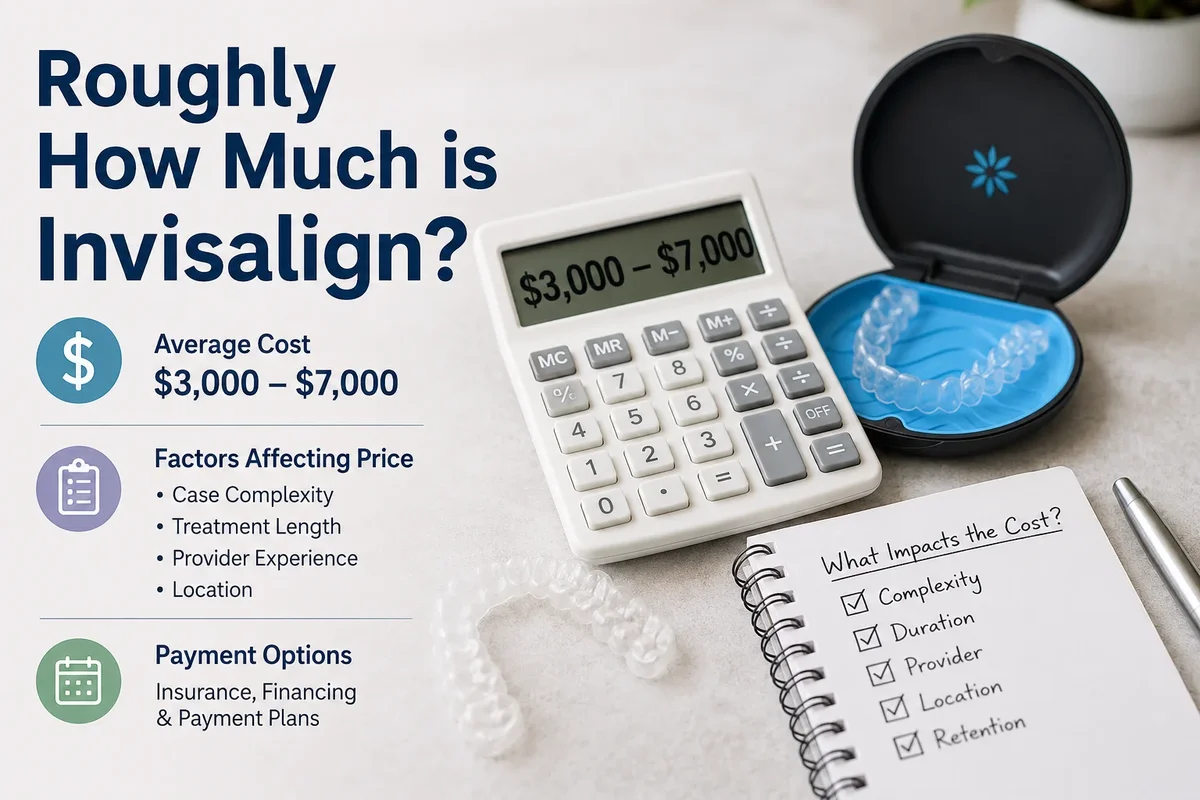
Final Next Step: Getting a Personalized Invisalign Cost Estimate
By now, you have explored many aspects of the question roughly how much is Invisalign. You have learned about treatment complexity, cost factors, financing options, alternatives, risks, and the importance of professional evaluations. However, there is one important reality that every patient should understand: no article, online calculator, or generic estimate can tell you exactly what Invisalign will involve for your specific situation.
This is why the final and most practical step is obtaining a personalized Invisalign assessment. While online research is valuable, a professional consultation transforms general information about roughly how much is Invisalign into a treatment discussion based on your own dental condition, goals, and expectations.
Why a Personalized Estimate Matters
Many patients spend weeks or even months comparing articles, watching videos, and reading reviews in an effort to understand roughly how much is Invisalign. Although this research can provide useful background knowledge, it cannot evaluate:
- Your current tooth alignment
- Your bite relationship
- The complexity of required tooth movement
- Your oral health condition
- Your treatment objectives
- Your long-term orthodontic needs
Only a professional examination can assess these factors accurately.
As a result, a personalized consultation is often the most efficient way to move beyond estimates and obtain information that is directly relevant to your situation.
What Happens During a Personalized Invisalign Assessment?
Many people hesitate to schedule a consultation because they are uncertain about what to expect. In reality, an Invisalign assessment is designed to gather information and help patients make informed decisions.
Clinical Examination
The provider evaluates your teeth, gums, bite, and overall oral health. This helps determine whether Invisalign is appropriate and what level of correction may be required.
Digital Records
Many providers use digital scanning technology to create highly detailed images of the teeth and bite. These records support treatment planning and help estimate treatment complexity.
Discussion of Goals
Every patient has different priorities. Some focus on cosmetic improvements, while others are concerned about crowding, spacing, or bite issues. Your goals play an important role in treatment planning and influence the answer to roughly how much is Invisalign.
Understanding Your Treatment Options
One of the most valuable parts of a consultation is learning whether Invisalign is the most appropriate solution for your specific case.
In some situations, Invisalign may be an excellent option. In others, traditional braces, ceramic braces, or alternative approaches may be recommended.
Patients often begin consultations focused solely on roughly how much is Invisalign, but many leave with a broader understanding of all available treatment options.
This information can help you make decisions based on suitability rather than cost alone.
Questions You Should Ask During the Appointment
To get the most value from your consultation, prepare questions in advance.
Important Questions Include:
- Am I a suitable Invisalign candidate?
- What treatment alternatives are available?
- How complex is my case?
- What factors affect the cost?
- Are retainers included?
- Are refinement aligners included?
- How often will appointments be required?
- What financing options are available?
These questions provide more meaningful information than simply asking roughly how much is Invisalign because they help you understand the complete treatment experience.
Comparing Treatment Estimates Effectively
If you consult multiple providers, avoid comparing recommendations based solely on the final fee.
Consider the Following Factors
- Provider experience
- Technology used
- Treatment monitoring protocols
- Included services
- Retainer policies
- Refinement aligner coverage
- Patient communication and support
A higher quote may include services that would otherwise be charged separately elsewhere. Likewise, the lowest estimate may not always represent the best overall value.
Understanding these differences is often more important than focusing exclusively on roughly how much is Invisalign.
When Cost Should Not Be the Only Decision Factor
Cost is naturally an important consideration, but it should not be the only factor guiding your choice.
Orthodontic treatment affects both appearance and function. Selecting a provider based only on the lowest price may overlook important factors such as experience, treatment planning quality, and long-term support.
When evaluating roughly how much is Invisalign, consider how treatment aligns with your goals, lifestyle, and expectations.
Why Professional Guidance Matters
Every patient’s smile is unique. Two individuals asking exactly the same question about roughly how much is Invisalign may receive very different treatment recommendations based on their clinical findings.
This is why ethical providers avoid making guarantees regarding treatment costs, timelines, or outcomes without first conducting an evaluation.
Professional guidance ensures that recommendations are based on evidence, examination findings, and realistic treatment objectives rather than assumptions.
Taking the Next Step With Confidence
By reaching this point, you have already done one of the most important things a patient can do: educate yourself. Understanding the factors that influence roughly how much is Invisalign helps you approach treatment with realistic expectations and a stronger foundation for decision-making.
However, knowledge alone cannot replace a personalized assessment. The next step is transforming general information into a treatment plan designed specifically for your needs.
If you would like individualized guidance, you can contact a qualified Invisalign provider or visit the Redent Klinik Contact Page to learn more about consultation options and treatment planning.
Final Recommendation
The most reliable answer to roughly how much is Invisalign comes from a comprehensive examination rather than an online estimate. Costs vary according to treatment complexity, goals, provider recommendations, and individual clinical findings.
What to check next: Schedule a professional consultation if you have crowding, spacing, bite concerns, previous orthodontic treatment, or questions about treatment suitability. Request professional advice if you are comparing multiple treatment options, reviewing financing arrangements, or trying to determine whether Invisalign aligns with your goals. A personalized evaluation remains the most accurate way to understand roughly how much is Invisalign for your specific smile and treatment needs.