
If you are considering clear aligner treatment, one of the first things you will probably search for is spark aligners before and after results. Seeing how other patients transformed their smiles can provide confidence, realistic expectations, and a better understanding of what this innovative orthodontic solution can achieve. Whether you are dealing with crowded teeth, gaps, mild bite issues, or general alignment concerns, reviewing spark aligners before and after cases helps you visualize the potential outcome of your own treatment journey.
Spark Aligners are among the most advanced clear aligner systems available today. Manufactured using TruGEN™ material, these aligners are designed to be more transparent, stain-resistant, and comfortable than many traditional alternatives. Patients often choose Spark Aligners because they want a discreet way to straighten their teeth without the appearance of metal brackets and wires. When examining spark aligners before and after transformations, it becomes clear why this treatment has gained popularity among both adults and teenagers.
The most remarkable aspect of spark aligners before and after results is the visible improvement in smile aesthetics. Many patients begin treatment with overlapping teeth, uneven spacing, or noticeable crowding. Over time, a series of custom-made aligners gently moves the teeth into their ideal positions. The final result is often a straighter, healthier, and more balanced smile that significantly enhances facial appearance and self-confidence. 😁
One reason patients are impressed by spark aligners before and after outcomes is that the transformation extends beyond cosmetic improvements. Properly aligned teeth are generally easier to clean and maintain. Crooked or crowded teeth can create areas where plaque and food particles accumulate, increasing the risk of cavities and gum disease. After treatment, patients often find brushing and flossing more effective, supporting better long-term oral health.
Another important factor visible in many spark aligners before and after cases is bite correction. While many people focus on straight teeth, orthodontic treatment can also address issues such as overbites, underbites, crossbites, and open bites. Correcting these concerns may improve chewing efficiency, reduce abnormal tooth wear, and contribute to better overall dental function. This means that the benefits of treatment frequently go far beyond appearance alone.
The journey from the “before” stage to the “after” stage usually begins with a comprehensive consultation. During this appointment, dental professionals evaluate the patient’s teeth, bite, and oral health. Advanced digital scanning technology creates a highly accurate 3D model of the mouth. This technology allows patients to preview their expected spark aligners before and after transformation before treatment even begins. Seeing a digital simulation can be highly motivating and helps patients understand the projected movement of their teeth.
Treatment duration varies depending on the complexity of each case. Mild alignment issues may require only a few months of treatment, while more complex cases can take 12 to 24 months or longer. Throughout this period, patients wear their aligners for approximately 20 to 22 hours per day. Consistent wear is one of the biggest factors influencing successful spark aligners before and after outcomes. Patients who follow their dentist’s instructions carefully are more likely to achieve the desired results within the planned timeline.
When evaluating spark aligners before and after photos, it is important to remember that every smile is unique. Some patients experience dramatic changes because they start with significant crowding or spacing problems. Others may undergo subtle refinements that create a more harmonious and symmetrical smile. Regardless of the starting point, the goal is always to improve both aesthetics and function while maintaining a natural appearance.
Many patients also appreciate the comfort and convenience associated with Spark Aligners. Unlike traditional braces, aligners are removable. This allows patients to enjoy their favorite foods, maintain normal oral hygiene routines, and attend social or professional events with confidence. As a result, many individuals find the treatment process easier to manage, which contributes to successful spark aligners before and after results.
Patients researching clear aligners often compare different brands and treatment options. While various systems can effectively straighten teeth, Spark Aligners are recognized for their exceptional clarity and patient comfort. These advantages often play a role in achieving impressive spark aligners before and after transformations because patients are more likely to wear comfortable aligners consistently.
According to guidance from the American Dental Association, maintaining good oral hygiene and following professional dental recommendations are essential components of successful orthodontic treatment. Combining expert care with patient compliance helps maximize treatment outcomes and supports long-term oral health.
If you are considering beginning your own smile transformation, reviewing spark aligners before and after examples is an excellent first step. These real-world results demonstrate how clear aligner therapy can improve smile appearance, oral health, and self-confidence. From correcting crowding and spacing to enhancing bite alignment, Spark Aligners provide a modern and discreet solution for patients seeking noticeable improvements without traditional braces.
For personalized advice about your smile and treatment options, you can contact an experienced dental team through the Redent Klinik Contact Page. A professional consultation can determine whether Spark Aligners are suitable for your needs and help you begin your own successful smile transformation journey. ✨
Ultimately, the story behind every spark aligners before and after case is unique. However, the common theme remains the same: improved confidence, healthier teeth, enhanced function, and a smile that patients are proud to share. Whether your goal is correcting minor imperfections or addressing more significant orthodontic concerns, understanding realistic spark aligners before and after expectations can help you make an informed decision about your future smile.
Spark Aligners Before and After: What Results Can You Expect?
When researching clear aligner treatment, one of the most common questions patients ask is, “What kind of results can I realistically expect?” Looking at spark aligners before and after cases is often the best way to understand the potential outcomes. These transformations provide visual evidence of how teeth can gradually move into healthier and more attractive positions through customized orthodontic treatment.
The results shown in spark aligners before and after examples vary from patient to patient because every smile is unique. Factors such as age, dental anatomy, treatment compliance, and the complexity of orthodontic issues all influence the final outcome. However, most patients experience noticeable improvements in tooth alignment, smile aesthetics, oral health, and overall confidence.
Common Improvements Seen in Spark Aligners Before and After Results
One of the most significant benefits visible in spark aligners before and after transformations is straighter teeth. Crooked, rotated, or crowded teeth can make a smile appear uneven and may also create oral hygiene challenges. Through a carefully planned series of aligners, teeth are gradually shifted into ideal positions, creating a more symmetrical and balanced smile.
Patients reviewing spark aligners before and after photos frequently notice improvements such as:
- Reduction of dental crowding
- Closure of gaps between teeth
- Correction of minor bite issues
- Improved smile symmetry
- Enhanced facial aesthetics
- Better oral hygiene accessibility
- Greater self-confidence
These improvements often provide both cosmetic and functional benefits. While a straighter smile looks attractive, properly aligned teeth also support healthier gums and more effective cleaning routines.
How Long Does It Take to See Results?
One of the most exciting aspects of the spark aligners before and after journey is that patients often begin noticing subtle changes within the first few months of treatment. Although every case differs, many individuals see visible tooth movement after 8 to 12 weeks of consistent aligner wear.
Typical treatment timelines include:
- Mild cases: 4–8 months
- Moderate cases: 8–15 months
- Complex cases: 15–24 months or longer
The final spark aligners before and after results depend heavily on wearing the aligners as instructed, typically 20–22 hours per day. Patients who frequently remove their aligners or fail to follow treatment guidelines may experience slower progress.
Early Progress vs Final Results
Many patients become discouraged if dramatic changes are not immediately visible. However, it is important to understand that orthodontic treatment is a gradual biological process. Early stages often focus on creating space and correcting foundational alignment issues before major cosmetic improvements become apparent.
As treatment progresses, the cumulative effects become increasingly noticeable. This is why comparing the beginning and end stages of spark aligners before and after treatment often reveals dramatic improvements that may not have seemed obvious week by week.
Can Spark Aligners Correct Crowded Teeth?
Crowding is one of the most common reasons patients seek orthodontic treatment. In many spark aligners before and after cases, severe overlap and tooth rotation are significantly improved. Crowded teeth not only affect appearance but can also increase plaque accumulation and make cleaning difficult.
Through controlled tooth movement, Spark Aligners create the necessary space to align crowded teeth more effectively. As a result, patients often achieve a smile that looks cleaner, more organized, and easier to maintain.
Can Spark Aligners Close Gaps Between Teeth?
Yes. Many impressive spark aligners before and after transformations involve the closure of unwanted spaces between teeth. Gaps, also known as diastemas, may occur due to genetics, missing teeth, or developmental factors.
By applying gentle and consistent pressure, Spark Aligners gradually move teeth closer together. The result is a more harmonious smile line and improved dental aesthetics. Patients often report feeling more confident in social and professional situations after gap correction.
Can Bite Problems Improve?
Many patients assume clear aligners only straighten teeth. In reality, numerous spark aligners before and after cases demonstrate improvements in bite relationships as well.
Depending on the severity of the condition, Spark Aligners may help address:
- Mild to moderate overbites
- Underbites
- Crossbites
- Open bites
- Deep bites
Improved bite function can contribute to better chewing efficiency, reduced tooth wear, and enhanced long-term oral health. Although severe orthodontic cases may require additional treatment approaches, many patients achieve meaningful improvements through aligner therapy alone.
Functional Benefits Beyond Appearance
The value of spark aligners before and after results extends far beyond cosmetic enhancements. Correctly aligned teeth distribute biting forces more evenly, reducing excessive stress on individual teeth. This can help minimize wear patterns, improve comfort, and support healthier jaw function.
Additionally, properly positioned teeth are generally easier to clean. This lowers the risk of plaque accumulation, gum inflammation, and tooth decay. For many patients, the health benefits are just as important as the aesthetic improvements.
What Factors Influence Final Results?
Not all spark aligners before and after transformations are identical. Several factors affect the quality and speed of treatment outcomes:
- Consistency of aligner wear
- Severity of alignment problems
- Patient age and bone response
- Oral hygiene habits
- Regular dental monitoring
- Use of attachments when necessary
Patients who closely follow professional recommendations generally achieve the most predictable and successful outcomes. Compliance is one of the strongest predictors of excellent spark aligners before and after results.
Are Spark Aligners Worth It?
For many patients, the answer is yes. When evaluating spark aligners before and after cases, the improvements in smile appearance, confidence, and oral health are often substantial. Because the aligners are removable, comfortable, and highly transparent, they provide a discreet alternative to traditional braces.
Many individuals appreciate being able to straighten their teeth without significant lifestyle disruptions. Combined with modern digital treatment planning and predictable tooth movement, Spark Aligners have become an increasingly popular orthodontic option worldwide.
Ultimately, the most realistic expectation when viewing spark aligners before and after examples is meaningful improvement rather than perfection. Every patient begins treatment with unique dental characteristics, but most achieve a healthier, more attractive smile that positively impacts both appearance and quality of life. ✨
How Spark Aligners Transform Your Smile Step by Step
Many people are amazed when they compare spark aligners before and after photos because the final results can appear dramatic. However, these transformations do not happen overnight. Behind every successful smile makeover is a carefully planned treatment process that gradually moves teeth into healthier and more attractive positions. Understanding each stage of the journey helps patients develop realistic expectations and appreciate how Spark Aligners achieve their remarkable results.
The reason spark aligners before and after outcomes are often so impressive is that the treatment is customized for every individual. No two smiles are exactly alike, which means every treatment plan is designed according to the patient’s unique dental structure, alignment concerns, and smile goals. From the initial consultation to the final retainer phase, every step plays a critical role in achieving optimal results.
Step 1: The Initial Consultation and Smile Assessment
Every successful spark aligners before and after transformation begins with a comprehensive dental evaluation. During the consultation, the dentist or orthodontist examines the patient’s teeth, gums, bite alignment, and overall oral health. This assessment helps determine whether Spark Aligners are an appropriate treatment option.
Modern clinics often use advanced digital scanning technology rather than traditional impression materials. These scans create a highly accurate three-dimensional model of the patient’s teeth, allowing professionals to identify alignment issues with exceptional precision.
Common problems evaluated during this stage include:
- Crowded teeth
- Gaps between teeth
- Overbites
- Underbites
- Crossbites
- Open bites
- Tooth rotations
- Smile asymmetry
This detailed assessment forms the foundation for the future spark aligners before and after transformation.
Step 2: Digital Treatment Planning
After collecting digital records, dental professionals create a personalized treatment plan. One of the most exciting parts of the process is the ability to preview projected spark aligners before and after results before treatment even begins.
Using advanced software, the dentist can simulate how teeth will move throughout treatment. Patients often find this preview highly motivating because it provides a realistic vision of their future smile.
Why Digital Planning Matters
The precision of digital planning significantly contributes to successful spark aligners before and after outcomes. Every aligner is designed to move specific teeth by small, controlled amounts. This systematic approach helps ensure predictable tooth movement while maximizing comfort and treatment efficiency.
Digital planning also allows adjustments to be made before manufacturing begins, reducing the likelihood of unexpected complications later in treatment.
Step 3: Receiving Your First Set of Aligners
Once the treatment plan is finalized, a series of custom Spark Aligners is manufactured specifically for the patient. Each aligner is slightly different from the previous one, guiding teeth progressively toward their desired positions.
When patients receive their first aligners, they may initially notice a feeling of pressure. This sensation is completely normal and indicates that the aligners are beginning to move the teeth.
At this stage of the spark aligners before and after journey, visible changes are usually minimal. However, important biological processes are already occurring beneath the surface as bone and periodontal tissues adapt to tooth movement.
Step 4: Active Tooth Movement Begins
Over the following weeks, patients change aligners according to their dentist’s instructions, typically every one to two weeks. Each new aligner applies gentle pressure to specific teeth, encouraging gradual movement.
This phase is where the true transformation begins. As treatment progresses, the differences between the initial and current smile become increasingly noticeable.
Many patients begin observing:
- Reduced crowding
- Improved spacing
- Better tooth alignment
- More symmetrical smile contours
- Enhanced bite relationships
The steady progression seen during this stage contributes directly to successful spark aligners before and after results.
The Importance of Consistency
One of the biggest factors influencing spark aligners before and after outcomes is patient compliance. Spark Aligners should generally be worn for 20–22 hours per day. Removing them too frequently may slow treatment progress and affect final results.
Patients who consistently follow their treatment plan typically achieve faster and more predictable improvements compared to those who wear their aligners inconsistently.
Step 5: Mid-Treatment Refinements
As treatment progresses, dentists regularly monitor tooth movement to ensure everything is proceeding according to plan. During these appointments, additional adjustments may be recommended.
In some cases, small tooth-colored attachments are placed on specific teeth. These attachments help the aligners exert more precise forces and improve the effectiveness of certain tooth movements.
Many of the most impressive spark aligners before and after cases involve carefully managed refinements that optimize the final result.
At this point, patients often notice substantial differences between their starting smile and their current appearance. Family members, friends, and colleagues may also begin commenting on the visible improvements.
Step 6: Achieving the Final Smile
After months of gradual adjustment, patients eventually reach the final stage of active treatment. This is the moment when the complete spark aligners before and after transformation becomes fully visible.
The improvements often include:
- Straighter teeth
- Improved smile balance
- Reduced crowding
- Closed gaps
- Enhanced bite alignment
- Better facial harmony
For many individuals, this stage represents a significant boost in confidence. Patients frequently report feeling more comfortable smiling, speaking, and participating in social situations after treatment completion. 😁
Step 7: Retention and Long-Term Stability
A successful spark aligners before and after result does not end when the final aligner is removed. Teeth naturally have a tendency to shift over time, which is why retention is essential.
Most patients receive custom retainers after completing treatment. These retainers help maintain the newly achieved tooth positions and protect the investment made during orthodontic treatment.
Following retainer instructions is critical for preserving long-term spark aligners before and after outcomes. Without proper retention, teeth may gradually drift back toward their original positions.
Why Every Transformation Is Unique
Although many spark aligners before and after photos showcase dramatic changes, it is important to remember that every patient starts from a different point. Some individuals require only minor cosmetic adjustments, while others need comprehensive orthodontic correction.
Factors influencing the final outcome include:
- Severity of alignment issues
- Patient age
- Bone response to treatment
- Oral health condition
- Compliance with aligner wear
- Use of retainers after treatment
Regardless of complexity, the step-by-step process remains focused on achieving healthier alignment, improved function, and a more attractive smile. This systematic approach is what makes modern spark aligners before and after transformations so predictable and successful for many patients worldwide. ✨
Real Spark Aligners Before and After Cases for Mild Crowding
One of the most common reasons patients seek orthodontic treatment is mild dental crowding. While severe crowding often attracts the most attention, even minor alignment issues can affect smile aesthetics, oral hygiene, and self-confidence. This is why many people search for spark aligners before and after examples specifically related to mild crowding. These cases help patients understand what kind of improvements are possible without traditional braces and demonstrate how subtle corrections can create dramatic overall smile enhancements.
Mild crowding occurs when there is insufficient space in the dental arch for all teeth to align properly. As a result, one or more teeth may overlap, rotate, or shift slightly out of position. Although the problem may seem minor, even small alignment issues can make a smile appear uneven. Reviewing spark aligners before and after cases often reveals how correcting these small imperfections can significantly improve smile symmetry and facial aesthetics.
What Does Mild Crowding Look Like?
Before examining actual spark aligners before and after outcomes, it is important to understand what dentists classify as mild crowding. Mild crowding typically involves slight overlapping or rotation of the front teeth without severe bite complications.
Common signs include:
- Slight overlap of upper front teeth
- Crooked lower incisors
- Minor tooth rotation
- Teeth that appear uneven when smiling
- Difficulty flossing between crowded areas
- Small aesthetic imperfections affecting smile symmetry
Many patients assume their crowding is too minor to justify treatment. However, when they view spark aligners before and after transformations, they often realize how much these small corrections can improve overall smile appearance.
Why Mild Crowding Should Not Be Ignored
Although mild crowding may seem like a cosmetic concern, it can contribute to several oral health challenges. Teeth that overlap create narrow spaces where plaque and food debris can accumulate. These hard-to-reach areas may increase the risk of tooth decay and gum inflammation over time.
Many spark aligners before and after cases demonstrate not only aesthetic improvements but also enhanced oral hygiene. Once crowded teeth are properly aligned, patients often find brushing and flossing easier and more effective.
Functional Benefits of Correcting Mild Crowding
The benefits of treatment frequently extend beyond appearance. Properly aligned teeth can:
- Improve chewing efficiency
- Reduce excessive tooth wear
- Enhance gum health
- Make oral hygiene easier
- Promote better long-term dental stability
These advantages explain why many dentists recommend treatment even when crowding appears relatively minor.
Typical Spark Aligners Before and After Results for Mild Crowding
The majority of spark aligners before and after cases involving mild crowding show excellent outcomes because the required tooth movements are generally predictable and efficient. Patients often experience visible improvements within a few months of starting treatment.
Common improvements include:
- Straighter front teeth
- Reduced overlap
- Improved tooth positioning
- Better smile balance
- Enhanced facial harmony
- Increased confidence when smiling
One of the reasons mild crowding responds so well to aligner therapy is that relatively small tooth movements can create a substantial visual difference. When comparing spark aligners before and after images, patients are often surprised by how dramatically their smiles improve despite modest adjustments.
A Typical Treatment Journey
To better understand the process behind successful spark aligners before and after outcomes, it is helpful to examine a typical mild crowding case.
At the beginning of treatment, the patient may have one or two front teeth that overlap slightly. Digital scans are taken, and a customized treatment plan is developed. The patient then receives a series of aligners specifically designed to move the affected teeth into proper alignment.
During the first few weeks, changes may be subtle. However, as treatment progresses, the overlap gradually decreases. By the middle stages of treatment, many patients can already see noticeable improvements.
At the conclusion of therapy, the final spark aligners before and after comparison often reveals a significantly straighter and more balanced smile.
How Long Does Treatment Take?
Mild crowding generally requires less treatment time than more complex orthodontic conditions. While individual timelines vary, many patients complete treatment within:
- 4–6 months for very mild cases
- 6–9 months for moderate crowding
- 9–12 months for more extensive alignment corrections
The relatively short treatment duration is one reason why patients with mild crowding frequently choose Spark Aligners over traditional braces.
Why Spark Aligners Are Effective for Mild Crowding
Several characteristics contribute to successful spark aligners before and after results in mild crowding cases.
Spark Aligners are manufactured using advanced TruGEN™ material, which offers excellent force retention and clarity. This allows the aligners to apply gentle, controlled pressure while remaining highly discreet.
Patients often appreciate:
- Exceptional transparency
- Comfortable fit
- Removable design
- Predictable tooth movement
- Minimal interference with daily life
Because mild crowding typically requires less complex tooth movement, these features contribute to highly successful treatment outcomes.
Patient Confidence and Emotional Benefits
One of the most frequently reported benefits seen in spark aligners before and after testimonials is improved confidence. Many individuals feel self-conscious about even minor imperfections in their smile. After treatment, they often report feeling more comfortable in social, personal, and professional situations.
Patients commonly experience:
- Greater willingness to smile in photographs
- Improved self-esteem
- Enhanced professional confidence
- More positive first impressions
- Increased overall satisfaction with appearance
These emotional benefits can be just as meaningful as the physical improvements achieved during treatment.
Maintaining Your Results After Treatment
Successful spark aligners before and after outcomes do not end when active treatment is completed. Retention is an essential part of preserving the final result.
Most patients receive custom retainers to help maintain their newly aligned teeth. Wearing retainers as instructed helps prevent unwanted tooth movement and protects the investment made during orthodontic treatment.
Patients who follow retention guidelines are more likely to maintain their spark aligners before and after results for many years.
Are You a Good Candidate for Treatment?
If you have minor overlap, slight tooth rotation, or small alignment concerns, you may be an excellent candidate for Spark Aligners. Many of the most impressive spark aligners before and after transformations involve mild crowding because relatively simple corrections can produce highly noticeable improvements.
Ultimately, real spark aligners before and after cases demonstrate that even small orthodontic issues deserve attention. By correcting mild crowding, patients can achieve a straighter smile, improved oral health, and greater confidence—all while enjoying the convenience and discretion of modern clear aligner treatment. ✨😁
Spark Aligners Before and After for Gaps Between Teeth
Gaps between teeth are among the most common orthodontic concerns treated with clear aligners. Whether the spaces are small and barely noticeable or large enough to affect confidence, many patients search for spark aligners before and after examples to understand what results are possible. The good news is that Spark Aligners are highly effective at closing many types of dental spacing issues, helping patients achieve a more balanced, attractive, and functional smile.
When reviewing spark aligners before and after cases involving gaps between teeth, patients are often surprised by the dramatic improvements that can be achieved without traditional metal braces. Through carefully controlled tooth movement, Spark Aligners gradually guide teeth into more ideal positions, reducing unwanted spaces while maintaining a natural-looking smile.
For many individuals, the transformation seen in spark aligners before and after photos goes beyond aesthetics. Closing spaces between teeth can also improve oral health, speech, chewing function, and overall self-confidence. Understanding how this process works can help patients make informed decisions about their orthodontic treatment.
What Causes Gaps Between Teeth?
Before examining spark aligners before and after results, it is important to understand why gaps develop in the first place. Dental spacing can occur for several reasons, and identifying the underlying cause helps determine the most appropriate treatment approach.
Common causes of tooth gaps include:
- Genetics and inherited jaw size
- Small teeth relative to jaw size
- Missing teeth
- Abnormal frenum attachment
- Thumb sucking during childhood
- Tongue thrusting habits
- Periodontal (gum) disease
- Natural tooth movement over time
Regardless of the cause, many patients can achieve excellent outcomes through properly planned aligner therapy. This is why so many successful spark aligners before and after transformations involve gap closure treatment.
Understanding Diastema: The Most Common Gap Problem
One of the most recognizable spacing concerns is a diastema, which refers to a gap between the upper front teeth. This condition varies in size and visibility. Some patients embrace their diastema as a unique characteristic, while others prefer a more uniform smile appearance.
Many of the most impressive spark aligners before and after cases involve closing a prominent front-tooth gap. Since the central incisors are highly visible when smiling or speaking, even a small reduction in spacing can significantly enhance smile aesthetics.
Can Every Gap Be Closed?
Most mild to moderate spacing issues can be improved with Spark Aligners. However, the ideal treatment approach depends on the size of the gap, the health of the gums and supporting bone, and the overall bite relationship.
During the consultation process, digital treatment planning allows dentists to evaluate whether aligners can successfully achieve the desired spark aligners before and after result. In some situations, additional dental procedures may be recommended alongside orthodontic treatment.
How Spark Aligners Close Gaps Between Teeth
The science behind successful spark aligners before and after transformations involves controlled orthodontic forces. Each aligner applies gentle pressure to specific teeth, gradually moving them toward their planned positions.
As patients progress through their aligner series, the spaces between teeth begin to narrow. This movement occurs gradually, allowing surrounding bone and periodontal tissues to adapt safely throughout treatment.
The process typically includes:
- Digital smile assessment
- Customized treatment planning
- Creation of personalized aligners
- Sequential tooth movement
- Periodic progress evaluations
- Final refinement if necessary
- Retention after treatment
This systematic approach contributes to the predictable outcomes seen in many spark aligners before and after cases.
What Results Can Patients Expect?
The specific outcome depends on the severity of the spacing issue, but many patients experience substantial improvements. Reviewing spark aligners before and after photos often reveals significant reductions in visible gaps and improvements in smile symmetry.
Typical benefits include:
- Closure of unwanted spaces
- Improved smile aesthetics
- More balanced tooth positioning
- Enhanced smile symmetry
- Better oral function
- Increased confidence
Many patients report feeling more comfortable smiling, speaking, and taking photographs once treatment is complete. These emotional benefits are frequently highlighted in spark aligners before and after patient testimonials.
Timeline for Gap Closure Treatment
One question patients frequently ask after viewing spark aligners before and after examples is how long treatment will take. The answer varies depending on the size and complexity of the spacing issue.
General treatment estimates include:
- Small gaps: 4–6 months
- Moderate spacing: 6–12 months
- Complex spacing cases: 12–18 months or longer
Some patients notice visible improvements within the first few months. However, complete closure often requires consistent aligner wear throughout the recommended treatment period.
The Importance of Compliance
The quality of spark aligners before and after outcomes depends heavily on patient cooperation. Spark Aligners should generally be worn for 20–22 hours per day to maintain consistent tooth movement.
Patients who remove their aligners too frequently may experience slower progress and less predictable results. Consistent wear remains one of the most important factors in successful gap closure treatment.
Health Benefits of Closing Tooth Gaps
While many people focus on aesthetics, the advantages of successful spark aligners before and after treatment often extend beyond appearance.
Closing gaps may help:
- Reduce food trapping
- Improve speech clarity
- Enhance chewing efficiency
- Support healthier gum tissue
- Promote better oral hygiene
- Improve bite balance
These functional improvements contribute to better long-term oral health and patient satisfaction.
Why Spark Aligners Are Popular for Spacing Issues
Many patients choose Spark Aligners because they offer a discreet alternative to traditional braces. The advanced TruGEN™ material is highly transparent, making the aligners difficult to notice during daily activities.
Benefits that contribute to positive spark aligners before and after experiences include:
- Excellent aesthetics during treatment
- Comfortable fit
- Removable convenience
- Predictable tooth movement
- Digital treatment planning
- Customized care for each patient
These features make Spark Aligners particularly appealing to adults and professionals who want effective orthodontic treatment without the appearance of traditional braces.
Maintaining Your Results After Gap Closure
Once the desired spark aligners before and after result is achieved, maintaining the outcome becomes the next priority. Teeth naturally have a tendency to shift over time, which is why retainers play such an important role.
Most patients receive custom retainers after active treatment. These appliances help preserve tooth positions and protect the investment made in orthodontic care.
Consistent retainer wear is essential for maintaining long-term spark aligners before and after success. Patients who follow retention guidelines carefully are more likely to enjoy stable results for many years.
Final Thoughts on Gap Closure Transformations
The remarkable improvements visible in spark aligners before and after cases demonstrate that clear aligner therapy can effectively address many types of spacing concerns. Whether correcting a small front-tooth gap or managing multiple spaces throughout the dental arch, Spark Aligners provide a modern and highly effective treatment option.
For patients seeking a more uniform smile, improved oral function, and greater confidence, the results shown in spark aligners before and after transformations offer compelling evidence of what modern orthodontic technology can achieve. With proper planning, consistent aligner wear, and long-term retention, many individuals can enjoy a beautifully aligned smile that lasts for years. ✨😁
Spark Aligners Before and After: Fixing Overbite and Underbite
Many people assume clear aligners are only designed to straighten crooked teeth. However, modern orthodontic technology has expanded significantly, allowing aligner systems to address various bite-related concerns as well. When reviewing spark aligners before and after transformations, patients are often surprised to discover that improvements can extend beyond smile appearance to include correction of overbites and underbites. These bite issues not only affect aesthetics but can also influence chewing efficiency, speech, jaw comfort, and long-term oral health.
The growing number of successful spark aligners before and after cases involving bite correction demonstrates how effective clear aligner treatment has become. While severe skeletal discrepancies may require additional orthodontic or surgical intervention, many mild to moderate bite problems can be significantly improved through carefully planned Spark Aligner therapy.
Understanding how overbites and underbites develop, how Spark Aligners address these conditions, and what patients can realistically expect from treatment can help individuals make informed decisions about their orthodontic care.
What Is an Overbite?
An overbite occurs when the upper front teeth overlap the lower front teeth excessively when the mouth is closed. A small amount of overlap is considered normal and healthy. However, when the overlap becomes too large, functional and aesthetic concerns may arise.
Many spark aligners before and after cases involve correcting mild to moderate overbites because this condition is extremely common among adults and adolescents.
Symptoms of an excessive overbite may include:
- Excessive visibility of upper teeth
- Lower teeth hidden behind upper teeth
- Difficulty biting certain foods
- Increased tooth wear
- Jaw discomfort
- Speech difficulties in some cases
The degree of correction possible depends on the severity of the overbite and the overall structure of the jaws.
What Is an Underbite?
An underbite occurs when the lower teeth extend in front of the upper teeth. Unlike an overbite, the lower jaw appears more prominent, which can affect facial balance and bite function.
When patients search for spark aligners before and after examples involving underbites, they often want to know whether clear aligners can improve both function and appearance. In many mild and moderate cases, Spark Aligners can help reposition teeth to create a more harmonious bite relationship.
Common signs of an underbite include:
- Lower teeth positioned ahead of upper teeth
- Difficulty chewing efficiently
- Facial profile imbalance
- Speech concerns
- Excessive stress on certain teeth
- Jaw discomfort in some patients
Although severe skeletal underbites may require additional treatment, many patients experience meaningful improvements through aligner therapy.
Why Bite Problems Matter
Many people focus exclusively on cosmetic improvements when viewing spark aligners before and after photos. However, bite correction often delivers important health benefits as well.
An untreated overbite or underbite may contribute to:
- Uneven tooth wear
- Increased risk of chipped teeth
- Difficulty maintaining oral hygiene
- Jaw joint strain
- Chewing inefficiency
- Long-term dental complications
Addressing these concerns can improve both oral function and quality of life.
How Spark Aligners Correct Overbites
Many successful spark aligners before and after transformations involve overbite improvement. Spark Aligners gradually reposition teeth using controlled orthodontic forces. Through a series of customized aligners, upper and lower teeth can be guided toward a healthier relationship.
Treatment strategies may include:
- Retracting protrusive front teeth
- Aligning crowded arches
- Improving vertical tooth positioning
- Enhancing bite coordination
- Using attachments for additional control
The result is often a more balanced bite and a more attractive smile profile. Patients frequently notice both functional and aesthetic improvements when comparing their spark aligners before and after images.
How Spark Aligners Improve Underbites
Underbite correction can be more complex than overbite treatment, but many mild to moderate cases respond well to aligner therapy. In these situations, Spark Aligners help reposition teeth to improve how the upper and lower arches fit together.
Successful spark aligners before and after outcomes often involve:
- Improved bite alignment
- Better chewing efficiency
- Enhanced smile aesthetics
- Reduced tooth wear
- More balanced facial appearance
The exact treatment approach depends on the underlying cause of the underbite and the patient’s specific dental anatomy.
The Role of Attachments and Elastics
Some complex spark aligners before and after cases require additional tools to achieve optimal results. Tooth-colored attachments and orthodontic elastics may be incorporated into the treatment plan.
Attachments help the aligners grip teeth more effectively, while elastics can assist with bite correction by guiding jaw relationships and tooth movement. These supplemental tools often contribute significantly to successful overbite and underbite treatment outcomes.
What Improvements Can Patients Expect?
The exact results visible in spark aligners before and after comparisons depend on the severity of the bite issue. However, many patients experience improvements in several important areas.
Potential benefits include:
- More balanced bite function
- Straighter teeth
- Improved smile symmetry
- Reduced excessive tooth overlap
- Better chewing ability
- Enhanced facial aesthetics
- Greater confidence when smiling
These improvements frequently provide both cosmetic and practical advantages that continue long after treatment is completed.
Treatment Timeline for Bite Correction
Patients reviewing spark aligners before and after examples often wonder how long bite correction will take. While every case is different, bite-related treatments generally require more time than simple cosmetic alignment.
Typical timelines may include:
- Mild overbite correction: 6–12 months
- Moderate overbite correction: 12–18 months
- Mild underbite correction: 12–18 months
- More complex cases: 18–24 months or longer
The duration depends on factors such as treatment compliance, complexity, biological response, and overall oral health.
The Importance of Consistent Aligner Wear
One of the most important factors influencing spark aligners before and after success is patient cooperation. Spark Aligners must generally be worn for 20–22 hours per day to maintain continuous pressure on the teeth.
Patients who consistently follow treatment recommendations often achieve more predictable outcomes and shorter treatment times. In contrast, irregular aligner wear can delay progress and compromise bite correction.
Long-Term Benefits of Bite Improvement
Many patients focus on the visual transformation shown in spark aligners before and after photos, but the long-term health benefits can be equally important.
Correcting overbites and underbites may contribute to:
- Reduced tooth wear
- Improved jaw comfort
- Better chewing performance
- Enhanced oral hygiene access
- Lower risk of future dental complications
- Greater smile stability
These advantages often make treatment a worthwhile investment in both oral health and overall well-being.
Final Thoughts on Overbite and Underbite Correction
Modern orthodontics has made it possible for many patients to achieve remarkable bite improvements without traditional braces. The growing collection of spark aligners before and after cases involving overbite and underbite correction highlights the versatility and effectiveness of this treatment option.
Whether the goal is improving smile aesthetics, enhancing bite function, or reducing long-term dental risks, spark aligners before and after transformations demonstrate that clear aligner therapy can produce meaningful and lasting results. With proper planning, consistent wear, and professional supervision, many patients can enjoy healthier bites, improved confidence, and beautifully aligned smiles for years to come. ✨😁
Spark Aligners Treatment Timeline and Progress Milestones
One of the first questions patients ask after viewing spark aligners before and after photos is how long it takes to achieve those impressive results. While every orthodontic case is unique, understanding the typical treatment timeline can help patients set realistic expectations and stay motivated throughout their smile transformation journey. The dramatic improvements seen in many spark aligners before and after cases are not the result of a single procedure but rather a carefully planned sequence of tooth movements that occur over time.
The journey from the “before” stage to the “after” stage involves several important milestones. Each phase serves a specific purpose and contributes to the overall success of treatment. By understanding these stages, patients can better appreciate how their smile evolves throughout the process and what they can expect at different points along the way.
Initial Consultation: The Starting Point
Every successful spark aligners before and after transformation begins with a comprehensive consultation. During this appointment, the dentist or orthodontist evaluates the patient’s oral health, tooth alignment, bite relationship, and treatment goals.
The consultation often includes:
- Digital scans or impressions
- Photographs of the teeth and smile
- Bite analysis
- Oral health examination
- Treatment planning discussion
This information allows the dental professional to create a customized treatment plan specifically designed to achieve the desired spark aligners before and after outcome.
Digital Smile Simulation
One exciting feature of modern aligner treatment is the ability to preview projected results before treatment begins. Many patients find it highly motivating to see a digital representation of their future smile.
These simulations help patients understand how the planned tooth movements contribute to the final spark aligners before and after transformation and provide greater confidence in the treatment process.
Weeks 1–4: Getting Used to Spark Aligners
After receiving the first set of aligners, patients enter the initial adaptation phase. During the first few weeks, it is normal to experience mild pressure as the teeth begin responding to the aligners.
At this stage, visible changes may be minimal. However, important biological processes are already taking place beneath the surface. The gentle forces applied by the aligners stimulate bone remodeling, allowing teeth to gradually move toward their intended positions.
Although dramatic spark aligners before and after changes are not yet visible, this early phase lays the foundation for future improvements.
Months 2–3: Early Visible Changes
For many patients, the first noticeable improvements appear during the second and third months of treatment. This is often when individuals begin comparing their current smile to their original photographs and seeing measurable progress.
Common early improvements include:
- Slight reduction in crowding
- Minor gap closure
- Improved tooth alignment
- More symmetrical smile contours
- Better positioning of rotated teeth
These early milestones help patients stay motivated as they work toward their final spark aligners before and after results.
Why Progress May Seem Slow
Some patients worry if they do not see dramatic changes immediately. It is important to remember that orthodontic treatment is a gradual process. Teeth move in small increments to ensure comfort, safety, and long-term stability.
Many impressive spark aligners before and after transformations appear dramatic only when comparing the starting point with the final outcome. Day-to-day changes may seem subtle, but they accumulate significantly over time.
Months 4–6: Noticeable Smile Transformation
By the middle phase of treatment, many patients experience substantial improvements in their smile. This period often represents a major turning point in the spark aligners before and after journey.
Patients may notice:
- Clearly straighter teeth
- Reduced overlap
- Smaller gaps between teeth
- Improved smile balance
- Better bite coordination
Friends, family members, and coworkers often begin noticing the changes as well. Positive feedback during this stage can further reinforce treatment compliance and patient satisfaction.
Months 6–12: Refinement and Advanced Corrections
As treatment progresses, the focus shifts from major tooth movement to refinement and precision adjustments. Many spark aligners before and after cases require fine-tuning to achieve optimal results.
During this stage, dental professionals may:
- Evaluate treatment progress
- Monitor bite relationships
- Adjust treatment goals if necessary
- Order refinement aligners
- Improve final tooth positioning
Refinements help ensure that the final spark aligners before and after outcome meets both functional and aesthetic objectives.
The Role of Attachments
Some patients wear small tooth-colored attachments throughout treatment. These attachments help aligners apply more precise forces to specific teeth, especially when correcting rotations or bite issues.
Attachments often contribute significantly to successful spark aligners before and after results by improving treatment efficiency and control.
Final Months: Achieving the Desired Result
As patients approach the end of active treatment, the smile begins to closely resemble the projected outcome shown during the planning phase. At this point, most major alignment issues have been corrected.
The final stages of the spark aligners before and after journey often include:
- Final bite adjustments
- Closure of remaining spaces
- Alignment refinement
- Smile symmetry optimization
- Comprehensive evaluation
The cumulative effect of these corrections often results in a dramatically improved smile and enhanced oral function.
Completion of Treatment
When active treatment is complete, patients can fully appreciate their spark aligners before and after transformation. Comparing the initial photographs with the final results often highlights significant improvements that may have seemed gradual during treatment.
Common outcomes include:
- Straighter teeth
- Improved smile aesthetics
- Better bite alignment
- Enhanced facial harmony
- Greater confidence
- Improved oral hygiene accessibility
For many individuals, the final reveal is one of the most rewarding moments of the entire process. 😁
The Retention Phase: Protecting Your Results
Many patients mistakenly believe the spark aligners before and after journey ends when the last aligner is removed. In reality, retention is a critical phase that helps maintain the newly achieved tooth positions.
After treatment, custom retainers are typically provided to prevent teeth from shifting back toward their original alignment. Consistent retainer wear is essential for preserving long-term treatment success.
Patients who follow retention guidelines carefully are more likely to maintain their spark aligners before and after results for many years.
Factors That Affect Treatment Duration
Not every spark aligners before and after case follows the exact same timeline. Several variables influence treatment length and overall progress.
These factors include:
- Severity of alignment issues
- Bite complexity
- Patient age
- Biological response to tooth movement
- Consistency of aligner wear
- Oral health condition
- Need for refinements
Patients who wear their aligners as instructed—typically 20 to 22 hours per day—often achieve faster and more predictable results.
Final Thoughts on Treatment Milestones
The remarkable changes visible in spark aligners before and after photos are the result of a carefully managed process that unfolds over several months. Each milestone, from the initial consultation to the retention phase, contributes to the final outcome.
Understanding the treatment timeline helps patients remain patient, motivated, and committed throughout their orthodontic journey. With proper planning, consistent aligner wear, and professional supervision, the progression from the initial smile to the final spark aligners before and after result can be both predictable and highly rewarding. The result is not only a straighter smile but also improved confidence, oral health, and long-term satisfaction. ✨
Factors That Influence Spark Aligners Before and After Results
When patients browse spark aligners before and after photos online, it is natural to wonder why some transformations appear more dramatic than others. While Spark Aligners are capable of delivering impressive smile improvements, the final outcome depends on several important factors. Every patient’s teeth, bite, oral health, and treatment compliance are unique, which means no two spark aligners before and after journeys are exactly the same.
Understanding the factors that influence treatment success can help patients set realistic expectations and maximize their chances of achieving excellent results. Although modern aligner technology is highly advanced, the effectiveness of treatment depends on both professional planning and patient participation.
The most successful spark aligners before and after cases typically involve a combination of accurate diagnosis, personalized treatment planning, consistent aligner wear, and long-term retention. Below are the key elements that affect treatment outcomes and determine how dramatic the final smile transformation may be.
Severity of the Initial Orthodontic Problem
One of the most significant factors influencing spark aligners before and after results is the complexity of the original dental condition. Patients begin treatment with varying degrees of crowding, spacing, tooth rotation, and bite discrepancies.
For example:
- Mild crowding may require only minor adjustments.
- Moderate spacing issues often need several months of treatment.
- Complex bite problems may require extended orthodontic care.
- Severe tooth rotations may need additional attachments.
Interestingly, some of the most dramatic spark aligners before and after transformations occur in patients with more severe alignment issues because there is greater room for visible improvement. However, these cases may also require longer treatment times.
Mild vs. Complex Cases
Patients with mild orthodontic concerns often achieve excellent outcomes in a relatively short period. On the other hand, individuals with significant crowding, overbites, underbites, or crossbites may need more extensive treatment planning and additional refinements before reaching their desired spark aligners before and after result.
Patient Compliance and Aligner Wear Time
Perhaps the most important factor affecting spark aligners before and after success is patient compliance. Spark Aligners are removable, which provides convenience but also places responsibility on the patient.
Most dental professionals recommend wearing aligners for approximately 20–22 hours per day. Removing them for extended periods can interfere with tooth movement and delay treatment progress.
Patients who consistently wear their aligners as instructed generally experience:
- More predictable tooth movement
- Faster treatment progression
- Fewer complications
- Reduced need for refinements
- Better overall spark aligners before and after outcomes
In contrast, inconsistent wear can prolong treatment and compromise the final result.
Age and Biological Response
Age can also influence the effectiveness of orthodontic treatment. Although Spark Aligners can successfully treat both teenagers and adults, biological responses to tooth movement vary from person to person.
Younger patients often experience slightly faster tooth movement because their bone tissue is generally more adaptable. However, adults frequently achieve equally impressive spark aligners before and after transformations when they follow treatment recommendations carefully.
It is important to understand that age alone does not determine treatment success. Compliance and treatment planning usually play a much larger role than chronological age.
Individual Variation Matters
Every patient responds differently to orthodontic forces. Some individuals experience rapid progress, while others require more time to achieve similar results. This natural variation explains why treatment timelines can differ even among patients with comparable alignment issues.
Quality of Treatment Planning
Behind every successful spark aligners before and after transformation is a carefully designed treatment plan. Modern digital technology allows dentists to map out tooth movement with exceptional precision.
Effective treatment planning involves:
- Accurate diagnosis
- Digital smile simulation
- Assessment of bite relationships
- Evaluation of oral health
- Identification of potential challenges
The quality of the initial treatment plan greatly influences the predictability of the final spark aligners before and after result.
Oral Health Before Treatment
Healthy teeth and gums provide the foundation for successful orthodontic treatment. Patients with untreated cavities, gum disease, or significant periodontal issues may need additional dental care before beginning aligner therapy.
When oral health is optimized before treatment:
- Teeth move more predictably
- Gums remain healthier
- Complication risks decrease
- Treatment progress is more stable
As a result, maintaining good oral health contributes significantly to positive spark aligners before and after outcomes.
Importance of Oral Hygiene During Treatment
Patients should continue practicing excellent oral hygiene throughout treatment. Brushing, flossing, and cleaning aligners regularly help maintain healthy gums and teeth, supporting successful orthodontic progress.
Many impressive spark aligners before and after cases are achieved by patients who consistently prioritize oral health throughout the treatment process.
Use of Attachments and Auxiliary Components
Certain tooth movements require additional orthodontic support. In these situations, dentists may use attachments, elastics, or other auxiliary tools to improve aligner performance.
Attachments are small tooth-colored shapes temporarily bonded to specific teeth. They help aligners apply more precise forces and increase treatment efficiency.
Some of the most successful spark aligners before and after transformations involve carefully placed attachments that assist with:
- Tooth rotation
- Root movement
- Bite correction
- Complex alignment adjustments
Although some patients are initially hesitant about attachments, they often play a crucial role in achieving optimal results.
Consistency with Follow-Up Appointments
Regular dental checkups are another important contributor to successful spark aligners before and after outcomes. During these appointments, the dentist monitors progress, evaluates tooth movement, and makes any necessary adjustments.
These visits help:
- Identify potential issues early
- Verify treatment progress
- Ensure aligners fit correctly
- Determine whether refinements are needed
- Maintain treatment accuracy
Patients who attend scheduled appointments consistently are more likely to achieve their desired smile goals.
Retention After Active Treatment
Many people assume the spark aligners before and after journey ends when the final aligner is removed. In reality, retention is one of the most important phases of treatment.
Teeth naturally tend to shift over time. Without proper retention, even excellent orthodontic results may gradually relapse.
Retainers help preserve:
- Tooth alignment
- Bite correction
- Smile symmetry
- Long-term treatment stability
Patients who wear their retainers as instructed are much more likely to maintain their spark aligners before and after results for many years.
Lifestyle Habits and Daily Choices
Everyday habits can also influence treatment success. Certain behaviors may affect aligner performance and overall oral health.
Positive habits include:
- Wearing aligners consistently
- Maintaining excellent oral hygiene
- Cleaning aligners regularly
- Following professional instructions
- Attending follow-up visits
Patients who develop these habits often experience smoother treatment and better spark aligners before and after outcomes.
Final Thoughts on Treatment Success Factors
The impressive transformations seen in spark aligners before and after photos are rarely the result of a single factor. Instead, they are the product of careful treatment planning, advanced technology, professional supervision, and patient commitment.
By understanding the variables that influence success, patients can take an active role in their treatment and improve their chances of achieving outstanding results. Whether addressing crowding, spacing, or bite issues, the quality of the final spark aligners before and after outcome depends on the combined efforts of both the dental team and the patient.
When these factors work together effectively, Spark Aligners can produce remarkable smile transformations that improve appearance, oral health, and confidence for years to come. ✨😁
Spark Aligners vs Traditional Braces: Before and After Comparison
When exploring orthodontic treatment options, many patients compare clear aligners and traditional braces before making a decision. One of the most common online searches involves reviewing spark aligners before and after results and comparing them with outcomes achieved through conventional braces. While both treatment methods are designed to improve tooth alignment and bite function, they differ significantly in appearance, comfort, lifestyle impact, treatment experience, and patient preferences.
The good news is that both options can produce outstanding orthodontic results when prescribed appropriately. However, understanding the similarities and differences between these approaches can help patients determine which solution best fits their needs. By analyzing spark aligners before and after transformations alongside traditional braces outcomes, patients can gain a realistic understanding of what each treatment can accomplish.
Understanding the Goal of Both Treatments
Whether a patient chooses Spark Aligners or traditional braces, the primary objective remains the same: moving teeth into healthier and more functional positions. Both systems are capable of correcting a variety of orthodontic concerns, including:
- Crowded teeth
- Gaps between teeth
- Overbites
- Underbites
- Crossbites
- Open bites
- Rotated teeth
- Smile asymmetry
Many spark aligners before and after cases demonstrate results that are comparable to traditional braces for mild to moderate orthodontic problems. The difference often lies not in the final result but in how the treatment is delivered and experienced by the patient.
Appearance During Treatment
One of the most significant differences between the two options is visibility. Traditional braces use metal brackets and wires that remain attached to the teeth throughout treatment. Although modern braces are smaller and more refined than older versions, they are still noticeable when speaking or smiling.
In contrast, Spark Aligners are manufactured from highly transparent TruGEN™ material, making them one of the least visible orthodontic solutions available today.
Many patients choose Spark Aligners specifically because the treatment process is discreet. When reviewing spark aligners before and after experiences, adults and professionals frequently mention that they appreciated being able to straighten their teeth without drawing attention to their orthodontic treatment.
Why Aesthetics Matter
For teenagers and adults who frequently attend social events, meetings, presentations, or public appearances, the nearly invisible nature of Spark Aligners can be a major advantage. This aesthetic benefit is one reason why interest in spark aligners before and after transformations continues to grow worldwide.
Comfort Comparison
Comfort is another factor that frequently influences treatment decisions. Traditional braces include brackets and wires that can occasionally irritate the cheeks, lips, and tongue. Adjustments may also create temporary discomfort as the teeth respond to new forces.
Spark Aligners feature smooth edges and are custom-designed to fit each patient’s teeth. While patients may experience mild pressure when switching to a new aligner, many report greater overall comfort compared to fixed braces.
Numerous spark aligners before and after testimonials highlight comfort as one of the most appreciated aspects of treatment.
Oral Hygiene and Maintenance
Maintaining oral hygiene is often easier with Spark Aligners because they are removable. Patients can take out the aligners before brushing and flossing, allowing them to clean their teeth normally.
With traditional braces, cleaning around brackets and wires requires additional effort and specialized tools. Food particles can become trapped more easily, increasing the importance of careful oral hygiene practices.
Many successful spark aligners before and after cases also show improvements in gum health because patients are often able to maintain more effective oral hygiene throughout treatment.
Eating Restrictions
Traditional braces require certain dietary restrictions to prevent damage to brackets and wires. Hard, sticky, or chewy foods may need to be avoided.
Spark Aligners can be removed before meals, allowing patients to enjoy their normal diet. This convenience is frequently mentioned in spark aligners before and after patient reviews as a significant lifestyle advantage.
Treatment Effectiveness
A common question patients ask is whether Spark Aligners are as effective as braces. The answer depends largely on the complexity of the case.
For many mild and moderate orthodontic issues, spark aligners before and after results can be comparable to those achieved with braces. Modern digital treatment planning allows highly precise tooth movement, making aligners effective for a wide range of conditions.
However, some severe skeletal discrepancies or highly complex orthodontic problems may still be better suited to traditional braces or a combination of treatment approaches.
Treatment Duration Comparison
Treatment length varies for both systems depending on the complexity of the case and patient compliance.
Typical timelines include:
- Mild cases: 4–8 months
- Moderate cases: 8–18 months
- Complex cases: 18–24 months or longer
One important difference is that Spark Aligners require active patient participation. Because the aligners are removable, treatment success depends heavily on wearing them consistently.
Patients who follow instructions carefully often achieve excellent spark aligners before and after outcomes within the projected treatment timeline.
Predictability and Technology
Modern orthodontics increasingly relies on digital technology. Spark Aligners utilize advanced treatment planning software that allows dentists to simulate tooth movement before treatment begins.
This technology enables patients to preview projected spark aligners before and after results and better understand the expected treatment process.
Traditional braces remain highly effective, but they generally do not provide the same level of visual treatment simulation available with clear aligner systems.
Monitoring Progress
Both treatment methods require regular professional supervision. Dentists and orthodontists evaluate tooth movement, monitor bite relationships, and make adjustments as needed.
Consistent follow-up appointments contribute significantly to successful spark aligners before and after outcomes as well as successful braces treatment.
Cost Considerations
Treatment costs vary depending on location, provider experience, and case complexity. While pricing differs among clinics, Spark Aligners and traditional braces are often similarly priced for comparable cases.
Approximate global price ranges may include:
- Spark Aligners: $3,000–$8,500+
- Traditional Braces: $2,500–$7,500+
Patients should remember that treatment value should be evaluated based on results, convenience, comfort, and lifestyle compatibility rather than cost alone.
Patient Lifestyle and Daily Convenience
One of the strongest advantages seen in spark aligners before and after patient experiences is flexibility. Because aligners can be removed during meals, sports, special events, and oral hygiene routines, they integrate more easily into many lifestyles.
Patients frequently report:
- Greater confidence during treatment
- Minimal impact on appearance
- Simplified eating routines
- Improved oral hygiene access
- Enhanced overall comfort
These benefits contribute significantly to patient satisfaction throughout the treatment process.
Before and After Results: Which Looks Better?
When comparing final outcomes, both systems can achieve excellent results when used appropriately. The quality of the final smile depends more on proper diagnosis, treatment planning, and patient cooperation than on the orthodontic appliance itself.
Many spark aligners before and after transformations show beautifully aligned teeth, improved bite relationships, and enhanced smile aesthetics that rival traditional braces outcomes. For eligible patients, Spark Aligners offer the added advantage of achieving these results through a highly discreet treatment process.
Final Thoughts on Spark Aligners vs Traditional Braces
The comparison between Spark Aligners and traditional braces ultimately comes down to individual needs, treatment goals, and lifestyle preferences. Both systems are capable of producing healthy, attractive smiles and correcting a wide range of orthodontic concerns.
However, many patients are drawn to the comfort, convenience, aesthetics, and flexibility highlighted in numerous spark aligners before and after success stories. For those seeking a discreet orthodontic solution without sacrificing effectiveness, Spark Aligners represent an excellent modern alternative to conventional braces.
Whether choosing aligners or braces, the key to success remains the same: professional guidance, consistent treatment compliance, and a commitment to long-term oral health. With the right treatment plan, both options can deliver life-changing smile transformations and lasting confidence. ✨😁
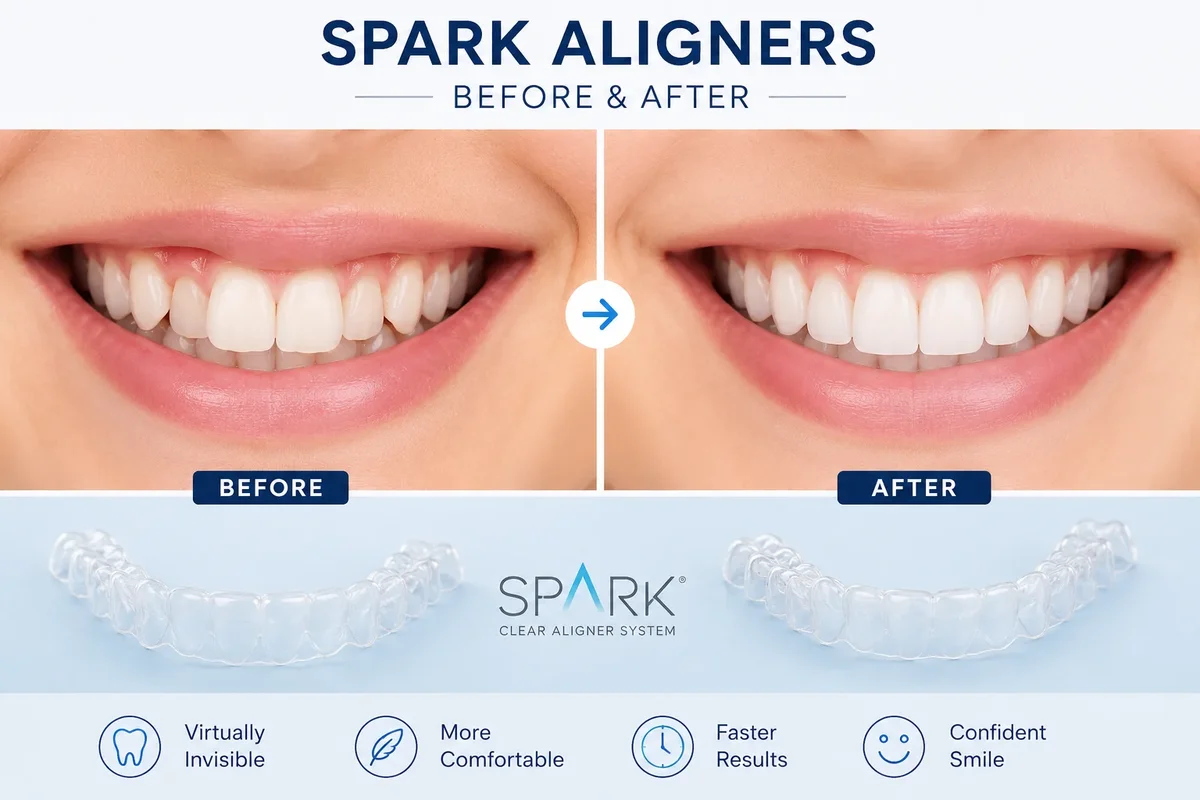
Maintaining Your Spark Aligners Before and After Results
Achieving a beautifully aligned smile is a major accomplishment, but preserving those results is equally important. Many patients spend months improving their smile and are thrilled when they compare their final spark aligners before and after photos. However, successful orthodontic treatment does not end when the last aligner is removed. Long-term maintenance plays a critical role in protecting the investment of time, effort, and resources that went into creating those impressive spark aligners before and after results.
One of the most common misconceptions among patients is that teeth remain permanently fixed after orthodontic treatment. In reality, teeth naturally tend to shift throughout life. This means that maintaining your spark aligners before and after outcome requires ongoing attention and adherence to professional recommendations. Fortunately, preserving your new smile is usually straightforward when proper retention and oral care habits are followed consistently.
Understanding how to protect your results can help ensure that the smile seen in your final spark aligners before and after comparison remains stable for many years to come.
Why Teeth Move After Orthodontic Treatment
Many patients are surprised to learn that teeth have a natural tendency to shift even after successful alignment. During treatment, teeth are moved through bone and surrounding tissues into new positions. Once active treatment ends, these structures need time to stabilize and adapt fully.
Without proper retention, some degree of relapse may occur. This means that the beautiful alignment achieved in your spark aligners before and after transformation could gradually diminish over time.
Common reasons teeth may shift include:
- Natural aging processes
- Changes in jaw structure over time
- Incomplete retention
- Grinding or clenching habits
- Periodontal disease
- Loss of supporting teeth
- Genetic factors
Understanding these risks is the first step toward preserving your spark aligners before and after results.
Relapse Is More Common Than Many People Realize
Even patients who achieved excellent orthodontic outcomes can experience tooth movement if retention protocols are ignored. Fortunately, most relapse can be prevented through proper maintenance and regular follow-up care.
The Importance of Retainers
Retainers are the most important tool for protecting your spark aligners before and after results. After active treatment ends, dentists typically provide custom retainers designed to hold teeth in their new positions while surrounding tissues stabilize.
Retainers may be:
- Removable clear retainers
- Removable acrylic retainers
- Fixed bonded retainers
- A combination of fixed and removable retainers
The type of retainer recommended depends on the patient’s orthodontic history, bite characteristics, and long-term stability requirements.
Consistent retainer use remains one of the biggest factors influencing how well patients maintain their spark aligners before and after outcome.
How Often Should Retainers Be Worn?
Retainer schedules vary depending on individual treatment plans. In many cases, patients are advised to wear retainers full-time immediately after completing active treatment before transitioning to nighttime wear.
A typical schedule may include:
- Full-time wear for the first few months
- Nighttime wear thereafter
- Long-term nightly use for maximum stability
Following professional recommendations carefully helps preserve the alignment seen in your spark aligners before and after photos.
What Happens If You Stop Wearing Retainers?
Patients who discontinue retainer use often notice gradual tooth movement over time. Initially, these changes may be subtle, but small shifts can accumulate and affect overall smile alignment.
Maintaining retainer use is one of the simplest ways to protect your spark aligners before and after investment and avoid the need for future corrective treatment.
Maintaining Excellent Oral Hygiene
Good oral hygiene remains essential even after orthodontic treatment is complete. Healthy teeth and gums provide the foundation for long-term smile stability.
Patients should continue:
- Brushing twice daily
- Flossing regularly
- Using fluoride products when recommended
- Attending routine dental checkups
- Following professional cleaning schedules
Maintaining oral health supports the longevity of your spark aligners before and after results and helps prevent issues that could compromise smile stability.
Protecting Teeth from Grinding and Clenching
Teeth grinding, also known as bruxism, can place excessive forces on the teeth and surrounding structures. Over time, this pressure may contribute to unwanted tooth movement and wear.
Patients who grind their teeth should discuss protective solutions with their dentist. In many cases, a custom nightguard can help safeguard both the teeth and the alignment achieved during treatment.
Protecting against bruxism can play an important role in preserving your spark aligners before and after transformation.
Signs of Bruxism
Common symptoms include:
- Jaw soreness
- Morning headaches
- Worn tooth surfaces
- Tooth sensitivity
- Clicking jaw joints
Addressing these issues early can help maintain long-term orthodontic stability.
Regular Dental Checkups and Monitoring
Routine dental visits remain important after treatment completion. During these appointments, dental professionals can evaluate tooth alignment, assess retainer fit, and identify any early signs of relapse.
Regular monitoring helps:
- Maintain oral health
- Ensure retainer effectiveness
- Detect tooth movement early
- Address minor issues before they worsen
- Protect long-term spark aligners before and after results
Patients who maintain regular checkups often enjoy more stable outcomes over time.
Maintaining a Healthy Lifestyle
General health habits can also influence long-term dental stability. A balanced diet, proper hydration, and avoidance of harmful habits contribute to healthier teeth and gums.
Healthy lifestyle choices support:
- Strong periodontal tissues
- Improved healing capacity
- Reduced inflammation
- Long-term oral wellness
These factors indirectly help preserve the alignment achieved through your spark aligners before and after treatment.
Cleaning and Caring for Retainers
Retainers require regular maintenance to remain effective and hygienic. Dirty retainers can accumulate bacteria, plaque, and odors, potentially affecting both oral health and appliance performance.
Recommended retainer care includes:
- Daily cleaning
- Rinsing after removal
- Proper storage when not in use
- Avoiding excessive heat exposure
- Replacing damaged retainers promptly
Proper care helps ensure retainers continue protecting your spark aligners before and after results effectively.
When Should Retainers Be Replaced?
Retainers may eventually wear out, crack, or lose their effectiveness. Patients should contact their dentist if they notice:
- Poor fit
- Visible damage
- Persistent discomfort
- Signs of tooth movement
Timely replacement helps maintain smile stability and prevent relapse.
Long-Term Benefits of Maintaining Your Results
Protecting your spark aligners before and after outcome provides benefits that extend far beyond appearance. Stable tooth alignment supports oral health, function, and confidence throughout life.
Long-term advantages include:
- Improved smile aesthetics
- Better oral hygiene access
- Enhanced bite function
- Reduced risk of relapse
- Greater treatment value
- Long-lasting confidence
These benefits highlight the importance of ongoing maintenance after orthodontic treatment.
Final Thoughts on Protecting Your Smile
The incredible improvements visible in spark aligners before and after photos represent months of dedication, planning, and treatment. Protecting those results requires an equally important commitment to retention, oral hygiene, and professional follow-up care.
By wearing retainers consistently, maintaining excellent oral health, attending regular dental visits, and addressing issues promptly, patients can enjoy their spark aligners before and after results for many years. The effort invested in long-term maintenance helps ensure that your transformed smile remains healthy, functional, and beautiful well into the future. ✨😁