
A stainless crown tooth is one of the most reliable and widely used dental solutions for protecting damaged or severely decayed teeth. Dentists often recommend a stainless crown tooth when a tooth requires full coverage and long-term durability, especially when traditional fillings or partial restorations are not sufficient. This type of crown is made from high-quality stainless steel alloys that provide strength, corrosion resistance, and excellent protection for the underlying tooth structure.
In modern dentistry, a stainless crown tooth is commonly used in pediatric dentistry, but it can also serve important roles in certain adult dental treatments. The purpose of placing a stainless crown tooth is to restore the function, structure, and appearance of a tooth that has experienced extensive decay, trauma, or structural weakness. Instead of extracting the tooth, dentists use this restoration to preserve the natural tooth and maintain proper bite alignment.
Many parents first hear about a stainless crown tooth when their child develops severe cavities in primary teeth. Baby teeth play a crucial role in guiding permanent teeth into the correct position, so protecting them is extremely important. A stainless crown tooth acts as a protective shield that completely covers the affected tooth, preventing further damage and allowing the child to chew comfortably. 😊
The design of a stainless crown tooth is simple yet highly effective. Unlike porcelain crowns that are custom fabricated in dental laboratories, stainless steel crowns are prefabricated. Dentists select the appropriate size and shape, adjust it to fit the tooth, and secure it using dental cement. This streamlined approach makes the procedure faster and more comfortable, particularly for younger patients who may struggle with longer dental visits.
Another reason dentists frequently recommend a stainless crown tooth is its durability. Stainless steel is known for its exceptional strength and resistance to wear. Once placed, a stainless crown tooth can withstand the forces of chewing and biting without cracking or breaking easily. Because of this resilience, many dentists consider stainless steel crowns the gold standard for restoring primary molars affected by extensive decay.
A stainless crown tooth also helps maintain proper oral development. When a tooth is severely damaged and left untreated, it may eventually require extraction. Missing teeth can cause neighboring teeth to shift, leading to bite problems and alignment issues. By placing a stainless crown tooth, dentists can maintain the natural spacing of the teeth and support healthy jaw development.
Another important advantage of the stainless crown tooth is its cost-effectiveness. Compared with other dental crown materials, stainless steel crowns are generally more affordable and require fewer appointments. This makes them an excellent option for families seeking reliable treatment without excessive expense. In many cases, dental insurance plans also cover stainless steel crowns when they are medically necessary.
According to guidelines published by the American Dental Association, stainless steel crowns are particularly beneficial for restoring teeth that have undergone pulp therapy or root canal treatment in children. After these procedures, the remaining tooth structure can be fragile. A stainless crown tooth provides full coverage protection, significantly reducing the risk of future fractures.
Patients sometimes worry about the appearance of a stainless crown tooth because it has a metallic look. While it is true that stainless steel crowns are not tooth-colored, dentists typically place them on back teeth where they are less visible. Their primary goal is durability and protection rather than cosmetic appearance. For visible front teeth, dentists may recommend alternative options such as composite strip crowns or ceramic crowns.
It is also important to understand that a stainless crown tooth does not damage the surrounding teeth or gums when placed correctly. The crown fits snugly over the prepared tooth and is sealed with dental cement. With proper oral hygiene—including brushing twice daily and regular dental visits—the crown can remain stable and functional for many years.
If you or your child has been advised to consider a stainless crown tooth, consulting with an experienced dental professional is the best step forward. Dentists evaluate the extent of decay, the strength of the remaining tooth structure, and the patient’s oral health before recommending this treatment. If you would like to discuss treatment options or schedule a professional evaluation, you can easily reach out through the Redent Klinik Contact Page.
Ultimately, a stainless crown tooth represents a practical, durable, and highly effective dental restoration. It protects weakened teeth, restores chewing function, and helps maintain proper oral development. Whether used in pediatric dentistry or specific adult treatments, this restoration continues to play an essential role in modern dental care. With the right care and guidance from your dentist, a stainless crown tooth can safeguard your smile and prevent more serious dental problems in the future. 🦷
What Is a Stainless Crown Tooth and Why Is It Used?
A stainless crown tooth is a durable dental restoration designed to completely cover and protect a damaged tooth. Dentists frequently use a stainless crown tooth when a tooth has suffered extensive decay, fracture, or structural weakening that cannot be repaired with a simple filling. Instead of removing the tooth entirely, the dentist places a stainless crown tooth over the existing tooth structure to restore strength, function, and protection.
This type of dental crown is made from medical-grade stainless steel alloys that are resistant to corrosion and capable of withstanding strong biting forces. Because of these properties, a stainless crown tooth is particularly useful in situations where durability is more important than cosmetic appearance. The crown acts like a protective cap, covering the entire tooth surface and preventing further damage.
While many types of crowns exist in modern dentistry, the stainless crown tooth remains one of the most reliable and practical solutions for protecting compromised teeth—especially in children’s dentistry. Its strong design, quick placement process, and long-lasting protection make it a widely recommended treatment option.
Understanding the Structure of a Stainless Crown Tooth
To understand why a stainless crown tooth is so effective, it is helpful to look at how the crown functions structurally. The crown is essentially a prefabricated metal shell that fits snugly over the prepared tooth. Unlike ceramic or porcelain crowns, which are custom fabricated in laboratories, a stainless crown tooth is selected from a set of standardized sizes and adjusted chairside by the dentist.
The stainless steel material used in a stainless crown tooth typically contains a combination of iron, chromium, and nickel. These metals create an alloy that is strong, lightweight, and resistant to rust. This composition ensures that the stainless crown tooth can tolerate everyday chewing forces without breaking or cracking.
Once the dentist prepares the tooth by removing decay and shaping it appropriately, the stainless crown tooth is placed over the remaining tooth structure and secured with dental cement. The cement creates a tight seal that helps prevent bacteria from entering the space between the crown and the tooth.
Why Dentists Recommend a Stainless Crown Tooth
Dentists often recommend a stainless crown tooth when a tooth requires full coverage protection. There are several clinical situations where this restoration becomes the most effective option.
Severe Tooth Decay
One of the most common reasons for placing a stainless crown tooth is advanced tooth decay. When cavities become large and affect multiple surfaces of a tooth, traditional fillings may not provide enough strength. A stainless crown tooth completely covers the tooth, preventing further decay and restoring the tooth’s ability to function normally.
After Pulp Therapy or Root Canal Treatment
After certain dental procedures—such as pulp therapy in children or root canal treatment—the tooth structure can become weakened. In these cases, dentists often place a stainless crown tooth to protect the treated tooth from fracture. According to recommendations from the American Dental Association, full coverage crowns like stainless steel crowns help maintain the integrity of treated teeth.
To Prevent Tooth Extraction
When a tooth is badly damaged, extraction might seem like the only option. However, placing a stainless crown tooth can often save the natural tooth. Preserving natural teeth is always preferred because it maintains proper spacing and supports healthy jaw alignment.
Why Stainless Steel Is Used for Dental Crowns
The materials used in dentistry must meet strict standards for safety and durability. Stainless steel is widely chosen because it offers several advantages when used in a stainless crown tooth restoration.
- High Strength: A stainless crown tooth can withstand heavy chewing forces.
- Corrosion Resistance: Stainless steel does not easily rust or degrade in the moist environment of the mouth.
- Long-Term Protection: The crown protects the tooth from further structural damage.
- Cost Efficiency: Compared to porcelain or ceramic crowns, a stainless crown tooth is typically more affordable.
- Quick Placement: Dentists can often place the crown in a single visit.
Because of these advantages, the stainless crown tooth remains a trusted restorative treatment in dentistry worldwide.
When a Stainless Crown Tooth Is the Best Choice
Not every damaged tooth requires a stainless crown tooth, but there are certain cases where it is clearly the best option. Dentists carefully evaluate the tooth’s condition before recommending treatment.
A stainless crown tooth may be recommended when:
- The tooth has multiple cavities affecting several surfaces.
- The tooth has fractured or weakened enamel.
- The tooth has undergone pulp therapy.
- The patient requires a strong, long-lasting restoration.
For example, in pediatric dentistry, a stainless crown tooth is frequently placed on molars because these teeth handle the majority of chewing pressure. Protecting them helps maintain healthy eating habits and proper oral development. 😊
How a Stainless Crown Tooth Supports Oral Health
A stainless crown tooth does more than simply repair a damaged tooth—it also supports overall oral health. When a tooth is protected with a crown, it continues to function normally within the dental arch. This prevents neighboring teeth from shifting and helps maintain a balanced bite.
Additionally, a stainless crown tooth can help patients avoid more complex dental treatments in the future. By stabilizing the tooth early, dentists can prevent worsening damage that might otherwise require extraction or orthodontic correction.
If you suspect that you or your child may need a stainless crown tooth, consulting a qualified dental professional is essential. A dentist will examine the affected tooth, review dental history, and determine the best treatment plan. If you would like to speak with a dental expert or schedule an appointment, you can visit the Redent Klinik Contact Page.
In summary, the stainless crown tooth is a highly effective dental restoration designed to protect weakened teeth and restore normal function. With its durable construction, quick placement process, and long-lasting performance, this treatment remains one of the most dependable solutions in modern dentistry. 🦷
Benefits of Choosing a Stainless Crown Tooth for Dental Treatment
When dentists recommend restorative treatments for severely damaged or decayed teeth, one of the most reliable solutions is a stainless crown tooth. This type of dental crown has been used for decades in modern dentistry because of its exceptional durability, effectiveness, and ability to protect vulnerable teeth. A stainless crown tooth works as a full-coverage restoration, meaning it completely covers the natural tooth structure and shields it from further damage.
Many dental professionals prefer the stainless crown tooth for situations where a tooth requires long-term protection but does not necessarily need a cosmetic porcelain crown. While porcelain and ceramic crowns are commonly used for visible teeth, the stainless crown tooth is particularly ideal for molars and premolars, where chewing forces are strongest.
The strength and protective capabilities of a stainless crown tooth make it a trusted treatment option in both pediatric and adult dentistry. Understanding its benefits can help patients make informed decisions about their dental care.
Exceptional Durability and Strength
One of the primary advantages of a stainless crown tooth is its durability. Stainless steel is a highly resilient material that can withstand the constant pressure generated during chewing and biting. Unlike some restorative materials that may crack or fracture under heavy force, a stainless crown tooth maintains its structural integrity for years.
This durability makes the stainless crown tooth especially beneficial for back teeth, which are responsible for grinding food. Molars experience significant stress every day, and the strong metal structure of a stainless crown tooth ensures that these teeth remain protected.
Protection Against Further Tooth Damage
A stainless crown tooth acts like a protective armor for the damaged tooth beneath it. When a tooth has large cavities or weakened enamel, it becomes more susceptible to fractures and additional decay. By covering the entire tooth, a stainless crown tooth prevents bacteria from entering vulnerable areas.
This full coverage also helps preserve the remaining healthy tooth structure. Rather than allowing decay to progress or risking tooth breakage, dentists use the stainless crown tooth to stabilize the tooth and restore normal function.
Ideal Solution for Pediatric Dentistry
The stainless crown tooth is widely recognized as the gold standard restoration for primary (baby) teeth that have severe decay. Children’s teeth are smaller and more delicate than adult teeth, which makes them more vulnerable to cavities.
When a child develops extensive tooth decay, fillings may not provide enough strength. In these situations, dentists often recommend placing a stainless crown tooth to protect the tooth until it naturally falls out and is replaced by a permanent tooth.
The stainless crown tooth allows children to chew comfortably and maintain proper dental spacing, which is essential for healthy jaw development. According to the American Dental Association, stainless steel crowns are among the most reliable restorative treatments for severely decayed primary teeth.
Cost-Effective Dental Restoration
Another significant benefit of a stainless crown tooth is affordability. Compared to porcelain or ceramic crowns, the stainless crown tooth generally costs less while still providing excellent protection.
Because stainless steel crowns are prefabricated, dentists can place them more quickly than crowns that require laboratory fabrication. This efficiency reduces both treatment time and cost.
Typical Price Range
Although costs vary depending on location and dental clinic, the approximate price of a stainless crown tooth may fall within the following range:
Estimated Stainless Crown Tooth Cost

United States:
$300 – $700 per tooth

Europe:
€200 – €500 per tooth

Turkey:
$120 – $350 per tooth
In many cases, dental insurance plans partially or fully cover the cost of a stainless crown tooth when it is medically necessary.
Quick and Efficient Dental Procedure
Another advantage of the stainless crown tooth is the speed of the procedure. Unlike porcelain crowns that may require multiple dental appointments, the stainless crown tooth can often be placed in a single visit.
During the appointment, the dentist removes decay, prepares the tooth, selects the correct crown size, and cements the crown in place. This streamlined procedure is especially beneficial for children who may have difficulty sitting through lengthy dental treatments.
Because the placement of a stainless crown tooth is relatively straightforward, patients typically experience minimal discomfort and can resume normal activities soon after the procedure.
Long-Term Protection for Treated Teeth
A stainless crown tooth also plays an important role in protecting teeth that have undergone major dental procedures. For example, after pulp therapy or root canal treatment, the tooth structure becomes more fragile.
By placing a stainless crown tooth over the treated tooth, dentists provide the reinforcement necessary to prevent fractures. This ensures the tooth remains functional and stable within the mouth.
The stainless crown tooth essentially acts as a long-term protective shield, helping patients avoid more complicated dental procedures in the future.
Maintaining Proper Bite and Tooth Alignment
When a tooth becomes severely damaged or is removed entirely, surrounding teeth may begin to shift. This movement can lead to bite misalignment, chewing problems, and orthodontic issues.
A stainless crown tooth helps prevent these complications by preserving the original tooth structure. Because the crown maintains the tooth’s shape and position, it supports a balanced bite and proper dental alignment.
Maintaining correct spacing is particularly important for children whose permanent teeth are still developing. The stainless crown tooth ensures that the dental arch remains stable during growth.
Reliable Performance for Everyday Use
Perhaps the most valuable benefit of a stainless crown tooth is its reliability. Once placed correctly and maintained with good oral hygiene, the crown can function effectively for many years.
Patients with a stainless crown tooth can eat, speak, and smile normally without worrying about the restoration failing. Routine dental visits and proper brushing help keep both the crown and surrounding gums healthy.
If you are considering this treatment or would like a professional dental evaluation, you can easily contact a qualified dental team through the Redent Klinik Contact Page.
In conclusion, the stainless crown tooth offers numerous advantages, including durability, affordability, quick placement, and long-term protection. For patients with severely damaged teeth, this restoration remains one of the most dependable and effective solutions in modern dentistry. 🦷
Who Needs a Stainless Crown Tooth? Common Dental Cases
A stainless crown tooth is recommended when a tooth becomes too damaged or weakened to be restored with a simple filling. Dentists rely on this restoration because it provides full coverage protection and exceptional durability. The stainless crown tooth acts like a protective cap that covers the entire tooth surface, preventing additional damage and restoring chewing function.
While many people associate a stainless crown tooth primarily with pediatric dentistry, the treatment can also be useful in certain adult dental cases. Dentists carefully evaluate the condition of the tooth, the amount of remaining tooth structure, and the patient’s oral health before recommending a stainless crown tooth.
Understanding who needs a stainless crown tooth can help patients recognize when this treatment may be the most practical and effective dental solution.
Children with Severe Tooth Decay
One of the most common situations where dentists recommend a stainless crown tooth is for children who develop severe cavities in their baby teeth. Primary teeth play an important role in guiding permanent teeth into the correct position. If these teeth are lost too early due to decay, it may lead to alignment problems in the future.
A stainless crown tooth provides full protection for a baby tooth that has been heavily damaged by decay. Instead of extracting the tooth, dentists can preserve it by placing the crown over the remaining tooth structure. This allows the child to maintain normal chewing function and helps keep the correct spacing for permanent teeth.
Why Baby Teeth Still Matter
Many parents mistakenly believe that baby teeth do not need major dental treatment because they eventually fall out. However, untreated decay in baby teeth can lead to infection, pain, and difficulty eating. A stainless crown tooth helps avoid these complications by protecting the tooth until it naturally exfoliates.
According to recommendations from the American Dental Association, stainless steel crowns are considered one of the most reliable treatments for restoring primary molars with extensive decay.
Teeth That Have Undergone Pulp Therapy
Another common case requiring a stainless crown tooth occurs after pulp therapy. This procedure is performed when decay reaches the inner part of the tooth that contains nerves and blood vessels.
Once pulp therapy is completed, the tooth structure often becomes weaker. Placing a stainless crown tooth helps reinforce the tooth and prevents fractures that could occur during chewing.
Without the protection of a stainless crown tooth, the treated tooth might break easily or develop additional complications.
Teeth with Large Fillings
A tooth that already has a very large filling may not have enough natural structure left to support normal biting pressure. In these situations, dentists often replace the large filling with a stainless crown tooth to provide stronger coverage.
The stainless crown tooth distributes chewing forces evenly across the tooth, reducing the risk of cracks or fractures. This approach is particularly useful for molars, which handle the majority of chewing pressure.
Fractured or Weak Teeth
Sometimes a tooth becomes fractured due to trauma, grinding habits, or structural weakness caused by decay. If enough tooth structure remains, dentists may place a stainless crown tooth instead of removing the tooth entirely.
The crown stabilizes the damaged tooth and prevents the fracture from spreading further. In many cases, a stainless crown tooth allows the patient to continue using the tooth normally without pain or discomfort.
Protection for Teeth at Risk of Breaking
Even if a tooth has not yet fractured completely, dentists may recommend a stainless crown tooth as a preventive solution. Covering a weakened tooth with a crown can significantly reduce the likelihood of future breakage.
This preventive approach helps patients avoid more complex treatments such as tooth extraction or dental implants.
Patients Who Need a Strong and Reliable Restoration
Some patients require restorations that prioritize durability over cosmetic appearance. In these situations, a stainless crown tooth may be the most practical option.
Because stainless steel is extremely strong, the crown can withstand daily chewing forces without cracking. A stainless crown tooth therefore provides dependable long-term protection, especially for back teeth that are not highly visible.
Children with High Cavity Risk
Children who are prone to frequent cavities may also benefit from a stainless crown tooth. When a child’s molar develops a cavity early in life, the dentist may choose to place a stainless crown tooth rather than a filling.
This approach offers better long-term protection because the crown seals the entire tooth. It reduces the likelihood that decay will return around the restoration.
By using a stainless crown tooth, dentists can often prevent repeated dental treatments and reduce the risk of complications.
Adults with Temporary Crown Needs
Although the stainless crown tooth is most common in pediatric dentistry, it can occasionally be used in adult treatment as well. Dentists may place a stainless crown tooth as a temporary restoration for adult molars while a permanent crown is being prepared.
In these cases, the stainless crown tooth protects the tooth from sensitivity and structural damage until the final crown is ready.
When Dentists Evaluate the Need for a Stainless Crown Tooth
Before recommending a stainless crown tooth, dentists conduct a detailed evaluation that may include dental X-rays and a visual examination. The goal is to determine whether the tooth can be restored safely.
If enough healthy tooth structure remains, placing a stainless crown tooth is often the best way to restore the tooth’s strength and function.
Patients who want to explore whether this treatment is appropriate for their situation can schedule a consultation through the Redent Klinik Contact Page.
In summary, a stainless crown tooth is recommended in many dental situations, including severe cavities, pulp therapy cases, fractured teeth, and large fillings. By covering and protecting weakened teeth, the stainless crown tooth helps maintain proper oral function and prevents further dental complications. 🦷
The Procedure: How Dentists Place a Stainless Crown Tooth
The placement of a stainless crown tooth is a common and efficient dental procedure designed to restore and protect a severely damaged or decayed tooth. Dentists use this treatment when a tooth needs full coverage to regain strength and function. Unlike many other types of crowns that require laboratory fabrication, a stainless crown tooth is prefabricated and can typically be placed in a single dental visit. This makes the procedure especially beneficial for children and patients who require quick yet reliable treatment. 😊
During the procedure, the dentist carefully prepares the tooth, selects the correct crown size, and cements the stainless crown tooth securely in place. The process is designed to be comfortable, efficient, and highly effective in preserving the natural tooth structure. By fully covering the tooth, the stainless crown tooth protects it from further decay, fracture, and bacterial contamination.
Initial Dental Examination and Diagnosis
The first step before placing a stainless crown tooth is a thorough dental examination. The dentist evaluates the affected tooth to determine whether the crown is the best treatment option. This evaluation often includes a visual inspection, dental X-rays, and an assessment of the patient’s overall oral health.
During this stage, the dentist checks whether enough healthy tooth structure remains to support the stainless crown tooth. If the decay has reached deeper layers of the tooth, additional treatment such as pulp therapy may be required before the crown can be placed.
The dentist may also discuss treatment options with the patient or parent. In many cases, the stainless crown tooth is recommended because it offers the strongest protection for teeth with extensive damage.
Preparing the Tooth for the Crown
Once the dentist confirms that a stainless crown tooth is appropriate, the next step is tooth preparation. The dentist begins by numbing the area using local anesthesia to ensure the patient remains comfortable throughout the procedure.
After anesthesia takes effect, the dentist removes any decayed or infected tooth structure. Cleaning the tooth thoroughly is essential because placing a stainless crown tooth over untreated decay could allow bacteria to remain trapped underneath.
Shaping the Tooth for Proper Crown Fit
After decay removal, the dentist gently reshapes the tooth so that the stainless crown tooth can fit properly. This preparation typically involves reducing a small amount of enamel from the top and sides of the tooth.
The goal is to create enough space for the stainless crown tooth to sit securely without interfering with the patient’s bite. Because the crown completely covers the tooth, this preparation ensures the restoration fits comfortably within the dental arch.
Selecting the Correct Stainless Steel Crown
Unlike porcelain crowns that require custom fabrication, the stainless crown tooth comes in a variety of prefabricated sizes. Dentists keep an assortment of these crowns available in their clinic.
The dentist selects several crown sizes and carefully tests them over the prepared tooth. The correct stainless crown tooth should fit snugly while extending slightly beneath the gumline for optimal stability.
Once the best-fitting crown is chosen, the dentist may trim or contour the crown slightly to achieve a precise fit. This customization ensures the stainless crown tooth sits securely and does not cause discomfort.
Cementing the Stainless Crown Tooth
After selecting and adjusting the crown, the dentist permanently places the stainless crown tooth using dental cement. The cement acts as an adhesive that bonds the crown to the natural tooth.
The dentist fills the inside of the crown with cement and then presses the stainless crown tooth firmly onto the prepared tooth. Excess cement is carefully removed once the crown is fully seated.
This step is crucial because the cement creates a tight seal that prevents bacteria from entering beneath the crown. A properly sealed stainless crown tooth helps protect the tooth from future decay.
Checking Bite Alignment
After the crown is placed, the dentist checks the patient’s bite to ensure the stainless crown tooth fits comfortably when the patient closes their mouth. If necessary, minor adjustments may be made to ensure proper alignment.
Because the crown is made from durable stainless steel, it can withstand chewing forces without breaking or wearing down easily. This durability is one of the reasons the stainless crown tooth is widely used in restorative dentistry.
How Long the Procedure Takes
The placement of a stainless crown tooth is usually completed within a single dental appointment. The entire procedure often takes between 30 and 60 minutes depending on the complexity of the case.
This efficiency is especially beneficial for pediatric patients. Children often have difficulty sitting through lengthy dental treatments, so the quick placement of a stainless crown tooth makes the experience easier and less stressful.
Because the crown is prefabricated, there is no need for dental laboratory work or multiple appointments. Patients leave the clinic with a fully restored tooth on the same day.
What Patients Can Expect After Placement
Once the stainless crown tooth is placed, patients can usually return to normal daily activities immediately. Some mild sensitivity may occur as the anesthesia wears off, but this discomfort typically resolves quickly.
Patients should continue maintaining good oral hygiene by brushing twice daily and visiting the dentist regularly for checkups. With proper care, the stainless crown tooth can protect the tooth for many years.
For patients who would like professional guidance or a consultation about crown treatments, the dental team can be contacted through the Redent Klinik Contact Page.
In summary, placing a stainless crown tooth is a straightforward and highly effective dental procedure. Through careful examination, tooth preparation, crown selection, and secure cementation, dentists restore the strength and function of damaged teeth. This reliable treatment continues to play an essential role in modern dentistry, helping patients maintain healthy smiles and avoid more complicated dental procedures. 🦷
For additional professional dental guidelines and patient resources, you may also visit the American Dental Association, which provides valuable information about restorative dental treatments.
Recovery and Aftercare for a Stainless Crown Tooth
After receiving a stainless crown tooth, proper recovery and aftercare are essential to ensure the restoration functions correctly and lasts as long as possible. Although the placement of a stainless crown tooth is typically a quick and minimally invasive procedure, the way patients care for the crowned tooth afterward can significantly influence its long-term success. Fortunately, most patients recover quickly and can return to normal daily activities shortly after the procedure. 🦷
The primary purpose of a stainless crown tooth is to protect and strengthen a damaged tooth. Because the crown completely covers the tooth, it shields the remaining tooth structure from bacteria, fractures, and further decay. However, this protection works best when combined with good oral hygiene and proper dental habits.
Immediate Recovery After a Stainless Crown Tooth Placement
Right after the dentist places a stainless crown tooth, patients may experience mild numbness from the local anesthesia used during the procedure. This numbness usually fades within a few hours. During this time, dentists often advise patients to avoid chewing on the treated side of the mouth to prevent accidentally biting the cheek or tongue.
Some patients notice slight pressure or mild sensitivity around the stainless crown tooth during the first day or two. This sensation is completely normal and typically resolves quickly as the surrounding gum tissue adapts to the crown.
Eating After the Procedure
Once the anesthesia wears off, patients can generally resume eating normally. However, dentists often recommend starting with softer foods for the first few hours after receiving a stainless crown tooth. This allows the dental cement used to secure the crown to fully set.
Examples of foods that are gentle on a newly placed stainless crown tooth include:
- Yogurt
- Mashed potatoes
- Soup
- Scrambled eggs
- Soft fruits
Avoiding sticky or extremely hard foods during the first day helps ensure the stainless crown tooth remains firmly in place.
Maintaining Oral Hygiene with a Stainless Crown Tooth
Good oral hygiene is crucial for maintaining both the stainless crown tooth and the surrounding natural teeth. Even though the crown itself cannot develop cavities, the tooth underneath and the gum tissue around it still require proper care.
Patients should brush their teeth at least twice daily using a fluoride toothpaste. When brushing around a stainless crown tooth, gentle circular motions are recommended to clean the gumline effectively.
Flossing Around the Crown
Flossing is just as important as brushing when caring for a stainless crown tooth. Food particles can accumulate between teeth and around the crown margins. Flossing removes plaque buildup and helps prevent gum inflammation.
When flossing near a stainless crown tooth, patients should slide the floss gently between the teeth and pull it out sideways rather than snapping it upward. This method helps avoid accidentally dislodging the crown.
Foods to Avoid with a Stainless Crown Tooth
While the stainless crown tooth is extremely durable, certain foods can place unnecessary stress on the restoration. Limiting these foods helps protect both the crown and the natural tooth beneath it.
Foods that may damage or loosen a stainless crown tooth include:
- Hard candies
- Ice cubes
- Sticky caramel or chewing gum
- Very hard nuts
- Popcorn kernels
These foods can exert excessive pressure on the crown or potentially pull it loose. Dentists generally recommend moderating their consumption, especially for children who have a stainless crown tooth.
Regular Dental Checkups Are Essential
Even though a stainless crown tooth is designed to be long-lasting, routine dental visits remain extremely important. Dentists monitor the crown to ensure it remains properly sealed and continues to function as intended.
During these checkups, the dentist examines the stainless crown tooth, evaluates the surrounding gum tissue, and checks for any signs of wear or looseness. Regular professional cleanings also help remove plaque and tartar buildup that brushing alone cannot eliminate.
Patients who need to schedule a dental examination or have questions about their crown can contact a dental professional through the Redent Klinik Contact Page.
Signs That a Stainless Crown Tooth Needs Attention
Although complications are uncommon, patients should watch for certain signs that may indicate a problem with their stainless crown tooth. Prompt dental evaluation can prevent more serious issues.
Possible warning signs include:
- Pain or persistent sensitivity around the crown
- Swelling of the surrounding gum tissue
- The crown feeling loose or shifting
- Difficulty biting comfortably
If any of these symptoms occur, it is important to visit a dentist promptly so the stainless crown tooth can be examined and adjusted if necessary.
Long-Term Care for a Stainless Crown Tooth
With proper care, a stainless crown tooth can remain functional for many years. The key to long-term success is maintaining a combination of healthy habits, including regular brushing, flossing, and dental checkups.
In pediatric dentistry, a stainless crown tooth typically remains in place until the baby tooth naturally falls out and is replaced by a permanent tooth. In adults, the crown may serve as a temporary or long-term restoration depending on the treatment plan.
According to guidance provided by the American Dental Association, maintaining excellent oral hygiene and attending routine dental visits are among the most effective ways to ensure the success of dental restorations.
In conclusion, caring for a stainless crown tooth is straightforward but extremely important. By following proper recovery instructions, maintaining good oral hygiene, and attending regular dental checkups, patients can ensure that their stainless crown tooth continues protecting their smile for years to come. 😊
Stainless Crown Tooth vs Other Dental Crowns
When dentists recommend a dental crown, patients often wonder which type of crown is the most suitable for their situation. One commonly used option is the stainless crown tooth, known for its durability and practicality. However, several other types of crowns are available in modern dentistry, including porcelain, ceramic, zirconia, and metal alloy crowns. Each crown type has unique advantages depending on the clinical needs of the patient.
Understanding how a stainless crown tooth compares with other dental crowns can help patients make informed decisions about their oral health. While aesthetic crowns may be preferred for visible front teeth, the stainless crown tooth remains one of the most reliable restorative solutions for molars and primary teeth.
What Makes a Stainless Crown Tooth Different?
The most distinctive characteristic of a stainless crown tooth is its material composition. Stainless steel crowns are made from durable metal alloys designed to withstand strong chewing forces. Unlike crowns made from porcelain or ceramic, the stainless crown tooth is prefabricated and placed directly by the dentist during a single appointment.
This means that a stainless crown tooth usually does not require dental laboratory fabrication or multiple visits. Dentists can select the appropriate crown size, adjust it, and cement it in place within the same session.
Key Features of a Stainless Crown Tooth
- High durability and resistance to fractures
- Affordable compared with cosmetic crowns
- Quick placement in a single dental visit
- Excellent protection for severely damaged teeth
- Commonly used for children’s molars
Because of these advantages, the stainless crown tooth remains a preferred restoration for teeth that require strong, long-term protection.
Stainless Crown Tooth vs Porcelain Crowns
Porcelain crowns are widely known for their natural appearance. They closely mimic the color and translucency of natural teeth, making them an excellent option for visible areas of the mouth. However, when comparing porcelain crowns to a stainless crown tooth, several important differences become clear.
Appearance vs Strength
Porcelain crowns are aesthetically pleasing but may be more prone to chipping under heavy chewing forces. In contrast, a stainless crown tooth is extremely resistant to wear and fractures. While it does not match the natural tooth color, its strength makes it ideal for molars that endure strong biting pressure.
For patients who prioritize durability over cosmetic appearance, the stainless crown tooth often becomes the better option.
Stainless Crown Tooth vs Ceramic Crowns
Ceramic crowns are another popular restorative option because they provide a highly natural look. Dentists frequently use ceramic crowns for front teeth where aesthetics are important.
However, ceramic crowns usually require tooth impressions and laboratory fabrication, meaning the patient may need multiple dental appointments. In contrast, a stainless crown tooth can be placed quickly without waiting for laboratory production.
For pediatric patients or situations where fast treatment is necessary, the stainless crown tooth offers a practical advantage.
Stainless Crown Tooth vs Zirconia Crowns
Zirconia crowns have become increasingly popular due to their strength and tooth-colored appearance. Zirconia is a durable ceramic material that offers both aesthetics and durability.
Despite these benefits, zirconia crowns are significantly more expensive than a stainless crown tooth. They also require precise customization through dental laboratory processes.
For many patients—especially children—the affordability and quick placement of a stainless crown tooth make it the more practical choice.
Why Dentists Often Choose Stainless Crown Tooth for Children
In pediatric dentistry, the stainless crown tooth is often considered the gold standard for restoring severely decayed primary molars. Children’s teeth are more vulnerable to cavities, and fillings alone may not provide enough protection.
The stainless crown tooth completely covers the tooth, preventing further decay and preserving the tooth until it naturally falls out.
According to the American Dental Association, stainless steel crowns are among the most effective treatments for restoring primary molars affected by extensive decay.
Longevity Comparison Between Crown Types
The lifespan of a dental crown varies depending on the material used and the patient’s oral hygiene habits. Below is a general comparison of average longevity:
Average Crown Lifespan

Stainless Crown Tooth: 5–15 years (or until baby tooth falls out)
Porcelain Crown: 10–15 years
Ceramic Crown: 10–15 years
Zirconia Crown: 15–20 years
Gold Alloy Crown: 20+ years
Although porcelain or zirconia crowns may last longer in some cases, the stainless crown tooth provides more than enough durability for many dental situations, especially for primary teeth.
Cost Differences Between Crown Types
Cost is another factor that influences crown selection. Cosmetic crowns made from ceramic or zirconia are generally more expensive than a stainless crown tooth.
Estimated Crown Costs

Stainless Crown Tooth: $300 – $700
Porcelain Crown: $800 – $3,000
Ceramic Crown: $900 – $2,500
Zirconia Crown: $1,000 – $3,500
Because the stainless crown tooth is prefabricated and placed quickly, it offers a cost-effective solution while still delivering reliable protection.
When a Stainless Crown Tooth Is the Best Option
Dentists typically recommend a stainless crown tooth when strength and functionality are the primary priorities. This is especially true in cases involving:
- Severe tooth decay
- Large cavities affecting multiple surfaces
- Teeth treated with pulp therapy
- Primary molars in children
In these situations, the stainless crown tooth provides a durable restoration that restores chewing ability and prevents additional dental problems.
Patients who want to learn whether a stainless crown tooth or another crown type is best for their situation can consult with a dental professional. You can easily reach a qualified dental team through the Redent Klinik Contact Page.
In conclusion, while several crown materials are available in modern dentistry, the stainless crown tooth remains one of the most practical and dependable solutions for restoring damaged teeth. Its combination of durability, affordability, and quick placement ensures it continues to play an essential role in dental treatment worldwide. 🦷
How Long Does a Stainless Crown Tooth Last?
One of the most common questions patients ask after receiving a dental crown is how long the restoration will last. When it comes to durability and reliability, a stainless crown tooth is known for its impressive lifespan. Dentists have used this restoration for decades because it provides strong protection for damaged teeth while maintaining function for many years.
The lifespan of a stainless crown tooth depends on several factors, including the patient’s oral hygiene habits, chewing forces, and regular dental care. In pediatric dentistry, the stainless crown tooth is typically designed to remain in place until the baby tooth naturally falls out. In adults, the crown may serve as a long-term or temporary restoration depending on the treatment plan.
Overall, the stainless crown tooth is considered one of the most durable dental restorations available, especially for teeth that experience strong chewing pressure.
Average Lifespan of a Stainless Crown Tooth
Under normal conditions, a stainless crown tooth can last between 5 and 15 years. In children, the crown usually remains in place until the primary tooth is naturally replaced by a permanent tooth.
For example, if a child receives a stainless crown tooth on a molar at age six, the crown may remain functional until the baby tooth falls out around age ten or eleven. During this time, the stainless crown tooth protects the tooth from further decay and allows the child to chew comfortably.
In adults, a stainless crown tooth may sometimes be used as a temporary restoration while a permanent crown is being prepared. In other cases, it can function for many years if the tooth remains stable and healthy.
Why Stainless Steel Crowns Are So Durable
The durability of a stainless crown tooth comes from the properties of stainless steel itself. Stainless steel is resistant to corrosion, strong enough to withstand chewing forces, and less prone to cracking than ceramic materials.
This strength allows the stainless crown tooth to handle everyday activities such as chewing, speaking, and biting without structural damage.
Factors That Influence the Lifespan of a Stainless Crown Tooth
While a stainless crown tooth is designed to be durable, its longevity depends on several factors. Maintaining good oral hygiene and avoiding harmful habits can significantly extend the lifespan of the crown.
Oral Hygiene Habits
Even though the stainless crown tooth itself cannot develop cavities, the natural tooth underneath it can still be affected by decay. Brushing twice daily, flossing regularly, and visiting the dentist for professional cleanings help ensure the crown remains effective.
Poor oral hygiene may allow bacteria to accumulate around the edges of the stainless crown tooth, which can lead to gum irritation or decay beneath the crown.
Diet and Chewing Habits
Eating extremely hard or sticky foods can sometimes put unnecessary stress on a stainless crown tooth. Although stainless steel is very strong, repeated pressure from hard foods may weaken the cement holding the crown in place.
Examples of foods that should be consumed with caution include:
- Hard candies
- Ice cubes
- Sticky caramel
- Very hard nuts
- Popcorn kernels
By moderating these foods, patients can help ensure their stainless crown tooth lasts longer.
Importance of Regular Dental Checkups
Routine dental visits play an important role in maintaining the longevity of a stainless crown tooth. Dentists monitor the crown during checkups to confirm that it remains securely attached and that the surrounding gums are healthy.
During these visits, the dentist may also evaluate the condition of the natural tooth beneath the crown. If any issues are detected early, they can be addressed before they become serious problems.
Patients who need to schedule a dental checkup or consultation can reach a professional dental team through the Redent Klinik Contact Page.
Signs That a Stainless Crown Tooth May Need Replacement
Although the stainless crown tooth is highly durable, there are situations where it may need repair or replacement. Patients should pay attention to certain warning signs that indicate the crown requires professional evaluation.
Common Warning Signs
- The crown feels loose or moves while chewing
- Pain or sensitivity develops around the crowned tooth
- The crown appears damaged or bent
- Gum swelling occurs around the crown
If any of these symptoms occur, it is important to visit a dentist promptly so the stainless crown tooth can be examined.
How Stainless Crown Tooth Lifespan Compares to Other Crowns
While the stainless crown tooth is extremely durable, different crown materials offer varying lifespans depending on their composition.
Typical Crown Longevity

Stainless Crown Tooth: 5–15 years
Porcelain Crown: 10–15 years
Ceramic Crown: 10–15 years
Zirconia Crown: 15–20 years
Gold Alloy Crown: 20+ years
Although zirconia and gold crowns may last longer in certain adult cases, the stainless crown tooth remains one of the most practical and cost-effective restorations—especially for children.
According to information provided by the American Dental Association, stainless steel crowns are widely recognized for their durability and reliability in pediatric restorative dentistry.
How to Maximize the Lifespan of a Stainless Crown Tooth
Patients can significantly extend the lifespan of their stainless crown tooth by following several simple habits:
- Brush teeth twice daily using fluoride toothpaste
- Floss regularly to remove plaque around the crown
- Visit the dentist every six months for checkups
- Avoid chewing on extremely hard objects
- Maintain a balanced diet that supports oral health
By practicing these habits, patients help ensure their stainless crown tooth continues protecting the tooth for as long as possible.
In summary, the stainless crown tooth is a highly durable dental restoration capable of lasting many years with proper care. Its strong metal construction, combined with good oral hygiene and regular dental visits, makes it a dependable solution for protecting damaged teeth and maintaining healthy oral function. 😊
Possible Risks or Complications of a Stainless Crown Tooth
A stainless crown tooth is widely considered a safe, durable, and effective dental restoration. Dentists around the world have used this treatment for decades to protect severely damaged teeth and restore chewing function. While the stainless crown tooth offers many advantages, like any dental procedure, it may occasionally involve certain risks or minor complications.
Understanding these potential issues can help patients recognize symptoms early and maintain the long-term success of their stainless crown tooth. Fortunately, most complications are rare and can often be prevented with proper dental care and regular professional checkups. 🦷
Minor Discomfort After Placement
After the dentist installs a stainless crown tooth, some patients may experience temporary discomfort or sensitivity. This typically occurs because the surrounding tissues need time to adjust to the new crown.
The mild soreness or pressure that occurs around a stainless crown tooth usually disappears within a few days. Over-the-counter pain relief medication, along with gentle brushing and avoiding hard foods, can help reduce discomfort.
Normal Healing Sensations
Patients may notice a slightly unusual bite sensation immediately after receiving a stainless crown tooth. This is usually temporary and improves as the mouth adapts. If the crown feels too high or uncomfortable when biting, a dentist can easily adjust the stainless crown tooth to restore a comfortable bite.
Gum Irritation Around the Crown
Another possible complication associated with a stainless crown tooth is mild gum irritation. Because the crown typically sits slightly below the gumline for stability, the gum tissue may initially feel sensitive.
Proper oral hygiene helps reduce the likelihood of gum irritation around a stainless crown tooth. Brushing carefully along the gumline and flossing daily helps keep the area clean and prevents plaque buildup.
Signs of Gum Inflammation
If plaque accumulates around the base of a stainless crown tooth, the surrounding gum tissue may become red, swollen, or tender. This condition is often temporary and improves once oral hygiene is improved or after a professional dental cleaning.
Crown Loosening
Although rare, a stainless crown tooth can sometimes become loose if the dental cement holding it in place weakens. This may occur if the patient frequently eats very sticky foods or experiences strong biting forces.
If a stainless crown tooth becomes loose, it is important to visit a dentist promptly. Re-cementing the crown is usually a simple and quick procedure.
Patients should avoid attempting to fix a loose stainless crown tooth themselves, as improper handling could damage the tooth underneath.
Allergic Reactions to Metal
In extremely rare cases, a patient may experience sensitivity to metals used in a stainless crown tooth. Stainless steel crowns typically contain a combination of iron, chromium, and nickel.
Most patients tolerate these materials very well. However, individuals with a known metal allergy should inform their dentist before receiving a stainless crown tooth. In such cases, alternative crown materials such as ceramic or zirconia may be recommended.
Wear on Opposing Teeth
Because a stainless crown tooth is made from strong metal, it may sometimes cause mild wear on the opposing tooth if the bite is not properly adjusted. Dentists carefully evaluate bite alignment after placing the crown to prevent this issue.
If a patient notices unusual wear patterns or discomfort when chewing with a stainless crown tooth, a dentist can perform a simple adjustment to restore proper bite balance.
Decay Under the Crown
Although the stainless crown tooth itself cannot develop cavities, the natural tooth underneath still remains vulnerable to decay if oral hygiene is neglected.
Poor brushing habits may allow bacteria to accumulate around the edges of the stainless crown tooth. Over time, this could lead to decay beneath the crown. Maintaining good oral hygiene is therefore essential for protecting the tooth structure beneath the restoration.
Preventing Decay Around a Stainless Crown Tooth
Patients can reduce the risk of decay under a stainless crown tooth by following simple dental hygiene habits:
- Brush teeth twice daily with fluoride toothpaste
- Floss regularly around the crown
- Visit the dentist every six months for checkups
- Limit sugary snacks and beverages
These habits help ensure the stainless crown tooth continues protecting the tooth effectively.
Rare Crown Damage
Although stainless steel is extremely strong, a stainless crown tooth may occasionally become bent or damaged if subjected to severe trauma or excessive biting pressure.
This situation is uncommon but may occur if a patient bites extremely hard objects such as ice or hard candy. If the stainless crown tooth becomes distorted or damaged, the dentist can usually replace it quickly.
When to Contact a Dentist
Most patients never experience complications with a stainless crown tooth. However, it is important to seek professional care if any of the following symptoms occur:
- Persistent pain around the crown
- Swelling or bleeding gums
- A loose or shifting crown
- Difficulty chewing comfortably
If any of these signs appear, patients should schedule an evaluation with a dental professional. You can easily reach experienced dental specialists through the Redent Klinik Contact Page.
Professional Guidance and Safety
Dental professionals follow strict guidelines when placing restorations like a stainless crown tooth. These standards help ensure that the crown fits correctly, functions properly, and remains safe for long-term use.
Organizations such as the American Dental Association provide guidance for dentists regarding restorative procedures and patient safety.
In conclusion, although a stainless crown tooth may involve a few minor risks, serious complications are rare. With proper dental care, regular checkups, and healthy oral hygiene habits, most patients enjoy years of reliable protection from their stainless crown tooth. 😊
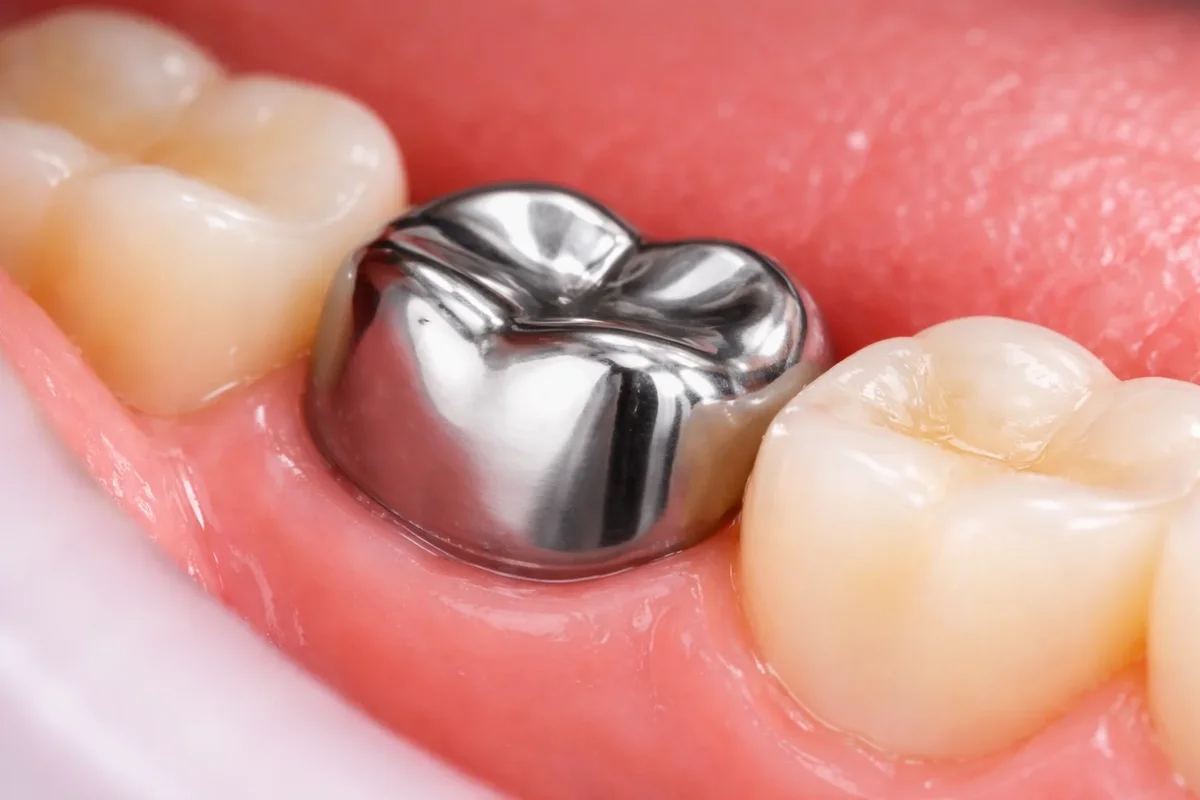
Cost of a Stainless Crown Tooth and Insurance Coverage
The cost of dental treatment is often one of the most important considerations for patients. When a dentist recommends a stainless crown tooth, many people immediately want to know how much the procedure will cost and whether insurance can help cover it. Fortunately, the stainless crown tooth is widely regarded as one of the most affordable and practical dental crown options available.
Because a stainless crown tooth is prefabricated and can usually be placed in a single appointment, it often costs significantly less than crowns made from porcelain, ceramic, or zirconia. This affordability makes the stainless crown tooth especially appealing for families seeking reliable dental care for children or for patients who need durable protection for molars.
However, the exact price of a stainless crown tooth can vary depending on several factors, including the location of the dental clinic, the complexity of the procedure, and whether additional treatments—such as pulp therapy—are required before the crown is placed.
Average Cost of a Stainless Crown Tooth
Across different countries and dental practices, the cost of a stainless crown tooth may vary considerably. In general, this type of crown is more economical because it does not require laboratory fabrication.
Estimated Price Range by Region
Average Stainless Crown Tooth Cost

United States:
$300 – $700 per tooth

United Kingdom:
£200 – £450 per tooth

Europe:
€200 – €500 per tooth

Turkey:
$120 – $350 per tooth
These estimates represent general averages, and the actual cost of a stainless crown tooth may differ depending on the dental clinic and treatment complexity.
In many cases, the stainless crown tooth becomes the most cost-effective option because it requires fewer appointments and provides long-term protection for the tooth.
Factors That Affect the Cost of a Stainless Crown Tooth
Several factors can influence the total price of a stainless crown tooth. Dentists typically evaluate these elements when determining the treatment cost.
Extent of Tooth Damage
If the tooth has severe decay or infection, additional procedures may be necessary before placing a stainless crown tooth. For example, pulp therapy may be required to remove infected tissue from inside the tooth.
These additional treatments may increase the total cost associated with the stainless crown tooth procedure.
Dental Clinic Location
The location of the dental clinic also affects the price of a stainless crown tooth. Clinics located in major cities or regions with higher living costs often charge more for dental services.
However, many patients choose dental tourism destinations where high-quality treatment—including a stainless crown tooth—can be provided at a more affordable price.
Dentist’s Expertise
The experience and specialization of the dentist performing the procedure may also influence the cost of a stainless crown tooth. Highly experienced dentists may charge higher fees due to their expertise and advanced training.
Nevertheless, selecting a qualified dentist ensures the stainless crown tooth is placed correctly and functions effectively for many years.
Insurance Coverage for Stainless Crown Tooth Treatment
Many dental insurance plans provide partial or full coverage for a stainless crown tooth when the procedure is considered medically necessary. This is particularly common in pediatric dentistry, where stainless steel crowns are frequently used to treat severely decayed baby teeth.
Insurance providers often classify a stainless crown tooth as a restorative treatment rather than a cosmetic procedure. Because the crown restores tooth function and prevents further damage, coverage is often available.
Patients should review their insurance policy or consult their provider to determine how much of the stainless crown tooth procedure will be covered.
Why Stainless Crown Tooth Is a Cost-Effective Choice
Compared with other dental crowns, the stainless crown tooth offers exceptional value. While porcelain and zirconia crowns may provide superior aesthetics, they are often significantly more expensive.
Because the stainless crown tooth prioritizes durability and functionality, it delivers reliable protection at a lower cost. For molars or baby teeth—where appearance is less critical—the stainless crown tooth is often the most practical solution.
Comparison of Crown Costs
Typical Dental Crown Prices

Stainless Crown Tooth: $300 – $700
Porcelain Crown: $800 – $3,000
Ceramic Crown: $900 – $2,500
Zirconia Crown: $1,000 – $3,500
Gold Alloy Crown: $1,200 – $3,500
This comparison clearly shows why many dentists recommend the stainless crown tooth when strong protection is needed at an affordable price.
Financial Planning for Dental Treatment
Patients who require a stainless crown tooth should consider discussing payment options with their dental clinic. Many dental practices offer flexible payment plans or financing options that allow patients to spread the cost of treatment over time.
Additionally, some clinics provide treatment packages that include consultation, imaging, and crown placement at a reduced overall price.
Patients who wish to receive professional guidance regarding crown treatment can contact a dental team through the Redent Klinik Contact Page.
Professional Dental Recommendations
Organizations such as the American Dental Association emphasize the importance of restoring severely damaged teeth to prevent more complex dental problems in the future.
In many cases, placing a stainless crown tooth early can help patients avoid costly procedures such as tooth extraction, dental implants, or orthodontic correction.
Final Thoughts on Stainless Crown Tooth Cost
In conclusion, the stainless crown tooth remains one of the most affordable and dependable restorative options in dentistry. Its relatively low cost, combined with excellent durability and quick placement, makes it an ideal choice for many dental situations.
By protecting damaged teeth and restoring normal chewing function, the stainless crown tooth helps patients maintain healthy smiles without excessive financial burden. With proper care and regular dental visits, this restoration can provide reliable protection for many years. 😊