
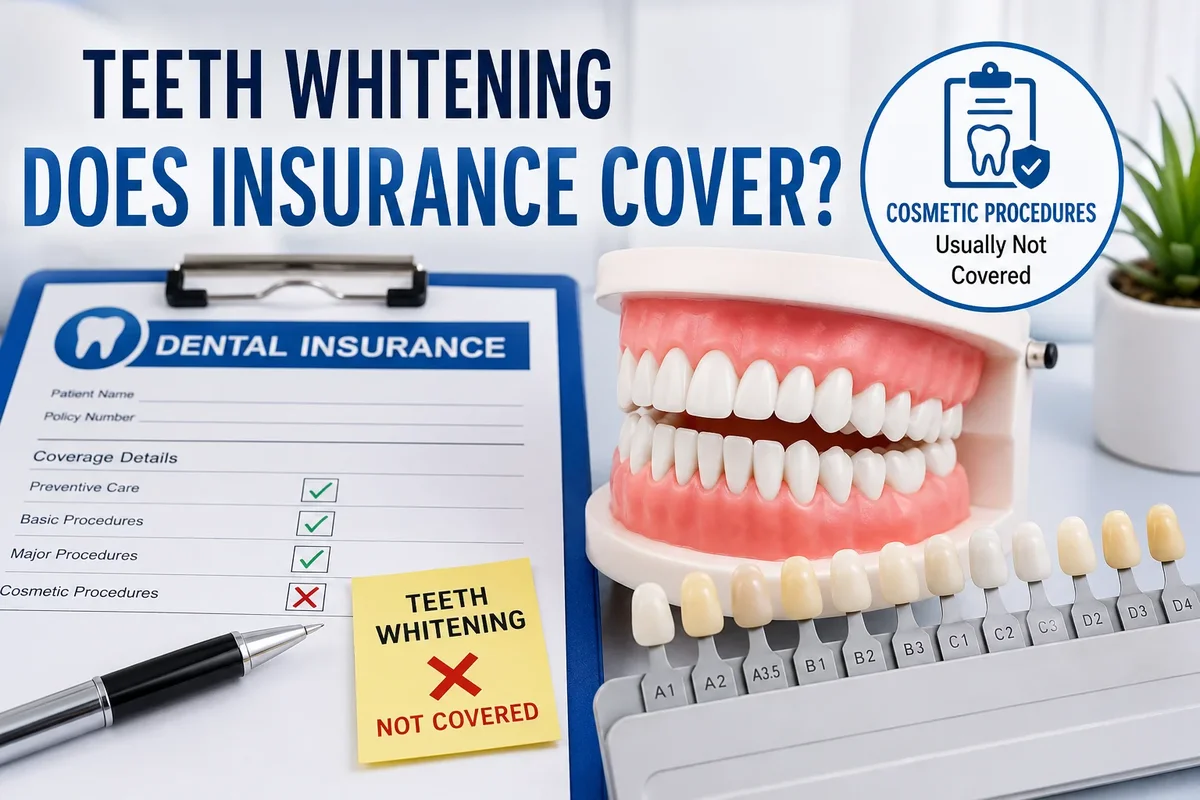
If you are searching teeth whitening does insurance cover, the short answer is that in most cases, standard dental insurance does not cover professional teeth whitening. This is because whitening is generally considered a cosmetic treatment rather than a medically necessary procedure. While there can be limited exceptions depending on an individual insurance policy or unique clinical circumstances, most insurance providers classify whitening as an elective service. That means patients usually pay for the treatment themselves instead of receiving reimbursement through their dental benefits.
Understanding teeth whitening does insurance cover is important because it helps you plan both your treatment expectations and your budget before scheduling an appointment. Many people assume that because whitening is performed by a licensed dentist, it must automatically qualify for insurance benefits. In reality, insurance companies typically focus their coverage on treatments that restore oral health, relieve pain, repair damaged teeth, or prevent disease. Cosmetic procedures that mainly improve appearance often fall outside those covered benefits.
Even though the answer to teeth whitening does insurance cover is usually “no,” that does not necessarily mean professional whitening is out of reach. Many dental clinics provide flexible payment options, phased treatment planning, or promotional packages that can make treatment more manageable. The most appropriate solution depends on your oral health, your cosmetic goals, and the condition of your teeth and gums before whitening begins.
Another important point when considering teeth whitening does insurance cover is that not every type of tooth discoloration responds the same way to whitening treatment. Surface stains caused by coffee, tea, red wine, tobacco, or certain foods often respond well to professional whitening. However, discoloration caused by trauma, certain medications, aging, large restorations, or developmental conditions may require different cosmetic solutions such as veneers, bonding, or crowns instead of whitening alone. This is one reason why a professional examination is valuable before making any financial decision.
Many patients also wonder whether whitening performed after another dental procedure could become eligible for insurance. In most situations, the answer remains unchanged because the whitening itself is still considered cosmetic. However, every insurance policy has its own terms, annual maximums, exclusions, and waiting periods. Reading your policy documents carefully or contacting your insurance provider directly is often the best way to understand your personal benefits. Asking your dental clinic to prepare a treatment estimate may also help you verify any available coverage before treatment begins.
When researching teeth whitening does insurance cover, it is also worth considering the difference between over-the-counter products and professionally supervised whitening. Drugstore whitening strips, toothpastes, and gels may cost less initially, but they generally contain lower concentrations of whitening ingredients and may produce more gradual or less predictable results. Professional whitening is customized to your oral condition and is performed with attention to safety, helping reduce unnecessary irritation while providing treatment tailored to your teeth.
Your overall oral health matters just as much as the whitening procedure itself. Cavities, leaking fillings, exposed roots, gum disease, cracked teeth, or untreated tooth sensitivity should usually be evaluated before whitening begins. Whitening products can sometimes increase temporary sensitivity, especially if existing dental problems are present. For this reason, deciding whether whitening is appropriate should involve more than simply asking teeth whitening does insurance cover. A complete dental assessment helps determine whether whitening is suitable at this stage or whether another treatment should come first.
If your primary concern is achieving a brighter smile for a wedding, graduation, professional event, or personal confidence, discussing your goals with a dentist allows you to understand realistic expectations. A dentist can explain the expected improvement, possible limitations, maintenance requirements, and whether existing crowns, veneers, or fillings will match the new shade after whitening. Since restorations typically do not whiten like natural teeth, additional cosmetic planning may sometimes be recommended after whitening treatment.
Reliable information is also important when researching cosmetic dentistry online. Resources from organizations such as the American Dental Association can help patients better understand professional dental care, whitening safety, and oral health recommendations. Combining educational resources with advice from your own dentist provides a stronger basis for making informed treatment decisions.
If you are considering professional whitening abroad or comparing treatment providers, an individual consultation remains one of the most valuable steps. During a consultation, the dentist can evaluate the cause of discoloration, examine existing restorations, identify any conditions that should be treated first, discuss expected outcomes, and provide a personalized treatment plan. Clinics such as Redent Klinik Contact Page offer consultation opportunities where patients can discuss cosmetic goals, treatment options, and estimated costs based on their individual needs rather than relying on general information found online.
In summary, the answer to “teeth whitening does insurance cover” is usually no because whitening is generally classified as a cosmetic procedure rather than a medically necessary treatment. Nevertheless, that does not automatically determine whether whitening is the right choice for you. Your oral health, type of discoloration, existing dental work, treatment goals, and financial considerations all play an important role in selecting the most appropriate option.
Next step: Before committing to any whitening treatment, schedule a professional dental examination, ask your insurance provider to clarify your individual benefits, request a personalized treatment estimate, and discuss whether whitening is the most suitable solution for your smile or if another cosmetic treatment would better achieve your desired result.
Why Dental Insurance Usually Does Not Cover Teeth Whitening
One of the biggest questions patients ask before improving their smile is teeth whitening does insurance cover. Understanding why insurance companies make their coverage decisions can help you avoid unexpected expenses and choose the most appropriate treatment plan. In most situations, the answer to teeth whitening does insurance cover is no because professional whitening is considered a cosmetic procedure rather than treatment that is medically necessary. However, understanding the reasoning behind this decision allows you to better compare your options and decide whether professional whitening still offers good value for your personal goals.
Insurance providers generally divide dental treatments into several categories. Preventive care, such as cleanings and examinations, is often covered because it helps reduce future dental disease. Restorative treatments like fillings, root canal therapy, crowns, or periodontal treatment may also receive partial coverage because they restore oral function or protect overall oral health. Cosmetic procedures, however, are usually treated differently because they primarily improve appearance instead of treating disease. This distinction explains why people searching for teeth whitening does insurance cover often discover that whitening benefits are excluded from standard policies.
Why Whitening Is Classified as Cosmetic
Professional whitening changes the shade of natural teeth by removing or reducing discoloration. While a brighter smile can improve confidence and satisfaction with appearance, whitening usually does not repair damaged teeth, eliminate infection, restore chewing ability, or treat gum disease. Since insurance companies primarily focus on treatments considered medically necessary, cosmetic improvements generally fall outside routine dental benefits.
This does not mean cosmetic dentistry lacks value. Many patients report increased confidence in social situations, professional settings, and photographs after whitening treatment. The issue is simply that insurance companies evaluate treatment necessity differently than patients may evaluate personal benefits.
Insurance Policies Can Still Differ
Although the general answer to teeth whitening does insurance cover remains no, every insurance policy contains its own exclusions, annual benefit limits, waiting periods, deductibles, and optional coverage riders. Employer-sponsored dental plans, private dental insurance, and premium cosmetic benefit packages sometimes differ significantly.
Some policies may provide discounts through participating dental networks rather than direct reimbursement. Others may include cosmetic allowances under special supplemental plans. Because of these differences, it is always worthwhile to review your policy documents rather than relying only on general online information.
Questions Worth Asking Your Insurance Provider
- Does my policy include any cosmetic dental benefits?
- Are there discounts through participating dentists?
- Is professional whitening specifically excluded?
- Are there annual spending allowances that could apply?
- Do I need pre-treatment authorization for cosmetic procedures?
Receiving clear answers before scheduling treatment helps prevent misunderstandings regarding costs.
When Whitening May Not Be the Best First Treatment
Many people begin by searching teeth whitening does insurance cover, assuming whitening is automatically the next step toward a better smile. In reality, whitening is not always the first treatment a dentist recommends.
If your examination identifies untreated decay, gum inflammation, cracked teeth, exposed roots, leaking fillings, or severe tooth sensitivity, addressing those conditions may be more important before cosmetic whitening begins. Whitening healthy teeth generally produces more predictable and comfortable results than whitening teeth affected by untreated dental disease.
Similarly, if discoloration results from aging restorations, dental trauma, medications, or enamel development issues, whitening alone may not achieve your desired appearance. Veneers, bonding, crowns, or replacement restorations may sometimes provide a more suitable long-term cosmetic solution.
Cost Considerations Beyond Insurance Coverage
Even when teeth whitening does insurance cover results in little or no insurance reimbursement, professional whitening may still represent good value depending on your expectations. Comparing treatment based solely on price may overlook important differences in customization, supervision, safety, and expected results.
Professional whitening performed after a dental examination allows the dentist to:
- Identify the cause of discoloration.
- Select an appropriate whitening approach.
- Reduce unnecessary gum irritation.
- Monitor tooth sensitivity.
- Provide individualized aftercare instructions.
- Recommend alternatives if whitening is unlikely to achieve your goals.
The final treatment cost varies based on several factors, including the whitening technique selected, the condition of your teeth, whether additional dental treatment is required beforehand, geographic location, and the clinic’s treatment planning process. For that reason, no responsible dentist can accurately guarantee pricing without first evaluating your oral health.
Can Cosmetic Dentistry Still Be Worth It?
Although many patients feel disappointed after learning teeth whitening does insurance cover usually has a negative answer, cosmetic dentistry often delivers benefits that extend beyond appearance alone. Feeling more confident while smiling, speaking, interviewing for employment, or attending important life events may be meaningful personal outcomes.
The decision ultimately depends on balancing your expectations, budget, oral health, and desired level of cosmetic improvement. A consultation allows you to understand whether whitening alone is likely to meet your expectations or whether another treatment would provide a more suitable outcome.
Choosing a Qualified Dental Provider
Professional whitening should never be selected based only on advertisements or discounts. Instead, consider whether the provider performs a comprehensive examination before treatment, explains realistic expectations, discusses possible sensitivity, evaluates existing crowns and fillings, and creates an individualized treatment plan.
For patients considering cosmetic dentistry, consultation appointments with experienced clinics such as Redent Klinik Contact Page can help determine whether whitening is appropriate or whether another cosmetic option would better address your specific concerns.
You can also learn more about evidence-based oral health recommendations through the American Dental Association, which provides educational information about dental treatments and maintaining healthy teeth.
Making the Right Decision
The answer to teeth whitening does insurance cover is usually straightforward, but your treatment decision should not end there. Insurance coverage is only one factor among many. Oral health, expected cosmetic improvement, existing dental restorations, sensitivity, treatment longevity, maintenance requirements, and overall value should all be considered together.
Patients who focus only on whether insurance pays for whitening sometimes overlook more important questions, such as whether whitening is actually the best treatment for their type of discoloration or whether another cosmetic procedure would produce results closer to their expectations.
What You Should Check Before Scheduling Treatment
Before making a final decision, check your insurance policy for cosmetic exclusions, request a written treatment estimate, ask your dentist whether whitening is appropriate for your type of staining, discuss possible alternatives if whitening is unlikely to achieve your goals, and request professional advice if you have tooth sensitivity, existing crowns or veneers, untreated cavities, gum disease, or uncertain causes of tooth discoloration.
Understanding the Real Cost of Teeth Whitening and What Affects the Final Price
After learning that teeth whitening does insurance cover usually has a negative answer, the next question most patients ask is how much professional whitening is likely to cost. While many people hope for a simple price, the reality is that there is no single fee that applies to everyone. The total investment depends on your oral health, the whitening method selected, the number of appointments required, the experience of the dental provider, and whether additional dental treatment is recommended before whitening begins. Understanding these factors helps you make an informed decision instead of comparing treatment based only on advertised prices.
If you searched teeth whitening does insurance cover, you are probably planning both your smile improvement and your budget. Since cosmetic whitening is generally paid for out of pocket, understanding what influences the final treatment cost becomes especially important. Rather than focusing only on finding the lowest price, it is often more valuable to understand what is included in the treatment plan and whether the proposed treatment is appropriate for your specific needs.
Why Professional Whitening Costs Can Vary
Professional whitening is not a one-size-fits-all procedure. Every patient begins with different tooth shades, types of staining, enamel conditions, and cosmetic goals. Because of these differences, dentists create individualized treatment plans instead of applying identical whitening protocols to everyone.
Several factors may influence the final cost, including:
- The severity and cause of tooth discoloration.
- Whether stains are external or internal.
- The whitening technique recommended.
- The number of treatment sessions required.
- The geographic location of the dental clinic.
- The dentist’s clinical experience.
- Whether custom whitening trays are included.
- Follow-up evaluations and maintenance recommendations.
These variables explain why online pricing should only be considered a general reference rather than an exact estimate.
Does a Higher Price Always Mean Better Results?
Not necessarily. While premium clinics may offer advanced technology, highly customized treatment planning, or additional follow-up care, the highest advertised fee does not automatically guarantee the best outcome. Likewise, the lowest advertised price may not include important services such as a comprehensive examination, sensitivity assessment, or individualized treatment planning.
Instead of choosing a provider solely because of price, compare what is included. Ask whether the treatment includes:
- A complete oral examination.
- Professional cleaning if necessary.
- Shade evaluation before treatment.
- Protection of the gums during whitening.
- Personalized whitening recommendations.
- Post-treatment care instructions.
- Follow-up evaluation if sensitivity develops.
Looking beyond the initial fee often helps patients receive treatment that better matches their expectations.
How Existing Dental Conditions Can Affect Cost
Many patients searching teeth whitening does insurance cover do not realize that whitening may not be the first procedure performed. If the examination identifies untreated cavities, gum disease, cracked enamel, leaking restorations, or exposed roots, your dentist may recommend addressing those issues before cosmetic whitening.
Treating these conditions first helps protect your oral health and may improve the safety and comfort of whitening. Although this can increase the overall treatment plan, it often reduces the likelihood of complications that could occur if whitening is performed on unhealthy teeth.
Existing Restorations May Require Additional Planning
Crowns, veneers, bridges, composite bonding, and tooth-colored fillings generally do not respond to whitening gels the same way natural enamel does. If your natural teeth become noticeably lighter while restorations remain unchanged, the color difference may become more visible.
In some situations, your dentist may recommend replacing older restorations after whitening if achieving a more uniform smile is one of your cosmetic goals. This possibility should be discussed before treatment begins so there are no unexpected surprises later.
Professional Whitening Versus Store-Bought Products
When patients discover that teeth whitening does insurance cover is usually answered with “no,” they often compare professional whitening with over-the-counter alternatives. Although retail products may have a lower purchase price, they may not always provide the same level of customization or predictability.
Professional whitening offers several potential advantages:
- Customized treatment based on your dental examination.
- Professional monitoring during treatment.
- Higher-strength whitening systems where appropriate.
- Better protection for gums and soft tissues.
- Guidance if tooth sensitivity develops.
- Alternative recommendations when whitening is unlikely to meet expectations.
Store-bought products may still be appropriate for some individuals with mild staining, but they are not always the best solution for every type of discoloration.
Should Financing Influence Your Decision?
Although teeth whitening does insurance cover usually does not result in insurance reimbursement, many dental clinics understand that patients appreciate flexible payment options. Depending on the clinic, financing plans or staged treatment scheduling may be available. Availability varies by provider, location, and individual circumstances, so it is helpful to ask about payment options during your consultation.
Remember that financing should support an appropriate treatment decision rather than encourage unnecessary cosmetic procedures. The primary goal remains selecting the treatment that best fits your oral health and personal objectives.
Looking Beyond the Initial Cost
The lowest advertised treatment fee may not always represent the best long-term value. Factors such as treatment quality, safety, professional supervision, individualized planning, and realistic expectations often contribute more to patient satisfaction than price alone.
If whitening successfully addresses your type of staining, the overall value may extend beyond aesthetics by improving confidence in personal, social, and professional settings. However, expectations should remain realistic because whitening cannot permanently prevent future staining or change the appearance of restorations.
Patients considering cosmetic dentistry may benefit from consulting experienced providers such as Redent Klinik Contact Page, where treatment recommendations can be tailored to individual oral health conditions rather than generalized pricing.
You can also explore educational resources from the American Dental Association to better understand professional whitening, oral hygiene, and cosmetic dental care.
What You Should Check Before Making a Decision
Before scheduling treatment, ask what services are included in the quoted fee, whether an examination is required before whitening, whether existing crowns or fillings could affect the final appearance, whether additional treatment is recommended first, and whether payment options are available. You should request professional dental advice if you have persistent tooth sensitivity, noticeable discoloration that appeared suddenly, existing restorations, untreated dental problems, or uncertainty about whether whitening is the most suitable cosmetic option for your smile.
Is Professional Teeth Whitening the Right Choice for You?
After learning that teeth whitening does insurance cover is usually answered with “no,” the next and often more important question is whether professional teeth whitening is actually the right treatment for your smile. Insurance coverage is only one part of the decision. The ideal treatment depends on the cause of your tooth discoloration, your oral health, your cosmetic expectations, and whether whitening is likely to produce the improvement you hope to achieve. A personalized assessment can help you avoid spending money on a procedure that may not address your specific concerns.
Many people searching teeth whitening does insurance cover assume that whitening is suitable for everyone with stained teeth. In reality, professional whitening is highly effective for many patients, but it is not the best solution in every situation. Understanding when whitening is appropriate—and when another cosmetic treatment may be more suitable—helps you make a confident and informed decision.
Who Is Usually a Good Candidate for Professional Teeth Whitening?
Professional whitening is often recommended for adults who have healthy teeth and gums and wish to improve the appearance of natural tooth discoloration. Surface stains caused by coffee, tea, tobacco, red wine, or normal aging frequently respond well to professionally supervised whitening procedures.
You may be a suitable candidate if you:
- Have healthy teeth without untreated cavities.
- Do not have active gum disease.
- Want to brighten your natural tooth color.
- Have realistic expectations about cosmetic improvement.
- Understand that maintenance may be necessary over time.
- Are willing to follow your dentist’s aftercare recommendations.
Even if teeth whitening does insurance cover is generally answered negatively, many patients still choose whitening because improving their smile confidence is personally valuable.
When Whitening May Not Produce the Results You Expect
Not every type of discoloration responds equally well to whitening. Some stains develop deep within the tooth structure or are caused by factors that whitening products cannot fully address.
Examples include:
- Discoloration caused by certain medications.
- Darkening following dental trauma.
- Developmental enamel conditions.
- Large existing fillings or crowns.
- Extensive veneers or composite bonding.
- Intrinsic discoloration that has developed over many years.
In these situations, your dentist may recommend cosmetic bonding, veneers, replacement restorations, or crowns instead of whitening alone. Choosing the most suitable treatment often provides a more satisfying long-term outcome than attempting repeated whitening procedures that are unlikely to achieve your goals.
Natural Teeth Respond Differently Than Dental Restorations
One important detail many patients overlook when researching teeth whitening does insurance cover is that whitening products affect natural enamel but generally do not change the color of crowns, veneers, bridges, or tooth-colored fillings. If you already have visible restorations in your smile, whitening may create noticeable color differences between natural teeth and existing dental work.
Your dentist can explain whether replacement of older restorations may eventually be recommended if achieving a more uniform smile is one of your priorities.
Age and Lifestyle Considerations
Age alone does not determine whether whitening is appropriate, but lifestyle habits certainly influence both the decision and the longevity of results. Individuals who regularly consume coffee, tea, red wine, colored beverages, or tobacco products may experience faster stain recurrence than those with fewer staining habits.
Similarly, patients who maintain excellent oral hygiene and attend regular professional cleanings often enjoy longer-lasting cosmetic improvements following whitening treatment. Understanding these factors allows you to develop realistic expectations before investing in cosmetic care.
Managing Tooth Sensitivity
Some people hesitate because they have heard whitening always causes severe tooth sensitivity. Fortunately, this is not true for everyone. Temporary sensitivity may occur after professional whitening, but the severity varies significantly between individuals.
A professional examination helps identify whether you already have exposed roots, worn enamel, cracked teeth, or untreated cavities that could increase sensitivity during treatment. If these conditions are present, your dentist may recommend treating them before whitening begins or selecting a more conservative whitening approach.
Discussing sensitivity openly during your consultation helps your dentist personalize the treatment plan according to your comfort level.
Setting Realistic Cosmetic Expectations
Patients searching teeth whitening does insurance cover sometimes expect whitening to create perfectly white, uniform teeth regardless of their starting condition. While professional whitening can noticeably improve many smiles, the degree of whitening varies from one person to another.
Factors that influence cosmetic improvement include:
- Your natural tooth shade.
- The cause of discoloration.
- The thickness and condition of enamel.
- Your oral hygiene habits.
- The presence of existing restorations.
- Your long-term dietary habits.
Understanding these variables helps prevent disappointment and supports more realistic treatment goals.
Considering Alternative Cosmetic Treatments
If your dentist determines that whitening alone may not achieve the appearance you want, alternative cosmetic procedures may be discussed. These alternatives are not necessarily better—they are simply more appropriate for certain situations.
Depending on your examination, recommendations may include:
- Professional dental cleaning for stain removal.
- Composite bonding.
- Porcelain veneers.
- Replacement of old restorations.
- Dental crowns for severely damaged teeth.
- A combination of whitening and restorative dentistry.
The goal is to match treatment to your individual oral condition instead of applying the same cosmetic solution to every patient.
Why a Professional Consultation Matters
Although online searches about teeth whitening does insurance cover provide useful general information, they cannot determine the cause of your discoloration or predict how your teeth will respond to whitening. A clinical examination allows your dentist to identify potential concerns, explain expected results, discuss limitations, and recommend the most suitable treatment plan.
Clinics such as Redent Klinik Contact Page can evaluate your smile individually and discuss cosmetic options that align with your oral health, expectations, and budget. For additional evidence-based information about maintaining healthy teeth and cosmetic dental care, you can also visit the American Dental Association.
What You Should Check Before Choosing Professional Whitening
Before deciding on treatment, confirm that your teeth and gums are healthy enough for whitening, ask whether your type of discoloration is likely to respond well, discuss how existing crowns or fillings may affect the final appearance, understand the expected maintenance requirements, and request professional advice if you have unexplained tooth discoloration, significant sensitivity, dental restorations in visible areas, gum disease, or uncertainty about whether whitening or another cosmetic procedure would better meet your goals.
How the Professional Teeth Whitening Procedure Works Step by Step
If you have already learned that teeth whitening does insurance cover is usually answered with “no,” your next question may be what actually happens during professional whitening treatment. Understanding each stage of the procedure helps you decide whether the treatment matches your expectations, your comfort level, and your cosmetic goals. Professional whitening involves much more than simply applying a whitening gel. Every step is designed to evaluate your oral health, improve safety, and maximize the likelihood of achieving an appropriate cosmetic result for your individual situation.
People researching teeth whitening does insurance cover often compare professional whitening with over-the-counter products. While both aim to brighten teeth, professional treatment includes careful planning, dental supervision, and personalized recommendations that cannot be replicated by simply purchasing a whitening kit from a store.
Step 1: The Initial Dental Examination
Before whitening begins, your dentist performs a comprehensive examination to determine whether you are an appropriate candidate for treatment. This consultation is one of the most important parts of the entire process because it identifies conditions that could influence both the safety and effectiveness of whitening.
During this visit, the dentist may evaluate:
- Your general oral health.
- The condition of your gums.
- Existing cavities or cracked teeth.
- Current crowns, veneers, bridges, or fillings.
- The cause of your tooth discoloration.
- Your history of tooth sensitivity.
- Your cosmetic expectations.
This examination also provides an opportunity to discuss teeth whitening does insurance cover, estimated treatment costs, and whether whitening is the most suitable cosmetic option for your smile.
Step 2: Determining the Cause of Tooth Discoloration
Not every stain responds in the same way to whitening. Some discoloration is located on the outer enamel, while other stains develop deeper within the tooth structure.
Your dentist attempts to identify whether staining is related to:
- Coffee or tea consumption.
- Tobacco use.
- Red wine or colored beverages.
- Natural aging.
- Previous dental trauma.
- Certain medications.
- Developmental enamel conditions.
Understanding the cause of discoloration helps establish realistic expectations before treatment begins. If whitening is unlikely to produce significant improvement, alternative cosmetic treatments may be discussed instead.
Step 3: Professional Cleaning Before Whitening
Many patients benefit from a professional dental cleaning before whitening. Removing plaque, tartar, and surface debris allows whitening agents to contact the tooth surface more evenly.
If significant buildup is present, your dentist may recommend completing the cleaning before scheduling whitening. This step may also improve the accuracy of shade assessment because temporary surface deposits can make teeth appear darker than they actually are.
Why Healthy Gums Matter
If gum inflammation or periodontal disease is present, treatment may be recommended before whitening begins. Healthy gums reduce discomfort during whitening and contribute to better overall oral health. Although patients often focus primarily on teeth whitening does insurance cover, ensuring healthy gums first is often even more important than discussing cosmetic treatment itself.
Step 4: Protecting the Soft Tissues
Professional whitening places significant emphasis on protecting the gums, lips, and surrounding soft tissues. Before applying whitening materials, protective barriers or isolation techniques are used to minimize unnecessary exposure.
This professional preparation is one reason many patients prefer dentist-supervised whitening rather than attempting stronger whitening products without professional guidance.
Step 5: Applying the Whitening Agent
Once your teeth have been prepared, the whitening material is carefully applied according to the treatment plan selected by your dentist. The exact method depends on the whitening system being used and your individual clinical situation.
Some treatments are completed during a single office visit, while others may involve professionally prepared take-home trays that allow whitening over several days or weeks. Your dentist explains how the selected approach fits your cosmetic goals and oral health.
Rather than concentrating solely on whether teeth whitening does insurance cover, patients should also understand how different whitening techniques may influence convenience, maintenance, and expected outcomes.
Step 6: Evaluating Results and Providing Aftercare
After whitening, your dentist evaluates the improvement and provides personalized instructions for maintaining your results. Every patient’s teeth respond differently, so cosmetic improvements vary depending on the original tooth shade, enamel condition, and type of discoloration.
Aftercare recommendations commonly include:
- Maintaining good daily oral hygiene.
- Limiting staining foods and beverages during the initial recovery period.
- Using recommended toothpaste if temporary sensitivity occurs.
- Scheduling regular dental examinations.
- Returning for future maintenance only when appropriate.
Following these recommendations may help preserve whitening results for a longer period, although no whitening treatment permanently prevents future discoloration.
Possible Temporary Side Effects
Professional whitening is generally well tolerated by many patients, but temporary sensitivity or mild gum irritation may occur in some individuals. These effects often improve within a short period, although the experience varies from person to person.
Your dentist can recommend strategies to minimize discomfort if sensitivity develops. Reporting any unusual or persistent symptoms after treatment allows appropriate evaluation and management.
Why Professional Supervision Adds Value
Many individuals researching teeth whitening does insurance cover compare professional treatment with lower-cost retail products. While store-bought whitening products may be appropriate for certain situations, professional supervision offers several important advantages.
- Individualized treatment planning.
- Clinical examination before whitening.
- Assessment of existing restorations.
- Protection of gums and soft tissues.
- Monitoring for sensitivity.
- Recommendations if whitening is unlikely to achieve desired results.
These benefits help patients make decisions based on clinical suitability rather than price alone.
Planning Your Next Step
Whether or not teeth whitening does insurance cover applies to your insurance policy, the procedure itself should always begin with a professional evaluation instead of assumptions based on online information. Clinics such as Redent Klinik Contact Page can assess your oral health, explain available whitening options, discuss realistic cosmetic expectations, and recommend individualized treatment planning. Additional educational information about oral health and cosmetic dentistry is also available through the American Dental Association.
What You Should Check Before Scheduling Whitening
Before beginning treatment, confirm that your teeth and gums are healthy, ask what whitening method is recommended for your type of discoloration, discuss how existing crowns or fillings may influence the final appearance, understand possible temporary sensitivity, and request professional advice if you have persistent tooth pain, unexplained discoloration, active gum disease, cracked teeth, or questions about whether professional whitening is the most appropriate cosmetic option for your individual smile.
Risks, Side Effects, and How to Whiten Teeth Safely
When researching teeth whitening does insurance cover, many people focus almost entirely on cost and insurance benefits. However, understanding the possible risks and learning how to whiten teeth safely is equally important. Professional whitening is considered a common cosmetic dental procedure, but like any treatment, it should be performed after evaluating your oral health and determining whether you are a suitable candidate. Knowing what to expect allows you to make a more informed decision while reducing the likelihood of avoidable complications.
Although the answer to teeth whitening does insurance cover is usually that insurance does not provide reimbursement, patients should avoid choosing treatment based solely on price. Safety, proper diagnosis, realistic expectations, and individualized treatment planning are often far more important than selecting the lowest-cost option available.
Is Professional Teeth Whitening Safe?
Professional teeth whitening is generally considered safe for many healthy adults when performed under the supervision of a qualified dental professional. Before treatment begins, the dentist evaluates your teeth and gums to determine whether whitening is appropriate and whether any existing dental conditions should be treated first.
Safety depends on several factors, including:
- Your overall oral health.
- The presence of untreated cavities.
- The condition of your gums.
- The amount of exposed tooth roots.
- Your history of tooth sensitivity.
- The type of whitening system used.
- Following professional instructions before and after treatment.
Patients often ask teeth whitening does insurance cover, but a more valuable question may be whether whitening is suitable for their specific dental condition.
Temporary Tooth Sensitivity
The most commonly discussed side effect of professional whitening is temporary tooth sensitivity. Some patients notice mild discomfort when consuming hot, cold, sweet, or acidic foods and beverages shortly after treatment. The degree of sensitivity varies widely between individuals.
Factors that may increase sensitivity include:
- Naturally sensitive teeth.
- Thin enamel.
- Exposed root surfaces.
- Cracked teeth.
- Untreated cavities.
- Recent dental procedures.
Fortunately, temporary sensitivity often improves after treatment, especially when patients follow their dentist’s aftercare recommendations. Your dentist may also recommend specific toothpaste or adjustments to your whitening plan if sensitivity is a concern.
Why Existing Dental Problems Should Be Treated First
One reason professional examinations are important is that whitening does not correct underlying dental disease. If you have untreated decay, broken fillings, gum disease, or cracked enamel, whitening should often be postponed until those conditions have been addressed.
Ignoring these problems simply because teeth whitening does insurance cover is your primary concern may increase discomfort and reduce the overall success of cosmetic treatment.
Possible Gum Irritation
Some patients experience temporary irritation of the gums or surrounding soft tissues during or shortly after whitening. In professional dental settings, protective barriers are typically used to reduce unnecessary exposure of soft tissues to whitening materials.
Minor irritation often improves quickly, but persistent discomfort should always be reported to your dentist for evaluation. Attempting stronger whitening treatments without professional guidance may increase the likelihood of soft tissue irritation.
Whitening Does Not Change Every Tooth Equally
One of the most common misunderstandings among patients searching teeth whitening does insurance cover is the belief that whitening will create perfectly uniform results regardless of the starting condition.
Natural enamel generally responds differently than:
- Porcelain crowns.
- Dental veneers.
- Composite bonding.
- Tooth-colored fillings.
- Dental bridges.
Because restorations usually do not whiten like natural teeth, visible color differences may become more noticeable after treatment. Discussing this possibility beforehand allows your dentist to recommend the most appropriate cosmetic strategy.
Avoid Overusing Whitening Products
Some individuals become discouraged after discovering that teeth whitening does insurance cover usually does not include cosmetic treatment and attempt repeated whitening with over-the-counter products instead. More frequent whitening does not necessarily produce better results.
Excessive or unnecessary whitening may increase tooth sensitivity, irritate soft tissues, or create unrealistic expectations regarding further shade improvement. Following professional recommendations regarding treatment frequency helps protect your teeth while maintaining cosmetic results.
Lifestyle Habits That Affect Long-Term Results
Whitening is not permanent because teeth continue to be exposed to foods, beverages, and habits that contribute to staining. Maintaining realistic expectations is an important part of cosmetic treatment planning.
Factors that may influence how long whitening results remain noticeable include:
- Coffee consumption.
- Tea drinking.
- Red wine.
- Tobacco use.
- Colored soft drinks.
- Daily oral hygiene.
- Regular professional dental cleanings.
Reducing exposure to common staining agents and maintaining consistent oral hygiene may help preserve cosmetic improvements over time.
Professional Supervision Versus Self-Treatment
When comparing options after learning teeth whitening does insurance cover, some patients consider purchasing stronger whitening products online without professional guidance. While convenience may be appealing, self-treatment cannot replace an individualized dental examination.
Professional supervision provides several important benefits:
- Diagnosis of the underlying cause of discoloration.
- Identification of conditions requiring treatment first.
- Protection of gums during whitening.
- Management of tooth sensitivity.
- Recommendations if whitening is unlikely to achieve your desired outcome.
These advantages help ensure that cosmetic treatment is based on your oral health rather than assumptions.
Balancing Cosmetic Goals with Oral Health
A brighter smile can improve confidence, but cosmetic improvements should never take priority over maintaining healthy teeth and gums. Whitening works best as part of a comprehensive oral health plan rather than as an isolated cosmetic procedure.
Experienced providers such as Redent Klinik Contact Page can evaluate your individual dental condition, explain realistic whitening expectations, discuss alternatives when appropriate, and recommend a treatment plan that supports both appearance and long-term oral health. Additional educational information about cosmetic dentistry and preventive care is available from the American Dental Association.
What You Should Check Before Whitening Your Teeth
Before proceeding with whitening, confirm that you do not have untreated cavities or active gum disease, discuss any history of tooth sensitivity, ask whether your existing crowns or fillings may affect the final cosmetic result, understand the expected maintenance requirements, and request professional dental advice if you experience unexplained discoloration, persistent tooth pain, severe sensitivity, visible cracks, bleeding gums, or uncertainty about whether professional whitening is the safest and most appropriate option for your smile.
Alternatives to Professional Teeth Whitening and When They Make Sense
After discovering that teeth whitening does insurance cover is generally answered with “no,” many people begin looking for other ways to improve their smile. Professional whitening is an excellent option for many patients, but it is not the only cosmetic treatment available. In some situations, an alternative procedure may actually provide a better result depending on the cause of tooth discoloration, the condition of your teeth, and your long-term expectations. Understanding the advantages and limitations of each option allows you to choose treatment based on clinical suitability rather than simply on insurance coverage or initial cost.
Searching teeth whitening does insurance cover often starts as a financial question, but it should eventually become a treatment decision. Instead of asking only whether whitening is covered, it is equally important to ask whether whitening is capable of producing the appearance you want. A professional examination helps answer both questions.
Professional Dental Cleaning for Surface Stains
Sometimes teeth appear darker because of accumulated plaque, tartar, or external staining rather than changes inside the tooth itself. In these cases, a professional dental cleaning may noticeably improve the appearance of your smile before cosmetic whitening is even considered.
A professional cleaning may be appropriate when discoloration is primarily caused by:
- Coffee.
- Tea.
- Tobacco.
- Colored beverages.
- Surface plaque accumulation.
- Minor external staining.
Many patients are pleasantly surprised by the improvement achieved through routine preventive care alone. Your dentist can determine whether whitening remains beneficial after cleaning has been completed.
Take-Home Professional Whitening Systems
Some dental providers offer customized take-home whitening systems prepared after a clinical examination. These differ from standard retail products because they are designed specifically for your teeth and treatment goals.
For patients concerned that teeth whitening does insurance cover rarely includes cosmetic procedures, professionally supervised take-home whitening may provide an effective balance between convenience and individualized care.
Your dentist can explain whether this option is appropriate based on:
- Your level of staining.
- Your sensitivity history.
- Your daily routine.
- Your cosmetic expectations.
Over-the-Counter Whitening Products
Retail whitening strips, whitening toothpaste, rinses, and gels are widely available and may be appropriate for some individuals with relatively mild staining. These products are generally easy to purchase and often require a lower financial investment than professional treatment.
However, store-bought products also have limitations. Because they are designed for the general population rather than for your specific dental condition, they may not be equally effective for every type of discoloration. They also cannot identify whether underlying dental disease is contributing to changes in tooth color.
For this reason, even if you decide to use over-the-counter products, scheduling a dental examination first remains a sensible step.
Composite Bonding
If discoloration affects only one or several teeth—or if whitening is unlikely to improve intrinsic staining—composite bonding may be considered. During this cosmetic procedure, tooth-colored material is carefully applied to improve the appearance of the affected tooth.
Bonding may be discussed when patients have:
- Localized discoloration.
- Minor chips.
- Small gaps.
- Irregular tooth shapes.
- Stains that respond poorly to whitening.
This treatment addresses cosmetic concerns differently than whitening because it changes the visible surface rather than lightening the natural tooth color.
Porcelain Veneers
When discoloration is severe or accompanied by other cosmetic concerns such as uneven tooth shape, spacing, or worn enamel, porcelain veneers may provide a more comprehensive cosmetic solution.
Although veneers usually involve a greater financial commitment than whitening, they may be more appropriate for patients whose discoloration cannot realistically be corrected with whitening alone.
Learning that teeth whitening does insurance cover is generally not favorable sometimes leads patients to explore veneers. However, veneers should not be selected simply because whitening is not covered—they should only be considered when they represent the most appropriate clinical solution.
Dental Crowns
When a tooth has extensive structural damage in addition to discoloration, cosmetic whitening may not address the underlying problem. Dental crowns may sometimes be recommended when restoring strength and function is as important as improving appearance.
Crowns are generally intended to protect damaged teeth rather than serve as a cosmetic substitute for whitening. Your dentist will determine whether restorative treatment should take priority.
Combining Cosmetic Treatments
Some patients achieve their best cosmetic outcome through a combination of treatments rather than relying on whitening alone. Depending on your examination, your treatment plan may include:
- Professional cleaning followed by whitening.
- Whitening before replacing visible fillings.
- Whitening prior to veneers.
- Whitening combined with composite bonding.
- Restorative treatment followed by cosmetic enhancement.
This staged approach helps ensure that each procedure complements the next while supporting long-term oral health.
Choosing Based on Your Individual Needs
Patients searching teeth whitening does insurance cover sometimes assume there is one universally correct cosmetic solution. In reality, treatment should always be based on your individual oral health, the type of discoloration present, the condition of existing restorations, and your personal goals.
Questions worth discussing with your dentist include:
- What caused my discoloration?
- Will whitening likely produce noticeable improvement?
- Would another cosmetic procedure provide a better result?
- How will existing crowns or fillings affect my smile?
- What maintenance will be required after treatment?
These discussions often provide greater value than comparing treatment prices alone.
Making a Well-Informed Decision
Whether or not teeth whitening does insurance cover applies to your policy, your treatment decision should prioritize clinical appropriateness over insurance benefits. A cosmetic procedure is most successful when it addresses the actual cause of your concern rather than simply improving color temporarily.
Clinics such as Redent Klinik Contact Page can evaluate your smile, explain whether whitening or an alternative cosmetic treatment is more suitable, and prepare an individualized treatment plan based on your oral health and expectations. You can also review educational resources provided by the American Dental Association to better understand preventive care, cosmetic dentistry, and maintaining healthy teeth.
What You Should Check Before Choosing an Alternative Treatment
Before deciding on any cosmetic procedure, ask what is causing your tooth discoloration, whether whitening alone is expected to achieve your goals, whether existing restorations will influence the final appearance, whether restorative treatment should be completed first, and request professional dental advice if your discoloration developed suddenly, affects only one tooth, is accompanied by pain or swelling, or if you are uncertain which cosmetic option best matches your long-term expectations.
Payment Options, Financing, and Ways to Reduce Treatment Costs
For many patients, learning that teeth whitening does insurance cover is usually answered with “no” immediately leads to another important question: how can professional whitening become more affordable? Although cosmetic whitening is generally not included in standard dental insurance plans, there are still several practical ways to manage treatment costs without compromising safety or quality. Understanding available payment options allows you to make decisions based on both your financial situation and your long-term oral health goals.
Rather than postponing treatment indefinitely because teeth whitening does insurance cover is rarely covered, it is often worthwhile to explore alternative payment arrangements, compare treatment plans, and discuss your priorities with your dental provider. A personalized consultation can help identify solutions that fit both your smile goals and your budget.
Why Paying Out of Pocket Is Common
Professional whitening is generally considered a cosmetic procedure because its primary purpose is to improve appearance rather than treat disease or restore dental function. As a result, patients commonly pay directly for treatment instead of receiving insurance reimbursement.
Although this may initially seem disappointing, it also means patients have greater flexibility in choosing how and where they receive cosmetic care. Instead of being limited by insurance networks or reimbursement policies, you can focus on selecting a qualified provider who offers treatment appropriate for your individual needs.
Ask for a Personalized Treatment Estimate
One of the best ways to understand your financial commitment is to request a written treatment estimate after your dental examination. Since every patient has different cosmetic goals and oral health conditions, individualized estimates are generally more useful than generic online pricing.
A treatment estimate may explain:
- The recommended whitening method.
- Whether additional dental treatment is advised first.
- What services are included in the quoted fee.
- Whether follow-up appointments are recommended.
- Possible future maintenance considerations.
This approach allows you to compare providers more accurately because you understand exactly what is included rather than comparing prices alone.
Financing May Be Available
Although teeth whitening does insurance cover generally does not provide financial assistance, some dental clinics offer payment solutions that allow patients to spread treatment costs over time. Financing availability varies between providers, countries, and individual financial circumstances.
Depending on the clinic, available options may include:
- Monthly installment plans.
- Third-party financing programs.
- Clinic-specific payment arrangements.
- Package pricing when multiple cosmetic procedures are planned.
Not every provider offers every option, so discussing payment during your consultation is an important part of treatment planning.
Questions to Ask About Financing
Before accepting any financing arrangement, consider asking:
- How many payments are available?
- Are there administrative fees?
- Does financing apply to the entire treatment?
- Can treatment be completed in stages?
- What happens if additional dental work becomes necessary?
Clear communication helps you understand your financial responsibilities before treatment begins.
Can Preventive Care Reduce Future Costs?
Although preventive dental care does not eliminate the need for cosmetic whitening, maintaining healthy teeth may reduce the likelihood of needing additional restorative procedures before whitening can safely begin.
Regular examinations, professional cleanings, and good daily oral hygiene help maintain oral health and may reduce stain accumulation over time. Preventive care also allows your dentist to identify small concerns before they require more extensive treatment.
Patients researching teeth whitening does insurance cover sometimes focus exclusively on cosmetic expenses while overlooking the financial value of preventive dental care.
Should You Delay Whitening to Save Money?
There is no universal answer. Some patients prefer to postpone cosmetic treatment until they have completed restorative procedures or reached other financial priorities. Others decide that improving their smile confidence is an important personal investment and choose to proceed sooner.
The best decision depends on:
- Your oral health.
- Your cosmetic priorities.
- Your available budget.
- Your upcoming personal or professional events.
- Whether additional dental treatment is recommended first.
Discussing these factors openly with your dentist helps create a treatment plan that fits your circumstances rather than following a predetermined timeline.
Comparing Value Instead of Price Alone
Patients who search teeth whitening does insurance cover sometimes compare providers using only advertised prices. While cost is naturally important, treatment value includes much more than the initial fee.
Consider asking whether the treatment includes:
- A comprehensive oral examination.
- Professional diagnosis of discoloration.
- Protection of gums during whitening.
- Personalized aftercare instructions.
- Management of sensitivity if needed.
- Recommendations if whitening is not the most appropriate treatment.
Choosing treatment based solely on price may overlook important aspects of safety, personalization, and long-term satisfaction.
Planning Future Cosmetic Care
If whitening is only one part of your long-term smile goals, discussing future treatment planning during your consultation may be helpful. Some patients intend to replace older crowns, improve tooth alignment, or restore worn teeth after whitening. Planning these procedures in the correct sequence may produce a more harmonious cosmetic result.
Because restorations generally do not whiten in the same way as natural teeth, your dentist may recommend whitening before replacing visible crowns or veneers. This allows restorations to be matched more closely to your desired tooth shade.
Making a Financially Informed Decision
Although teeth whitening does insurance cover usually results in little or no insurance reimbursement, many patients still decide that professional whitening is worthwhile because of the confidence and satisfaction it may provide. The decision should balance cosmetic goals, oral health, expected maintenance, available budget, and realistic expectations rather than focusing on insurance coverage alone.
A consultation with an experienced provider such as Redent Klinik Contact Page allows you to receive a personalized treatment recommendation, discuss available payment options, and understand which cosmetic solution best matches your needs. You can also review oral health guidance and cosmetic dentistry information through the American Dental Association.
What You Should Check Before Committing to Treatment
Before scheduling whitening, ask for a written treatment estimate, confirm what services are included, discuss available financing or installment options if needed, understand whether additional dental treatment should be completed first, review your insurance policy for any cosmetic exclusions or discount programs, and request professional dental advice if you have concerns about affordability, significant tooth sensitivity, extensive existing restorations, or uncertainty about whether whitening is the most appropriate cosmetic investment for your smile.
Teeth Whitening Does Insurance Cover? Frequently Asked Questions and Your Next Step
After reading about insurance coverage, treatment options, costs, safety, and alternatives, many patients still have practical questions before deciding whether professional whitening is right for them. This frequently asked questions section brings together the most common concerns people have when searching teeth whitening does insurance cover. Rather than providing only short answers, the goal is to help you understand how each answer applies to your own situation so you can make a confident and informed decision.
Although the general answer to teeth whitening does insurance cover is that most standard dental insurance plans do not include cosmetic whitening, your final treatment decision should consider much more than insurance benefits alone. Your oral health, the cause of discoloration, your cosmetic expectations, and professional recommendations all contribute to selecting the most appropriate solution.
Does Dental Insurance Ever Cover Teeth Whitening?
In most situations, professional whitening is classified as a cosmetic procedure rather than medically necessary treatment. For this reason, standard dental insurance policies generally do not reimburse whitening expenses.
However, insurance policies are not identical. Employer-sponsored plans, private insurance, and supplemental dental benefits may contain different exclusions, discounts, or optional cosmetic benefits. Reviewing your individual policy or contacting your insurance provider directly remains the most reliable way to confirm your personal coverage.
Is Professional Whitening Better Than Store-Bought Products?
Professional whitening and over-the-counter products both aim to improve tooth color, but they differ in several important ways.
Professional whitening typically includes:
- A dental examination before treatment.
- Evaluation of the cause of discoloration.
- Customized treatment planning.
- Protection of soft tissues.
- Management of tooth sensitivity.
- Recommendations if whitening is unlikely to achieve your goals.
Retail whitening products may be appropriate for some individuals with mild staining, but they cannot replace an individualized clinical evaluation.
Will My Teeth Stay White Forever?
No whitening treatment permanently prevents future discoloration. Daily habits such as drinking coffee, tea, red wine, or using tobacco products can gradually contribute to new staining over time.
Maintaining excellent oral hygiene, attending regular dental examinations, and following your dentist’s maintenance recommendations may help preserve cosmetic improvements for a longer period. The exact longevity varies from person to person.
Can Whitening Damage Teeth?
When whitening is performed under professional supervision and according to appropriate clinical recommendations, it is generally considered safe for many healthy adults. Temporary tooth sensitivity or mild gum irritation may occur in some patients, but these effects are often short-lived.
Problems are more likely when whitening is attempted without first identifying underlying dental conditions such as cavities, cracked teeth, exposed roots, or active gum disease. This is one reason why a professional examination is recommended before beginning treatment.
Can Existing Crowns or Veneers Be Whitened?
No. Professional whitening primarily affects natural tooth enamel. Existing crowns, veneers, bridges, and tooth-colored fillings generally do not lighten in the same way.
If your visible restorations no longer match your natural teeth after whitening, your dentist may discuss whether replacement restorations would be appropriate to improve color harmony. This possibility should ideally be considered before treatment begins rather than afterward.
Is Whitening Appropriate for Everyone?
Not necessarily. Although many healthy adults are suitable candidates, whitening may not always be the most appropriate solution. The cause of discoloration, oral health status, existing restorations, sensitivity history, and cosmetic expectations all influence treatment recommendations.
Patients with untreated cavities, gum disease, severe enamel damage, or discoloration caused by trauma or medications may benefit from alternative treatment approaches.
Should Insurance Determine My Decision?
Many patients searching teeth whitening does insurance cover initially focus almost entirely on insurance reimbursement. While financial planning is certainly important, insurance should not be the only factor guiding your decision.
Instead, ask yourself:
- What is causing my tooth discoloration?
- Will whitening realistically improve my smile?
- Are my teeth and gums healthy enough for treatment?
- Do I have existing restorations that may affect the outcome?
- Would another cosmetic treatment better address my goals?
These questions often have a greater impact on long-term satisfaction than insurance coverage alone.
How Do I Prepare for My Consultation?
If you decide to explore professional whitening, preparing a list of questions before your appointment can help you receive the information most relevant to your situation.
Consider asking:
- Am I a good candidate for whitening?
- What caused my discoloration?
- Will my crowns or fillings match after whitening?
- What results are realistic?
- How should I maintain my results?
- Are there alternatives better suited to my teeth?
- What payment options are available?
Having these discussions before treatment helps establish realistic expectations and supports informed decision-making.
Your Personalized Next Step
If your online search began with teeth whitening does insurance cover, you now know that the answer is usually no, but that should not automatically determine whether whitening is worthwhile for you. Cosmetic dentistry should always begin with understanding your individual oral health rather than relying on general assumptions.
A personalized consultation allows your dentist to identify the reason for your discoloration, evaluate the condition of your teeth and gums, explain the advantages and limitations of whitening, discuss possible alternatives, and provide an individualized treatment plan based on your specific needs.
Clinics such as Redent Klinik Contact Page can help you explore cosmetic options through a comprehensive dental evaluation tailored to your smile goals. For additional educational information about oral health, preventive care, and cosmetic dentistry, you can also consult the American Dental Association.
What You Should Check Before Making Your Final Decision
Before proceeding with whitening, review your individual dental insurance policy for any cosmetic exclusions or available discounts, ask your dentist to identify the exact cause of your tooth discoloration, discuss how existing restorations may influence the final appearance, request a personalized treatment estimate rather than relying on general online pricing, and seek professional dental advice if you have sudden tooth discoloration, persistent pain, bleeding gums, severe sensitivity, damaged restorations, or uncertainty about whether professional whitening or another cosmetic treatment is the most appropriate choice for your long-term oral health and smile goals.
Your Final Next Step: How to Decide Whether Professional Teeth Whitening Is Right for You
By now, you have a clear understanding that the answer to teeth whitening does insurance cover is usually no, because professional whitening is generally considered a cosmetic treatment rather than a medically necessary dental procedure. However, knowing the insurance answer is only one part of making a good decision. The more important question is whether professional whitening is the most appropriate treatment for your individual smile, oral health, and long-term expectations. The final step is bringing together everything you have learned and using it to create a treatment plan that fits your specific situation.
Many people begin their research by asking teeth whitening does insurance cover, but they finish by realizing that cosmetic dentistry should never be selected based solely on insurance reimbursement. Instead, successful treatment depends on understanding the cause of discoloration, evaluating the condition of your teeth and gums, considering alternative cosmetic options when appropriate, and working with a qualified dental professional to develop realistic expectations.
Step 1: Identify Your Main Goal
Before scheduling any cosmetic procedure, ask yourself what you hope to achieve. Different patients have different reasons for wanting whiter teeth, and identifying your goal helps your dentist recommend the most appropriate treatment.
Your primary objective may be to:
- Remove coffee or tea stains.
- Improve confidence when smiling.
- Prepare for a wedding or special event.
- Refresh your smile after years of discoloration.
- Create a brighter appearance before other cosmetic treatment.
- Improve overall smile aesthetics.
Understanding your priorities allows the treatment plan to focus on the results that matter most to you rather than following a generic cosmetic approach.
Step 2: Make Sure Your Teeth Are Healthy First
Even if teeth whitening does insurance cover is not favorable, whitening should never begin until your oral health has been properly evaluated. Cosmetic improvement works best when the underlying teeth and gums are healthy.
Your dentist may first check for:
- Untreated cavities.
- Gum inflammation.
- Periodontal disease.
- Cracked teeth.
- Leaking fillings.
- Exposed tooth roots.
- Existing dental restorations.
If any of these conditions require treatment, addressing them first may improve both comfort and long-term cosmetic success.
Healthy Teeth Support Better Cosmetic Results
Professional whitening does not repair damaged teeth or cure dental disease. Instead, it improves the appearance of healthy natural teeth. Completing necessary restorative treatment before whitening often provides a stronger foundation for long-lasting cosmetic improvement.
Step 3: Understand What Whitening Can and Cannot Do
One of the most valuable discussions during a consultation involves setting realistic expectations. Although many patients searching teeth whitening does insurance cover hope for dramatic improvement, whitening has limitations that should be understood before treatment begins.
Professional whitening can often improve:
- Surface staining.
- Age-related yellowing.
- Food and beverage discoloration.
- Tobacco-related staining.
However, whitening may be less effective for:
- Medication-related discoloration.
- Trauma-induced discoloration.
- Existing crowns or veneers.
- Large composite restorations.
- Certain developmental enamel conditions.
Understanding these limitations helps prevent unrealistic expectations and supports better treatment decisions.
Step 4: Compare Whitening with Other Cosmetic Options
Although teeth whitening does insurance cover is one of the most common cosmetic dentistry searches, whitening is not always the ideal solution. Depending on your examination, your dentist may recommend another treatment that more effectively addresses your concerns.
Possible alternatives include:
- Professional dental cleaning.
- Composite bonding.
- Porcelain veneers.
- Replacement of old restorations.
- Dental crowns for structurally compromised teeth.
- A combination of cosmetic procedures.
The right recommendation depends on your individual oral condition rather than a single cosmetic trend.
Step 5: Plan Your Budget Realistically
Since teeth whitening does insurance cover generally results in little or no insurance reimbursement, budgeting becomes an important part of treatment planning. Rather than focusing only on the initial fee, consider the overall value of treatment.
Ask your dental provider about:
- Written treatment estimates.
- Services included in the quoted fee.
- Possible financing options.
- Maintenance recommendations.
- Whether additional procedures may eventually be recommended.
Remember that final costs vary according to your examination findings, treatment planning, and the specific whitening method selected. Responsible providers avoid guaranteeing exact pricing before evaluating your oral health.
Step 6: Choose an Experienced Provider
Selecting an experienced dental team often contributes more to treatment satisfaction than simply choosing the lowest advertised price. Professional supervision allows your dentist to identify potential concerns, personalize your treatment, manage tooth sensitivity when necessary, and recommend alternatives if whitening is unlikely to achieve your desired result.
During your consultation, ask about:
- Your expected cosmetic improvement.
- Potential limitations.
- Maintenance requirements.
- The effect of existing restorations.
- Long-term smile planning.
These conversations provide a stronger basis for decision-making than online advertisements or generalized pricing alone.
Taking the Next Step with Confidence
Although the answer to teeth whitening does insurance cover is usually straightforward, your treatment decision should always be personalized. The ideal cosmetic solution depends on much more than insurance coverage. Healthy teeth, realistic expectations, individualized planning, and professional guidance all contribute to successful treatment.
If you are considering professional whitening, scheduling a consultation with an experienced provider such as Redent Klinik Contact Page allows you to receive recommendations tailored to your oral health, cosmetic goals, and budget. You can also explore additional educational resources through the American Dental Association to better understand oral health, cosmetic dentistry, and preventive care.
What You Should Check Before Making Your Final Decision
Before committing to professional whitening, confirm that your teeth and gums are healthy, identify the true cause of your discoloration, review your dental insurance policy for any cosmetic exclusions or available discounts, discuss how existing crowns, veneers, or fillings may influence the final appearance, request a personalized treatment estimate instead of relying on general online prices, and seek professional dental advice if you experience unexplained discoloration, persistent tooth sensitivity, pain, bleeding gums, damaged restorations, or uncertainty about whether whitening or another cosmetic treatment is the most appropriate option for achieving your long-term smile goals.
Disclosure: this page may contain affiliate links. We may earn a commission if you use them, at no extra cost to you.