
If you are searching for teeth whitening medicare coverage, the short answer is that Medicare generally does not pay for professional teeth whitening because it is considered a cosmetic dental procedure rather than a medically necessary treatment. Understanding this distinction is important because it helps you plan your budget, compare available treatment options, and decide whether professional whitening is the right investment for your smile. While many people hope that teeth whitening medicare coverage may reduce treatment costs, traditional Medicare Parts A and B usually exclude routine dental care and cosmetic procedures, including whitening treatments performed to improve tooth color rather than restore oral health.
Although this answer may seem disappointing, it does not necessarily mean professional whitening is out of reach. Many dental clinics offer different treatment approaches, flexible payment arrangements, or personalized treatment plans based on the condition of your teeth. The most appropriate option depends on several factors, including the cause of tooth discoloration, the overall health of your teeth and gums, existing dental restorations, and your cosmetic goals. Before making a decision, it is helpful to understand not only how teeth whitening medicare coverage works but also why whitening is typically excluded and what alternatives may be available.
Professional whitening is designed to lighten stains caused by aging, coffee, tea, tobacco, certain foods, and natural changes in enamel over time. However, whitening cannot change the color of crowns, veneers, bridges, or most fillings. If your smile includes existing restorations, a dentist may recommend replacing or matching them after whitening to achieve a more even appearance. This is one reason a comprehensive dental examination is recommended before treatment instead of purchasing whitening products without professional guidance.
When researching teeth whitening medicare coverage, many people also wonder whether any exceptions exist. In most situations, Medicare does not cover cosmetic whitening even if discoloration affects confidence or appearance. Medicare generally focuses on medically necessary healthcare services. Cosmetic improvements that do not directly treat disease, trauma, or functional impairment are usually outside the scope of coverage. However, every insurance situation is unique, and individuals with Medicare Advantage plans should review their specific benefits because some private plans may include limited dental allowances or optional supplemental dental benefits. These benefits vary significantly between providers and should always be confirmed directly with the insurance company before scheduling treatment.
The condition of your mouth also plays an important role in deciding whether whitening should be performed immediately. Teeth affected by untreated cavities, active gum disease, cracked enamel, exposed roots, or severe tooth sensitivity may require treatment before whitening begins. Whitening healthy teeth generally provides more predictable cosmetic improvement than whitening teeth with untreated dental problems. A dental examination helps identify whether whitening is appropriate now or whether other care should come first.
It is also important to understand that not every type of discoloration responds equally well to whitening. Yellow stains often respond more effectively than gray discoloration. Internal staining caused by certain medications, developmental conditions, or trauma may require alternative cosmetic treatments rather than traditional bleaching. This means that the decision should not be based solely on whether teeth whitening medicare coverage exists, but also on whether whitening is actually the best solution for your specific situation.
Many people compare over-the-counter whitening strips, whitening toothpaste, take-home trays, and in-office professional whitening. While retail products may help reduce mild surface stains, professional treatment typically involves higher-strength whitening agents, customized application methods, and clinical supervision. A dentist can also monitor tooth sensitivity and gum protection throughout the procedure, helping reduce unnecessary irritation while selecting an approach that matches your oral condition.
If you are considering treatment abroad or comparing clinics internationally, it is equally important to ask detailed questions during your consultation. Rather than focusing only on teeth whitening medicare coverage, ask about expected treatment steps, whether dental cleaning is recommended first, potential limitations, maintenance recommendations, and whether additional restorative work may influence the final appearance. A thorough consultation provides information that is often more valuable than simply knowing whether insurance contributes toward treatment costs.
Reliable educational resources can also help you understand whitening safety and general oral health recommendations. The American Dental Association provides information about oral health, while an experienced dental team can evaluate whether whitening is appropriate for your individual needs. If you are exploring treatment options outside your local area, you can also arrange a consultation through the Redent Klinik Contact Page to discuss your goals, review your dental condition, and receive personalized guidance without assuming that whitening is automatically suitable for every patient.
Ultimately, understanding teeth whitening medicare coverage allows you to make informed decisions rather than relying on assumptions about insurance. Since Medicare generally does not include cosmetic whitening, your focus should shift toward selecting the safest and most appropriate treatment based on your oral health, cosmetic expectations, and budget. Professional advice is especially valuable if you have sensitive teeth, existing crowns or veneers, significant discoloration, or previous dental treatment that could influence whitening outcomes.
Next step: Before scheduling whitening, arrange a professional dental examination to determine whether your teeth and gums are suitable for treatment, ask your insurance provider whether your specific Medicare Advantage plan includes any supplemental dental benefits, and request a personalized treatment plan that explains expected procedures, potential costs, maintenance requirements, and realistic cosmetic expectations.
Does Teeth Whitening Medicare Coverage Include Cosmetic Whitening?
One of the first questions many people ask before improving their smile is whether teeth whitening medicare coverage includes cosmetic whitening treatments. The practical answer is that Original Medicare generally does not cover professional teeth whitening because it is considered a cosmetic procedure rather than a medically necessary dental treatment. Knowing this early can save time, help you prepare financially, and encourage you to compare treatment options based on quality and suitability instead of expecting insurance reimbursement. While many patients hope that teeth whitening medicare coverage will reduce their expenses, Medicare typically focuses on medically necessary healthcare rather than procedures performed primarily to improve appearance.
However, understanding the limitations of teeth whitening medicare coverage does not mean professional whitening should automatically be ruled out. Instead, it means you should evaluate whether whitening is the most appropriate treatment for your teeth, what alternatives may exist, and whether supplemental dental benefits or flexible payment options are available through your specific insurance or dental provider.
Why Medicare Usually Does Not Cover Teeth Whitening
The primary reason teeth whitening medicare coverage is generally unavailable is that whitening is classified as an elective cosmetic treatment. Medicare typically pays for healthcare services that diagnose, prevent, or treat medical conditions affecting overall health. Cosmetic procedures intended to enhance appearance without treating disease usually fall outside these benefits.
Professional whitening improves the color of natural teeth by reducing stains caused by aging, coffee, tea, tobacco, wine, and other lifestyle factors. Although these stains may affect confidence, they rarely represent a medical condition requiring treatment. Because of this distinction, whitening normally remains the patient’s financial responsibility.
Can Medicare Advantage Plans Be Different?
Although Original Medicare usually excludes teeth whitening medicare coverage, Medicare Advantage plans offered by private insurance companies sometimes provide optional dental benefits. These plans vary considerably. Some include preventive dental care such as examinations, cleanings, or X-rays, while others offer annual dental allowances that may partially offset certain services.
Even when supplemental dental benefits exist, cosmetic whitening is frequently excluded. Every plan has different coverage rules, annual maximums, waiting periods, provider networks, and exclusions. Rather than assuming whitening is covered, carefully review your Evidence of Coverage document or contact your insurance provider directly before scheduling treatment.
Questions to Ask Your Insurance Provider
- Does my Medicare Advantage plan include any cosmetic dental benefits?
- Are professional whitening procedures specifically excluded?
- Is there an annual dental allowance that could apply?
- Must treatment be performed by an in-network dentist?
- Are there annual benefit limits or waiting periods?
These questions provide more useful guidance than relying solely on general information about teeth whitening medicare coverage.
Should You Choose Whitening Even Without Coverage?
The absence of teeth whitening medicare coverage does not necessarily mean whitening lacks value. Instead, the decision should depend on your personal goals, oral health, and expectations. If your teeth are healthy and your primary concern is external staining, professional whitening may provide meaningful cosmetic improvement.
On the other hand, whitening may not be the best choice if discoloration is caused by damaged enamel, internal tooth staining, large fillings, crowns, veneers, or untreated dental disease. In these situations, your dentist may recommend addressing underlying issues first or discussing alternative cosmetic treatments.
Factors That Influence Your Decision
Rather than focusing exclusively on teeth whitening medicare coverage, consider several practical questions before proceeding:
- Are your teeth and gums healthy enough for whitening?
- Do you have restorations that will not whiten?
- Is your discoloration likely to respond well to bleaching?
- Are you prepared to maintain results with good oral hygiene?
- Have you discussed realistic expectations with a dentist?
These considerations often have a greater impact on treatment satisfaction than insurance coverage alone.
Why a Professional Consultation Matters
A dental consultation helps determine whether whitening is appropriate before treatment begins. During the examination, a dentist evaluates tooth color, enamel thickness, gum health, existing restorations, tooth sensitivity, and possible causes of discoloration. This evaluation reduces the likelihood of choosing a cosmetic procedure that may not produce the expected improvement.
For example, whitening products are generally less effective on crowns, veneers, bridges, and composite fillings because these materials do not respond like natural enamel. If these restorations are visible when smiling, your dentist may discuss additional cosmetic planning after whitening to improve overall color harmony.
Comparing Professional and Over-the-Counter Whitening
Many people researching teeth whitening medicare coverage also compare professional whitening with products available in pharmacies. While over-the-counter products may help with mild surface staining, professional whitening offers individualized supervision, stronger whitening agents, and customized application methods. Dentists can also monitor sensitivity and adjust treatment according to your oral condition.
This does not automatically mean professional whitening is necessary for everyone. Individuals with only minor staining may achieve satisfactory improvement using professionally recommended home products. Others with more noticeable discoloration may benefit from in-office treatment followed by customized maintenance.
Planning Beyond Insurance Coverage
Instead of viewing teeth whitening medicare coverage as the only deciding factor, think about the overall value of treatment. Ask about examination findings, expected maintenance, possible limitations, long-term oral health, and whether whitening should be combined with cleaning or restorative dentistry. A personalized treatment plan often provides greater clarity than focusing solely on reimbursement.
For reliable oral health information, the American Dental Association offers educational resources regarding dental care and oral hygiene. If you would like an individualized assessment, you may also arrange a consultation through the Redent Klinik Contact Page, where your oral condition, cosmetic goals, and treatment options can be evaluated before making any decisions.
Making the Right Decision
Understanding teeth whitening medicare coverage allows you to approach treatment realistically. Because whitening is generally considered cosmetic, most patients should expect to pay for treatment themselves unless their specific supplemental dental plan states otherwise. More importantly, treatment should only be selected after confirming that whitening is suitable for the condition of your teeth and your desired outcome.
Before moving forward, check your Medicare Advantage benefits if applicable, review any supplemental dental coverage, schedule a comprehensive dental examination, and request professional advice if you have sensitive teeth, existing restorations, severe discoloration, gum disease, or questions about whether whitening is the most appropriate cosmetic option for your smile.
What Affects the Cost When Teeth Whitening Medicare Coverage Does Not Apply?
For many people, the biggest concern after learning that teeth whitening medicare coverage is generally unavailable is understanding what determines the overall cost of treatment. While it is natural to focus on price first, making a decision based solely on the lowest advertised fee may not lead to the most suitable outcome. Professional whitening is not a one-size-fits-all procedure. The total investment depends on your oral health, the type of whitening selected, the severity of discoloration, and whether additional dental care is recommended before cosmetic treatment begins. Since teeth whitening medicare coverage usually does not include cosmetic whitening, knowing these cost factors helps you plan realistically and avoid unexpected surprises.
It is equally important to remember that published fees are often estimates rather than guaranteed prices. Every patient has different clinical needs, and a dentist can only provide an individualized treatment plan after examining the teeth and gums. Instead of asking only, “How much does whitening cost?”, a better question is, “Which whitening option is appropriate for my smile, and what services are included in the treatment plan?” This approach provides better long-term value than selecting treatment based only on promotional pricing.
Why Professional Whitening Costs Can Vary
Since teeth whitening medicare coverage generally does not reduce treatment expenses, patients should understand why prices differ between dental clinics. Cost differences do not necessarily reflect quality alone. Several practical factors influence the final treatment recommendation.
- The type of whitening procedure selected.
- The severity and cause of tooth discoloration.
- The number of whitening sessions recommended.
- Whether professional cleaning is advised beforehand.
- The presence of crowns, veneers, or large fillings.
- The need to manage tooth sensitivity before treatment.
- Follow-up care and customized whitening trays, if applicable.
These variables explain why two patients researching teeth whitening medicare coverage may receive different treatment recommendations even if both want a brighter smile.
In-Office Whitening vs. Take-Home Whitening
Professional whitening is commonly divided into two categories: in-office treatment and professionally supervised take-home whitening. Each option offers different advantages depending on lifestyle, cosmetic goals, and dental health.
Professional In-Office Whitening
In-office whitening is completed under dental supervision using professional-grade whitening materials. The procedure is designed to brighten teeth more efficiently than most over-the-counter products while allowing the dental team to protect the gums and monitor tooth sensitivity throughout treatment.
Patients who have limited time or want treatment completed during a scheduled appointment often consider this option after discovering that teeth whitening medicare coverage generally does not apply. Although professional treatment may involve a higher initial expense than retail whitening products, it also includes clinical evaluation and personalized care.
Customized Take-Home Whitening
Some patients prefer professionally fabricated whitening trays that can be used at home according to the dentist’s instructions. This approach allows gradual whitening over several days or weeks while still benefiting from individualized treatment planning. The dentist can adjust the whitening concentration and schedule according to your oral condition.
For individuals with mild staining or those who prefer slower whitening, this may be a suitable alternative when teeth whitening medicare coverage is unavailable.
Additional Treatments That May Influence Cost
Before whitening begins, a dentist may identify oral health issues that should be addressed first. These recommendations are intended to improve safety and treatment outcomes rather than increase costs unnecessarily.
- Professional dental cleaning to remove plaque and tartar.
- Treatment of cavities before whitening.
- Management of gum inflammation or periodontal disease.
- Evaluation of cracked enamel or exposed tooth roots.
- Assessment of existing restorations that will not change color.
Ignoring these issues simply because teeth whitening medicare coverage is unavailable may reduce treatment effectiveness or increase the likelihood of discomfort during whitening.
How Existing Dental Work Can Affect Planning
Many patients are surprised to learn that whitening agents do not lighten crowns, veneers, bridges, or tooth-colored fillings. If these restorations are located in visible areas of the smile, whitening the surrounding natural teeth may create noticeable color differences.
During your consultation, the dentist may discuss whether replacing older restorations after whitening would improve overall aesthetics. This does not mean replacement is always necessary, but it is an important consideration when evaluating the complete treatment plan rather than focusing only on teeth whitening medicare coverage.
Should the Lowest Price Be Your Main Priority?
Choosing the least expensive whitening option may seem attractive after learning that teeth whitening medicare coverage usually does not contribute to treatment costs. However, low advertised prices may not include examination, sensitivity management, customized planning, or follow-up care.
Instead of comparing prices alone, ask questions such as:
- Is the consultation included?
- Will my teeth and gums be evaluated first?
- Are additional whitening sessions included if appropriate?
- How will tooth sensitivity be managed?
- What maintenance recommendations will I receive?
These questions often provide a better understanding of overall value than focusing exclusively on treatment fees.
Planning Your Budget Realistically
Since teeth whitening medicare coverage generally excludes cosmetic whitening, budgeting ahead is a practical step. Ask your dental clinic for a written treatment estimate after your examination rather than relying on general online price ranges. Individualized treatment planning provides a clearer picture of expected expenses without assuming that every patient requires identical care.
If cost is a concern, discuss available payment arrangements or phased treatment options with your dental provider. Some clinics may offer flexible solutions that allow patients to prioritize necessary dental care before proceeding with cosmetic treatment.
Making an Informed Financial Decision
The absence of teeth whitening medicare coverage should not automatically discourage someone from exploring professional whitening. Instead, it should encourage careful planning based on oral health, realistic expectations, and long-term value. Selecting the most appropriate treatment often depends more on clinical suitability than on advertised pricing.
For additional oral health guidance, consult the American Dental Association. If you would like an individualized assessment of whitening suitability and a personalized treatment plan, you may also arrange a consultation through the Redent Klinik Contact Page, where your dental condition and cosmetic goals can be evaluated before any treatment decisions are made.
Before proceeding, check whether your Medicare Advantage plan includes any supplemental dental benefits, request a detailed written treatment plan, ask which services are included in the estimated cost, and seek professional advice if you have sensitive teeth, significant discoloration, existing crowns or veneers, or untreated dental problems that may influence whitening results.
Who Is a Good Candidate for Teeth Whitening and When Should You Wait?
After understanding that teeth whitening medicare coverage is generally unavailable for cosmetic procedures, the next important question is whether professional whitening is actually the right choice for you. Cost matters, but suitability matters even more. Choosing whitening without first determining whether your teeth and gums are healthy enough may lead to disappointing cosmetic results or unnecessary sensitivity. Instead of focusing only on teeth whitening medicare coverage, take time to evaluate whether whitening matches your oral health, cosmetic goals, and long-term dental needs.
Professional teeth whitening works best for individuals with healthy natural teeth that have become discolored due to common lifestyle habits or natural aging. However, whitening is not appropriate for everyone at every stage. Some patients benefit from delaying treatment until other dental conditions have been addressed, while others may achieve better results with alternative cosmetic procedures. A comprehensive dental examination helps identify which category you fall into before investing time or money.
Who Is Usually a Good Candidate for Professional Whitening?
Many adults researching teeth whitening medicare coverage simply want a brighter smile before an important life event or because they feel their teeth have gradually darkened over time. Professional whitening is often suitable for people whose teeth are generally healthy and whose discoloration is primarily external.
You may be a good candidate if you have:
- Healthy teeth without untreated decay.
- Healthy gums with no active periodontal disease.
- Yellow or surface stains caused by food, beverages, or tobacco.
- Realistic cosmetic expectations.
- Good daily oral hygiene habits.
- A willingness to follow aftercare recommendations.
Even if teeth whitening medicare coverage does not apply, professional whitening may still provide worthwhile cosmetic improvement when these conditions are present.
When Whitening May Not Be the Best First Step
Whitening should not always be performed immediately. In many situations, treating underlying oral health concerns first leads to safer treatment and more predictable cosmetic outcomes.
A dentist may recommend postponing whitening if you have:
- Untreated cavities.
- Active gum disease.
- Significant tooth sensitivity.
- Cracked or fractured teeth.
- Exposed tooth roots.
- Recently completed restorative treatment that requires healing.
Delaying whitening does not necessarily mean you cannot receive cosmetic treatment later. Instead, it helps reduce potential discomfort while protecting the long-term health of your teeth.
Understanding Different Types of Tooth Discoloration
Another important factor beyond teeth whitening medicare coverage is identifying why your teeth have changed color. Different causes of discoloration respond differently to whitening treatments.
External (Extrinsic) Stains
These stains develop on the outer surface of the enamel and are commonly associated with:
- Coffee.
- Tea.
- Red wine.
- Tobacco use.
- Strongly pigmented foods.
Professional whitening often improves these stains effectively after a dentist confirms that the teeth are healthy.
Internal (Intrinsic) Discoloration
Some discoloration develops inside the tooth due to trauma, aging, certain medications, or developmental conditions. Internal discoloration may respond less predictably to whitening, and your dentist may discuss alternative cosmetic options if whitening alone is unlikely to meet your expectations.
How Existing Dental Restorations Affect Whitening
Patients researching teeth whitening medicare coverage are sometimes unaware that whitening products only change the color of natural tooth enamel. Existing dental restorations—including crowns, veneers, bridges, and composite fillings—generally do not become lighter during whitening.
If visible restorations are already closely matched to your current tooth shade, whitening your natural teeth may create noticeable differences in color. During your consultation, your dentist will explain whether whitening alone is appropriate or whether future replacement of older restorations should be considered to maintain a balanced appearance.
Managing Tooth Sensitivity
Some individuals naturally have more sensitive teeth than others. Professional assessment is valuable because sensitivity may result from worn enamel, gum recession, exposed roots, or microscopic cracks rather than whitening itself.
If sensitivity is already present, your dentist may recommend:
- Using desensitizing toothpaste before treatment.
- Choosing a lower whitening concentration.
- Shortening whitening sessions.
- Spacing treatments over a longer period.
- Addressing underlying dental conditions first.
These personalized adjustments can improve comfort while still pursuing cosmetic improvement, regardless of whether teeth whitening medicare coverage is available.
Setting Realistic Expectations
Professional whitening can brighten many smiles, but results vary between individuals. The starting shade of your teeth, the cause of discoloration, enamel thickness, lifestyle habits, and existing restorations all influence the final appearance.
A realistic discussion before treatment helps avoid disappointment. Rather than expecting identical results to photographs seen online, ask your dentist what level of improvement is reasonable for your specific teeth. Personalized guidance is much more valuable than assumptions based solely on marketing images.
Should Age Influence Your Decision?
Age alone does not determine whether whitening is appropriate. Many healthy adults can safely consider whitening after a professional examination. Older patients may simply have additional restorations, thinner enamel, or more complex discoloration that requires individualized treatment planning.
Likewise, the fact that teeth whitening medicare coverage is usually unavailable for Medicare beneficiaries does not mean older adults cannot benefit from whitening. The decision should be based on oral health rather than age alone.
Making the Right Choice for Your Smile
Choosing whitening should involve more than asking whether teeth whitening medicare coverage exists. It should involve understanding your oral health, identifying the cause of discoloration, evaluating existing dental work, and discussing realistic cosmetic goals with a qualified dental professional.
Reliable oral health information is available through the American Dental Association. If you would like a personalized assessment of your whitening options, you can also arrange a consultation through the Redent Klinik Contact Page. An individualized evaluation can help determine whether whitening is appropriate now or whether another treatment sequence would better support your long-term oral health.
Before choosing treatment, check whether your teeth and gums are healthy, identify the cause of your discoloration, review any existing crowns or veneers that may affect the cosmetic result, and request professional advice if you experience tooth sensitivity, gum problems, previous dental trauma, or uncertainty about whether whitening is the most suitable option for your smile.
How the Professional Whitening Process Works from Consultation to Results
Once you understand that teeth whitening medicare coverage generally does not include cosmetic whitening, the next step is learning what actually happens during professional treatment. Many people compare whitening options based only on price or convenience, but understanding the complete treatment process helps you decide whether professional whitening is appropriate for your situation. Every patient has different oral health needs, so a structured evaluation before treatment is just as important as the whitening procedure itself. Rather than focusing solely on teeth whitening medicare coverage, it is helpful to understand how dentists determine whether whitening is suitable, how the procedure is performed, and what you can expect afterward.
Professional whitening is not simply the application of a bleaching gel. It is a carefully planned cosmetic procedure that begins with an examination of your oral health. The goal is not only to brighten your teeth but also to do so safely while minimizing unnecessary sensitivity and protecting your gums and existing dental work. Understanding each stage allows you to make a more informed decision before scheduling treatment.
Step 1: Comprehensive Dental Examination
The whitening process begins with a consultation rather than immediate treatment. Even though teeth whitening medicare coverage usually does not apply, investing time in an examination can prevent unsuitable treatment and improve the likelihood of achieving satisfactory cosmetic results.
During the consultation, the dentist typically evaluates:
- The overall health of your teeth and gums.
- The cause and severity of discoloration.
- Existing crowns, veneers, bridges, or fillings.
- Signs of tooth sensitivity or enamel wear.
- Whether whitening or another cosmetic treatment is more appropriate.
This assessment allows the dentist to create a personalized treatment plan rather than recommending the same whitening method for every patient.
Step 2: Determining the Cause of Discoloration
Not every stain responds equally to whitening. Before recommending treatment, your dentist identifies the likely cause of discoloration.
Common External Stains
- Coffee and tea.
- Red wine.
- Tobacco products.
- Strongly pigmented foods.
- Natural aging of enamel.
These stains often respond well to professional whitening when the teeth are otherwise healthy.
Internal Discoloration
Some color changes develop inside the tooth because of trauma, certain medications, developmental conditions, or aging. In these cases, whitening may produce more limited improvement, and alternative cosmetic options may be discussed. This is another reason why understanding your individual situation is more valuable than focusing only on teeth whitening medicare coverage.
Step 3: Preparing the Teeth
Before whitening begins, your dentist may recommend additional preparation depending on your oral health. Professional cleaning is commonly advised if plaque or tartar is present because these deposits can interfere with even whitening. If cavities, gum disease, or cracked teeth are identified, treatment may be postponed until these conditions have been addressed.
This preparation stage helps improve both safety and cosmetic consistency. Although some patients hope to proceed immediately after learning about teeth whitening medicare coverage, proper preparation is often essential for achieving predictable results.
Step 4: Selecting the Appropriate Whitening Method
Professional whitening is usually performed using one of two approaches.
In-Office Whitening
In-office treatment is completed under direct dental supervision. Protective barriers are placed over the gums before whitening gel is applied to the teeth. Depending on the system used, several treatment cycles may be completed during a single appointment. Throughout the procedure, the dental team monitors comfort and protects surrounding tissues.
This option may appeal to patients seeking faster cosmetic improvement, although suitability depends on the findings of the initial examination rather than personal preference alone.
Customized Take-Home Whitening
Some patients receive custom-made trays that fit their teeth precisely. The dentist provides whitening gel together with detailed instructions regarding application time, frequency, and maintenance. This gradual approach allows whitening to occur over several days or weeks while remaining professionally supervised.
Step 5: Monitoring During Treatment
Professional supervision offers an important advantage over unsupervised whitening products. During treatment, the dentist evaluates:
- Comfort throughout the procedure.
- Signs of tooth sensitivity.
- Soft tissue protection.
- Color changes between treatment stages.
- Whether additional whitening is appropriate.
These adjustments help tailor treatment to the individual rather than following a fixed protocol for everyone. Even though teeth whitening medicare coverage generally does not contribute financially, individualized supervision remains one of the primary benefits of professional care.
Step 6: Aftercare and Maintaining Results
Whitening does not permanently prevent future staining. After treatment, maintaining good oral hygiene and making informed lifestyle choices can help preserve cosmetic improvement for longer.
Your dentist may recommend:
- Brushing with fluoride toothpaste twice daily.
- Cleaning between teeth regularly.
- Limiting frequent exposure to staining beverages.
- Attending routine dental examinations and cleanings.
- Following personalized maintenance instructions if touch-up whitening is appropriate.
These recommendations are often more important to long-term satisfaction than whether teeth whitening medicare coverage exists.
Understanding Realistic Results
Every smile responds differently to whitening. Factors such as enamel thickness, age, the original shade of the teeth, existing restorations, dietary habits, and the cause of discoloration all influence cosmetic outcomes. Professional whitening aims to improve tooth color, but no responsible dentist can accurately predict identical results for every patient before treatment.
Discussing expectations openly during your consultation allows the dentist to explain the likely degree of improvement and whether additional cosmetic procedures may eventually be considered.
Choosing Professional Guidance Over Assumptions
Although teeth whitening medicare coverage usually does not include cosmetic whitening, the decision to proceed should be based on clinical suitability rather than insurance availability alone. A personalized examination helps determine whether whitening is appropriate now, whether another treatment should come first, or whether an alternative cosmetic solution may better match your goals.
For trusted oral health information, visit the American Dental Association. If you would like an individualized evaluation, you can also arrange a consultation through the Redent Klinik Contact Page, where your oral health, cosmetic expectations, and whitening options can be discussed before making a treatment decision.
Before beginning whitening, confirm that your teeth and gums are healthy, ask which whitening technique is most suitable for your type of discoloration, discuss how existing crowns or fillings may affect the final appearance, and seek professional advice if you have significant sensitivity, untreated dental problems, or questions about whether professional whitening is the right choice for your smile.
Risks, Limitations, and How to Protect Your Teeth During Whitening
After learning about teeth whitening medicare coverage, many people focus primarily on cost and treatment options. However, understanding the potential risks and limitations of whitening is equally important when making an informed decision. Professional teeth whitening is generally considered a safe cosmetic procedure when it is recommended by a qualified dentist and performed according to professional guidance. Even so, whitening is not completely risk-free, and not every patient will experience the same level of cosmetic improvement. Before scheduling treatment, it is worth considering how your oral health, existing dental work, and expectations may influence the final outcome. Looking beyond teeth whitening medicare coverage and evaluating the possible benefits and limitations will help you choose the most appropriate path for your smile.
The purpose of a professional consultation is not only to determine whether whitening can brighten your teeth but also to identify situations where treatment should be delayed or modified. Careful planning reduces unnecessary discomfort and helps protect your teeth and gums throughout the whitening process.
Understanding Normal Tooth Sensitivity
The most commonly reported temporary side effect of professional whitening is tooth sensitivity. Some patients notice increased sensitivity to cold drinks, hot foods, or air for a short period after treatment. This response is usually temporary, but the intensity varies between individuals.
Several factors can increase the likelihood of sensitivity:
- Thin or naturally worn enamel.
- Existing tooth sensitivity before treatment.
- Exposed tooth roots due to gum recession.
- Small enamel cracks.
- Higher whitening concentrations.
Even though teeth whitening medicare coverage generally does not include cosmetic whitening, professional supervision provides an important advantage because the dentist can recommend strategies to reduce sensitivity based on your individual oral condition.
Protecting the Gums During Whitening
Professional whitening focuses on protecting the soft tissues as well as the teeth themselves. Whitening gel is intended for enamel and should not remain in prolonged contact with the gums. During in-office treatment, protective barriers are commonly placed over the gingival tissues before whitening begins.
When custom take-home trays are prescribed, they are designed to fit your teeth more precisely than generic over-the-counter trays. A proper fit helps reduce unnecessary gel leakage and minimizes irritation to surrounding tissues.
Why Existing Dental Problems Should Be Treated First
One of the most important reasons for scheduling an examination before whitening is to identify dental conditions that should be managed beforehand. Although patients often research teeth whitening medicare coverage because they are ready to improve their smile immediately, whitening should not replace necessary dental treatment.
Your dentist may recommend postponing whitening if you have:
- Untreated cavities.
- Active periodontal disease.
- Loose restorations.
- Cracked teeth.
- Exposed dentin or root surfaces.
- Recent dental surgery requiring healing.
Treating these concerns first helps improve comfort while reducing potential complications during cosmetic treatment.
Understanding the Limitations of Whitening
Professional whitening can noticeably improve many smiles, but it also has limitations that patients should understand before treatment begins. Knowing these limitations often leads to greater satisfaction because expectations are based on clinical reality rather than advertising.
Restorations Do Not Usually Whiten
Crowns, veneers, bridges, and tooth-colored fillings generally do not respond to whitening agents in the same way as natural enamel. If these restorations are visible when you smile, your dentist may discuss whether replacement or color adjustment should be considered after whitening to maintain a consistent appearance.
Some Stains Respond Better Than Others
Yellow discoloration caused by aging or dietary habits often responds more predictably than gray discoloration or certain internal stains caused by trauma or medications. In some situations, whitening alone may not achieve the desired cosmetic improvement.
Avoiding Overuse of Whitening Products
Some individuals attempt repeated whitening because they hope for progressively brighter results. However, excessive or unnecessarily frequent whitening may increase temporary sensitivity without providing proportionally greater cosmetic improvement.
Professional guidance helps determine:
- Whether additional whitening sessions are appropriate.
- How much time should pass between treatments.
- Whether maintenance whitening is necessary.
- How to preserve results safely.
Instead of repeatedly purchasing whitening products after discovering that teeth whitening medicare coverage generally does not contribute financially, discussing a long-term maintenance plan with your dentist is often the more practical approach.
Daily Habits That Help Maintain Results
Protecting your whitening results does not end when treatment is completed. Everyday habits influence how quickly new stains develop.
- Brush twice daily using fluoride toothpaste.
- Clean between teeth with floss or interdental brushes.
- Attend regular professional dental cleanings.
- Reduce frequent exposure to tobacco products.
- Limit prolonged contact with highly pigmented beverages when possible.
- Follow individualized maintenance recommendations provided by your dentist.
Good oral hygiene cannot permanently prevent future discoloration, but it can help maintain cosmetic improvement for longer periods.
Balancing Cosmetic Goals and Oral Health
While many people initially research teeth whitening medicare coverage because they are concerned about treatment costs, long-term oral health should remain the primary consideration. Cosmetic improvement should never compromise the health of the teeth or gums. If whitening is not currently appropriate, addressing existing dental problems first often provides a stronger foundation for future cosmetic treatment.
Patients should also remember that whitening is only one component of smile improvement. In some situations, orthodontic treatment, restorative dentistry, veneers, or improved preventive care may contribute more significantly to overall appearance than whitening alone.
Making a Safe and Informed Decision
Understanding the potential risks and limitations of whitening helps you make a balanced decision rather than focusing only on whether teeth whitening medicare coverage is available. Professional evaluation allows treatment to be tailored to your oral health, existing restorations, and cosmetic expectations while minimizing unnecessary discomfort.
For additional evidence-based oral health information, visit the American Dental Association. If you would like personalized guidance regarding whitening suitability, treatment planning, or cosmetic alternatives, you can arrange a consultation through the Redent Klinik Contact Page. An individualized examination helps determine whether whitening is appropriate now or whether another sequence of care would better support your long-term oral health.
Before proceeding with whitening, check for untreated cavities, gum disease, significant tooth sensitivity, cracked teeth, or existing crowns and veneers that may affect the cosmetic outcome. Request professional advice if you are uncertain about the cause of your tooth discoloration, have experienced previous whitening sensitivity, or want to understand whether whitening or another cosmetic treatment is the most suitable option for your smile.
Alternatives to Professional Whitening When Teeth Whitening Medicare Coverage Is Unavailable
Discovering that teeth whitening medicare coverage generally does not include cosmetic whitening can initially feel discouraging. However, it does not mean you have reached the end of your options. In fact, many patients benefit from exploring alternative approaches before deciding whether professional whitening is the most appropriate investment. The right choice depends on the cause of discoloration, your oral health, cosmetic expectations, budget, and the long-term appearance you hope to achieve. Rather than focusing only on the absence of teeth whitening medicare coverage, it is more productive to compare the available alternatives and determine which solution best fits your individual needs.
Not every smile requires professional bleaching. Some patients only have mild surface staining that responds well to preventive care, while others have discoloration that cannot be improved significantly with whitening at all. Understanding these differences allows you to spend your time and money more effectively while protecting your oral health.
Professional Dental Cleaning Before Whitening
One of the simplest alternatives is a professional dental cleaning. Many stains that appear to require whitening are actually caused by plaque, tartar, or surface deposits from coffee, tea, tobacco, or colored foods. Removing these deposits may noticeably brighten the appearance of the teeth without changing the natural shade of the enamel.
If you are researching teeth whitening medicare coverage, ask your dentist whether a professional cleaning should be performed before considering cosmetic whitening. In some cases, patients are satisfied with the improvement achieved through preventive care alone.
Professionally Supervised Take-Home Whitening
If in-office whitening is not your preferred option, customized take-home whitening systems may provide another solution. These systems use trays designed specifically for your teeth and include professional instructions regarding application time and whitening gel concentration.
Compared with generic whitening kits, professionally supervised home treatment offers several potential advantages:
- Customized tray fit.
- Professional monitoring.
- Adjustments based on tooth sensitivity.
- More individualized treatment planning.
- Gradual whitening at home.
Although teeth whitening medicare coverage usually does not apply, this approach may provide flexibility for patients who prefer a slower whitening process.
Over-the-Counter Whitening Products
Many people first consider retail whitening products after learning that teeth whitening medicare coverage generally excludes cosmetic procedures. Whitening strips, whitening toothpaste, whitening pens, and over-the-counter trays are widely available and may help reduce mild external staining.
However, these products also have limitations:
- They are not customized to individual teeth.
- Results vary significantly between users.
- They may not address deeper discoloration.
- Improper use can increase temporary sensitivity.
- They do not whiten crowns, veneers, or fillings.
Consulting a dentist before beginning any whitening regimen remains advisable, especially if you have existing dental work or sensitive teeth.
When Whitening May Not Be the Right Treatment
Some forms of discoloration simply do not respond well to bleaching agents. If your dentist determines that whitening is unlikely to achieve your cosmetic goals, alternative restorative or cosmetic treatments may be discussed.
Dental Veneers
Veneers are thin restorations bonded to the front surfaces of selected teeth. They may be considered for patients with discoloration that cannot be corrected through whitening or when additional cosmetic improvements are desired. Since veneers involve a different treatment approach, they require comprehensive evaluation and careful planning.
Dental Crowns
If a tooth has extensive structural damage in addition to discoloration, a crown may sometimes be recommended to restore both appearance and function. This option addresses clinical concerns beyond tooth color alone.
Composite Bonding
Composite bonding can improve the appearance of selected teeth affected by discoloration, minor chips, or small shape irregularities. Whether this is appropriate depends on the location of the tooth, bite relationship, and overall oral health.
Improving Daily Habits to Reduce Future Staining
Even when teeth whitening medicare coverage is unavailable, adopting preventive habits can slow the development of new stains and help maintain your natural tooth color.
- Brush twice daily using fluoride toothpaste.
- Clean between teeth every day.
- Attend routine professional dental cleanings.
- Reduce tobacco use whenever possible.
- Rinse with water after consuming highly pigmented beverages.
- Maintain regular dental examinations.
These habits support long-term oral health regardless of whether cosmetic whitening is eventually chosen.
Balancing Budget and Cosmetic Goals
Because teeth whitening medicare coverage generally does not reimburse cosmetic whitening, some patients feel pressured to choose the least expensive option immediately. Instead, consider which treatment provides the greatest value for your specific situation.
For example, a professional cleaning followed by improved home care may be sufficient for mild staining. Patients with deeper discoloration may benefit from professional whitening, while individuals with severe intrinsic discoloration may achieve better cosmetic improvement through restorative procedures rather than repeated whitening attempts.
The most cost-effective treatment is not necessarily the one with the lowest initial price. It is the one that appropriately addresses your clinical condition and cosmetic expectations.
Creating a Personalized Treatment Plan
Choosing among these alternatives should always begin with a professional examination. A dentist can evaluate the cause of discoloration, identify any underlying oral health concerns, and explain which options are likely to provide meaningful improvement.
Instead of asking only whether teeth whitening medicare coverage exists, ask:
- What is causing my tooth discoloration?
- Would whitening likely improve my smile?
- Do I have restorations that will not whiten?
- Would another cosmetic treatment be more appropriate?
- What maintenance will be required after treatment?
These questions often provide more practical guidance than insurance information alone.
Making an Informed Decision
Although teeth whitening medicare coverage is generally unavailable for cosmetic procedures, there are still multiple ways to improve the appearance of your smile. The most appropriate solution depends on your oral health, the cause of discoloration, your cosmetic priorities, and your long-term expectations. A personalized consultation allows you to compare available treatments and choose the option that best aligns with your individual circumstances.
For additional oral health information, visit the American Dental Association. If you would like a personalized evaluation of whitening or alternative cosmetic treatments, you may also arrange a consultation through the Redent Klinik Contact Page. An individualized assessment can help determine whether whitening, preventive care, or another cosmetic procedure is the most suitable next step.
Before making a decision, check the cause of your tooth discoloration, review any existing crowns, veneers, or fillings that may affect cosmetic results, ask whether professional cleaning should be completed first, and request professional advice if whitening has not produced satisfactory results in the past, you experience persistent tooth sensitivity, or you are unsure which treatment option best matches your smile goals.
Payment, Financing, and Budget Planning Without Teeth Whitening Medicare Coverage
After learning that teeth whitening medicare coverage generally does not include cosmetic whitening procedures, many patients begin looking for practical ways to manage treatment costs. While insurance is often the first consideration, it should not be the only factor influencing your decision. Budget planning, understanding available payment options, comparing treatment methods, and prioritizing oral health all play important roles in choosing the most suitable whitening approach. Rather than focusing exclusively on the absence of teeth whitening medicare coverage, it is helpful to develop a financial plan that fits your individual circumstances without compromising the quality of your dental care.
Professional whitening is an elective cosmetic treatment for most patients, meaning payment is commonly made directly by the patient. However, the total financial commitment varies depending on the treatment plan, the condition of your teeth, and whether additional dental care is recommended before whitening. A well-informed approach allows you to prepare realistically while avoiding assumptions based solely on general online pricing.
Why Budget Planning Matters
Since teeth whitening medicare coverage usually does not reimburse cosmetic whitening, budgeting in advance helps prevent unexpected financial stress. It also encourages patients to evaluate the overall value of treatment instead of selecting an option based only on the lowest advertised price.
When comparing whitening options, remember that treatment plans may include different services. For example, one clinic may include an examination, shade assessment, sensitivity evaluation, and follow-up instructions, while another may advertise only the whitening procedure itself. Comparing total value rather than price alone often leads to a more informed decision.
Understanding What May Be Included in a Treatment Plan
Professional whitening appointments may involve more than simply applying whitening gel. Depending on your oral health, your treatment plan could include:
- A comprehensive dental examination.
- An assessment of tooth discoloration.
- Evaluation of existing crowns, veneers, or fillings.
- Discussion of expected cosmetic outcomes.
- Recommendations for sensitivity management.
- Aftercare instructions and maintenance planning.
These components contribute to individualized care and should be considered when evaluating treatment costs after discovering that teeth whitening medicare coverage is generally unavailable.
Questions to Ask Before Accepting a Treatment Estimate
Rather than focusing only on the total fee, ask your dental provider detailed questions about the proposed treatment plan.
Helpful Questions Include:
- What services are included in the estimate?
- Will a professional examination be completed first?
- Is professional cleaning recommended before whitening?
- How will tooth sensitivity be managed if it occurs?
- Will customized whitening trays be provided if home treatment is recommended?
- Are follow-up visits included when clinically appropriate?
These questions provide a clearer understanding of treatment value than asking only whether teeth whitening medicare coverage is available.
Considering Flexible Payment Options
Although Medicare generally does not pay for cosmetic whitening, some dental clinics offer payment arrangements designed to make elective treatment more manageable. Availability varies between providers, and not every clinic offers the same financial solutions.
Depending on the practice, patients may be able to discuss:
- Installment payment plans.
- Phased treatment scheduling.
- Bundled preventive and cosmetic care.
- Seasonal promotional offers when available.
Rather than assuming these options exist, ask your chosen clinic which payment methods are currently available and request written information before making a commitment.
Should You Delay Whitening?
For some individuals, postponing cosmetic whitening is a reasonable financial decision. If untreated dental problems are present, prioritizing oral health may provide greater long-term value than proceeding immediately with cosmetic treatment.
Your dentist may recommend treating:
- Cavities.
- Gum disease.
- Broken restorations.
- Tooth fractures.
- Other conditions affecting oral health.
Completing these treatments first may improve both the safety and appearance of future whitening. This is often a more practical approach than concentrating solely on teeth whitening medicare coverage.
Comparing Long-Term Value Instead of Initial Cost
Choosing the least expensive whitening option is not always the most economical decision over time. A professionally supervised treatment plan may include personalized evaluation, customized recommendations, and guidance for maintaining results. These factors can contribute to a more predictable cosmetic outcome than repeatedly purchasing products that may not address the underlying cause of discoloration.
Likewise, whitening that is unsuitable for your particular dental condition may require additional corrective treatment later. Investing in an examination before cosmetic care often provides better long-term value than making decisions based solely on advertised prices.
Reviewing Your Insurance Carefully
Although Original Medicare generally excludes teeth whitening medicare coverage, individuals enrolled in Medicare Advantage plans should carefully review their plan documents. Some plans provide supplemental dental benefits, annual allowances, or preventive services. Cosmetic whitening, however, is frequently excluded even when other dental services are available.
Always verify:
- Whether cosmetic procedures are specifically excluded.
- If annual dental allowances exist.
- Whether treatment must be provided by network dentists.
- Any annual benefit limitations.
- Plan-specific waiting periods or restrictions.
Direct confirmation from your insurance provider is more reliable than relying on general assumptions about teeth whitening medicare coverage.
Planning for Long-Term Maintenance
Budget planning should also include maintenance. Even after successful whitening, natural staining gradually returns over time because of aging, dietary habits, and everyday wear. Your dentist can recommend individualized maintenance strategies based on your oral health and lifestyle rather than suggesting unnecessary repeat treatments.
Maintaining good oral hygiene, attending regular dental examinations, and following professional recommendations may help preserve cosmetic improvement for longer while reducing the need for frequent whitening.
Making a Financially Informed Decision
Understanding teeth whitening medicare coverage is only one part of choosing cosmetic dental treatment. Equally important is evaluating overall treatment value, oral health priorities, available payment options, and realistic expectations. A personalized consultation helps ensure that financial decisions support both your cosmetic goals and your long-term oral health.
For trusted educational information about oral health, visit the American Dental Association. If you would like a personalized treatment assessment and an individualized discussion about whitening options, you can also arrange a consultation through the Redent Klinik Contact Page. A comprehensive evaluation can help you compare treatment approaches and make a well-informed financial decision.
Before scheduling whitening, check your Medicare Advantage benefits if applicable, request a written treatment estimate explaining what is included, ask whether any flexible payment arrangements are available, and seek professional advice if you have untreated dental conditions, significant tooth sensitivity, existing restorations, or questions about whether whitening is the most appropriate investment for your smile.
Frequently Asked Questions About Teeth Whitening Medicare Coverage
Many people searching for teeth whitening medicare coverage have similar concerns about insurance, treatment suitability, costs, safety, and expected results. While every patient’s oral health situation is different, understanding the most common questions can make it easier to decide whether professional whitening is appropriate and what steps to take before scheduling treatment. Instead of relying on assumptions or conflicting online advice, use the following questions and answers as a practical guide to help you make informed decisions. Remember that teeth whitening medicare coverage is only one part of the decision-making process. Your oral health, existing dental work, and cosmetic goals are equally important.
Does Original Medicare Pay for Professional Teeth Whitening?
In most situations, Original Medicare does not include teeth whitening medicare coverage because professional whitening is considered a cosmetic dental procedure rather than medically necessary treatment. Medicare generally focuses on healthcare services intended to diagnose, prevent, or treat illness or injury rather than procedures performed primarily to improve appearance.
If you are enrolled in a Medicare Advantage plan, your benefits may differ. Some plans provide supplemental dental coverage, but cosmetic whitening is commonly excluded. Always review your plan documents or contact your insurance provider directly to verify your specific benefits.
Can Medicare Advantage Cover Teeth Whitening?
Some Medicare Advantage plans include preventive dental care or annual dental allowances, but this should not be confused with automatic teeth whitening medicare coverage. Coverage varies widely between insurance companies and individual plans.
Before making an appointment, ask your insurer:
- Are cosmetic whitening procedures covered?
- Are there annual dental benefit limits?
- Must treatment be completed by an in-network provider?
- Are there waiting periods or exclusions?
Receiving confirmation in writing can help avoid misunderstandings later.
Is Professional Whitening Worth Considering Without Insurance?
The answer depends on your personal priorities. Although teeth whitening medicare coverage generally does not reimburse cosmetic whitening, many patients still choose professional treatment because they value individualized care, clinical supervision, and treatment planning.
Professional whitening may be appropriate if:
- Your teeth are healthy.
- Your discoloration is suitable for whitening.
- You understand the expected limitations.
- You have realistic cosmetic expectations.
Whether whitening represents good value depends on your clinical situation rather than insurance coverage alone.
Will Whitening Work on Crowns, Veneers, or Fillings?
No. Whitening agents generally affect natural tooth enamel but do not significantly change the shade of crowns, veneers, bridges, or composite fillings. This is one of the most important topics to discuss during your consultation, especially if visible restorations are already present.
If restoration color becomes noticeably different after whitening, your dentist may discuss whether replacement or other cosmetic adjustments should be considered. This possibility should be evaluated before making financial decisions related to teeth whitening medicare coverage.
How Long Do Whitening Results Usually Last?
There is no single answer because longevity depends on several factors, including oral hygiene, dietary habits, smoking, natural aging, and the type of whitening performed. Patients who frequently consume coffee, tea, red wine, or tobacco products may notice new staining sooner than others.
Rather than expecting permanent whitening, ask your dentist about individualized maintenance recommendations that fit your lifestyle.
Does Professional Whitening Damage Teeth?
Professional whitening performed under appropriate dental supervision is generally considered safe for suitable candidates. However, every cosmetic procedure has limitations, and temporary tooth sensitivity may occur in some individuals.
Your dentist evaluates:
- Existing tooth sensitivity.
- Enamel condition.
- Gum health.
- Cracks or exposed roots.
- Previous restorative treatment.
This evaluation helps determine whether whitening is appropriate before treatment begins.
Should You Try Over-the-Counter Products First?
Some patients begin with retail whitening products after learning that teeth whitening medicare coverage generally excludes cosmetic procedures. Mild surface staining may improve with some over-the-counter products, but these products are not customized for your individual dental condition.
If discoloration is significant or the cause is uncertain, professional evaluation before beginning treatment is often the safer approach.
What If Whitening Does Not Improve My Tooth Color?
Some forms of discoloration respond less predictably than others. Internal stains, discoloration related to trauma, certain medications, or developmental conditions may require alternative cosmetic treatments rather than repeated whitening.
During your consultation, your dentist may explain whether treatments such as veneers, bonding, or restorative procedures are likely to achieve a more satisfactory cosmetic result.
How Can You Prepare for a Whitening Consultation?
If you are researching teeth whitening medicare coverage, arriving prepared for your appointment can help you receive more useful recommendations.
Consider Asking:
- What is causing my tooth discoloration?
- Am I a good candidate for whitening?
- Would another cosmetic treatment be more appropriate?
- Will my existing restorations affect the final appearance?
- How should I maintain my results?
These questions often provide more valuable guidance than focusing exclusively on insurance reimbursement.
Making an Informed Choice
Understanding teeth whitening medicare coverage is an important part of treatment planning, but it should never be the only factor guiding your decision. The health of your teeth and gums, the cause of discoloration, your cosmetic goals, and realistic expectations all contribute to choosing the most appropriate solution.
For reliable educational resources about oral health, visit the American Dental Association. If you would like personalized guidance regarding whitening suitability or alternative cosmetic treatments, you can also arrange a consultation through the Redent Klinik Contact Page. An individualized assessment can help determine which treatment approach best matches your oral health and cosmetic priorities.
Before making your final decision, check your specific insurance benefits if you have a Medicare Advantage plan, ask your dentist to explain the likely outcome based on your type of discoloration, review how existing crowns or fillings may affect the appearance of your smile, and seek professional advice if you have persistent sensitivity, untreated dental problems, or questions about whether whitening is the most suitable cosmetic option for your individual needs.
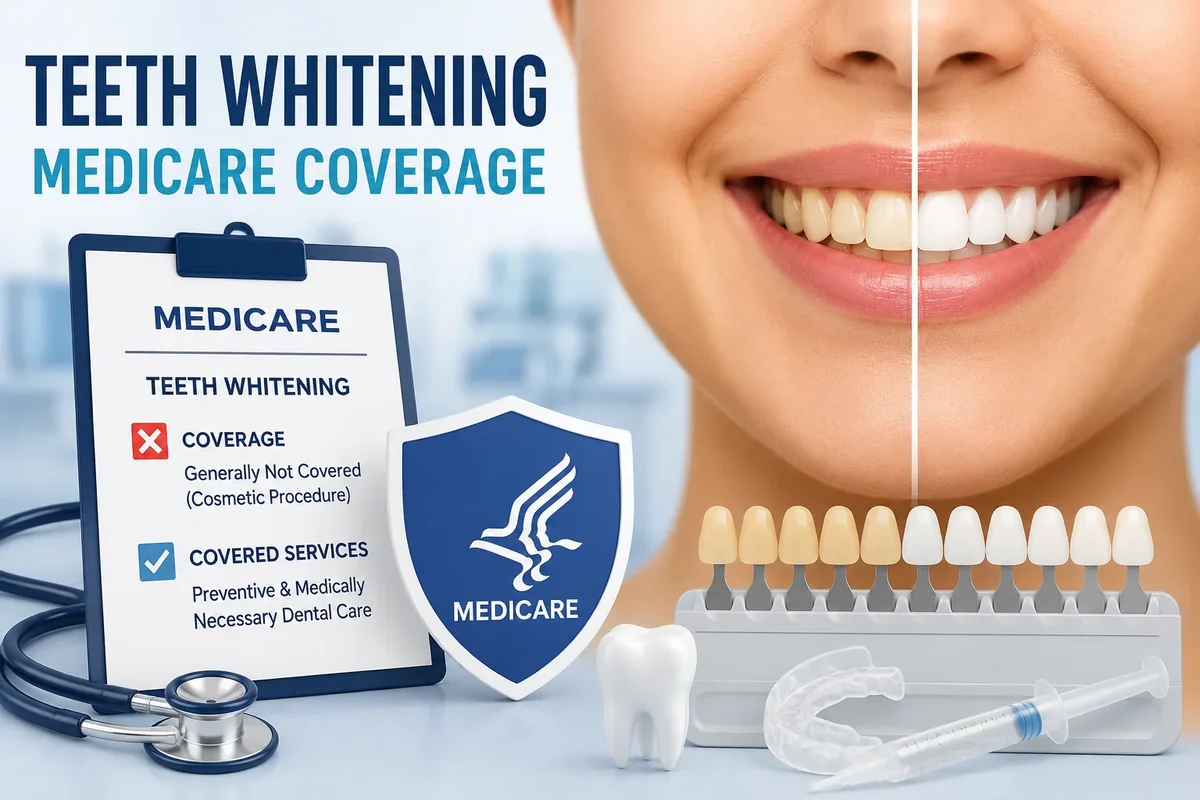
Your Next Step: Choosing the Right Whitening Option with Professional Guidance
By this point, you have learned that teeth whitening medicare coverage generally does not include cosmetic whitening procedures, that treatment costs vary according to individual circumstances, and that whitening is only appropriate for certain types of discoloration. The final step is deciding what to do with this information. Rather than focusing only on whether teeth whitening medicare coverage is available, it is more valuable to create a practical action plan based on your oral health, cosmetic goals, and financial considerations. Every smile is different, and the most successful treatment decisions are those made after understanding both the benefits and the limitations of available options.
A brighter smile can improve confidence for many people, but whitening should always begin with an evaluation of oral health rather than cosmetic expectations alone. Taking a structured approach allows you to avoid unnecessary treatment, identify underlying dental problems early, and choose a whitening method that matches your individual needs.
Step 1: Confirm the Cause of Tooth Discoloration
The first question should not be whether teeth whitening medicare coverage exists. Instead, ask why your teeth have changed color. Different causes require different solutions.
Your dentist will typically determine whether discoloration is primarily:
- Surface staining caused by food, beverages, or tobacco.
- Natural age-related darkening.
- Internal discoloration resulting from trauma or medication.
- Related to existing restorations such as crowns or veneers.
This evaluation helps determine whether whitening is likely to provide meaningful improvement or whether another cosmetic option should be considered instead.
Step 2: Make Oral Health the Priority
Professional whitening should never replace necessary dental treatment. Even if teeth whitening medicare coverage is unavailable, maintaining healthy teeth and gums remains the most important investment you can make.
Before whitening, your dentist may recommend treating:
- Dental decay.
- Gum disease.
- Broken fillings.
- Cracked teeth.
- Excessive tooth sensitivity.
Addressing these issues first creates a healthier foundation for future cosmetic treatment while helping reduce potential discomfort during whitening.
Step 3: Compare Whitening Options Carefully
Once your oral health has been evaluated, compare available whitening methods according to your lifestyle, cosmetic goals, and budget rather than making a decision based solely on cost.
Professional In-Office Whitening
This option is performed under dental supervision and may appeal to individuals who prefer treatment completed during a scheduled appointment.
Customized Home Whitening
Professionally fabricated trays allow gradual whitening at home while following individualized instructions provided by your dentist.
Over-the-Counter Products
Retail whitening products may improve mild surface stains for some individuals but are generally less personalized than professionally supervised treatment. Whether these products are suitable depends on the cause of discoloration and your oral health.
Step 4: Plan Financially
Since teeth whitening medicare coverage generally excludes cosmetic whitening, planning your budget in advance is a practical step. Ask your dental clinic for an individualized treatment estimate after your examination rather than relying on advertised pricing alone.
Useful financial questions include:
- Which services are included in the treatment plan?
- Is professional cleaning recommended first?
- Are follow-up appointments included when necessary?
- Are flexible payment arrangements available?
- Does my Medicare Advantage plan include supplemental dental benefits?
These discussions often provide greater clarity than simply asking whether teeth whitening medicare coverage exists.
Step 5: Set Realistic Expectations
Every patient responds differently to whitening treatment. Factors including enamel thickness, existing restorations, dietary habits, age, and the type of discoloration all influence cosmetic improvement.
Professional whitening aims to brighten natural teeth, but it cannot permanently prevent future staining or change the shade of crowns, veneers, bridges, or composite fillings. Understanding these limitations before treatment helps ensure that your expectations remain realistic.
Step 6: Maintain Your Results
Whitening is not a permanent solution. Long-term maintenance depends largely on daily oral hygiene and lifestyle habits.
- Brush twice daily with fluoride toothpaste.
- Clean between your teeth every day.
- Attend routine dental examinations.
- Schedule professional cleanings as recommended.
- Reduce frequent exposure to tobacco and highly pigmented beverages whenever possible.
- Follow individualized maintenance recommendations from your dentist.
These habits help preserve cosmetic improvements regardless of whether teeth whitening medicare coverage contributes financially.
When Should You Seek Professional Advice?
Professional evaluation is especially important if you:
- Have persistent tooth sensitivity.
- Notice uneven discoloration.
- Have crowns, veneers, or large fillings.
- Experienced disappointing whitening results previously.
- Are uncertain whether whitening is the most appropriate cosmetic treatment.
A consultation allows your dentist to explain available treatment options based on your specific oral health rather than relying on general online recommendations.
Moving Forward with Confidence
Understanding teeth whitening medicare coverage provides valuable financial information, but the best treatment decisions involve much more than insurance alone. Successful cosmetic care begins with identifying the cause of discoloration, evaluating the health of your teeth and gums, selecting the most suitable whitening method, and maintaining realistic expectations throughout the process.
For evidence-based oral health information, visit the American Dental Association. If you would like an individualized assessment of your smile, whitening suitability, or alternative cosmetic options, you can arrange a consultation through the Redent Klinik Contact Page. A personalized examination allows your dentist to develop a treatment plan based on your oral health, cosmetic priorities, and long-term goals rather than assumptions about insurance coverage.
Before making your final decision, check whether your Medicare Advantage plan offers any supplemental dental benefits, confirm that your teeth and gums are healthy enough for whitening, discuss the expected outcome based on your type of discoloration, review how existing crowns or fillings may influence the final appearance, and request professional advice whenever you have persistent sensitivity, significant discoloration, or uncertainty about which cosmetic treatment best fits your individual needs.
Disclosure: this page may contain affiliate links. We may earn a commission if you use them, at no extra cost to you.