
Temporary braces are becoming one of the most discussed orthodontic solutions for people who want straighter teeth without committing to years of treatment. Many patients choose temporary braces because they offer flexibility, cosmetic improvement, and short-term alignment support for specific dental situations. Whether someone is preparing for a special event, correcting mild alignment issues, or stabilizing teeth before advanced dental work, temporary braces can provide an effective solution. 😊
Unlike traditional orthodontic systems that may remain attached to the teeth for several years, temporary braces are designed for shorter periods depending on the patient’s oral condition and treatment goals. Dentists and orthodontists commonly recommend temporary braces for patients with mild crowding, small spacing issues, or temporary stabilization needs before veneers, crowns, implants, or cosmetic procedures. Temporary braces may also be used after trauma or tooth movement caused by missing teeth.
One of the biggest reasons patients ask about temporary braces is appearance. Modern dental technology has made temporary braces far more discreet and comfortable compared to older metal systems. Some temporary braces use clear brackets or tooth-colored materials, making them less visible during daily activities. This helps patients maintain confidence while improving their smile.
Temporary braces work by applying controlled pressure to the teeth over time. The brackets and wires gently shift teeth into better positions while preserving overall oral health. In some cases, temporary braces are paired with removable aligners or retention devices to improve treatment efficiency. Orthodontists carefully monitor the movement process to avoid damaging the roots, gums, or jawbone.
Patients considering temporary braces should first undergo a professional dental evaluation. During the consultation, the dentist examines bite alignment, gum condition, tooth spacing, and jaw structure. Digital scans and X-rays are often used to determine whether temporary braces are appropriate. If severe crowding or complex bite problems are present, traditional braces or clear aligners may be recommended instead.
Temporary braces are especially popular among adults who want a quick cosmetic improvement before weddings, business presentations, social events, or media appearances. Teenagers may also use temporary braces when minor corrections are needed after previous orthodontic treatment. In many cases, temporary braces are part of a broader smile makeover plan designed to improve aesthetics and function simultaneously.
There are several types of temporary braces available today. Metal temporary braces remain the most affordable option and are highly durable. Ceramic temporary braces offer a more natural appearance because the brackets blend with the teeth. Lingual temporary braces are attached behind the teeth, making them almost invisible from the front. Some patients may qualify for short-term orthodontic aligners that function similarly to temporary braces while offering removability.
The duration of temporary braces treatment depends on individual needs. Some patients wear temporary braces for only a few months, while others may require treatment for up to one year. Mild alignment problems generally respond faster than severe orthodontic issues. Patients who follow dietary restrictions and oral hygiene recommendations usually experience smoother treatment progress.
Maintaining oral hygiene while wearing temporary braces is extremely important. Food particles can become trapped around brackets and wires, increasing the risk of plaque buildup and gum inflammation. Dentists often recommend special orthodontic brushes, floss threaders, and antibacterial mouthwash to keep the mouth clean. Proper cleaning also helps temporary braces remain effective throughout treatment.
Patients frequently ask whether temporary braces are painful. Mild discomfort is common during the first few days after placement or adjustment appointments. This pressure usually indicates that the temporary braces are working correctly. Most patients adapt quickly, and over-the-counter pain relievers can help manage temporary soreness.
The cost of temporary braces varies based on treatment complexity, materials used, clinic location, and orthodontist expertise. In the United States, temporary braces may cost anywhere from $1,500 to $6,000 depending on the case. Ceramic and lingual systems are generally more expensive than standard metal options. Some dental insurance plans partially cover temporary braces if they are considered medically necessary.
Estimated Temporary Braces Costs 💰
- Metal temporary braces: $1,500 – $3,500
- Ceramic temporary braces: $2,500 – $5,000
- Lingual temporary braces: $5,000 – $8,000
- Short-term aligner systems: $2,000 – $6,500
Choosing a trusted dental clinic is essential for successful temporary braces treatment. An experienced orthodontic team can design a customized plan that balances aesthetics, comfort, and long-term dental health. Patients should review before-and-after photos, ask about technology used, and discuss realistic expectations before starting treatment.
Temporary braces may also improve oral function in addition to appearance. Correcting tooth positioning can make brushing easier, reduce uneven tooth wear, and improve chewing efficiency. In some cases, temporary braces help reduce strain on jaw joints caused by minor bite imbalances.
It is important to understand that temporary braces are not suitable for every orthodontic problem. Severe overbites, underbites, crossbites, or major jaw discrepancies often require comprehensive orthodontic treatment. A professional diagnosis helps determine the safest and most effective option.
Patients interested in learning more about orthodontic safety and oral health recommendations can visit the American Dental Association. Professional guidance ensures that temporary braces are used appropriately and safely.
If you are considering temporary braces and want personalized advice, you can also contact a professional dental team through the Redent Klinik Contact Page. A detailed consultation can help determine the best treatment option for your smile goals and dental condition. 😁
Overall, temporary braces offer a practical and modern solution for patients seeking short-term orthodontic improvement. With proper planning, professional supervision, and good oral hygiene habits, temporary braces can significantly improve smile aesthetics, confidence, and dental function. As orthodontic technology continues to advance, temporary braces are becoming more comfortable, discreet, and effective for a wide range of patients worldwide.
What Are Temporary Braces and How Do They Work?
Temporary braces are short-term orthodontic devices designed to improve tooth alignment, stabilize teeth, or prepare the mouth for cosmetic and restorative dental procedures. Unlike long-term orthodontic systems that may remain on the teeth for several years, temporary braces are typically used for a shorter duration depending on the patient’s dental condition and treatment goals. Many patients choose temporary braces because they offer faster cosmetic improvements while still helping create a healthier and more balanced smile. 😊
Modern dentistry has significantly improved the comfort and appearance of temporary braces. Today, patients can choose from various materials and treatment approaches that fit both functional and cosmetic needs. Temporary braces are commonly used for mild crowding, small gaps between teeth, bite adjustments, and smile preparation before veneers or implants.
How Temporary Braces Function
Temporary braces work by applying gentle and controlled pressure to the teeth over time. The brackets are attached to the surface of the teeth, and a wire connects them to guide tooth movement gradually. This steady pressure encourages the surrounding bone and tissue to adapt, allowing teeth to shift into improved positions safely.
The process behind temporary braces is similar to traditional orthodontics, but the treatment goals are usually less extensive. Instead of correcting severe jaw misalignment or complex bite disorders, temporary braces mainly focus on smaller corrections that can be completed more quickly.
Controlled Orthodontic Movement
The science behind temporary braces involves bone remodeling. When pressure is applied to a tooth, the bone surrounding that tooth slowly changes shape. On one side of the tooth, bone tissue breaks down slightly, while new bone forms on the opposite side. This natural biological process allows temporary braces to reposition teeth gradually without damaging the surrounding structures.
Orthodontists carefully monitor this process during follow-up appointments. Adjustments are often made every few weeks to ensure the temporary braces continue moving the teeth safely and effectively.
Who Usually Needs Temporary Braces?
Temporary braces are suitable for many different patients. Adults often request temporary braces to improve the appearance of their smile before important life events such as weddings, interviews, public speaking engagements, or professional photography sessions. Teenagers may also use temporary braces to correct mild shifting that occurs after previous orthodontic treatment.
Temporary braces are commonly recommended for:
- Mild crowding of the front teeth
- Small spaces between teeth
- Minor bite alignment issues
- Smile preparation before veneers
- Orthodontic stabilization before implants
- Post-trauma tooth repositioning
- Relapse after previous braces treatment
Because temporary braces are generally designed for smaller corrections, patients with severe orthodontic issues may require comprehensive braces or clear aligner systems instead.
Different Types of Temporary Braces
There are several types of temporary braces available in modern orthodontics. Each option has advantages depending on the patient’s cosmetic concerns, treatment complexity, and budget.
Metal Temporary Braces
Metal temporary braces are the most common and affordable option. They use durable stainless steel brackets and wires to guide tooth movement effectively. Although visible, modern metal temporary braces are smaller and more comfortable than older versions.
Ceramic Temporary Braces
Ceramic temporary braces are designed to blend with the natural tooth color. Many adults prefer this option because it provides a more discreet appearance while still delivering effective orthodontic movement.
Lingual Temporary Braces
Lingual temporary braces are attached behind the teeth instead of the front surfaces. This makes them nearly invisible during speaking and smiling. However, lingual temporary braces may require a longer adjustment period for comfort and speech adaptation.
Short-Term Clear Aligners
Some patients qualify for removable aligner systems that function similarly to temporary braces. These transparent trays are custom-made and changed regularly to gradually move the teeth. Patients appreciate the flexibility and cosmetic benefits of removable aligners.
How Long Temporary Braces Usually Last
The treatment duration for temporary braces varies from patient to patient. Some individuals may only need temporary braces for three to six months, while others may require up to one year. The timeline depends on factors such as tooth movement difficulty, oral health, patient compliance, and the overall treatment plan.
Patients who follow orthodontic instructions carefully often complete temporary braces treatment more efficiently. Avoiding hard foods, maintaining oral hygiene, and attending regular adjustment appointments are important for successful results.
Benefits of Temporary Braces
Temporary braces provide several important advantages for patients seeking short-term orthodontic improvement. One major benefit is faster treatment compared to full orthodontic correction. Because temporary braces focus on smaller issues, patients may notice visible improvements relatively quickly.
Additional benefits of temporary braces include:
- Improved smile appearance 😁
- Better tooth alignment
- Enhanced oral hygiene access
- Increased self-confidence
- Reduced uneven tooth wear
- Preparation for cosmetic dentistry
- Support for restorative dental procedures
Temporary braces may also help improve chewing efficiency and speech clarity in certain cases.
Important Oral Care During Temporary Braces Treatment
Good oral hygiene is essential while wearing temporary braces. Food debris and plaque can accumulate around brackets and wires, increasing the risk of cavities and gum inflammation. Dentists often recommend soft orthodontic toothbrushes, fluoride toothpaste, floss threaders, and antibacterial mouthwash to keep the mouth healthy during treatment.
Patients wearing temporary braces should also avoid extremely sticky or hard foods that may damage brackets or wires. Regular professional cleanings help maintain healthy gums and support successful orthodontic movement.
Professional Guidance Matters
Temporary braces should always be supervised by a qualified dentist or orthodontist. Attempting to move teeth without professional monitoring can lead to gum damage, root problems, or bite complications. A detailed consultation helps determine whether temporary braces are the safest and most effective option for the patient’s needs.
Patients seeking additional oral health guidance can visit the American Dental Association for educational resources about orthodontic treatment and dental care.
If you are considering temporary braces and want a personalized smile evaluation, you can contact a professional dental team through the Redent Klinik Contact Page. A customized treatment plan can help you achieve healthier alignment, improved confidence, and long-term oral health benefits. ✨
Who Can Benefit Most From Temporary Braces?
Temporary braces can be an excellent orthodontic solution for many different types of patients who want faster cosmetic improvements, mild alignment correction, or support before restorative dental treatments. Modern temporary braces are designed to address short-term dental concerns while helping patients achieve a healthier and more attractive smile. Because temporary braces focus on targeted corrections instead of major orthodontic reconstruction, they are especially appealing to adults and teenagers looking for efficient and practical treatment options. 😁
Not every patient requires years of traditional braces treatment. In many situations, temporary braces can solve smaller orthodontic problems quickly and effectively. Understanding who benefits most from temporary braces helps patients make informed decisions about their oral health and smile goals.
Adults Seeking Cosmetic Smile Improvements
One of the largest groups choosing temporary braces is adults who want cosmetic improvements without long-term orthodontic treatment. Many adults feel self-conscious about slightly crooked teeth, small gaps, or mild crowding but may not want to wear traditional braces for several years.
Temporary braces offer these patients an opportunity to improve smile aesthetics within a shorter timeframe. Adults often pursue temporary braces before important life events such as:
- Weddings 💍
- Professional presentations
- Job interviews
- Media appearances
- Graduation ceremonies
- Photography sessions
- Special social events
In these cases, temporary braces can help create a straighter and more balanced smile while preserving comfort and convenience.
Confidence and Professional Appearance
Many adults report increased confidence after temporary braces treatment. Straighter teeth can improve facial aesthetics and create a more youthful appearance. In professional settings, a healthy smile may also positively influence first impressions and communication confidence.
Modern temporary braces are smaller and more discreet than older orthodontic systems, making them suitable for working professionals who prefer less visible treatment options.
Teenagers With Minor Orthodontic Relapse
Teenagers who previously completed orthodontic treatment sometimes experience mild tooth shifting after failing to wear retainers consistently. Temporary braces can help correct these small movements before the alignment problems worsen.
Orthodontic relapse is relatively common, especially during adolescence when jaw growth and dental development continue. Temporary braces may restore proper alignment quickly if the issue is addressed early.
Correcting Small Alignment Changes
Minor crowding or spacing problems often respond very well to temporary braces. Because the teeth were previously aligned during earlier treatment, correction can sometimes occur faster compared to first-time orthodontic treatment.
Teenagers often appreciate temporary braces because shorter treatment times reduce the impact on school activities, sports participation, and social confidence.
Patients Preparing for Cosmetic Dentistry
Temporary braces are frequently used before cosmetic dental procedures such as veneers, crowns, or smile makeovers. Dentists may recommend temporary braces to improve tooth positioning before placing permanent restorations.
For example, if teeth overlap slightly or are unevenly spaced, temporary braces can create a more ideal foundation for cosmetic treatment. This often improves the final appearance and longevity of veneers or crowns.
Improving Long-Term Results
Using temporary braces before restorative treatment may help reduce the amount of enamel removal needed for veneers or crowns. Proper tooth positioning allows dentists to preserve more natural tooth structure while creating better symmetry and bite alignment.
Patients considering a complete smile transformation often benefit from combining temporary braces with cosmetic dentistry for the most natural and functional outcome.
Patients With Mild Crowding or Spacing
Temporary braces are ideal for patients who have mild crowding, small gaps, or slight tooth rotation. These cases usually do not require extensive orthodontic intervention but can still affect oral hygiene and smile appearance.
Small alignment issues may seem cosmetic at first, but they can also increase plaque accumulation and make brushing more difficult. Temporary braces help create better spacing between teeth, improving cleaning access and gum health.
Improved Oral Hygiene
Straighter teeth are generally easier to clean effectively. Patients with overlapping teeth may struggle to remove plaque fully, increasing the risk of cavities and gum disease. Temporary braces help align the teeth more evenly, supporting healthier daily oral care habits.
Many patients notice improvements in gum comfort and fresher breath after temporary braces treatment because cleaning becomes more efficient.
Patients Requiring Pre-Implant Orthodontics
Temporary braces are sometimes used before dental implant procedures. When a tooth has been missing for a long time, nearby teeth may drift into the empty space. Temporary braces can reposition those teeth to create enough room for proper implant placement.
This orthodontic preparation improves implant stability, aesthetics, and long-term function.
Creating Proper Implant Space
Without temporary braces, limited spacing may make implant placement difficult or impossible. Orthodontic repositioning helps restore balanced spacing and bite alignment before restorative treatment begins.
This multidisciplinary approach often produces better cosmetic and functional outcomes for patients requiring implants or bridgework.
Patients Looking for Short-Term Orthodontic Solutions
Many individuals simply want a faster orthodontic option for minor concerns. Temporary braces appeal to patients who prefer shorter treatment timelines and targeted correction instead of comprehensive orthodontic reconstruction.
These patients often prioritize:
- Shorter treatment duration
- Lower overall orthodontic costs
- Improved smile aesthetics
- More discreet orthodontic options
- Less invasive treatment approaches
Temporary braces can provide an effective compromise between cosmetic improvement and treatment efficiency.
When Temporary Braces May Not Be Enough
Although temporary braces offer many benefits, they are not appropriate for every orthodontic condition. Patients with severe overbites, underbites, jaw discrepancies, or major crowding may require full orthodontic treatment instead.
A professional orthodontic evaluation is essential before starting temporary braces. Dentists use digital scans, X-rays, bite analysis, and oral examinations to determine the most suitable treatment plan.
Importance of Professional Supervision
Teeth should never be moved without professional guidance. Improper orthodontic force can damage tooth roots, gums, and jawbone structures. Temporary braces must always be planned and monitored by qualified dental professionals.
Patients seeking trustworthy orthodontic education can visit the American Dental Association for reliable oral health information.
If you are wondering whether temporary braces are suitable for your smile goals, you can contact a qualified dental team through the Redent Klinik Contact Page. A personalized consultation can help determine the safest and most effective orthodontic solution for your needs. ✨
Overall, temporary braces are most beneficial for patients with mild to moderate alignment concerns who want faster, more focused orthodontic improvements. With proper planning and professional care, temporary braces can significantly improve aesthetics, oral hygiene, and overall smile confidence while minimizing long-term treatment commitment.
Temporary Braces vs Traditional Braces: Key Differences
When patients begin researching orthodontic treatment, one of the most common questions is whether temporary braces or traditional braces are the better option. Both treatments are designed to improve tooth alignment and oral function, but they differ significantly in treatment duration, complexity, appearance, cost, and overall goals. Understanding these differences helps patients choose the orthodontic solution that best fits their dental condition and lifestyle. 😊
Temporary braces are generally designed for short-term orthodontic corrections involving mild to moderate alignment issues. Traditional braces, on the other hand, are intended for comprehensive orthodontic treatment and can correct severe bite problems, jaw alignment issues, and extensive crowding.
Although temporary braces and traditional braces share similar mechanics, their treatment objectives and timelines are very different. Dentists and orthodontists evaluate each patient individually to determine which option will produce the safest and most effective results.
Main Purpose of Temporary Braces
Temporary braces primarily focus on smaller cosmetic or functional corrections. Patients often choose temporary braces to improve smile appearance, correct mild crowding, or prepare the teeth for cosmetic dental procedures.
Temporary braces are commonly recommended for:
- Mild crooked teeth
- Small spaces between teeth
- Minor bite adjustments
- Orthodontic relapse correction
- Smile preparation before veneers
- Pre-implant orthodontic positioning
Because temporary braces address more limited orthodontic concerns, treatment can often be completed in a shorter period compared to traditional braces.
Focus on Cosmetic Improvement
Many adults choose temporary braces because they want visible smile improvements without committing to years of orthodontic treatment. Temporary braces can provide faster aesthetic changes while still supporting healthier tooth positioning.
Patients who mainly want cosmetic enhancements rather than major structural correction are often ideal candidates for temporary braces.
Main Purpose of Traditional Braces
Traditional braces are designed for comprehensive orthodontic correction. These braces are often necessary when patients have severe crowding, overbites, underbites, crossbites, jaw discrepancies, or major spacing problems.
Traditional braces can correct:
- Complex bite alignment problems
- Severe tooth crowding
- Jaw positioning issues
- Significant tooth rotation
- Speech-related bite problems
- Long-standing orthodontic complications
Because traditional braces address more advanced orthodontic concerns, treatment typically requires a longer timeline and more adjustments.
Comprehensive Orthodontic Transformation
Unlike temporary braces, traditional braces often create major structural changes in both tooth alignment and jaw function. Orthodontists carefully guide the movement process over an extended period to ensure proper bite stability and long-term results.
Traditional braces may also involve elastics, expanders, or additional orthodontic appliances depending on the complexity of the case.
Treatment Duration Differences
One of the biggest differences between temporary braces and traditional braces is treatment duration. Temporary braces are usually worn for a few months to around one year depending on the patient’s needs. Traditional braces often require treatment periods ranging from 18 months to 3 years.
Why Temporary Braces Are Faster
Temporary braces generally focus on moving only selected teeth instead of restructuring the entire bite. Smaller corrections naturally require less time and fewer orthodontic adjustments.
However, it is important to remember that treatment speed depends on several factors, including:
- Patient age
- Bone density
- Tooth movement complexity
- Oral hygiene habits
- Patient compliance
Patients who follow instructions carefully often complete temporary braces treatment more efficiently.
Appearance and Comfort Comparison
Modern orthodontics offers more aesthetic treatment options than ever before. Temporary braces are often designed with cosmetic convenience in mind, especially for adults who want less noticeable orthodontic treatment.
Temporary Braces Aesthetic Options
Patients choosing temporary braces may have access to:
- Clear ceramic brackets
- Tooth-colored wires
- Lingual braces behind the teeth
- Short-term aligner systems
These options help make temporary braces more discreet during professional and social interactions.
Traditional Braces Visibility
Traditional braces are also becoming smaller and more comfortable, but they may still be more noticeable due to longer treatment periods and larger orthodontic systems. Patients with severe orthodontic problems may prioritize effectiveness over aesthetics during treatment.
Both temporary braces and traditional braces can cause mild discomfort during adjustments, especially during the first few days after tightening appointments.
Cost Differences Between Temporary Braces and Traditional Braces
Cost is another important factor patients consider when comparing temporary braces and traditional braces. Because temporary braces usually involve shorter treatment times and simpler corrections, they are often less expensive overall.
Estimated Orthodontic Costs 💰
- Temporary braces: $1,500 – $6,000
- Traditional braces: $3,000 – $10,000+
- Ceramic traditional braces: $4,000 – $12,000
- Lingual braces: $8,000 – $15,000
Actual pricing depends on treatment complexity, clinic location, orthodontist experience, and materials used.
Maintenance and Oral Hygiene
Both temporary braces and traditional braces require careful oral hygiene to prevent plaque buildup and gum problems. Food particles can easily become trapped around brackets and wires, increasing the risk of cavities.
Cleaning Temporary Braces
Patients wearing temporary braces should brush carefully after meals, floss daily, and attend professional cleanings regularly. Orthodontic brushes and fluoride mouthwash are often recommended.
Because temporary braces are usually worn for a shorter time, some patients find oral hygiene management easier compared to long-term orthodontic treatment.
Long-Term Maintenance for Traditional Braces
Traditional braces require extended commitment to oral care routines. Patients must consistently avoid hard or sticky foods that may damage brackets and wires throughout the treatment process.
Longer treatment duration also means more orthodontic appointments and greater attention to gum health.
Which Option Is Better?
The answer depends entirely on the patient’s dental condition and treatment goals. Temporary braces are ideal for patients with mild orthodontic concerns who want faster cosmetic improvements. Traditional braces are more appropriate for individuals requiring comprehensive orthodontic correction and long-term bite stability.
A professional orthodontic consultation is essential before choosing between temporary braces and traditional braces. Dentists evaluate X-rays, digital scans, bite relationships, and oral health conditions to determine the safest treatment option.
Patients seeking reliable orthodontic information can visit the American Dental Association for additional educational resources.
If you want personalized guidance about temporary braces and orthodontic treatment options, you can contact an experienced dental team through the Redent Klinik Contact Page. A customized consultation can help identify the most effective treatment plan for your smile goals and oral health needs. ✨
Overall, temporary braces and traditional braces both offer important benefits, but they serve different purposes. Temporary braces provide efficient short-term correction for mild cases, while traditional braces deliver comprehensive orthodontic transformation for more complex dental problems. Choosing the right solution depends on professional evaluation, patient expectations, and long-term oral health priorities.
Types of Temporary Braces Used in Modern Dentistry
Modern orthodontics offers several different types of temporary braces designed to meet a wide range of patient needs. Temporary braces are no longer limited to bulky metal brackets that many people remember from the past. Today, advancements in dental technology have made temporary braces more comfortable, discreet, efficient, and aesthetically appealing. Patients can now choose from multiple orthodontic systems depending on their smile goals, budget, lifestyle, and dental condition. 😊
Understanding the different types of temporary braces helps patients make informed decisions about treatment. Each system has unique advantages, limitations, treatment timelines, and cosmetic features. Orthodontists evaluate each patient individually before recommending the most appropriate type of temporary braces.
Traditional Metal Temporary Braces
Metal temporary braces remain one of the most widely used orthodontic options in modern dentistry. These braces use stainless steel brackets connected by metal wires to apply controlled pressure to the teeth. Although many newer cosmetic systems exist, metal temporary braces continue to be highly effective for mild to moderate alignment corrections.
Advantages of Metal Temporary Braces
Metal temporary braces offer several important benefits:
- High durability 🦷
- Reliable tooth movement
- Lower overall treatment cost
- Faster adjustment efficiency
- Strong bracket stability
Because metal temporary braces are highly durable, they are less likely to break compared to some cosmetic orthodontic systems. This makes them suitable for teenagers and active patients.
Disadvantages of Metal Temporary Braces
The main disadvantage of metal temporary braces is visibility. Although modern designs are much smaller than older orthodontic systems, the brackets and wires are still noticeable during smiling and speaking.
Some patients may also experience temporary irritation inside the cheeks and lips during the initial adjustment period.
Ceramic Temporary Braces
Ceramic temporary braces are designed for patients who want a more discreet orthodontic appearance. Instead of metal brackets, these systems use tooth-colored or clear ceramic materials that blend naturally with the teeth.
Many adults choose ceramic temporary braces because they are less visible during professional and social interactions.
Cosmetic Advantages
The biggest advantage of ceramic temporary braces is aesthetics. The brackets are specifically designed to match natural tooth shades, making them significantly less noticeable than traditional metal systems.
Patients who work in customer-facing professions often prefer ceramic temporary braces because they offer improved cosmetic comfort during treatment.
Important Considerations
Although ceramic temporary braces are visually appealing, they may be slightly more fragile than metal braces. Certain foods and drinks can also stain elastic components if oral hygiene is not maintained carefully.
Ceramic temporary braces are usually more expensive than standard metal systems due to the advanced materials used.
Lingual Temporary Braces
Lingual temporary braces are attached behind the teeth instead of the front surfaces. This placement makes the braces almost invisible from the outside. Lingual orthodontics is one of the most discreet forms of temporary braces available today.
Invisible Appearance
The hidden placement of lingual temporary braces makes them highly attractive for patients concerned about aesthetics. Public speakers, actors, executives, and professionals often prefer this option because the braces cannot easily be seen during communication.
Despite their hidden appearance, lingual temporary braces can still provide effective orthodontic movement for suitable cases.
Adjustment Challenges
Lingual temporary braces may initially affect speech and tongue comfort more than front-facing braces. Some patients experience temporary pronunciation difficulties during the first few weeks of treatment.
Cleaning lingual temporary braces may also require extra attention because the brackets are more difficult to access during brushing and flossing.
Clear Aligner Systems as Temporary Braces
In many mild orthodontic cases, clear aligners function similarly to temporary braces. These removable transparent trays gradually shift teeth using custom-designed pressure.
Clear aligner systems have become increasingly popular because they combine aesthetics, convenience, and flexibility.
Benefits of Clear Aligners
Patients often prefer aligner-style temporary braces because:
- They are nearly invisible ✨
- They can be removed during meals
- Oral hygiene is easier
- There are no metal brackets or wires
- Fewer emergency visits are needed
Many adults choose clear aligners because they allow greater freedom during daily life while still improving smile appearance.
Patient Compliance Matters
Unlike fixed temporary braces, removable aligners require strong patient discipline. Patients must wear the trays for the recommended number of hours daily to achieve successful results.
Failure to follow aligner instructions can delay treatment progress and reduce effectiveness.
Self-Ligating Temporary Braces
Self-ligating temporary braces use specialized brackets that hold the wire without elastic bands. These systems are designed to reduce friction and improve tooth movement efficiency.
Improved Comfort
Many patients report that self-ligating temporary braces feel smoother and more comfortable than traditional systems. Because the brackets create less resistance, some patients experience lighter pressure during adjustments.
Self-ligating systems may also simplify cleaning because they contain fewer small elastic components.
Treatment Efficiency
Some orthodontists believe self-ligating temporary braces may reduce treatment time in selected cases. However, overall results still depend heavily on case complexity and patient cooperation.
How Orthodontists Choose the Right Temporary Braces
Choosing the right type of temporary braces depends on several important factors. Dentists and orthodontists evaluate:
- Severity of alignment issues
- Patient age
- Cosmetic preferences
- Lifestyle habits
- Budget considerations
- Oral hygiene ability
- Treatment timeline goals
No single orthodontic system is ideal for every patient. A personalized consultation helps determine which type of temporary braces can safely deliver the best results.
Costs of Different Temporary Braces
Estimated Costs of Temporary Braces 💰
- Metal temporary braces: $1,500 – $3,500
- Ceramic temporary braces: $2,500 – $5,500
- Lingual temporary braces: $5,000 – $8,500
- Clear aligner systems: $2,000 – $6,500
- Self-ligating temporary braces: $3,000 – $7,000
Prices vary depending on treatment complexity, clinic location, orthodontist experience, and treatment duration.
Professional Orthodontic Evaluation Is Essential
Although many types of temporary braces are available, patients should never choose orthodontic treatment based solely on appearance or cost. Professional evaluation ensures that the selected system can safely and effectively address the patient’s specific dental concerns.
Patients interested in learning more about orthodontic health and treatment safety can visit the American Dental Association for educational resources.
If you are considering temporary braces and want expert guidance about the best orthodontic system for your smile, you can contact a qualified dental team through the Redent Klinik Contact Page. Personalized treatment planning can help you achieve better alignment, improved confidence, and long-term oral health benefits. 😁
Overall, the wide variety of temporary braces available today allows patients to select treatment options that match their cosmetic preferences, comfort expectations, and orthodontic needs. From traditional metal systems to nearly invisible aligners, modern temporary braces continue to evolve and provide effective short-term orthodontic solutions for patients worldwide.
How Long Do Temporary Braces Stay on Your Teeth?
One of the most common questions patients ask before starting orthodontic treatment is how long temporary braces will remain on their teeth. The answer depends on several important factors, including the severity of the alignment issue, the type of temporary braces used, the patient’s oral health, and overall treatment goals. In general, temporary braces are designed for shorter treatment periods compared to traditional orthodontic systems, making them an attractive option for patients seeking faster cosmetic or functional improvements. 😊
Most patients choose temporary braces because they want visible results without committing to years of orthodontic treatment. While traditional braces may require treatment lasting two to three years, temporary braces often focus on limited corrections that can be completed within several months to about one year.
Average Treatment Time for Temporary Braces
The average treatment duration for temporary braces typically ranges from 3 months to 12 months. However, every patient is different, and the exact timeline depends on how much tooth movement is required.
Patients with very minor spacing or crowding problems may complete temporary braces treatment relatively quickly. More complex cases involving bite correction or multiple tooth movements may require additional time.
Typical Timeframes Based on Case Severity
- Mild spacing corrections: 3–6 months
- Minor crowding treatment: 6–9 months
- Orthodontic relapse correction: 4–8 months
- Pre-veneer alignment treatment: 3–6 months
- Moderate cosmetic improvements: 9–12 months
These estimates are general guidelines. Orthodontists evaluate each case individually before providing a personalized treatment timeline.
Factors That Affect Temporary Braces Duration
Several important factors influence how long temporary braces remain on the teeth. Understanding these variables helps patients develop realistic expectations about their orthodontic journey.
Severity of Tooth Misalignment
The complexity of tooth movement is one of the biggest factors affecting temporary braces treatment time. Teeth that require only slight repositioning usually respond more quickly than teeth needing significant rotation or spacing correction.
Mild orthodontic issues often allow temporary braces to work efficiently because less bone remodeling is required.
Patient Age
Younger patients sometimes experience faster tooth movement because their bone structure is still developing. However, adults can also achieve excellent results with temporary braces when treatment is carefully planned and monitored.
Age alone does not determine success, but bone density and healing capacity may slightly influence treatment speed.
Patient Cooperation
Patient compliance is extremely important during temporary braces treatment. Individuals who follow orthodontic instructions carefully often complete treatment more efficiently.
Key patient responsibilities include:
- Attending adjustment appointments
- Maintaining excellent oral hygiene
- Avoiding damaging foods
- Wearing elastics if prescribed
- Using retainers correctly after treatment
Patients who neglect these instructions may experience delays in temporary braces progress.
How Orthodontists Monitor Progress
Orthodontists closely monitor temporary braces throughout the treatment process. Regular appointments are usually scheduled every few weeks to evaluate tooth movement and make necessary adjustments.
Adjustment Appointments
During adjustment visits, orthodontists may tighten wires, replace elastic bands, or modify treatment mechanics to continue guiding the teeth into proper positions. These appointments are essential for maintaining safe and controlled tooth movement.
Skipping appointments can delay temporary braces treatment and increase the risk of complications.
Digital Imaging and Tracking
Many modern clinics use digital scans, photographs, and X-rays to track temporary braces progress accurately. These technologies help orthodontists compare tooth positions over time and make precise adjustments.
Advanced monitoring tools also improve communication between the patient and dental team by visually demonstrating treatment progress.
Can Temporary Braces Work Faster?
Many patients hope temporary braces will provide extremely rapid results. While some improvements may become visible within weeks, safe orthodontic movement still requires biological adaptation.
Teeth cannot be moved too aggressively without risking root damage, gum recession, or bone complications. Orthodontists carefully balance treatment speed with long-term oral health protection.
Healthy Tooth Movement Takes Time
The bone surrounding the teeth must gradually remodel during orthodontic treatment. This natural process cannot be rushed excessively without creating serious dental risks.
Although temporary braces generally work faster than comprehensive orthodontic systems, realistic expectations remain important for successful treatment outcomes.
What Happens After Temporary Braces Are Removed?
Once temporary braces have completed the desired corrections, the brackets and wires are removed carefully by the orthodontist. However, treatment does not fully end at that point.
Retainers After Temporary Braces
Most patients require retainers after temporary braces removal. Retainers help stabilize the teeth and prevent them from shifting back toward their previous positions.
Retainers may be:
- Removable clear retainers
- Hawley retainers
- Fixed bonded retainers
Wearing retainers consistently is critical for maintaining temporary braces results long-term.
Post-Treatment Monitoring
Orthodontists often schedule follow-up visits after temporary braces removal to monitor stability and ensure the teeth remain properly aligned.
Patients who neglect retainer use may experience orthodontic relapse, potentially requiring additional temporary braces treatment in the future.
Do Different Types of Temporary Braces Affect Treatment Time?
Yes, the specific type of temporary braces used can sometimes influence treatment duration. Some orthodontic systems are designed to improve efficiency and reduce friction during tooth movement.
Metal vs Ceramic Temporary Braces
Metal temporary braces often allow slightly faster tooth movement because they create less resistance between brackets and wires. Ceramic temporary braces may sometimes require minor adjustments to maintain cosmetic appearance and comfort.
Clear Aligners and Temporary Braces
Clear aligner systems functioning as temporary braces can produce excellent results when patients wear them consistently. However, removable systems depend heavily on patient discipline.
If aligners are not worn for the recommended number of hours daily, treatment time may increase significantly.
Why Professional Supervision Matters
Temporary braces should always be supervised by qualified orthodontic professionals. Attempting to accelerate treatment improperly can damage the roots, gums, or supporting bone.
Professional orthodontic planning ensures that temporary braces move teeth safely while protecting long-term oral health.
Patients interested in learning more about orthodontic treatment safety can visit the American Dental Association for reliable dental education.
If you are considering temporary braces and want a personalized estimate of treatment duration, you can contact an experienced dental team through the Redent Klinik Contact Page. A detailed consultation can help determine how long temporary braces may be needed for your specific smile goals and oral health condition. ✨
Overall, temporary braces provide an effective short-term orthodontic solution for patients with mild to moderate alignment concerns. While treatment duration varies from person to person, proper planning, professional supervision, and patient cooperation all contribute to achieving successful and long-lasting results within a relatively short timeframe.
Cost of Temporary Braces and What Affects Pricing
The cost of temporary braces is one of the most important factors patients consider before starting orthodontic treatment. Many people want to improve their smile while also staying within a realistic budget. Fortunately, temporary braces are often more affordable than full traditional orthodontic treatment because they usually focus on smaller corrections and shorter treatment periods. However, the total price of temporary braces can still vary significantly depending on several important factors. 😊
Understanding how temporary braces pricing works helps patients prepare financially and choose the most suitable orthodontic solution for their needs. Treatment costs may differ based on the type of temporary braces selected, the complexity of the dental issue, geographic location, orthodontist expertise, and additional dental procedures required during treatment.
Average Cost of Temporary Braces
In general, temporary braces can range from approximately $1,500 to over $8,000 depending on the orthodontic system used and the complexity of the treatment plan. Mild cosmetic corrections usually cost less than treatments involving multiple teeth or bite adjustments.
Patients should remember that the cheapest orthodontic option is not always the best choice. Treatment quality, orthodontist experience, and long-term results are extremely important when selecting temporary braces.
Estimated Price Ranges
Typical Temporary Braces Costs 💰
- Metal temporary braces: $1,500 – $3,500
- Ceramic temporary braces: $2,500 – $5,500
- Clear aligner systems: $2,000 – $6,500
- Lingual temporary braces: $5,000 – $8,500
- Self-ligating temporary braces: $3,000 – $7,000
These prices are general estimates and may vary depending on the country, city, and dental clinic.
Main Factors That Affect Temporary Braces Pricing
Several important factors influence how much temporary braces cost. Orthodontists evaluate each patient individually before creating a customized treatment plan and financial estimate.
Severity of Dental Misalignment
One of the biggest pricing factors is the complexity of the orthodontic issue. Patients with very mild crowding or spacing usually require less treatment time, fewer appointments, and simpler orthodontic adjustments.
More complicated cases involving multiple teeth, bite corrections, or relapse from previous orthodontic treatment may increase the overall cost of temporary braces.
Treatment Duration
The length of treatment directly affects the total price of temporary braces. Longer treatment periods require more adjustment appointments, additional orthodontic materials, and increased professional supervision.
Patients who complete treatment quickly often spend less overall because fewer visits and adjustments are necessary.
Type of Temporary Braces Chosen
The specific orthodontic system selected also plays a major role in pricing.
- Metal temporary braces are usually the most affordable
- Ceramic temporary braces cost more because of cosmetic materials
- Lingual temporary braces are among the most expensive options
- Clear aligner systems vary depending on customization complexity
Patients often balance aesthetics, comfort, and budget when selecting temporary braces.
Metal Temporary Braces and Their Cost Benefits
Metal temporary braces remain one of the most cost-effective orthodontic solutions available. These braces use stainless steel brackets and wires that are durable, efficient, and widely available.
Why Metal Temporary Braces Cost Less
Metal temporary braces generally cost less because:
- The materials are highly standardized
- Production costs are lower
- Orthodontists have extensive experience using them
- Treatment adjustments are straightforward
Patients seeking affordable temporary braces often choose metal systems when cosmetic visibility is not a major concern.
Ceramic Temporary Braces and Cosmetic Pricing
Ceramic temporary braces are more expensive because they use tooth-colored materials designed to blend naturally with the smile. Many adults are willing to pay extra for the improved aesthetics.
Cosmetic Advantages Increase Cost
The advanced materials used in ceramic temporary braces increase manufacturing and treatment costs. Some ceramic systems may also require additional care to prevent staining or damage.
Despite the higher price, many patients believe the cosmetic comfort is worth the investment during orthodontic treatment.
Lingual Temporary Braces and Premium Pricing
Lingual temporary braces are typically among the most expensive orthodontic options available. These braces are attached behind the teeth, making them nearly invisible from the front.
Why Lingual Temporary Braces Cost More
Several factors contribute to the premium pricing of lingual temporary braces:
- Highly customized bracket placement
- Advanced orthodontic planning
- Specialized professional training
- Longer adjustment appointments
- Increased technical complexity
Patients who prioritize maximum discretion often consider lingual temporary braces despite the higher cost.
Additional Costs Associated With Temporary Braces
Some patients may require additional dental procedures before or during temporary braces treatment. These procedures can increase the total overall cost.
Possible Extra Expenses
- Dental X-rays
- Digital scans
- Tooth extractions
- Professional cleanings
- Retainers after treatment
- Emergency bracket repairs
- Whitening after braces removal
Patients should ask their orthodontist for a complete cost breakdown before beginning temporary braces treatment.
Insurance Coverage for Temporary Braces
Some dental insurance plans partially cover temporary braces, especially when treatment is considered medically necessary rather than purely cosmetic.
Insurance Factors
Insurance coverage may depend on:
- Patient age
- Orthodontic diagnosis
- Policy limitations
- Annual maximum benefits
- Waiting periods
Patients should contact their insurance provider directly to understand how much of their temporary braces treatment may be reimbursed.
Financing Options for Temporary Braces
Many orthodontic clinics offer financing plans to make temporary braces more affordable. Flexible payment options allow patients to spread the cost over several months or years.
Common Payment Solutions
- Monthly installment plans
- Interest-free financing
- Healthcare credit programs
- Flexible spending accounts (FSA)
- Health savings accounts (HSA)
These financing solutions make temporary braces accessible to a wider range of patients seeking orthodontic improvement.
Why Quality Matters More Than Low Prices
Although price is important, patients should never choose temporary braces based only on cost. Poorly planned orthodontic treatment can lead to gum recession, root damage, bite problems, and unstable results.
Working with a qualified orthodontic professional ensures that temporary braces are applied safely and monitored correctly throughout treatment.
Choosing an Experienced Orthodontic Team
Patients should evaluate:
- Orthodontist experience
- Clinic technology
- Before-and-after cases
- Patient reviews
- Professional certifications
Investing in quality treatment often produces healthier and more stable long-term results.
Patients interested in additional orthodontic education can visit the American Dental Association for trusted oral health information.
If you are considering temporary braces and want a personalized treatment estimate, you can contact an experienced dental team through the Redent Klinik Contact Page. A detailed consultation can help determine the most suitable orthodontic solution for your smile goals, budget, and oral health needs. ✨
Overall, temporary braces provide a flexible orthodontic option with a wide range of pricing possibilities. Understanding the factors that affect treatment cost allows patients to plan more confidently while choosing the safest and most effective path toward a healthier and more attractive smile.
Caring for Your Teeth While Wearing Temporary Braces
Proper oral care is one of the most important parts of successful orthodontic treatment. Patients wearing temporary braces must pay close attention to daily hygiene habits to protect their teeth, gums, and orthodontic appliances throughout the treatment process. Although temporary braces are usually worn for shorter periods compared to traditional orthodontic systems, they still require consistent maintenance and professional supervision to achieve healthy and long-lasting results. 😊
Temporary braces create additional surfaces where food particles and plaque can collect. Without proper cleaning, patients may develop cavities, gum inflammation, bad breath, enamel stains, or even orthodontic complications. Learning how to care for temporary braces correctly helps ensure that the treatment remains safe, comfortable, and effective.
Why Oral Hygiene Is So Important With Temporary Braces
When temporary braces are attached to the teeth, brackets and wires create small spaces where bacteria can accumulate easily. If plaque is not removed regularly, it can harden into tartar and irritate the gums.
Poor oral hygiene during temporary braces treatment may lead to:
- Tooth decay 🦷
- Gum disease
- White spot lesions
- Bad breath
- Gum swelling
- Enamel damage
- Extended treatment time
Orthodontists often emphasize that good hygiene habits are just as important as the braces themselves.
Protecting Long-Term Results
Temporary braces are designed to improve smile aesthetics and oral function, but unhealthy teeth or gums can compromise the final outcome. Patients who maintain excellent oral hygiene often achieve more attractive and stable orthodontic results.
Healthy gums also respond better to tooth movement, which may help temporary braces work more efficiently.
How to Brush Properly With Temporary Braces
Brushing correctly is essential during temporary braces treatment. Food particles can become trapped around the brackets and wires after meals, increasing bacterial growth.
Recommended Brushing Routine
Patients wearing temporary braces should brush:
- After every meal
- Before bedtime
- For at least two minutes each session
- Using fluoride toothpaste
Soft-bristled toothbrushes are usually recommended because they clean effectively without damaging the gums or orthodontic appliances.
Orthodontic Toothbrushes
Many orthodontists recommend special orthodontic toothbrushes designed specifically for temporary braces. These brushes often contain V-shaped bristle patterns that clean around brackets more effectively.
Electric toothbrushes may also help improve plaque removal during orthodontic treatment.
Flossing With Temporary Braces
Flossing becomes slightly more challenging with temporary braces because the wires block direct access between the teeth. However, flossing remains extremely important for preventing gum disease and plaque buildup.
Helpful Flossing Tools
Several tools can simplify flossing while wearing temporary braces:
- Floss threaders
- Orthodontic floss picks
- Water flossers
- Interdental brushes
Water flossers are especially popular because they use pressurized water to clean around brackets and gumlines efficiently.
Daily Flossing Benefits
Patients who floss consistently during temporary braces treatment often experience:
- Healthier gums
- Reduced bleeding
- Less plaque accumulation
- Fresher breath
- Lower cavity risk
Strong oral hygiene habits protect both the teeth and the orthodontic investment.
Foods to Avoid With Temporary Braces
Diet plays a major role in protecting temporary braces from damage. Certain foods can bend wires, loosen brackets, or increase the risk of tooth decay.
Hard Foods
Patients should avoid hard foods such as:
- Ice cubes
- Hard candy
- Popcorn kernels
- Nuts
- Hard crust bread
These foods may break orthodontic components and delay temporary braces treatment.
Sticky Foods
Sticky foods are also problematic because they cling to brackets and wires.
- Chewing gum
- Caramel
- Sticky candies
- Toffee
- Fruit chews
Sticky substances are difficult to remove and may increase bacterial buildup around temporary braces.
Managing Discomfort During Temporary Braces Treatment
Some patients experience mild soreness when temporary braces are first applied or adjusted. This pressure usually indicates that the teeth are moving properly.
Ways to Reduce Discomfort
Patients can manage temporary braces discomfort by:
- Eating soft foods 🥣
- Using orthodontic wax
- Rinsing with warm salt water
- Taking approved pain relievers
- Staying hydrated
Most discomfort decreases within several days after orthodontic adjustments.
Orthodontic Wax Protection
Orthodontic wax helps protect the cheeks and lips from irritation caused by temporary braces brackets or wires. Patients can place small amounts of wax over areas causing friction.
This simple solution often improves comfort significantly during the adjustment period.
Importance of Regular Orthodontic Appointments
Routine orthodontic visits are critical during temporary braces treatment. These appointments allow the orthodontist to monitor tooth movement, make adjustments, and identify any potential problems early.
Professional Cleaning and Monitoring
Regular professional cleanings help remove plaque and tartar that patients may miss during home care. Orthodontists also evaluate gum health and ensure temporary braces are functioning correctly.
Skipping appointments can slow treatment progress and increase the risk of complications.
Emergency Situations
Patients should contact their orthodontist immediately if temporary braces brackets become loose, wires break, or severe pain develops.
Quick repairs help prevent treatment delays and reduce the risk of oral injury.
Maintaining Healthy Gums During Temporary Braces
Healthy gums are essential for successful orthodontic treatment. Gum inflammation can interfere with tooth movement and increase discomfort during temporary braces therapy.
Signs of Gum Problems
Patients should watch for:
- Bleeding gums
- Persistent swelling
- Redness
- Bad breath
- Gum tenderness
These symptoms may indicate gingivitis or plaque buildup requiring professional attention.
Using Mouthwash Correctly
Antibacterial mouthwash may help reduce bacteria around temporary braces and improve gum health. Fluoride rinses can also strengthen enamel and reduce cavity risk during orthodontic treatment.
Life After Temporary Braces
After temporary braces are removed, maintaining the results becomes the next priority. Most patients receive retainers to stabilize the teeth and prevent relapse.
Retainer Care
Patients must follow retainer instructions carefully after temporary braces treatment ends. Consistent retainer use helps preserve alignment improvements long-term.
Good oral hygiene habits should continue even after orthodontic treatment is completed.
Patients seeking additional orthodontic care guidance can visit the American Dental Association for trusted oral health resources.
If you are considering temporary braces or need personalized orthodontic support, you can contact an experienced dental team through the Redent Klinik Contact Page. Professional guidance can help ensure your temporary braces treatment remains safe, effective, and comfortable from start to finish. ✨
Overall, caring for temporary braces properly is essential for protecting oral health and achieving successful orthodontic results. With consistent hygiene habits, regular dental visits, and careful dietary choices, patients can maintain healthy teeth and gums while enjoying the cosmetic and functional benefits of temporary braces treatment.
Common Problems and Solutions With Temporary Braces
Although temporary braces are highly effective for improving smile alignment and correcting mild orthodontic concerns, patients may occasionally experience certain challenges during treatment. Most problems associated with temporary braces are manageable and temporary when proper care and professional guidance are followed. Understanding the most common issues helps patients feel more prepared and confident throughout their orthodontic journey. 😊
Temporary braces work by applying gentle pressure to move teeth gradually into improved positions. During this process, the teeth, gums, cheeks, and jaw structures naturally adapt to orthodontic movement. Mild discomfort and temporary adjustments are normal parts of treatment, but serious complications are uncommon when temporary braces are monitored by qualified orthodontic professionals.
Mild Pain and Pressure After Adjustments
One of the most common experiences during temporary braces treatment is mild soreness or pressure after adjustments. This discomfort usually occurs because the orthodontic wires are actively guiding the teeth into new positions.
Why Temporary Braces Cause Soreness
When temporary braces apply force to the teeth, the surrounding bone tissue begins remodeling to support tooth movement. This natural biological process may create temporary sensitivity or aching.
Patients often notice soreness:
- After initial brace placement
- Following wire tightening appointments
- During the first few days of treatment
- After changing aligner trays
The discomfort is usually temporary and improves within several days.
Solutions for Orthodontic Discomfort
Patients can reduce temporary braces discomfort by:
- Eating soft foods 🥣
- Using cold compresses
- Rinsing with warm salt water
- Taking dentist-approved pain relievers
- Staying hydrated
Most patients adapt quickly to temporary braces as the mouth becomes accustomed to orthodontic pressure.
Bracket and Wire Irritation
Temporary braces brackets and wires may sometimes irritate the inner cheeks, lips, or tongue, especially during the first weeks of treatment.
Soft Tissue Friction
The metal or ceramic components of temporary braces can rub against sensitive oral tissues while speaking, chewing, or smiling. This friction may create small sore spots or irritation.
Patients who choose lingual temporary braces attached behind the teeth may experience tongue irritation initially.
Using Orthodontic Wax
Orthodontic wax is one of the simplest and most effective solutions for temporary braces irritation. Patients can place a small amount of wax over rough brackets or wire ends to reduce friction.
The wax creates a smooth barrier that protects the cheeks and lips while the mouth adjusts to the braces.
Loose Brackets and Broken Wires
Temporary braces occasionally experience mechanical problems such as loose brackets or bent wires. These issues are usually caused by hard foods, sticky foods, accidental impacts, or improper chewing habits.
Foods That Increase Damage Risk
Patients wearing temporary braces should avoid:
- Hard candy
- Ice cubes
- Sticky caramel
- Chewing gum
- Popcorn kernels
- Hard nuts
These foods can place excessive stress on temporary braces and damage orthodontic components.
What to Do if Temporary Braces Break
If a bracket becomes loose or a wire breaks, patients should contact their orthodontist as soon as possible. Delaying repairs may slow treatment progress or increase oral discomfort.
In the meantime, orthodontic wax may help cover sharp wire ends and protect the soft tissues.
Difficulty Cleaning Around Temporary Braces
Oral hygiene becomes more challenging when temporary braces are attached to the teeth. Brackets and wires create additional surfaces where plaque and food particles can collect.
Risk of Plaque Buildup
Without proper cleaning, temporary braces may increase the risk of:
- Cavities
- Gum inflammation
- Bad breath
- White spot lesions
- Enamel staining
Patients must clean carefully around each bracket and along the gumline daily.
Helpful Cleaning Tools
Orthodontists often recommend specialized tools for cleaning temporary braces effectively:
- Orthodontic toothbrushes
- Floss threaders
- Interdental brushes
- Water flossers
- Fluoride mouthwash
Good hygiene habits protect both the teeth and the success of temporary braces treatment.
Speech Changes During Treatment
Some patients notice temporary speech changes after receiving temporary braces, especially with lingual systems or aligner-style orthodontics.
Why Speech May Change
Temporary braces slightly alter the space inside the mouth. The tongue and lips need time to adapt to the new orthodontic appliances.
Patients may initially notice:
- Mild lisping
- Difficulty pronouncing certain sounds
- Changes in tongue movement
These speech changes are usually temporary and improve as the mouth adapts.
Improving Speech Comfort
Reading aloud, speaking slowly, and practicing pronunciation exercises may help patients adjust to temporary braces more quickly.
Most people regain normal speech patterns within a short period.
Gum Swelling and Inflammation
Gum irritation occasionally occurs during temporary braces treatment, particularly when oral hygiene is inconsistent.
Causes of Gum Problems
Plaque accumulation around temporary braces can irritate the gum tissues, leading to redness, swelling, and bleeding.
Hormonal changes, poor brushing habits, and sugary diets may increase the likelihood of gum inflammation during orthodontic treatment.
Preventing Gum Issues
Patients can reduce gum problems by:
- Brushing thoroughly after meals
- Flossing daily
- Using antibacterial mouthwash
- Attending regular cleanings
- Limiting sugary snacks
Healthy gums are essential for safe and effective temporary braces treatment.
Orthodontic Relapse After Temporary Braces
One important concern after temporary braces treatment is orthodontic relapse. Teeth naturally tend to shift over time if retainers are not used consistently.
Why Teeth Shift Back
The bone and soft tissues surrounding the teeth need time to stabilize after orthodontic movement. Without retention support, teeth may gradually return toward their original positions.
This is why retainers are critical after temporary braces removal.
Retainer Solutions
Orthodontists may recommend:
- Clear removable retainers
- Hawley retainers
- Fixed bonded retainers
Following retainer instructions carefully helps preserve temporary braces results long-term.
Psychological and Social Concerns
Some patients initially feel self-conscious about wearing temporary braces, especially adults in professional environments.
Modern Temporary Braces Are More Discreet
Today’s temporary braces are smaller, more comfortable, and more aesthetic than older orthodontic systems. Ceramic brackets and clear aligners help reduce visibility significantly.
Many patients become more confident once they begin seeing positive smile improvements.
Positive Long-Term Benefits
Temporary braces often improve:
- Smile confidence 😁
- Social comfort
- Professional appearance
- Oral health
- Self-esteem
The temporary adjustment period is usually outweighed by the long-term cosmetic and functional benefits.
The Importance of Professional Monitoring
Regular orthodontic appointments are essential throughout temporary braces treatment. Orthodontists monitor tooth movement, check appliance stability, and identify problems before they become serious.
Patients interested in additional orthodontic health information can visit the American Dental Association for trusted educational resources.
If you are considering temporary braces or experiencing orthodontic concerns during treatment, you can contact a professional dental team through the Redent Klinik Contact Page. Personalized support and professional monitoring help ensure temporary braces treatment remains safe, comfortable, and successful. ✨
Overall, most problems associated with temporary braces are manageable and temporary when patients follow proper care instructions and attend regular orthodontic appointments. With professional guidance, good oral hygiene, and realistic expectations, temporary braces can provide highly successful smile improvements while minimizing treatment complications.
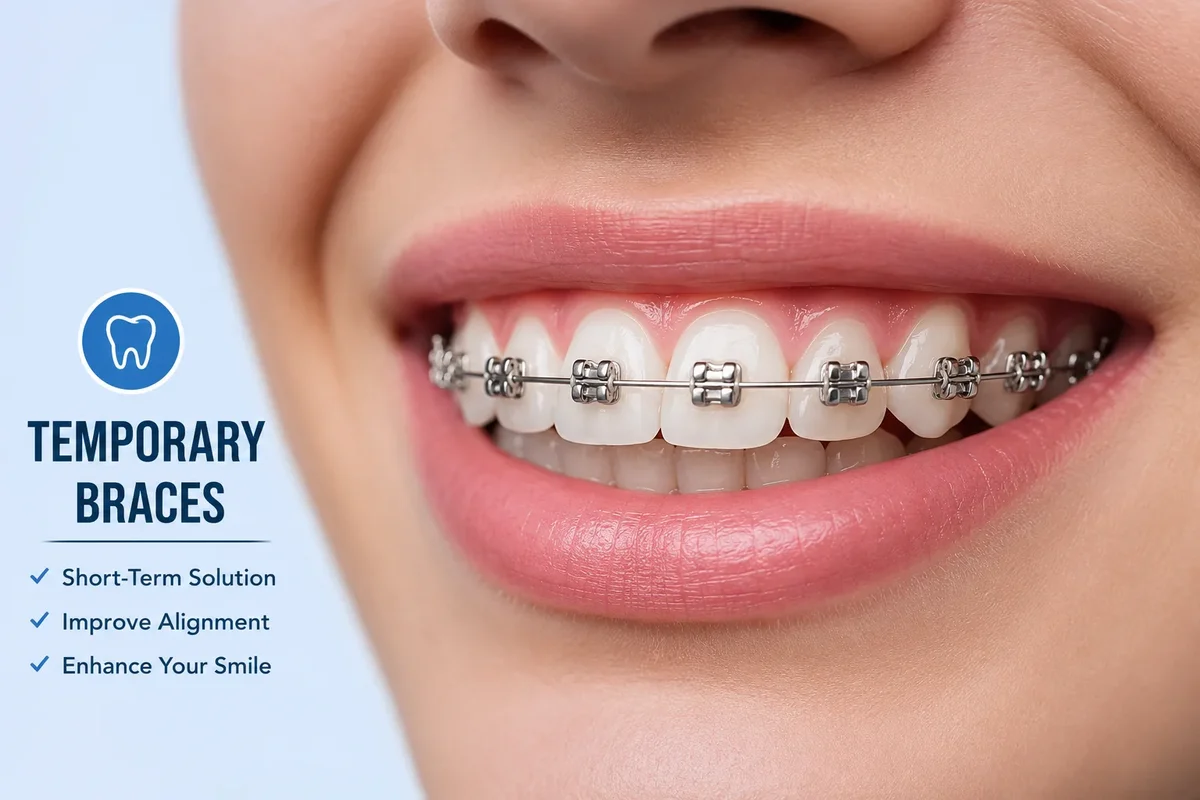
How to Choose the Right Dental Clinic for Temporary Braces
Choosing the right dental clinic for temporary braces is one of the most important decisions patients make during their orthodontic journey. Even though temporary braces are often used for shorter treatment periods and milder alignment problems, the quality of care still has a major impact on comfort, safety, treatment speed, and long-term results. A skilled orthodontic team can help patients achieve a healthier, more attractive smile while minimizing complications and unnecessary expenses. 😊
Temporary braces involve controlled tooth movement, careful orthodontic planning, and ongoing monitoring. Because of this, patients should always seek treatment from qualified dental professionals who have experience with orthodontic procedures and modern dental technology.
Why Professional Experience Matters
Orthodontic treatment is both a science and an art. Even temporary braces require precise planning to ensure the teeth move safely and correctly. Poorly planned orthodontic treatment may lead to gum recession, bite problems, unstable results, or tooth root damage.
Experienced Orthodontists Understand Tooth Movement
Qualified orthodontists understand how the teeth, gums, jawbone, and bite function together during treatment. They carefully evaluate:
- Tooth alignment
- Bite relationships
- Jaw structure
- Bone support
- Gum health
- Facial balance
This comprehensive evaluation helps determine whether temporary braces are appropriate and how the treatment should be designed.
Better Planning Creates Better Results
Experienced professionals can often predict potential challenges before treatment begins. Proper planning reduces the risk of delays, discomfort, and orthodontic complications during temporary braces treatment.
Patients should feel comfortable asking about the orthodontist’s education, certifications, and experience with temporary braces cases.
Check the Clinic’s Technology and Equipment
Modern dental technology can significantly improve the accuracy and comfort of temporary braces treatment. Advanced imaging systems allow orthodontists to diagnose alignment issues more precisely and create customized treatment plans.
Digital Scanning Technology
Many advanced clinics use digital intraoral scanners instead of traditional dental impressions. Digital scans provide highly accurate 3D models of the teeth and bite.
Benefits of digital scanning for temporary braces include:
- Improved treatment accuracy
- Better patient comfort
- Faster planning
- Detailed progress tracking
- Enhanced orthodontic precision
Digital systems also allow patients to visualize potential smile improvements before treatment begins.
Modern Imaging and Diagnostics
Clinics offering temporary braces should ideally use modern X-ray and imaging technology to evaluate bone levels, root positions, and jaw relationships safely.
Accurate diagnostics help protect long-term oral health during orthodontic treatment.
Review Before-and-After Cases
One of the best ways to evaluate a dental clinic is by reviewing before-and-after photos of previous temporary braces patients.
Real Patient Results
Before-and-after images demonstrate the orthodontist’s ability to achieve natural and balanced smile improvements. Patients should look for:
- Improved alignment 😁
- Natural tooth positioning
- Healthy gum appearance
- Balanced bite correction
- Consistent treatment quality
Strong clinical results often indicate careful planning and professional expertise.
Ask About Similar Cases
Patients with mild spacing, crowding, or orthodontic relapse may benefit from asking whether the clinic has treated similar temporary braces cases successfully.
Seeing examples of similar smile corrections can help build confidence before treatment begins.
Read Patient Reviews and Testimonials
Online patient reviews provide valuable insight into the overall treatment experience at a dental clinic. Reviews often reveal information about communication, professionalism, appointment scheduling, comfort, and treatment satisfaction.
What to Look for in Reviews
Positive temporary braces reviews often mention:
- Friendly staff
- Clear communication
- Comfortable environment
- Professional orthodontic care
- Visible treatment improvements
- Reasonable pricing
Consistently positive patient experiences are usually a strong indicator of quality care.
Be Cautious of Unrealistic Promises
Patients should be careful of clinics promising instant or unrealistic temporary braces results. Safe orthodontic movement requires time and professional monitoring.
Trustworthy clinics explain both the benefits and limitations of temporary braces honestly.
Understand the Full Treatment Plan
Before beginning temporary braces treatment, patients should receive a detailed explanation of the proposed treatment plan.
Important Questions to Ask
- How long will temporary braces treatment last?
- What type of braces will be used?
- How many appointments are required?
- What are the total treatment costs?
- Will retainers be needed afterward?
- What happens if complications occur?
Clear communication helps patients understand what to expect throughout the orthodontic process.
Transparency About Costs
Professional clinics provide transparent pricing for temporary braces and explain all associated costs in advance.
This may include:
- Initial consultation fees
- X-rays and digital scans
- Adjustment appointments
- Retainers
- Emergency repairs
- Follow-up visits
Financial clarity helps patients avoid unexpected expenses during treatment.
Evaluate Hygiene and Safety Standards
Cleanliness and infection control are extremely important in any dental clinic offering temporary braces treatment.
Modern Sterilization Procedures
Clinics should follow strict sterilization protocols for all instruments and orthodontic equipment. Patients should feel comfortable observing:
- Clean treatment rooms
- Protective gloves and masks
- Proper instrument packaging
- Modern sterilization systems
Strong hygiene standards help protect patient safety throughout temporary braces treatment.
Professional Environment
A well-organized and professional clinic environment often reflects attention to detail and quality patient care.
Friendly staff and organized appointment systems also improve the overall orthodontic experience.
Consider Communication and Patient Support
Orthodontic treatment may involve questions, adjustments, and occasional concerns. Choosing a clinic with strong patient communication is very important.
Clear Instructions Matter
Patients wearing temporary braces need detailed guidance about:
- Oral hygiene routines
- Foods to avoid
- Managing discomfort
- Retainer care
- Emergency situations
Good communication helps patients feel confident and supported throughout treatment.
Emergency Availability
Patients should also ask how the clinic handles orthodontic emergencies such as broken brackets or painful wire irritation.
Responsive patient support can prevent complications and reduce unnecessary stress.
Why Personalized Care Is Essential
Every smile is different. The best temporary braces treatment plans are customized based on the patient’s oral health, cosmetic goals, bite condition, and lifestyle.
Avoid One-Size-Fits-All Approaches
Professional orthodontists carefully personalize temporary braces treatment instead of applying identical methods to every patient.
Customized treatment planning often produces:
- More natural smile results
- Better bite balance
- Improved comfort
- Reduced treatment risks
- Higher patient satisfaction
Patients deserve individualized orthodontic care designed specifically for their needs.
The Importance of Long-Term Follow-Up
Even after temporary braces are removed, follow-up care remains important for maintaining results.
Retainers and Monitoring
Orthodontists typically provide retainers after temporary braces treatment to prevent teeth from shifting back.
Clinics offering long-term follow-up support often help patients maintain their smile improvements more successfully.
Patients seeking additional orthodontic guidance can visit the American Dental Association for trusted oral health information.
If you are considering temporary braces and want professional orthodontic support, you can contact an experienced dental team through the Redent Klinik Contact Page. A personalized consultation can help you choose the safest and most effective temporary braces treatment plan for your smile goals and oral health needs. ✨
Overall, selecting the right clinic for temporary braces involves much more than comparing prices alone. Professional experience, advanced technology, strong communication, personalized care, and long-term patient support all play essential roles in achieving healthy, attractive, and stable orthodontic results.
Disclosure: this page may contain affiliate links. We may earn a commission if you use them, at no extra cost to you.