
Top Advancements in Today’s Dentistry You Should Know
In recent years, today’s dentistry has witnessed revolutionary breakthroughs that have completely transformed oral health care. With the rise of technology and patient-centered care, both patients and dental professionals are benefiting from more precise, faster, and pain-free treatments. From digital imaging to laser dentistry, these advancements offer incredible value to anyone seeking a healthier, more confident smile. 🦷✨
One of the most remarkable innovations in today’s dentistry is cone beam computed tomography (CBCT). This 3D imaging technology allows dentists to visualize dental structures, nerve paths, and bone with far greater detail than traditional x-rays. It plays a crucial role in procedures such as dental implants, root canals, and orthodontic planning.
Another technological leap includes CAD/CAM systems—Computer-Aided Design and Computer-Aided Manufacturing. These systems make it possible to create crowns, veneers, and bridges on the same day. Patients no longer need to wait for days or weeks while their restorations are prepared in an external lab. Instead, dentists can digitally scan a patient’s teeth, design the restoration, and mill it in-office, often in less than two hours. 🖥️🦷
In addition, laser dentistry has become an essential part of today’s dentistry. Lasers can be used for soft tissue procedures like gum reshaping or frenectomies, as well as for hard tissue treatments such as cavity removal. The benefits include minimal bleeding, faster healing, and reduced need for anesthesia.
One of the most patient-loved innovations is the introduction of invisible aligners. Gone are the days when metal braces were the only solution. Brands like Invisalign have made teeth straightening a discreet and convenient process. These aligners are custom-made, removable, and nearly invisible, aligning with the aesthetic values of modern dental care.
In terms of diagnostics, intraoral scanners have become a staple in many clinics. These devices capture high-resolution 3D images of the mouth and eliminate the discomfort of traditional molds. They’re fast, accurate, and eco-friendly, making them a cornerstone in today’s dentistry.
Moreover, the rise of teledentistry—virtual dental consultations and follow-ups—has made dental care more accessible. This technology allows patients to consult with their dentists remotely, saving time and increasing convenience for busy or mobility-limited individuals.
For those seeking more information on standards and guidelines, the American Dental Association offers extensive resources on best practices in modern dentistry.
If you’re considering a dental visit or consultation, it’s essential to choose a clinic that embraces these modern advancements. You can explore options and contact professionals directly through our Redent Klinik Contact Page.
In summary, the innovations of today’s dentistry aren’t just about technology—they’re about improving outcomes, enhancing comfort, and delivering personalized care. From AI-assisted diagnostics to real-time imaging, the future is already here, and it’s bright. 😁
Top Advancements in Today’s Dentistry You Should Know
In recent years, today’s dentistry has witnessed revolutionary breakthroughs that have completely transformed oral health care. With the rise of technology and patient-centered care, both patients and dental professionals are benefiting from more precise, faster, and pain-free treatments. From digital imaging to laser dentistry, these advancements offer incredible value to anyone seeking a healthier, more confident smile. 🦷✨
One of the most remarkable innovations in today’s dentistry is cone beam computed tomography (CBCT). This 3D imaging technology allows dentists to visualize dental structures, nerve paths, and bone with far greater detail than traditional x-rays. It plays a crucial role in procedures such as dental implants, root canals, and orthodontic planning.
Another technological leap includes CAD/CAM systems—Computer-Aided Design and Computer-Aided Manufacturing. These systems make it possible to create crowns, veneers, and bridges on the same day. Patients no longer need to wait for days or weeks while their restorations are prepared in an external lab. Instead, dentists can digitally scan a patient’s teeth, design the restoration, and mill it in-office, often in less than two hours. 🖥️🦷
In addition, laser dentistry has become an essential part of today’s dentistry. Lasers can be used for soft tissue procedures like gum reshaping or frenectomies, as well as for hard tissue treatments such as cavity removal. The benefits include minimal bleeding, faster healing, and reduced need for anesthesia.
One of the most patient-loved innovations is the introduction of invisible aligners. Gone are the days when metal braces were the only solution. Brands like Invisalign have made teeth straightening a discreet and convenient process. These aligners are custom-made, removable, and nearly invisible, aligning with the aesthetic values of modern dental care.
In terms of diagnostics, intraoral scanners have become a staple in many clinics. These devices capture high-resolution 3D images of the mouth and eliminate the discomfort of traditional molds. They’re fast, accurate, and eco-friendly, making them a cornerstone in today’s dentistry.
Moreover, the rise of teledentistry—virtual dental consultations and follow-ups—has made dental care more accessible. This technology allows patients to consult with their dentists remotely, saving time and increasing convenience for busy or mobility-limited individuals.
For those seeking more information on standards and guidelines, the American Dental Association offers extensive resources on best practices in modern dentistry.
If you’re considering a dental visit or consultation, it’s essential to choose a clinic that embraces these modern advancements. You can explore options and contact professionals directly through our Redent Klinik Contact Page.
In summary, the innovations of today’s dentistry aren’t just about technology—they’re about improving outcomes, enhancing comfort, and delivering personalized care. From AI-assisted diagnostics to real-time imaging, the future is already here, and it’s bright. 😁
How Digital Dentistry Is Transforming Patient Experience
In today’s dentistry, one of the most transformative developments is the integration of digital technologies that enhance both the clinical process and patient satisfaction. Gone are the days of goopy impressions, long wait times, and multiple clinic visits. Instead, patients now enjoy a streamlined, accurate, and more comfortable experience thanks to innovations like digital scans, 3D modeling, and AI-powered diagnostics. 😌🦷
Digital dentistry begins with intraoral scanners that replace traditional impression materials. These scanners create a highly accurate 3D image of a patient’s teeth and gums in real-time. Not only does this reduce discomfort, but it also enhances the precision of crowns, veneers, and aligners—reducing the need for adjustments or remakes. It’s a perfect example of how today’s dentistry puts the patient first.
Another significant improvement is the rise of digital treatment planning. With sophisticated dental software, dentists can now simulate procedures such as orthodontic movements or implant placements. Patients can visualize their treatment outcomes before committing, making them more confident and engaged in their oral care journey.
AI-based diagnostics are also playing a growing role in today’s dentistry. By analyzing x-rays and CBCT scans, AI can detect early signs of cavities, bone loss, or infections that the human eye might miss. This leads to quicker interventions and better long-term outcomes.
Digital technology doesn’t stop at the clinical chair. Appointment booking, treatment reminders, and post-operative instructions are now commonly delivered through mobile apps or email. Patients appreciate the ease of scheduling, the ability to ask questions via chat, and receiving treatment plans digitally—all of which elevate the care experience. 📱📧
Let’s not forget about same-day dentistry, made possible by digital design and in-house milling systems. Crowns, inlays, and even dentures can now be crafted and fitted in a single visit, saving patients both time and inconvenience. This is especially useful for busy professionals and elderly patients with mobility issues.
Moreover, clinics like ours that implement digital systems often receive higher patient satisfaction ratings. Technologies reduce errors, increase transparency, and offer a more customized approach. Patients are no longer passive participants—they become active partners in their treatment journey through visuals, simulations, and digital reports.
For those who value efficiency, accuracy, and comfort, today’s dentistry through digital tools is a game-changer. If you’re looking to experience this firsthand, we invite you to get in touch through our Redent Klinik Contact Page to book a consultation.
Lastly, it’s important to recognize that digital advancements align with global best practices. The American Dental Association continues to support research and innovation in the digital realm, ensuring quality and safety across all practices embracing today’s dentistry.
In summary, digital tools have redefined what it means to visit the dentist. With enhanced comfort, accuracy, and speed, today’s dentistry sets a new standard in personalized care. Whether it’s through AI, 3D imaging, or mobile app integration, the patient experience has never been better. 🎉
The Role of Cosmetic Procedures in Today’s Dentistry
Cosmetic dentistry is no longer considered a luxury—it’s an essential part of today’s dentistry. As people place more importance on appearance, smile aesthetics have become a top priority. From teeth whitening to full smile makeovers, cosmetic dental procedures play a vital role in boosting confidence and overall well-being. 😁💫
The most sought-after procedure in today’s dentistry is undoubtedly teeth whitening. With both in-office and take-home options, patients can achieve visibly whiter teeth in just a single session. These treatments are safe, effective, and much more affordable than they used to be. On average, professional whitening sessions cost between $300 and $800, depending on location and method.
Another game-changer in cosmetic dental care is the use of porcelain veneers. These ultra-thin shells are custom-crafted to cover imperfections like chipped, discolored, or uneven teeth. Veneers provide a dramatic improvement and are often used in celebrity smile transformations. In today’s dentistry, the precision and speed of digital design allow dentists to create veneers that fit flawlessly and look natural.
Dental bonding is also a popular and cost-effective cosmetic treatment. Using composite resin, dentists can repair small chips, gaps, or discoloration in a single visit. This minimally invasive procedure aligns perfectly with the philosophy of today’s dentistry: quick, effective, and patient-friendly.
For patients with more severe aesthetic concerns, smile design has emerged as a holistic cosmetic solution. It involves a comprehensive evaluation of the patient’s facial features, lips, gums, and teeth to develop a digitally guided treatment plan. Smile design may include veneers, whitening, orthodontics, and gum contouring—all customized for the most flattering result. 📷🦷
Cosmetic procedures are not just about looks. Many also improve function. For example, dental implants replace missing teeth while enhancing bite strength and jaw stability. They’re considered both restorative and cosmetic and are a central component of today’s dentistry.
In addition, gum reshaping (also known as gum contouring) is used to correct uneven gum lines or excessive gum visibility. With the use of soft tissue lasers, dentists can now perform this treatment with minimal discomfort and recovery time. This procedure enhances symmetry and highlights the natural beauty of the teeth.
If you’re wondering which cosmetic procedure suits your smile, it’s best to start with a personalized assessment. Reach out to our professionals via the Redent Klinik Contact Page for a tailored consultation. We combine aesthetics and function to deliver stunning, long-lasting results.
For patients researching quality standards and procedures, the American Dental Association offers reliable resources and guidance on cosmetic treatments in today’s dentistry.
Ultimately, cosmetic procedures have become an integral part of today’s dentistry. Whether it’s a subtle touch-up or a complete transformation, these treatments enhance not only smiles but also self-esteem. And thanks to technology, they’re more accessible than ever. 🌟
Preventive Care in Modern Dental Practice
At the heart of today’s dentistry lies a proactive approach—preventive care. Instead of waiting for dental issues to arise, modern dental practices focus on identifying and addressing potential problems before they become serious. This shift from reactive to preventive care improves long-term oral health and reduces the need for invasive and costly treatments. 🛡️🦷
Preventive care starts with the basics: regular dental checkups. Most experts recommend visiting the dentist every six months. These routine appointments allow dentists to detect early signs of decay, gum disease, or other oral health issues. In today’s dentistry, these exams often include high-tech tools like digital x-rays and intraoral cameras for better accuracy and early detection.
Dental cleanings are another cornerstone of prevention. Even with diligent brushing and flossing, plaque and tartar can build up in hard-to-reach areas. Professional cleanings remove these deposits, reducing the risk of cavities, gum inflammation, and bad breath. Cleanings have evolved in today’s dentistry to include ultrasonic scalers and fluoride varnishes, making the process more effective and comfortable than ever.
One significant advancement in preventive care is the use of sealants, especially in children and teens. Sealants are thin, protective coatings applied to the chewing surfaces of molars to prevent decay. This technique, now common in today’s dentistry, is simple, painless, and highly effective in reducing the risk of cavities in young patients.
Preventive care also includes personalized oral hygiene education. Dentists and hygienists now take the time to assess patients’ brushing and flossing techniques, dietary habits, and even lifestyle factors such as smoking or bruxism (teeth grinding). Customized advice and recommendations help patients maintain optimal oral health between visits.
Thanks to digital tools, many clinics use risk assessment models to predict future dental problems. These models analyze past dental history, genetic predispositions, and oral hygiene behaviors. In today’s dentistry, data-driven prevention helps patients take control of their dental future.
Another component of modern preventive care is the use of salivary diagnostics. Saliva can be tested to detect bacteria levels, hormonal imbalances, and early signs of disease. This non-invasive method is gaining popularity in progressive dental offices and reflects the innovation within today’s dentistry.
Preventive care isn’t just for adults—children benefit immensely from early intervention. Pediatric dentists focus on monitoring jaw development, eruption patterns, and cavity prevention. Educating parents about healthy habits from a young age lays the foundation for a lifetime of strong, healthy teeth.
If you’re due for a preventive visit or want to learn how to protect your teeth, contact us through the Redent Klinik Contact Page. Our clinic uses modern diagnostic and cleaning tools to ensure your smile stays beautiful and healthy.
For further information about preventive guidelines and standards in today’s dentistry, you can visit the American Dental Association. Their resources cover fluoride use, sealant effectiveness, and home-care best practices.
In conclusion, prevention is no longer optional—it’s the foundation of today’s dentistry. By emphasizing education, early detection, and modern tools, preventive care empowers patients to take charge of their oral health. 🧼🪥
Minimally Invasive Treatments Gaining Popularity
One of the hallmarks of today’s dentistry is the emphasis on minimally invasive treatments. Patients now prefer procedures that are quicker, less painful, and require minimal downtime. Thanks to modern tools and techniques, dentists can preserve more natural tooth structure, accelerate recovery, and improve overall comfort. This shift is redefining the patient experience in dental care. 🦷💡
Among the most popular minimally invasive solutions is air abrasion. This technique uses a fine stream of particles to gently remove decay, eliminating the need for traditional drilling in some cases. Air abrasion is quieter, less intimidating, and ideal for patients with dental anxiety. It reflects the patient-friendly nature of today’s dentistry.
Another common procedure is resin infiltration (Icon treatment), used to halt the progression of early-stage cavities without drilling. The material penetrates porous enamel and strengthens it from within. This approach preserves natural tissue and is entirely pain-free—highlighting the conservative approach of modern dental care.
Laser dentistry is a game-changer when it comes to minimally invasive soft tissue procedures. From treating gum disease to removing oral lesions, lasers offer unparalleled precision and cause minimal bleeding. Healing times are significantly faster, and sutures are often unnecessary. In today’s dentistry, lasers are also used for teeth whitening and cavity removal, providing a gentler alternative to conventional tools.
Microdentistry, another buzzword in today’s dentistry, refers to the use of microscopic magnification and ultra-small instruments to perform highly precise procedures. This technique is particularly useful in root canals, cavity fillings, and gum surgeries where preserving as much natural tissue as possible is vital.
Even orthodontic treatments have embraced the minimally invasive trend. Clear aligners like Invisalign apply controlled pressure to move teeth gradually without the discomfort and appearance of metal braces. With digital planning, patients see their predicted outcomes before beginning, and the aligners can be removed for eating and cleaning, making the entire experience far more manageable.
In the realm of surgery, flapless implant placement has gained traction. With the help of CBCT scans and guided surgical templates, dental implants can now be placed without making large incisions in the gums. This reduces trauma, pain, and recovery time. It’s a powerful example of how today’s dentistry focuses on efficiency and patient well-being.
Another breakthrough is the use of ozone therapy to disinfect and treat early-stage decay, gum infections, and post-surgical wounds. Ozone gas kills bacteria without harming surrounding tissues, making it an excellent adjunctive tool in preventive and restorative care.
If you’re seeking gentle yet effective dental solutions, our clinic offers a full suite of modern, conservative treatments. Schedule your personalized consultation via the Redent Klinik Contact Page and explore options that prioritize your comfort and long-term oral health.
Want to know which of these innovations are endorsed globally? The American Dental Association frequently updates its guidelines and research on minimally invasive dental care, supporting the shift seen in today’s dentistry.
To conclude, minimally invasive methods are not just trends—they’re becoming the gold standard. Patients now expect shorter appointments, fewer complications, and better results. Today’s dentistry meets these demands through technology, expertise, and a focus on preserving what nature has already provided. 🛠️🦷
Today’s Dentistry and Its Focus on Patient Comfort
Gone are the days when a dental visit meant anxiety, discomfort, and long waiting times. Today’s dentistry has shifted focus toward patient comfort, recognizing that emotional and physical ease are as important as clinical outcomes. From the moment patients walk through the door, modern dental practices prioritize reducing stress, pain, and uncertainty at every step. 🛋️😌
One of the primary ways today’s dentistry enhances comfort is through pain management innovations. Advanced local anesthetics, topical gels, and needle-free delivery systems are commonly used to minimize or eliminate pain during procedures. In addition, sedation dentistry has become more accessible, with options like nitrous oxide (laughing gas), oral sedation, or IV sedation available for anxious patients or complex treatments.
Another major comfort improvement is the use of noise-free equipment. Many patients dread the high-pitched whine of traditional drills. Modern clinics now use quiet electric handpieces or laser devices that significantly reduce noise levels, creating a more relaxed environment.
Ergonomic dental chairs have also been redesigned for optimal body support, allowing patients to recline comfortably throughout their visit. Some clinics even offer heated seats, massage features, or entertainment systems like ceiling-mounted TVs or virtual reality headsets—bringing comfort in today’s dentistry to a new level. 🎧📺
Furthermore, digital workflows reduce the time patients spend in the chair. Procedures that once required multiple visits can now be completed in a single session thanks to CAD/CAM technology, 3D printing, and guided surgical planning. Shorter appointments mean less fatigue and faster recovery, both of which contribute to a more pleasant experience.
Communication and transparency are also central to patient comfort. Dentists now use digital tools like intraoral cameras to show patients exactly what’s happening in their mouths. By being informed and involved, patients feel more at ease and in control of their care.
Let’s not forget the impact of clinic ambiance. Today’s dentistry recognizes that the design of a dental office affects mood. Soft lighting, calming colors, scented diffusers, and relaxing background music are commonly used to create a spa-like atmosphere. Patients feel welcomed, not intimidated.
Emotional comfort is also addressed through compassionate care. Dentists and staff are trained to use reassuring language, provide gentle touch, and respond empathetically to concerns. This patient-first approach is a signature element of modern dental practices.
At our clinic, we go the extra mile to ensure each patient feels relaxed and respected. Whether you’re visiting for a routine checkup or a complex procedure, comfort is our top priority. Reach out to us via the Redent Klinik Contact Page to schedule a stress-free consultation tailored to your needs.
To learn more about standards of care that prioritize patient comfort, the American Dental Association provides excellent guidelines that align with the values of today’s dentistry.
In conclusion, comfort is no longer an afterthought—it’s a core part of the dental experience. Today’s dentistry merges technology, empathy, and design to create a safe and soothing environment where patients can relax and receive top-tier care. 🧘♀️🦷
The Impact of AI and 3D Printing in Dental Care
Two of the most disruptive technologies in today’s dentistry are artificial intelligence (AI) and 3D printing. Together, they are redefining how dental professionals diagnose, plan, and deliver treatment. These tools bring speed, precision, and personalization to levels previously unimaginable—transforming both the dental practice and the patient experience. 🤖🖨️
AI in dentistry primarily enhances diagnostics. With machine learning algorithms, AI systems can analyze thousands of radiographs and CBCT scans to detect cavities, bone loss, root fractures, and other anomalies with remarkable accuracy. These tools assist dentists in making faster, more informed decisions—boosting the reliability and efficiency of today’s dentistry.
AI also plays a role in predictive modeling. By analyzing patient history, genetics, lifestyle habits, and past treatment outcomes, AI can forecast future dental issues. This data-driven approach allows dentists to intervene early and customize treatment plans. Such personalization is central to the ethos of modern dental care.
When it comes to 3D printing, its applications in today’s dentistry are vast. Dental professionals now print crowns, bridges, dentures, night guards, and even surgical guides right in the office. This reduces turnaround time from weeks to hours, making same-day restorations a reality for many patients. ⏱️🦷
For example, instead of sending an impression to an external lab, a dentist can digitally scan a tooth and immediately print a custom-fit crown using biocompatible resin. The result? High precision, reduced human error, and dramatically improved patient satisfaction.
Orthodontics is another area benefiting greatly from 3D printing. Clear aligners, such as Invisalign, are produced using 3D printing technologies that ensure each tray fits perfectly and applies the correct force to move teeth. The accuracy and flexibility offered by this process align perfectly with the goals of today’s dentistry.
Additionally, 3D-printed surgical guides allow for exact placement of dental implants. These guides ensure implants are positioned with the optimal angle and depth, improving long-term stability and aesthetics. This level of precision is a significant advancement over traditional freehand techniques.
Another promising development is the use of bioprinting, a subcategory of 3D printing. Though still in the research phase, bioprinting may one day allow dentists to print tissues, such as gums or even tooth structures. This futuristic vision underscores how deeply today’s dentistry is intertwined with cutting-edge science.
If you’re curious about how these technologies might benefit your dental care, we invite you to get in touch via our Redent Klinik Contact Page. Our team is equipped with the latest innovations to provide fast, personalized, and comfortable solutions.
The American Dental Association continues to support the ethical and clinical integration of AI and 3D printing into mainstream dental care, offering guidelines that reflect the changing landscape of today’s dentistry.
In summary, AI and 3D printing are not just buzzwords—they are active, impactful forces driving efficiency and precision in today’s dentistry. These technologies improve diagnostics, accelerate workflows, and elevate the overall quality of care for patients worldwide. 🔍🖨️
Affordable Options and Insurance Coverage in Modern Dentistry
One of the biggest shifts in today’s dentistry is the growing accessibility of high-quality dental care. Advances in technology have not only improved clinical outcomes—they’ve also made treatments more cost-effective. Whether it’s through insurance coverage, dental savings plans, or low-cost alternatives, modern dentistry is no longer out of reach for the average patient. 💸🦷
Many dental clinics now offer flexible payment plans to accommodate different financial situations. These plans allow patients to break down the cost of treatments like implants, crowns, or orthodontics into manageable monthly payments. In today’s dentistry, financial transparency is emphasized, with clear estimates provided before any procedure begins.
Dental insurance remains one of the most common ways patients manage oral health expenses. Most plans cover preventive services like cleanings and exams at 100%, and restorative procedures such as fillings or extractions at 70–80%. More advanced treatments—like implants or cosmetic dentistry—may be partially covered or excluded, depending on the plan. It’s important to consult with your provider or clinic’s billing specialist to understand your benefits.
For patients without traditional insurance, dental discount plans offer a practical alternative. These plans provide reduced fees for a wide range of procedures in exchange for an annual membership fee. In today’s dentistry, many clinics accept these discount cards, making it easier for patients to afford the care they need.
Community dental programs and nonprofit clinics are another valuable resource. Many of these initiatives are supported by universities, public health departments, or dental associations. They offer basic dental services at a reduced cost or even for free to underserved populations. These programs demonstrate how today’s dentistry is working to close the accessibility gap.
Patients can also take advantage of cost-saving technologies. For instance, same-day crowns produced in-house via CAD/CAM eliminate lab fees and reduce the need for multiple visits, which cuts down costs overall. Similarly, teledentistry saves patients time and money by allowing virtual consultations before committing to in-person treatments.
Some clinics—including ours—offer in-house dental membership programs. These typically include free exams, x-rays, and discounted services in exchange for a fixed yearly fee. Such plans are ideal for individuals or families who want affordable care without dealing with insurance restrictions. You can learn more or join our plan via the Redent Klinik Contact Page.
When exploring affordability, don’t forget to research tax-saving options. Health Savings Accounts (HSAs) and Flexible Spending Accounts (FSAs) can be used to pay for qualified dental expenses using pre-tax dollars, making treatments even more economical.
For a comprehensive breakdown of what dental procedures are typically covered under insurance, visit the American Dental Association. Their site offers up-to-date information to help patients make informed financial decisions in today’s dentistry.
In conclusion, today’s dentistry embraces affordability through innovation, transparency, and inclusivity. With multiple financing avenues and technology that reduces costs, more people than ever can access the care they deserve—without compromising quality. 💼🪥
How to Choose the Right Dental Clinic in Today’s Era
With so many practices adopting modern techniques and technologies, selecting the right provider can be overwhelming. In today’s dentistry, patients aren’t just looking for someone to “fix a tooth”—they’re seeking a personalized, transparent, and technologically advanced experience. Here’s how to make a smart, confident choice when choosing a dental clinic. 🏥🦷
First and foremost, evaluate whether the clinic offers the latest tools and technologies. Digital x-rays, intraoral scanners, same-day crowns, and AI-assisted diagnostics are key indicators that a clinic embraces the standards of today’s dentistry. Modern equipment means faster, more comfortable, and more precise treatments.
Reputation and reviews are another crucial factor. Search for clinics with consistent positive feedback across platforms like Google, Yelp, and Healthgrades. Patient testimonials that highlight comfort, transparency, and successful outcomes are especially valuable. A strong online presence often reflects the professionalism and communication style of the practice.
Next, look into the qualifications and continuing education of the dental team. In today’s dentistry, ongoing training is essential. Dentists and hygienists who regularly attend seminars and certifications stay updated on techniques, materials, and best practices—ultimately benefiting your oral health.
Location and accessibility matter too. Choose a clinic that is conveniently located and offers flexible scheduling options. Clinics that provide online appointment booking, reminders, and teleconsultations are aligned with the digital convenience expected in today’s dentistry.
Transparency in pricing is another major consideration. Reputable clinics will provide written treatment plans, explain all associated costs upfront, and help you understand what’s covered by insurance or dental plans. Many clinics also offer in-house financing or discount programs—reflecting the affordability focus of modern dental care.
Don’t underestimate the importance of communication and empathy. A good dental team takes time to explain diagnoses, treatment options, and post-care instructions clearly and kindly. Comfort, emotional support, and a personalized approach are key components of today’s dentistry.
Facility hygiene and safety protocols also matter more than ever. Look for clinics that adhere to updated sterilization practices, wear proper PPE, and maintain a visibly clean and organized environment. These practices indicate professionalism and commitment to patient safety.
If you’re in search of a clinic that embodies these qualities, feel free to connect with us through the Redent Klinik Contact Page. We offer modern technology, flexible payment options, and a warm, multilingual team dedicated to your oral health and comfort.
For national guidelines on what to expect from a high-standard dental clinic, consult resources from the American Dental Association. Their patient care checklists can help you evaluate any practice through the lens of today’s dentistry.
To sum up, choosing the right dental clinic in the era of today’s dentistry means looking beyond basic services. Focus on technology, patient experience, transparency, and continuous innovation to ensure your smile gets the care it truly deserves. 😁✅
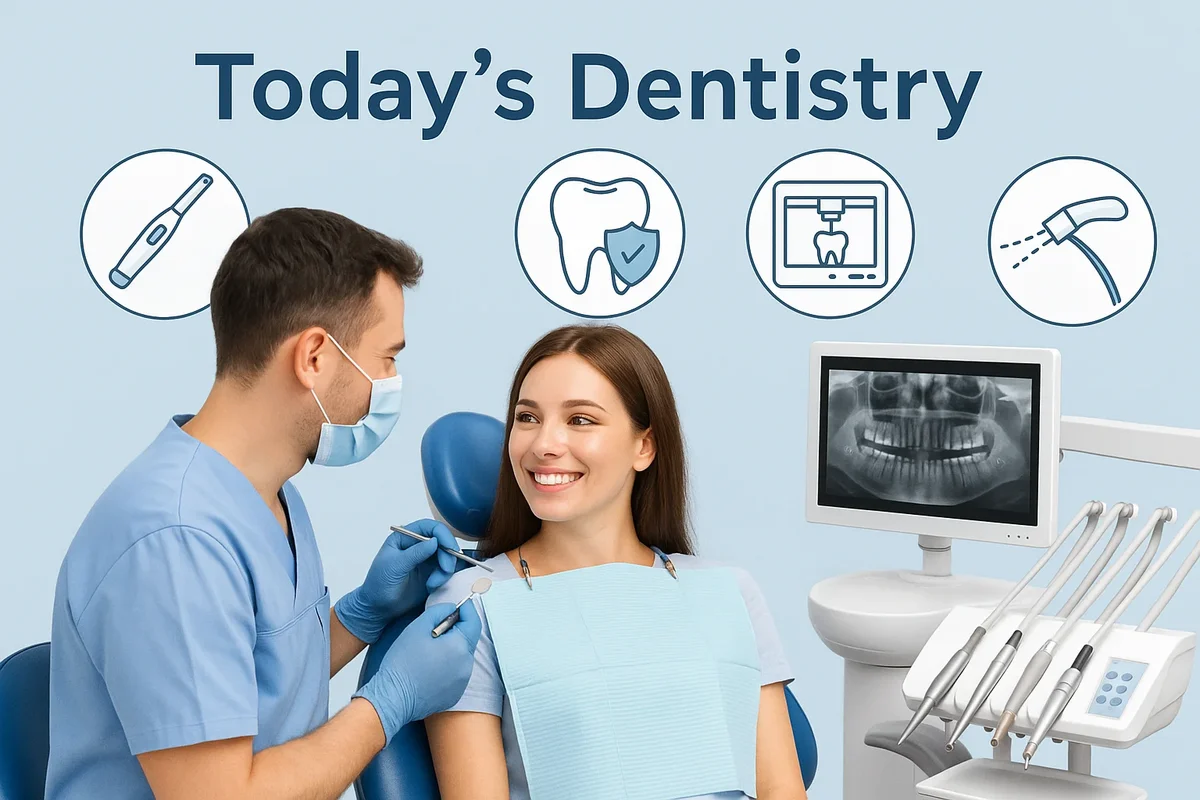
Future Trends Shaping the Next Generation of Dentistry
As innovation continues to accelerate, the future of today’s dentistry looks brighter than ever. Emerging technologies and evolving patient expectations are reshaping how dental care is delivered, making it faster, more personalized, and even predictive. Let’s explore the trends that are set to define the next chapter in modern oral healthcare. 🚀🦷
One of the most exciting developments in today’s dentistry is the rise of AI-powered diagnostics and decision-making. Artificial intelligence will soon go beyond detecting cavities—it will help identify genetic predispositions, forecast disease progression, and personalize treatment plans in real time. Dentists will act more like data interpreters, guiding patients with advanced insights.
Regenerative dentistry is another frontier. Stem cell research is making it possible to regenerate damaged pulp tissue or even grow entire tooth structures in the lab. Though still experimental, these breakthroughs promise a future where tooth loss is no longer permanent. The idea of “bio-tooth” replacements may become a routine part of tomorrow’s version of today’s dentistry.
Expect big changes in robot-assisted dentistry as well. Surgical robots are already assisting with implant placements and root canals in some practices. With further development, robots could handle routine tasks with extreme precision, freeing up dentists for more complex and human-centered care.
Another powerful trend is the integration of genomics in dental care. By analyzing a patient’s DNA, dentists can tailor preventive strategies to address risks for gum disease, enamel weakness, or oral cancer. Genomic dentistry enhances personalization, making care safer and more effective—a defining goal of today’s dentistry.
The expansion of teledentistry will continue, with AI chatbots and virtual monitoring tools helping patients manage care from home. This will be especially helpful in remote or underserved communities where access to dentists is limited. Digital impressions, smartphone diagnostics, and virtual aligner tracking will become commonplace.
3D printing will evolve further with the introduction of biocompatible, smart materials that can respond to stimuli—like releasing fluoride when decay begins. Such materials will allow restorations to actively support oral health rather than just restore structure. These innovations are part of what makes today’s dentistry so future-focused.
Another shift will be in eco-conscious dental care. Expect more sustainable materials, recyclable packaging, and water-saving equipment. Green dentistry is gaining attention as both patients and providers seek to reduce environmental impact without compromising care quality.
If you’re interested in experiencing where dentistry is heading, you’re welcome to schedule a futuristic consultation through our Redent Klinik Contact Page. Our clinic embraces forward-thinking tools and strategies to offer next-level care today.
For further reading on global trends and innovations in dental care, the American Dental Association frequently publishes insights and forecasts aligned with the mission of today’s dentistry.
In conclusion, the future of today’s dentistry will be defined by precision, personalization, and prevention. From AI and robotics to tissue regeneration and smart materials, patients can look forward to a dental experience that’s not only more advanced—but also more human-centered. 🧬🦷