
Experiencing a tooth cracked under crown can be both confusing and alarming 😟. Many people assume that once a dental crown is placed, the underlying tooth is fully protected forever. However, the reality is more complex. A tooth cracked under crown is a relatively common dental issue that can develop over time due to various factors such as pressure, decay, or trauma. Understanding what this condition means, why it happens, and what you should do next is essential for protecting your oral health.
A dental crown is designed to act as a protective cap that covers a damaged or weakened tooth. It restores function, improves aesthetics, and shields the tooth from further harm. However, even with a crown in place, the natural tooth structure underneath remains vulnerable. When a tooth cracked under crown occurs, it means that the internal structure of the tooth has developed a fracture despite the external protection. This situation often requires prompt attention to prevent more serious complications.
One of the key reasons a tooth cracked under crown can go unnoticed is because the crown hides the visible signs of damage. Unlike a regular cracked tooth, where you might see a line or feel a sharp edge, a crown conceals the underlying issue. As a result, symptoms may appear gradually and can include sensitivity, discomfort while chewing, or unexplained pain. In some cases, patients may not realize that a tooth cracked under crown exists until the condition worsens.
It is important to understand that a tooth cracked under crown does not necessarily mean the crown itself has failed. In many cases, the crown remains intact while the tooth beneath develops micro-fractures or deeper structural cracks. These cracks can extend into the dentin or even reach the pulp, leading to inflammation or infection. This is why early diagnosis and treatment are crucial.
There are several contributing factors that can lead to a tooth cracked under crown. One of the most common causes is excessive biting force. Habits such as teeth grinding (bruxism) or chewing hard foods can place significant stress on the tooth structure. Over time, this stress can result in a tooth cracked under crown, especially if the tooth was already weakened before the crown was placed.
Another important factor is decay beneath the crown. Even though crowns are designed to seal and protect the tooth, bacteria can sometimes enter through microscopic gaps or poorly fitted margins. This can lead to decay that weakens the tooth internally. As the structure deteriorates, the risk of a tooth cracked under crown increases significantly. Maintaining good oral hygiene and regular dental check-ups is essential to prevent this scenario.
Trauma is also a major cause. A sudden impact, such as a fall or accident, can result in a tooth cracked under crown even if the crown itself appears undamaged. In such cases, the internal tooth structure absorbs the force, leading to cracks that may not be immediately visible. This highlights the importance of seeking dental evaluation after any injury involving the mouth.
Patients often ask whether a tooth cracked under crown can heal on its own. Unfortunately, natural tooth enamel does not regenerate. Once a crack forms, it cannot reverse itself. However, early intervention can prevent the crack from spreading and may allow the tooth to be preserved. Treatment options vary depending on the severity of the crack, ranging from crown replacement to root canal therapy or, in severe cases, extraction.
If you suspect a tooth cracked under crown, it is important to act quickly. Ignoring the problem can lead to complications such as infection, abscess formation, or even tooth loss. Seeking professional care ensures that the issue is properly diagnosed and treated before it escalates. You can easily reach out through the Redent Klinik Contact Page to get expert guidance and timely treatment.
For reliable dental information and guidelines, you can also refer to the American Dental Association, which provides evidence-based resources on oral health and dental care. Staying informed empowers you to make better decisions regarding your dental health.
In summary, a tooth cracked under crown is a hidden but serious condition that requires attention. While crowns offer excellent protection, they are not immune to underlying issues. Recognizing the signs, understanding the causes, and seeking prompt treatment can make a significant difference in preserving your tooth and maintaining a healthy smile 😁.
What Does It Mean When a Tooth Cracked Under Crown?
When patients hear the phrase tooth cracked under crown, it often raises immediate concern 😟. After all, crowns are supposed to protect and strengthen teeth. So how can a tooth cracked under crown even happen? To fully understand this situation, it is important to explore the structure of a crowned tooth, how damage occurs beneath it, and what it truly means for your oral health.
Understanding the Structure of a Crowned Tooth
A dental crown is essentially a custom-made cap that fits over a prepared tooth. It restores shape, strength, and function while protecting the underlying structure. However, even with a crown in place, the natural tooth remains inside. This means the internal tooth is still susceptible to damage. A tooth cracked under crown refers specifically to a fracture that develops within the natural tooth beneath the crown—not the crown itself.
In many cases, the crown remains intact while the underlying tooth structure begins to weaken. This can lead to a tooth cracked under crown scenario where the damage is hidden from view. Because the crown covers the visible surface, the crack may not be immediately noticeable, making early detection more challenging.
Types of Cracks That Can Occur Under a Crown
Not all cracks are the same. A tooth cracked under crown can vary in severity depending on how deep and extensive the fracture is. Understanding these types helps explain why symptoms and treatments differ.
Hairline or Micro Cracks
These are very small fractures that may not cause immediate pain. However, even a minor tooth cracked under crown can worsen over time if left untreated. Repeated pressure from chewing can cause the crack to expand.
Fractures Extending Into the Dentin
When the crack reaches the dentin layer, sensitivity often increases. A tooth cracked under crown at this stage may cause discomfort when eating hot, cold, or sweet foods.
Cracks Reaching the Pulp
This is a more serious condition. A tooth cracked under crown that extends into the pulp can lead to inflammation or infection. At this point, treatment such as root canal therapy is often required.
Why a Tooth Cracked Under Crown Is Difficult to Detect
One of the most challenging aspects of a tooth cracked under crown is that it is often hidden. Unlike visible cracks on natural teeth, the crown masks any external signs. Patients may only notice subtle symptoms such as intermittent pain or pressure sensitivity.
Because of this, many individuals delay seeking treatment, assuming the crown is still functioning properly. However, a tooth cracked under crown can silently progress, leading to more severe damage over time. Dentists often rely on advanced diagnostic tools such as X-rays, bite tests, and sometimes even removing the crown to identify the issue.
Is the Crown or the Tooth the Problem?
It is important to clarify that a tooth cracked under crown does not necessarily mean the crown has failed. In many cases, the crown remains structurally sound. The issue lies within the tooth underneath. However, problems with the crown—such as improper fit or wear—can contribute to a tooth cracked under crown by allowing bacteria to enter or by creating uneven pressure.
This distinction is crucial because treatment approaches differ. If the crown is intact but the tooth is damaged, the focus will be on repairing or treating the tooth. In some cases, the crown may need to be replaced after addressing the underlying issue.
What Happens Inside a Tooth Cracked Under Crown?
When a tooth cracked under crown develops, the internal structure of the tooth becomes compromised. The crack can act as a pathway for bacteria, leading to decay or infection. Additionally, the structural integrity of the tooth weakens, increasing the risk of further fracture.
Over time, a tooth cracked under crown may worsen due to repeated chewing forces. Everyday activities such as eating or grinding your teeth can cause the crack to expand. This is why early intervention is critical to prevent more extensive damage.
Common Misconceptions About a Tooth Cracked Under Crown
There are several myths surrounding this condition. One common belief is that crowns make teeth indestructible. While crowns are highly durable, they do not eliminate the risk of a tooth cracked under crown. Another misconception is that absence of pain means everything is fine. In reality, a tooth cracked under crown can exist without significant symptoms in the early stages.
Some patients also assume that if the crown looks fine, the tooth must be healthy. Unfortunately, this is not always the case. A tooth cracked under crown is often a hidden issue that requires professional evaluation to detect.
Why Early Understanding Matters
Recognizing what a tooth cracked under crown truly means empowers patients to take proactive steps. Early diagnosis can make the difference between saving a tooth and requiring more invasive treatments. Regular dental visits and awareness of subtle symptoms are key.
If you ever suspect a tooth cracked under crown, it is important not to ignore it. Even mild discomfort should be evaluated. Prompt action can prevent complications and preserve your oral health for the long term 😊.
Main Causes of a Tooth Cracked Under Crown
Understanding why a tooth cracked under crown occurs is essential for both prevention and early treatment 🦷. While dental crowns are designed to strengthen and protect damaged teeth, they cannot completely eliminate all risks. A tooth cracked under crown typically develops due to a combination of mechanical stress, biological factors, and long-term wear. Identifying these causes can help patients take proactive steps to avoid further complications.
Excessive Bite Force and Teeth Grinding
One of the most common reasons for a tooth cracked under crown is excessive bite pressure. This often occurs in individuals who grind or clench their teeth, a condition known as bruxism. During grinding, the force applied to the teeth can be several times greater than normal chewing pressure. Over time, this repeated stress can lead to a tooth cracked under crown, especially if the underlying tooth structure is already weakened.
Nighttime Bruxism Risks
Many people are unaware that they grind their teeth at night. This unconscious habit can silently contribute to a tooth cracked under crown without immediate symptoms. Dentists often recommend night guards to reduce the risk.
Hard Food Consumption
Biting down on hard foods such as ice, nuts, or hard candy can also trigger a tooth cracked under crown. Even a single incident can cause a fracture if the force exceeds the tooth’s tolerance.
Underlying Tooth Weakness
Another major factor behind a tooth cracked under crown is the condition of the natural tooth beneath the crown. Crowns are often placed on teeth that have already been compromised by decay, large fillings, or root canal treatments. These teeth are inherently weaker and more prone to fracture.
Over time, even normal chewing forces can lead to a tooth cracked under crown if the internal structure lacks sufficient strength. This is particularly true for teeth that have undergone multiple restorations.
Decay Beneath the Crown
Although crowns are designed to seal and protect teeth, they are not completely immune to bacterial infiltration. If bacteria enter through tiny gaps at the crown margins, they can cause decay underneath. This hidden decay weakens the tooth and significantly increases the risk of a tooth cracked under crown.
Poor Oral Hygiene
Inadequate brushing and flossing can allow plaque buildup around the crown edges. Over time, this can lead to decay and eventually a tooth cracked under crown.
Improper Crown Fit
If a crown does not fit perfectly, it may leave small openings where bacteria can accumulate. This can contribute to the development of a tooth cracked under crown by compromising the tooth structure.
Aging and Material Fatigue
Just like any dental restoration, crowns and teeth are subject to wear over time. Years of chewing, temperature changes, and daily use can weaken both the crown and the underlying tooth. As the tooth structure ages, it becomes more brittle, making a tooth cracked under crown more likely.
Even high-quality crowns have a lifespan. As they age, they may no longer distribute bite forces evenly, increasing the risk of a tooth cracked under crown.
Trauma and Accidental Impact
Physical trauma is another significant cause of a tooth cracked under crown. Accidents such as falls, sports injuries, or sudden impacts to the mouth can create fractures beneath the crown. In many cases, the crown itself may appear undamaged while the internal tooth structure is compromised.
This type of tooth cracked under crown can be particularly dangerous because the damage may not be immediately visible. Patients might only notice symptoms days or weeks later.
Temperature Stress and Microfractures
Frequent exposure to extreme temperature changes—such as consuming very hot and very cold foods in quick succession—can cause expansion and contraction within the tooth. Over time, this can lead to microfractures that develop into a tooth cracked under crown.
These small cracks may initially go unnoticed but can gradually worsen with continued stress, eventually resulting in a more serious tooth cracked under crown condition.
Improper Dental Procedures
In some cases, the way a crown is placed can influence the likelihood of a tooth cracked under crown. If too much tooth structure is removed during preparation, the remaining tooth may be too weak to support normal function.
Additionally, if the bite is not properly adjusted after crown placement, uneven pressure can occur. This imbalance can lead to a tooth cracked under crown over time as certain areas experience excessive force.
Multiple Contributing Factors
It is important to note that a tooth cracked under crown is rarely caused by a single factor. In most cases, it results from a combination of issues such as grinding, decay, aging, and structural weakness. These factors work together to gradually compromise the tooth until a fracture occurs.
For example, a patient with mild bruxism and slight decay beneath the crown may be at significantly higher risk of developing a tooth cracked under crown than someone with only one of these factors.
Why Identifying the Cause Matters
Determining the exact cause of a tooth cracked under crown is essential for effective treatment and prevention. Addressing only the symptoms without resolving the underlying issue can lead to recurrence. For instance, replacing a crown without treating bruxism may result in another tooth cracked under crown in the future.
By understanding the root causes, dentists can create personalized treatment plans that not only repair the damage but also reduce the risk of future problems. This ensures long-term oral health and helps preserve the natural tooth whenever possible 😊.
Common Symptoms of a Tooth Cracked Under Crown
Recognizing the symptoms of a tooth cracked under crown is crucial for early diagnosis and successful treatment 🦷. Because the crown covers the visible portion of the tooth, the signs are often subtle and may develop gradually. Many patients ignore early discomfort, assuming the crown is still doing its job. However, a tooth cracked under crown can progress silently, leading to more serious complications if left untreated.
The symptoms of a tooth cracked under crown can vary depending on the severity and depth of the crack. Some patients experience mild discomfort, while others may develop significant pain or infection. Understanding these symptoms helps you act quickly and avoid further damage.
Intermittent Pain While Chewing
One of the most common signs of a tooth cracked under crown is pain when biting or chewing. This pain is often inconsistent and may only occur when pressure is applied in a certain way. Patients frequently describe it as a sharp or sudden discomfort that disappears once the pressure is released.
Why Pain Comes and Goes
The reason this happens is that the crack in a tooth cracked under crown can slightly open and close during chewing. This movement irritates the inner tissues of the tooth, causing pain that is not constant but triggered by specific actions.
Localized Bite Sensitivity
Patients may notice that biting on one side of the mouth causes discomfort, while the other side feels normal. This localized sensitivity is a strong indicator of a tooth cracked under crown.
Increased Sensitivity to Temperature
Another common symptom of a tooth cracked under crown is sensitivity to hot or cold foods and beverages. This occurs because the crack allows external stimuli to reach the inner layers of the tooth.
For example, drinking a cold beverage may cause a sudden sharp sensation, while hot foods may trigger lingering discomfort. This type of sensitivity often becomes more noticeable as the tooth cracked under crown worsens.
Unexplained Tooth Pain Without Visible Damage
One of the most confusing aspects of a tooth cracked under crown is that there may be no visible signs of damage. The crown can appear perfectly intact, leading patients to question the source of their pain.
In such cases, the discomfort may feel deep within the tooth. This internal pain is often a result of the crack affecting the dentin or pulp. A tooth cracked under crown can therefore be misleading, as the external appearance does not reflect the internal condition.
Gum Sensitivity and Inflammation
Sometimes, a tooth cracked under crown can lead to irritation of the surrounding gum tissue. Patients may notice tenderness, slight swelling, or redness near the affected tooth.
Localized Gum Swelling
If bacteria enter through the crack, it can cause inflammation in the surrounding tissues. This may result in swelling or discomfort around the area of a tooth cracked under crown.
Bad Taste or Odor
In more advanced cases, infection associated with a tooth cracked under crown may produce a bad taste or unpleasant odor in the mouth. This is a sign that immediate dental attention is needed.
Prolonged Sensitivity After Pressure
Unlike normal sensitivity, which disappears quickly, a tooth cracked under crown may cause discomfort that lingers even after the pressure is removed. This prolonged sensitivity indicates that the inner structures of the tooth are affected.
This symptom is particularly important because it often signals that the crack has progressed beyond the enamel into deeper layers.
Sudden Sharp Pain Without Warning
Some patients experience sudden, sharp pain that seems to come out of nowhere. This can occur when a tooth cracked under crown reaches a critical point or when pressure is applied in a specific direction.
This type of pain can be alarming and should not be ignored. It often indicates that the crack is worsening and may soon lead to more severe complications.
No Symptoms in Early Stages
It is important to note that a tooth cracked under crown may not cause noticeable symptoms in its early stages. This is why regular dental check-ups are essential. Dentists can detect subtle signs that patients may overlook.
Even without pain, a tooth cracked under crown can still be progressing. Waiting for symptoms to appear may result in more extensive damage that requires complex treatment.
When Symptoms Become Severe
As a tooth cracked under crown advances, symptoms can become more intense. Patients may experience constant pain, swelling, or even signs of infection such as fever or abscess formation.
At this stage, the condition is no longer minor and requires immediate intervention. Ignoring severe symptoms of a tooth cracked under crown can lead to tooth loss or the spread of infection to surrounding areas.
Why Early Symptom Recognition Matters
Being aware of the symptoms of a tooth cracked under crown allows patients to seek treatment before the condition worsens. Early detection often means simpler and more conservative treatment options.
If you notice any unusual sensations, even mild ones, it is best to consult a dentist. A tooth cracked under crown is a condition that benefits greatly from early intervention. Acting quickly can preserve your tooth, reduce discomfort, and maintain your overall oral health 😊.
How Dentists Diagnose a Tooth Cracked Under Crown
Diagnosing a tooth cracked under crown can be challenging because the crown hides the visible structure of the tooth 🦷. Unlike a natural tooth where cracks may sometimes be seen directly, a tooth cracked under crown often requires a combination of clinical expertise, patient symptoms, and advanced diagnostic tools. Dentists follow a systematic approach to identify the problem accurately and determine the best course of treatment.
Early and precise diagnosis is critical. A tooth cracked under crown that is detected in its early stages can often be treated more conservatively, while delayed diagnosis may lead to more complex procedures such as root canal therapy or extraction.
Patient History and Symptom Evaluation
The diagnostic process for a tooth cracked under crown usually begins with a detailed discussion of the patient’s symptoms. Dentists ask specific questions about pain, sensitivity, and when the discomfort occurs.
Key Questions Dentists Ask
Patients may be asked whether the pain occurs while chewing, if it is sharp or dull, and whether it is triggered by hot or cold foods. These responses help the dentist suspect a tooth cracked under crown even before performing physical tests.
Pattern Recognition
Intermittent pain, especially during biting, is a classic indicator of a tooth cracked under crown. Dentists rely heavily on these patterns to guide further examination.
Clinical Examination
After reviewing symptoms, the dentist performs a thorough clinical examination. Even though the crown covers the tooth, there are still important signs that can indicate a tooth cracked under crown.
Visual Inspection
The dentist examines the crown for signs of wear, damage, or gaps at the margins. While the crack itself may not be visible, irregularities around the crown can suggest a tooth cracked under crown.
Gum and Tissue Assessment
Inflammation or tenderness in the surrounding gum area may also indicate a tooth cracked under crown, especially if infection is present.
Bite Test and Pressure Analysis
A bite test is one of the most effective ways to diagnose a tooth cracked under crown. The dentist may ask the patient to bite down on a special tool or object to identify pain triggers.
How Bite Tests Work
When pressure is applied to a cracked tooth, the crack may open slightly, causing pain. Releasing the pressure can also trigger discomfort. This reaction is a strong indicator of a tooth cracked under crown.
Pinpointing the Exact Tooth
This method helps isolate the affected tooth, especially when the patient is unsure which tooth is causing the problem. A tooth cracked under crown often produces a very specific pain response during this test.
Dental X-Rays and Imaging
X-rays are a standard part of diagnosing a tooth cracked under crown, although they do have limitations. Not all cracks are visible on traditional radiographs, especially if they are small or oriented in certain directions.
What X-Rays Can Reveal
X-rays can show signs of infection, bone loss, or changes in the root structure associated with a tooth cracked under crown. These indirect signs are often enough to support the diagnosis.
Advanced Imaging Techniques
In some cases, dentists may use 3D imaging such as CBCT scans for a more detailed view. This can help identify a tooth cracked under crown that is not visible on standard X-rays.
Crown Removal for Direct Inspection
If the diagnosis remains uncertain, the dentist may recommend removing the crown. This allows direct visualization of the underlying tooth structure.
Why Crown Removal Is Important
Removing the crown can reveal cracks that were previously hidden. This step is often necessary to confirm a tooth cracked under crown and assess its severity.
Assessing the Extent of Damage
Once the crown is removed, the dentist can determine how deep the crack extends. This information is essential for deciding the appropriate treatment for a tooth cracked under crown.
Use of Dental Dyes and Magnification
Special dyes and magnification tools can be used to enhance visibility during diagnosis. These techniques help highlight cracks that might otherwise go unnoticed.
Dye Application
A dye is applied to the tooth surface, which seeps into cracks and makes them more visible. This method is particularly useful for detecting a tooth cracked under crown.
Magnification Tools
Dental loupes or microscopes allow dentists to examine the tooth in greater detail, increasing the chances of identifying a tooth cracked under crown.
Thermal and Sensitivity Tests
Temperature tests may also be used to evaluate the health of the tooth pulp. A tooth cracked under crown often shows abnormal responses to hot or cold stimuli.
If the tooth reacts strongly or the pain lingers, it may indicate that the crack has reached the pulp, requiring more advanced treatment.
Why Accurate Diagnosis Is Critical
A correct diagnosis of a tooth cracked under crown is essential for effective treatment planning. Misdiagnosis can lead to unnecessary procedures or failure to address the root cause of the problem.
By using a combination of patient history, clinical tests, imaging, and direct inspection, dentists can accurately identify a tooth cracked under crown and recommend the most appropriate solution.
Early Detection Improves Outcomes
The earlier a tooth cracked under crown is diagnosed, the better the chances of saving the tooth. Prompt evaluation allows for less invasive treatments and reduces the risk of complications.
If you experience any unusual symptoms, even mild ones, it is important to seek professional care. A tooth cracked under crown may not always be obvious, but with proper diagnosis, it can be effectively managed and treated 😊.
Treatment Options for a Tooth Cracked Under Crown
When dealing with a tooth cracked under crown, choosing the right treatment is essential to preserve your oral health and prevent further complications 🦷. The appropriate solution depends on several factors, including the depth of the crack, the condition of the underlying tooth, and whether infection is present. A tooth cracked under crown is not a one-size-fits-all situation—each case requires a tailored approach based on clinical findings.
Modern dentistry offers multiple treatment options that can successfully manage a tooth cracked under crown. Early intervention increases the chances of saving the tooth and minimizing invasive procedures. Below are the most common and effective treatment methods used by dentists today.
Crown Replacement and Reinforcement
If the crack in a tooth cracked under crown is minor and does not extend deep into the tooth, replacing the existing crown may be sufficient. In this case, the dentist removes the old crown, evaluates the tooth, and places a new, well-fitted crown to restore strength.
When This Option Works Best
This approach is ideal when the tooth cracked under crown is limited to the outer layers of the tooth and has not affected the pulp. Reinforcing the tooth with a new crown can prevent the crack from worsening.
Improved Fit and Material
Modern crowns are designed with advanced materials that distribute bite forces more evenly. This reduces the likelihood of another tooth cracked under crown in the future.
Dental Bonding or Filling
For very small cracks, dental bonding or composite filling may be used to seal the fracture. This treatment involves applying a tooth-colored resin to stabilize the structure.
Although less common for a tooth cracked under crown, this method can be effective in early-stage cases where the crack is minimal and does not compromise the tooth’s integrity.
Root Canal Treatment
If the crack in a tooth cracked under crown reaches the pulp, root canal therapy is often necessary. This procedure removes the infected or inflamed pulp tissue, cleans the root canals, and seals the tooth.
Signs You May Need a Root Canal
Persistent pain, prolonged sensitivity, and swelling are indicators that a tooth cracked under crown has affected the pulp. In such cases, root canal treatment is the best way to save the tooth.
Restoration After Root Canal
After the procedure, a new crown is typically placed to protect the treated tooth. This ensures that the tooth cracked under crown is fully stabilized and functional.
Post and Core Build-Up
In situations where a significant portion of the tooth structure is lost, a post and core build-up may be required. This involves placing a small post inside the root canal to support a new crown.
This method strengthens the remaining tooth and is often used in advanced cases of a tooth cracked under crown where additional support is needed.
Tooth Extraction
Unfortunately, not all cases of tooth cracked under crown can be saved. If the crack extends below the gum line or splits the tooth into multiple parts, extraction may be the only viable option.
When Extraction Is Necessary
If the structural damage is too severe or the infection cannot be controlled, removing the tooth prevents further complications associated with a tooth cracked under crown.
Replacement Options After Extraction
After extraction, patients can choose from several replacement options, including dental implants, bridges, or dentures. These solutions restore both function and aesthetics.
Dental Implant as a Long-Term Solution
For patients who lose a tooth due to a tooth cracked under crown, dental implants are often considered the gold standard replacement. An implant provides a stable and durable solution that mimics the function of a natural tooth.
Although this option involves a longer treatment process, it offers excellent long-term results and prevents bone loss in the jaw.
Cost Overview of Treatment Options
The cost of treating a tooth cracked under crown can vary depending on the procedure required. Below is an approximate cost range based on global averages:
Crown Replacement:        $800 – $2,500
Root Canal Treatment:     $500 – $1,500
Post and Core Build-Up:   $200 – $600
Tooth Extraction:         $75 – $500
Dental Implant:           $1,500 – $4,000
These prices can differ based on location, clinic expertise, and materials used. Investing in timely treatment for a tooth cracked under crown can prevent more expensive procedures later.
Choosing the Right Treatment
Selecting the best treatment for a tooth cracked under crown requires a professional evaluation. Dentists consider factors such as crack depth, tooth vitality, and overall oral health before recommending a solution.
It is important to address not only the crack itself but also the underlying cause. For example, if grinding contributed to the tooth cracked under crown, a night guard may be recommended to prevent recurrence.
Why Early Treatment Matters
Delaying treatment for a tooth cracked under crown can lead to worsening damage, infection, and even tooth loss. Early intervention often allows for simpler and less invasive procedures.
If you suspect a tooth cracked under crown, seeking prompt dental care can significantly improve outcomes. Modern dentistry provides effective solutions that restore both function and comfort, helping you maintain a healthy and confident smile 😊.
Can a Tooth Cracked Under Crown Be Saved?
A very common and important question patients ask is whether a tooth cracked under crown can actually be saved 🦷. The answer depends on several clinical factors, including how deep the crack is, whether the pulp is involved, and how quickly the issue is addressed. In many cases, a tooth cracked under crown can indeed be preserved with the right treatment. However, early detection plays a crucial role in determining the outcome.
Saving a tooth cracked under crown is always the primary goal in dentistry. Preserving the natural tooth helps maintain proper bite alignment, prevents bone loss, and avoids more complex procedures. Let’s explore in detail when and how a tooth cracked under crown can be successfully saved.
Factors That Determine If the Tooth Can Be Saved
Not every tooth cracked under crown is the same. Some cracks are superficial, while others extend deep into the root. Dentists evaluate several key factors to decide whether a tooth cracked under crown is salvageable.
Depth of the Crack
If the crack is limited to the enamel or dentin, the chances of saving a tooth cracked under crown are very high. However, if the crack reaches the root or splits the tooth, the prognosis becomes more complicated.
Location of the Crack
A tooth cracked under crown that is above the gum line is easier to treat. Cracks extending below the gum line are more difficult to manage and may require advanced procedures.
Involvement of the Pulp
If the pulp is affected, root canal treatment can often save a tooth cracked under crown. However, if infection has spread extensively, the chances of preservation decrease.
Cases Where a Tooth Cracked Under Crown Can Be Saved
There are many situations where a tooth cracked under crown can be successfully treated and preserved.
Minor Cracks
Small fractures that do not compromise the structural integrity of the tooth can often be stabilized with a new crown. In such cases, the tooth cracked under crown remains functional and pain-free after treatment.
Cracks Treated Early
Early intervention significantly improves the outcome. If a tooth cracked under crown is diagnosed before it worsens, conservative treatments can prevent further damage.
Successful Root Canal Cases
When the crack reaches the pulp, a root canal can remove the infected tissue and save the tooth. Afterward, placing a new crown ensures that the tooth cracked under crown is protected and restored.
Cases Where Saving the Tooth Is Difficult
Unfortunately, not all cases of tooth cracked under crown can be saved. Certain conditions make preservation unlikely.
Vertical Root Fractures
If the crack extends vertically into the root, the tooth may not be repairable. A tooth cracked under crown with this type of fracture often requires extraction.
Severe Structural Damage
When the tooth is split into multiple segments, it loses its stability. In such cases, saving the tooth cracked under crown is usually not possible.
Advanced Infection
If infection has spread extensively and damaged surrounding tissues, preserving the tooth cracked under crown may not be feasible.
Modern Techniques That Improve Success Rates
Advancements in dental technology have significantly improved the ability to save a tooth cracked under crown. Techniques such as digital imaging, high-quality crown materials, and minimally invasive procedures allow dentists to treat cracks more effectively.
For example, modern adhesive systems can bond and reinforce weakened tooth structures, increasing the chances of saving a tooth cracked under crown. Additionally, precision crown design ensures better force distribution, reducing stress on the tooth.
The Importance of Timely Action
Time is one of the most critical factors when dealing with a tooth cracked under crown. The longer the condition is left untreated, the more likely the crack will worsen.
Early treatment can mean the difference between a simple crown replacement and a complex procedure. Acting quickly gives dentists a better chance to save the tooth cracked under crown and avoid extraction.
How Patients Can Improve Outcomes
Patients also play a role in determining whether a tooth cracked under crown can be saved. Following dental advice and maintaining good oral habits can make a significant difference.
Avoiding Hard Foods
Reducing pressure on the affected tooth helps prevent the crack from worsening. This is especially important when dealing with a tooth cracked under crown.
Using Night Guards
If grinding is a factor, wearing a night guard can protect the tooth and improve the chances of saving a tooth cracked under crown.
Maintaining Oral Hygiene
Keeping the area clean reduces the risk of infection and supports the healing process of a tooth cracked under crown.
Long-Term Outlook After Treatment
With proper care, a treated tooth cracked under crown can last for many years. Regular dental check-ups and good oral hygiene are essential to maintain the results.
Patients who follow their dentist’s recommendations often enjoy a stable and functional tooth even after experiencing a tooth cracked under crown.
Final Thoughts on Saving a Tooth Cracked Under Crown
In conclusion, many cases of tooth cracked under crown can be successfully saved with timely and appropriate treatment. The key lies in early diagnosis, proper care, and addressing the underlying causes.
If you suspect any issue, do not wait. A tooth cracked under crown is a condition where quick action can preserve your natural tooth and protect your overall oral health. With modern dentistry, saving your tooth is often possible—and highly achievable 😊.
Risks of Ignoring a Tooth Cracked Under Crown
Ignoring a tooth cracked under crown can lead to serious oral health complications that go far beyond mild discomfort 😟. Because the crown hides the damage, many patients underestimate the severity of the issue. However, a tooth cracked under crown is not something that resolves on its own. Without proper treatment, the condition can worsen over time, potentially leading to infection, tooth loss, and even systemic health concerns.
Understanding the risks associated with an untreated tooth cracked under crown is essential. Early intervention can prevent these complications and preserve both your oral and overall health.
Progressive Structural Damage
One of the most immediate risks of ignoring a tooth cracked under crown is the gradual worsening of the crack. Each time you chew or apply pressure, the crack can expand further into the tooth.
Crack Expansion Over Time
A small fracture can evolve into a deeper crack if left untreated. This progression makes a tooth cracked under crown increasingly difficult to repair and may eventually render the tooth unsalvageable.
Loss of Tooth Integrity
As the crack deepens, the tooth becomes structurally weaker. A tooth cracked under crown may eventually split, leading to irreversible damage.
Infection and Abscess Formation
A tooth cracked under crown creates an entry point for bacteria. Once bacteria penetrate the inner layers of the tooth, infection can develop.
Pulp Infection
If the crack reaches the pulp, it can cause inflammation or infection. This condition, often called pulpitis, is a common complication of a tooth cracked under crown.
Dental Abscess
If the infection spreads, it can lead to an abscess—a painful pocket of pus. A tooth cracked under crown that results in an abscess requires urgent dental care to prevent further complications.
Chronic Pain and Discomfort
While early stages of a tooth cracked under crown may involve mild or intermittent discomfort, untreated cases often lead to persistent pain. This pain can interfere with eating, speaking, and daily activities.
Over time, the discomfort associated with a tooth cracked under crown can become constant and more intense, significantly affecting quality of life.
Tooth Loss
One of the most serious consequences of ignoring a tooth cracked under crown is the potential loss of the tooth. If the crack becomes severe or extends below the gum line, extraction may be the only option.
Irreparable Damage
When the tooth is split or the root is involved, saving the tooth cracked under crown becomes impossible.
Need for Replacement Solutions
Tooth loss due to a tooth cracked under crown often requires replacement with implants, bridges, or dentures, which can be more complex and costly.
Spread of Infection to Surrounding Areas
An untreated tooth cracked under crown can allow infection to spread beyond the tooth itself. Bacteria can affect surrounding gums, bone, and even neighboring teeth.
Bone Loss in the Jaw
Infection can lead to bone deterioration around the affected tooth. This is a serious complication of a tooth cracked under crown that can impact future dental treatments.
Impact on Adjacent Teeth
The infection from a tooth cracked under crown can spread to nearby teeth, increasing the risk of additional dental problems.
Systemic Health Risks
Oral infections are not limited to the mouth. A severe infection caused by a tooth cracked under crown can enter the bloodstream and affect overall health.
Although rare, untreated dental infections have been linked to conditions such as heart disease and other systemic issues. This highlights the importance of addressing a tooth cracked under crown promptly.
Increased Treatment Complexity and Cost
Delaying treatment for a tooth cracked under crown often leads to more complicated and expensive procedures. What could have been resolved with a simple crown replacement may escalate to root canal therapy or extraction.
In advanced cases, patients may require implants or surgical procedures. Treating a tooth cracked under crown early is not only better for your health but also more cost-effective.
Impact on Daily Life and Confidence
A tooth cracked under crown can affect more than just physical health. Persistent discomfort, bad taste, or visible swelling can impact confidence and social interactions.
Eating certain foods may become difficult, and the fear of pain can lead to lifestyle changes. Addressing a tooth cracked under crown early helps maintain both comfort and confidence.
Why Immediate Action Is Essential
The risks of ignoring a tooth cracked under crown clearly outweigh any temporary convenience of delaying treatment. Early diagnosis and intervention can prevent most of these complications.
If you suspect a tooth cracked under crown, seeking professional care as soon as possible is the best decision. Prompt treatment protects your tooth, prevents infection, and ensures long-term oral health 😊.
How to Prevent a Tooth Cracked Under Crown
Preventing a tooth cracked under crown is not only possible but highly important for maintaining long-term oral health 🦷. While dental crowns are designed to protect teeth, they are not indestructible. The underlying tooth remains vulnerable to pressure, decay, and wear. By understanding the right preventive strategies, you can significantly reduce the risk of developing a tooth cracked under crown and extend the lifespan of your dental restorations.
Prevention focuses on minimizing stress on the tooth, maintaining excellent oral hygiene, and addressing habits that may weaken the tooth structure. Let’s explore the most effective ways to avoid a tooth cracked under crown.
Maintain Excellent Oral Hygiene
Good oral hygiene is the foundation of preventing a tooth cracked under crown. Even though the crown covers the tooth, bacteria can still accumulate around its edges and cause decay underneath.
Proper Brushing Technique
Brush your teeth at least twice a day using a soft-bristled toothbrush. Pay special attention to the gum line where the crown meets the natural tooth. This helps prevent decay that could lead to a tooth cracked under crown.
Daily Flossing
Flossing removes plaque and food particles from areas that brushing cannot reach. Consistent flossing reduces the risk of bacterial buildup that may weaken the tooth and result in a tooth cracked under crown.
Avoid Excessive Bite Pressure
Managing the amount of pressure placed on your teeth is crucial in preventing a tooth cracked under crown. Excessive force can gradually weaken the tooth structure.
Avoid Hard Foods
Chewing on hard items such as ice, hard candy, or bones can increase the risk of a tooth cracked under crown. Opt for softer foods whenever possible to reduce stress on your teeth.
Be Mindful of Habits
Habits like nail-biting, chewing pens, or opening packages with your teeth can contribute to a tooth cracked under crown. Avoiding these behaviors helps protect your dental work.
Manage Teeth Grinding (Bruxism)
Teeth grinding is one of the leading causes of a tooth cracked under crown. Many people grind their teeth unconsciously, especially during sleep.
Use a Night Guard
If you grind your teeth at night, a custom night guard can protect your teeth from excessive pressure. This simple device can significantly reduce the risk of a tooth cracked under crown.
Stress Management
Stress is a common trigger for grinding. Practicing relaxation techniques such as meditation or exercise can help minimize the chances of developing a tooth cracked under crown.
Regular Dental Check-Ups
Routine dental visits are essential for preventing a tooth cracked under crown. Dentists can detect early signs of wear, decay, or structural weakness before they become serious problems.
Professional Monitoring
Your dentist can evaluate the condition of your crown and the underlying tooth. Early detection of issues helps prevent a tooth cracked under crown from developing.
Professional Cleaning
Regular cleanings remove plaque and tartar that can contribute to decay and increase the risk of a tooth cracked under crown.
Ensure Proper Crown Fit
A well-fitted crown plays a major role in preventing a tooth cracked under crown. Poorly fitted crowns can create uneven pressure and allow bacteria to enter.
If you notice any discomfort, looseness, or irregular bite after receiving a crown, consult your dentist immediately. Addressing these issues early can prevent a tooth cracked under crown.
Protect Teeth During Physical Activities
Sports and physical activities can expose your teeth to injury. Wearing a mouthguard during contact sports reduces the risk of trauma that could lead to a tooth cracked under crown.
Even minor impacts can damage the underlying tooth, so protection is essential for maintaining dental health.
Maintain a Balanced Diet
Your diet plays a significant role in preventing a tooth cracked under crown. Nutrient-rich foods strengthen teeth and support overall oral health.
Calcium and Vitamin D
Foods rich in calcium and vitamin D help maintain strong teeth, reducing the likelihood of a tooth cracked under crown.
Limit Sugary Foods
Excess sugar promotes bacterial growth and decay, increasing the risk of a tooth cracked under crown. Reducing sugar intake helps protect your teeth.
Address Dental Issues Early
Ignoring minor dental problems can lead to more serious conditions. Treating issues such as small cavities or minor discomfort early can prevent a tooth cracked under crown.
Early intervention reduces the need for complex treatments and helps maintain the integrity of your teeth.
Long-Term Benefits of Prevention
Preventing a tooth cracked under crown not only protects your teeth but also saves time, money, and discomfort in the long run. Healthy habits and regular care ensure that your crowns and natural teeth remain strong and functional.
By following these preventive measures, you can significantly reduce the chances of experiencing a tooth cracked under crown. Taking proactive steps today will help you maintain a healthy, confident smile for years to come 😊.
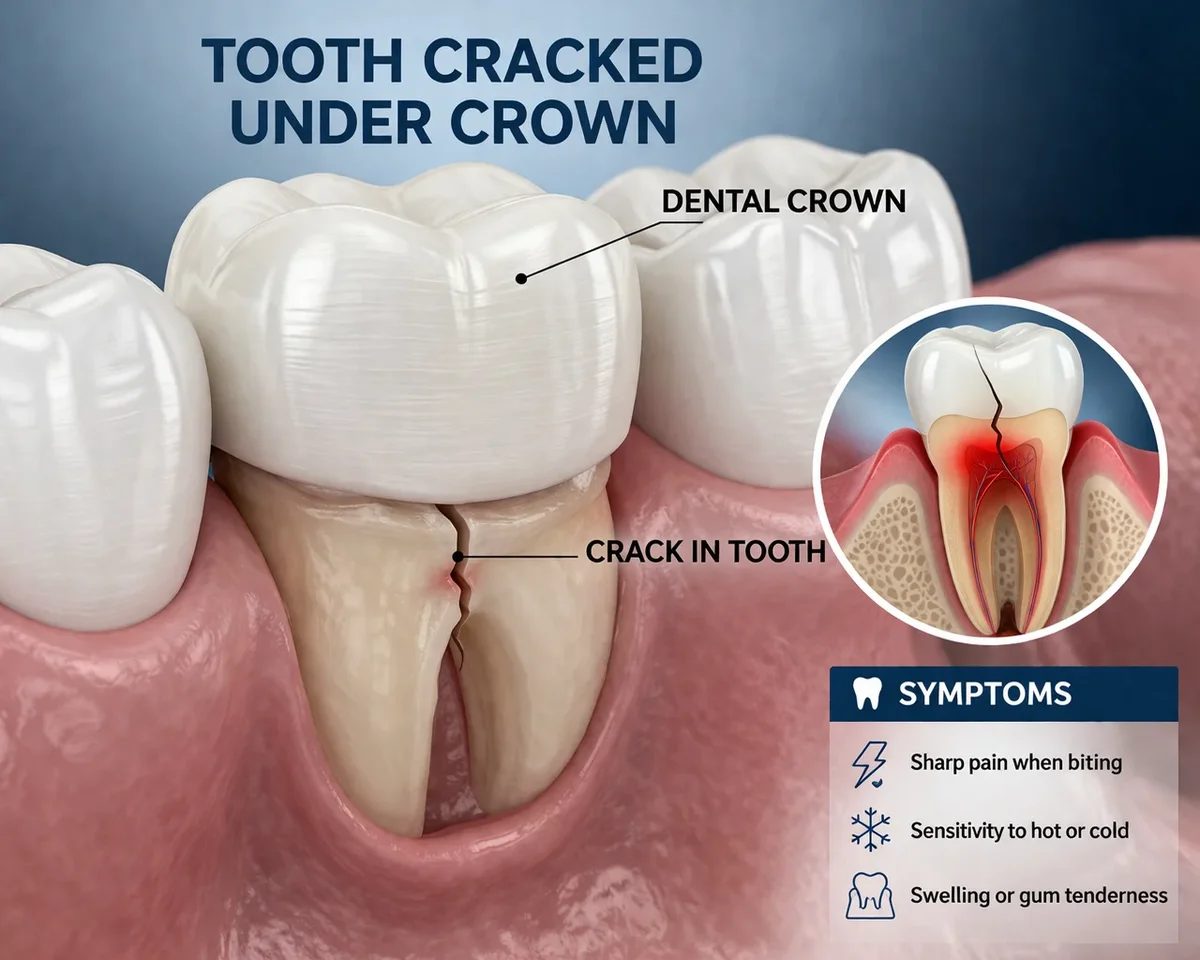
When to See a Dentist for a Tooth Cracked Under Crown
Knowing when to seek professional help for a tooth cracked under crown is critical for protecting your oral health and avoiding serious complications 🦷. Many patients delay visiting the dentist because the symptoms seem mild or inconsistent. However, a tooth cracked under crown is a condition that can worsen quickly if left untreated. Understanding the right time to act can make the difference between saving your tooth and requiring more complex procedures.
Even if the discomfort is minimal, any unusual sensation should not be ignored. A tooth cracked under crown often starts with subtle signs, but these early warnings are your best opportunity for simple and effective treatment.
Immediate Signs That Require a Dental Visit
Certain symptoms indicate that you should see a dentist as soon as possible. These signs often suggest that the tooth cracked under crown is progressing or has already reached a critical stage.
Sharp Pain When Biting
If you experience sudden, sharp pain while chewing, it is a strong indicator of a tooth cracked under crown. This type of pain usually occurs when pressure is applied and should never be ignored.
Lingering Sensitivity
Sensitivity to hot or cold that lasts longer than a few seconds may signal that a tooth cracked under crown has affected deeper layers of the tooth.
Swelling or Gum Tenderness
Swelling around the affected area can indicate infection. A tooth cracked under crown accompanied by gum inflammation requires immediate attention to prevent further complications.
Warning Signs That Should Not Be Ignored
Some symptoms may seem minor at first but can indicate the early stages of a tooth cracked under crown. Acting early can prevent the condition from worsening.
Intermittent Discomfort
Pain that comes and goes may seem harmless, but it is often one of the first signs of a tooth cracked under crown. This type of discomfort should be evaluated by a dentist.
Unusual Bite Feeling
If your bite feels uneven or uncomfortable, it could be due to a tooth cracked under crown. Changes in bite alignment can place additional stress on the tooth.
Situations That Increase Urgency
Certain conditions make it even more important to seek immediate care for a tooth cracked under crown. These situations increase the risk of complications.
History of Root Canal Treatment
Teeth that have undergone root canal therapy are more brittle. A tooth cracked under crown in such cases requires prompt evaluation to prevent fracture progression.
Recent Trauma or Injury
If you have experienced a blow to the mouth, even if the crown appears intact, a tooth cracked under crown may have occurred internally. A dental check-up is essential.
When Pain Becomes Severe
Severe or constant pain is a clear sign that the tooth cracked under crown has reached an advanced stage. At this point, the pulp may be affected, and infection may be present.
Delaying treatment in this situation can lead to abscess formation or tooth loss. Immediate dental care is necessary to manage a tooth cracked under crown effectively.
Routine Check-Ups and Early Detection
Even without noticeable symptoms, regular dental visits play a vital role in identifying a tooth cracked under crown. Dentists can detect early signs that patients may overlook.
Routine examinations allow for early intervention, which is often simpler and less invasive. A tooth cracked under crown detected during a check-up can often be treated before it causes significant damage.
What to Expect During Your Dental Visit
If you visit the dentist for a suspected tooth cracked under crown, the evaluation process will typically include a detailed examination, bite tests, and imaging.
Comprehensive Assessment
The dentist will assess your symptoms and examine the crown and surrounding tissues. This helps confirm whether a tooth cracked under crown is present.
Diagnostic Tools
X-rays and other diagnostic tools may be used to evaluate the extent of the damage. Accurate diagnosis ensures the best treatment plan for a tooth cracked under crown.
Why Delaying Treatment Is Risky
Postponing a dental visit for a tooth cracked under crown can lead to more severe problems. What begins as a small crack can expand, leading to infection or structural failure.
Early treatment not only preserves the tooth but also reduces the need for complex and costly procedures. Addressing a tooth cracked under crown promptly is always the best approach.
Emergency Situations
In some cases, a tooth cracked under crown may require emergency care. Severe pain, swelling, fever, or difficulty chewing are signs that immediate attention is needed.
Ignoring these symptoms can result in serious complications that affect not only your oral health but your overall well-being.
Final Advice on Seeking Dental Care
When it comes to a tooth cracked under crown, it is always better to be cautious. Even minor symptoms should be evaluated by a dental professional.
Taking action early ensures better outcomes and helps preserve your natural tooth. If you ever suspect a tooth cracked under crown, do not wait—schedule a dental visit and protect your smile 😊.