
In today’s digital era, top dentist websites are not just about looking professional—they are the foundation of successful dental practices that attract, engage, and convert potential patients. With over 80% of people searching online before booking an appointment, a high-quality dental website is now a necessity, not a luxury. But what separates ordinary dental websites from truly exceptional ones? Let’s explore the design principles, SEO strategies, and conversion techniques that make the top dentist websites stand out in 2025.
First, it’s important to understand that the top dentist websites share common qualities that combine science, psychology, and aesthetics. These websites provide a seamless blend of user-friendly design, mobile responsiveness, SEO optimization, and emotional connection. Patients are often anxious about dental visits, so the best websites not only inform but also reassure through trust-driven design elements such as calming colors, smiling imagery, and personalized content.
Why First Impressions Matter More Than Ever 🖥️
According to Google, users form an opinion about a website in just 0.05 seconds. For dental clinics, this means that the homepage of your site must immediately communicate professionalism, cleanliness, and trust. Top dentist websites typically feature high-resolution images, clear calls to action (CTAs) like “Book an Appointment,” and an intuitive layout that highlights treatments, staff credentials, and testimonials. These visual cues help patients quickly assess credibility—an essential factor in healthcare marketing.
In 2025, patient behavior has shifted toward instant gratification. If your dental website doesn’t load within 3 seconds, users are likely to move on to competitors. That’s why site speed optimization is now a critical ranking factor for top dentist websites. From image compression to caching systems and CDN integration, every technical detail matters for both SEO and user satisfaction.
Design and Structure: Building Trust Through Simplicity
When users visit a dental website, they are looking for two main things—information and reassurance. The top dentist websites balance these perfectly by providing clear navigation, accessible service pages, and easy contact options. For instance, the Redent Klinik Contact Page serves as an excellent example of accessibility and user trust, offering direct communication options for patients. This kind of transparency plays a major role in patient conversion and retention.
Modern design trends for dental websites also emphasize minimalism and whitespace. A clutter-free design creates a sense of calm, reflecting the hygienic and organized nature of a professional clinic. The use of calming blues, whites, and light grays helps convey safety and cleanliness—two psychological triggers that reduce patient anxiety and increase appointment bookings.
Content Quality: Speaking to Patients, Not Algorithms 🧠
One of the hallmarks of top dentist websites is high-quality, human-centered content. Rather than stuffing pages with keywords, these websites focus on educational and empathetic messaging. For instance, explaining procedures in layman’s terms, addressing patient fears, and offering aftercare tips help build authority and trust. Additionally, including multimedia elements like short videos, infographics, and interactive before-and-after galleries keeps users engaged longer—boosting SEO and brand reputation simultaneously.
Search engines in 2025 prioritize content that demonstrates E-E-A-T (Experience, Expertise, Authoritativeness, and Trustworthiness). The top dentist websites often include dentist biographies, credentials, and professional affiliations with recognized organizations such as the American Dental Association. These links provide trust signals to Google and to potential patients, showing that the practice is legitimate, well-qualified, and up to professional standards.
Technical SEO and Accessibility
Technical SEO remains a cornerstone of all top dentist websites. This includes fast page load times, proper meta tagging, schema markup for dental services, and structured data for reviews. Voice search optimization is another growing area—many patients now use smart assistants to search for “dentists near me” or “best dental implants in Turkey.” By integrating long-tail keywords and local SEO, dental practices can rank higher and reach more potential clients.
Accessibility is equally important. A truly top-performing dental website must comply with WCAG 2.1 accessibility guidelines, ensuring that all users—including those with disabilities—can navigate the content with ease. Alt text on images, sufficient color contrast, and keyboard navigation support not only improve usability but also enhance SEO rankings.
Emotional Design and Brand Storytelling 💬
The top dentist websites also succeed because they connect emotionally with their audience. This involves storytelling—showcasing patient journeys, highlighting transformations, and featuring real testimonials. When potential patients see relatable experiences and genuine smiles, they feel emotionally reassured. This type of visual storytelling makes a dental brand memorable and persuasive, setting it apart from the competition.
Conclusion: The Core Elements of Top Dentist Websites
In summary, the top dentist websites in 2025 are not built on chance—they are crafted with a deep understanding of human psychology, SEO strategy, and modern web design. These websites communicate trust, authority, and compassion through every pixel and paragraph. From fast performance to emotionally resonant content, every aspect contributes to attracting and retaining loyal patients.
If you’re a dental professional aiming to elevate your online presence, now is the time to invest in a high-quality digital strategy that includes mobile optimization, SEO-driven content, and user-centered design. A well-structured, emotionally appealing, and technically optimized website is the gateway to long-term success—and it’s exactly what makes the top dentist websites so powerful in today’s competitive online landscape.
Essential SEO Strategies for Top Dentist Websites
In 2025, mastering SEO has become one of the most critical factors separating average dental pages from top dentist websites. With fierce online competition and evolving Google algorithms, dental clinics must go beyond basic keyword stuffing and embrace comprehensive, data-driven optimization. From local SEO dominance to technical performance, let’s explore the strategies that make these dental websites stand out and dominate search results worldwide.
Understanding the Foundation of Dental SEO
Search Engine Optimization (SEO) for dental practices revolves around visibility and credibility. The goal is simple: ensure that when potential patients search for “dentists near me,” your practice appears at the top. However, top dentist websites achieve this by combining traditional SEO with modern algorithms like Google’s E-E-A-T (Experience, Expertise, Authoritativeness, and Trustworthiness). These sites include authentic patient reviews, medical qualifications, structured data, and optimized meta descriptions to signal quality and relevance to search engines.
SEO for dentists is not just about ranking—it’s about building digital trust. Patients want to feel confident before booking an appointment. This is why the top dentist websites invest heavily in long-form, educational content, internal linking, and schema markup that highlights certifications, reviews, and service details. The result? Higher engagement rates, better conversion rates, and sustainable organic traffic.
Local SEO: The Heart of Dental Marketing 📍
For most dental practices, local visibility is everything. The best-performing top dentist websites dominate local search results by integrating local keywords like “dental implants in London” or “cosmetic dentist in Los Angeles.” They also ensure consistent NAP (Name, Address, Phone number) information across all platforms—from Google Business Profile to online directories. This consistency builds search engine trust and improves map pack rankings.
Another effective local SEO tactic is embedding Google Maps on the contact page, which helps search engines understand geographical relevance. For instance, the Redent Klinik Contact Page does this excellently, ensuring users can find directions instantly while Google improves its local context understanding. Moreover, reviews play a major role—encouraging satisfied patients to leave positive feedback not only increases credibility but also improves ranking positions.
Technical SEO: Speed, Structure, and Schema
When analyzing top dentist websites, one key differentiator is technical excellence. Google’s Core Web Vitals—LCP (Largest Contentful Paint), FID (First Input Delay), and CLS (Cumulative Layout Shift)—determine whether a site provides a high-quality user experience. A fast, stable, and interactive site keeps users engaged, signaling to Google that the content is valuable.
Optimizing technical SEO involves compressing images, leveraging caching, and implementing HTTPS for security. A well-coded structure also ensures easy crawling and indexing. Furthermore, adding schema markup for “Dentist,” “Review,” “FAQ,” and “MedicalBusiness” helps search engines interpret your content accurately, leading to rich snippets that improve click-through rates. This technical precision is a defining factor in what makes the top dentist websites outperform competitors.
Mobile Optimization: The Non-Negotiable SEO Factor 📱
In 2025, over 70% of dental-related searches happen on mobile devices. This makes mobile optimization an absolute necessity. The top dentist websites are fully responsive, with adaptive layouts that ensure smooth performance on smartphones and tablets. Navigation menus are simplified, clickable phone numbers are integrated, and booking buttons remain visible throughout the browsing experience. These UX elements directly impact bounce rates and SEO performance.
Additionally, mobile-first indexing means Google primarily uses the mobile version of your site to determine ranking. If your mobile site loads slowly or has inconsistent content compared to desktop, it can drastically reduce visibility. That’s why every top-tier dental website developer prioritizes mobile performance alongside desktop functionality.
Content Optimization and Keyword Strategy 🦷
The keyword “top dentist websites” itself represents a competitive phrase that reflects both intent and aspiration. To achieve ranking success, content should be built around both primary and secondary keywords, also known as LSI (Latent Semantic Indexing) terms. Examples include “best dental clinic websites,” “modern dental web design,” and “dentist SEO optimization.” These terms help search engines understand semantic context, improving the relevance of your page for multiple search queries.
High-quality content that answers real patient questions—such as “What’s the cost of teeth whitening?” or “Is dental implant surgery painful?”—keeps users on the site longer. This increases dwell time, a positive behavioral signal that boosts search rankings. The top dentist websites integrate these FAQs naturally into blogs, service pages, and even homepage sections to capture user intent at every stage of the patient journey.
Link Building and Authority Signals 🔗
Backlinks remain a cornerstone of SEO. The top dentist websites build authority by earning links from reputable healthcare directories, dental associations, and university research pages. For instance, including connections to trusted sources such as the American Dental Association strengthens domain authority and credibility. These “dofollow” backlinks act as digital votes of confidence that elevate the entire site’s trustworthiness.
Internal linking also plays an essential role. Strategic links between blog posts, service pages, and about pages help users navigate smoothly while distributing page authority evenly. A proper link hierarchy ensures Google understands which pages are most important—an SEO structure found in virtually all top dentist websites.
Analytics, AI Tools, and Continuous SEO Monitoring
Unlike in previous years, modern SEO is a continuous, data-driven process. Tools like Google Analytics 4, Search Console, and heatmap software reveal user behavior patterns that help webmasters refine performance. AI-based SEO tools now automate keyword clustering, backlink analysis, and content scoring, ensuring sites remain aligned with the latest algorithm updates.
The top dentist websites constantly evolve. They run A/B tests on headlines, monitor click-through rates (CTR), and analyze page scroll depth to identify engagement drop-offs. Every piece of data contributes to a feedback loop that enhances user experience and SEO alignment. This proactive approach ensures consistent growth and long-term online visibility.
Conclusion: The SEO DNA of Top Dentist Websites
In conclusion, what makes top dentist websites truly rank and perform well is the integration of every SEO layer—technical excellence, local visibility, compelling content, and continuous optimization. By combining patient-centered communication with algorithm-friendly structure, these sites achieve both high traffic and high trust. For any dental clinic aspiring to climb search rankings, investing in SEO isn’t optional—it’s the foundation of digital success.
As search trends continue to evolve, remember: SEO is not a one-time setup but an ongoing commitment. Those who embrace analytics, content quality, and patient trust will continue to thrive as part of the new generation of top dentist websites.
How User Experience (UX) Impacts Dental Website Rankings
One of the most defining features of top dentist websites in 2025 is their focus on user experience (UX). UX is no longer just a design preference—it’s a ranking factor directly tied to patient trust, conversion rates, and overall website performance. In fact, Google’s algorithm updates increasingly reward dental websites that are intuitive, accessible, and emotionally engaging. Let’s explore how great UX shapes the success of modern dental websites and why every practice should prioritize it.
The Psychology Behind Dental Website Design 🧠
For patients, visiting a dental website is often an emotionally charged experience. They might be anxious, researching procedures, or comparing treatment options. The top dentist websites recognize this emotional journey and tailor their design to be calm, reassuring, and empathetic. Warm color palettes, gentle typography, and friendly imagery all help reduce patient anxiety and create an inviting digital environment. A first impression built on comfort and trust directly increases the likelihood of conversion.
Human-centered design principles—like minimal cognitive load, simple navigation, and clean structure—allow patients to find information quickly. When users can easily locate details about dental implants, cosmetic treatments, or contact options, their stress decreases, and engagement rises. This “trust by design” approach is what truly separates the top dentist websites from their competitors.
Navigation and Information Architecture
Navigation is the backbone of good UX. The best dental websites follow a predictable, logical structure with clearly labeled menus such as “Treatments,” “Our Team,” “Pricing,” and “Contact.” This allows patients to understand the site at a glance. Top dentist websites often utilize sticky headers—menus that stay visible while scrolling—so users can access critical pages anytime.
Additionally, strategically placed CTAs (Calls-to-Action) like “Book an Appointment” or “Request a Free Consultation” drive conversion without being intrusive. Every button, link, and section is designed to reduce friction in the user journey. Internal linking between related topics, such as from a dental implants article to the Redent Klinik Contact Page, ensures seamless navigation and enhances both UX and SEO value.
Core Web Vitals and UX Performance
Google’s Core Web Vitals—metrics that measure page speed, interactivity, and visual stability—are direct ranking factors. These metrics define the technical foundation of excellent UX. The top dentist websites optimize for:
- LCP (Largest Contentful Paint): Measures how quickly the main content loads. Dental sites should aim for under 2.5 seconds to keep users engaged.
- FID (First Input Delay): Evaluates how responsive the page feels when users click. Smooth interactions keep users satisfied.
- CLS (Cumulative Layout Shift): Ensures elements don’t shift while loading. A stable design prevents accidental clicks and improves trust.
These metrics are no longer optional—they are core indicators of digital professionalism. Every fraction of a second matters. That’s why the top dentist websites invest in lightweight code, compressed images, and global CDNs to guarantee fast and stable performance.
Mobile UX: Meeting Patients Where They Are 📱
Since more than 70% of dental searches happen on mobile devices, responsive design is now the cornerstone of UX. The top dentist websites provide seamless functionality across smartphones and tablets. Text must remain readable without zooming, forms must be finger-friendly, and CTAs must be easily clickable. Navigation menus often transform into simple hamburger icons to ensure usability on small screens.
Moreover, mobile UX affects local SEO directly. A mobile-friendly dental website improves “near me” ranking potential, which is crucial for local patient acquisition. Features like click-to-call buttons and map integrations make it easier for patients to contact the clinic instantly. In short, mobile UX isn’t an enhancement—it’s a requirement.
Visual Hierarchy and Eye-Tracking Principles 👁️
Effective UX design follows predictable visual patterns. Eye-tracking studies reveal that users scan websites in an F-shaped pattern—reading headlines, then scanning the left side for key points. Top dentist websites use this pattern to structure their pages strategically. Important information such as clinic name, specialties, and reviews are placed where users naturally look first.
Images of real dentists, before-and-after results, and smiling patients build authenticity. These visuals humanize the practice and enhance emotional trust. The key is to balance design aesthetics with clear hierarchy—users should know exactly where to look and what to do next without confusion.
Accessibility: Inclusive Design for Every Patient 🌍
Accessibility is another crucial aspect of user experience. In compliance with WCAG 2.1 standards, top dentist websites provide alt text for images, proper heading structure, and color contrast ratios that accommodate visually impaired users. Keyboard navigation and screen-reader compatibility ensure that every patient can access information equally. Beyond inclusivity, accessible design improves SEO and demonstrates ethical commitment to care.
Content Readability and Emotional Connection
Even the most visually appealing website fails without clear, empathetic content. Readability is key. The top dentist websites use short paragraphs, bullet points, and simple language to explain complex dental procedures. Instead of overwhelming visitors with medical jargon, they provide comforting explanations, visual aids, and relatable patient testimonials. Tone and word choice are crafted to inspire trust and confidence.
Emotional connection through storytelling is another UX differentiator. Sharing patient success stories or highlighting staff compassion creates warmth that patients remember. When users emotionally connect with a brand, their loyalty—and likelihood of booking an appointment—increases dramatically.
Microinteractions and Engagement Features
Subtle animations, hover effects, and interactive forms may seem minor, but they significantly enhance engagement. Top dentist websites often use microinteractions to confirm actions, such as a button changing color after being clicked or a success message appearing after a form submission. These feedback mechanisms make users feel in control and satisfied with the browsing process.
Chatbots, virtual consultations, and AI-based appointment scheduling tools also contribute to next-level UX. These digital assistants reduce friction, answer FAQs, and assist users instantly—improving both satisfaction and conversion rates.
Trust Elements: Reviews, Certifications, and Security
Trust is the foundation of dental marketing. Displaying professional certifications, security badges, and affiliations—like membership with the American Dental Association—improves credibility. The top dentist websites also integrate SSL encryption to secure patient data and feature verified patient reviews that foster transparency. Together, these trust signals enhance both UX and search engine visibility.
Conclusion: The UX Formula Behind Top Dentist Websites
In essence, superior user experience is the silent engine driving the success of top dentist websites. From intuitive navigation to emotional resonance, every interaction matters. Google now rewards websites that genuinely serve user intent—those that load quickly, adapt seamlessly across devices, and offer valuable, accessible content. For dental professionals aiming to thrive in a competitive digital space, investing in UX is not just wise—it’s indispensable.
The future belongs to practices that put patients first, both in the clinic and online. By combining empathy with functionality, your website can join the ranks of the top dentist websites that patients trust and search engines love.
Visual Design Trends Defining Modern Dentist Websites
In 2025, the competition among dental practices is not only about clinical expertise but also about digital presentation. The top dentist websites use cutting-edge visual design trends that blend aesthetics, functionality, and trust. Design has evolved beyond mere beauty—it’s now about building credibility, creating comfort, and driving conversions. From color psychology to interactive storytelling, modern dental website design is both an art and a science.
The Evolution of Dental Website Design
Gone are the days when a simple homepage and a few service pages were enough. Patients today expect visually appealing, mobile-friendly, and interactive websites that reflect professionalism and empathy. The top dentist websites incorporate responsive frameworks, immersive media, and clear brand identity to engage users emotionally. They focus on “experience design,” where every element—from color choice to typography—tells the story of the clinic’s brand personality.
Visual design is no longer a static element—it’s dynamic and adaptive. Modern dental websites integrate personalized visuals that respond to user behavior. For instance, homepage banners might adapt to show different treatments based on browsing history. This personalized experience keeps visitors engaged and encourages return visits, boosting SEO performance and conversions.
Color Psychology and Emotional Impact 🎨
Color choice plays a powerful role in the success of top dentist websites. Dental patients often associate blue and white with hygiene, safety, and professionalism. Soft pastels and natural tones create calmness and reduce anxiety, while strategic use of green or light aqua can communicate freshness and health. These color combinations have been scientifically proven to trigger feelings of relaxation and trust—two emotions essential for potential patients who may fear dental treatment.
Some clinics opt for accent colors like gold or teal to convey luxury or innovation, especially for cosmetic dentistry. However, excessive contrast or overly vibrant tones can increase cognitive stress, leading to higher bounce rates. The best design practices use a well-balanced palette that complements the clinic’s logo and brand voice while maintaining readability and visual harmony.
Typography: Readability Meets Elegance
Typography is another subtle but powerful component in creating top dentist websites. Readable fonts like Open Sans, Lato, or Roboto are preferred for clarity, while custom serif headings can add a touch of sophistication. The hierarchy between headings, body text, and call-to-action buttons must be clear, ensuring users can scan the content easily. Proper line spacing and contrast ratios improve readability, especially on mobile devices.
Some dental websites use large, friendly typefaces to emphasize accessibility and warmth. The goal is to make every visitor feel welcomed, not overwhelmed. Combined with consistent typography and spacing, these elements make the overall user experience intuitive and professional.
Imagery and Authenticity 🦷
Authentic imagery is one of the strongest design tools for trust-building. The top dentist websites avoid generic stock photos and instead feature real staff, clinics, and patient smiles. Professional photography helps establish authenticity, while high-quality images of dental procedures and before-and-after results increase transparency. Authentic visuals assure visitors that they are engaging with a real, credible practice.
Hero images—large, visually striking photos at the top of a homepage—set the tone for user perception. Adding subtle motion effects, like gentle zoom-ins or background videos of staff welcoming patients, enhances engagement without overwhelming visitors. When designed properly, these visuals emotionally connect users to the clinic’s story and values.
Video Content and Interactive Media
Video is now a dominant feature of top dentist websites. Short introductory videos showcasing the clinic, interviews with dentists, or patient testimonials build trust and reduce hesitation. Interactive media elements, such as virtual tours or animated infographics, help patients visualize treatments. A 360-degree office tour, for example, allows users to experience the clinic environment from the comfort of their homes—a feature increasingly expected by tech-savvy patients.
In addition, micro-animations like hover effects, subtle transitions, or icon movements add dynamism without distraction. These small interactions guide the user’s eye naturally toward key conversion points, such as contact forms or service inquiries.
Layout and White Space Balance
Effective layout design is critical to the performance of dental websites. The top dentist websites use grid-based layouts that create balance and visual rhythm. Adequate white space (negative space) helps content breathe, allowing users to focus on the most important elements. Overcrowded designs create confusion and anxiety—two emotions dental clinics must avoid at all costs.
Clean, symmetrical layouts convey order and precision, reflecting the professionalism of the practice. Moreover, consistent placement of CTAs, headers, and visuals ensures a predictable flow, helping visitors find information effortlessly. This balance between text and imagery significantly enhances user experience and retention.
Minimalism and Modern Simplicity
Minimalism continues to dominate digital design trends. The top dentist websites embrace simplicity—clear layouts, concise messaging, and refined visuals. Instead of overwhelming visitors with too much information, minimalist design emphasizes essential content, guiding the user journey strategically. This not only improves aesthetic appeal but also speeds up loading times, improving SEO performance.
“Less is more” is especially true for dental branding. A minimalist interface paired with high-quality imagery creates sophistication and serenity, key traits that attract discerning patients. Consistent iconography, soft shadowing, and micro-gradients enhance visual hierarchy while maintaining a clean aesthetic.
Brand Consistency Across All Pages
Visual consistency is the glue that holds the design together. The top dentist websites maintain uniform color schemes, font choices, and tone across all pages—from the homepage to blog articles. This reinforces brand recognition and professionalism. Each visual element must align with the brand’s identity—whether it’s a luxury cosmetic practice or a family-friendly clinic.
Consistency also applies to interactive elements like buttons, forms, and animations. Predictable patterns build user familiarity, making navigation effortless. When users feel comfortable, they stay longer—boosting dwell time and ranking potential.
Integration of SEO and Design Harmony
Visual design and SEO are inseparable. Images and videos on top dentist websites are optimized with alt text, file compression, and structured data to ensure search engines can interpret visual content. Fast-loading, lightweight visuals enhance both UX and SEO performance. Designers collaborate closely with SEO experts to strike the right balance between creativity and technical precision.
Furthermore, structured headers (H1-H4) and clear content segmentation improve readability and keyword relevance. This hybrid approach—where design complements optimization—is one of the defining characteristics of successful dental websites in 2025.
Conclusion: The Visual Signature of Top Dentist Websites
Ultimately, the top dentist websites stand out because they fuse visual beauty with functionality and authenticity. Every color, image, and layout decision serves a purpose—building emotional trust, guiding user action, and reflecting the clinic’s values. Whether through elegant typography, authentic photography, or mobile responsiveness, these design choices create seamless, emotionally engaging user experiences.
In a digital world where patients form opinions within seconds, your visual design can make or break first impressions. Investing in a cohesive, modern, and emotionally resonant design is not a luxury—it’s a necessity for every clinic that aspires to join the ranks of the top dentist websites that dominate 2025’s digital landscape.
The Role of Patient Testimonials in Building Trust Online
Trust is the foundation of every successful dental practice, and in the digital age, that trust often begins before a patient even walks through the door. The top dentist websites understand that testimonials are not just optional—they are essential tools for building credibility, emotional connection, and patient loyalty. In 2025, authentic testimonials and patient stories have become one of the most powerful elements driving conversions and SEO performance in dental marketing.
Why Testimonials Matter in the Dental Industry 🦷
For potential patients, dental treatment decisions often come with emotional hesitation and financial consideration. The top dentist websites leverage testimonials to ease these concerns, transforming uncertainty into confidence. Testimonials act as digital word-of-mouth, validating the clinic’s professionalism, results, and patient care. In fact, studies show that over 90% of people trust online reviews as much as personal recommendations.
When visitors read a relatable testimonial—like a story about someone overcoming dental anxiety or achieving a confident smile—it triggers empathy and reassurance. This emotional resonance is what makes the difference between browsing and booking an appointment. Testimonials are not merely decorative content; they are trust signals that tell both search engines and users that your clinic delivers genuine results.
Types of Testimonials That Strengthen Credibility
Different testimonial formats serve different purposes. The top dentist websites use a mix of written reviews, video testimonials, and case studies to build a multidimensional reputation. Each type offers unique value:
- Written Testimonials: Simple, concise, and often found on homepage sliders or service pages. These are perfect for quick validation.
- Video Testimonials: Add authenticity and emotion. Seeing and hearing real patients share their experiences increases credibility dramatically.
- Case Studies: Present a detailed before-and-after journey that highlights the dentist’s skill and the patient’s transformation. These are particularly effective for high-value treatments like implants and veneers.
By strategically combining these formats, top dentist websites create layers of trust that appeal to both new and returning visitors.
Video Testimonials: The Gold Standard of Trust 🎥
Video is arguably the most persuasive format for patient stories. It brings humanity and emotion to the forefront—qualities algorithms alone can’t replicate. The top dentist websites showcase short, professionally edited testimonial videos directly on their homepages or service-specific landing pages. These videos typically feature patients smiling, describing their experiences, and thanking the dental team.
Beyond human emotion, video content also improves SEO. Google’s algorithms prioritize pages that engage users for longer durations, and embedded videos increase dwell time significantly. In addition, transcripts from video testimonials contribute keyword-rich, indexable text that enhances organic visibility. This combination of engagement and optimization makes video a cornerstone strategy for dental marketing success.
Authenticity and Transparency: Key to Genuine Impact
Today’s users can spot fake reviews from miles away. That’s why the top dentist websites prioritize authenticity. Instead of using vague praise like “Great experience!” they feature specific, verifiable stories. Real names, smiling photos, and honest details add depth and believability. Some clinics even link testimonials to verified Google or Facebook reviews, further strengthening credibility.
Transparency goes beyond reviews—it extends to how testimonials are displayed. Ethical dental marketing avoids manipulative or exaggerated claims. Instead, honesty about patient results and limitations builds long-term trust. Authentic storytelling always outperforms flashy marketing jargon because it appeals to both emotional and rational decision-making processes.
Integrating Testimonials Strategically Throughout the Website
Placement is crucial. The top dentist websites don’t isolate testimonials on a single “Reviews” page—they integrate them throughout the entire site. For example, a testimonial about teeth whitening appears beside the whitening service page, while implant success stories feature on implant landing pages. This contextual relevance makes testimonials more persuasive and directly supports conversion.
Additionally, testimonials can be included near CTAs (Calls-to-Action). Seeing positive feedback right before a “Book an Appointment” button reassures potential patients at the perfect moment. The Redent Klinik Contact Page is a good example of how accessible placement can reinforce user confidence and encourage direct engagement.
Social Proof and Search Engine Optimization
Testimonials are not only persuasive—they’re SEO gold. The top dentist websites use them to generate rich snippets in search results through schema markup, increasing visibility and click-through rates. User-generated content such as reviews also provides fresh, keyword-rich material that search engines love. Frequent updates to testimonial sections signal that the website is active and reputable.
Social proof extends beyond the site itself. Integrating Google Business reviews, social media shoutouts, and third-party platforms like Healthgrades or Yelp provides multi-channel authority. These backlinks and mentions enhance the domain’s overall authority, giving dental websites a ranking advantage over competitors with weaker reputations.
Emotional Storytelling: Turning Testimonials Into Narratives
What truly distinguishes top dentist websites is the ability to turn testimonials into emotionally engaging narratives. Instead of short, generic quotes, they present stories that describe the patient’s journey—from fear and hesitation to confidence and satisfaction. These stories appeal to the heart, making the dental brand relatable and human.
For instance, a testimonial might describe how a patient regained confidence after years of hiding their smile. Accompanied by before-and-after photos and an authentic video clip, this narrative becomes a digital success story. It shows visitors that transformation is not only possible but also achievable with the right care.
Building Ongoing Trust Through Follow-Up and Reviews
Trust doesn’t end after one testimonial—it grows over time. The top dentist websites maintain active follow-up systems to encourage patients to share their experiences. Automated email campaigns or QR codes in clinics make it easy for patients to leave reviews. Consistent engagement keeps feedback fresh and demonstrates ongoing commitment to patient satisfaction.
Displaying timestamps or “verified patient” labels also assures new visitors that testimonials are recent and genuine. This level of transparency enhances both credibility and SEO trust signals, helping the site maintain its ranking strength in competitive markets.
Conclusion: Testimonials as the Trust Engine of Top Dentist Websites
In summary, patient testimonials are not just marketing tools—they are the trust engine powering the success of top dentist websites. Through authenticity, emotional resonance, and strategic placement, testimonials convert passive visitors into confident patients. They improve SEO, strengthen brand authority, and enhance conversion rates simultaneously.
By showcasing real people and real results, dental clinics build digital relationships rooted in honesty and care. In the era of transparency-driven marketing, the clinics that prioritize genuine testimonials will continue to rise among the top dentist websites that patients trust and search engines reward.
For added authority and ethical alignment, linking professional credibility sources—such as the American Dental Association—further validates expertise and demonstrates adherence to dental standards. This balance of emotional connection and factual proof defines what modern trust-building looks like in the dental industry today.
Mobile Optimization: Why Every Dentist Website Needs It
In the age of smartphones, mobile optimization has become one of the defining features that distinguish the top dentist websites from the rest. Patients no longer wait to reach home and open their laptops—they search for dental clinics, check reviews, and even book appointments directly from their mobile devices. Therefore, a site that doesn’t perform flawlessly on mobile is losing not only traffic but also credibility and conversions. Let’s dive into why mobile optimization is the backbone of digital success for modern dental practices in 2025.
The Rise of Mobile-First Browsing 📱
Over 75% of all dental-related searches now originate from smartphones. From “emergency dentist near me” to “teeth whitening prices,” users rely on their phones for instant answers. The top dentist websites understand this shift and adopt a mobile-first approach—meaning they design and optimize their sites primarily for mobile users, rather than simply adapting desktop designs. This ensures smoother navigation, faster loading times, and a superior patient experience across all devices.
Mobile-first design focuses on simplicity, clarity, and accessibility. For instance, menus are streamlined into hamburger icons, buttons are large enough for thumb taps, and CTAs like “Book Now” or “Call Us” are fixed at the bottom of the screen for quick access. This design philosophy directly improves conversion rates because users don’t need to pinch, zoom, or struggle to find essential information.
Google’s Mobile-First Indexing and SEO Impact
Google now uses mobile-first indexing, meaning the search engine primarily evaluates the mobile version of a website for ranking and indexing. If your mobile site is incomplete or slower than your desktop version, it will negatively affect your visibility. The top dentist websites are fully optimized with consistent content, structured data, and metadata across all devices. Every title, meta description, and schema markup must be identical to avoid ranking discrepancies.
Moreover, page speed on mobile devices is a critical ranking factor. Compressing images, minimizing code, and implementing AMP (Accelerated Mobile Pages) can significantly boost performance. Google’s PageSpeed Insights and Core Web Vitals are invaluable tools to measure and improve these factors. The faster and more responsive your website, the higher your chances of ranking among the top dentist websites in your region.
Mobile UX and User Behavior
Mobile optimization is not just about screen resizing—it’s about understanding how people behave on mobile devices. Mobile users typically browse while multitasking or under time pressure, meaning their attention spans are shorter. The top dentist websites address this by prioritizing essential content at the top of each page, reducing text-heavy sections, and using clear visuals and icons to guide navigation.
For example, clickable phone numbers, one-tap navigation maps, and easy appointment forms eliminate friction and make patient interaction effortless. When potential patients can call or schedule an appointment without unnecessary scrolling, your website’s conversion rate can increase by over 40%.
Responsive Design: The Technical Backbone
A responsive website automatically adjusts its layout according to screen size, resolution, and orientation. This means whether a patient visits from an iPhone, Android tablet, or desktop computer, they receive a seamless experience. The top dentist websites use flexible grid systems and CSS frameworks that ensure text, buttons, and images scale perfectly on any screen.
Responsive design also improves crawlability. Search engines prefer responsive sites because they eliminate duplicate content issues that occur when separate mobile and desktop URLs are used. Additionally, maintaining a single codebase simplifies analytics tracking, SEO management, and content updates—making it a practical and scalable solution for dental practices.
Touch-Friendly Interactions and Accessibility
Touch functionality is at the core of mobile usability. The top dentist websites design buttons and links with enough spacing to prevent accidental clicks. Forms are simplified—requiring minimal typing and allowing autofill where possible. Accessibility features such as voice search compatibility, larger text options, and ARIA (Accessible Rich Internet Applications) labels enhance inclusivity for users with disabilities.
Moreover, implementing contrast-optimized color schemes ensures text remains readable under different lighting conditions, such as outdoor environments. These details, though subtle, create significant differences in user satisfaction and dwell time.
Visual Optimization for Mobile Devices
On smaller screens, visual hierarchy must be restructured to prevent clutter. The top dentist websites use mobile-friendly image formats like WebP, which reduce file size without compromising quality. Lazy loading (delaying image load until the user scrolls to that section) keeps the page lightweight and prevents lag. Similarly, videos are often embedded with responsive containers that scale smoothly across devices.
Headers, CTAs, and service highlights should appear early on the mobile viewport. Clear spacing between content blocks ensures scannability—allowing users to absorb information quickly. The key is to minimize distractions and focus on guiding users toward meaningful actions, such as contacting the clinic or reading a testimonial.
Mobile SEO and Local Search Optimization 📍
Mobile optimization and local SEO are deeply interconnected. Patients searching for “dentist near me” or “dental implants in [city]” expect instant, location-based results. The top dentist websites optimize for local intent by using location keywords in titles, meta descriptions, and schema data. Embedding a Google Map on the contact page—like the Redent Klinik Contact Page—not only improves usability but also strengthens local ranking signals.
Additionally, mobile-friendly dental websites integrate features like “Get Directions” and “Call Now” buttons that use device geolocation data. These instant actions help convert browsing visitors into confirmed appointments. Google’s local pack (the map and listings shown at the top of results) heavily favors mobile-optimized, verified dental sites with consistent NAP (Name, Address, Phone) information across platforms.
Performance Optimization and Security
Speed and security are non-negotiable elements of mobile optimization. The top dentist websites employ caching, minified scripts, and lightweight plugins to minimize load times. HTTPS encryption, SSL certificates, and secure form submissions protect patient data—an essential component of trust and compliance. Slow or insecure websites risk losing not only rankings but also patient confidence.
Regular maintenance, image compression, and database cleanup ensure ongoing speed and stability. Performance monitoring tools like GTmetrix and Google Search Console help detect issues early. In a world where patience lasts less than three seconds, a lightning-fast mobile site is your best marketing investment.
Future Trends: Mobile Innovation in Dentistry
The future of top dentist websites lies in the integration of advanced mobile technologies. Voice search optimization is already reshaping SEO, as more users rely on digital assistants to find clinics hands-free. AI-driven chatbots now handle appointment scheduling and patient queries 24/7, offering personalized responses instantly. Some innovative practices even integrate augmented reality (AR) tools, allowing users to visualize smile makeovers or treatment outcomes directly on their screens.
These features not only enhance engagement but also position dental websites as cutting-edge, patient-focused platforms. As technology advances, mobile functionality will continue to be the decisive factor in determining which dental clinics thrive online.
Conclusion: The Mobile Imperative for Top Dentist Websites
To conclude, mobile optimization is no longer an optional enhancement—it is a survival necessity for every modern dental practice. The top dentist websites of 2025 prioritize responsive design, lightning-fast performance, accessibility, and seamless user experiences. From one-tap appointments to real-time navigation, every interaction is optimized for convenience and trust.
A truly mobile-optimized dental website not only improves rankings but also transforms casual visitors into loyal patients. By aligning user expectations with technological precision, dental clinics can confidently rise among the top dentist websites that define digital excellence today. For a trusted, mobile-optimized experience, visit professional organizations like the American Dental Association to ensure your practice meets the highest standards of web performance and patient care.
Integrating Booking Systems for Seamless Patient Conversion
In the modern digital era, patient convenience has become the single biggest factor influencing conversions for dental clinics. The top dentist websites in 2025 have recognized this shift and invested heavily in automated, user-friendly booking systems that make appointment scheduling simple, fast, and frictionless. These systems not only streamline the administrative workflow but also enhance user experience, build trust, and increase revenue by minimizing missed opportunities.
The Evolution of Online Booking in Dentistry 🦷
A decade ago, most dental clinics relied solely on phone calls or email for scheduling appointments. However, today’s patients expect real-time booking access, much like ordering a ride or reserving a restaurant table. The top dentist websites lead this evolution by integrating intelligent booking systems directly into their web architecture. These systems allow patients to view available time slots, select preferred dentists, and confirm appointments instantly—without needing to wait for a callback.
This level of accessibility improves patient satisfaction and reduces friction in the decision-making process. For many dental practices, online booking platforms have become the most effective conversion tool, transforming passive visitors into active patients with a single click.
Key Features of Effective Dental Booking Systems
The best-performing top dentist websites share common traits when it comes to booking systems. A truly effective platform goes beyond a basic form—it integrates intelligent automation, calendar synchronization, and patient reminders. Here are the core elements that make these systems work flawlessly:
- Real-Time Availability: Displays live dentist schedules so patients can choose a time that fits their lifestyle.
- Automated Confirmation & Reminders: Sends instant booking confirmations and follow-up reminders via email or SMS to reduce no-shows.
- Integrated Payment Gateways: Allows secure deposit payments or full prepayments, reducing last-minute cancellations.
- Two-Way Synchronization: Connects directly with Google Calendar, iCal, or clinic management software for seamless workflow integration.
- Multilingual & Mobile-Friendly Design: Ensures accessibility for international patients and mobile users.
These features not only simplify administrative work but also strengthen the clinic’s professional image—key to earning a place among the top dentist websites.
Reducing No-Shows and Administrative Workload
No-shows and cancellations are common challenges in dentistry, leading to lost time and revenue. Automated booking systems, a hallmark of the top dentist websites, address this by integrating reminder sequences and confirmation prompts. When a patient books online, the system can send a personalized SMS or email 24 hours before the appointment, including a reschedule or cancel link. This automation frees front-desk staff from manual follow-ups while maintaining a full schedule.
Additionally, clinics using online booking often experience a 20–30% reduction in missed appointments compared to those relying solely on phone scheduling. These measurable improvements translate directly into higher profitability and smoother daily operations.
User Experience and Conversion Optimization
From a design standpoint, the booking interface must be simple, intuitive, and trustworthy. The top dentist websites strategically place their booking buttons in highly visible locations—such as the homepage hero section, sticky headers, or after testimonials. Using bright, contrasting CTAs like “Book Now” or “Schedule Your Visit” grabs user attention without feeling intrusive.
Trust elements surrounding the booking form—such as security badges, privacy notes, or professional logos—reinforce user confidence. In addition, providing options like “Book with Dr. [Name]” or “Select Treatment Type” personalizes the process, helping patients feel more in control. Mobile users, in particular, benefit from click-to-call buttons and one-step booking options that minimize typing and scrolling.
Integrating Chatbots and Virtual Assistants 🤖
AI-powered chatbots are rapidly becoming part of advanced booking ecosystems. The top dentist websites use chatbots to assist users 24/7, guiding them through available treatments, appointment slots, and payment options. By integrating natural language processing, chatbots can answer FAQs and redirect users to human staff when needed. This round-the-clock accessibility ensures that every inquiry can potentially turn into a confirmed appointment, even outside business hours.
Moreover, virtual assistants can track user preferences and recommend appointment times based on previous visits or treatment cycles. For example, a returning patient could receive an automated reminder that it’s time for a checkup and be directed to available slots instantly. This proactive engagement dramatically increases retention rates.
Technical SEO and Booking Integration
Online booking systems contribute to SEO performance when properly implemented. Structured data markup for “AppointmentAction” enables Google to display booking links directly in search results, a feature visible on many top dentist websites. This not only enhances click-through rates but also positions the practice as a trusted, technology-driven provider.
Additionally, well-coded booking widgets load quickly and avoid intrusive pop-ups that could violate Google’s Page Experience guidelines. Optimized integration also ensures that the booking tool remains responsive and accessible on all devices. A fast, clean, and secure booking flow reinforces trust—both with users and search engines.
Security and Compliance in Patient Data Handling
Security is a non-negotiable aspect of digital booking. The top dentist websites adhere to strict data protection standards, including SSL encryption, GDPR compliance, and HIPAA alignment where applicable. Sensitive data such as patient names, contact details, and medical information must be transmitted securely.
Transparent privacy policies, clear consent checkboxes, and visible trust badges signal professionalism and integrity. For international clinics serving patients abroad, multilingual consent forms and compliance with local privacy laws enhance credibility and expand reach safely.
Integrating Third-Party Tools and Practice Management Systems
The most successful top dentist websites don’t treat booking systems as isolated tools—they integrate them into broader clinic management ecosystems. Platforms like Dentrix, Carestream, and OpenDental can synchronize patient data directly from the booking form, automating tasks like chart updates and treatment scheduling. This integration saves staff hours of manual data entry and eliminates errors.
Similarly, connecting booking systems with marketing tools allows automated follow-ups and satisfaction surveys. After a completed visit, patients might receive an email requesting feedback or inviting them to leave a testimonial. These automated workflows not only boost engagement but also generate valuable social proof that strengthens SEO and conversion funnels.
Real-World Examples of Seamless Booking Experiences
The top dentist websites often showcase booking systems as part of their competitive advantage. For instance, many clinics now include a “Book in 60 Seconds” feature—a simplified, three-step form (Choose Service → Select Time → Confirm Booking). Others use progress indicators or interactive calendars that visually guide users through the process. Features like these provide reassurance and make the digital journey as effortless as possible.
Even smaller dental practices can implement similar tools affordably using plugins or SaaS platforms like Zocdoc, Calendly, or SimplyBook.me. These solutions integrate smoothly with WordPress and other CMS systems, offering a balance between cost and functionality.
Conclusion: How Booking Systems Empower Top Dentist Websites
In summary, integrated booking systems have become the lifeblood of top dentist websites. They bridge the gap between online visibility and actual patient conversions. By prioritizing ease of use, automation, and security, dental clinics can transform their websites from static information hubs into dynamic, revenue-generating platforms.
Whether through AI chatbots, real-time availability, or mobile-friendly forms, the essence of effective online booking is convenience. In a world where time and trust determine patient decisions, seamless scheduling isn’t just a feature—it’s a necessity. As the industry evolves, only those who embrace these intelligent systems will continue to thrive among the top dentist websites that set global standards for excellence and innovation. For reliable professional resources on compliance and patient communication, refer to the American Dental Association guidelines, and always ensure transparent access points like the Redent Klinik Contact Page are clearly linked for patient convenience.
Content Marketing Tips for Dental Professionals
Content marketing has become one of the most powerful tools for growing dental practices online. In 2025, the top dentist websites no longer rely solely on traditional advertising—they build authority, trust, and patient engagement through consistent, high-quality content. From informative blog posts to educational videos and SEO-driven articles, successful dental content strategies educate patients while improving visibility in search results. Let’s explore the strategies and structures that make content marketing a key driver of success for modern dental websites.
Why Content Marketing Matters for Dentists 🦷
Most patients start their dental journey online, often searching for answers to oral health questions before ever contacting a clinic. The top dentist websites position themselves as trusted educational sources, addressing these queries with well-researched, patient-friendly information. By offering value first—such as explaining treatment options, aftercare tips, or prevention strategies—clinics establish themselves as experts in the field. This not only improves SEO rankings but also increases patient trust and conversion rates.
High-quality content also extends the patient lifecycle. When users find reliable information about their concerns, they’re more likely to return for future questions or refer others. Every article, infographic, or video strengthens brand recall and reinforces the clinic’s authority within its community and beyond.
Creating an Effective Dental Content Strategy
The most successful top dentist websites approach content marketing strategically rather than randomly. Every piece of content is planned with specific goals: ranking for a keyword, educating patients, or guiding them toward booking an appointment. A comprehensive strategy usually involves the following steps:
- Keyword Research: Identifying high-traffic, low-competition keywords like “best dental implants,” “invisible braces,” or “how to prevent gum disease.”
- Content Calendar: Scheduling regular updates (weekly or biweekly) ensures freshness and consistency, both of which Google rewards.
- Content Clustering: Organizing articles around core themes such as cosmetic dentistry, orthodontics, and preventive care to build topical authority.
- Analytics and Feedback: Tracking user engagement metrics like bounce rate, time on page, and conversions to refine future topics.
By implementing these methods, the top dentist websites maintain relevance, authority, and organic growth in an increasingly competitive digital landscape.
Balancing Educational and Promotional Content
While it’s tempting to focus solely on promotional content, patients prefer authenticity and education. The top dentist websites achieve the perfect balance by dedicating about 80% of their content to informative topics and 20% to services and offers. Articles like “How to Overcome Dental Anxiety” or “What to Expect After a Root Canal” attract wide readership and create trust, while targeted pages like “Book Your Whitening Session Today” encourage conversions.
Educational content positions the clinic as a compassionate advisor, not just a service provider. It helps patients feel informed and empowered to make confident decisions—ultimately leading them to choose the clinic that provided them with reliable guidance.
Types of Content That Drive Engagement
Content variety is essential for capturing different user preferences. The top dentist websites combine multiple formats to maximize engagement and reach.
- Blog Articles: SEO-optimized articles that answer frequently asked questions and attract organic traffic.
- Video Tutorials: Short explainer videos on dental hygiene, treatments, or patient testimonials that humanize the brand.
- Infographics: Visual representations of complex dental concepts, like the stages of tooth decay or implant procedures.
- Case Studies: Real-life patient journeys showing successful outcomes, which serve as social proof.
- Newsletters: Monthly updates that nurture relationships with current patients while keeping the practice top of mind.
By diversifying formats, dental clinics can reach patients at every stage of the decision-making funnel—from initial curiosity to final booking.
SEO and Content Optimization
SEO remains the engine that powers visibility for top dentist websites. Every content piece should be optimized with relevant keywords, meta descriptions, and internal links. Using long-tail variations like “affordable dental crowns in Istanbul” or “how to maintain oral hygiene after whitening” targets more specific search intents and attracts highly qualified traffic.
Internal linking also boosts SEO and improves navigation. For instance, within a blog post on dental implants, linking to the Redent Klinik Contact Page encourages readers to take immediate action. Outbound links to authoritative sources—such as the American Dental Association—further validate credibility and demonstrate expertise.
Leveraging Storytelling to Build Emotional Connection
One of the most powerful tactics in content marketing is storytelling. The top dentist websites share authentic patient stories, detailing challenges, treatments, and emotional transformations. These narratives evoke empathy and inspire trust, helping new visitors envision their own positive experiences. When paired with visuals or short videos, storytelling becomes an unforgettable brand asset that strengthens emotional engagement.
For example, a story about a patient who regained confidence after years of hiding their smile resonates more deeply than any generic service description. It humanizes the clinic and emphasizes its impact on real lives—something that no amount of technical jargon can replicate.
Local Content and Community Engagement
Local relevance plays a significant role in SEO. The top dentist websites create content tailored to their geographic area—covering local dental health events, partnerships, or community programs. This not only builds neighborhood trust but also enhances local search rankings.
Publishing blogs like “Best Teeth Whitening Options in Berlin” or “How to Choose a Dentist in London” signals to Google that your site serves a regional audience. Pairing this strategy with consistent Google Business Profile updates ensures a comprehensive local SEO approach that captures nearby patients.
Content Distribution and Promotion Channels
Creating great content is only half the battle—distribution is where results truly scale. The top dentist websites use a multi-channel promotion strategy to amplify reach and engagement. Common channels include:
- Social Media Platforms: Sharing articles on Instagram, Facebook, and LinkedIn with visuals and short captions to boost engagement.
- Email Marketing: Sending curated content and promotions to subscribers keeps patients informed and loyal.
- Guest Blogging: Contributing articles to dental forums or health blogs to gain backlinks and authority.
- YouTube and Short-Form Video: Leveraging video content to explain procedures, showcase patient reviews, or share dental tips.
This omnichannel approach ensures consistent exposure and continuous patient engagement across multiple touchpoints.
Measuring and Refining Content Performance
Data-driven improvement separates the best from the rest. The top dentist websites track key performance indicators (KPIs) such as organic traffic, average time on page, conversion rate, and click-through rate. Tools like Google Analytics, Ahrefs, and SEMrush provide deep insights into what content resonates most with audiences.
By monitoring user behavior—such as which articles lead to the most bookings or which topics attract backlinks—dental marketers can continuously refine their content strategy for maximum impact. Regular updates to evergreen posts ensure sustained rankings and relevance over time.
Conclusion: How Content Marketing Shapes Top Dentist Websites
Ultimately, content marketing is the backbone of digital growth for top dentist websites. It builds authority, drives SEO, and nurtures trust long before the first appointment is booked. By focusing on educational, relatable, and keyword-rich material, dental professionals can attract a steady stream of engaged, loyal patients.
In a competitive landscape where authenticity and expertise matter most, the clinics that prioritize valuable content will always lead. Whether it’s an insightful blog, a heartfelt testimonial, or a well-produced explainer video, the message is clear: content is not just marketing—it’s patient care in digital form. Every article written today strengthens your path to joining the ranks of the top dentist websites shaping the future of modern dental marketing.
Examples of the Top Dentist Websites in the World 🌍
The digital landscape for dentistry is highly competitive, and patients today expect excellence not just in clinical care but also in online experience. The top dentist websites of 2025 stand out by blending visual appeal, usability, and credibility to create trust before a single appointment is made. These websites represent the gold standard of modern dental marketing — where design, content, and technology meet patient-centered functionality. Below, we explore some of the world’s best examples and what makes them true digital leaders in the dental field.
1. Mayo Clinic Dental Center (USA) — Authority Meets Accessibility
The Mayo Clinic’s dental site embodies everything that defines the top dentist websites. It’s built around a patient-first philosophy with clear navigation, expert information, and streamlined booking access. The homepage features an intuitive design with concise messaging, a clean color palette, and high-quality images that reinforce trust and medical excellence.
What sets it apart is its depth of information. Each treatment page includes in-depth explanations, procedure outlines, and links to relevant medical research. Its internal linking strategy is flawless — every page leads users to helpful resources or booking options. SEO-wise, it leverages long-tail keywords and schema markup for rich snippets, ensuring top visibility on Google searches related to dental treatments.
Key Takeaways:
- Minimalist design with clear typography for readability
- Comprehensive, evidence-based educational resources
- Seamless mobile experience with fast loading speeds
- Authority backed by trusted institutional branding
2. 123Dentist (Canada) — A Patient-Centric Network Approach
As one of Canada’s largest dental networks, 123Dentist operates a collection of sites designed around local SEO. Each location’s page is optimized with customized metadata, patient reviews, and local schema, making it a prime example of scalable SEO success. The top dentist websites often follow this model — combining nationwide authority with hyper-local optimization.
Its appointment booking flow is frictionless, using geolocation to suggest the nearest clinic. The user interface (UI) focuses on warmth and approachability, employing friendly imagery and inclusive language. Patient testimonials and before-and-after galleries are integrated elegantly, offering credibility without overwhelming visuals.
Key Takeaways:
- Multi-location SEO excellence
- Humanized design emphasizing empathy
- Dynamic booking and contact systems tailored to each clinic
3. Perfect Smile Dental (UK) — Visual Storytelling Excellence
The UK-based Perfect Smile Dental website showcases how storytelling and aesthetics can elevate user experience. It’s among the top dentist websites that successfully merge emotional storytelling with persuasive design. Each treatment section begins with a relatable patient scenario, followed by solution-driven explanations and video testimonials. This narrative flow emotionally engages visitors and subtly guides them toward action.
Its visual assets — including professional photography and subtle animations — convey calmness and trust. Every element, from the font style to the spacing, reinforces luxury and professionalism. It’s also fully optimized for speed and accessibility, earning near-perfect scores on Core Web Vitals.
Key Takeaways:
- Emotion-driven storytelling with video testimonials
- Luxury-oriented aesthetic aligned with brand values
- Excellent technical SEO and user retention metrics
4. Dental House Group (Australia) — Educational Depth and Engagement
Dental House Group’s website demonstrates how education can drive conversion. As one of the top dentist websites in the Southern Hemisphere, it focuses on simplifying complex dental topics through interactive content. The site includes 3D treatment animations, explainer videos, and easy-to-read articles that empower patients to make informed decisions.
It also integrates AI chatbots for real-time patient support, allowing users to ask questions about pricing or procedures. Combined with its blog that’s updated weekly, this educational-first strategy makes it both a learning hub and a patient magnet.
Key Takeaways:
- Strong focus on interactive learning and patient empowerment
- Frequent content updates for SEO freshness
- AI-assisted chat and lead capture systems
5. Redent Klinik (Turkey) — Modern Aesthetics and International Appeal
Redent Klinik exemplifies how local clinics can achieve global recognition through thoughtful web design and SEO. Its multilingual structure (English, French, German, and Turkish) makes it a model for international patient outreach. As one of the top dentist websites globally, it features smooth hreflang integration, lightning-fast performance, and Rank Math–optimized SEO for dental tourism keywords like “dental implants in Turkey.”
Redent Klinik’s homepage balances clinical credibility with visual warmth. High-resolution photos, interactive treatment menus, and responsive CTAs guide users through a seamless experience. The integration of American Dental Association references also enhances its professional credibility.
Key Takeaways:
- Perfect example of multilingual SEO done right
- Strong internal linking and schema optimization
- Visually appealing and conversion-focused layout
6. The Harley Street Dental Studio (UK) — Premium Branding and Luxury Experience
This London-based clinic ranks among the most visually polished and high-performing dental sites worldwide. The top dentist websites like Harley Street Dental Studio excel in premium branding — showcasing luxury services through professional imagery, refined typography, and calming color tones. Their homepage conveys confidence, trust, and sophistication instantly.
They also implement video storytelling, celebrity patient testimonials, and before-and-after galleries that blend clinical proof with elegance. In terms of SEO, the site ranks highly for competitive keywords such as “cosmetic dentistry London” and “Invisalign specialists.”
Key Takeaways:
- Luxury aesthetic that reflects brand positioning
- Rich media content optimized for speed
- Strong domain authority and targeted keyword performance
7. Studio Smiles NYC (USA) — Conversion-Driven Design
Studio Smiles NYC demonstrates how simplicity and clarity can outperform flashy visuals. As one of the top dentist websites in New York, its structure focuses on conversion elements: clear service categories, real-time chat, and an easy-to-use appointment scheduler. Every button and headline has purpose — guiding visitors from curiosity to booking in under a minute.
The site’s SEO structure emphasizes intent-based search phrases like “emergency dentist Manhattan” and “cosmetic dentistry NYC,” supported by localized landing pages and authentic testimonials. With over 200 five-star reviews integrated via Google API, it builds instant social proof and trust.
Key Takeaways:
- Streamlined design optimized for conversions
- Localized SEO targeting major New York neighborhoods
- Strong review integration for credibility
8. Smiles by Design (Singapore) — Innovation in Patient Experience
Smiles by Design is one of the top dentist websites leading innovation in Asia. It features a fully interactive patient dashboard, allowing visitors to manage appointments, access treatment histories, and receive AI-based dental care recommendations. Its interface mirrors the functionality of a mobile health app, merging technology and convenience effortlessly.
Moreover, its visual design emphasizes minimalism and clarity. Clean layouts, soft gradients, and high-quality photography make navigation relaxing and informative. Its integration with voice search and accessibility tools also ensures inclusivity for all users.
Key Takeaways:
- Integration of AI and patient dashboard technology
- Advanced accessibility and voice search optimization
- Strong user retention through personalization
What We Learn from the World’s Top Dentist Websites
Each of these examples shares a common DNA: a commitment to usability, authenticity, and continuous improvement. Whether through exceptional design, local SEO, or educational content, the top dentist websites understand that success depends on blending patient empathy with digital sophistication.
They also highlight the importance of strategic investment. A well-optimized website does more than attract visitors — it converts them into loyal patients, strengthens brand authority, and supports sustainable growth. Clinics aspiring to join this elite group should audit their sites for mobile optimization, SEO health, page speed, and content quality.
Conclusion: Setting a Global Benchmark for Dental Websites
In conclusion, the top dentist websites across the world represent more than just online portfolios—they are patient-centered ecosystems that merge education, technology, and empathy. From the AI-integrated systems of Smiles by Design to the multilingual precision of Redent Klinik, these examples showcase how thoughtful design transforms user experience into measurable success.
As dentistry continues to evolve, digital trust will remain the most valuable currency. Clinics that prioritize accessibility, transparency, and innovation will not only attract new patients but also inspire industry-wide standards. If you’re aiming to join the ranks of the top dentist websites, start by building an online experience that mirrors the care, comfort, and excellence you deliver in your practice every day.
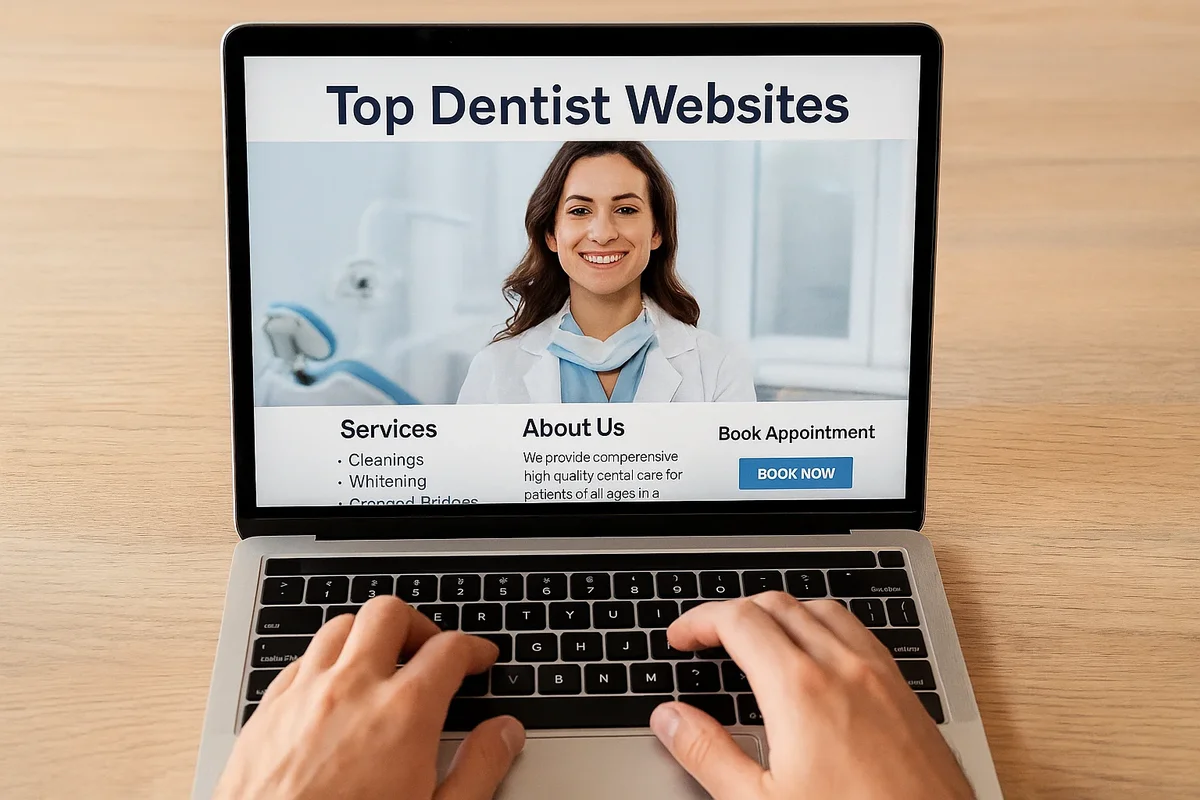
How to Build Your Own Top-Ranked Dentist Website
Creating one of the top dentist websites in today’s digital landscape requires more than just an appealing design—it demands strategy, technical precision, and patient-centered content that inspires trust. Whether you’re an independent dental professional or managing a multi-location clinic, your website is your primary marketing engine. It must inform, attract, and convert visitors seamlessly. In this comprehensive guide, we’ll break down the exact steps and strategies needed to build a high-performing dental website that ranks competitively and drives real patient engagement.
Step 1: Define Your Website Goals and Target Audience 🎯
Before diving into design or SEO, the top dentist websites begin with a clear purpose. Are you targeting local patients, international dental tourists, or cosmetic dentistry clients? Each audience requires different messaging, visuals, and keyword focus. For instance, a family dental clinic might emphasize comfort and trust, while a cosmetic practice would prioritize aesthetics and high-end visuals.
By defining your goals early—such as increasing appointment bookings, boosting brand visibility, or promoting specialized treatments—you can align every design and content decision toward measurable outcomes. The most successful dental websites treat their homepage like a digital handshake: concise, reassuring, and instantly informative.
Action Tip:
Create audience personas representing your ideal patients. Include details like age, concerns, search behavior, and preferred communication channels. This data will guide your design and content tone, ensuring alignment with patient expectations.
Step 2: Choose the Right Platform and Hosting Solution
The foundation of any great website lies in its technology stack. The top dentist websites typically run on reliable, SEO-friendly platforms like WordPress, which allows flexibility, speed optimization, and plugin integration. Hosting providers such as SiteGround or WP Engine offer the performance and uptime reliability that dental sites need to stay fast and accessible.
Speed is non-negotiable. Google’s Core Web Vitals now directly impact search rankings, so select hosting with global CDN (Content Delivery Network) support and SSL encryption. Secure, fast-loading websites also build trust—critical for healthcare audiences who expect professionalism from the moment they click your link.
Technical Recommendations:
- Use lightweight, responsive WordPress themes optimized for healthcare.
- Install caching plugins like WP Rocket or LiteSpeed Cache for speed.
- Ensure your site uses HTTPS for data security and credibility.
Step 3: Design for User Experience (UX) and Conversion
Design is more than aesthetics—it’s psychology. The top dentist websites are built around simplicity, clarity, and emotion. Visitors should find essential information like services, pricing, and booking forms within seconds. Strategic color palettes (calming blues, whites, and soft greens) reinforce cleanliness and professionalism, while readable fonts ensure accessibility.
Visual hierarchy is key. High-quality imagery of real staff, not stock photos, establishes authenticity. Place CTAs like “Book Appointment” or “Contact Us” in visible, repeating sections across your site. Adding micro-interactions—such as hover effects or animations—creates a dynamic yet professional feel without overwhelming users.
Conversion Optimization Tips:
- Display reviews and trust badges prominently on the homepage.
- Offer quick-contact tools like sticky phone buttons or WhatsApp chat icons.
- Use testimonials and patient stories as proof of results and satisfaction.
Step 4: Optimize for SEO and Local Visibility
Search engine optimization is the backbone of online success. The top dentist websites integrate comprehensive on-page and off-page SEO practices from day one. Start with keyword research focusing on both broad and location-based terms—like “cosmetic dentist in London” or “dental implants near me.” Ensure these keywords appear naturally in titles, headings, and meta descriptions without keyword stuffing.
Local SEO is particularly critical. Claim and optimize your Google Business Profile, include structured data markup (LocalBusiness, Dentist), and embed Google Maps on your contact page. Backlinks from reputable medical directories and dental associations, such as the American Dental Association, further reinforce authority and improve ranking potential.
Local SEO Checklist:
- Consistent NAP (Name, Address, Phone) across all platforms.
- Geo-targeted keywords in headings and metadata.
- Positive patient reviews integrated via schema markup.
Step 5: Craft Compelling and Educational Content
Content is what separates average dental sites from the top dentist websites. Patients visit your site not just to find a clinic but to learn, understand, and trust. Write blog posts, FAQs, and service pages that explain treatments in simple terms, answer common questions, and alleviate fears. Avoid jargon—patients want clarity, not complexity.
Consider adding a “Patient Education” hub with articles, videos, and infographics. This approach boosts engagement while signaling expertise to search engines. Don’t forget to include internal links—for instance, linking to your Redent Klinik Contact Page from relevant sections encourages direct action.
Content Creation Tips:
- Use storytelling in patient success case studies.
- Include before-and-after visuals (with consent) for emotional impact.
- Keep each blog post over 800 words for better SEO ranking.
Step 6: Make It Mobile-First and Accessible
Over 70% of dental searches now happen on smartphones. The top dentist websites prioritize responsive design that adapts flawlessly to any screen. Mobile users should never have to zoom, scroll horizontally, or wait for slow-loading pages. Use compressed WebP images, minimal pop-ups, and easy thumb-tap navigation to enhance mobile usability.
Accessibility is equally important. Use alt text for images, adequate color contrast, and ARIA labels for users with visual impairments. These improvements not only meet ethical standards but also contribute positively to SEO performance.
Mobile Optimization Best Practices:
- Test responsiveness using Google’s Mobile-Friendly Tool.
- Use fixed navigation bars for quick access to CTAs.
- Implement AMP for faster mobile page loading.
Step 7: Integrate Smart Booking and Automation Tools
Convenience is the heartbeat of modern web design. The top dentist websites integrate online booking systems, AI chatbots, and automated reminders. These tools streamline the patient journey while freeing staff from repetitive tasks. For example, chatbots can answer FAQs, offer treatment guidance, or even schedule appointments automatically.
Integration with CRM (Customer Relationship Management) software ensures that no inquiry gets lost. Patients appreciate responsive communication—delays or complex forms can cost valuable conversions. Simplify the booking process into three steps: choose service, pick a date, and confirm instantly.
Recommended Tools:
- Calendly or SimplyBook for appointment scheduling
- HubSpot CRM for managing patient data
- AI chat integrations such as Tidio or Drift
Step 8: Build Trust with Transparency and Reviews
Trust drives every patient decision. The top dentist websites display transparent pricing, qualifications, and verified reviews to eliminate hesitation. Instead of hiding prices, use a “starting from” model that provides context. Adding before-and-after galleries and team bios reinforces confidence and personal connection.
Encourage patients to leave Google or Healthgrades reviews and feature them strategically across your site. Use star ratings in structured data markup to help reviews appear in search snippets—boosting click-through rates significantly.
Trust Elements to Include:
- Professional certifications and awards
- Membership badges (e.g., ADA, EDA, or local associations)
- Patient video testimonials for authenticity
Step 9: Maintain and Update Regularly
Launching your site is just the beginning. The top dentist websites evolve continuously through updates, audits, and optimization. Schedule monthly content refreshes, remove outdated information, and track metrics like session duration and conversion rate through Google Analytics 4.
Regular updates signal freshness to Google and assure patients that your practice is active and trustworthy. Maintaining technical health—fixing broken links, updating plugins, and monitoring page speed—ensures long-term SEO stability and user satisfaction.
Maintenance Checklist:
- Update plugins and security certificates monthly
- Re-optimize pages every 3–6 months for new keywords
- Monitor Google Search Console for crawl or indexing errors
Conclusion: Your Path to Becoming One of the Top Dentist Websites
Building a successful dental website isn’t about trend-following—it’s about patient-first innovation. The top dentist websites combine empathetic design, technical precision, and authentic storytelling to build trust and generate consistent growth. Every element, from color palette to call-to-action placement, should reflect professionalism and care.
If you follow these principles—define goals, optimize for mobile, invest in SEO, and create meaningful content—you can elevate your practice to global standards. By continuously improving your website, your clinic can stand shoulder-to-shoulder with leaders like Mayo Clinic Dental and Redent Klinik, joining the elite circle of top dentist websites that define the future of digital dentistry.