
When it comes to achieving a straighter, healthier smile, understanding the types of braces and cost is one of the most important steps before starting orthodontic treatment. 🦷✨ Many patients are often unsure about which option is best for them, how much they should expect to pay, and what factors influence the overall expense. This comprehensive guide is designed to help you clearly understand the types of braces and cost, so you can make an informed and confident decision for your dental health.
The types of braces and cost vary significantly depending on several factors, including the complexity of your dental condition, the duration of treatment, the materials used, and the location of the dental clinic. Orthodontic solutions today are more advanced than ever, offering both traditional and modern options tailored to different lifestyles and budgets. Whether you are considering braces for yourself or your child, knowing the types of braces and cost will help you plan effectively and avoid unexpected expenses.
There are multiple orthodontic systems available, each designed to address specific alignment issues. The most common types of orthodontic braces include traditional metal braces, ceramic braces, lingual braces, and clear aligners. Each of these options comes with its own advantages, disadvantages, and pricing structures. Understanding the types of braces and cost associated with each can help you choose the right treatment that balances aesthetics, comfort, and affordability.
One of the key elements influencing the types of braces and cost is the severity of the dental misalignment. Minor spacing or crowding issues typically require less time and simpler solutions, which can reduce the overall cost. On the other hand, more complex cases involving bite correction, jaw alignment, or severe crowding may require longer treatment durations and more advanced techniques, increasing the types of braces and cost accordingly.
Another important factor affecting the types of braces and cost is the material and technology used in the braces. For example, traditional metal braces are generally the most affordable option, while more discreet alternatives like ceramic braces or clear aligners tend to be more expensive due to their aesthetic appeal and advanced design. Patients who prioritize invisibility often opt for these modern solutions despite the higher types of braces and cost, as they provide a more comfortable and less noticeable treatment experience.
Geographical location also plays a significant role in determining the types of braces and cost. Dental clinics in countries like Turkey have become increasingly popular for offering high-quality orthodontic treatments at more competitive prices compared to countries such as the United States or the United Kingdom. This makes dental tourism an attractive option for many patients seeking affordable yet professional care. If you are considering treatment abroad, it is important to research thoroughly and consult with trusted clinics like Redent Klinik Contact Page to ensure quality and safety.
Additionally, orthodontist experience and clinic reputation can impact the types of braces and cost. Highly experienced specialists may charge more for their expertise, but they often provide better treatment outcomes, shorter treatment times, and improved patient satisfaction. Investing in a qualified orthodontist can make a significant difference in both the effectiveness and efficiency of your treatment.
According to the American Dental Association, early orthodontic evaluation and proper treatment planning are essential for achieving optimal results. This highlights the importance of not only considering the types of braces and cost but also focusing on long-term oral health benefits. Straight teeth are not just about aesthetics—they also improve oral hygiene, reduce the risk of gum disease, and enhance overall dental function.
In summary, the types of braces and cost depend on multiple variables, including treatment complexity, material choice, location, and professional expertise. By understanding these factors in detail, you can choose a treatment plan that suits both your dental needs and your budget. In the following sections, we will explore each type of braces in depth, along with detailed cost comparisons, helping you make the best possible decision for your smile journey. 😁
What Are the Different Types of Braces and Cost Factors?
Understanding the types of braces and cost begins with recognizing that orthodontic treatment is not one-size-fits-all. 🦷 Each patient has unique dental needs, and modern dentistry offers a variety of solutions designed to address different alignment issues, aesthetic preferences, and budgets. The types of braces and cost vary depending on several important factors, including the type of braces chosen, treatment duration, and the expertise of the orthodontist.
Main Types of Braces Available Today
There are several widely used orthodontic systems, and each has a different impact on the types of braces and cost. These include:
1. Traditional Metal Braces
Traditional metal braces are the most common and cost-effective option. They use stainless steel brackets and wires to gradually move teeth into position. Because they are widely available and highly effective, they tend to have the lowest types of braces and cost compared to other options. Despite their visibility, modern versions are smaller, more comfortable, and highly efficient.
2. Ceramic Braces
Ceramic braces function similarly to metal braces but use tooth-colored or clear brackets. This makes them less noticeable, especially for adult patients who are concerned about aesthetics. However, the improved appearance comes with a higher types of braces and cost, as the materials are more advanced and delicate.
3. Lingual Braces
Lingual braces are placed on the inner surface of the teeth, making them completely invisible from the outside. This discreet design significantly increases the types of braces and cost due to the complexity of installation and customization. They are ideal for individuals who want effective treatment without visible braces.
4. Clear Aligners (Invisalign and Similar Systems)
Clear aligners are removable, transparent trays that gradually shift teeth into alignment. They are one of the most popular modern solutions due to their comfort and nearly invisible appearance. However, they usually come with a higher types of braces and cost, especially for more complex cases that require multiple aligner sets.
Key Factors That Influence Types of Braces and Cost
While the type of braces plays a major role, several additional factors influence the overall types of braces and cost. Understanding these variables helps patients better anticipate their financial commitment.
1. Complexity of the Case
Simple alignment issues such as minor crowding or spacing are generally less expensive to treat. However, complex cases involving bite correction, jaw alignment, or severe misalignment significantly increase the types of braces and cost due to longer treatment times and advanced techniques.
2. Treatment Duration
The longer the treatment period, the higher the types of braces and cost. Most orthodontic treatments last between 12 and 36 months. Frequent adjustments, follow-up visits, and monitoring all contribute to the final cost.
3. Orthodontist Expertise
The experience and reputation of the orthodontist can directly affect the types of braces and cost. Highly skilled professionals may charge more, but they often provide better results, fewer complications, and shorter treatment durations.
4. Clinic Location
Geographic location is another major factor. For example, the types of braces and cost in countries like the United States or the United Kingdom are typically higher than in countries such as Turkey. Many patients choose dental tourism to access high-quality care at more affordable prices.
Average Cost Overview
To give a general idea, here is a rough estimate of the types of braces and cost worldwide:
- Metal braces: $3,000 – $7,000
- Ceramic braces: $4,000 – $8,500
- Lingual braces: $8,000 – $13,000
- Clear aligners: $4,000 – $9,000
It is important to note that these prices may vary depending on individual needs and clinic pricing policies. Always consult a professional clinic like Redent Klinik Contact Page to receive a personalized treatment plan and accurate cost estimate.
Why Understanding Types of Braces and Cost Matters
Having a clear understanding of the types of braces and cost allows patients to make informed decisions that align with both their dental goals and financial situation. 😊 Choosing the right type of braces is not just about cost—it is about achieving long-term oral health, improving confidence, and ensuring comfort throughout the treatment process.
According to the American Dental Association, orthodontic treatment plays a crucial role in maintaining proper oral function and preventing future dental issues. Therefore, when evaluating the types of braces and cost, it is essential to consider both immediate expenses and long-term benefits.
In conclusion, the types of braces and cost depend on multiple interconnected factors, including the type of braces, treatment complexity, duration, and location. By understanding these elements in detail, patients can confidently choose the most suitable orthodontic solution for their needs while optimizing both results and budget. 👍
Traditional Metal Braces: Cost, Benefits, and Who Needs Them
When exploring the types of braces and cost, traditional metal braces are often the first and most widely recognized option. 🦷 These braces have been used for decades and remain one of the most effective orthodontic solutions for correcting a wide range of dental issues. Despite the emergence of newer technologies, metal braces continue to dominate due to their affordability, reliability, and ability to treat even the most complex cases. Understanding how they fit into the broader landscape of types of braces and cost is essential for making an informed decision.
What Are Traditional Metal Braces?
Traditional metal braces consist of high-grade stainless steel brackets that are bonded to the teeth and connected with wires and elastic bands. These components work together to gradually move teeth into their correct positions over time. Compared to other orthodontic treatment options, they are highly durable and capable of delivering precise results. This efficiency plays a significant role in keeping the types of braces and cost lower compared to more aesthetic alternatives.
How They Work
The orthodontist periodically adjusts the wires to apply controlled pressure on the teeth. Over time, this pressure guides the teeth into alignment. Because of this proven mechanism, metal braces are often recommended for patients with severe crowding, misalignment, or bite issues, making them a key part of the discussion around types of braces and cost.
Cost of Traditional Metal Braces
One of the biggest advantages of traditional braces is their affordability. Among all types of braces and cost options, metal braces are generally the most budget-friendly. The average cost typically ranges between:
- $3,000 – $7,000 in the United States
- $1,500 – $3,500 in countries like Turkey
- $2,500 – $6,000 in Europe
This pricing can vary depending on treatment duration, clinic reputation, and the complexity of the case. When evaluating the types of braces and cost, it is important to note that metal braces often provide the best value for money, especially for patients requiring extensive orthodontic correction.
Benefits of Traditional Metal Braces
There are several reasons why metal braces remain a top choice when comparing the types of braces and cost:
1. High Effectiveness
Metal braces are capable of treating even the most severe orthodontic issues. Their strength and precision make them highly reliable, which is why they are often recommended in complex cases involving jaw alignment and bite correction.
2. Cost-Effective Solution
Compared to other types of braces and cost, metal braces offer the lowest price point without compromising on results. This makes them ideal for families or individuals working within a budget.
3. Durable and Long-Lasting
The materials used in metal braces are extremely durable, reducing the risk of damage during treatment. This durability helps control the overall types of braces and cost by minimizing repairs and replacements.
4. Suitable for All Ages
Metal braces are effective for both children and adults. While they are more commonly associated with younger patients, many adults also choose them due to their affordability within the types of braces and cost spectrum.
Who Should Choose Metal Braces?
Metal braces are ideal for individuals who:
- Have moderate to severe alignment issues
- Require comprehensive orthodontic treatment
- Are looking for a cost-effective option among the types of braces and cost
- Do not mind visible brackets during treatment
Patients who prioritize effectiveness over aesthetics often find metal braces to be the best option when considering the types of braces and cost. Additionally, younger patients may enjoy customizing their braces with colored bands, making the treatment experience more engaging. 🎨
Are There Any Disadvantages?
While metal braces are highly effective, they do have some drawbacks:
1. Visibility
They are the most noticeable option among the types of braces and cost, which may be a concern for adults or professionals.
2. Dietary Restrictions
Patients must avoid certain hard or sticky foods to prevent damage, which can be inconvenient during long treatment periods.
3. Initial Discomfort
Some discomfort is common after adjustments, although this typically subsides within a few days.
Final Thoughts on Metal Braces
Traditional metal braces continue to be a cornerstone in orthodontics due to their proven effectiveness and affordability. When evaluating the types of braces and cost, they consistently stand out as the most practical solution for achieving reliable, long-term results. 😊
If you are considering orthodontic treatment and want expert guidance tailored to your needs, you can reach out to professionals through the Redent Klinik Contact Page. Additionally, organizations like the American Dental Association emphasize the importance of choosing the right treatment plan based on individual dental conditions.
Ultimately, the decision should be based on your specific needs, lifestyle, and budget. By understanding where metal braces fit within the types of braces and cost, you can confidently take the first step toward a healthier, more confident smile. 😁
Ceramic Braces: Aesthetic Options and Cost Breakdown
When evaluating the types of braces and cost, ceramic braces are often considered the perfect balance between effectiveness and aesthetics. 🦷✨ Unlike traditional metal braces, ceramic braces are designed with tooth-colored or clear brackets, making them far less noticeable. This makes them especially popular among adults and teenagers who want a discreet orthodontic solution without compromising treatment efficiency. Understanding how ceramic braces compare within the types of braces and cost spectrum is essential before making a decision.
What Are Ceramic Braces?
Ceramic braces function in the same way as traditional metal braces, using brackets and wires to gradually shift teeth into the desired position. The key difference lies in the material. Instead of stainless steel, ceramic braces use translucent or tooth-colored materials that blend with your natural teeth. This aesthetic advantage significantly impacts the types of braces and cost, as the materials are more refined and require careful handling.
How Ceramic Braces Work
The brackets are attached to the front of the teeth, similar to metal braces, but are less visible due to their color. A wire runs through the brackets and is periodically tightened by the orthodontist to guide tooth movement. While the mechanics are similar to other orthodontic treatment methods, the aesthetic design plays a major role in increasing the types of braces and cost.
Cost of Ceramic Braces
One of the most important aspects when comparing the types of braces and cost is pricing. Ceramic braces are generally more expensive than traditional metal braces due to their cosmetic appeal and material quality. On average, patients can expect the following price ranges:
- $4,000 – $8,500 in the United States
- $2,000 – $4,500 in Turkey
- $3,500 – $7,000 in Europe
These prices can vary depending on the complexity of the case, treatment duration, and clinic expertise. While they fall in the mid-to-high range of the types of braces and cost, many patients consider the improved appearance worth the additional investment.
Advantages of Ceramic Braces
Ceramic braces offer several key benefits that make them a popular choice among the types of braces and cost options:
1. Improved Aesthetics
The primary advantage is their discreet appearance. The brackets blend with the natural color of the teeth, making them less noticeable in social and professional settings. This feature alone justifies the slightly higher types of braces and cost for many patients.
2. Effective Treatment
Like metal braces, ceramic braces are highly effective in treating a wide range of orthodontic issues, from mild misalignment to more complex bite problems. This ensures that patients do not have to sacrifice performance when choosing a more aesthetic option within the types of braces and cost range.
3. Increased Confidence During Treatment
Because they are less visible, patients often feel more confident smiling, speaking, and interacting with others throughout the treatment process. This psychological benefit is an important factor when evaluating the types of braces and cost.
Disadvantages of Ceramic Braces
While ceramic braces offer many benefits, they also come with certain drawbacks that influence the types of braces and cost decision:
1. Higher Cost
Compared to metal braces, ceramic braces are more expensive due to the materials and design. This places them in a higher tier within the types of braces and cost spectrum.
2. Potential Staining
The brackets themselves are stain-resistant, but the elastic ties used in ceramic braces can discolor over time if proper oral hygiene is not maintained. This requires patients to be more diligent with cleaning, which indirectly affects the overall types of braces and cost by increasing maintenance needs.
3. Slightly More Fragile
Ceramic materials are not as strong as metal, meaning brackets may be more prone to breakage. This can lead to additional visits and potentially increase the total types of braces and cost.
Who Should Choose Ceramic Braces?
Ceramic braces are ideal for patients who:
- Want a less noticeable orthodontic solution
- Have moderate to complex alignment issues
- Are willing to invest slightly more in aesthetics within the types of braces and cost
- Maintain excellent oral hygiene habits
They are especially popular among working professionals, public-facing individuals, and older teenagers who are concerned about the visual impact of braces. 😊
Ceramic Braces vs Other Options
When comparing ceramic braces to other types of braces and cost options, they sit comfortably between traditional metal braces and more advanced solutions like lingual braces or clear aligners. They offer a strong balance of effectiveness and appearance without reaching the highest price points.
Final Thoughts on Ceramic Braces
Ceramic braces are an excellent option for patients who want effective orthodontic treatment with a more subtle appearance. While they are slightly more expensive than metal braces, their aesthetic benefits make them a worthwhile investment for many individuals considering the types of braces and cost. 😁
If you are unsure whether ceramic braces are right for you, consulting with a trusted clinic is the best next step. You can easily get personalized advice through the Redent Klinik Contact Page. Additionally, organizations like the American Dental Association recommend professional evaluation to determine the most suitable orthodontic treatment.
Ultimately, understanding where ceramic braces fit within the types of braces and cost allows you to choose a treatment that aligns with your lifestyle, aesthetic preferences, and long-term dental health goals.
Lingual Braces: Hidden Treatment and Price Considerations
Among the most discreet orthodontic solutions available today, lingual braces stand out when discussing the types of braces and cost. 🦷✨ These braces are attached to the inner (lingual) side of the teeth, making them completely invisible from the outside. For patients who want effective orthodontic treatment without the visual impact of traditional braces, lingual braces offer an appealing solution. However, their advanced design and customization significantly influence the types of braces and cost, placing them among the more premium options.
What Are Lingual Braces?
Lingual braces function similarly to traditional metal braces but are placed behind the teeth instead of in front. This unique positioning makes them virtually undetectable during everyday interactions. As a result, they are often chosen by professionals, public figures, and individuals who prioritize aesthetics while still needing comprehensive orthodontic correction. When comparing the types of braces and cost, lingual braces are often associated with high-end, customized treatment.
How Lingual Braces Work
Each bracket in a lingual system is custom-made to fit the shape of the patient’s teeth. A specialized wire is then threaded through these brackets to apply consistent pressure, gradually moving the teeth into alignment. This level of customization increases both the effectiveness and the types of braces and cost, as the process requires advanced technology and expertise.
Cost of Lingual Braces
When evaluating the types of braces and cost, lingual braces are typically among the most expensive options available. Their pricing reflects the complexity of design, customization, and placement. On average, the cost ranges are:
- $8,000 – $13,000 in the United States
- $4,000 – $8,000 in Turkey
- $6,000 – $10,000 in Europe
These prices can vary depending on treatment duration, case complexity, and the orthodontist’s experience. The higher types of braces and cost is primarily due to the advanced laboratory work and the precision required during installation and adjustments.
Advantages of Lingual Braces
Lingual braces offer several unique benefits that justify their position within the premium types of braces and cost category:
1. Completely Invisible
The biggest advantage is their invisibility. Since they are placed behind the teeth, they cannot be seen when you smile, talk, or eat. This makes them one of the most discreet options among all types of braces and cost.
2. Highly Customized Treatment
Each bracket is individually designed for the patient’s teeth, ensuring precise alignment and effective results. This customization enhances treatment quality but also contributes to the higher types of braces and cost.
3. Suitable for Complex Cases
Lingual braces can treat a wide range of orthodontic problems, including severe misalignment and bite issues. This makes them a versatile choice despite the increased types of braces and cost.
Disadvantages of Lingual Braces
While lingual braces offer excellent aesthetic benefits, they also come with certain challenges that affect the types of braces and cost decision:
1. Higher Cost
They are one of the most expensive options within the types of braces and cost spectrum due to customization and specialized expertise.
2. Initial Discomfort
Because they are placed on the inner side of the teeth, lingual braces can cause irritation to the tongue, especially during the first few weeks. This adjustment period is an important consideration when evaluating the types of braces and cost.
3. Speech Adjustment
Some patients experience temporary speech difficulties, such as a slight lisp, while adapting to lingual braces. Although this typically improves over time, it is a factor to consider alongside the types of braces and cost.
4. Maintenance Challenges
Cleaning lingual braces can be more difficult due to their position. Patients must be diligent with oral hygiene to avoid plaque buildup, which can indirectly influence the overall types of braces and cost if additional dental care is required.
Who Should Choose Lingual Braces?
Lingual braces are ideal for individuals who:
- Want completely invisible orthodontic treatment
- Have moderate to severe alignment issues
- Are willing to invest in a premium option within the types of braces and cost
- Are committed to maintaining excellent oral hygiene
They are especially suitable for professionals, actors, or anyone who wants to maintain a natural appearance during treatment. 😊
Lingual Braces vs Other Options
Compared to other types of braces and cost, lingual braces offer unmatched invisibility but at a higher price point. While clear aligners also provide discreet treatment, they may not be suitable for all complex cases. Lingual braces, on the other hand, combine invisibility with the strength and effectiveness of fixed braces.
Final Thoughts on Lingual Braces
Lingual braces represent one of the most advanced and discreet orthodontic solutions available today. Although they come with a higher types of braces and cost, their invisible design and customized approach make them a valuable option for patients seeking both aesthetics and effectiveness. 😁
If you are considering lingual braces and want expert advice tailored to your needs, you can contact professionals through the Redent Klinik Contact Page. Additionally, the American Dental Association recommends consulting a qualified orthodontist to determine the best treatment plan based on individual dental conditions.
Ultimately, understanding how lingual braces fit within the types of braces and cost allows you to choose a solution that aligns with your aesthetic expectations, lifestyle, and long-term oral health goals.
Clear Aligners vs Braces: Cost Comparison and Effectiveness
When analyzing the types of braces and cost, one of the most common comparisons patients make is between clear aligners and traditional braces. 🦷✨ Both options are designed to straighten teeth and improve oral health, but they differ significantly in terms of appearance, comfort, flexibility, and pricing. Understanding how these two solutions compare within the types of braces and cost framework is essential for choosing the right orthodontic treatment.
What Are Clear Aligners?
Clear aligners are transparent, removable trays custom-made to fit your teeth. They gradually shift teeth into the desired position through a series of aligners that are replaced every one to two weeks. Unlike traditional braces, they do not use brackets or wires. This modern approach has significantly influenced the types of braces and cost, as it combines advanced technology with aesthetic appeal.
Popular Clear Aligner Systems
Some of the most well-known systems include Invisalign and similar brands. These systems use 3D imaging technology to create a personalized treatment plan, which is a key factor affecting the types of braces and cost.
How Do Traditional Braces Compare?
Traditional braces, whether metal or ceramic, use fixed brackets and wires to move teeth into alignment. They are not removable and require regular adjustments by an orthodontist. While they are more visible, they are often more effective for complex cases. This distinction plays a major role when evaluating the types of braces and cost.
Cost Comparison: Clear Aligners vs Braces
One of the most important considerations in the types of braces and cost is the price difference between these two options. Below is a general comparison:
- Clear aligners: $4,000 – $9,000
- Metal braces: $3,000 – $7,000
- Ceramic braces: $4,000 – $8,500
In many cases, clear aligners fall in the mid-to-high range of the types of braces and cost. However, the final cost depends on treatment complexity and duration. While aligners may seem more expensive initially, their convenience and reduced need for in-office visits can balance the overall types of braces and cost for some patients.
Effectiveness: Which Option Works Better?
1. Mild to Moderate Cases
For mild to moderate alignment issues, clear aligners are highly effective. They can correct spacing, minor crowding, and slight bite issues. In such cases, they offer a comparable solution within the types of braces and cost range.
2. Complex Cases
Traditional braces are generally more effective for severe misalignment, complex bite problems, or jaw corrections. Their fixed structure allows for more precise control, which is a critical factor when evaluating the types of braces and cost.
Advantages of Clear Aligners
1. Nearly Invisible
Clear aligners are one of the most discreet options available, making them a top choice among adults. This aesthetic advantage significantly influences the types of braces and cost.
2. Removable Design
Patients can remove aligners while eating, drinking, brushing, and flossing. This improves oral hygiene and convenience, adding value to the overall types of braces and cost.
3. Comfort
Without wires or brackets, aligners tend to cause less irritation. This comfort factor is often considered when comparing the types of braces and cost.
Advantages of Traditional Braces
1. Superior for Complex Treatments
Braces are more effective for complicated orthodontic issues, making them indispensable in certain cases within the types of braces and cost spectrum.
2. No Compliance Required
Since braces are fixed, patients do not need to remember to wear them. This ensures consistent treatment progress, which can impact the overall types of braces and cost by avoiding delays.
3. Lower Cost Option
Metal braces, in particular, are often the most affordable option, making them attractive for patients concerned about the types of braces and cost.
Disadvantages to Consider
Clear Aligners
- Require strict patient compliance (20–22 hours per day)
- May not be suitable for complex cases
- Higher cost compared to basic metal braces
Traditional Braces
- More visible
- Dietary restrictions
- Potential discomfort from wires and adjustments
These disadvantages highlight the importance of carefully evaluating the types of braces and cost based on individual needs and lifestyle.
Which Option Is Right for You?
The choice between clear aligners and braces depends on several factors, including the severity of your dental issue, your budget, and your personal preferences. Patients who prioritize aesthetics and flexibility often prefer aligners, while those needing complex corrections may benefit more from traditional braces. Understanding the types of braces and cost helps ensure that your decision aligns with both your goals and financial situation. 😊
Final Thoughts on Aligners vs Braces
Both clear aligners and traditional braces are effective orthodontic solutions, but they serve different needs. When comparing the types of braces and cost, it is essential to look beyond price and consider effectiveness, comfort, and long-term results. A professional consultation is the best way to determine the ideal treatment for your specific case.
For personalized advice and treatment planning, you can contact experts through the Redent Klinik Contact Page. Additionally, the American Dental Association emphasizes the importance of individualized orthodontic care.
Ultimately, understanding the differences between aligners and braces within the types of braces and cost framework empowers you to make a confident and informed decision for your smile journey. 😁
Self-Ligating Braces: Advanced Technology and Pricing
When exploring modern orthodontic innovations, self-ligating braces are an important category within the types of braces and cost. 🦷✨ These braces represent an evolution of traditional systems, offering improved comfort, efficiency, and reduced treatment time in many cases. While they may look similar to metal or ceramic braces at first glance, their unique mechanism sets them apart and plays a key role in determining the types of braces and cost.
What Are Self-Ligating Braces?
Self-ligating braces use a specialized bracket system that eliminates the need for elastic or metal ties (ligatures). Instead, they feature a built-in sliding mechanism or clip that holds the archwire in place. This allows the wire to move more freely, reducing friction and potentially speeding up treatment. This advanced technology directly impacts the types of braces and cost, placing self-ligating braces in a slightly higher price range than traditional metal braces.
Types of Self-Ligating Braces
There are two main types of self-ligating braces, both of which influence the types of braces and cost differently:
- Passive Self-Ligating Braces: These use a sliding door mechanism that allows the wire to move freely with minimal friction.
- Active Self-Ligating Braces: These use a spring clip that applies gentle pressure to control tooth movement more actively.
How Self-Ligating Braces Work
The primary advantage of self-ligating braces lies in their low-friction design. The archwire moves more smoothly through the brackets, allowing teeth to shift more naturally. This can lead to fewer orthodontic visits and potentially shorter treatment times, which may positively affect the overall types of braces and cost. Patients often report greater comfort compared to traditional braces due to reduced pressure and fewer adjustments.
Cost of Self-Ligating Braces
When comparing the types of braces and cost, self-ligating braces typically fall between traditional metal braces and more premium options like lingual braces. The average price ranges are:
- $3,500 – $8,000 in the United States
- $2,000 – $4,500 in Turkey
- $3,000 – $6,500 in Europe
Although they are slightly more expensive than conventional braces, many patients consider the additional benefits worth the increase in types of braces and cost. Reduced treatment time and fewer appointments can also offset some of the overall expenses.
Advantages of Self-Ligating Braces
Self-ligating braces offer several benefits that make them a strong contender within the types of braces and cost spectrum:
1. Faster Treatment Time
Due to reduced friction, teeth may move more efficiently, potentially shortening the overall treatment duration. This is a significant advantage when evaluating the types of braces and cost.
2. Fewer Dental Visits
Because there are no elastic ties to replace, patients often require fewer adjustment appointments. This convenience adds value to the overall types of braces and cost.
3. Improved Comfort
The absence of tight ligatures reduces pressure on the teeth, making the treatment more comfortable compared to traditional braces. Comfort is an important factor when comparing the types of braces and cost.
4. Better Oral Hygiene
Without elastic bands, there are fewer areas where plaque can accumulate. This makes cleaning easier and helps maintain oral health during treatment, indirectly influencing the long-term types of braces and cost.
Disadvantages of Self-Ligating Braces
Despite their advantages, self-ligating braces also have some limitations that should be considered when analyzing the types of braces and cost:
1. Higher Initial Cost
They are generally more expensive than traditional metal braces due to their advanced design, which increases the overall types of braces and cost.
2. Not Always Faster for Every Case
While many cases benefit from shorter treatment times, complex orthodontic issues may still require a similar duration as traditional braces. This means the types of braces and cost advantage may vary depending on the individual case.
3. Limited Availability
Not all clinics offer self-ligating systems, and finding an experienced orthodontist may affect both accessibility and the types of braces and cost.
Who Should Choose Self-Ligating Braces?
Self-ligating braces are ideal for patients who:
- Want a more comfortable orthodontic experience
- Prefer fewer clinic visits
- Have mild to moderate alignment issues
- Are willing to invest slightly more within the types of braces and cost range
They are especially appealing to busy individuals who want efficient treatment with minimal disruption to their daily routine. 😊
Self-Ligating Braces vs Traditional Braces
When comparing self-ligating braces to traditional systems within the types of braces and cost, the key differences lie in comfort, maintenance, and efficiency. While traditional braces are more affordable, self-ligating braces offer a more advanced and convenient experience, making them a popular middle-ground option.
Final Thoughts on Self-Ligating Braces
Self-ligating braces represent a modern advancement in orthodontics, combining efficiency, comfort, and improved hygiene. Although they come with a slightly higher types of braces and cost, their benefits make them a worthwhile investment for many patients. 😁
If you are considering this treatment option, consulting with experienced professionals is essential. You can easily get personalized guidance through the Redent Klinik Contact Page. Additionally, the American Dental Association recommends individualized treatment planning to achieve the best results.
Ultimately, understanding where self-ligating braces fit within the types of braces and cost allows you to choose a solution that balances innovation, comfort, and affordability for your orthodontic journey.
How Location and Dentist Expertise Affect Braces Cost
When evaluating the types of braces and cost, many patients focus only on the type of braces they choose. However, two critical factors that significantly influence pricing are geographic location and the expertise of the orthodontist. 🌍🦷 Even for the same treatment, the types of braces and cost can vary dramatically depending on where the clinic is located and who performs the procedure. Understanding these variables can help you make a smarter, more cost-effective decision.
Why Location Matters in Braces Cost
The country and city where you receive treatment play a major role in determining the types of braces and cost. Dental services are influenced by local economic conditions, operational costs, and healthcare regulations. This means that identical treatments can have very different price tags depending on the region.
1. Cost Differences Between Countries
In countries like the United States, Canada, and the United Kingdom, orthodontic treatment tends to be more expensive due to higher labor costs, insurance systems, and overhead expenses. As a result, the types of braces and cost in these regions can be significantly higher compared to countries like Turkey, Hungary, or Mexico, where dental tourism is popular.
- USA: $4,000 – $13,000 depending on the type
- UK: £3,000 – £10,000
- Turkey: $1,500 – $5,000
- Eastern Europe: $2,000 – $6,000
These variations show how location directly affects the types of braces and cost. Many international patients choose to travel abroad for treatment because they can receive high-quality care at a fraction of the price.
2. Urban vs Rural Clinics
Even within the same country, prices can vary based on whether the clinic is located in a major city or a smaller town. Urban clinics typically have higher operational costs, which can increase the types of braces and cost. However, they may also offer more advanced technology and experienced specialists.
Dentist Expertise and Its Impact on Cost
The experience and qualifications of the orthodontist are another key factor influencing the types of braces and cost. While it may be tempting to choose a lower-cost provider, the skill level of the dentist can significantly affect treatment outcomes.
1. Specialist vs General Dentist
Orthodontists are specialists who have completed additional training beyond general dentistry. Choosing a certified orthodontist may increase the types of braces and cost, but it also ensures a higher level of precision and care. Complex cases, in particular, benefit from specialist expertise.
2. Years of Experience
Highly experienced orthodontists often charge more due to their proven track record and reputation. This can increase the types of braces and cost, but it often results in better treatment efficiency, fewer complications, and improved long-term results.
3. Use of Advanced Technology
Clinics that invest in modern equipment such as 3D imaging, digital scanning, and customized treatment planning may have higher fees. These technologies improve accuracy and comfort, but they also contribute to the overall types of braces and cost.
Dental Tourism: A Cost-Effective Option
Due to the significant variation in the types of braces and cost worldwide, many patients consider dental tourism as a viable solution. Countries like Turkey have become leading destinations for orthodontic care, offering high-quality treatments at competitive prices.
Benefits of Dental Tourism
- Lower treatment costs
- Access to experienced specialists
- Modern clinics with advanced technology
- Opportunity to combine treatment with travel ✈️
However, it is essential to research clinics carefully and ensure they meet international standards. Consulting a trusted provider such as the Redent Klinik Contact Page can help you safely navigate your options.
Hidden Costs to Consider
When comparing the types of braces and cost, patients should also be aware of additional expenses that may not be included in the initial quote:
1. Consultation Fees
Some clinics charge separately for initial consultations, X-rays, or treatment planning.
2. Retainers
After braces are removed, retainers are necessary to maintain results. These can add to the overall types of braces and cost.
3. Follow-Up Visits
Regular check-ups and adjustments are part of the treatment process and may increase the total cost.
4. Travel and Accommodation
For patients considering dental tourism, travel expenses should be factored into the total types of braces and cost.
Balancing Cost and Quality
While it is important to consider affordability, choosing the cheapest option is not always the best decision. The types of braces and cost should be evaluated alongside the quality of care, the expertise of the dentist, and the expected results. Investing in a reputable clinic and experienced orthodontist can save money in the long run by avoiding complications or additional treatments. 😊
Final Thoughts on Location and Expertise
The types of braces and cost are influenced by more than just the type of braces. Location and dentist expertise play a crucial role in determining both price and treatment quality. By understanding these factors, patients can make informed decisions that balance cost, convenience, and long-term oral health.
For accurate information and personalized treatment plans, consulting reliable sources is essential. Organizations like the American Dental Association emphasize the importance of professional evaluation and quality care in orthodontic treatment.
Ultimately, taking the time to research and compare options ensures that you receive the best value for your investment while achieving a healthy, confident smile. 😁
Insurance, Payment Plans, and Ways to Reduce Braces Cost
When considering the types of braces and cost, one of the most important concerns for patients is how to manage and reduce the overall financial burden. 🦷💳 Orthodontic treatment can be a significant investment, but there are multiple ways to make it more affordable. From insurance coverage to flexible payment plans and cost-saving strategies, understanding these options can greatly impact how you approach the types of braces and cost.
Does Dental Insurance Cover Braces?
Dental insurance can play a crucial role in reducing the types of braces and cost. However, coverage varies widely depending on the policy and provider.
1. Partial Coverage
Most dental insurance plans that include orthodontic benefits typically cover a percentage of the treatment cost, often ranging from 25% to 50%. This can significantly lower the overall types of braces and cost, especially for more expensive options like ceramic or lingual braces.
2. Lifetime Maximums
Many insurance plans set a lifetime limit for orthodontic coverage, usually between $1,000 and $3,000. Once this limit is reached, the patient is responsible for the remaining types of braces and cost.
3. Age Restrictions
Some policies only cover orthodontic treatment for patients under 18. Adults may need to rely on alternative financial strategies to manage the types of braces and cost.
Flexible Payment Plans
Many dental clinics offer in-house payment plans to make orthodontic treatment more accessible. These plans allow patients to spread the types of braces and cost over several months or years.
1. Monthly Installments
Instead of paying the full amount upfront, patients can make manageable monthly payments. This approach makes even higher-end options within the types of braces and cost range more affordable.
2. Interest-Free Options
Some clinics provide interest-free financing for a certain period, reducing the financial burden associated with the types of braces and cost.
3. Third-Party Financing
Healthcare financing companies can also help patients cover the types of braces and cost. These services often offer extended repayment terms, although interest rates may apply.
Health Savings Accounts (HSA) and Flexible Spending Accounts (FSA)
Another effective way to manage the types of braces and cost is by using HSA or FSA accounts. These accounts allow patients to use pre-tax income to pay for medical and dental expenses.
Benefits of HSA/FSA
- Reduces taxable income
- Covers orthodontic treatments
- Helps plan for future dental expenses
Using these accounts can significantly lower the effective types of braces and cost by maximizing tax savings.
Ways to Reduce Braces Cost
Beyond insurance and payment plans, there are several strategies to reduce the types of braces and cost:
1. Choose Cost-Effective Options
Traditional metal braces are typically the most affordable option. Selecting them instead of premium alternatives can reduce the types of braces and cost significantly.
2. Compare Multiple Clinics
Prices can vary between clinics, even within the same city. Getting multiple quotes helps you find the best value for the types of braces and cost.
3. Consider Dental Tourism
Traveling to countries like Turkey can offer substantial savings on the types of braces and cost. High-quality clinics provide advanced treatments at lower prices compared to Western countries.
4. Maintain Good Oral Hygiene
Proper dental care during treatment prevents complications that could increase the types of braces and cost through additional procedures or repairs.
5. Ask About Discounts
Some clinics offer discounts for upfront payments, family treatments, or seasonal promotions, helping to reduce the overall types of braces and cost.
Example Cost Breakdown with Savings
Here is a simplified example of how the types of braces and cost can be reduced:
- Initial cost of ceramic braces: $6,000
- Insurance coverage (40%): -$2,400
- Remaining cost: $3,600
- Monthly payment plan (24 months): $150/month
This example demonstrates how strategic planning can make the types of braces and cost much more manageable for patients.
Importance of Professional Guidance
Understanding all financial options requires expert advice. Consulting a trusted clinic ensures that you receive accurate information about the types of braces and cost and available payment solutions. You can get personalized support through the Redent Klinik Contact Page.
Additionally, the American Dental Association recommends discussing financial planning with your dentist before starting treatment to avoid unexpected expenses.
Final Thoughts on Managing Braces Cost
The types of braces and cost may seem overwhelming at first, but with the right approach, orthodontic treatment can be made accessible and affordable. By combining insurance benefits, flexible payment plans, and smart cost-saving strategies, patients can achieve their ideal smile without financial stress. 😊
Ultimately, understanding how to manage the types of braces and cost empowers you to take control of your treatment journey, ensuring both financial comfort and long-term dental health success. 😁
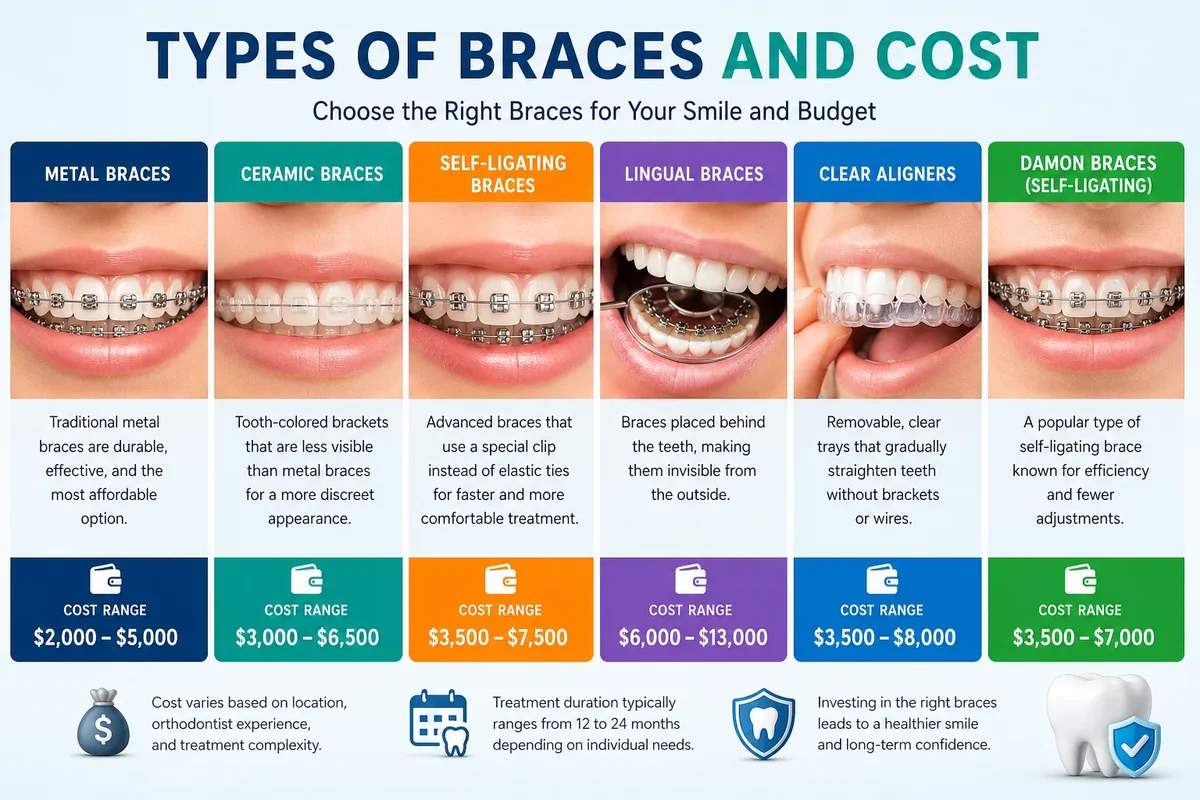
How to Choose the Best Type of Braces Based on Cost and Needs
Choosing the right orthodontic treatment can feel overwhelming, especially when comparing the types of braces and cost. 🦷💡 With multiple options available—each with different advantages, limitations, and pricing—it is essential to evaluate your personal needs, lifestyle, and budget carefully. The goal is not just to find the cheapest solution, but to select the most effective treatment that delivers long-term results while fitting within your financial plan. Understanding how to balance the types of braces and cost will help you make a confident and informed decision.
Assess Your Dental Needs First
The first step in choosing the right option is to understand the severity of your orthodontic issue. The types of braces and cost can vary significantly depending on whether you have mild, moderate, or complex alignment problems.
1. Mild Cases
If you have minor spacing or slight crowding, clear aligners or ceramic braces may be sufficient. These options offer a balance between aesthetics and effectiveness within the types of braces and cost range.
2. Moderate Cases
For more noticeable misalignment, both traditional braces and self-ligating systems are effective. In this case, the types of braces and cost decision often depends on your preference for comfort and appearance.
3. Complex Cases
Severe bite issues or jaw misalignment typically require traditional metal or lingual braces. These options provide the control needed for complex corrections, even though they may increase the types of braces and cost.
Consider Your Budget
Budget plays a critical role when comparing the types of braces and cost. While it may be tempting to choose the least expensive option, it is important to consider the long-term value of the treatment.
Affordable Options
Metal braces are generally the most cost-effective choice. They provide excellent results at a lower price point, making them ideal for patients focused on minimizing the types of braces and cost.
Mid-Range Options
Ceramic braces and self-ligating braces fall into the mid-range category. They offer improved aesthetics or comfort while maintaining reasonable pricing within the types of braces and cost spectrum.
Premium Options
Lingual braces and clear aligners are typically more expensive but provide superior aesthetics and convenience. Patients who prioritize discretion often accept the higher types of braces and cost for these benefits.
Lifestyle and Daily Habits
Your lifestyle should also influence your decision when evaluating the types of braces and cost. Different treatments require different levels of commitment and care.
1. Busy Schedule
If you have a demanding lifestyle, clear aligners or self-ligating braces may be more suitable due to fewer clinic visits. This can indirectly impact the overall types of braces and cost by saving time and travel expenses.
2. Dietary Preferences
Traditional braces require avoiding certain foods, while aligners can be removed during meals. This flexibility is an important factor when comparing the types of braces and cost.
3. Oral Hygiene Commitment
Maintaining good oral hygiene is essential with any orthodontic treatment. However, removable aligners make cleaning easier, which can help prevent additional dental costs related to the types of braces and cost.
Aesthetic Preferences
Appearance is a major consideration for many patients. The types of braces and cost often increase as treatments become less visible.
Visible vs Invisible Options
- Metal braces: most visible, lowest cost
- Ceramic braces: less visible, moderate cost
- Lingual braces: invisible, high cost
- Clear aligners: nearly invisible, mid-to-high cost
This comparison highlights how aesthetics directly influence the types of braces and cost.
Consultation with an Orthodontist
Professional evaluation is crucial when deciding among the types of braces and cost. An experienced orthodontist can assess your dental condition and recommend the most suitable treatment.
What to Expect During Consultation
- Dental examination and imaging
- Discussion of treatment options
- Personalized cost estimate
- Timeline and expected results
For expert advice tailored to your needs, you can reach out through the Redent Klinik Contact Page. Additionally, the American Dental Association emphasizes the importance of individualized treatment planning.
Balancing Cost and Value
When comparing the types of braces and cost, it is important to focus on value rather than just price. A slightly higher investment in a more suitable treatment can lead to better results, shorter treatment time, and fewer complications.
Long-Term Benefits
Straighter teeth improve oral hygiene, reduce the risk of gum disease, and enhance overall dental function. These long-term benefits should be considered alongside the types of braces and cost.
Final Thoughts on Choosing the Right Braces
Selecting the best orthodontic treatment requires careful consideration of multiple factors, including dental needs, budget, lifestyle, and aesthetic preferences. By understanding the types of braces and cost, you can confidently choose an option that aligns with your goals and expectations. 😊
Ultimately, the right choice is one that provides effective results, fits your financial situation, and supports your long-term oral health. Taking the time to evaluate all aspects of the types of braces and cost ensures a successful and satisfying orthodontic journey. 😁