
When it comes to achieving a straight, healthy smile, understanding the types of braces for teeth is essential. Orthodontic treatments have evolved significantly over the years, offering patients more choices than ever before. Whether you are dealing with crooked teeth, bite issues, or spacing problems, choosing the right option among the different types of braces for teeth can make a huge difference in both results and comfort 😊.
The types of braces for teeth available today cater to various needs, lifestyles, and aesthetic preferences. From traditional metal braces to nearly invisible clear aligners, each method works toward aligning teeth and improving oral health. Understanding how each option functions will help you make an informed decision with your orthodontist.
Braces work by applying continuous pressure over time to gradually move teeth into the desired position. This process involves the remodeling of bone and soft tissue, which is why treatment duration varies depending on the complexity of the case. Regardless of which option you choose among the types of braces for teeth, the ultimate goal is the same: a healthier bite and a confident smile.
One of the most important aspects to consider when exploring types of braces for teeth is your lifestyle. For example, if aesthetics are a priority, you may prefer less visible options such as ceramic braces or clear aligners. On the other hand, if you are looking for durability and cost-effectiveness, traditional metal braces might be the best choice.
Another factor influencing your decision is treatment time. Some types of braces for teeth are designed to accelerate the alignment process, while others focus more on comfort and discretion. Orthodontic innovations now allow patients to choose solutions that align not only their teeth but also their daily routines.
It is also important to consider maintenance. Certain types of braces for teeth require more care and attention, especially when it comes to cleaning and avoiding certain foods. Proper oral hygiene is critical during treatment to prevent issues such as cavities or gum disease. Your orthodontist will guide you on how to care for your braces effectively.
In addition to functionality, the cost of types of braces for teeth can vary widely. Factors such as material, treatment complexity, and location of the dental clinic all play a role. While some options may seem more expensive upfront, they might offer benefits such as shorter treatment times or greater comfort, making them worthwhile investments.
If you are considering orthodontic treatment, it is always recommended to consult with a professional. You can reach out through the Redent Klinik Contact Page to receive personalized advice tailored to your dental needs. A specialist will evaluate your condition and recommend the most suitable types of braces for teeth based on your goals.
For reliable information about dental health and orthodontic treatments, you can also visit the American Dental Association. This trusted organization provides evidence-based guidance that can help you better understand the benefits and considerations of different orthodontic solutions.
In summary, the wide range of types of braces for teeth available today ensures that there is an option for everyone. Whether you prioritize aesthetics, comfort, speed, or affordability, modern orthodontics offers solutions that can meet your expectations. By understanding these options and working closely with a dental professional, you can take the first step toward a healthier, more confident smile 😁.
1. What Are the Main Types of Braces for Teeth?
Understanding the types of braces for teeth is the first step toward choosing the most suitable orthodontic treatment. Braces are designed to correct misalignment, improve bite function, and enhance overall oral health. Today, there are several types of braces for teeth available, each offering unique advantages depending on the patient’s needs, lifestyle, and aesthetic preferences 😊.
Why Are Braces Necessary?
Before diving into the types of braces for teeth, it’s important to understand why braces are needed. Crooked or misaligned teeth can lead to various issues such as difficulty chewing, speech problems, jaw pain, and even long-term dental complications like tooth decay or gum disease. Orthodontic treatment addresses these problems by gradually repositioning the teeth into proper alignment.
All types of braces for teeth work on the same basic principle: applying controlled pressure over time to shift teeth into the desired position. However, the method, materials, and visibility differ among each option.
Main Categories of Types of Braces for Teeth
The modern orthodontic field offers multiple types of braces for teeth, which can generally be grouped into several main categories. Each type is designed to cater to different priorities such as aesthetics, comfort, or treatment speed.
1. Fixed Braces
Fixed braces are the most traditional types of braces for teeth. They are attached directly to the teeth and cannot be removed by the patient. These include metal braces, ceramic braces, and lingual braces. Fixed systems are highly effective for treating complex orthodontic issues.
Because they remain in place throughout the treatment, fixed types of braces for teeth provide consistent pressure, making them reliable for achieving precise results. However, they do require careful oral hygiene and regular dental visits.
2. Removable Braces
Removable options are increasingly popular among modern types of braces for teeth. These include clear aligners, which can be taken out for eating, brushing, and special occasions. This flexibility makes them highly appealing, especially for adults and teens.
Although removable types of braces for teeth offer convenience, they require discipline. Patients must wear them for the recommended number of hours per day to achieve effective results.
How Different Types of Braces for Teeth Work
All types of braces for teeth use mechanical force to guide teeth into alignment. This process involves gradual adjustments over time, allowing the bone around the teeth to adapt. The duration of treatment varies depending on the severity of misalignment and the chosen method.
Some types of braces for teeth use brackets and wires, while others rely on custom-made trays. Regardless of the method, the orthodontist carefully plans each stage of movement to ensure optimal results.
Factors That Influence Your Choice
Choosing between different types of braces for teeth involves several considerations. Each patient has unique needs, and the best option depends on multiple factors.
Aesthetic Preferences
Many patients prefer discreet types of braces for teeth that are less noticeable. Options like ceramic braces or clear aligners are ideal for those who want a more natural look during treatment.
Comfort Level
Comfort is another key factor when selecting types of braces for teeth. Some systems are designed to minimize irritation and pressure, making them more comfortable for daily use.
Treatment Duration
The length of treatment can vary significantly among types of braces for teeth. Some advanced systems are designed to speed up the process, while others may take longer but provide highly precise results.
Budget Considerations
Cost is often a deciding factor when comparing types of braces for teeth. While traditional options tend to be more affordable, modern alternatives may offer additional benefits that justify their higher price.
Advantages of Modern Types of Braces for Teeth
Thanks to advancements in dental technology, today’s types of braces for teeth are more efficient, comfortable, and aesthetically pleasing than ever before. Patients now have access to customized treatments that fit seamlessly into their lifestyles.
Modern types of braces for teeth also allow for better oral hygiene management and fewer dietary restrictions compared to older methods. This makes the overall treatment experience more convenient and less disruptive.
When to Consult an Orthodontist
If you are unsure which of the types of braces for teeth is right for you, consulting an orthodontist is essential. A professional evaluation will help determine the most effective treatment plan based on your dental condition.
You can easily get personalized guidance by visiting the Redent Klinik Contact Page. A specialist will assess your needs and recommend the most suitable option among the available types of braces for teeth.
Additionally, for evidence-based dental information, you may refer to the American Dental Association, which provides trusted resources about orthodontic treatments.
Final Thoughts on Types of Braces for Teeth
In conclusion, understanding the different types of braces for teeth helps you make a confident and informed decision. Each option offers unique benefits, and the right choice depends on your specific goals and lifestyle. With the variety of types of braces for teeth available today, achieving a beautiful, healthy smile has never been more accessible 😁.
2. Traditional Metal Braces: The Most Common Choice
Among all the types of braces for teeth, traditional metal braces remain the most widely used and trusted option worldwide. Despite the rise of newer technologies, metal braces continue to be a reliable solution for correcting even the most complex orthodontic issues. Their effectiveness, durability, and affordability make them a top choice for both teenagers and adults 😊.
What Are Traditional Metal Braces?
Traditional metal braces are fixed orthodontic appliances made of high-grade stainless steel. They consist of brackets attached to each tooth, connected by an archwire that applies continuous pressure. This controlled force gradually shifts teeth into their proper positions over time.
When discussing the types of braces for teeth, metal braces are often considered the foundation of orthodontic treatment. They have been used for decades and have undergone significant improvements, making them smaller, more comfortable, and more efficient than ever before.
How Do Metal Braces Work?
Like all types of braces for teeth, metal braces function by applying steady pressure to move teeth. The orthodontist periodically adjusts the archwire to guide the teeth into alignment. These adjustments are crucial for achieving precise results.
The brackets act as anchors, while the wire directs the movement. Elastic bands may also be used to correct bite issues. Among the various types of braces for teeth, metal braces provide one of the most controlled and predictable treatment outcomes.
Advantages of Traditional Metal Braces
1. Highly Effective for Complex Cases
One of the biggest advantages of metal braces compared to other types of braces for teeth is their ability to treat severe misalignment, overcrowding, and bite problems. They are often recommended for patients with significant orthodontic challenges.
2. Cost-Effective Option
When comparing the types of braces for teeth, metal braces are generally the most affordable. This makes them accessible to a wide range of patients without compromising on effectiveness.
3. Durable and Reliable
Metal braces are extremely durable and less likely to break compared to other types of braces for teeth. This reliability ensures consistent progress throughout the treatment period.
4. Faster Results in Some Cases
Because of their strength and precision, metal braces can sometimes achieve results faster than other types of braces for teeth, especially in complex cases where significant tooth movement is required.
Disadvantages of Metal Braces
While metal braces are highly effective, they do have some drawbacks when compared to other types of braces for teeth.
1. Visibility
The most noticeable downside is their appearance. Unlike more discreet types of braces for teeth, metal braces are clearly visible, which may be a concern for some patients, particularly adults.
2. Dietary Restrictions
Patients with metal braces need to avoid certain foods such as hard candies, sticky snacks, and crunchy items. These restrictions are common across many types of braces for teeth, but they are especially important with fixed systems.
3. Oral Hygiene Challenges
Maintaining oral hygiene can be more challenging with metal braces compared to some removable types of braces for teeth. Proper brushing and flossing techniques are essential to prevent plaque buildup and cavities.
Who Should Choose Metal Braces?
Traditional metal braces are suitable for patients of all ages, especially those with complex orthodontic needs. Among the different types of braces for teeth, they are often recommended for children and teenagers due to their effectiveness and affordability.
Adults can also benefit from metal braces, particularly if they are less concerned about aesthetics and more focused on achieving the best possible results.
Cost of Traditional Metal Braces
The cost of metal braces can vary depending on the complexity of the case and the location of the dental clinic. On average, traditional metal braces may range between:
- $3,000 – $7,000 in the United States
- €2,000 – €5,000 in Europe
- More affordable options may be available in countries like Turkey
Compared to other types of braces for teeth, this option offers excellent value for money, especially considering its effectiveness and durability.
Tips for Living with Metal Braces
Adapting to metal braces is easier when you follow proper care guidelines. These tips apply to most types of braces for teeth, but are especially important for fixed systems:
- Brush your teeth after every meal 🪥
- Use orthodontic floss or water flossers
- Avoid hard and sticky foods
- Attend regular orthodontic check-ups
Following these steps will ensure a smooth treatment process and help you get the best results from your chosen types of braces for teeth.
Professional Guidance and Resources
If you are considering metal braces or exploring other types of braces for teeth, professional consultation is key. You can contact experts through the Redent Klinik Contact Page to receive personalized recommendations based on your dental needs.
For additional trusted information about orthodontic treatments, visit the American Dental Association. This resource provides valuable insights into maintaining oral health during orthodontic care.
Conclusion
Traditional metal braces remain a cornerstone among the types of braces for teeth. Their proven effectiveness, affordability, and ability to treat complex cases make them an excellent choice for many patients. While they may not be the most discreet option, their reliability and results continue to make them one of the best orthodontic solutions available today 😁.
3. Ceramic Braces: A More Aesthetic Alternative
Among the modern types of braces for teeth, ceramic braces stand out as a popular option for patients who want effective treatment with a more discreet appearance. These braces function similarly to traditional metal braces but are designed with tooth-colored or clear materials that blend naturally with your smile. This makes them especially appealing to adults and teens who are concerned about aesthetics during orthodontic treatment 😊.
What Are Ceramic Braces?
Ceramic braces are fixed orthodontic appliances that use brackets made from clear or tooth-colored ceramic material instead of stainless steel. Like other types of braces for teeth, they are attached to the front surface of the teeth and connected with an archwire to guide alignment.
The key difference between ceramic braces and other types of braces for teeth is their visual subtlety. While they provide the same level of effectiveness as metal braces in many cases, they are far less noticeable, making them a preferred option for individuals who want a more natural look.
How Ceramic Braces Work
Just like other fixed types of braces for teeth, ceramic braces apply consistent pressure to gradually move teeth into the desired position. The orthodontist periodically adjusts the wire to ensure that the teeth continue to shift correctly over time.
Because they operate similarly to metal braces, ceramic braces can handle a wide range of orthodontic issues. However, their materials are slightly more delicate, which means they require careful handling and maintenance compared to other types of braces for teeth.
Advantages of Ceramic Braces
1. Aesthetic Appeal
The biggest advantage of ceramic braces compared to other types of braces for teeth is their discreet appearance. The brackets blend with the natural color of your teeth, making them much less visible in everyday interactions.
2. Effective for Moderate to Complex Cases
Although some people assume that aesthetic types of braces for teeth are less effective, ceramic braces can handle many of the same orthodontic issues as metal braces, including crowding, spacing, and bite problems.
3. Increased Confidence During Treatment
Because they are less noticeable, ceramic braces can boost confidence during treatment. Patients often feel more comfortable smiling and speaking in public compared to wearing more visible types of braces for teeth.
4. Smooth Design for Comfort
Modern ceramic braces are designed with smooth edges, reducing irritation to the gums and cheeks. Compared to some older types of braces for teeth, this makes them more comfortable for long-term wear.
Disadvantages of Ceramic Braces
While ceramic braces offer many benefits, they also have some limitations when compared to other types of braces for teeth.
1. Higher Cost
Ceramic braces are typically more expensive than traditional metal braces. When evaluating different types of braces for teeth, cost can be an important factor, especially for long-term treatments.
2. Potential for Staining
The brackets themselves are stain-resistant, but the elastic ties used in ceramic braces can discolor over time if not properly maintained. This is a consideration that does not affect all types of braces for teeth equally.
3. Slightly More Fragile
Compared to metal braces, ceramic brackets are more prone to breaking. This makes them less durable than some other types of braces for teeth, requiring extra care during treatment.
4. Longer Treatment Time in Some Cases
Because of their material properties, ceramic braces may sometimes require slightly longer treatment periods compared to stronger types of braces for teeth, especially in complex cases.
Who Should Choose Ceramic Braces?
Ceramic braces are ideal for patients who want a balance between effectiveness and aesthetics. Among the available types of braces for teeth, they are particularly suitable for adults and older teenagers who prefer a less noticeable orthodontic solution.
They are also a good choice for individuals with moderate orthodontic issues who want a discreet alternative to traditional braces without switching to removable options like aligners.
Cost of Ceramic Braces
The price of ceramic braces varies depending on location and treatment complexity. On average, ceramic braces may cost:
- $4,000 – $8,500 in the United States
- €3,000 – €6,000 in Europe
- More affordable options may be available in dental tourism destinations like Turkey
When comparing types of braces for teeth, ceramic braces are considered a mid-to-high range option due to their aesthetic benefits.
Care Tips for Ceramic Braces
Proper care is essential to maintain the appearance and effectiveness of ceramic braces. These tips apply to many types of braces for teeth, but are especially important here:
- Brush after every meal to prevent staining 🪥
- Avoid foods and drinks that can discolor elastics (coffee, tea, wine)
- Use a soft-bristle toothbrush to protect brackets
- Attend regular orthodontic check-ups
Professional Support and Reliable Information
If you are considering ceramic braces or comparing different types of braces for teeth, professional guidance is essential. You can get expert advice by visiting the Redent Klinik Contact Page, where specialists can recommend the best treatment for your needs.
Additionally, for trusted dental information, refer to the American Dental Association. This organization provides reliable resources about orthodontic care and oral health.
Conclusion
Ceramic braces are one of the most popular types of braces for teeth for patients seeking a more aesthetic solution without compromising effectiveness. While they may come at a higher cost and require careful maintenance, their discreet appearance and reliable performance make them an excellent choice for achieving a confident, beautiful smile 😁.
4. Lingual Braces: Invisible from the Outside
Among the most discreet types of braces for teeth, lingual braces are a highly advanced orthodontic solution designed for patients who want effective treatment without visible brackets. Unlike traditional options, lingual braces are placed on the inner (tongue-side) surface of the teeth, making them virtually invisible from the outside. This unique positioning makes them one of the most aesthetic types of braces for teeth available today 😊.
What Are Lingual Braces?
Lingual braces are fixed orthodontic appliances that function similarly to metal braces but are attached to the back of the teeth. As part of modern types of braces for teeth, they offer the same mechanical efficiency while remaining hidden during everyday interactions.
Each bracket in lingual systems is often custom-made to fit the unique shape of the patient’s teeth. This customization allows for precise control and effective alignment, making them a powerful option among the various types of braces for teeth.
How Lingual Braces Work
Like other fixed types of braces for teeth, lingual braces use brackets and wires to apply continuous pressure that gradually moves teeth into proper alignment. The main difference lies in their placement, which requires a specialized technique and expertise from the orthodontist.
The treatment process for lingual braces follows the same biological principles as other types of braces for teeth, involving bone remodeling and controlled tooth movement. However, adjustments may require more precision due to their hidden positioning.
Advantages of Lingual Braces
1. Completely Invisible Appearance
The most significant advantage of lingual braces compared to other types of braces for teeth is that they are entirely hidden from view. This makes them an ideal option for professionals, public speakers, or anyone concerned about aesthetics.
2. Highly Customized Treatment
Lingual braces are often tailored specifically for each patient, offering a personalized approach that enhances the effectiveness of these types of braces for teeth. This customization allows for precise and controlled tooth movement.
3. Suitable for Complex Cases
Despite being discreet, lingual braces are capable of treating complex orthodontic problems. Among the types of braces for teeth, they provide a combination of invisibility and power that few other options can match.
4. No Visible Staining
Since lingual braces are placed behind the teeth, there is no concern about visible staining, unlike some other types of braces for teeth that may discolor over time.
Disadvantages of Lingual Braces
While lingual braces offer many benefits, they also come with certain challenges when compared to other types of braces for teeth.
1. Initial Discomfort
Patients may experience more discomfort at the beginning of treatment, as the brackets can irritate the tongue. This is a unique consideration not commonly found in all types of braces for teeth.
2. Speech Adjustments
Because of their placement, lingual braces can temporarily affect speech. Some patients notice a slight lisp during the adjustment period, which typically improves over time.
3. Higher Cost
Lingual braces are among the most expensive types of braces for teeth due to their customization and the expertise required for installation and adjustments.
4. More Challenging Oral Hygiene
Cleaning lingual braces can be more difficult compared to other types of braces for teeth. Special tools and techniques are often needed to maintain proper oral hygiene.
Who Should Choose Lingual Braces?
Lingual braces are ideal for individuals who want an invisible orthodontic solution without compromising effectiveness. Among the different types of braces for teeth, they are particularly suitable for adults and professionals who prioritize aesthetics.
They are also a great option for patients who are not candidates for removable aligners but still want a discreet treatment method.
Cost of Lingual Braces
The cost of lingual braces can vary significantly depending on the complexity of the case and the expertise of the orthodontist. On average, prices may range:
- $8,000 – $13,000 in the United States
- €6,000 – €10,000 in Europe
- Lower-cost alternatives may be available in countries like Turkey
Compared to other types of braces for teeth, lingual braces are considered a premium option due to their invisibility and customization.
Care Tips for Lingual Braces
Maintaining lingual braces requires extra attention. These care tips are essential for anyone choosing this option among the types of braces for teeth:
- Use specialized orthodontic brushes for hard-to-reach areas 🪥
- Rinse thoroughly after meals
- Avoid sticky and hard foods
- Practice speaking to adapt more quickly
Expert Consultation and Trusted Resources
If you are considering lingual braces or comparing various types of braces for teeth, professional advice is crucial. You can connect with specialists through the Redent Klinik Contact Page to receive a personalized treatment plan.
For additional information on orthodontic care, visit the American Dental Association, which provides reliable and evidence-based guidance.
Conclusion
Lingual braces represent one of the most advanced types of braces for teeth, offering a perfect balance between effectiveness and invisibility. While they may require a higher investment and an adjustment period, their aesthetic advantages and powerful results make them an excellent choice for those seeking a truly hidden orthodontic solution 😁.
5. Self-Ligating Braces: Modern Orthodontic Technology
Among the advanced types of braces for teeth, self-ligating braces represent a significant evolution in orthodontic treatment. Designed to improve comfort, efficiency, and hygiene, these braces eliminate the need for elastic ties used in traditional systems. Instead, they use a specialized built-in mechanism to hold the archwire in place. This innovation makes them one of the most modern and convenient types of braces for teeth available today 😊.
What Are Self-Ligating Braces?
Self-ligating braces are fixed orthodontic appliances similar in appearance to traditional metal or ceramic braces. However, unlike other types of braces for teeth, they feature a small sliding door or clip that secures the wire. This eliminates the need for rubber bands (ligatures), which are commonly used in conventional braces.
This design allows the wire to move more freely, reducing friction and potentially improving treatment efficiency. Among the various types of braces for teeth, self-ligating systems are often associated with a more comfortable experience and fewer adjustments.
How Self-Ligating Braces Work
Like all types of braces for teeth, self-ligating braces apply controlled pressure to gradually move teeth into alignment. The key difference lies in how the wire is held in place. Instead of being tightly bound by elastics, the wire slides within the bracket, allowing for smoother and more natural tooth movement.
This reduced friction can result in less pressure on the teeth, making self-ligating braces one of the more comfortable types of braces for teeth. Additionally, orthodontists may need fewer adjustments, which can mean fewer clinic visits over time.
Advantages of Self-Ligating Braces
1. Reduced Friction and Greater Comfort
One of the main benefits of self-ligating braces compared to other types of braces for teeth is reduced friction. This leads to less discomfort and a smoother treatment process, especially during the early stages.
2. Fewer Orthodontic Visits
Because the system requires fewer manual adjustments, patients may need fewer appointments. Among all types of braces for teeth, this is a significant advantage for individuals with busy schedules.
3. Easier Cleaning and Better Hygiene
Without elastic ties, self-ligating braces accumulate less plaque and bacteria. This makes them easier to clean compared to some other types of braces for teeth, reducing the risk of cavities and gum problems.
4. Potentially Shorter Treatment Time
While results vary by case, some studies suggest that self-ligating braces may reduce treatment time compared to traditional types of braces for teeth. This is due to the more efficient movement of teeth.
Disadvantages of Self-Ligating Braces
Despite their advantages, self-ligating braces also have some limitations when compared to other types of braces for teeth.
1. Higher Cost
Self-ligating braces are generally more expensive than traditional metal braces. When evaluating different types of braces for teeth, budget considerations may influence your decision.
2. Not Always Faster for Every Case
Although they are often marketed as faster, treatment duration depends on individual needs. In some cases, other types of braces for teeth may provide similar timelines.
3. Limited Availability
Not all orthodontists offer self-ligating systems. Compared to more common types of braces for teeth, access to this option may depend on your location and clinic.
Types of Self-Ligating Braces
There are two main variations within this category of types of braces for teeth:
Active Self-Ligating Braces
These use a clip that actively presses against the archwire, providing more control over tooth movement. They are often used for more complex orthodontic cases.
Passive Self-Ligating Braces
Passive systems allow the wire to move freely within the bracket, minimizing friction. This type is commonly chosen for comfort and efficiency among modern types of braces for teeth.
Who Should Choose Self-Ligating Braces?
Self-ligating braces are ideal for patients seeking a balance between comfort, efficiency, and modern technology. Among the different types of braces for teeth, they are suitable for both adults and teenagers who want fewer appointments and easier maintenance.
They are also a great choice for individuals who want a more hygienic option without switching to removable aligners.
Cost of Self-Ligating Braces
The cost of self-ligating braces varies depending on treatment complexity and location. On average:
- $4,000 – $8,500 in the United States
- €3,500 – €7,000 in Europe
- More affordable treatments may be available in Turkey
Compared to other types of braces for teeth, they fall into the mid-to-high price range but offer added convenience and comfort.
Care Tips for Self-Ligating Braces
Maintaining self-ligating braces is relatively straightforward compared to other types of braces for teeth. Follow these tips for optimal results:
- Brush thoroughly after meals 🪥
- Use interdental brushes for cleaning between brackets
- Avoid hard and sticky foods
- Attend regular check-ups even if visits are less frequent
Professional Guidance and Trusted Information
If you are considering self-ligating braces or exploring different types of braces for teeth, professional consultation is essential. Visit the Redent Klinik Contact Page to receive expert advice tailored to your needs.
For additional information on orthodontic treatments, refer to the American Dental Association, a trusted authority on dental care.
Conclusion
Self-ligating braces are one of the most innovative types of braces for teeth, offering improved comfort, efficiency, and hygiene. While they may come at a higher cost, their advanced design and convenience make them an excellent option for patients seeking a modern orthodontic solution 😁.
6. Clear Aligners: The Removable Option
Among the most popular modern types of braces for teeth, clear aligners have revolutionized orthodontic treatment by offering a nearly invisible and removable solution. Unlike traditional fixed systems, clear aligners are custom-made plastic trays that gradually shift teeth into alignment without the need for brackets or wires. This makes them one of the most convenient and aesthetically pleasing types of braces for teeth available today 😊.
What Are Clear Aligners?
Clear aligners are transparent, removable trays made from medical-grade plastic. They are designed using advanced 3D imaging technology to fit snugly over your teeth. As part of the evolving types of braces for teeth, they provide a modern alternative for patients seeking comfort and discretion.
Each set of aligners is worn for about one to two weeks before being replaced with the next set in the series. This gradual progression ensures controlled and precise movement, similar to other types of braces for teeth, but without the visible hardware.
How Clear Aligners Work
Clear aligners apply gentle, consistent pressure to move teeth into the desired position. Unlike fixed types of braces for teeth, they can be removed for eating, brushing, and flossing, making them highly flexible for daily life.
The treatment begins with a digital scan of your teeth, followed by a customized plan that maps out each stage of movement. This level of personalization makes clear aligners one of the most technologically advanced types of braces for teeth.
Advantages of Clear Aligners
1. Nearly Invisible Appearance
The biggest advantage of clear aligners compared to other types of braces for teeth is their transparency. Most people won’t even notice you’re wearing them, making them ideal for professionals and adults.
2. Removable Convenience
Unlike fixed types of braces for teeth, clear aligners can be removed when eating or drinking. This allows you to enjoy your favorite foods without restrictions and maintain better oral hygiene.
3. Comfortable Fit
Clear aligners are smooth and custom-made, reducing the risk of irritation to the gums and cheeks. Compared to some other types of braces for teeth, they provide a more comfortable experience overall.
4. Easier Oral Hygiene
Since you can remove the aligners, brushing and flossing are much easier compared to fixed types of braces for teeth. This reduces the risk of plaque buildup and gum disease during treatment.
Disadvantages of Clear Aligners
While clear aligners offer many benefits, they also have limitations when compared to other types of braces for teeth.
1. Requires Discipline
To be effective, aligners must be worn for 20–22 hours per day. Unlike fixed types of braces for teeth, the success of treatment depends heavily on patient compliance.
2. Not Suitable for Severe Cases
Clear aligners may not be ideal for complex orthodontic problems. In such cases, other types of braces for teeth like metal or lingual braces may be more effective.
3. Risk of Losing Aligners
Because they are removable, aligners can be misplaced or damaged. This is a unique drawback not typically associated with fixed types of braces for teeth.
4. Higher Cost for Advanced Systems
Depending on the brand and complexity, clear aligners can be more expensive than some traditional types of braces for teeth.
Who Should Choose Clear Aligners?
Clear aligners are ideal for patients with mild to moderate alignment issues who want a discreet and flexible treatment option. Among the different types of braces for teeth, they are particularly popular among adults and teenagers who prioritize aesthetics and convenience.
They are also suitable for individuals who can commit to wearing them consistently and following the treatment plan closely.
Cost of Clear Aligners
The cost of clear aligners varies depending on the complexity of the case and the brand used. On average:
- $3,500 – $8,000 in the United States
- €3,000 – €6,500 in Europe
- More affordable options are often available in Turkey
Compared to other types of braces for teeth, clear aligners fall into the mid-to-high price range but offer unmatched convenience and aesthetics.
Care Tips for Clear Aligners
Proper care is essential to ensure the effectiveness of clear aligners. These tips apply to many types of braces for teeth, but are especially important for removable systems:
- Clean aligners daily with lukewarm water 🪥
- Avoid hot beverages while wearing them
- Store them in a protective case when not in use
- Follow your orthodontist’s schedule strictly
Professional Guidance and Reliable Resources
If you are considering clear aligners or comparing different types of braces for teeth, professional consultation is crucial. You can contact experts through the Redent Klinik Contact Page to receive personalized recommendations.
For trusted dental health information, visit the American Dental Association, which provides reliable guidance on orthodontic treatments.
Conclusion
Clear aligners are one of the most innovative types of braces for teeth, offering a discreet, comfortable, and flexible solution for achieving a straighter smile. While they require commitment and may not suit every case, their convenience and modern design make them an excellent choice for many patients seeking a more lifestyle-friendly orthodontic option 😁.
7. Damon Braces vs Traditional Braces: Key Differences
When comparing modern types of braces for teeth, one of the most common questions patients ask is how Damon braces differ from traditional metal braces. Both options are effective in correcting misalignment, but they use different technologies and approaches. Understanding these differences can help you choose the most suitable option among the many types of braces for teeth available today 😊.
What Are Damon Braces?
Damon braces are a type of self-ligating braces that use a specialized sliding mechanism instead of elastic ties to hold the archwire in place. As part of advanced types of braces for teeth, Damon braces are designed to reduce friction and allow teeth to move more freely and comfortably.
Unlike traditional braces, which rely on elastic bands to secure the wire, Damon braces use a passive system that promotes more natural tooth movement. This makes them one of the most innovative types of braces for teeth in modern orthodontics.
What Are Traditional Braces?
Traditional braces are the most widely used types of braces for teeth, consisting of metal brackets and elastic ligatures that hold the wire in place. They are highly effective for treating a wide range of orthodontic problems, from mild misalignment to severe bite issues.
While traditional braces are reliable and cost-effective, they may require more frequent adjustments compared to newer types of braces for teeth like Damon braces.
Key Differences Between Damon and Traditional Braces
1. Mechanism and Technology
The primary difference between these types of braces for teeth lies in their mechanism. Damon braces use a self-ligating system with a built-in sliding door, while traditional braces use elastic bands. This difference affects comfort, maintenance, and treatment efficiency.
2. Comfort Level
Damon braces are often considered more comfortable than traditional types of braces for teeth because they reduce friction and pressure on the teeth. Patients typically experience less discomfort, especially after adjustments.
3. Treatment Time
Some studies suggest that Damon braces may reduce treatment time compared to traditional types of braces for teeth. However, the actual duration depends on the complexity of the case and patient compliance.
4. Number of Dental Visits
Damon braces generally require fewer orthodontic visits because they do not need frequent tightening. This is a significant advantage over traditional types of braces for teeth, which often require regular adjustments.
5. Aesthetic Options
Both Damon and traditional braces are available in metal and ceramic versions. Among the various types of braces for teeth, this gives patients flexibility to choose between visibility and aesthetics.
Advantages of Damon Braces
1. Reduced Friction
Damon braces allow smoother movement of teeth, making them one of the more comfortable types of braces for teeth.
2. Faster Adjustments
Orthodontic visits are typically quicker with Damon braces compared to traditional types of braces for teeth, saving time for both patients and practitioners.
3. Improved Oral Hygiene
Without elastic ties, Damon braces are easier to clean than some other types of braces for teeth, reducing the risk of plaque buildup.
Advantages of Traditional Braces
1. Proven Effectiveness
Traditional braces have a long history of success and are among the most reliable types of braces for teeth for treating complex orthodontic issues.
2. Lower Cost
Compared to Damon braces, traditional braces are generally more affordable, making them accessible among the different types of braces for teeth.
3. Suitable for All Cases
Traditional braces can handle even the most severe alignment problems, which may not always be possible with newer types of braces for teeth.
Cost Comparison
The cost difference between these types of braces for teeth is an important factor for many patients:
- Damon Braces: $4,500 – $9,000
- Traditional Braces: $3,000 – $7,000
Although Damon braces are more expensive, they offer added comfort and convenience that some patients find worth the investment.
Which Option Should You Choose?
The choice between Damon and traditional braces depends on your individual needs. Among the various types of braces for teeth, Damon braces are ideal for those seeking a more comfortable and modern solution, while traditional braces remain the best choice for affordability and reliability.
Factors such as budget, treatment goals, and lifestyle should all be considered when selecting between these types of braces for teeth.
Expert Advice and Trusted Resources
If you are unsure which option is right for you, consulting a professional is essential. You can reach out through the Redent Klinik Contact Page to receive personalized recommendations based on your dental condition.
For additional information on orthodontic treatments, visit the American Dental Association, a trusted authority in dental care.
Conclusion
Both Damon and traditional braces are effective types of braces for teeth, each offering unique benefits. While Damon braces provide modern technology and enhanced comfort, traditional braces remain a reliable and cost-effective solution. By understanding the differences, you can choose the option that best fits your needs and move confidently toward a healthier, straighter smile 😁.
8. How to Choose the Right Types of Braces for Teeth
Choosing the right option among the many types of braces for teeth can feel overwhelming, especially with the wide variety of modern orthodontic solutions available today. Each type offers unique advantages, and the best choice depends on your dental condition, lifestyle, budget, and personal preferences. Understanding how to evaluate the different types of braces for teeth will help you make a confident and informed decision 😊.
Key Factors to Consider When Choosing
Before selecting from the available types of braces for teeth, it is essential to consider several important factors. These elements will directly impact your treatment experience and final results.
1. Severity of Dental Issues
The complexity of your orthodontic problem plays a major role in determining the best types of braces for teeth. Severe crowding, bite misalignment, or jaw issues often require more robust solutions such as metal or lingual braces.
For mild to moderate cases, more flexible types of braces for teeth like clear aligners may be sufficient. An orthodontist will evaluate your condition and recommend the most effective treatment plan.
2. Aesthetic Preferences
Many patients prioritize appearance when choosing between different types of braces for teeth. If you prefer a discreet option, ceramic braces, lingual braces, or clear aligners are ideal choices.
On the other hand, if visibility is not a concern, traditional metal braces remain one of the most effective types of braces for teeth available.
3. Lifestyle and Daily Habits
Your lifestyle also influences your decision among the various types of braces for teeth. For example, if you frequently attend social or professional events, you may prefer removable aligners for convenience.
However, if you prefer a “set-it-and-forget-it” approach, fixed types of braces for teeth like metal or ceramic braces may be more suitable.
4. Budget and Cost
Cost is often a deciding factor when comparing types of braces for teeth. While traditional braces are typically more affordable, advanced options such as lingual braces or clear aligners may cost more due to their technology and customization.
It is important to balance cost with long-term benefits when evaluating different types of braces for teeth.
5. Treatment Duration
The expected length of treatment varies among types of braces for teeth. Some systems are designed for faster results, while others focus on precision and gradual alignment.
Your orthodontist can provide an estimated timeline based on your specific needs and the chosen types of braces for teeth.
Comparing Popular Types of Braces for Teeth
To make a better decision, it is helpful to compare the most common types of braces for teeth side by side:
- Metal Braces: Best for complex cases, highly durable, cost-effective
- Ceramic Braces: More aesthetic, slightly higher cost
- Lingual Braces: Completely hidden, premium option
- Clear Aligners: Removable, comfortable, ideal for mild to moderate cases
- Self-Ligating Braces: Modern, fewer adjustments, improved comfort
Each of these types of braces for teeth offers distinct benefits, and the right choice depends on your individual priorities.
Consultation with an Orthodontist
Professional consultation is the most important step when choosing among the different types of braces for teeth. An orthodontist will perform a detailed examination, including X-rays and digital scans, to assess your dental structure.
Based on this evaluation, they will recommend the most suitable types of braces for teeth tailored to your needs. You can schedule a consultation through the Redent Klinik Contact Page to receive expert guidance.
Importance of Personalized Treatment Plans
No two patients are the same, which is why personalized treatment plans are essential when selecting types of braces for teeth. Factors such as age, oral health, and treatment goals all influence the final decision.
Customized approaches ensure that the chosen types of braces for teeth provide the best possible results with minimal complications.
Common Mistakes to Avoid
1. Choosing Based Only on Cost
While affordability is important, selecting the cheapest option among types of braces for teeth may not always deliver the best results.
2. Ignoring Professional Advice
Relying solely on online information without consulting an expert can lead to poor decisions regarding types of braces for teeth.
3. Overlooking Maintenance Requirements
Some types of braces for teeth require more care than others. Understanding maintenance needs is crucial for long-term success.
Trusted Resources for More Information
For reliable and evidence-based information about orthodontic treatments, you can visit the American Dental Association. This trusted source provides valuable insights into choosing the right types of braces for teeth.
Final Thoughts
Choosing the right types of braces for teeth is a crucial step toward achieving a healthy, confident smile. By considering factors such as dental condition, aesthetics, lifestyle, and budget, you can find the option that best suits your needs. With professional guidance and a clear understanding of the available types of braces for teeth, you can begin your orthodontic journey with confidence and clarity 😁.
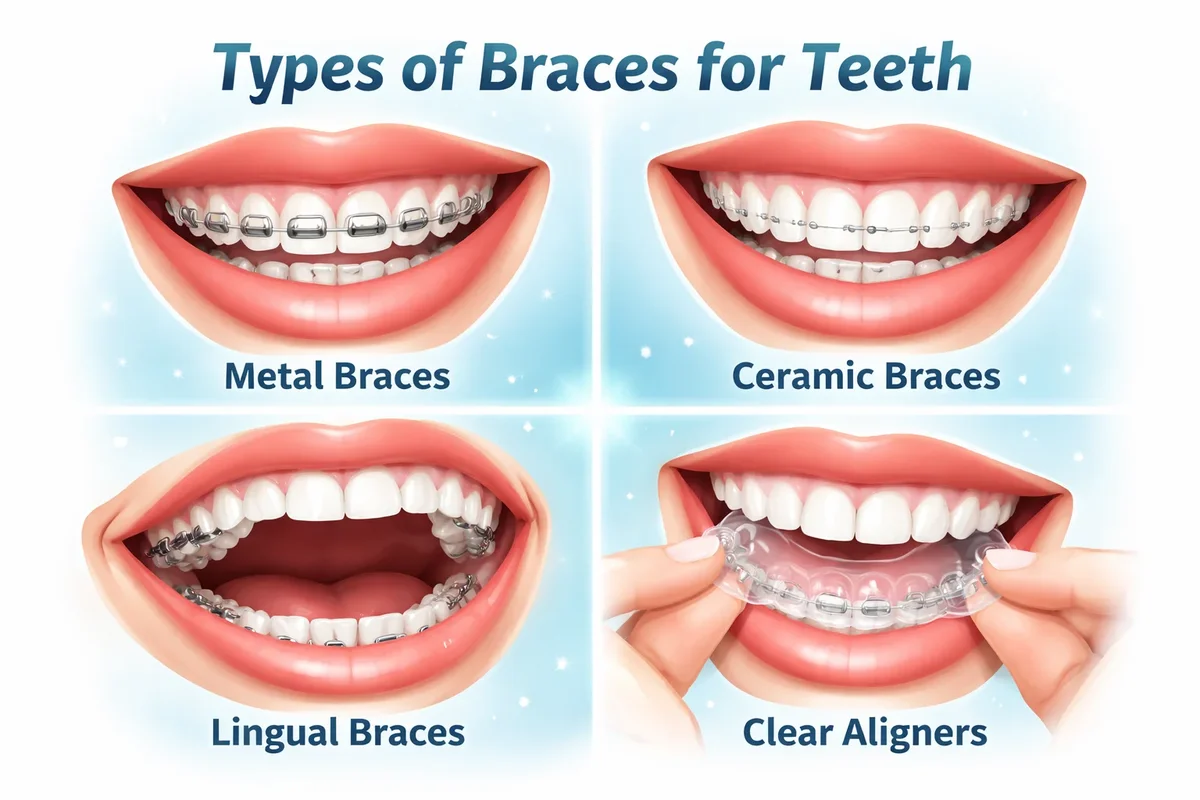
9. Cost Comparison of Different Types of Braces for Teeth
When evaluating the different types of braces for teeth, cost is one of the most important factors for many patients. Orthodontic treatment is a long-term investment in both oral health and confidence, and understanding pricing differences can help you make a smarter decision. The cost of types of braces for teeth varies depending on factors such as material, treatment complexity, location, and the expertise of the orthodontist 😊.
Average Cost of Types of Braces for Teeth
Each of the available types of braces for teeth comes with its own price range. Below is a general comparison based on global averages:
- Metal Braces: $3,000 – $7,000
- Ceramic Braces: $4,000 – $8,500
- Lingual Braces: $8,000 – $13,000
- Clear Aligners: $3,500 – $8,000
- Self-Ligating Braces (Damon): $4,000 – $9,000
These estimates show how the cost of types of braces for teeth can differ significantly depending on the treatment method you choose.
Factors That Affect the Cost
1. Complexity of the Case
The severity of your dental condition plays a major role in determining the cost of types of braces for teeth. More complex cases require longer treatment times and more frequent adjustments, increasing the overall price.
2. Treatment Duration
Longer treatments generally cost more. Some advanced types of braces for teeth may shorten treatment time, but they often come with higher upfront costs.
3. Location of the Clinic
The cost of types of braces for teeth varies depending on where you receive treatment. For example, prices in the United States and Europe are typically higher than in countries like Turkey, where dental tourism offers more affordable options.
4. Orthodontist’s Expertise
Highly experienced specialists may charge more for their services. However, choosing a skilled professional ensures better results when selecting among the different types of braces for teeth.
5. Type of Materials Used
Advanced materials and technologies used in some types of braces for teeth, such as lingual braces or clear aligners, contribute to higher costs due to customization and innovation.
Cost vs Value: What Should You Consider?
While comparing the types of braces for teeth, it is important to look beyond just the price. Value includes factors such as comfort, treatment time, aesthetics, and long-term results.
For example, although metal braces are the most affordable among the types of braces for teeth, clear aligners may offer greater convenience and lifestyle flexibility. Similarly, lingual braces provide complete invisibility but come at a premium cost.
Are There Affordable Options?
Yes, there are ways to make types of braces for teeth more affordable:
- Payment plans offered by dental clinics
- Insurance coverage (in some countries)
- Dental tourism options in countries like Turkey
- Seasonal discounts or promotions
Exploring these options can make even high-end types of braces for teeth more accessible.
Hidden Costs to Be Aware Of
1. Maintenance and Adjustments
Some types of braces for teeth require regular adjustments, which may increase overall costs over time.
2. Replacement Costs
With removable types of braces for teeth like aligners, losing or damaging trays can result in additional expenses.
3. Retainers After Treatment
After completing treatment, retainers are necessary to maintain results. This is an additional cost that applies to all types of braces for teeth.
Cost Comparison Table
Here is a simplified comparison of the most common types of braces for teeth:
| Type | Cost Range | Aesthetic Level | Best For |
|---|---|---|---|
| Metal Braces | $3,000 – $7,000 | Low | Complex cases |
| Ceramic Braces | $4,000 – $8,500 | Medium | Aesthetic + effectiveness |
| Lingual Braces | $8,000 – $13,000 | Very High | Invisible treatment |
| Clear Aligners | $3,500 – $8,000 | High | Convenience + comfort |
| Damon Braces | $4,000 – $9,000 | Medium | Modern efficiency |
Consultation for Accurate Pricing
Because every case is unique, the exact cost of types of braces for teeth can only be determined after a professional evaluation. You can get a personalized quote by visiting the Redent Klinik Contact Page.
For additional trustworthy information about orthodontic care, refer to the American Dental Association, which provides reliable guidance on dental treatments.
Final Thoughts on Cost
Understanding the cost of types of braces for teeth is essential for making the right decision. While price is an important factor, it should be balanced with effectiveness, comfort, and long-term benefits. By carefully comparing the available types of braces for teeth and consulting with a professional, you can choose a treatment plan that fits both your needs and your budget, ensuring a healthy and confident smile 😁.