
What Affects Upper Dental Implants Cost in 2025?
When patients consider upper dental implants cost, one of the first questions that comes to mind is: Why does the price vary so much? In 2025, several factors influence the total expense of this treatment. Understanding these elements not only helps patients plan financially but also ensures they receive quality care without hidden surprises. 🦷
One of the most significant factors is the type of implant material. Titanium implants are widely used due to their durability and biocompatibility, while zirconia implants, often considered more aesthetic, can increase the overall upper dental implants cost. The chosen material directly impacts both functionality and final pricing.
Another essential aspect is the complexity of the procedure. A straightforward single implant may be relatively affordable, but if the patient requires multiple implants, sinus lifts, or bone grafting, the upper dental implants cost rises accordingly. These preparatory procedures are sometimes unavoidable to ensure the implant’s stability and long-term success.
Location also plays a major role. For example, the average upper dental implants cost in the United States is higher compared to countries like Turkey, Mexico, or Thailand. This price difference is often due to variations in labor costs, overhead expenses, and healthcare systems. Patients considering dental tourism should research carefully to balance cost savings with the quality of care.
In addition, the experience of the dental professional matters greatly. An implantologist with decades of experience or advanced certifications may charge more, but this often translates into higher success rates and fewer complications. As a result, investing in a reputable specialist can actually reduce long-term expenses by avoiding future corrective procedures.
Dental technology in 2025 has also contributed to variations in upper dental implants cost. Clinics using 3D imaging, digital impressions, and guided implant surgery often have higher fees, but these methods improve precision and reduce treatment times. Patients benefit from shorter recovery periods and a more natural result, which can justify the added cost.
Another key factor is the type of prosthetic crown used. Porcelain-fused-to-metal (PFM) crowns are typically less expensive than full ceramic or zirconia crowns. Patients seeking the most aesthetic and durable solutions should be prepared for an increase in upper dental implants cost.
For clarity, here’s a general cost breakdown as of 2025:
Average Upper Dental Implants Cost in 2025:
🇺🇸 United States: $3,500 – $6,000 per implant
🇬🇧 United Kingdom: £2,000 – £3,500 per implant
🇹🇷 Turkey: $800 – $1,500 per implant
🇲🇽 Mexico: $900 – $1,700 per implant
🇩🇪 Germany: €2,500 – €4,000 per implant
Beyond geographical differences, patients must also consider aftercare and follow-up visits. Regular check-ups, adjustments, and professional cleanings all add up and contribute to the total upper dental implants cost. In many cases, these additional expenses are overlooked during the initial consultation.
It is also worth mentioning the role of American Dental Association guidelines, which emphasize best practices for implant procedures. Clinics following these standards often provide a higher level of care, ensuring patients’ investments are well protected.
Finally, patients seeking more information or personalized treatment plans should directly contact professionals. You can reach out via the Redent Klinik Contact Page to get tailored advice and accurate cost estimates based on individual needs.
In conclusion, the upper dental implants cost in 2025 depends on a wide variety of factors: implant material, procedure complexity, country of treatment, dentist expertise, and prosthetic choice. By carefully evaluating these aspects, patients can make informed decisions, balancing affordability with long-term oral health. 🌟
What Affects Upper Dental Implants Cost in 2025?
When patients consider upper dental implants cost, one of the first questions that comes to mind is: Why does the price vary so much? In 2025, several factors influence the total expense of this treatment. Understanding these elements not only helps patients plan financially but also ensures they receive quality care without hidden surprises. 🦷
One of the most significant factors is the type of implant material. Titanium implants are widely used due to their durability and biocompatibility, while zirconia implants, often considered more aesthetic, can increase the overall upper dental implants cost. The chosen material directly impacts both functionality and final pricing.
Another essential aspect is the complexity of the procedure. A straightforward single implant may be relatively affordable, but if the patient requires multiple implants, sinus lifts, or bone grafting, the upper dental implants cost rises accordingly. These preparatory procedures are sometimes unavoidable to ensure the implant’s stability and long-term success.
Location also plays a major role. For example, the average upper dental implants cost in the United States is higher compared to countries like Turkey, Mexico, or Thailand. This price difference is often due to variations in labor costs, overhead expenses, and healthcare systems. Patients considering dental tourism should research carefully to balance cost savings with the quality of care.
In addition, the experience of the dental professional matters greatly. An implantologist with decades of experience or advanced certifications may charge more, but this often translates into higher success rates and fewer complications. As a result, investing in a reputable specialist can actually reduce long-term expenses by avoiding future corrective procedures.
Dental technology in 2025 has also contributed to variations in upper dental implants cost. Clinics using 3D imaging, digital impressions, and guided implant surgery often have higher fees, but these methods improve precision and reduce treatment times. Patients benefit from shorter recovery periods and a more natural result, which can justify the added cost.
Another key factor is the type of prosthetic crown used. Porcelain-fused-to-metal (PFM) crowns are typically less expensive than full ceramic or zirconia crowns. Patients seeking the most aesthetic and durable solutions should be prepared for an increase in upper dental implants cost.
For clarity, here’s a general cost breakdown as of 2025:
Average Upper Dental Implants Cost in 2025:
🇺🇸 United States: $3,500 – $6,000 per implant
🇬🇧 United Kingdom: £2,000 – £3,500 per implant
🇹🇷 Turkey: $800 – $1,500 per implant
🇲🇽 Mexico: $900 – $1,700 per implant
🇩🇪 Germany: €2,500 – €4,000 per implant
Beyond geographical differences, patients must also consider aftercare and follow-up visits. Regular check-ups, adjustments, and professional cleanings all add up and contribute to the total upper dental implants cost. In many cases, these additional expenses are overlooked during the initial consultation.
It is also worth mentioning the role of American Dental Association guidelines, which emphasize best practices for implant procedures. Clinics following these standards often provide a higher level of care, ensuring patients’ investments are well protected.
Finally, patients seeking more information or personalized treatment plans should directly contact professionals. You can reach out via the Redent Klinik Contact Page to get tailored advice and accurate cost estimates based on individual needs.
In conclusion, the upper dental implants cost in 2025 depends on a wide variety of factors: implant material, procedure complexity, country of treatment, dentist expertise, and prosthetic choice. By carefully evaluating these aspects, patients can make informed decisions, balancing affordability with long-term oral health. 🌟
Average Upper Dental Implants Cost by Country
The upper dental implants cost can vary drastically depending on where you receive treatment. Patients in 2025 are increasingly aware of these differences, often comparing prices across regions before making a decision. Understanding the international price landscape helps patients evaluate affordability, travel options, and the balance between quality and savings. 🌍
In the United States, the average upper dental implants cost remains one of the highest globally. A single implant can cost anywhere from $3,500 to $6,000. This price often includes consultations, surgery, and the prosthetic crown, but it may not cover additional procedures such as bone grafting or sinus lifts. American patients benefit from advanced dental technologies and highly trained specialists, yet the high costs are a significant barrier.
Moving to the United Kingdom, patients can expect to pay around £2,000 to £3,500 per implant. While this is generally lower than in the U.S., the upper dental implants cost is still a substantial investment. Many UK residents consider traveling abroad to reduce costs, especially since some European countries offer affordable alternatives without compromising on care quality.
One of the most popular destinations for dental tourism is Turkey. Known for combining affordability with expertise, Turkey offers some of the lowest upper dental implants cost rates in 2025, typically ranging from $800 to $1,500 per implant. Clinics in Istanbul, Ankara, and Izmir attract thousands of international patients every year. Many centers provide all-inclusive packages covering consultation, surgery, hotel accommodation, and transportation, making the treatment journey seamless.
In Mexico, the average upper dental implants cost is about $900 to $1,700. Its proximity to the United States makes it a top choice for American patients seeking more affordable solutions. Major cities like Tijuana, Cancun, and Los Algodones are well-known for their dental hubs, with specialists trained both locally and abroad. Patients should, however, carefully review clinic reputations and certifications before booking treatment.
European countries like Germany also play an important role in dental implant care. German clinics emphasize precision, cutting-edge technology, and strong regulatory standards. The upper dental implants cost here typically falls between €2,500 and €4,000. While not the cheapest option, Germany appeals to patients who prioritize safety and advanced dental solutions in a highly regulated environment.
Other destinations, including Thailand and Hungary, are gaining recognition for their cost-effective solutions. In Thailand, patients can expect to pay $1,200 to $2,000 per implant, while in Hungary, costs range between €1,200 and €2,200. These countries are combining affordability with high-quality care, making them attractive for patients seeking international dental treatments.
Upper Dental Implants Cost Comparison (2025):
🇺🇸 USA: $3,500 – $6,000
🇬🇧 UK: £2,000 – £3,500
🇹🇷 Turkey: $800 – $1,500
🇲🇽 Mexico: $900 – $1,700
🇩🇪 Germany: €2,500 – €4,000
🇭🇺 Hungary: €1,200 – €2,200
🇹🇭 Thailand: $1,200 – $2,000
Patients should remember that the cheapest option does not always equate to the best care. When evaluating upper dental implants cost by country, it is crucial to consider clinic reputation, dentist qualifications, technology used, and post-surgery support. For example, countries like Turkey and Hungary may offer significantly reduced prices, but selecting accredited clinics ensures safety and long-term success.
The decision is ultimately a balance between cost and quality. Many patients choose to invest slightly more in highly specialized clinics to avoid complications, which could increase the total upper dental implants cost if corrective surgeries are needed later.
Organizations like the American Dental Association recommend patients carefully review international standards before traveling abroad. Clinics aligned with global best practices not only provide financial savings but also guarantee quality and safety.
For personalized guidance, patients can contact specialists directly. If you are considering treatment in Turkey, you can reach out via the Redent Klinik Contact Page to receive accurate estimates and treatment options tailored to your needs.
In summary, the upper dental implants cost varies widely across countries in 2025. Patients can save significantly by exploring international options, but success depends on selecting reputable clinics with skilled professionals. Comparing costs by country ensures that patients make informed decisions while achieving a healthy, confident smile. 😁
Comparing Upper Dental Implants Cost: Single vs. Multiple Teeth
One of the most common questions patients ask in 2025 is whether the upper dental implants cost changes significantly when replacing a single tooth compared to multiple teeth. The answer is yes — and the difference can be substantial. Understanding these variations is crucial for making informed financial and medical decisions. 🦷
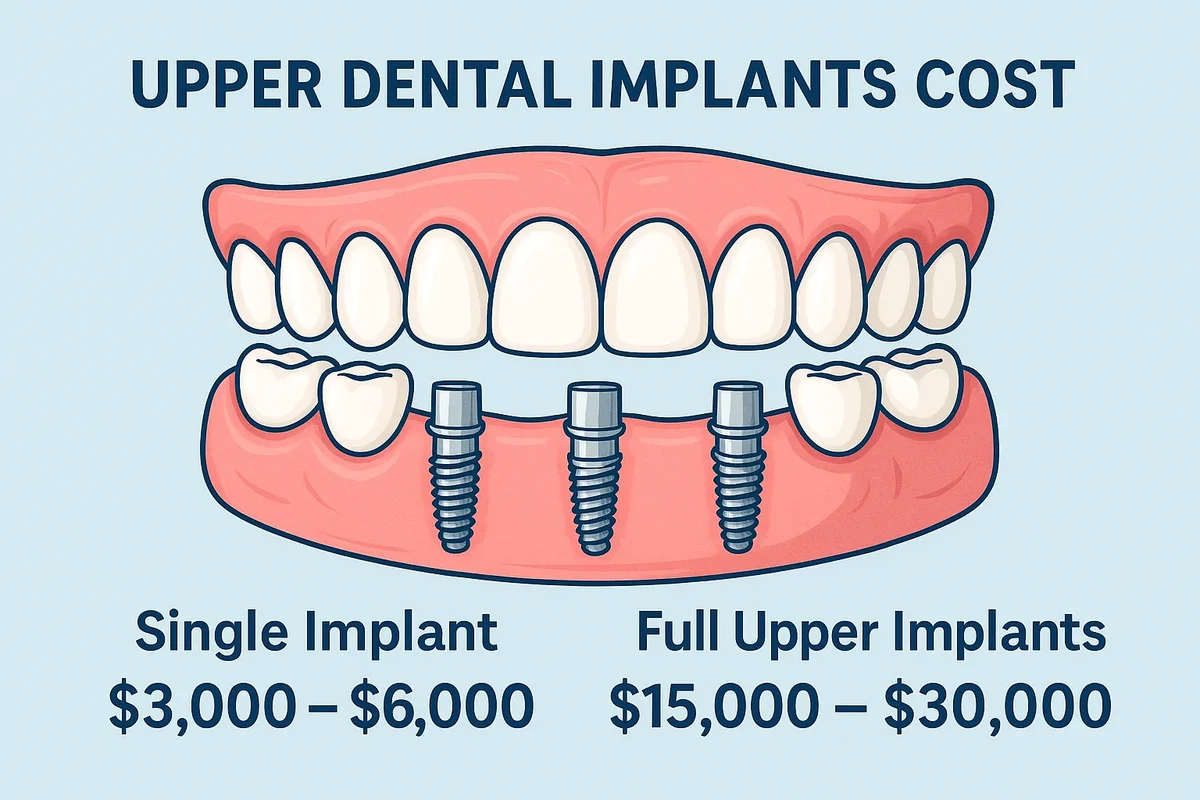
For a single implant, the procedure typically involves placing one titanium or zirconia post into the jawbone, followed by attaching an abutment and crown. The upper dental implants cost for this straightforward procedure ranges between $3,500 and $6,000 in the United States, while in more affordable destinations like Turkey, it may only be $800 to $1,500. This makes single-tooth replacement one of the most accessible implant options for many patients.
However, when multiple teeth are missing in the upper jaw, costs rise dramatically. Replacing each tooth individually with separate implants would multiply the upper dental implants cost, making it prohibitively expensive for most people. Instead, dentists often recommend implant-supported bridges or dentures. These solutions reduce the number of implants required, which lowers the overall treatment price while still providing stability and function.
For example, instead of placing six separate implants, a dentist might strategically insert four implants to support an entire arch. This method, often referred to as “All-on-4” or “All-on-6,” significantly decreases the total upper dental implants cost. In 2025, an All-on-4 treatment in the U.S. averages $20,000 to $30,000, while in Turkey the cost can range from $4,000 to $7,500.
Another factor influencing pricing is whether additional procedures are required. Patients with multiple missing upper teeth often experience bone loss, which means bone grafts or sinus lifts may be necessary. These procedures add anywhere from $1,000 to $3,500 to the overall upper dental implants cost. While these costs increase the upfront investment, they also ensure long-term implant stability and prevent future complications.
Insurance coverage is also an important consideration. In most cases, insurance providers are more likely to partially cover single implants if the treatment is deemed medically necessary, such as after trauma or disease. Coverage for multiple implants or full-mouth restorations, however, is less common. Patients must be prepared to cover much of the upper dental implants cost out-of-pocket, unless they secure financing or use dental discount plans.
From a long-term perspective, investing in multiple implants may actually prove more cost-effective than removable dentures. While dentures often need replacement every 5–7 years, implants can last a lifetime with proper care. This means that even though the initial upper dental implants cost for multiple teeth is higher, the lifetime expense may be lower compared to repeated denture replacements.
For clarity, here is a cost comparison in 2025:
Upper Dental Implants Cost (2025):
Single Tooth Implant (U.S.): $3,500 – $6,000
Single Tooth Implant (Turkey): $800 – $1,500
Multiple Implants (U.S.): $15,000 – $30,000+
All-on-4 (U.S.): $20,000 – $30,000
All-on-4 (Turkey): $4,000 – $7,500
Additional Bone Grafting: $1,000 – $3,500
When comparing single versus multiple implants, patients should also consider quality of life. Replacing multiple upper teeth with stable implants not only restores chewing function but also enhances aesthetics, boosts confidence, and preserves jawbone health. These benefits often justify the higher upper dental implants cost.
Expert dental organizations, such as the American Dental Association, emphasize the importance of patient-specific treatment planning. Every mouth is unique, and a dentist’s recommendations are based on the patient’s bone density, gum health, and overall oral condition. A one-on-one consultation ensures that patients receive realistic estimates for their upper dental implants cost.
If you are considering single or multiple implants, you can receive personalized advice through the Redent Klinik Contact Page. Their specialists provide tailored treatment plans and transparent cost breakdowns.
In summary, while a single implant is relatively affordable and straightforward, multiple implants or full-arch solutions significantly increase the upper dental implants cost. Patients should weigh short-term affordability against long-term value, considering both functional benefits and lifetime costs. By doing so, they can make the best decision for their oral health and budget in 2025. 😁
Insurance Coverage and Upper Dental Implants Cost
One of the biggest concerns for patients considering implants in 2025 is whether insurance will help reduce the upper dental implants cost. Since implants are often classified as elective or cosmetic, coverage can be complicated. However, insurance companies are slowly beginning to recognize the medical necessity of implants, especially when missing teeth affect chewing, speech, or overall oral health. 🏥
In the United States, many dental insurance plans still exclude implants or offer only partial coverage. Instead, they may cover alternative treatments like dentures or bridges. Yet, some premium plans have started to provide benefits specifically for implants. For instance, if a missing upper tooth compromises daily function, certain insurers will pay a percentage of the upper dental implants cost, typically covering 20%–50% of the surgical or prosthetic component.
Medical insurance may also play a role. If tooth loss is the result of an accident, injury, or a disease like oral cancer, medical insurance policies may step in to cover a portion of the upper dental implants cost. However, this depends on the insurer and the specifics of the case. Patients must always review policy details and request pre-authorization before proceeding with treatment.
In countries with national healthcare systems, the situation is different. In the United Kingdom, the National Health Service (NHS) generally does not cover dental implants, except in rare cases where functional needs are severely impacted. This means patients often turn to private insurance or self-financing to cover the full upper dental implants cost.
In contrast, some European countries like Germany and France provide partial reimbursement for dental implants under statutory health insurance, although the exact coverage amount is limited. Patients can also purchase supplemental private dental insurance that reduces the out-of-pocket burden for upper dental implants cost.
In emerging dental tourism destinations such as Turkey or Mexico, international patients usually pay out-of-pocket. Insurance providers in these regions may not directly cover implant procedures, but because the upper dental implants cost is significantly lower, patients still save thousands compared to prices in their home country. Some global insurers now offer reimbursement programs that allow partial refunds for treatments abroad, provided the clinic is accredited.
Another important factor is annual maximums. Many dental insurance plans have yearly caps ranging from $1,000 to $2,500. Since a single implant can exceed this limit, patients may need to spread treatment across multiple years or combine insurance with financing to cover the full upper dental implants cost.
For clarity, here’s how insurance typically influences pricing in 2025:
Insurance Impact on Upper Dental Implants Cost (2025):
🇺🇸 USA: 20%–50% coverage in select cases
🇬🇧 UK: Rare NHS coverage, mostly private payment
🇩🇪 Germany: Limited reimbursement under statutory insurance
🇫🇷 France: Partial reimbursement, supplemental insurance helps
🇹🇷 Turkey: Out-of-pocket, low-cost treatment options
🇲🇽 Mexico: Out-of-pocket, international reimbursement possible
Financing programs also play an essential role. Even if insurance does not fully cover the upper dental implants cost, many clinics offer payment plans with 0% interest for a limited period. These programs make implants more accessible by spreading the expense across several months or years. Patients considering such options should carefully review interest rates, terms, and hidden fees.
Patients should also explore dental discount plans, which differ from insurance. Instead of covering procedures, these plans provide reduced rates at participating clinics, lowering the upper dental implants cost by 10%–40%. While not a substitute for full coverage, these discounts can make a meaningful difference.
The American Dental Association advises patients to request written treatment estimates and submit them to their insurer for pre-approval. This step helps clarify how much of the upper dental implants cost will be covered and prevents unexpected financial surprises.
If you are evaluating insurance options or considering treatment abroad, you can also contact dental professionals directly for guidance. The Redent Klinik Contact Page is a valuable resource for patients seeking transparent pricing and personalized cost breakdowns.
In conclusion, while insurance coverage for implants is still limited in many regions, progress is being made. Patients should combine insurance benefits, supplemental coverage, financing, and careful planning to minimize the total upper dental implants cost. By being proactive and exploring every option, it is possible to make this life-changing treatment more affordable in 2025. 💳
Financing Options to Manage Upper Dental Implants Cost
Even when patients understand the value of dental implants, the reality is that the upper dental implants cost can feel overwhelming. In 2025, financing options have become an essential tool for making treatment accessible. Whether through in-house payment plans, medical credit cards, or third-party lenders, patients now have more flexibility to manage the financial aspect of their oral health care. 💳
One of the most common financing solutions offered by clinics is the in-house payment plan. Many dental centers allow patients to spread the upper dental implants cost over 6, 12, or even 24 months. These plans often come with little to no interest if payments are made on time. For example, if a treatment costs $4,000, a patient might pay around $166 per month over two years instead of a lump sum upfront.
Another popular option is the use of medical credit cards. Companies like CareCredit in the U.S. specialize in healthcare-related expenses, including dental procedures. These cards typically provide 0% interest promotional periods ranging from 6 to 24 months, giving patients the chance to finance their upper dental implants cost without accruing extra fees. After the promotional period, interest rates can be high, so patients should plan carefully.
Third-party lenders also play an increasing role in 2025. Specialized financing companies partner with dental clinics to offer structured loans with fixed interest rates. Unlike traditional credit cards, these loans often come with clear repayment terms. Patients who want predictable monthly payments may find this option especially useful for covering their upper dental implants cost.
In addition to private lenders, some employers and insurance providers now offer Health Savings Accounts (HSA) or Flexible Spending Accounts (FSA). These accounts allow patients to set aside pre-tax income to pay for medical and dental expenses, effectively reducing the financial burden. By using these accounts, patients can lower the true upper dental implants cost while also maximizing tax benefits.
Patients considering treatment abroad in countries like Turkey, Mexico, or Hungary often find that they do not need extensive financing, as the upper dental implants cost is already much lower. However, some international clinics collaborate with global financing providers, making it possible to pay in installments even for overseas treatments. 🌍
Here’s a breakdown of the most common financing options in 2025:
Financing Solutions for Upper Dental Implants Cost:
💳 In-House Payment Plans: 6–24 months, low or no interest
💳 Medical Credit Cards: 0% interest promotions, then variable rates
🏦 Third-Party Lenders: Fixed-term loans with predictable payments
📊 HSA/FSA Accounts: Pre-tax savings applied to implant costs
🌍 International Packages: Lower prices, occasional installment options
Another strategy patients use is splitting treatment across multiple stages. For example, placing implants in the first year and adding crowns in the following year allows patients to spread the upper dental implants cost over time. This approach also helps maximize annual insurance benefits when policy caps are involved.
While financing can make treatment affordable, patients should carefully review contracts to avoid hidden fees or penalties. Some providers may charge origination fees, late payment penalties, or high interest rates if the balance is not cleared during the promotional period. Choosing transparent lenders is crucial to keeping the true upper dental implants cost within budget.
Reputable dental organizations like the American Dental Association recommend that patients request a written treatment plan with a complete financial breakdown. This ensures that every step of the financing process is clear before committing to a specific plan.
For those seeking personalized guidance, contacting a clinic directly can be the best first step. The Redent Klinik Contact Page provides patients with detailed cost estimates and financing options tailored to individual needs. By combining professional advice with flexible payment methods, patients can manage their budgets while still receiving top-quality dental care.
In summary, the upper dental implants cost does not have to be a barrier to treatment in 2025. With in-house plans, medical credit cards, third-party loans, and tax-advantaged accounts, patients have multiple strategies to make implants affordable. Exploring these options ensures that anyone in need of dental implants can achieve a healthy and confident smile without overwhelming financial stress. 😁
Long-Term Benefits vs. Upper Dental Implants Cost
When evaluating the upper dental implants cost, many patients focus only on the upfront price. However, in 2025, it is crucial to consider the long-term benefits that implants provide compared to other dental solutions. While implants may initially appear more expensive than bridges or dentures, their durability, functionality, and health advantages often make them the most cost-effective choice in the long run. 🦷
One of the most important long-term benefits is jawbone preservation. When a tooth is lost, the jawbone begins to deteriorate because it no longer receives stimulation from chewing. Dentures and bridges cannot prevent this, but implants act like natural tooth roots, stimulating the bone and preventing bone loss. This not only protects facial structure but also ensures that patients avoid additional costs associated with corrective surgeries. By maintaining oral health, implants reduce the hidden expenses that would otherwise increase the total upper dental implants cost over time.
Another benefit is durability. While dentures may need to be replaced every 5–7 years, implants can last a lifetime with proper care. The crown portion may require replacement after 15–20 years, but the implant itself remains stable. This means that although the initial upper dental implants cost is higher, patients save money in the long term by avoiding frequent replacements.
Functionality is also a key factor. Implants restore chewing efficiency close to natural teeth, allowing patients to eat a wide variety of foods without discomfort. This improved function reduces the likelihood of digestive issues and nutritional deficiencies, which are common with patients using unstable dentures. From a medical perspective, better nutrition and oral health mean fewer associated healthcare expenses, lowering the lifetime upper dental implants cost.
Aesthetics and confidence should not be underestimated either. Dental implants blend seamlessly with natural teeth, enhancing appearance and self-esteem. This psychological benefit has a ripple effect on quality of life, career opportunities, and social interactions. While harder to measure financially, these outcomes contribute to the true value behind the upper dental implants cost.
Comparisons with dentures and bridges highlight the long-term value of implants. For example:
Lifetime Cost Estimate (2025):
Traditional Dentures: $5,000 – $15,000 (with replacements)
Dental Bridges: $7,000 – $20,000 (with replacements)
Upper Dental Implants: $15,000 – $30,000 (lasts a lifetime)
Although the upfront upper dental implants cost is higher, patients end up spending a similar or even smaller amount compared to dentures or bridges when lifetime maintenance is factored in. The long-term stability of implants minimizes additional expenses and delivers unmatched value.
Another significant benefit is the prevention of shifting teeth. When gaps are left untreated, surrounding teeth often move out of alignment, leading to bite problems, jaw pain, and orthodontic issues. Correcting these issues later can be expensive, effectively raising the long-term upper dental implants cost if preventive measures are not taken. Implants eliminate these risks by maintaining proper tooth alignment.
Patients should also consider that implants support overall oral hygiene. Unlike bridges, which may require adjacent healthy teeth to be filed down, implants do not compromise surrounding structures. This reduces the risk of decay or gum disease, again helping to keep the long-term upper dental implants cost manageable by preventing costly treatments in the future.
The American Dental Association emphasizes that dental implants are the most reliable tooth replacement option available today, with success rates exceeding 95%. This high level of success provides peace of mind and long-term financial security for patients making the investment.
If you want to learn how these long-term benefits apply to your case, you can connect with specialists via the Redent Klinik Contact Page. They can provide personalized insights into how the investment in implants balances out against potential future dental costs.
In conclusion, while the initial upper dental implants cost may seem high, the long-term benefits — including jawbone preservation, durability, improved functionality, aesthetics, and reduced maintenance — make implants one of the smartest investments in oral health. By looking beyond the upfront cost and focusing on lifetime value, patients can make a decision that benefits both their health and their wallets for decades to come. 🌟
Hidden Fees That Increase Upper Dental Implants Cost
When patients research the upper dental implants cost, they often focus on the advertised price for the implant itself. However, in 2025, many hidden fees can significantly increase the total amount paid. Being aware of these potential costs ensures that patients budget realistically and avoid unpleasant surprises. 🧾
One of the most common hidden expenses is the initial consultation and diagnostic tests. Many clinics charge separately for panoramic X-rays, 3D CT scans, or digital impressions. These imaging services are crucial for planning the surgery but may not always be included in the quoted upper dental implants cost. Depending on the clinic and country, these diagnostic steps can add anywhere from $200 to $600.
Another hidden fee comes from tooth extractions. If a damaged or decayed tooth must be removed before the implant can be placed, this procedure adds to the overall upper dental implants cost. Simple extractions may cost a few hundred dollars, while surgical extractions, particularly for molars, can exceed $500. In cases where multiple extractions are required, the added cost can become significant.
Bone grafting and sinus lifts are among the biggest contributors to hidden fees. Patients with insufficient jawbone density often require these additional procedures to ensure implant stability. A sinus lift can cost $1,500–$3,500, while bone grafting may range from $800 to $2,500. These procedures are often overlooked when clinics advertise a “low” upper dental implants cost, but they are necessary for long-term success.
The choice of abutment and crown can also alter pricing. Some clinics quote the implant post only, excluding the abutment and final crown. This means the advertised upper dental implants cost could be several thousand dollars lower than the actual cost patients pay. Premium materials like zirconia crowns increase expenses but provide superior aesthetics and durability.
Another overlooked cost is anesthesia or sedation. While local anesthesia is typically included, patients who request IV sedation or general anesthesia face higher fees. In the United States, these costs can range from $500 to $2,000, raising the overall upper dental implants cost considerably.
Post-surgery expenses also add up. Follow-up visits, professional cleanings, and medications such as antibiotics or pain relievers are often billed separately. These aftercare costs may seem small individually, but over time they can add hundreds of dollars to the upper dental implants cost.
For patients traveling abroad for treatment, travel and accommodation expenses should also be factored in. While dental tourism destinations like Turkey or Mexico offer lower base prices, airfare, hotel stays, and transportation can add $1,000 or more to the overall upper dental implants cost. All-inclusive packages sometimes offset these costs, but patients should read the fine print carefully.
Here’s a breakdown of common hidden fees that affect implants in 2025:
Hidden Fees in Upper Dental Implants Cost (2025):
🩻 Diagnostic Imaging (X-rays, CT scans): $200 – $600
🦷 Tooth Extraction: $300 – $600 per tooth
💀 Bone Grafting: $800 – $2,500
🌄 Sinus Lift: $1,500 – $3,500
👑 Abutment & Crown: $1,000 – $3,000
💉 Sedation/Anesthesia: $500 – $2,000
💊 Medications & Follow-ups: $100 – $500
✈️ Travel & Accommodation: $1,000+ (for dental tourism)
Because of these hidden expenses, patients should always request a detailed treatment plan and written estimate. This document should clearly list every component of the treatment and associated costs. The American Dental Association recommends that patients never rely on headline pricing alone, as the final upper dental implants cost can be much higher without transparency.
Some clinics attempt to simplify pricing by offering all-inclusive packages. These bundles often cover consultation, imaging, surgery, implant, abutment, crown, and follow-up care. While the upfront number may seem higher, patients benefit from knowing the complete upper dental implants cost without unexpected add-ons.
Patients seeking clarity can also reach out directly to trusted clinics. The Redent Klinik Contact Page provides transparent estimates and helps patients identify potential hidden fees before committing to treatment.
In conclusion, while the advertised upper dental implants cost may appear attractive, hidden fees like diagnostics, extractions, bone grafting, crowns, anesthesia, and aftercare can dramatically raise the total. By asking the right questions and choosing reputable clinics, patients can avoid financial surprises and plan confidently for a healthier smile. 😁
How to Find Affordable Upper Dental Implants Cost Near You
For many patients, the dream of restoring a beautiful smile is limited by the high upper dental implants cost. In 2025, however, there are several strategies you can use to find affordable options without compromising on quality. By researching local clinics, comparing providers, and exploring financing solutions, patients can make implants more accessible. 🦷
The first step is to compare local dental clinics. Prices for the same treatment often vary significantly, even within the same city. Some clinics may advertise a low upper dental implants cost but exclude essential components like crowns or follow-up care. Others may offer comprehensive packages at a slightly higher but more transparent rate. Always request a detailed written estimate to avoid hidden fees.
Another effective strategy is to look for dental schools. Many universities with dental programs offer implant procedures performed by students under the supervision of experienced professionals. While treatment may take longer, the upper dental implants cost can be 30–50% lower than at private clinics. This makes dental schools a viable option for patients seeking quality care on a budget.
Patients can also explore community dental clinics or nonprofit organizations. These institutions sometimes provide implants at reduced prices or offer subsidies for low-income patients. Although availability may be limited, these programs help make the high upper dental implants cost more manageable.
Shopping around for seasonal discounts and promotions can also make a difference. Some clinics provide reduced rates during specific times of the year to attract new patients. While not always heavily advertised, asking directly about discounts can lead to significant savings on the upper dental implants cost.
Additionally, patients can explore dental tourism while still staying relatively close to home. For example, Americans often travel to Mexico for implants, while Europeans consider Turkey or Hungary. These destinations combine high-quality treatment with drastically lower prices. A single implant in the U.S. may cost $4,000, while the same treatment abroad could be less than $1,500. Even with travel expenses, the overall upper dental implants cost remains far more affordable.
Another option is to join a dental savings or discount plan. Unlike insurance, these plans provide immediate discounts at participating providers. Patients typically pay an annual membership fee and then receive 10%–40% off dental services, including implants. This can meaningfully reduce the final upper dental implants cost for patients without insurance.
Online reviews and testimonials can also help identify affordable yet reliable providers. Websites and patient forums often share real-life experiences, revealing where patients found the best balance between quality and price. Always confirm that the clinic uses certified implant systems and provides guarantees for their work to avoid costly corrective procedures later.
For a clearer picture, here are a few strategies to lower the upper dental implants cost in 2025:
Ways to Save on Upper Dental Implants Cost:
🏫 Seek treatment at dental schools for supervised student procedures
🏥 Explore community or nonprofit dental clinics
📉 Ask about seasonal promotions and discounts
✈️ Consider dental tourism in Turkey, Mexico, or Hungary
💳 Join dental savings or discount plans
⭐ Compare multiple clinics and read verified patient reviews
Another important step is to ask clinics about guarantees and warranties. Some providers offer free repairs or replacements for a certain period if complications arise. Choosing a clinic that includes these services in the upper dental implants cost ensures greater financial security.
The American Dental Association advises patients to carefully review the credentials of any clinic offering significantly lower prices. While affordability is important, the quality of care should always remain the top priority. Cheap but poorly executed implants can result in additional corrective surgeries, ultimately increasing the true upper dental implants cost.
Patients who want personalized advice can contact trusted clinics for customized estimates. The Redent Klinik Contact Page is an excellent place to start. Their team provides transparent pricing and tailored treatment options that suit both budget and long-term oral health.
In summary, finding affordable upper dental implants cost near you is possible with careful planning. By comparing clinics, considering dental schools, exploring nonprofit programs, looking for promotions, and even considering dental tourism, patients can access high-quality implants at a price they can afford. With the right approach, restoring your smile no longer has to feel financially out of reach. 😁
Expert Tips to Reduce Upper Dental Implants Cost
While dental implants are one of the best investments in oral health, the upper dental implants cost can still feel like a heavy burden. Fortunately, in 2025, patients have access to expert-backed strategies that can significantly lower expenses without sacrificing quality. By combining smart financial planning, thorough research, and preventative care, you can save thousands of dollars while still achieving excellent results. 🦷
The first and most important tip is to obtain multiple quotes. Prices for the same procedure can vary widely, even within the same city. By comparing at least three different clinics, you can identify the average upper dental implants cost in your area and avoid being overcharged. Make sure each quote includes all associated expenses, such as consultations, imaging, abutments, and crowns.
Another strategy is to negotiate with your dentist. Many patients are unaware that dental clinics sometimes have flexibility in pricing, especially if you are paying out-of-pocket. Asking for a discount for upfront payment or bundling multiple procedures together can reduce the total upper dental implants cost.
Preventative care is another powerful way to save. Gum disease, tooth decay, and bone loss often require additional procedures such as bone grafting or sinus lifts. By maintaining excellent oral hygiene before treatment, you can minimize the need for these costly add-ons, thereby lowering the upper dental implants cost. Regular dental checkups and cleanings are an investment in prevention.
Patients should also explore dental tourism in accredited countries. Turkey, Mexico, and Hungary are well-known for combining high-quality care with dramatically lower prices. Traveling abroad can reduce the upper dental implants cost by 50% or more, even after factoring in airfare and accommodation. Choosing reputable, internationally accredited clinics ensures that you receive the same level of care as at home.
Enrolling in dental savings plans can further reduce expenses. These plans work like memberships, giving patients immediate discounts on treatments. For a modest annual fee, you may save 10%–40% on implant procedures. Unlike insurance, these programs are straightforward, with no waiting periods or claim forms, making them a practical option for lowering upper dental implants cost.
Another expert tip is to use tax-advantaged accounts. In the United States, Health Savings Accounts (HSAs) and Flexible Spending Accounts (FSAs) allow you to use pre-tax dollars for medical and dental care. Applying these funds toward implants can reduce your taxable income while offsetting the high upper dental implants cost.
Patients should also consider staged treatment. Instead of paying for everything at once, dentists can sometimes break the process into phases. For example, you may have implants placed in the first year and crowns added the following year. This approach helps you spread the upper dental implants cost across multiple financial periods, easing the burden and maximizing annual insurance benefits.
Here’s a quick summary of expert tips to save on implants:
Expert Strategies to Reduce Upper Dental Implants Cost (2025):
📑 Compare multiple clinic quotes before deciding
🤝 Negotiate for discounts on upfront payments
🦷 Practice preventive oral care to avoid costly add-ons
✈️ Consider accredited dental tourism destinations
💳 Enroll in dental savings or membership plans
📊 Use HSA or FSA pre-tax savings accounts
⏳ Ask about staged treatment to spread expenses
Another often-overlooked way to save is to check for clinical trials or research programs. Universities and research centers sometimes offer implants at reduced rates as part of ongoing studies. While availability is limited, these opportunities can cut the upper dental implants cost significantly for eligible patients.
Patients should also confirm whether their insurance covers part of the treatment, especially if implants are deemed medically necessary. Submitting pre-authorization requests increases the chances of partial reimbursement, further reducing the upper dental implants cost.
The American Dental Association strongly recommends seeking care from accredited professionals to ensure long-term success. Saving money is important, but cutting corners with inexperienced providers can lead to complications and even higher costs in the future.
If you want tailored advice on affordable implant solutions, you can contact specialists via the Redent Klinik Contact Page. Their team provides transparent pricing and practical tips to make treatment more financially accessible.
In conclusion, reducing the upper dental implants cost is possible with the right strategies. From comparing quotes and negotiating, to preventative care and international options, patients have many paths to affordability. With careful planning, you can restore your smile in 2025 without overwhelming your finances. 😁
Final Thoughts on Upper Dental Implants Cost in 2025
As we conclude this comprehensive guide, it is clear that the upper dental implants cost in 2025 remains one of the most important considerations for patients seeking restorative dental care. While implants are undeniably a significant investment, their long-term health, functional, and aesthetic benefits make them the gold standard for tooth replacement. By carefully understanding the factors that influence pricing and exploring strategies to reduce expenses, patients can make well-informed decisions that balance cost with quality. 🦷
One of the key takeaways is that the upper dental implants cost is not a one-size-fits-all figure. Multiple variables affect pricing, including the patient’s oral health, the number of implants needed, the type of prosthetic crown, and whether additional procedures such as bone grafts or sinus lifts are required. Geographic location also plays a massive role, with treatment in the United States often costing three to four times more than in destinations like Turkey or Mexico.
Despite the high upfront cost, dental implants consistently prove to be cost-effective over time. Unlike dentures or bridges that require frequent replacement, implants are designed to last for decades with proper care. This longevity reduces lifetime expenses, making the initial upper dental implants cost an investment rather than just an expense. When comparing lifetime costs, implants often come out ahead financially while also providing unmatched comfort and functionality.
It is also essential to consider the hidden costs associated with neglecting missing teeth. Patients who delay treatment may face bone loss, gum disease, shifting teeth, and further oral health complications. These issues not only increase the eventual upper dental implants cost but can also lead to more complex and expensive treatments. Acting sooner rather than later often results in better outcomes and lower long-term expenses.
Patients should also recognize the psychological and lifestyle benefits of implants. Restoring a full smile enhances self-esteem, improves confidence, and positively affects personal and professional interactions. These intangible benefits are invaluable and add to the true value behind the upper dental implants cost.
To recap the most important points, here are the core insights we’ve covered:
Upper Dental Implants Cost Key Takeaways (2025):
💰 Costs vary widely by country, from $800 in Turkey to $6,000 in the U.S.
🦷 Single implants are more affordable than full-arch restorations
🏥 Insurance may cover a portion, but financing options are crucial
⚠️ Hidden fees such as imaging, anesthesia, and crowns can increase costs
🌍 Dental tourism offers safe, affordable alternatives with proper research
📊 Long-term benefits outweigh initial expenses when quality care is chosen
Another important consideration is transparency. Many clinics advertise low prices but exclude essential elements, misleading patients about the real upper dental implants cost. Always ask for a full breakdown of expenses, including diagnostics, surgery, crowns, follow-ups, and aftercare. Choosing a clinic with transparent pricing ensures there are no financial surprises during the treatment process.
The American Dental Association continues to emphasize the importance of choosing experienced, accredited professionals. While it may be tempting to chase the lowest possible price, poor-quality treatment can lead to complications, implant failure, and even higher corrective costs in the future. Quality should always remain the top priority when balancing affordability with care.
Patients who want individualized guidance can reach out for a personalized consultation. The Redent Klinik Contact Page offers direct access to professionals who provide tailored advice, transparent cost estimates, and financing solutions designed to meet patients’ specific needs.
In conclusion, the upper dental implants cost in 2025 reflects both the complexity of modern dentistry and the life-changing benefits implants provide. While the initial expense may seem high, the long-term return on investment — in health, confidence, and financial value — makes implants the most reliable and worthwhile solution. By understanding costs, planning ahead, and choosing reputable clinics, patients can achieve a beautiful, functional smile that lasts a lifetime. 😁