
What Are Veneers and How Do They Work?
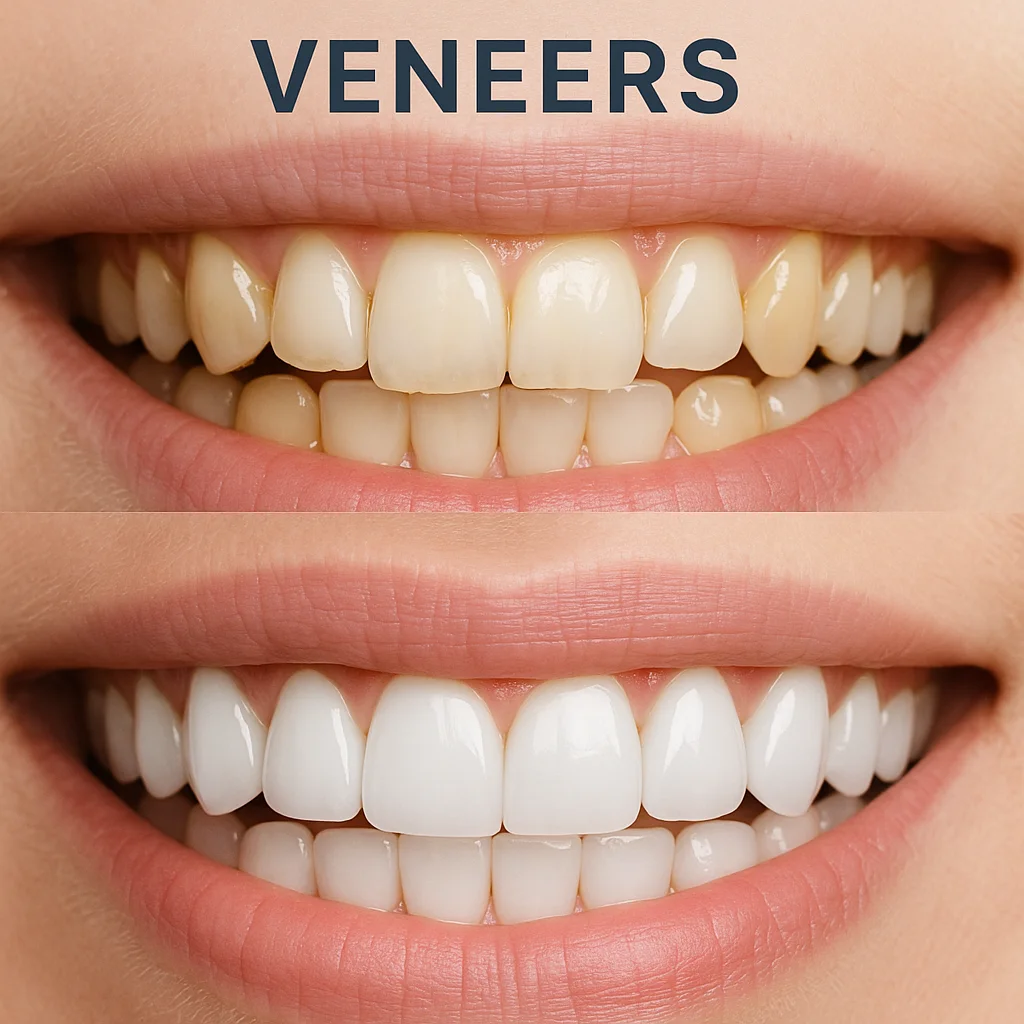
Veneers are a popular cosmetic dentistry solution that can completely transform your smile 😁. These thin, custom-made shells are crafted from porcelain or composite resin and are designed to cover the front surface of your teeth. By masking imperfections like chips, stains, or gaps, veneers offer an instant boost to your appearance and confidence 🌟.
The process of getting veneers typically begins with a consultation with a qualified dentist. During this initial visit, your dental professional will assess your oral health and discuss your aesthetic goals. Once you and your dentist determine that veneers are the right solution, the next step involves preparing your teeth. This preparation may include removing a small amount of enamel from the tooth surface to ensure a natural fit for the veneers.
After tooth preparation, impressions of your teeth are taken. These impressions serve as the blueprint for crafting your custom veneers. Dental laboratories use advanced technology to create veneers that perfectly match the color, shape, and size of your natural teeth. Once your veneers are ready, your dentist will bond them to your teeth using a strong adhesive, ensuring a secure and lasting fit 🔒.
One of the primary advantages of veneers is their versatility. They can address a wide range of dental imperfections, including:
- Discoloration that does not respond to teeth whitening treatments
- Chipped or broken teeth
- Gaps between teeth
- Uneven or irregularly shaped teeth
- Worn-down teeth due to grinding or aging
Unlike crowns, which cover the entire tooth, veneers only cover the front surface. This means that less tooth structure needs to be removed, making veneers a more conservative option for many patients 🦷.
Moreover, veneers are known for their durability and stain resistance. Porcelain veneers, in particular, can last 10 to 15 years or even longer with proper care. Composite resin veneers, while slightly less durable, are more affordable and can still provide excellent aesthetic results.
It’s important to understand that getting veneers is a permanent decision. Since a portion of the enamel is removed during preparation, your natural teeth will always require some form of coverage moving forward. This is why thorough consultation and careful consideration are crucial before proceeding with veneers 🔍.
In addition to improving aesthetics, veneers can also contribute to better oral health. By closing gaps and correcting minor alignment issues, veneers can make it easier to maintain good oral hygiene. However, they are not a substitute for orthodontic treatments in cases of significant misalignment.
At Redent Klinik Contact Page, our experienced dental team offers personalized veneer treatments tailored to your unique needs. We use state-of-the-art technology and high-quality materials to ensure that your veneers look natural and function flawlessly.
For further information on dental standards and guidelines, you can also consult the American Dental Association.
Ultimately, veneers offer a fast, effective, and long-lasting solution for enhancing your smile. With careful planning, expert craftsmanship, and proper maintenance, veneers can help you achieve the dazzling smile you’ve always dreamed of ✨.
Top Benefits of Veneers for a Perfect Smile
When it comes to achieving the perfect smile, veneers have become one of the most sought-after solutions 🌟. Their numerous benefits make them a top choice for individuals seeking both aesthetic and functional improvements. Let’s explore the many advantages that veneers offer.
First and foremost, veneers provide an immediate improvement in the appearance of your teeth. Whether you’re dealing with discoloration, chips, cracks, or minor misalignments, veneers can instantly mask these imperfections. The result is a flawless, uniform smile that enhances your overall facial appearance 😄.
One of the standout benefits of veneers is their natural appearance. Crafted from high-quality porcelain or composite resin, veneers are designed to mimic the translucency and texture of natural tooth enamel. This ensures that your veneers blend seamlessly with your existing teeth, making them virtually indistinguishable from your natural smile.
Another significant advantage is the durability of veneers. Porcelain veneers, in particular, are highly resistant to staining and wear. With proper care, they can maintain their pristine appearance for 10 to 15 years or even longer. This long lifespan makes veneers a worthwhile investment for many patients 🕰️.
Veneers also offer a conservative approach to smile enhancement. Unlike crowns, which require significant reshaping of the tooth structure, veneers only require minimal enamel removal. This preservation of natural tooth structure helps maintain the integrity of your teeth while still delivering stunning cosmetic results.
For individuals with tooth sensitivity, veneers can provide an added layer of protection. By covering worn or damaged enamel, veneers can reduce sensitivity to hot and cold temperatures, making eating and drinking more comfortable 🍵🍦.
Additionally, veneers can address minor alignment issues without the need for orthodontic treatment. While they are not a substitute for braces or clear aligners in cases of severe misalignment, veneers can correct small gaps, uneven teeth, and minor crookedness, providing a straighter-looking smile in a fraction of the time ⏱️.
Another key benefit of veneers is their stain resistance. Unlike natural teeth, which can easily become discolored from coffee, tea, wine, or tobacco, porcelain veneers are highly resistant to staining. This allows patients to maintain a bright, white smile with minimal effort ✨.
The customization of veneers is another factor that contributes to their popularity. Each veneer is tailored to the individual’s teeth, taking into account factors such as color, size, shape, and alignment. This personalized approach ensures that the final result complements the patient’s facial features and enhances their overall appearance 🎯.
From a psychological standpoint, veneers can significantly boost self-confidence. Many individuals feel self-conscious about their smile due to dental imperfections. By addressing these issues, veneers can restore confidence, making social interactions, professional engagements, and personal relationships more enjoyable 💬.
At Redent Klinik Contact Page, we specialize in delivering customized veneer treatments that cater to each patient’s unique needs and desires. Our expert team ensures that every step of the process is handled with precision and care, resulting in beautiful, lasting outcomes.
For more information about dental care standards, you can visit the American Dental Association.
In summary, veneers offer a multitude of benefits that make them an excellent choice for enhancing your smile. Their natural appearance, durability, minimal invasiveness, and customization options make veneers a versatile solution for a wide range of cosmetic dental concerns 🦷.
Different Types of Veneers: Which One Is Best?
When considering veneers, it’s important to understand the different types available. Each type of veneer offers unique advantages depending on your specific dental needs, budget, and cosmetic goals. By learning about the various options, you can make a more informed decision about which veneers are best for you 🦷.
The two most common types of veneers are porcelain veneers and composite resin veneers. Both options can dramatically improve your smile, but they differ in terms of material, procedure, durability, and cost 💡.
Porcelain Veneers
Porcelain veneers are often considered the gold standard in cosmetic dentistry. Made from high-quality ceramic materials, these veneers are crafted to mimic the translucency and natural appearance of tooth enamel. They provide a highly realistic and aesthetically pleasing result, blending seamlessly with your existing teeth 😍.
One of the key benefits of porcelain veneers is their durability. With proper care, they can last between 10 and 15 years or even longer. They are also highly resistant to staining from coffee, tea, wine, and tobacco, helping you maintain a bright and attractive smile over time ☕🍷.
The process of getting porcelain veneers typically involves two or more visits. During the first appointment, your dentist will prepare your teeth by removing a small amount of enamel. Impressions are then taken and sent to a dental laboratory, where your custom veneers are fabricated. Once they are ready, the veneers are bonded to your teeth using strong dental cement 🔬.
Because of their superior aesthetics and longevity, porcelain veneers are generally more expensive than composite resin options. However, many patients find the investment worthwhile for the high-quality, long-lasting results they offer 💎.
Composite Resin Veneers
Composite resin veneers are another popular choice, particularly for patients seeking a more affordable solution. These veneers are made from a tooth-colored resin material that is applied directly to the tooth and sculpted into shape by the dentist 🖌️.
Unlike porcelain veneers, composite resin veneers can often be completed in a single appointment. The dentist applies layers of resin to the tooth, carefully shaping and polishing it to achieve the desired appearance. This makes composite veneers a quicker option for those seeking immediate results ⏳.
While composite resin veneers are more cost-effective, they are not as durable as porcelain. On average, they last between 5 and 7 years with proper care. Additionally, composite veneers are more prone to staining and may require periodic maintenance or touch-ups to keep them looking their best ⚠️.
Lumineers and No-Prep Veneers
Another alternative is no-prep veneers, such as Lumineers. These ultra-thin veneers require little to no enamel removal, making the procedure less invasive and more reversible. Lumineers are made from a special type of porcelain that is both strong and thin, allowing for a natural look with minimal preparation ✨.
No-prep veneers may be suitable for patients who want to preserve as much of their natural tooth structure as possible. However, they may not be ideal for everyone, particularly if more significant dental corrections are needed 🧩.
At Redent Klinik Contact Page, our experienced dentists can guide you through the various veneer options and help you choose the best solution based on your individual needs, oral health, and aesthetic goals.
For additional professional guidance, you may also refer to the American Dental Association.
In conclusion, the best type of veneers for you will depend on factors such as your budget, desired results, and long-term expectations. Whether you opt for porcelain, composite resin, or no-prep veneers, each option can offer beautiful, confidence-boosting results that transform your smile 🌟.
Are You a Good Candidate for Veneers?
Veneers are an excellent cosmetic dentistry solution, but they are not suitable for everyone. Determining if you are a good candidate for veneers requires a careful evaluation of your oral health, dental concerns, and aesthetic goals 🦷. Let’s explore the key factors that make someone an ideal candidate for veneers.
One of the primary qualifications for veneers is having generally healthy teeth and gums. Since veneers are bonded to the existing tooth structure, it’s important that your natural teeth are free from severe decay, large fillings, or infections. Healthy gums also play a crucial role, as gum disease can affect the stability and longevity of veneers 💪.
If you struggle with cosmetic dental issues such as discoloration, minor chips, gaps, or slightly misaligned teeth, veneers may be a perfect solution. They can effectively mask these imperfections, creating a flawless, uniform smile. However, for more significant alignment problems, orthodontic treatments may be recommended before veneers are considered 😬.
Another critical factor is the amount of enamel present on your teeth. Since a small amount of enamel is usually removed during the veneer preparation process, candidates must have sufficient enamel to ensure proper bonding. Individuals with severely worn or weakened enamel may not be ideal candidates for veneers without additional restorative procedures 🔬.
Bruxism, or teeth grinding, can also impact candidacy for veneers. Excessive grinding can cause veneers to chip, crack, or become dislodged over time. Patients who grind their teeth may still be eligible for veneers but may need to wear a night guard to protect their veneers from damage during sleep 😴.
Good oral hygiene habits are essential for maintaining the longevity of veneers. Prospective candidates should commit to regular brushing, flossing, and routine dental check-ups. Veneers are durable, but neglecting oral hygiene can lead to gum disease or decay in the underlying teeth, compromising the integrity of the veneers 🚿.
It’s also important to have realistic expectations about what veneers can achieve. While they can dramatically enhance the appearance of your smile, veneers are not a cure-all for every dental issue. A thorough consultation with a qualified dentist will help you understand the limitations and possibilities of veneers based on your individual situation 🎯.
Non-smokers often have better outcomes with veneers since smoking can contribute to staining and gum problems. Although porcelain veneers are highly resistant to stains, maintaining optimal oral health helps preserve their appearance over the years 🚭.
Age is another consideration. While there is no strict age limit for veneers, younger patients should understand that veneers are a long-term commitment. Since enamel is removed during preparation, veneers will always require maintenance or replacement in the future 🔄.
At Redent Klinik Contact Page, our experienced team conducts comprehensive assessments to determine if veneers are the right choice for you. We evaluate your oral health, listen to your aesthetic goals, and develop a personalized treatment plan that ensures the best possible results 🌟.
For trusted information on dental care and standards, you can also refer to the American Dental Association.
In summary, ideal candidates for veneers are individuals with healthy teeth and gums, minor cosmetic dental concerns, sufficient enamel, and a commitment to excellent oral hygiene. By carefully evaluating these factors, you and your dentist can decide if veneers are the best solution to achieve the smile you’ve always dreamed of ✨.
The Step-by-Step Process of Getting Veneers
Getting veneers is a transformative journey that requires careful planning and precision. Understanding each step of the process can help you feel confident and prepared as you embark on your path to a radiant smile 🌟. Let’s break down the entire procedure of getting veneers from start to finish.
1️⃣ Initial Consultation
The first step in the veneers process is an initial consultation with a qualified cosmetic dentist. During this visit, your dentist will evaluate your oral health, discuss your aesthetic goals, and determine if veneers are the best solution for you. X-rays or digital scans may be taken to assess the condition of your teeth and gums 📸.
This consultation is the perfect opportunity to ask questions, review before-and-after photos of previous veneer cases, and set realistic expectations for your results. Your dentist will explain the advantages and limitations of veneers based on your unique dental needs 🗣️.
2️⃣ Treatment Planning
Once you decide to move forward with veneers, a customized treatment plan is developed. This plan includes selecting the appropriate type of veneers (porcelain or composite resin), choosing the right shade, and determining the ideal size and shape of each veneer to complement your facial features and smile aesthetics 🎯.
Digital imaging technology may be used to create a preview of how your smile will look with veneers. This mock-up allows both you and your dentist to visualize the final results and make any necessary adjustments before proceeding 🖥️.
3️⃣ Tooth Preparation
Before applying veneers, a small amount of enamel is typically removed from the front surface of each tooth. This step ensures that the veneers fit naturally and do not appear bulky. The amount of enamel removed is minimal—usually less than 0.5 millimeters—preserving most of your natural tooth structure 🦷.
For some patients, no-prep veneers like Lumineers may be an option, requiring little to no enamel removal. However, traditional veneers generally provide the most natural-looking and durable results 🔬.
4️⃣ Impressions and Temporary Veneers
After tooth preparation, impressions or digital scans of your teeth are taken. These serve as a precise model for fabricating your custom veneers. In many cases, temporary veneers are placed on your teeth while the permanent ones are being crafted 🕰️.
Temporary veneers protect your prepared teeth, allow you to test the look and feel of your new smile, and help you get accustomed to the veneers before final placement 🎭.
5️⃣ Veneer Fabrication
Using the impressions, skilled dental technicians create your veneers in a specialized laboratory. This process typically takes 1 to 2 weeks. Each veneer is meticulously crafted to match the desired color, shape, and translucency, ensuring a perfect fit and a natural appearance ✨.
6️⃣ Final Placement and Bonding
Once your veneers are ready, you’ll return to the dentist for the final placement. The dentist will carefully check the fit, color, and alignment of each veneer. Any necessary adjustments are made to ensure a flawless result 🎯.
Before bonding the veneers, your teeth will be cleaned, polished, and etched to create a rough surface for better adhesion. A special dental cement is applied to the veneers, which are then positioned on your teeth. A curing light is used to harden the cement and securely bond the veneers in place 🔦.
7️⃣ Follow-Up and Maintenance
After placement, your dentist will schedule follow-up visits to ensure that your veneers are functioning well and that your bite remains comfortable. Maintaining good oral hygiene, attending regular dental check-ups, and avoiding habits like nail-biting or chewing on hard objects will help extend the lifespan of your veneers 🧼.
At Redent Klinik Contact Page, we guide our patients through every step of the veneers process, ensuring a smooth and satisfying experience from consultation to final results.
For additional information on dental procedures, you may also visit the American Dental Association.
By understanding each stage of the process, you can approach your veneers journey with confidence, knowing that you’re on your way to achieving the smile you’ve always desired 😁.
Potential Risks and Side Effects of Veneers
While veneers offer many benefits, it’s important to understand that like any dental procedure, they come with potential risks and side effects. Being fully informed will help you make a confident decision about whether veneers are the right choice for your smile transformation 🌟.
1️⃣ Irreversible Procedure
One of the most significant considerations when choosing veneers is that the procedure is irreversible. During the preparation phase, a thin layer of enamel is permanently removed from the front surface of the teeth. Once this enamel is removed, your natural teeth will always require some form of coverage, either with veneers or another restoration, to maintain their appearance and function 🔄.
2️⃣ Tooth Sensitivity
After the enamel is removed and the veneers are placed, some patients may experience increased tooth sensitivity. This sensitivity is usually mild and temporary, but in some cases, it can persist longer, especially when consuming hot or cold foods and beverages 🥶☕.
Proper bonding techniques and high-quality materials can help minimize sensitivity. Your dentist may also recommend using toothpaste designed for sensitive teeth to alleviate discomfort 🧴.
3️⃣ Risk of Chipping or Cracking
Although veneers are quite durable, they are not indestructible. Excessive force or habits such as teeth grinding (bruxism), nail-biting, or chewing on hard objects like ice or pens can cause veneers to chip or crack. Wearing a night guard and avoiding harmful habits can significantly reduce this risk 🦷💥.
4️⃣ Color Mismatch
Veneers are custom-designed to match your natural tooth color. However, if your surrounding natural teeth change color over time due to staining or whitening, the veneers may no longer blend perfectly. Unlike natural teeth, veneers do not respond to whitening treatments, which means the surrounding teeth would need to be whitened before the veneer placement to ensure a consistent shade 🎨.
5️⃣ Gum Irritation or Inflammation
In some cases, poorly fitted veneers may cause irritation or inflammation of the gums. This can lead to discomfort, swelling, or even gum recession if not addressed. Choosing an experienced dentist is essential to ensure that the veneers fit precisely and comfortably along the gumline 🩺.
6️⃣ Possible Veneer Detachment
Though rare, veneers can sometimes become loose or detach from the tooth if the bonding weakens. Trauma, improper oral hygiene, or underlying dental issues can contribute to this problem. If a veneer becomes loose, prompt dental attention is necessary to prevent further complications 🔧.
7️⃣ Cost and Insurance Considerations
Another factor to consider is the cost of veneers. Since veneers are usually considered a cosmetic procedure, many dental insurance plans do not cover them. This can make veneers a significant financial investment. However, the long-term benefits often outweigh the costs for those seeking a dramatic smile improvement 💸.
8️⃣ Maintenance Requirements
Although veneers are low-maintenance compared to other dental restorations, they still require diligent care. Regular brushing, flossing, and dental check-ups are essential to maintain both the veneers and the underlying natural teeth. Neglecting oral hygiene can lead to decay or gum disease, jeopardizing the veneers’ longevity 🧼.
At Redent Klinik Contact Page, we take every precaution to minimize the risks associated with veneers. Our expert team provides thorough consultations, precise treatment planning, and comprehensive aftercare to ensure the best possible outcomes for our patients.
For more in-depth information about dental procedures and care standards, visit the American Dental Association.
In conclusion, while veneers offer remarkable aesthetic benefits, understanding the potential risks and side effects is essential for making an informed decision. By working with a skilled dental professional and maintaining excellent oral hygiene, you can enjoy the long-lasting advantages of veneers while minimizing complications 🌈.
Veneers Cost: What to Expect in 2025
Understanding the cost of veneers is a crucial part of your decision-making process. Veneers are a significant investment in your smile, and prices can vary widely depending on several factors such as the type of veneers, location, dentist’s expertise, and the complexity of your case 💰.
Average Cost of Veneers
In 2025, the average cost of veneers ranges as follows:
- Porcelain veneers: $900 to $2,500 per tooth
- Composite resin veneers: $250 to $1,500 per tooth
- No-prep veneers (e.g., Lumineers): $800 to $2,000 per tooth
These prices reflect the high level of craftsmanship, customization, and durability that veneers provide. Porcelain veneers remain the most expensive option due to their superior aesthetics and long lifespan, while composite resin veneers offer a more budget-friendly alternative 🦷.
Factors That Influence Veneers Pricing
Several factors affect the final cost of veneers, including:
- Material Type: Porcelain is more expensive than composite resin due to its strength and stain resistance.
- Number of Teeth: Full smile makeovers involving multiple veneers increase the overall cost.
- Location: Dental fees vary depending on the region and local cost of living.
- Dentist’s Expertise: Highly experienced cosmetic dentists may charge premium rates for their expertise and artistry.
- Laboratory Fees: Custom veneers crafted by top dental labs often result in higher costs but superior quality.
At Redent Klinik Contact Page, we offer competitive pricing and customized treatment plans to fit your budget while ensuring the highest quality care.
Insurance Coverage
In most cases, dental insurance does not cover veneers because they are considered a cosmetic procedure. However, some insurance plans may partially cover veneers if they are deemed medically necessary, such as for restoring broken or damaged teeth. It’s always advisable to check with your insurance provider for specific coverage details 📑.
Financing Options
Given the cost of veneers, many dental clinics, including Redent Klinik, offer flexible financing options. These may include payment plans, credit programs, or third-party financing companies that allow patients to spread payments over several months or years, making veneers more accessible to a broader range of patients 💳.
Cost vs. Value
While veneers are a financial investment, they also offer substantial long-term value. The ability to achieve a beautiful, natural-looking smile can have profound effects on your confidence, professional success, and overall quality of life. For many patients, the lasting benefits of veneers far outweigh the initial cost 💎.
It’s important to remember that choosing the cheapest option may not always be the best decision when it comes to veneers. High-quality materials, experienced dentists, and precision craftsmanship are essential to ensure your veneers look natural, fit comfortably, and last for many years 🔬.
For more detailed guidelines and standards on cosmetic dental procedures, you may visit the American Dental Association.
In summary, the cost of veneers in 2025 varies based on multiple factors, but with proper planning and consultation, you can achieve a stunning smile that’s well worth the investment. Discuss your options with a trusted dental professional to create a customized plan that fits both your aesthetic goals and financial situation 💼.
How to Care for Your Veneers Properly
Once you’ve invested in veneers to achieve your perfect smile, proper care becomes essential to protect your investment and extend the lifespan of your veneers 🦷. With the right habits and maintenance, your veneers can remain beautiful and functional for many years. Here’s a comprehensive guide on how to care for your veneers properly.
1️⃣ Maintain Excellent Oral Hygiene
Just like your natural teeth, veneers require daily care to keep them clean and healthy. Brush your teeth at least twice a day using a soft-bristled toothbrush and non-abrasive fluoride toothpaste. Abrasive toothpaste can scratch the surface of your veneers, leading to a dull appearance over time 🪥.
Floss daily to remove plaque and food particles from between your teeth and around the veneers. Proper flossing helps prevent gum disease, which can compromise the stability and aesthetics of your veneers 🧵.
2️⃣ Schedule Regular Dental Check-Ups
Routine dental visits are crucial for monitoring the condition of your veneers and overall oral health. Your dentist will check for any signs of wear, damage, or gum issues that may affect your veneers. Professional cleanings also help maintain the brightness and cleanliness of your veneers 🩺.
At Redent Klinik Contact Page, we recommend biannual check-ups to ensure your veneers remain in optimal condition and address any concerns promptly.
3️⃣ Avoid Hard and Sticky Foods
While veneers are durable, they are not immune to damage. Avoid biting into hard foods such as ice, nuts, hard candies, and bones, which can cause chips or cracks. Sticky foods like caramel or chewing gum may also pull at the edges of veneers, increasing the risk of detachment 🍬🥜.
If you do consume harder foods, try to cut them into smaller, manageable pieces to minimize stress on your veneers 🍴.
4️⃣ Limit Stain-Causing Substances
Porcelain veneers are highly resistant to staining; however, the natural teeth around them can still discolor, potentially causing a mismatch in color. To maintain a uniform smile, limit consumption of stain-causing beverages such as coffee, tea, red wine, and soda ☕🍷.
Additionally, avoid tobacco products, as smoking not only stains your teeth but also increases the risk of gum disease, which can affect the appearance and stability of your veneers 🚭.
5️⃣ Wear a Night Guard if Needed
If you grind or clench your teeth at night (a condition known as bruxism), wearing a custom night guard can protect your veneers from excessive pressure and potential damage. Grinding can weaken or fracture veneers over time, making preventive measures essential 😴.
6️⃣ Avoid Using Teeth as Tools
Never use your teeth to open packages, bottles, or other objects. This bad habit puts unnecessary strain on your veneers and increases the risk of cracking or chipping 🔧.
7️⃣ Use Mouth Protection During Sports
If you play contact sports or engage in activities where facial injuries are possible, wear a mouthguard to protect your veneers and natural teeth from trauma 🏀🥊.
8️⃣ Address Dental Issues Promptly
If you notice any issues with your veneers—such as sensitivity, discomfort, or loosening—contact your dentist immediately. Early intervention can prevent minor problems from becoming major complications 🔍.
For more information on dental care best practices, you can also consult the American Dental Association.
In conclusion, caring for your veneers properly is a combination of daily hygiene, mindful habits, and regular professional care. By following these guidelines, you can preserve the beauty and functionality of your veneers for many years, ensuring that your investment continues to deliver a confident, radiant smile 🌈.
Veneers vs. Other Cosmetic Dentistry Options
When it comes to enhancing your smile, veneers are not the only option available. Cosmetic dentistry offers a variety of treatments, each designed to address different aesthetic and functional concerns. Understanding how veneers compare to other cosmetic solutions can help you choose the treatment that best aligns with your goals and needs 🦷.
Veneers vs. Teeth Whitening
Teeth whitening is one of the most popular and least invasive cosmetic dental treatments. It effectively removes surface stains and lightens the natural color of teeth. However, whitening has its limitations, especially for intrinsic stains caused by trauma, medications, or genetics.
In contrast, veneers can address both extrinsic and intrinsic discoloration. Since veneers cover the entire front surface of the tooth, they provide a permanent solution for stains that cannot be removed through whitening. Additionally, veneers offer the added benefit of correcting shape, alignment, and spacing issues that whitening alone cannot address ✨.
Veneers vs. Dental Bonding
Dental bonding uses tooth-colored resin to repair minor chips, cracks, and gaps. It’s a cost-effective and quick procedure often completed in a single visit. However, bonding is less durable and more prone to staining compared to veneers.
Veneers, particularly porcelain veneers, offer superior aesthetics and longevity. While bonding may last 3 to 5 years, veneers can last 10 to 15 years or more with proper care. For patients seeking long-term, natural-looking results, veneers are generally the better investment 💎.
Veneers vs. Orthodontic Treatments
Orthodontic options like braces and clear aligners (e.g., Invisalign) are designed to straighten teeth by gradually shifting them into proper alignment. These treatments are ideal for correcting significant misalignments, bite issues, and jaw irregularities.
Veneers can provide the appearance of straighter teeth by masking minor misalignments and closing small gaps. However, they do not correct the underlying structural issues. For patients with major alignment problems, orthodontic treatment may be necessary before considering veneers for aesthetic refinement 🧩.
Veneers vs. Crowns
Dental crowns cover the entire tooth and are typically used to restore teeth that are significantly damaged, weakened, or decayed. Crowns provide full structural support and are often recommended for teeth that cannot be effectively treated with veneers alone.
Veneers are more conservative, requiring minimal enamel removal compared to crowns. They are ideal for patients with healthy tooth structure who want to enhance the appearance of their teeth without extensive reshaping 🔬.
Veneers vs. Implants
Dental implants replace missing teeth by surgically inserting a titanium post into the jawbone, followed by attaching a crown. Implants are a solution for tooth loss, while veneers enhance existing teeth.
If you have healthy teeth but desire cosmetic improvements, veneers are appropriate. If you are missing teeth entirely, dental implants would be necessary. In some cases, patients may receive both treatments as part of a full-mouth rehabilitation 🛠️.
Which Option is Right for You?
Choosing between veneers and other cosmetic dentistry treatments depends on several factors, including:
- The condition and health of your teeth
- Your specific aesthetic goals
- Your budget and long-term expectations
- Professional recommendations from your dentist
At Redent Klinik Contact Page, we offer comprehensive consultations to help you explore all available options and select the treatment plan that best suits your needs. Our experienced team customizes each solution to deliver the most beautiful, functional, and lasting results 🌟.
For authoritative information on dental procedures, you can also visit the American Dental Association.
In conclusion, veneers offer an exceptional balance of aesthetic transformation, durability, and minimal invasiveness. While other cosmetic dentistry options may be better suited for certain situations, veneers remain a top choice for many patients seeking a flawless, confident smile that lasts for years 🌈.
Veneers vs. Other Cosmetic Dentistry Options
When it comes to enhancing your smile, veneers are not the only option available. Cosmetic dentistry offers a variety of treatments, each designed to address different aesthetic and functional concerns. Understanding how veneers compare to other cosmetic solutions can help you choose the treatment that best aligns with your goals and needs 🦷.
Veneers vs. Teeth Whitening
Teeth whitening is one of the most popular and least invasive cosmetic dental treatments. It effectively removes surface stains and lightens the natural color of teeth. However, whitening has its limitations, especially for intrinsic stains caused by trauma, medications, or genetics.
In contrast, veneers can address both extrinsic and intrinsic discoloration. Since veneers cover the entire front surface of the tooth, they provide a permanent solution for stains that cannot be removed through whitening. Additionally, veneers offer the added benefit of correcting shape, alignment, and spacing issues that whitening alone cannot address ✨.
Veneers vs. Dental Bonding
Dental bonding uses tooth-colored resin to repair minor chips, cracks, and gaps. It’s a cost-effective and quick procedure often completed in a single visit. However, bonding is less durable and more prone to staining compared to veneers.
Veneers, particularly porcelain veneers, offer superior aesthetics and longevity. While bonding may last 3 to 5 years, veneers can last 10 to 15 years or more with proper care. For patients seeking long-term, natural-looking results, veneers are generally the better investment 💎.
Veneers vs. Orthodontic Treatments
Orthodontic options like braces and clear aligners (e.g., Invisalign) are designed to straighten teeth by gradually shifting them into proper alignment. These treatments are ideal for correcting significant misalignments, bite issues, and jaw irregularities.
Veneers can provide the appearance of straighter teeth by masking minor misalignments and closing small gaps. However, they do not correct the underlying structural issues. For patients with major alignment problems, orthodontic treatment may be necessary before considering veneers for aesthetic refinement 🧩.
Veneers vs. Crowns
Dental crowns cover the entire tooth and are typically used to restore teeth that are significantly damaged, weakened, or decayed. Crowns provide full structural support and are often recommended for teeth that cannot be effectively treated with veneers alone.
Veneers are more conservative, requiring minimal enamel removal compared to crowns. They are ideal for patients with healthy tooth structure who want to enhance the appearance of their teeth without extensive reshaping 🔬.
Veneers vs. Implants
Dental implants replace missing teeth by surgically inserting a titanium post into the jawbone, followed by attaching a crown. Implants are a solution for tooth loss, while veneers enhance existing teeth.
If you have healthy teeth but desire cosmetic improvements, veneers are appropriate. If you are missing teeth entirely, dental implants would be necessary. In some cases, patients may receive both treatments as part of a full-mouth rehabilitation 🛠️.
Which Option is Right for You?
Choosing between veneers and other cosmetic dentistry treatments depends on several factors, including:
- The condition and health of your teeth
- Your specific aesthetic goals
- Your budget and long-term expectations
- Professional recommendations from your dentist
At Redent Klinik Contact Page, we offer comprehensive consultations to help you explore all available options and select the treatment plan that best suits your needs. Our experienced team customizes each solution to deliver the most beautiful, functional, and lasting results 🌟.
For authoritative information on dental procedures, you can also visit the American Dental Association.
In conclusion, veneers offer an exceptional balance of aesthetic transformation, durability, and minimal invasiveness. While other cosmetic dentistry options may be better suited for certain situations, veneers remain a top choice for many patients seeking a flawless, confident smile that lasts for years 🌈.