
The modern dental industry is evolving faster than ever, and one of the most impactful changes reshaping dental practices worldwide is the rise of the virtual dental office manager. As patient expectations increase and administrative workloads grow more complex, dental clinics are seeking smarter, more flexible ways to manage operations without sacrificing quality or profitability. This is exactly where a virtual dental office manager steps in 🚀.
A virtual dental office manager is a highly trained remote professional who handles the administrative, operational, and coordination tasks of a dental practice without being physically present in the clinic. Unlike traditional office management models, this approach leverages digital tools, cloud-based systems, and proven workflows to streamline daily operations efficiently and securely.
Dental professionals often find themselves overwhelmed by non-clinical responsibilities such as appointment scheduling, insurance verification, billing follow-ups, patient communication, and team coordination. Over time, these tasks can reduce focus on patient care and clinical excellence. A virtual dental office manager removes this burden by taking ownership of the practice’s backend operations, allowing dentists and hygienists to concentrate on what truly matters: delivering outstanding dental care 🦷.
One of the key reasons dental practices are adopting a virtual dental office manager is flexibility. Unlike an in-house manager limited by office hours, a virtual solution can operate beyond standard clinic times, ensuring that patient inquiries, confirmations, and administrative workflows continue smoothly. This creates a more responsive and professional image for the clinic while reducing missed calls and scheduling gaps.
From an operational perspective, the virtual dental office manager acts as the central hub connecting patients, dental staff, insurance providers, and management systems. Using secure dental software, practice management platforms, and communication tools, they maintain real-time visibility over schedules, patient records, and billing processes. This remote yet integrated approach ensures nothing falls through the cracks.
Another major advantage of a virtual dental office manager is scalability. Whether a clinic is a single-location practice or a growing multi-location dental brand, virtual management services can scale up or down based on demand. This adaptability is especially valuable during seasonal fluctuations, staff shortages, or periods of rapid growth. Instead of hiring, training, and managing additional in-house staff, clinics gain instant access to experienced dental administration expertise.
Security and compliance are also critical concerns in healthcare, and a professional virtual dental office manager is trained to follow HIPAA-compliant workflows, data protection protocols, and industry best practices. Patient information is handled with strict confidentiality, using encrypted systems and secure access controls. This ensures peace of mind for both clinic owners and patients alike 🔐.
From the patient’s perspective, the presence of a virtual dental office manager often translates into faster responses, clearer communication, and smoother appointment experiences. Patients appreciate timely reminders, accurate insurance guidance, and prompt follow-ups. These seemingly small details significantly improve patient satisfaction, online reviews, and long-term loyalty.
Financial efficiency is another compelling reason clinics are embracing the virtual dental office manager model. By eliminating costs associated with on-site staff such as office space, equipment, benefits, and downtime, practices can reduce overhead while maintaining—or even improving—operational performance. This cost-effective structure makes advanced office management accessible even for smaller or newly established dental clinics.
It’s also important to note that a virtual dental office manager does not replace human connection; instead, it enhances it. Dentists remain the face of the practice, while the virtual manager works behind the scenes to ensure every interaction is professional, timely, and patient-focused. This balance between technology and personalized service defines the future of dental practice management 🌍.
As dentistry continues to integrate digital solutions, the virtual dental office manager is no longer a trend—it is becoming a standard for forward-thinking clinics. Practices that adopt this model position themselves for long-term growth, operational clarity, and a superior patient experience. Whether the goal is efficiency, scalability, or better work-life balance for dental professionals, virtual management offers a powerful solution aligned with the future of healthcare.
What Is a Virtual Dental Office Manager and How Does It Work?
A virtual dental office manager is a remote professional or specialized service that oversees the administrative and operational backbone of a dental practice using secure digital systems. Instead of being physically present at the front desk, this role functions online—coordinating schedules, managing patient communications, handling insurance workflows, and optimizing daily operations. For many clinics, a virtual dental office manager delivers the same (or better) results as an in-house manager while offering greater flexibility and cost efficiency 😊.
At its core, the virtual dental office manager model is built around process optimization and accountability. The manager logs into the clinic’s practice management software, phone systems, and billing platforms to work as an integrated extension of the team. Because workflows are standardized and performance is tracked digitally, clinics gain transparency and consistency that can be hard to maintain with rotating on-site staff.
How the Virtual Model Operates Day to Day
On a daily basis, a virtual dental office manager begins by reviewing the clinic’s schedule, confirming appointments, and identifying gaps that can be filled to maximize chair time. They coordinate with dentists, hygienists, and assistants to ensure schedules reflect provider availability and procedure length accurately. Missed appointments, cancellations, and waitlists are actively managed to reduce lost revenue.
Throughout the day, the virtual dental office manager monitors incoming calls, emails, and messages. Using cloud-based phone systems and CRM tools, patient inquiries are answered promptly and professionally—even outside standard office hours when needed. This responsiveness helps clinics present a polished, patient-first image without requiring staff to stay late or work overtime.
Administrative Systems and Workflow Integration
A critical function of a virtual dental office manager is connecting and managing multiple administrative systems seamlessly. These typically include dental practice management software, insurance verification platforms, billing tools, and secure document storage. Because everything operates in the cloud, updates happen in real time, and the entire team stays aligned.
Insurance verification and claims follow-up are handled systematically. The virtual dental office manager checks eligibility, submits claims accurately, tracks reimbursements, and follows up on denials. This structured approach reduces errors, accelerates payments, and improves cash flow—one of the most common pain points for dental practices.
Patient Communication and Experience Management
Patient communication is another area where a virtual dental office manager excels. Automated reminders, personalized follow-ups, and clear explanations of treatment plans help patients feel informed and cared for. When patients understand their appointments, coverage, and next steps, trust increases—and so does treatment acceptance 👍.
In addition, virtual managers often oversee patient feedback and online reviews, flagging issues early and helping clinics respond professionally. This proactive reputation management plays a key role in long-term practice growth.
Collaboration With the Dental Team
Although remote, a virtual dental office manager works closely with the in-clinic team. Daily reports, shared dashboards, and scheduled check-ins ensure everyone is on the same page. Dentists receive clear summaries of schedules, outstanding balances, and operational priorities without being pulled into day-to-day administrative chaos.
This collaborative structure also improves accountability. Tasks are documented, metrics are tracked, and performance is measurable. As a result, the practice operates with clarity rather than guesswork, and leadership decisions are based on data rather than assumptions.
Security, Compliance, and Reliability
Security is essential in healthcare, and a professional virtual dental office manager follows strict HIPAA-compliant procedures. Access controls, encrypted systems, and secure communication channels protect patient data at every step. Clinics benefit from enterprise-level security without having to build or manage it internally 🔐.
Reliability is another major advantage. Unlike a single in-house employee, a virtual dental office manager service often includes backup support and continuity planning. If one team member is unavailable, another steps in—ensuring uninterrupted operations.
Ultimately, understanding what a virtual dental office manager is and how it works reveals why this model is gaining traction. It combines expert dental administration, modern technology, and scalable processes into a single solution designed for today’s dental practices. By moving management tasks into a virtual environment, clinics gain efficiency, consistency, and freedom to focus on exceptional patient care.
Why Dental Clinics Are Switching to a Virtual Dental Office Manager
Dental clinics around the world are rethinking how they operate, and one of the most significant shifts is the move toward a virtual dental office manager. This transition is not driven by trends alone—it is a strategic response to rising operational costs, staffing challenges, and increasing patient expectations. Clinics that want to remain competitive, efficient, and patient-focused are discovering that virtual management offers measurable advantages 🌍.
The traditional front-desk and office management model often struggles to keep up with modern demands. Staff turnover, limited working hours, and inconsistent processes can create bottlenecks that affect both revenue and patient satisfaction. A virtual dental office manager solves many of these issues by providing structured, technology-driven support that works continuously behind the scenes.
Rising Staffing Challenges in Dental Practices
One of the primary reasons clinics adopt a virtual dental office manager is the growing difficulty of hiring and retaining qualified administrative staff. Experienced dental office managers are in high demand, and turnover can disrupt workflows for months. Recruitment, onboarding, and training require time, money, and constant oversight.
By contrast, a virtual dental office manager comes pre-trained, experienced, and ready to integrate immediately. Clinics avoid the risks of absenteeism, burnout, and sudden resignations. This stability allows dental teams to operate smoothly without constant staffing concerns.
Cost Efficiency Without Sacrificing Quality
Financial pressure is another major driver behind the switch to a virtual dental office manager. On-site employees come with hidden costs such as payroll taxes, benefits, paid time off, office space, equipment, and downtime during slow periods. These expenses add up quickly, especially for small and mid-sized clinics.
A virtual dental office manager offers predictable costs and scalable service. Clinics pay for what they need, when they need it—without long-term employment commitments. Despite lower overhead, service quality often improves because virtual managers specialize exclusively in dental administration and follow optimized workflows 📊.
Better Revenue Control and Fewer Missed Opportunities
Missed calls, unconfirmed appointments, and uncollected balances directly impact a clinic’s bottom line. A virtual dental office manager actively monitors these areas, ensuring follow-ups happen consistently. Insurance claims are tracked, unpaid balances are addressed, and appointment gaps are filled proactively.
This level of consistency is difficult to maintain with in-house teams juggling multiple responsibilities at once. Virtual management brings focus and accountability to revenue-critical processes.
Improved Patient Expectations in the Digital Age
Today’s patients expect fast responses, clear communication, and seamless experiences. Clinics that rely solely on traditional office hours and manual processes often fall short. A virtual dental office manager helps bridge this gap by extending communication coverage and standardizing patient interactions.
Automated reminders, prompt responses to inquiries, and professional handling of concerns all contribute to a better patient journey. When patients feel supported and informed, they are more likely to keep appointments, accept treatment plans, and leave positive reviews 😊.
Standardization and Operational Consistency
Another reason clinics switch to a virtual dental office manager is the need for consistency. In-house processes often depend on individual habits, leading to variations in scheduling, billing, and communication. Over time, this inconsistency creates confusion and inefficiency.
A virtual dental office manager operates using documented workflows, performance metrics, and standardized procedures. This ensures every patient receives the same high-quality administrative experience, regardless of day or staff changes. For multi-location practices, this consistency is especially valuable.
Focus on Clinical Excellence
Dentists and clinical staff should spend their energy on patient care—not administrative problem-solving. One of the most compelling reasons for adopting a virtual dental office manager is the freedom it gives clinical teams to focus on treatment quality.
With scheduling, billing, insurance, and communication handled remotely, dentists experience less stress and fewer interruptions. This improved focus often leads to better clinical outcomes, stronger patient relationships, and a healthier work-life balance 🧘♂️.
Future-Proofing the Dental Practice
The dental industry is moving toward digital, remote-friendly solutions, and the virtual dental office manager fits perfectly into this future. Practices that embrace this model are better prepared for growth, technological changes, and unexpected disruptions.
Ultimately, dental clinics are switching to a virtual dental office manager because it delivers efficiency, stability, and scalability in a single solution. As operational complexity increases, virtual management is becoming not just an alternative—but a smarter standard for modern dental practices.
Core Responsibilities of a Virtual Dental Office Manager
The success of a modern dental practice depends heavily on how well its non-clinical operations are managed. This is where the virtual dental office manager plays a critical role. Acting as the operational backbone of the clinic, a virtual dental office manager is responsible for coordinating, optimizing, and overseeing essential administrative tasks that keep the practice running smoothly every day 🦷.
Unlike a general virtual assistant, a virtual dental office manager is specifically trained in dental workflows, terminology, compliance requirements, and patient management systems. Their responsibilities go far beyond answering phones—they are deeply involved in scheduling strategy, revenue cycle management, patient communication, and operational reporting.
Appointment Scheduling and Calendar Optimization
One of the most important responsibilities of a virtual dental office manager is managing the appointment calendar. This involves more than simply booking patients. The virtual manager strategically organizes schedules to maximize chair utilization, minimize gaps, and align appointments with provider availability.
Cancellations and no-shows are proactively addressed through reminder systems, waitlists, and same-day fill strategies. By constantly monitoring the schedule, the virtual dental office manager helps ensure that valuable clinical time is not wasted, directly supporting practice profitability 📅.
Patient Communication and Relationship Management
Clear and consistent communication is a cornerstone of patient satisfaction. A virtual dental office manager handles incoming calls, emails, texts, and online inquiries with professionalism and empathy. Patients receive timely responses to questions about appointments, procedures, and insurance, creating a smooth and reassuring experience.
Follow-up communication is equally important. After visits, the virtual dental office manager may send reminders for future care, check on patient satisfaction, or provide instructions related to treatment plans. This ongoing engagement strengthens trust and encourages long-term patient loyalty 😊.
Managing New Patient Onboarding
First impressions matter. A virtual dental office manager often oversees the entire new patient onboarding process, from initial inquiry to first appointment confirmation. This includes collecting forms, verifying insurance, explaining office policies, and ensuring all required documentation is completed before the visit.
This organized approach reduces front-desk stress on appointment day and helps patients feel welcomed and prepared.
Insurance Verification and Billing Coordination
Insurance-related tasks are among the most complex and time-consuming aspects of dental administration. A virtual dental office manager takes full responsibility for insurance verification, eligibility checks, claim submissions, and follow-ups. Accuracy at this stage prevents delays, denials, and patient frustration.
Billing coordination also includes tracking outstanding balances, sending statements, and communicating clearly with patients about their financial responsibilities. By maintaining consistency and transparency, the virtual dental office manager supports steady cash flow and reduces awkward financial conversations for clinical staff 💳.
Operational Reporting and Performance Tracking
Data-driven decision-making is essential for practice growth. A virtual dental office manager regularly prepares operational reports covering key metrics such as appointment fill rates, cancellation trends, collection performance, and patient engagement.
These insights help dentists and owners understand what is working and where improvements are needed. Instead of guessing, leadership can make informed decisions backed by accurate, up-to-date information.
Team Coordination and Workflow Management
Although remote, a virtual dental office manager plays a central role in coordinating the dental team. They ensure that hygienists, assistants, and providers are aligned with schedules, protocols, and daily priorities. Communication gaps are minimized through shared systems, daily summaries, and clear documentation.
This structured workflow reduces confusion, improves efficiency, and creates a calmer, more organized clinic environment 🌱.
Compliance and Data Security Oversight
Healthcare compliance cannot be overlooked. A professional virtual dental office manager follows strict HIPAA guidelines and ensures patient data is handled securely. Access permissions, documentation standards, and secure communication channels are all part of their responsibility.
By maintaining compliance remotely, clinics reduce risk while benefiting from modern, cloud-based operations.
In summary, the core responsibilities of a virtual dental office manager span every critical administrative function of a dental practice. From scheduling and communication to billing, reporting, and compliance, this role ensures that operations run efficiently and predictably. As dental clinics grow more complex, the virtual dental office manager becomes an indispensable partner in delivering consistent, high-quality patient care while supporting long-term practice success.
How a Virtual Dental Office Manager Improves Patient Experience
Patient experience is one of the most powerful factors influencing a dental clinic’s reputation, retention rates, and long-term growth. In today’s competitive healthcare environment, convenience, clarity, and responsiveness matter just as much as clinical outcomes. A virtual dental office manager plays a vital role in elevating every stage of the patient journey—from the first inquiry to post-treatment follow-up—by creating a smoother, more professional, and more reassuring experience 😊.
While patients may never see the virtual dental office manager in person, they feel the impact through faster communication, better organization, and fewer frustrations. When administrative processes work seamlessly in the background, patients can focus on their health rather than logistics.
Faster and More Consistent Communication
One of the most noticeable ways a virtual dental office manager improves patient experience is through communication speed and consistency. Missed calls, delayed responses, and unclear answers are common complaints in traditional dental offices. Virtual management systems dramatically reduce these issues.
Using cloud-based phone systems, messaging platforms, and email automation, the virtual dental office manager ensures that patient inquiries are answered promptly and professionally. Whether a patient is asking about appointment availability, insurance coverage, or treatment preparation, they receive clear and timely responses. This responsiveness builds trust and reduces anxiety—especially for new or nervous patients 🧠.
Seamless Appointment Scheduling and Reminders
Scheduling is often the first real interaction a patient has with a dental practice. A virtual dental office manager ensures that this interaction is smooth, flexible, and patient-friendly. Appointments are scheduled accurately based on procedure length, provider availability, and patient preferences.
Automated reminders via text or email reduce no-shows and help patients feel supported rather than rushed. Patients appreciate reminders that are clear, timely, and easy to confirm or reschedule. This proactive approach minimizes confusion and creates a sense of organization and professionalism 📅.
Reducing Wait Times and Day-of-Visit Stress
By optimizing schedules and preparing patient information in advance, a virtual dental office manager helps reduce waiting times on the day of the visit. Forms are completed ahead of time, insurance details are verified, and treatment plans are clearly documented.
As a result, patients spend less time waiting and more time receiving care—an experience that significantly improves satisfaction.
Clear Financial and Insurance Communication
Financial uncertainty is one of the biggest sources of stress for dental patients. A virtual dental office manager improves the patient experience by providing transparent, easy-to-understand explanations of insurance coverage, co-pays, and billing timelines.
When patients know what to expect financially, trust increases and treatment acceptance improves. The virtual dental office manager ensures that questions are answered patiently and accurately, preventing misunderstandings and uncomfortable conversations at the front desk 💬.
Personalized Follow-Ups and Ongoing Engagement
Patient care does not end when the appointment is over. A virtual dental office manager often oversees follow-up communication, checking in with patients after procedures, reminding them of future care needs, and ensuring they feel supported throughout their treatment journey.
This level of personalized attention makes patients feel valued rather than processed. Over time, these small but meaningful interactions build strong patient-provider relationships and encourage long-term loyalty.
Improved Accessibility and Convenience
Modern patients value convenience. A virtual dental office manager enhances accessibility by extending communication beyond traditional office hours when appropriate. Patients can request appointments, ask questions, or receive confirmations without waiting until the next business day.
This flexibility is especially beneficial for working professionals, parents, and international patients who may be in different time zones or have limited availability 🌍.
Professionalism and Consistency Across All Touchpoints
Consistency is a key element of trust. A virtual dental office manager ensures that every patient interaction follows established standards for tone, accuracy, and professionalism. Whether a patient speaks with the office today or next month, the experience feels familiar and reliable.
This consistency reduces errors, improves clarity, and reinforces the clinic’s brand as organized and patient-centered.
In summary, a virtual dental office manager significantly improves patient experience by removing friction from administrative processes and enhancing communication at every stage. Faster responses, clearer information, reduced wait times, and personalized follow-ups all contribute to a calmer, more positive dental journey. When patients feel heard, informed, and respected, satisfaction increases—and so does long-term practice success.
Cost Savings and Financial Impact of a Virtual Dental Office Manager
One of the strongest reasons dental practices adopt a virtual dental office manager is the measurable financial advantage it brings. While clinical excellence drives patient trust, financial stability determines whether a practice can grow, invest in technology, and remain competitive. A virtual dental office manager directly impacts profitability by reducing overhead, improving revenue capture, and creating predictable operational costs 💰.
Unlike traditional staffing models, where expenses are fixed and often unpredictable, the virtual dental office manager model is designed for efficiency and scalability. Clinics gain access to expert-level management without the long-term financial commitments associated with full-time, in-house employees.
Reduction in Staffing and Overhead Costs
Hiring an in-house office manager involves more than just a salary. Benefits, payroll taxes, paid time off, sick leave, training, office space, and equipment all add to the true cost of employment. When turnover occurs, these costs multiply. A virtual dental office manager eliminates many of these expenses entirely.
With a virtual dental office manager, clinics typically pay a flat monthly fee or service-based rate. There are no recruitment costs, no onboarding delays, and no productivity loss due to absences. This predictable cost structure makes budgeting easier and reduces financial risk—especially for small and mid-sized practices 📊.
Improved Revenue Cycle Management
Cost savings alone are only part of the financial picture. A virtual dental office manager also increases revenue by tightening control over the entire revenue cycle. This includes insurance verification, accurate claim submission, denial management, and timely follow-ups.
Missed claims, delayed submissions, and uncollected balances quietly drain revenue in many practices. A virtual dental office manager focuses exclusively on these processes, ensuring that claims are submitted correctly and payments are tracked diligently. Over time, even small improvements in collection efficiency can result in significant revenue gains.
Fewer No-Shows and Better Chair Utilization
Unfilled chairs represent lost income that can never be recovered. A virtual dental office manager actively works to reduce no-shows through reminder systems, confirmations, and waitlist management. Same-day cancellations are often filled quickly, protecting daily production.
This optimized scheduling directly impacts revenue without increasing marketing spend or clinical hours.
Scalable Costs That Match Practice Growth
Traditional staffing models struggle to scale efficiently. Hiring additional staff before demand justifies it increases financial strain, while waiting too long creates bottlenecks. A virtual dental office manager offers flexible scaling—services can expand or contract based on patient volume and clinic needs.
This scalability is particularly valuable for growing practices, multi-location clinics, and dental groups. Instead of duplicating administrative staff at each location, a centralized virtual dental office manager can support multiple providers efficiently 🌱.
Lower Risk During Economic Uncertainty
Economic fluctuations, seasonal slowdowns, or unexpected events can impact patient flow. Fixed payroll expenses can become a heavy burden during these periods. A virtual dental office manager reduces this risk by converting fixed labor costs into variable operational expenses.
Because services are adjustable, clinics can maintain operational quality while controlling costs more effectively. This flexibility improves long-term financial resilience.
Better Financial Visibility and Decision-Making
A virtual dental office manager provides regular financial and operational reports that give practice owners clearer insight into performance. Metrics such as collection rates, cancellation trends, and outstanding balances are tracked consistently.
With accurate data, dentists and owners can make informed decisions about staffing, marketing, equipment investments, and expansion. Financial clarity replaces guesswork, reducing costly mistakes and improving strategic planning 📈.
Higher Return on Investment Compared to Traditional Models
When comparing total costs and outcomes, many practices find that a virtual dental office manager delivers a higher return on investment than an in-house manager. Clinics benefit from specialized expertise, proven workflows, and continuous coverage—often at a lower overall cost.
More importantly, the financial benefits extend beyond direct savings. Reduced stress, improved efficiency, and better patient retention all contribute to stronger long-term profitability.
In conclusion, the cost savings and financial impact of a virtual dental office manager go far beyond payroll reduction. By lowering overhead, improving revenue collection, optimizing schedules, and providing financial transparency, virtual management strengthens the economic foundation of a dental practice. For clinics seeking sustainable growth without unnecessary financial risk, the virtual dental office manager is a powerful and strategic investment.
Virtual Dental Office Manager vs In-House Office Manager
Choosing between a traditional in-house office manager and a virtual dental office manager is one of the most important operational decisions a dental practice can make. Both models aim to support daily operations, patient communication, and financial workflows, but they differ significantly in structure, flexibility, cost, and long-term impact. Understanding these differences clearly helps practice owners choose the solution that best aligns with their goals 🦷.
As dental practices face increasing pressure to operate efficiently while maintaining high patient satisfaction, many are reevaluating whether the traditional in-office management model still makes sense. The comparison with a virtual dental office manager reveals why so many clinics are shifting toward virtual solutions.
Availability and Coverage
An in-house office manager is typically limited to standard working hours and is physically present only when scheduled. Sick days, vacations, or unexpected absences can leave the practice without leadership or administrative support. In contrast, a virtual dental office manager often provides broader coverage, including extended hours and backup support.
Because virtual management services usually operate as a team rather than a single individual, continuity is built into the model. If one team member is unavailable, another steps in seamlessly. This reliability ensures uninterrupted operations and consistent patient communication 📞.
Skill Set and Specialization
An in-house office manager’s expertise can vary widely depending on background, training, and experience. Some may excel at scheduling but struggle with insurance, while others are strong communicators but less organized financially. A virtual dental office manager, however, is typically part of a specialized service focused exclusively on dental administration.
This specialization means virtual managers are highly trained in dental software, insurance workflows, compliance requirements, and performance tracking. Best practices are standardized and continuously refined, giving clinics access to a higher and more consistent level of expertise.
Ongoing Training and Process Improvement
Keeping in-house staff trained requires time and investment. With a virtual dental office manager, training and process improvement are handled externally. Clinics benefit from up-to-date knowledge without bearing the cost or responsibility of continuous staff development.
Cost Structure and Financial Predictability
One of the most obvious differences between the two models is cost. An in-house office manager comes with fixed expenses such as salary, benefits, payroll taxes, and overhead. These costs remain the same regardless of patient volume. A virtual dental office manager offers a more predictable and flexible cost structure.
Virtual services are typically billed monthly or based on scope, allowing clinics to align costs with actual needs. This flexibility is especially valuable for growing practices or clinics experiencing seasonal fluctuations 💡.
Performance Tracking and Accountability
Measuring performance can be challenging with in-house management, particularly if systems are informal or undocumented. A virtual dental office manager operates within a data-driven framework. Metrics such as appointment fill rates, collections, and response times are tracked consistently.
This transparency increases accountability and makes it easier for practice owners to identify strengths, address weaknesses, and make informed decisions.
Impact on Clinic Culture and Workflow
Some practice owners worry that moving to a virtual dental office manager might affect clinic culture. In reality, many clinics find the opposite. By removing administrative stress and confusion, in-office staff can focus on patient care and teamwork.
Clear workflows, reduced front-desk pressure, and fewer interruptions contribute to a calmer, more positive clinic environment. The virtual manager supports the team rather than competing for attention or authority 🌱.
Scalability and Long-Term Growth
Scaling an in-house management model often requires hiring additional staff, which increases complexity and cost. A virtual dental office manager scales more easily. Services can expand to support additional providers or locations without duplicating roles.
This scalability makes virtual management particularly attractive for multi-location practices, dental groups, and clinics planning future expansion.
In summary, while an in-house office manager may still suit some traditional practices, the virtual dental office manager offers clear advantages in flexibility, specialization, cost efficiency, and scalability. For clinics focused on long-term growth, operational clarity, and modern patient expectations, virtual management often proves to be the more strategic and future-ready choice.
Technology and Tools Used by a Virtual Dental Office Manager
The effectiveness of a virtual dental office manager is powered by technology. Without the right digital tools, remote management would not be possible at the level of precision, security, and efficiency that modern dental practices require. Today’s virtual dental office manager relies on a carefully selected technology stack that connects patients, providers, and administrative workflows into a single, well-coordinated system 💻.
Rather than replacing human expertise, technology amplifies it. The tools used by a virtual dental office manager allow tasks to be automated, tracked, and optimized while still maintaining a personal, patient-centered approach. Understanding these tools helps dental clinic owners see how virtual management operates so seamlessly.
Dental Practice Management Software
At the core of every virtual dental office manager workflow is dental practice management software. Platforms such as Dentrix, Open Dental, Eaglesoft, or similar systems serve as the central database for patient records, appointments, treatment plans, and billing information.
The virtual dental office manager uses these systems to schedule appointments accurately, update patient notes, track procedures, and coordinate provider availability. Because the software is cloud-based or securely accessible remotely, real-time updates ensure the entire team is always working with the most current information 🦷.
Cloud-Based Communication Systems
Clear communication is essential for patient satisfaction and team coordination. A virtual dental office manager typically uses cloud-based phone systems, VoIP services, and secure messaging platforms to manage inbound and outbound communication.
These systems allow calls to be answered remotely, messages to be logged, and conversations to be tracked. Patients experience professional, consistent communication without knowing whether the manager is on-site or remote. Call recording and analytics also help improve service quality over time 📞.
Text and Email Automation Tools
Automated communication tools play a major role in the daily work of a virtual dental office manager. Appointment reminders, confirmations, follow-ups, and recall messages are sent automatically based on predefined workflows.
This automation reduces manual workload while improving reliability. Patients are less likely to forget appointments, and staff spend less time making repetitive calls.
Insurance Verification and Billing Platforms
Insurance processing is one of the most complex responsibilities handled by a virtual dental office manager. Specialized insurance verification and billing platforms help streamline eligibility checks, claim submissions, and payment tracking.
These tools reduce human error by validating data before submission and flagging issues early. By integrating with practice management software, the virtual dental office manager can follow claims from submission to reimbursement, improving cash flow and reducing delays 💳.
Secure Document Management Systems
Handling patient documents securely is a non-negotiable requirement in healthcare. A virtual dental office manager uses encrypted document management systems to store, access, and share forms, consent documents, and records.
Cloud-based storage ensures that authorized team members can access documents instantly while maintaining strict access controls. This improves efficiency without compromising HIPAA compliance 🔐.
Task Management and Workflow Tools
To keep operations organized, a virtual dental office manager relies on task and workflow management tools. These platforms help track daily responsibilities, follow-ups, and long-term projects.
Tasks are assigned, prioritized, and monitored with clear deadlines and accountability. This structured approach ensures nothing is overlooked, even in busy practices with high patient volume.
Reporting and Analytics Dashboards
Data visibility is a major advantage of virtual management. A virtual dental office manager uses reporting dashboards to monitor key performance indicators such as appointment fill rates, cancellations, collections, and response times.
These insights allow practice owners to identify trends, spot inefficiencies, and make informed decisions. Instead of reacting to problems after they occur, clinics can take proactive steps based on real-time data 📊.
Security and Access Control Technologies
Because remote access is involved, security tools are essential. A virtual dental office manager works within systems protected by multi-factor authentication, encrypted connections, and role-based access controls.
These safeguards ensure that patient data remains confidential and protected, meeting regulatory requirements while supporting flexible operations.
In conclusion, the technology and tools used by a virtual dental office manager form the foundation of effective remote dental administration. From practice management software and communication systems to billing platforms and analytics dashboards, each tool plays a specific role in improving efficiency, accuracy, and patient experience. When combined with skilled human oversight, this technology-driven approach allows dental practices to operate at a higher level—securely, consistently, and with confidence in the digital age.
Is a Virtual Dental Office Manager Right for Your Dental Practice?
Deciding whether to integrate a virtual dental office manager into your dental practice is a strategic choice that depends on your goals, challenges, and vision for growth. While virtual management offers clear advantages, the key question is whether it aligns with your practice’s current needs and future direction. For many clinics, the answer is increasingly yes—but understanding why requires a closer look 🔍.
A virtual dental office manager is not just a cost-saving alternative; it is a structural upgrade to how a dental practice operates. Clinics that struggle with administrative overload, inconsistent workflows, staffing issues, or limited scalability often find virtual management to be a transformative solution.
Signs Your Practice May Benefit from a Virtual Dental Office Manager
There are several clear indicators that a virtual dental office manager could be the right fit for your clinic. If dentists or clinical staff frequently handle administrative tasks, this is a strong sign that operational support is insufficient. Time spent on scheduling issues, insurance follow-ups, or patient communication directly reduces time available for patient care.
Another sign is inconsistency. If appointment gaps, billing delays, or communication errors occur regularly, a virtual dental office manager can introduce standardized processes and accountability. Practices experiencing frequent staff turnover or difficulty hiring qualified office managers also benefit significantly from virtual solutions.
Practice Size and Growth Stage Considerations
Smaller practices often assume that a virtual dental office manager is only suitable for large clinics, but this is a misconception. Solo and small-group practices may benefit the most, as they gain access to high-level administrative expertise without the cost of a full-time, in-house manager.
For growing or multi-location practices, the virtual dental office manager offers scalability. As patient volume increases or new locations open, administrative support can expand without the complexity of hiring and training additional staff at each site 🌱.
Supporting Expansion and Long-Term Vision
If your long-term plan includes growth, partnerships, or international patients, a virtual dental office manager provides the operational structure needed to scale smoothly. Virtual systems adapt more easily to change than traditional office setups.
Impact on Team Dynamics and Dentist Workload
One of the most overlooked benefits of a virtual dental office manager is its positive effect on team morale. When administrative stress is reduced, in-clinic staff can focus on their core responsibilities. Dentists experience fewer interruptions, clearer schedules, and less decision fatigue.
This improved focus often leads to better patient interactions and a more positive work environment. Rather than replacing staff, the virtual dental office manager supports them, creating a balanced and efficient workflow 🤝.
Patient Demographics and Expectations
Your patient base also plays a role in determining whether a virtual dental office manager is right for you. Practices serving busy professionals, families, or international patients often require extended communication hours, rapid responses, and organized follow-ups.
Virtual management excels in meeting these expectations. Patients benefit from timely communication, clear explanations, and smoother scheduling—factors that directly influence satisfaction and retention.
Financial Readiness and Return on Investment
From a financial perspective, a virtual dental office manager is often easier to justify than hiring additional in-house staff. With predictable costs and measurable performance metrics, clinics can quickly assess return on investment.
Increased collections, reduced no-shows, and improved efficiency often offset the cost of virtual management within a short period. For many practices, the financial argument becomes compelling once results are tracked 📈.
Transitioning Smoothly to a Virtual Model
Transitioning to a virtual dental office manager does not require an abrupt overhaul. Many practices begin by outsourcing specific tasks such as scheduling or insurance verification, then expand the scope as confidence grows.
Clear communication with staff and patients ensures a smooth transition. When implemented thoughtfully, virtual management feels like a natural evolution rather than a disruption.
Making the Final Decision
Ultimately, deciding if a virtual dental office manager is right for your dental practice comes down to priorities. If efficiency, consistency, scalability, and patient experience are high on your list, virtual management offers a proven path forward.
Practices that embrace this model often find themselves better organized, less stressed, and more prepared for the future of dentistry. As healthcare continues to evolve, the virtual dental office manager stands out as a practical, forward-thinking solution that supports both clinical excellence and sustainable growth.
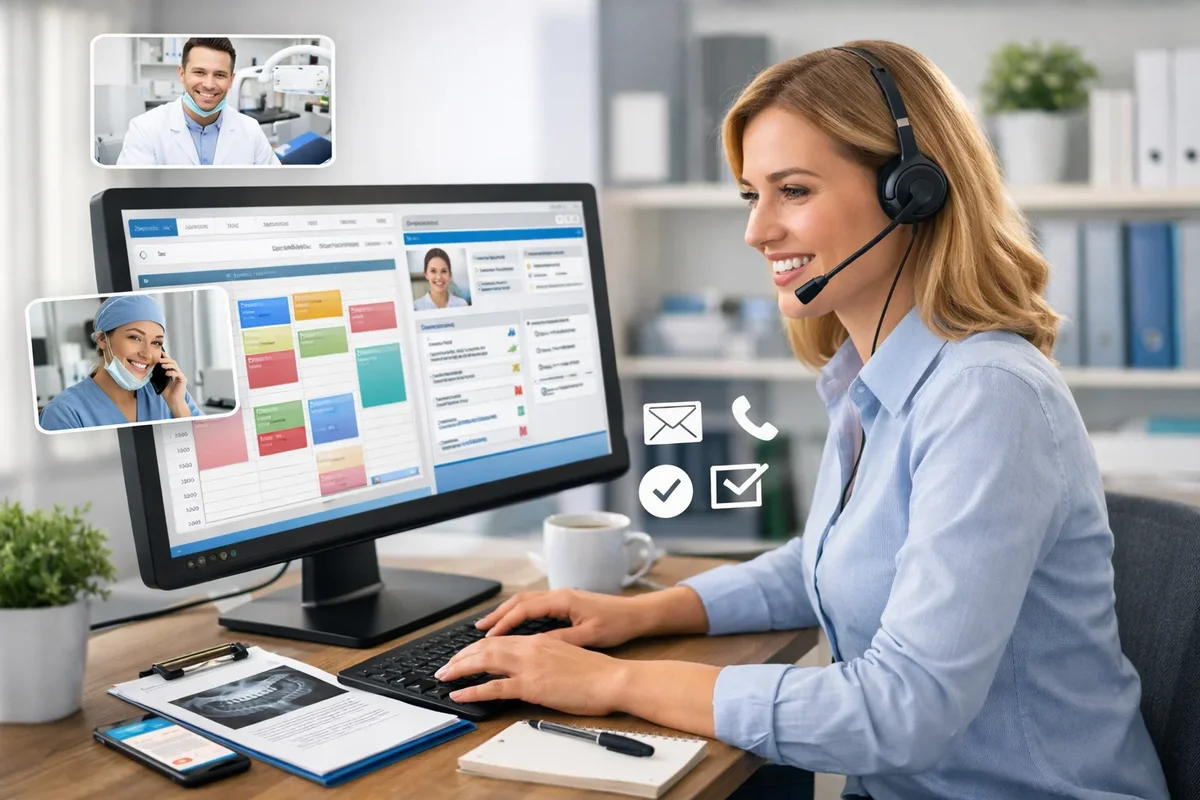
How to Get Started with a Virtual Dental Office Manager
Once a dental practice recognizes the operational and financial advantages of a virtual dental office manager, the next step is understanding how to implement this model correctly. Getting started is not about flipping a switch overnight; it is about building a structured transition that aligns with your clinic’s workflows, team dynamics, and patient expectations. When done properly, onboarding a virtual dental office manager is smooth, efficient, and highly rewarding 🚀.
The goal of introducing a virtual dental office manager is to enhance—not disrupt—your existing systems. By following a thoughtful, step-by-step approach, practices can unlock immediate value while laying the groundwork for long-term growth.
Assess Your Practice’s Administrative Needs
The first step in getting started with a virtual dental office manager is a clear assessment of your current operations. Identify which administrative tasks consume the most time or cause the most friction. Common areas include appointment scheduling, insurance verification, billing follow-ups, patient communication, and reporting.
By documenting pain points and inefficiencies, you create a roadmap for what the virtual dental office manager should handle first. Many practices begin with high-impact tasks that deliver quick wins, such as reducing no-shows or improving insurance claim turnaround ⏱️.
Define Scope, Expectations, and Success Metrics
Clarity is essential when onboarding a virtual dental office manager. Clearly define responsibilities, communication protocols, and performance expectations. Decide which systems they will access, which tasks they will own, and how success will be measured.
Key performance indicators may include appointment fill rates, response times, collection percentages, or patient satisfaction scores. When expectations are documented from the start, accountability becomes easier and results are easier to track 📊.
Aligning With Compliance and Best Practices
Ensure that your virtual dental office manager follows industry standards and ethical guidelines. Referencing authoritative organizations such as the American Dental Association helps ensure alignment with best practices in dental administration, patient communication, and compliance.
Prepare Your Technology and Systems
Before onboarding a virtual dental office manager, ensure your practice management software, communication tools, and document systems are ready for secure remote access. Most modern dental software supports this easily.
Set up role-based permissions, secure logins, and standardized workflows. This preparation allows the virtual dental office manager to integrate seamlessly into daily operations without compromising data security 🔐.
Communicate With Your In-Clinic Team
Successful implementation depends heavily on internal communication. Explain to your team why you are bringing in a virtual dental office manager and how the role will support—not replace—them.
When staff understand that administrative burdens will be reduced and workflows will become clearer, resistance decreases and collaboration improves. Clear boundaries between clinical and administrative responsibilities foster a more focused and positive work environment 🤝.
Introduce the Change to Patients Thoughtfully
From the patient’s perspective, the transition to a virtual dental office manager should feel invisible or positive. Patients may notice faster responses, clearer communication, and smoother scheduling—but they do not need to know the operational details.
Ensure that phone calls, messages, and emails maintain a consistent, professional tone aligned with your clinic’s brand. If your practice serves international or out-of-town patients, virtual management often enhances accessibility and responsiveness.
Start Small and Scale Strategically
Many practices choose to start with a limited scope when onboarding a virtual dental office manager. For example, handling appointment confirmations and insurance verification first, then expanding into billing, reporting, and workflow optimization.
This phased approach builds trust, allows for adjustments, and minimizes disruption. As confidence grows, the virtual dental office manager can take on a broader operational role 🌱.
Monitor Performance and Optimize Continuously
Once the virtual dental office manager is in place, ongoing monitoring is essential. Review reports regularly, discuss challenges openly, and refine workflows based on real-world results.
The advantage of virtual management is flexibility—processes can be adjusted quickly without retraining on-site staff or changing physical infrastructure.
Knowing When to Seek Additional Support
If your dental practice also attracts international patients or operates as part of a larger healthcare brand, coordination becomes even more important. In such cases, having clear contact pathways is essential. Practices can guide patients to official communication channels like the Redent Klinik Contact Page to ensure smooth, professional interactions.
This level of organization reinforces trust and enhances the overall patient journey.
In conclusion, getting started with a virtual dental office manager is a strategic move that rewards preparation and clarity. By assessing needs, aligning technology, communicating effectively, and scaling thoughtfully, dental practices can transition smoothly into a more efficient, modern operational model. For clinics ready to reduce stress, improve performance, and prepare for the future, the virtual dental office manager is not just an option—it is a smart next step.