
Dental implants are one of the most effective and long-lasting solutions for missing teeth, offering both aesthetic and functional benefits. However, one of the biggest concerns for patients is affordability. Understanding the different ways to pay for dental implants is essential if you want to restore your smile without putting excessive strain on your finances. In this guide, we will explore practical, realistic, and smart financial strategies that can make dental implants accessible to a wider range of patients.
Before diving into the ways to pay for dental implants, it is important to understand why these procedures can be costly. Dental implants involve multiple stages, including consultation, imaging, surgery, and the placement of crowns. Additionally, the materials used—such as titanium posts and custom-designed crowns—are high-quality and durable, contributing to the overall cost. According to general estimates, a single implant can range from $1,500 to $5,000, while a full set may cost significantly more depending on the complexity of the case.
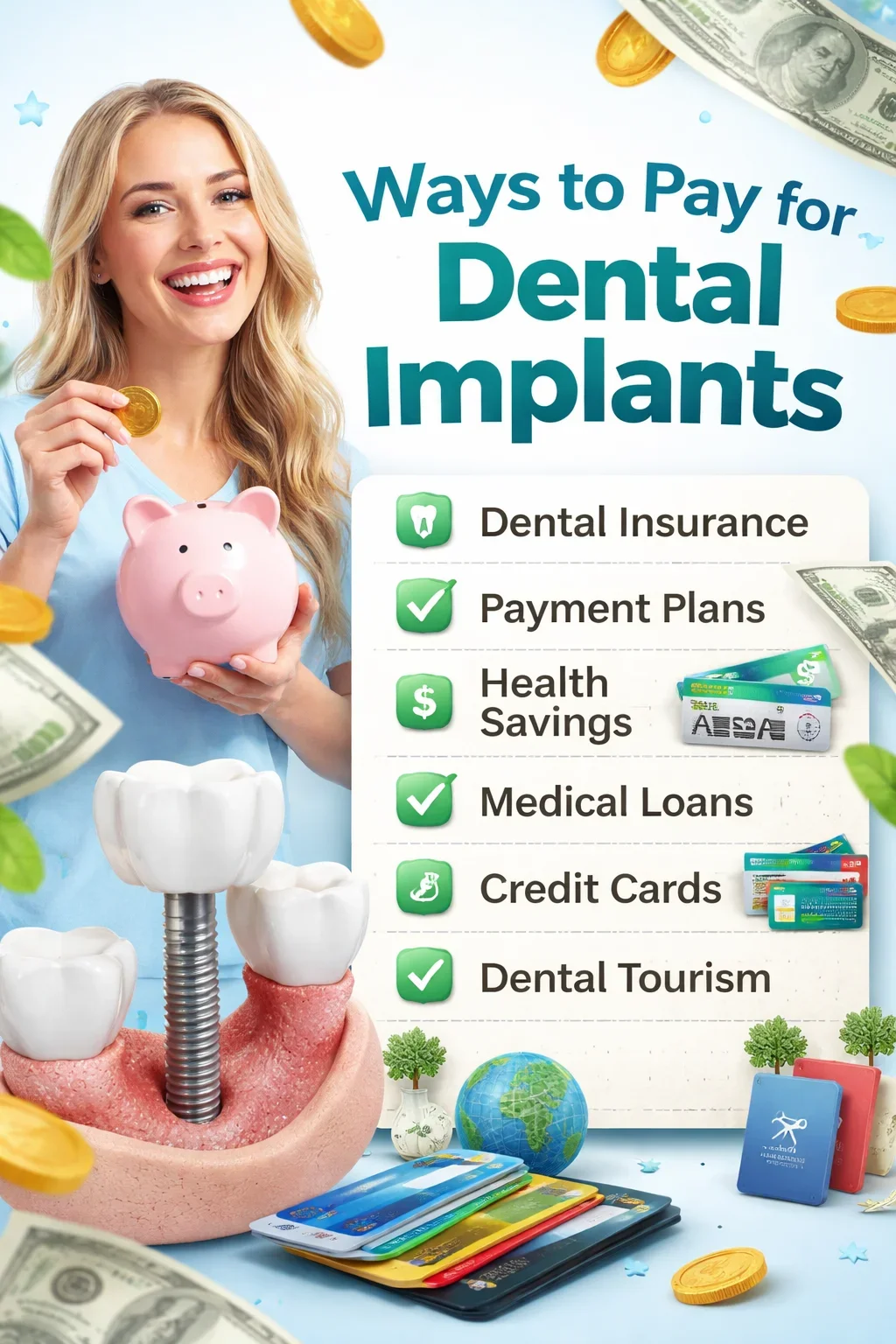
Despite these costs, there are numerous ways to pay for dental implants that can help you manage the financial burden effectively. These options are designed to fit different budgets and financial situations, ensuring that more people can benefit from this advanced dental treatment. Whether you are considering insurance, savings, or financing, there is likely a solution that works for you.
One of the most common ways to pay for dental implants is through dental insurance. While not all insurance plans fully cover implants, many offer partial coverage or support for certain stages of the procedure, such as extractions or crowns. It is always advisable to review your policy carefully and consult with your provider. For more detailed guidelines on dental procedures and coverage, you can visit the American Dental Association.
Another highly popular option among the various ways to pay for dental implants is financing through dental clinics. Many modern clinics offer flexible payment plans that allow patients to spread the cost over several months or even years. This approach reduces the immediate financial burden and makes high-quality dental care more accessible. If you are considering this option, you can directly inquire through the Redent Klinik Contact Page to explore personalized solutions.
Personal savings also play a significant role in the different ways to pay for dental implants. Some patients prefer to plan ahead and set aside funds specifically for dental treatments. Health Savings Accounts (HSAs) and Flexible Spending Accounts (FSAs) can also be used, offering tax advantages that make the process more cost-effective. These tools are particularly beneficial for individuals who want to minimize interest payments and maintain full control over their finances.
Medical loans are another viable option when exploring ways to pay for dental implants. Many financial institutions provide loans specifically designed for healthcare expenses. These loans often come with competitive interest rates and flexible repayment terms, allowing patients to receive treatment immediately and pay over time. This option is especially helpful for those who need urgent dental work but do not have sufficient savings.
Credit cards can also be considered among the practical ways to pay for dental implants, particularly those offering 0% introductory interest rates. When used responsibly, these cards can provide a short-term financing solution without additional costs. However, it is important to pay off the balance within the promotional period to avoid high interest charges.
For those seeking more affordable alternatives, dental tourism has become one of the increasingly popular ways to pay for dental implants. Countries like Turkey offer high-quality dental care at significantly lower prices compared to the United States or Europe. Patients can save up to 70% while still receiving treatment from experienced professionals using advanced technology.
In conclusion, there are many effective ways to pay for dental implants, each with its own advantages and considerations. By understanding these options and planning carefully, you can make informed decisions that align with your financial situation. Dental implants are a valuable investment in your health and confidence, and with the right approach, they can be more accessible than you might think. 😊
Understanding the Real Cost of Dental Implants
When exploring the most effective ways to pay for dental implants, the first and most important step is understanding what you are actually paying for. Dental implants are not a single procedure but a comprehensive treatment process that involves multiple stages, advanced materials, and professional expertise. This is why the cost can vary significantly depending on individual needs, location, and clinic quality. Knowing the breakdown of these costs helps you make smarter decisions and choose the best ways to pay for dental implants without unnecessary stress. 😊
What Factors Influence the Cost of Dental Implants?
The total price of dental implants depends on several factors. These variables directly impact how you evaluate different ways to pay for dental implants. One of the primary elements is the number of implants required. A single missing tooth will cost much less than a full-mouth restoration. Additionally, the condition of your jawbone plays a major role. If bone grafting or sinus lifting is needed, the overall expense increases.
Another important factor is the quality of materials used. Premium implants made from high-grade titanium or zirconia tend to last longer and integrate better with the bone. While they may cost more upfront, they often reduce long-term expenses, making them a smarter choice when considering ways to pay for dental implants.
The experience and reputation of the dentist also affect pricing. Highly skilled specialists with advanced training may charge more, but they also provide higher success rates and better results. This is an important consideration when comparing different ways to pay for dental implants, as quality should never be compromised for cost alone.
Average Cost Breakdown of Dental Implants
To better understand your financial commitment, here is a general cost breakdown:
- Consultation and imaging (X-rays, 3D scans): $100 – $500
- Single dental implant (implant post): $1,500 – $3,000
- Abutment and crown: $1,000 – $2,500
- Bone grafting (if needed): $300 – $3,000
- Full mouth dental implants: $20,000 – $50,000+
These figures highlight why patients actively search for reliable ways to pay for dental implants. The costs can seem overwhelming at first, but with proper planning and the right financial strategies, they become manageable.
Hidden Costs You Should Be Aware Of
Many patients focus only on the implant itself, but there are additional expenses to consider. Temporary dentures, follow-up visits, medications, and maintenance procedures can all add to the total cost. Being aware of these hidden expenses allows you to explore more realistic ways to pay for dental implants and avoid financial surprises later on.
For example, aftercare is crucial for the long-term success of implants. Regular check-ups and cleanings are necessary to ensure durability. These ongoing costs should be included when evaluating different ways to pay for dental implants, as they contribute to the overall investment.
Why Dental Implants Are Worth the Investment
Although the initial cost may seem high, dental implants are often more cost-effective in the long run compared to other treatments like bridges or dentures. Unlike temporary solutions, implants are designed to last for decades with proper care. This durability reduces the need for frequent replacements, making them a financially sound option when considering long-term ways to pay for dental implants.
Additionally, implants help preserve jawbone health, prevent facial sagging, and improve chewing efficiency. These health benefits translate into better quality of life and fewer future dental expenses. When you evaluate the overall value, it becomes clear why many patients prioritize finding sustainable ways to pay for dental implants instead of opting for cheaper, short-term alternatives.
Comparing Dental Implants with Other Treatments
Traditional dentures and bridges may seem more affordable initially, but they often require replacement every 5–10 years. Over time, these repeated costs can exceed the one-time investment of implants. This comparison further emphasizes the importance of exploring smart ways to pay for dental implants rather than choosing less durable options.
How Cost Awareness Helps You Choose the Right Payment Strategy
Understanding the full cost structure allows you to select the most suitable ways to pay for dental implants. Whether you plan to use insurance, savings, or financing, having a clear picture of expenses ensures that you can budget effectively. It also helps you communicate better with your dental provider and ask the right questions.
If you are unsure about your specific treatment plan or cost estimate, it is always a good idea to consult directly with a professional clinic. You can reach out through the Redent Klinik Contact Page to receive personalized guidance tailored to your needs.
For additional trusted information about dental procedures and standards, you can also visit the American Dental Association, which provides reliable resources for patients worldwide.
In summary, understanding the real cost is the foundation of identifying the best ways to pay for dental implants. By breaking down expenses, recognizing hidden costs, and evaluating long-term value, you can make informed decisions that support both your dental health and financial stability. 💡
Dental Insurance Coverage for Dental Implants Explained
When evaluating the most practical ways to pay for dental implants, dental insurance is often the first option that comes to mind. However, understanding how insurance works for implant procedures can be confusing. Unlike routine dental treatments, implants are sometimes classified as cosmetic or elective procedures, which means coverage may be limited. Still, with the right knowledge and planning, insurance can play a valuable role in reducing your overall costs and becoming one of the most effective ways to pay for dental implants. 😊
Does Dental Insurance Cover Dental Implants?
One of the most common questions patients ask is whether their insurance will cover implants. The answer depends on your specific policy. Some insurance providers offer partial coverage, while others may exclude implants entirely. Even if full implant coverage is not included, many plans will cover related procedures such as tooth extractions, bone grafting, or crowns. This indirect support can significantly reduce your expenses and make insurance one of the more realistic ways to pay for dental implants.
It is essential to carefully review your insurance policy or speak directly with your provider. Understanding the fine print allows you to identify hidden benefits and maximize your coverage. This step is crucial when comparing different ways to pay for dental implants, as even partial coverage can make a noticeable difference.
Types of Insurance Plans That May Help
There are several types of dental insurance plans, and each offers different levels of support:
- PPO (Preferred Provider Organization): Offers flexibility in choosing dentists and may partially cover implant-related procedures.
- HMO (Health Maintenance Organization): Typically lower cost but more limited coverage options.
- Indemnity Plans: Provide broader freedom but often require higher out-of-pocket payments.
Knowing which plan you have helps you determine how it fits into your overall ways to pay for dental implants strategy.
Annual Maximums and Waiting Periods
Most dental insurance plans come with an annual maximum benefit, usually ranging between $1,000 and $2,000. Unfortunately, this amount often falls short of covering the full cost of implants. However, patients can strategically use these limits across multiple years to optimize their ways to pay for dental implants. For example, starting part of the treatment in one year and completing it in the next can allow you to benefit from two annual maximums.
Another important factor is the waiting period. Many insurance plans require you to wait 6–12 months before accessing major procedures like implants. Planning ahead and timing your treatment accordingly is one of the smartest ways to pay for dental implants without unnecessary delays or financial strain.
Pre-Authorization and Claim Approval
Before starting treatment, your dentist can submit a pre-authorization request to your insurance provider. This process outlines the expected procedures and costs, giving you a clear understanding of what will be covered. Taking this step helps eliminate surprises and ensures that your chosen ways to pay for dental implants are based on accurate financial information.
Combining Insurance with Other Payment Options
Because insurance rarely covers the full cost, it is often combined with other ways to pay for dental implants. For instance, you can use insurance to cover preliminary procedures while financing the remaining balance through payment plans or medical loans. This hybrid approach is one of the most effective ways to make implants affordable without compromising quality.
Some patients also combine insurance with Health Savings Accounts (HSAs) or Flexible Spending Accounts (FSAs). These accounts allow you to use pre-tax income for medical expenses, further reducing your financial burden. When integrated properly, these strategies create a powerful combination of ways to pay for dental implants that maximize savings.
Tips to Maximize Your Insurance Benefits
To make the most of your insurance, consider the following tips:
- Choose an in-network dentist to reduce out-of-pocket costs.
- Schedule treatments strategically across benefit periods.
- Request a detailed treatment plan before starting.
- Track your claims and follow up on approvals.
These practical steps can significantly improve your experience and ensure that insurance becomes one of the most reliable ways to pay for dental implants available to you.
When Insurance Is Not Enough
Even with good coverage, there will likely be a remaining balance. This is where additional ways to pay for dental implants come into play. Financing options, savings, and even dental tourism can help bridge the gap. The key is to view insurance as one part of a larger financial plan rather than a complete solution.
Trusted Resources and Professional Guidance
If you are unsure about your insurance coverage or need help understanding your options, consulting with a dental professional is essential. You can get personalized assistance by visiting the Redent Klinik Contact Page, where experts can guide you through your treatment and payment plan.
Additionally, for authoritative information about dental care standards and insurance practices, you can refer to the American Dental Association. Their resources can help you better understand how insurance fits into the broader picture of ways to pay for dental implants.
In conclusion, dental insurance can be a valuable tool among the various ways to pay for dental implants, even if it does not cover the entire cost. By understanding your policy, planning strategically, and combining it with other financial solutions, you can significantly reduce your expenses and move forward with confidence. 💡
Flexible Payment Plans Offered by Dental Clinics
Among the most practical and patient-friendly ways to pay for dental implants, flexible payment plans offered by dental clinics stand out as one of the most accessible solutions. Many modern dental clinics understand that implant treatments can be a significant financial commitment, so they provide structured payment options that allow patients to spread costs over time. This approach reduces financial pressure and makes high-quality dental care attainable for a broader audience. 😊
Instead of paying the full amount upfront, patients can divide the total cost into smaller, manageable monthly installments. This is why clinic-based financing is often considered one of the smartest ways to pay for dental implants, especially for individuals who want immediate treatment without waiting years to save the full amount.
How Dental Payment Plans Work
Dental clinic payment plans are typically designed to be simple and transparent. After your consultation, the clinic provides a detailed treatment plan along with the total cost. Based on this amount, they offer a structured repayment schedule. These plans are often tailored to your financial situation, making them one of the most flexible ways to pay for dental implants.
For example, a treatment costing $5,000 could be split into monthly payments of $200–$400, depending on the duration and any interest applied. Some clinics even offer interest-free periods, making this one of the most cost-effective ways to pay for dental implants available today.
Interest-Free vs Interest-Based Plans
There are generally two types of payment plans offered by clinics:
- Interest-Free Plans: These allow you to pay in installments without additional charges, usually within a short timeframe (6–12 months).
- Interest-Based Plans: These extend over a longer period (12–60 months) but may include interest depending on the agreement.
Choosing between these options depends on your financial capacity. Interest-free plans are ideal for minimizing total cost, while longer-term plans provide more flexibility, making both valuable ways to pay for dental implants.
Benefits of Choosing Clinic Payment Plans
One of the biggest advantages of this method is convenience. Unlike traditional loans, clinic payment plans often require minimal paperwork and faster approval. This ease of access makes them one of the most appealing ways to pay for dental implants for patients who want a straightforward solution.
Another key benefit is personalization. Clinics often customize payment schedules based on your income and preferences. This tailored approach ensures that your chosen ways to pay for dental implants align perfectly with your financial situation.
Additionally, these plans allow you to begin treatment immediately. Instead of delaying necessary dental care, you can restore your oral health right away while managing payments comfortably over time.
No Need for Large Upfront Payments
One of the main barriers to dental implants is the initial cost. Payment plans eliminate this obstacle by removing the need for a large upfront payment. This makes them one of the most accessible ways to pay for dental implants, particularly for patients who may not have substantial savings.
Things to Consider Before Choosing a Payment Plan
While flexible plans are among the best ways to pay for dental implants, it is important to review the terms carefully. Always check for hidden fees, interest rates, and penalties for late payments. Transparency is key when selecting the right option.
You should also evaluate your monthly budget to ensure that the payment plan is sustainable. Overcommitting financially can lead to unnecessary stress, so choosing realistic ways to pay for dental implants is essential.
Ask the Right Questions
Before committing to a plan, consider asking your dental provider the following questions:
- Is the plan interest-free or interest-based?
- Are there any hidden fees?
- What happens if I miss a payment?
- Can I pay off the balance early without penalties?
These questions help you fully understand your agreement and ensure that your chosen ways to pay for dental implants are transparent and manageable.
Combining Payment Plans with Other Options
Flexible payment plans can also be combined with other ways to pay for dental implants to maximize affordability. For instance, you can use insurance to cover part of the procedure and then finance the remaining balance through a payment plan. Similarly, savings or HSA funds can be used to reduce the overall amount financed.
This combination approach is often the most effective strategy, as it leverages multiple ways to pay for dental implants simultaneously, minimizing financial strain while ensuring high-quality treatment.
Get Personalized Payment Solutions
If you are considering dental implants and want to explore flexible financing options, it is best to consult directly with a professional clinic. You can visit the Redent Klinik Contact Page to receive tailored advice and payment plans designed specifically for your needs.
For additional trusted information about dental care and patient rights, you can also refer to the American Dental Association, which provides valuable guidance on treatment standards and financial planning.
In conclusion, flexible payment plans are among the most practical and widely used ways to pay for dental implants. By offering convenience, personalization, and affordability, they empower patients to access life-changing dental treatments without overwhelming financial pressure. 💡
Using Personal Savings or Health Savings Accounts (HSA)
When considering the most stable and stress-free ways to pay for dental implants, using personal savings or a Health Savings Account (HSA) is often one of the smartest strategies. Unlike financing options that involve interest or long-term commitments, paying with your own funds allows you to maintain full control over your financial situation. This approach eliminates debt and provides peace of mind, making it one of the most secure ways to pay for dental implants. 😊
Dental implants are a long-term investment in your health, and many patients prefer to plan ahead financially to cover the cost. By saving gradually or utilizing tax-advantaged accounts like HSAs, you can significantly reduce the financial burden associated with treatment. Understanding how to leverage these resources is essential when exploring reliable ways to pay for dental implants.
Why Personal Savings Are a Smart Option
Using personal savings is one of the simplest ways to pay for dental implants. It involves setting aside money over time specifically for dental care. This method ensures that you avoid interest payments, loan approvals, and financial risks. While it may require patience, it is one of the most financially responsible approaches available.
Patients who use savings often experience less stress during treatment because they are not worried about monthly payments or accumulating debt. Additionally, having funds readily available allows you to choose the best clinic and materials without being limited by financing constraints. This flexibility makes savings one of the most empowering ways to pay for dental implants.
How to Build a Dental Savings Fund
If you do not currently have enough savings, creating a dedicated dental fund is a practical solution. Here are a few tips:
- Set a monthly savings goal based on your target treatment cost.
- Use a separate account to avoid spending the funds elsewhere.
- Reduce non-essential expenses to accelerate your savings.
- Consider automatic transfers to stay consistent.
By following these steps, you can gradually build a fund that supports your chosen ways to pay for dental implants without financial strain.
Understanding Health Savings Accounts (HSA)
Health Savings Accounts (HSAs) are one of the most efficient and tax-advantaged ways to pay for dental implants. These accounts are available to individuals with high-deductible health insurance plans and allow you to set aside pre-tax income for qualified medical expenses, including dental procedures.
The key advantage of an HSA is its triple tax benefit:
- Contributions are tax-deductible.
- Funds grow tax-free.
- Withdrawals for qualified expenses are tax-free.
This makes HSAs one of the most cost-effective ways to pay for dental implants, as you essentially reduce your overall tax burden while funding your treatment.
What Dental Implant Costs Can HSA Cover?
HSAs can typically be used for a wide range of implant-related expenses, including:
- Consultations and diagnostic imaging
- Surgical placement of implants
- Abutments and crowns
- Necessary preparatory procedures like extractions or bone grafting
This comprehensive coverage makes HSAs one of the most versatile ways to pay for dental implants, especially when combined with other financial strategies.
Flexible Spending Accounts (FSA) as an Alternative
In addition to HSAs, Flexible Spending Accounts (FSAs) are another option worth considering. FSAs also allow you to use pre-tax income for medical expenses, making them one of the practical ways to pay for dental implants. However, FSAs typically have a “use-it-or-lose-it” rule, meaning funds must be used within a specific period.
Planning your treatment timeline carefully ensures that you maximize the benefits of FSAs. When used strategically, they can significantly reduce out-of-pocket costs and complement other ways to pay for dental implants.
Combining Savings with Other Payment Methods
While savings and HSAs are excellent options, they can also be combined with other ways to pay for dental implants for greater flexibility. For example, you might use your savings to cover a portion of the cost and finance the remaining balance through a payment plan. This hybrid approach allows you to minimize debt while still accessing treatment sooner.
Another effective strategy is to use HSA funds for eligible expenses and rely on insurance or financing for the rest. This layered approach is one of the most strategic ways to pay for dental implants, as it balances affordability and convenience.
Planning Ahead for Maximum Savings
Timing plays a crucial role when using savings or HSAs. By planning your treatment in advance, you can align your contributions with your dental needs. This proactive approach ensures that your chosen ways to pay for dental implants are both efficient and sustainable.
Get Expert Advice for Financial Planning
If you are unsure how to structure your savings or use your HSA effectively, consulting with a dental professional can provide valuable guidance. You can visit the Redent Klinik Contact Page to receive personalized recommendations based on your financial situation and treatment plan.
Additionally, for reliable information on dental care standards and financial considerations, you can refer to the American Dental Association. Their resources can help you better understand how savings and HSAs fit into the broader landscape of ways to pay for dental implants.
In conclusion, using personal savings or Health Savings Accounts is one of the most financially sound ways to pay for dental implants. By avoiding interest, leveraging tax advantages, and maintaining full control over your budget, you can achieve a healthy smile without unnecessary financial stress. 💡
Medical Loans and Financing Options for Dental Implants
Among the most accessible and widely used ways to pay for dental implants, medical loans and financing options stand out as powerful solutions for patients who need immediate treatment but lack sufficient savings. Dental implants are often a necessary investment in both health and confidence, and delaying treatment due to financial limitations can lead to further complications. This is why many patients turn to structured financing as one of the most practical ways to pay for dental implants. 😊
Medical loans are specifically designed to cover healthcare expenses, including dental procedures. These loans allow patients to receive treatment upfront and repay the cost over time in manageable installments. With flexible terms and varying interest rates, they provide a customizable approach to managing expenses and are considered one of the most reliable ways to pay for dental implants today.
What Are Medical Loans?
Medical loans are personal loans tailored for healthcare costs. Unlike traditional loans, they often come with features that cater specifically to medical needs, such as deferred payments or extended repayment periods. This makes them one of the more patient-friendly ways to pay for dental implants, especially for individuals who require urgent procedures.
These loans can be obtained through banks, credit unions, or specialized healthcare financing companies. Approval typically depends on your credit score, income, and financial history. Once approved, the funds are either paid directly to the dental clinic or deposited into your account for treatment use. This straightforward process is why many patients consider medical loans among the easiest ways to pay for dental implants.
Key Features of Medical Financing
- Fixed or variable interest rates depending on the lender
- Flexible repayment terms ranging from 6 months to 5 years
- Quick approval processes in many cases
- Ability to cover full or partial treatment costs
These features make medical loans one of the most adaptable ways to pay for dental implants, suitable for a wide range of financial situations.
Popular Dental Financing Providers
There are several well-known financing providers that specialize in healthcare expenses. Companies like CareCredit and LendingClub offer tailored solutions for dental procedures. These providers often partner directly with dental clinics, simplifying the application process and making them one of the most convenient ways to pay for dental implants.
Some providers even offer promotional periods with low or no interest if the balance is paid within a certain timeframe. This can significantly reduce the total cost, making these financing options one of the more cost-effective ways to pay for dental implants when used strategically.
Comparing Financing Options
Before choosing a financing provider, it is important to compare different offers. Consider the following factors:
- Interest rates and annual percentage rates (APR)
- Repayment duration and monthly installment amounts
- Hidden fees or penalties
- Early repayment options
Careful comparison ensures that your selected ways to pay for dental implants align with your financial goals and avoid unnecessary costs.
Advantages of Medical Loans
One of the biggest advantages of medical loans is immediate access to treatment. You do not need to wait months or years to save money, which is especially important for dental issues that can worsen over time. This immediacy makes financing one of the most effective ways to pay for dental implants.
Another benefit is flexibility. With various repayment plans available, you can choose a schedule that fits your budget. This customization is a key reason why many patients prefer financing over other ways to pay for dental implants.
Additionally, medical loans allow you to choose high-quality materials and experienced professionals without compromising due to budget constraints. This ensures better long-term results and overall satisfaction.
Potential Drawbacks to Consider
While financing offers many benefits, it is important to be aware of potential downsides. Interest rates can increase the total cost of treatment, especially for long-term loans. Missing payments can also negatively impact your credit score. Therefore, it is essential to choose responsible and manageable ways to pay for dental implants that match your financial capacity.
Combining Loans with Other Payment Strategies
Medical loans do not have to be used alone. In fact, combining them with other ways to pay for dental implants can be highly effective. For example, you can use insurance to cover part of the procedure and finance the remaining balance. Similarly, savings or HSA funds can reduce the loan amount, minimizing interest payments.
This hybrid approach is one of the most strategic ways to pay for dental implants, as it balances affordability with flexibility while keeping long-term costs under control.
Professional Guidance and Trusted Resources
If you are considering medical financing, it is important to consult with a dental professional who can guide you through your options. You can visit the Redent Klinik Contact Page to receive personalized advice and explore financing plans tailored to your needs.
For additional information on dental care standards and patient rights, you can also refer to the American Dental Association. Their resources can help you better understand how financing fits into the broader range of ways to pay for dental implants.
In conclusion, medical loans and financing options are among the most flexible and widely used ways to pay for dental implants. By providing immediate access to treatment and customizable repayment plans, they allow patients to achieve a healthy, confident smile without overwhelming financial pressure. 💡
Credit Cards and 0% Interest Financing Strategies
When exploring flexible and fast ways to pay for dental implants, credit cards—especially those offering 0% interest promotions—are a popular choice for many patients. This method allows individuals to begin treatment immediately without waiting to save the full amount. When used responsibly, credit cards can become one of the most convenient ways to pay for dental implants, particularly for short-term financing needs. 😊
Dental implants are often time-sensitive procedures, and delaying them may lead to further oral health issues. Credit cards provide immediate access to funds, making them one of the quickest ways to pay for dental implants. However, to truly benefit from this strategy, it is essential to understand how promotional offers and interest rates work.
How 0% Interest Credit Cards Work
Many credit card companies offer promotional periods with 0% interest, typically ranging from 6 to 18 months. During this period, you can carry a balance without paying interest, making it one of the most cost-effective ways to pay for dental implants if managed correctly.
For example, if your dental implant procedure costs $4,000 and your credit card offers 12 months of 0% interest, you can divide the amount into monthly payments of approximately $333 without incurring extra charges. This structured approach makes credit cards one of the more manageable ways to pay for dental implants.
Important Conditions to Watch
While 0% interest offers are attractive, they often come with conditions:
- The full balance must be paid within the promotional period
- Late payments may cancel the 0% interest benefit
- High interest rates may apply after the promotional period ends
Understanding these conditions is essential when considering credit cards as one of your ways to pay for dental implants, as failing to meet them can lead to significant additional costs.
Advantages of Using Credit Cards
One of the biggest benefits of using credit cards is speed and accessibility. Approval is often instant, allowing you to proceed with treatment without delays. This immediacy makes credit cards one of the most efficient ways to pay for dental implants.
Another advantage is flexibility. You can choose how much to pay each month, as long as you meet the minimum payment requirement. This flexibility allows you to adjust your repayment strategy based on your financial situation, making credit cards one of the more adaptable ways to pay for dental implants.
Additionally, some credit cards offer rewards such as cashback or points. While these benefits should not be the primary reason for choosing this method, they can provide small financial perks when using credit cards as part of your ways to pay for dental implants.
Building or Improving Your Credit Score
Responsible use of credit cards can also help improve your credit score. By making timely payments and maintaining a low balance, you demonstrate financial reliability. This can be an added advantage when using credit cards as one of your ways to pay for dental implants, especially if you plan to apply for loans or financing in the future.
Risks and Potential Drawbacks
Despite their advantages, credit cards also come with risks. High interest rates after the promotional period can significantly increase the total cost of your treatment. This is why careful planning is crucial when including credit cards among your ways to pay for dental implants.
Another risk is overspending. The ease of access to credit can lead some patients to take on more debt than they can comfortably manage. It is important to choose responsible ways to pay for dental implants that align with your budget and financial goals.
Tips for Safe Credit Card Use
- Create a repayment plan before starting treatment
- Pay more than the minimum monthly amount whenever possible
- Track your promotional period to avoid interest charges
- Avoid using the card for unrelated expenses
Following these tips ensures that credit cards remain one of the most effective ways to pay for dental implants without causing financial strain.
Combining Credit Cards with Other Payment Methods
Credit cards are often most effective when combined with other ways to pay for dental implants. For instance, you can use insurance to cover part of the cost and pay the remaining balance with a 0% interest card. Similarly, savings or HSA funds can reduce the total amount charged to your card.
This combination approach helps minimize debt while still benefiting from the convenience of credit cards. It is one of the most strategic ways to pay for dental implants, allowing you to balance affordability and flexibility.
Professional Advice and Reliable Resources
If you are unsure whether using a credit card is the right choice for your situation, it is always best to consult with a dental professional. You can visit the Redent Klinik Contact Page to explore personalized payment options tailored to your needs.
For additional guidance on dental care and financial planning, you can refer to the American Dental Association. Their trusted resources can help you better understand how credit cards fit into the broader range of ways to pay for dental implants.
In conclusion, credit cards and 0% interest financing are among the most flexible and immediate ways to pay for dental implants. When used responsibly, they provide a convenient path to achieving a healthy, confident smile without unnecessary delays or financial pressure. 💡
Dental Tourism as a Cost-Effective Payment Alternative
One of the most increasingly popular ways to pay for dental implants is dental tourism. This approach involves traveling to another country to receive high-quality dental treatment at a significantly lower cost. For many patients, especially those facing high prices in their home countries, dental tourism offers a practical and affordable solution. By combining treatment with travel, patients can reduce expenses while still receiving excellent care, making it one of the most attractive ways to pay for dental implants. 🌍😊
Countries such as Turkey, Hungary, Mexico, and Thailand have become global hubs for dental tourism. These destinations offer advanced clinics, experienced dentists, and modern technology at a fraction of the cost compared to the United States or Western Europe. This price difference is a major reason why dental tourism is considered one of the smartest ways to pay for dental implants today.
Why Dental Implants Are Cheaper Abroad
The cost of dental implants varies significantly between countries due to differences in operating expenses, labor costs, and currency values. In countries like Turkey, clinics can offer the same high-quality treatments at lower prices because their overhead costs are much lower. This allows patients to access premium care while benefiting from one of the most cost-efficient ways to pay for dental implants.
For example, a single dental implant that may cost $3,000–$5,000 in the United States can often be performed for $800–$1,500 in Turkey. Full-mouth restorations can also be completed at a fraction of the price, making dental tourism one of the most impactful ways to pay for dental implants for patients seeking significant savings.
Cost Comparison Overview
- USA: $3,000 – $5,000 per implant
- UK: $2,500 – $4,000 per implant
- Turkey: $800 – $1,500 per implant
This dramatic difference highlights why more patients are exploring international options as viable ways to pay for dental implants.
Quality and Safety in Dental Tourism
One of the biggest concerns patients have about dental tourism is quality. However, many international clinics follow strict global standards and employ highly trained professionals. In fact, many dentists abroad have international certifications and experience treating patients from around the world. This ensures that dental tourism remains one of the reliable ways to pay for dental implants, not just a cheaper alternative.
It is important to research clinics carefully, read patient reviews, and verify credentials before making a decision. Choosing a reputable clinic ensures that your chosen ways to pay for dental implants do not compromise safety or results.
What to Look for in a Dental Clinic Abroad
- Accreditation and certifications
- Experienced and qualified dentists
- Modern equipment and technology
- Positive patient reviews and testimonials
By focusing on these factors, you can confidently use dental tourism as one of your primary ways to pay for dental implants.
Additional Savings Beyond Treatment Costs
Dental tourism offers more than just lower treatment costs. Many clinics provide comprehensive packages that include accommodation, airport transfers, and even guided tours. These packages further enhance affordability, making dental tourism one of the most value-packed ways to pay for dental implants.
Even when travel expenses are included, the total cost is often significantly lower than undergoing the procedure in high-cost countries. This makes it one of the most appealing ways to pay for dental implants for budget-conscious patients.
Combining Treatment with Travel Experience
Another advantage is the opportunity to combine dental care with a vacation. Patients can explore new destinations while improving their oral health. This unique experience adds emotional and lifestyle value, making dental tourism one of the more enjoyable ways to pay for dental implants.
Potential Challenges and How to Overcome Them
While dental tourism offers many benefits, there are also challenges to consider. Language barriers, travel logistics, and follow-up care can be concerns. However, many international clinics address these issues by providing multilingual staff and ongoing support. Planning ahead ensures that these challenges do not interfere with your chosen ways to pay for dental implants.
It is also important to schedule follow-up visits or coordinate care with a local dentist after returning home. This ensures long-term success and makes dental tourism one of the sustainable ways to pay for dental implants.
Combining Dental Tourism with Other Payment Options
Dental tourism can be even more effective when combined with other ways to pay for dental implants. For example, you might use savings to cover travel costs while financing the treatment itself. Alternatively, insurance may partially reimburse certain procedures, further reducing expenses.
This combined approach allows you to maximize savings while maintaining flexibility, making it one of the most strategic ways to pay for dental implants.
Professional Guidance and Trusted Resources
If you are considering dental tourism, consulting with a reputable clinic is essential. You can explore personalized treatment plans and travel packages through the Redent Klinik Contact Page, where experts can guide you through every step of the process.
For additional information on dental standards and patient safety, you can refer to the American Dental Association. Their resources provide valuable insights into choosing safe and effective treatment options worldwide.
In conclusion, dental tourism is one of the most cost-effective and increasingly popular ways to pay for dental implants. By offering significant savings, high-quality care, and unique travel experiences, it provides a powerful alternative for patients seeking affordable and reliable dental solutions. 💡
Government Programs and Nonprofit Assistance Options
When exploring reliable and supportive ways to pay for dental implants, government programs and nonprofit assistance options can provide essential financial relief for eligible patients. While dental implants are often considered elective procedures, there are still specific programs and charitable organizations that help reduce costs or provide partial funding. For individuals facing financial limitations, these resources can become some of the most valuable ways to pay for dental implants. 😊
Although these programs may not always cover the full cost of implants, they can significantly lower the overall expense. By combining assistance programs with other financial strategies, patients can create a comprehensive plan that makes treatment more accessible. Understanding how these options work is crucial when evaluating different ways to pay for dental implants.
Government Assistance Programs for Dental Care
In many countries, government healthcare programs offer limited dental coverage, particularly for low-income individuals, seniors, or those with disabilities. While full implant coverage is rare, some programs may fund essential procedures that are part of the implant process, such as extractions or medically necessary restorations. These benefits can contribute to effective ways to pay for dental implants by reducing the total cost.
For example, Medicaid in the United States may provide dental coverage depending on the state. Some states offer expanded dental benefits that include procedures related to oral health restoration. Similarly, public healthcare systems in other countries may provide partial support for complex dental cases, making them one of the more supportive ways to pay for dental implants for eligible patients.
Who Qualifies for Government Programs?
- Low-income individuals and families
- Senior citizens with limited financial resources
- People with disabilities or medical conditions
- Veterans eligible for specialized healthcare programs
Eligibility requirements vary by region, so it is important to check local guidelines. Understanding your eligibility can help you determine whether government assistance fits into your ways to pay for dental implants plan.
Nonprofit Organizations and Charitable Programs
Nonprofit organizations play a significant role in providing affordable dental care. Many charities focus on helping underserved communities access essential treatments, including dental implants in certain cases. These organizations often partner with volunteer dentists and clinics to offer reduced-cost or even free services, making them one of the most compassionate ways to pay for dental implants.
Programs such as Dental Lifeline Network and Mission of Mercy events provide support for individuals who cannot afford dental care. While availability may be limited and waiting lists can be long, these programs are still valuable options among the various ways to pay for dental implants.
Types of Support Offered by Nonprofits
- Free or low-cost dental procedures
- Grants or financial assistance for treatment
- Access to volunteer dental professionals
- Community outreach programs and events
These services can significantly reduce the financial burden and complement other ways to pay for dental implants.
Dental Schools as an Affordable Alternative
Another often overlooked option is receiving treatment at dental schools. Universities with dental programs offer procedures performed by students under the supervision of experienced professionals. This setup ensures safety while reducing costs, making dental schools one of the more affordable ways to pay for dental implants.
Although treatment may take longer due to the educational environment, the cost savings can be substantial. Patients who are flexible with their schedule often find this to be one of the most practical ways to pay for dental implants.
Benefits of Choosing Dental Schools
- Significantly lower treatment costs
- Supervision by licensed dental experts
- Access to modern equipment and techniques
This option provides a balance between affordability and quality, making it a strong addition to your list of ways to pay for dental implants.
Combining Assistance Programs with Other Payment Methods
Government and nonprofit support rarely cover the entire cost of dental implants, which is why combining them with other ways to pay for dental implants is essential. For example, you might use a nonprofit grant to cover part of the procedure and finance the remaining balance through a payment plan or medical loan.
This layered approach allows you to maximize available resources and minimize out-of-pocket expenses. It is one of the most strategic ways to pay for dental implants, ensuring that financial limitations do not prevent you from receiving necessary treatment.
Challenges and Limitations to Consider
While these programs are beneficial, they do come with certain limitations. Eligibility requirements, limited funding, and long waiting periods can make access challenging. It is important to apply early and explore multiple options simultaneously to improve your chances of success. By staying proactive, you can make these programs a valuable part of your overall ways to pay for dental implants strategy.
How to Improve Your Chances of Approval
- Prepare all required documentation in advance
- Apply to multiple programs simultaneously
- Stay informed about application deadlines
- Follow up regularly on your application status
These steps can increase your chances of receiving assistance and make your chosen ways to pay for dental implants more effective.
Professional Guidance and Trusted Resources
If you need help navigating assistance programs, consulting with a dental professional is highly recommended. You can visit the Redent Klinik Contact Page to receive personalized advice and explore all available options.
For reliable information on dental care standards and patient rights, you can also refer to the American Dental Association. Their resources provide valuable insights into accessing affordable dental care and understanding your options.
In conclusion, government programs and nonprofit assistance are among the most supportive ways to pay for dental implants. While they may not cover all expenses, they can significantly reduce costs and make treatment accessible for those who need it most. By combining these resources with other financial strategies, you can achieve a healthy smile without overwhelming financial pressure. 💡
Smart Budgeting Tips to Manage Dental Implant Costs
When evaluating the most sustainable ways to pay for dental implants, smart budgeting plays a critical role. Even if you choose financing, insurance, or dental tourism, proper financial planning ensures that you can manage costs without stress. Dental implants are a long-term investment, and approaching them with a clear budget strategy transforms them from a financial burden into a manageable goal. 💡
Many patients underestimate the importance of budgeting when considering ways to pay for dental implants. Without a structured plan, even the best financing options can become overwhelming. However, with the right approach, you can control your expenses, prioritize your health, and confidently move forward with treatment.
Why Budgeting Is Essential for Dental Implants
Budgeting helps you understand your financial limits and identify the most realistic ways to pay for dental implants. By analyzing your income, expenses, and savings, you can determine how much you can allocate toward treatment without compromising your daily needs.
Additionally, budgeting allows you to compare different payment options more effectively. Whether you are considering savings, loans, or payment plans, a clear financial overview ensures that your chosen ways to pay for dental implants align with your long-term goals.
Setting a Realistic Budget
Creating a budget starts with understanding the total cost of your treatment. Once you have a detailed estimate from your dentist, break it down into manageable parts. Consider the following:
- Your monthly income and fixed expenses
- Available savings or emergency funds
- Potential financing or insurance contributions
This structured approach ensures that your selected ways to pay for dental implants are both practical and sustainable.
Prioritizing Dental Health in Your Finances
Dental implants are not just cosmetic—they are essential for maintaining oral health, preventing bone loss, and improving quality of life. Recognizing this importance helps you prioritize them within your budget. Treating implants as a necessary investment rather than a luxury is key when exploring effective ways to pay for dental implants.
By adjusting discretionary spending, such as dining out or entertainment, you can redirect funds toward your dental treatment. These small changes can significantly support your chosen ways to pay for dental implants over time.
Short-Term Sacrifices for Long-Term Benefits
Temporary lifestyle adjustments can make a big difference. For example:
- Reducing non-essential purchases
- Canceling unused subscriptions
- Allocating bonuses or extra income to your dental fund
These steps strengthen your financial plan and enhance your ability to manage ways to pay for dental implants effectively.
Creating a Step-by-Step Payment Strategy
Instead of viewing dental implants as a single large expense, break the process into stages. This allows you to align each phase with different ways to pay for dental implants. For instance, you might use savings for the initial consultation, insurance for preparatory procedures, and financing for the implant placement.
This phased approach reduces financial pressure and makes the overall process more manageable. It is one of the most strategic ways to pay for dental implants, as it distributes costs over time.
Tracking Your Progress
Monitoring your spending and payments is essential for staying on track. Use budgeting apps or simple spreadsheets to track your expenses and ensure that your chosen ways to pay for dental implants remain within your financial limits.
Emergency Funds and Financial Safety Nets
While planning for dental implants, it is important to maintain an emergency fund. Unexpected expenses can arise, and having a safety net ensures that your treatment plan is not disrupted. Balancing your savings between emergencies and dental care is a crucial aspect of responsible ways to pay for dental implants.
Experts recommend setting aside at least three to six months of living expenses as an emergency fund. This precaution allows you to pursue dental treatment confidently while maintaining financial stability.
Avoiding Financial Overcommitment
One of the biggest mistakes patients make is overextending themselves financially. Choosing ways to pay for dental implants that exceed your budget can lead to stress and long-term financial challenges. Always ensure that your monthly payments are affordable and sustainable.
Combining Budgeting with Other Payment Options
Budgeting works best when combined with other ways to pay for dental implants. For example, you can use your budget to determine how much you can contribute from savings and how much needs to be financed. This integrated approach ensures that all financial resources are used efficiently.
By combining budgeting with insurance, payment plans, or medical loans, you create a comprehensive strategy that minimizes risk and maximizes affordability. This makes budgeting one of the most essential ways to pay for dental implants.
Professional Guidance and Financial Planning Support
If you need help creating a budget or choosing the right payment strategy, consulting with a dental professional can provide valuable insights. You can visit the Redent Klinik Contact Page to receive personalized advice tailored to your financial and dental needs.
For additional trusted information on dental care and financial planning, you can refer to the American Dental Association. Their resources can help you better understand how budgeting fits into the broader range of ways to pay for dental implants.
In conclusion, smart budgeting is one of the most powerful ways to pay for dental implants. By planning carefully, prioritizing your health, and combining multiple financial strategies, you can achieve your desired results without compromising your financial well-being. 😊