
When patients begin researching what are the steps for getting dental implants, they are often looking for a clear, realistic, and easy-to-follow explanation of the entire journey—from the first consultation to the final smile transformation. Dental implants are one of the most advanced and reliable solutions in modern dentistry, offering a permanent way to replace missing teeth with natural-looking results. Understanding what are the steps for getting dental implants can help reduce anxiety, set proper expectations, and ensure a smoother treatment experience 😊.
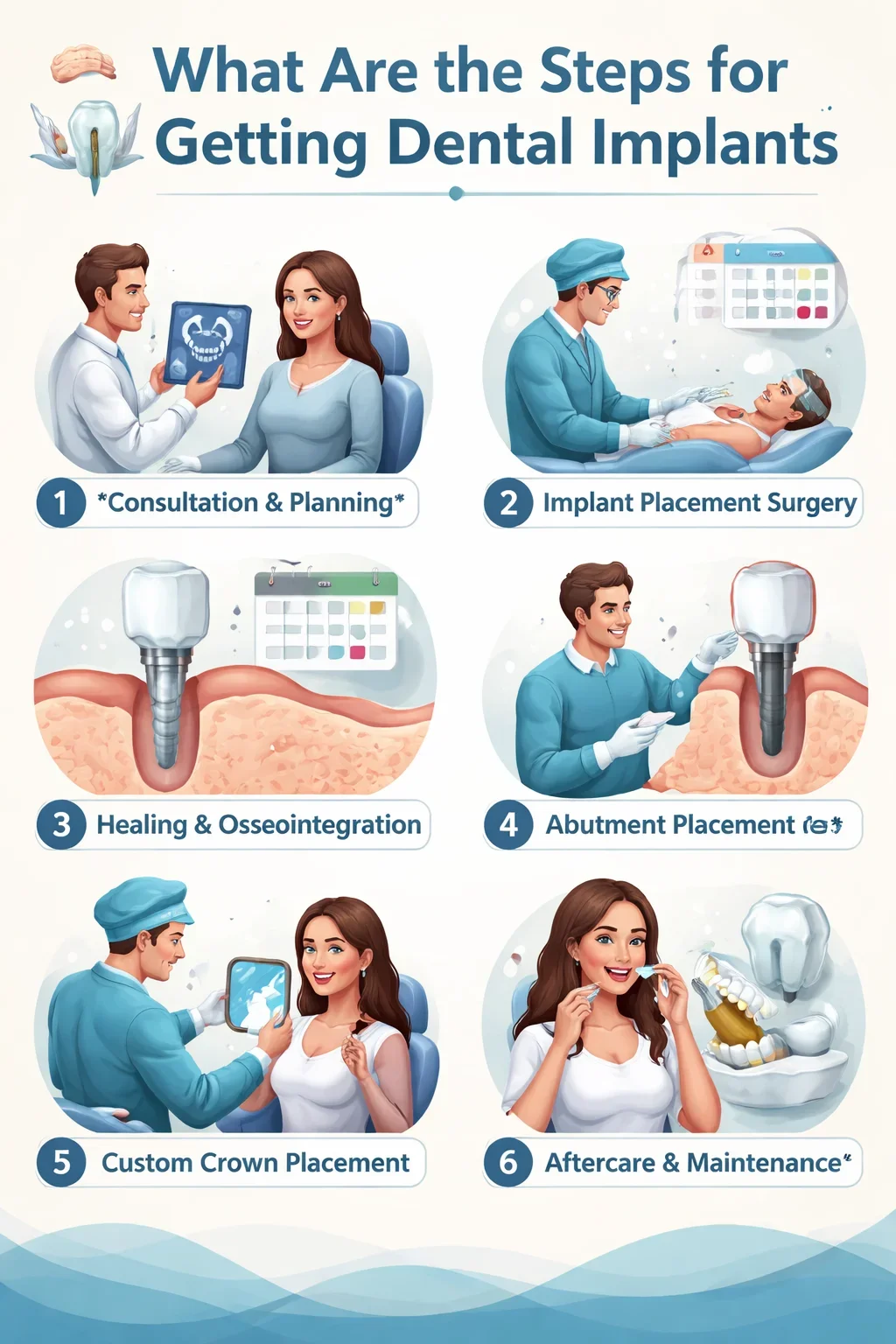
At its core, the process of dental implants is carefully planned and executed in multiple stages, each designed to ensure long-term success. The answer to what are the steps for getting dental implants is not just a simple list—it’s a structured medical journey that involves diagnosis, surgical precision, healing, and restoration. Unlike temporary solutions such as dentures or bridges, implants integrate directly with your jawbone, providing stability and durability.
The first step in understanding what are the steps for getting dental implants begins with a professional consultation. During this phase, your dentist evaluates your oral health, bone density, and overall suitability for implants. This step is crucial because not every patient is immediately ready for implant placement. Some may require preparatory procedures like bone grafting or gum treatment before moving forward.
Another important aspect of what are the steps for getting dental implants is the use of advanced imaging technologies. Dentists typically rely on 3D scans and digital X-rays to map out the exact placement of the implant. This ensures maximum precision and reduces the risk of complications. Patients often feel reassured knowing that modern dentistry uses highly accurate tools to guide every stage of the process 🔍.
Once the planning is complete, the surgical phase begins. This is often the most talked-about part when people ask what are the steps for getting dental implants. During this procedure, a titanium post is placed into the jawbone, acting as an artificial tooth root. While the idea of surgery may sound intimidating, the procedure is typically performed under local anesthesia and is much more comfortable than most patients expect.
After implant placement, the body enters a healing phase known as osseointegration. This is a critical stage in what are the steps for getting dental implants, where the implant fuses with the bone. This process can take several weeks to a few months, depending on individual healing capacity. It is this biological integration that gives dental implants their strength and longevity.
Following successful healing, the next stage involves placing an abutment—a connector that links the implant to the final crown. When exploring what are the steps for getting dental implants, many patients are surprised to learn how customized the process is. Each crown is designed specifically for the patient, matching the shape, size, and color of natural teeth for a seamless appearance.
The final step in what are the steps for getting dental implants is the placement of the permanent crown. This is where patients see the full transformation. The result is a fully functional, aesthetically pleasing tooth replacement that feels and looks natural 😁. At this stage, patients can eat, speak, and smile with confidence again.
It is also important to understand that what are the steps for getting dental implants does not end after the crown is placed. Long-term care plays a vital role in maintaining the success of implants. Regular dental check-ups, proper oral hygiene, and professional cleanings are essential to ensure that the implant remains healthy for many years.
For patients considering treatment, reaching out to a trusted clinic is the first actionable step. You can easily get professional guidance and a personalized treatment plan by visiting the Redent Klinik Contact Page. Additionally, for general dental health guidelines and standards, you can refer to the American Dental Association, which provides reliable and evidence-based information.
In summary, when asking what are the steps for getting dental implants, it’s important to see the process as a carefully structured journey rather than a single procedure. From consultation to final restoration, each step is designed to ensure safety, functionality, and aesthetics. With modern advancements and expert care, dental implants remain one of the most effective and life-changing treatments in dentistry today.
Initial Consultation and Oral Examination
When patients begin exploring what are the steps for getting dental implants, the very first and most critical phase is the initial consultation and oral examination. This step lays the foundation for the entire treatment journey. Without a thorough and accurate evaluation, it is impossible to determine whether dental implants are the right solution for you. Understanding what are the steps for getting dental implants starts with recognizing how important this first appointment truly is 😊.
Why the Initial Consultation Is Essential
The consultation is more than just a routine dental visit—it is a comprehensive assessment designed to evaluate your oral and overall health. When discussing what are the steps for getting dental implants, dentists prioritize identifying any underlying issues such as gum disease, tooth decay, or bone loss. These conditions must be addressed before proceeding with implant treatment to ensure long-term success.
During this stage, your dentist will also review your medical history. Conditions like diabetes, smoking habits, or certain medications can impact healing and influence the outcome of implant procedures. This is why the first step in what are the steps for getting dental implants is always personalized and patient-specific.
Key Evaluations Performed During the First Visit
- Full oral examination (teeth, gums, and jawbone)
- Assessment of missing teeth and surrounding structures
- Evaluation of bite alignment and jaw function
- Screening for infections or periodontal disease
- Review of medical and dental history
Each of these checks plays a vital role in determining whether you are a suitable candidate. When people ask what are the steps for getting dental implants, they often underestimate how detailed this initial phase is. However, skipping or rushing this step can lead to complications later.
Advanced Imaging and Diagnostic Tools
A key part of understanding what are the steps for getting dental implants is recognizing the importance of modern diagnostic technology. Dentists use advanced imaging tools such as digital X-rays and 3D cone beam CT scans to examine the jawbone in detail. These tools allow precise measurement of bone density, thickness, and structure.
Why is this so important? Because dental implants require a strong and stable bone foundation. If the bone is insufficient, additional procedures like bone grafting may be necessary before moving forward. This is why imaging is a cornerstone of what are the steps for getting dental implants 🔍.
What Dentists Look for in Imaging
- Bone volume and density
- Location of nerves and sinuses
- Optimal implant positioning
- Potential risks or anatomical challenges
With this information, your dentist can create a precise and safe treatment plan tailored specifically to your needs.
Patient Consultation and Treatment Planning Discussion
Another essential part of what are the steps for getting dental implants is the open discussion between patient and dentist. This is your opportunity to ask questions, express concerns, and fully understand the process ahead. A good dentist will explain each stage clearly, ensuring you feel confident and informed.
Topics typically discussed include:
- The number of implants required
- The type of restoration (single crown, bridge, or full arch)
- The expected timeline of treatment
- Possible preparatory procedures
- Aftercare and maintenance requirements
Understanding these elements is crucial when learning what are the steps for getting dental implants, as it helps you prepare mentally and physically for the journey ahead.
Cost Estimates and Financial Planning
Cost is often a major concern for patients researching what are the steps for getting dental implants. During the consultation, your dentist will provide a detailed breakdown of the expected expenses. While prices can vary depending on location and complexity, here is a general estimate:
Single Dental Implant: $1,500 – $3,500
Abutment and Crown: $1,000 – $2,500
Full Mouth Implants: $15,000 – $30,000+
Bone Grafting (if needed): $300 – $3,000
These figures are approximate and can differ based on individual needs. Many clinics also offer payment plans or financing options to make treatment more accessible. Knowing the financial aspect is an important part of understanding what are the steps for getting dental implants.
Determining Candidacy for Dental Implants
Not everyone is immediately eligible for implants, which is why this stage is so critical. When evaluating what are the steps for getting dental implants, dentists consider several factors:
- Healthy gums free of periodontal disease
- Adequate jawbone density
- Good overall health
- Commitment to oral hygiene
If any of these conditions are not met, your dentist will recommend preparatory treatments. This ensures that when you proceed to the next steps in what are the steps for getting dental implants, your chances of success are significantly higher.
Setting Expectations and Reducing Anxiety
For many patients, fear or uncertainty can be a barrier. That’s why education is a key part of what are the steps for getting dental implants. During the consultation, dentists often explain what the procedure feels like, how long it takes, and what recovery involves. This helps reduce anxiety and build trust.
Patients often feel relieved to learn that modern implant procedures are highly predictable and performed under comfortable conditions 😊. Understanding each phase clearly makes the journey much less intimidating.
In conclusion, the initial consultation and oral examination are the most important starting points in answering what are the steps for getting dental implants. This stage ensures that every aspect of your treatment is carefully planned, personalized, and optimized for success. By taking the time to thoroughly assess your oral health and discuss your goals, you set the stage for a safe, effective, and life-changing dental implant experience.
Comprehensive Treatment Planning and Imaging
After completing the initial consultation, the next critical phase in understanding what are the steps for getting dental implants is comprehensive treatment planning and advanced imaging. This stage transforms general evaluation into a highly personalized and precise roadmap for your dental implant journey. If the first step answers whether you are a candidate, this step defines exactly how your treatment will be performed with maximum safety and success 😊.
When patients research what are the steps for getting dental implants, they often don’t realize how detailed and technical this planning phase is. Modern implant dentistry relies heavily on digital tools and data-driven decisions. Every millimeter matters, and careful planning ensures that implants are placed in the optimal position for both function and aesthetics.
Digital Imaging: The Foundation of Precision
A key component of what are the steps for getting dental implants is the use of advanced imaging technologies. Dentists typically use 3D cone beam computed tomography (CBCT) scans, which provide a complete three-dimensional view of your jawbone, teeth, and surrounding structures. Unlike traditional X-rays, these scans offer unmatched accuracy and detail.
This level of precision allows dentists to evaluate critical anatomical features such as nerve pathways, sinus cavities, and bone density. Understanding these elements is essential when planning implant placement and avoiding complications. This is why imaging is not optional—it is a mandatory step in what are the steps for getting dental implants 🔍.
What CBCT and Digital Scans Reveal
- Bone height, width, and density
- Exact location of nerves and sinuses
- Existing tooth roots and their alignment
- Potential structural limitations
- Ideal implant angle and depth
With this data, your dentist can design a treatment plan that is both safe and highly effective.
Customized Treatment Planning for Each Patient
No two patients are the same, which is why personalization is a major part of what are the steps for getting dental implants. Based on imaging results, your dentist will create a tailored treatment plan that addresses your specific needs. This includes determining the number of implants required, their exact placement, and the type of restoration that will be used.
For example, a patient missing a single tooth will have a very different plan compared to someone requiring full-mouth restoration. Understanding these differences is essential when learning what are the steps for getting dental implants, as it highlights the flexibility and adaptability of implant dentistry.
Elements of a Personalized Treatment Plan
- Number and position of implants
- Type of prosthetic (crown, bridge, or full arch)
- Timeline for each treatment phase
- Need for additional procedures (bone grafting, sinus lift)
- Material selection (titanium implants, ceramic crowns)
This detailed planning ensures that every step moving forward is predictable and efficient.
Virtual Implant Placement and Surgical Guides
Another advanced aspect of what are the steps for getting dental implants is the use of digital planning software. Dentists can simulate the entire procedure on a computer before performing it in reality. This virtual planning allows for precise positioning of implants, ensuring optimal results.
In many cases, surgical guides are created based on this digital plan. These guides act like templates during surgery, helping the dentist place the implant in exactly the right position. This innovation significantly improves accuracy and reduces surgical time.
Patients often feel more confident knowing that their procedure has been carefully mapped out in advance. This level of preparation is a major reason why modern implant treatments are so successful when following what are the steps for getting dental implants.
Evaluating the Need for Preparatory Procedures
During this stage, dentists also determine whether additional treatments are required before implant placement. This is a crucial part of what are the steps for getting dental implants, as not all patients have sufficient bone or healthy gum tissue.
Common Preparatory Procedures
- Bone grafting: Adds volume to the jawbone if it is too thin or weak
- Sinus lift: Creates space in the upper jaw for implants
- Gum treatment: Addresses periodontal disease
- Tooth extraction: Removes damaged teeth before implant placement
These procedures may extend the timeline but significantly increase the chances of long-term success. Understanding this part of what are the steps for getting dental implants helps patients set realistic expectations.
Timeline Planning and Patient Scheduling
Another important component of what are the steps for getting dental implants is establishing a clear timeline. Dental implant treatment is not completed in a single visit—it is a multi-stage process that may take several months.
Your dentist will outline a schedule that includes:
- Preparatory treatments (if needed)
- Implant placement surgery
- Healing and osseointegration period
- Abutment placement
- Final crown installation
Having a structured timeline helps patients plan their commitments and understand how long each phase will take. This clarity is essential when evaluating what are the steps for getting dental implants.
Patient Education and Informed Consent
Before moving forward, patients are fully informed about the procedure, benefits, and potential risks. This educational step is a vital part of what are the steps for getting dental implants, ensuring that patients make informed decisions about their oral health.
Dentists often provide visual aids, models, or digital simulations to help patients understand the process. This transparency builds trust and confidence, making the entire journey smoother and less stressful 😊.
In conclusion, comprehensive treatment planning and imaging represent one of the most technical and essential stages in answering what are the steps for getting dental implants. This phase ensures that every detail is carefully analyzed and optimized before surgery begins. With precise imaging, personalized planning, and advanced digital tools, patients can move forward with confidence, knowing that their treatment is designed for long-term success.
Preparatory Procedures Before Implant Surgery
As patients continue to explore what are the steps for getting dental implants, they often discover that not everyone can immediately proceed to implant placement. In many cases, preparatory procedures are necessary to create the ideal conditions for a successful outcome. This stage is one of the most important parts of what are the steps for getting dental implants because it ensures that the jawbone, gums, and surrounding structures are healthy and strong enough to support the implant long-term 😊.
Dental implants require a stable foundation, and if the oral environment is not optimal, the risk of complications increases significantly. That is why dentists carefully evaluate whether additional treatments are needed before surgery. Understanding this phase helps patients better grasp what are the steps for getting dental implants and why patience is sometimes necessary before moving forward.
Why Preparatory Procedures Are Necessary
When discussing what are the steps for getting dental implants, it is essential to understand that implants rely heavily on bone quality and gum health. If the jawbone has deteriorated due to tooth loss, or if there is active gum disease, implant placement may fail or lead to complications.
Preparatory procedures address these issues and improve the success rate of implants. This step is not a delay—it is a critical investment in long-term results. Patients who follow all recommended preparations typically experience better healing, stronger integration, and more predictable outcomes.
Common Reasons for Pre-Treatment
- Bone loss due to missing teeth
- Periodontal (gum) disease
- Damaged or infected teeth
- Insufficient space for implant placement
- Sinus positioning issues in the upper jaw
Each of these conditions must be addressed as part of what are the steps for getting dental implants to ensure a safe and successful procedure.
Tooth Extraction Before Implant Placement
One of the most common preparatory steps in what are the steps for getting dental implants is tooth extraction. If a damaged or decayed tooth is still present, it must be removed before placing the implant.
In some cases, implants can be placed immediately after extraction. However, if there is infection or insufficient bone, the dentist may recommend waiting for the area to heal before proceeding. This healing period allows the bone and gum tissue to recover properly.
Healing Timeline After Extraction
- Initial healing: 1–2 weeks
- Bone healing: 6–12 weeks
- Full readiness for implant: depends on individual case
This step may extend the timeline slightly, but it plays a vital role in ensuring the success of what are the steps for getting dental implants.
Bone Grafting for Jawbone Strength
Bone grafting is one of the most important procedures in what are the steps for getting dental implants when there is insufficient bone volume. Over time, missing teeth can cause the jawbone to shrink, making it difficult to support an implant.
During a bone graft, material (either synthetic or natural) is added to the jawbone to increase its density and volume. This creates a strong foundation for the implant.
Types of Bone Grafts
- Autograft (from the patient’s own bone)
- Allograft (donor bone material)
- Synthetic bone substitutes
Healing after bone grafting can take several months, but it significantly improves the success rate of implants. This is why it is a key component of what are the steps for getting dental implants 🔍.
Sinus Lift Procedure for Upper Jaw Implants
For patients needing implants in the upper jaw, especially in the molar region, a sinus lift may be required. This procedure is another essential part of what are the steps for getting dental implants when there is not enough vertical bone height.
The sinus membrane is gently lifted, and bone material is added beneath it to create space for implant placement. This ensures that the implant has sufficient support without interfering with the sinus cavity.
Recovery After Sinus Lift
- Initial healing: 1–2 weeks
- Bone integration: 4–9 months
Although this may seem like a complex step, it is a routine and highly successful procedure in modern dentistry.
Gum Disease Treatment and Oral Health Optimization
Healthy gums are essential for implant success. When learning what are the steps for getting dental implants, patients must understand that untreated gum disease can lead to implant failure.
Before proceeding, dentists will treat any periodontal issues through deep cleaning, scaling, and root planing. In advanced cases, surgical gum treatment may be required.
Signs That Gum Treatment Is Needed
- Bleeding gums
- Swelling or redness
- Gum recession
- Loose teeth
Addressing these issues ensures that the implant site is healthy and ready for surgery, which is a critical part of what are the steps for getting dental implants.
Temporary Solutions During the Preparation Phase
While undergoing preparatory procedures, patients may need temporary tooth replacement options. This is another practical aspect of what are the steps for getting dental implants.
Common temporary solutions include:
- Temporary dentures
- Flipper teeth
- Temporary bridges
These options help maintain aesthetics and function while waiting for the final implant procedure.
Patient Readiness and Lifestyle Adjustments
Another often overlooked part of what are the steps for getting dental implants is patient preparation. Dentists may advise lifestyle changes to improve healing and success rates.
Important Pre-Surgery Recommendations
- Quit smoking 🚭
- Maintain excellent oral hygiene
- Follow a balanced diet
- Manage underlying health conditions
These adjustments play a crucial role in ensuring that the body is ready for surgery and healing.
In conclusion, preparatory procedures are an essential stage in answering what are the steps for getting dental implants. While this phase may require additional time and care, it significantly increases the likelihood of long-term success. By strengthening the jawbone, treating gum disease, and optimizing overall oral health, patients can move forward with confidence, knowing they are fully prepared for the next stage of their dental implant journey 😁.
The Dental Implant Placement Procedure Explained
As patients continue learning what are the steps for getting dental implants, they eventually reach the most anticipated stage: the implant placement procedure itself. This is the surgical phase where the artificial tooth root—typically made of titanium—is carefully inserted into the jawbone. While the word “surgery” may sound intimidating, modern dental techniques have made this procedure safe, precise, and surprisingly comfortable for most patients 😊.
Understanding this stage is essential when exploring what are the steps for getting dental implants, because it is the turning point where planning becomes action. With proper preparation and advanced technology, implant placement is highly predictable and has a very high success rate.
What Happens During the Implant Surgery?
When discussing what are the steps for getting dental implants, many patients are curious about what actually happens during the procedure. The process is performed under local anesthesia, ensuring that the area is completely numb and pain-free.
The dentist or oral surgeon begins by making a small incision in the gum to expose the jawbone. Then, a precisely measured hole is created in the bone to accommodate the implant. The titanium post is inserted into this space and positioned carefully to ensure stability and proper alignment.
Step-by-Step Surgical Process
- Administration of local anesthesia or sedation
- Gum incision to access the bone
- Drilling a precise channel in the jawbone
- Placement of the titanium implant post
- Closing the gum tissue with sutures
This entire process is a central part of what are the steps for getting dental implants, and it typically takes about 1–2 hours per implant, depending on complexity.
Is the Procedure Painful?
One of the most common concerns when researching what are the steps for getting dental implants is pain. Fortunately, the procedure itself is generally painless due to anesthesia. Patients often report that implant surgery feels similar to or even easier than a tooth extraction.
After the procedure, mild discomfort, swelling, or soreness may occur. However, these symptoms are usually manageable with prescribed medications and proper care. Understanding this helps patients feel more confident about undergoing this important step in what are the steps for getting dental implants 😊.
Common Post-Surgery Symptoms
- Minor swelling around the gums and face
- Mild bleeding in the first 24 hours
- Temporary discomfort or sensitivity
- Bruising in some cases
These effects are temporary and typically subside within a few days.
Types of Implant Placement Techniques
Another important aspect of what are the steps for getting dental implants is understanding that there are different surgical approaches depending on the patient’s condition.
Common Implant Placement Methods
- Single-stage procedure: The implant and healing cap are placed in one surgery
- Two-stage procedure: The implant is placed first, and the gum is closed over it for healing
- Immediate implant placement: Implant is placed right after tooth extraction
- All-on-4 or All-on-6: Multiple implants support a full arch of teeth
The choice of technique depends on bone quality, oral health, and treatment goals. This flexibility is a key reason why what are the steps for getting dental implants can vary slightly from patient to patient.
Technology Used During Implant Placement
Modern dentistry has significantly improved the accuracy of implant procedures. When examining what are the steps for getting dental implants, it’s important to highlight the role of technology.
Many clinics use computer-guided implant surgery, where digital planning is translated into real-time precision. Surgical guides created from 3D scans help dentists place implants at the exact angle and depth required.
Benefits of Advanced Technology
- Higher accuracy and precision
- Reduced surgical time
- Minimized risk of complications
- Faster recovery for patients
This technological advancement ensures that the surgical phase of what are the steps for getting dental implants is as safe and efficient as possible 🔍.
Immediate vs Delayed Loading of Implants
Another key consideration in what are the steps for getting dental implants is whether the implant will support a temporary crown immediately or after healing.
In some cases, a temporary tooth can be placed on the same day as the implant. This is known as immediate loading. However, not all patients are suitable candidates for this approach. In many situations, dentists prefer to wait until the implant has fully integrated with the bone before attaching a crown.
Factors That Influence This Decision
- Bone density and quality
- Implant stability at placement
- Location of the implant in the mouth
- Patient’s overall health
This decision is an important part of what are the steps for getting dental implants, as it affects both the timeline and outcome of treatment.
Post-Surgery Care Instructions
After the implant is placed, proper care is essential to ensure successful healing. When learning what are the steps for getting dental implants, patients must understand that their role in aftercare is just as important as the procedure itself.
Key Aftercare Tips
- Avoid hard or chewy foods for a few days
- Maintain gentle oral hygiene around the surgical site
- Take prescribed medications as directed
- Apply ice packs to reduce swelling
- Avoid smoking and alcohol during healing 🚫
Following these guidelines helps prevent complications and supports faster recovery.
How This Step Fits Into the Overall Process
When summarizing what are the steps for getting dental implants, the placement procedure is one of the most critical milestones. It marks the beginning of the transformation process, where the implant becomes part of your body.
However, it is important to remember that this is not the final step. After placement, the implant must go through a healing phase called osseointegration, where it bonds with the jawbone. This next stage is equally important for long-term success.
In conclusion, the dental implant placement procedure is a carefully executed and highly advanced step in what are the steps for getting dental implants. With modern techniques, skilled professionals, and proper aftercare, patients can undergo this procedure with confidence and minimal discomfort. This stage brings you one step closer to restoring your smile, function, and confidence 😁.
Healing Process and Osseointegration Phase
After the surgical stage, one of the most critical phases in understanding what are the steps for getting dental implants is the healing period known as osseointegration. This phase is where the true success of dental implants is determined. While patients may feel that the hard part is over after surgery, the healing process is just as important as the procedure itself. In fact, when exploring what are the steps for getting dental implants, this stage is what transforms the implant from a simple titanium post into a stable and permanent part of your jawbone 😊.
Osseointegration is a biological process where the implant fuses with the surrounding bone tissue. This fusion creates a strong and durable foundation that can support a dental crown or prosthetic tooth. Without proper osseointegration, the implant cannot function effectively, which is why this phase is essential in what are the steps for getting dental implants.
What Is Osseointegration and Why Is It Important?
When patients ask what are the steps for getting dental implants, they often overlook the importance of healing. Osseointegration is the process in which bone cells grow around the implant surface, locking it securely in place. This creates a bond similar to a natural tooth root.
This step is crucial because it provides the stability needed for chewing, speaking, and long-term durability. Without successful osseointegration, the implant may fail or become loose over time. That is why dentists carefully monitor this phase as part of what are the steps for getting dental implants 🔍.
Key Benefits of Osseointegration
- Strong and stable implant foundation
- Prevention of bone loss in the jaw
- Long-lasting tooth replacement solution
- Improved chewing efficiency
- Natural look and feel
These benefits highlight why this stage is one of the most important in what are the steps for getting dental implants.
How Long Does the Healing Phase Take?
The duration of this stage varies depending on several factors, but generally, osseointegration takes between 3 to 6 months. When learning what are the steps for getting dental implants, it’s important to understand that this timeline is necessary for proper healing and cannot be rushed.
In some cases, patients with strong bone density may heal faster, while others who have undergone bone grafting may require a longer healing period. Patience during this phase is essential for achieving the best results.
Typical Healing Timeline
- First week: Initial healing of gums and reduction of swelling
- 2–4 weeks: Soft tissue recovery
- 1–3 months: Early bone integration
- 3–6 months: Full osseointegration
This timeline is a key part of understanding what are the steps for getting dental implants and helps patients set realistic expectations.
What to Expect During the Healing Period
During the healing phase, patients usually experience minimal discomfort. When considering what are the steps for getting dental implants, many people worry about long-term pain, but most symptoms are mild and temporary.
Common experiences during healing include slight tenderness, minor swelling, and sensitivity around the implant site. These symptoms gradually decrease as the area heals.
Normal Healing Symptoms
- Mild soreness for a few days
- Minor swelling in the gums
- Temporary difficulty chewing on the treated side
- Slight bruising in some cases
These are all normal and manageable, reinforcing that this stage of what are the steps for getting dental implants is generally comfortable for most patients.
Diet and Lifestyle During Osseointegration
Proper care during this stage is essential for success. When reviewing what are the steps for getting dental implants, patients must understand that their daily habits can directly impact healing.
Recommended Dietary Guidelines
- Eat soft foods such as yogurt, soup, and mashed vegetables
- Avoid hard, crunchy, or sticky foods
- Stay hydrated and maintain balanced nutrition
- Gradually reintroduce solid foods as healing progresses
Maintaining a proper diet supports faster healing and ensures the implant integrates successfully.
Lifestyle Tips for Better Healing
- Avoid smoking, as it slows healing 🚭
- Limit alcohol consumption
- Maintain excellent oral hygiene
- Follow all dentist instructions carefully
These habits are essential when following what are the steps for getting dental implants, as they significantly improve outcomes.
Follow-Up Appointments and Monitoring
Regular check-ups are an important part of what are the steps for getting dental implants during the healing phase. Dentists monitor the implant to ensure proper integration and identify any potential issues early.
During these visits, your dentist may take additional X-rays or perform clinical evaluations to confirm that the implant is stable and healing correctly.
What Dentists Check During Follow-Ups
- Implant stability and position
- Bone growth around the implant
- Gum health and healing progress
- Signs of infection or complications
This monitoring ensures that the process remains on track and reinforces the importance of each step in what are the steps for getting dental implants.
Signs of Successful Osseointegration
Patients often wonder how to know if healing is going well. When understanding what are the steps for getting dental implants, recognizing the signs of success is reassuring.
Positive Indicators
- No pain or discomfort after initial healing
- Firm and stable implant
- Healthy gum tissue around the implant
- No signs of infection or inflammation
If these signs are present, it means the implant is ready for the next stage of treatment.
Potential Risks During Healing
Although rare, complications can occur during this stage of what are the steps for getting dental implants. Being aware of these risks helps patients act quickly if needed.
Possible Complications
- Infection at the implant site
- Implant movement or instability
- Delayed healing due to health conditions
- Bone integration failure (rare)
Prompt communication with your dentist can address these issues effectively.
In conclusion, the healing process and osseointegration phase are vital components of what are the steps for getting dental implants. This stage ensures that the implant becomes a permanent and stable part of your jaw, capable of supporting a natural-looking tooth. With proper care, patience, and professional monitoring, this phase sets the foundation for long-term success and a confident, healthy smile 😁.
Abutment Placement and Gum Healing Stage
As patients continue learning what are the steps for getting dental implants, the next important phase after osseointegration is the placement of the abutment. This stage connects the implant (which is hidden beneath the gum) to the visible part of the restoration. While it may seem like a small step, it plays a crucial role in the overall success and aesthetics of the treatment. Understanding this phase is essential when exploring what are the steps for getting dental implants, as it prepares the implant for the final crown and ensures proper gum healing 😊.
The abutment acts as a connector piece that attaches to the implant post. It extends slightly above the gum line and provides a stable base for the artificial tooth. Without this component, the implant cannot support a crown or prosthetic. That is why this stage is a key milestone in what are the steps for getting dental implants.
What Is an Abutment and Why Is It Important?
When discussing what are the steps for getting dental implants, it is important to understand the function of each component. The abutment is typically made of titanium, zirconia, or another durable material. It is designed to securely connect the implant to the final restoration.
This component ensures that the crown sits properly and functions like a natural tooth. It also plays a role in shaping the gum tissue around the implant, contributing to a natural and эстетically pleasing appearance.
Key Functions of the Abutment
- Connects the implant to the crown
- Provides structural support for the prosthetic tooth
- Helps shape the gum for a natural look
- Ensures proper bite alignment
These functions highlight why this stage is essential in what are the steps for getting dental implants.
How the Abutment Is Placed
The abutment placement procedure is relatively simple compared to the initial implant surgery. When reviewing what are the steps for getting dental implants, patients often feel relieved to learn that this step is minimally invasive and usually performed under local anesthesia.
The dentist reopens the gum tissue to expose the implant and attaches the abutment securely. In some cases, if a healing cap was placed earlier, this step may involve simply replacing it with the final abutment.
Step-by-Step Abutment Placement
- Application of local anesthesia
- Small incision to expose the implant
- Attachment of the abutment to the implant
- Positioning of the gum tissue around the abutment
- Placement of healing cap if needed
This process is quick and efficient, making it a straightforward part of what are the steps for getting dental implants.
Healing of the Gum Tissue Around the Abutment
After the abutment is placed, the gums need time to heal and adapt. This healing phase is an important part of what are the steps for getting dental implants, as it ensures that the gum tissue forms a natural contour around the implant.
This stage typically lasts 1–2 weeks, during which the gum tissue settles and stabilizes. Proper healing is essential for achieving a natural-looking result and preventing complications.
What Happens During Gum Healing
- Gum tissue reshapes around the abutment
- Inflammation gradually decreases
- Soft tissue becomes firm and healthy
- Preparation for crown placement begins
This healing process is a critical transition in what are the steps for getting dental implants.
Types of Abutments Used
Another important detail in what are the steps for getting dental implants is that abutments come in different types depending on the patient’s needs and aesthetic goals.
Common Types of Abutments
- Standard abutments: Pre-made and commonly used
- Custom abutments: Designed specifically for the patient’s mouth
- Zirconia abutments: Tooth-colored for better aesthetics
- Angled abutments: Used when implant positioning requires adjustment
The choice of abutment affects both function and appearance, making it an important consideration in what are the steps for getting dental implants.
Patient Experience During This Stage
Most patients find this stage comfortable and easy to manage. When learning what are the steps for getting dental implants, it’s reassuring to know that discomfort is minimal compared to earlier procedures.
Some mild sensitivity or soreness may occur after abutment placement, but it usually resolves quickly. Patients can typically return to normal activities within a day or two.
Post-Procedure Care Tips
- Avoid hard foods for a few days
- Maintain gentle oral hygiene around the area
- Use prescribed mouthwash if recommended
- Attend follow-up appointments
Following these guidelines ensures smooth healing and supports the success of what are the steps for getting dental implants.
Importance of Proper Gum Contouring
One often overlooked aspect of what are the steps for getting dental implants is the role of gum contouring during this stage. The way the gum heals around the abutment directly affects the final appearance of the implant.
A well-shaped gum line creates a seamless transition between the implant and natural teeth. This is especially important for implants placed in visible areas such as the front teeth.
Factors Influencing Gum Aesthetics
- Position of the implant
- Type of abutment used
- Patient’s natural gum structure
- Healing response of the tissue
These factors demonstrate why this stage is not just functional but also aesthetic in what are the steps for getting dental implants 😊.
Preparing for the Final Restoration
Once the gum has healed properly, the implant is ready for the final stage—the placement of the custom crown. This transition is a key milestone in what are the steps for getting dental implants, as it brings patients closer to completing their treatment.
At this point, impressions of the mouth are taken to create a crown that matches the natural teeth in shape, size, and color. This ensures a perfect fit and a natural-looking result.
In conclusion, the abutment placement and gum healing stage is a vital step in what are the steps for getting dental implants. It connects the implant to the final restoration and ensures that the surrounding tissue is healthy and aesthetically pleasing. With proper care and professional guidance, this phase sets the stage for a successful and beautiful final result 😁.
Custom Crown Design and Final Restoration
As patients move closer to completing their treatment, one of the most exciting stages in what are the steps for getting dental implants is the custom crown design and final restoration. This is the phase where all the previous work—consultation, surgery, healing, and abutment placement—comes together to create a fully functional and natural-looking tooth. For many patients, this is the moment they have been waiting for, as it marks the visible transformation of their smile 😊.
Understanding this stage is essential when learning what are the steps for getting dental implants, because the final restoration determines not only the appearance but also the comfort and functionality of the implant. A well-designed crown allows patients to eat, speak, and smile confidently without even thinking about their implant.
What Is a Dental Crown in Implant Treatment?
In the context of what are the steps for getting dental implants, the dental crown is the visible part of the implant—the artificial tooth that sits on top of the abutment. It is custom-made to match the patient’s natural teeth in shape, size, and color.
The crown is securely attached to the abutment, completing the implant system. This final piece ensures that the implant functions like a real tooth and blends seamlessly with the surrounding teeth.
Key Functions of the Crown
- Restores chewing and biting function
- Provides a natural aesthetic appearance
- Protects the underlying implant structure
- Maintains proper alignment of surrounding teeth
These roles make the crown an essential part of what are the steps for getting dental implants.
The Process of Designing a Custom Crown
When exploring what are the steps for getting dental implants, patients should know that crown design is a highly customized process. Dentists take detailed impressions of the mouth to ensure the crown fits perfectly.
Modern clinics often use digital scanning technology instead of traditional molds. This allows for greater precision and comfort during the impression process.
Steps in Crown Design
- Taking impressions or digital scans of the teeth
- Recording bite alignment and jaw position
- Selecting the appropriate tooth shade
- Designing the crown using CAD/CAM technology
- Fabricating the crown in a dental lab
This detailed approach ensures that the final result meets both functional and aesthetic expectations, which is a key aspect of what are the steps for getting dental implants.
Materials Used for Dental Crowns
Another important consideration in what are the steps for getting dental implants is the choice of materials. Different materials offer varying levels of durability, aesthetics, and cost.
Common Crown Materials
- Porcelain: Highly aesthetic and natural-looking
- Zirconia: Strong, durable, and tooth-colored
- Porcelain-fused-to-metal (PFM): Combines strength and aesthetics
- Metal crowns: Extremely durable but less aesthetic
Most patients prefer zirconia or porcelain crowns because they closely resemble natural teeth. Choosing the right material is an important part of what are the steps for getting dental implants.
Fitting and Placement of the Final Crown
Once the crown is ready, the dentist schedules a fitting appointment. This is one of the most satisfying steps in what are the steps for getting dental implants, as patients finally see the complete result.
The dentist checks the fit, color, and alignment of the crown before permanently attaching it to the abutment. Adjustments may be made to ensure maximum comfort and proper bite function.
What Happens During Crown Placement
- Trial fitting of the crown
- Adjustments for bite and alignment
- Final attachment using dental cement or screws
- Polishing and finishing touches
This process ensures that the implant feels natural and functions perfectly.
How Natural Do Dental Implants Look?
One of the biggest advantages of implants, and a key reason people research what are the steps for getting dental implants, is their natural appearance. Modern crowns are designed to mimic the translucency and texture of real teeth.
With proper design and placement, it is almost impossible to distinguish an implant from a natural tooth. This makes dental implants one of the most aesthetically pleasing solutions available.
Factors That Influence Aesthetics
- Color matching with surrounding teeth
- Shape and contour of the crown
- Gum alignment and symmetry
- Placement accuracy of the implant
These factors highlight why attention to detail is crucial in what are the steps for getting dental implants 😊.
Immediate Results and Patient Benefits
Once the crown is placed, patients can immediately enjoy the benefits of their implant. This is one of the most rewarding moments in what are the steps for getting dental implants.
Benefits After Final Restoration
- Improved chewing and eating ability
- Enhanced speech clarity
- Boosted self-confidence and smile aesthetics
- Long-lasting and stable tooth replacement
These benefits make dental implants a life-changing solution for many patients.
How Long Do Dental Crowns Last?
When evaluating what are the steps for getting dental implants, patients often ask about durability. With proper care, implant crowns can last 10–15 years or even longer.
The implant itself can last a lifetime, while the crown may need replacement over time due to wear. Regular dental check-ups help ensure longevity.
Tips to Extend Crown Lifespan
- Maintain excellent oral hygiene
- Avoid biting hard objects
- Visit the dentist regularly
- Use a night guard if you grind your teeth
Following these tips ensures long-term success in what are the steps for getting dental implants.
Final Thoughts on This Stage
In conclusion, the custom crown design and final restoration phase is the culmination of what are the steps for getting dental implants. This is where the implant becomes a fully functional and aesthetically pleasing part of your smile. With precise design, high-quality materials, and expert placement, patients can enjoy a natural look and feel that lasts for years.
This stage not only restores your teeth but also your confidence and quality of life 😁. It represents the successful completion of a carefully planned and executed dental journey.
Aftercare, Recovery Tips, and Long-Term Maintenance
Once the final crown is placed, many patients believe the journey is complete. However, when fully understanding what are the steps for getting dental implants, it becomes clear that aftercare and long-term maintenance are just as important as the surgical and restorative phases. Dental implants are designed to last for many years—often a lifetime—but their success depends heavily on how well they are cared for after placement 😊.
This stage ensures that the implant remains healthy, functional, and aesthetically pleasing over time. Proper care not only protects your investment but also prevents complications such as infection or implant failure. That is why aftercare is a critical component of what are the steps for getting dental implants.
Why Aftercare Is Essential for Implant Success
When exploring what are the steps for getting dental implants, patients must understand that implants require the same level of care as natural teeth—if not more. While implants cannot decay like natural teeth, the surrounding gum tissue can still develop infections such as peri-implantitis.
Peri-implantitis is a condition similar to gum disease and can lead to bone loss around the implant if left untreated. This highlights the importance of maintaining excellent oral hygiene and attending regular dental visits.
Key Reasons Aftercare Matters
- Prevents infection around the implant
- Maintains healthy gum tissue
- Ensures long-term stability of the implant
- Protects the crown and surrounding teeth
These factors emphasize why aftercare is a vital part of what are the steps for getting dental implants.
Immediate Post-Treatment Care
Right after the final restoration, patients should follow specific guidelines to support healing and adaptation. When reviewing what are the steps for getting dental implants, this immediate phase is crucial for ensuring comfort and preventing complications.
First Few Days After Crown Placement
- Avoid very hard or sticky foods
- Chew on the opposite side if necessary
- Maintain gentle brushing around the implant area
- Rinse with a dentist-recommended mouthwash
These simple precautions help the mouth adjust to the new implant and support proper healing.
Daily Oral Hygiene Routine
A strong daily hygiene routine is one of the most important aspects of what are the steps for getting dental implants. Even though implants are artificial, the surrounding tissues must remain clean and healthy.
Recommended Oral Care Practices
- Brush teeth at least twice a day using a soft-bristle toothbrush
- Use non-abrasive toothpaste
- Floss daily, especially around the implant
- Use interdental brushes or water flossers for better cleaning
Consistency in these habits ensures that bacteria do not accumulate around the implant, reducing the risk of complications.
Professional Dental Check-Ups
Regular dental visits are a key part of maintaining implants. When understanding what are the steps for getting dental implants, patients must recognize that ongoing professional care is essential.
Dentists recommend check-ups every 6 months, although some patients may require more frequent visits depending on their oral health.
What Happens During Check-Ups
- Examination of implant stability
- Assessment of gum health
- Professional cleaning around the implant
- Monitoring for signs of complications
These visits help detect and address any issues early, ensuring the long-term success of what are the steps for getting dental implants.
Diet and Lifestyle Considerations
Your daily habits play a significant role in the longevity of your implant. When learning what are the steps for getting dental implants, it is important to consider how lifestyle choices affect outcomes.
Foods to Be Mindful Of
- Avoid extremely hard foods like ice or hard candy
- Limit sticky foods that may strain the crown
- Maintain a balanced diet rich in vitamins and minerals
Lifestyle Habits to Avoid
- Smoking 🚭 (significantly increases risk of implant failure)
- Excessive alcohol consumption
- Teeth grinding (use a night guard if needed)
These considerations are essential in maintaining the results achieved through what are the steps for getting dental implants.
Signs of Healthy Implants vs Problems
Patients should be aware of what to expect after treatment. When following what are the steps for getting dental implants, recognizing early warning signs can prevent serious issues.
Signs of a Healthy Implant
- Firm and stable implant
- Healthy pink gums
- No pain or discomfort
- Normal chewing function
Warning Signs to Watch For
- Persistent pain or swelling
- Bleeding gums around the implant
- Loose implant or crown
- Bad taste or odor in the mouth
If any of these symptoms occur, it is important to contact your dentist immediately.
Long-Term Maintenance and Durability
One of the biggest advantages of implants, and a key reason people research what are the steps for getting dental implants, is their longevity. With proper care, implants can last decades or even a lifetime.
The crown may need replacement after 10–15 years due to wear, but the implant itself often remains intact. This makes implants one of the most durable tooth replacement options available.
Tips for Long-Term Success
- Maintain consistent oral hygiene
- Attend all dental appointments
- Protect your teeth during sports with a mouthguard
- Avoid habits that put excessive pressure on the implant
These practices ensure that the results of what are the steps for getting dental implants are preserved for years to come.
Psychological and Lifestyle Benefits
Beyond physical health, dental implants also provide emotional and lifestyle benefits. When completing what are the steps for getting dental implants, patients often experience a significant boost in confidence and quality of life.
They can smile freely, eat comfortably, and speak clearly without worrying about missing teeth or unstable dentures. This transformation highlights the true value of the entire process.
In conclusion, aftercare, recovery, and long-term maintenance are essential components of what are the steps for getting dental implants. By following proper hygiene practices, attending regular check-ups, and maintaining a healthy lifestyle, patients can enjoy the full benefits of their implants for many years. This final stage ensures that your new smile remains strong, healthy, and beautiful for a lifetime 😁.
Risks, Benefits, and Success Rates of Dental Implants
As patients reach the final stage of understanding what are the steps for getting dental implants, it is essential to evaluate the risks, benefits, and overall success rates of this treatment. Dental implants are widely considered one of the most effective and long-lasting solutions for missing teeth, but like any medical procedure, they come with both advantages and potential risks. Having a clear and balanced understanding helps patients make informed decisions and feel confident throughout the process 😊.
When analyzing what are the steps for getting dental implants, this stage provides a complete perspective. It allows patients to weigh the long-term benefits against possible complications and understand why implants are often recommended by dental professionals worldwide.
Key Benefits of Dental Implants
One of the main reasons people research what are the steps for getting dental implants is because of the numerous benefits implants offer compared to other tooth replacement options.
Functional Benefits
- Restore full chewing and biting ability
- Improve speech clarity
- Provide stable and secure tooth replacement
- Prevent shifting of adjacent teeth
Unlike dentures, implants do not slip or move, making them a reliable solution for everyday activities.
Aesthetic Benefits
- Natural appearance that mimics real teeth
- Maintains facial structure and prevents sagging
- Blends seamlessly with surrounding teeth
These advantages make implants highly appealing for patients focused on both function and appearance when considering what are the steps for getting dental implants.
Health Benefits
- Preserve jawbone density and prevent bone loss
- Support overall oral health
- Do not require altering adjacent healthy teeth
These health benefits highlight why implants are often preferred over traditional bridges.
Potential Risks and Complications
Although dental implants are highly successful, it is important to understand the potential risks when evaluating what are the steps for getting dental implants. Being aware of these risks allows patients to take preventive measures and seek timely treatment if needed.
Common Risks
- Infection at the implant site
- Swelling or prolonged discomfort
- Minor bleeding after surgery
These issues are typically temporary and manageable with proper care.
Less Common Complications
- Implant failure due to poor osseointegration
- Nerve damage (rare, usually preventable with proper planning)
- Sinus complications for upper jaw implants
While these complications are uncommon, they are still an important consideration in what are the steps for getting dental implants.
Factors That Affect Implant Success
The success of dental implants depends on several factors. When learning what are the steps for getting dental implants, understanding these factors can help patients improve their outcomes.
Patient-Related Factors
- Overall health condition
- Bone density and quality
- Oral hygiene habits
- Smoking status 🚭
Treatment-Related Factors
- Experience of the dental professional
- Accuracy of implant placement
- Quality of materials used
- Proper aftercare and follow-up
These variables play a significant role in determining the success of what are the steps for getting dental implants.
Success Rates of Dental Implants
One of the most reassuring aspects of what are the steps for getting dental implants is the high success rate of the procedure. According to clinical studies and organizations such as the American Dental Association, dental implants have a success rate of approximately 95% or higher when performed under proper conditions.
This high success rate makes implants one of the most predictable and reliable treatments in modern dentistry. However, success depends on following all recommended steps and maintaining proper care.
Success Rate by Scenario
- Healthy patients with good bone: 95–98%
- Patients with controlled health conditions: 90–95%
- Smokers or poor oral hygiene: lower success rates
These statistics highlight the importance of following all aspects of what are the steps for getting dental implants.
Long-Term Benefits vs Risks
When comparing benefits and risks, most patients find that the advantages far outweigh the potential downsides. Understanding what are the steps for getting dental implants helps put these factors into perspective.
While there are minor risks associated with surgery and healing, the long-term benefits—such as durability, functionality, and aesthetics—make implants a preferred choice for tooth replacement.
Why Benefits Outweigh Risks
- Long lifespan compared to other options
- Improved quality of life
- Minimal maintenance beyond regular oral care
- High predictability and safety
This balance makes implants a highly attractive solution.
How to Minimize Risks
Patients can take proactive steps to reduce risks and improve outcomes. When following what are the steps for getting dental implants, these preventive measures are essential.
Risk Reduction Strategies
- Choose an experienced and qualified dentist
- Follow all pre- and post-treatment instructions
- Maintain excellent oral hygiene
- Avoid smoking and unhealthy habits
- Attend regular dental check-ups
These actions significantly increase the likelihood of a successful implant experience.
Who Should Consider Dental Implants?
Not everyone may be an ideal candidate, but many people can benefit from implants. When evaluating what are the steps for getting dental implants, it is important to determine whether this treatment is suitable for your needs.
Ideal Candidates
- Individuals with one or more missing teeth
- Patients with sufficient jawbone density
- Those committed to maintaining oral hygiene
- People seeking a long-term solution
Consulting with a professional is the best way to confirm eligibility.
Final Thoughts on Risks and Benefits
In conclusion, understanding the risks, benefits, and success rates is a crucial part of what are the steps for getting dental implants. While no medical procedure is completely risk-free, dental implants offer a highly successful, durable, and aesthetically pleasing solution for tooth replacement.
With proper planning, expert care, and consistent maintenance, patients can enjoy long-lasting results and a significant improvement in their quality of life. This final stage reinforces why dental implants remain one of the most trusted treatments in modern dentistry 😁.