
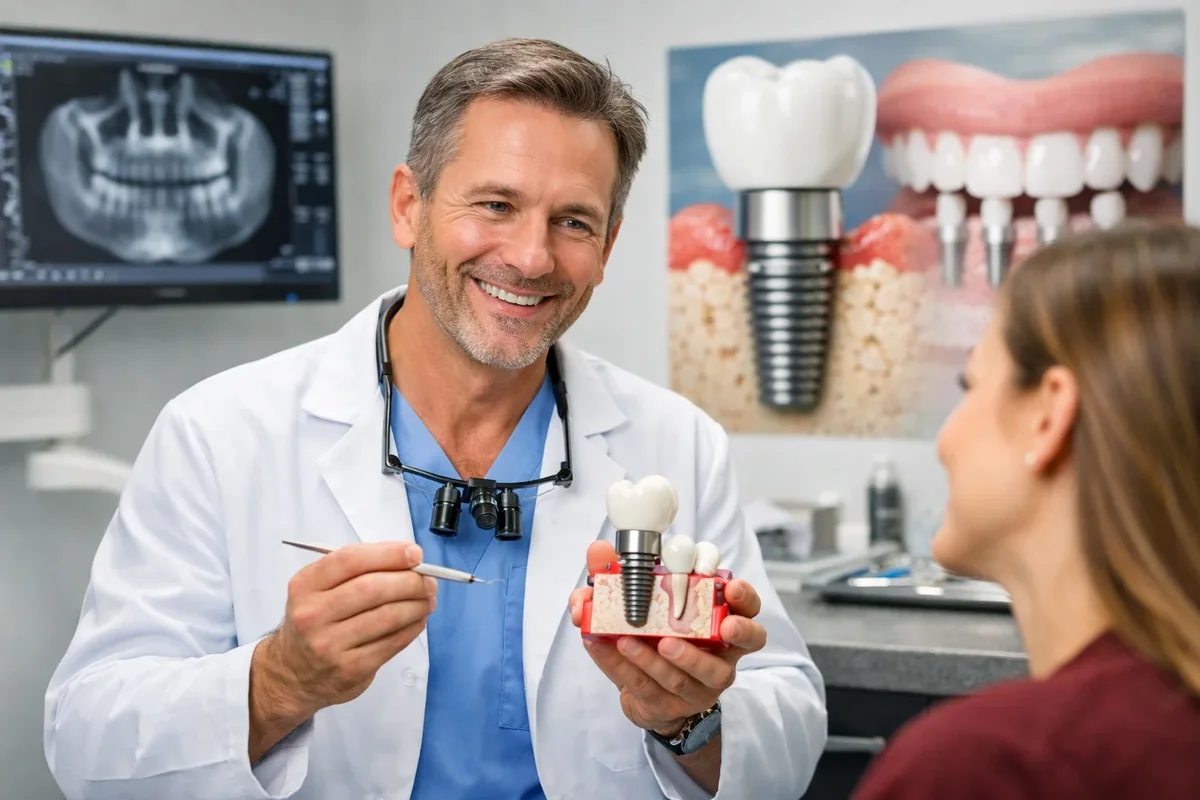
If you are searching online and asking yourself what dentist does implants, you are not alone. Dental implants are one of the most advanced and reliable solutions for replacing missing teeth, but many patients are unsure about which dental professional is responsible for performing the procedure. Understanding exactly what dentist does implants is essential before starting treatment, because the success of your implant depends heavily on the experience, training, and specialization of the clinician placing it.
So, what dentist does implants? The short answer is that several types of dental professionals can place dental implants, depending on their training and certification. However, not every dentist automatically performs implant surgery. When patients ask what dentist does implants, they are really asking who has the surgical expertise, restorative knowledge, and clinical experience to handle this complex procedure safely and predictably.
Dental implants are titanium posts that are surgically placed into the jawbone to replace the root of a missing tooth. Over time, the implant integrates with the bone through a process called osseointegration. Because this involves both surgery and prosthetic restoration, understanding what dentist does implants requires looking at different dental specialties.
Generally, the professionals who most commonly perform implant surgery include:
- General dentists with advanced implant training
- Periodontists (gum and bone specialists)
- Oral and maxillofacial surgeons
- Prosthodontists (specialists in tooth restoration)
When patients research what dentist does implants, they often discover that implant dentistry overlaps multiple specialties. For example, a general dentist may place and restore implants if they have completed certified implant courses and hands-on surgical training. Meanwhile, a periodontist specializes in the gums and supporting bone, making them highly qualified for implant placement, especially in cases involving bone loss. An oral surgeon, on the other hand, focuses heavily on surgical procedures, including complex implant placements and bone grafting.
Understanding what dentist does implants is important because dental implants are not just cosmetic procedures. They require precise planning, 3D imaging, surgical accuracy, and prosthetic design. Choosing the wrong provider could lead to complications such as implant failure, infection, nerve damage, or improper bite alignment. That is why knowing what dentist does implants goes beyond curiosity—it directly affects your long-term oral health.
Many patients are surprised to learn that implant treatment is often a team effort. In some clinics, one specialist places the implant surgically, while another dentist restores it with a crown. So when asking what dentist does implants, it is helpful to clarify whether you mean implant placement, restoration, or both. Some dentists handle the entire process from start to finish, while others collaborate with specialists.
Another key factor in answering what dentist does implants is training. Implant dentistry is not automatically included in every dental school curriculum at an advanced surgical level. Dentists who place implants typically complete additional postgraduate training, continuing education courses, or specialty residencies. This additional education ensures they understand bone density, anatomical structures, surgical protocols, and digital planning technologies.
Technology also plays a major role. Modern implant dentists often use CBCT (Cone Beam Computed Tomography) scans, digital impressions, and guided surgery systems. When evaluating what dentist does implants, you should consider whether the provider uses advanced imaging and follows evidence-based protocols recommended by respected organizations such as the American Dental Association. These standards improve safety and predictability.
Beyond credentials, experience matters. A dentist who has placed hundreds or thousands of implants is generally more prepared to manage unexpected complications than someone who performs the procedure occasionally. Therefore, when you ask what dentist does implants, you should also ask how many implant cases they have completed and what their success rate is.
It is also worth mentioning that patient evaluation is crucial. Not every person is immediately a candidate for implants. Conditions such as uncontrolled diabetes, heavy smoking, or severe bone loss may require additional treatment before implant placement. A qualified professional who truly understands what dentist does implants will conduct a comprehensive consultation, review medical history, take digital scans, and develop a personalized treatment plan.
If you are considering dental implants and still wondering what dentist does implants, the safest approach is to schedule a consultation with an experienced implant provider. At Redent Klinik, for example, patients receive a full diagnostic evaluation before any procedure begins. If you would like professional guidance tailored to your situation, you can visit the Redent Klinik Contact Page to arrange a consultation.
In summary, the question what dentist does implants does not have a single simple answer. The procedure can be performed by trained general dentists, periodontists, oral surgeons, or prosthodontists, depending on their qualifications. The most important factor is not just the title of the dentist, but their training, technology, experience, and ability to plan and execute implant treatment safely. By understanding what dentist does implants in depth, you can make an informed decision and move forward confidently toward restoring your smile. 😊
1. What Dentist Does Implants and Why It Matters
When patients begin researching tooth replacement options, one of the first questions they type into Google is what dentist does implants. This question may sound simple, but the answer has significant implications for your oral health, long-term success, and overall treatment experience. Understanding exactly what dentist does implants helps you avoid confusion, reduce risk, and choose the right professional for a safe and predictable procedure.
Dental implants are not basic fillings or routine cleanings. They involve minor oral surgery, bone integration, and prosthetic design. Because of this complexity, knowing what dentist does implants ensures you receive treatment from someone with the proper surgical skill, diagnostic knowledge, and restorative expertise. Making the wrong choice can lead to complications, additional costs, and emotional stress.
Why the Right Implant Dentist Makes a Difference
The reason patients frequently ask what dentist does implants is because implants combine multiple areas of dentistry. The procedure includes:
- 3D diagnostic imaging
- Precise surgical placement into the jawbone
- Healing and bone integration
- Custom crown fabrication and placement
Each of these stages requires advanced knowledge. A dentist who truly understands what dentist does implants will approach the process systematically, starting with a full evaluation of bone density, gum health, and bite alignment. This planning stage is critical. Poor planning can result in implant failure, nerve damage, sinus complications, or aesthetic problems.
Additionally, experience significantly affects outcomes. Someone who occasionally places implants may not handle complications as confidently as a dentist who regularly performs implant surgery. Therefore, when asking what dentist does implants, you should also ask about case volume and long-term success rates.
Different Dental Professionals Who Place Implants
To fully answer what dentist does implants, it is important to understand the different professionals involved in implant dentistry:
General Dentists with Advanced Implant Training
Many general dentists pursue continuing education in implant dentistry. With proper certification and hands-on surgical courses, they can competently place and restore implants. When patients wonder what dentist does implants, they are often surprised to learn that some general dentists provide complete start-to-finish implant care under one roof.
Periodontists
Periodontists specialize in gum and bone health. Because implants rely heavily on strong bone support, periodontists are highly qualified when considering what dentist does implants, especially in cases involving bone loss or gum disease. They frequently perform bone grafts and sinus lifts in addition to implant placement.
Oral and Maxillofacial Surgeons
Oral surgeons focus on surgical procedures involving the mouth, jaw, and face. They are often the answer to what dentist does implants in complex cases, such as full-mouth rehabilitation or severe bone deficiencies. Their surgical training makes them well-equipped to manage medically complex patients.
Prosthodontists
Prosthodontists specialize in restoring teeth with crowns, bridges, and implant-supported prosthetics. While some place implants surgically, many focus on the restoration phase. When evaluating what dentist does implants, it is helpful to clarify whether the provider handles both placement and restoration.
Why Choosing the Wrong Provider Can Be Risky
Choosing a provider without proper training may lead to complications such as:
- Implant misalignment
- Infection or peri-implantitis
- Implant failure due to poor bone integration
- Damage to nerves or sinus cavities
This is why the question what dentist does implants is not just about credentials—it is about safety. A properly trained implant dentist follows evidence-based protocols, often guided by organizations such as the American Dental Association, ensuring standardized care and ethical practice.
Technology and Planning: A Critical Factor
Modern implant dentistry relies heavily on technology. Dentists who understand what dentist does implants effectively will use tools such as:
- CBCT 3D scans for accurate bone assessment
- Digital treatment planning software
- Guided surgical templates
- High-quality implant systems
Without proper imaging and planning, implant placement becomes less predictable. A well-equipped clinic significantly improves accuracy and healing outcomes.
Cost Considerations and Why Expertise Matters
Some patients focus primarily on cost when asking what dentist does implants, but lower pricing does not always mean better value. In the United States, the average cost of a single dental implant (including crown) typically ranges from $3,000 to $5,500, depending on complexity and geographic location. Bone grafting or sinus lifts may increase the cost.
While it may be tempting to choose the lowest offer, selecting an experienced professional reduces the risk of costly corrections later. Quality implant treatment is an investment in long-term stability and function.
How to Move Forward Safely
If you are still asking what dentist does implants, the best next step is scheduling a detailed consultation. During this appointment, the dentist should:
- Review your medical history
- Take digital scans
- Explain treatment options clearly
- Discuss risks and success rates
- Provide a transparent cost breakdown
At Redent Klinik, patients receive comprehensive implant evaluations before any treatment begins. If you would like to speak with a professional about your specific situation, visit the Redent Klinik Contact Page to schedule a consultation.
Ultimately, understanding what dentist does implants empowers you to make informed decisions. Whether the procedure is performed by a trained general dentist, periodontist, oral surgeon, or prosthodontist, the most important factors are education, experience, and commitment to patient safety. By choosing wisely, you increase your chances of enjoying a stable, natural-looking smile for many years to come. 😊
2. Is a General Dentist Qualified to Place Implants?
One of the most common follow-up questions after asking what dentist does implants is whether a general dentist is truly qualified to perform the procedure. Many patients assume that only specialists can place implants, while others believe any licensed dentist can do it. The truth lies somewhere in between. Understanding how a general dentist fits into the answer to what dentist does implants is essential before making a treatment decision.
Dental implants are highly technical procedures involving surgical precision, anatomical knowledge, and restorative planning. While dental school provides foundational education, not every graduate automatically becomes an implant surgeon. Therefore, when evaluating what dentist does implants, you must look beyond the title “general dentist” and focus on additional training, certification, and real-world experience.
Education and Basic Dental Training
All licensed dentists complete either a DDS (Doctor of Dental Surgery) or DMD (Doctor of Dental Medicine) degree. During dental school, students receive introductory education about implants, but often not enough surgical training to independently perform advanced implant procedures. That is why the question what dentist does implants cannot be answered solely by degree alone.
After graduation, some general dentists choose to pursue extensive continuing education in implant dentistry. These courses may include:
- Hands-on surgical workshops
- Bone grafting training
- Sinus lift certification
- Digital implant planning programs
- Guided surgery training
A general dentist who has completed structured implant training can competently answer the question what dentist does implants—because they are fully qualified to do so.
When a General Dentist Is Fully Qualified
In modern dentistry, many general dentists successfully place and restore implants from start to finish. When patients search what dentist does implants, they often discover that well-trained general dentists provide comprehensive implant care under one roof.
Experience Matters More Than Title
A general dentist who has placed hundreds of implants may be more experienced than a specialist who performs them less frequently. Therefore, when evaluating what dentist does implants, you should ask about case numbers, success rates, and complication management—not just specialty titles.
Technology and Digital Planning
Qualified general dentists who perform implant surgery typically invest in advanced diagnostic tools such as CBCT (3D cone beam scans) and digital treatment planning software. These technologies increase precision and reduce surgical risks. If a clinic uses guided surgery systems, it is often a strong indicator that they understand the responsibility behind what dentist does implants.
When a Specialist May Be Recommended
Although many general dentists are qualified, there are situations where referral to a specialist may be the safest option. This is another important dimension of the question what dentist does implants.
Complex Bone Loss Cases
If a patient has significant jawbone deterioration, advanced gum disease, or requires major bone grafting, a periodontist or oral surgeon may be recommended. These specialists receive additional surgical residency training. In such cases, the best answer to what dentist does implants may not be a general dentist, but a surgical specialist.
Medical Risk Factors
Patients with uncontrolled diabetes, immune disorders, or complex anatomical concerns may benefit from specialist oversight. An experienced implant provider will honestly assess whether they can safely handle the case or if referral is needed. Ethical decision-making is part of responsibly answering what dentist does implants.
Cost Considerations
Another reason patients ask what dentist does implants is cost. In the United States, the average price for a single implant including crown typically ranges between $3,000 and $5,500. If bone grafting is required, costs may increase by $300 to $3,000 depending on complexity.
General dentists sometimes offer competitive pricing because they manage the entire process internally. However, lower cost should never compromise safety. Selecting the right professional when asking what dentist does implants should prioritize skill and experience over price alone.
Standards and Professional Guidelines
Reputable implant providers follow clinical standards supported by organizations such as the American Dental Association. These evidence-based guidelines promote patient safety, sterilization standards, and predictable outcomes. When determining what dentist does implants, confirming adherence to recognized professional standards is crucial.
Questions to Ask a General Dentist
If you are considering a general dentist for implant treatment, ask the following questions:
- How many implants have you placed?
- What is your implant success rate?
- Do you use 3D imaging for planning?
- What training have you completed in implant dentistry?
- Do you perform bone grafts if necessary?
Clear, confident answers will help you determine whether this dentist appropriately fits the answer to what dentist does implants.
Making the Right Decision
Ultimately, the answer to what dentist does implants depends on the individual provider’s training, experience, and ethical judgment. A general dentist can absolutely be qualified to place implants—provided they have advanced education and sufficient clinical experience.
If you would like professional guidance tailored to your specific case, you can request a detailed implant consultation through the Redent Klinik Contact Page. A thorough evaluation will clarify whether your situation is appropriate for a general implant dentist or requires specialist involvement.
In summary, a general dentist can be fully qualified to perform implant procedures, but credentials, experience, and technology matter greatly. When carefully evaluated, a skilled general dentist can confidently represent the answer to what dentist does implants, providing safe, effective, and long-lasting tooth replacement solutions. 😊
3. What Dentist Does Implants: Periodontist vs Oral Surgeon
When patients continue researching what dentist does implants, they often encounter two specialist titles repeatedly: periodontist and oral surgeon. This can create confusion. If both professionals place implants, which one is the right choice? Understanding the differences between these specialists is essential for anyone seriously asking what dentist does implants and wanting the safest, most predictable outcome.
Dental implants require surgical precision, deep anatomical knowledge, and careful treatment planning. While general dentists with advanced training can perform implants, many complex cases are handled by specialists. Therefore, to fully answer what dentist does implants, it is important to compare periodontists and oral surgeons side by side.
Who Is a Periodontist?
A periodontist is a dental specialist who focuses on the health of the gums and the supporting bone structures around teeth. After completing dental school, a periodontist undergoes an additional 2–3 years of specialized residency training focused on gum disease, bone regeneration, and surgical procedures involving soft and hard tissues.
Because implants depend heavily on healthy bone and gum support, periodontists are frequently the answer to what dentist does implants, especially in patients with periodontal disease or bone loss.
Why Periodontists Excel in Implant Placement
- Extensive training in bone grafting and regeneration
- Advanced knowledge of gum tissue management
- Experience treating peri-implantitis (implant-related infections)
- Strong background in managing compromised cases
If a patient has experienced severe gum disease, the question what dentist does implants may best be answered by choosing a periodontist. Their expertise in tissue health improves long-term implant stability.
Who Is an Oral and Maxillofacial Surgeon?
An oral and maxillofacial surgeon is a specialist trained in surgical procedures involving the mouth, jaw, and facial structures. Their training typically includes 4–6 years of hospital-based surgical residency after dental school. Some oral surgeons also earn a medical degree (MD) during their training.
When patients ask what dentist does implants in cases involving complex anatomy or surgical difficulty, oral surgeons are often a strong answer.
Why Oral Surgeons Are Ideal for Complex Cases
- Extensive surgical training in jaw anatomy
- Experience with impacted teeth and facial trauma
- Ability to perform sedation and general anesthesia
- Expertise in sinus lifts and advanced bone reconstruction
For patients requiring full-arch implants, zygomatic implants, or extensive bone grafting, the safest response to what dentist does implants may be an oral surgeon due to their advanced surgical capabilities.
Key Differences Between Periodontists and Oral Surgeons
Although both specialists place implants, their primary focus areas differ. When evaluating what dentist does implants, consider these distinctions:
Focus of Training
Periodontists specialize in gum and bone health, while oral surgeons specialize in broader surgical procedures of the jaw and face.
Complex Surgical Cases
Oral surgeons may be preferred for cases involving severe bone deficiency, facial reconstruction, or impacted teeth removal combined with implant placement.
Gum Aesthetics and Tissue Management
Periodontists often excel in cosmetic gum contouring and managing soft tissue around implants for optimal aesthetics.
Therefore, the answer to what dentist does implants depends heavily on the complexity of your case and your oral health condition.
Cost Differences Between Specialists
Another factor influencing the question what dentist does implants is cost. In the United States, average implant placement fees may range:
- Single implant surgery: $1,500 – $3,000
- Implant crown restoration: $1,000 – $2,500
- Bone grafting (if required): $300 – $3,000
- Sinus lift: $1,500 – $5,000
Specialists may charge slightly higher surgical fees due to their advanced training. However, choosing the right provider when asking what dentist does implants can reduce the risk of complications and costly corrections later.
Collaboration Between Specialists
In many modern clinics, implant treatment is collaborative. An oral surgeon or periodontist may place the implant, while a restorative dentist or prosthodontist places the crown. When asking what dentist does implants, it is helpful to clarify whether one provider handles both placement and restoration or if care is shared.
Professional standards supported by organizations like the American Dental Association encourage interdisciplinary collaboration to ensure patient safety and optimal outcomes.
How to Decide Which Specialist Is Right for You
If you are unsure which specialist best answers your question about what dentist does implants, consider scheduling a comprehensive consultation. During the appointment, the dentist will evaluate:
- Bone density and jaw structure (via CBCT scan)
- Gum health
- Medical history
- Aesthetic expectations
At Redent Klinik, patients receive a detailed diagnostic evaluation before treatment planning begins. If you would like personalized guidance regarding what dentist does implants in your specific situation, you can arrange a consultation through the Redent Klinik Contact Page.
Final Thoughts
Ultimately, both periodontists and oral surgeons are highly qualified professionals who can represent the answer to what dentist does implants. The best choice depends on your oral health status, the complexity of the procedure, and the provider’s experience. By understanding their differences, you can confidently choose the right specialist and increase your chances of long-term implant success. 😊
4. Training and Certifications Required for Implant Dentists
When patients seriously research what dentist does implants, one of the most important factors to evaluate is training and certification. Dental implants are not routine procedures. They require surgical precision, advanced diagnostics, and restorative expertise. Therefore, understanding the educational background behind what dentist does implants helps you make a safe and informed decision.
Many people assume that every licensed dentist can automatically place implants. While technically any dentist may legally perform implant procedures in many regions, not all have completed the same level of surgical education. This is why the question what dentist does implants should always be followed by another question: what specialized training have they completed?
Basic Dental Degree: The Foundation
All implant providers begin with a DDS (Doctor of Dental Surgery) or DMD (Doctor of Dental Medicine) degree. Dental school provides foundational knowledge in anatomy, oral health, and restorative procedures. However, the standard curriculum typically offers only introductory exposure to implant dentistry. Because of this, the answer to what dentist does implants cannot rely on a dental degree alone.
Implant dentistry requires additional surgical training beyond basic education. Without advanced coursework, a dentist may lack the depth of experience needed for predictable long-term results.
Postgraduate Implant Training
To properly answer what dentist does implants, you must look at postgraduate education. Many dentists complete advanced implant certification programs that include:
- Hands-on surgical training with live patients
- Bone grafting and sinus lift techniques
- Digital treatment planning with CBCT imaging
- Guided implant surgery systems
- Complication management and emergency protocols
These structured programs often span months or even years. Dentists who invest in this level of education demonstrate a serious commitment to mastering implant dentistry. When evaluating what dentist does implants, verified continuing education is a strong indicator of competence.
Mini-Residencies in Implant Dentistry
Some general dentists complete implant mini-residency programs. These programs provide immersive training in surgical placement, prosthetic restoration, and case selection. A dentist who has completed a recognized implant mini-residency is often well-qualified when patients ask what dentist does implants.
Specialist Residencies
Periodontists and oral surgeons complete formal residency programs lasting 2–6 years after dental school. These residencies include extensive surgical training. For complex cases, the most accurate answer to what dentist does implants may involve a specialist with residency-based expertise.
Certification and Professional Memberships
Another key factor in determining what dentist does implants is professional certification. Although there is no single global “implant license,” many dentists pursue recognition through professional organizations and advanced coursework.
Look for dentists who:
- Participate in recognized implant education programs
- Follow guidelines from organizations like the American Dental Association
- Attend annual implant dentistry conferences
- Regularly update their skills with new technologies
Continuous education is critical because implant techniques and materials evolve rapidly. A dentist who stays updated is better prepared to answer the question what dentist does implants safely and effectively.
Technology Training and Digital Competence
Modern implant dentistry relies heavily on digital tools. Dentists who truly understand what dentist does implants should be trained in:
- CBCT (3D Cone Beam Imaging)
- Digital impression systems
- Computer-guided implant placement
- CAD/CAM crown design
Without proper training in these technologies, surgical precision decreases. Digital planning significantly reduces risk and improves implant longevity. Therefore, technological competence is part of the professional profile behind what dentist does implants.
Experience and Case Volume
Education is essential, but hands-on experience is equally important. When evaluating what dentist does implants, ask how many implants the provider has placed. A dentist who has successfully completed hundreds or thousands of implant procedures is more likely to manage complications confidently.
Experienced implant dentists also develop refined judgment regarding case selection. Not every patient is an ideal candidate. A qualified provider will carefully assess medical history, bone quality, and lifestyle factors before recommending surgery.
Cost Transparency and Ethical Practice
Another hallmark of a well-trained implant provider is transparent communication about cost and treatment planning. In the United States, a complete single implant (surgery plus crown) typically ranges from $3,000 to $5,500. Additional procedures such as bone grafting can add $300 to $3,000 depending on complexity.
When asking what dentist does implants, you should expect clear explanations of fees, risks, and alternative options. Ethical implant dentists prioritize patient safety over aggressive marketing.
Consultation and Personalized Evaluation
If you are still wondering what dentist does implants, scheduling a detailed consultation is the safest next step. A qualified provider will:
- Review your full medical history
- Take 3D digital scans
- Explain procedural steps clearly
- Discuss risks and expected outcomes
- Provide a structured treatment timeline
At Redent Klinik, comprehensive implant consultations are conducted before any treatment begins. If you would like expert guidance regarding what dentist does implants for your specific case, you can request an appointment through the Redent Klinik Contact Page.
Final Thoughts on Qualifications
Ultimately, answering what dentist does implants requires evaluating training, certification, experience, and technology—not just titles. A well-trained general dentist with advanced implant education can be fully qualified. Likewise, a specialist with residency training may be ideal for complex surgical cases.
By carefully reviewing credentials and asking informed questions, you can confidently choose the right professional and move forward with a secure, long-lasting implant solution. 😊
5. Step-by-Step: How Implant Dentists Perform the Procedure
After understanding what dentist does implants, the next logical question patients ask is how the procedure is actually performed. Dental implants are not completed in a single appointment. Instead, they follow a carefully structured process designed to ensure safety, stability, and long-term success. Knowing each phase of treatment helps patients feel more confident when deciding what dentist does implants is right for them.
The implant process combines surgical expertise, digital planning, and restorative precision. Whether performed by a trained general dentist, a periodontist, or an oral surgeon, the professional who answers the question what dentist does implants must follow a systematic protocol to achieve predictable results.
Initial Consultation and Evaluation
The first step in implant treatment is a comprehensive consultation. When evaluating what dentist does implants, this stage is critical. A qualified provider will not proceed without a full assessment of your oral and overall health.
Medical and Dental History Review
Your dentist will evaluate medical conditions such as diabetes, heart disease, or smoking habits that may influence healing. A responsible answer to what dentist does implants always includes careful patient screening.
Digital Imaging and 3D Scanning
Modern implant dentists use CBCT (Cone Beam Computed Tomography) scans to evaluate bone density, nerve positions, and sinus cavities. This advanced imaging ensures precise placement. Without 3D diagnostics, no professional should confidently claim to represent what dentist does implants safely.
Treatment Planning and Case Design
Once diagnostics are complete, the dentist develops a customized treatment plan. This phase answers an important part of what dentist does implants: planning is just as important as surgery.
The treatment plan determines:
- The type and size of implant
- Exact placement angle and depth
- Whether bone grafting is needed
- The healing timeline
- Final crown design
Some clinics use guided surgery software to create a surgical template. This technology improves accuracy and reduces complications. Dentists who invest in digital planning tools demonstrate a higher standard when addressing what dentist does implants.
Bone Grafting (If Necessary)
Not every patient has sufficient bone to support an implant. If bone loss is detected, grafting may be required before implant placement. This procedure strengthens the jaw and ensures long-term stability.
Typical bone grafting costs in the United States range from $300 to $3,000, depending on complexity. If sinus lifting is needed in the upper jaw, costs may range between $1,500 and $5,000. A transparent discussion of these procedures is part of responsibly explaining what dentist does implants.
Implant Placement Surgery
The surgical phase is the core of the procedure. During implant placement, the dentist:
- Administers local anesthesia (or sedation if needed)
- Makes a small incision in the gum
- Prepares the bone using precision drills
- Inserts the titanium implant post
- Closes the gum tissue around or over the implant
The surgery typically takes 1–2 hours per implant. Most patients report minimal discomfort, similar to a routine tooth extraction. The professional who performs this stage truly defines what dentist does implants, as surgical accuracy determines long-term success.
Healing and Osseointegration
After placement, the implant requires time to integrate with the bone. This biological process, called osseointegration, usually takes 3–6 months. During this period, the implant becomes a stable artificial root.
A skilled provider monitoring this phase is part of the broader answer to what dentist does implants. Regular follow-up appointments ensure proper healing and early detection of potential complications.
Abutment Placement
Once healing is complete, a small connector piece called an abutment is attached to the implant. This component supports the final crown. In some cases, abutments are placed during the initial surgery, depending on the treatment plan.
Final Crown Restoration
The final step involves placing a custom-designed dental crown that matches your natural teeth in color and shape. This restoration phase is just as important as the surgical stage. When evaluating what dentist does implants, confirm whether the same provider handles both placement and restoration or collaborates with a prosthodontist.
The total cost of a single implant with crown in the United States typically ranges from $3,000 to $5,500, depending on complexity and location.
Aftercare and Maintenance
Long-term success depends on proper oral hygiene and routine dental checkups. Patients should:
- Brush and floss daily
- Avoid smoking
- Attend regular professional cleanings
- Follow maintenance guidelines provided by their dentist
Professional organizations such as the American Dental Association emphasize ongoing care to ensure implant longevity.
Why the Entire Process Matters
Understanding each phase of treatment clarifies why the question what dentist does implants goes beyond a simple job title. Implant dentistry combines surgical skill, digital technology, restorative artistry, and long-term patient care.
If you are considering dental implants and want personalized guidance about what dentist does implants in your situation, you can schedule a consultation through the Redent Klinik Contact Page. A thorough evaluation ensures you receive safe, predictable, and long-lasting treatment.
By understanding the full step-by-step process, you can move forward confidently, knowing exactly what to expect from the professional who answers your question about what dentist does implants. 😊