
When people search for what does a crown do, they are usually experiencing tooth damage, pain, or have been advised by a dentist to get a dental crown. This question reflects a real need for clarity, reassurance, and understanding. A dental crown is not just a cosmetic solution; it is a critical restorative treatment designed to protect, strengthen, and restore a damaged tooth so it can function normally again. In modern dentistry, crowns are one of the most commonly used and trusted treatments for long-term oral health 🦷.
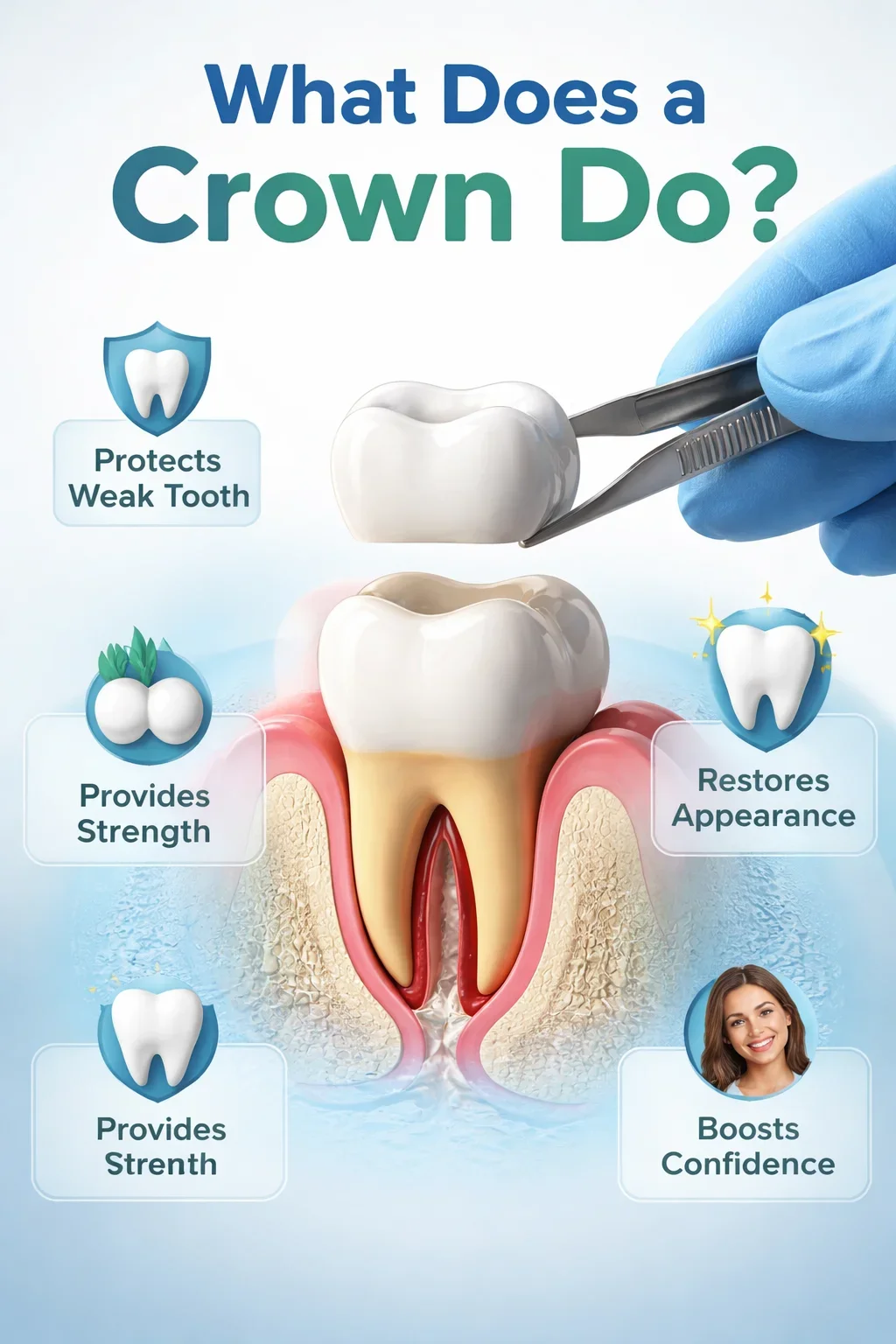
So, what does a crown do exactly? In simple terms, a crown acts like a protective cap that fully covers a weakened or damaged tooth. It restores the tooth’s original shape, size, strength, and appearance. Once placed, the crown allows you to chew, speak, and smile with confidence again. Without a crown, a compromised tooth may continue to crack, decay further, or even require extraction over time.
One of the most important roles of a crown is structural protection. Teeth can become weak due to large fillings, root canal treatments, fractures, or severe wear. In these situations, the natural tooth structure is no longer strong enough to withstand normal biting forces. Understanding what does a crown do helps patients realize that a crown distributes chewing pressure evenly across the tooth, preventing further damage and significantly extending the life of the tooth.
Another key function of a crown is sealing and shielding the tooth from bacteria. When a tooth is cracked or heavily restored, tiny gaps can allow bacteria to enter, increasing the risk of infection or decay. A properly fitted crown creates a tight seal around the tooth, reducing bacterial infiltration and helping maintain long-term oral health. This is why dentists often recommend crowns after root canal treatment, where the tooth becomes more brittle and vulnerable.
Patients also ask what does a crown do in terms of daily comfort. The answer is simple: it brings back normal function. A damaged tooth can cause pain when chewing or sensitivity to hot and cold foods. By covering the tooth completely, a crown reduces sensitivity and discomfort, allowing you to eat your favorite foods again without hesitation 🍎. This functional improvement alone can dramatically enhance quality of life.
Beyond function, crowns play a major role in aesthetics. Modern dental crowns are custom-designed to match the color, shape, and size of your natural teeth. For many patients, understanding what does a crown do also means realizing how much it improves the appearance of a broken, discolored, or misshapen tooth. Once placed, a crown blends seamlessly into your smile, often making the tooth look even better than before.
It’s also important to understand that a crown supports overall oral alignment. A damaged or worn-down tooth can change the way your teeth come together, leading to bite problems, jaw discomfort, or uneven wear on other teeth. Knowing what does a crown do from a bite perspective highlights how crowns help maintain proper spacing and alignment, protecting neighboring teeth from unnecessary stress.
Many patients worry about whether a crown is a temporary or permanent solution. In reality, dental crowns are designed to last many years—often 10 to 15 years or longer with proper care. They are made from durable materials such as porcelain, ceramic, metal alloys, or zirconia. Understanding what does a crown do long-term reassures patients that this is a reliable investment in their dental health, not a short-term fix.
In summary, the answer to what does a crown do goes far beyond simply “covering a tooth.” A crown protects weakened teeth, restores strength and function, improves appearance, prevents further damage, and helps preserve your natural smile for years to come 😊. It is one of the most effective restorative treatments in dentistry, combining medical necessity with aesthetic excellence.
If you have been told you need a crown or are experiencing tooth damage, understanding what does a crown do empowers you to make informed decisions about your oral health. In the next section, we will explore exactly how crowns function in modern dentistry and why they are such a cornerstone of restorative dental care.
What Does a Crown Do in Modern Dentistry?
To truly understand what does a crown do in modern dentistry, it helps to look at how dental care has evolved over the years. Today’s dentistry focuses not only on fixing problems but also on preserving natural teeth for as long as possible. A dental crown perfectly fits this philosophy. Rather than removing a damaged tooth, dentists use crowns to save it, strengthen it, and restore its full function while keeping your natural tooth structure intact 🦷.
In modern clinical practice, asking what does a crown do means understanding its role as a multifunctional restoration. A crown is designed to fully encase a tooth that has been weakened by decay, trauma, or dental procedures. This full coverage approach is what makes crowns so effective compared to partial restorations. They act as a long-term shield that allows the tooth to continue functioning as part of your natural bite.
The Role of Dental Crowns in Tooth Preservation
One of the most critical answers to what does a crown do lies in tooth preservation. Dentists prioritize saving natural teeth whenever possible because no artificial replacement fully matches the strength and sensory feedback of a real tooth. When a tooth has extensive damage but still has a healthy root, placing a crown allows that tooth to remain in the mouth instead of being extracted.
Without a crown, a weakened tooth may eventually fracture beyond repair. Modern dentistry uses crowns proactively to prevent this outcome. By covering and reinforcing the remaining tooth structure, crowns significantly reduce the risk of cracks spreading or the tooth breaking under pressure. This preservation-first approach is a cornerstone of contemporary dental treatment.
What Does a Crown Do for Bite Function and Stability?
Another essential aspect of what does a crown do in modern dentistry is maintaining bite stability. Every tooth plays a role in how your upper and lower teeth come together. When one tooth is damaged or worn down, it can disrupt your bite balance, leading to uneven pressure, jaw discomfort, or headaches.
A dental crown restores the tooth to its correct height and shape. This ensures that chewing forces are distributed evenly across all teeth, protecting both the crowned tooth and the surrounding teeth. Modern crowns are digitally designed to fit your bite precisely, which is why patients often report immediate improvement in comfort after treatment 😊.
Preventing Chain Reactions in Oral Health
Understanding what does a crown do also means recognizing its preventive value. One damaged tooth can trigger a chain reaction: neighboring teeth may shift, opposing teeth may over-erupt, and gum health may decline. A crown stabilizes the situation by maintaining proper spacing and alignment, preventing these secondary problems from developing.
Advanced Materials and Technology in Modern Crowns
Modern dentistry has dramatically improved how crowns function and feel. When patients ask what does a crown do today compared to the past, the answer includes advanced materials and digital precision. Crowns are now made from high-strength ceramics, porcelain-fused materials, or zirconia that closely mimic natural enamel.
These materials are not only durable but also biocompatible, meaning they work harmoniously with your gums and surrounding tissues. Digital scanning and CAD/CAM technology allow dentists to design crowns with extreme accuracy, resulting in better fit, longer lifespan, and improved comfort.
What Does a Crown Do for Long-Term Oral Health?
From a long-term perspective, what does a crown do extends beyond immediate repair. A well-placed crown protects the tooth from further decay by sealing vulnerable areas. This is especially important for teeth that have undergone root canal treatment, as they are more prone to fracture and bacterial invasion.
By safeguarding the tooth, crowns help maintain healthy gums and bone structure around the tooth. This contributes to overall oral stability and reduces the likelihood of future complex treatments. In this way, crowns support not just individual teeth, but the entire oral ecosystem.
Supporting Confidence and Daily Comfort
Modern dentistry also recognizes the emotional and psychological aspects of oral health. Understanding what does a crown do includes acknowledging its impact on confidence. A damaged or visibly broken tooth can make people self-conscious when smiling or speaking. Crowns restore a natural, attractive appearance, allowing patients to interact socially without worry 😄.
In summary, the modern answer to what does a crown do is comprehensive. A crown preserves natural teeth, restores bite function, prevents future complications, utilizes advanced materials, and supports long-term oral health. It is not merely a repair—it is a strategic, preventative, and restorative solution that reflects the best of contemporary dental care.
In the next section, we will explore why dentists specifically recommend crowns for damaged teeth and how they decide when a crown is the best treatment option.
Why Dentists Recommend Crowns for Damaged Teeth
When a dentist recommends a crown, many patients immediately ask what does a crown do and why it is necessary instead of a simpler treatment. This recommendation is never made lightly. Crowns are advised when a tooth has reached a level of damage where basic restorations like fillings can no longer provide adequate strength, protection, or longevity. Understanding this recommendation helps patients feel more confident and informed about their treatment 🦷.
To fully grasp what does a crown do in cases of tooth damage, it’s important to recognize that not all damage is visible on the surface. Cracks, internal weakening, and structural loss can compromise a tooth even if it still looks intact. Dentists use crowns to address both visible and hidden damage, ensuring the tooth can withstand everyday chewing forces without failing over time.
Structural Damage Beyond the Limits of Fillings
One of the most common reasons dentists explain what does a crown do is when a tooth has a large filling. While fillings are effective for small to moderate decay, they replace tooth structure rather than reinforce it. When too much natural enamel is lost, the remaining tooth becomes fragile.
A crown, unlike a filling, surrounds the tooth completely. This full coverage holds the tooth together, preventing cracks from spreading and reducing the risk of sudden fracture. Dentists recommend crowns in these cases because they offer structural reinforcement that fillings simply cannot provide.
What Does a Crown Do After a Root Canal?
Root canal treatment saves teeth that would otherwise need extraction, but it also changes the tooth’s physical properties. After a root canal, the tooth no longer has a living nerve, making it more brittle over time. Patients often ask what does a crown do after a root canal, and the answer is protection.
A crown protects the weakened tooth from breaking under normal chewing pressure. Without a crown, root canal–treated teeth are at high risk of cracking, which can lead to tooth loss despite successful internal treatment. This is why crowns are considered a standard part of post–root canal care in modern dentistry.
Preventing Tooth Loss Through Proactive Care
Understanding what does a crown do also highlights its preventive role. Dentists often recommend crowns before a tooth fails completely. Waiting until a tooth breaks may mean extraction is the only remaining option. A crown placed at the right time can prevent this outcome and preserve the natural tooth for many years.
Protection Against Cracks and Fractures
Teeth can crack due to trauma, grinding, or long-term wear. Sometimes these cracks are microscopic and not immediately painful. Dentists explain what does a crown do in these situations by emphasizing stabilization. A crown holds the cracked segments together, preventing the crack from worsening.
Without a crown, cracks can deepen and extend into the root, making the tooth impossible to save. Crowns act like a protective helmet, absorbing and redistributing forces that would otherwise concentrate on vulnerable areas of the tooth.
What Does a Crown Do for Severely Worn Teeth?
Severe tooth wear is another key reason dentists recommend crowns. Grinding (bruxism), acid erosion, or age-related wear can shorten teeth and expose sensitive inner layers. Patients wondering what does a crown do in these cases should know that crowns rebuild the tooth to its original height and shape.
This restoration not only improves appearance but also corrects bite problems caused by uneven wear. By restoring proper tooth dimensions, crowns help prevent jaw strain and further damage to other teeth.
Supporting Overall Bite Harmony
A damaged tooth doesn’t exist in isolation. Dentists consider how every tooth interacts with the rest of the mouth. Understanding what does a crown do includes recognizing how crowns help maintain bite harmony. A restored tooth prevents shifting, overloading of neighboring teeth, and uneven chewing patterns.
Aesthetic and Psychological Considerations
While function is the primary concern, dentists also recognize the emotional impact of damaged teeth. Broken, discolored, or misshapen teeth can affect self-esteem. When patients ask what does a crown do aesthetically, dentists explain that modern crowns are designed to look natural and blend seamlessly with surrounding teeth.
This aesthetic restoration can significantly improve confidence, encouraging patients to smile and speak freely again 😊. In many cases, the psychological benefit of restoring a damaged tooth is just as important as the physical repair.
In conclusion, dentists recommend crowns for damaged teeth because they provide comprehensive protection, structural reinforcement, functional restoration, and aesthetic improvement. The true answer to what does a crown do in damaged teeth is that it saves what would otherwise be lost. By choosing a crown at the right time, patients protect their oral health, preserve their natural teeth, and avoid more invasive treatments in the future.
Next, we will explore in detail how crowns specifically strengthen and protect teeth, breaking down their mechanical and biological benefits step by step.
What Does a Crown Do for Tooth Strength and Protection?
One of the most important reasons people ask what does a crown do is because they are worried about the strength of a damaged tooth. Tooth strength is not just about hardness; it is about the tooth’s ability to handle daily forces like chewing, biting, and grinding without cracking or breaking. A dental crown plays a central role in restoring this strength and providing long-term protection 🦷.
To understand what does a crown do for strength, it helps to know how teeth become weak in the first place. Teeth lose strength when large portions of enamel are removed due to decay, trauma, or dental procedures such as root canals. Enamel is the hardest substance in the human body, and once it is lost, the underlying tooth structure is far more vulnerable. A crown compensates for this loss by acting as a strong outer shell.
How a Crown Reinforces a Weakened Tooth
When dentists explain what does a crown do structurally, they often compare it to a protective armor. A crown completely covers the visible part of the tooth, holding it together and preventing it from flexing under pressure. This is critical because weakened teeth tend to crack when exposed to repeated chewing forces.
Unlike fillings, which sit inside the tooth, a crown wraps around it. This full-coverage design redistributes biting forces evenly across the entire tooth rather than concentrating stress on one weak area. As a result, the tooth becomes significantly more resistant to fractures and long-term damage.
What Does a Crown Do to Protect Against Daily Wear?
Everyday activities like chewing food, clenching your jaw, or grinding your teeth place enormous stress on your teeth. Patients often underestimate these forces when asking what does a crown do for protection. In reality, crowns are designed to withstand pressures similar to or even greater than natural enamel.
Modern crowns are made from durable materials such as ceramic, porcelain, or zirconia, which are engineered to resist wear. This means the crown absorbs and handles daily stress, shielding the natural tooth underneath from further damage. Over time, this protection can mean the difference between saving a tooth and losing it.
Protection for Teeth with Hidden Cracks
Some tooth cracks are not visible to the naked eye but still pose a serious risk. Dentists often recommend crowns when they suspect internal cracks, even if symptoms are mild. Understanding what does a crown do in these cases is essential: it stabilizes the tooth and prevents the crack from spreading deeper into the root.
Without a crown, these hidden cracks can worsen silently until sudden pain or complete tooth fracture occurs. A crown acts as a preventative barrier, locking the tooth together and reducing movement along the crack line.
What Does a Crown Do for Teeth After Major Dental Work?
After extensive dental treatments, teeth are especially vulnerable. Patients frequently ask what does a crown do after procedures like root canals or large restorations. The answer lies in reinforcement. These treatments often remove significant tooth structure, leaving the tooth hollow or fragile.
A crown restores the tooth’s outer strength, compensating for what was lost during treatment. This reinforcement allows the tooth to function normally again, protecting it from breaking during routine activities like eating or speaking.
Shielding the Tooth from Bacteria and Decay
Strength and protection are not just mechanical concepts. When people ask what does a crown do, they are often unaware of its role in defending against bacteria. A damaged tooth is more susceptible to bacterial infiltration, especially around cracks or old fillings.
A well-fitted crown seals the tooth, reducing gaps where bacteria can enter. This protective seal lowers the risk of recurrent decay and infection, especially in teeth that have already been treated for deep cavities or root canal infections.
Long-Term Protection for Gum and Bone Health
Understanding what does a crown do also includes its effect on surrounding tissues. A stable, protected tooth supports healthy gums and underlying bone. When a tooth fractures or deteriorates, it can lead to inflammation, bone loss, or gum recession. Crowns help prevent these complications by maintaining structural integrity and proper tooth function.
Psychological Security Through Physical Strength
There is also a mental aspect to tooth strength. Many patients feel anxious chewing on a damaged tooth, fearing it might break. Knowing what does a crown do provides peace of mind. A crowned tooth feels solid and dependable, allowing patients to eat, laugh, and speak without constant worry 😊.
In summary, the true answer to what does a crown do for tooth strength and protection is comprehensive. A crown reinforces weakened teeth, protects against fractures, shields from daily wear, blocks bacteria, and preserves surrounding oral structures. It transforms a vulnerable tooth into a strong, functional part of your smile once again.
In the next section, we will explore how dental crowns restore chewing and speaking ability, and why this functional restoration is so important for overall quality of life.
How Dental Crowns Restore Chewing and Speaking Ability
Many patients don’t initially realize how much a damaged tooth affects everyday functions until those functions become uncomfortable or difficult. This is why one of the most practical questions people ask is what does a crown do for chewing and speaking. Teeth are not only for appearance—they play a crucial role in breaking down food, forming sounds, and supporting clear speech. When a tooth is compromised, these basic functions can suffer significantly 🦷.
Understanding what does a crown do from a functional standpoint begins with recognizing how precise tooth shape and position are. Even a small crack, chip, or loss of tooth height can disrupt how teeth meet when biting. Dental crowns are specifically designed to restore the tooth’s original anatomy, allowing it to work harmoniously with the rest of the mouth again.
What Does a Crown Do for Proper Chewing Mechanics?
Chewing is a complex process that requires balanced contact between upper and lower teeth. When patients ask what does a crown do for chewing, the answer lies in force distribution. A damaged tooth cannot properly handle biting pressure, which may cause pain or force patients to avoid chewing on one side of the mouth.
A dental crown restores the tooth’s full surface area and strength, allowing it to absorb and distribute chewing forces evenly. This means food can be broken down efficiently again, reducing strain on surrounding teeth and jaw muscles. Once crowned, patients often notice they can chew tougher foods comfortably without hesitation or discomfort 🍎.
Preventing Overload on Neighboring Teeth
When one tooth is avoided during chewing, other teeth are forced to compensate. Understanding what does a crown do in this context highlights its protective role for the entire mouth. By restoring normal chewing patterns, a crown prevents excessive wear and stress on neighboring teeth that might otherwise become damaged over time.
Restoring Tooth Height and Bite Balance
Tooth height plays a critical role in how your bite functions. Teeth that are worn down, fractured, or heavily filled can become shorter, altering bite alignment. Patients often don’t realize what does a crown do for bite balance until it is corrected.
A crown rebuilds the tooth to its ideal height, restoring proper contact between opposing teeth. This balanced bite reduces jaw tension and helps prevent issues such as jaw pain, muscle fatigue, and uneven tooth wear. Modern crowns are carefully shaped to fit precisely into your bite, ensuring comfort and stability.
What Does a Crown Do for Clear Speech?
Speech may not be the first thing people associate with dental crowns, but teeth play an essential role in pronunciation. Sounds like “s,” “f,” “v,” and “th” rely on precise interaction between the tongue and teeth. When teeth are damaged or misshapen, speech clarity can be affected. This is another important dimension of what does a crown do.
By restoring the natural shape and position of a tooth, a crown helps the tongue make correct contact during speech. Patients who struggled with slurred or altered pronunciation due to tooth damage often notice improved clarity after crown placement. This improvement can be especially meaningful for professionals who rely heavily on clear communication 😊.
Confidence in Social and Professional Settings
Speech difficulties can affect confidence just as much as chewing problems. Understanding what does a crown do emotionally is important. Restored speech clarity allows patients to speak freely without self-consciousness, enhancing comfort in both social and professional interactions.
Reducing Sensitivity That Interferes with Eating and Speaking
Damaged teeth are often sensitive to temperature changes or pressure, making eating and speaking uncomfortable. When patients ask what does a crown do in terms of sensitivity, the answer is insulation. A crown covers exposed dentin and shields the tooth from external stimuli.
This protective barrier significantly reduces sensitivity to hot, cold, or sweet foods and minimizes discomfort during speech. Once crowned, the tooth feels more stable and less reactive, allowing normal daily activities to resume without constant irritation.
Long-Term Functional Stability
One of the most overlooked aspects of what does a crown do is long-term functional stability. A restored tooth maintains its function consistently over many years, provided proper oral hygiene is maintained. Crowns are designed to endure repetitive movements involved in chewing and speaking without degrading quickly.
This durability ensures that once function is restored, it remains reliable. Patients can enjoy meals, conversations, and daily life without ongoing concerns about tooth failure or discomfort.
In summary, the answer to what does a crown do for chewing and speaking is both mechanical and practical. A crown restores proper chewing mechanics, rebalances the bite, improves speech clarity, reduces sensitivity, and supports long-term functional comfort. These benefits go beyond simple repair—they directly improve everyday quality of life.
In the next section, we will explore how dental crowns enhance tooth appearance and self-confidence, and why aesthetics and function go hand in hand in modern dentistry.
What Does a Crown Do for Tooth Appearance and Confidence?
When patients ask what does a crown do, they often focus on strength and protection, but appearance is just as important. Teeth play a major role in how we look, smile, and express ourselves. A damaged, discolored, or misshapen tooth can affect not only oral function but also self-esteem. One of the most powerful benefits of a dental crown is its ability to restore a natural, attractive appearance while boosting confidence 😊.
Understanding what does a crown do aesthetically begins with recognizing how closely modern crowns mimic natural teeth. Advances in dental materials and technology allow crowns to be customized in color, translucency, shape, and size. This means a crowned tooth can blend seamlessly with surrounding teeth, often becoming indistinguishable from natural enamel.
Restoring Natural Tooth Shape and Symmetry
Tooth shape plays a critical role in the harmony of your smile. Teeth that are chipped, worn down, or uneven can disrupt facial balance. When people ask what does a crown do for appearance, one of the key answers is shape restoration.
A crown rebuilds the tooth to its ideal form, correcting irregularities caused by damage or wear. Dentists carefully design crowns to match the contours of neighboring teeth, ensuring symmetry across the smile. This attention to detail helps create a natural, balanced look that enhances overall facial aesthetics.
What Does a Crown Do for Tooth Color and Brightness?
Discoloration is another common concern. Teeth may become darkened due to trauma, large fillings, or root canal treatment. Patients often wonder what does a crown do when whitening treatments are no longer effective.
Crowns offer a permanent solution for severe discoloration. The shade of the crown is selected to match or enhance your natural tooth color, resulting in a brighter, healthier-looking smile. Unlike whitening, which may fade over time, the color of a crown remains stable for many years.
Covering Stains That Cannot Be Removed
Some stains are internal and cannot be corrected with bleaching. Understanding what does a crown do in these cases is important. A crown completely covers the stained tooth, masking discoloration and restoring a uniform appearance. This makes crowns especially valuable for teeth affected by trauma or developmental enamel defects.
Confidence Through a Complete and Healthy Smile
A damaged tooth can cause people to hide their smile or avoid social interactions. When patients learn what does a crown do for confidence, they often feel reassured. Restoring a tooth’s appearance can have a profound psychological impact.
Once a crown is placed, patients frequently report feeling more comfortable smiling, laughing, and speaking in public. This renewed confidence can positively affect personal relationships, professional interactions, and overall quality of life 🌟.
What Does a Crown Do Compared to Cosmetic Treatments?
Some patients compare crowns to cosmetic options like veneers or bonding and ask what does a crown do differently. While veneers and bonding primarily address appearance, crowns combine aesthetics with strength and protection.
A crown is ideal when a tooth requires both cosmetic improvement and structural reinforcement. It not only enhances appearance but also restores full function, making it a comprehensive solution rather than a purely cosmetic one.
Aesthetic Benefits with Functional Security
Understanding what does a crown do holistically means recognizing that beauty and function go hand in hand. A beautiful tooth that is weak will not last. Crowns provide aesthetic improvement backed by durability, ensuring the smile remains attractive and reliable over time.
Custom Design for a Natural Look
Modern dental crowns are highly customized. Dentists use digital scans and shade-matching techniques to ensure each crown fits perfectly and looks natural. When patients ask what does a crown do in terms of realism, the answer is precision.
From the subtle translucency of porcelain to the exact contour of the biting surface, every detail is tailored to the individual. This level of customization ensures that the crown complements facial features and blends seamlessly with existing teeth.
Long-Term Aesthetic Stability
Another important aspect of what does a crown do for appearance is longevity. Crowns are resistant to staining and wear, meaning they maintain their appearance far longer than many other cosmetic treatments.
With proper oral hygiene and regular dental checkups, a crown can preserve a beautiful smile for many years. This long-term stability makes crowns a valuable investment in both oral health and personal confidence.
In summary, the answer to what does a crown do for tooth appearance and confidence is transformative. A crown restores natural shape, improves color, enhances smile symmetry, and provides lasting aesthetic results. More importantly, it helps patients feel confident and comfortable in their own smile again.
In the next section, we will examine the different types of dental crowns available and explain what each type is used for in modern dentistry.
Types of Dental Crowns and What They Are Used For
When patients learn what does a crown do, the next natural question is which type of crown is best for their situation. Dental crowns are not one-size-fits-all. Modern dentistry offers several crown types, each designed for specific functional, aesthetic, and durability needs. Understanding these options helps patients make informed decisions and feel confident about their treatment 🦷.
To fully understand what does a crown do, it’s important to know that the material of the crown directly affects its strength, appearance, and longevity. Dentists select crown types based on the tooth’s location, the amount of remaining tooth structure, bite forces, and cosmetic expectations.
Porcelain and Ceramic Crowns
One of the most popular answers to what does a crown do aesthetically comes from porcelain and ceramic crowns. These crowns are designed to closely mimic the color, translucency, and texture of natural teeth. For this reason, they are commonly used on front teeth where appearance is a top priority.
Porcelain and ceramic crowns blend seamlessly with surrounding teeth, making them ideal for patients who want a natural-looking smile. While they may not be as strong as some metal-based options, modern ceramics have become increasingly durable and suitable for moderate chewing forces.
Best Uses for Porcelain and Ceramic Crowns
Understanding what does a crown do helps clarify when porcelain or ceramic crowns are the best choice. These crowns are typically recommended for visible teeth, patients with metal sensitivities, or those prioritizing aesthetics over maximum strength.
Porcelain-Fused-to-Metal (PFM) Crowns
Porcelain-fused-to-metal crowns combine strength and appearance. When patients ask what does a crown do in high-pressure areas like molars, PFM crowns are often part of the answer.
These crowns have a metal core for durability and a porcelain outer layer for a tooth-colored appearance. They can withstand significant chewing forces while still looking relatively natural. However, over time, the metal edge may become visible near the gum line in some cases.
What Does a Crown Do with Zirconia Crowns?
Zirconia crowns represent one of the most advanced options in modern dentistry. Patients frequently ask what does a crown do differently when it’s made of zirconia. The answer is exceptional strength combined with improved aesthetics.
Zirconia is extremely durable and resistant to fractures, making it ideal for back teeth and patients who grind their teeth. At the same time, newer translucent zirconia materials offer a more natural appearance than older versions.
Ideal Candidates for Zirconia Crowns
Understanding what does a crown do in high-stress environments highlights why zirconia is often recommended for molars, implant-supported crowns, or patients with heavy bite forces. Its durability helps ensure long-term success.
Metal Crowns: Gold and Metal Alloys
Metal crowns, including gold and metal alloys, have been used in dentistry for decades. When patients ask what does a crown do in terms of longevity, metal crowns often provide the strongest answer.
These crowns are extremely durable, resistant to wear, and gentle on opposing teeth. While they are not tooth-colored, their strength makes them ideal for areas where appearance is less important, such as back molars.
Stainless Steel Crowns
Stainless steel crowns are typically used as temporary solutions or in pediatric dentistry. Understanding what does a crown do in children helps explain their role.
These crowns protect primary teeth that are heavily decayed until they naturally fall out. They are cost-effective, durable, and prevent further decay during childhood development.
Choosing the Right Crown for Your Needs
When evaluating options, dentists consider multiple factors to determine what does a crown do best for each patient. These factors include:
- Location of the tooth (front vs. back)
- Amount of remaining natural tooth structure
- Bite force and grinding habits
- Aesthetic expectations
- Allergies or material sensitivities
No single crown type is “best” for everyone. The right choice depends on balancing function, appearance, and longevity.
Function and Aesthetics Working Together
Understanding what does a crown do across different materials reinforces one key idea: crowns are tailored solutions. Each type is designed to restore strength, function, and appearance in a way that suits the individual patient.
In summary, the answer to what does a crown do varies slightly depending on the type of crown used. Porcelain and ceramic crowns prioritize aesthetics, PFM crowns balance strength and appearance, zirconia crowns offer advanced durability, metal crowns provide unmatched longevity, and stainless steel crowns serve essential temporary or pediatric roles.
In the next section, we will compare crowns with other dental restorations like fillings and veneers, explaining when a crown is the superior choice.
What Does a Crown Do Compared to Fillings or Veneers?
When deciding on dental treatment, many patients ask what does a crown do compared to other options like fillings or veneers. This is an important question because while these treatments may seem similar on the surface, they serve very different purposes. Understanding the differences helps patients choose the right solution for both short-term comfort and long-term oral health 🦷.
To fully understand what does a crown do, it’s essential to compare how crowns, fillings, and veneers interact with tooth structure. Each treatment has its place in dentistry, but they vary significantly in strength, coverage, durability, and function.
What Does a Crown Do That a Filling Cannot?
Dental fillings are designed to repair small to moderate areas of decay. They replace lost tooth material but rely on the remaining tooth structure for support. When patients ask what does a crown do differently, the key distinction is coverage.
A crown covers the entire visible portion of the tooth, while a filling only fills a cavity. This means crowns provide full structural reinforcement, whereas fillings do not prevent the tooth from flexing or cracking under pressure. For teeth with large fillings, repeated stress can eventually lead to fractures.
Limitations of Fillings in Weakened Teeth
Understanding what does a crown do also involves recognizing when fillings are no longer enough. As fillings increase in size, the risk of tooth fracture rises. A crown becomes the safer option because it holds the tooth together, significantly reducing the chance of breakage.
What Does a Crown Do Compared to Veneers?
Veneers are primarily cosmetic restorations. They are thin shells bonded to the front surface of teeth to improve appearance. When patients ask what does a crown do compared to veneers, the answer lies in function.
A crown restores both appearance and strength. Veneers improve color and shape but do not protect the tooth from structural failure. For teeth that are cracked, heavily filled, or structurally compromised, veneers are not sufficient.
When Veneers Are Not the Right Choice
Understanding what does a crown do helps clarify why dentists recommend crowns instead of veneers for damaged teeth. Veneers require a relatively healthy tooth underneath. If the tooth lacks strength, a veneer may fail or detach over time.
Full Coverage vs. Partial Coverage
One of the most critical distinctions in answering what does a crown do is full coverage. Crowns encapsulate the tooth entirely, while fillings and veneers only address specific surfaces.
This full coverage allows crowns to absorb and distribute biting forces evenly, protecting the tooth from all sides. Partial restorations leave some areas exposed, which can become weak points over time.
Longevity and Durability Comparison
Patients often ask what does a crown do in terms of lifespan compared to other restorations. Fillings may last several years, and veneers may last a decade with proper care. Crowns, however, often last 10–15 years or longer due to their strength and full coverage.
This durability makes crowns a better long-term investment for teeth that require substantial restoration. While the initial treatment may be more involved, the reduced need for future repairs often offsets this.
Reducing the Risk of Future Treatments
Understanding what does a crown do in the long term highlights its preventive value. Crowns reduce the likelihood of repeated dental work by protecting the tooth comprehensively, minimizing the chance of additional decay or fracture.
Functional Benefits Beyond Appearance
While fillings and veneers can improve comfort or appearance, crowns restore full function. When patients learn what does a crown do, they realize it allows normal chewing, speaking, and bite alignment.
Fillings may leave teeth sensitive or prone to wear, and veneers may alter bite mechanics if not carefully planned. Crowns are designed with precise occlusion in mind, ensuring proper interaction with opposing teeth.
Cost vs. Value Perspective
Some patients hesitate when considering crowns due to perceived cost differences. However, understanding what does a crown do from a value perspective changes this view.
While fillings and veneers may appear less expensive initially, crowns often provide greater long-term value by preventing tooth loss and reducing the need for future procedures.
Choosing the Right Treatment for Your Tooth
The best way to decide is to understand what does a crown do relative to your specific dental condition. Dentists evaluate the extent of damage, functional needs, aesthetic goals, and long-term prognosis before recommending a crown, filling, or veneer.
In summary, the answer to what does a crown do compared to fillings or veneers is clear. Crowns offer full coverage, superior strength, long-term durability, and comprehensive protection. While fillings and veneers have their place, crowns are the most complete solution for teeth that need both functional and aesthetic restoration.
In the next section, we will walk through the dental crown procedure step by step, explaining exactly what patients can expect from start to finish.
The Dental Crown Procedure: Step-by-Step Explained
When patients understand what does a crown do, the next concern is usually the procedure itself. Knowing what happens step by step reduces anxiety and helps patients feel prepared. The dental crown procedure is a well-established, predictable process designed to restore a tooth safely, comfortably, and effectively. Modern techniques and materials have made this treatment smoother and more precise than ever 🦷.
Understanding what does a crown do clinically also means understanding how it is placed. Each step is carefully planned to ensure the crown fits perfectly, functions properly, and lasts for many years.
Initial Examination and Diagnosis
The first step in the crown process begins with a comprehensive dental examination. When dentists evaluate what does a crown do for a specific tooth, they assess damage, decay, fractures, bite alignment, and overall oral health.
X-rays are often taken to examine the tooth’s root and surrounding bone. If decay or infection is present, it must be treated before moving forward. In some cases, a root canal may be necessary prior to crown placement to ensure the tooth is healthy and pain-free.
Confirming That a Crown Is the Best Option
Understanding what does a crown do also involves ruling out alternatives. Dentists confirm that a filling or other restoration would not provide enough strength or longevity. Only when a crown is clearly the best solution does the procedure move forward.
Tooth Preparation
Once the decision is made, the tooth is prepared. This step is central to what does a crown do because proper preparation ensures strength and stability. The dentist gently reshapes the tooth by removing a small amount of enamel to make space for the crown.
If a large portion of the tooth is missing due to decay or fracture, a core buildup may be placed to support the crown. Local anesthesia is used, making this step comfortable and pain-free for the patient.
Taking Impressions or Digital Scans
Precision is critical to how well a crown functions. To achieve this, impressions or digital scans are taken after tooth preparation. Understanding what does a crown do accurately depends on how well it fits.
Digital scanning technology allows dentists to capture exact measurements of your tooth, bite, and surrounding teeth. These scans are sent to a dental laboratory where the crown is custom-designed.
Shade Matching for a Natural Look
When appearance matters, shade matching is performed at this stage. Understanding what does a crown do aesthetically includes ensuring the crown blends seamlessly with your natural teeth.
Temporary Crown Placement
While the permanent crown is being made, a temporary crown is placed to protect the prepared tooth. Patients often ask what does a crown do at this stage, and the answer is protection and comfort.
The temporary crown shields the tooth from sensitivity, bacteria, and damage. It also maintains proper spacing and bite alignment until the final crown is ready.
Final Crown Placement
Once the permanent crown is completed, the temporary crown is removed. The dentist checks the fit, color, and bite of the new crown. Understanding what does a crown do functionally is critical here—small adjustments ensure proper chewing and comfort.
When everything is perfect, the crown is permanently bonded to the tooth using strong dental cement. This creates a secure, long-lasting restoration.
Immediate Function and Comfort
After placement, patients can typically eat and speak normally right away. Understanding what does a crown do at this stage reassures patients that the tooth is now protected and fully functional.
Aftercare and Adaptation Period
It’s normal to experience mild sensitivity or awareness for a short time after crown placement. Understanding what does a crown do during adaptation helps patients remain calm—this usually resolves quickly as the mouth adjusts.
Maintaining good oral hygiene is essential. Brushing, flossing, and regular dental visits help ensure the crown and surrounding teeth remain healthy.
Long-Term Maintenance and Longevity
The final aspect of what does a crown do is long-term reliability. With proper care, crowns can last many years. Avoiding habits like chewing ice or grinding teeth excessively helps extend their lifespan.
Routine dental checkups allow dentists to monitor the crown and ensure it continues to function as intended.
In summary, the dental crown procedure is a carefully structured process designed to restore strength, function, and appearance. Understanding what does a crown do step by step—from diagnosis to final placement—helps patients feel informed, confident, and comfortable throughout their treatment journey.
In the final section, we will explore the long-term benefits of dental crowns and explain how they continue to protect and support oral health over time.
Long-Term Benefits: What Does a Crown Do Over Time?
When patients think about dental treatment, they often focus on immediate results. However, one of the most important questions to ask is what does a crown do over the long term. Dental crowns are not just short-term fixes; they are designed to provide lasting protection, function, and stability for many years. Understanding their long-term benefits helps patients see crowns as an investment in lifelong oral health 🦷.
To fully appreciate what does a crown do over time, it’s essential to look beyond the initial placement. Crowns work continuously in the background—protecting the tooth, supporting surrounding structures, and maintaining overall oral balance.
Long-Term Tooth Preservation
The most significant long-term benefit tied to what does a crown do is tooth preservation. Teeth that are cracked, heavily filled, or structurally compromised are at high risk of eventual failure. A crown stabilizes these teeth, dramatically reducing the likelihood of fractures that would otherwise lead to extraction.
By reinforcing the tooth and shielding it from stress, crowns allow natural teeth to remain functional for many years. Preserving natural teeth is always preferable to replacement options, as natural roots help maintain jawbone health and provide better sensory feedback when chewing.
Preventing the Need for Tooth Replacement
Understanding what does a crown do in the long run highlights its role in avoiding more complex treatments like dental implants or bridges. By preventing tooth loss, crowns reduce the need for invasive procedures later in life.
Protection Against Progressive Damage
Dental problems rarely stay static. Small cracks can grow, old fillings can fail, and decay can spread beneath restorations. When patients ask what does a crown do over time, the answer includes ongoing protection.
A crown seals and shields the tooth, slowing or stopping the progression of damage. This protective barrier helps prevent recurrent decay and reduces the risk of internal infections, especially in teeth that have undergone root canal treatment.
What Does a Crown Do for Long-Term Bite Stability?
Bite stability is a long-term concern that many patients overlook. Teeth work together as a system, and when one tooth deteriorates, others are affected. Understanding what does a crown do for bite stability is essential.
By maintaining proper tooth height and alignment, a crown helps preserve a balanced bite. This reduces uneven wear on other teeth, minimizes jaw strain, and helps prevent temporomandibular joint (TMJ) discomfort over time.
Supporting Jaw and Muscle Health
Long-term bite imbalance can lead to jaw pain, headaches, and muscle fatigue. Knowing what does a crown do from a musculoskeletal perspective shows how crowns contribute to overall comfort and oral harmony.
Durability and Wear Resistance
Another critical aspect of what does a crown do long term is durability. Modern crowns are crafted from materials designed to withstand years of chewing, grinding, and temperature changes.
High-quality crowns resist wear and maintain their shape far better than large fillings or temporary restorations. With proper care, many crowns last 10 to 15 years or longer, providing consistent performance throughout their lifespan.
Long-Term Aesthetic Stability
Appearance matters not just today, but years from now. Patients often ask what does a crown do aesthetically over time. Unlike natural enamel, which can stain or erode, crowns are resistant to discoloration.
This means the restored tooth maintains its color, shape, and surface integrity for many years. A crown helps ensure that your smile continues to look healthy and balanced as you age 😊.
Confidence and Quality of Life Over Time
The psychological impact of dental health should not be underestimated. Understanding what does a crown do emotionally is just as important as understanding its physical benefits.
Knowing that a tooth is strong and protected provides lasting peace of mind. Patients are more likely to eat freely, smile confidently, and engage socially without fear of tooth failure. This confidence can positively affect both personal and professional life.
Consistency and Reliability in Daily Life
Over time, the reliability of a crown becomes one of its greatest benefits. Understanding what does a crown do daily means recognizing how it quietly supports normal activities without constant awareness or concern.
Maintaining Oral Health with Proper Care
The long-term success of a crown depends on good oral hygiene and regular dental visits. Brushing, flossing, and professional cleanings help ensure the crowned tooth and surrounding gums remain healthy.
When patients ask what does a crown do if cared for properly, the answer is longevity. A well-maintained crown can serve reliably for many years, protecting the tooth and supporting overall oral health.
In summary, the long-term answer to what does a crown do is comprehensive and reassuring. A crown preserves natural teeth, prevents future damage, stabilizes the bite, maintains appearance, and supports confidence over time. Rather than a temporary solution, a dental crown is a durable, protective investment in your long-term dental well-being.
If you are considering a crown or have been advised to get one, understanding what does a crown do over time can help you make an informed, confident decision about your oral health journey.