
Quick answer: What does a molar implant cost? There is no reliable universal price before an examination. The total may include diagnosis, extraction, bone or gum preparation, implant placement, an abutment, a molar crown, temporary care, follow-up, and maintenance. Compare written, itemized plans with the same clinical goal rather than advertising prices.
A missing back tooth can affect chewing, food choices, bite stability, and the workload placed on other teeth. A dental implant may replace the root and support a separate crown without preparing neighboring teeth for a conventional bridge. Yet the treatment involves surgery, healing, a prosthetic phase, and lifelong maintenance. When patients ask “what does a molar implant cost?,” a single number can hide more than it explains.
A useful estimate begins with a diagnosis. The same empty space may need a straightforward implant and crown in one person, while another person needs infection control, extraction, bone grafting, a sinus-related procedure, or a redesigned bite. Fees also vary by location, clinician, facility, laboratory, materials, insurance contract, and the services bundled into the quote. This guide explains how to compare those variables without promising a fixed price or a guaranteed result.
Medically reviewed: This evidence-informed patient guide is prepared for review by Dentist Esma Çevrük Çakır. Diagnosis, suitability, treatment sequence, and cost require an individual clinical examination.
1. What a “molar implant” actually includes
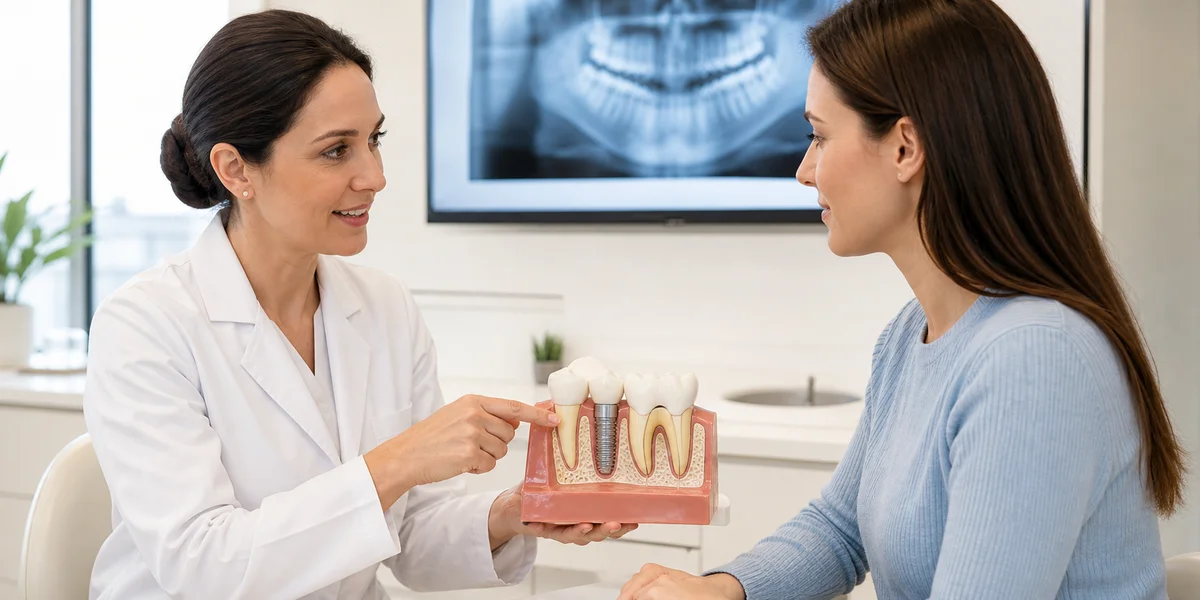
People often use “implant” to describe the whole replacement tooth. Clinically, the implant is the component placed in the jawbone. An abutment connects it to the restoration, and the crown is the visible chewing surface. Each component has a different role, and a quote may list them separately. A low advertised figure may refer only to implant placement, not the abutment and final molar crown.
The pathway may begin before implant placement. If the damaged molar is still present, the dentist must decide whether it can be predictably preserved and, if not, how it should be removed. Infection, socket anatomy, gum condition, and bone volume affect whether immediate placement is appropriate or healing should occur first. Therefore, “what does a molar implant cost?” should always be paired with “what stages are medically necessary in my case?”
The restoration also matters. A molar crown is designed for chewing forces and must fit the available space, neighboring contacts, and opposing teeth. A screw-retained and a cement-retained crown involve different technical considerations. Material selection, customized components, and laboratory work can influence fees. No material is automatically best for every patient.
2. What does a molar implant cost when every stage is counted?
A complete estimate should identify the examination, records, imaging, surgical treatment, restorative treatment, and aftercare. Some offices package several services; others bill each step separately. Either structure can be transparent if inclusions and exclusions are written clearly. The problem is comparing one bundled total with another office’s implant-only headline.
- Consultation, medical and dental history, and clinical examination
- Diagnostic imaging and any digital planning that is clinically justified
- Extraction, infection management, or socket preservation when needed
- Bone or soft-tissue grafting when indicated
- Implant fixture, surgical placement, and healing components
- Abutment, impression or scan, laboratory work, and final molar crown
- Temporary tooth options, follow-up visits, and maintenance planning
Ask whether medications, sedation, facility fees, graft materials, surgical guides, temporary restorations, and post-operative imaging are included. If travel is involved, add transportation, lodging, time away from work, and the possibility of an unplanned return. The best answer to “what does a molar implant cost?” is a range linked to defined clinical assumptions, followed by a final written plan after examination.
3. Nine questions for comparing molar implant quotes
This decision table turns “what does a molar implant cost?” into a like-for-like comparison. It does not diagnose your case, but it helps expose missing items before you consent or pay a deposit.
| Question | A clear quote explains | A gap to clarify |
|---|---|---|
| 1. Is the tooth restorable? | Why extraction and replacement are recommended | No comparison with preserving the natural tooth |
| 2. What is included? | Implant, abutment, crown, records, and follow-up | The advertised fee covers only one component |
| 3. Is grafting expected? | Why it may be needed and how it changes the plan | Grafting is mentioned only after a deposit |
| 4. What is the timeline? | Healing stages and conditions for moving forward | A fixed finish date is guaranteed before examination |
| 5. Who performs each stage? | Surgical and restorative responsibilities | Sales staff cannot identify the treating clinicians |
| 6. What crown is planned? | Material, retention method, laboratory, and remake terms | The final restoration is described only as “premium” |
| 7. What can change the fee? | Documented contingencies and authorization steps | Potential additional charges are open-ended |
| 8. What does insurance cover? | Codes, predetermination, limits, and patient estimate | Coverage is promised without insurer confirmation |
| 9. What happens later? | Maintenance, repairs, records, and urgent contact | The relationship ends when the crown is fitted |
A quote with more lines is not necessarily more expensive. It may simply be more complete. Convert every proposal into the same categories, note which items are estimates, and identify who pays if the plan must change. This makes financial consent more meaningful.
Save each written response beside the original “what does a molar implant cost?” quote. That simple record helps prevent a fixture-only advertisement from being mistaken for a complete restored-tooth estimate.
4. Why molar location can change planning and cost
Back teeth experience substantial chewing forces. The clinician must evaluate available height and width of bone, bite contacts, space for a crown, access for cleaning, and nearby anatomy. Upper molar sites can be close to the maxillary sinus. Lower molar sites can be close to nerves and blood vessels. These relationships affect implant dimensions, position, imaging needs, and whether additional procedures should be considered.
A molar space may also be wider than an anterior tooth space, but wider does not automatically mean simpler. The replacement must distribute load, avoid food trapping, preserve neighboring teeth, and fit the opposing bite. Grinding or clenching may influence crown design and protective recommendations. “what does a molar implant cost?” cannot be separated from the mechanical problem the restoration is intended to solve.
Access is another practical factor. Working at the back of the mouth can be more difficult for scanning, surgery, fitting components, and cleaning. Limited opening, a strong gag reflex, or adjacent tooth angulation may require modifications. These factors do not automatically prevent treatment, but they should appear in the plan rather than emerging as surprises.
5. Extraction, grafting, and healing: the major variables
If the molar is still present, preservation should be considered before removal. Root canal treatment, periodontal therapy, or restoration may be reasonable in selected cases. Conversely, a vertical fracture, non-restorable decay, uncontrolled infection, or severely compromised support may make extraction more appropriate. The comparison should address prognosis, not just the initial bill.
After extraction, implant placement may be immediate, early, or delayed depending on infection, bone, soft tissue, implant stability, and restorative goals. “Immediate” does not mean the site is automatically ready for full chewing. A temporary option may be needed while bone integrates with the implant. Healing time varies, so guaranteed timelines made before examination are unreliable.
Bone grafting can range from limited contour support to a more involved reconstruction. An upper molar may require assessment of sinus position, while a lower molar requires careful respect for nerve anatomy. Official patient information from Guy’s and St Thomas’ NHS Foundation Trust notes that implant integration can fail in some patients and that smoking can increase risk. Additional procedures add their own benefits, limitations, healing, and fees.
When asking “what does a molar implant cost?,” request a base plan and clearly labeled contingencies. For example, the clinician can explain whether grafting is expected, merely possible, or unlikely based on current records, then confirm after direct assessment.
6. Implant, bridge, or no immediate replacement?
An implant is not the only way to manage a missing molar. A conventional bridge can replace the space without implant surgery, but usually requires preparation of neighboring teeth. If those teeth already need crowns, a bridge may be reasonable. If they are intact, preserving them may support an implant choice. Cleaning beneath a bridge and the condition of its supporting teeth matter over time.
A removable partial denture may replace one or several teeth with less surgery and a lower initial commitment. It may be easier to modify if more teeth are lost, but comfort, stability, visibility, and adaptation vary. Some people can function with a selected space for a period, yet leaving it untreated should be an examined decision because tooth movement, bite changes, and chewing demands differ.
The phrase “what does a molar implant cost?” becomes useful only when compared with alternatives pursuing the same goal. Include the health of neighboring teeth, invasiveness, repairability, hygiene, expected maintenance, and the consequences if the chosen treatment fails. A cheaper initial option is not always cheaper long term, and an implant is not automatically the best value.
At Redent Clinic, an appropriate consultation should begin with the tooth, tissues, bite, and patient priorities rather than a predetermined package. The final choice remains individual after examination.
7. Insurance, Medicare, financing, and written estimates
Dental insurance policies differ in exclusions, waiting periods, annual maximums, missing-tooth clauses, network rules, and percentages assigned to surgery or prosthetics. Even when implants are a covered category, the plan may treat the fixture, abutment, crown, graft, and imaging differently. Predetermination is helpful but may not be a payment guarantee. Confirm benefits directly with the insurer.
The American Dental Association’s patient material advises checking whether implant placement and restoration are covered and asking how much of the estimated cost the plan will pay. Ask the office for relevant procedure codes and an itemized estimate. Then ask the insurer about deductible, annual maximum, frequency limitations, network adjustments, and whether prior authorization is required.
For Medicare, the current Centers for Medicare & Medicaid Services guidance says routine services for replacing teeth are generally excluded under Original Medicare, with limited circumstances when dental services are inextricably linked to covered medical care. Some Medicare Advantage plans may offer additional dental benefits. Coverage should be verified with the specific plan rather than assumed from medical necessity alone.
Financing changes when you pay, not necessarily what treatment costs. Review interest, promotional expiration, late-payment terms, refunds, and what happens if treatment stops. The responsible answer to “what does a molar implant cost?” separates the clinical fee, insurer estimate, financing cost, and patient’s worst-case budget.
For insurance discussions, keep the exact “what does a molar implant cost?” estimate together with procedure codes and the plan’s written response. This distinguishes projected benefits from money actually authorized or paid.
8. Health factors that influence suitability and value
Implants require healthy or stabilized surrounding tissues and a realistic ability to heal. Active periodontal disease, poor plaque control, uncontrolled medical conditions, smoking, certain medications, prior radiation, or severe grinding may change risk and timing. None of these details should be hidden from the dental team, and medications should never be stopped without guidance from the prescribing clinician.
The National Institute of Dental and Craniofacial Research explains that periodontal disease affects the tissues supporting teeth and can progress to bone involvement and tooth loss. An implant cannot develop tooth decay, but plaque-related inflammation can still affect the tissues around it. Disease control and maintenance therefore belong in both the clinical and financial plan.
Diabetes does not create one universal answer. Control, complications, healing, and overall risk must be considered individually. Blood-thinning medicines, antiresorptive drugs, immune-modifying treatment, or cancer therapy may require medical coordination. The question “what does a molar implant cost?” should include any medically necessary assessment and a safer sequence, not shortcuts.
9. Risks, repairs, and future expenses
Early side effects can include soreness, swelling, bruising, and limited bleeding. Infection, injury to nearby structures, delayed healing, or failure to integrate are possible. Later, the gum and bone around an implant may become inflamed, or mechanical parts may loosen, chip, or wear. Prompt assessment can sometimes keep a manageable issue from becoming more complex.
A crown may need repair or replacement even while the implant remains stable. Screw, abutment, contact, bite, or porcelain problems have different solutions and costs. A “lifetime” marketing phrase should not be interpreted as a guarantee that every biological and prosthetic component will remain unchanged.
Ask who covers a remake, what is considered a laboratory defect, which biological problems are excluded, and whether returning to the original clinic is required. “what does a molar implant cost?” is incomplete without a reasonable reserve for maintenance and repair. Warranties are contractual terms, not substitutes for clinical prognosis or home care.
- Seek advice for increasing swelling, fever, uncontrolled bleeding, or severe pain.
- Report a loose crown, changed bite, food trapping, or persistent gum bleeding.
- Keep routine examinations even when the implant feels comfortable.
- Use cleaning tools demonstrated for the specific crown and contact design.
- Do not ignore smoking, grinding, or medical changes at maintenance visits.
10. Maintenance determines long-term value
Implant maintenance includes daily plaque removal, professional assessment, and monitoring of the crown, bite, gum, and bone when clinically indicated. The exact recall interval should reflect personal risk rather than a universal schedule. The National Institute of Dental and Craniofacial Research emphasizes plaque control for preventing tooth decay and gum disease; implants and crowns also collect plaque and need accessible cleaning.
The crown’s shape should allow cleaning without creating uncomfortable food traps. Interdental brushes, floss designed for implants, or water irrigation may be recommended depending on the site and hand skills. More force is not always better; the dental team should demonstrate an appropriate technique.
If maintenance is not practical, an apparently attractive quote may offer poor value. Before deciding “what does a molar implant cost?,” add preventive visits, replacement hygiene aids, possible protective appliances for grinding, and future prosthetic maintenance to the long-term budget.
Revisit “what does a molar implant cost?” whenever health, bite, or the proposed sequence changes, because an old estimate may no longer describe the treatment that is now clinically appropriate.
11. Treatment abroad: compare the entire care pathway
Different labor, laboratory, and facility costs can make treatment abroad attractive. The comparison should still include identical clinical stages. Ask how many trips are expected, how healing is reviewed, who manages emergencies at home, and how records are transferred. A single-trip promise may not match the biological sequence of extraction, integration, and final restoration.
Written records should include diagnostic findings, implant system and dimensions, component details, imaging, surgical notes, crown material, and maintenance advice. Confirm whether compatible parts and trained providers are accessible near home. If another dentist must take over, that clinician may require a new examination and may not accept responsibility for the original plan.
To request an individualized assessment, use the Redent Clinic contact page. Existing records may support initial orientation, but a remote review cannot confirm final suitability or price without clinical examination. For international care, “what does a molar implant cost?” should include travel flexibility and local follow-up.
12. Documents to obtain before consenting
A clear consent process distinguishes known treatment stages from possible contingencies. Ask for the diagnosis, alternatives, expected sequence, material choices, anesthesia plan, risks, responsible clinicians, total estimate, payment schedule, and cancellation terms in language you understand. Do not rely only on messages from a sales representative.
- An itemized plan separating surgery, components, crown, and aftercare
- A written explanation of why the natural tooth cannot or should not be preserved
- Expected timeline and criteria for moving from surgery to the crown
- Possible extra procedures and how consent and cost approval will occur
- Insurance codes, predetermination documents, and patient estimate
- Implant and component identification for future maintenance
- Emergency contact, record-transfer process, and repair terms
When these documents are consistent, the answer to “what does a molar implant cost?” becomes auditable. If the diagnosis, scope, or responsibility remains vague, pause before paying and consider an independent second opinion.
13. Frequently asked questions about what does a molar implant cost
What does a molar implant cost if I need an extraction?
Extraction is usually a separate clinical step unless the written package explicitly includes it. Complexity, infection, socket preservation, immediate versus delayed placement, and temporary care can change the estimate. Ask for the extraction and implant pathways separately so you can see which charges apply only if specific findings are confirmed.
Does the advertised implant price include the crown?
Not always. The implant fixture, abutment, and molar crown may be listed separately. Imaging, surgery, laboratory work, temporary components, and follow-up may also be excluded. For “what does a molar implant cost?” request a written total that identifies every component rather than relying on the headline.
Why might a molar need bone grafting?
Bone can shrink after tooth loss or be limited by infection and anatomy. An upper molar may be near the sinus, while a lower molar may be near a nerve. Grafting is not automatically necessary; examination and appropriate imaging determine whether the proposed implant can be surrounded by adequate bone.
Will dental insurance pay for a molar implant?
Coverage depends on the contract. A plan may cover some components, apply an annual maximum, exclude missing teeth, require a waiting period, or use network fees. Submit the itemized plan for predetermination and verify directly. An estimate from the dental office is not a binding insurer guarantee.
Does Medicare cover a molar implant?
Original Medicare generally excludes routine dental services and items used to replace teeth, including implants. Limited dental services may be covered when inextricably linked to certain Medicare-covered medical care. Medicare Advantage benefits vary. Check the current plan and obtain a written coverage explanation before treatment.
Is a molar implant cheaper than a bridge long term?
There is no universal answer. A bridge may avoid implant surgery but usually relies on neighboring teeth; an implant has surgical and prosthetic stages. Compare the condition of adjacent teeth, hygiene, maintenance, likely repairs, and consequences of failure. “what does a molar implant cost?” should use the same time horizon for each option.
Can a molar implant and crown be completed in one day?
Immediate placement or a temporary restoration may be possible in selected cases, but not every site is suitable for immediate full function. Bone quality, infection, implant stability, bite, and anatomy guide the decision. A fast protocol should not be treated as a guaranteed shortcut.
How long does a molar implant last?
No clinician can promise an exact lifespan. Implant, abutment, screw, and crown are separate components. Tissue health, smoking, medical conditions, bite forces, cleaning, design, and maintenance influence outcomes. Long service is possible, while repairs or replacement of the crown and other parts may still be needed.
14. Conclusion: demand a complete answer, not a headline fee
A molar implant quote is meaningful only when it reflects the actual diagnosis and full care pathway. Examination, tooth-preservation options, extraction, grafting, implant placement, abutment, crown, follow-up, insurance rules, and maintenance all matter. The cheapest line item may not be the lowest total, while the most expensive package is not automatically the safest.
The fair answer to “what does a molar implant cost?” is an individualized, written estimate with clear assumptions and alternatives. Compare like with like, verify coverage yourself, leave room for clinically justified contingencies, and choose a plan you can maintain after the crown is fitted.
Sources and further reading
- American Dental Association – professional and patient resources on oral healthcare.
- Journal of the American Dental Association: Dental Implants – patient overview and insurance questions.
- Centers for Medicare & Medicaid Services: Medicare Dental Coverage – current exclusions and limited linked-service circumstances.
- National Institute of Dental and Craniofacial Research: Gum Disease – supporting-tissue health and prevention.
- Guy’s and St Thomas’ NHS Foundation Trust: Dental Implants – treatment overview and risks.
- World Health Organization: Oral Health – global prevention and oral-health context.
Sources checked July 20, 2026. Coverage rules and clinical guidance can change; verify current terms with your treating clinician and insurer.