
If you are considering dental implants, one of the very first questions you are likely to ask is what specialist does dental implants. This is a critical and very valid concern. Dental implants are not simple fillings or routine cleanings; they are advanced medical procedures that involve surgery, bone integration, and long-term oral health planning. Understanding which dental specialist is responsible for dental implant treatment can directly impact the safety, success, and longevity of your new teeth 😊.
So, what specialist does dental implants exactly, and why does it matter so much? Dental implants require a deep understanding of jawbone anatomy, gum health, bite mechanics, and restorative dentistry. The professional performing the procedure must be trained not only to place the implant but also to evaluate whether your bone density, gum condition, and overall health are suitable for long-term implant success.
Many patients assume that any dentist can place implants, but this is not always the case. While some general dentists are trained in implantology, dental implants are most often handled by dentists who have undergone advanced education beyond dental school. Knowing what specialist does dental implants helps you avoid complications such as implant failure, infections, nerve damage, or poor aesthetic results.
Dental implants are titanium posts surgically placed into the jawbone to replace missing tooth roots. Over time, the implant fuses with the bone in a process called osseointegration. This biological process demands precision and expertise. That is why choosing the correct specialist for dental implants is just as important as choosing the implant itself.
From a patient’s perspective, understanding what specialist does dental implants also brings peace of mind. When you know your treatment is being handled by a professional with focused training in implant dentistry, you can feel more confident about both the procedure and the outcome. This confidence is essential, especially for patients who may feel anxious about dental surgery.
Another important reason to understand what specialist does dental implants is treatment planning. Implant treatment often involves multiple stages: initial consultation, imaging (such as 3D CBCT scans), implant placement, healing time, and final crown placement. In many cases, more than one specialist may be involved. Knowing who does what allows you to make informed decisions and ask the right questions at each stage.
In modern dentistry, implant treatments are guided by strict clinical protocols recommended by authoritative organizations such as the American Dental Association. These protocols emphasize proper diagnosis, sterile surgical techniques, and long-term follow-up care. Dentists who specialize in implants closely follow these standards to ensure patient safety and predictable results.
Patients who do not understand what specialist does dental implants sometimes choose providers based solely on convenience or cost. Unfortunately, this can lead to poor outcomes if the provider lacks sufficient implant training. Dental implants are an investment in your health and quality of life, and they should never be approached casually.
It is also important to note that dental implants are not just about replacing missing teeth. They help preserve jawbone structure, prevent facial sagging, improve speech, and restore proper chewing function. Because implants play such a vital role in oral and facial health, the specialist performing the procedure must understand both function and aesthetics.
If you are planning to move forward with implant treatment and still wondering what specialist does dental implants, the best first step is a professional consultation. During this appointment, the dentist will evaluate your oral health, explain who will perform each stage of treatment, and outline a personalized plan. If you are looking for expert guidance or want to schedule a consultation, you can visit the Redent Klinik Contact Page to get started.
In summary, understanding what specialist does dental implants empowers you as a patient. It helps you choose the right provider, reduces risks, and increases the likelihood of a successful, long-lasting result. As you continue reading, you will learn about the specific types of dental specialists involved in implant dentistry and how each one contributes to restoring your smile with confidence 😁.
What Specialist Does Dental Implants and Why Expertise Matters
Understanding what specialist does dental implants is not just a matter of curiosity—it is a crucial factor that directly affects treatment success, safety, and long-term satisfaction. Dental implants are among the most advanced procedures in modern dentistry, combining surgical precision with restorative artistry. Because of this complexity, the level of expertise of the specialist performing the procedure truly matters 🦷.
When patients ask what specialist does dental implants, they are often trying to ensure they are placing their oral health in the right hands. Unlike routine dental procedures, implant placement involves drilling into the jawbone, avoiding nerves and sinuses, and ensuring the implant integrates properly with bone tissue. These steps require advanced training, experience, and clinical judgment that go far beyond general dentistry basics.
Why Dental Implant Procedures Require Specialized Knowledge
To fully grasp what specialist does dental implants, it is important to understand the biological and mechanical complexity of implants. A dental implant must fuse with the jawbone through osseointegration. This process can take several months and depends on factors such as bone quality, blood supply, surgical technique, and post-operative care.
A specialist trained in implant dentistry understands how to assess bone density using advanced imaging technologies, such as CBCT scans. They know how to determine whether bone grafting is required, how to choose the correct implant size and angle, and how to reduce the risk of implant failure. These decisions are not guesswork—they are based on years of focused education and hands-on surgical experience.
This is why asking what specialist does dental implants should also involve asking about training, certifications, and clinical experience. Implant specialists are trained to anticipate complications before they occur and to manage them effectively if they do.
The Risks of Choosing the Wrong Specialist
Many patients underestimate the importance of knowing what specialist does dental implants and may choose a provider based solely on cost or convenience. Unfortunately, implants placed without adequate expertise can lead to serious complications such as:
- Implant failure due to poor bone integration
- Infections around the implant (peri-implantitis)
- Nerve damage causing numbness or pain
- Sinus perforation in upper jaw implants
- Poor aesthetic outcomes affecting smile appearance
An experienced implant specialist minimizes these risks by following strict clinical protocols and evidence-based guidelines supported by organizations like the American Dental Association. This professional approach ensures that every step—from diagnosis to final restoration—is handled with precision.
Expertise Directly Impacts Implant Longevity
Another key reason why expertise matters when determining what specialist does dental implants is implant longevity. A well-placed implant can last 20 years or more, often a lifetime, when performed by a skilled specialist and maintained properly. On the other hand, implants placed incorrectly may fail within a few years, leading to additional surgeries and costs.
Experienced specialists carefully plan the implant’s position to ensure proper bite alignment and load distribution. This prevents excessive stress on the implant and surrounding bone. They also coordinate the surgical and restorative phases to ensure that the final crown looks natural and functions like a real tooth.
Patient Evaluation and Personalized Treatment Planning
Knowing what specialist does dental implants also means understanding the importance of individualized treatment planning. No two patients are the same. Factors such as age, medical history, smoking habits, diabetes, and bone condition all influence implant success.
A qualified implant specialist conducts a thorough evaluation before recommending treatment. This includes reviewing medical history, performing oral examinations, taking digital impressions, and analyzing 3D imaging. Based on this data, the specialist creates a personalized implant plan designed to maximize safety and success.
This level of detail is one of the main reasons why implant dentistry is often handled by specialists rather than general practitioners. When patients ask what specialist does dental implants, the real answer is: the one who can safely tailor the procedure to your unique needs.
Expertise Builds Patient Confidence and Trust
Finally, understanding what specialist does dental implants helps build trust between the patient and the dental team. Implant surgery can feel intimidating, but confidence in the specialist’s expertise significantly reduces anxiety 😊. Patients who understand that their provider has advanced training and extensive experience tend to feel more comfortable and informed throughout the process.
In conclusion, expertise is not optional in implant dentistry—it is essential. Knowing what specialist does dental implants allows you to make an informed decision that protects your health, your smile, and your investment. As you move forward, learning about the specific types of dental specialists involved in implant treatment will further clarify who is best suited to restore your smile safely and effectively.
Oral and Maxillofacial Surgeons: The Surgical Experts
When patients ask what specialist does dental implants, oral and maxillofacial surgeons are often the first professionals mentioned—and for good reason. These specialists are the surgical experts of dentistry, trained extensively in procedures involving the jawbone, facial structures, nerves, and complex oral anatomy. Their background makes them uniquely qualified to perform dental implant surgery, especially in challenging or medically complex cases.
Oral and maxillofacial surgeons complete dental school followed by several additional years of hospital-based surgical training. This advanced education focuses on anesthesia, bone surgery, facial trauma, pathology, and reconstructive procedures. Because dental implants involve surgically placing a titanium post into the jawbone, many patients feel reassured knowing that a surgeon with this level of expertise is handling their treatment 😌.
Why Oral Surgeons Are Highly Qualified for Dental Implants
To fully understand what specialist does dental implants, it helps to look at the scope of practice of oral and maxillofacial surgeons. These specialists routinely perform procedures such as wisdom tooth extractions, jaw surgeries, bone grafting, sinus lifts, and facial reconstructions. Dental implant placement fits naturally within this surgical skill set.
Oral surgeons are trained to manage complex anatomical situations, such as limited bone volume, proximity to nerves, or implants placed near the sinus cavities. They are also experts in handling complications should they arise. This is especially important for patients who have been missing teeth for a long time, have suffered trauma, or have experienced previous implant failure.
For patients with medical conditions like diabetes, osteoporosis, or those taking certain medications, oral surgeons are well-equipped to evaluate risks and adapt surgical techniques accordingly. This level of medical awareness further clarifies what specialist does dental implants in high-risk or advanced cases.
Surgical Precision and Advanced Techniques
Another reason oral surgeons are a common answer to what specialist does dental implants is their mastery of surgical precision. Implant placement requires millimeter-level accuracy to ensure proper alignment, stability, and long-term success. Oral and maxillofacial surgeons often use advanced technologies such as 3D CBCT imaging, guided implant surgery, and digital planning software.
These tools allow the surgeon to visualize bone density, nerve pathways, and sinus anatomy before the procedure even begins. As a result, implants can be placed more safely, efficiently, and predictably. This technological advantage significantly reduces surgical risks and improves healing outcomes.
Anesthesia and Patient Comfort
Patient comfort is another major factor when discussing what specialist does dental implants. Oral surgeons are specially trained in anesthesia and sedation techniques, including IV sedation and general anesthesia. This makes them an excellent choice for patients with dental anxiety or those undergoing extensive implant procedures.
Being able to receive implant surgery comfortably and pain-free can dramatically improve the overall patient experience. Oral surgeons monitor vital signs throughout the procedure and ensure a controlled, safe surgical environment. For many patients, this level of care is a deciding factor when choosing an implant provider.
When Is an Oral Surgeon the Best Choice?
While several dental specialists can place implants, oral surgeons are often recommended when the case is complex. If you are still wondering what specialist does dental implants in situations such as severe bone loss, need for bone grafting, multiple missing teeth, or full-arch restorations, the answer is frequently an oral and maxillofacial surgeon.
They are also commonly involved when implant placement is combined with other surgical procedures, such as sinus lifts or jaw corrections. In many modern dental clinics, oral surgeons work closely with prosthodontists or general dentists to deliver comprehensive implant care from surgery to final crown placement.
Collaboration With Other Dental Specialists
An important aspect of understanding what specialist does dental implants is recognizing that implant treatment is often a team effort. Oral surgeons typically handle the surgical phase, while another dental professional designs and places the final crown or bridge. This collaborative approach ensures both surgical success and optimal aesthetic results.
For example, after the implant is placed and healed, a restorative dentist or prosthodontist may take over to complete the visible tooth replacement. This division of roles allows each specialist to focus on their area of expertise, resulting in better overall outcomes for the patient.
Reputable dental organizations such as the American Dental Association emphasize the importance of proper training and interdisciplinary care in implant dentistry. Oral and maxillofacial surgeons play a vital role within this framework.
In summary, if you are asking what specialist does dental implants, oral and maxillofacial surgeons represent the highest level of surgical expertise in implant placement. Their advanced training, precision, and ability to manage complex cases make them a trusted choice for patients seeking safe, long-lasting dental implant solutions 😁. In the next section, we will explore another key specialist involved in implant dentistry and how they contribute to successful treatment outcomes.
Periodontists and Their Role in Dental Implant Treatment
Another very common and highly accurate answer to the question what specialist does dental implants is a periodontist. Periodontists are dental specialists who focus on the health of the gums, supporting tissues, and bone structures that hold teeth in place. Because dental implants rely heavily on healthy gums and strong jawbone support, periodontists play a central and extremely important role in implant dentistry 🦷.
When patients ask what specialist does dental implants, they often do not realize that implants are as much about gum and bone health as they are about replacing missing teeth. This is exactly where periodontists excel. Their advanced training allows them to diagnose, treat, and prevent conditions that could compromise implant success.
Advanced Training of Periodontists in Implant Dentistry
To truly understand what specialist does dental implants, it is important to know that periodontists complete several years of specialized education after dental school. Their training focuses on periodontal disease, soft tissue management, bone regeneration, and surgical procedures involving the gums and jawbone.
This makes periodontists exceptionally qualified to place dental implants, especially in patients with a history of gum disease or bone loss. Since periodontal disease is one of the leading causes of tooth loss, many implant candidates already fall within the area of expertise of a periodontist.
Because implants must integrate with healthy bone and remain surrounded by stable gum tissue, periodontists are uniquely positioned to ensure long-term implant success. This is a major reason why periodontists are frequently the answer when patients ask what specialist does dental implants.
Gum Health: A Critical Factor for Implant Success
One of the most overlooked aspects of what specialist does dental implants is gum management. Even the most perfectly placed implant can fail if the surrounding gums are unhealthy. Periodontists specialize in creating and maintaining the ideal gum environment for implants.
They are experts in treating inflammation, infection, and recession around implants. Conditions such as peri-implantitis—a serious inflammatory disease affecting the tissues around implants—are diagnosed and treated primarily by periodontists. Their ability to prevent and manage these complications significantly increases implant longevity.
Bone Grafting and Regenerative Procedures
Bone loss is a common challenge for implant patients, and it directly impacts what specialist does dental implants. Periodontists are highly trained in bone grafting and regenerative procedures that rebuild lost bone and prepare the jaw for implant placement.
Using advanced techniques and biocompatible materials, periodontists can restore sufficient bone volume to support implants even in patients who were previously told they were not candidates. This expertise allows many patients to receive implants safely and successfully, even after years of tooth loss.
Precision Implant Placement by Periodontists
When considering what specialist does dental implants, precision is everything. Periodontists are trained to place implants with extreme accuracy, ensuring optimal positioning for both function and aesthetics. They carefully evaluate bite forces, bone density, and gum contours before placing an implant.
Many periodontists use advanced digital planning and guided implant surgery to increase accuracy and reduce healing time. These techniques improve patient comfort and lower the risk of complications. As a result, implant procedures performed by periodontists often have very high success rates.
Ideal Candidates for Periodontist-Performed Implants
If you are still wondering what specialist does dental implants in cases involving gum disease, bone loss, or complex soft tissue concerns, a periodontist is often the ideal choice. Patients with a history of periodontal problems benefit greatly from a specialist who understands how to stabilize and protect the tissues around implants.
Periodontists also work closely with restorative dentists and prosthodontists to ensure that implants are positioned in a way that supports natural-looking crowns and long-term oral health. This collaborative approach aligns with guidelines promoted by professional organizations such as the American Dental Association.
Long-Term Maintenance and Implant Care
Another key reason periodontists are frequently the answer to what specialist does dental implants is their role in long-term implant maintenance. Dental implants require ongoing monitoring to ensure that the surrounding gums and bone remain healthy over time.
Periodontists provide specialized maintenance programs designed to prevent infection and inflammation around implants. This proactive care helps protect your investment and ensures that your implants last for decades rather than years 😊.
In conclusion, periodontists are among the most qualified specialists in implant dentistry. Their expertise in gum health, bone regeneration, and precision implant placement makes them a top choice for patients seeking safe, stable, and long-lasting dental implants. Understanding what specialist does dental implants would be incomplete without recognizing the vital role periodontists play in achieving successful outcomes. In the next section, we will explore another important dental specialist involved in implant treatment and how they contribute to restoring both function and aesthetics.
Prosthodontists: Specialists in Implant-Supported Teeth
When patients ask what specialist does dental implants, the answer does not always stop at the surgical phase. While placing the implant into the jawbone is critical, restoring that implant with a natural-looking, functional tooth is equally important. This is where prosthodontists play a vital role. Prosthodontists are dental specialists who focus on restoring missing teeth and designing implant-supported crowns, bridges, and full-arch prosthetics.
Understanding what specialist does dental implants means recognizing that implant treatment has two major components: surgery and restoration. Prosthodontists are experts in the restorative phase, ensuring that the final result looks natural, feels comfortable, and functions like a real tooth 😊.
Advanced Training of Prosthodontists
To fully understand what specialist does dental implants, it is important to know that prosthodontists complete several additional years of specialized training after dental school. Their education focuses on complex restorative cases, bite alignment, occlusion, aesthetics, and implant-supported prosthetics.
This advanced training allows prosthodontists to manage cases involving multiple missing teeth, full-mouth rehabilitation, and complex bite problems. They are uniquely qualified to design implant restorations that not only replace missing teeth but also restore facial balance and oral function.
Because implants must work in harmony with the jaw, muscles, and remaining teeth, prosthodontists bring a comprehensive, big-picture approach to implant dentistry. This is a crucial part of the answer to what specialist does dental implants.
The Role of Prosthodontists in Implant Planning
One of the most important yet often overlooked aspects of what specialist does dental implants is treatment planning. Prosthodontists are frequently involved before the implant is even placed. They collaborate with oral surgeons or periodontists to determine the ideal position, angle, and number of implants needed for the final restoration.
This restorative-driven planning ensures that implants are placed in locations that support optimal aesthetics and chewing function. Without this coordination, even a well-placed implant can result in a poorly aligned or unnatural-looking tooth.
Designing Natural-Looking Implant Crowns
A major reason prosthodontists are essential when discussing what specialist does dental implants is their expertise in designing implant crowns. These crowns must match the shape, size, color, and translucency of natural teeth while also withstanding daily chewing forces.
Prosthodontists use advanced materials such as zirconia and porcelain to create restorations that are both durable and aesthetically pleasing. They carefully adjust the bite to ensure that the implant crown does not receive excessive pressure, which could compromise long-term success.
Full-Arch and Complex Implant Restorations
If you are missing many or all of your teeth, understanding what specialist does dental implants becomes even more important. Prosthodontists are leaders in full-arch implant solutions such as All-on-4 or implant-supported dentures.
These treatments require precise planning and advanced restorative expertise. Prosthodontists design custom prosthetics that restore proper chewing, speech, and facial structure. Their involvement is especially critical in cases where multiple implants must work together as a single, stable system.
Function, Bite, and Long-Term Stability
Another essential aspect of what specialist does dental implants is bite management. Improper bite alignment can lead to implant overload, discomfort, and even implant failure. Prosthodontists specialize in occlusion and jaw dynamics, ensuring that implant restorations function harmoniously within the mouth.
They carefully analyze how your teeth come together and make precise adjustments to protect both the implants and surrounding teeth. This expertise significantly improves comfort and longevity.
Collaboration With Surgical Specialists
Prosthodontists rarely work in isolation when answering what specialist does dental implants. Instead, they collaborate closely with oral and maxillofacial surgeons or periodontists. This team-based approach ensures that both surgical placement and restorative design are optimized.
Professional organizations such as the American Dental Association emphasize the importance of interdisciplinary care in implant dentistry. Prosthodontists play a central role in this model by bridging surgical precision with restorative excellence.
Ideal Candidates for Prosthodontist-Led Implant Care
If you are seeking highly aesthetic results, have complex bite issues, or require extensive implant-supported restorations, a prosthodontist is often the ideal answer to what specialist does dental implants. Their expertise ensures that your implants not only integrate successfully but also look and feel like natural teeth.
In conclusion, prosthodontists are indispensable in modern implant dentistry. Their focus on restoration, function, and aesthetics completes the implant process and transforms surgical success into a confident, natural smile 😁. Understanding what specialist does dental implants would be incomplete without recognizing the essential role prosthodontists play in delivering long-term, high-quality results. Say “continue” when you are ready for the next section.
Can a General Dentist Perform Dental Implants Safely?
A very common follow-up to the question what specialist does dental implants is whether a general dentist can safely perform implant procedures. This is an important topic because many patients receive implant consultations from their regular dentist and wonder if specialist care is truly necessary. The honest answer is nuanced: yes, some general dentists can place dental implants safely—but only under specific conditions and with appropriate training.
Understanding what specialist does dental implants requires clarity about education, experience, and case complexity. Dental implants are not part of the standard core procedures every general dentist performs daily. While dental school introduces the theory of implant dentistry, hands-on surgical competence typically requires extensive post-graduate education.
Training Differences Between General Dentists and Specialists
To properly evaluate what specialist does dental implants, it is essential to understand training pathways. General dentists complete dental school and are licensed to perform a wide range of dental procedures. However, implant surgery is considered an advanced treatment that often requires additional certifications, continuing education courses, and supervised clinical experience.
Some general dentists pursue hundreds of hours of implant-specific training, including live surgical courses and mentorship programs. These dentists may competently place implants in straightforward cases involving adequate bone volume, healthy gums, and single-tooth replacements. In such scenarios, a well-trained general dentist may safely perform implant placement.
However, without this advanced training, a general dentist should not be the default answer to what specialist does dental implants.
Case Selection: The Most Critical Factor
One of the biggest distinctions in answering what specialist does dental implants lies in case selection. Simple cases and complex cases are not the same. A single implant in the back of the mouth with strong bone support is vastly different from full-mouth implant rehabilitation or cases involving bone loss.
General dentists who place implants responsibly know their limits. They typically handle low-risk cases and refer more complex situations to oral surgeons or periodontists. Problems arise when general dentists attempt implants beyond their training, leading to complications such as implant failure, nerve damage, or poor positioning.
Examples of Cases Better Managed by Specialists
- Severe bone loss requiring bone grafting
- Implants near the sinus or major nerves
- Patients with advanced gum disease
- Full-arch or multiple implant cases
- Patients with complex medical conditions
In these situations, the safest answer to what specialist does dental implants is almost always a trained specialist rather than a general dentist.
Technology and Experience Matter More Than Title Alone
It is also important to note that the title alone does not fully answer what specialist does dental implants. Experience, technology, and adherence to evidence-based protocols matter just as much. Some general dentists invest heavily in 3D imaging, guided surgery systems, and ongoing implant education.
When a general dentist uses CBCT scans, surgical guides, and follows protocols supported by organizations such as the American Dental Association, implant safety and predictability improve significantly. Still, this does not replace specialist-level surgical training for complex cases.
Patient Safety and Long-Term Outcomes
From a patient perspective, understanding what specialist does dental implants is ultimately about safety and long-term outcomes. Dental implants are intended to last decades, often a lifetime. Improper placement may not fail immediately but can cause problems years later, including bone loss, gum inflammation, and prosthetic complications.
Specialists such as oral surgeons and periodontists are trained to think long-term. They evaluate how implants will function over time under chewing forces, how gums will respond, and how bone will remodel. This depth of foresight is a key reason specialists remain the gold standard answer to what specialist does dental implants.
How to Decide If a General Dentist Is Right for You
If your general dentist offers dental implants, it is reasonable to ask detailed questions. Understanding what specialist does dental implants empowers you to make informed decisions rather than assumptions.
You should ask:
- How many implant cases have you completed?
- What advanced training or certifications do you have?
- Do you use 3D imaging and guided surgery?
- What complications have you managed?
- When do you refer patients to specialists?
A trustworthy dentist will answer transparently and refer you when necessary. This collaborative mindset aligns with best practices in modern implant dentistry.
In conclusion, while some general dentists can safely place dental implants in select cases, they are not always the best answer to what specialist does dental implants. For complex, high-risk, or comprehensive treatments, specialist care offers a higher margin of safety and predictability 😊. As we continue, the next section will help you understand how to choose the right implant provider for your specific needs.
How to Choose the Right Specialist for Dental Implants
Once you understand what specialist does dental implants, the next critical step is choosing the right professional for your specific needs. Not all implant cases are the same, and not all providers offer the same level of expertise. Making the correct choice can mean the difference between a smooth, long-lasting result and years of complications or corrective treatments.
Choosing wisely requires more than selecting the nearest clinic or the lowest advertised price. Dental implants are a long-term investment in your health, appearance, and quality of life. That is why understanding what specialist does dental implants must go hand in hand with knowing how to evaluate qualifications, experience, and treatment philosophy 🦷.
Evaluate Education, Credentials, and Specialization
The first step in choosing the right provider is verifying credentials. When asking what specialist does dental implants, look for professionals with formal post-graduate training in implant dentistry. This may include oral and maxillofacial surgeons, periodontists, prosthodontists, or highly trained general dentists.
Ask where the dentist received their implant training, how long they have been placing implants, and whether they participate in ongoing education. Implant techniques and technologies evolve constantly, and staying current is essential for patient safety and success.
Professional affiliations also matter. Dentists who follow clinical standards recommended by organizations such as the American Dental Association are more likely to adhere to evidence-based implant protocols.
Experience With Similar Cases Matters
Another crucial factor in determining what specialist does dental implants for you is experience with cases similar to yours. A dentist who places single implants occasionally may not be ideal for full-arch restorations or complex cases involving bone loss.
Ask how many implant procedures the specialist performs each year and whether they have handled cases with similar challenges. Experience improves judgment, surgical precision, and the ability to manage unexpected complications.
Ask to See Before-and-After Cases
Visual evidence can provide valuable insight into a provider’s skill level. Reviewing before-and-after photos helps you assess aesthetic outcomes and functional results. This is especially important if front teeth or smile aesthetics are involved.
A confident implant specialist will be transparent and proud to show their work. This openness is a strong indicator that you have found a trustworthy answer to what specialist does dental implants.
Technology and Diagnostic Tools
Modern implant dentistry relies heavily on advanced technology. When evaluating what specialist does dental implants, ask about the diagnostic and surgical tools used. CBCT 3D imaging, digital impressions, and guided implant surgery significantly improve accuracy and safety.
Clinics that invest in advanced technology demonstrate a commitment to quality care and predictable outcomes. These tools allow for precise planning, reduced surgical risks, and faster recovery times.
Clear Communication and Personalized Treatment Plans
An often-overlooked aspect of choosing what specialist does dental implants is communication. A good implant specialist takes time to explain your condition, treatment options, risks, benefits, and alternatives in a clear and understandable way.
Personalized treatment planning is essential. Your medical history, bone condition, lifestyle, and aesthetic goals should all influence the plan. Avoid providers who offer one-size-fits-all implant solutions without thorough evaluation.
Cost Transparency and Long-Term Value
While cost should not be the sole deciding factor, understanding pricing is part of choosing what specialist does dental implants. A reputable provider offers transparent pricing, explains what is included, and discusses potential additional costs such as bone grafting or maintenance.
Implants placed correctly by an experienced specialist may cost more upfront but often save money in the long run by avoiding complications or revisions. Long-term value is more important than short-term savings.
Aftercare and Ongoing Support
Dental implants require ongoing care and monitoring. When deciding what specialist does dental implants, ask about post-operative care, follow-up visits, and long-term maintenance programs.
A specialist who remains involved after placement ensures early detection of issues and long-term implant health. This commitment reflects a patient-centered approach and higher quality of care.
If you are looking for a clinic that prioritizes patient education, advanced technology, and comprehensive implant care, scheduling a consultation is an excellent next step. You can explore personalized treatment options through the Redent Klinik Contact Page.
In conclusion, choosing the right provider goes beyond simply knowing what specialist does dental implants. It requires careful evaluation of training, experience, technology, and communication. Making an informed choice sets the foundation for a safe procedure, beautiful results, and a confident smile for years to come 😊. Say “continue” when you are ready for the next section.
Training, Certifications, and Experience in Implant Dentistry
When patients seriously research what specialist does dental implants, they quickly realize that training, certifications, and hands-on experience are far more important than job titles alone. Dental implants are one of the most technique-sensitive procedures in dentistry, and long-term success depends heavily on the provider’s education and clinical background 🦷.
Understanding what specialist does dental implants means looking beyond marketing claims and focusing on verifiable qualifications. Implant dentistry blends surgery, biology, engineering, and aesthetics. Only professionals with advanced and continuous training are equipped to handle this complexity safely and predictably.
Formal Education Pathways in Implant Dentistry
To fully answer what specialist does dental implants, it is essential to understand how implant specialists are trained. Oral surgeons, periodontists, and prosthodontists all complete dental school followed by several additional years of accredited specialty training. During this time, they gain extensive experience in surgical techniques, bone management, and complex restorations.
In contrast, general dentists who place implants must pursue post-graduate implant education independently. This may include university-based implant programs, continuing education courses, and supervised clinical training. The quality and depth of these programs can vary significantly, which is why not every implant provider offers the same level of expertise.
When evaluating what specialist does dental implants, ask where and how the provider received their implant training. Structured, long-term programs are generally more reliable than short weekend courses.
Professional Certifications and Continuing Education
Certifications play a major role in determining what specialist does dental implants at a high level. Many implant providers pursue certifications from reputable dental institutions and professional organizations. These certifications demonstrate a commitment to excellence, ethics, and evidence-based practice.
Implant dentistry is constantly evolving. New implant surfaces, surgical protocols, and digital technologies emerge regularly. That is why ongoing education is not optional—it is essential. Dentists who regularly attend implant conferences, workshops, and advanced courses stay up to date with the safest and most effective techniques.
Guidelines and best practices promoted by organizations such as the American Dental Association emphasize continuous professional development to maintain high standards of patient care.
Why Experience Cannot Be Replaced
No matter how impressive the certifications, experience remains a cornerstone of what specialist does dental implants. Hands-on experience allows providers to refine surgical judgment, adapt techniques to individual patients, and manage unexpected challenges.
A dentist who has placed hundreds or thousands of implants has encountered a wide range of anatomical variations and complications. This experience translates into better decision-making and improved outcomes. In implant dentistry, repetition builds mastery.
Case Volume and Outcome Tracking
One practical way to evaluate what specialist does dental implants is to ask about case volume. How many implants does the provider place annually? How long have they been performing implant procedures?
High case volume often correlates with refined skills and efficient workflows. Experienced implant specialists also track their outcomes, including success rates, complication rates, and long-term implant stability. Transparency in these areas reflects professionalism and accountability.
Multidisciplinary Training and Collaboration
Another important aspect of what specialist does dental implants is multidisciplinary training. Implant dentistry rarely exists in isolation. Successful implant providers understand surgical placement, restorative design, bite mechanics, and gum health.
Specialists trained in collaborative environments are better prepared to work with other professionals when needed. This team-based approach improves outcomes, especially in complex cases involving multiple implants or full-arch restorations.
Red Flags to Watch For
Understanding what specialist does dental implants also involves recognizing warning signs. Be cautious if a provider cannot clearly explain their training, avoids discussing complications, or promises guaranteed results. Dental implants are highly successful, but no ethical professional claims 100% certainty.
A qualified implant specialist will discuss risks honestly, explain alternatives, and tailor recommendations to your specific needs.
Why Credentials Protect the Patient
Ultimately, training and experience protect you as the patient. When you understand what specialist does dental implants, you reduce the likelihood of poor outcomes, repeated surgeries, and long-term complications.
Dental implants are designed to last decades, often a lifetime. Choosing a provider with proper education, certifications, and extensive experience is one of the most important decisions you can make for your oral health 😊.
In conclusion, knowing what specialist does dental implants means prioritizing verified training, continuous education, and proven experience over convenience or cost alone. In the next section, we will explore what patients can expect during the dental implant consultation process and how specialists evaluate candidacy. Say “continue” when you are ready.
Dental Implant Consultation Process: What to Expect
After learning what specialist does dental implants, many patients wonder what actually happens during the first consultation. This appointment is one of the most important stages of implant treatment because it determines whether you are a suitable candidate and which specialist should be involved. A proper consultation is detailed, personalized, and focused on long-term success—not rushed or generic 😊.
Understanding what specialist does dental implants becomes much clearer during the consultation process, as this is when the roles, responsibilities, and treatment steps are explained in detail. Whether you meet with an oral surgeon, periodontist, prosthodontist, or a trained general dentist, the consultation sets the foundation for safe and predictable implant care.
Initial Medical and Dental Evaluation
The first step in any implant consultation is a comprehensive evaluation. To properly determine what specialist does dental implants in your case, the dentist will begin by reviewing your medical history. Conditions such as diabetes, heart disease, osteoporosis, or smoking habits can influence implant success.
A full dental examination follows. The specialist checks your gums, remaining teeth, bite alignment, and signs of infection or inflammation. This evaluation helps identify whether additional treatments—such as periodontal therapy—are needed before implant placement.
This stage is crucial because dental implants are not placed in isolation. A qualified provider understands that overall oral and systemic health directly affects implant outcomes.
Advanced Imaging and Diagnostic Scans
One of the clearest ways to confirm what specialist does dental implants responsibly is through the use of advanced diagnostics. Modern implant consultations almost always include 3D CBCT scans. These scans provide detailed images of bone density, nerve locations, and sinus anatomy.
With this information, the specialist can determine whether there is enough bone to support an implant or if bone grafting is required. Proper imaging dramatically reduces surgical risks and improves accuracy.
Clinics that follow standards supported by organizations such as the American Dental Association rely on these diagnostic tools as part of ethical, evidence-based care.
Digital Planning and Implant Positioning
Another key element of understanding what specialist does dental implants is treatment planning. Many specialists use digital software to plan implant placement before surgery. This allows precise positioning based on the final crown design, bite forces, and aesthetic goals.
This approach, often called “restoration-driven planning,” ensures that implants are placed where they will function and look best—not just where bone happens to be available.
Discussion of Treatment Options and Alternatives
A high-quality consultation does more than confirm what specialist does dental implants; it also educates the patient. The specialist explains all available treatment options, including implant types, timelines, and alternatives such as bridges or dentures.
You should expect a clear discussion of benefits, risks, healing time, and long-term maintenance. Ethical providers do not pressure patients into decisions. Instead, they empower patients with information.
Cost Transparency and Treatment Timeline
Another important part of the consultation is understanding costs and timelines. When evaluating what specialist does dental implants, transparency is a sign of professionalism. The provider should clearly explain what is included in the treatment fee and what factors might affect the final cost.
Implant treatment often occurs in stages over several months. A clear timeline helps patients plan financially and logistically, reducing stress and uncertainty.
Determining the Right Specialist for Each Phase
One of the most valuable outcomes of the consultation is clarity about what specialist does dental implants at each stage. In many cases:
- An oral surgeon or periodontist places the implant
- A prosthodontist or restorative dentist designs the crown
- The team collaborates to ensure optimal results
This multidisciplinary approach is common in high-quality implant centers and leads to better long-term outcomes.
Patient Questions and Informed Consent
A proper consultation always includes time for patient questions. Understanding what specialist does dental implants means feeling confident, informed, and comfortable before proceeding.
You should feel encouraged to ask about experience, success rates, complications, and aftercare. Informed consent is not just a form—it is a conversation.
If you are seeking a thorough, patient-focused implant consultation, scheduling a professional evaluation is the best next step. You can begin by visiting the Redent Klinik Contact Page to explore personalized implant options.
In conclusion, the dental implant consultation process is where knowledge meets action. It transforms the question what specialist does dental implants into a clear, personalized treatment plan. A detailed consultation protects your health, your investment, and your peace of mind 😁. Say “continue” when you are ready for the final section.
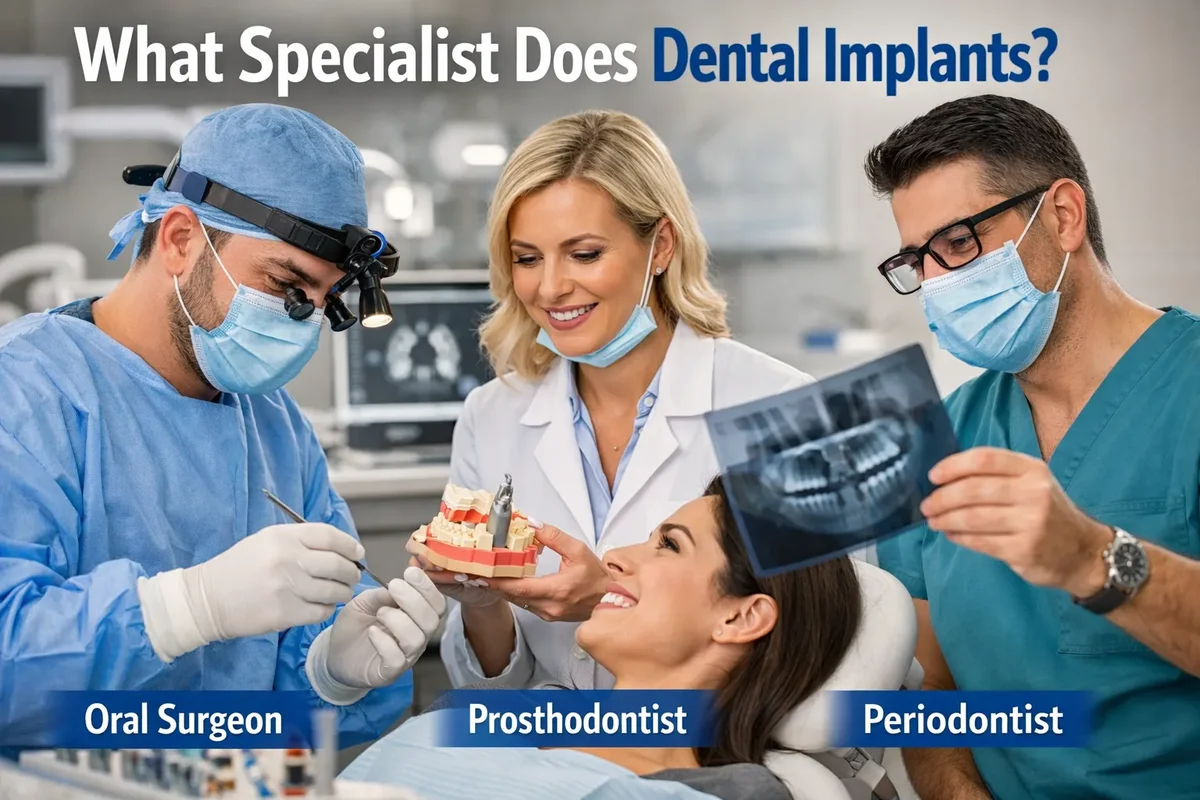
Multidisciplinary Dental Implant Teams Explained
As patients gain a deeper understanding of what specialist does dental implants, one important concept often emerges: the best implant outcomes are frequently achieved through a multidisciplinary dental implant team. Rather than relying on a single provider to manage every aspect of care, modern implant dentistry often involves multiple specialists working together to deliver safer, more predictable, and more aesthetic results 🦷.
Understanding what specialist does dental implants in a team-based setting helps patients appreciate why complex implant treatments tend to have higher success rates when specialists collaborate. Each professional contributes focused expertise, ensuring that every phase of treatment meets the highest clinical standards.
Why a Team Approach Improves Implant Success
Dental implants are not a single-step procedure. They involve diagnosis, surgical placement, healing, restoration, and long-term maintenance. This is why answering what specialist does dental implants often means identifying multiple professionals rather than just one.
In a multidisciplinary model, each specialist performs the tasks they are best trained for. This reduces risks, improves precision, and enhances long-term stability. Studies and clinical guidelines supported by organizations such as the American Dental Association consistently emphasize collaboration in advanced dental treatments.
Key Specialists in a Dental Implant Team
To clearly understand what specialist does dental implants within a team, it helps to know the typical roles involved:
- Oral and Maxillofacial Surgeon: Handles complex surgical placement, bone grafting, sinus lifts, and anesthesia
- Periodontist: Manages gum health, bone regeneration, and precise implant placement
- Prosthodontist: Designs and places implant-supported crowns, bridges, or full-arch restorations
- Restorative or General Dentist: Coordinates care and provides long-term maintenance
This division of responsibility ensures that each stage of treatment is handled by a professional with advanced, focused training.
Clear Role Definition Prevents Complications
One of the biggest advantages of a team-based approach to what specialist does dental implants is clarity. Each specialist understands their role, reducing the likelihood of miscommunication, improper planning, or technical errors.
For example, implant placement is guided by the final restoration plan created by the prosthodontist. This ensures that implants are positioned optimally for both function and aesthetics, not just surgical convenience.
Complex Cases Benefit Most From Team Care
Not every implant case requires multiple specialists, but complex cases almost always benefit from collaboration. When patients ask what specialist does dental implants in situations involving severe bone loss, missing multiple teeth, or full-mouth rehabilitation, the answer is usually a coordinated team.
Team-based care allows for advanced solutions such as staged bone grafting, immediate implants, or full-arch restorations. These treatments require careful timing and coordination that a single provider may not be able to manage alone.
Improved Patient Experience and Confidence
From the patient’s perspective, understanding what specialist does dental implants in a team setting often leads to greater confidence. Knowing that multiple experts are involved reduces anxiety and builds trust in the treatment plan.
Patients benefit from comprehensive consultations, clear explanations, and seamless transitions between treatment phases. This structured approach minimizes surprises and ensures continuity of care.
Long-Term Maintenance and Follow-Up
Another critical advantage of a multidisciplinary approach to what specialist does dental implants is long-term care. Dental implants require ongoing monitoring to ensure healthy gums, stable bone, and proper bite function.
In team-based clinics, maintenance responsibilities are clearly assigned. Periodontists monitor gum health, restorative dentists evaluate bite forces, and specialists collaborate if issues arise. This proactive care model significantly extends implant lifespan.
Choosing a Clinic With a Team-Based Philosophy
When evaluating what specialist does dental implants, patients should also consider the clinic’s philosophy of care. Clinics that promote collaboration rather than isolated treatment often deliver higher-quality results.
Ask whether the clinic works with multiple specialists, how treatment planning is coordinated, and who will manage each stage of care. Transparency in this process is a strong indicator of professionalism.
If you are seeking a dental implant provider that emphasizes collaboration, patient safety, and long-term success, a multidisciplinary clinic may be the ideal choice. You can explore expert-led, team-based implant care by visiting the Redent Klinik Contact Page.
Final Thoughts on Specialist Collaboration
In conclusion, fully understanding what specialist does dental implants means recognizing that modern implant dentistry is often a team effort. Collaboration between surgeons, periodontists, prosthodontists, and restorative dentists leads to safer procedures, better aesthetics, and longer-lasting results 😊.
By choosing a multidisciplinary approach, patients benefit from the combined expertise of multiple specialists—each contributing their strengths to restore not just teeth, but confidence, comfort, and quality of life.