
A dental crown is designed to protect and restore a damaged tooth, but sometimes crowns can crack, loosen, or fall off unexpectedly. When this happens, many people panic and immediately wonder what to do with a broken crown tooth. The situation can feel stressful, especially if pain or sensitivity appears suddenly. However, knowing the correct steps can prevent further damage and help you protect your oral health until you see a dentist.
If you are unsure what to do with a broken crown tooth, the most important thing is to stay calm and assess the situation carefully. In many cases, a broken or detached crown is not a life-threatening emergency, but it does require prompt attention. Acting quickly helps protect the exposed tooth underneath and prevents infection, discomfort, or further structural damage.
Dental crowns are commonly used to restore teeth that have undergone procedures such as root canal treatment, large fillings, or fractures. Although crowns are made from durable materials like porcelain, ceramic, zirconia, or metal alloys, they can still break due to trauma, biting on hard foods, teeth grinding, or natural wear over time. Understanding what to do with a broken crown tooth helps minimize complications and ensures that your smile remains healthy and functional.
One of the first things to consider when figuring out what to do with a broken crown tooth is determining whether the crown is partially damaged, completely detached, or if the underlying tooth is affected. Each situation requires slightly different actions. For example, if the crown has simply fallen off intact, it may be possible for a dentist to reattach it. However, if the crown is cracked or the tooth underneath is damaged, a replacement crown may be required.
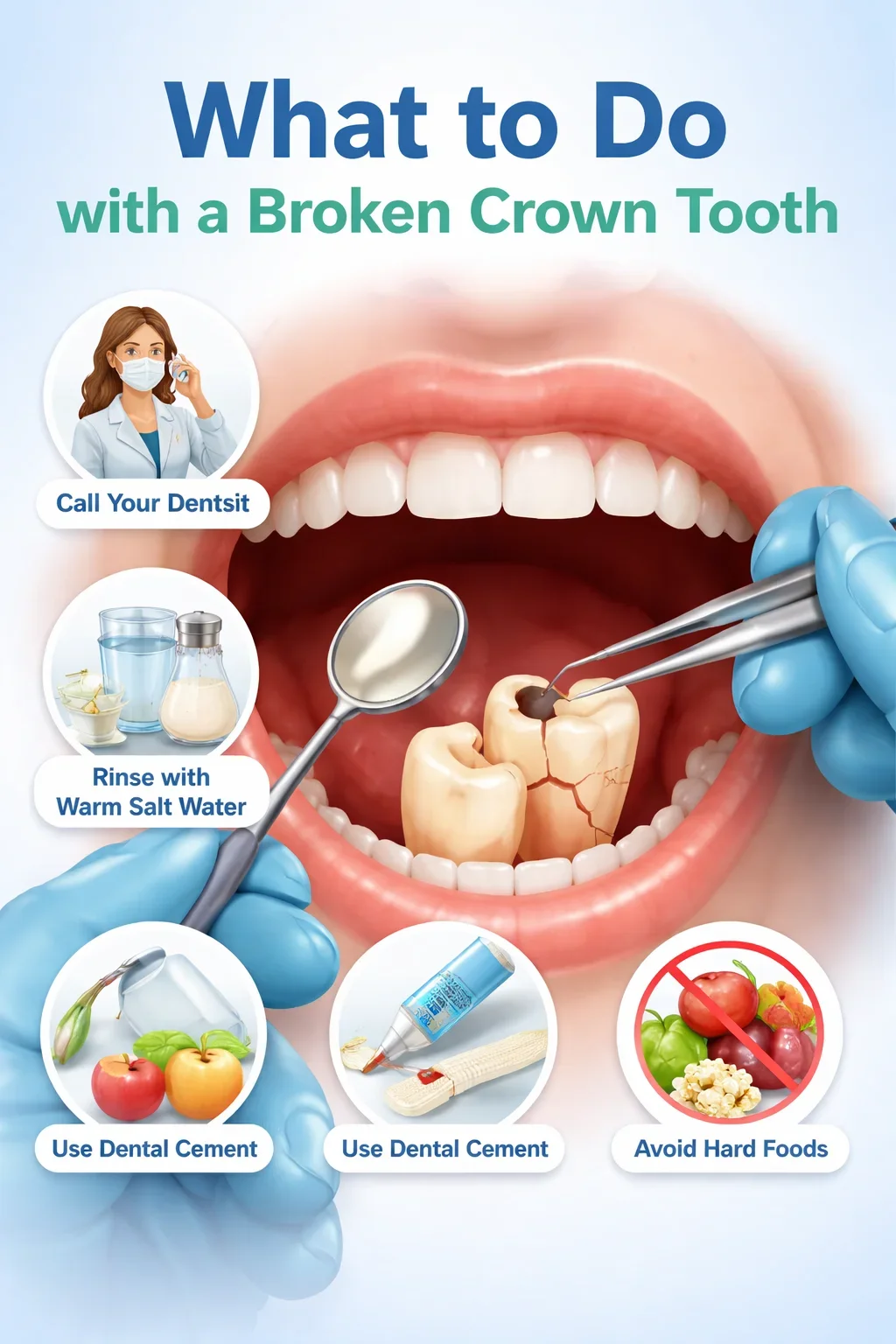
Here are the most important immediate steps when deciding what to do with a broken crown tooth:
- Stay calm and inspect the crown and tooth.
- Retrieve the crown if it has fallen out.
- Rinse the crown gently with clean water.
- Avoid chewing on the affected side.
- Contact your dentist as soon as possible.
These steps help prevent further complications. If you are unsure what to do with a broken crown tooth, scheduling a dental appointment quickly is always the safest choice. A dentist will evaluate whether the crown can be repaired, reattached, or replaced entirely.
Another critical factor when learning what to do with a broken crown tooth is protecting the exposed tooth structure. When a crown breaks or comes off, the tooth underneath may be vulnerable to bacteria, temperature sensitivity, and structural damage. This can cause discomfort when eating hot, cold, or sweet foods. To reduce irritation, it is recommended to avoid extreme temperatures and sticky foods until the tooth is repaired.
Sometimes patients ask whether they should try to glue the crown back themselves. While temporary dental cement from a pharmacy may offer short-term protection, dentists generally recommend professional treatment. Proper dental evaluation ensures that the crown fits correctly and that no additional tooth damage has occurred. According to the American Dental Association, restoring damaged dental restorations quickly helps maintain overall oral health and prevents complications.
In situations where the crown breaks while traveling or when immediate dental care is not available, temporary measures may help protect the tooth. For example, dental wax or temporary cement can cover sharp edges or sensitive areas. However, these are only short-term solutions and should never replace professional treatment.
If you experience discomfort while determining what to do with a broken crown tooth, over-the-counter pain relievers may help reduce inflammation and pain. Applying a cold compress to the outside of the cheek can also minimize swelling if the break occurred due to trauma.
It is also important to understand that not all broken crowns cause immediate pain. Some patients only notice that their bite feels unusual or that part of the crown is missing. Even if the situation feels minor, ignoring it can lead to larger problems. When people delay treatment after wondering what to do with a broken crown tooth, bacteria can reach the exposed tooth, potentially leading to decay or infection.
Another reason to act quickly when deciding what to do with a broken crown tooth is to preserve the underlying tooth structure. Crowns are often placed on teeth that are already weakened. Without the crown’s protection, the tooth may fracture further or become too damaged to restore easily.
If you need professional advice or immediate assistance regarding what to do with a broken crown tooth, contacting a dental clinic promptly is the best course of action. For personalized guidance or urgent dental care, you can reach out through the Redent Klinik Contact Page. A dentist can assess your situation and provide the most appropriate treatment to restore your tooth safely.
In summary, knowing what to do with a broken crown tooth can make a significant difference in protecting your dental health. By staying calm, saving the crown, avoiding pressure on the tooth, and seeking professional dental care quickly, you can prevent further complications and ensure that your smile remains healthy. Throughout this guide, we will explore the causes, treatments, costs, and prevention strategies related to broken dental crowns so that you are fully prepared if this situation ever occurs.
1. What to Do With a Broken Crown Tooth Immediately After It Happens
When a dental crown breaks or falls off, it can be alarming. Many patients immediately wonder what to do with a broken crown tooth and whether the situation is an emergency. Dental crowns are designed to protect and strengthen weakened teeth, but accidents, wear, or biting on hard foods can cause them to crack or detach unexpectedly. Knowing exactly what to do with a broken crown tooth in the first minutes after it happens can prevent additional damage, reduce discomfort, and improve the chances that the crown can be repaired or reattached.
The first rule when determining what to do with a broken crown tooth is to remain calm and carefully examine the situation. A crown may break in several ways: it may crack, chip, become loose, or fall off completely. Each situation requires slightly different action, but the immediate goal is always the same — protect the underlying tooth and contact a dental professional as soon as possible.
Assess the Condition of the Crown and Tooth
The first step in understanding what to do with a broken crown tooth is to examine the crown and the tooth underneath. Look in a mirror and check whether the crown is still attached, partially loose, or completely detached.
If the crown has fallen out completely, try to locate it. In many cases, dentists can reattach the same crown if it is still intact. Gently rinse the crown with clean water to remove debris, but avoid using toothpaste or harsh cleaning agents because they may damage the crown’s internal surface.
Patients often panic and ask themselves what to do with a broken crown tooth if they cannot find the crown. If the crown is lost, the dentist will typically recommend fabricating a new crown. While this may require additional treatment, the underlying tooth can usually still be restored successfully.
Check for Pain, Sensitivity, or Bleeding
Another important part of deciding what to do with a broken crown tooth is evaluating symptoms. If the tooth underneath the crown is exposed, you may experience sensitivity to hot or cold temperatures. Some people also feel discomfort when biting.
However, not every broken crown causes pain. Sometimes the only sign is that the tooth feels rough or the bite feels uneven. Even if there is no pain, it is still essential to determine what to do with a broken crown tooth quickly because the exposed tooth can become vulnerable to bacteria and decay.
If bleeding or swelling occurs due to trauma, applying gentle pressure with clean gauze can help control it. A cold compress applied to the outside of the cheek may also reduce swelling.
Protect the Tooth Until You See a Dentist
Once you understand the basic situation, the next step in what to do with a broken crown tooth is protecting the tooth until professional treatment is available. Without the crown covering it, the tooth structure underneath may be fragile and sensitive.
To protect the tooth:
- Avoid chewing on the affected side of the mouth.
- Do not eat hard, sticky, or crunchy foods.
- Stay away from extremely hot or cold beverages.
- Brush gently around the exposed tooth.
These precautions are essential when deciding what to do with a broken crown tooth because they reduce the risk of further cracking or irritation.
Temporary Dental Cement Can Offer Short-Term Protection
Some pharmacies sell temporary dental cement that can help hold a crown in place for a short time. If the crown is intact, applying temporary cement may provide temporary protection until a dental appointment is available.
However, dentists emphasize that this is only a temporary solution. Even if the crown feels stable, professional evaluation is still necessary to confirm proper fit and ensure there is no additional tooth damage. When considering what to do with a broken crown tooth, temporary fixes should always be followed by professional care.
Contact a Dentist as Soon as Possible
One of the most important steps in determining what to do with a broken crown tooth is scheduling a dental visit quickly. Dentists can evaluate the condition of the crown, check the underlying tooth, and determine whether the crown can be reattached or replaced.
During the dental appointment, the dentist will:
- Examine the exposed tooth
- Evaluate the crown for damage
- Clean the tooth structure
- Re-cement or replace the crown if necessary
Delaying treatment after asking yourself what to do with a broken crown tooth can lead to complications such as bacterial infection, decay, or further tooth fracture. According to the American Dental Association, early dental intervention significantly improves the chances of saving damaged dental restorations.
Seek Professional Advice If You Are Unsure
Many patients feel uncertain about what to do with a broken crown tooth, especially if the damage seems minor. Even a small crack or loosened crown can worsen over time if ignored.
If you are unsure about the severity of your situation, contacting a dental clinic for guidance is the safest option. Dental professionals can provide instructions and schedule treatment if necessary. For immediate consultation or assistance, you can reach the Redent Klinik Contact Page to discuss your symptoms with experienced dental professionals.
Understanding what to do with a broken crown tooth right after it happens can prevent serious complications. By inspecting the crown, protecting the tooth, avoiding pressure, and seeking professional dental care promptly, you can protect your oral health and ensure the tooth is restored effectively.
2. Common Reasons Why a Dental Crown Can Break or Fall Off
Understanding the causes behind crown damage is essential when learning what to do with a broken crown tooth. Dental crowns are designed to be strong and durable, often lasting 10–15 years or longer. However, they are not indestructible. Certain habits, dental conditions, and accidental trauma can cause crowns to crack, loosen, or fall off entirely. When patients understand why crowns fail, they are better prepared to respond quickly and know exactly what to do with a broken crown tooth before further complications occur.
When a crown breaks or becomes detached, many people immediately wonder what to do with a broken crown tooth, but the cause of the damage often determines how the dentist will repair it. Sometimes the crown itself breaks, while in other situations the cement holding it in place fails. In some cases, the underlying tooth structure may also be damaged.
Below are the most common reasons dental crowns break or fall off and how they influence the decisions patients must make regarding what to do with a broken crown tooth.
Biting on Hard Foods or Objects
One of the most frequent causes of crown damage is biting on hard foods or objects. Although crowns are designed to withstand normal chewing forces, extremely hard items can exceed their strength. Patients often realize what to do with a broken crown tooth only after accidentally biting something hard.
Common culprits include:
- Ice cubes
- Hard candy
- Popcorn kernels
- Nuts with shells
- Bones in meat
When excessive pressure is applied, the crown can crack or the cement seal can break. This may cause the crown to loosen or detach completely. In these situations, understanding what to do with a broken crown tooth quickly helps prevent the exposed tooth from becoming sensitive or infected.
Hidden Hard Objects in Food
Sometimes crown damage occurs unexpectedly when biting into foods that contain hidden hard particles. For example, small stones in grains or hard seed fragments can create sudden pressure on the crown. Patients often report that they only started researching what to do with a broken crown tooth after experiencing a sudden crack while eating.
Teeth Grinding (Bruxism)
Chronic teeth grinding, also known as bruxism, is another major cause of crown damage. Bruxism usually occurs during sleep and can place excessive stress on crowns and natural teeth. Over time, this constant pressure can weaken the crown structure.
When people grind their teeth repeatedly, crowns may:
- Develop microfractures
- Loosen from the tooth
- Completely break
Patients with bruxism often discover what to do with a broken crown tooth after waking up with crown damage or sensitivity. Dentists frequently recommend night guards to protect crowns and natural teeth from grinding forces.
Dental Trauma or Accidents
Accidents and physical trauma are also common causes of crown damage. Sports injuries, falls, or sudden impacts to the mouth can break crowns instantly. When trauma occurs, knowing what to do with a broken crown tooth becomes extremely important because the tooth underneath the crown may also be affected.
For example, trauma can lead to:
- Crown fractures
- Tooth cracks under the crown
- Damage to surrounding teeth
- Gum injury
If the crown breaks due to trauma, it is essential to contact a dentist immediately to determine what to do with a broken crown tooth and whether additional treatment is necessary.
Sports Injuries and Crown Damage
Contact sports such as football, basketball, and martial arts increase the risk of dental trauma. Without proper mouthguards, crowns can easily fracture during impact. Athletes who experience such injuries often need urgent dental advice about what to do with a broken crown tooth to prevent complications.
Natural Wear Over Time
Dental crowns are strong but not permanent. Over many years of chewing, temperature changes, and daily use, crowns may gradually weaken. Eventually, the materials can fatigue, leading to cracks or loosening.
Patients sometimes believe their crown will last forever, but even high-quality crowns have a lifespan. When crowns begin to deteriorate, small chips or loose edges may appear. At this stage, people often begin researching what to do with a broken crown tooth after noticing the first signs of damage.
Routine dental checkups help detect early crown wear before a complete fracture occurs.
Tooth Decay Under the Crown
Another overlooked cause of crown failure is tooth decay developing underneath the crown. Even though the crown covers the tooth, bacteria can still enter if the crown margin becomes loose or worn.
When decay forms beneath the crown, it can weaken the underlying tooth structure. Eventually the crown may loosen or break off entirely. Patients who experience this situation often need to determine what to do with a broken crown tooth because the treatment may involve both crown replacement and cavity removal.
Poor Oral Hygiene
Insufficient brushing and flossing can increase the risk of decay around the crown margins. When plaque accumulates near the gumline, bacteria can attack the exposed tooth structure. This often leads patients to search for solutions regarding what to do with a broken crown tooth when the crown fails unexpectedly.
Weak or Failed Dental Cement
Dental crowns are attached to teeth using strong dental cement. However, this cement can gradually weaken over time due to chewing forces, temperature changes, and normal wear.
If the cement bond fails, the crown may become loose or fall off entirely. In these cases, the crown itself may still be intact, meaning the dentist can sometimes reattach it. Knowing what to do with a broken crown tooth helps preserve the crown and avoid unnecessary replacement.
When a crown falls off due to cement failure, patients should carefully store the crown and bring it to the dentist during the appointment.
Large Bite Pressure or Misaligned Teeth
Some patients have bite alignment issues that place uneven pressure on certain teeth. If a crown is placed on a tooth that receives excessive bite force, it may break sooner than expected.
In these cases, dentists may recommend bite adjustment or orthodontic treatment to prevent repeated crown fractures. Patients who experience repeated crown damage often consult their dentist about what to do with a broken crown tooth and how to prevent the problem from happening again.
According to the American Dental Association, proper dental evaluation and regular checkups are essential for detecting issues that may compromise dental restorations.
If your crown breaks or becomes loose and you are unsure what to do with a broken crown tooth, it is always safest to seek professional advice quickly. Prompt dental care can determine the cause of the problem and prevent additional damage. For professional guidance or urgent assistance, you can visit the Redent Klinik Contact Page to speak with experienced dental professionals.
Recognizing the common causes of crown failure helps patients respond effectively and understand what to do with a broken crown tooth. By avoiding hard foods, protecting teeth during sports, maintaining good oral hygiene, and attending regular dental checkups, it is possible to extend the lifespan of dental crowns and reduce the risk of unexpected breakage.
3. Signs That Your Crown Damage Requires Urgent Dental Care
When a dental crown breaks, loosens, or falls off, many people immediately begin searching for answers about what to do with a broken crown tooth. While some crown problems may appear minor at first, certain warning signs indicate that the situation requires urgent professional attention. Ignoring these symptoms can lead to further tooth damage, infection, or even tooth loss.
Recognizing the signs of serious crown damage helps patients understand what to do with a broken crown tooth before complications develop. In many cases, early treatment allows dentists to repair the crown quickly and preserve the underlying tooth structure. However, delaying care when symptoms appear can lead to more complex treatments such as root canal therapy or crown replacement.
Below are the most important warning signs that indicate urgent dental care is needed when determining what to do with a broken crown tooth.
Severe Tooth Pain or Persistent Sensitivity
Pain is one of the most common indicators that immediate dental care is required. When a crown breaks, the tooth underneath may become exposed. This exposed dentin can react strongly to temperature changes, pressure, or sweet foods.
If you are experiencing intense pain, it is important to act quickly and determine what to do with a broken crown tooth. Persistent pain may indicate that the inner pulp of the tooth is inflamed or infected. In these cases, waiting too long to seek treatment may allow the infection to spread deeper into the tooth or surrounding tissues.
Temperature Sensitivity That Does Not Go Away
Some sensitivity immediately after crown damage is normal. However, prolonged sensitivity to hot or cold drinks can indicate nerve irritation. Patients who notice lingering sensitivity should not delay deciding what to do with a broken crown tooth. This symptom may signal that the tooth requires urgent professional care.
For example, if drinking cold water causes sharp pain that lasts several seconds or longer, the crown may no longer be protecting the tooth properly.
A Loose or Moving Dental Crown
Another major warning sign is a crown that feels loose or unstable. A crown that shifts when chewing or brushing is at risk of falling off completely. If this happens, bacteria can enter the space between the crown and the tooth.
When patients feel movement in their crown, they often start researching what to do with a broken crown tooth. A loose crown should always be evaluated by a dentist quickly because it may indicate weakened cement or structural damage to the tooth.
If the crown falls off entirely, keep it in a clean container and bring it to the dental appointment. In some situations, dentists can reattach the crown if it is still intact.
Visible Cracks or Missing Pieces
Sometimes crown damage is easy to see. A visible crack, chip, or missing fragment means the crown is no longer providing full protection for the tooth. In these cases, understanding what to do with a broken crown tooth becomes extremely important because the underlying tooth may be exposed to bacteria and mechanical stress.
Even small cracks can expand over time when pressure is applied during chewing. A cracked crown may eventually break completely if not repaired.
Sharp Edges That Irritate the Tongue or Cheeks
When a crown chips or fractures, sharp edges may form. These rough surfaces can irritate the tongue, cheeks, or gums. If this happens, it is a strong signal that you should quickly determine what to do with a broken crown tooth and contact your dentist.
Sharp edges can cause soft tissue injuries and increase the risk of infection if left untreated.
Swelling or Gum Inflammation Around the Crown
Gum swelling near a broken crown is another sign that urgent treatment may be necessary. When bacteria enter the exposed tooth structure, they can trigger inflammation in the surrounding gums.
Patients experiencing gum swelling should seek professional guidance immediately and determine what to do with a broken crown tooth before the condition worsens. Inflamed gums may indicate bacterial infection or decay developing under the crown.
Common symptoms associated with gum inflammation include:
- Red or swollen gum tissue
- Bleeding during brushing
- Tenderness around the crown
- Bad taste in the mouth
If any of these symptoms appear, it is essential to consult a dentist promptly.
Difficulty Chewing or Bite Misalignment
Another sign that urgent care may be required is difficulty chewing. When a crown breaks or shifts out of position, the bite alignment can change. This can make it uncomfortable or even painful to chew normally.
Patients who experience bite discomfort often start researching what to do with a broken crown tooth after noticing that their teeth no longer meet correctly when closing their mouth.
A misaligned crown can place excessive pressure on nearby teeth, potentially causing further damage.
Sudden Changes in Your Bite
If your bite suddenly feels uneven after crown damage, the crown may have moved or fractured internally. Dentists should evaluate this problem quickly to prevent additional dental complications.
Understanding what to do with a broken crown tooth in this situation helps ensure the tooth is stabilized and the bite restored properly.
Signs of Infection or Abscess
In rare cases, a broken crown can lead to infection inside the tooth. When bacteria reach the dental pulp, an abscess may develop. This condition requires immediate treatment.
Symptoms of infection include:
- Severe throbbing pain
- Swelling in the gums or face
- Pus around the tooth
- Fever or general discomfort
If these symptoms appear, it is critical to understand what to do with a broken crown tooth and seek emergency dental care immediately.
The American Dental Association emphasizes that untreated dental infections can spread and lead to serious health complications if ignored.
When to Contact a Dentist Immediately
Although some crown damage may seem minor, the safest approach is always to consult a dental professional. If you are unsure about what to do with a broken crown tooth, contacting a dentist quickly can prevent long-term damage.
A dentist will evaluate the crown, check the underlying tooth, and determine whether the crown can be repaired, reattached, or replaced.
If you notice any of the symptoms discussed above, seeking professional help promptly is the best decision. For expert dental advice or emergency consultation, you can visit the Redent Klinik Contact Page to speak with experienced dental professionals.
Recognizing the warning signs early ensures that patients know exactly what to do with a broken crown tooth. Prompt dental care protects the tooth structure, prevents infection, and restores your smile quickly and safely.
4. Temporary Home Solutions Before Seeing a Dentist
When a crown breaks or falls off, many people immediately search for what to do with a broken crown tooth. While visiting a dentist as soon as possible is always the safest solution, there are situations where immediate dental care is not available. For example, the incident may occur at night, during travel, or on a weekend when dental offices are closed. In these situations, knowing what to do with a broken crown tooth at home can help protect the exposed tooth until professional treatment is available.
Temporary home care does not replace dental treatment, but it can reduce pain, protect the tooth structure, and prevent further damage. If you are unsure what to do with a broken crown tooth, the most important goal is to keep the tooth clean, avoid pressure on the area, and schedule a dental appointment as soon as possible.
Step 1: Retrieve and Clean the Crown
If the crown has completely fallen out, the first step in determining what to do with a broken crown tooth is to locate the crown. In many cases, the crown can be reused if it remains intact. Carefully pick up the crown and rinse it gently with clean water.
Do not scrub the crown with toothpaste or harsh chemicals because this could damage the internal structure that allows it to fit properly. Instead, simply rinse away food particles and store the crown safely until you see your dentist.
Patients who understand what to do with a broken crown tooth often avoid unnecessary crown replacement because preserving the crown allows dentists to reattach it when possible.
Why Preserving the Crown Matters
Saving the crown increases the likelihood that your dentist can re-cement it instead of creating a new one. If the crown is undamaged and fits properly, reattachment may be a simple procedure.
This is one of the most important reasons dentists emphasize knowing what to do with a broken crown tooth immediately after the incident occurs.
Step 2: Protect the Exposed Tooth
Once the crown is removed or broken, the tooth underneath may be sensitive and vulnerable. The next step in deciding what to do with a broken crown tooth is protecting the exposed tooth structure.
Without the crown covering it, the tooth may react strongly to temperature changes, pressure, or sugary foods. To protect the tooth, avoid:
- Hot beverages such as coffee or tea
- Very cold foods or drinks
- Sticky foods like caramel
- Hard foods such as nuts or ice
These precautions reduce irritation and help prevent further damage until you receive professional care.
Cover Sharp Edges if Necessary
If the broken crown leaves sharp edges that irritate the tongue or cheek, dental wax can help provide temporary relief. Orthodontic wax is commonly available at pharmacies and can cover rough surfaces.
This small step can make a significant difference when determining what to do with a broken crown tooth, especially if the broken area is uncomfortable.
Step 3: Use Temporary Dental Cement
Many pharmacies sell temporary dental cement designed specifically for situations involving loose crowns or fillings. If the crown is intact, temporary cement can help hold the crown in place until you visit a dentist.
Patients who research what to do with a broken crown tooth often discover that temporary dental cement is one of the safest short-term solutions. These products are designed to be easy to use and safe for temporary protection.
However, it is essential to understand that temporary cement is not a permanent solution. Even if the crown feels stable, the dentist must examine it to ensure the tooth is healthy and the crown fits correctly.
How to Apply Temporary Dental Cement
If you choose to use temporary cement while figuring out what to do with a broken crown tooth, follow these general steps:
- Clean the crown gently with water.
- Dry the crown and the tooth carefully.
- Apply a small amount of temporary cement inside the crown.
- Place the crown back over the tooth.
- Bite down gently to position the crown properly.
After placement, avoid chewing on that side until the cement sets.
Step 4: Manage Pain or Sensitivity
Pain management is another important consideration when deciding what to do with a broken crown tooth. Some people experience discomfort because the exposed tooth is sensitive to air, pressure, or temperature changes.
Over-the-counter pain relievers such as ibuprofen or acetaminophen may help reduce discomfort until you visit your dentist. Always follow recommended dosage instructions.
Another helpful method when determining what to do with a broken crown tooth is applying a cold compress to the outside of the cheek for about 10–15 minutes. This can help reduce inflammation and provide temporary relief.
Avoid Home Remedies That Could Cause Damage
Some people attempt unsafe home solutions such as using household glue or strong adhesives to reattach crowns. These substances are not designed for dental use and may damage the tooth or crown.
When researching what to do with a broken crown tooth, it is essential to avoid these risky methods and rely only on products specifically designed for dental care.
Step 5: Maintain Oral Hygiene
Keeping the mouth clean is extremely important after crown damage. Food particles and bacteria can easily accumulate around the exposed tooth.
Patients learning what to do with a broken crown tooth should continue brushing and flossing gently around the affected area. Use a soft toothbrush and avoid applying too much pressure.
Rinsing the mouth with warm salt water may also help reduce bacteria and soothe irritated gums.
Schedule a Dental Appointment as Soon as Possible
Even if temporary measures help reduce discomfort, professional treatment is still necessary. Dentists can determine whether the crown can be repaired or if a new crown must be fabricated.
If you are unsure what to do with a broken crown tooth, the safest approach is always to contact a dental professional promptly. According to the American Dental Association, early treatment of damaged dental restorations helps prevent more serious oral health complications.
If you need professional advice or urgent dental care, you can contact a dental specialist through the Redent Klinik Contact Page to receive guidance from experienced professionals.
Knowing what to do with a broken crown tooth before reaching the dentist can make a significant difference in protecting the tooth and preventing complications. Temporary solutions such as cleaning the crown, protecting the tooth, using dental cement, and maintaining good oral hygiene can help stabilize the situation until professional care restores the tooth fully.
5. Professional Dental Treatments for a Broken Crown Tooth
When patients experience crown damage, one of the first questions they ask is what to do with a broken crown tooth. While temporary home solutions can provide short-term protection, the only reliable and long-term solution is professional dental treatment. Dentists are trained to evaluate the crown, the underlying tooth structure, and the surrounding gums to determine the best treatment option.
Understanding professional treatment options helps patients make informed decisions about what to do with a broken crown tooth. The treatment method depends on several factors, including the condition of the crown, the health of the tooth underneath, and the severity of the damage.
In many situations, the crown itself is still usable and can simply be reattached. However, if the crown is cracked or the tooth underneath has decayed or fractured, more extensive treatment may be required. Below are the most common professional dental treatments used when determining what to do with a broken crown tooth.
Dental Crown Recementation
If the crown falls off but remains intact, dentists may be able to clean and reattach it using new dental cement. This is often the simplest solution when addressing what to do with a broken crown tooth. During this procedure, the dentist removes any remaining cement from both the crown and the tooth before applying fresh dental adhesive.
Re-cementing a crown usually takes less than 30 minutes and can restore the tooth’s protection immediately. Patients who quickly determine what to do with a broken crown tooth and bring the crown with them to the dental appointment often avoid needing a replacement crown.
When Recementation Is Possible
Dentists may recommend re-cementation if:
- The crown structure is not cracked or damaged
- The underlying tooth remains healthy
- The crown fits properly on the tooth
If these conditions are met, recementation is often the fastest and most affordable solution when deciding what to do with a broken crown tooth.
Dental Crown Repair
In some cases, the crown may have minor cracks or chips that can be repaired instead of replaced. Dentists can sometimes restore small crown defects using dental bonding materials or composite resins.
This treatment may be recommended when evaluating what to do with a broken crown tooth if the damage is limited and the crown remains structurally stable. Repair procedures are commonly performed on porcelain or ceramic crowns.
However, not all crown damage can be repaired. If the crown has significant fractures or structural weakness, replacement may be necessary.
Advantages of Crown Repair
Crown repair offers several benefits:
- Lower cost compared to replacement
- Shorter treatment time
- Preservation of the original crown
These advantages make repair a viable option when determining what to do with a broken crown tooth, provided the crown remains strong enough to function properly.
Dental Crown Replacement
If the crown is severely damaged, dentists may recommend replacing it with a new crown. Crown replacement is one of the most common treatments when addressing what to do with a broken crown tooth, particularly when the crown has cracked or broken into multiple pieces.
During crown replacement, the dentist removes the damaged crown and evaluates the underlying tooth. If the tooth is still structurally sound, a new crown will be fabricated to restore strength and appearance.
The crown replacement process usually involves:
- Removing the damaged crown
- Cleaning and preparing the tooth
- Taking impressions or digital scans
- Creating a custom crown in a dental laboratory
- Placing the permanent crown during a follow-up visit
Patients who quickly learn what to do with a broken crown tooth and seek prompt treatment often experience better outcomes and shorter treatment times.
Types of Replacement Crowns
When replacing a crown, dentists may recommend different materials depending on the tooth location and patient needs. Common crown materials include:
- Porcelain crowns
- Zirconia crowns
- Metal crowns
- Porcelain-fused-to-metal crowns
Each material offers unique benefits in durability, aesthetics, and longevity.
Root Canal Treatment if the Tooth Is Damaged
Sometimes the underlying tooth becomes infected or damaged after the crown breaks. If bacteria reach the dental pulp, root canal treatment may be required before placing a new crown.
Root canal therapy removes infected tissue inside the tooth and seals the root canals to prevent further infection. This procedure may be necessary when determining what to do with a broken crown tooth if the tooth experiences severe pain or infection.
Once the root canal is completed, a new crown is typically placed to protect the treated tooth.
Dental Implant in Severe Cases
In rare situations, the tooth under the crown may be too damaged to restore. If the tooth structure is severely fractured or decayed, extraction may be required. After removal, dentists may recommend a dental implant as a long-term solution.
Although this scenario is less common, understanding what to do with a broken crown tooth helps patients seek treatment early and prevent the need for tooth extraction.
Cost of Professional Crown Treatments
The cost of treatment depends on the procedure required. Below are typical price ranges for dental crown treatments in many regions:
- Crown recementation: $100 – $300
- Crown repair: $200 – $500
- New dental crown: $800 – $2,500
- Root canal treatment: $700 – $1,500
These costs may vary depending on location, materials, and dental clinic expertise.
The American Dental Association emphasizes that prompt treatment of damaged dental restorations helps preserve tooth structure and prevent more complex procedures.
When to Contact a Dentist
If you experience crown damage and are unsure what to do with a broken crown tooth, the safest step is contacting a dental professional immediately. Dentists can evaluate the situation and recommend the most effective treatment plan.
For professional guidance or to schedule a dental evaluation, patients can visit the Redent Klinik Contact Page to receive expert assistance.
Knowing what to do with a broken crown tooth and seeking professional treatment promptly helps preserve the tooth, restore proper function, and protect long-term oral health.
6. Cost of Repairing or Replacing a Broken Dental Crown
When a dental crown breaks or falls off, one of the first concerns many patients have—after understanding what to do with a broken crown tooth—is the potential cost of treatment. Dental crown repair or replacement costs can vary depending on several factors, including the extent of the damage, the material used for the crown, the location of the dental clinic, and whether additional treatments such as root canal therapy are required.
Understanding the financial aspects of treatment can help patients feel more prepared when deciding what to do with a broken crown tooth. While crown repair may sometimes be simple and affordable, more complex cases may involve multiple dental procedures. Fortunately, many dental clinics offer treatment plans or insurance options that help reduce the financial burden.
Factors That Influence Crown Repair Costs
The cost of treatment when determining what to do with a broken crown tooth depends on several key factors. Dentists will evaluate the crown itself as well as the health of the tooth underneath before recommending a specific treatment option.
Common factors that affect cost include:
- The material used for the dental crown
- The extent of the crown damage
- Whether the underlying tooth requires treatment
- The complexity of the dental procedure
- The geographic location of the dental clinic
For example, if the crown simply becomes loose and the underlying tooth is healthy, the treatment may involve only re-cementing the crown. However, if the crown is cracked or the tooth has decay, more extensive treatment may be required.
Patients who quickly learn what to do with a broken crown tooth and visit the dentist early often avoid higher treatment costs because the crown may still be salvageable.
The Role of Crown Materials
Different crown materials vary significantly in price. Some materials are more durable or aesthetically pleasing, which can influence treatment costs when deciding what to do with a broken crown tooth.
Common crown materials include:
- Porcelain Crowns – Natural-looking and commonly used for front teeth
- Zirconia Crowns – Extremely strong and durable
- Metal Crowns – Long-lasting but less aesthetically pleasing
- Porcelain-Fused-to-Metal Crowns – Combines strength and aesthetics
Each type of crown has advantages, and dentists typically recommend the most suitable option depending on the patient’s dental needs.
Average Cost of Crown Repair
In situations where the crown remains intact and can simply be reattached, the cost is usually lower. Recementation procedures are often straightforward and require minimal treatment time.
Typical costs for crown repair when addressing what to do with a broken crown tooth may include:
- Crown recementation: $100 – $300
- Minor crown repair: $200 – $500
- Dental bonding for crown chips: $150 – $400
These procedures are usually completed in a single dental visit, making them both affordable and convenient.
When Crown Repair Is Possible
Crown repair is usually recommended when:
- The crown structure remains mostly intact
- The crown fits properly on the tooth
- The underlying tooth is healthy
Patients who act quickly after discovering crown damage and understand what to do with a broken crown tooth may have a higher chance of repairing the crown instead of replacing it.
Cost of Crown Replacement
If the crown is severely cracked or fractured, dentists may recommend replacing it entirely. Crown replacement costs vary depending on the material used and the complexity of the procedure.
Average crown replacement costs when determining what to do with a broken crown tooth include:
- Porcelain crown: $800 – $1,500
- Zirconia crown: $1,000 – $2,000
- Porcelain-fused-to-metal crown: $900 – $1,800
- Gold crown: $1,200 – $2,500
The process typically requires two dental visits. During the first visit, the dentist prepares the tooth and takes impressions. A temporary crown may be placed while the permanent crown is fabricated in a dental laboratory.
Additional Treatment Costs
Sometimes crown damage reveals underlying dental problems. If the tooth underneath the crown is infected or severely decayed, additional treatments may be required before placing a new crown.
These procedures may include:
- Root canal treatment: $700 – $1,500
- Core buildup for tooth support: $150 – $400
- Tooth extraction: $150 – $500
- Dental implant (if tooth cannot be saved): $3,000 – $5,000
Although these treatments increase costs, they are necessary in certain cases to restore oral health. Learning what to do with a broken crown tooth early can help prevent more serious problems that lead to expensive procedures.
Dental Insurance Coverage
Many dental insurance plans cover part of the cost of crown repair or replacement. Coverage typically ranges between 40% and 70% depending on the policy and the type of treatment required.
Patients should review their insurance plans or consult their dental clinic to understand their benefits when considering what to do with a broken crown tooth.
Why Early Treatment Can Save Money
Prompt dental care can significantly reduce treatment costs. When patients delay treatment after crown damage, the exposed tooth may become decayed or infected. This often leads to more complex and expensive procedures.
The American Dental Association recommends seeking dental care as soon as possible after crown damage to protect oral health and minimize long-term costs.
Patients who recognize the symptoms early and understand what to do with a broken crown tooth often avoid extensive treatments such as root canals or implants.
When to Contact a Dentist for Cost Evaluation
If your crown breaks or becomes loose, consulting a dental professional is the best way to understand the available treatment options and associated costs. Dentists can evaluate the crown and recommend the most cost-effective solution.
If you are unsure what to do with a broken crown tooth, professional advice can help you protect your tooth and prevent further damage. For personalized consultation or to schedule a dental appointment, you can visit the Redent Klinik Contact Page.
Knowing the potential costs and treatment options helps patients feel more confident when addressing what to do with a broken crown tooth. By acting quickly and seeking professional care, it is often possible to restore the crown efficiently while minimizing both dental complications and financial stress.
7. Risks of Ignoring a Broken Crown Tooth
Many people initially underestimate the seriousness of a damaged dental crown. A small chip, loosened crown, or minor crack may seem harmless, leading patients to delay treatment. However, ignoring the problem can lead to serious dental complications. Understanding the risks is essential when learning what to do with a broken crown tooth. A crown exists to protect a weakened tooth, and once that protection is compromised, the underlying structure becomes vulnerable to bacteria, pressure, and further damage.
If you are unsure what to do with a broken crown tooth, ignoring the issue is never the right approach. Even if there is no immediate pain, the tooth beneath the crown may still be exposed to decay or infection. Acting quickly helps preserve the tooth and avoid more invasive dental procedures later.
Exposure of the Underlying Tooth Structure
The most immediate danger of ignoring crown damage is the exposure of the natural tooth underneath. Dental crowns are designed to cover and protect teeth that have been weakened by decay, root canal treatment, or large fillings. When the crown breaks or falls off, the tooth is left exposed.
This exposure means that bacteria and food particles can easily reach the tooth surface. Patients who delay deciding what to do with a broken crown tooth may unknowingly allow plaque to accumulate around the exposed area. Over time, this can lead to tooth decay beneath the crown.
Why the Underlying Tooth Is Vulnerable
Teeth that require crowns are often structurally weaker than healthy teeth. Without the crown’s protection, they can fracture more easily under normal chewing pressure. This is why dentists strongly emphasize learning what to do with a broken crown tooth and seeking treatment promptly.
If the tooth fractures further, it may no longer be repairable, leading to extraction and potentially requiring dental implants or bridges.
Increased Risk of Tooth Decay
Another serious consequence of ignoring crown damage is the development of cavities around or beneath the crown. Bacteria thrive in small gaps created by loose or broken crowns. Once bacteria enter these spaces, decay can progress rapidly.
Patients who delay treatment after researching what to do with a broken crown tooth may discover that the tooth has developed significant decay by the time they visit the dentist. In such cases, the treatment may require more complex procedures, such as a root canal or complete crown replacement.
Hidden Decay Under the Crown
Decay beneath a crown can be difficult to detect without professional dental examination. Often, patients only notice symptoms when the cavity becomes large enough to cause pain or sensitivity. By that point, the damage may already be advanced.
This is another reason why understanding what to do with a broken crown tooth and acting quickly is essential for preserving oral health.
Tooth Sensitivity and Chronic Pain
When a crown is damaged or lost, the tooth underneath may become highly sensitive to hot, cold, or sweet foods. This sensitivity occurs because the dentin layer of the tooth becomes exposed. Without the protective crown layer, nerve endings in the tooth can react strongly to temperature changes.
Patients who are unsure what to do with a broken crown tooth may initially ignore mild sensitivity. However, this discomfort can gradually worsen, turning into persistent pain during eating or drinking.
In some cases, untreated crown damage may lead to pulp inflammation, which can cause severe tooth pain.
Infection and Abscess Formation
One of the most serious risks of ignoring a broken crown is infection inside the tooth. When bacteria reach the pulp chamber, they can infect the nerve tissue. This condition may eventually lead to a dental abscess.
Patients who delay addressing what to do with a broken crown tooth may experience symptoms such as:
- Severe throbbing pain
- Swelling in the gums or jaw
- Pus around the affected tooth
- Fever or facial swelling
Dental abscesses are serious infections that require immediate treatment. According to the American Dental Association, untreated dental infections can spread to surrounding tissues and even become life-threatening in extreme cases.
Root Canal Treatment May Become Necessary
If infection reaches the pulp, root canal therapy may be required to remove infected tissue and save the tooth. This treatment is more complex and costly than simple crown repair.
Patients who quickly determine what to do with a broken crown tooth often avoid the need for root canal treatment.
Damage to Neighboring Teeth
A broken crown can also affect surrounding teeth. When a crown becomes loose or fractured, it may change the way your teeth meet when biting. This altered bite pattern can place excessive pressure on nearby teeth.
Over time, this uneven pressure can lead to wear, fractures, or sensitivity in neighboring teeth. Patients who ignore what to do with a broken crown tooth may unintentionally create additional dental problems.
Bite Misalignment
When the crown no longer fits correctly, it can disrupt the balance of the bite. This misalignment may lead to jaw discomfort, headaches, or even temporomandibular joint (TMJ) issues.
Addressing what to do with a broken crown tooth quickly helps restore proper bite alignment and prevent these complications.
Higher Treatment Costs Over Time
Another major risk of ignoring crown damage is increased treatment cost. When patients delay treatment, the damage often becomes more severe. What could have been a simple crown recementation may turn into a full crown replacement or even a dental implant.
Understanding what to do with a broken crown tooth early allows patients to seek treatment while the problem is still manageable.
For example:
- Simple crown recementation may cost $100–$300
- Crown replacement may cost $800–$2,500
- Dental implant treatment may exceed $3,000
Prompt treatment not only protects your oral health but also reduces long-term expenses.
When to Seek Immediate Dental Help
If your crown breaks, loosens, or falls off completely, the safest decision is to contact a dental professional as soon as possible. Even if the tooth does not hurt, the underlying structure may still be vulnerable.
If you are unsure what to do with a broken crown tooth, seeking professional advice quickly can prevent complications and protect your smile.
For professional evaluation and dental care guidance, patients can contact the clinic through the Redent Klinik Contact Page. Early intervention is the most effective way to preserve the tooth and restore dental health.
Ultimately, ignoring a broken crown can lead to significant dental problems. By understanding the risks and acting quickly, patients who know what to do with a broken crown tooth can protect their teeth, avoid infection, and maintain long-term oral health.
8. How Dentists Prevent Future Crown Damage
After experiencing crown damage, many patients start researching what to do with a broken crown tooth and how to prevent the same situation from happening again. Dental crowns are durable restorations designed to protect weakened teeth, but their lifespan depends heavily on proper placement, bite alignment, oral hygiene, and patient habits. Dentists not only treat crown damage but also focus on prevention strategies to ensure that crowns last as long as possible.
Understanding how dentists prevent future crown damage is an important part of learning what to do with a broken crown tooth. Modern dentistry offers several techniques and technologies that strengthen crowns, protect teeth, and reduce the risk of fractures or crown failure. With proper care and professional monitoring, crowns can last more than a decade without complications.
Precise Crown Placement and Fit
One of the most important factors in preventing crown damage is ensuring the crown fits perfectly. A crown that does not fit properly can place uneven pressure on the tooth or allow bacteria to enter underneath the crown.
When determining what to do with a broken crown tooth, dentists carefully evaluate whether the crown failed due to poor fit or structural issues. If the crown is replaced, they will ensure that the new crown fits precisely against the tooth and surrounding gum tissue.
Modern dental technology, such as digital scanning and 3D imaging, helps dentists create crowns that fit accurately and comfortably.
Digital Impression Technology
Traditional dental impressions involved molds that sometimes produced slight inaccuracies. Today, many dental clinics use digital scanners that capture highly precise images of the tooth structure.
This technology helps dentists design crowns that fit better and last longer. Patients who understand what to do with a broken crown tooth often benefit from these advanced techniques during crown replacement.
Bite Adjustment to Reduce Pressure
Uneven bite pressure is a common cause of crown damage. When certain teeth receive excessive chewing force, crowns may crack or loosen over time.
During crown placement or replacement, dentists carefully analyze the patient’s bite alignment. Bite adjustments may be performed to ensure that pressure is distributed evenly across all teeth.
Patients learning what to do with a broken crown tooth often discover that correcting bite problems can significantly extend the life of their crowns.
Occlusion Analysis
Dentists sometimes perform occlusion analysis to evaluate how the upper and lower teeth come together during chewing. If certain teeth are absorbing too much force, minor adjustments can be made to reduce pressure on the crown.
This preventive approach plays an important role in long-term crown durability.
Night Guards for Teeth Grinding
Teeth grinding, also known as bruxism, is one of the leading causes of crown fractures. Many people grind their teeth during sleep without realizing it. Over time, this repeated pressure can weaken both natural teeth and dental restorations.
Patients who are concerned about what to do with a broken crown tooth due to grinding habits may be advised to wear a custom night guard. These protective devices cushion the teeth and absorb pressure generated during grinding.
Night guards help protect crowns, reduce enamel wear, and prevent jaw discomfort caused by bruxism.
Signs You May Need a Night Guard
Dentists may recommend a night guard if patients experience:
- Frequent crown fractures
- Jaw pain or tightness in the morning
- Tooth wear or enamel damage
- Headaches related to jaw tension
Using a night guard can significantly reduce the risk of future crown damage.
Regular Dental Checkups and Maintenance
Routine dental visits play a critical role in preventing crown problems. Dentists can detect early signs of crown wear, looseness, or decay before serious damage occurs.
Patients who understand what to do with a broken crown tooth also learn that preventive dental care is the best way to avoid similar issues in the future.
During regular dental checkups, dentists typically:
- Examine the crown for cracks or looseness
- Check the health of the surrounding gums
- Evaluate bite alignment
- Clean plaque around the crown margins
These evaluations help identify problems early and extend the lifespan of dental restorations.
Proper Oral Hygiene Practices
Even though crowns are artificial, the natural tooth underneath still requires protection. Poor oral hygiene can allow bacteria to accumulate near the crown margins, leading to decay under the crown.
Patients researching what to do with a broken crown tooth often learn that daily oral hygiene is essential for crown longevity.
Dentists recommend the following oral care routine:
- Brush teeth twice daily with fluoride toothpaste
- Floss carefully around the crown
- Use antibacterial mouthwash if recommended
- Visit the dentist every six months
Maintaining proper oral hygiene reduces the risk of crown failure caused by decay.
Flossing Around Crown Margins
Flossing around the crown is especially important because plaque can accumulate near the gumline. When bacteria remain in this area, they can damage the natural tooth structure beneath the crown.
This is why dentists emphasize prevention when explaining what to do with a broken crown tooth and how to avoid future damage.
Using Stronger Modern Crown Materials
Advances in dental materials have significantly improved crown durability. Modern crowns made from zirconia or advanced ceramics are much stronger than older crown materials.
When patients seek treatment after learning what to do with a broken crown tooth, dentists may recommend upgrading to stronger materials that resist cracking and wear.
Zirconia crowns, for example, are known for their exceptional strength and resistance to fractures. These crowns are particularly useful for back teeth that experience heavy chewing pressure.
Education on Protective Eating Habits
Dentists also help patients avoid behaviors that could damage crowns. Certain foods can place excessive stress on dental restorations, increasing the risk of fractures.
Patients who want to prevent future crown damage should avoid:
- Biting hard candy or ice
- Chewing on pens or fingernails
- Opening packages with teeth
- Eating extremely hard foods frequently
Learning proper eating habits is an important part of understanding what to do with a broken crown tooth and protecting future dental restorations.
Consulting a Dentist for Preventive Care
If you have experienced crown damage before, discussing preventive strategies with your dentist can help reduce the risk of recurrence. Dentists can evaluate your dental health, identify risk factors, and recommend personalized solutions.
If you are unsure what to do with a broken crown tooth or how to prevent similar problems in the future, consulting a dental professional is the best approach.
The American Dental Association recommends routine dental care and preventive strategies to protect dental restorations and maintain oral health.
For professional consultation and personalized dental care, patients can visit the Redent Klinik Contact Page. Dental professionals can provide expert guidance on both treating crown damage and preventing future problems.
Ultimately, preventing crown damage involves a combination of professional dental care, proper oral hygiene, bite management, and protective habits. By understanding what to do with a broken crown tooth and following preventive strategies, patients can ensure that their crowns remain strong and functional for many years.
9. Long-Term Care Tips to Protect Your Dental Crown
After learning what to do with a broken crown tooth and receiving professional treatment, the next important step is preventing the same problem from happening again. Dental crowns are durable restorations designed to protect weakened teeth, but their longevity depends greatly on daily care, lifestyle habits, and regular dental checkups. Understanding how to maintain your crown properly ensures that you will not need to repeatedly worry about what to do with a broken crown tooth in the future.
A well-maintained crown can last between 10 and 15 years, and in many cases even longer. However, neglecting oral hygiene, chewing hard foods, or skipping dental visits can significantly shorten the lifespan of a crown. Patients who follow long-term care strategies reduce the risk of cracks, loosening, or complete crown failure.
Below are essential long-term care tips that dentists recommend after treating a crown problem and explaining what to do with a broken crown tooth.
Maintain Excellent Daily Oral Hygiene
Even though a dental crown itself cannot develop cavities, the natural tooth underneath it is still vulnerable to decay. Bacteria and plaque can accumulate near the margin where the crown meets the gumline. This is why dentists emphasize that proper oral hygiene plays a major role in preventing future issues after learning what to do with a broken crown tooth.
A consistent oral hygiene routine should include:
- Brushing teeth at least twice per day
- Using fluoride toothpaste
- Flossing daily around crown margins
- Using an antibacterial mouthwash if recommended
These simple habits protect the tooth beneath the crown and reduce the risk of complications that could require you to research what to do with a broken crown tooth again.
Focus on Cleaning Around the Crown Edge
The crown margin is where the artificial crown meets the natural tooth. This area can easily trap plaque and bacteria. When plaque accumulates here, it can cause decay underneath the crown.
Proper brushing and flossing at the gumline help prevent this problem and extend the life of your crown.
Avoid Hard and Sticky Foods
One of the most common reasons patients need to search for what to do with a broken crown tooth is biting into extremely hard foods. Although crowns are strong, they are not indestructible. Excessive pressure can cause cracks or fractures.
To protect your crown, dentists recommend avoiding:
- Ice cubes
- Hard candies
- Popcorn kernels
- Nuts with shells
- Very sticky foods like caramel or taffy
Sticky foods can also pull on the crown and weaken the cement holding it in place. By avoiding these foods, patients reduce the likelihood of experiencing crown damage again.
Chew Carefully on Hard Foods
If you do eat foods that are firm or crunchy, try to chew slowly and distribute pressure evenly across your teeth. Avoid biting hard objects with crowned teeth whenever possible.
Small precautions like these help prevent situations where you might once again need to determine what to do with a broken crown tooth.
Wear a Night Guard if You Grind Your Teeth
Teeth grinding, also called bruxism, places tremendous pressure on dental crowns. Many patients grind their teeth during sleep without realizing it. Over time, this repeated pressure can weaken the crown structure.
Dentists often recommend custom night guards for patients who have experienced crown fractures or who are concerned about what to do with a broken crown tooth due to grinding habits.
Night guards are protective devices worn during sleep. They act as a cushion between the upper and lower teeth, absorbing the forces created by grinding.
Benefits of Night Guards
- Protect crowns from fracture
- Reduce tooth wear
- Prevent jaw pain and headaches
- Improve sleep comfort
Using a night guard is one of the most effective preventive strategies for patients with bruxism.
Visit Your Dentist Regularly
Routine dental checkups are essential for maintaining the health of both your crown and the underlying tooth. Dentists can detect early signs of crown loosening, decay, or gum inflammation before serious problems develop.
Patients who schedule regular dental visits are less likely to face emergencies involving what to do with a broken crown tooth. Preventive care allows dentists to correct minor issues before they escalate.
During routine dental visits, your dentist may:
- Examine the crown for cracks or wear
- Check the surrounding gum tissue
- Clean plaque buildup near the crown
- Evaluate bite alignment
These evaluations help ensure the crown remains stable and functional.
Use Your Teeth Only for Eating
Another common cause of crown damage is using teeth as tools. Many people unknowingly use their teeth to open packages, hold objects, or tear materials.
These habits place unnecessary pressure on crowns and may lead to fractures. Patients who understand what to do with a broken crown tooth often change these habits to protect their dental restorations.
Habits to Avoid
- Opening bottles with teeth
- Chewing pens or pencils
- Biting fingernails
- Holding objects between teeth
Avoiding these behaviors greatly reduces the risk of crown damage.
Monitor Changes in Your Crown
It is important to pay attention to any unusual sensations around your crown. If the crown feels loose, sensitive, or uneven when biting, it may indicate early signs of damage.
Recognizing these symptoms early can help you quickly determine what to do with a broken crown tooth before the problem becomes serious.
If you notice:
- Sudden sensitivity
- A loose crown
- A rough or chipped edge
- Changes in bite alignment
Contact your dentist promptly for evaluation.
Seek Professional Advice When Needed
If you ever feel unsure about what to do with a broken crown tooth or notice changes in your crown, professional dental advice is always the safest option. Dentists can evaluate the crown and determine whether repair or adjustment is necessary.
The American Dental Association recommends regular dental visits and proper oral hygiene as the most effective strategies for maintaining dental restorations.
For personalized dental care or assistance with crown problems, you can visit the Redent Klinik Contact Page. Dental professionals can provide guidance and treatment options tailored to your needs.
Ultimately, understanding what to do with a broken crown tooth is only the first step. Long-term care, healthy habits, and preventive dental visits ensure that your crown remains strong and functional for many years. With proper care, most dental crowns can protect your smile and restore chewing function without recurring problems.