
When it comes to modern dentistry, one of the most common questions patients and even dentists face is: whatimplantisthat? This question arises when a dental implant is already in place, yet the specific brand, model, or system used is unclear. Understanding which implant you have is not just a curiosity—it can be essential for long-term oral health, proper maintenance, and successful restorative treatments. In this comprehensive guide, we will break down exactly what whatimplantisthat means, why it matters, and how you can benefit from this innovative tool.
Dental implants are used worldwide, and there are hundreds of different implant systems available. Each system has unique characteristics, including the shape of the implant body, the connection type, surface treatments, and abutment compatibility. For a dentist who is asked to restore, repair, or maintain an implant placed years ago—or even in another country—it can be extremely difficult to identify the system by eye alone. This is where the concept of whatimplantisthat becomes incredibly valuable. It is a digital solution designed to identify dental implants quickly, accurately, and without guesswork.
The tool works by comparing radiographs, images, or data of your implant to a vast database of implant systems. With the rise of global dental travel, patients may receive implants in Turkey, Europe, or the United States and later seek care elsewhere. Without knowing exactly which implant was used, dentists face challenges in ordering replacement parts or planning restorative procedures. By turning to whatimplantisthat, professionals can pinpoint the exact brand and model, saving time, reducing risk, and ensuring treatment success. 🦷
For patients, the importance of knowing “what implant is that” in their mouth cannot be overstated. Imagine moving to a new city, experiencing a loose crown on your implant, and visiting a dentist who asks what type of implant you have. If you are unsure, the treatment could be delayed or complicated. With whatimplantisthat, patients gain peace of mind knowing that their implant system can be identified quickly. This improves communication with dental professionals and ensures a smoother treatment journey. For dentists, it also means fewer invasive procedures just to identify a system, since a radiographic or visual reference is often enough.
Another key factor to consider is maintenance and longevity. Dental implants are designed to last decades, but they are not immune to complications. Abutment screws can loosen, prosthetics may fracture, or peri-implantitis may develop. In such cases, proper management requires specific implant-compatible tools and parts. Without whatimplantisthat, a dentist might waste hours researching or ordering incompatible parts. With it, they can go directly to the correct manufacturer. This not only saves money but also prevents unnecessary discomfort for patients. For instance, if you ever need to replace an abutment screw, ordering the correct one the first time is critical.
It is also worth noting that whatimplantisthat is not just for dentists—it empowers patients, too. By having the ability to know which implant system they have, patients can better manage their dental records and even request documentation for future use. In fact, many progressive clinics are now including implant ID information in their treatment reports, ensuring continuity of care. Clinics like Redent Klinik Contact Page encourage patients to stay informed about the details of their dental implants, emphasizing the importance of proper implant documentation for long-term oral health.
Globally, the adoption of digital tools in dentistry is growing rapidly, and implant identification is a prime example of this trend. According to the American Dental Association, more than 3 million people in the U.S. alone have dental implants, and this number continues to rise. With so many implants in circulation, the demand for reliable identification systems is higher than ever. Whether you had your procedure done 5, 10, or 20 years ago, whatimplantisthat can provide clarity when the original paperwork or brand details are missing.
From a technical perspective, whatimplantisthat often relies on proprietary databases that include images, specifications, and radiographic markers unique to each implant. By matching your X-ray against these markers, the software can deliver highly accurate results. Some advanced versions even use artificial intelligence to refine results, ensuring minimal error. This shows just how much innovation has entered dentistry and how technology can bridge gaps in patient care. 🔍
Of course, there are challenges. Not all implant systems may be included in every database, especially if they are older or discontinued. However, the majority of commonly used systems are well represented, making whatimplantisthat a highly effective first step in implant recognition. Furthermore, as new implants are released, the databases are continuously updated, ensuring that dentists and patients can always rely on up-to-date information.
In summary, whatimplantisthat is more than just a tool—it is a gateway to safer, faster, and more predictable dental care. Patients can enjoy confidence knowing their implant can be identified at any point in their lifetime. Dentists benefit by reducing uncertainty and increasing efficiency in treatment planning. And the dental community at large benefits from improved communication and standardization. Whether you are a patient curious about your own implant or a professional seeking a practical solution, embracing this technology is a step toward better oral health care.
Ultimately, the question “whatimplantisthat?” is not just about curiosity. It is about patient safety, treatment efficiency, and the future of dentistry. By leveraging modern tools, patients and dentists alike can ensure that implants remain functional, well-maintained, and compatible with the latest advancements in restorative dentistry. 🌟
Understanding WhatImplantIsThat and Its Purpose
When patients or dental professionals come across an existing implant without clear documentation, the first question that arises is: whatimplantisthat? This phrase has become synonymous with the process of identifying unknown dental implants. To truly understand its purpose, we must look at the role dental implants play in restorative dentistry, the challenges of implant identification, and how digital solutions like whatimplantisthat have transformed this process. By diving deeper into its function, patients and clinicians can see why this tool is not only practical but also indispensable in modern dentistry.
Why Implant Identification Matters
Dental implants are sophisticated devices composed of multiple parts: the implant body (root), the abutment (connector), and the crown (visible tooth). Each manufacturer designs implants differently, from the thread design and body shape to the platform connection. If a patient presents with a damaged abutment or requires a new crown, the dentist must know exactly which system was used. Without this knowledge, treatment delays and costly mistakes are likely. This is precisely the problem whatimplantisthat solves—it provides a reliable way to identify the implant system quickly, reducing stress for both patients and professionals. 🦷
The Purpose of WhatImplantIsThat
The core purpose of whatimplantisthat is simple yet powerful: to identify dental implants accurately. But behind this simplicity lies a highly structured digital process. By analyzing radiographs or intraoral images, the platform compares the implant’s features against a database of thousands of documented implant systems. It identifies unique traits such as thread pitch, collar design, and platform diameter, narrowing down possibilities until the correct match is found.
1. Supporting Dentists in Daily Practice
For dentists, the purpose of whatimplantisthat extends beyond convenience. It ensures that they can provide accurate treatment without unnecessary guesswork. This reduces complications, avoids the use of incompatible components, and saves valuable chairside time. In busy clinics, efficiency directly impacts patient satisfaction and overall clinic performance.
2. Empowering Patients with Knowledge
Patients often have little idea which implant was placed, especially if the surgery occurred years ago or in another country. Whatimplantisthat empowers them by ensuring they can provide accurate information to any future dentist. This makes treatments smoother, less stressful, and more transparent. It also ensures that patients are not left in limbo when something as simple as a loose screw requires urgent attention.
How the Database Works
The secret behind whatimplantisthat lies in its comprehensive database. Imagine an encyclopedia of implant designs, each documented with radiographs, dimensions, and technical specifications. When an image is uploaded, the system uses pattern recognition to match the implant with entries in the database. In some advanced versions, artificial intelligence is used to refine results further, offering near-perfect accuracy. This makes whatimplantisthat one of the most trusted implant identification resources in global dentistry today.
Continuous Updates for Accuracy
Since new implant systems are regularly introduced, the database behind whatimplantisthat must be continuously updated. Each update ensures that the tool remains relevant for both older implant models and the latest innovations. Without these updates, dentists could encounter gaps, but the developers work diligently to prevent this by collaborating with manufacturers and dental organizations.
Benefits of Understanding Its Purpose
The purpose of whatimplantisthat is not only to identify implants but also to improve long-term dental care outcomes. When both patients and dentists understand this purpose, several benefits emerge:
- Accurate treatment planning: Knowing the implant brand allows dentists to order the right abutments, screws, and restorative parts immediately.
- Reduced complications: Avoids trial-and-error approaches that can damage implants or surrounding tissues.
- Improved patient trust: Patients feel reassured knowing that their dentist is working with reliable, verifiable information.
- Global compatibility: With dental tourism on the rise, whatimplantisthat bridges the gap between different regions and manufacturers.
Real-World Example
Consider a patient who had dental implants placed in Turkey ten years ago but moved to Germany. Now, the crown has fractured, and the German dentist needs to know which implant system was used. Without documentation, this would normally mean either exploratory surgery or frustrating guesswork. But with whatimplantisthat, a radiograph can be analyzed, and the exact system identified within minutes. This leads to a faster solution, fewer costs, and much less discomfort for the patient.
The Bigger Picture in Dentistry
Beyond the immediate benefits, the purpose of whatimplantisthat ties into a larger movement within dentistry: digitalization and standardization. By making implant identification more systematic, dentistry as a profession moves closer to a universal approach. This benefits manufacturers, clinics, and patients alike by reducing errors and improving outcomes.
Ultimately, understanding whatimplantisthat and its purpose highlights how far dentistry has advanced. Gone are the days of uncertain implant recognition. Instead, patients and dentists can rely on digital accuracy, efficient communication, and seamless global compatibility. This makes whatimplantisthat not just a helpful tool, but a cornerstone of modern implantology, ensuring dental implants remain a reliable solution for millions worldwide. 🌍
How to Identify Dental Implants Using WhatImplantIsThat
When faced with the question whatimplantisthat, both patients and dentists often feel uncertain. Identifying an unknown implant can be complicated, especially since there are over 1,500 different implant systems globally. However, digital tools like whatimplantisthat simplify this process by providing step-by-step implant recognition. In this section, we will explain exactly how to identify dental implants using whatimplantisthat, the methods it employs, and the practical steps patients and clinicians can take to achieve accurate results.
Step 1: Gather Essential Information
The first step in identifying a dental implant is to gather as much information as possible. This includes X-rays, dental records, and intraoral photographs. Even small details like the year and location of placement can help narrow down options. If you no longer have these details, whatimplantisthat allows you to begin with radiographs alone, which are usually available during check-ups. 🩻
Radiographic Clues
Dental implants often show unique shapes and features on radiographs. For example, some brands have tapered roots, while others have straight cylindrical designs. Collar height, thread pattern, and connection type can all be visualized in X-rays. Whatimplantisthat uses these details as markers for comparison with its internal database.
Clinical Examination
In addition to X-rays, the dentist may inspect the implant clinically. The diameter of the implant platform, the type of abutment connection, and the shape of the screw access can all provide vital clues. While this alone may not be enough to confirm the brand, it complements the digital analysis performed by whatimplantisthat.
Step 2: Upload Data to WhatImplantIsThat
Once the images and information are collected, the next step is to upload them to the whatimplantisthat platform. Most platforms accept digital radiographs, which can be directly compared against a database of thousands of implants. Some advanced tools also allow for intraoral scanning data, which provides a three-dimensional perspective of the implant’s features.
Artificial Intelligence Matching
Modern versions of whatimplantisthat use artificial intelligence (AI) to analyze the uploaded data. The AI evaluates radiographic patterns, matches them against stored implant designs, and produces a list of possible matches. It highlights features such as thread pitch, collar width, and apex design, ranking the closest matches for easier identification.
Database Cross-Referencing
The strength of whatimplantisthat lies in its extensive database. By cross-referencing uploaded data with thousands of implant systems, the tool reduces guesswork. Even rare or older implants can often be matched accurately, thanks to continuous updates and manufacturer collaborations.
Step 3: Analyze and Confirm Results
After the AI generates results, the dentist reviews the matches. Typically, whatimplantisthat will provide a shortlist of possible implants, with details such as manufacturer name, model, and compatible abutments. The clinician can then confirm the identification by comparing clinical findings with the suggested systems. This ensures the final match is not just digital guesswork but a clinically validated identification.
Confirming with Manufacturer
In cases where precision is critical, dentists may contact the manufacturer directly once whatimplantisthat has narrowed down the possibilities. Manufacturers often provide additional verification tools or documentation to confirm compatibility before ordering replacement parts.
Step 4: Apply Identification in Treatment
Once the implant is identified, the dentist can confidently proceed with treatment. Whether it’s ordering a new abutment, replacing a fractured crown, or addressing peri-implant complications, knowing the exact implant system ensures the right parts are used. This prevents costly errors and ensures patient safety. For example, using an incorrect screw might damage the implant threads, leading to unnecessary surgery. With whatimplantisthat, such risks are minimized.
Step 5: Document for Future Reference
Perhaps one of the most important steps after identification is documentation. Patients should always receive a written record of the implant brand, size, and model once it has been confirmed. Clinics like Redent Klinik Contact Page emphasize the value of proper implant documentation. This ensures that if the patient moves or requires future care, their implant details are easily accessible.
Practical Example
Consider a patient who had an implant placed abroad 15 years ago but lost their medical records. They visit a dentist because their crown is loose. Normally, the dentist might face delays or trial-and-error attempts to identify the implant. However, with whatimplantisthat, the dentist uploads an X-ray, the system compares it with thousands of entries, and within minutes the implant is matched to a specific model. This allows the dentist to order the correct abutment and resolve the issue in one visit. ⏱️
Challenges and Limitations
While whatimplantisthat is highly effective, it is not infallible. Rare or discontinued implant systems may not be in the database, leading to incomplete results. Additionally, poor-quality radiographs may reduce accuracy. However, with proper imaging and clinical confirmation, these challenges can often be overcome.
Conclusion
Identifying an implant no longer has to be a guessing game. By following these steps—gathering information, uploading data, analyzing results, and documenting the outcome—dentists and patients can benefit from the precision of whatimplantisthat. Its ability to turn uncertainty into clarity makes it one of the most important innovations in modern implant dentistry. Whether you are a professional restoring an old implant or a patient seeking reassurance, the process of identification through whatimplantisthat ensures safety, accuracy, and long-term success. 🌟
Benefits of Using WhatImplantIsThat for Patients and Dentists
The value of whatimplantisthat extends far beyond curiosity. It is a practical solution that benefits both patients and dental professionals by providing accurate implant identification, reducing risks, and ensuring effective treatment planning. In a world where dental implants come in thousands of variations, knowing exactly which system is in place can make the difference between a smooth, successful procedure and a costly, frustrating experience. This section explores the wide range of benefits offered by whatimplantisthat, from patient empowerment to clinical efficiency.
Benefits for Patients
Patients are often unaware of the brand or model of their dental implant, especially if the procedure was done years ago or in another country. This lack of knowledge can cause complications when they need follow-up care. Whatimplantisthat addresses this gap by giving patients clarity and confidence about their oral health.
1. Peace of Mind and Confidence
One of the biggest advantages for patients is peace of mind. With whatimplantisthat, they no longer have to worry about whether their dentist can identify and treat their implant correctly. Knowing that the system can quickly match their implant to the correct brand allows them to feel secure about future treatments. This is particularly important for those who travel frequently or have moved since their original procedure. 🌍
2. Faster and Safer Treatments
When a crown loosens, a screw breaks, or inflammation occurs around the implant, patients need quick solutions. Without identification, treatments may be delayed while dentists try to determine the correct parts. Whatimplantisthat ensures the process is efficient, enabling patients to receive treatment without unnecessary waiting or discomfort.
3. Better Long-Term Oral Health
Implants are designed to last for decades, but only if they are maintained correctly. By using whatimplantisthat, patients benefit from accurate documentation, meaning that in 5, 10, or even 20 years, their implant details can still be accessed. This continuity of care directly impacts long-term oral health and implant success rates.
Benefits for Dentists
For dental professionals, whatimplantisthat is more than a convenience—it is a clinical necessity. From treatment planning to execution, the tool saves time, reduces errors, and enhances the quality of care they provide.
1. Improved Diagnostic Accuracy
Without whatimplantisthat, dentists often rely on visual clues or guesswork to determine implant systems. This can lead to misdiagnosis or wasted resources. With accurate digital identification, dentists can be confident in their treatment decisions, reducing the chance of complications.
2. Reduced Chairside Time
Time efficiency is critical in dentistry. Every minute spent searching for implant information is time not spent treating patients. Whatimplantisthat shortens the identification process, allowing dentists to focus on treatment rather than research. This also benefits patients, who spend less time in the chair waiting for answers.
3. Cost Savings for Clinics
Incorrect parts orders can cost clinics both money and reputation. With whatimplantisthat, dentists order the correct parts the first time, avoiding costly trial-and-error purchases. This increases efficiency while protecting the clinic’s financial stability.
Shared Benefits for Patients and Dentists
Some advantages of whatimplantisthat apply equally to both groups, strengthening the dentist-patient relationship and overall treatment quality.
1. Enhanced Communication
When both patients and dentists have access to implant details, communication improves. Patients understand their treatment better, and dentists can explain options more clearly. This shared knowledge fosters trust and collaboration.
2. Global Compatibility
With dental tourism on the rise, many patients receive implants abroad and later need care at home. Whatimplantisthat bridges this gap, ensuring global compatibility. Whether the implant was placed in Turkey, Germany, or the United States, the system provides reliable identification, making care seamless anywhere in the world.
3. Prevention of Complications
Using the wrong abutment or screw can lead to implant failure, bone damage, or infection. By ensuring that the correct components are used, whatimplantisthat prevents these complications, safeguarding the patient’s investment and health while protecting the dentist’s reputation.
Real-Life Example of Benefits
Imagine a patient visiting a clinic with a fractured crown but no implant documentation. The dentist uses whatimplantisthat to identify the exact implant system within minutes. The correct abutment is ordered immediately, and the patient leaves the same day with a temporary crown. Without this tool, the process could have taken weeks, causing patient dissatisfaction and additional clinic costs.
Professional Recognition and Adoption
Globally, dentists are recognizing the importance of implant identification tools. According to data from the American Dental Association, millions of patients now rely on implants, and as numbers grow, the need for standardized identification tools like whatimplantisthat becomes even more critical. Progressive clinics that adopt this technology are not only improving patient care but also positioning themselves as leaders in modern implant dentistry.
Conclusion
The benefits of whatimplantisthat for patients and dentists are wide-ranging and impactful. Patients gain peace of mind, faster treatment, and better oral health outcomes. Dentists enjoy improved diagnostic accuracy, reduced costs, and enhanced efficiency. Together, these benefits create a more seamless, safer, and more effective dental implant care system. By embracing this tool, both groups ensure that dental implants continue to deliver long-lasting success. 🦷✨
Comparing Implant Brands: WhatImplantIsThat Insights
One of the most powerful features of whatimplantisthat is its ability to compare and differentiate among the hundreds of dental implant brands used globally. Each implant manufacturer designs their systems with unique features, and understanding these differences is crucial for both dentists and patients. With the insights provided by whatimplantisthat, dental professionals can quickly identify brand-specific characteristics, while patients gain transparency about the implant type they carry. In this section, we will explore how brand comparisons work, the most common systems in the market, and the value this knowledge brings to dental care.
The Need for Brand Comparison
When a patient presents with an unknown implant, the dentist must figure out the exact brand before proceeding with treatment. This is not an easy task because many implants share similar designs. Small details, such as thread patterns, collar heights, and abutment connections, make the difference between one brand and another. Whatimplantisthat simplifies this process by analyzing these details against its comprehensive database and presenting the most likely brands.
Challenges in Identifying Implant Brands
Without digital support, dentists rely on memory, experience, or implant reference guides. This manual approach is time-consuming and prone to error. Since some brands deliberately design their implants to resemble competitors, misidentification is common. Whatimplantisthat eliminates this risk by delivering data-driven results rather than guesswork.
Major Global Implant Brands
To better understand the value of whatimplantisthat, it is helpful to examine the leading implant brands it often identifies. These manufacturers dominate the global market and are frequently encountered in clinical practice.
1. Straumann
Straumann is one of the most widely recognized implant brands worldwide. Known for their premium quality and advanced surface technology (SLActive, SLA), Straumann implants are highly successful in osseointegration. With whatimplantisthat, identifying Straumann implants is straightforward because of their unique tapered design and platform-specific abutment systems.
2. Nobel Biocare
Nobel Biocare is another leading implant manufacturer, offering systems like NobelReplace and NobelActive. Their implants are designed for immediate loading and high stability. Whatimplantisthat can differentiate Nobel Biocare implants by identifying thread depth, apex design, and connection geometry. This ensures dentists order the correct restorative parts without confusion.
3. Zimmer Biomet
Zimmer Biomet implants are known for their robust design and wide clinical use in North America. Their internal hex connection is a distinguishing feature. With whatimplantisthat, Zimmer implants can be easily identified, allowing dentists to avoid the risk of mixing them with lookalike systems.
4. Astra Tech (Dentsply Sirona)
Astra Tech implants are characterized by their conical seal design and micro-threaded necks. They are highly popular in Europe. Whatimplantisthat detects these features and ensures compatibility when replacement components are needed, which is critical for long-term success.
5. MIS Implants
MIS is a global brand that has grown rapidly due to affordability and accessibility. Their C1 and Seven systems are commonly encountered. Whatimplantisthat distinguishes MIS implants from competitors by recognizing their characteristic platform switching and body tapering features.
6. Other Brands
Besides these giants, there are hundreds of regional brands used across Asia, the Middle East, and South America. Many of these are not well known to clinicians outside their home regions. By leveraging the vast database in whatimplantisthat, even these less familiar brands can be identified quickly.
How WhatImplantIsThat Performs Brand Comparisons
The system compares radiographs against thousands of brand images. Its AI algorithm assigns probability scores to potential matches, making it clear which brand is most likely. For instance, if a patient’s X-ray shows a micro-threaded neck and conical connection, whatimplantisthat might rank Astra Tech at 95% likelihood while offering Zimmer Biomet at 5% as a secondary possibility.
Accuracy and Reliability
The reliability of brand comparison is one of the reasons why clinics worldwide trust whatimplantisthat. With accuracy rates often exceeding 90%, dentists can confidently rely on the tool for decision-making. This high level of certainty helps avoid costly errors and unnecessary delays in treatment.
Benefits of Brand Comparison for Patients
For patients, brand comparison ensures they always know the quality and origin of their implants. Some patients may prefer premium brands like Straumann for their reputation and success rates, while others may have chosen cost-effective alternatives abroad. Whatimplantisthat gives them clarity and assurance about what is in their mouth, which can be especially important when moving between countries or clinics.
Benefits of Brand Comparison for Dentists
Dentists benefit from faster, safer treatment planning. By knowing the implant brand, they can:
- Order the correct components without confusion.
- Reduce the risk of using incompatible parts.
- Provide patients with brand-specific aftercare recommendations.
- Ensure treatment outcomes are consistent and predictable.
Real-Life Example
Consider a patient who had an implant placed in Turkey at a low cost but later moved to the UK. The UK dentist might be unfamiliar with the regional brand used. By uploading the X-ray into whatimplantisthat, the implant is matched to a MIS Seven system. The dentist can now confidently order replacement parts, and the patient benefits from continued care without complications. 🦷
Conclusion
The ability of whatimplantisthat to compare implant brands is one of its most valuable features. By distinguishing between major and minor manufacturers, the tool ensures accurate treatment planning, prevents costly errors, and improves patient confidence. Whether dealing with global leaders like Straumann and Nobel Biocare or regional brands less known outside their countries, whatimplantisthat provides clarity and efficiency. For patients and dentists alike, this means better outcomes, fewer complications, and a more transparent approach to implant dentistry. ✨
Step-by-Step Guide: Using WhatImplantIsThat Effectively
For both patients and dental professionals, the question whatimplantisthat often arises when an existing implant must be serviced, restored, or evaluated. The tool was created to provide an accurate, digital pathway to identify implants. However, like any technology, it is most useful when applied systematically. This section outlines a detailed, step-by-step guide for using whatimplantisthat effectively to achieve reliable results, minimize errors, and optimize treatment planning.
Step 1: Collect the Necessary Data
The process begins with gathering essential clinical information. A dental professional will typically need:
- Periapical or panoramic radiographs of the implant.
- Intraoral photographs showing the implant platform and abutment.
- Any available records from the original procedure, such as brand or model notes.
Even if no documentation exists, radiographs are usually sufficient. Whatimplantisthat uses these images to extract the critical features that distinguish one implant from another.
Tips for Better Imaging
To maximize accuracy, ensure radiographs are high-quality and properly angled. Blurry or distorted images reduce the ability of whatimplantisthat to identify details like thread pitch, collar design, or apex shape. Patients should cooperate with imaging procedures, while dentists should use calibrated equipment.
Step 2: Upload Data to the Platform
Once the images are collected, the next step is uploading them to the whatimplantisthat platform. Most modern systems have user-friendly interfaces that allow drag-and-drop uploading. Dentists typically use secure, clinic-based accounts, but patients may also access the platform through authorized portals when allowed by their dentist.
Supported File Types
The system accepts common formats like JPEG, PNG, and DICOM (for radiographs). For the highest precision, DICOM files are recommended, as they retain the most diagnostic detail. Uploading the correct format improves the accuracy of the matching process.
Step 3: Automated Analysis and AI Matching
After uploading, whatimplantisthat begins the analysis. Its artificial intelligence system compares the uploaded image against a large database of implants. The software looks for key features such as:
- Thread design (straight, tapered, or micro-threaded).
- Collar width and surface texture.
- Connection type (internal hex, conical, or other).
- Apex configuration (flat, rounded, or tapered).
By cross-referencing these features with thousands of implant designs, whatimplantisthat provides a ranked list of potential matches.
Accuracy of the Algorithm
In most cases, the system achieves accuracy levels above 90%. However, the reliability depends on the clarity of the input data. If radiographs are poor quality, results may be less precise, requiring clinical confirmation.
Step 4: Review the Suggested Matches
The platform typically provides several possible implant systems with likelihood scores. For example, it may indicate a 95% match for Straumann, 4% for Astra Tech, and 1% for MIS. The dentist then reviews these results and confirms them with clinical observations.
Cross-Checking Clinical Findings
While the AI offers strong guidance, the final confirmation should always come from a clinician. They may check implant platform diameter, screw access design, or abutment compatibility before finalizing the result. This step ensures that treatment decisions are not based solely on software but also on clinical expertise.
Step 5: Confirm with Manufacturers if Necessary
In some cases, especially with rare or discontinued implants, dentists may contact manufacturers directly after whatimplantisthat narrows down the possibilities. Manufacturers can provide catalogs, compatibility charts, and verification tools. This step guarantees the accuracy of component ordering and avoids costly mistakes.
Step 6: Apply the Identification in Treatment
Once the implant system has been identified, the dentist can proceed with treatment. Common applications include:
- Ordering a new abutment or crown.
- Replacing a fractured screw.
- Managing peri-implantitis with system-specific tools.
- Planning surgical revisions or implant-supported prostheses.
Because whatimplantisthat reduces uncertainty, these treatments are faster, safer, and more predictable.
Step 7: Document for Future Use
Proper documentation is crucial for continuity of care. After identification, the dentist should record the implant brand, model, and size in the patient’s file. Clinics such as Redent Klinik Contact Page emphasize documentation to ensure patients always have access to their implant details, regardless of where they seek care in the future.
Creating a Patient Record Card
Many clinics provide patients with a small record card showing implant details. If the patient relocates or travels abroad, this card ensures that any new dentist can quickly access the implant information without repeating the identification process.
Practical Example of the Step-by-Step Process
Imagine a patient presenting with a loose crown but no implant documentation. The dentist:
- Takes a periapical radiograph.
- Uploads the image into whatimplantisthat.
- Receives results showing a 97% match to Nobel Biocare.
- Confirms with clinical examination that the implant connection matches Nobel Biocare’s design.
- Orders the correct abutment from the manufacturer.
- Documents the implant details in the patient’s records.
This streamlined process eliminates weeks of uncertainty and ensures the patient leaves with a predictable, successful outcome. ⏱️
Conclusion
Using whatimplantisthat effectively is not complicated, but it does require following a structured process. By collecting quality data, uploading images, analyzing results, confirming findings, and documenting the outcome, both dentists and patients benefit from clarity and confidence. This step-by-step guide demonstrates how whatimplantisthat transforms implant identification into a reliable, efficient, and globally relevant process. As dental implants become more common, mastering this tool will become an essential skill for clinics worldwide. 🌟
Cost Considerations and WhatImplantIsThat Value
Whenever patients or dentists ask the question whatimplantisthat, one of the main concerns that follows is cost. Dental implant procedures already represent a significant financial investment, and patients often worry that identifying their implant system will add another layer of expense. However, when we look at the value provided by whatimplantisthat, the cost considerations become much more favorable. In fact, the tool often saves patients and dentists both time and money by avoiding unnecessary errors and ensuring correct treatment planning. In this section, we will explore the financial aspects of using whatimplantisthat, its cost-benefit ratio, and why it should be considered a valuable addition to modern dentistry.
Direct Costs of Using WhatImplantIsThat
Most platforms that provide whatimplantisthat services operate on a subscription or pay-per-use model. Dentists may pay a small fee each time they upload an implant X-ray for identification, or they may invest in a clinic-wide subscription to access unlimited searches. For patients, costs are typically covered within their overall consultation fee if their clinic uses the system. In general, the price for a single use is relatively low compared to the potential costs of misidentifying an implant.
Typical Pricing
While exact prices vary depending on the provider and region, average costs for implant identification tools range between $50 and $150 per case. Clinic subscriptions may cost between $1,000 and $3,000 per year, depending on usage volume. Compared to the high cost of implant surgeries, which can range from $2,000 to $5,000 per implant in many countries, this fee is minimal when weighed against the benefits of accuracy.
Indirect Savings for Patients
Although patients may not directly pay for whatimplantisthat, they benefit financially from its use in several ways. Misidentifying an implant can lead to costly errors such as ordering incorrect parts, scheduling multiple appointments, or even performing exploratory surgery. By ensuring correct identification the first time, whatimplantisthat reduces these risks and prevents patients from facing avoidable expenses.
Example of Patient Savings
Imagine a patient who needs a replacement abutment screw. Without proper identification, the dentist may order the wrong screw multiple times, costing hundreds of dollars in wasted parts. Worse, if the implant cannot be identified at all, the patient might be advised to replace the entire implant, a procedure costing several thousand dollars. With whatimplantisthat, the correct part can be ordered immediately, saving the patient both money and stress. 🦷💰
Indirect Savings for Dentists and Clinics
For dentists, the cost savings are equally significant. A single wrong order not only wastes money but also affects the clinic’s efficiency and reputation. Delays frustrate patients, and repeated mistakes can harm trust. By investing in whatimplantisthat, dentists minimize these risks and improve overall profitability.
Operational Efficiency
Every minute spent guessing implant brands is a minute not spent treating patients. By streamlining implant identification, whatimplantisthat allows dentists to increase their chairside efficiency, leading to higher patient throughput and better financial returns for the clinic.
Reduced Legal Risks
Incorrect treatment due to misidentification can lead to legal complications or malpractice claims. By relying on accurate implant identification, clinics protect themselves legally and financially. This risk reduction alone often justifies the cost of implementing whatimplantisthat.
Value in Global Dental Tourism
Dental tourism is increasingly popular, with patients traveling to countries like Turkey, Mexico, and Hungary for affordable implant procedures. While costs may be lower abroad, patients often face difficulties later when their new dentist at home does not recognize the implant brand. Whatimplantisthat bridges this gap, ensuring that follow-up care is affordable and accessible, no matter where the implant was originally placed.
Example in Dental Tourism
A patient may save thousands of dollars by getting an implant abroad, but years later, a crown loosens. Without whatimplantisthat, identifying the implant could take weeks and cost hundreds in consultations. By using the tool, the implant is recognized immediately, allowing treatment at a fraction of the potential cost.
Return on Investment (ROI) for Clinics
From a business perspective, clinics that use whatimplantisthat often see a clear return on investment. The subscription cost is easily offset by the savings generated from avoiding misorders, reducing treatment time, and improving patient satisfaction. In many cases, one correctly identified implant can pay for the system itself.
Long-Term Value Beyond Cost
While cost savings are important, the real value of whatimplantisthat lies in its ability to improve patient care and clinical outcomes. By providing accurate implant identification, the tool ensures safer treatments, longer-lasting results, and greater patient trust. These outcomes indirectly translate into financial benefits for clinics through referrals and reputation growth.
Conclusion
When evaluating the costs of whatimplantisthat, it is clear that its value far outweighs its price. For patients, it prevents unnecessary expenses, delays, and complications. For dentists, it reduces operational costs, legal risks, and inefficiencies. In the broader context of global dentistry, it supports dental tourism by ensuring implants placed abroad remain identifiable worldwide. Ultimately, whatimplantisthat represents not just a financial tool but a long-term investment in quality care, patient satisfaction, and clinic success. 💡
Frequently Asked Questions About WhatImplantIsThat
Whenever patients and dentists encounter the phrase whatimplantisthat, many common questions naturally arise. Since dental implant identification is a specialized field, people often wonder how the tool works, whether it is accurate, and how it can benefit them directly. In this section, we will answer the most frequently asked questions about whatimplantisthat to provide clarity, build confidence, and highlight why it is a critical innovation in modern implantology.
Is WhatImplantIsThat Accurate?
Yes, whatimplantisthat is highly accurate when used with clear radiographs and quality input data. The system compares uploaded images to a vast database of thousands of implants. Its artificial intelligence algorithms can identify small details such as thread design, collar width, and connection type. Studies have shown accuracy rates above 90% in most cases. However, accuracy depends on input quality. A poor or blurry X-ray may lower reliability, so dentists are encouraged to provide the best imaging possible for optimal results. 🦷
Why Accuracy Matters
Even small errors in implant identification can lead to incorrect parts being ordered or complications during treatment. By ensuring high accuracy, whatimplantisthat prevents unnecessary costs and reduces the risk of patient discomfort. This reliability is one of the main reasons clinics worldwide are adopting the technology.
How Long Does the Process Take?
The identification process using whatimplantisthat is fast. Once the radiograph or image is uploaded, results are typically generated within minutes. This speed allows dentists to provide same-day consultations and solutions. Compared to traditional methods of manual reference checking, which may take days or even weeks, whatimplantisthat is a game-changer in efficiency.
Immediate vs. Delayed Results
In most cases, results are immediate. However, if the implant is rare or discontinued, the platform may require additional verification steps. Even in these situations, whatimplantisthat usually narrows down the possibilities significantly, making follow-up confirmation much faster.
Do Patients Need to Pay Separately?
Generally, patients do not pay separately for whatimplantisthat. The cost is often included in the overall dental consultation fee. Clinics that subscribe to the service usually absorb the cost as part of their diagnostic workflow. Patients benefit indirectly through faster, more accurate care, without being charged a large fee for implant identification.
When Extra Fees Might Apply
In some cases—such as when a patient seeks implant identification only, without additional treatment—clinics may charge a small fee. However, this is still minimal compared to the potential expense of treatment delays or incorrect restorations caused by implant misidentification.
Can Any Dentist Use WhatImplantIsThat?
Yes, any licensed dentist can use the platform as long as they have access to the software or subscription. Many general dentists, oral surgeons, and prosthodontists use it to streamline patient care. By democratizing access, whatimplantisthat ensures that even small clinics can provide advanced implant diagnostics once reserved for large institutions.
Integration Into Clinics
Some advanced clinics integrate whatimplantisthat directly into their digital imaging systems, allowing for seamless identification during routine X-rays. This integration makes the process even faster and more efficient, benefiting both staff and patients.
Does It Work for Old or Discontinued Implants?
Yes, in many cases. Whatimplantisthat databases are regularly updated and often include discontinued implants that are still present in patients’ mouths. While the tool may not cover every obscure model, it can usually provide close matches or direct the dentist to compatible alternatives. This capability is particularly valuable for patients who had implants placed decades ago but now require maintenance or replacement parts.
Example Case
A patient with an implant placed 20 years ago presents with a fractured crown. The dentist uploads a radiograph into whatimplantisthat, and the system identifies it as a discontinued model from a well-known brand. Even though the implant itself is no longer manufactured, the system suggests compatible abutments still available on the market. This saves the patient from undergoing unnecessary implant replacement surgery. 💡
Is Patient Data Secure?
Yes, data security is a top priority for whatimplantisthat. The platform complies with global privacy standards such as HIPAA and GDPR. Uploaded images are anonymized, ensuring patient confidentiality. Clinics can therefore use the service confidently without risking data breaches or privacy violations.
Can Patients Use It Directly?
Although whatimplantisthat is primarily designed for professional use, some patients may access results through their clinic’s patient portal. However, interpretation and confirmation should always be done by a licensed dentist to ensure proper clinical application. Patients benefit most when the tool is used in partnership with a dental professional.
How Does It Compare to Manual Identification?
Manual identification often relies on visual inspection, reference charts, and professional memory. This process is slow and error-prone. In contrast, whatimplantisthat provides automated, AI-driven results that are faster, more consistent, and more reliable. While manual expertise is still important for final confirmation, the tool dramatically improves efficiency and accuracy compared to traditional methods.
Conclusion
Patients and dentists asking whatimplantisthat often share the same concerns: accuracy, cost, speed, and security. This FAQ section demonstrates that the tool answers all of these concerns effectively. It is accurate, fast, affordable, secure, and applicable even for older implants. Most importantly, it empowers both patients and professionals by turning uncertainty into clarity. As dental implants continue to grow in popularity worldwide, the ability to identify them quickly and confidently through whatimplantisthat will remain an essential part of modern dental care. 🌟
WhatImplantIsThat vs. Other Implant Identification Tools
In today’s digital dentistry landscape, implant identification is no longer limited to guesswork or outdated reference charts. Multiple tools are available, each claiming to assist in recognizing unknown implant systems. However, not all tools are created equal. Among them, whatimplantisthat has gained a strong reputation as one of the most reliable and user-friendly solutions. To understand why, it is important to compare whatimplantisthat with other implant identification tools, evaluating accuracy, accessibility, usability, and long-term value.
The Traditional Approach: Manual Identification
Before the rise of digital tools, dentists relied on manual identification. This method included visual inspections, consulting printed implant reference guides, and contacting manufacturers directly. While sometimes effective, this approach is slow and error-prone. With hundreds of implant systems available, the likelihood of confusion is high. Unlike manual identification, whatimplantisthat leverages artificial intelligence and vast digital databases, reducing human error and saving valuable time.
Limitations of Manual Methods
Manual identification depends heavily on a dentist’s personal experience. A younger dentist who has not encountered a wide variety of implant systems may struggle. Even seasoned professionals may be misled by brands that intentionally design implants similar to competitors. This is why digital solutions like whatimplantisthat are rapidly replacing older methods worldwide.
Comparison with Other Digital Tools
Several digital platforms exist for implant identification, but they vary in functionality and accuracy. Here’s how whatimplantisthat compares to its competitors:
1. Limited Databases
Some tools only include a few hundred implant models, leaving gaps in coverage. In contrast, whatimplantisthat maintains one of the most comprehensive implant databases, featuring thousands of systems from global manufacturers. This ensures better recognition, even for implants placed decades ago or in regions with less-known brands.
2. User Experience
Many tools are not designed with everyday clinical workflows in mind. They may require complicated logins, lengthy analysis times, or technical expertise. Whatimplantisthat is praised for its intuitive interface, allowing dentists to upload an X-ray and receive results within minutes. This makes it more practical for busy clinics and ensures faster patient care.
3. AI and Machine Learning
While some competitors rely on static pattern recognition, whatimplantisthat incorporates advanced AI and machine learning algorithms. This means the system improves over time, learning from each case uploaded. As a result, it becomes smarter and more accurate, something traditional reference-based tools cannot achieve.
4. Global Accessibility
Many platforms are limited to certain regions or languages, which restricts their usefulness in the growing world of dental tourism. Whatimplantisthat, however, is designed for global use, making it ideal for patients who had implants placed abroad and now seek treatment in a different country.
Case Study: Comparing Two Tools in Practice
Consider a patient with an implant placed in Eastern Europe 12 years ago. A dentist first tries a competing tool with a limited database, which fails to recognize the implant. Then, the same X-ray is uploaded into whatimplantisthat, which identifies the system as a regional brand still in use. The dentist can now order the correct components, avoiding unnecessary surgery. This scenario demonstrates the superior coverage and reliability of whatimplantisthat.
Strengths Unique to WhatImplantIsThat
Several features make whatimplantisthat stand out:
- Comprehensive database – thousands of implant systems documented.
- AI-powered results – accuracy improves with every case uploaded.
- Fast turnaround – results in minutes instead of days or weeks.
- Global compatibility – ideal for patients involved in dental tourism.
- Secure and private – compliant with HIPAA and GDPR standards.
Weaknesses of Other Tools
Other implant identification solutions often suffer from:
- Small or outdated implant libraries.
- Slower processing times.
- Inconsistent accuracy rates.
- Regional limitations, excluding many international implant systems.
These weaknesses highlight why dentists increasingly prefer whatimplantisthat for consistent and accurate implant recognition.
Benefits for Patients in the Comparison
Patients also benefit from the differences between tools. A patient whose dentist uses whatimplantisthat experiences faster results, fewer errors, and reduced costs. For patients with implants placed abroad, global compatibility ensures they are not left without answers. Clinics such as Redent Klinik Contact Page recognize the importance of using the most advanced technology to ensure patient confidence and satisfaction.
Conclusion
While multiple implant identification tools exist, whatimplantisthat consistently outperforms them in accuracy, usability, and global applicability. Its AI-driven approach, comprehensive database, and user-friendly design make it the clear leader in this space. Dentists can trust it for precise diagnoses, while patients benefit from faster, safer, and more affordable treatments. In the comparison of whatimplantisthat versus other tools, the winner is clear: it offers superior reliability and long-term value, setting the standard for modern dental implant identification. 🌟
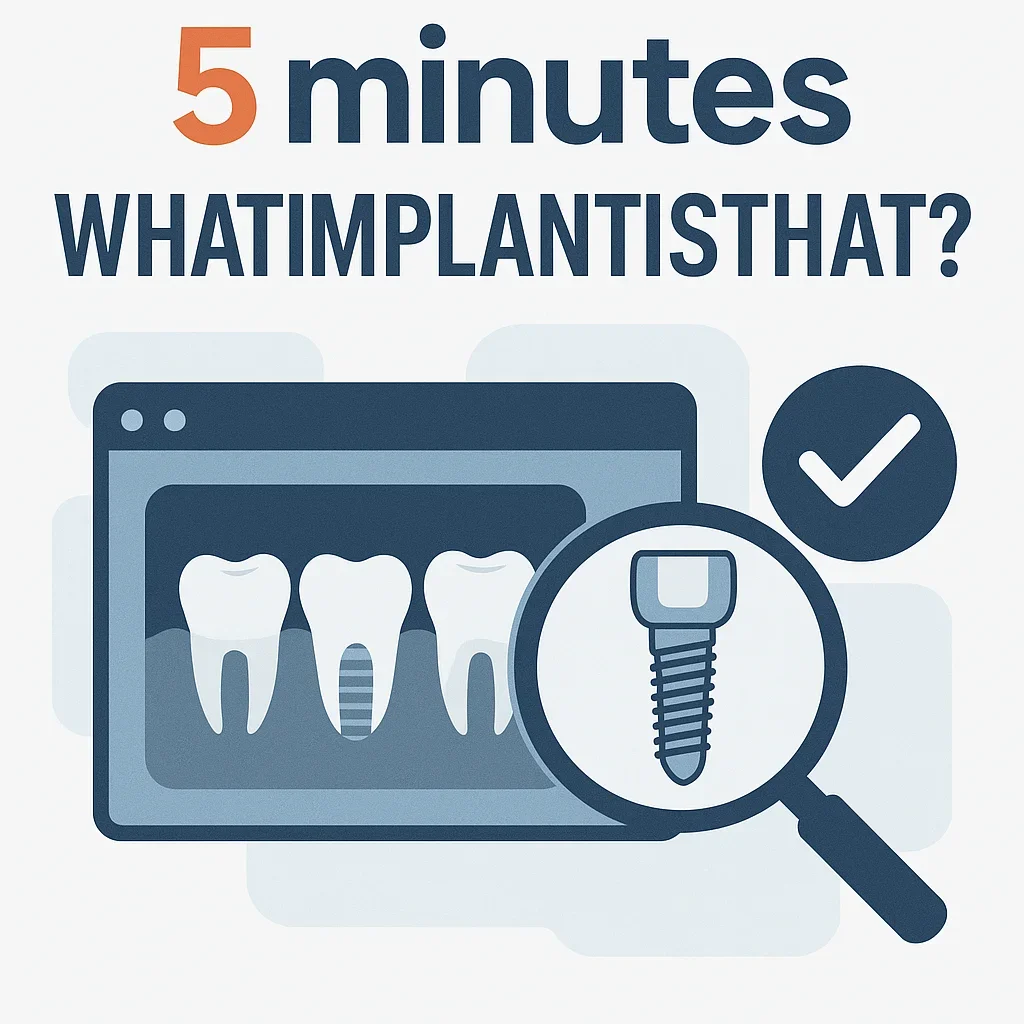
Future of Dental Implant Identification with WhatImplantIsThat
The role of whatimplantisthat in dentistry is already impressive, but its future potential is even greater. As implantology continues to evolve, the demand for accurate and efficient implant identification tools will grow. Patients are living longer, dental tourism is expanding, and the number of implant systems on the global market is increasing every year. In this context, whatimplantisthat is not just a helpful tool today but a foundational technology shaping the future of implant care worldwide.
AI Evolution and Smarter Identification
Currently, whatimplantisthat relies on advanced artificial intelligence to compare images against its database. In the future, the AI will likely become even more refined. Machine learning algorithms will learn from every uploaded case, continuously improving accuracy. As more dentists worldwide adopt the tool, the collective database will grow, strengthening its diagnostic power. This will lead to near-instant and virtually flawless implant recognition, reducing clinical uncertainty to almost zero.
Deep Learning in Dentistry
Next-generation versions of whatimplantisthat may use deep learning to recognize not just implant designs but also subtle variations caused by wear, bone integration, or patient-specific anatomy. This will allow the tool to provide insights that go beyond simple brand recognition, offering predictive analytics about implant health and long-term success.
Integration with Digital Dentistry Systems
The future of whatimplantisthat will not be limited to stand-alone use. It is likely to be integrated with other dental technologies, creating a seamless digital workflow. For instance, CAD/CAM systems, 3D printing, and intraoral scanners can be linked with implant identification, allowing dentists to design abutments and restorations immediately after identifying an implant.
Smart Clinic Ecosystems
Imagine a dental clinic where an intraoral scanner captures an image, automatically uploads it to whatimplantisthat, and instantly integrates the identification into a treatment planning software. This kind of “smart clinic” ecosystem would save time, increase precision, and provide an unmatched patient experience.
Global Impact on Dental Tourism
Dental tourism continues to expand as patients travel abroad for affordable treatments. However, this creates long-term challenges when follow-up care is needed in another country. Whatimplantisthat has already proven useful in bridging this gap, but its future versions will likely make global implant care more standardized and accessible. Patients will no longer worry about being stranded with an “unknown” implant system when they return home.
Standardization Across Borders
By creating a unified, global database, whatimplantisthat may become the universal language of implantology. No matter where the implant was placed—Europe, Asia, or the Americas—dentists worldwide will be able to identify it instantly, ensuring continuity of care and reducing costs for patients.
Expansion of the Implant Database
The future success of whatimplantisthat depends heavily on the size and accuracy of its implant database. As more manufacturers partner with the platform, the number of cataloged implants will expand. Eventually, every implant system ever produced could be documented, from current mainstream models to discontinued historical designs. This would create the world’s most comprehensive implant archive.
Collaboration with Manufacturers
Manufacturers are likely to see the benefits of contributing to the database. By doing so, they ensure that their implants are easily identifiable in the future, protecting patients and enhancing brand credibility. As a result, the partnership between whatimplantisthat and leading implant producers will strengthen over time.
Patient-Centered Features
While the current focus of whatimplantisthat is on dentists, future versions may expand patient-centered features. For example, patients could access an app connected to their dental records, where they can view implant details, warranty information, and compatibility data. This level of transparency would empower patients and improve trust between them and their dental providers.
Personal Implant Passports
One exciting future development could be the creation of digital “implant passports.” These would act as lifetime records stored in secure databases, accessible anywhere in the world. Patients moving to a new country could simply provide their implant passport to their new dentist, who would then have all the details instantly available, thanks to whatimplantisthat.
Improved Cost Efficiency
As the platform grows, the cost of using whatimplantisthat is expected to become even more affordable. With widespread adoption, subscription models may expand to regional dental associations or government healthcare programs. This would allow the technology to reach small clinics and underserved regions, making advanced implant identification universally available.
Educational Applications
The future of whatimplantisthat is not limited to patient care—it also has enormous potential in education. Dental schools may integrate the tool into training programs, helping students familiarize themselves with implant recognition early in their careers. By practicing with real-world cases through the platform, students will build competence faster and be better prepared for clinical practice.
Virtual Learning and Simulations
Imagine a virtual training module where students upload sample radiographs and use whatimplantisthat to test their diagnostic skills. This interactive approach would revolutionize how implantology is taught, creating a new generation of highly skilled practitioners.
Conclusion
The future of whatimplantisthat is bright, with applications reaching far beyond today’s capabilities. From AI evolution and smart clinic integration to global dental tourism support, patient-centered implant passports, and educational use, the tool is set to redefine how dental implants are identified and managed. Its role will expand from a helpful aid to a cornerstone of modern dentistry, ensuring that no patient is ever left asking the question, “what implant is that?” without a reliable answer. 🌍✨