
Many patients visit the dentist wondering the same important question: when do you need a crown vs filling? Understanding the difference between these two common dental treatments can help you make better decisions about your oral health. Both crowns and fillings are designed to repair damaged teeth, restore function, and protect your smile. However, they are used in different situations depending on the severity of the damage, the strength of the remaining tooth structure, and the long-term stability required for the tooth.
To fully understand when do you need a crown vs filling, it helps to first understand what each treatment actually does. A dental filling is typically used to repair minor tooth damage caused by cavities or small fractures. During this procedure, the dentist removes decayed tooth material and fills the space with a restorative material such as composite resin, amalgam, or porcelain. Fillings restore the tooth’s shape and function while preventing further decay.
In contrast, a dental crown is a protective cap that completely covers a damaged tooth. Crowns are usually recommended when the tooth is significantly weakened, cracked, or structurally compromised. If a dentist determines that a filling alone cannot provide sufficient support, a crown becomes the better option. This is one of the most common situations where patients begin asking when do you need a crown vs filling.
For example, if a cavity is small and affects only a limited portion of the tooth surface, a filling is usually enough to repair the damage. However, if decay has removed a large portion of the tooth structure, the remaining enamel may not be strong enough to support chewing pressure. In these cases, dentists often recommend a crown to restore strength and durability.
Another situation that helps clarify when do you need a crown vs filling involves cracked teeth. Small cracks may sometimes be stabilized with fillings, but larger cracks often require crowns to prevent the tooth from breaking further. A crown essentially acts like armor for the tooth, distributing biting forces more evenly and protecting the weakened structure.
Patients who have undergone root canal treatment also frequently face the question of when do you need a crown vs filling. After a root canal, the inner pulp of the tooth has been removed, which can make the tooth more brittle over time. Dentists commonly recommend placing a crown after a root canal to protect the tooth from fracture. Without a crown, the tooth may be more vulnerable to damage during normal chewing.
Tooth wear is another important factor. Over time, grinding, clenching, or acid erosion can weaken tooth structure. When evaluating when do you need a crown vs filling, dentists assess how much healthy enamel remains. If there is still enough natural structure, a filling may restore the tooth effectively. If too much enamel has been lost, a crown may provide the necessary reinforcement.
From a long-term perspective, understanding when do you need a crown vs filling can also help prevent repeated dental procedures. Fillings are excellent for minor repairs, but very large fillings can weaken a tooth over time. When fillings become too large, the tooth may fracture under pressure. In these cases, dentists sometimes recommend replacing a large filling with a crown to increase durability and longevity.
According to the American Dental Association, early detection of cavities and structural damage plays a crucial role in determining the most appropriate treatment. Regular dental checkups allow dentists to identify issues early, which often means a simple filling can be used instead of a more extensive restoration.
Patients also play an important role in recognizing symptoms that might indicate when do you need a crown vs filling. Common warning signs include persistent tooth sensitivity, pain while chewing, visible cracks, or large dark areas on the tooth surface. If you experience any of these symptoms, it is important to schedule a dental examination as soon as possible.
When patients visit our clinic, dentists carefully evaluate several factors before recommending treatment. These include the size of the cavity, the strength of the remaining tooth structure, the location of the tooth in the mouth, and the patient’s bite pressure. If you would like professional guidance regarding when do you need a crown vs filling, you can easily reach our dental team through the Redent Klinik Contact Page.
Ultimately, the decision between a crown and a filling is based on preserving as much natural tooth structure as possible while ensuring long-term durability. A filling is typically the first choice when the damage is minor. However, when the tooth is severely weakened or structurally compromised, a crown provides stronger protection and can extend the life of the tooth for many years.
Understanding when do you need a crown vs filling empowers patients to make informed decisions about their dental care. By learning the differences between these treatments and recognizing the signs of tooth damage, you can work together with your dentist to protect your smile and maintain excellent oral health for the long term.
Understanding When Do You Need a Crown vs Filling for Tooth Damage
One of the most common questions patients ask during a dental appointment is when do you need a crown vs filling. Both treatments are designed to repair damaged teeth, but they serve different purposes depending on the severity of the problem. Understanding how dentists determine when do you need a crown vs filling can help patients make informed decisions about their oral health and feel more confident about recommended treatments.
Tooth damage can occur for many reasons, including cavities, fractures, wear from grinding, trauma, or old restorations failing over time. In these situations, dentists evaluate several factors to determine when do you need a crown vs filling. These factors include how much natural tooth structure remains, where the damage is located, and how much pressure the tooth must withstand during chewing.
How Tooth Damage Affects the Choice Between Crown and Filling
When deciding when do you need a crown vs filling, the most important factor is the extent of tooth damage. A small cavity affecting only a small portion of the enamel can usually be repaired with a filling. Fillings restore the missing structure and prevent bacteria from entering the tooth again.
However, when the decay or fracture affects a larger portion of the tooth, the dentist may determine that a filling alone will not provide enough support. In such situations, understanding when do you need a crown vs filling becomes critical because a crown can restore strength to the entire tooth.
A crown covers the full visible portion of the tooth and acts like a protective helmet. This makes it ideal when the tooth structure has become too weak to support normal chewing forces. If dentists used a filling in these situations, the tooth might crack further under pressure.
Evaluating Remaining Tooth Structure
Dentists also analyze how much healthy tooth structure remains. The question of when do you need a crown vs filling often comes down to whether the remaining enamel can support a filling restoration.
If more than half of the tooth structure is missing due to decay or trauma, a crown is often recommended. Large fillings can weaken teeth because they remove supporting enamel. This is another situation where understanding when do you need a crown vs filling helps dentists protect the tooth from future fracture.
Large Cavities and Structural Integrity
Large cavities significantly weaken teeth. Even if a filling could technically repair the cavity, the tooth might remain fragile. In these cases, dentists often choose crowns because they provide stronger long-term protection. Recognizing when do you need a crown vs filling helps prevent repeated dental treatments and reduces the risk of tooth loss.
Cracked or Fractured Teeth
Cracked teeth are another situation where patients often ask when do you need a crown vs filling. Small cracks may sometimes be stabilized with a filling, but deeper cracks require a crown to distribute chewing forces across the tooth. Without this protection, the crack may continue spreading and eventually lead to a split tooth.
The Role of Tooth Location in Treatment Decisions
The position of the tooth inside the mouth also plays a role in determining when do you need a crown vs filling. Molars and premolars endure strong chewing pressure. Because these teeth must withstand heavy biting forces, dentists may recommend crowns more often in back teeth when damage is significant.
Front teeth, on the other hand, experience less biting force and often require less extensive restoration. For smaller cavities or chips in front teeth, fillings may be sufficient. Still, dentists carefully evaluate each case when deciding when do you need a crown vs filling.
Previous Dental Work and Restoration Failure
Another important factor in determining when do you need a crown vs filling is whether the tooth has already been restored multiple times. Teeth that have had several fillings may gradually lose structural strength.
Over time, fillings can wear out, crack, or leak. If a tooth has a very large existing filling that fails, replacing it with another filling might not provide enough support. In these cases, dentists may recommend a crown instead. Understanding when do you need a crown vs filling can help prevent repeated restoration cycles.
Root Canal Treatment and Crown Placement
Teeth that have undergone root canal therapy often require crowns. After a root canal, the tooth becomes more brittle because the internal pulp has been removed. This is one of the clearest answers to the question when do you need a crown vs filling. A crown helps reinforce the tooth and prevents fracture.
While some small root canal-treated teeth may receive fillings, molars almost always benefit from crown coverage to ensure durability.
Consulting a Dentist for the Right Decision
Ultimately, determining when do you need a crown vs filling requires a professional dental examination. Dentists use visual inspection, digital X-rays, and bite analysis to evaluate the health of the tooth. Their goal is to preserve as much natural tooth structure as possible while ensuring the tooth remains strong enough for long-term use.
If you are experiencing tooth sensitivity, pain while chewing, or visible tooth damage, scheduling an evaluation is essential. Early diagnosis often means a filling can solve the problem before it progresses to the point where a crown becomes necessary.
For personalized advice about when do you need a crown vs filling, patients can contact a dental professional through the Redent Klinik Contact Page. A dentist can assess your specific condition and recommend the most appropriate treatment to restore both function and appearance.
Understanding when do you need a crown vs filling is an important step toward maintaining strong, healthy teeth. By recognizing how dentists evaluate tooth damage and restoration needs, patients can better protect their smiles and make informed decisions about their dental care.
Key Differences Between Dental Crowns and Dental Fillings
To clearly understand when do you need a crown vs filling, it is essential to first examine the key differences between these two dental restorations. Both treatments repair damaged teeth and restore oral function, but they differ significantly in structure, purpose, durability, and treatment process. Dentists determine when do you need a crown vs filling by evaluating how severe the damage is and how much natural tooth structure remains.
Dental fillings are considered a conservative treatment. They are typically used when the tooth still has enough healthy structure to support chewing forces. On the other hand, crowns provide full coverage for the tooth and are recommended when the tooth has lost too much structure to safely hold a filling. Understanding these differences helps patients recognize when do you need a crown vs filling and why dentists recommend one option over the other.
What Is a Dental Filling?
A dental filling is a restorative material used to repair cavities, small fractures, or minor tooth damage. The dentist removes the decayed or damaged part of the tooth and fills the empty space with a durable material such as composite resin, porcelain, gold, or amalgam.
Fillings are usually completed in a single appointment and are one of the most common dental procedures worldwide. They restore the shape and function of the tooth while preventing bacteria from entering the damaged area again.
However, the effectiveness of a filling depends on how much natural tooth structure remains. If the cavity is small or moderate in size, a filling works well. But when the damage becomes extensive, dentists begin evaluating when do you need a crown vs filling instead of simply placing a larger filling.
Advantages of Dental Fillings
Fillings are popular because they offer several advantages when tooth damage is minimal:
- They preserve most of the natural tooth structure.
- The procedure is fast and usually completed in one visit.
- They are typically less expensive than crowns.
- Modern composite fillings match the natural tooth color.
Despite these advantages, fillings may not be strong enough when tooth damage becomes severe. This is exactly why dentists evaluate when do you need a crown vs filling in order to prevent long-term complications.
What Is a Dental Crown?
A dental crown is a custom-made cap that completely covers the visible part of a tooth. Unlike a filling, which repairs a small section, a crown protects the entire tooth structure. Crowns are often made from porcelain, zirconia, ceramic, metal, or porcelain fused to metal.
When dentists analyze when do you need a crown vs filling, they often recommend crowns for teeth that are severely decayed, cracked, worn down, or weakened after a root canal. Because crowns surround the entire tooth, they restore strength and protect the remaining structure from further damage.
The process of placing a crown usually requires two visits. During the first appointment, the dentist shapes the tooth and takes an impression. A temporary crown is placed while the permanent crown is fabricated in a dental laboratory. During the second visit, the final crown is permanently bonded to the tooth.
Advantages of Dental Crowns
Crowns offer several benefits when tooth damage is extensive:
- They restore full strength to weakened teeth.
- They protect cracked teeth from further damage.
- They last longer than large fillings.
- They improve both appearance and function.
Because crowns provide full structural support, they are often the safest option when dentists determine when do you need a crown vs filling for teeth with major damage.
Durability Comparison: Crown vs Filling
Durability is one of the most important differences when discussing when do you need a crown vs filling. Fillings typically last between 5 and 15 years depending on the material used and the patient’s oral habits. Crowns, however, can last 10 to 20 years or even longer with proper care.
Large fillings tend to weaken the remaining tooth structure over time. This increases the risk of fractures. In these situations, dentists often recommend replacing large fillings with crowns to strengthen the tooth. This is another clear example of when do you need a crown vs filling to ensure long-term dental stability.
Aesthetic Differences Between Crowns and Fillings
Aesthetics also play a role in deciding when do you need a crown vs filling. Composite fillings can blend well with natural teeth, especially for small repairs. However, when a large portion of the tooth needs restoration, crowns often produce better cosmetic results.
Modern ceramic crowns are designed to mimic natural enamel extremely well. They match the color, translucency, and shape of surrounding teeth. This makes crowns an excellent option for restoring severely damaged teeth while maintaining a natural-looking smile.
Cost Differences Between Crowns and Fillings
Another factor patients often consider when researching when do you need a crown vs filling is cost. Fillings are generally less expensive because they require fewer materials and less time.
Typical Treatment Costs
Based on common dental pricing ranges:
- Composite filling: $150 – $350 per tooth
- Porcelain filling (inlay/onlay): $650 – $1,200
- Dental crown: $900 – $2,500 depending on material
Although crowns cost more initially, they may last longer and prevent additional procedures in the future. Dentists evaluate these factors carefully when determining when do you need a crown vs filling.
Which Treatment Is Better for Your Tooth?
There is no single answer for every patient when discussing when do you need a crown vs filling. The best option depends on the severity of damage, tooth location, bite pressure, and long-term prognosis.
A professional dental examination is always necessary to make the right decision. Dentists evaluate X-rays, examine the tooth structure, and determine whether a filling will provide enough support or whether a crown is required for long-term protection.
If you suspect tooth damage or want expert guidance about when do you need a crown vs filling, you can contact a professional dental team through the Redent Klinik Contact Page. Early evaluation helps ensure that the most conservative and effective treatment is chosen.
Ultimately, understanding the differences between crowns and fillings allows patients to take a more active role in their dental health decisions. Recognizing when do you need a crown vs filling ensures that damaged teeth are treated correctly, helping preserve both function and appearance for many years.
5 Signs Showing When Do You Need a Crown vs Filling
Many patients are unsure when do you need a crown vs filling, especially when they begin to experience tooth pain, sensitivity, or visible damage. While only a dentist can make a final diagnosis, there are several warning signs that often indicate whether a filling may be sufficient or whether a crown might be required. Recognizing these signs early can help you seek dental treatment before the damage worsens and requires more complex procedures.
Understanding when do you need a crown vs filling is important because choosing the correct restoration protects the tooth from further damage while preserving as much natural tooth structure as possible. Dentists evaluate factors such as cavity size, structural integrity, previous dental work, and the location of the tooth when determining the best treatment. The following five signs can help patients understand situations where dentists begin considering when do you need a crown vs filling rather than relying on a simple filling.
1. Large Cavities or Extensive Tooth Decay
One of the most common indicators when evaluating when do you need a crown vs filling is the size of the cavity. Small cavities typically require only a filling. During this procedure, the dentist removes the decayed portion of the tooth and fills the space with a composite material that restores shape and function.
However, when decay affects a large portion of the tooth, the remaining enamel may become too weak to support chewing forces. In these situations, placing a large filling may increase the risk of fractures. This is a clear scenario where dentists determine when do you need a crown vs filling because a crown can reinforce the entire tooth.
Why Large Cavities Require Stronger Protection
Large cavities reduce the natural strength of the tooth structure. Even if a filling restores the missing portion, the tooth may still crack under pressure. A crown protects the entire tooth by covering it with a durable material such as porcelain or zirconia. This approach is often the safest solution when evaluating when do you need a crown vs filling for teeth with significant decay.
2. Cracked or Fractured Teeth
Another clear sign that helps determine when do you need a crown vs filling is the presence of cracks in the tooth. Small chips or minor fractures may sometimes be repaired with fillings or bonding materials. However, deeper cracks weaken the tooth significantly.
If the crack extends into the tooth structure, chewing pressure can cause it to expand. In these cases, dentists usually recommend a crown to stabilize the tooth. A crown distributes biting forces across the entire tooth surface and prevents the crack from spreading further.
Ignoring a cracked tooth can lead to severe complications, including tooth splitting or infection. This is why dentists carefully evaluate when do you need a crown vs filling when cracks are detected.
3. Severe Tooth Sensitivity or Pain While Chewing
Persistent tooth sensitivity can also signal when do you need a crown vs filling. Sensitivity may occur when the enamel is damaged, allowing stimuli such as cold, heat, or pressure to reach the inner layers of the tooth.
While mild sensitivity may be treated with fillings, severe sensitivity—especially pain during chewing—may indicate structural damage. Teeth that hurt when biting often have cracks or weakened enamel that cannot be fully stabilized with a filling alone.
How Dentists Evaluate Tooth Pain
When patients report pain while chewing, dentists conduct bite tests and examine dental X-rays. These evaluations help determine when do you need a crown vs filling. If the tooth is structurally compromised, a crown is often recommended to provide stability and eliminate discomfort.
4. Large or Failing Existing Fillings
Old dental fillings may eventually wear out or fail. Over time, fillings can crack, leak, or detach from the tooth surface. When dentists replace old restorations, they must determine when do you need a crown vs filling based on how much natural tooth structure remains.
Teeth that have undergone multiple fillings may become weaker over time. Replacing a very large filling with another filling may not provide enough strength to support chewing pressure. In such situations, dentists may recommend a crown instead.
This approach prevents future fractures and extends the lifespan of the tooth. Understanding when do you need a crown vs filling in cases of failing restorations helps maintain long-term dental health.
5. Root Canal Treatment
One of the most definitive situations where dentists evaluate when do you need a crown vs filling is after root canal treatment. A root canal removes infected pulp from inside the tooth, eliminating pain and infection.
However, once the pulp is removed, the tooth becomes more brittle and susceptible to fractures. This is why dentists frequently place crowns after root canal procedures—especially on molars and premolars.
Why Root Canal Teeth Often Require Crowns
Root canal-treated teeth no longer have a living nerve and blood supply, which means they lose some natural resilience. A crown reinforces the tooth and prevents breakage. This is one of the clearest answers to the question when do you need a crown vs filling.
When to Visit a Dentist for Evaluation
If you notice tooth pain, visible cracks, large cavities, or failing fillings, it is important to schedule a dental examination promptly. Dentists use diagnostic tools such as digital X-rays and bite analysis to determine when do you need a crown vs filling and recommend the most appropriate treatment.
Early detection of tooth damage can often prevent more extensive dental procedures. A simple filling may be sufficient when cavities are treated early. However, delaying treatment may lead to structural damage that requires a crown.
Patients who are unsure about when do you need a crown vs filling can contact a dental professional for guidance through the Redent Klinik Contact Page. Professional evaluation ensures that damaged teeth receive the correct treatment to restore both strength and appearance.
Recognizing these five warning signs can help patients understand when do you need a crown vs filling. By seeking timely dental care and following professional recommendations, you can protect your teeth from further damage and maintain a healthy, functional smile for many years.
How Dentists Decide When Do You Need a Crown vs Filling
One of the most important questions patients ask during a dental consultation is when do you need a crown vs filling. While patients may notice symptoms such as pain, cracks, or visible cavities, the final decision is made through a detailed professional evaluation. Dentists rely on clinical examination, digital imaging, structural analysis, and long-term prognosis assessments to determine when do you need a crown vs filling for each individual tooth.
Every tooth is different, and the best treatment option depends on the extent of damage, the strength of the remaining tooth structure, and the role the tooth plays in chewing. Understanding how dentists evaluate when do you need a crown vs filling can help patients better appreciate why a specific treatment is recommended.
Clinical Examination of the Tooth
The first step in determining when do you need a crown vs filling is a thorough visual and tactile examination. Dentists inspect the tooth for cavities, cracks, discoloration, and structural weaknesses. Using dental instruments and magnification, they assess whether the damage is superficial or extends deeper into the tooth.
If the damage is small and limited to the enamel or outer dentin layer, a filling is often sufficient. However, if the dentist observes that a large portion of the tooth has been compromised, they begin considering when do you need a crown vs filling as a stronger restoration option.
Evaluating Tooth Surface Damage
Dentists carefully analyze the surfaces of the tooth. Small cavities affecting only one surface may be treated with fillings. But if multiple surfaces are affected, the tooth may no longer be structurally stable. This is a critical moment when dentists determine when do you need a crown vs filling to prevent further structural breakdown.
Dental X-Rays and Imaging Technology
Visual inspection alone is not always enough to determine when do you need a crown vs filling. Dentists often rely on dental X-rays and digital imaging technology to evaluate internal tooth structures.
X-rays reveal hidden decay between teeth, damage beneath existing fillings, and infections near the root. They also help dentists assess how much natural tooth structure remains. If imaging shows extensive decay beneath the surface, the dentist may recommend a crown rather than a filling.
This diagnostic process is essential for accurately deciding when do you need a crown vs filling and ensuring the tooth receives the most durable restoration.
Assessing Remaining Tooth Structure
One of the most critical factors in deciding when do you need a crown vs filling is the amount of healthy tooth structure that remains after removing decay. Dentists must ensure that the restored tooth can withstand normal chewing forces.
If more than half of the tooth structure is missing, a filling may not provide enough support. In such cases, a crown acts as a protective cap that restores strength and stability.
The Importance of Structural Stability
Teeth weakened by large cavities or fractures can easily break under pressure. Dentists evaluate bite force and structural stability when determining when do you need a crown vs filling. A crown distributes chewing pressure evenly, reducing the risk of future fractures.
Location of the Tooth in the Mouth
The location of the tooth also influences when do you need a crown vs filling. Back teeth, such as molars and premolars, endure significant chewing pressure. Because of this, they often require stronger restorations.
For small cavities in front teeth, fillings may be sufficient because these teeth experience less biting force. However, if damage occurs in molars—especially when multiple surfaces are involved—dentists often recommend crowns.
Understanding the functional role of each tooth helps dentists determine when do you need a crown vs filling for long-term durability.
Evaluating Previous Restorations
Another factor dentists consider when deciding when do you need a crown vs filling is the presence of existing restorations. Teeth that already contain large or multiple fillings may have weakened enamel.
Repeated filling replacements can further weaken the tooth structure. In these cases, replacing a large filling with another filling may not be the safest choice. Dentists may recommend a crown to strengthen the entire tooth and prevent fractures.
This is a common reason why patients eventually transition from fillings to crowns over time.
Patient Bite Force and Habits
Dentists also evaluate the patient’s bite force and oral habits when determining when do you need a crown vs filling. Patients who grind or clench their teeth place significant stress on their restorations.
In such cases, fillings may wear out or break more quickly. Crowns provide greater durability and are often recommended for patients with strong bite forces or bruxism (teeth grinding).
The Role of Bruxism in Treatment Decisions
Bruxism can accelerate tooth wear and cause fractures. Dentists carefully evaluate this condition when determining when do you need a crown vs filling. For patients with severe grinding habits, crowns may provide the long-term protection necessary to preserve the tooth.
Long-Term Prognosis and Preventive Strategy
Dentists do not only focus on immediate repair when evaluating when do you need a crown vs filling. They also consider the long-term prognosis of the tooth. The goal is to choose the restoration that will last the longest while preserving as much natural structure as possible.
For minor damage, fillings are ideal because they require minimal tooth removal. However, when the risk of fracture or restoration failure is high, crowns offer a more durable solution.
According to guidelines from the American Dental Association, treatment planning should prioritize both tooth preservation and long-term stability. This philosophy is central when dentists determine when do you need a crown vs filling.
Consulting a Professional Dentist
If you are experiencing tooth sensitivity, pain while chewing, or visible damage, it is important to consult a dentist for a professional evaluation. Only a dental professional can accurately determine when do you need a crown vs filling using proper diagnostic tools.
Patients seeking personalized guidance about when do you need a crown vs filling can contact the dental team through the Redent Klinik Contact Page. Early diagnosis often allows dentists to choose the most conservative treatment while preventing more serious complications.
Ultimately, understanding how dentists evaluate when do you need a crown vs filling helps patients appreciate the reasoning behind treatment recommendations. With accurate diagnosis and proper care, both crowns and fillings can successfully restore damaged teeth and maintain oral health for many years.
Benefits of Choosing a Crown Instead of a Filling
Patients often wonder when do you need a crown vs filling, especially when dentists recommend a crown instead of what seems like a simpler filling procedure. While fillings are excellent for minor cavities and small tooth damage, crowns offer several advantages when a tooth requires stronger structural support. Understanding the benefits of crowns can help patients better recognize when do you need a crown vs filling and why dentists may suggest a crown for long-term protection.
A dental crown is essentially a protective cap that completely covers the visible portion of the tooth. This full coverage restoration restores strength, protects weakened structures, and improves the tooth’s appearance. In many situations, dentists determine when do you need a crown vs filling because crowns provide greater durability and stability for severely damaged teeth.
Superior Structural Protection
One of the primary benefits of choosing a crown is the level of structural protection it provides. When dentists evaluate when do you need a crown vs filling, they often recommend crowns for teeth that have lost significant structure due to decay, fractures, or large restorations.
Fillings repair only a portion of the tooth, leaving the remaining structure exposed to chewing pressure. If a tooth already has extensive damage, the remaining enamel may not be strong enough to support normal biting forces. A crown protects the entire tooth by distributing pressure evenly across its surface.
Preventing Tooth Fractures
Teeth weakened by large cavities or previous fillings are at higher risk of breaking. A crown acts like a helmet for the tooth, reducing the risk of fractures. This is a key reason dentists evaluate when do you need a crown vs filling carefully in cases where structural integrity is compromised.
Long-Term Durability and Longevity
Another important benefit when determining when do you need a crown vs filling is durability. Crowns are typically stronger and longer-lasting than large fillings. While fillings may last between 5 and 15 years depending on material and oral habits, crowns often last 10 to 20 years or even longer with proper care.
Materials such as porcelain, zirconia, and porcelain-fused-to-metal are designed to withstand heavy chewing forces. This durability makes crowns especially valuable for restoring molars and premolars, which experience the most pressure during eating.
For teeth that require long-term protection, dentists often decide when do you need a crown vs filling based on the restoration’s ability to endure daily use.
Improved Aesthetic Results
Modern dental crowns offer excellent cosmetic benefits. When patients ask when do you need a crown vs filling, dentists also consider the appearance of the restored tooth. Crowns can restore both the shape and color of a tooth, making them an ideal option for teeth with extensive discoloration or damage.
Porcelain and ceramic crowns are designed to closely mimic natural enamel. They reflect light similarly to natural teeth and blend seamlessly with surrounding teeth. This makes crowns an excellent choice for patients seeking both functional and aesthetic improvements.
Restoring Severely Damaged Teeth
If a tooth has lost a large portion of its natural structure, a filling may not produce an aesthetically pleasing result. A crown can completely reshape the tooth and restore a natural-looking smile. Dentists often consider this factor when evaluating when do you need a crown vs filling.
Protection After Root Canal Treatment
Root canal therapy is one of the clearest examples of when do you need a crown vs filling. After a root canal, the tooth becomes more brittle because the internal pulp has been removed. This can make the tooth vulnerable to fractures.
Placing a crown over a root canal-treated tooth reinforces the structure and prevents breakage. Molars and premolars almost always require crowns after root canal therapy due to the heavy chewing forces they experience.
Without a crown, the tooth may eventually crack or split. This is why dentists frequently recommend crowns as the safest option when determining when do you need a crown vs filling for root canal-treated teeth.
Strengthening Teeth with Large Fillings
Teeth that already contain large fillings may become weaker over time. Each time a filling is replaced, additional tooth structure may need to be removed. When dentists assess when do you need a crown vs filling, they often recommend crowns for teeth that have had multiple large fillings.
Instead of continuing to enlarge fillings, placing a crown provides a stronger and more stable restoration. This approach protects the tooth and reduces the likelihood of fractures in the future.
Better Resistance to Wear and Bite Pressure
Crowns are designed to withstand significant bite forces. Patients who grind their teeth or clench their jaws may require stronger restorations. In these cases, dentists carefully evaluate when do you need a crown vs filling because fillings may wear down or break under repeated stress.
Crowns provide a more durable solution for patients with heavy bite pressure. Materials like zirconia are extremely strong and resistant to wear, making them ideal for back teeth.
The Role of Bruxism
Bruxism, or teeth grinding, can accelerate tooth wear and damage restorations. Dentists often recommend crowns for patients with severe grinding habits because crowns provide better long-term protection. This is another important factor when deciding when do you need a crown vs filling.
Comprehensive Restoration of Tooth Function
Ultimately, crowns provide a complete restoration of both function and structure. When dentists analyze when do you need a crown vs filling, they consider whether the tooth can withstand daily chewing forces for many years.
If a filling would leave the tooth vulnerable to damage, a crown becomes the safer choice. Crowns restore full chewing strength, maintain tooth alignment, and protect surrounding teeth from excessive pressure.
Patients who want professional advice about when do you need a crown vs filling can consult dental professionals through the Redent Klinik Contact Page. Early evaluation allows dentists to recommend the most effective treatment before the damage becomes more severe.
Understanding the benefits of crowns helps patients make informed decisions about their dental care. Recognizing when do you need a crown vs filling ensures that damaged teeth receive the strongest and most durable restoration available, protecting your smile for years to come.
Situations Where a Simple Filling Is the Best Treatment
Although many patients focus on understanding when do you need a crown vs filling, it is equally important to recognize situations where a simple filling is the most appropriate and conservative dental treatment. Dentists always aim to preserve as much natural tooth structure as possible. If the damage is minimal and the tooth remains structurally strong, a filling can restore the tooth effectively without the need for a crown.
Understanding when do you need a crown vs filling helps patients avoid unnecessary procedures while still protecting their oral health. In many cases, fillings are the ideal solution for repairing cavities, minor fractures, or early-stage enamel damage. By identifying these situations early, dentists can provide effective treatment while maintaining the natural strength of the tooth.
Small to Moderate Cavities
One of the most common scenarios in which a filling is recommended involves small to moderate cavities. When dentists evaluate when do you need a crown vs filling, the size and depth of the cavity play a critical role in determining the best treatment.
If tooth decay affects only a limited portion of the enamel and dentin, the damaged area can be removed and replaced with a filling material. Composite resin fillings are commonly used because they blend naturally with tooth color and restore the tooth’s shape and function.
In these situations, placing a crown would remove more natural tooth structure than necessary. Therefore, dentists choose fillings when the remaining tooth structure is strong enough to support chewing forces.
Early Detection Makes Fillings Possible
Regular dental checkups are essential for detecting cavities early. When decay is diagnosed at an early stage, a filling can repair the damage before it spreads. This is one of the best ways to avoid situations where dentists must determine when do you need a crown vs filling because the cavity has grown too large.
Minor Tooth Chips and Surface Damage
Small chips or minor cosmetic damage to teeth can often be repaired using dental fillings or bonding materials. In these cases, dentists analyze when do you need a crown vs filling by examining the location and depth of the damage.
If the chip affects only a small portion of the enamel and does not compromise the tooth’s structural integrity, a filling can restore the tooth quickly and effectively. Composite bonding materials can be shaped and polished to match the natural tooth color, making the repair nearly invisible.
This conservative approach allows dentists to repair the tooth while preserving the maximum amount of healthy enamel.
Teeth with Strong Remaining Structure
Another important factor in deciding when do you need a crown vs filling is the strength of the remaining tooth structure. If the tooth still has a strong foundation after removing decay, a filling can restore the missing portion without compromising durability.
Dentists carefully evaluate how much enamel and dentin remain. If the tooth structure can support normal chewing pressure, a filling is usually the best option. Crowns are typically reserved for situations where structural stability has been significantly compromised.
Preserving Natural Tooth Structure
Modern dentistry emphasizes minimally invasive treatment whenever possible. Fillings allow dentists to remove only the decayed portion of the tooth while preserving the healthy enamel. This philosophy plays a major role when dentists evaluate when do you need a crown vs filling.
By preserving natural tooth material, fillings maintain the tooth’s strength and reduce the need for more extensive procedures.
First-Time Cavities Without Previous Restorations
Patients who develop their first cavity often require only a filling. When dentists determine when do you need a crown vs filling, they also consider the history of previous restorations on the tooth.
Teeth that have never been restored typically retain most of their natural structure. If the cavity is small or moderate in size, a filling is sufficient to repair the damage. Crowns are usually considered only after significant structural loss or multiple restorations.
This conservative approach ensures that the tooth remains as natural and strong as possible.
Teeth in Low Bite-Pressure Areas
The location of the tooth inside the mouth also influences when do you need a crown vs filling. Teeth located in areas that experience lower bite pressure—such as front teeth—may not require crowns even if moderate damage is present.
Front teeth primarily function for biting and cutting food rather than grinding. Because they experience less chewing force, fillings can often provide adequate strength and durability.
However, dentists still carefully evaluate each situation before deciding the appropriate treatment.
Preventive Dental Treatment and Early Intervention
Preventive care plays a major role in avoiding situations where dentists must determine when do you need a crown vs filling. Regular dental checkups allow dentists to detect early signs of decay, enamel erosion, or minor fractures before they progress.
When problems are treated early, fillings can often restore the tooth before significant structural damage occurs. Preventive dental care includes professional cleanings, fluoride treatments, dental sealants, and patient education about oral hygiene.
According to the American Dental Association, early diagnosis and treatment are essential for preventing advanced tooth damage and preserving natural teeth.
When to Seek Professional Advice
If you notice tooth sensitivity, visible discoloration, or minor damage, scheduling a dental examination is essential. Dentists use diagnostic tools such as digital X-rays and visual examination to determine when do you need a crown vs filling and recommend the most appropriate treatment.
Patients who want personalized guidance about when do you need a crown vs filling can consult dental professionals through the Redent Klinik Contact Page. Early evaluation often allows dentists to repair damage with a simple filling before more extensive treatment becomes necessary.
Recognizing situations where fillings are the best solution helps patients protect their teeth while preserving natural structure. By understanding when do you need a crown vs filling, patients can make informed decisions and maintain strong, healthy teeth for many years.
Cost Comparison: Crown vs Filling Treatment Options
For many patients researching dental treatments, one of the most important questions—after understanding when do you need a crown vs filling—is the cost difference between these two procedures. While both restorations aim to repair damaged teeth and restore oral function, the price, longevity, materials, and complexity of the procedures differ significantly. Understanding the financial aspect helps patients make informed decisions when determining when do you need a crown vs filling for their dental care.
In general, dental fillings are less expensive because they involve less material, require less preparation of the tooth, and can often be completed in a single appointment. Crowns, however, are more complex restorations that cover the entire tooth and often require multiple visits, laboratory fabrication, and higher-quality materials. These factors contribute to the price difference when evaluating when do you need a crown vs filling.
Average Cost of Dental Fillings
Dental fillings are one of the most common and affordable restorative dental treatments. When dentists determine when do you need a crown vs filling, fillings are typically recommended for small to moderate cavities where the remaining tooth structure is strong.
The cost of a filling depends on several factors, including the type of material used, the size of the cavity, and the geographic location of the dental clinic. Composite resin fillings are widely used because they match the natural tooth color and bond directly to the enamel.
Typical Filling Price Ranges
Based on common dental pricing estimates:
- Amalgam (silver) filling: $100 – $250 per tooth
- Composite resin filling: $150 – $350 per tooth
- Porcelain inlay/onlay: $650 – $1,200 per tooth
These costs may vary depending on the complexity of the cavity and whether additional procedures are required. In most situations where dentists determine when do you need a crown vs filling, fillings remain the more affordable solution for minor damage.
Average Cost of Dental Crowns
Dental crowns are more expensive because they involve more extensive tooth preparation and laboratory work. When dentists decide when do you need a crown vs filling, crowns are typically recommended for teeth that have lost a significant amount of structure.
A crown restores the entire visible portion of the tooth, which requires precise shaping of the tooth and fabrication of a custom restoration. Crowns may be made from several materials, each with different durability and aesthetic properties.
Typical Crown Price Ranges
Dental crown costs vary depending on the material used:
- Porcelain-fused-to-metal crown: $900 – $1,500
- All-ceramic or porcelain crown: $1,000 – $2,000
- Zirconia crown: $1,200 – $2,500
- Gold alloy crown: $1,500 – $3,000
Although crowns are more expensive initially, they often last longer and provide stronger protection for severely damaged teeth. This durability is an important factor dentists consider when evaluating when do you need a crown vs filling.
Factors That Influence Treatment Cost
The total cost of treatment can vary depending on several factors. When dentists evaluate when do you need a crown vs filling, they also consider the complexity of the procedure and the patient’s oral health condition.
Extent of Tooth Damage
Larger cavities or deeper structural damage require more complex restorations. If the tooth damage is extensive, dentists may recommend crowns instead of fillings to ensure long-term stability.
Material Selection
Different materials have different costs and durability levels. Composite fillings and porcelain crowns tend to cost more because they provide natural aesthetics and strong bonding properties. This material choice often influences the decision regarding when do you need a crown vs filling.
Additional Procedures
Sometimes additional procedures are required before placing a crown or filling. For example, a root canal may be necessary if the tooth pulp is infected. In these situations, dentists carefully evaluate when do you need a crown vs filling because a root canal-treated tooth often requires a crown for reinforcement.
Longevity and Long-Term Value
When comparing treatment options, it is important to consider long-term value rather than just the initial price. While fillings are less expensive upfront, they may need replacement more frequently if the tooth continues to weaken.
Crowns, on the other hand, provide stronger structural support and often last longer. This durability is a major reason dentists analyze when do you need a crown vs filling based on long-term prognosis rather than short-term cost.
With proper oral hygiene and regular dental checkups, crowns can last 10 to 20 years or more. Fillings may need replacement after 5 to 15 years depending on the material used and the patient’s oral habits.
Insurance Coverage and Dental Plans
Dental insurance can significantly influence the cost of treatment. Many insurance plans cover a portion of restorative procedures such as fillings and crowns. However, coverage levels may differ depending on the policy.
Insurance companies often categorize fillings as basic restorative procedures and crowns as major restorative procedures. This difference can affect reimbursement levels when patients are determining when do you need a crown vs filling.
Patients should review their dental insurance policy or speak with their dentist’s office to understand coverage details before treatment.
Cost vs Oral Health Protection
Although cost is an important factor, dentists emphasize that the primary goal of treatment is to protect the tooth and maintain oral health. Choosing the correct restoration helps prevent further damage and additional dental procedures.
According to recommendations from the American Dental Association, selecting the appropriate treatment based on structural stability and long-term durability is essential for preserving natural teeth.
For patients unsure about when do you need a crown vs filling, consulting a qualified dental professional is the best approach. A dentist can evaluate the tooth condition and recommend the most effective treatment option.
If you would like professional advice regarding when do you need a crown vs filling, you can contact the dental team through the Redent Klinik Contact Page. A consultation allows dentists to assess your dental condition and provide accurate cost estimates based on your specific needs.
Understanding the cost comparison between crowns and fillings helps patients make informed decisions about their dental care. By recognizing when do you need a crown vs filling and considering both financial and clinical factors, patients can choose the restoration that best protects their teeth and maintains a healthy smile.
Preventing Tooth Damage So You Avoid Crown or Filling Treatments
While understanding when do you need a crown vs filling is essential for treating damaged teeth, prevention is always the best approach to maintaining long-term oral health. Dental restorations such as crowns and fillings are effective solutions for repairing damage, but they can often be avoided with proper preventive care. By protecting your teeth from decay, fractures, and wear, you reduce the likelihood of facing the decision about when do you need a crown vs filling in the first place.
Preventive dentistry focuses on maintaining strong enamel, controlling harmful bacteria, and protecting teeth from structural damage. Dentists emphasize early intervention and consistent oral hygiene because untreated dental problems can gradually worsen until restorative procedures become necessary. Learning how to prevent tooth damage can help patients avoid situations where dentists must determine when do you need a crown vs filling.
Maintaining Proper Daily Oral Hygiene
The most effective way to prevent cavities and structural damage is through consistent daily oral hygiene. Brushing your teeth twice a day and flossing regularly removes plaque, which is the primary cause of tooth decay.
Plaque is a sticky film of bacteria that produces acids capable of weakening tooth enamel. Over time, this acid attack creates cavities that may eventually require restorative treatment. Practicing good oral hygiene reduces the risk of reaching a point where dentists must decide when do you need a crown vs filling.
Proper Brushing Techniques
Using the correct brushing technique is just as important as brushing regularly. Dentists recommend using a soft-bristled toothbrush and fluoride toothpaste while brushing for at least two minutes. Gentle circular motions effectively remove plaque without damaging enamel or irritating the gums.
When plaque is consistently removed, the risk of developing cavities decreases significantly, which helps prevent situations where dentists evaluate when do you need a crown vs filling.
Scheduling Regular Dental Checkups
Routine dental visits are another critical factor in preventing severe tooth damage. Dentists recommend checkups every six months to detect early signs of decay, cracks, or enamel erosion.
During these visits, dentists perform professional cleanings and conduct thorough examinations using advanced diagnostic tools. Early detection allows dentists to treat minor issues before they progress into larger problems that require crowns.
By identifying dental concerns early, patients can often avoid reaching the stage where dentists must determine when do you need a crown vs filling.
The Role of Professional Cleanings
Professional dental cleanings remove hardened plaque (tartar) that cannot be removed through brushing alone. Tartar buildup increases the risk of cavities and gum disease. Regular cleanings help maintain healthy teeth and reduce the chances of needing restorative procedures.
This preventive approach greatly decreases the likelihood of needing to decide when do you need a crown vs filling later in life.
Protecting Teeth from Physical Damage
Physical trauma is another major cause of tooth damage. Sports injuries, accidents, and teeth grinding can weaken tooth structure and lead to fractures.
Preventive measures such as wearing a mouthguard during sports can significantly reduce the risk of tooth fractures. Custom mouthguards provided by dentists offer superior protection and comfort.
By preventing fractures and structural damage, patients reduce the possibility of reaching situations where dentists must analyze when do you need a crown vs filling.
Managing Teeth Grinding (Bruxism)
Teeth grinding, also known as bruxism, can gradually wear down enamel and weaken teeth. Over time, this condition may lead to cracks or fractures requiring crowns.
Dentists often recommend night guards for patients who grind their teeth during sleep. These protective devices cushion the teeth and prevent excessive pressure. Managing bruxism can significantly lower the chances of needing to determine when do you need a crown vs filling due to tooth wear.
Maintaining a Tooth-Friendly Diet
Diet plays an important role in preventing dental damage. Foods high in sugar and acidic beverages can erode enamel and promote bacterial growth. Reducing the consumption of sugary snacks, soda, and acidic drinks helps maintain stronger teeth.
Instead, dentists encourage patients to eat foods that support oral health. Calcium-rich foods such as dairy products strengthen enamel, while crunchy vegetables stimulate saliva production, which helps neutralize harmful acids.
A balanced diet contributes to stronger teeth and reduces the likelihood of developing cavities that may lead to questions about when do you need a crown vs filling.
Fluoride and Dental Sealants
Preventive treatments such as fluoride applications and dental sealants offer additional protection against cavities. Fluoride strengthens tooth enamel and makes it more resistant to acid attacks.
Dental sealants are thin protective coatings applied to the chewing surfaces of molars. These areas are particularly vulnerable to cavities because food particles can become trapped in the grooves.
These preventive measures significantly reduce the risk of cavities and help patients avoid situations where dentists must evaluate when do you need a crown vs filling.
Early Treatment of Minor Dental Issues
Small dental problems can quickly escalate if left untreated. Minor cavities, small cracks, or early enamel erosion should be addressed promptly. Early treatment usually requires only a simple filling rather than a crown.
Ignoring early symptoms such as tooth sensitivity or visible discoloration can allow the damage to progress. Eventually, the tooth may lose enough structure that dentists must determine when do you need a crown vs filling instead of performing a simple repair.
The Importance of Preventive Dentistry
Preventive dentistry focuses on preserving natural teeth and minimizing the need for restorative procedures. According to recommendations from the American Dental Association, preventive care and early diagnosis are key to maintaining long-term oral health.
By following good oral hygiene practices, maintaining a healthy diet, and attending regular dental checkups, patients can significantly reduce the likelihood of needing crowns or fillings.
If you are unsure about your dental health or want personalized advice about when do you need a crown vs filling, you can contact dental professionals through the Redent Klinik Contact Page. A professional consultation can help identify potential risks early and guide you toward the best preventive care strategies.
Ultimately, prevention is the most effective way to maintain strong, healthy teeth. By taking proactive steps to protect your oral health, you can avoid many situations where dentists must determine when do you need a crown vs filling, preserving your natural smile for years to come.
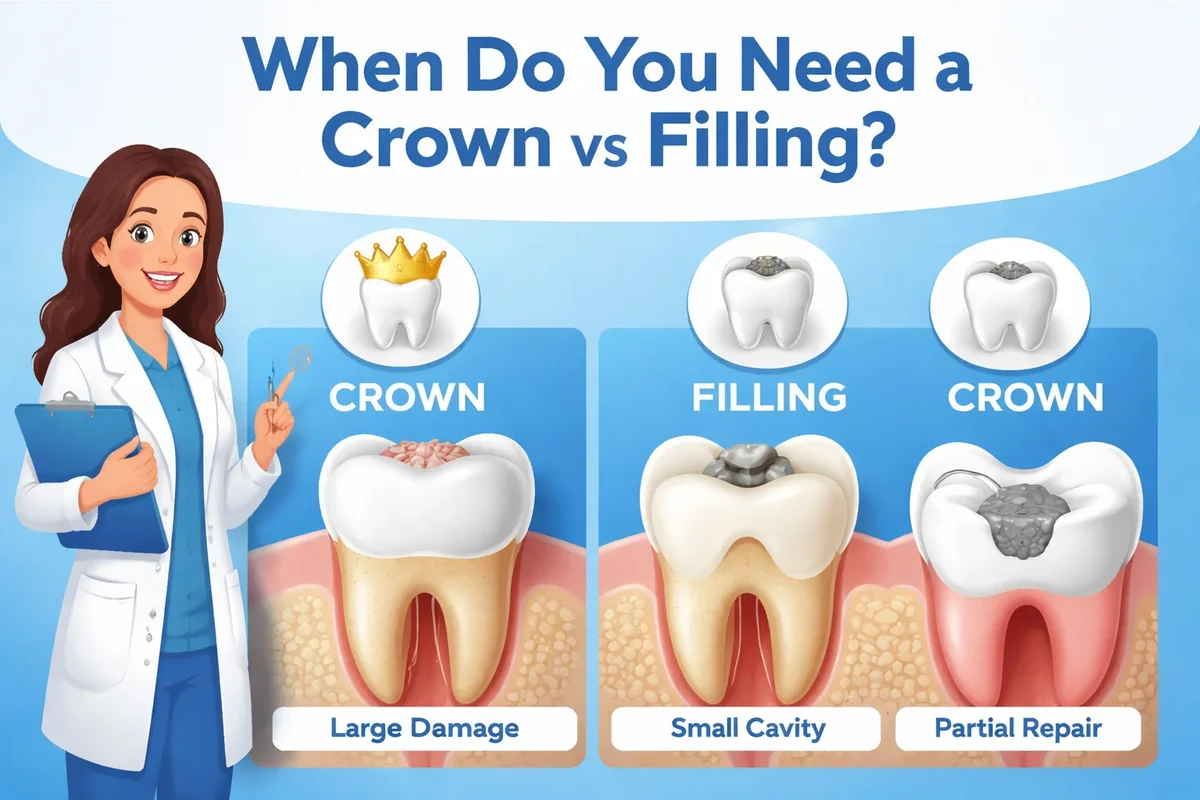
Common Questions Patients Ask About When Do You Need a Crown vs Filling
Even after learning the technical differences between dental restorations, many patients still have practical concerns about when do you need a crown vs filling. This is completely normal. Dental decisions often involve factors such as cost, longevity, comfort, and the overall health of the tooth. In this section, we will address the most common questions patients ask about when do you need a crown vs filling so you can better understand the treatment process and make informed decisions about your dental care.
Dentists frequently encounter patients who want to know whether their tooth can be repaired with a simple filling or if a crown will be necessary. While each case is unique, understanding the common situations that influence when do you need a crown vs filling can make dental consultations much easier and less stressful.
Can a Large Filling Be Replaced With a Crown?
Yes, and this is actually a very common situation. Many patients have older teeth with large fillings that were placed years ago. Over time, these fillings may weaken the surrounding tooth structure. When dentists evaluate when do you need a crown vs filling, they often recommend replacing large fillings with crowns to strengthen the tooth.
A crown provides full coverage and distributes chewing pressure more evenly across the tooth surface. This helps prevent cracks or fractures that could otherwise occur if the tooth remains supported only by a large filling.
Why Large Fillings Can Weaken Teeth
Large fillings remove significant portions of natural enamel, which weakens the tooth. As chewing forces continue over the years, the remaining tooth walls may eventually break. Dentists therefore assess when do you need a crown vs filling to protect teeth with extensive restorations.
Is a Crown Always Better Than a Filling?
Not necessarily. One of the most important principles in dentistry is preserving as much natural tooth structure as possible. Dentists only recommend crowns when a filling would not provide sufficient support.
If the cavity is small and the tooth structure is strong, a filling is usually the best treatment. However, if the damage is extensive, dentists determine when do you need a crown vs filling based on the long-term stability of the tooth.
Using a crown unnecessarily would require removing more healthy tooth material, which dentists aim to avoid. This is why professional evaluation is essential when determining when do you need a crown vs filling.
How Long Do Crowns and Fillings Last?
Longevity is one of the most common concerns when patients ask when do you need a crown vs filling. The lifespan of a dental restoration depends on several factors, including the material used, oral hygiene habits, and chewing pressure.
Average Lifespan of Fillings
- Composite fillings: 5–10 years
- Amalgam fillings: 10–15 years
- Porcelain inlays/onlays: 10–20 years
Average Lifespan of Crowns
- Porcelain crowns: 10–15 years
- Zirconia crowns: 15–20 years
- Gold crowns: 20+ years
Because crowns provide full structural support, they often last longer than large fillings. This durability is one reason dentists carefully evaluate when do you need a crown vs filling for teeth with significant damage.
Does Getting a Crown Hurt More Than a Filling?
Another frequent concern when discussing when do you need a crown vs filling is the level of discomfort involved in the procedures. Fortunately, modern dentistry ensures that both treatments are performed with local anesthesia, making the process comfortable for patients.
A filling procedure is typically faster and completed in a single visit. Crown procedures may involve two appointments because the tooth must be prepared and a custom crown fabricated. However, patients generally experience minimal discomfort during either treatment.
Advances in dental technology have made crown placement extremely precise and comfortable, further simplifying the process when dentists determine when do you need a crown vs filling.
Can a Filling Turn Into a Crown Later?
Yes, this happens frequently in dentistry. A tooth that initially receives a filling may later require a crown if additional decay occurs or if the filling becomes too large. Dentists reassess the condition of the tooth over time to determine when do you need a crown vs filling.
For example, if a filling fails or the tooth structure becomes weaker, replacing the filling with a crown may provide better long-term protection.
How Can I Know Which Treatment Is Right for Me?
The only reliable way to determine when do you need a crown vs filling is through a professional dental evaluation. Dentists examine the tooth, review digital X-rays, and assess the structural integrity of the enamel and dentin.
They also evaluate factors such as bite pressure, tooth location, and the presence of existing restorations. All these elements help dentists determine whether a filling will provide adequate support or if a crown is necessary.
Why Early Dental Visits Matter
Many dental problems can be treated with simple fillings if they are detected early. Delaying treatment allows cavities or cracks to grow larger, which may eventually require crowns instead of fillings.
According to the American Dental Association, early diagnosis is one of the most effective ways to preserve natural teeth and avoid extensive restorative procedures.
Patients who want expert guidance about when do you need a crown vs filling can consult dental professionals through the Redent Klinik Contact Page. A professional examination ensures that your tooth receives the most appropriate treatment based on its condition.
Ultimately, understanding the common questions surrounding when do you need a crown vs filling empowers patients to take an active role in their oral health decisions. By staying informed and seeking regular dental care, you can maintain strong teeth and avoid more complex treatments in the future.