
When patients begin researching tooth replacement options, one of the first questions they ask is simple yet important: which dental implants are the best? This question reflects a deeper concern about safety, durability, aesthetics, comfort, and long-term value. Dental implants are not all the same, and understanding the differences can significantly impact your oral health and overall satisfaction. In this comprehensive guide, we will explore the factors that truly determine which dental implants are the best, based on science, materials, clinical performance, and patient-specific needs.
Dental implants are titanium or ceramic posts surgically placed into the jawbone to replace missing tooth roots. Once integrated with the bone through a process called osseointegration, they provide a stable foundation for crowns, bridges, or full-arch restorations. Because implants are designed to last decades, choosing wisely is essential. So, when asking which dental implants are the best, the answer depends on more than just brand recognition — it involves quality standards, research backing, and professional expertise.
One of the most critical criteria in determining which dental implants are the best is clinical success rate. High-quality implant systems typically show success rates above 95% over 10 years. Scientific studies published by respected organizations such as the American Dental Association highlight the importance of evidence-based materials and long-term follow-up research. The best dental implant systems are supported by decades of peer-reviewed studies, ensuring predictable results and patient safety.
Another key factor in deciding which dental implants are the best is the material used. Most premium implants are made from medical-grade titanium because of its excellent biocompatibility and strength. Titanium naturally bonds with bone, making it the gold standard for most cases. However, zirconia implants — often referred to as ceramic implants — are gaining popularity, especially among patients seeking metal-free alternatives. When evaluating which dental implants are the best, both titanium and zirconia can be excellent choices depending on individual preferences and clinical indications.
Design innovation also plays a major role. Modern implant systems are engineered with advanced surface treatments that enhance osseointegration. Roughened or specially coated surfaces allow bone cells to attach more efficiently, speeding healing and improving stability. Therefore, when considering which dental implants are the best, it is important to look at the implant surface technology and connection design. Premium systems often use conical connections and platform-switching technology to minimize bone loss and protect gum tissue.
Patient-specific factors further influence which dental implants are the best choice. Bone density, gum health, smoking habits, systemic conditions like diabetes, and even bite alignment must be evaluated. A patient with strong jawbone density may be suitable for traditional implants, while someone with bone loss might require short implants or bone grafting. This is why determining which dental implants are the best cannot be separated from a personalized consultation.
Cost is another common concern. While patients often search online for quick answers about which dental implants are the best, it is important to remember that higher-quality implants may initially cost more but provide greater long-term value. In the United States, a single dental implant can range between $3,000 and $5,000 depending on location and complexity. In countries like Turkey, the same procedure may range between $800 and $1,500, often including advanced implant brands and digital planning technology. However, the true value lies not only in price but in long-term reliability.
Aesthetic outcomes also influence which dental implants are the best. Premium systems are designed to support natural-looking crowns that blend seamlessly with surrounding teeth. Proper soft tissue management ensures that the final result looks and feels like a natural tooth. Patients increasingly prioritize not only function but also cosmetic excellence 😊.
It is also important to understand that the surgeon’s experience directly impacts which dental implants are the best for your case. Even the most advanced implant system cannot compensate for poor surgical technique. Therefore, the combination of a reputable implant brand and an experienced implantologist determines success. If you would like personalized advice regarding which dental implants are the best for your specific condition, you can contact our specialists through the Redent Klinik Contact Page.
In summary, the question which dental implants are the best does not have a one-size-fits-all answer. The best choice depends on scientific evidence, implant material, design features, patient health, and professional expertise. By focusing on long-term success rates, proven research, and individualized treatment planning, patients can confidently determine which dental implants are the best for achieving a healthy, natural, and long-lasting smile.
Which Dental Implants Are the Best for Long-Term Success?
When patients invest in dental implants, their primary concern is durability. They want results that last not just a few years, but decades. That is why many people specifically ask: which dental implants are the best for long-term success? Longevity in implant dentistry is not accidental — it is the result of scientific research, advanced engineering, proper case selection, and expert surgical execution. Understanding these elements will help clarify which dental implants are the best choice when durability is the top priority.
The Importance of Osseointegration in Implant Longevity
One of the most critical factors in determining which dental implants are the best for long-term performance is osseointegration. This biological process allows the implant to fuse with the surrounding jawbone. High-quality implant systems are designed with specially treated surfaces that accelerate bone cell attachment and healing. Studies show that implants with advanced surface modifications have significantly higher stability during the early healing phase.
If osseointegration fails, the implant cannot survive long term. Therefore, when evaluating which dental implants are the best, clinicians often prioritize brands that have decades of documented success with consistent bone integration rates above 95%. Premium implant manufacturers invest heavily in research to optimize micro-roughness and surface chemistry, improving the biological response and reducing failure risk.
Implant Design and Connection Stability
Another major determinant in answering which dental implants are the best for durability is the implant-abutment connection. Modern implants use conical or Morse-taper connections that create a tight seal between the implant fixture and the prosthetic abutment. This design minimizes bacterial leakage and reduces micro-movement — two factors strongly associated with long-term bone preservation.
Older external hex designs are still functional but may show slightly higher rates of mechanical complications over time. Therefore, when patients ask which dental implants are the best for maintaining bone levels over 10–20 years, specialists often recommend systems with internal conical connections and platform-switching technology. These innovations protect the surrounding gum tissue and reduce crestal bone loss.
Platform Switching and Bone Preservation
Platform switching refers to using a slightly smaller abutment on a wider implant platform. This shifts mechanical stress inward and protects the outer bone. Clinical research demonstrates that implants using platform-switching concepts show reduced marginal bone resorption. This is a key reason why many experts consider these systems when discussing which dental implants are the best for long-term structural stability.
Material Strength and Biocompatibility
Material composition also plays a decisive role in determining which dental implants are the best for extended function. Most high-performance implants are made of Grade 4 or Grade 5 medical titanium. These alloys provide exceptional strength while remaining biocompatible. Titanium integrates predictably with bone and has a long track record of safety.
Zirconia implants, sometimes called ceramic implants, are another option. While aesthetically pleasing and metal-free, long-term clinical data for zirconia is still growing compared to titanium. When discussing which dental implants are the best for decades-long reliability, titanium systems still hold the strongest evidence base. However, zirconia may be suitable in specific cases, particularly for patients with metal sensitivities.
Clinical Research and Brand Reputation
Scientific documentation matters greatly when determining which dental implants are the best. Leading implant systems have over 30–40 years of continuous clinical research. Peer-reviewed publications track survival rates, complication risks, and long-term outcomes across thousands of patients worldwide.
According to guidelines supported by organizations such as the American Dental Association, evidence-based dentistry should guide implant selection. This means choosing systems backed by controlled clinical trials rather than newly introduced brands without long-term data. In other words, the answer to which dental implants are the best often lies in proven history rather than marketing claims.
Patient Factors That Influence Long-Term Success
Even the highest-quality implant cannot guarantee success without proper patient selection. Smoking, uncontrolled diabetes, severe bone loss, and poor oral hygiene significantly reduce implant lifespan. Therefore, identifying which dental implants are the best must also include evaluating patient health conditions.
For example, patients with limited bone volume may benefit from short implants or implants specifically designed for narrow ridges. Others may require bone grafting procedures before placement. A comprehensive diagnostic process, including 3D CBCT imaging, ensures the most appropriate implant system is chosen for long-term success 😊.
Maintenance and Follow-Up Care
Long-term implant success also depends on maintenance. Regular professional cleanings, proper brushing techniques, and periodic radiographic evaluations are essential. When patients ask which dental implants are the best, dentists often explain that even the most advanced system requires consistent aftercare to achieve maximum lifespan.
If you would like a professional assessment to determine which dental implants are the best for your specific case and long-term goals, you can reach our team via the Redent Klinik Contact Page. Personalized evaluation is always more reliable than general online advice.
In conclusion, determining which dental implants are the best for long-term success requires evaluating osseointegration performance, connection design, material quality, clinical research, and patient-specific health factors. Premium titanium systems with advanced surface treatments and conical connections currently demonstrate the most consistent long-term outcomes. However, individualized treatment planning remains the ultimate key to ensuring that the chosen implant system delivers decades of reliable function and natural aesthetics.
Top Dental Implant Brands Compared
When patients research which dental implants are the best, they often discover that several global brands dominate the market. Not all implant systems are created equal. Some manufacturers have over 40 years of scientific documentation, while others are newer and still building clinical evidence. Comparing leading brands helps patients and clinicians better understand which dental implants are the best based on research, innovation, reliability, and worldwide reputation.
Choosing between implant brands is not just about popularity — it involves evaluating long-term survival rates, engineering precision, surface technology, and global distribution of components. Below, we compare some of the most recognized and trusted implant systems in modern dentistry to help clarify which dental implants are the best for different clinical situations.
Straumann: Swiss Precision and Research Leadership
Straumann, based in Switzerland, is widely regarded as one of the most researched implant brands in the world. With decades of peer-reviewed clinical data and survival rates exceeding 95% over 10 years, Straumann is frequently mentioned when discussing which dental implants are the best. Their implants feature advanced SLActive surface technology, designed to accelerate osseointegration and shorten healing time.
Straumann also offers Roxolid® material, a titanium-zirconium alloy that provides higher strength compared to traditional titanium. This allows for narrower implants without compromising durability. For patients with limited bone volume, this innovation may significantly improve treatment outcomes.
Advantages of Straumann Implants
- Extensive long-term clinical research
- Advanced surface technology for faster healing
- High biocompatibility and strength
- Global availability of components
For many specialists, Straumann is a strong candidate when answering which dental implants are the best for predictability and long-term evidence.
Nobel Biocare: Pioneer in Implant Dentistry
Nobel Biocare is another globally respected brand often referenced when evaluating which dental implants are the best. As one of the pioneers in modern implantology, Nobel has played a major role in developing immediate loading protocols and full-arch restoration concepts such as All-on-4®.
The company invests heavily in digital dentistry solutions, offering guided surgery software and CAD/CAM prosthetic systems. This integration of surgical precision and prosthetic accuracy improves long-term outcomes and reduces complications.
Why Nobel Biocare Stands Out
- Strong focus on digital treatment planning
- Proven All-on-4 full-arch solutions
- Long-standing scientific documentation
- High implant stability in challenging cases
For full-mouth rehabilitation or complex cases, Nobel Biocare is frequently considered when determining which dental implants are the best for comprehensive treatment.
Zimmer Biomet: Innovation and Versatility
Zimmer Biomet is another well-established implant system known for innovation and biomechanical strength. Its Tapered Screw-Vent design enhances primary stability, making it suitable for both immediate and delayed loading protocols. When patients ask which dental implants are the best for cases involving soft bone or extraction sockets, Zimmer often appears in professional discussions.
The company emphasizes implant geometry that distributes chewing forces efficiently. Proper load distribution plays a significant role in reducing marginal bone loss and increasing long-term survival.
BioHorizons: Advanced Surface Science
BioHorizons has gained recognition for its Laser-Lok surface technology. This micro-engineered collar design promotes soft tissue attachment, which may improve gum health around the implant. Healthy gum tissue is essential when determining which dental implants are the best for aesthetic areas, especially in the front teeth 😊.
While BioHorizons may not have as many decades of research as some European brands, it is respected for scientific consistency and innovation in soft tissue preservation.
What Do Clinical Guidelines Say?
Professional organizations such as the American Dental Association emphasize evidence-based practice when selecting implant systems. According to evidence-based principles, determining which dental implants are the best should rely on long-term data, controlled studies, and documented complication rates rather than marketing alone.
In general, top-tier brands share common characteristics:
- More than 10–20 years of clinical research
- High documented survival rates
- Global training and support systems
- Availability of replacement parts worldwide
Does Brand Alone Determine Which Dental Implants Are the Best?
Although brand reputation is important, it is not the only deciding factor in determining which dental implants are the best. Surgical expertise, proper case planning, and patient compliance play equally critical roles. Even the most premium implant can fail if placed incorrectly or maintained poorly.
Patients should also consider aftercare and support. Global brands offer better long-term availability of prosthetic components, which is crucial if future adjustments are needed. If you are unsure which dental implants are the best for your specific needs, a personalized consultation is essential. You can contact our specialists through the Redent Klinik Contact Page for a tailored evaluation.
In conclusion, when comparing top brands, Straumann and Nobel Biocare often lead discussions about which dental implants are the best due to their extensive research and innovation. Zimmer Biomet and BioHorizons also provide highly reliable solutions for specific clinical indications. Ultimately, the best implant system is the one that combines scientific validation, proper design, and professional expertise to ensure long-lasting, stable, and natural-looking results.
Materials Used in the Best Dental Implants
When patients try to determine which dental implants are the best, one of the most important factors to examine is the material used in the implant itself. The material directly affects strength, durability, biocompatibility, aesthetics, and long-term success. Modern implant dentistry primarily relies on two main materials: titanium and zirconia. Each has distinct advantages, and understanding these differences is essential when evaluating which dental implants are the best for your specific needs.
Dental implants must withstand constant chewing pressure, temperature changes, and exposure to saliva and bacteria. At the same time, they must integrate naturally with the jawbone without causing inflammation or rejection. This delicate balance of mechanical strength and biological compatibility is what makes material selection so critical.
Titanium Implants: The Gold Standard
Titanium has been used in implant dentistry for more than 40 years and remains the most widely researched material available. When professionals discuss which dental implants are the best for long-term reliability, titanium systems are often the first recommendation.
The reason is simple: titanium is highly biocompatible. It forms a natural oxide layer on its surface, which allows bone cells to attach and grow directly onto the implant. This process, known as osseointegration, creates a stable and durable bond between the implant and the jawbone.
Advantages of Titanium Implants
- Extensive clinical research and documentation
- High success rates exceeding 95% over 10 years
- Excellent strength under chewing forces
- Long-term global track record
Medical-grade titanium (Grade 4 and Grade 5) is specifically engineered for surgical applications. Grade 5 titanium contains a small amount of aluminum and vanadium, increasing its strength. For patients who prioritize proven results and decades of scientific evidence, titanium implants are often considered when answering which dental implants are the best.
Zirconia Implants: The Metal-Free Alternative
Zirconia implants, sometimes called ceramic implants, are a newer alternative designed for patients seeking a metal-free option. While titanium remains dominant, zirconia has gained popularity among individuals with metal sensitivities or aesthetic concerns. When exploring which dental implants are the best for patients who prefer holistic or metal-free dentistry, zirconia may be considered.
Zirconia is tooth-colored, which offers an aesthetic advantage in cases where gum recession may expose part of the implant. Unlike titanium, zirconia implants are typically one-piece systems, meaning the implant and abutment are integrated into a single structure.
Advantages of Zirconia Implants
- Metal-free and hypoallergenic
- Natural white color for improved aesthetics
- Low plaque accumulation
- Corrosion resistance
However, it is important to note that zirconia implants currently have less long-term clinical data compared to titanium. Therefore, when determining which dental implants are the best for long-term scientific reliability, titanium still holds the strongest evidence base.
Surface Technology and Its Impact on Success
The raw material alone does not determine which dental implants are the best. Surface treatment technology plays a crucial role in enhancing bone integration. Modern titanium implants often feature sandblasted, acid-etched, or chemically modified surfaces that increase microscopic roughness. This microtexture improves bone cell attachment and speeds up healing.
Advanced surface technologies such as hydrophilic coatings allow implants to attract blood and healing proteins more effectively during surgery. Clinical studies have shown that such modifications can reduce healing time and improve early stability. This is a significant consideration when patients ask which dental implants are the best for faster recovery and predictable integration.
Biocompatibility and Immune Response
Biocompatibility refers to how well the body accepts the implant material without triggering inflammation. Both titanium and zirconia are considered highly biocompatible. According to guidelines supported by the American Dental Association, implant materials must undergo rigorous testing before being approved for clinical use.
True allergic reactions to titanium are extremely rare. However, for patients with documented sensitivities or strong preferences for metal-free treatments, zirconia may be an alternative. When evaluating which dental implants are the best from a biological perspective, both materials perform well, though titanium has a longer clinical history.
Durability Under Functional Load
Dental implants must endure significant chewing forces daily. Molars, in particular, experience high mechanical stress. Titanium’s flexibility and strength allow it to absorb forces without fracturing. Zirconia is very strong but more brittle than titanium, meaning it may have a slightly higher fracture risk in extreme cases.
For patients with strong bite forces or bruxism (teeth grinding), many specialists consider titanium systems when determining which dental implants are the best for mechanical durability 😊.
Cost Considerations Based on Material
Material choice can also affect pricing. In the United States, titanium implant procedures typically range from $3,000 to $5,000 per implant. Zirconia implants may sometimes cost slightly more due to specialized manufacturing processes. In countries such as Turkey, high-quality titanium implants may range between $800 and $1,500, depending on complexity and brand.
However, cost alone should not determine which dental implants are the best. Long-term reliability and clinical evidence should remain the primary deciding factors.
Which Material Is Ultimately the Best?
So, which dental implants are the best when it comes to material? For most patients, titanium implants remain the gold standard due to their unmatched research history, high survival rates, and mechanical reliability. Zirconia offers an appealing alternative for specific cases, particularly when aesthetics or metal sensitivity is a concern.
Ultimately, determining which dental implants are the best requires a personalized evaluation of your bone quality, aesthetic goals, health history, and functional needs. If you would like professional guidance tailored to your situation, our specialists are available through the Redent Klinik Contact Page. A detailed consultation ensures that the selected implant material supports both your immediate needs and your long-term oral health goals.
Success Rates and Clinical Evidence Behind Premium Implants
When patients research which dental implants are the best, they are not just looking for brand names or marketing claims — they are searching for proof. Clinical evidence, long-term survival data, and peer-reviewed studies are the foundation of trustworthy implant dentistry. Understanding success rates and scientific backing is essential when determining which dental implants are the best for predictable, long-lasting results.
Dental implants are considered one of the most successful procedures in modern dentistry, but not all implant systems perform equally. Success rates vary depending on the implant design, material, surgical technique, patient health, and follow-up care. Therefore, identifying which dental implants are the best requires analyzing real-world data and long-term research rather than relying solely on advertisements.
What Is the Average Success Rate of Dental Implants?
Globally, high-quality dental implants show success rates between 94% and 98% over a 10-year period. Some premium systems demonstrate survival rates exceeding 95% even after 15 to 20 years. When evaluating which dental implants are the best, clinicians often prioritize systems supported by at least a decade of clinical follow-up.
It is important to distinguish between “success rate” and “survival rate.” Survival means the implant remains in place, while success means it functions without pain, infection, bone loss, or mechanical complications. Premium implant brands invest heavily in research to ensure both survival and functional success remain consistently high.
Long-Term Clinical Studies and Peer-Reviewed Research
One of the strongest indicators of which dental implants are the best is the amount of peer-reviewed research supporting the system. Established manufacturers often have hundreds of scientific publications documenting outcomes across thousands of patients worldwide.
Organizations such as the American Dental Association emphasize evidence-based practice. This means clinicians should select implant systems supported by controlled clinical trials, long-term follow-ups, and transparent complication reporting. When comparing options, the best dental implant systems are those with consistent documentation spanning 10–30 years.
Why Long-Term Data Matters
Implants may perform well in the first year but develop complications over time. Marginal bone loss, peri-implantitis (inflammation around implants), or mechanical loosening can occur years later. Therefore, determining which dental implants are the best requires examining long-term data rather than short-term marketing results.
Premium brands often publish 5-year, 10-year, and 20-year outcome studies. These studies track bone stability, gum health, patient satisfaction, and mechanical durability. Systems lacking long-term data may not provide the same level of predictability.
Factors That Influence Implant Success Rates
Even when evaluating which dental implants are the best, it is important to understand that success depends on multiple variables:
- Bone density and quality
- Smoking habits
- Diabetes or systemic health conditions
- Oral hygiene maintenance
- Precision of surgical placement
For example, smokers may experience slightly lower implant success rates due to reduced blood circulation. Similarly, uncontrolled diabetes can slow healing and increase infection risk. Therefore, while clinical data helps determine which dental implants are the best overall, personalized treatment planning remains crucial.
Immediate vs. Delayed Loading Protocols
Another factor influencing which dental implants are the best is whether they support immediate loading. Immediate loading means placing a temporary crown shortly after surgery, sometimes within 24–48 hours. Premium implant systems designed for high primary stability often perform well under immediate loading protocols.
However, not all cases are suitable for this approach. Bone quality and implant stability must be carefully assessed. High-quality implants with advanced thread design and surface treatment typically show better outcomes when immediate loading is necessary.
Bone Loss and Peri-Implant Health
Long-term bone preservation is one of the strongest indicators of implant success. Excessive bone loss around an implant may compromise aesthetics and stability. Modern implant systems with conical connections and platform-switching technology are designed to minimize marginal bone loss.
When discussing which dental implants are the best, clinicians often favor systems that demonstrate stable bone levels in long-term radiographic evaluations. Maintaining healthy gum tissue and preventing peri-implantitis are equally important for long-term success.
Mechanical Complications and Durability
Clinical evidence also examines mechanical reliability. Abutment screw loosening, crown fractures, or implant body fractures are rare but possible complications. Premium implant brands engineer their systems to minimize mechanical stress through precise manufacturing tolerances.
Research shows that well-designed internal connections reduce micro-movement and bacterial infiltration, contributing to long-term stability. These engineering details significantly influence which dental implants are the best for patients seeking durability over decades 😊.
Patient Satisfaction and Quality of Life
Beyond clinical metrics, patient satisfaction is a key component in determining which dental implants are the best. Studies consistently report improved chewing efficiency, speech clarity, and self-confidence among implant patients compared to those using removable dentures.
Long-term research demonstrates that properly maintained implants can last 20 years or more, significantly improving quality of life. However, consistent professional follow-up and good oral hygiene are essential for maintaining these outcomes.
The Role of Professional Expertise
Even the most scientifically validated implant system requires precise placement. Surgical planning using 3D imaging (CBCT scans) enhances accuracy and reduces risk. Therefore, determining which dental implants are the best cannot be separated from choosing an experienced implant specialist.
If you would like a professional evaluation to determine which dental implants are the best for your oral health condition, you can contact our team via the Redent Klinik Contact Page. Personalized consultation ensures that clinical evidence aligns with your individual needs.
In conclusion, identifying which dental implants are the best requires careful analysis of long-term success rates, peer-reviewed research, mechanical reliability, bone preservation outcomes, and patient satisfaction data. Premium systems supported by decades of scientific documentation consistently demonstrate superior predictability. However, combining high-quality implants with expert surgical care and proper maintenance remains the ultimate formula for achieving long-lasting, stable, and natural-looking results.
Which Dental Implants Are the Best for Different Patient Needs?
One of the most important realities in implant dentistry is that there is no universal solution for every patient. When people search online for which dental implants are the best, they often expect a single brand or material as the final answer. However, the truth is more nuanced. The best implant system depends heavily on individual anatomy, medical history, aesthetic goals, bone structure, and functional requirements. Understanding these variables is essential when determining which dental implants are the best for different patient profiles.
Each patient presents a unique clinical situation. Age, bone density, gum health, systemic conditions, and even lifestyle habits like smoking influence treatment planning. Therefore, the answer to which dental implants are the best must always be personalized rather than generalized.
Which Dental Implants Are the Best for Patients with Strong Bone Density?
Patients with healthy jawbone density typically have the widest range of options. In these cases, most premium titanium implant systems perform extremely well. When evaluating which dental implants are the best for strong bone conditions, implants with standard diameter and conventional thread design are often ideal.
High-quality titanium implants with advanced surface treatment allow predictable osseointegration within 3 to 4 months. Patients with sufficient bone volume may also qualify for immediate implant placement following tooth extraction. In such situations, implant systems known for high primary stability are often considered when determining which dental implants are the best for efficiency and long-term durability.
Which Dental Implants Are the Best for Patients with Bone Loss?
Bone loss is one of the most common challenges in implant dentistry. Patients who have been missing teeth for a long time may experience jawbone resorption. In these cases, selecting which dental implants are the best requires careful planning.
Short and Narrow Implants
Modern implant systems now include short and narrow implants designed specifically for limited bone height or width. These implants reduce the need for extensive bone grafting procedures. When patients prefer less invasive options, short implants may be recommended as part of determining which dental implants are the best for their anatomy.
Bone Grafting and Sinus Lifts
In cases of severe bone deficiency, bone grafting or sinus lift procedures may be necessary before implant placement. Premium implant systems are often compatible with regenerative techniques, allowing safe and stable integration after graft healing. Determining which dental implants are the best in these scenarios depends on compatibility with advanced surgical protocols.
Which Dental Implants Are the Best for Full-Arch Restoration?
Patients missing all teeth in one or both jaws often consider full-arch solutions. Techniques such as All-on-4 or All-on-6 use strategically placed implants to support a full set of fixed teeth. When evaluating which dental implants are the best for full-mouth reconstruction, systems with strong mechanical stability and prosthetic flexibility are preferred.
Full-arch restorations require implants capable of handling high chewing forces across the entire jaw. Implant brands with proven success in immediate loading protocols are often selected. Proper distribution of force reduces stress on each implant and improves long-term outcomes 😊.
Which Dental Implants Are the Best for Aesthetic Zones?
The front teeth region, known as the aesthetic zone, requires special consideration. Gum contours, implant angulation, and crown translucency all affect the final appearance. When patients ask which dental implants are the best for front teeth, clinicians often recommend systems that prioritize soft tissue preservation.
Platform Switching for Gum Stability
Implants featuring platform-switching design help maintain crestal bone and support natural gum architecture. This reduces the risk of gum recession and improves long-term aesthetics.
Zirconia for Metal-Free Aesthetics
In certain aesthetic cases, zirconia implants may be considered. Their white color prevents potential gray shading under thin gum tissue. Although titanium remains the gold standard in most cases, zirconia may be part of the conversation when deciding which dental implants are the best for highly visible areas.
Which Dental Implants Are the Best for Medically Compromised Patients?
Patients with diabetes, cardiovascular conditions, or compromised immune systems require careful evaluation. Controlled diabetes does not prevent implant placement, but healing may be slightly slower. In such cases, implant systems with enhanced surface technology that promotes faster osseointegration may be recommended.
Clinical guidelines supported by the American Dental Association emphasize thorough medical assessment before surgery. Determining which dental implants are the best for medically complex patients involves collaboration between dental and medical professionals.
Which Dental Implants Are the Best for Smokers?
Smoking reduces blood flow and can negatively affect healing. Smokers may face slightly higher implant failure rates. Therefore, when assessing which dental implants are the best for smokers, clinicians often choose systems known for strong initial stability and advanced surface treatments.
However, smoking cessation is strongly recommended to maximize long-term success. Even the most advanced implant cannot fully compensate for poor healing conditions.
Personalized Consultation Is Essential
The question which dental implants are the best cannot be answered without a detailed clinical examination. Digital imaging, CBCT scans, and bite analysis provide essential data for treatment planning. A personalized approach ensures the selected implant system aligns with anatomical, functional, and aesthetic needs.
If you would like a comprehensive evaluation to determine which dental implants are the best for your unique situation, you can schedule a consultation through the Redent Klinik Contact Page. Individualized planning ensures safer procedures and long-lasting outcomes.
In conclusion, determining which dental implants are the best depends on bone quality, aesthetic expectations, medical history, and the extent of tooth loss. Strong bone patients may benefit from standard titanium systems, while those with bone loss might require specialized implant designs. Full-arch restorations demand mechanical strength, and aesthetic zones may require enhanced soft tissue preservation. Ultimately, the best dental implant system is the one carefully matched to the patient’s specific clinical and personal needs, ensuring durability, comfort, and a natural smile for many years.
Cost Comparison: Are Premium Implants Worth It?
When patients research which dental implants are the best, cost inevitably becomes part of the discussion. Dental implants are a long-term investment in oral health, function, and aesthetics. However, prices can vary significantly depending on the brand, country, surgeon’s experience, and complexity of the case. Understanding the financial aspect is essential when determining which dental implants are the best not only clinically, but also economically.
It is important to recognize that dental implant treatment is not a single product purchase. The total cost includes the implant fixture, abutment, crown, surgical procedure, imaging (such as CBCT scans), and follow-up appointments. Therefore, comparing prices requires analyzing the complete treatment plan rather than focusing on one component.
Average Dental Implant Costs by Country
Prices for dental implants vary globally. In the United States, a single dental implant including surgery and crown typically ranges between $3,000 and $5,000. In the United Kingdom, costs may range from £2,000 to £3,500 per implant. In Western Europe, prices are often similar or slightly lower depending on the clinic and region.
In countries such as Turkey, which has become a popular destination for dental tourism, high-quality implant treatments often range between $800 and $1,500 per implant, depending on the brand used and treatment complexity. Even premium brands such as Straumann or Nobel Biocare are available at significantly more affordable rates compared to the United States.
However, when asking which dental implants are the best, it is important not to judge quality solely by price. A higher cost does not automatically guarantee superior results, and a lower price does not necessarily indicate poor quality.
Why Do Premium Implant Brands Cost More?
Premium implant systems typically invest heavily in research and development. Decades of clinical studies, surface technology innovation, and global training programs contribute to their higher price point. When evaluating which dental implants are the best, this research backing is a major factor in their cost.
Research and Clinical Trials
Leading brands often conduct long-term studies spanning 10 to 20 years. These trials evaluate survival rates, bone preservation, and mechanical durability. According to evidence-based guidelines supported by the American Dental Association, selecting scientifically validated systems improves treatment predictability.
Advanced Manufacturing Standards
Premium implants are manufactured under strict quality control standards with precise engineering tolerances. This reduces complications such as screw loosening or component mismatch. These production standards contribute to higher costs but also improve long-term reliability.
Are Cheaper Implants Less Reliable?
Lower-cost implant brands may still perform adequately, especially in straightforward cases. However, many budget systems lack long-term research data. When patients ask which dental implants are the best for durability over 20 years, implant systems with limited documentation may not provide the same level of confidence.
That said, success depends not only on brand but also on surgical skill and patient compliance. An experienced surgeon using a mid-range implant system may achieve better results than an inexperienced practitioner using a premium brand. Therefore, determining which dental implants are the best requires balancing brand quality with professional expertise.
Full-Arch and All-on-4 Cost Comparison
For patients requiring full-arch restorations, costs increase significantly due to multiple implants and prosthetic components. In the United States, All-on-4 procedures may range between $20,000 and $30,000 per arch. In Turkey, similar treatments using premium implant brands may range between $6,000 and $10,000 per arch, depending on materials and technology used.
When evaluating which dental implants are the best for full-mouth restoration, patients should consider the long-term function and stability rather than focusing solely on the upfront cost. A durable, well-designed implant system may reduce the need for future repairs.
Long-Term Value vs. Initial Expense
One of the most important questions is whether premium implants justify their higher price. When analyzing which dental implants are the best from a value perspective, longevity plays a key role. Implants designed to last 20 years or more may ultimately be more cost-effective than lower-priced systems that require replacement or corrective procedures.
Maintenance and Complication Costs
Complications such as peri-implantitis, screw loosening, or crown fracture can add to long-term expenses. Implant systems engineered for better soft tissue preservation and stable connections often demonstrate fewer mechanical issues. Therefore, investing in well-documented implant systems may reduce maintenance costs over time 😊.
Does Insurance Cover Dental Implants?
In many countries, dental implants are considered elective procedures and may not be fully covered by insurance. Some policies cover part of the surgical cost or crown placement. Patients should verify coverage details before treatment planning.
Regardless of insurance coverage, determining which dental implants are the best should prioritize long-term health benefits rather than short-term financial savings.
Making a Cost-Conscious but Quality-Driven Decision
Ultimately, deciding which dental implants are the best requires evaluating both clinical reliability and financial practicality. Premium brands provide extensive research support and high survival rates, while mid-range systems may offer satisfactory results at lower cost in uncomplicated cases.
If you would like a detailed treatment plan and transparent cost estimate tailored to your needs, you can contact our specialists via the Redent Klinik Contact Page. A personalized consultation ensures you understand all options before making a decision.
In conclusion, when considering cost comparison and asking which dental implants are the best, patients should evaluate research evidence, mechanical durability, surgical expertise, and long-term maintenance costs. Premium implants often justify their price through predictable outcomes and extended longevity. However, the most cost-effective solution is the one that balances quality, safety, and individualized treatment planning for lasting oral health.
The Role of the Surgeon in Choosing the Best Dental Implant
While many patients focus on brands and materials when researching which dental implants are the best, one of the most decisive factors is often overlooked: the experience and skill of the implant surgeon. Even the most scientifically advanced implant system cannot compensate for improper planning or poor surgical execution. In reality, determining which dental implants are the best is inseparable from evaluating the professional who will place them.
Dental implant placement is a highly technique-sensitive procedure. It requires in-depth knowledge of oral anatomy, bone biology, prosthetic design, and long-term functional dynamics. The surgeon’s expertise directly influences implant positioning, angulation, depth, and stability — all of which impact long-term success.
Comprehensive Diagnosis and Treatment Planning
Before deciding which dental implants are the best, a qualified surgeon conducts a thorough clinical evaluation. This includes digital X-rays, CBCT (Cone Beam Computed Tomography) scans, intraoral examination, and bite analysis. Proper diagnosis ensures that bone density, nerve positioning, sinus anatomy, and gum condition are accurately assessed.
Without detailed imaging and planning, even a premium implant brand may fail. Therefore, when evaluating which dental implants are the best, patients should prioritize clinics that use advanced digital diagnostics and 3D treatment planning software.
The Importance of CBCT Imaging
CBCT imaging provides a three-dimensional view of the jawbone, allowing the surgeon to measure bone volume and density precisely. This minimizes surgical risks and improves placement accuracy. Precise positioning is critical for osseointegration and aesthetic outcomes, particularly in the front tooth region 😊.
Surgical Skill and Implant Placement Accuracy
Correct implant positioning determines long-term bone preservation and prosthetic function. When patients ask which dental implants are the best, they may not realize that improper angulation can lead to complications such as screw loosening, uneven bite force, or gum recession.
An experienced surgeon understands how to align the implant with natural chewing forces. Proper load distribution prevents excessive stress on surrounding bone and improves durability. Therefore, identifying which dental implants are the best must include evaluating the surgeon’s training and case experience.
Guided Surgery vs. Freehand Placement
Many modern clinics utilize guided surgery systems, which use digital planning to create surgical templates. These guides improve precision and reduce human error. When combined with high-quality implant systems, guided surgery enhances outcomes significantly.
Although skilled surgeons can place implants freehand successfully, guided systems offer an added layer of safety, particularly in complex cases.
Experience with Complex Cases
Patients with bone loss, sinus proximity, or systemic health conditions require advanced surgical expertise. In such cases, deciding which dental implants are the best involves considering whether the surgeon has experience with bone grafting, sinus lift procedures, or immediate loading protocols.
A specialist trained in implantology understands how to adapt implant selection based on anatomical challenges. This personalized adaptation is often more important than the specific implant brand used.
Prosthetic Planning and Aesthetic Considerations
Implant dentistry is not only surgical — it is also prosthetic. The final crown or bridge must align perfectly with neighboring teeth. When evaluating which dental implants are the best, patients should ensure that the surgeon collaborates closely with a prosthodontist or restorative dentist.
Soft Tissue Management
Healthy gum contours are essential for natural-looking results. Skilled surgeons carefully manage soft tissue during and after implant placement to prevent recession or black triangles between teeth. Implant systems with platform-switching designs support this goal, but surgical technique remains critical.
Post-Operative Care and Long-Term Monitoring
The surgeon’s role does not end after implant placement. Follow-up visits, professional cleanings, and radiographic monitoring are essential for maintaining bone stability. When patients evaluate which dental implants are the best, they should also consider the clinic’s long-term support system.
According to recommendations supported by the American Dental Association, regular maintenance significantly improves implant survival rates. Even the highest-quality implant requires ongoing care.
Communication and Patient Education
A skilled implant surgeon takes time to explain options clearly. Patients should understand healing timelines, potential risks, and maintenance requirements. Transparent communication helps patients make informed decisions when determining which dental implants are the best for their specific situation.
Clinics that prioritize patient education often achieve higher satisfaction rates. When you understand the reasoning behind implant selection, you can confidently evaluate which dental implants are the best for your health and lifestyle.
Choosing the Right Clinic
Ultimately, selecting the right clinic is just as important as choosing the implant system. Experience, sterilization standards, advanced equipment, and documented case results all contribute to treatment success. If you would like a personalized evaluation to determine which dental implants are the best for your needs, our experienced team is available through the Redent Klinik Contact Page.
In conclusion, while implant brands and materials are important, the surgeon’s expertise plays a decisive role in determining which dental implants are the best for achieving safe, stable, and aesthetically pleasing results. Comprehensive diagnosis, surgical precision, prosthetic planning, and long-term follow-up care collectively ensure implant longevity. Therefore, when asking which dental implants are the best, patients should always evaluate the qualifications and experience of the professional performing the procedure.
How to Decide Which Dental Implants Are the Best for You
After reviewing materials, brands, success rates, costs, and surgical expertise, patients often arrive at the final and most personal question: which dental implants are the best for you? The answer is not found in advertisements or online rankings alone. Instead, it requires a careful balance of clinical evaluation, long-term planning, lifestyle considerations, and professional guidance. Making the right decision ensures not only a successful procedure but also decades of comfort, stability, and confidence.
Choosing dental implants is a major health decision. Unlike temporary restorations, implants are designed to integrate with your jawbone and function like natural teeth. Therefore, determining which dental implants are the best must involve a personalized approach rather than relying solely on general comparisons.
Step 1: Undergo a Comprehensive Clinical Evaluation
The first step in deciding which dental implants are the best is scheduling a detailed consultation with an experienced implant specialist. During this appointment, digital imaging such as CBCT scans is used to evaluate bone density, nerve positioning, sinus anatomy, and gum health.
Without proper diagnostics, selecting an implant system becomes guesswork. Accurate measurements allow the surgeon to determine implant diameter, length, and placement angle. This ensures optimal stability and long-term success.
Why Bone Quality Matters
Bone density directly influences implant stability. Patients with strong, healthy bone may qualify for immediate implant placement, while those with bone loss may require grafting procedures. Understanding your bone condition is essential when evaluating which dental implants are the best for your anatomy 😊.
Step 2: Consider Your Long-Term Goals
Are you looking for a solution that prioritizes aesthetics, mechanical strength, or minimally invasive treatment? Your personal goals significantly affect which dental implants are the best choice.
For example, patients focused on front-tooth aesthetics may prioritize systems designed for soft tissue preservation. Those requiring full-arch restoration may prioritize mechanical strength and stability under heavy chewing forces. Long-term vision plays a critical role in answering which dental implants are the best for your lifestyle.
Step 3: Evaluate Brand Reputation and Research
Scientific evidence should guide decision-making. Premium implant systems backed by decades of clinical studies provide greater predictability. According to recommendations supported by the American Dental Association, evidence-based dentistry ensures safer and more reliable outcomes.
When deciding which dental implants are the best, ask your dentist about documented survival rates, complication statistics, and research publications related to the chosen system.
Ask About Long-Term Data
Implant systems with 10–20 years of follow-up data provide stronger reassurance than newly introduced brands. Longevity matters because implants are intended to last for decades.
Step 4: Compare Costs with Value
Cost should be evaluated alongside quality. While lower-cost implants may seem appealing, they may not offer the same research backing or component availability in the future. When determining which dental implants are the best, consider long-term value rather than just initial expense.
Premium implants often reduce the likelihood of mechanical complications and future corrective treatments. This can make them more cost-effective over time.
Step 5: Assess the Surgeon’s Experience
The skill of the surgeon is as important as the implant system itself. Even the most advanced implant brand cannot guarantee success without precise placement. Therefore, when asking which dental implants are the best, evaluate the clinician’s training, certifications, and case portfolio.
Look for Digital Planning and Guided Surgery
Clinics that use digital planning software and guided surgical techniques often achieve higher precision. This reduces complications and improves long-term bone preservation.
Step 6: Consider Maintenance and Aftercare
Implants require regular maintenance just like natural teeth. Proper brushing, flossing, and professional cleanings are essential. When evaluating which dental implants are the best, consider whether the clinic provides structured follow-up care and long-term monitoring.
Good maintenance significantly improves survival rates and prevents peri-implantitis. Even the highest-quality implant requires consistent care.
Step 7: Ask Questions and Make an Informed Decision
Open communication is essential. Do not hesitate to ask your dentist why a specific implant system is recommended. Understanding the reasoning behind the choice empowers you to feel confident about which dental implants are the best for your situation.
If you would like personalized guidance and a detailed evaluation tailored to your needs, our specialists are available through the Redent Klinik Contact Page. A one-on-one consultation ensures your treatment plan aligns with both clinical excellence and your personal expectations.
Final Thoughts on Making the Right Choice
Ultimately, determining which dental implants are the best requires balancing scientific evidence, surgeon expertise, anatomical factors, aesthetic goals, and long-term value. There is no single universal answer. Instead, the best implant system is the one carefully selected based on your individual needs, supported by proven research, and placed by an experienced professional.
By taking a comprehensive, informed approach, you can confidently decide which dental implants are the best for achieving a healthy, stable, and natural-looking smile that lasts for many years.
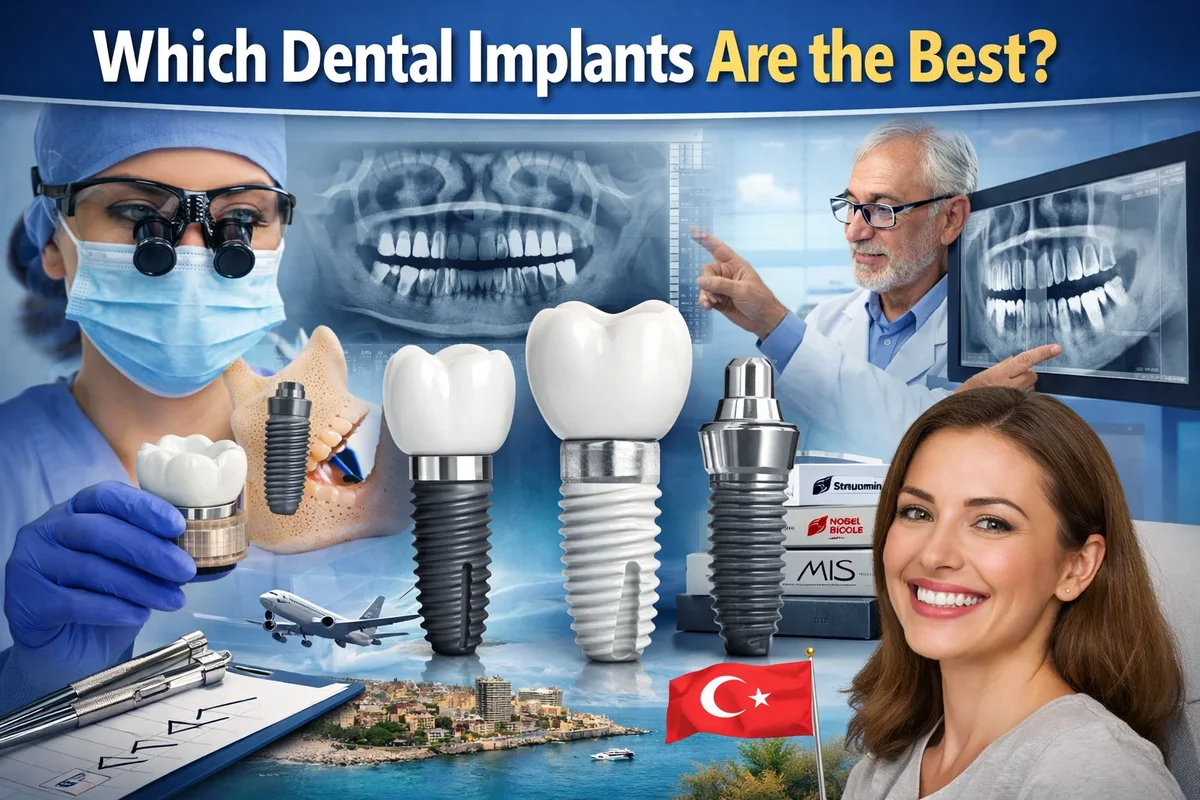
Common Myths and Misconceptions About Which Dental Implants Are the Best
As dental implant treatments become more popular worldwide, misinformation has also increased. Many patients researching which dental implants are the best encounter conflicting advice online. Some sources exaggerate risks, while others promote certain brands without scientific backing. Understanding common myths helps patients make informed decisions and confidently determine which dental implants are the best based on evidence rather than assumptions.
Dental implants are one of the most researched and predictable procedures in modern dentistry. However, confusion often arises due to marketing claims, anecdotal experiences, and incomplete information. Let’s explore the most common misconceptions and clarify the truth behind them.
Myth 1: The Most Expensive Implant Is Automatically the Best
One of the most widespread assumptions is that the highest-priced implant must be the answer to which dental implants are the best. While premium brands often justify their cost through research and engineering, price alone does not guarantee superior results.
The success of an implant depends on multiple factors: surgical precision, bone quality, patient health, and long-term maintenance. A well-placed mid-range implant can outperform a poorly placed premium implant. Therefore, while cost can reflect quality and research investment, it should not be the sole deciding factor when evaluating which dental implants are the best.
Myth 2: All Dental Implants Are Exactly the Same
Another misconception is that every implant system is identical. In reality, implant brands differ in surface technology, thread design, connection type, and prosthetic compatibility. These variations influence healing time, bone preservation, and mechanical stability.
When asking which dental implants are the best, patients should understand that design features such as conical connections and platform switching can significantly impact long-term outcomes. Scientific research consistently shows that small engineering differences may reduce marginal bone loss and improve tissue health.
Surface Technology Matters
Modern implants often feature sandblasted, acid-etched, or hydrophilic surfaces to enhance osseointegration. These innovations promote faster bone integration and greater stability. Therefore, not all implants function identically at the microscopic level.
Myth 3: Dental Implants Always Last a Lifetime
While dental implants have high survival rates — often above 95% over 10 years — no medical procedure can guarantee lifetime permanence. Proper oral hygiene, regular dental visits, and healthy lifestyle habits significantly influence longevity.
When researching which dental implants are the best, patients should focus on systems with documented long-term data rather than expecting a lifetime guarantee. According to guidelines supported by the American Dental Association, ongoing maintenance is essential for implant success.
Maintenance Is Critical
Peri-implantitis, an inflammatory condition affecting tissues around implants, can compromise stability if left untreated. Regular professional cleanings and early intervention greatly reduce this risk 😊.
Myth 4: Metal-Free Implants Are Always Safer
Some patients believe zirconia (ceramic) implants are inherently safer than titanium implants. While zirconia offers a metal-free alternative, titanium has an extensive track record spanning decades of clinical success.
True titanium allergies are extremely rare. For most patients, titanium remains the gold standard when determining which dental implants are the best for long-term reliability. Zirconia may be appropriate for specific cases, particularly for aesthetic concerns or documented sensitivities, but it is not universally superior.
Myth 5: Implant Brand Is More Important Than Surgeon Skill
Many online discussions focus exclusively on brand comparisons when debating which dental implants are the best. However, surgical expertise is equally — if not more — important.
Accurate placement, proper angulation, and correct depth significantly affect long-term outcomes. An experienced implantologist using a reputable system will typically achieve better results than an inexperienced provider using the most expensive brand.
Myth 6: Implants Are Too Painful or Risky
Modern implant procedures are performed under local anesthesia, often with minimal discomfort. Many patients report that implant placement is less painful than tooth extraction. Post-operative discomfort is usually mild and manageable with standard medication.
Advances in digital imaging and guided surgery have greatly improved safety. When asking which dental implants are the best, patients should also consider clinics that use advanced diagnostic tools and evidence-based protocols.
Myth 7: Travel Dentistry Always Means Lower Quality
Some patients assume that lower-cost treatments abroad indicate inferior quality. While quality varies by clinic, many internationally accredited clinics use the same premium implant brands found in the United States and Europe.
When evaluating which dental implants are the best, focus on the implant system, surgeon qualifications, sterilization standards, and clinical documentation rather than geographic location alone.
How to Separate Facts from Marketing
To accurately determine which dental implants are the best, patients should:
- Request information about clinical studies and long-term data
- Ask about implant surface technology and design
- Verify surgeon credentials and experience
- Ensure the clinic offers structured follow-up care
If you would like personalized guidance to determine which dental implants are the best for your oral health and expectations, our experienced team is available via the Redent Klinik Contact Page.
Final Clarification
Ultimately, understanding common myths helps patients approach implant treatment with realistic expectations. Determining which dental implants are the best requires evaluating scientific evidence, clinical expertise, and personal health factors — not relying on price tags, marketing slogans, or online rumors. With proper research and professional consultation, patients can confidently choose a system that delivers long-term stability, comfort, and natural aesthetics.