
If you are researching tooth replacement options, one of the first and most important questions you may ask is: will medical cover dental implants? Dental implants are widely considered the gold standard for replacing missing teeth because they look natural, function like real teeth, and can last for decades. However, they are also a significant financial investment. That is why understanding whether medical insurance helps pay for them is essential before starting treatment.
To clearly answer the question “will medical cover dental implants,” we need to understand how insurance systems work. In most countries, including the United States, health insurance is divided into two main categories: medical insurance and dental insurance. Dental implants are generally classified as a dental procedure. Because of this classification, the simple answer to will medical cover dental implants is usually “no” — but there are important exceptions that every patient should know about.
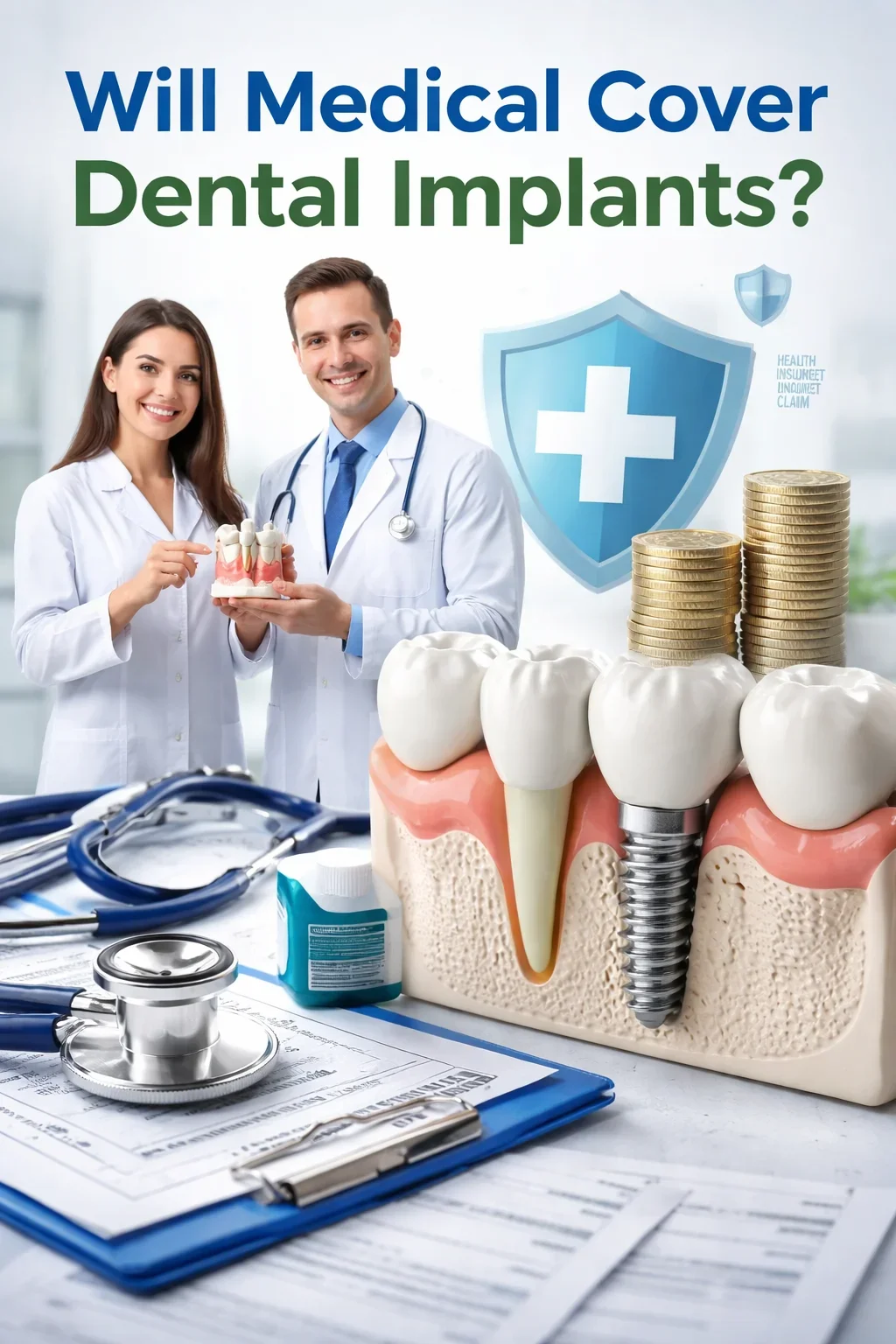
Dental implants involve surgically placing a titanium post into the jawbone. Over time, this post integrates with the bone through a process called osseointegration. After healing, a crown is placed on top. Since this procedure includes surgery, many patients logically assume that medical insurance might help. After all, surgery is typically covered under medical plans. This is why so many people search online asking, “will medical cover dental implants?” 🤔
In reality, medical insurance policies are designed to treat illnesses, injuries, and systemic health conditions. Routine dental care — including cleanings, fillings, crowns, and implants — is usually excluded. However, there are situations where medical insurance may partially cover implant-related procedures. For example, if tooth loss results from a traumatic accident, jaw fracture, tumor removal, or congenital defect, medical coverage may apply to certain surgical components. In these cases, the focus of coverage is not the tooth itself, but the reconstruction of bone or facial structure.
Another important factor when asking “will medical cover dental implants” is medical necessity. Insurance companies often use this term when evaluating claims. If an implant procedure is considered medically necessary to restore function after disease or trauma, medical insurance may reimburse part of the treatment. However, if the implant is viewed as an elective dental restoration, coverage is unlikely.
It is also important to differentiate between covering the implant surgery and covering the prosthetic crown. Even if medical insurance contributes to bone grafting or jaw reconstruction, it typically does not cover the final dental crown. That portion usually falls under dental insurance benefits — if you have them. This distinction often confuses patients and reinforces the need to carefully review your policy documents.
According to professional guidelines and educational resources from the American Dental Association, patients should always request a detailed treatment plan before contacting their insurer. This plan should include diagnostic codes, procedural codes, and documentation explaining why the implant is necessary. Providing this information increases the likelihood of getting a clear answer to the question, “will medical cover dental implants in my specific case?”
In addition to traditional private insurance, government-funded healthcare systems may have different rules. Some national healthcare programs cover implants only in severe medical circumstances, such as oral cancer reconstruction. Cosmetic or convenience-based implants are rarely funded. Therefore, the answer to “will medical cover dental implants” depends heavily on your location, insurance provider, and medical history.
Another key consideration is pre-authorization. Many insurers require approval before surgery. If you are wondering, “will medical cover dental implants,” never proceed without written confirmation from your insurance company. Verbal information over the phone is not always binding. Always request documentation to avoid unexpected bills.
Ultimately, the most accurate answer to “will medical cover dental implants” is: sometimes, but only under specific medical conditions. In most routine cases of tooth loss due to decay or periodontal disease, coverage will fall under dental insurance rather than medical insurance. However, if your missing teeth are related to trauma, pathology, or reconstructive needs, medical insurance may contribute to surgical components of the treatment.
If you are unsure about your eligibility, speaking directly with an experienced implant dentist is the best first step. A professional evaluation can determine whether your situation qualifies as medically necessary. If you would like personalized guidance, you can reach out through the Redent Klinik Contact Page to discuss your case in detail. 🦷
In conclusion, the question “will medical cover dental implants” does not have a simple yes-or-no answer. It depends on medical necessity, cause of tooth loss, insurance structure, and proper documentation. Understanding these factors empowers you to make informed financial and healthcare decisions before beginning your implant journey.
1. Why People Ask: Will Medical Cover Dental Implants?
One of the most common questions patients ask before starting treatment is simple yet crucial: will medical cover dental implants? This question usually comes up immediately after they learn about the cost of implant therapy. Dental implants are a long-term investment in oral health, comfort, and confidence, but they also involve surgical procedures, advanced materials, and multiple appointments. Because of this, patients naturally want to know whether their medical insurance will reduce the financial burden.
Understanding why so many people search for “will medical cover dental implants” helps clarify the confusion surrounding insurance policies. Many individuals assume that because implants involve surgery, anesthesia, radiographic imaging, and sometimes hospital settings, the treatment should logically fall under medical coverage. However, insurance classifications are not always aligned with patient expectations.
Dental Implants Are Both Surgical and Dental Procedures
Dental implant placement is a surgical procedure performed in the jawbone. The titanium post acts as an artificial tooth root and integrates with the bone over several months. From a medical standpoint, surgery is typically associated with medical insurance. That is why patients often believe the answer to “will medical cover dental implants” should be yes.
However, insurance companies classify procedures based on treatment category rather than complexity. Because implants ultimately replace missing teeth, they are generally categorized as restorative dental procedures. This classification is the main reason why the answer to “will medical cover dental implants” is usually no in routine cases.
That said, there are important exceptions. When tooth loss is related to trauma, facial injury, oral cancer, or congenital deformities, some aspects of implant surgery may qualify as reconstructive care. In those cases, part of the treatment may fall under medical insurance rather than purely dental benefits.
The Financial Motivation Behind the Question
Another major reason people ask “will medical cover dental implants” is cost. A single dental implant in the United States can range from approximately $3,000 to $5,000 per tooth, depending on complexity, bone grafting needs, and geographic location. Full-arch implant solutions can range from $20,000 to $50,000 per arch. These figures explain why patients explore every possible insurance option before committing.
Because medical insurance often has higher annual coverage limits than dental insurance, patients hope that their health policy will contribute more substantially. Dental plans commonly have annual maximums between $1,000 and $2,000, which barely covers a fraction of implant costs. This gap drives the repeated question: will medical cover dental implants in my situation?
Cost Transparency and Insurance Verification
Before starting treatment, a detailed written treatment plan is essential. This plan should include diagnostic codes, procedural codes, radiographs, and clinical documentation explaining the necessity of treatment. Insurance providers require this information to evaluate claims. Without proper documentation, even medically related implant cases may be denied.
Consulting authoritative sources such as the American Dental Association can also help patients better understand how implant procedures are classified and reimbursed.
Medical Necessity vs. Elective Treatment
The distinction between medically necessary and elective treatment is central when evaluating “will medical cover dental implants.” Insurance providers define medical necessity based on functional impairment, disease, trauma, or reconstructive need. If missing teeth affect chewing function due to jaw damage after an accident, the medical component may be considered necessary.
However, if implants are chosen to replace teeth lost from long-term decay or gum disease without systemic complications, insurers usually classify the treatment as elective dental care. In those situations, asking “will medical cover dental implants” often leads to disappointment unless there are unusual health factors involved.
Common Misconceptions About Coverage
Many patients believe that because implants improve overall health by restoring chewing ability and preventing bone loss, medical insurance should automatically contribute. While implants do offer significant health benefits, insurance systems separate oral health from general health coverage in many countries. This structural separation is why the question “will medical cover dental implants” continues to generate confusion.
Another misconception is that if part of the procedure occurs in a hospital setting, medical insurance must cover it. In reality, the setting does not automatically determine coverage. Classification depends on diagnosis codes and the underlying medical reason for treatment.
Emotional and Quality-of-Life Considerations
Beyond financial concerns, patients also ask “will medical cover dental implants” because missing teeth can significantly impact self-esteem, speech, and social confidence. Dental implants provide a stable, natural-looking solution that can dramatically improve quality of life. When people realize how transformative implants can be, they understandably hope insurance will help make the procedure more accessible. 😊
Tooth loss is not only cosmetic; it can lead to jawbone deterioration, shifting teeth, and bite problems. While these consequences are medically relevant, insurance providers may still categorize implant treatment under dental care unless linked to a broader medical diagnosis.
How to Get a Clear Answer for Your Case
The most effective way to determine whether your situation qualifies is to schedule a professional consultation. An experienced implant dentist can evaluate whether trauma, pathology, or systemic health conditions justify submitting part of the procedure to medical insurance. If you would like individualized assistance, you can contact specialists through the Redent Klinik Contact Page for detailed guidance.
In summary, people ask “will medical cover dental implants” because implants are surgical, expensive, and life-changing. The answer depends on medical necessity, cause of tooth loss, insurance structure, and documentation. While routine implant cases are usually covered by dental insurance rather than medical insurance, exceptions exist in trauma and reconstructive scenarios. Understanding these distinctions empowers patients to plan their treatment with realistic expectations and financial clarity.
2. The Difference Between Medical and Dental Insurance Coverage
To properly understand the answer to the question will medical cover dental implants, it is essential to first understand the fundamental difference between medical insurance and dental insurance. Many patients assume insurance is a single system that covers all health-related treatments. In reality, these two types of coverage are structured differently, regulated differently, and reimbursed differently. This structural separation is the primary reason why the question “will medical cover dental implants” often leads to confusion.
How Medical Insurance Is Structured
Medical insurance is designed to cover illnesses, injuries, hospitalizations, diagnostic testing, surgeries, and systemic health conditions. Its main purpose is to protect individuals from high-cost medical events that impact overall health. When patients ask, “will medical cover dental implants,” they often focus on the fact that implant placement is a surgical procedure. From a surface-level perspective, surgery equals medical coverage. However, insurance classification does not work that simply.
Medical insurance typically covers procedures that are considered medically necessary to treat disease, trauma, congenital defects, or life-threatening conditions. For example, jaw reconstruction following a car accident or tumor removal would generally fall under medical benefits. In such scenarios, part of the treatment may overlap with dental implant therapy. That overlap is why some people believe the answer to “will medical cover dental implants” might sometimes be yes.
Medical Necessity Criteria
Insurance providers use strict definitions when evaluating claims. A procedure must meet documented criteria to qualify as medically necessary. Even if a dental implant improves chewing function or prevents bone loss, insurers may still classify it as dental restoration rather than medical reconstruction. Therefore, simply improving oral health does not automatically mean medical insurance will apply.
How Dental Insurance Is Structured
Dental insurance, on the other hand, focuses specifically on oral health. It typically covers preventive care (cleanings and exams), basic restorative procedures (fillings and extractions), and major treatments (crowns, bridges, dentures, and sometimes implants). When evaluating “will medical cover dental implants,” it is important to recognize that implants are primarily categorized under major dental procedures.
Unlike medical insurance, dental plans usually have annual maximum limits. In the United States, these limits commonly range from $1,000 to $2,000 per year. Because dental implants often cost between $3,000 and $5,000 per tooth, dental insurance rarely covers the entire expense. This limitation is a major reason patients revisit the question, “will medical cover dental implants instead?”
Coverage Percentages in Dental Plans
When dental insurance includes implant benefits, it often reimburses 40% to 60% of the procedure after deductibles, depending on the plan. Some policies exclude implants entirely or require waiting periods of 6–12 months. Understanding these limitations helps clarify why many patients hope medical insurance will provide broader support.
Why the Two Systems Are Separate
Historically, dental care developed separately from general medical care. Although oral health is closely linked to overall health, insurance systems evolved independently. As a result, even though implant surgery involves bone, tissue, and healing processes similar to other surgical procedures, it is usually classified within dentistry.
This separation explains why the answer to “will medical cover dental implants” is usually no for routine tooth replacement. Medical insurance providers consider implants restorative rather than life-saving or disease-treating interventions, unless specific medical circumstances apply.
When Medical and Dental Coverage Overlap
There are certain scenarios where medical and dental insurance may overlap. For example:
- Severe facial trauma requiring jaw reconstruction
- Oral cancer treatment involving bone removal
- Congenital defects such as cleft palate
- Systemic infections affecting jawbone integrity
In these situations, surgical reconstruction may be billed to medical insurance, while the prosthetic crown portion may still be billed to dental insurance. This dual-billing approach can sometimes reduce total out-of-pocket costs. However, it requires detailed documentation, coding accuracy, and pre-authorization. Without proper paperwork, claims are often denied.
Authoritative organizations such as the American Dental Association recommend that patients request a comprehensive treatment plan with diagnostic codes before contacting their insurer. This documentation is crucial when determining whether medical benefits might apply.
Key Differences at a Glance
To simplify the distinction when evaluating “will medical cover dental implants,” consider the following comparison:
- Medical Insurance: Covers systemic health conditions, trauma, hospitalization, and medically necessary surgery.
- Dental Insurance: Covers preventive and restorative oral procedures, often with annual caps.
- Implants: Typically classified as dental unless directly tied to medical reconstruction.
Understanding this breakdown prevents unrealistic expectations and financial surprises.
Why Clarification Is Essential Before Treatment
Before scheduling implant surgery, always verify benefits in writing. Ask your provider specific questions such as: “Does my medical plan include reconstructive jaw surgery?” and “If so, under what diagnosis codes?” Simply asking “will medical cover dental implants” without detailed documentation may lead to incomplete answers.
If you need professional guidance navigating insurance coordination, you can consult implant specialists through the Redent Klinik Contact Page for individualized advice. 🦷
In summary, the difference between medical and dental insurance coverage is the core reason behind confusion surrounding “will medical cover dental implants.” Medical insurance focuses on systemic health and trauma, while dental insurance focuses on oral restoration. Although overlap is possible in reconstructive cases, routine implant therapy is usually categorized under dental benefits. Understanding this distinction empowers patients to make informed financial decisions before beginning treatment.
3. Situations Where Medical Insurance May Cover Dental Implants
Although the answer to will medical cover dental implants is usually no in routine cases, there are specific medical situations where coverage may apply. Understanding these exceptions is extremely important for patients who have experienced trauma, disease, or congenital conditions. Insurance companies do not automatically deny implant-related claims; rather, they evaluate whether the treatment meets strict criteria for medical necessity. In certain reconstructive or medically complex cases, the answer to “will medical cover dental implants” may be partially yes.
To determine eligibility, insurers analyze diagnosis codes, surgical reports, radiographs, and physician documentation. The focus is not simply on replacing a missing tooth, but on whether the implant is part of a broader medical reconstruction. Below are the most common scenarios where medical insurance may contribute to implant-related treatment.
Facial Trauma and Accidental Injuries
One of the clearest situations where medical insurance may apply is traumatic injury. If a patient loses teeth due to a car accident, sports injury, physical assault, or workplace incident, the resulting jaw damage may qualify as a medical condition. In these cases, surgical reconstruction of the jawbone can fall under medical benefits.
When trauma affects bone structure, medical insurers often cover diagnostic imaging, bone grafting, and surgical repair. If dental implants are necessary to restore structural function after reconstruction, part of the procedure may be reimbursed. Therefore, when trauma is involved, the answer to will medical cover dental implants becomes more favorable.
Documentation Requirements After Trauma
Insurance providers require emergency room records, radiology reports, and detailed surgical notes to verify that the tooth loss was accident-related. Without this documentation, even legitimate trauma cases may be denied. Proper claim submission significantly increases the likelihood that medical insurance will contribute.
Oral Cancer and Tumor Removal
Another situation where patients often revisit the question “will medical cover dental implants” is after oral cancer treatment. When tumors are surgically removed from the jaw or surrounding tissues, patients may lose teeth and bone structure as part of the procedure. Reconstruction in these cases is not cosmetic; it is medically necessary to restore speech, chewing, and facial stability.
Medical insurance frequently covers cancer-related surgery, hospital stays, anesthesia, and reconstructive bone grafting. If implants are required to stabilize prosthetic restorations after tumor removal, part of the implant surgery may qualify for medical reimbursement. However, the final crown or prosthetic component is often processed under dental benefits.
Organizations such as the American Dental Association emphasize the importance of coordinated care between surgeons and restorative dentists in these complex cases.
Congenital Conditions and Developmental Disorders
Certain congenital conditions may also change the answer to “will medical cover dental implants.” Patients born with cleft palate, ectodermal dysplasia, or other craniofacial abnormalities may lack properly developed teeth or jaw structures. In these cases, implant placement can be considered part of reconstructive medical treatment rather than elective dental restoration.
When implants are necessary to restore basic oral function in patients with developmental disorders, medical insurance may approve surgical components of treatment. Again, careful documentation is essential. Coverage decisions are made on a case-by-case basis.
Severe Infections and Pathological Conditions
Serious infections affecting the jawbone, such as osteomyelitis, may require surgical intervention. If infection leads to bone loss and tooth extraction, reconstructive procedures might be considered medically necessary. In these situations, patients understandably ask, “will medical cover dental implants as part of the recovery process?”
While the infection treatment itself is typically covered by medical insurance, implant placement afterward may only be partially covered. Insurers evaluate whether the implant is required to restore essential function or whether alternative prosthetic options could suffice.
Systemic Health Complications
Patients with systemic conditions such as diabetes, autoimmune diseases, or those undergoing chemotherapy may require special surgical management. Although these health conditions affect implant planning, they do not automatically qualify implants for medical coverage. The determining factor remains medical necessity related to trauma, pathology, or structural reconstruction.
Jaw Reconstruction After Major Surgery
When portions of the jawbone are removed due to cysts, tumors, or severe pathology, reconstruction may involve bone grafts, plates, and implants. In such complex reconstructive cases, medical insurance is more likely to contribute to surgical components. However, it is important to understand that the prosthetic crown placed on top of the implant is usually billed separately through dental insurance.
This division between surgical and prosthetic billing explains why patients often feel confused when asking “will medical cover dental implants.” Even if part of the procedure is covered medically, patients may still have out-of-pocket costs for the restorative phase.
Pre-Authorization and Claim Strategy
If you believe your case may qualify under medical criteria, pre-authorization is critical. Never assume approval without written confirmation. Submit diagnostic codes, radiographs, clinical notes, and a detailed explanation of why implants are medically required. Simply asking “will medical cover dental implants” without providing documentation is rarely enough to secure coverage.
Professional implant centers can help coordinate communication between dental offices and insurance providers. If you need personalized guidance about your eligibility, you may consult specialists through the Redent Klinik Contact Page. 🦷
In summary, while routine tooth replacement is typically classified as dental care, there are specific situations where medical insurance may contribute. Trauma, oral cancer, congenital abnormalities, severe infections, and reconstructive jaw surgery are the primary scenarios where the answer to will medical cover dental implants may be partially yes. Each case depends on medical necessity, documentation, and insurance policy terms. Understanding these exceptions allows patients to explore every possible avenue of financial support before beginning implant treatment.
4. When Medical Insurance Will Not Cover Dental Implants
While many patients hope the answer to will medical cover dental implants will be yes, it is equally important to understand the situations where medical insurance clearly does not apply. Knowing these limitations helps you avoid unrealistic expectations, unexpected bills, and claim denials. In most routine tooth replacement cases, medical insurance will not contribute because implants are classified as dental restorations rather than essential medical treatments.
To fully understand why the answer to “will medical cover dental implants” is often no, we must examine how insurers define elective, cosmetic, and restorative procedures. Insurance companies operate under strict policy guidelines. Even if a procedure improves quality of life, it does not automatically qualify for medical reimbursement.
Tooth Loss Due to Decay or Gum Disease
The most common reason for missing teeth is long-term tooth decay or advanced periodontal (gum) disease. In these situations, tooth loss develops gradually over time rather than from sudden trauma or medical pathology. Because the condition originates in the oral cavity and falls under routine dental care, medical insurance typically does not apply.
If your missing tooth resulted from cavities, failed root canal treatment, or chronic gum infection, the answer to will medical cover dental implants is almost always no. Even though the implant procedure involves surgery, insurers classify it as a dental restoration replacing a lost tooth, not as systemic disease treatment.
Why Classification Matters
Insurance coding systems differentiate between medical diagnosis codes and dental procedure codes. Decay and periodontal disease are categorized under dental benefits. Therefore, implant placement following these conditions remains within dental coverage limits, not medical benefits.
Elective or Cosmetic Implant Placement
Another scenario where medical insurance will not cover treatment is elective implant placement for cosmetic improvement. For example, if a patient chooses to replace a removable denture with fixed implants for comfort and aesthetics, the procedure is considered elective. Although implants offer functional advantages, upgrading from a working denture to implants is not viewed as medically necessary.
In these cases, asking “will medical cover dental implants” typically results in denial because the procedure enhances convenience and appearance rather than treating a life-threatening or reconstructive medical condition.
Bone Loss Without Medical Trauma
Jawbone shrinkage commonly occurs after tooth extraction. Over time, the bone resorbs naturally in the absence of a tooth root. While this bone loss can affect facial structure and chewing ability, insurers consider it a natural dental consequence rather than a medical emergency.
Even if bone grafting is required before implant placement, the procedure is usually categorized as dental augmentation. Therefore, the answer to “will medical cover dental implants” remains negative unless the bone loss resulted from trauma, tumor removal, or severe pathology.
Age-Related Tooth Replacement
Tooth loss associated with aging does not qualify as a medical reconstruction. Even though missing teeth can impact nutrition and overall health, medical insurance providers rarely consider implants medically necessary in age-related cases.
Implants for Functional Improvement Alone
Dental implants significantly improve chewing efficiency, speech clarity, and confidence. However, functional improvement alone does not guarantee medical coverage. Many patients believe that because implants restore chewing ability, medical insurance should apply. Unfortunately, insurers distinguish between restoring oral function and treating systemic illness.
Unless chewing impairment results from documented jaw trauma or disease, the question “will medical cover dental implants” usually has a negative answer. Functional enhancement is considered restorative dental care rather than medical intervention.
Policy Exclusions and Waiting Periods
Some medical policies explicitly exclude dental procedures in their contracts. Even if a case appears borderline medical, written exclusions override assumptions. It is critical to review your policy documents carefully before proceeding with treatment.
Additionally, dental insurance plans may include waiting periods for major procedures such as implants. While this does not directly answer “will medical cover dental implants,” it affects financial planning because patients may assume medical coverage will fill the gap if dental benefits are delayed.
Authoritative guidance from the American Dental Association recommends verifying benefits and exclusions in writing before surgery. Documentation protects you from unexpected denials.
Hospital Setting Does Not Guarantee Coverage
A common misconception is that if implant surgery takes place in a hospital, medical insurance must cover it. In reality, location does not determine classification. Coverage depends on diagnosis and medical necessity. Even hospital-based implant procedures may still be billed as dental services.
This misunderstanding frequently fuels repeated searches for “will medical cover dental implants,” especially among patients scheduled for complex procedures requiring sedation or general anesthesia.
How to Avoid Insurance Surprises
Before scheduling surgery, request a detailed treatment plan that outlines each procedural code. Submit this plan for pre-authorization when possible. Simply asking your provider verbally, “will medical cover dental implants?” is not enough. Always obtain written confirmation from your insurance company.
If you are unsure about your eligibility or need help navigating insurance coordination, consulting experienced implant specialists can provide clarity. You may reach out through the Redent Klinik Contact Page for personalized guidance. 🦷
In summary, medical insurance will not cover dental implants in most routine cases involving decay, gum disease, elective upgrades, age-related tooth loss, or purely cosmetic improvements. Understanding these exclusions allows you to plan realistically and explore alternative financing options. While exceptions exist in trauma and reconstructive situations, the typical answer to will medical cover dental implants remains no unless strict medical necessity criteria are met.
5. How to Check If Medical Will Cover Dental Implants in Your Case
After learning about coverage limitations and exceptions, the next logical step is figuring out how to determine whether will medical cover dental implants in your specific situation. Insurance policies vary widely between providers, employers, and countries. What applies to one patient may not apply to another. That is why a personalized verification process is essential before starting implant treatment.
Instead of relying on assumptions or online generalizations, you need a structured approach. Simply asking a receptionist over the phone, “will medical cover dental implants?” is rarely enough. Insurance decisions depend on documentation, diagnosis codes, and medical necessity criteria. Below is a step-by-step guide to accurately checking your eligibility.
Step 1: Obtain a Detailed Treatment Plan
The first and most important step is requesting a comprehensive written treatment plan from your implant dentist. This document should include:
- Diagnostic findings and clinical notes
- Radiographic evidence (X-rays or CT scans)
- Procedure codes (CPT or CDT codes)
- Explanation of medical necessity, if applicable
When insurance providers evaluate whether will medical cover dental implants, they rely heavily on procedure and diagnosis codes. Without these codes, they cannot determine if your case meets medical criteria. A verbal description is not sufficient.
Why Coding Accuracy Matters
Medical insurance uses ICD (International Classification of Diseases) codes, while dental procedures use CDT codes. In cases involving trauma or pathology, both coding systems may be required. Incorrect coding can lead to automatic claim denial, even if the case qualifies.
Step 2: Review Your Medical Policy Documents
Before contacting your insurance provider, review your policy handbook. Look specifically for sections titled:
- Exclusions
- Reconstructive Surgery
- Oral and Maxillofacial Surgery
- Medically Necessary Procedures
Many policies clearly state whether dental-related surgeries are excluded. If your contract explicitly excludes dental implants, the answer to “will medical cover dental implants” may already be documented. However, reconstructive clauses sometimes provide exceptions for trauma or congenital conditions.
Step 3: Contact Your Insurance Provider in Writing
After reviewing your documents, submit a pre-authorization request. This is one of the most critical steps in determining whether will medical cover dental implants in your case. A pre-authorization request includes your treatment plan, diagnostic evidence, and a formal coverage inquiry.
Always request a written response. Verbal confirmations over the phone are not legally binding. A written determination protects you from unexpected financial responsibility.
Key Questions to Ask
When communicating with your insurer, consider asking:
- Is implant surgery covered under reconstructive benefits?
- Does trauma-related tooth loss qualify?
- Are bone grafting procedures covered?
- Is pre-authorization required?
These targeted questions provide more precise answers than simply asking, “will medical cover dental implants?”
Step 4: Coordinate Between Medical and Dental Insurance
In some cases, partial dual coverage may apply. For example, medical insurance may cover jaw reconstruction, while dental insurance covers the implant crown. This coordination is known as “cross-billing.” It requires close collaboration between your dental office and insurance provider.
Implant centers experienced in complex cases often assist patients in navigating this process. Authoritative guidance from the American Dental Association emphasizes the importance of proper documentation and communication between providers.
Step 5: Understand Out-of-Pocket Responsibilities
Even if medical insurance contributes, it may not cover 100% of the cost. Deductibles, co-insurance percentages, and coverage limits still apply. For example:
- Medical deductible: $500–$2,000 depending on plan
- Co-insurance: 20%–30% after deductible
- Coverage caps for reconstructive procedures
Understanding these details prevents confusion later. Many patients mistakenly assume that once medical insurance approves a procedure, they have no further financial responsibility. Always clarify your estimated out-of-pocket cost in advance.
Step 6: Seek Professional Assistance
If the process feels overwhelming, you are not alone. Insurance terminology and claim procedures can be complex. Implant clinics often have insurance coordinators who specialize in verifying benefits. These professionals can submit claims, follow up with insurers, and appeal denials if necessary.
If you need personalized guidance to determine whether will medical cover dental implants in your situation, you can contact specialists through the Redent Klinik Contact Page. 🦷 A professional evaluation can help clarify eligibility and financial planning.
Appealing a Denied Claim
If your initial claim is denied, do not assume the decision is final. Many claims are rejected due to incomplete documentation rather than lack of eligibility. You have the right to file an appeal with additional supporting evidence, including detailed medical reports and professional statements explaining necessity.
Appeals often succeed when trauma, tumor removal, or congenital abnormalities are clearly documented. Persistence and proper documentation are key.
In summary, determining whether will medical cover dental implants in your case requires a structured process: obtain a detailed treatment plan, review policy documents, submit pre-authorization, coordinate insurance benefits, and clarify financial responsibility. Coverage decisions depend on medical necessity, documentation accuracy, and policy terms. By following these steps carefully, you can move forward with confidence and avoid unexpected financial surprises.
6. Average Dental Implant Costs With and Without Insurance
Understanding the financial aspect of implant treatment is essential when asking the important question: will medical cover dental implants? Cost is often the driving factor behind insurance research. Dental implants are considered a long-term investment in oral health, function, and aesthetics, but they can also represent a significant upfront expense. To properly evaluate your options, you must understand average pricing, insurance contributions, and how coverage — or lack of it — impacts total cost.
While the answer to “will medical cover dental implants” is usually no in routine cases, certain medical situations may reduce surgical expenses. However, most implant treatments are funded either through dental insurance or out-of-pocket payments. Below is a detailed breakdown of typical costs.
Average Cost of a Single Dental Implant
In the United States, the average cost of a single dental implant typically ranges between:
- $3,000 – $5,000 per tooth
This estimate usually includes:
- Initial consultation and imaging (X-rays or CBCT scans)
- Surgical placement of the titanium implant
- Abutment placement
- Custom dental crown
If additional procedures are required, such as bone grafting or sinus lifting, total costs may increase. Patients often ask, “will medical cover dental implants if bone grafting is required?” In most cases, bone grafting related to routine tooth loss is still considered dental. However, if bone loss resulted from trauma or pathology, medical insurance may partially cover reconstructive components.
Additional Procedures That Affect Cost
Some patients require preparatory treatments before implant placement:
- Bone graft: $300 – $3,000 depending on severity
- Sinus lift: $1,500 – $5,000
- Tooth extraction: $150 – $500
These procedures significantly influence total treatment expenses. Understanding these variables is crucial before determining whether will medical cover dental implants in complex cases.
Cost of Full-Arch Dental Implants
For patients missing multiple teeth or an entire arch, implant-supported full-arch restorations may be recommended. Average pricing ranges from:
- $20,000 – $30,000 per arch for implant-supported bridges
- $40,000 – $50,000 per arch for advanced full-arch fixed solutions
Because these amounts are substantial, patients frequently revisit the question, “will medical cover dental implants for full-mouth restoration?” Unless the case involves trauma, cancer reconstruction, or congenital defects, medical insurance rarely covers full-arch implant treatment.
Costs With Dental Insurance
Some dental insurance plans now include implant benefits. However, coverage percentages vary. Typical reimbursement structures include:
- 40% – 60% coverage of implant procedure
- Annual maximum limits between $1,000 – $2,000
- Waiting periods of 6–12 months
Even with insurance, patients often pay a large portion out of pocket due to annual caps. This limitation is one reason people continue researching whether will medical cover dental implants instead.
Costs Without Insurance
If neither dental nor medical insurance contributes, the full cost becomes the patient’s responsibility. However, many clinics offer flexible payment plans, third-party financing, or staged treatment scheduling to reduce immediate financial strain.
While upfront cost may seem high, implants often last 20 years or more with proper care. Compared to bridges or dentures that require replacement every 5–10 years, implants may provide better long-term value.
Long-Term Financial Considerations
When evaluating whether will medical cover dental implants, consider the long-term perspective. Although medical insurance rarely funds routine implants, the durability and stability of implants may reduce future dental expenses associated with removable prosthetics, adhesives, or repeated replacements.
International Cost Comparisons
Some patients explore dental tourism due to high domestic prices. Implant costs in certain countries may range from $1,000 – $2,500 per implant, depending on clinic standards and technology. While lower pricing can be attractive, it is essential to evaluate quality, materials, sterilization protocols, and practitioner experience.
Cost savings should never compromise safety. Organizations such as the American Dental Association emphasize choosing qualified professionals and verified treatment standards.
Does Medical Insurance Ever Reduce Implant Costs?
In medically complex cases involving trauma or reconstructive surgery, medical insurance may cover diagnostic imaging, hospital fees, anesthesia, or bone reconstruction. However, the implant crown and restorative components usually remain under dental benefits. Therefore, when patients ask, “will medical cover dental implants entirely?” the answer is typically no — even if partial surgical costs are reimbursed.
Getting an Accurate Cost Estimate
The only way to determine your exact financial responsibility is through a personalized consultation. Treatment complexity, bone condition, implant brand, and restorative materials all influence pricing. If you would like a detailed assessment and cost breakdown tailored to your needs, you can reach out via the Redent Klinik Contact Page. 🦷
In summary, dental implant costs vary widely depending on case complexity and geographic location. While dental insurance may provide partial coverage, medical insurance rarely covers routine implant placement. Understanding pricing structures, insurance limits, and long-term value helps you make informed decisions. Although the question will medical cover dental implants is important, focusing on overall treatment quality and durability is equally essential when planning your oral health investment.
7. Alternative Payment Options If Medical Does Not Cover Dental Implants
After researching insurance policies and asking the important question will medical cover dental implants, many patients discover that their medical plan will not contribute to routine implant treatment. While this can feel discouraging at first, it is important to know that several alternative payment options exist. Dental implants are a long-term investment in oral health, function, and confidence, and financial flexibility makes treatment more accessible than many people realize.
If the answer to “will medical cover dental implants” is no in your case, that does not mean treatment is out of reach. Understanding financing solutions, staged treatment planning, and supplemental insurance strategies can help you move forward confidently.
Dental Insurance Benefits and Upgrade Options
Even if medical insurance does not apply, dental insurance may still offer partial coverage. Some modern dental plans include implant benefits, typically covering 40% to 60% of the procedure after deductibles. Although annual maximums often range between $1,000 and $2,000, strategic planning can maximize these benefits.
For example, treatment may be divided across calendar years to utilize two annual maximums. While this approach does not change the answer to will medical cover dental implants, it can significantly reduce out-of-pocket expenses.
Waiting Period Considerations
Some dental plans require a waiting period before major procedures like implants are eligible for reimbursement. If you are planning ahead, enrolling in a plan before treatment may allow you to use benefits later.
In-House Payment Plans
Many implant clinics offer structured in-house payment plans. These plans allow patients to divide total treatment costs into manageable monthly installments. Instead of paying $3,000 to $5,000 upfront for a single implant, you may spread payments over 6 to 24 months.
This solution is particularly helpful when the answer to “will medical cover dental implants” is negative. Clinics understand that implants are life-changing treatments and often aim to make them financially accessible.
Third-Party Healthcare Financing
Third-party financing companies specialize in medical and dental procedures. These companies offer short-term or long-term installment plans, sometimes with promotional interest-free periods if payments are made within a specified timeframe.
While financing does not alter whether will medical cover dental implants, it provides a practical path forward. Always review interest rates, repayment terms, and potential penalties before signing any agreement.
Credit-Based Approval
Approval for third-party financing often depends on credit history. Patients with strong credit profiles may qualify for lower interest rates, reducing overall treatment cost.
Health Savings Accounts (HSA) and Flexible Spending Accounts (FSA)
Health Savings Accounts (HSA) and Flexible Spending Accounts (FSA) allow patients to use pre-tax income for qualified medical and dental expenses. Dental implants typically qualify under these programs because they restore oral function.
If you are asking, “will medical cover dental implants?” and discover that it does not, using HSA or FSA funds can reduce your effective cost through tax savings. This strategy does not require insurance approval and provides greater financial control.
Staged Treatment Planning
In some cases, implant treatment can be performed in phases. For example, you may begin with one implant to stabilize a key functional area and complete additional implants later. This phased approach spreads expenses over time.
Although staging does not change the answer to will medical cover dental implants, it can make treatment more financially manageable without compromising quality.
Dental Discount Plans
Dental discount plans differ from insurance. Instead of reimbursing costs, they provide negotiated discounts at participating clinics. Discounts may range from 10% to 25% depending on the provider.
While discount plans do not replace the question “will medical cover dental implants,” they may reduce direct expenses for patients without insurance coverage.
Medical Credit Cards and Personal Loans
Some patients use medical credit cards or personal loans to finance implant treatment. Interest rates vary depending on creditworthiness. Careful budgeting is essential when selecting this option.
Before choosing this route, compare repayment terms and total projected costs. Although financing can provide immediate access to care, long-term interest should be considered.
Employer Assistance and Supplemental Policies
In rare cases, employer-sponsored supplemental policies may offer broader benefits than standard plans. If tooth loss is linked to a workplace accident, workers’ compensation insurance may contribute to treatment. This situation can slightly shift the answer to “will medical cover dental implants,” especially if the injury occurred on the job.
Always consult your human resources department if trauma is work-related.
Choosing Long-Term Value Over Short-Term Cost
While cost is a major factor, it is equally important to consider long-term durability. Dental implants can last 20 years or more with proper care. Compared to bridges or dentures requiring replacement every 5 to 10 years, implants may provide better long-term value.
Professional organizations such as the American Dental Association emphasize that treatment decisions should prioritize clinical suitability and long-term oral health rather than cost alone.
Consulting a Specialist for Financial Planning
If you are unsure how to proceed after learning that will medical cover dental implants does not apply in your case, a consultation can help clarify options. Experienced implant clinics often provide transparent cost breakdowns, financing guidance, and personalized treatment plans.
You can explore individualized payment solutions and receive professional advice by visiting the Redent Klinik Contact Page. 🦷 A tailored consultation allows you to move forward confidently, even without medical insurance coverage.
In summary, while medical insurance typically does not cover routine implant treatment, numerous alternative payment options exist. Dental insurance benefits, in-house financing, third-party healthcare loans, HSAs, FSAs, staged planning, and discount programs all provide viable solutions. Even if the answer to “will medical cover dental implants” is no, financial flexibility makes high-quality implant treatment achievable for many patients.
8. Expert Advice From the American Dental Association
When patients ask the critical question will medical cover dental implants, it is important to rely on trusted, evidence-based guidance rather than assumptions or online rumors. Professional organizations such as the American Dental Association (ADA) provide educational resources that help patients understand how implant treatment is classified, when it may qualify for insurance reimbursement, and how to make informed decisions.
The ADA does not directly determine insurance coverage policies, but it establishes professional standards and clinical guidelines that influence how insurers evaluate procedures. If you are trying to determine whether will medical cover dental implants in your case, understanding ADA recommendations can provide clarity and realistic expectations.
Dental Implants as a Standard of Care
The ADA recognizes dental implants as a predictable and effective treatment for replacing missing teeth. Implants help preserve jawbone density, restore chewing efficiency, and maintain facial structure. From a clinical perspective, implants are often considered the gold standard for tooth replacement.
However, although implants are medically beneficial for oral function, insurers still classify them primarily as dental restorations. This distinction explains why the answer to “will medical cover dental implants” is typically no in routine cases. The ADA emphasizes that clinical benefit does not automatically translate into medical insurance reimbursement.
Function vs. Insurance Classification
Even though implants improve nutrition and oral stability, insurance systems separate oral health from general medical coverage in many countries. The ADA encourages patients to understand this structural difference before beginning treatment planning.
Medical Necessity and Documentation
According to professional guidelines, medical coverage may apply when implant treatment is part of reconstructive surgery due to trauma, cancer, or congenital abnormalities. In these complex situations, insurers evaluate whether the procedure meets strict medical necessity criteria.
If you are asking, “will medical cover dental implants after an accident or tumor removal?” the ADA advises working closely with both your oral surgeon and insurance provider. Proper documentation, including diagnostic imaging and detailed clinical notes, is essential.
Pre-Authorization Is Essential
The ADA strongly recommends obtaining pre-authorization before surgery in medically complex cases. Written approval reduces the risk of claim denial. Simply assuming that will medical cover dental implants applies can lead to unexpected financial responsibility.
Understanding Coding Systems
Another important area addressed by professional organizations is procedural coding. Medical insurance uses CPT and ICD codes, while dental procedures use CDT codes. In overlapping cases — such as jaw reconstruction — accurate coding is crucial.
If the diagnosis relates to trauma or disease affecting bone structure, part of the surgical procedure may qualify under medical insurance. However, the prosthetic crown portion is typically processed under dental benefits. This separation often explains confusion when patients repeatedly ask, “will medical cover dental implants fully?”
Patient Education and Informed Consent
The ADA emphasizes informed consent and financial transparency. Patients should receive a detailed treatment plan outlining:
- Total cost of implant surgery
- Estimated insurance contribution
- Potential out-of-pocket expenses
- Alternative treatment options
By clearly understanding these factors, patients can make confident decisions regardless of whether will medical cover dental implants applies to their situation.
Alternative Solutions When Coverage Is Limited
When medical insurance does not contribute, the ADA encourages discussing alternative treatment plans if cost is a concern. Options may include:
- Implant-supported overdentures
- Traditional bridges
- Removable partial dentures
While implants provide superior long-term stability, alternative options may offer temporary functional improvement when financial constraints exist.
Choosing Qualified Professionals
The ADA strongly advises patients to seek care from qualified and experienced dental professionals. Implant placement requires precise surgical planning and proper case selection. Choosing a reputable clinic reduces complications and improves long-term success.
If you would like a professional evaluation tailored to your specific needs, you can consult experienced implant specialists through the Redent Klinik Contact Page. 🦷 A detailed consultation helps clarify whether your case might meet criteria where the question will medical cover dental implants deserves deeper review.
Long-Term Oral Health Perspective
The ADA highlights that replacing missing teeth is not merely cosmetic. Untreated tooth loss can lead to shifting teeth, bone resorption, bite problems, and digestive challenges due to impaired chewing. Although these consequences are clinically significant, they do not automatically convert implant treatment into a medically covered procedure.
This reality reinforces why the answer to “will medical cover dental implants” depends more on the cause of tooth loss than on the benefits of the implant itself.
Final Expert Insight
From an expert standpoint, the key takeaway is this: dental implants are clinically valuable and often medically beneficial, but insurance classification systems operate independently of clinical preference. While trauma, pathology, and reconstructive cases may qualify for partial medical coverage, routine restorative implants generally fall under dental insurance.
In conclusion, guidance from the American Dental Association emphasizes proper documentation, pre-authorization, realistic expectations, and choosing qualified professionals. If you are exploring whether will medical cover dental implants in your situation, rely on professional evaluation and written insurance confirmation before beginning treatment. Accurate information and expert consultation are the foundation of confident, informed dental care decisions.
9. What to Do Next If You Are Considering Dental Implants
After exploring insurance details, costs, and professional guidelines, you may still be asking the essential question: will medical cover dental implants in my situation? Once you understand the general rules, the next step is taking practical action. Dental implant treatment is a structured process that involves consultation, diagnosis, financial planning, and surgical scheduling. Moving forward confidently requires preparation, clarity, and professional guidance.
Whether the answer to “will medical cover dental implants” is yes, partially, or no in your case, your focus should shift toward creating a personalized treatment strategy. Below is a detailed roadmap to help you proceed wisely.
Schedule a Comprehensive Consultation
The first step is booking a detailed implant consultation with a qualified dental professional. During this appointment, your dentist will:
- Evaluate your oral health condition
- Take digital X-rays or 3D scans
- Assess bone density and jaw structure
- Review your medical history
This evaluation determines whether you are a suitable candidate for implants and whether your case might qualify under medical necessity criteria. If trauma, tumor removal, or congenital conditions are involved, your dentist can help clarify whether will medical cover dental implants deserves formal insurance review.
Why 3D Imaging Matters
Advanced imaging technology such as CBCT scans allows precise surgical planning. Accurate imaging strengthens documentation if insurance claims are submitted. Proper evidence can influence whether the question “will medical cover dental implants” results in partial approval.
Request a Written Treatment Plan and Cost Breakdown
Before committing to surgery, always request a written treatment plan. This document should clearly outline:
- Total estimated cost
- Implant brand and materials used
- Number of appointments required
- Healing timeline
- Estimated insurance contribution
Understanding your financial responsibility in advance prevents stress later. Even if medical insurance does not apply, knowing exact figures allows you to explore financing options confidently.
Verify Insurance Benefits in Writing
If there is any possibility that medical insurance might contribute, obtain written pre-authorization. Verbal statements are not legally binding. When verifying coverage, ask specific questions such as:
- Is implant surgery considered reconstructive?
- Are trauma-related procedures eligible?
- Is bone grafting covered under medical benefits?
Clear documentation ensures you are not relying solely on assumptions about whether will medical cover dental implants in your particular case.
Consider Your Long-Term Oral Health Goals
Implants are not only about replacing a missing tooth — they are about preserving jawbone health, improving chewing efficiency, and protecting adjacent teeth. While cost and insurance are important, long-term oral stability should guide your decision.
According to guidance from the American Dental Association, replacing missing teeth can prevent bone deterioration and bite misalignment. Even if the answer to “will medical cover dental implants” is no, the long-term health benefits may justify the investment.
Comparing Alternatives
If implants are financially challenging, discuss alternative solutions such as bridges or removable dentures. However, understand that these options may require replacement sooner and may not prevent bone loss as effectively as implants.
Evaluate Financing and Payment Options
If medical insurance does not apply, explore structured financing plans, healthcare credit programs, or staged treatment approaches. Many clinics provide flexible payment schedules that make implant treatment manageable over time.
Financial flexibility often reduces anxiety surrounding the question will medical cover dental implants, because patients realize there are still viable pathways forward.
Prepare for the Healing Timeline
Implant treatment is a multi-phase process. After placement, the implant integrates with the jawbone over 3–6 months in a process called osseointegration. Following healing, the final crown is attached.
Understanding this timeline allows you to plan work schedules, travel, and personal commitments accordingly. Whether or not will medical cover dental implants applies, the biological healing process remains the same.
Maintain Excellent Oral Hygiene
Long-term success depends heavily on oral hygiene. Proper brushing, flossing, and routine dental checkups protect both natural teeth and implants. Poor hygiene increases the risk of peri-implantitis, a condition that can compromise implant stability.
Choosing implants is a long-term commitment to oral health maintenance.
Choose an Experienced Implant Provider
Implant success depends on surgical precision and case planning. Select a clinic with proven experience, advanced technology, and transparent communication. A trusted provider will help you navigate insurance verification, explain realistic outcomes, and create a personalized plan.
If you are ready to take the next step and want professional guidance tailored to your needs, you can reach out through the Redent Klinik Contact Page. 🦷 Expert consultation helps you move forward confidently, regardless of whether will medical cover dental implants applies in your case.
Final Thoughts Before Making Your Decision
Ultimately, deciding to proceed with dental implants involves balancing clinical benefits, financial considerations, and personal goals. While the question “will medical cover dental implants” is important, it should not be the sole factor in your decision-making process. Understanding your oral health needs, verifying insurance in writing, and consulting experienced professionals provide clarity and peace of mind.
With proper planning, documentation, and financial strategy, dental implants can be a transformative solution that restores confidence, comfort, and long-term oral stability. Taking informed, structured action today ensures successful results tomorrow.