
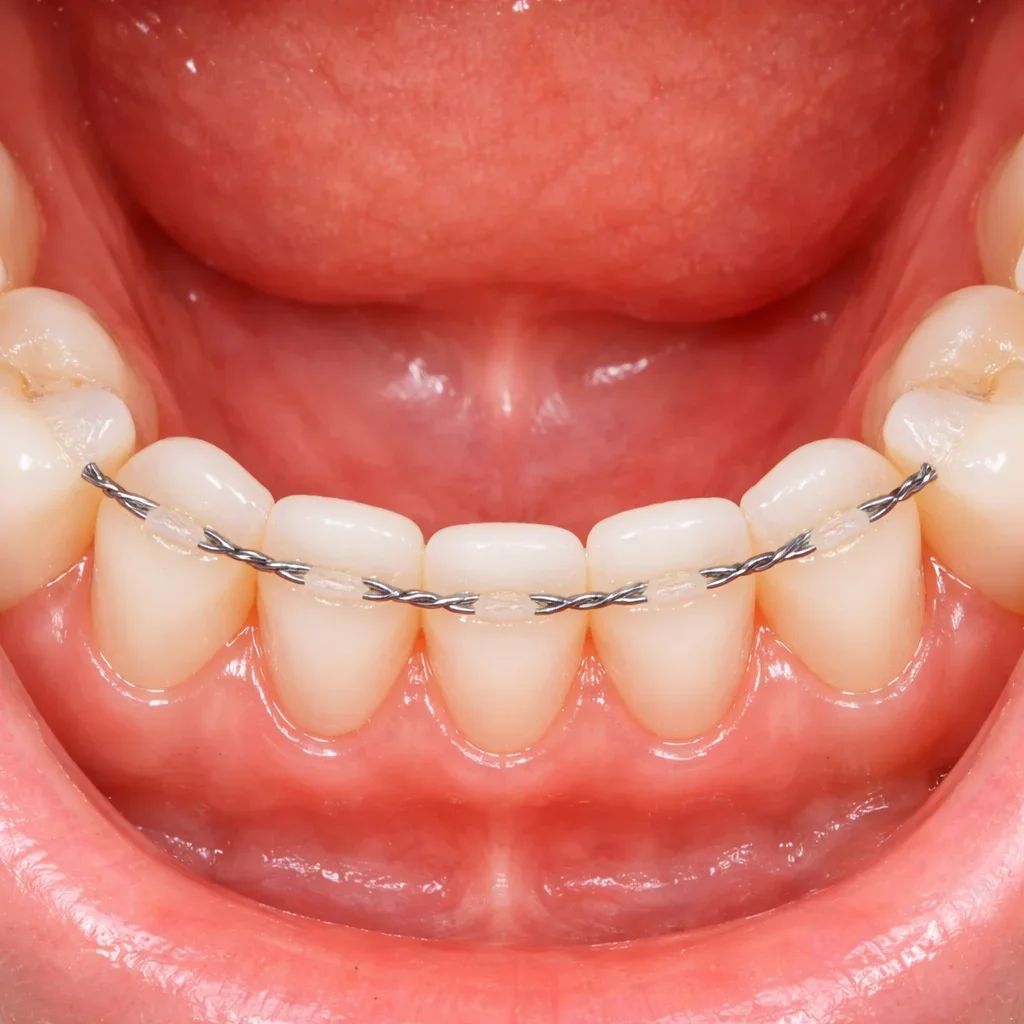
A wire behind teeth retainer is one of the most reliable ways to maintain the results achieved after orthodontic treatment. Once braces or clear aligners are removed, your teeth naturally tend to shift back to their original positions. This is where a wire behind teeth retainer becomes essential. It is a thin, custom-shaped metal wire that is bonded to the inner (lingual) surface of your front teeth, usually from canine to canine. Because it is fixed in place, it works continuously to preserve your straight smile without requiring daily removal or reinsertion.
Orthodontic relapse is a common concern after treatment. Teeth are supported by ligaments and bone structures that need time to stabilize in their new positions. Even after months or years of braces, these tissues may still “remember” their former alignment. A wire behind teeth retainer prevents this unwanted movement by holding the teeth firmly and consistently. Unlike removable retainers that depend on patient compliance, a bonded retainer works 24/7, offering peace of mind for both patients and orthodontists. 😊
The structure of a wire behind teeth retainer is simple yet highly effective. It is typically made from stainless steel or a flexible braided wire. The orthodontist carefully molds the wire to match the natural curve of your teeth. It is then bonded using dental composite resin, similar to the material used for tooth-colored fillings. This secure bonding ensures that the wire behind teeth retainer stays in place and remains virtually invisible when you smile, speak, or laugh.
One of the biggest advantages of a wire behind teeth retainer is aesthetics. Because it is placed behind the teeth, it cannot be seen from the outside. This makes it an ideal choice for adults and teenagers who want to maintain a discreet orthodontic result. Many patients appreciate that they do not have to worry about remembering to wear a removable appliance at night. The wire behind teeth retainer becomes a seamless part of daily life.
Functionally, a wire behind teeth retainer stabilizes the most relapse-prone teeth, particularly the lower front teeth. These teeth are especially susceptible to crowding over time. By permanently attaching the wire, orthodontists reduce the risk of shifting, overlapping, or rotation. In many cases, a wire behind teeth retainer is recommended for long-term or even lifelong retention, depending on the patient’s orthodontic history.
Patients often ask whether a wire behind teeth retainer affects speech or comfort. Initially, there may be a slight adjustment period. You might feel the wire with your tongue or notice minor speech changes for a few days. However, most individuals adapt quickly. Within a week, the wire behind teeth retainer typically feels natural and unnoticeable. Proper bonding ensures smooth edges, minimizing irritation.
Oral hygiene is extremely important when wearing a wire behind teeth retainer. Because it is fixed in place, food particles and plaque can accumulate around the wire if not cleaned thoroughly. Brushing carefully along the gumline and using floss threaders or interdental brushes is essential. The wire behind teeth retainer itself does not damage teeth, but poor cleaning habits may increase the risk of tartar buildup or gum inflammation. According to the American Dental Association, maintaining consistent oral hygiene routines is key to preventing long-term dental issues.
Another important aspect of a wire behind teeth retainer is durability. While the wire is strong, it is not indestructible. Biting very hard foods, chewing on pens, or trauma to the mouth may loosen or break the bonding. If the wire behind teeth retainer detaches even slightly, it is crucial to see a dental professional immediately. A loose section can allow teeth to shift rapidly. Early repair ensures continued stability.
From a clinical perspective, a wire behind teeth retainer is considered one of the most predictable retention methods. Orthodontists often combine it with removable retainers for upper teeth, depending on individual needs. The customized design of the wire behind teeth retainer allows it to fit precisely and comfortably. Modern techniques have improved bonding materials, making failures less common than in the past.
In summary, a wire behind teeth retainer plays a vital role in protecting the investment you made in your smile. It offers constant support, invisible protection, and long-term stability. If you are finishing orthodontic treatment or considering your retention options, consulting a specialist is the best next step. You can easily reach out through the Redent Klinik Contact Page for personalized advice and evaluation. A well-maintained wire behind teeth retainer ensures that your beautifully aligned teeth remain straight and healthy for years to come. 😁
Benefits of Choosing a Wire Behind Teeth Retainer After Braces
After completing orthodontic treatment, protecting your new smile becomes the top priority. One of the most effective solutions recommended by specialists is a wire behind teeth retainer. This fixed retention method ensures that your teeth remain in their corrected positions for the long term. Choosing a wire behind teeth retainer offers several clinical and practical advantages that make it a preferred option for many patients worldwide. 😊
Continuous 24/7 Protection Against Tooth Movement
The most significant benefit of a wire behind teeth retainer is that it works around the clock. Unlike removable retainers, which depend on patient compliance, a bonded retainer stays in place permanently. This means your teeth are constantly supported without the need to remember wearing it every night. Orthodontic relapse often occurs when patients forget or neglect to use removable devices. With a wire behind teeth retainer, that risk is dramatically reduced.
Teeth naturally shift over time due to aging, chewing forces, and subtle jaw changes. A wire behind teeth retainer stabilizes the most vulnerable teeth, particularly the lower incisors, which are prone to crowding. Because it is bonded directly to the inner surface of the teeth, the wire behind teeth retainer delivers consistent stabilization that does not depend on patient habits.
Invisible and Aesthetic Solution
Another key advantage of a wire behind teeth retainer is its discreet design. Since the wire is attached to the back (lingual side) of the teeth, it remains completely hidden when you smile or speak. For adults who have invested in orthodontic treatment, aesthetics matter. A wire behind teeth retainer allows you to maintain your straight teeth without visible appliances.
Unlike removable retainers that may slightly affect speech or appear when talking, a wire behind teeth retainer quickly becomes unnoticeable. After a short adaptation period, most patients forget they even have it. This makes the wire behind teeth retainer especially attractive for professionals and teenagers concerned about appearance.
Comfort After Initial Adjustment
Although you may initially feel the presence of a wire behind teeth retainer, the tongue adapts quickly. Modern bonding techniques ensure that the wire is smooth and precisely contoured to your teeth. Within days, the wire behind teeth retainer feels like a natural part of your mouth.
Low Maintenance Compared to Removable Options
One overlooked advantage of a wire behind teeth retainer is convenience. There is no need to remove it for meals, store it in a case, or worry about losing it. Many removable retainers are accidentally discarded or damaged. A fixed wire behind teeth retainer eliminates this concern entirely.
While proper hygiene is essential, daily routines remain simple. You brush normally and use floss threaders or interdental brushes to clean around the wire behind teeth retainer. With good oral hygiene habits, maintaining the appliance is straightforward and manageable.
Long-Term Stability and Durability
A properly bonded wire behind teeth retainer can last for many years. In some cases, orthodontists recommend lifelong retention, especially for patients with severe crowding before treatment. The durability of a wire behind teeth retainer depends on oral care and avoiding habits like biting hard objects.
Clinical studies and guidelines supported by organizations such as the American Dental Association highlight the importance of long-term retention after orthodontics. A wire behind teeth retainer significantly improves the predictability of maintaining treatment outcomes.
Prevention of Costly Re-Treatment
Orthodontic treatment represents both a financial and time investment. Choosing a wire behind teeth retainer protects that investment. If teeth shift due to poor retention, corrective treatment may be required again. This can involve aligners, braces, or other procedures. By maintaining stability, a wire behind teeth retainer reduces the likelihood of needing future orthodontic corrections.
Peace of Mind for Patients
Knowing that your teeth are continuously supported brings confidence. Patients who use a wire behind teeth retainer often report feeling reassured that their smile will remain aligned. There is no daily decision-making involved. The wire behind teeth retainer simply does its job quietly and effectively.
Ideal for Lower Front Teeth Crowding
The lower anterior region is the most common site of relapse. Even years after braces, mild shifting can occur. A wire behind teeth retainer bonded to the lower front teeth directly addresses this issue. Because it connects multiple teeth together, the wire behind teeth retainer distributes forces evenly and prevents rotation or overlap.
In some treatment plans, orthodontists combine a wire behind teeth retainer with a removable retainer for the upper arch. This customized approach maximizes stability based on individual needs.
If you are finishing orthodontic treatment and want a secure retention strategy, consulting a dental professional is essential. You can discuss your personalized retention plan through the Redent Klinik Contact Page. A well-maintained wire behind teeth retainer ensures your straight smile remains beautiful, healthy, and stable for years to come. 😁
Who Is the Best Candidate for a Wire Behind Teeth Retainer?
Not every retention method is ideal for every patient. Understanding who benefits most from a wire behind teeth retainer helps ensure long-term orthodontic success. While many patients qualify for this fixed solution, certain clinical situations make a wire behind teeth retainer especially advantageous. Orthodontists evaluate factors such as age, original tooth alignment, bite structure, oral hygiene habits, and long-term stability goals before recommending a wire behind teeth retainer. 😊
Patients with Severe Pre-Treatment Crowding
Individuals who had significant crowding before braces are often excellent candidates for a wire behind teeth retainer. When teeth were heavily rotated or overlapping, the supporting ligaments tend to “remember” their original positions. Without consistent retention, relapse is more likely. A bonded wire behind teeth retainer keeps the teeth locked in their corrected alignment, preventing gradual shifting.
Lower front teeth are particularly prone to crowding relapse. Orthodontists frequently recommend a wire behind teeth retainer for the lower arch because it stabilizes the six anterior teeth effectively. This is one of the most common and predictable uses of a wire behind teeth retainer in modern orthodontics.
Adults Seeking Long-Term Stability
Adult orthodontic patients often prefer a wire behind teeth retainer due to convenience and reliability. Unlike teenagers, adults may have busier schedules and may not consistently wear removable retainers. Since a wire behind teeth retainer works 24/7 without patient action, it offers dependable long-term retention.
Additionally, adults naturally experience age-related dental changes over time. Teeth can slowly shift due to bone remodeling and bite forces. A wire behind teeth retainer helps counteract these natural movements, preserving the results achieved after orthodontic treatment.
Professionals Concerned About Appearance
Because a wire behind teeth retainer is bonded to the inner surface of the teeth, it is completely invisible when smiling. Professionals who want a discreet retention solution often choose a wire behind teeth retainer for this reason. It allows them to maintain straight teeth without any visible appliance.
Patients with Compliance Challenges
One of the main reasons orthodontic relapse occurs is poor compliance with removable retainers. Some patients forget to wear them nightly, misplace them, or stop using them prematurely. A wire behind teeth retainer eliminates this risk because it does not rely on patient cooperation. Once bonded, the wire behind teeth retainer continuously supports tooth alignment.
For teenagers or younger patients who may struggle with routine compliance, a wire behind teeth retainer provides a reliable safeguard against relapse. Parents and orthodontists often appreciate this fixed option because it ensures stability even if daily habits fluctuate.
Patients with Good Oral Hygiene Habits
Although a wire behind teeth retainer offers many benefits, ideal candidates must maintain excellent oral hygiene. Because the wire is permanently attached, plaque can accumulate around the bonding points if cleaning is neglected. Patients who brush carefully and use floss threaders or interdental brushes are well-suited for a wire behind teeth retainer.
The American Dental Association emphasizes the importance of proper brushing and flossing techniques, especially for patients with bonded dental appliances. A well-maintained wire behind teeth retainer does not damage teeth, but poor hygiene can lead to gum inflammation or tartar buildup.
Regular Dental Check-Up Commitment
Another key characteristic of a good candidate for a wire behind teeth retainer is commitment to regular dental visits. During routine check-ups, dentists monitor the condition of the bonding and ensure the wire behind teeth retainer remains secure. Early detection of any loosened segment prevents unwanted tooth movement.
Patients with High Relapse Risk
Some orthodontic cases involve higher relapse risk due to bite corrections, spacing issues, or rotated teeth. In these cases, a wire behind teeth retainer provides added security. It functions as a permanent stabilization system, holding teeth in the exact position achieved at the end of treatment.
For example, patients who had gaps (diastema) between their front teeth often benefit from a wire behind teeth retainer to prevent reopening of spaces. Similarly, those who underwent complex orthodontic corrections may require a wire behind teeth retainer for long-term retention.
Who May Not Be Ideal Candidates?
Although a wire behind teeth retainer is suitable for many individuals, certain cases require caution. Patients with poor oral hygiene, untreated gum disease, or high cavity risk may need to improve their dental health before receiving a wire behind teeth retainer. Additionally, individuals with heavy bite forces or habits like nail-biting may experience more frequent bonding issues.
Ultimately, determining candidacy for a wire behind teeth retainer requires professional evaluation. Every smile is unique, and retention plans should be personalized. If you are considering your options after braces, consulting a specialist is the best approach. You can schedule an evaluation through the Redent Klinik Contact Page to receive tailored advice.
In summary, the best candidate for a wire behind teeth retainer is someone seeking reliable, long-term stability, who values discretion and maintains strong oral hygiene habits. When properly placed and maintained, a wire behind teeth retainer becomes a powerful tool in preserving your beautifully aligned smile for years to come. 😁
Wire Behind Teeth Retainer vs Removable Retainers: Key Differences
After orthodontic treatment, one of the most important decisions is choosing the right retention method. Patients are commonly offered two primary options: a wire behind teeth retainer or a removable retainer. Both serve the same purpose—preventing teeth from shifting—but they function very differently. Understanding the distinctions between a wire behind teeth retainer and removable appliances helps patients make informed, long-term decisions about their smile. 😊
Structural Design and Placement
A wire behind teeth retainer is a fixed orthodontic appliance bonded directly to the inner surface of the teeth, typically from canine to canine. It consists of a thin, custom-shaped metal wire secured with dental composite resin. Because it is permanently attached, a wire behind teeth retainer cannot be removed by the patient.
In contrast, removable retainers—such as clear plastic retainers or Hawley retainers—are taken out during eating and cleaning. These devices are custom-made but depend entirely on the patient wearing them consistently. While removable retainers are effective when used properly, they do not provide the continuous stabilization of a wire behind teeth retainer.
Effectiveness and Compliance
One of the biggest advantages of a wire behind teeth retainer is that it does not rely on patient compliance. Since it remains bonded in place, it works 24 hours a day without interruption. Orthodontic relapse often occurs when removable retainers are not worn as instructed. A wire behind teeth retainer eliminates this risk by offering constant support.
Removable retainers can be highly effective, but only if worn consistently—often every night for years. Patients who forget or stop wearing them may experience gradual tooth movement. A wire behind teeth retainer provides a safety net against this common issue.
Risk of Loss or Damage
Removable retainers can be misplaced, accidentally thrown away, or damaged by heat or pets. Replacing them involves additional cost and time. A wire behind teeth retainer, however, remains securely attached and cannot be lost. Although bonding may occasionally loosen, repairs are generally straightforward and less disruptive than replacing a lost retainer.
Aesthetic Considerations
From an aesthetic standpoint, a wire behind teeth retainer is virtually invisible because it is positioned behind the teeth. This makes it an attractive option for adults and professionals who prefer a discreet solution. Removable clear retainers are also transparent but may still be slightly visible during close conversation.
For patients prioritizing invisibility and convenience, a wire behind teeth retainer often becomes the preferred choice. It allows individuals to smile confidently without worrying about removing or reinserting an appliance.
Oral Hygiene Requirements
Cleaning requirements differ significantly between the two options. A wire behind teeth retainer requires careful brushing and flossing around the bonded wire. Special tools such as floss threaders or interdental brushes may be necessary. Maintaining excellent oral hygiene is critical to prevent plaque buildup around the wire behind teeth retainer.
Removable retainers, on the other hand, must be cleaned separately. While brushing and soaking them is straightforward, neglecting cleaning can lead to bacterial accumulation. According to the American Dental Association, maintaining both appliance hygiene and overall oral health is essential regardless of the retention method chosen.
Comfort and Adaptation
Some patients initially feel slight tongue irritation from a wire behind teeth retainer, but this sensation usually disappears within a few days. Removable retainers may feel bulky at first, especially Hawley-style devices. Over time, most patients adapt comfortably to either option.
Longevity and Maintenance
A well-maintained wire behind teeth retainer can last for many years, and in some cases, indefinitely. Orthodontists often recommend long-term or lifelong retention for patients with previous severe crowding. The durability of a wire behind teeth retainer depends on avoiding hard foods and attending regular dental check-ups.
Removable retainers may need periodic replacement due to wear, cracks, or distortion. Over time, they may lose their fit and require remaking. In comparison, a wire behind teeth retainer offers a more stable, low-maintenance long-term solution.
Which Option Is Better?
There is no universal answer. The best choice depends on individual clinical factors, lifestyle, and personal preference. Some orthodontists even recommend combining both methods—for example, using a wire behind teeth retainer on the lower teeth and a removable retainer for the upper arch. This dual approach maximizes stability.
If you are deciding between a wire behind teeth retainer and a removable appliance, professional consultation is essential. Every smile has unique needs. You can discuss your personalized retention plan through the Redent Klinik Contact Page.
Ultimately, both options are designed to protect your orthodontic investment. However, for patients seeking consistent, hands-free stability and reduced relapse risk, a wire behind teeth retainer offers unmatched reliability and long-term security. 😁
How Long Does a Wire Behind Teeth Retainer Last?
One of the most common questions patients ask after orthodontic treatment is how long a wire behind teeth retainer will last. Since retention is essential to maintaining straight teeth, understanding the lifespan of a wire behind teeth retainer helps patients plan for long-term oral health. The short answer is that a wire behind teeth retainer can last many years—and in some cases, even decades—if properly maintained. However, its longevity depends on several important factors including oral hygiene, bite forces, bonding quality, and regular dental monitoring. 😊
Average Lifespan of a Wire Behind Teeth Retainer
In general, a well-bonded wire behind teeth retainer can last between 5 to 10 years without major issues. Many patients keep the same wire behind teeth retainer much longer, especially if it remains intact and stable. Orthodontists often recommend long-term or even lifelong retention, particularly for the lower front teeth, which are prone to crowding relapse.
The material used in a wire behind teeth retainer—usually stainless steel or braided orthodontic wire—is highly durable. The weak point is not typically the wire itself but the bonding composite that secures it to the teeth. If the bonding material remains intact and oral hygiene is well maintained, the wire behind teeth retainer can function effectively for many years.
Factors That Affect Longevity
1. Oral Hygiene Habits
Proper cleaning plays a crucial role in the lifespan of a wire behind teeth retainer. Because the wire is fixed to the back of the teeth, plaque and tartar can accumulate around it if brushing and flossing are inadequate. Over time, gum inflammation or decay around the bonding areas can weaken the stability of the wire behind teeth retainer.
The American Dental Association emphasizes daily brushing and flossing to prevent gum disease and tooth decay. Patients with a wire behind teeth retainer should use floss threaders or interdental brushes to clean under and around the wire effectively.
2. Bite Forces and Eating Habits
Strong bite forces or habits such as biting hard foods, chewing ice, or nail-biting can impact the durability of a wire behind teeth retainer. Although the wire itself is strong, excessive pressure can loosen the bonding points. If even one tooth detaches from the wire behind teeth retainer, teeth may begin to shift unexpectedly.
Patients are typically advised to avoid biting directly into very hard foods with their front teeth. Protecting the bonding ensures the wire behind teeth retainer continues functioning without interruption.
3. Regular Dental Check-Ups
Routine dental visits are essential for monitoring the condition of a wire behind teeth retainer. During check-ups, dentists examine whether the bonding remains secure and whether plaque buildup is present. Early detection of a loose segment allows quick repair before tooth movement occurs.
A professional evaluation ensures that the wire behind teeth retainer continues to stabilize your teeth effectively. Many bonding repairs are minor and can be completed quickly during a regular appointment.
Can a Wire Behind Teeth Retainer Be Permanent?
In many cases, yes. A wire behind teeth retainer is often designed to be a long-term or permanent retention solution. Since teeth can shift naturally with age—even years after orthodontic treatment—long-term retention is frequently recommended. Some orthodontists advise keeping the wire behind teeth retainer indefinitely, particularly for lower front teeth.
However, permanent does not mean maintenance-free. A wire behind teeth retainer must be monitored and occasionally repaired if bonding weakens. With proper care, it can remain effective for decades.
Signs That a Replacement May Be Needed
While many patients keep their original wire behind teeth retainer for years, certain signs may indicate the need for repair or replacement:
- One or more bonding points feel loose.
- The wire feels bent or distorted.
- Teeth begin to shift slightly.
- Persistent discomfort or irritation occurs.
If you notice any of these symptoms, seeking professional evaluation promptly is essential. A damaged wire behind teeth retainer can allow gradual tooth movement if not corrected quickly.
Long-Term Investment in Your Smile
Orthodontic treatment requires significant time and financial commitment. A wire behind teeth retainer protects that investment by maintaining your results long term. Compared to the possibility of re-treatment due to relapse, maintaining a wire behind teeth retainer is far more cost-effective and convenient.
If you have questions about the condition of your wire behind teeth retainer or need a professional assessment, you can reach out through the Redent Klinik Contact Page. Personalized evaluation ensures your retention plan continues to protect your smile effectively.
In conclusion, a properly cared-for wire behind teeth retainer can last many years and often serves as a long-term solution for preventing relapse. With good oral hygiene, mindful eating habits, and regular dental visits, your wire behind teeth retainer can safeguard your straight, confident smile for the foreseeable future. 😁
Cleaning and Maintaining a Wire Behind Teeth Retainer Properly
Keeping your wire behind teeth retainer clean is essential for maintaining both your orthodontic results and your overall oral health. Because a wire behind teeth retainer is permanently bonded to the inner surface of your teeth, it creates small areas where plaque and food particles can accumulate. Without proper care, this buildup may lead to gum inflammation, tartar formation, or even cavities around the bonding points. Fortunately, with the right daily routine and professional monitoring, a wire behind teeth retainer can remain hygienic and functional for many years. 😊
Why Oral Hygiene Is Critical with a Wire Behind Teeth Retainer
A wire behind teeth retainer does not damage teeth by itself. However, because it is fixed in place, cleaning requires more attention compared to natural tooth surfaces. The thin metal bar sits closely against the enamel, which makes it easier for plaque to collect along the gumline. If plaque hardens into tartar, it becomes difficult to remove without professional dental cleaning.
The American Dental Association recommends brushing at least twice daily and flossing once per day. For patients with a wire behind teeth retainer, these steps become even more important. Consistent hygiene prevents gum disease and ensures the bonding material supporting the wire behind teeth retainer remains intact.
Daily Cleaning Routine for a Wire Behind Teeth Retainer
1. Brushing Technique
When brushing with a wire behind teeth retainer, use a soft-bristled toothbrush and fluoride toothpaste. Position the brush at a slight angle toward the gumline and gently clean around the wire and bonding points. Pay close attention to the areas where the wire behind teeth retainer attaches to each tooth. Small circular motions are more effective than aggressive horizontal scrubbing.
Electric toothbrushes can also be helpful. They provide consistent motion and can reach around the wire behind teeth retainer more efficiently. The key is to brush thoroughly but gently to avoid irritating the gums.
2. Flossing Around the Wire
Flossing with a wire behind teeth retainer requires special tools. Standard floss cannot simply slide between teeth because the wire blocks access. Instead, floss threaders or orthodontic floss are recommended. These tools allow you to guide the floss underneath the wire behind teeth retainer and clean between each tooth effectively.
Interdental brushes are another excellent option. These small brushes fit under the wire behind teeth retainer and help remove plaque in tight spaces. Regular flossing prevents tartar buildup and reduces the risk of gum inflammation.
Professional Cleaning and Monitoring
Even with excellent home care, professional dental cleanings are necessary. Dental hygienists use specialized tools to remove hardened tartar around the wire behind teeth retainer. Regular check-ups also allow dentists to evaluate whether the bonding remains secure.
If a section of the wire behind teeth retainer becomes loose, prompt repair is essential. A detached segment can allow teeth to shift unexpectedly. Early intervention protects your orthodontic results and ensures the wire behind teeth retainer continues functioning properly.
Foods and Habits to Avoid
Certain habits can compromise the stability of a wire behind teeth retainer. Biting hard foods like ice, hard candy, or nuts directly with the front teeth can stress the bonding material. Chewing on pens or fingernails can also weaken the attachment points of the wire behind teeth retainer.
Sticky foods may accumulate around the wire and make cleaning more difficult. While you do not need to eliminate all treats, being mindful of how you eat can extend the lifespan of your wire behind teeth retainer.
Signs of Hygiene Problems
Watch for warning signs such as bleeding gums, persistent bad breath, or visible tartar near the wire behind teeth retainer. These symptoms may indicate insufficient cleaning. Addressing these issues early prevents more serious complications.
Long-Term Care Strategy
Maintaining a wire behind teeth retainer is not complicated, but it requires consistency. Daily brushing, proper flossing techniques, and regular dental visits form the foundation of long-term success. When properly maintained, a wire behind teeth retainer can protect your smile for many years without causing complications.
If you have concerns about cleaning your wire behind teeth retainer or need professional advice, you can contact a specialist through the Redent Klinik Contact Page. Personalized guidance ensures that your wire behind teeth retainer remains secure, hygienic, and effective.
In conclusion, a wire behind teeth retainer is a reliable retention solution, but its success depends heavily on proper care. By following a structured hygiene routine and avoiding harmful habits, you can maintain both your dental health and your beautifully aligned smile for years to come. 😁
Common Problems with a Wire Behind Teeth Retainer and Solutions
A wire behind teeth retainer is designed to provide long-term stability after orthodontic treatment, but like any dental appliance, it may occasionally present certain challenges. Understanding the common problems associated with a wire behind teeth retainer and knowing how to address them can prevent complications and protect your smile. Most issues are minor and easily managed when detected early. With proper awareness and routine dental monitoring, your wire behind teeth retainer can continue functioning effectively for many years. 😊
Loose or Detached Bonding
One of the most frequent issues with a wire behind teeth retainer is loosening of the bonding material that attaches the wire to the teeth. While the wire itself is durable, the composite resin used to secure the wire behind teeth retainer can weaken over time due to biting forces, hard foods, or accidental trauma.
Signs of a Loose Wire
If part of your wire behind teeth retainer feels sharp, moves slightly when touched with your tongue, or causes discomfort, it may have partially detached. Even if only one bonding point fails, the affected tooth may begin to shift.
Solution
The solution is simple: schedule a dental appointment promptly. A dentist can re-bond the loose segment of the wire behind teeth retainer quickly and painlessly. Early repair prevents unwanted tooth movement and preserves your orthodontic results.
Difficulty Cleaning Around the Wire
Because a wire behind teeth retainer is permanently attached to the inner surface of the teeth, cleaning can be more challenging than with removable retainers. Food particles and plaque may accumulate around the bonding points if oral hygiene is not meticulous.
Potential Risks
Poor cleaning around a wire behind teeth retainer may lead to tartar buildup, gum inflammation, or even cavities near the attachment sites. According to the American Dental Association, proper daily brushing and flossing are essential for preventing gum disease, especially when fixed dental appliances are present.
Solution
Using floss threaders, orthodontic floss, or interdental brushes can significantly improve cleaning around a wire behind teeth retainer. Regular professional cleanings also help remove hardened tartar that cannot be eliminated at home.
Wire Breakage
Although uncommon, a wire behind teeth retainer can occasionally break. This usually occurs due to excessive biting force, chewing hard foods, or trauma to the mouth. When the wire behind teeth retainer breaks, it may lose its ability to stabilize the teeth properly.
Warning Signs
A broken wire behind teeth retainer may feel bent, sharp, or misaligned. Some patients notice slight shifting of their teeth if the break goes unnoticed for an extended period.
Solution
Immediate dental evaluation is essential. In many cases, the orthodontist can replace or repair the damaged wire behind teeth retainer efficiently. Avoid delaying treatment, as even minor tooth movement can compromise alignment.
Speech or Tongue Irritation
Some patients initially experience minor speech changes or tongue irritation after placement of a wire behind teeth retainer. This is typically temporary and resolves within a few days as the mouth adapts.
When to Be Concerned
If irritation persists or worsens, it may indicate that part of the wire behind teeth retainer is protruding or improperly bonded. A simple adjustment by your dentist can restore comfort.
Unexpected Tooth Movement
In rare cases, teeth may begin to shift even with a wire behind teeth retainer in place. This usually happens if a bonding point has failed without the patient noticing. Because the wire behind teeth retainer works by connecting multiple teeth, any detachment can reduce its stabilizing effect.
Solution
Routine dental check-ups allow early detection of such issues. Dentists carefully examine the wire behind teeth retainer during appointments to ensure all bonding points remain secure. Prompt correction prevents further movement.
Long-Term Maintenance Strategy
Most complications with a wire behind teeth retainer are preventable. Avoid biting extremely hard foods, maintain excellent oral hygiene, and attend regular dental visits. When properly cared for, a wire behind teeth retainer remains a reliable and low-maintenance retention method.
If you experience any discomfort or suspect a problem with your wire behind teeth retainer, professional evaluation is essential. You can easily arrange a consultation through the Redent Klinik Contact Page for personalized support and guidance.
In conclusion, while a wire behind teeth retainer is a highly dependable retention solution, awareness of potential issues ensures long-term success. With timely intervention and proper care, your wire behind teeth retainer can continue protecting your straight, confident smile for years to come. 😁
Cost of a Wire Behind Teeth Retainer: What to Expect
Understanding the cost of a wire behind teeth retainer is an important part of planning your post-orthodontic care. After investing time and money into braces or clear aligners, protecting your results with a wire behind teeth retainer is not just recommended—it is essential. The price of a wire behind teeth retainer can vary depending on several factors, including the country, clinic reputation, materials used, and whether it is placed immediately after orthodontic treatment or as a replacement later on. 😊
Average Cost of a Wire Behind Teeth Retainer
In many countries, the cost of a wire behind teeth retainer ranges between $150 and $500 per arch. If both upper and lower arches require bonding, the total cost may range from $300 to $1,000. In some orthodontic treatment plans, the initial wire behind teeth retainer is included in the overall braces package. However, replacement or repair costs are typically charged separately.
Prices may vary internationally. For example:
- United States: $250–$500 per arch
- United Kingdom: £150–£400 per arch
- Turkey: €100–€250 per arch (often more affordable due to lower clinical costs)
These ranges reflect typical private dental clinic pricing. The exact cost of a wire behind teeth retainer depends on the complexity of the case and the expertise of the dental professional.
Factors That Influence the Cost
1. Material Quality
The type of wire used in a wire behind teeth retainer affects the price. Some retainers use multi-stranded braided wire for flexibility, while others use solid stainless steel. High-quality materials designed for durability may slightly increase the cost of a wire behind teeth retainer, but they often provide longer-lasting performance.
2. Professional Expertise
The skill of the orthodontist or dentist placing the wire behind teeth retainer also influences the cost. Precise bonding is essential to ensure comfort and longevity. An experienced specialist ensures that the wire behind teeth retainer is correctly contoured and securely attached, minimizing future repair needs.
3. Repair and Replacement Fees
Over time, bonding points of a wire behind teeth retainer may loosen due to biting forces or accidental trauma. Minor repairs typically cost between $50 and $150, depending on the extent of the damage. If the entire wire behind teeth retainer needs replacement, the cost may be similar to the original placement fee.
Is a Wire Behind Teeth Retainer Worth the Cost?
When evaluating the cost of a wire behind teeth retainer, it is important to consider the long-term value. Orthodontic treatment can cost thousands of dollars. Without proper retention, teeth may shift, potentially requiring re-treatment. A wire behind teeth retainer serves as insurance for your smile, protecting your investment.
Compared to the cost of repeat orthodontic treatment—which can range from $2,000 to $7,000—a wire behind teeth retainer is a relatively small expense that delivers significant long-term benefits.
Insurance and Coverage
Some dental insurance plans partially cover the cost of a wire behind teeth retainer, especially if it is included as part of active orthodontic treatment. However, coverage for repairs or replacements varies. It is advisable to check with your insurance provider before scheduling placement of a wire behind teeth retainer.
According to general dental guidelines supported by the American Dental Association, retention is considered an essential component of orthodontic care. However, specific financial coverage depends on individual insurance policies.
Cost vs. Removable Retainers
Removable retainers may initially appear less expensive, with prices ranging from $100 to $300 per device. However, they may need periodic replacement due to wear, cracks, or loss. A wire behind teeth retainer, while sometimes slightly more expensive upfront, often provides greater durability and eliminates the risk of accidental loss.
Because a wire behind teeth retainer is permanently bonded, it offers continuous protection without requiring patient compliance. This added reliability increases its overall value over time.
Long-Term Financial Perspective
Choosing a wire behind teeth retainer is not just a short-term decision—it is a long-term investment in dental stability. With proper care and regular check-ups, a wire behind teeth retainer can last many years. Preventing relapse reduces the likelihood of additional orthodontic costs in the future.
If you would like a personalized cost estimate or professional evaluation, you can consult a dental specialist through the Redent Klinik Contact Page. Individual assessment ensures transparency and clarity regarding your specific wire behind teeth retainer needs.
In conclusion, while the cost of a wire behind teeth retainer varies depending on location and clinical factors, it remains a cost-effective solution for preserving your orthodontic results. Considering its durability, reliability, and long-term benefits, a wire behind teeth retainer is often a wise and practical investment in maintaining a straight, confident smile. 😁
Frequently Asked Questions About Wire Behind Teeth Retainer
Patients often have many questions about a wire behind teeth retainer before and after orthodontic treatment. Because a wire behind teeth retainer is a long-term solution bonded permanently to the teeth, understanding how it works, how it feels, and how to maintain it is essential. Below, we answer the most common questions in detail to help you feel confident and informed about your wire behind teeth retainer. 😊
Does a Wire Behind Teeth Retainer Hurt?
After placement, a wire behind teeth retainer typically does not cause significant pain. You may feel slight pressure or tongue awareness for a few days, but this usually disappears quickly. The bonding procedure itself is painless and does not require anesthesia in most cases.
If you experience sharp discomfort or irritation from your wire behind teeth retainer, it may indicate a loose bonding point. In such cases, a quick visit to your dentist can resolve the issue easily.
Can Teeth Still Move with a Wire Behind Teeth Retainer?
A properly bonded wire behind teeth retainer is designed to prevent tooth movement, especially in the lower front teeth where relapse is common. However, if part of the wire behind teeth retainer becomes detached, minor shifting can occur.
This is why regular dental check-ups are essential. Dentists monitor the stability of the wire behind teeth retainer to ensure it continues functioning correctly. According to guidance supported by the American Dental Association, consistent follow-up care is critical for long-term orthodontic success.
Can I Eat Normally with a Wire Behind Teeth Retainer?
Yes, most patients can eat normally with a wire behind teeth retainer. However, it is advisable to avoid biting very hard foods directly with your front teeth. Hard candies, ice, and extremely crunchy foods may stress the bonding material holding the wire behind teeth retainer in place.
Cutting hard foods into smaller pieces and chewing carefully can help protect your wire behind teeth retainer and extend its lifespan.
How Do I Know If My Wire Behind Teeth Retainer Is Broken?
Common Warning Signs
Signs of a damaged wire behind teeth retainer may include:
- A loose or wiggling sensation.
- A sharp edge touching the tongue.
- Visible separation between the wire and tooth.
- Slight shifting of teeth.
If you notice any of these symptoms, contact your dentist promptly. Early repair prevents further complications with your wire behind teeth retainer.
How Long Do I Need to Wear a Wire Behind Teeth Retainer?
In many cases, a wire behind teeth retainer is recommended for long-term or even lifelong retention. Teeth naturally shift with age, and a wire behind teeth retainer helps prevent crowding from returning. Your orthodontist will determine how long your specific wire behind teeth retainer should remain in place based on your treatment history.
Is a Wire Behind Teeth Retainer Better Than a Removable Retainer?
Each retention method has advantages. A wire behind teeth retainer offers continuous 24/7 stabilization and does not rely on patient compliance. Removable retainers, on the other hand, can be easier to clean but require consistent use.
Many orthodontists recommend combining both methods—for example, using a wire behind teeth retainer for the lower teeth and a removable retainer for the upper arch. This approach maximizes stability.
Can a Wire Behind Teeth Retainer Cause Cavities?
The wire behind teeth retainer itself does not cause cavities. However, poor oral hygiene can allow plaque to build up around the bonding areas. Brushing thoroughly and flossing with appropriate tools ensures your wire behind teeth retainer does not contribute to dental problems.
What Should I Do If It Feels Loose?
If your wire behind teeth retainer feels loose, avoid manipulating it with your tongue or fingers. Schedule an appointment immediately. A loose wire behind teeth retainer can allow teeth to shift quickly if left untreated.
Where Can I Get Professional Advice?
If you have additional concerns about your wire behind teeth retainer, professional consultation is always the safest option. You can reach out through the Redent Klinik Contact Page for personalized evaluation and guidance.
In summary, a wire behind teeth retainer is a reliable and long-term retention solution. By understanding how it works, recognizing warning signs, and maintaining good oral hygiene, you can ensure that your wire behind teeth retainer continues to protect your beautifully aligned smile for years to come. 😁
Long-Term Care Tips to Protect Your Wire Behind Teeth Retainer
A wire behind teeth retainer is designed to provide continuous, reliable stabilization after orthodontic treatment. However, long-term success depends not only on professional placement but also on daily habits and preventive care. Protecting your wire behind teeth retainer ensures that your teeth remain aligned and that you avoid unnecessary repairs or relapse. With proper care, a wire behind teeth retainer can function effectively for many years, sometimes even decades. 😊
Maintain Consistent Oral Hygiene
The foundation of long-term success with a wire behind teeth retainer is excellent oral hygiene. Because the wire is bonded to the inner surface of the teeth, it creates small spaces where plaque can accumulate. If not removed daily, this buildup may lead to tartar formation, gum inflammation, or enamel issues around the bonding points of the wire behind teeth retainer.
Brushing Techniques That Work
Brush at least twice daily using a soft-bristled toothbrush and fluoride toothpaste. Angle the brush carefully toward the gumline and clean around the wire and composite bonding areas. Electric toothbrushes can improve plaque removal around a wire behind teeth retainer, especially in hard-to-reach spots.
Flossing the Right Way
Flossing requires extra attention when you have a wire behind teeth retainer. Use floss threaders or orthodontic floss to pass the floss underneath the wire. Interdental brushes are also highly effective in removing debris around the wire behind teeth retainer. Daily flossing prevents inflammation and protects the bonding material.
The American Dental Association strongly recommends thorough brushing and flossing to prevent gum disease, especially for patients with bonded dental appliances.
Be Mindful of Eating Habits
Although a wire behind teeth retainer is durable, certain foods can increase the risk of detachment or bending. Avoid biting directly into hard foods such as ice, hard candy, or very crunchy items. Cutting food into smaller pieces reduces stress on the wire behind teeth retainer and its bonding points.
Avoid Harmful Habits
Habits like nail-biting, chewing on pens, or opening packages with your teeth can weaken the attachment of a wire behind teeth retainer. Being aware of these behaviors and avoiding them significantly extends the life of your wire behind teeth retainer.
Schedule Regular Dental Check-Ups
Routine dental visits are essential for monitoring the condition of your wire behind teeth retainer. During check-ups, your dentist will examine the bonding points and ensure the wire remains securely attached. Early detection of a loose section prevents unwanted tooth movement.
Professional cleanings also remove hardened tartar that cannot be eliminated at home. Maintaining professional supervision ensures your wire behind teeth retainer continues functioning optimally.
Recognize Warning Signs Early
Understanding the early signs of a problem helps protect your wire behind teeth retainer. Watch for:
- A loose or wiggling sensation.
- A sharp edge touching your tongue.
- Visible separation between the wire and tooth.
- Minor shifting of teeth.
If you notice any of these symptoms, contact your dentist immediately. Prompt repair prevents further complications with your wire behind teeth retainer.
Protect Your Smile During Sports
If you participate in contact sports, wearing a mouthguard is essential. Trauma to the mouth can damage a wire behind teeth retainer and potentially cause bonding failure. A properly fitted mouthguard protects both your teeth and your wire behind teeth retainer from impact-related damage.
Long-Term Stability and Confidence
Orthodontic treatment represents a significant personal and financial investment. A wire behind teeth retainer protects that investment by preventing relapse and maintaining alignment. By combining daily hygiene, careful eating habits, and routine dental care, you ensure that your wire behind teeth retainer remains effective long term.
If you ever have concerns about the condition of your wire behind teeth retainer, professional evaluation is recommended. You can schedule a consultation through the Redent Klinik Contact Page to receive expert advice tailored to your needs.
In conclusion, protecting your wire behind teeth retainer is simple but requires consistency. With mindful care, regular monitoring, and healthy habits, your wire behind teeth retainer will continue safeguarding your straight, confident smile for many years to come. 😁
Disclosure: this page may contain affiliate links. We may earn a commission if you use them, at no extra cost to you.