
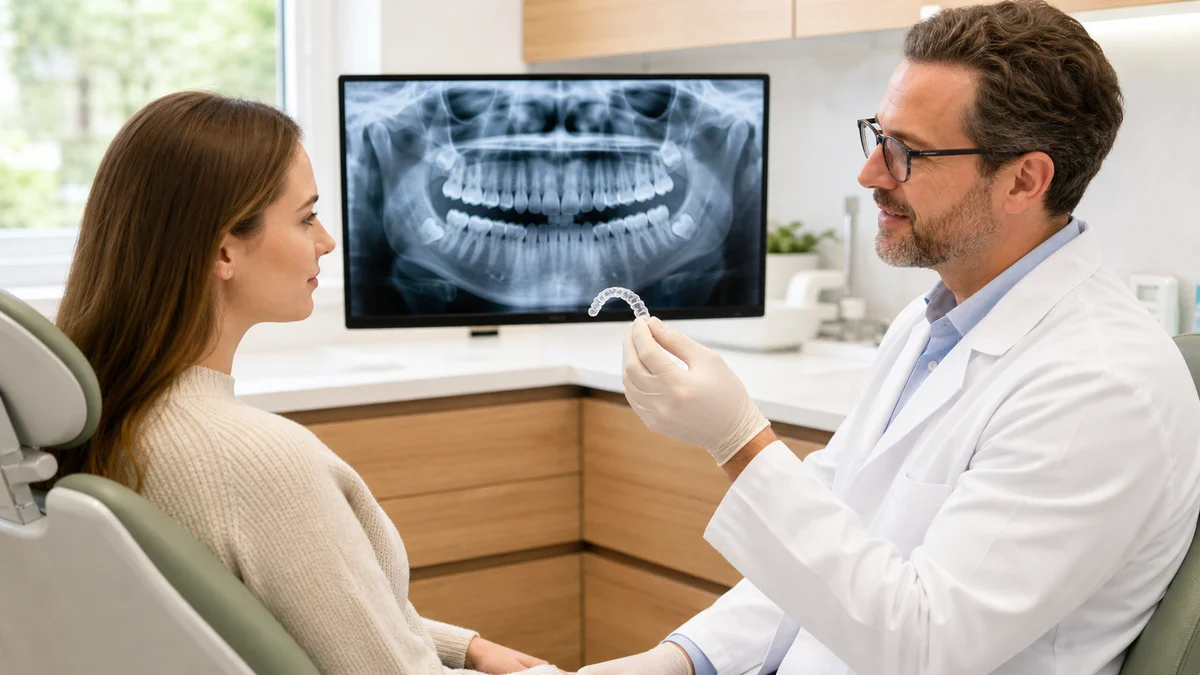
If you are asking “wisdom tooth removal or invisalign which is better,” the most important point is that these treatments usually solve different problems. Wisdom tooth removal addresses a problematic or high-risk third molar. Invisalign is a brand of clear aligner treatment used to move teeth gradually. One cannot normally substitute for the other.
Quick answer: Wisdom tooth removal is generally considered when a third molar is painful, infected, damaging nearby structures or creating another clinically significant concern. Invisalign may be appropriate when tooth position or bite needs correction. An examination and suitable imaging should identify which problem exists, whether both treatments are relevant and the safest order.
This guide presents a practical decision journey rather than a remote diagnosis. It explains costs, suitability, procedures, risks, alternatives and financing questions so that you can prepare for a dental consultation. The content is intended for visible medical review by Dentist Esma Çevrük Çakır and uses a patient-safety-first approach.
wisdom tooth removal or invisalign which is better: the decision framework
The better treatment is the one that matches a confirmed clinical need. Extraction removes a third molar from the mouth. Clear aligners apply planned forces to selected teeth through a series of removable trays. Their purposes, risks, timelines and expected results are therefore fundamentally different.
A dentist may discuss wisdom tooth removal if a third molar is partly erupted, difficult to clean, repeatedly inflamed, decayed beyond predictable restoration, associated with disease, or harming the tooth in front of it. Removal is not automatically necessary simply because a wisdom tooth exists. A symptom-free tooth may sometimes be monitored when examination and imaging do not reveal a compelling reason to operate.
Invisalign may be discussed when crowding, spacing, rotation or certain bite relationships could benefit from orthodontic movement. Suitability depends on more than appearance. Gum health, bone support, tooth condition, root position, bite mechanics, patient growth where relevant, and the ability to wear and care for aligners all matter.
| Decision point | Wisdom tooth removal | Invisalign treatment |
|---|---|---|
| Primary purpose | Remove a third molar causing or presenting a clinically assessed problem | Move teeth and improve selected alignment or bite concerns |
| Typical starting evidence | Symptoms, clinical examination and appropriate dental imaging | Orthodontic assessment, records, scans or impressions, photographs and bite analysis |
| Treatment pattern | A surgical or non-surgical extraction followed by healing | A planned series of aligners, monitoring visits and often retention |
| Patient commitment | Preparation, aftercare and short-term recovery precautions | Consistent daily wear, hygiene, appointments and long-term retainer use |
| Can it replace the other? | No; extraction does not straighten the remaining teeth | No; aligners do not treat infection or remove a diseased wisdom tooth |
Seven checks that clarify the choice
- Define the problem: Is the concern pain or disease around a third molar, or is it tooth alignment and bite?
- Confirm oral health: Active decay, gum inflammation and infection usually need assessment before elective orthodontic movement.
- Review imaging: The position of wisdom teeth, roots, adjacent teeth and nearby anatomy may change the plan.
- Assess orthodontic complexity: Some movements respond well to aligners, while others may need different appliances or combined care.
- Discuss timing: A necessary extraction may need to occur before aligners, but the sequence must be individualized.
- Consider daily commitment: Aligners only work as planned when worn and maintained according to professional instructions.
- Compare total plans: Evaluate clinical benefit, risks, duration, aftercare, retention and cost rather than choosing by appearance alone.
Cost factors and what a quotation should include
There is no responsible fixed answer to the cost of either option without an assessment. Final cost depends on examination, treatment planning and current clinical conditions. Location, clinician expertise, the complexity of treatment and what is included in the quotation can also influence the amount payable.
What affects wisdom tooth removal cost?
A fully erupted tooth that can be removed routinely may require a different procedure from a deeply impacted tooth. Root form, tooth angle, access, proximity to important anatomical structures, the presence of infection, imaging needs, anesthesia options and the anticipated surgical difficulty may all affect planning and fees.
Ask whether the quotation includes the consultation, necessary radiographs, the extraction itself, prescribed aftercare, review appointments and management of expected postoperative concerns. If sedation is being considered, request a separate explanation of candidacy, monitoring, fasting instructions, escort requirements and fees.
What affects Invisalign cost?
Clear aligner cost commonly reflects case complexity, the anticipated number of aligners, treatment duration, the records required, review appointments and whether refinement aligners are included. Attachments, interproximal enamel reduction, replacement aligners and retainers may also be relevant. Brand name alone does not describe the complete clinical service.
Ask what happens if teeth do not track as planned, how many refinements the proposed package permits, and whether final retainers are included. An initially low figure may not represent the full course if essential records, reviews or retention are billed separately.
Suitability: who may proceed and who should wait?
Who may be suitable for wisdom tooth removal?
Potential candidates include people with clinically significant pain, repeated inflammation around a partly erupted tooth, non-restorable decay, infection, disease affecting surrounding tissues, or damage to an adjacent tooth. Extraction may also form part of another carefully justified dental or surgical plan.
Suitability is determined individually. Medical history, medicines, allergies, bleeding risk, pregnancy status, immune health, tobacco use and previous reactions to anesthesia should be disclosed. The clinician may need additional information or coordination with another healthcare professional before proceeding.
Who may be suitable for Invisalign?
Clear aligners may suit many adults and adolescents with specific crowding, spacing or bite problems who can follow the wear schedule. Healthy gums, treatable dental disease and realistic expectations support safer treatment. A comprehensive assessment is still necessary because similar-looking smiles can have very different root, bone and bite conditions.
Aligners are removable, but this convenience creates responsibility. Patients must wear them for the prescribed time, remove them for food and unsuitable drinks, clean their teeth and trays, and attend monitoring visits. Poor adherence can prolong treatment or make planned movement less predictable.
Who should wait or seek further assessment?
- Anyone with facial swelling, fever, difficulty swallowing, breathing difficulty, uncontrolled bleeding or rapidly worsening symptoms should seek urgent professional assessment rather than start elective orthodontics.
- People with active gum disease, untreated decay or unresolved infection may need stabilization before aligner treatment.
- Patients taking anticoagulants, antiresorptive medicines or medicines affecting healing should not stop them independently; the dental team must review the history.
- Anyone with poorly controlled medical conditions may need treatment timing or precautions coordinated with their physician.
- Patients unable to maintain aligner wear or oral hygiene may benefit from another orthodontic strategy or a later start.
- A person uncertain about surgery should request an explanation of the indication, monitoring alternative and consequences of delay before consenting.
Age alone rarely answers the question. Development, oral health, anatomy, treatment goals and capacity to follow care instructions provide more useful information.
Procedure and timing when both treatments are relevant
What happens before wisdom tooth removal?
The dentist or oral surgeon reviews symptoms, examines the mouth and evaluates appropriate imaging. They should explain why removal is advised, reasonable alternatives, material risks, anesthesia choices and aftercare. You should have an opportunity to ask questions before giving informed consent.
Depending on tooth position, removal may be a straightforward extraction or a surgical procedure involving an incision, limited bone removal, division of the tooth and stitches. Local anesthesia is commonly used; other options depend on patient needs, procedure complexity, clinical setting and local standards.
What happens after removal?
Some discomfort, swelling, bruising, jaw stiffness and minor oozing can occur during early healing. Follow the treating clinician’s instructions about pressure on the site, food, cleaning, activity, medicines and smoking or vaping. Do not place unapproved substances into the socket.
Contact the clinic if pain becomes severe or worsens after initially improving, bleeding does not settle with instructed measures, swelling increases unexpectedly, or you develop fever, discharge, a persistent unpleasant taste, numbness or another concerning change. Breathing or swallowing difficulty warrants urgent care.
What happens during Invisalign treatment?
The orthodontic process begins with diagnostic records and a treatment plan, not merely a digital impression. If Invisalign is suitable, custom aligners are produced to guide staged movement. Tooth-colored attachments may be bonded to selected teeth, and small amounts of enamel reduction may be recommended in appropriate cases to create space.
Aligners are changed according to the clinician’s schedule. Reviews confirm that teeth and supporting tissues remain healthy and movement is tracking. A digital preview can help explain the plan, but it should not be interpreted as a guaranteed biological outcome. Refinements may be needed when actual movement differs from the initial simulation.
Which treatment comes first?
If a wisdom tooth has active infection or another urgent problem, controlling that condition generally takes priority over elective tooth movement. When removal is planned, the orthodontic and surgical teams should agree on timing and adequate healing. Starting immediately after surgery is not automatically appropriate.
However, wisdom teeth do not have to be removed routinely before every Invisalign case. Some can remain under monitoring throughout orthodontic care. In other situations, access, eruption pattern, periodontal concerns or the overall movement plan may support removal before, during or after treatment. The answer follows the diagnosis, not a universal sequence.
Risks, limitations and informed consent
Wisdom tooth removal risks
Potential complications include pain, swelling, infection, delayed healing, dry socket, bleeding, damage to nearby teeth or restorations, and temporary or persistent altered sensation if a nerve is affected. Sinus-related complications can be relevant to some upper wisdom teeth. Risk varies with anatomy, impaction, health factors and surgical complexity.
Imaging helps the clinician assess relationships that cannot be judged from the visible crown alone. When a lower tooth is close to a nerve, the dentist may discuss additional imaging, specialist referral, observation or a procedure that removes only part of the tooth in carefully selected circumstances. Each option has its own benefits and limitations.
Invisalign risks and limitations
Aligners can cause temporary pressure or tenderness and may initially affect speech. Attachments can detach, trays can be lost, and teeth may not track exactly as predicted. Orthodontic risks can include gum irritation, decay or enamel marks where hygiene is inadequate, root shortening, gum recession, unwanted bite changes and relapse after treatment.
Some tooth movements or skeletal bite problems may be less predictable with aligners alone. Elastics, additional appliances, restorative input, conventional braces or jaw surgery assessment may be discussed in suitable cases. Treatment can also take longer when aligners are not worn as directed.
How to compare risk fairly
Do not compare a short surgical recovery with months of aligner wear as though duration alone determines safety. Instead, ask about the likelihood and seriousness of risks in your own anatomy, the measures used to reduce them, and what would happen if treatment were postponed or declined.
General oral-health information from organizations such as the American Dental Association and the World Health Organization can support informed questions, but it cannot replace a clinical assessment. Online photographs and symptom lists cannot show root position, bone support or the cause of pain.
Alternatives to consider before deciding
Alternatives to immediate wisdom tooth removal
Monitoring may be reasonable for an asymptomatic wisdom tooth when examination and imaging do not show a current indication for removal. Monitoring should be active, with a recall interval based on individual risk, because being pain-free does not prove that the tooth is disease-free.
Professional cleaning, hygiene measures or short-term management may settle inflammation around a partly erupted tooth, but recurrence can occur if the underlying anatomy remains difficult to clean. Restorative treatment may be possible for some accessible decayed wisdom teeth. Antibiotics are not a routine substitute for definitive dental treatment and should be prescribed only when clinically indicated.
Alternatives to Invisalign
Options may include conventional fixed braces, other clinician-supervised clear aligner systems, limited orthodontic treatment or combined orthodontic and surgical care. If the concern is only tooth color or shape, whitening, bonding or other restorative approaches may be relevant, although they do not correct an unhealthy bite or move roots.
Doing nothing is also an option that should be discussed honestly. For a minor cosmetic concern with stable oral health, the benefit of treatment may not justify its burden for every person. Conversely, delaying a progressing dental or periodontal problem can reduce future options. The clinician should explain the expected consequences of observation.
Financing and comparing treatment proposals
Finance should make an appropriate plan manageable, not turn an unsuitable procedure into the preferred one. Obtain a written, itemized proposal after examination. For aligners, confirm the expected treatment scope, monitoring, refinements and retention. For extraction, confirm imaging, anesthesia, surgery and review arrangements.
If installment plans or third-party credit are available, ask about the total payable amount, deposit, interest or fees, cancellation terms and refund rules. Also ask what happens financially if the clinical plan changes. Insurance benefits vary, and preauthorization does not necessarily guarantee reimbursement.
A second opinion may be helpful when the diagnosis is unclear, the proposed treatment is extensive, or different clinicians recommend substantially different approaches. Provide the second clinician with relevant records when possible so that the comparison is based on the same information.
Consultation checklist for a safer decision
Bring a current medicine list, relevant medical history, allergy details, previous dental records if available and a clear description of symptoms. Mention when pain began, what triggers it and whether swelling, fever, bad taste or altered sensation has occurred.
Questions to ask the dentist or orthodontic clinician
- What diagnosis does the examination support, and what records or imaging confirm it?
- Is the wisdom tooth healthy enough to monitor, and what changes would make removal advisable?
- Can clear aligners predictably address my main concern, or would another method offer better control?
- If I need both treatments, which should happen first and how much healing time is appropriate?
- What are the most relevant risks in my case, and how will you reduce or monitor them?
- What will happen if I postpone treatment or choose no active treatment?
- What is included in the written fee, and which additional costs are reasonably possible?
- Who will provide each part of treatment, and whom should I contact after hours if a problem develops?
- How long will monitoring or retention continue after active treatment?
At Redent Klinik, a consultation can be used to separate urgent disease management from elective alignment goals and to build an individualized sequence. A responsible appointment should leave you understanding the diagnosis, alternatives and next step without promising a guaranteed result.
Frequently asked questions
Is wisdom tooth removal necessary before Invisalign?
No, not for every patient. Healthy, stable wisdom teeth may sometimes be monitored during orthodontic care. Removal may be advised when examination and imaging identify disease, damage, hygiene problems or another treatment-related reason. The decision should be made from your anatomy and overall orthodontic plan.
Can Invisalign fix pain caused by a wisdom tooth?
Invisalign is not a treatment for infection, decay or inflammation around a wisdom tooth. Moving teeth without diagnosing pain could delay appropriate care. New or worsening pain should be assessed before elective aligner treatment starts or continues.
Will wisdom tooth removal straighten crowded teeth?
Extraction creates healing space at the back of the mouth but does not deliberately align crowded front teeth. Correcting crowding generally requires an orthodontic plan. Removing wisdom teeth solely in the expectation that existing crowding will straighten is not a predictable strategy.
Can I wear aligners immediately after an extraction?
Not automatically. Timing depends on the extraction site, swelling, comfort, healing, aligner fit and the planned tooth movements. Follow the treating clinicians’ instructions and do not force an aligner that no longer seats properly after surgery.
Which treatment hurts more?
The experiences are different. Extraction can produce short-term postoperative discomfort and swelling, while aligners commonly cause temporary pressure when trays are changed. Pain varies among individuals and does not determine which treatment is clinically appropriate. Severe, escalating or unexpected pain requires professional advice.
Does Invisalign cause wisdom teeth to become impacted?
Clear aligner treatment is not generally described as a direct cause of wisdom tooth impaction. Impaction relates to tooth development, position, eruption path and available anatomy. Existing third molars should still be evaluated as part of comprehensive planning.
wisdom tooth removal or invisalign which is better for crowded teeth?
For true dental crowding, orthodontic treatment such as Invisalign may be relevant because it is designed to move teeth. Wisdom tooth removal treats the third molar itself and does not replace orthodontics. If the wisdom tooth is also diseased, both treatments may be appropriate in a coordinated sequence.
Final next step
The safest answer to “wisdom tooth removal or invisalign which is better” begins by identifying whether you have a third-molar problem, an orthodontic problem or both. Arrange a comprehensive assessment before comparing prices or committing to a treatment package. Seek urgent care for breathing or swallowing difficulty, rapidly increasing swelling, uncontrolled bleeding or serious systemic symptoms.
If you would like to discuss examination, imaging and treatment sequencing, use the Redent Klinik Contact Page. Bring your questions and medical information so the clinical team can explain suitable options, uncertainties, costs and follow-up based on your current oral health.
Sources
- American Dental Association — patient and professional oral-health information.
- World Health Organization oral health fact sheet — global overview of oral diseases, prevention and access to care.
- NHS wisdom tooth removal guidance — overview of indications, procedure, recovery and possible complications.
- NICE guidance on the extraction of wisdom teeth — evidence-based criteria limiting removal of impacted third molars to cases with pathology or another defined clinical indication.
- American Association of Orthodontists: adult orthodontic treatment questions — clear-aligner suitability, gum-health assessment and individualized treatment planning.