
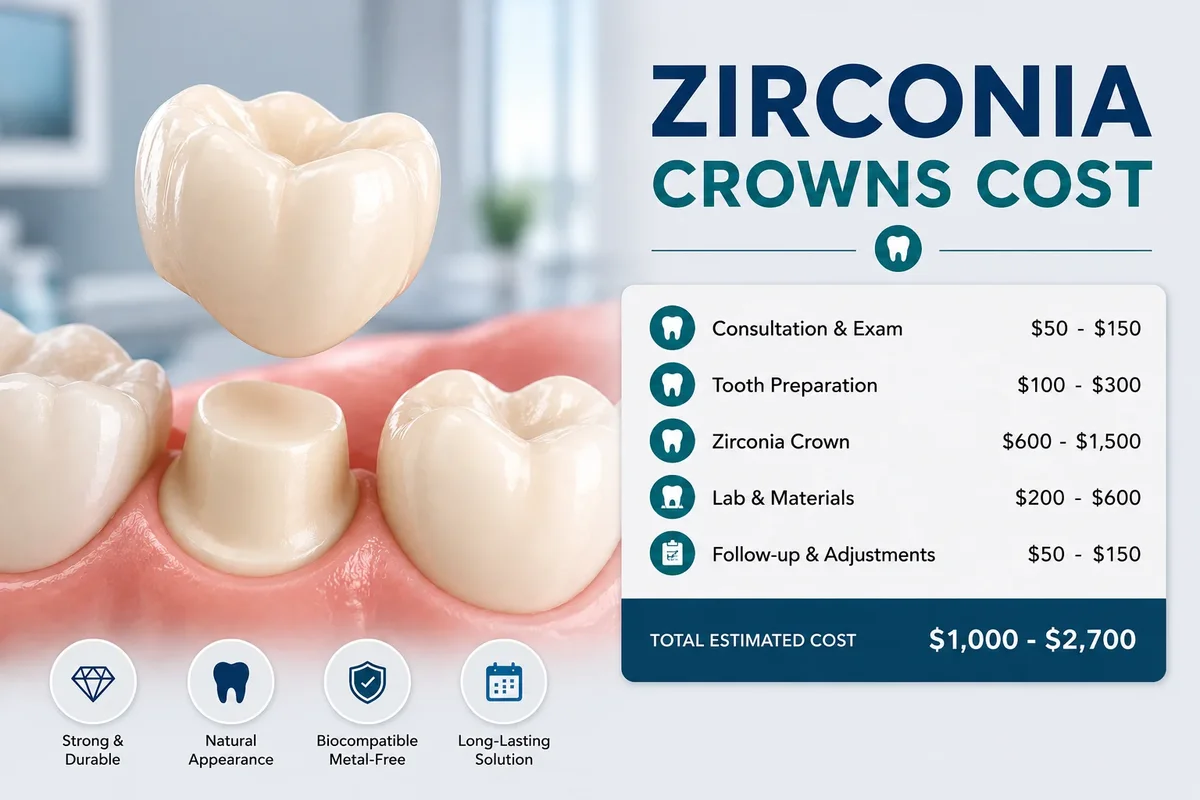
If you are researching zirconia crowns cost, you are probably trying to answer two important questions: “How much should I expect to pay?” and “Are zirconia crowns the right investment for my teeth?” The short answer is that there is no single price that applies to everyone. Zirconia crowns cost varies because every patient has unique dental needs, different treatment goals, and varying levels of restorative complexity. The final treatment estimate depends on factors such as the condition of the tooth, whether additional procedures are required, the number of crowns needed, the type of zirconia selected, laboratory fabrication, and the overall treatment plan developed after a professional examination.
Although many websites publish average price ranges, these figures should only be viewed as general references rather than exact quotations. Dentistry is highly individualized, and a personalized assessment provides a much more reliable understanding of zirconia crowns cost than online estimates alone. A comprehensive consultation allows your dentist to evaluate your oral health, explain suitable treatment options, and prepare a plan that reflects your specific clinical situation.
Zirconia crowns have become one of the most popular restorative solutions because they combine strength with a highly natural appearance. Modern zirconia materials are designed to restore damaged, weakened, or heavily restored teeth while blending harmoniously with surrounding natural teeth. For many patients, choosing zirconia is not simply about appearance; it is also about preserving function, maintaining confidence while smiling, and selecting a durable restorative material appropriate for everyday chewing.
When comparing zirconia crowns cost, it is important to remember that the restoration itself represents only one part of the treatment process. A successful crown requires careful diagnosis, treatment planning, digital imaging when indicated, tooth preparation, accurate impressions or digital scans, laboratory fabrication, precise fitting, bite adjustment, and long-term follow-up. These clinical stages help explain why two patients receiving seemingly similar crowns may receive different treatment estimates.
The condition of the tooth being restored also plays an important role. Some teeth require only straightforward preparation before crown placement, while others may need fillings, replacement of old restorations, gum treatment, or root canal therapy before the final crown can safely be fitted. These additional procedures are determined only after examination and naturally influence zirconia crowns cost. For this reason, responsible dentists avoid offering guaranteed prices without first assessing the patient’s oral condition.
Patients often compare zirconia crowns cost with porcelain crowns, porcelain-fused-to-metal crowns, gold restorations, or other modern materials. While cost comparisons are useful, they should always be balanced against factors such as strength, appearance, longevity, maintenance, comfort, and suitability for your specific tooth. The least expensive restoration is not automatically the best value, just as the most expensive option is not automatically necessary. The goal is to select the treatment that best supports your long-term oral health while meeting your personal expectations.
Another important consideration is whether you need a single crown or multiple restorations. Patients restoring several teeth may have different treatment planning considerations than those replacing only one damaged tooth. Likewise, front teeth often require greater attention to aesthetics, while back teeth may prioritize resistance to heavy chewing forces. These differences influence material selection and therefore contribute to variations in zirconia crowns cost.
Maintaining excellent oral hygiene after treatment is equally important. Although zirconia is known for its durability, the surrounding gums and natural tooth structure still require daily care. Regular brushing, flossing, routine professional examinations, and prompt management of any developing dental problems all contribute to protecting your restoration over time. Looking beyond the initial zirconia crowns cost and considering long-term maintenance helps patients make more informed treatment decisions.
Patients considering treatment abroad frequently compare zirconia crowns cost between countries. While international price differences may exist, treatment decisions should also take into account clinical experience, communication, sterilization standards, digital technology, laboratory quality, and aftercare. A personalized treatment plan provides much greater value than choosing a clinic solely because of an advertised price.
At Redent Klinik, every patient receives an individualized assessment designed to identify the most appropriate restorative option based on their oral health and treatment goals. Rather than recommending the same solution for everyone, the clinical team explains available alternatives, discusses expected procedures, and prepares a personalized treatment plan. If you would like to request an evaluation or discuss your own restorative needs, you can visit the Redent Klinik Contact Page. For additional educational information about restorative dentistry and oral health, patients may also consult the American Dental Association.
Next step: Instead of making your decision based only on average estimates of zirconia crowns cost, schedule a comprehensive dental consultation to determine whether zirconia crowns are the most suitable solution for your teeth. A personalized examination can identify any underlying dental concerns, explain appropriate treatment options, and provide an individualized treatment plan that reflects your specific oral health needs rather than generalized online pricing.
How Much Do Zirconia Crowns Cost? A Quick Answer
One of the first questions patients ask before restoring a damaged tooth is, “What is the zirconia crowns cost?” The most accurate answer is that there is no universal price because every patient’s dental condition is different. While online guides may provide average price ranges, they cannot replace a personalized examination. The final zirconia crowns cost depends on your oral health, the complexity of the procedure, the type of zirconia material selected, the number of crowns required, and whether additional dental treatment is necessary before the crown can be placed.
Instead of looking for a single number, it is more helpful to understand what contributes to the overall treatment plan. A zirconia crown is not simply a manufactured product; it is part of a carefully planned restorative procedure designed to protect a weakened tooth, restore chewing function, and improve the appearance of your smile. Because each treatment plan is individualized, responsible dentists prepare cost estimates only after evaluating the condition of your teeth and surrounding tissues.
Why There Is No Standard Zirconia Crowns Cost
Every patient’s mouth presents a unique combination of restorative needs. One person may require a straightforward crown on a healthy tooth after a fracture, while another may need decay removal, replacement of an old filling, gum treatment, or root canal therapy before the crown can safely be fitted. These differences explain why zirconia crowns cost varies from one patient to another.
The location of the tooth also matters. Front teeth often require exceptional attention to color matching, translucency, and aesthetics, whereas back teeth are exposed to greater chewing forces and may require different material characteristics. These clinical differences influence laboratory procedures and treatment planning.
Main Factors That Influence Zirconia Crowns Cost
Condition of the Tooth
Before recommending a crown, your dentist evaluates whether the tooth has sufficient healthy structure to support the restoration. If the tooth has extensive decay, a large fracture, or previous restorative work, additional treatment may be necessary before the final crown can be placed. These preliminary procedures naturally affect zirconia crowns cost.
Number of Crowns Needed
Restoring one tooth differs significantly from restoring multiple teeth. Patients undergoing full smile rehabilitation or replacing several damaged teeth require more extensive planning, laboratory work, and clinical appointments. Consequently, the overall zirconia crowns cost depends on the scope of the treatment plan rather than the price of a single restoration alone.
Type of Zirconia Material
Modern dentistry offers several zirconia materials with different characteristics. Some formulations prioritize maximum strength for posterior teeth, while others provide enhanced translucency for highly aesthetic anterior restorations. Your dentist will recommend the material that best balances appearance and function according to your clinical needs, which may influence the overall treatment estimate.
Laboratory Fabrication
Every zirconia crown is carefully designed and fabricated using advanced digital or laboratory techniques. Precision manufacturing, color matching, contouring, and finishing all contribute to the quality of the final restoration. These laboratory processes are an important part of zirconia crowns cost because they directly affect fit, comfort, and long-term performance.
Looking Beyond the Initial Cost
While it is natural to compare prices, choosing treatment based solely on the lowest advertised zirconia crowns cost may not always provide the greatest long-term value. A crown should fit accurately, function comfortably, protect the remaining tooth structure, and integrate naturally with your bite. High-quality diagnosis, careful preparation, accurate impressions, skilled laboratory work, and regular follow-up appointments all contribute to successful restorative treatment.
Rather than asking only, “How much does a zirconia crown cost?” consider asking, “Which treatment is most appropriate for my tooth, and what is included in the proposed treatment plan?” This approach often leads to better long-term decision-making because it focuses on oral health rather than price alone.
Should You Compare Zirconia With Other Crown Materials?
Absolutely. Many patients compare zirconia crowns cost with porcelain crowns, porcelain-fused-to-metal crowns, gold restorations, or other ceramic options. Every material offers different strengths, aesthetic qualities, durability, and maintenance requirements. Your dentist should explain the advantages and limitations of each option before recommending the most suitable restoration for your individual circumstances.
In many situations, zirconia provides an excellent balance between strength and appearance, but material selection should always be based on clinical findings rather than marketing claims or generalized price comparisons.
International Patients Considering Treatment
Patients traveling abroad often compare zirconia crowns cost between different countries. Although treatment expenses may vary internationally, price should never be the only consideration. Clinical experience, digital technology, communication, sterilization standards, laboratory quality, treatment planning, and aftercare all contribute to the overall quality of restorative treatment.
At Redent Klinik, treatment recommendations are based on a detailed clinical examination rather than standardized pricing. Patients receive individualized treatment plans explaining suitable restorative options, expected procedures, and personalized recommendations. If you would like to discuss your own case, you can visit the Redent Klinik Contact Page. For additional educational information regarding restorative dentistry, patients may also consult the American Dental Association.
Making an Informed Financial Decision
Understanding zirconia crowns cost means looking beyond average online figures and considering the complete treatment process. A professional consultation helps determine whether zirconia is appropriate for your tooth, whether additional treatment is required, and what restorative plan best supports your long-term oral health. Comparing complete treatment plans instead of isolated prices allows patients to make more confident and informed decisions.
Before proceeding, check whether your tooth has been fully evaluated, whether any preliminary treatment is required, which zirconia material has been recommended, what appointments are included in the treatment plan, and how the restoration should be maintained after placement. If you have pain, a fractured tooth, extensive existing restorations, or uncertainty about the most suitable crown material, schedule a professional dental consultation before making your final decision.
What Factors Affect Zirconia Crowns Cost?
Understanding what influences zirconia crowns cost is essential before comparing treatment options or requesting price estimates. Many patients expect every zirconia crown to have the same price, but restorative dentistry is highly individualized. The final treatment plan depends on your oral health, the complexity of the restoration, the condition of the tooth, and the materials used. Because no two patients have identical dental needs, the final zirconia crowns cost is determined only after a comprehensive examination and personalized treatment planning.
Rather than focusing only on the advertised price of a crown, it is more useful to understand exactly what contributes to the overall treatment. A well-planned zirconia restoration involves much more than manufacturing the crown itself. Clinical evaluation, diagnostic imaging, tooth preparation, digital scanning or impressions, laboratory fabrication, fitting appointments, bite adjustments, and long-term follow-up all contribute to the complete treatment process. Understanding these components allows you to evaluate zirconia crowns cost more realistically and make a better-informed decision.
Condition of the Tooth
Healthy Tooth Structure
Teeth with sufficient healthy structure often require less complex preparation before crown placement. When the remaining tooth is stable and free from significant damage, treatment planning may be more straightforward. Even so, every tooth must be evaluated individually before determining the final zirconia crowns cost.
Extensive Damage or Previous Restorations
Teeth affected by large fillings, fractures, recurrent decay, or previous dental work may require additional treatment before a zirconia crown can be placed safely. Procedures such as replacing old restorations, rebuilding tooth structure, or performing root canal treatment when clinically indicated naturally influence the overall treatment plan and therefore affect zirconia crowns cost.
Number of Crowns Required
Restoring one damaged tooth differs significantly from rehabilitating multiple teeth. Patients who require several crowns often need more comprehensive treatment planning, additional appointments, and increased laboratory work. As the complexity of treatment increases, the overall zirconia crowns cost reflects the broader scope of restorative care rather than the price of a single crown.
During your consultation, your dentist will evaluate whether every tooth truly requires a crown or whether some teeth can be restored using more conservative alternatives such as fillings, inlays, or onlays where appropriate.
Type of Zirconia Material
High-Strength Zirconia
Some zirconia materials are specifically designed to withstand heavy chewing forces, making them suitable for molars and other posterior teeth. These materials prioritize durability while still offering excellent aesthetics compared with many traditional restorative options.
High-Translucency Zirconia
For front teeth, appearance often becomes a higher priority. Modern translucent zirconia materials are designed to better mimic the light transmission of natural enamel while maintaining substantial strength. The choice of material may influence zirconia crowns cost because different manufacturing techniques and laboratory processes are involved.
Laboratory Technology and Manufacturing
Today’s zirconia crowns are commonly produced using advanced CAD/CAM technology, digital design software, precision milling machines, and highly skilled laboratory technicians. After fabrication, crowns are carefully adjusted, stained, glazed, and polished to achieve an accurate fit and natural appearance.
The quality of laboratory work contributes significantly to the long-term function of the restoration and therefore forms an important part of zirconia crowns cost. Well-fitting crowns support healthy gums, comfortable chewing, and long-term restorative success.
Diagnostic Procedures
Before preparing a tooth for a crown, dentists often use diagnostic tools such as digital X-rays, photographs, intraoral scanners, and bite analysis to understand the complete clinical picture. These examinations help identify hidden decay, root problems, bite irregularities, or other issues that may affect treatment planning.
Because every patient’s needs differ, the extent of diagnostic evaluation varies and may influence the complete zirconia crowns cost. Thorough diagnosis supports safer and more predictable treatment planning.
Location of Treatment
Geographic location is another factor influencing zirconia crowns cost. Treatment fees differ between countries, regions, and healthcare systems due to variations in operating costs, laboratory expenses, regulations, and local economic conditions. Patients considering treatment abroad should evaluate not only price but also communication, clinical experience, technology, sterilization standards, and aftercare.
When comparing international clinics, request a detailed treatment plan explaining exactly what is included rather than relying solely on advertised promotional prices.
Experience and Individualized Planning
Successful restorative dentistry depends on accurate diagnosis, careful preparation, material selection, and long-term planning. A personalized consultation allows your dentist to recommend the most appropriate restoration based on your oral health instead of applying the same solution to every patient. This individualized approach explains why responsible dental professionals do not provide guaranteed estimates for zirconia crowns cost without first performing a clinical examination.
At Redent Klinik, every treatment plan is prepared after evaluating the patient’s individual oral condition and restorative goals. Rather than focusing solely on price, the clinical team explains suitable treatment options, available materials, and expected procedures so patients can make informed decisions. If you would like a personalized consultation, you can visit the Redent Klinik Contact Page. For additional educational information regarding restorative dentistry and oral health, patients may also consult the American Dental Association.
Focus on Value Instead of Price Alone
Comparing zirconia crowns cost is an important part of planning restorative treatment, but long-term value should always be considered alongside the initial financial investment. High-quality diagnosis, accurate treatment planning, appropriate material selection, skilled laboratory fabrication, and proper maintenance all contribute to a restoration that supports both function and aesthetics. Looking beyond price alone allows patients to choose treatment that best fits their oral health needs and long-term expectations.
Before making your decision, check whether your tooth has been fully assessed, whether any additional treatment is required, which zirconia material has been recommended, what services are included in the treatment estimate, and how the restoration should be maintained after placement. If you have multiple damaged teeth, recurrent decay, old crowns, bite problems, or questions about treatment alternatives, request a comprehensive dental consultation before proceeding.
Are Zirconia Crowns the Right Choice for Your Teeth?
Before deciding on restorative treatment, many patients compare zirconia crowns cost with other dental solutions. While understanding the financial aspect is important, choosing a crown should always begin with determining whether zirconia is clinically appropriate for your specific tooth. The ideal restoration is not necessarily the least expensive or the most advanced option—it is the one that best protects your tooth, restores normal function, supports long-term oral health, and meets your aesthetic expectations. A comprehensive dental examination helps determine whether zirconia is the most suitable material for your situation.
Zirconia has become one of the most widely recommended crown materials because it combines exceptional strength with an increasingly natural appearance. However, every patient has different restorative needs. Factors such as the location of the tooth, bite forces, remaining tooth structure, gum health, cosmetic expectations, and existing dental work all influence whether zirconia is the most appropriate choice. Understanding these considerations allows you to evaluate zirconia crowns cost within the context of your overall treatment rather than viewing it as an isolated expense.
Who May Be a Good Candidate for Zirconia Crowns?
Patients With Weakened Teeth
Teeth that have been weakened by large fillings, fractures, or extensive wear often require additional protection to prevent further damage. A zirconia crown completely covers the visible portion of the tooth, helping restore strength and function while supporting everyday chewing. In many of these cases, the long-term benefits may justify considering zirconia crowns cost as part of protecting the remaining natural tooth structure.
Patients Seeking a Natural Appearance
Modern zirconia materials are designed to closely resemble natural teeth. High-translucency zirconia options are especially suitable for visible front teeth where aesthetics are particularly important. While material selection influences zirconia crowns cost, your dentist will recommend the option that provides an appropriate balance between appearance and durability for your individual case.
Patients With Heavy Chewing Forces
Zirconia is recognized for its excellent mechanical strength, making it a suitable choice for many back teeth that experience significant chewing pressure. Patients who regularly place heavy functional loads on their molars may benefit from zirconia’s durability, although individual bite characteristics should always be evaluated before treatment.
Situations Where Another Crown Material May Be Considered
Specific Cosmetic Requirements
Although modern zirconia provides excellent aesthetics, certain highly demanding cosmetic situations may lead your dentist to discuss alternative ceramic materials depending on the exact tooth position, lighting characteristics, and desired appearance. Every restorative material offers unique optical properties, and personalized treatment planning helps identify the most suitable solution.
Minimal Tooth Damage
Not every damaged tooth requires a full crown. If sufficient healthy tooth structure remains, more conservative treatments such as composite restorations, ceramic inlays, or onlays may be appropriate. Choosing the least invasive treatment that safely restores the tooth is often preferable when clinically possible. Consequently, zirconia crowns cost should only be considered after confirming that a crown is actually necessary.
Advantages of Choosing Zirconia Crowns
Strength and Durability
One of zirconia’s greatest advantages is its resistance to everyday chewing forces. Modern zirconia materials have demonstrated excellent durability in clinical practice when properly planned, fabricated, and maintained. Although no restoration can be expected to last indefinitely, selecting an appropriate material may contribute to long-term restorative success.
Biocompatibility
Zirconia is widely used in modern restorative dentistry because of its favorable compatibility with oral tissues. Healthy gums, accurate crown margins, and proper oral hygiene all contribute to maintaining comfortable and functional restorations over time.
Metal-Free Restoration
Some patients prefer metal-free restorative materials for personal or aesthetic reasons. Zirconia crowns provide this option while offering excellent strength for many clinical situations. Whether this characteristic is important depends entirely on your treatment priorities and professional recommendations.
What Should You Consider Besides Zirconia Crowns Cost?
While comparing zirconia crowns cost is understandable, it is equally important to evaluate factors such as expected function, long-term maintenance, crown fit, laboratory quality, and the experience of the treating dentist. Selecting treatment solely because of a lower advertised price may overlook important differences in diagnosis, planning, and restorative quality.
Patients should also consider how many teeth require treatment, whether existing restorations need replacement, and whether gum health or bite adjustments should be addressed before crown placement. These clinical considerations often have a greater influence on treatment success than price comparisons alone.
Questions to Discuss During Your Consultation
- Is a zirconia crown the most appropriate restoration for my tooth?
- Would another ceramic material provide better results in my situation?
- Does my tooth require additional treatment before crown placement?
- How will my bite affect the restoration?
- What maintenance is recommended after treatment?
- What factors influence my personalized zirconia crowns cost estimate?
Asking these questions helps you understand the complete treatment plan rather than focusing only on the financial aspect of restorative care.
Making a Personalized Decision
Every patient’s smile is unique, and no single crown material is ideal for every situation. At Redent Klinik, treatment recommendations are based on detailed clinical evaluation, allowing dentists to explain whether zirconia, another ceramic material, or an alternative restoration is most appropriate for your oral health. Patients receive individualized treatment planning designed to balance function, aesthetics, durability, and realistic expectations. If you would like a personalized consultation, you can visit the Redent Klinik Contact Page. For additional educational resources regarding restorative dentistry and oral health, patients may also refer to the American Dental Association.
Choosing the Right Restoration With Confidence
Understanding zirconia crowns cost is only one part of making a confident treatment decision. The most successful restorations are selected after careful examination of the tooth, surrounding tissues, bite, and long-term treatment goals. By considering clinical suitability alongside financial planning, patients are better prepared to choose a restoration that supports both oral health and everyday function.
Before proceeding, check whether your tooth truly requires a crown, whether zirconia is the most suitable material for its location, whether your gums and bite have been evaluated, whether alternative restorative options have been discussed, and whether you understand the expected maintenance after treatment. If you have a cracked tooth, extensive restorations, cosmetic concerns, persistent sensitivity, or uncertainty about the most appropriate material, arrange a professional dental consultation before making your final decision.
How Is the Zirconia Crown Procedure Performed?
Understanding the treatment process is just as important as understanding zirconia crowns cost. Many patients know they need a crown but are unsure what actually happens during treatment or why the procedure involves multiple steps. A zirconia crown is not simply attached to a damaged tooth in a single appointment. Instead, it is created through a carefully planned restorative process designed to protect the remaining tooth structure, restore comfortable function, and provide a natural-looking result. Knowing what each stage involves also helps explain why zirconia crowns cost differs from one patient to another.
Although the exact procedure may vary depending on your oral condition, the number of teeth being restored, and whether additional treatment is required, most patients experience a similar sequence of clinical appointments. Every stage contributes to the long-term success of the restoration and should be considered part of the complete treatment rather than focusing solely on the final crown itself.
Step 1: Comprehensive Dental Examination
Before discussing zirconia crowns cost, your dentist performs a detailed examination of the affected tooth and the surrounding oral structures. The goal is to determine whether a zirconia crown is the most appropriate solution or whether another restorative treatment would better preserve the tooth.
Digital X-rays, photographs, or intraoral scans may be recommended to evaluate tooth structure, existing restorations, root condition, bite alignment, and surrounding bone. These diagnostic procedures help identify problems that may not be visible during a routine visual examination.
Step 2: Personalized Treatment Planning
Confirming Crown Suitability
After evaluating your oral health, your dentist determines whether a zirconia crown is clinically appropriate. If sufficient healthy tooth structure remains, a crown may provide excellent protection while restoring strength and appearance. In some situations, however, a filling, inlay, onlay, veneer, or another restorative option may be more suitable.
Since every treatment plan is unique, your personalized assessment forms the basis for estimating zirconia crowns cost rather than relying on generalized online price guides.
Selecting the Appropriate Zirconia Material
Modern dentistry offers several zirconia formulations. Highly aesthetic translucent zirconia is often selected for visible front teeth, while stronger formulations may be recommended for posterior teeth exposed to greater chewing forces. Material selection depends on your clinical needs and influences laboratory fabrication as well as the overall treatment plan.
Step 3: Tooth Preparation
Once treatment has been planned, the tooth is carefully prepared to create space for the zirconia crown. The amount of preparation depends on the condition of the tooth, existing restorations, and the selected crown design. Local anesthesia is commonly used to help ensure patient comfort throughout this stage.
If decay, fractured restorations, or weakened tooth structure are present, they are addressed before the final crown is fabricated. These procedures are often an important factor influencing zirconia crowns cost because they contribute to creating a stable foundation for the restoration.
Step 4: Digital Scan or Dental Impression
After preparation, your dentist records the shape of the tooth using either a digital intraoral scanner or conventional impression materials. Digital scanning has become increasingly common because it provides highly detailed images that can be transmitted directly to the dental laboratory.
Accurate impressions are essential because even small inaccuracies can affect crown fit, bite comfort, and long-term performance. Precision at this stage contributes significantly to the overall quality of treatment.
Step 5: Temporary Crown Placement
While your permanent zirconia crown is being fabricated, many patients receive a temporary crown. This temporary restoration protects the prepared tooth, reduces sensitivity, maintains appearance, and helps preserve normal chewing function during the laboratory phase.
Depending on the clinic’s treatment protocol, temporary restorations may be included within the complete zirconia crowns cost. Your dentist will explain exactly what is included in your personalized treatment plan before treatment begins.
Step 6: Laboratory Fabrication
Digital Design
Modern zirconia crowns are commonly designed using computer-aided design (CAD) software. Digital technology allows technicians to create restorations that closely match the natural shape, contour, and bite of your teeth.
Milling and Finishing
The zirconia restoration is milled from a solid block of ceramic material before being carefully finished, stained when appropriate, glazed, and polished. Skilled laboratory work plays a major role in the final appearance and fit of the restoration, making laboratory quality an important component of zirconia crowns cost.
Step 7: Final Crown Placement
Once fabrication is complete, your dentist removes the temporary crown and carefully evaluates the permanent zirconia restoration. Color, fit, bite alignment, contact with neighboring teeth, and gum adaptation are all checked before the crown is permanently bonded or cemented.
Minor adjustments may be performed to improve comfort and chewing efficiency. Taking time during this appointment helps ensure that the restoration functions naturally within your bite.
Step 8: Long-Term Care After Treatment
Daily Oral Hygiene
Although zirconia is known for its durability, excellent oral hygiene remains essential. Daily brushing, flossing, and routine professional cleanings help maintain healthy gums and protect the underlying natural tooth structure supporting the crown.
Regular Dental Reviews
Periodic examinations allow your dentist to monitor the crown, surrounding tissues, and overall oral health. Regular maintenance helps identify any developing issues early and contributes to protecting your investment in zirconia crowns cost.
Understanding the Complete Treatment Journey
When evaluating zirconia crowns cost, remember that the procedure includes far more than the final restoration. Comprehensive diagnosis, careful tooth preparation, advanced digital technology, precise laboratory fabrication, accurate fitting, and long-term follow-up all contribute to a successful result. At Redent Klinik, treatment planning is tailored to each patient’s oral condition, allowing every stage of the procedure to be explained before treatment begins. If you would like to discuss your own restorative needs, you can visit the Redent Klinik Contact Page. For additional educational resources about restorative dentistry and oral health, patients may also consult the American Dental Association.
Before starting treatment, check whether a comprehensive examination has been completed, whether your tooth requires any additional treatment before crown placement, which zirconia material has been recommended, whether temporary restorations are included, and how the crown should be maintained after placement. If you have tooth pain, large existing fillings, cracked teeth, bite problems, or uncertainty about the procedure, request a professional dental consultation before proceeding with treatment.
What Risks, Limitations, and Long-Term Costs Should You Consider?
Before deciding on restorative treatment, it is important to understand not only zirconia crowns cost but also the potential risks, limitations, maintenance requirements, and long-term considerations associated with zirconia crowns. While zirconia is widely recognized for its strength, durability, and natural appearance, no dental restoration is completely free from limitations. Every patient has unique oral health conditions, chewing habits, and treatment goals, all of which influence how a crown performs over time. Looking beyond the initial zirconia crowns cost helps you evaluate the overall value of treatment rather than focusing solely on the immediate financial investment.
A zirconia crown is designed to restore and protect a damaged tooth, but its long-term success depends on much more than the crown material itself. Proper diagnosis, careful tooth preparation, excellent laboratory fabrication, accurate placement, healthy gums, good oral hygiene, and routine dental reviews all contribute to successful outcomes. Understanding these factors before treatment allows you to make a balanced decision that supports both your oral health and your long-term expectations.
Understanding the Main Limitations of Zirconia Crowns
The Crown Protects the Tooth—Not the Entire Mouth
A zirconia crown restores a specific tooth, but it does not eliminate the need for ongoing dental care. The surrounding gums, neighboring teeth, bite alignment, and remaining natural tooth structure still require regular attention. Even after investing in zirconia crowns cost, maintaining excellent oral hygiene remains essential for long-term success.
Patients sometimes assume that once a crown has been placed, no further maintenance is necessary. In reality, routine examinations and preventive care continue to play an important role in protecting both the restoration and the natural tooth underneath.
Underlying Tooth Structure Still Matters
Although zirconia is extremely durable, the crown depends on the health of the remaining natural tooth. If decay develops around the edge of the crown or if the supporting tooth becomes compromised, additional treatment may become necessary. This is one reason why zirconia crowns cost should be viewed as part of an ongoing oral health investment rather than a one-time purchase.
Potential Risks to Consider
Crown Margin Decay
One of the most important long-term risks is the development of decay at the margin where the crown meets the natural tooth. This risk is reduced through effective brushing, flossing, fluoride use when recommended, and regular professional examinations. Early detection often allows simpler management than waiting until symptoms develop.
Gum Irritation
Healthy gums are essential for both comfort and aesthetics. If plaque accumulates around the crown because of inadequate cleaning, inflammation may occur. Fortunately, proper oral hygiene and professional cleanings usually help maintain healthy gum tissues around well-fitting restorations.
Chipping or Fracture
Modern zirconia materials are highly resistant to everyday chewing forces, but no restoration is indestructible. Accidental trauma, untreated teeth grinding, or biting exceptionally hard objects may increase the risk of damage. The likelihood varies depending on the specific zirconia material, crown design, bite forces, and individual habits.
Long-Term Maintenance Costs
When evaluating zirconia crowns cost, it is important to remember that future maintenance forms part of responsible restorative care. Routine check-ups, professional cleanings, occasional bite adjustments when indicated, and monitoring of surrounding teeth all contribute to protecting your restoration.
Every patient is different, and future maintenance needs cannot be predicted with certainty. Lifestyle habits, oral hygiene, general health, dietary choices, and attendance at regular dental examinations all influence how restorations perform over time.
Can the Risks Be Reduced?
Maintain Excellent Oral Hygiene
Daily brushing with fluoride toothpaste, flossing, and cleaning around the crown help reduce plaque accumulation and support healthy gums. Even though zirconia itself does not decay, the natural tooth supporting the crown still requires protection.
Attend Regular Dental Examinations
Routine professional reviews allow your dentist to examine the crown, surrounding tissues, bite alignment, and overall oral health. Small concerns can often be identified before they become larger restorative problems, helping preserve the value of your investment in zirconia crowns cost.
Protect the Crown From Excessive Forces
Patients who grind or clench their teeth may benefit from discussing protective night guards with their dentist. Avoiding habits such as chewing ice, opening packages with your teeth, or biting extremely hard objects may also help reduce unnecessary stress on the restoration.
Balancing Initial Cost With Long-Term Value
Comparing zirconia crowns cost between clinics is understandable, but selecting treatment based solely on the lowest advertised price may overlook important aspects of restorative care. Diagnosis, treatment planning, material quality, laboratory precision, crown fit, communication, and long-term follow-up all contribute to successful treatment outcomes.
Looking at the complete treatment journey often provides a better understanding of value than focusing only on the initial financial estimate. A carefully planned restoration that fits properly and is maintained consistently may support comfortable function for many years, although individual outcomes naturally vary.
When Should You Contact Your Dentist After Crown Placement?
Following treatment, you should contact your dentist if you experience persistent discomfort, difficulty biting, noticeable crown movement, gum swelling around the restoration, or any sudden changes affecting the treated tooth. Early professional evaluation often helps identify the cause before more complex treatment becomes necessary.
At Redent Klinik, every treatment plan includes individualized guidance regarding maintenance, follow-up care, and long-term oral health. Patients receive recommendations tailored to their clinical condition rather than generalized advice. If you would like a personalized assessment or wish to discuss your restorative needs, you can visit the Redent Klinik Contact Page. For additional educational resources regarding restorative dentistry and oral health, patients may also consult the American Dental Association.
Making an Informed Long-Term Decision
Understanding zirconia crowns cost involves more than comparing treatment estimates. It also means recognizing the importance of maintenance, preventive care, and regular professional monitoring. A well-maintained zirconia crown can contribute to comfortable function and a natural appearance, but long-term success depends on appropriate treatment planning and your commitment to ongoing oral care.
Before proceeding with treatment, check whether your supporting tooth has been fully evaluated, whether your gums are healthy, whether you understand the recommended maintenance routine, whether habits such as teeth grinding have been discussed, and whether follow-up appointments have been planned. If you experience persistent tooth pain, recurrent gum inflammation, crown discomfort, bite changes, or uncertainty about the long-term suitability of zirconia, arrange a professional dental consultation before making your final treatment decision.
Zirconia Crowns vs. Porcelain, Metal, and Other Crown Options
When comparing restorative treatments, many patients begin by researching zirconia crowns cost. While understanding the financial aspect is important, selecting the right crown material involves much more than comparing prices. Every crown material has its own strengths, limitations, appearance, durability, maintenance requirements, and ideal clinical applications. The most appropriate choice depends on the condition of your tooth, its location in the mouth, your bite, aesthetic expectations, and your long-term oral health goals. Understanding these differences allows you to evaluate zirconia crowns cost within the broader context of treatment value rather than focusing on price alone.
Modern restorative dentistry offers several reliable crown materials, including zirconia, porcelain, porcelain-fused-to-metal (PFM), gold alloys, and other ceramic options. Each material has been developed to address specific clinical needs, and no single crown is universally superior in every situation. A professional consultation helps determine which material best matches your individual circumstances.
Zirconia Crowns
Main Advantages
Zirconia crowns have become increasingly popular because they combine excellent mechanical strength with attractive aesthetics. Modern translucent zirconia materials are capable of closely resembling natural enamel while maintaining durability suitable for many areas of the mouth. Patients researching zirconia crowns cost often appreciate that zirconia provides a balance between function and appearance, making it appropriate for many restorative situations.
Another important benefit is that zirconia crowns are metal-free. For patients who prefer ceramic restorations or desire highly natural-looking results, this characteristic may be particularly attractive.
Possible Limitations
Although zirconia performs exceptionally well in many clinical situations, it is not automatically the ideal choice for every tooth. Material selection should always consider tooth position, bite forces, remaining tooth structure, cosmetic goals, and laboratory planning. Your dentist will recommend zirconia only if it is clinically appropriate for your individual needs.
Porcelain Crowns
Aesthetic Strengths
Porcelain crowns are valued for their ability to reproduce the translucency and light reflection of natural teeth. In carefully selected cosmetic situations, particularly involving highly visible front teeth, porcelain may provide excellent aesthetic results depending on the patient’s smile characteristics.
When comparing porcelain with zirconia crowns cost, patients should remember that the decision should be based on clinical suitability rather than appearance alone. Modern zirconia has significantly improved aesthetically and may also be recommended for front teeth in many situations.
Clinical Considerations
Porcelain restorations require careful planning and appropriate case selection. Depending on the material used and the patient’s bite, certain porcelain restorations may behave differently under heavy chewing forces than some zirconia formulations. Your dentist evaluates these factors before recommending the most suitable material.
Porcelain-Fused-to-Metal Crowns
Traditional Restorative Option
Porcelain-fused-to-metal crowns have been used successfully for many years. These restorations combine a metal substructure with an outer porcelain layer, offering functional strength while improving appearance compared with full-metal crowns.
Potential Limitations
Depending on gum position and long-term tissue changes, the underlying metal may occasionally become visible near the crown margin in some patients. This possibility is one reason why many individuals comparing zirconia crowns cost also consider modern metal-free alternatives.
Gold and Metal Alloy Crowns
Durability
Gold and other metal alloy crowns remain excellent restorative options in selected clinical situations, particularly for posterior teeth where appearance is less important. These materials have long clinical histories and offer reliable function for many patients.
Aesthetic Considerations
Because of their metallic appearance, many patients today prefer tooth-colored alternatives. As a result, zirconia and ceramic restorations have become increasingly popular for individuals seeking restorations that blend more naturally with surrounding teeth.
Which Material Offers the Best Long-Term Value?
Instead of asking which crown has the lowest price, a more useful question is which material best fits your individual clinical situation. Long-term value depends on factors including diagnosis, preparation quality, laboratory fabrication, oral hygiene, bite stability, and routine professional maintenance. Although zirconia crowns cost may differ from other restorative materials, the overall value should always be evaluated according to your personal treatment goals and oral health needs.
A restoration that supports comfortable chewing, maintains healthy surrounding tissues, and meets your cosmetic expectations often provides greater satisfaction than selecting treatment based solely on financial considerations.
Questions to Discuss With Your Dentist
- Which crown material is most appropriate for my specific tooth?
- Will aesthetics or chewing strength be the higher priority?
- Does my bite influence the recommended material?
- How should the restoration be maintained?
- What factors influence my personalized zirconia crowns cost estimate?
- Are there alternative restorative options suitable for my case?
These questions help ensure that treatment recommendations are based on clinical findings rather than general assumptions about restorative materials.
Making a Personalized Material Choice
Every patient’s smile is unique, and selecting the appropriate crown material requires individualized planning. At Redent Klinik, dentists evaluate the condition of the tooth, surrounding tissues, bite, and cosmetic expectations before recommending zirconia or another suitable restorative material. Rather than applying a single solution to every patient, treatment planning focuses on long-term oral health, function, and realistic expectations. If you would like to discuss your own restorative options, you can visit the Redent Klinik Contact Page. For additional educational information about restorative dentistry and oral health, patients may also consult the American Dental Association.
Choosing the Right Crown With Confidence
Comparing zirconia crowns cost with porcelain, metal, and other crown materials is a valuable part of treatment planning, but price should never be the only deciding factor. The most appropriate restoration is the one that safely restores your tooth, supports comfortable function, meets your aesthetic expectations, and fits your long-term oral health goals. A comprehensive consultation provides the information needed to make that decision with confidence.
Before making your final choice, check whether your dentist has explained why a particular crown material is recommended, whether your bite and cosmetic goals have been evaluated, whether alternative materials have been discussed, what maintenance will be required after placement, and whether you fully understand the expected treatment process. If you remain uncertain about which crown material best suits your needs, arrange a professional dental consultation before proceeding with restorative treatment.
Financing, Insurance, and Ways to Manage Zirconia Crowns Cost
For many patients, deciding to restore a damaged tooth involves more than choosing the right crown material. Financial planning is also an important part of the decision-making process. Although zirconia crowns cost varies according to individual treatment needs, there are often several ways to make treatment more manageable. Depending on your location, dental insurance, financing availability, and treatment priorities, you may be able to spread expenses over time or coordinate treatment in a way that better fits your budget. Understanding these options allows you to focus on receiving appropriate dental care rather than delaying treatment because of uncertainty about payment.
Before discussing financial arrangements, remember that the final zirconia crowns cost should always be based on a professional examination and individualized treatment plan. Responsible dental clinics avoid providing guaranteed pricing without evaluating the condition of the tooth, surrounding tissues, and any additional treatment that may be necessary before crown placement. Once your dentist has completed a comprehensive assessment, you can discuss available payment options with greater confidence.
Can Dental Insurance Help Cover Zirconia Crowns?
Insurance Coverage Depends on Your Policy
Many dental insurance plans provide some level of benefit for restorative treatments, including crowns, when they are considered clinically necessary under the terms of the policy. However, coverage differs significantly between insurance providers, employers, countries, and individual contracts. Some policies contribute toward crown treatment, while others may include waiting periods, annual maximums, exclusions, or limitations regarding specific restorative materials.
Because insurance benefits vary, patients should never assume that every policy provides the same support for zirconia crowns cost. Reviewing your policy documents or contacting your insurance provider directly is the best way to understand your available benefits.
Questions to Ask Your Insurance Company
Before treatment begins, consider asking:
- Is zirconia crown treatment covered under my policy?
- Does the policy distinguish between different crown materials?
- Are there annual reimbursement limits?
- Is pre-authorization required before treatment?
- Will diagnostic examinations or X-rays be covered?
These questions help clarify your expected out-of-pocket expenses and allow you to plan more accurately.
Financing Options
Monthly Payment Plans
In some regions, dental clinics cooperate with financing providers that allow eligible patients to divide treatment expenses into scheduled monthly payments. While financing does not reduce zirconia crowns cost, it may make treatment more financially manageable by spreading payments over time rather than requiring a single payment.
Financing availability depends on local regulations, financial institutions, and individual eligibility. Before agreeing to any financing arrangement, review repayment terms, administrative fees, applicable interest charges, and payment schedules carefully.
Flexible Treatment Scheduling
In certain clinical situations, treatment may be organized in stages. If several teeth require restorative care, your dentist may recommend prioritizing the most urgent teeth first before completing additional restorations later. Whether staged treatment is appropriate depends entirely on your oral health and should always be based on clinical judgment rather than financial considerations alone.
Looking Beyond the Initial Investment
Maintenance Protects Your Investment
Understanding zirconia crowns cost involves more than calculating the initial treatment estimate. Long-term maintenance plays an equally important role in preserving the restoration. Daily brushing, flossing, regular professional cleanings, and routine examinations help protect both the crown and the natural tooth underneath, reducing the likelihood of future restorative treatment.
Value Versus Price
Selecting treatment solely because it offers the lowest advertised zirconia crowns cost may overlook important aspects of restorative care. High-quality diagnosis, appropriate material selection, skilled laboratory fabrication, accurate crown fit, effective communication, and ongoing follow-up all contribute to long-term treatment success. Evaluating overall value rather than initial price often leads to more satisfying long-term outcomes.
International Treatment Considerations
Many patients compare zirconia crowns cost between different countries before choosing where to receive treatment. While international dental care may provide attractive financial opportunities, patients should also evaluate factors such as dentist experience, clinical technology, sterilization protocols, communication, laboratory quality, treatment planning, warranty policies where applicable, and aftercare arrangements.
Travel expenses, accommodation, transportation, and possible review appointments should also be considered when calculating the complete financial commitment associated with international treatment.
Creating a Realistic Treatment Budget
After receiving your personalized treatment plan, preparing a realistic budget helps you understand the full scope of treatment. Include diagnostic appointments, recommended preliminary procedures, temporary restorations if applicable, laboratory work, follow-up visits, maintenance appointments, and travel expenses if treatment is being completed abroad. Viewing zirconia crowns cost within the context of the complete treatment journey provides a much clearer understanding of your overall investment.
Discuss Financial Questions Openly
Many patients hesitate to discuss finances during consultations, but open communication helps your dentist recommend practical treatment strategies that align with both your oral health needs and your budget. At Redent Klinik, individualized treatment planning includes explaining recommended procedures, available restorative options, and personalized treatment recommendations before any decisions are made. If you would like to request a consultation or discuss your treatment needs, you can visit the Redent Klinik Contact Page. For additional educational information about restorative dentistry and oral health, patients may also consult the American Dental Association.
Making a Financially Informed Decision
Understanding zirconia crowns cost means balancing financial planning with appropriate clinical care. A personalized examination allows your dentist to determine the most suitable treatment, explain the procedures involved, and provide an individualized estimate based on your actual oral condition. Combining this clinical information with insurance review, financing discussions, and realistic budgeting allows you to move forward with greater confidence and a clearer understanding of your available options.
Before beginning treatment, check whether your insurance offers restorative benefits, whether financing is available if appropriate, whether your treatment estimate clearly explains what is included, whether staged treatment is clinically possible, and what maintenance appointments will be recommended after crown placement. If you have questions about insurance coverage, financing arrangements, or the overall treatment plan, request professional guidance from your dental clinic before making your final decision.
Frequently Asked Questions About Zirconia Crowns Cost
Patients considering restorative treatment often have many practical questions before deciding whether zirconia crowns are the right option. While researching zirconia crowns cost provides useful background information, many of the answers depend on your individual oral health, treatment goals, and clinical examination. General information found online can help you understand the process, but it cannot replace a personalized dental assessment. The following frequently asked questions address common concerns while helping you understand how zirconia crowns cost fits into the overall treatment journey.
Remember that every patient’s treatment plan is unique. Responsible dental professionals prepare recommendations after evaluating your teeth, gums, bite, and restorative needs rather than relying solely on generalized price estimates.
Are Zirconia Crowns Worth the Investment?
For many patients, zirconia crowns provide an excellent combination of strength, durability, and natural appearance. Whether they represent good value depends on your individual dental condition, oral hygiene, functional requirements, and long-term treatment goals. Rather than asking only whether zirconia crowns cost fits your budget, consider whether zirconia is the most appropriate restorative material for protecting your tooth and maintaining oral function over time.
A comprehensive consultation helps determine whether zirconia is the most suitable option or whether another restorative material may better meet your clinical needs.
Why Does Zirconia Crowns Cost Differ Between Patients?
Individual Clinical Conditions
No two patients have identical restorative needs. Tooth condition, gum health, bite alignment, previous dental work, and the number of teeth requiring treatment all influence the final treatment plan. These factors explain why zirconia crowns cost varies from one patient to another.
Additional Procedures
Some teeth require preliminary treatment before a zirconia crown can be safely placed. Root canal therapy, replacement of large fillings, treatment of decay, or gum care may become part of the complete restorative plan. These procedures are determined only after examination and naturally affect the overall treatment estimate.
How Long Can Zirconia Crowns Last?
Zirconia is recognized for its excellent durability, but no restoration has a guaranteed lifespan. Longevity depends on numerous factors including oral hygiene, bite forces, gum health, daily habits, routine professional examinations, and overall oral care. Looking beyond the initial zirconia crowns cost and maintaining excellent preventive care often contributes significantly to long-term restorative success.
Your dentist can explain how to care for your crown and recommend appropriate follow-up appointments based on your individual needs.
Do Zirconia Crowns Require Special Care?
Daily Home Care
Although zirconia itself is highly resistant to wear, the supporting natural tooth and surrounding gums still require daily care. Brushing twice daily, flossing carefully around the crown, and following your dentist’s oral hygiene recommendations remain essential after treatment.
Good home care helps protect your investment in zirconia crowns cost while supporting healthy surrounding tissues.
Professional Maintenance
Regular dental examinations and professional cleanings allow your dentist to monitor the crown, surrounding gums, and bite alignment. Routine maintenance helps identify any developing issues early and contributes to preserving both the restoration and the supporting tooth.
Can a Zirconia Crown Be Replaced?
If a zirconia crown becomes damaged, no longer fits properly, or if changes occur in the supporting tooth, replacement may be recommended depending on the clinical findings. Your dentist will carefully evaluate the restoration before determining the most appropriate course of action.
Because every situation is different, future treatment needs should never be predicted based solely on general estimates of zirconia crowns cost.
Should I Choose Treatment Based Only on Price?
Selecting restorative treatment based exclusively on the lowest advertised zirconia crowns cost is rarely the best long-term strategy. Successful treatment depends on careful diagnosis, individualized planning, appropriate material selection, high-quality laboratory work, accurate crown fit, and consistent follow-up care.
Comparing complete treatment plans instead of isolated prices usually provides a better understanding of the overall value you receive from restorative care.
Can I Compare Zirconia With Other Materials During My Consultation?
Yes. A comprehensive consultation should include discussion of suitable alternatives whenever appropriate. Depending on your tooth, your dentist may explain the advantages and limitations of zirconia, porcelain, porcelain-fused-to-metal, gold alloys, or other ceramic restorations. Comparing these materials alongside zirconia crowns cost helps you choose the restoration that best matches your clinical needs and personal preferences.
Every material has specific strengths, and the most appropriate recommendation depends on your oral health rather than generalized assumptions.
Where Can I Receive Personalized Advice?
Online information is valuable for learning about restorative dentistry, but it cannot evaluate your individual dental condition. At Redent Klinik, every patient receives a personalized assessment that considers tooth structure, gum health, bite function, cosmetic expectations, and long-term treatment goals before recommending a restorative solution. Rather than focusing solely on zirconia crowns cost, the clinical team explains the complete treatment plan so patients can make informed decisions with confidence. If you would like a personalized consultation, you can visit the Redent Klinik Contact Page. For additional educational information about restorative dentistry and oral health, patients may also consult the American Dental Association.
Final Thoughts Before Making Your Decision
Understanding zirconia crowns cost involves much more than comparing online prices. It means evaluating treatment suitability, long-term maintenance, restorative quality, and your individual oral health needs. A personalized consultation provides the information necessary to understand which treatment option best supports your smile while helping you make a confident and informed decision based on professional clinical evaluation.
Before scheduling treatment, check whether your tooth has been fully evaluated, whether alternative restorative options have been discussed, whether you understand the recommended material and treatment process, what maintenance will be required after placement, and what follow-up appointments are advised. If you have persistent tooth pain, a fractured tooth, an old failing crown, cosmetic concerns, or uncertainty about the most appropriate restorative material, arrange a professional dental consultation before proceeding with treatment.
Your Next Step: When to Schedule a Professional Dental Consultation
After learning about zirconia crowns cost, the procedure, material options, long-term maintenance, financing possibilities, and common patient questions, the final step is deciding whether it is time to arrange a professional dental consultation. Online research provides an excellent foundation, but it cannot evaluate your tooth, identify hidden problems, or determine whether zirconia is the most appropriate restorative solution. A comprehensive examination allows your dentist to prepare a treatment plan based on your actual oral condition rather than relying on generalized information or average online estimates of zirconia crowns cost.
Many patients postpone treatment because they are uncertain about costs or unsure whether a crown is truly necessary. While taking time to research your options is sensible, delaying professional evaluation may allow existing dental problems to become more complex. Cracks can progress, large fillings may weaken further, decay may continue beneath existing restorations, and damaged teeth may eventually require more extensive treatment. Scheduling a consultation does not obligate you to proceed immediately, but it provides the information needed to make a confident and informed decision.
When Should You Schedule a Consultation?
You Have a Cracked or Broken Tooth
If you have noticed a crack, fracture, or significant damage to a tooth, professional assessment should not be delayed. Even when discomfort is minimal, structural weakness may increase the risk of further damage during normal chewing. Your dentist can determine whether a zirconia crown is appropriate or whether another restorative option would better preserve the tooth.
Understanding your personalized zirconia crowns cost estimate at this stage allows you to compare treatment options before more extensive restorative procedures become necessary.
You Have a Large Existing Filling
Teeth with extensive fillings sometimes lose structural strength over time. During your consultation, your dentist evaluates whether the remaining tooth structure can continue functioning safely or whether additional protection with a crown should be considered. Early evaluation often provides more restorative options than waiting until a tooth fractures.
You Experience Persistent Sensitivity or Discomfort
Ongoing sensitivity when eating or drinking, discomfort while chewing, or repeated problems involving the same tooth should be professionally evaluated. These symptoms may have several possible causes, and only a clinical examination can determine whether a zirconia crown forms part of the appropriate treatment plan.
What Happens During Your Consultation?
Comprehensive Examination
Your dentist will examine the affected tooth, surrounding gums, bite relationship, and overall oral health. Depending on your clinical situation, digital X-rays, photographs, or intraoral scans may also be recommended to evaluate the internal structure of the tooth and surrounding tissues.
Rather than providing a standard estimate immediately, these findings allow your dentist to explain the factors influencing your personalized zirconia crowns cost and whether zirconia represents the most suitable restorative material.
Discussion of Treatment Options
A thorough consultation should include discussion of all clinically appropriate restorative options. Depending on your situation, your dentist may compare zirconia crowns with porcelain crowns, porcelain-fused-to-metal restorations, ceramic alternatives, onlays, or other conservative treatments where appropriate. Comparing these options helps you understand both clinical suitability and long-term value.
Individualized Treatment Planning
Every patient has different priorities. Some focus primarily on aesthetics, while others prioritize durability, treatment time, or preserving as much natural tooth structure as possible. Your dentist combines these personal preferences with clinical findings to recommend the treatment most appropriate for your individual needs.
Questions Worth Asking During Your Appointment
Preparing questions before your consultation helps you better understand your treatment options. Consider asking:
- Is a zirconia crown the best option for my tooth?
- Does the tooth require additional treatment before crown placement?
- Which zirconia material is recommended for my case?
- What factors determine my personalized zirconia crowns cost?
- What maintenance will be required after treatment?
- How frequently should follow-up appointments be scheduled?
- Are there suitable alternatives if zirconia is not recommended?
These discussions provide much more meaningful guidance than comparing online prices alone because they focus on your specific clinical situation.
Preparing for Your Dental Visit
Bring Relevant Information
Before attending your consultation, prepare a list of current medications, previous dental treatment, allergies, medical conditions, and any concerns you wish to discuss. If you have dental insurance, bringing your policy information may also help clarify potential benefits for restorative treatment.
Think About Your Priorities
Consider what matters most to you. Are you primarily seeking durability, natural aesthetics, preservation of tooth structure, shorter treatment time, or balancing treatment quality with zirconia crowns cost? Clearly communicating your expectations helps your dentist recommend the most appropriate restorative solution.
Choosing the Right Dental Clinic
When selecting a clinic, evaluate more than the advertised price. Clinical experience, diagnostic technology, communication, sterilization standards, laboratory quality, personalized treatment planning, and long-term follow-up all contribute to successful restorative care. Comparing these factors alongside zirconia crowns cost provides a more realistic understanding of overall treatment value.
At Redent Klinik, every patient receives a personalized evaluation based on their oral health, treatment goals, and restorative needs. Rather than recommending identical treatment for every case, the clinical team explains appropriate options, discusses expected procedures, and prepares an individualized treatment plan. If you would like to request a consultation, you can visit the Redent Klinik Contact Page. For additional educational information about restorative dentistry and oral health, patients may also consult the American Dental Association.
Making a Confident Treatment Decision
Understanding zirconia crowns cost is only one part of choosing the right restorative treatment. The most confident decisions are based on professional examination, accurate diagnosis, careful treatment planning, and realistic expectations. By combining financial planning with individualized clinical advice, you can select a restoration that supports both the health of your teeth and your long-term satisfaction.
Before moving forward, check that your tooth has been fully evaluated, that you understand why zirconia has been recommended, that alternative treatments have been discussed where appropriate, that you know what is included in your treatment plan, and that you understand the maintenance required after crown placement. If you have persistent tooth pain, a cracked tooth, failing restorations, cosmetic concerns, uncertainty about the best crown material, or questions about your personalized treatment plan, schedule a comprehensive professional dental consultation before making your final decision.
Disclosure: this page may contain affiliate links. We may earn a commission if you use them, at no extra cost to you.