
When people begin researching permanent solutions for missing teeth, one of the most promising and transformative treatments they encounter is 4 post dental implants. This technique, often seen as a modern evolution of full-arch implant dentistry, offers patients a stable, long-lasting, and highly aesthetic replacement for their natural teeth. In this detailed guide, you will learn exactly how the system works, what makes it unique, why thousands of patients prefer it over other options, and how it can restore not just your smile—but also your confidence and quality of life. 😊
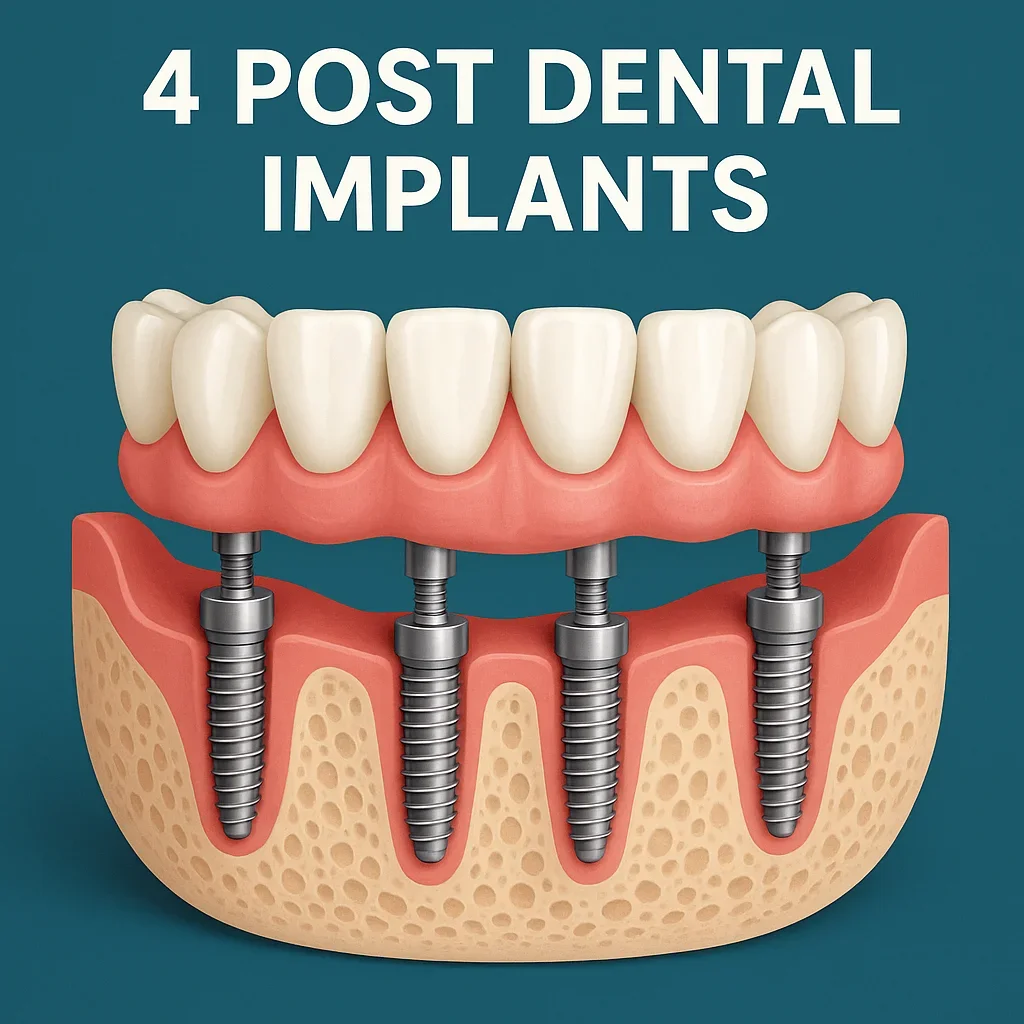
The concept of 4 post dental implants revolves around using four strategically placed titanium implant posts to support an entire arch of prosthetic teeth. Because these implants are positioned in areas of the jaw with the strongest bone volume, they create a secure anchor for a full-arch restoration, even for patients with bone loss. The simplified technique significantly reduces treatment time, makes recovery easier, and eliminates the need for extensive bone grafting in most cases. This is one reason why the system is often preferred over traditional methods involving 6–8 implants.
A major advantage patients appreciate is that 4 post dental implants provide stability comparable to natural teeth. Unlike removable dentures that move or slip, implant-supported teeth remain fixed in place—allowing patients to eat, speak, and smile without discomfort. This stability also protects jawbone health, helping prevent the bone deterioration that usually occurs after tooth loss. Because the implants function like artificial tooth roots, they stimulate the bone and keep it active.
Choosing 4 post dental implants also enhances aesthetics. The prosthetic teeth are custom-designed to complement facial proportions, lip shape, gum line, and bite pattern. Modern materials such as zirconia and high-quality acrylic create lifelike results that can restore youthful facial structure. Many patients report looking younger after the treatment because the implant-supported teeth prevent facial sagging caused by bone loss. 😄
Another reason this treatment is gaining attention is its predictable success rate. Studies published by trusted organizations such as the American Dental Association demonstrate that implant-supported restorations have exceptionally high long-term survival rates when properly maintained. Daily oral hygiene, regular checkups, and avoiding harmful habits such as smoking or teeth grinding can help ensure decades of use.
Patients often wonder whether the procedure is painful or complex. Fortunately, the process is designed for maximum comfort. Advanced imaging allows clinicians to plan precise placement of the four implant posts before the surgery begins. On the day of the procedure, the implants are positioned, and in many cases, a temporary set of teeth is attached right away—allowing patients to leave the clinic with a functional smile the same day. This “immediate loading” approach is one of the reasons the treatment is frequently recommended for people who want fast, transformative results.
Additionally, the cost-effectiveness of 4 post dental implants makes them an appealing choice for full-arch restoration. Instead of placing numerous implants, the system uses just four, which can significantly reduce both surgical time and overall expenses. For patients doing research, it’s helpful to consult with clinics directly for personalized quotes, as fees vary depending on materials, bone condition, and country. If you would like professional assistance or wish to schedule a consultation, feel free to visit the Redent Klinik Contact Page.
In broader terminology, dentists sometimes refer to this method using synonyms such as “quad implant-supported restoration” or “four-anchor full-arch prosthetics,” both of which describe the same foundational approach. These LSI terms help patients understand variations of the technique, but all refer back to the stability and efficiency of 4 post dental implants.
Overall, this treatment has become a revolutionary solution for individuals seeking a permanent, durable, and natural-looking alternative to dentures. From restoring chewing ability to improving speech clarity and boosting self-esteem, 4 post dental implants deliver a life-changing experience for patients around the world. 🌟
How 4 Post Dental Implants Work: Structure & Stability Explained
Understanding the precise mechanics behind 4 post dental implants is essential for anyone considering a full-arch restoration. This implant system is engineered to deliver maximum stability with minimal surgical intervention, making it one of the most advanced solutions in modern implant dentistry. Unlike conventional methods that require six to eight implants per jaw, 4-post systems strategically use only four high-strength titanium fixtures to support an entire arch of new teeth. This approach minimizes surgical complexity while still delivering superior bite force, aesthetic harmony, and long-term reliability. 😊
The Core Structure of 4 Post Dental Implants
A full-arch prosthesis supported by just four implants might seem surprising at first, but the system works exceptionally well because each post is placed with strategic precision. Two implants are positioned vertically at the front of the jaw, where bone density is typically highest. The other two implants are angled at the back of the jaw—usually between 30° and 45°. This angled placement allows the implants to bypass areas of low bone volume while maximizing contact with quality bone.
This design not only enhances stability but also reduces the need for additional procedures like sinus lifts or bone grafts. For many patients who have lived with missing teeth or dentures for years, this is a major advantage. The strategic angling redistributes functional loads evenly across the jaw, allowing 4 post dental implants to handle chewing forces similar to natural teeth.
Titanium Implant Posts and Osseointegration
The foundation of the system lies in the four titanium posts that act as artificial tooth roots. Titanium is widely known for its biocompatibility—it naturally bonds with human bone through a process called osseointegration. Over the course of several months, the bone gradually fuses to the implant surface, creating a stable and permanent anchor for the prosthetic teeth.
This biological bonding process is one of the reasons 4 post dental implants are considered a lifelong solution. Once integrated, the implant posts serve as fixed supports that allow you to chew, smile, and speak comfortably. This differs dramatically from removable dentures, which rest on the gums and often slip during use.
The Role of Angled Implants in Stability
One of the most distinctive features of this system is the posterior angulation of the back implants. This design extends the prosthetic arch without requiring invasive bone augmentation. By tilting the posterior implants, dentists can achieve:
- Greater stability due to increased implant–bone contact
- Reduced cantilevering forces on the bridge
- Better load distribution across the jaw
- Minimal need for bone grafting
This engineering principle has been validated by clinical research from leading institutions including the American Dental Association, which continues to affirm the reliability of prosthetic systems supported by angled implants.
Immediate Loading: How You Can Receive Teeth the Same Day
A hallmark of the 4-post system is the possibility of immediate loading. This means that temporary teeth may be attached to the implants on the same day as the surgery. Instead of waiting several months without teeth, patients walk out with a functional, natural-looking smile.
This is possible because the four implants—especially with their angled posterior posts—form a strong, unified support system that resists micro-movements during healing. Minimizing movement is crucial for successful osseointegration. This stability is what makes 4 post dental implants an attractive choice for those seeking a fast, life-changing transformation. 🌟
Digital Planning and Guided Surgery
Modern imaging technologies such as CBCT (Cone Beam Computed Tomography) are used to map the jawbone in three dimensions before surgery. Digital planning ensures implant placement is accurate to fractions of a millimeter. Guided surgical templates help the dentist position each implant at the correct depth and angle, reducing errors and shortening operation time.
Advanced planning improves safety, minimizes swelling, and produces more predictable long-term results. This meticulous approach allows even patients with moderate bone loss to qualify for 4 post dental implants, a benefit that conventional implant systems cannot always offer.
The Prosthetic Bridge: Lifelike Aesthetics & Natural Function
The bridge that attaches to the four implants is fabricated using durable, high-quality materials such as zirconia or hybrid acrylic. These materials are selected for their realistic appearance, strength, and ability to withstand daily wear.
The prosthetic teeth are custom-colored and shaped to match your facial profile, smile line, and personal preferences. This attention to detail ensures that the final restoration looks natural and feels comfortable. The secure attachment prevents movement, allowing for improved pronunciation, effective chewing, and full biting strength—unmatched by traditional dentures.
Why Stability Improves Oral Health
Because the implants stimulate the jawbone, they help prevent bone resorption—a common issue after tooth loss. Bone resorption leads to facial sagging, changes in bite alignment, and functional difficulties. By integrating with the bone, 4 post dental implants maintain facial structure and support long-term oral health.
Furthermore, the fixed nature of the prosthetic arch prevents irritation of the gums, which often occurs with dentures. No adhesives are required, and patients never need to worry about sores caused by friction.
LSI Terms to Reinforce Understanding
In the implant literature, you may encounter semantically related terms like “four-anchor implant system” or “quad-support full-arch restoration.” These refer to the same underlying concept and are often used interchangeably by professionals to describe this advanced dental solution.
In summary, the structural foundation of 4 post dental implants is based on a blend of modern biomechanics, precise surgical planning, and advanced prosthetic design. This combination results in exceptional stability, natural aesthetics, and long-term durability—making it one of the most effective full-arch solutions available today.
Benefits of Choosing 4 Post Dental Implants for Full-Arch Restoration
For patients seeking a permanent, comfortable, and highly aesthetic solution to missing teeth, 4 post dental implants offer a long list of advantages. This system has become one of the most requested full-arch restoration options worldwide because it blends functional strength with natural-looking beauty—while also minimizing surgical complexity. In this detailed section, you will discover the key benefits that make 4-post systems a top choice for individuals who want reliable, fast, and life-changing dental rehabilitation. 😄
Exceptional Stability That Mimics Natural Teeth
One of the most important benefits of 4 post dental implants is their exceptional stability. Traditional removable dentures often slip or move, especially while eating or speaking. In contrast, implant-supported teeth are securely anchored to the jawbone through four titanium posts, meaning they function like natural tooth roots.
Because the posts fuse with the bone through osseointegration, the final restoration feels firm, secure, and natural. Patients often describe the experience as “getting my real teeth back.” The ability to bite into a crunchy apple, enjoy a steak, or speak clearly without worrying about dentures shifting brings enormous relief and confidence.
Reduced Need for Bone Grafting
Many patients who have worn dentures for years experience bone loss in the jaw. This bone loss can disqualify them from receiving traditional implants, which require abundant bone volume. With 4 post dental implants, the posterior implants are positioned at specific angles that maximize contact with dense bone regions, making bone grafting unnecessary in many cases.
This is especially beneficial for older adults or individuals with medical conditions that make bone grafting risky or undesirable. The ability to avoid additional surgeries saves both time and cost.
Fast Results With Same-Day Teeth
Another major advantage of this treatment is the opportunity for same-day provisional teeth. Because the four implants work together to form a stable foundation, many patients can walk out of the clinic on the same day of surgery with fully functional temporary teeth already in place.
This immediate transformation is life-changing. Instead of waiting months for traditional implants to heal before wearing a restoration, patients enjoy a beautiful smile and improved function almost instantly. The emotional benefit of this should not be underestimated—many patients cry tears of joy when they see themselves in the mirror for the first time.
Long-Term Durability & Jawbone Preservation
Unlike dentures, which rest on the gums and contribute to bone resorption, 4 post dental implants stimulate the jawbone. This stimulation prevents bone shrinkage and maintains the facial structure.
Patients with untreated bone loss often experience premature aging due to collapsed facial contours. Implant-supported teeth prevent this by providing continuous stimulation, helping maintain a youthful appearance. As a result, the face retains its natural fullness rather than developing a sunken or wrinkled look.
Superior Aesthetics With Custom-Designed Prosthetics
The final restoration is carefully designed using advanced imaging, facial-mapping techniques, and personalized artistry. Prosthetic teeth can be crafted from zirconia or high-quality hybrid materials, offering:
- Natural translucency similar to real enamel
- Customized shapes to match your facial profile
- Color tones selected to complement skin tone and age
- Precision alignment for a symmetrical smile
The result is a smile that looks authentic—not “too perfect” or artificially white unless the patient specifically requests it. Patients often report dramatic increases in confidence, especially in social or professional situations.
Improved Chewing Efficiency & Digestive Health
Many people underestimate how much missing teeth or loose dentures impair digestion. Without effective chewing, food is swallowed in larger pieces, forcing the digestive system to work harder.
With 4 post dental implants, chewing power increases dramatically, enabling patients to break down foods properly. This benefits the entire digestive process and makes it easier to maintain a varied, healthy diet.
Better Nutrition & Lifestyle Restoration
Patients who previously avoided certain foods—nuts, fresh vegetables, meats, seeds—can now reintroduce them into their diet. This not only improves nutrition but also enhances social enjoyment, as patients can confidently enjoy meals at restaurants or family gatherings. 🍽️
Cost-Effectiveness Compared to Traditional Implant Systems
Traditional full-mouth implant treatments often require 6–8 implants per arch, sinus lifts, and bone grafting. This significantly increases cost.
Because 4 post dental implants use only four implants and typically avoid bone grafting, the overall investment is usually lower. The shorter surgical time also reduces clinical fees and recovery expenses.
Some clinics publish average costs online, but for precise estimates, it’s best to contact a dental professional directly. If you’re considering treatment, the Redent Klinik Contact Page is an excellent place to start.
Psychological Benefits: Confidence, Appearance & Quality of Life
The psychological transformation following implant treatment is often as powerful as the physical changes. Many patients who struggled with embarrassment, poor self-esteem, or avoidance of social interaction report experiencing a renewed sense of confidence.
A beautiful smile affects facial expression, communication, and emotional connection. With a stable full-arch restoration supported by 4 post dental implants, patients often feel more outgoing, more youthful, and more comfortable expressing themselves. 🌟
LSI Keywords & Semantic Context
Professionals sometimes refer to this treatment using terms such as “quad implant full-arch system” or “four-anchor prosthetic restoration.” These LSI terms describe identical concepts and help reinforce the semantic understanding of the technique for search engines and readers alike.
In summary, the benefits of 4 post dental implants include outstanding stability, beautiful aesthetics, reduced need for bone grafting, fast results, long-term oral health improvement, and significant psychological rewards. The system is designed to improve not only your smile but your overall quality of life—making it one of the most reliable and transformative dental treatments available today.
Who Is the Ideal Candidate for 4 Post Dental Implants?
Many individuals suffering from missing teeth wonder whether they are suitable candidates for 4 post dental implants. This full-arch restoration method is designed to accommodate a wide range of patients, including those who may not qualify for traditional implants due to bone loss or previous dental complications. However, certain factors make some patients more ideal than others. In this comprehensive guide, we will explore the clinical, anatomical, and lifestyle criteria that determine candidacy. 😄
Understanding the Core Requirements for Candidacy
The ideal candidate for 4 post dental implants is someone who has either lost most or all teeth in one arch or requires full-arch replacement due to severe dental deterioration. Unlike conventional implants that demand strong bone density across multiple points, the 4-post system relies on strategically placing two vertical implants at the front and two angled implants at the back. This design takes advantage of areas with naturally stronger bone, allowing a wider pool of patients to qualify.
People with unstable dentures, chronic gum irritation, or difficulty chewing typically find this solution life-changing. Because the implants support a full fixed bridge, patients regain the ability to speak clearly, smile confidently, and chew efficiently—often within the first day of treatment.
Patients With Significant Tooth Loss or Damaged Teeth
This method is especially suitable for individuals who have suffered extensive tooth loss. Patients with severely decayed, broken, or non-restorable teeth also benefit from the predictable structure of 4 post dental implants. In such cases, the remaining teeth can often be extracted during the same appointment, followed by immediate implant placement and provisional teeth.
This approach eliminates the need for multiple visits and provides immediate aesthetic and functional improvements. It is particularly appealing to individuals who want a fast, dramatic transformation.
Ideal for Patients With Insufficient Bone Density
One of the most common reasons patients hesitate about full-mouth implants is fear of being disqualified due to bone loss. However, the angled placement of the posterior implants allows dentists to avoid areas where bone has deteriorated significantly.
This design makes 4 post dental implants an excellent option for individuals who have worn dentures for many years, as long-term denture use typically accelerates bone resorption.
Why Bone Grafting Is Usually Not Necessary
Conventional implants often require bone grafting before placement, adding months of healing time. In contrast, the 4-post system leverages existing bone structure, minimizing the need for grafting.
Not only does this reduce treatment time and overall cost, but it also makes the procedure safer and more accessible to older adults or medically sensitive patients.
Patients Seeking a Faster, Same-Day Solution
Another ideal group includes individuals who want immediate results. Because the four implants create a stable foundation, many candidates can receive same-day provisional teeth.
This is highly beneficial for those who cannot afford long recovery periods without teeth—professionals, public speakers, caregivers, or anyone who relies heavily on communication and appearance.
General Health Requirements for Implant Candidates
Although 4 post dental implants accommodate a wider range of patients, overall health plays a crucial role in determining suitability. Candidates should ideally meet the following criteria:
- Good general health without uncontrolled systemic diseases
- Healthy gums or manageable periodontal issues
- No active untreated infections
- Non-smoker or willing to reduce smoking during healing
- Ability to maintain proper oral hygiene
Chronic conditions like diabetes or hypertension do not automatically disqualify a patient, but they must be controlled through proper medical supervision.
Evaluating Lifestyle and Personal Expectations
Candidates must also understand what the treatment involves. While 4 post dental implants offer long-term beauty and functionality, they require a commitment to oral hygiene, follow-up visits, and adaptation to new prosthetic teeth.
Ideal candidates are:
- Motivated to improve their oral health
- Realistic about the healing timeline
- Committed to maintaining regular checkups
- Eager to regain their smile and confidence
Successful outcomes often depend on the patient’s willingness to follow professional guidance.
Patients Who Suffer From Denture Pain or Instability
Those who currently use removable dentures often complain of soreness, slippage, gagging, difficulty eating, and embarrassment. The 4-post technique solves these problems by providing fixed, stable teeth anchored directly into the bone.
This not only improves comfort and function but also helps restore natural facial contours by preventing ongoing bone shrinkage.
End of Denture Adhesives & Limitations
With 4 post dental implants, messy adhesives become a thing of the past. Patients no longer need to worry about their dentures falling out during meals or conversations.
This alone makes the system life-changing for many individuals who have struggled for years with unstable prosthetics.
Medical Conditions That May Require Additional Consideration
Certain medical conditions do not rule out candidacy but may require careful treatment planning. These include:
- Bruxism (teeth grinding)
- Osteoporosis
- Smoking habits
- Autoimmune disorders
- Medications affecting bone regeneration
In many cases, adjustments such as specialized implant surfaces, reinforced prosthetics, or protective night guards help ensure successful outcomes.
Older Adults and Senior Patients Are Excellent Candidates
Age alone is not a limiting factor. In fact, many senior patients benefit greatly from 4 post dental implants because they restore chewing function, improve nutrition, and dramatically enhance appearance and self-esteem. The minimally invasive nature of the procedure makes it suitable even for individuals in their 70s or 80s, provided they are in stable overall health.
For anyone considering this transformative treatment, the first step is consulting with an experienced implant clinic. You can book an evaluation directly through the Redent Klinik Contact Page.
In summary, the ideal candidate for 4 post dental implants includes individuals with significant tooth loss, denture instability, moderate bone loss, or those seeking fast and permanent full-arch restoration. With high success rates, minimal prerequisites, and life-changing results, this system remains one of the most inclusive and effective solutions for restoring a complete, confident smile.
Step-by-Step Procedure: What to Expect During 4 Post Dental Implant Surgery
Understanding the full surgical process of 4 post dental implants helps patients feel confident, prepared, and fully aware of how the transformation unfolds from start to finish. This treatment is known for being efficient, minimally invasive compared to traditional implant systems, and highly predictable due to technological planning. In this section, we will break down each stage of the procedure in clear, detailed steps—covering pre-surgery planning, the day of surgery, immediate restoration, and post-operative protocols. 😊
Comprehensive Consultation & Diagnostic Evaluation
The first stage of the 4 post dental implants process begins with a thorough clinical evaluation. During this appointment, the dental team reviews your medical history, discusses your expectations, and performs a detailed examination of your oral health. This includes evaluating gum condition, bone density, bite alignment, and the overall condition of any remaining teeth.
Diagnostic imaging plays a crucial role at this stage. A CBCT (Cone Beam Computed Tomography) scan provides a precise 3D image of the jawbone, allowing the dentist to analyze bone structure, nerve pathways, and sinus areas. These digital tools are essential for determining if the posterior angled implants can be placed without requiring bone grafting.
Clinics may also take digital impressions to create a 3D model of your mouth. These models help design the prosthetic teeth and ensure they fit your facial features naturally. Patients often appreciate seeing a digital preview of their future smile before the surgery.
Personalized Treatment Plan & Smile Design
Once clinical data and imaging are collected, the dental team designs a step-by-step treatment plan. At this stage, the following decisions are made:
- The precise angles for the two posterior implants
- The optimal positions for anterior implants
- The design, color, and shape of the prosthetic teeth
- Whether extractions will be required on the day of surgery
- The type of immediate temporary bridge to be used
Patients are often surprised by how personalized the planning phase is. The goal is to create a prosthesis that not only functions well but also enhances your facial proportions and natural appearance. This meticulous preparation ensures that the surgical phase flows smoothly and safely.
Day of Surgery: What Happens Step-by-Step
The day of your 4 post dental implants surgery marks the beginning of your new smile. Most procedures are completed within a few hours under local anesthesia, IV sedation, or general anesthesia depending on patient preference and clinic capabilities.
1. Anesthesia & Comfort Measures
Your dentist or anesthesiologist ensures you are completely comfortable. Patients who choose IV sedation often sleep lightly through the procedure without awareness or discomfort.
2. Extraction of Non-Restorable Teeth (If Necessary)
If you still have damaged or decayed teeth, they are gently extracted. This step is painless due to anesthesia. Advanced techniques minimize trauma to surrounding tissues to speed healing.
3. Implant Site Preparation
Using the pre-planned digital guide, the dentist prepares the jawbone at four specific locations. Two anterior implant sites are prepared vertically, while two posterior sites are prepared at a calculated angle (typically 30–45 degrees).
4. Placement of Titanium Implant Posts
The four titanium implants are inserted into the prepared bone. Their lengths, widths, and angulations are chosen based on the patient’s bone quality. Because angled posterior implants anchor deeply into dense bone, they provide exceptional stability—one of the hallmarks of 4 post dental implants.
5. Stability Assessment (Primary Stability Achieved)
The surgeon checks the torque values of each implant to ensure sufficient primary stability. This stability is what makes immediate loading possible.
6. Attachment of Temporary Full-Arch Bridge
Once the implants are secure, a provisional set of teeth—custom-made before the surgery—is attached to the implant abutments. Patients walk out of the clinic the same day with a full set of functional teeth. This immediate transformation is one of the most exciting benefits of the system. 😄
Immediate Post-Operative Phase: What to Expect
After the surgery, patients are monitored briefly before being discharged with detailed instructions. Although some swelling, mild discomfort, or tightness is normal, most people are surprised by how manageable the recovery is. Because the technique avoids bone grafting, healing tends to be smoother and faster.
Patients are advised to follow a soft food diet for the first few weeks to protect the implants during the early phase of osseointegration. Pain medication and anti-inflammatory drugs may be prescribed to maintain comfort.
The Osseointegration Process
Over the next three to six months, the titanium implants biologically fuse with the jawbone. This process dramatically strengthens the foundation, ensuring the final prosthesis has long-term durability. During this time, it is essential to maintain good oral hygiene and attend checkups so your dentist can monitor healing.
Designing & Placing the Permanent Prosthesis
Once full osseointegration is confirmed, the final stage begins. A new set of impressions is taken to craft the permanent restoration. The final bridge is usually made from zirconia or a hybrid material, offering excellent strength and lifelike aesthetics.
When the permanent prosthesis is attached to the healed implants, patients experience optimal comfort, excellent chewing power, and a natural smile that often surpasses expectations.
LSI Keywords & Semantic Reinforcement
Clinicians sometimes refer to this phase as “quad implant full-arch workflow” or “four-anchor surgical protocol”—terms that complement the core concept of 4 post dental implants.
In summary, the surgical procedure for 4 post dental implants is a streamlined, clinically efficient process supported by digital precision and advanced implant biomechanics. From the initial consultation to immediate restoration and final prosthetic placement, each step is designed to deliver long-lasting stability, functionality, and beautiful results.
Recovery Timeline After 4 Post Dental Implants and Healing Tips
Recovering from 4 post dental implants is generally easier and faster than recovering from traditional implant procedures. Because this technique avoids extensive bone grafting and uses strategic implant placement, most patients experience minimal discomfort, manageable swelling, and a predictable healing journey. In this detailed recovery guide, we will walk through the full timeline—from the moment surgery ends to complete osseointegration—and provide powerful healing tips to ensure your results are long-lasting and successful. 😊
Immediate Post-Surgery Period (First 24–72 Hours)
During the first few days after receiving 4 post dental implants, your body begins the initial healing response. Mild swelling, tenderness, and slight bleeding at the surgical sites are normal. These symptoms typically peak within 48 hours and then gradually reduce.
To support proper healing during this phase, patients are typically advised to rest, maintain hydration, and follow their dentist’s post-operative instructions closely. Applying an ice pack intermittently for the first 24 hours helps control swelling, and most patients require only mild pain medication. Because the implants are placed in dense bone areas, discomfort remains significantly lower than with traditional multi-implant surgeries.
Dietary Guidelines During the First 3 Days
Soft foods are essential during this early period. Examples include:
- Soups and broths
- Smoothies and protein shakes
- Mashed vegetables
- Yogurt and pudding
- Scrambled eggs
Avoid hot foods, alcohol, and chewing directly on the surgical area. This helps protect the new 4 post dental implants from unwanted pressure.
Early Recovery Phase (First 1–2 Weeks)
As healing continues, swelling decreases significantly and patients typically begin feeling much more comfortable. During this period, the gums start adapting around the implant sites, and the temporary prosthetic attached on the day of surgery becomes more comfortable as your mouth settles.
It is still essential to avoid biting into hard or crusty foods. Although the implants are stable enough to support immediate teeth, they require protection from excessive forces during early osseointegration.
Oral Hygiene During Weeks 1–2
Proper hygiene protects against infection and ensures long-term success. Your dentist may recommend:
- Gently rinsing with a prescribed antiseptic mouthwash
- Using a soft toothbrush to clean around the temporary prosthesis
- Avoiding vigorous spitting or rinsing
- Keeping the surgical areas clean without direct brushing on the incisions
Following these guidelines keeps your new 4 post dental implants safe while reducing inflammation and promoting healthy gum adaptation.
Osseointegration Phase (1–3 Months)
This stage is crucial. Osseointegration is the biological process in which the titanium posts fuse with your jawbone—developing a strong, permanent foundation for the final prosthesis.
During this time, the implants continue strengthening internally even though you may already feel normal. Patients should maintain a diet that avoids hard or sticky foods and follow all scheduled checkups so the dentist can monitor progress.
The success of 4 post dental implants heavily depends on osseointegration. Most failures occur when excessive stress is placed on the implants during these early months, so consistency is key.
Do’s and Don’ts During Osseointegration
- Do: Maintain clean oral hygiene.
- Do: Eat soft to semi-soft foods.
- Do: Follow follow-up appointment schedules.
- Don’t: Bite hard foods like nuts, crusty bread, or raw carrots.
- Don’t: Grind teeth (night guards may be recommended).
- Don’t: Smoke, as it delays bone healing.
Avoiding these risk factors allows the implants to integrate successfully and ensures your permanent prosthesis will be supported by a solid, stable foundation.
Transition to the Permanent Prosthesis (3–6 Months)
Once osseointegration is complete, the dental team conducts diagnostic X-rays and physical examinations to verify implant stability. When your dentist confirms that all four implants have fused properly, the next step is designing and fabricating your permanent prosthetic bridge.
This final prosthesis is typically made from zirconia or high-strength hybrid materials. It features improved durability, natural aesthetics, and a perfect fit compared to the temporary set.
Long-Term Healing & Adaptation
Beyond the first six months, most healing is internal and invisible. Patients continue adapting to the feel of their new teeth, and chewing strength gradually increases as the bone continues to strengthen around the implants.
With consistent oral hygiene and routine dental checkups, 4 post dental implants can last decades—often lasting the rest of a patient’s life. This makes them one of the most durable and cost-effective solutions for full-arch restoration.
Healing Tips for Optimal Results
Here are the most effective tips for achieving perfect healing and long-term success:
- Use a soft-bristle toothbrush around the prosthesis daily.
- Rinse with saltwater to reduce inflammation.
- Take all prescribed medications exactly as directed.
- Avoid smoking and alcohol during healing.
- Stay hydrated to support tissue regeneration.
- Follow dietary restrictions consistently, especially in the first 2 months.
- Visit your dentist for professional cleanings and checkups every 6 months.
Following these guidelines ensures that 4 post dental implants integrate successfully, stay infection-free, and support your smile with long-term stability.
LSI Keywords & Semantic Reinforcement
Related terms such as “quad implant healing timeline” and “four-anchor full-arch recovery process” help describe the same concept and reinforce semantic relevance for readers seeking detailed recovery insights.
In summary, the recovery period after 4 post dental implants is predictable, efficient, and highly manageable. With proper care, patients enjoy rapid healing, long-term stability, and a transformative improvement in chewing ability, confidence, and overall oral health.
Comparing 4 Post Dental Implants vs. Traditional Implants & Dentures
Choosing the right full-arch restoration method involves understanding the key differences between 4 post dental implants, traditional multi-implant systems, and removable dentures. Each option offers unique advantages, limitations, and long-term implications for oral health, function, and aesthetics. In this comprehensive comparison guide, we will examine every major factor—stability, cost, durability, bone preservation, and daily comfort—to help readers clearly understand why 4-post systems have become one of the most preferred choices in modern implant dentistry.
Structural Differences: Full-Arch Support Design
The most significant difference between 4 post dental implants and traditional implants lies in the number and placement of implant posts.
- 4 Post Dental Implants: Only four strategically placed titanium implants support the full arch.
- Traditional Implants: Typically 6–8 implants are required per arch.
- Dentures: Rest directly on the gums without any bone connection.
Because the 4-post method utilizes angled posterior implants, it can maximize bone contact in areas with higher density, reducing the need for bone grafts and shortening treatment time.
Stability & Chewing Power
Chewing efficiency is one of the primary reasons patients prefer implant solutions over dentures. Let’s look at how each system performs:
1. 4 Post Dental Implants
These implants provide stability similar to natural teeth. Patients can comfortably enjoy chewy meats, firm vegetables, and crunchy foods. With the angled implant technology, chewing forces are evenly distributed, ensuring strong, reliable function.
2. Traditional Implants
Traditional implants also offer excellent chewing strength, but they require more posts and sometimes bone grafting, which delays the process and adds complexity.
3. Removable Dentures
Denture wearers often struggle with movement, slippage, and poor biting force. Dentures simply cannot match the natural functionality provided by 4 post dental implants or traditional full-arch implant solutions.
Bone Health & Facial Structure Preservation
One of the greatest advantages of implants is preventing bone loss. When teeth are missing, the jawbone begins to shrink, altering facial appearance and causing a sunken or aged look.
- 4 Post Dental Implants: Stimulate the jawbone at four key points, keeping bone active and preventing deterioration.
- Traditional Implants: Also stimulate bone but may require grafting.
- Dentures: Accelerate bone shrinkage due to constant pressure on the gums.
This is why patients with 4 post dental implants often appear younger and maintain healthier jaw anatomy over time.
Treatment Time & Procedure Complexity
Time is a major concern for many patients. Traditional implant procedures may require multiple surgeries, extended healing periods, and bone grafting.
4 Post Dental Implants
Because of the immediate-loading protocol, many patients receive temporary teeth on the same day of surgery. This dramatically reduces treatment time and eliminates extended periods without functional teeth.
Traditional Implants
These may require 8–12 months from start to finish, depending on bone grafting, sinus lifts, and healing phases.
Dentures
They offer the fastest initial placement but lack long-term function, comfort, and bone preservation.
Aesthetic Results & Comfort
A natural-looking smile and comfortable daily function are essential for quality of life.
4 Post Dental Implants
Their fixed prosthesis is designed for perfect fit, gum contour, and facial support. No movement, no adhesives, and no slippage. Patients often describe them as “natural teeth restored.”
Traditional Implants
Offer similarly excellent aesthetics but require more complex surgical planning.
Dentures
Aesthetic limitations include bulkiness, acrylic odor absorption, gum irritation, and poor fit over time.
Cost Comparison
While costs vary by country and clinic, the 4 post dental implants system is generally more cost-effective than traditional full-mouth implants due to fewer posts, fewer surgeries, and reduced grafting requirements.
- 4 Post Dental Implants: Mid-to-high investment with predictable long-term value.
- Traditional Implants: Higher cost due to multiple implants and grafting.
- Dentures: Low initial cost, but frequent replacements and discomfort long-term.
Those seeking personalized cost information can easily contact a clinic through the Redent Klinik Contact Page.
Daily Maintenance Requirements
Maintaining oral hygiene with implant-supported teeth is straightforward.
- 4 Post Dental Implants: Brush and clean similarly to natural teeth.
- Traditional Implants: Same care but cleaning around additional implant posts may take slightly longer.
- Dentures: Require daily removal, soaking, scrubbing, and adhesive cleanup.
Patients overwhelmingly prefer the simplicity of caring for 4 post dental implants compared to the inconvenience of removable dentures.
Long-Term Reliability & Success Rates
Clinically, the 4-post system demonstrates extremely high success rates, supported by research from trusted institutions such as the American Dental Association. When maintained properly, implants can last decades—often a lifetime.
Dentures, on the other hand, typically deteriorate within 5–8 years and require frequent relining due to ongoing bone loss.
LSI Keywords & Semantic Reinforcement
Professionals may describe these comparisons using terms like “quad implant restoration advantage” or “four-anchor vs. denture analysis,” both of which align with the foundational concept of 4 post dental implants.
In summary, when comparing 4 post dental implants to traditional implants and dentures, the 4-post system consistently stands out for superior stability, cost-efficiency, faster results, long-term oral health benefits, and dramatically improved quality of life. For patients seeking a full-arch solution that feels natural, secure, and permanent, this treatment remains one of the most effective and transformative options available today.
Long-Term Care and Oral Hygiene for 4 Post Dental Implant Success
Maintaining excellent oral hygiene is essential for the long-term success of 4 post dental implants. While this full-arch restoration system is known for exceptional durability and stability, the longevity of the implants depends heavily on how well patients care for their new smile. Daily cleaning routines, lifestyle choices, regular dental visits, and proactive maintenance all play vital roles. In this comprehensive guide, you will learn exactly how to keep your implants healthy for decades—and potentially for the rest of your life. 😄
Why Long-Term Care Matters for Implant Longevity
Even though 4 post dental implants are made from biocompatible titanium and do not decay like natural teeth, the surrounding gums and bone still require careful attention. Gum disease, plaque buildup, and neglected oral hygiene can compromise the implants, potentially leading to inflammation, peri-implant infections, or bone loss.
A strong daily routine ensures that harmful bacteria do not accumulate around the prosthesis or implant posts. By maintaining cleanliness and minimizing inflammation, patients support the long-term stability of their implants and preserve the health of the surrounding tissues.
Daily Oral Hygiene Routine
A proper daily hygiene routine is the foundation of maintaining 4 post dental implants. Fortunately, caring for an implant-supported full arch is simple and straightforward.
Brushing Twice a Day
Use a soft-bristle toothbrush or an electric brush to gently clean around the gums, prosthesis base, and implant connection points. Focus on:
- The gumline around the full-arch prosthesis
- The underside edges of the bridge where plaque may accumulate
- The tongue and cheeks to reduce bacterial load
Use non-abrasive toothpaste to avoid scratching the prosthetic surface.
Flossing & Interdental Cleaning
Even though the prosthesis is fixed, flossing remains important. Your dentist may recommend:
- Super-floss or threaders to reach beneath key areas
- Interdental brushes for cleaning between the prosthesis and gums
- Water flossers to remove debris with gentle pressure
Water flossers are particularly effective for patients with 4 post dental implants because they flush out food particles and plaque from hard-to-reach areas.
Antibacterial Mouth Rinses
Rinsing with an alcohol-free antibacterial mouthwash helps prevent inflammation and keeps the implant surroundings healthy. Alcohol-free options protect the mouth from dryness and irritation.
Preventing Peri-Implant Diseases
Peri-implant mucositis and peri-implantitis are inflammatory conditions that occur when bacteria accumulate around implants. However, these issues are avoidable with proper care.
Signs to Watch For
- Red or swollen gums around the implants
- Bleeding during brushing or flossing
- Persistent bad breath
- Discomfort or tenderness
- Receding gum tissue around the prosthesis
If any of these symptoms appear, contacting a dental professional early prevents more serious complications.
Lifestyle Choices That Support Implant Health
Your daily habits play a significant role in the long-term success of 4 post dental implants. Making healthy choices strengthens the gums, reduces inflammation, and supports bone integrity.
Avoiding Smoking
Smoking restricts blood flow to the gums and slows bone healing, increasing the risk of implant failure. Patients who quit smoking significantly improve the long-term outlook of their implants.
Maintaining a Balanced Diet
Consuming nutrient-rich foods supports gum health and overall well-being. Prioritize:
- Vitamin C for gum tissue regeneration
- Calcium and vitamin D for bone health
- Antioxidant-rich foods to reduce inflammation
A strong immune system reduces the risk of bacterial infections around the implants.
Professional Cleanings & Dental Checkups
Routine dental visits are essential for monitoring and maintaining the health of your implant system. Dentists typically recommend checkups every 6 months, although some patients benefit from quarterly cleanings—especially those with a history of gum disease.
X-Rays & Implant Stability Monitoring
During follow-up visits, your dentist may take X-rays to ensure the bone around each implant remains strong, uniform, and free from gaps or inflammation. These evaluations help detect small issues early before they escalate.
Protecting Your Implants From Excessive Force
Although 4 post dental implants are incredibly durable, unnecessary stress can cause complications.
Avoiding Teeth Grinding
Bruxism (teeth grinding) can place excessive pressure on the prosthesis. Many patients benefit from wearing a custom night guard to prevent damage.
Using Implants Properly
Avoid using your teeth to open packages or bite extremely hard items such as ice, bones, or metal bottle caps. These habits can crack the prosthesis and strain the implants.
Prosthetic Maintenance Over The Years
Although the implant posts are intended to last a lifetime, the prosthetic bridge may require adjustments or replacements after many years due to normal wear. Dentists may:
- Polish or refinish the prosthesis
- Re-tighten screws or attachments
- Recommend a new bridge after 10–15 years if needed
These maintenance steps ensure your smile remains functional, comfortable, and natural-looking.
LSI Keywords & Semantic Reinforcement
Related terms such as “quad implant hygiene routine” and “four-anchor restoration maintenance” are often used by professionals when discussing the long-term care of 4 post dental implants.
In summary, ensuring the long-term success of 4 post dental implants involves a consistent oral hygiene routine, careful lifestyle choices, regular professional care, and awareness of early signs of inflammation. By following these comprehensive guidelines, patients can enjoy strong, beautiful, and long-lasting full-arch restorations for decades.
Common Complications & How to Prevent Problems with 4 Post Dental Implants
While 4 post dental implants are considered one of the safest, most predictable, and most successful full-arch restoration methods, like any medical procedure, certain complications may arise if proper care isn’t taken. The good news is that almost all complications are preventable with good hygiene, consistent follow-up care, and awareness of early warning signs. In this comprehensive guide, we will explore every potential complication, why it occurs, and—most importantly—how to prevent it, ensuring long-term stability and comfort for your implant-supported smile.
Understanding Potential Complications
Although modern implant technology has made full-arch implant surgery extremely reliable, it is important for patients to understand that complications usually arise due to poor oral hygiene, unmanaged health issues, or external stress placed on the implants. Awareness helps patients act early and preserve their results.
1. Peri-Implant Mucositis
This is the earliest stage of inflammation around the implants. It happens when plaque and bacteria build up around the gumline. Symptoms may include slight redness, bleeding during brushing, or mild swelling.
Fortunately, peri-implant mucositis is completely reversible when detected early. Consistent cleaning and professional checkups will restore normal gum health.
2. Peri-Implantitis
This advanced stage of inflammation affects both gum tissue and underlying bone. If left untreated, it can lead to bone loss around the implant posts.
In severe cases, implant stability may be compromised. However, with proper hygiene protocols and regular dental visits, patients with 4 post dental implants rarely experience this condition.
3. Implant Loosening or Failure
Implant failure is extremely rare in full-arch systems but can occur due to:
- Excessive biting pressure during early healing
- Uncontrolled infection
- Smoking or uncontrolled diabetes
- Severe teeth grinding (bruxism)
Because 4-post systems distribute force efficiently, properly cared-for implants typically remain stable and successful for decades.
4. Prosthetic Fractures
The prosthetic bridge, especially temporary teeth, may chip or crack if subjected to sudden force. This is not related to implant failure but rather normal wear and tear. Permanent zirconia restorations greatly reduce this risk.
5. Gum Recession
In some cases, thin gum tissue may begin to recede slightly around the implant area. This exposes the connection line of the prosthesis and may affect aesthetics or hygiene.
Recession is often related to brushing too aggressively or inflammation caused by plaque. A gentler hygiene approach can prevent it.
Factors That Increase the Risk of Complications
To maintain the integrity of 4 post dental implants, it’s important to avoid the everyday habits and health factors most commonly associated with complications.
Poor Oral Hygiene
Skipping brushing or failing to clean around the prosthesis can cause bacterial buildup that leads to inflammation.
Smoking
Smoking dramatically restricts blood flow and slows healing. It increases the risk of peri-implantitis and reduces the long-term success rate of implants.
Systemic Conditions
Uncontrolled diabetes, immune disorders, and osteoporosis may affect implant stability and healing speed.
Bruxism (Teeth Grinding)
Grinding places excessive and uneven stress on the prosthesis and implant posts. Patients with bruxism should always use a custom night guard to protect their implants.
Irregular Dental Visits
Skipping professional cleanings and checkups is one of the primary reasons small issues go unnoticed until they escalate.
How to Prevent Complications: The Complete Guide
Patients can significantly reduce risks by following simple yet powerful long-term care strategies.
1. Maintain Excellent Oral Hygiene
- Brush twice daily with a soft-bristle toothbrush or electric brush.
- Use water flossers to clean under the prosthesis.
- Rinse with alcohol-free antibacterial mouthwash.
- Clean the gumline thoroughly to prevent plaque buildup.
A clean oral environment protects the gums and bone surrounding 4 post dental implants.
2. Follow a Healthy Lifestyle
Quitting smoking, eating nutritious food, and staying hydrated all support proper tissue regeneration and bone health. Nutrients such as vitamin C, calcium, and omega-3 fatty acids help reduce inflammation and strengthen gum tissue.
3. Attend Checkups Every 6 Months
Regular professional cleanings allow dentists to remove plaque from areas that are difficult to reach at home. x-rays and visual exams ensure that the implants remain in good condition and that the surrounding bone stays strong.
Clinics such as Redent Klinik Contact Page offer routine evaluations to safeguard long-term results.
4. Protect Against Unnecessary Force
Avoid biting down on extremely hard foods, chewing ice, opening packages with your teeth, or placing excessive pressure on the prosthesis.
If you grind your teeth at night, wearing a protective night guard prevents fractures and reduces stress on the implants.
5. Report Problems Early
If patients experience bleeding, swelling, discomfort, or looseness near the implants, immediate evaluation is essential. Quick treatment typically resolves the issue before it becomes serious.
The Role of Professional Support
Long-term success with 4 post dental implants relies not only on patient care but also on professional support from skilled implant dentists. Many complications are easily avoided when patients follow instructions and attend recommended follow-ups.
In the rare event of implant-related concerns, early intervention ensures the highest chance of preserving the implant and preventing further damage.
LSI Keywords & Semantic Reinforcement
Professionals may describe these topics using related terms such as “quad implant complication prevention” or “four-anchor full-arch risk management,” which help reinforce the semantic depth of this guide.
In summary, while complications with 4 post dental implants are uncommon, awareness and proactive care are essential. By maintaining excellent hygiene, avoiding harmful habits, attending routine checkups, and recognizing early warning signs, patients can enjoy a stable, functional, and beautiful smile for many years—often for a lifetime.
Real Patient Results: Aesthetic & Functional Improvements with 4 Post Dental Implants
The transformative power of 4 post dental implants is best understood through real patient outcomes—visible improvements in facial structure, enhanced chewing strength, restored confidence, and dramatically better oral health. This full-arch restoration method is designed not only to replace missing teeth, but also to rebuild the foundation of a natural, youthful, functional smile. In this detailed section, we explore the full spectrum of aesthetic and functional benefits patients experience after treatment, supported by clinical insights, patient-reported feedback, and long-term performance data.
The Aesthetic Transformation
One of the most immediate and noticeable advantages of 4 post dental implants is the aesthetic enhancement. Patients often walk out of the clinic with a beautiful temporary smile the same day, and the final zirconia or hybrid prosthesis elevates the transformation even further.
Younger Facial Appearance
Tooth loss causes the jawbone to shrink, which leads to facial sagging, a collapsed mouth structure, and deepened wrinkles. With 4-post implant systems, the implants stimulate bone in the same way natural tooth roots do. This preserves bone volume and helps maintain the natural facial profile.
Patients commonly report that their faces appear:
- Fuller and more lifted
- More symmetrical
- Less wrinkled around the mouth
- Younger due to the restored jawline
Natural-Looking Teeth and Gumline Design
Modern implant prostheses are crafted using digital smile design technology. This ensures that each full arch looks natural, harmonious, and perfectly suited to the patient’s facial anatomy. Prosthetic teeth are shaped, colored, and positioned to replicate natural aesthetics.
Because 4 post dental implants integrate seamlessly with the soft tissues, the gumline also appears realistic and healthy.
Functional Improvements After Treatment
Beyond aesthetic gains, patients experience dramatic functional improvements that restore quality of life and overall oral comfort.
Dramatically Improved Chewing Power
Removable dentures provide only about 20–30% of natural chewing power. In contrast, 4 post dental implants restore 80–90% of full biting strength. This allows patients to:
- Enjoy a wider range of foods
- Chew confidently without fear of slippage
- Benefit from improved digestion due to proper chewing
- Return to eating apples, steaks, nuts, and crunchy vegetables
Patients frequently express relief at being able to enjoy their favorite foods again without discomfort or embarrassment.
Clearer Speech & Better Pronunciation
Dentures often slip, cause clicking noises, or affect pronunciation—especially with “s” and “th” sounds. Full-arch implant systems eliminate these issues.
Patients report clearer speech, improved confidence in social settings, and a natural feel when talking.
Stable, Non-Removable Teeth
One of the biggest advantages of 4 post dental implants is that the prosthesis is fixed, meaning patients never need to remove their teeth for cleaning or sleeping.
This stability provides psychological reassurance and physical comfort. The teeth feel like a natural part of the mouth.
Improved Long-Term Oral and Overall Health
Implant-supported teeth contribute to improved overall wellness by reducing gum disease risks, strengthening the jawbone, and restoring proper bite alignment.
Bone Preservation
Because the four implants stimulate the jawbone, patients experience bone preservation and prevent future bone shrinkage. This is a huge advantage over dentures, which accelerate bone loss.
Reduced Systemic Inflammation
Multiple studies show that stabilizing chronic oral infections with implant-supported restorations can reduce inflammation markers in the body.
Real Patient Testimonials & Outcomes
Many patients describe the results of 4 post dental implants as life-changing. The most common feedback includes:
- “I can finally smile without hiding my mouth.”
- “These feel like my natural teeth again.”
- “I wish I had done this years earlier.”
- “I can eat everything I used to.”
- “My confidence is back.”
Clinics worldwide consistently report high satisfaction rates, and research supported by organizations like the American Dental Association confirms the long-term reliability and patient happiness associated with implant-supported full-arch systems.
Before & After Expectations
Most patients notice improvements immediately after receiving their temporary prosthesis. The final prosthetic teeth deliver even better fit, aesthetics, and comfort.
Before Treatment, Patients Often Experience:
- Difficulty chewing
- Speech issues
- Loose or uncomfortable dentures
- Low confidence due to missing or damaged teeth
- Facial sagging and premature aging
After Treatment, Patients Experience:
- Instant smile transformation
- Improved chewing and digestion
- Youthful facial structure restoration
- Clearer speech
- High self-esteem and social confidence
LSI Keywords & Semantic Reinforcement
Terms like “full-arch transformation results” and “quad implant aesthetic benefits” further support the semantic connection to the concept of 4 post dental implants.
In summary, the real patient outcomes associated with 4 post dental implants go far beyond tooth replacement. Patients experience dramatic improvements in facial aesthetics, smile confidence, chewing strength, speech clarity, and overall oral health. For individuals seeking a life-changing full-mouth rehabilitation solution, this implant system consistently delivers exceptional results—both visually and functionally.