
If you’re searching for a clear, reliable, and patient-friendly explanation of how braces monthly treatment works, this guide is designed to give you everything you need in one place. Orthodontic treatment can feel overwhelming at first, especially when it comes to understanding monthly payments, progress checks, lifestyle adjustments, and long-term expectations. In this comprehensive overview, you’ll learn how the treatment process works step-by-step, how your mouth changes each month, how to plan financially, and what results to expect after completing the journey.
Choosing braces monthly as a structured orthodontic approach offers flexibility, steady progress, and predictable results. It’s one of the most widely used systems worldwide and remains the preferred option for patients looking to straighten their smile with consistent professional monitoring. Each month, orthodontists evaluate alignment, adjust wires, tighten brackets, and guide tooth movement in a controlled, safe way. This helps ensure that even complex misalignments—such as crowding, overbites, gaps, or rotations—are corrected gradually rather than abruptly. 🌟
One of the biggest advantages of the braces monthly method is the personalized progress pacing. Unlike fast orthodontic treatments that may rush tooth movement, monthly braces appointments allow for a gentler, healthier repositioning process. Your orthodontist can make micro-adjustments based on how your teeth respond, ensuring the best alignment results with the lowest risk of discomfort or root issues. Additionally, monthly visits give patients the chance to ask questions, monitor oral hygiene, receive professional guidance, and address any concerns early on.
Financial flexibility is another key element of the braces monthly system. Many clinics provide structured payment plans, often interest-free, which allows patients to divide orthodontic costs into smaller, manageable monthly segments. This makes treatment more accessible to families, students, and adults who prefer predictable budgeting. If you’re considering treatment or want customized pricing options, you can directly reach the clinic to ask about plans through the
Redent Klinik Contact Page.
From a clinical perspective, the braces monthly process typically follows a predictable pattern. During the first month, brackets are placed, wires are fitted, and teeth begin their initial movement. Over the next several months, each appointment plays a unique role—tightening wires, adjusting elastic patterns, repositioning brackets, or evaluating bite progress. By month six, many patients notice visible improvements, such as reduced crowding, aligned midlines, and better bite contact. By the final months, refinement adjustments ensure a symmetrical, polished smile. 😄
It’s also important to understand the lifestyle aspect of braces monthly treatment. Patients must maintain consistent brushing habits, avoid certain foods, and follow the orthodontist’s instructions to prevent bracket damage or plaque buildup. Many patients describe the first few days after each monthly appointment as mildly sensitive, but this typically fades quickly. Over time, your mouth adapts, and the discomfort becomes minimal. With proper care, the monthly braces experience becomes a smooth routine that leads steadily toward your ideal smile.
A critical factor in successful orthodontic results is professional guidance. Reputable organizations such as the
American Dental Association emphasize the importance of regular dental and orthodontic checkups during treatment. Consistent visits ensure that tooth movement stays on track and that potential complications are identified early. Monthly oversight also helps maintain gum health, root stability, and balanced alignment—especially in patients with more complex dental structures.
Ultimately, the power of the braces monthly approach lies in its structured progress, professional supervision, affordability, and predictable results. Whether you’re an adult seeking aesthetic improvement or a parent planning treatment for your child, monthly braces support long-term oral health and confidence. Synonyms often used for this system include “monthly orthodontic adjustments” or “braces installment treatment,” both referring to the same structured progress model. With patience and consistent care, the monthly braces experience transforms smiles with precision and long-lasting stability.
How Braces Monthly Payments Work for Orthodontic Patients
Understanding how braces monthly payment systems work is essential for anyone considering orthodontic treatment. Many patients feel uncertain about costs, payment schedules, appointment structures, and what exactly happens during each monthly visit. This section will serve as a complete roadmap, explaining how financial planning, treatment progression, and clinical monitoring fit together within the monthly braces model. By the end of this guide, you’ll have a clear idea of how orthodontists structure their fees, why monthly visits matter, and how you can prepare both financially and clinically for consistent progress.
What Does a Braces Monthly Payment Plan Include?
Most orthodontic clinics design braces monthly plans to make treatment accessible and predictable. Instead of paying for braces upfront, you divide the full cost into smaller, manageable monthly installments. These monthly payments typically cover a wide range of services, including routine adjustments, emergency repairs, elastics, archwire changes, progress evaluations, and oral hygiene guidance. This financial structure benefits students, families, and individuals who appreciate a budget-friendly orthodontic option.
Monthly plans also help patients stay consistent with appointments. Because you’re already committed to a monthly schedule, it becomes easier to attend visits on time, maintain strong communication with your orthodontist, and track your progress more accurately. Doing so ensures that your treatment follows the expected timeline and that each adjustment supports healthy, controlled tooth movement.
How Monthly Payments Are Calculated
The cost of braces monthly plans often depends on several key factors. Orthodontists evaluate the complexity of your case—crowding, bite issues, spacing, rotations, or jaw alignment challenges. They also consider the type of braces you choose (metal, ceramic, lingual, or self-ligating). Treatment duration, which can range from 12 to 24 months or longer, further influences the monthly installment amount.
Clinics usually offer optional deposit and no-deposit plans to accommodate financial preferences. Some even provide interest-free payment plans, making it easier to begin treatment without financial strain. If you need personalized cost details or want to ask about clinic-specific payment plans, you can easily reach the team through the
Redent Klinik Contact Page.
Why Monthly Appointments Are Essential for Treatment Success
The braces monthly system isn’t just about payments—it’s equally important clinically. Each monthly appointment serves a distinct purpose: adjusting archwires, tightening ligatures, modifying elastic configurations, or repositioning problematic brackets. These controlled updates guide your teeth gradually into the correct position.
Monthly visits allow orthodontists to monitor tooth movement closely. If teeth are moving too quickly or not enough, your orthodontist adjusts the plan accordingly. This reduces the risk of root resorption, gum irritation, and bite imbalances. It also helps ensure steady alignment improvements while keeping treatment safe and comfortable.
What Happens During a Braces Monthly Appointment?
A typical monthly visit includes several steps, each carefully performed to support healthy movement. You’ll begin with a brief evaluation where your orthodontist checks tooth alignment changes, gum health, bracket stability, and overall progress. Next comes adjustment time: changing wires, repositioning brackets, or adding elastics. These minor modifications allow the braces system to guide your teeth more effectively throughout the next month.
Some patients experience mild sensitivity during the first 24–48 hours after adjustments, but this usually fades quickly as the mouth adapts. Soft foods, good hydration, and simple oral care routines help reduce discomfort. 😊
Emergency Visits and Unexpected Adjustments
Although rare, emergencies such as loose brackets, broken wires, or poking archwire ends may require additional visits outside your scheduled braces monthly appointments. Most clinics offer quick fixes at little to no extra cost, ensuring your treatment remains on track without unnecessary delays.
Insurance and Financial Support Options
Many patients combine braces monthly plans with insurance coverage, savings accounts, or employer dental benefits. Insurance may cover a portion of orthodontic treatment, helping reduce monthly installments. Some clinics also offer family discounts, student rates, or seasonal promotions.
For reliable orthodontic guidance, organizations such as the
American Dental Association emphasize the importance of choosing licensed professionals and transparent payment options. This ensures that both your clinical care and financial plan remain trustworthy and safe.
Advantages of Choosing the Braces Monthly System
Patients often appreciate how predictable and budget-friendly braces monthly plans are. Instead of worrying about large upfront payments, you pay gradually while receiving continuous orthodontic support. This structured system helps patients remain involved in their own treatment and improves long-term outcomes.
Additionally, monthly visits build a strong partnership between patient and orthodontist. Over time, this relationship helps ensure proper oral hygiene, reduced treatment complications, and the best possible final smile. Semantically related terms—like “orthodontic monthly installments” or “monthly braces adjustments”—also describe the same effective approach to long-term orthodontic care.
In summary, a braces monthly plan gives patients affordability, predictable progress, and professional oversight. It remains one of the most effective and comfortable ways to achieve a beautifully aligned smile, supported by steady monthly improvements and expert guidance.
Types of Braces and How They Affect Monthly Plans
Choosing the right type of braces is one of the most important decisions in your orthodontic journey. Each braces system offers different features, levels of comfort, visibility, treatment speeds, and costs. Because of this, the type of braces you select can directly influence how your braces monthly payments are structured. Some braces require more advanced materials, while others require fewer adjustment appointments. To give you a clear and complete understanding, this section explains every major braces type, how each one works, and how it affects monthly installments and treatment schedules.
Before deciding, remember that orthodontic success depends not only on appearance but also on functionality, comfort, and clinical precision. Whether you prefer affordability, discretion, or faster results, the right braces type can shape the entire experience of your braces monthly treatment plan.
Traditional Metal Braces and Their Monthly Structure
Metal braces are the most common and time-tested orthodontic system. They consist of stainless-steel brackets attached to each tooth and connected by an archwire. These braces are highly durable and suitable for mild to severe misalignments. Because they require consistent monthly adjustments, they align naturally with the braces monthly model.
Metal braces usually come with the lowest cost among orthodontic options, which helps reduce monthly installments. Their adjustments are straightforward, typically requiring 10–20 minutes per appointment. This makes them a budget-friendly and clinically effective choice for patients who want reliable results without higher monthly fees. They are especially popular among teens and young adults.
Appearance and Comfort
Modern metal braces are smaller and more comfortable than older models. They also allow patients to customize elastic colors, which many teens love. Although visible, they remain one of the most predictable orthodontic systems available.
Ceramic Braces and Their Effect on Monthly Plans
Ceramic braces function similarly to metal braces, but the brackets are made of tooth-colored or clear materials. This makes them far less noticeable, which appeals to adults and older teens who prefer discreet orthodontic care. Because ceramic materials are more delicate and require careful adjustment, monthly visits may take slightly longer.
Due to the higher material cost, ceramic braces can raise the cost of braces monthly plans. However, they remain a popular middle-ground option—offering aesthetic appeal and dependable movement without the high cost of lingual or clear aligner systems.
Stain Resistance and Maintenance
Ceramic braces are resistant to discoloration, though ligatures may stain with certain foods or drinks. Orthodontists often change these ligatures during monthly appointments, keeping the braces looking clean and natural.
Self-Ligating Braces and Their Monthly Adjustment Benefits
Self-ligating braces use built-in clips instead of elastic bands, allowing the wire to slide more freely. This reduces friction, may shorten treatment times, and typically requires fewer adjustments. Some orthodontists schedule these patients every 6–8 weeks instead of monthly, though many still prefer a regular braces monthly schedule for monitoring purposes.
Because of their advanced design, self-ligating braces can increase monthly payments slightly. However, they often provide a more comfortable experience and less time spent in the clinic during each visit.
Lingual Braces and Their Influence on Monthly Costs
Lingual braces are attached to the back of the teeth, making them completely invisible from the front. They provide the most discreet form of fixed orthodontic treatment, ideal for professionals, public speakers, and individuals who prioritize aesthetics.
However, lingual braces are the most complex type to design and adjust. They require specialized training, custom brackets, and longer adjustment appointments. As a result, they typically lead to higher braces monthly installment amounts. Still, for patients requiring invisibility and clinical precision, lingual braces offer significant advantages.
Adaptation Period
Because lingual braces sit close to the tongue, patients may experience temporary speech changes. Over time, most adjust completely, but the initial phase may require patience.
Clear Aligners and Their Relation to Monthly Orthodontic Plans
Clear aligner systems use a series of removable trays to gradually straighten teeth. Instead of monthly tightening, patients switch to a new aligner every 1–2 weeks. However, many clinics still follow a braces monthly model for progress checks, refinement scans, or aligner handouts.
Clear aligners tend to have a higher overall cost, influencing monthly payments accordingly. They offer advantages in comfort and removability but require strong discipline. Patients must wear aligners 20–22 hours per day for effective results.
How Braces Type Affects Your Monthly Plan
The type of braces you choose influences your braces monthly plan in several ways:
- Material Cost: Ceramic, lingual, and self-ligating systems cost more than metal braces.
- Adjustment Frequency: Some systems require monthly visits, while others can be spaced out.
- Complexity of Treatment: More complex cases may require longer treatment and higher monthly installments.
- Comfort and Appointment Duration: Advanced braces reduce chair time, but materials can raise monthly costs.
For personalized guidance and clinic-specific details, patients can reach out through the
Redent Klinik Contact Page
or refer to official dental authorities such as the
American Dental Association.
In summary, the type of braces you choose has a direct impact on your braces monthly plan. From affordability to aesthetics to clinical complexity, each option provides unique benefits. Understanding these differences ensures you can choose the best orthodontic system for your smile goals, budget, and lifestyle.
Monthly Progress: What to Expect at Each Braces Appointment
Understanding how your teeth move and transform during braces monthly treatment can make the entire orthodontic journey smoother, clearer, and more predictable. Many patients begin orthodontics without fully knowing what takes place at each appointment, why adjustments matter, or how progress is measured. This section provides a complete, detailed breakdown of what happens every month—from the first adjustment to the final finishing touches—so you can feel informed, confident, and fully prepared for your evolving smile.
The monthly process is designed to be strategic and safe. Tooth movement cannot be rushed; it must follow biological principles that protect the roots, gums, and jawbone. This is why braces monthly adjustments are spaced evenly. Your orthodontist monitors progress, corrects alignment gradually, and ensures your teeth move at a healthy pace. Each monthly appointment plays a unique role in guiding your smile toward its final alignment.
The First Month: Initial Tooth Movement
Your first month with braces is when the foundation of movement begins. Brackets have been bonded to your teeth and connected with wires, allowing gentle pressure to take effect. During this period, patients typically notice slight sensitivity as teeth start shifting. It’s normal to see small gaps appear or certain teeth move faster than others. These early movements signify that your braces monthly treatment is working exactly as intended.
What You Should Expect
- Light discomfort for 2–4 days after placement.
- Pressure as teeth begin responding to the archwire.
- Minor speech or chewing adjustments.
- Introduction to elastic use, if needed.
During this first visit and the entire first month, maintaining good oral hygiene is crucial, as plaque buildup can slow progress and create long-term issues.
Months 2–4: Alignment and Space Correction
In these months, the most noticeable tooth movement begins. Your orthodontist evaluates the initial results and makes wire adjustments to continue directing the teeth into healthier positions. This includes correcting crowding, rotations, and minor spacing issues. During each braces monthly appointment, you may receive new wires, elastic configurations, or bracket repositioning to improve precision.
These adjustments ensure teeth move efficiently without overloading the supporting bone structures. Patients often see significant visual improvements during this stage—your smile starts to “make sense,” and alignment becomes much more defined.
Key Developments
- Small gaps closing or widening in preparation for final alignment.
- Rotated teeth beginning to straighten.
- Jaw alignment gradually improving.
Months 5–10: Bite Correction Phase
For many patients, this phase is where the most complex adjustments occur. Bite issues such as overbite, underbite, or open bite become the focus. The braces monthly visits during this stage often include the use of elastics, thicker wires, or bracket repositioning to correct how the upper and lower teeth meet.
This stage requires patient cooperation. Wearing elastics exactly as instructed ensures timely results. Missing elastic use can extend treatment by months, so consistency is essential. Many patients begin experiencing greater confidence as they see their bite improving and their smile becoming more symmetrical.
Orthodontic Tools Used During This Phase
- Rubber bands to correct vertical or horizontal bite relationships.
- Power chains to close stubborn gaps.
- Repositioned brackets for increased accuracy.
This stage is where you may start hearing compliments from friends and family—your smile is visibly transforming. 😄
Months 11–18: Finishing and Refinement
Once major corrections are complete, your monthly appointments shift toward refining details. Small tweaks create smile symmetry, improve midline alignment, and ensure your bite fits together naturally. This is also when your orthodontist evaluates how the final smile is shaping up and may take additional X-rays or scans.
During this part of braces monthly treatment, adjustments are often smaller but more precise. These fine-tuning steps are critical for long-term stability and excellent results. Many patients underestimate this phase, but it’s the difference between a good result and an exceptional one.
Final Adjustments May Include:
- Correcting minor rotations.
- Tweaking arch shape for symmetry.
- Ensuring teeth make even contact when chewing.
- Adjusting elastic wear patterns.
Final Month: Preparation for Debonding
Your last braces monthly appointments are some of the most exciting. The orthodontist evaluates whether your teeth and bite are fully corrected. If so, you’ll be scheduled for “debonding,” the process of removing the braces.
During this visit:
- Your orthodontist checks stability, alignment, and bite contact.
- Final scans or X-rays may be taken.
- Long-term retention planning begins.
Your orthodontist will also discuss your retainer plan—an essential part of maintaining your new smile. Retainers prevent teeth from shifting back and ensure your investment lasts for years.
Why Monthly Visits Are So Important
Skipping appointments can interrupt the biological rhythm of tooth movement. Monthly adjustments ensure that pressure levels remain safe and effective. If the force decreases or becomes unbalanced, movement slows or becomes unpredictable. Consistency is the foundation of every successful braces monthly treatment plan.
For personalized orthodontic guidance or consultation details, you can contact the clinic via the
Redent Klinik Contact Page.
For additional educational resources, the
American Dental Association
offers trustworthy professional information.
In summary, each braces monthly visit is designed to ensure steady progress based on biological responses, clinical expertise, and precise adjustments. Understanding each phase helps patients stay motivated, compliant, and engaged throughout their orthodontic journey. This structured system ultimately leads to a healthy, confident, beautifully aligned smile.
Managing Discomfort and Oral Care During Braces Monthly Treatment
Every patient undergoing braces monthly treatment experiences a period of adjustment. While braces are designed to move teeth gradually and safely, they naturally create pressure that can sometimes lead to mild discomfort. Understanding how to manage this discomfort—as well as how to care for your teeth and gums during treatment—is essential for keeping progress smooth and preventing complications. This section provides a complete, highly detailed roadmap to help you maintain comfort, protect your oral health, and ensure your braces work effectively throughout your orthodontic journey.
Your mouth goes through noticeable changes during braces monthly appointments. Each adjustment slightly increases tension on the teeth so they continue shifting into the desired positions. While this pressure is a sign of healthy progress, it must be paired with proper home care, the right hygiene tools, and smart dietary choices to avoid irritation, bracket damage, or gum inflammation.
Why Discomfort Occurs After Monthly Adjustments
After each adjustment, teeth begin responding to the new archwire shape or tension applied by elastics. This creates a sensation of pressure or soreness, typically lasting 48–72 hours. Because braces monthly appointments involve tightening or modifying the wire, the mouth must adapt repeatedly throughout treatment.
The discomfort is normal and temporary. It results from natural biological processes in which the bone surrounding the tooth root softens and reforms as the tooth shifts. Over-the-counter pain relief, soft foods, and cold compresses are often enough to manage this transition comfortably.
Common Causes of Temporary Sensitivity
- Archwire changes or upgrades
- Bracket repositioning for improved alignment
- New elastic patterns for bite correction
- Increased tension from power chains
Even though discomfort is expected, it decreases over time as the mouth becomes accustomed to regular adjustments.
Effective Methods to Reduce Discomfort After Adjustments
Managing soreness during your braces monthly journey is easier when you understand what your body needs. Several proven methods can help ease pressure and irritation, making the adjustment period smoother and more comfortable.
Cold Compress or Cold Foods
Cold temperatures help reduce inflammation and soothe irritated tissues. Eating chilled yogurt, smoothies, or sugar-free popsicles can bring significant relief. Ice packs wrapped in a soft cloth can also reduce facial pressure.
Soft Food Diet for 1–2 Days
During the first days after your braces monthly appointment, stick to foods that require minimal chewing. This helps minimize strain on sensitive teeth. Soft foods include:
- Mashed potatoes
- Soup
- Oatmeal
- Scrambled eggs
- Pasta
Orthodontic Wax Application
Wires and brackets occasionally irritate the inner cheeks or lips. Orthodontic wax creates a smooth barrier that prevents sores and promotes healing. Most patients find wax especially helpful during the first week or after major adjustments.
Oral Hygiene: A Critical Part of Braces Monthly Care
Proper oral hygiene is non-negotiable during braces monthly treatment. Brackets and wires create new places where food particles can become trapped, increasing the risk of plaque, gum inflammation, and white spot lesions. Consistent cleaning prevents these issues and supports healthy tooth movement.
Brushing Techniques That Work
Use a soft-bristled orthodontic brush or an electric toothbrush. Brush at a 45-degree angle above and below the brackets, allowing the bristles to reach under the wires. Brush for at least two minutes, twice daily—three times if possible.
Flossing With Braces
Flossing can be challenging with braces, but tools like floss threaders, water flossers, and orthodontic floss make the process manageable. Floss daily to remove plaque between teeth, where toothbrushes cannot reach.
Mouthwash and Fluoride Protection
Fluoride rinses strengthen enamel and reduce the risk of cavity formation. Antibacterial mouthwash can help minimize gum inflammation if you experience swelling or bleeding during the braces monthly process.
Foods to Avoid During Braces Treatment
To protect your brackets and wires, avoid foods that can bend or break orthodontic components. Damage can delay treatment and require emergency visits outside your normal braces monthly schedule.
- Hard foods (nuts, hard candies, ice)
- Sticky foods (caramel, chewing gum)
- Crunchy snacks (chips, popcorn)
- Chewy foods (bagels, dense breads)
Cut fruits and vegetables into small pieces to reduce strain on braces and prevent wire distortion.
Preventing Mouth Sores and Irritation
Sores caused by friction between braces and soft tissues are common during early months of braces monthly treatment. Thankfully, they heal quickly with the right care.
Recommended Remedies
- Saltwater rinses twice daily
- Orthodontic wax on sharp edges
- Avoiding acidic or spicy foods while healing
These simple strategies help reduce irritation significantly and keep the mouth comfortable.
When to Contact Your Orthodontist
If discomfort becomes severe or lasts longer than a few days, reach out for guidance. The clinic can assist with wire trimming, bracket repairs, or professional reassurance. You can connect through the
Redent Klinik Contact Page
for support regarding unexpected soreness or appliance issues.
The American Dental Association also provides reliable information on ways to maintain excellent oral health during orthodontic treatment.
In summary, managing discomfort and maintaining excellent oral hygiene are essential parts of your braces monthly treatment. With proper care, strategic habits, and consistent hygiene, you can ensure a smoother, healthier orthodontic journey and enjoy beautiful, long-lasting results.
Factors That Influence Braces Monthly Costs and Timelines
Understanding the cost and duration of braces monthly treatment requires more than a simple estimate. Orthodontic care is highly personalized, and several clinical, biological, and logistical factors influence both how much patients pay each month and how long their treatment lasts. This section provides a complete breakdown of every factor involved, helping you make informed decisions and set realistic expectations. Whether you are a parent exploring orthodontic options for your child or an adult seeking alignment for functional or aesthetic reasons, knowing these details will empower you throughout your orthodontic journey.
Monthly braces plans offer predictable payment structures, but the exact amount varies depending on case complexity, braces type, treatment goals, and even patient cooperation. Similarly, timelines differ widely based on biological responses, oral hygiene habits, and the orthodontist’s treatment strategy. Below is a comprehensive guide explaining these critical influences in depth.
1. Complexity of the Orthodontic Case
The complexity of your dental condition is the most significant factor influencing both cost and the length of braces monthly treatment. Mild alignment issues may take only 8–12 months, while severe malocclusions—such as crossbites, deep bites, open bites, or significant crowding—can extend treatment to 18–30 months.
Common Case Categories
- Mild Cases: Small rotations or minor spacing issues. Shorter timelines and lower monthly payments.
- Moderate Cases: Crowding, bite adjustments, or multiple rotated teeth. Moderate monthly costs.
- Severe Cases: Jaw misalignment, severe crowding, or complex bite corrections. Longer timelines and higher monthly brackets.
Because more complex cases require frequent monitoring and advanced adjustment techniques, they naturally raise the cost of braces monthly installments.
2. Type of Braces Selected
Different braces systems come with distinct material and maintenance costs, directly affecting your braces monthly payments. Metal braces tend to be the most affordable, while lingual systems and ceramic options usually increase monthly fees due to precision manufacturing and advanced materials.
How Each Type Impacts Monthly Costs
- Metal Braces: Most cost-effective; align well with budget-friendly monthly plans.
- Ceramic Braces: Higher material cost; increase monthly payment slightly.
- Self-Ligating Braces: Advanced design; may reduce treatment time but increase unit cost.
- Lingual Braces: Custom-made and completely hidden; highest influence on monthly fees.
- Clear Aligners: Often priced as packages but adapted into braces monthly plans by many clinics.
3. Duration of Treatment
The overall treatment duration significantly shapes monthly payments. Orthodontists often divide the total cost of braces into equal installments across the timeline. Longer treatment means smaller monthly payments, while shorter, more intensive treatments may lead to slightly higher monthly amounts.
Timelines depend on several biological factors, including bone density, gum health, and how well teeth respond to pressure. Patients with good oral hygiene and compliance often experience shorter treatment durations.
4. Patient Cooperation and Daily Habits
Surprisingly, patient behavior plays a substantial role in how long braces monthly treatment lasts. Skipping appointments, not wearing elastics, or eating foods that break brackets can extend treatment by months or even years.
Habits That Influence Timelines
- Wearing Elastics as prescribed to accelerate bite correction.
- Maintaining Excellent Oral Hygiene to avoid bracket removal due to cavities.
- Avoiding Hard Foods that cause wire or bracket damage.
- Attending All Monthly Appointments to maintain consistent force on teeth.
Patients who follow their orthodontist’s instructions closely typically finish earlier, leading to a more cost-effective treatment overall.
5. Age of the Patient
Age affects both cost and treatment speed. Younger patients typically experience faster tooth movement because their bones are still developing. Adults may require longer treatment due to denser bone structures, previous dental work, or complex bite issues.
Children and teens often complete braces monthly treatment faster, which may reduce the overall cost. Adults may face slightly longer timelines, especially if bite correction or TMJ-related issues are involved.
6. Additional Orthodontic Appliances Required
Some patients require extra tools to assist with alignment, which may influence monthly fees or lengthen the treatment process.
- Palatal Expanders for widening the upper jaw.
- Herbst Appliances for correcting severe overbites.
- Space Maintainers for pediatric cases.
- Temporary Anchorage Devices (TADs) for specific movements.
These appliances often require additional monitoring during braces monthly visits and may add to overall costs.
7. Geographic Location and Clinic Expertise
Orthodontic costs vary by region, city size, and the clinic’s experience level. Areas with higher living costs tend to have slightly higher braces monthly fees. Meanwhile, highly specialized orthodontists may charge more due to advanced techniques or superior treatment outcomes.
8. Insurance Coverage and Payment Arrangements
Insurance is an important financial factor. Some plans cover a percentage of orthodontic treatment, reducing monthly payments significantly. Many clinics provide flexible installment plans or zero-interest payment options for patients who prefer predictable budgeting.
For detailed financial planning or personalized cost information, patients can contact the clinic through the
Redent Klinik Contact Page.
The American Dental Association also offers trustworthy guidance on orthodontic standards and financial considerations.
In summary, several interconnected factors determine the cost and duration of braces monthly treatment. By understanding these variables, patients can better plan their orthodontic journey, set realistic expectations, and achieve long-lasting alignment with confidence.
Insurance, Discounts, and Financial Plans for Braces Monthly Users
Financing orthodontic care can feel overwhelming without clear guidance. Fortunately, modern clinics now offer a wide range of insurance options, discount opportunities, and flexible payment arrangements that make braces monthly treatment far more accessible than in previous decades. This section provides a complete, deeply detailed explanation of how patients can strategically manage costs, maximize insurance benefits, and take advantage of payment solutions that fit their lifestyle and budget. Whether you’re planning braces for yourself or your child, understanding the financial side of orthodontics ensures you can move forward with confidence and clarity.
With the rising demand for orthodontic care worldwide, insurance companies and clinics have adapted to provide structured support. As a result, braces monthly users often benefit from cost reductions, special offers, and installment plans that help keep treatment predictable and manageable. The following breakdown will help you navigate these options effectively.
How Dental Insurance Helps Reduce Braces Monthly Costs
Dental insurance is one of the most powerful tools for lowering the cost of orthodontic treatment. Many plans—especially those under employer-sponsored dental coverage—include partial benefits for braces. Whether the plan helps with children, teens, or adults depends on the specific policy, but most insurance providers offer some orthodontic allowance.
Types of Insurance Support
- Fixed Orthodontic Allowance: A set amount the insurer contributes, often $1,000–$3,500 depending on the plan.
- Percentage-Based Coverage: Many plans pay 30–60% of orthodontic fees up to a maximum limit.
- Age-Based Coverage: Some plans cover only patients under 18, while others include adults.
When insurance contributes directly to the cost of braces, the remaining balance is divided into braces monthly payments—dramatically lowering each installment. Patients should always review their policy carefully and verify orthodontic coverage with both their insurer and clinic.
Preauthorization and Verification
Orthodontic clinics typically contact insurance providers to confirm eligibility before beginning treatment. This ensures the monthly payment schedule is accurate and reflects the patient’s actual financial responsibility. Most providers approve orthodontic claims quickly after receiving treatment plans and X-rays.
Discount Opportunities for Braces Monthly Plans
Many orthodontic clinics offer several discount options to help reduce the overall financial burden. These discounts can apply to families, students, early payers, or patients who participate in promotions or community programs. When applied strategically, they significantly reduce braces monthly costs.
Common Discounts Available
- Family Discounts: If multiple family members receive orthodontic care, clinics often apply a reduced fee.
- Student Discounts: Many clinics provide reduced rates for teens and university students.
- Military or Government Discounts: Applicable in many clinics for individuals serving in public roles.
- Early Payment Discounts: Paying a portion upfront may lower the total treatment cost.
- Seasonal or Promotional Discounts: Clinics sometimes offer special rates during certain times of the year.
Discounts not only reduce the total cost but also affect how the patient structures their braces monthly plan. A lower total balance means smaller monthly installments or a shorter payment schedule.
Flexible Payment Plans for Braces Monthly Users
Most clinics understand that affordability is key. As a result, they offer flexible payment programs that allow patients to spread treatment costs evenly over time. These plans make braces monthly care accessible for a wide range of budgets.
Popular Payment Plan Types
- Zero-Interest Payment Plans: The most preferred option; patients pay the treatment cost with no added interest.
- Low-Deposit Plans: Allows patients to begin treatment with a small upfront payment.
- No-Deposit Plans: Start braces immediately and pay the first installment the following month.
- Extended Financing: For patients needing lower monthly payments, some clinics extend plans beyond the treatment timeline.
Zero-interest plans are especially popular because they offer predictable payments without increasing total cost. Many patients choose a 12-, 18-, or 24-month braces monthly plan depending on the treatment complexity and desired budget.
Using HSAs and FSAs for Monthly Braces Payments
Health Savings Accounts (HSAs) and Flexible Spending Accounts (FSAs) can significantly reduce out-of-pocket orthodontic costs. These accounts allow patients to set aside pre-tax income for medical and dental expenses.
Benefits of Using HSA/FSA Funds
- Tax-free payments reduce overall braces expense.
- Ideal for covering down payments or higher monthly installments.
- Can be used for children, teens, or adults depending on IRS guidelines.
Many families strategically use these accounts to cover a year’s worth of braces monthly payments, maximizing savings.
How Clinics Support Patients During the Payment Process
Reputable orthodontic clinics assist patients by explaining their financial options, estimating insurance benefits, and helping create customized monthly plans. These programs make it much easier to begin treatment right away.
If you want personalized assistance or need help planning your orthodontic budget, you can reach the team through the
Redent Klinik Contact Page.
For trustworthy, professional guidelines on dental and orthodontic policies, patients may also refer to the
American Dental Association.
In conclusion, braces monthly users have access to a wide range of financial tools, insurance benefits, discounts, and installment plans that make treatment far more affordable. By combining insurance support with smart financial planning, patients can achieve a healthy, beautifully aligned smile without unnecessary financial strain.
Braces Monthly for Teens vs. Adults: Key Differences
Orthodontic treatment works for patients of nearly all ages, but the experience, timeline, and results can differ significantly between teens and adults. When considering braces monthly plans, understanding these differences helps patients make smarter decisions about treatment goals, comfort expectations, financial planning, and lifestyle adjustments. This section provides a detailed, side-by-side comparison between teen and adult orthodontics, explaining every major factor that influences progress, results, and monthly treatment routines.
Teens often begin orthodontic treatment when their jaws are still developing, giving orthodontists more flexibility and biologically responsive bone structures to work with. Adults, on the other hand, may have more complex dental conditions due to long-term wear, past dental work, or chronic bite issues. While both groups benefit immensely from structured braces monthly care, understanding their unique needs will help ensure smooth, predictable treatment outcomes.
Jaw Development: The Core Difference Between Teens and Adults
The most significant biological difference between teens and adults is jaw growth. Teenagers are still in an active growth phase, which enables orthodontists to guide teeth and jaw alignment more efficiently. This natural flexibility often shortens the braces monthly timeline.
Teens: Faster, More Adaptive Movement
- Growing jawbones respond quickly to orthodontic pressure.
- Bite correction is easier because bone structures are not fully mature.
- Orthodontists can influence jaw direction using elastics or appliances.
Adults: Dense Bone and Stabilized Structures
- Teeth move more slowly due to mature, denser bone tissue.
- Some bite corrections may require additional appliances or longer treatment time.
- Adults often need more precise monthly adjustments.
As a result, adult braces monthly plans may last longer, though results remain highly predictable with proper compliance and clinical expertise.
Oral Habits and Lifestyle Differences
Teens and adults approach orthodontic treatment differently due to lifestyle, routines, and personal responsibilities. These habits affect the braces experience, compliance levels, and potential delays or complications.
Teens: Developing Routines
- Higher risk of bracket breakage due to food choices.
- May require reminders to practice consistent oral hygiene.
- More likely to forget elastics, affecting braces monthly progress.
Adults: More Predictable Discipline
- Greater responsibility and motivation for maintaining oral care.
- Stronger compliance with elastic wear and monthly instructions.
- Less tendency to damage appliances through diet or habits.
Because adults are typically more disciplined, they tend to follow their treatment plans more precisely, even if the biological movement is slower.
Aesthetic Considerations During Braces Monthly Treatment
Appearance plays a large role in the choice of orthodontic appliances. Teens often feel comfortable wearing metal braces, especially with color band customization, while adults frequently prefer more discreet options.
Teen Preferences
- Colorful elastic bands and fun combinations.
- Less concern about visibility during school or activities.
Adult Preferences
- Ceramic braces for low-visibility treatment.
- Lingual braces or clear aligner options.
- Self-ligating braces for reduced appointment times.
These choices influence braces monthly costs, as low-visibility braces tend to raise monthly installment amounts due to higher material and customization costs.
Common Orthodontic Challenges: Teens vs. Adults
Each age group faces unique orthodontic challenges that influence treatment strategy and monthly monitoring.
Challenges for Teens
- Erupting teeth may require repositioning of brackets mid-treatment.
- Sports activities may increase the risk of mouth injuries.
- Growth spurts can unexpectedly affect bite alignment.
Challenges for Adults
- Existing dental restorations (crowns, implants, bridges) may limit movement.
- Gum recession or periodontal conditions may require specialist care.
- TMJ symptoms may influence treatment strategy.
These challenges affect the length and complexity of braces monthly care, making professional diagnosis and monitoring essential.
Time Commitment and Appointment Expectations
Teens usually have more schedule flexibility, making it easier to attend monthly appointments. Adults, however, require treatment plans that fit around work, family, and travel obligations.
Teens
- More availability for after-school or weekend appointments.
- Parents typically manage scheduling to ensure consistency.
Adults
- Need shorter, more efficient appointments due to work schedules.
- May request extended intervals between monthly visits, depending on braces type.
Clinics often accommodate adult patients by offering flexible scheduling or using self-ligating systems that reduce chair time during braces monthly visits.
Financial Differences Between Teen and Adult Treatment
Insurance often favors orthodontics for teens, while coverage for adults may be limited. This influences total financial planning and monthly costs.
- Teen plans often include partial orthodontic coverage.
- Adult patients may rely more heavily on payment plans and discounts.
For accurate financial guidance and customized support, patients may contact the clinic through the
Redent Klinik Contact Page.
Additional financial and orthodontic care information can also be found through the
American Dental Association.
In conclusion, both teens and adults benefit greatly from braces monthly treatment, though their experiences differ based on biology, lifestyle, habits, and personal priorities. Understanding these distinctions helps every patient begin treatment with confidence and clarity—leading to healthy, stable, and beautifully aligned smiles for life.
How Lifestyle and Diet Change Throughout Braces Monthly Treatment
During orthodontic treatment, lifestyle routines and dietary habits play a major role in comfort, treatment speed, and overall success. Patients undergoing braces monthly care quickly learn that small daily choices can significantly affect their progress, including what they eat, how they clean their teeth, and how they adjust their lifestyle around their braces. This section offers the most detailed and accurate guide on how lifestyle and diet evolve throughout treatment—from the very first day to the final month—so that patients can avoid delays and maximize results with confidence.
Because braces place pressure on the teeth and gums, certain foods become temporarily off-limits, while oral hygiene routines must be more precise than usual. Meanwhile, lifestyle habits such as chewing, sports participation, and social comfort may require adjustments. These changes are completely normal and typically become easier within the first few weeks of the braces monthly journey. Below is an in-depth breakdown of every phase and expectation, supported by expert orthodontic recommendations.
Diet Adjustments During the First Month of Braces Monthly Treatment
The first month is the period when most patients experience the greatest need for dietary modifications. The teeth begin adapting to pressure, leading to temporary sensitivity. Choosing the right foods during this period can prevent discomfort, protect brackets, and allow for a smooth adaptation process.
Soft Foods for the Adjustment Phase
- Yogurt, smoothies, soups, and applesauce.
- Soft-cooked vegetables, mashed potatoes, rice dishes.
- Scrambled eggs and soft proteins like baked fish.
Avoiding hard or sticky foods during this time is crucial. Biting into tough items can dislodge brackets and delay braces monthly progress. Sensitivity typically improves within 3–7 days, but soft-food habits should continue during each monthly adjustment cycle.
Foods to Avoid From Day One
- Nuts, popcorn, and hard candy.
- Chewy items like caramel or gum.
- Crunchy raw vegetables like carrots unless sliced thinly.
- Hard fruits like whole apples unless cut into small pieces.
These foods exert excessive pressure on brackets and wires, increasing the risk of breakage and prolonging the braces monthly timeline. Even a single broken bracket can add weeks to treatment.
Long-Term Dietary Patterns for Braces Monthly Users
Once patients adapt, their diet becomes easier to manage. However, mindful eating remains essential throughout the entire treatment process to protect brackets and maintain oral health.
Adapting Everyday Meals
- Switching to steamed or roasted vegetables instead of raw.
- Slicing tougher foods into smaller pieces to reduce bite pressure.
- Choosing boneless meats to avoid accidental biting on hard surfaces.
These habits ensure that patients maintain a balanced diet without compromising the integrity of the braces. They also promote more efficient movement, leading to more predictable braces monthly results.
Sugar Intake and Cavity Prevention
Sugar is a major concern during orthodontic treatment. Because food easily gets trapped around brackets, sugar can accelerate plaque buildup, increasing the risk of cavities and staining. Patients must limit sugary drinks, sticky desserts, and carbonated beverages throughout the braces monthly process.
If sugary foods are consumed, immediate brushing or rinsing with water helps minimize damage.
Lifestyle Changes That Support Braces Monthly Progress
Beyond dietary choices, lifestyle adjustments help maintain comfort, protect orthodontic appliances, and reduce complications. These habits gradually become part of a patient’s daily routine, especially during their braces monthly checkups.
Oral Hygiene Routine Improvements
- Brushing after every meal to prevent plaque buildup.
- Using orthodontic flossers or water flossers for deep cleaning.
- Incorporating fluoride mouthwash to strengthen enamel.
Patients using braces monthly systems must stay consistent, as poor hygiene can cause gum inflammation and bracket detachment that prolongs treatment.
Sports and Physical Activity Adjustments
Individuals who play sports need additional protection during orthodontic care. Braces can cause lip and cheek injuries if hit abruptly during physical activity.
The Role of Mouthguards
Customized orthodontic mouthguards are essential for contact or high-movement sports. They cushion the braces, protect soft tissues, and prevent appliance damage, making them a key component of a safe braces monthly treatment regimen.
Sports such as basketball, football, martial arts, volleyball, and hockey especially require mouthguard use.
Speech, Comfort, and Social Confidence
Many patients—especially adults—worry about their appearance or speech during treatment. Fortunately, modern braces are sleeker and more comfortable than older models.
Speech Adjustments
- Temporary lisping may occur during the first week.
- Speech normalizes quickly as the mouth adapts.
- Reading aloud speeds up adaptation.
In braces placed behind the teeth (lingual braces), speech adjustment may take slightly longer, affecting early braces monthly visits. However, most patients adapt within 10–14 days.
Pain Management Across the Monthly Cycle
Discomfort after adjustments is completely normal. Orthodontic pressure activates bone remodeling, which is a healthy biological response.
Effective Relief Techniques
- Using orthodontic wax to soothe bracket irritation.
- Rinsing with warm saltwater to reduce inflammation.
- Taking mild, dentist-approved pain relievers.
This discomfort usually lasts 1–3 days after each braces monthly appointment, then diminishes naturally.
Long-Term Success Through Consistent Habits
Lifestyle and diet changes may feel challenging at first, but they quickly become second nature. Patients who follow dietary recommendations, maintain strong hygiene habits, and protect their braces during physical activity enjoy faster treatment, fewer complications, and beautiful final results.
If you have questions about dietary guidelines or need personalized orthodontic advice, you can reach out through the
Redent Klinik Contact Page.
For trusted orthodontic standards and treatment recommendations, you may also refer to the
American Dental Association.
Overall, embracing new habits during braces monthly treatment creates a smooth, predictable pathway toward a healthier, more aligned smile—setting the foundation for long-term oral health and confidence.
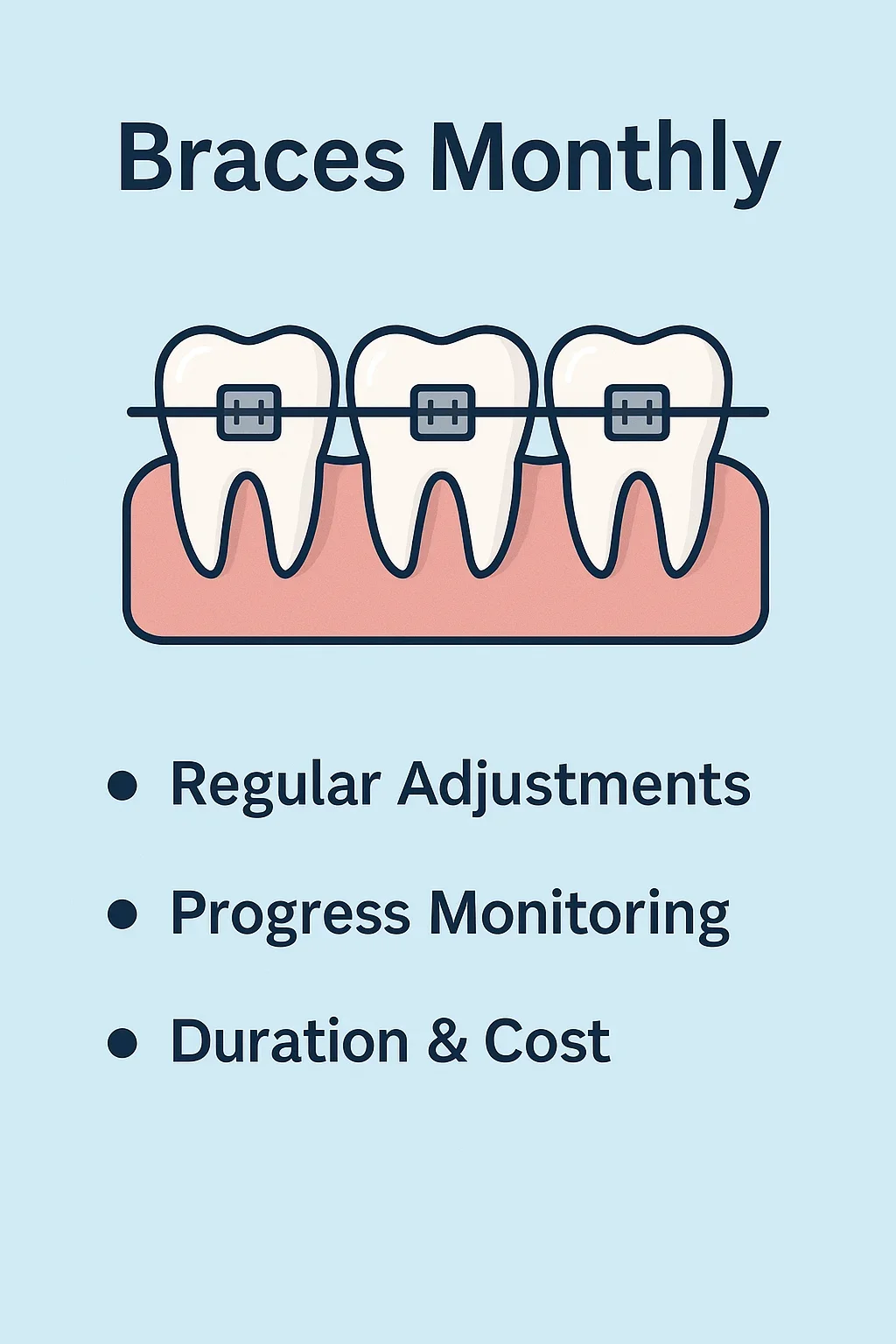
Long-Term Results: Life After Completing Braces Monthly Care
Finishing orthodontic treatment is an exciting milestone. After months or years of consistent braces monthly visits, adjustments, lifestyle changes, and dedication, patients finally achieve the aligned, functional, and confident smile they have been working toward. However, completing active treatment does not mean the journey is over. The period that follows braces removal plays an equally important role in maintaining results, protecting oral health, and ensuring that teeth remain in their ideal positions for a lifetime. This section provides a comprehensive overview of what to expect after treatment, how to maintain alignment, and the habits that contribute to long-term orthodontic success.
The retention phase—which begins immediately after braces are removed—is just as important as the alignment phase. Without proper retention, the teeth naturally want to drift back toward their original positions due to muscle memory, gum elasticity, and bone remodeling. Understanding this phase helps patients protect the investment they made through braces monthly care and ensures long-lasting results.
The Retention Phase: What Happens After Braces Removal?
Orthodontists design a retention plan for each patient as soon as braces are removed. This phase focuses on stabilizing teeth to maintain their new alignment. Even though the active movement has finished, the surrounding structures—bone, gum tissues, and ligaments—are still adapting. This is where retainers come in.
Types of Retainers
- Hawley Retainers: Adjustable acrylic-and-wire retainers worn primarily at night.
- Clear Retainers: Transparent Essix retainers that fit snugly over teeth, offering a nearly invisible look.
- Fixed Retainers: Bonded wire retainers placed behind the front teeth for long-term stabilization.
Retention plans vary, but most patients begin with full-time retainer wear and gradually transition to nighttime use. Consistency is critical because skipping retainer wear—even occasionally—can allow relapse, undoing the benefits gained during braces monthly treatment.
How Long Should Retainers Be Worn?
There is a common misconception that retainers are temporary. In reality, retainers play a lifelong role in maintaining alignment. Teeth naturally shift over time due to daily chewing forces, age-related changes, and jaw movement.
General Guidelines
- First 6 months: Full-time wear is typically required.
- 6–12 months: Transition to nighttime wear.
- After 1 year: Nighttime wear 3–5 nights per week helps maintain alignment for life.
Patients who maintain consistent retainer use enjoy long-lasting results and never need re-treatment. Skipping retainers can cause subtle shifts or major relapse, sometimes requiring new orthodontic intervention despite previous braces monthly care.
Post-Braces Oral Care and Hygiene
Once braces are removed, patients must adjust their oral care routines. Without brackets, flossing becomes easier, brushing takes less time, and mouth tissues adapt quickly. However, maintaining oral health is crucial to preserving the benefits of treatment.
Key Oral Care Steps
- Professional Cleanings: Schedule a dental cleaning immediately after braces removal.
- Fluoride Treatment: Helps rebuild enamel that may have softened during treatment.
- Whitening Options: Safe to begin a few weeks after removal for those interested in cosmetic improvement.
Maintaining consistent oral hygiene ensures that the smile achieved through braces monthly care remains healthy, bright, and stable for years.
Smile Aesthetics After Braces
Most patients notice immediate aesthetic improvements the moment the braces come off—straighter teeth, better symmetry, and enhanced facial harmony. These changes boost self-esteem and make smiling feel natural and spontaneous.
Common Post-Treatment Enhancements
- Teeth Whitening: Often chosen to enhance the final result.
- Minor Cosmetic Contouring: Smoothing small imperfections once alignment is complete.
- Bonding or Veneers: For patients with chipped, worn, or misshapen teeth.
These improvements complement the corrections achieved through braces monthly treatment and create a polished, harmonious smile.
Changes in Chewing, Speech, and Bite Function
Once the teeth are properly aligned, patients often experience improved speech clarity, better chewing efficiency, and reduced jaw strain. A well-balanced bite prevents excessive wear and helps protect temporomandibular joints (TMJ).
Benefits of Proper Bite Alignment
- Lower risk of chipped or cracked teeth.
- Improved digestive efficiency due to better chewing.
- Reduced jaw stress and fewer TMJ symptoms.
- Enhanced long-term stability of orthodontic results.
Patients who complete the full braces monthly process often report fewer headaches, less jaw tension, and a more comfortable daily bite experience.
Maintaining Results Through Healthy Lifestyle Habits
Lifestyle choices also play a role in maintaining post-braces alignment. Chewing habits, posture, grinding, and nighttime behavior all influence long-term stability.
Habits to Avoid
- Nail biting or chewing on hard objects.
- Grinding or clenching (use a nightguard if needed).
- Forceful chewing on one side of the mouth.
By maintaining healthy habits, patients ensure the beautiful smile created during braces monthly treatment remains stable for decades.
When to See the Orthodontist After Treatment
Even after active treatment ends, scheduled follow-ups are essential. Orthodontists monitor bite stability, retainer fit, and the overall condition of the teeth.
- First checkup: 1–2 months after braces removal.
- Second checkup: 6 months later.
- Annual checkups: Recommended for long-term success.
These brief appointments ensure that the results of braces monthly treatment remain secure and predictable.
For personalized post-treatment guidance or retainer replacement, patients can contact the clinic through the
Redent Klinik Contact Page.
Additional clinical insights and orthodontic standards can be explored through the
American Dental Association.
In summary, completing braces monthly treatment is the beginning of a lifelong commitment to maintaining alignment, protecting oral health, and enjoying the long-term benefits of a beautifully structured smile. With the right habits, retainers, and follow-up care, patients can preserve their results—confidently smiling for many years to come.