
What Does 7 Dental Really Mean? 🦷
When people search for the phrase 7 dental, they are usually looking for a clear and structured explanation of seven key areas in dentistry that cover both health and aesthetics. In the modern world of dentistry, “7 dental” can symbolize a complete package of oral treatments designed to protect your teeth, restore function, and improve the beauty of your smile. In this article, we’ll explore how 7 dental is interpreted in 2025 and why it has become such a popular term in oral health discussions.
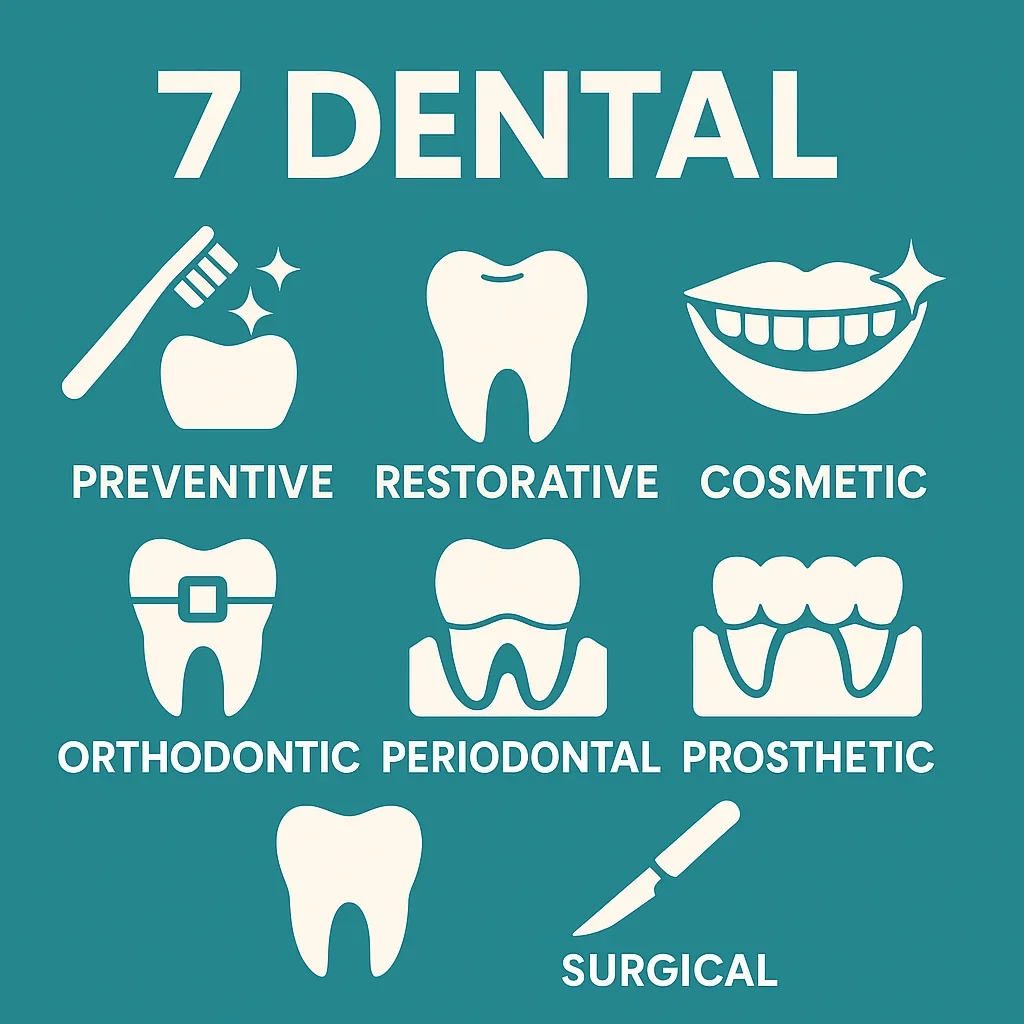
Essentially, 7 dental represents seven main categories of dental treatments that most patients need to know about: preventive dentistry, restorative procedures, cosmetic enhancements, orthodontics, periodontal care, prosthetics, and surgical interventions. Together, these seven fields form the backbone of comprehensive dental care and ensure that patients receive a holistic approach to oral health. Whether you’re seeking solutions for tooth decay, missing teeth, or a brighter smile, understanding the meaning behind 7 dental is the first step toward making informed decisions about your oral care.
1. Preventive Dentistry in the 7 Dental Approach
Prevention is always better than cure, and this is where 7 dental begins. Preventive dentistry includes regular check-ups, professional cleanings, fluoride treatments, and patient education on proper brushing and flossing techniques. By maintaining preventive care, you can significantly reduce the risk of cavities, gum disease, and more severe oral issues. In fact, the American Dental Association emphasizes the importance of routine dental visits at least twice a year to keep your teeth and gums healthy. Preventive measures are cost-effective and can save you from undergoing more invasive treatments later.
2. Restorative Dentistry as Part of 7 Dental
When damage occurs, restorative dentistry steps in to repair and rebuild. This branch of 7 dental includes fillings, crowns, inlays, onlays, and root canal treatments. Restorative dentistry doesn’t just focus on fixing problems; it ensures that the tooth structure is preserved and that function is restored. For example, if you suffer from deep cavities, a simple filling may not suffice, and a crown may be required to cover and protect the tooth. In 2025, advanced digital scanning and 3D printing technology make restorative treatments more accurate, comfortable, and long-lasting.
3. Cosmetic Dentistry in the 7 Dental Model
Another key pillar of 7 dental is cosmetic dentistry, which aims to enhance the appearance of your teeth and smile. Treatments like teeth whitening, veneers, and bonding fall into this category. Patients often seek cosmetic dental solutions not just for vanity but also for confidence and professional reasons. A beautiful smile can improve social interactions and self-esteem. Modern techniques use minimally invasive approaches to create natural-looking results that last for years. As a result, cosmetic dentistry has become one of the fastest-growing segments in the 7 dental framework.
4. Orthodontics and the 7 Dental Alignment
Orthodontics focuses on correcting misaligned teeth and jaws. Within the 7 dental scope, orthodontics includes traditional braces, ceramic braces, and clear aligners like Invisalign. Proper alignment not only enhances aesthetics but also reduces the risk of tooth decay and gum disease by making oral hygiene easier. In 2025, clear aligners have become especially popular due to their discreet appearance and comfort. Many adults are now choosing orthodontic solutions as part of their long-term oral health strategy, highlighting the importance of orthodontics within the 7 dental system.
5. Periodontal Care in the 7 Dental Structure
Periodontal health refers to the gums and bone structures that support your teeth. Gum disease is a silent threat that can lead to tooth loss if left untreated. As part of 7 dental, periodontal care includes scaling and root planing, laser therapy, and even surgical interventions for severe cases. Maintaining gum health is critical because even the best-looking teeth cannot survive without a strong foundation. Research in 2025 confirms a strong link between gum disease and systemic conditions such as heart disease and diabetes, making periodontal care an essential component of overall health.
6. Prosthetics in the 7 Dental Plan
Tooth loss is a common issue worldwide, and prosthetic solutions such as dentures, bridges, and dental implants are crucial aspects of 7 dental. Prosthetics restore both function and aesthetics, allowing patients to chew, speak, and smile confidently again. Dental implants, in particular, are now considered the gold standard for tooth replacement due to their durability and natural appearance. Patients who undergo prosthetic treatments often experience a significant boost in quality of life, making this one of the most valuable parts of the 7 dental model.
7. Oral Surgery in the 7 Dental Spectrum
The final component of 7 dental is oral surgery. This includes wisdom tooth extractions, jaw surgeries, bone grafts, and implant placements. Oral surgery is sometimes necessary to prepare the mouth for other treatments or to resolve severe issues. In 2025, advancements in anesthesia and minimally invasive surgical techniques make these procedures safer and more comfortable than ever before. Patients who undergo oral surgery as part of the 7 dental approach often recover faster and with fewer complications, thanks to these modern innovations.
Connecting Patients to 7 Dental Services
If you’re considering 7 dental treatments, it’s important to consult with experienced professionals who can create a personalized plan tailored to your oral health needs. Clinics specializing in comprehensive care, such as Redent Klinik Contact Page, provide patients with access to all seven branches of dentistry under one roof. This ensures consistency, convenience, and higher success rates for long-term oral health.
In summary, the phrase 7 dental represents a complete and balanced approach to oral care. By addressing seven essential aspects of dentistry — preventive, restorative, cosmetic, orthodontic, periodontal, prosthetic, and surgical — patients can enjoy healthier smiles and improved overall well-being. In 2025, adopting the 7 dental mindset is one of the best decisions you can make for lifelong oral health. 🌟
Top 7 Dental Procedures to Transform Your Smile
In the evolving landscape of modern dentistry, the phrase 7 dental is more than a catchy keyword — it represents the seven most transformative procedures that patients seek in 2025 to achieve healthier and more attractive smiles. Each of these treatments plays a specific role, whether it’s repairing damaged teeth, replacing missing ones, or improving aesthetics. By understanding these 7 dental procedures in detail, you can make informed decisions about your oral health and confidently choose the best path toward your ideal smile.
1. Dental Implants: The Gold Standard
Dental implants have become the cornerstone of the 7 dental framework for tooth replacement. They mimic the natural tooth root and are surgically placed into the jawbone, providing unmatched stability and function. Unlike dentures, implants do not slip or move, making them the most reliable long-term solution. In 2025, implant technology has advanced to include minimally invasive placement, faster healing times, and even AI-assisted planning for optimal outcomes. The success rate for implants now exceeds 95%, making them one of the most trusted procedures within the 7 dental approach.
2. Porcelain Veneers for a Hollywood Smile
Porcelain veneers are ultra-thin shells bonded to the front of teeth, designed to cover imperfections such as chips, discoloration, or gaps. As part of 7 dental, veneers offer an instant smile transformation with results that can last over a decade. Patients often choose veneers for cosmetic reasons, especially when they want a “red-carpet-ready” smile. Newer materials used in 2025 are more durable, stain-resistant, and natural-looking than ever before. Whether you want to fix a single tooth or achieve a full smile makeover, veneers are a vital component of the 7 dental toolkit.
3. Professional Teeth Whitening
Teeth whitening remains one of the most requested treatments under the 7 dental umbrella. While over-the-counter products exist, professional whitening performed by a dentist offers safer, faster, and more noticeable results. In-office whitening systems in 2025 use LED light technology and advanced gels to whiten teeth by up to eight shades in a single session. Many patients pair whitening with other 7 dental procedures such as veneers or orthodontics for a complete transformation. The confidence boost that comes from a brighter smile is often life-changing.
4. Orthodontic Solutions: Braces and Aligners
Orthodontics plays a central role in the 7 dental strategy. From traditional metal braces to discreet clear aligners like Invisalign, orthodontic treatments correct crooked teeth, gaps, and bite issues. The trend in 2025 leans heavily toward aligners due to their nearly invisible appearance and convenience. However, braces remain highly effective for complex cases. Orthodontic treatment not only enhances aesthetics but also prevents oral health problems caused by misaligned teeth, such as uneven wear and difficulty cleaning. Proper alignment is a crucial piece of the 7 dental puzzle.
5. Root Canal Therapy
Root canal treatment is often misunderstood, but it is one of the most valuable procedures within 7 dental. This therapy saves teeth that would otherwise need extraction by removing infected pulp and sealing the tooth. In 2025, root canal techniques have improved dramatically, with rotary instruments, 3D imaging, and advanced anesthesia making the process faster and nearly painless. Saving a natural tooth is always preferable to extraction, and root canal therapy ensures that functionality and aesthetics are preserved. This makes it an indispensable part of the 7 dental plan for long-term oral health.
6. Dental Crowns and Bridges
Crowns and bridges provide both restorative and cosmetic benefits, making them an integral part of 7 dental. Crowns are used to cover and protect damaged or weak teeth, while bridges replace one or more missing teeth by anchoring to adjacent healthy teeth. In 2025, crowns and bridges are crafted using high-strength ceramics that blend seamlessly with natural teeth. Digital impressions and same-day milling systems now allow patients to receive these restorations in just a single visit, improving convenience and reducing treatment times.
7. Gum Contouring and Periodontal Therapy
The final key procedure in the 7 dental lineup is gum contouring and periodontal therapy. A healthy gum line frames the teeth and enhances the appearance of a smile. Patients with excessive gum tissue (“gummy smiles”) or uneven gum lines often turn to contouring for cosmetic improvement. Meanwhile, periodontal therapy addresses gum disease through scaling, root planing, and laser treatments. Since gum health is directly linked to systemic health, this component of the 7 dental program is critical for both aesthetic and medical reasons.
How These 7 Dental Procedures Work Together
What makes the 7 dental approach so effective is the synergy between these procedures. For example, a patient may need periodontal therapy before receiving veneers, or orthodontic alignment before implant placement. When combined in a personalized treatment plan, these seven procedures create a powerful transformation that addresses both function and beauty. Clinics such as Redent Klinik Contact Page specialize in offering all of these treatments under one roof, ensuring seamless care for international and local patients alike.
In conclusion, the phrase 7 dental highlights the seven transformative procedures that define modern dentistry: implants, veneers, whitening, orthodontics, root canals, crowns/bridges, and gum therapy. Each of these plays a unique role in creating smiles that are not only beautiful but also healthy and functional. By choosing the right combination of 7 dental procedures, patients in 2025 can achieve life-changing results that enhance confidence, health, and overall well-being. 🌟
7 Dental Benefits for Oral and Overall Health
When discussing oral care in 2025, the phrase 7 dental stands out because it represents not only seven categories of treatment but also seven unique benefits that directly impact both oral and overall health. A strong and healthy mouth is linked to systemic wellness, improved quality of life, and even greater longevity. By understanding the key 7 dental benefits, patients can make smarter choices about preventive care, treatments, and lifestyle adjustments. Let’s dive into these transformative advantages in detail.
1. Preventing Tooth Decay and Cavities
The first and most obvious benefit of the 7 dental approach is cavity prevention. Regular cleanings, fluoride applications, and sealants help protect tooth enamel from decay. Cavities are among the most common chronic diseases worldwide, but they are also one of the most preventable. By following a comprehensive 7 dental care plan that includes check-ups every six months, patients significantly reduce their chances of developing caries. Preventing decay not only saves money on future treatments but also ensures long-term oral health.
2. Protecting Gum Health and Preventing Periodontal Disease
Healthy gums are the foundation of a beautiful smile. One of the biggest 7 dental benefits is protection against gingivitis and periodontitis. Gum disease is often silent in its early stages but can lead to tooth loss and bone deterioration if untreated. Periodontal therapy within the 7 dental framework includes scaling, root planing, and advanced laser treatments. By keeping gums healthy, patients protect the supporting structures of their teeth and reduce risks associated with systemic conditions such as heart disease, diabetes, and stroke, all of which are linked to gum inflammation.
3. Restoring Functionality for Better Nutrition
Another significant advantage of 7 dental treatments is restored functionality. Missing or damaged teeth can make chewing difficult, limiting the variety of foods a person can consume. This often leads to poor nutrition and digestive issues. Dental implants, bridges, and dentures restore full chewing capacity, allowing patients to enjoy a balanced diet rich in essential vitamins and minerals. Proper nutrition directly supports immune function, bone health, and cardiovascular strength, making functionality restoration one of the most impactful 7 dental benefits.
4. Enhancing Aesthetics and Boosting Confidence
Cosmetic improvements are a core part of the 7 dental model. Teeth whitening, veneers, and orthodontics provide patients with confidence-boosting results. Studies in 2025 show that people with attractive smiles are perceived as more successful, approachable, and trustworthy in social and professional settings. Patients who invest in 7 dental cosmetic solutions often report increased self-esteem and reduced social anxiety. This psychological benefit is just as valuable as physical health outcomes, proving that oral care contributes to overall well-being.
5. Reducing Risks of Systemic Diseases
One of the most important yet overlooked 7 dental benefits is the reduction of systemic disease risks. Research consistently demonstrates the mouth-body connection. For example, gum disease has been linked to cardiovascular disease, rheumatoid arthritis, respiratory infections, and even Alzheimer’s disease. By maintaining good oral health through 7 dental practices, patients minimize these risks and promote healthier outcomes throughout the body. This holistic perspective is why many physicians now encourage their patients to prioritize dental check-ups alongside annual medical exams.
6. Saving Money Through Preventive Care
Investing in preventive care is one of the smartest financial moves in dentistry. A major benefit of the 7 dental approach is cost savings over the long term. Treating small cavities or early gum disease is far less expensive than root canals, implants, or periodontal surgery. In 2025, the cost of advanced dental treatments can easily range from $1,000 to $5,000 per procedure, depending on complexity. By preventing problems early, patients save thousands of dollars in future expenses. For cost-conscious individuals, this is one of the most compelling 7 dental advantages.
7. Improving Longevity and Quality of Life
The final benefit of the 7 dental strategy is enhanced longevity and life quality. Oral health is directly tied to systemic health, and poor dental conditions can shorten life expectancy. By addressing the seven pillars of dentistry — preventive, restorative, cosmetic, orthodontic, periodontal, prosthetic, and surgical — patients not only keep their smiles intact but also improve their overall vitality. In 2025, studies show that individuals who adhere to structured oral care plans live healthier, more active lives well into their senior years. This ultimate 7 dental benefit underscores the importance of comprehensive care.
Real-Life Application of the 7 Dental Benefits
Many international patients travel to clinics like Redent Klinik Contact Page to experience all these 7 dental benefits in one location. From preventive cleanings to advanced implantology, patients receive holistic treatment that combines function, health, and beauty. This all-in-one approach ensures consistent outcomes and maximizes every benefit listed above.
In summary, the phrase 7 dental is more than a reference to procedures — it symbolizes seven powerful benefits that influence oral health, systemic wellness, confidence, and financial stability. By committing to these principles, patients gain healthier teeth and gums, improved nutrition, reduced disease risk, and a more fulfilling lifestyle. The 7 dental benefits are proof that oral care is a lifelong investment in both health and happiness. 🌟
Cost of 7 Dental Treatments in 2025
One of the most frequently asked questions from patients is: “How much does 7 dental treatment cost in 2025?” Understanding pricing is essential because dental procedures vary widely in complexity, materials, and geographic location. The 7 dental concept includes preventive care, restorative procedures, cosmetic treatments, orthodontics, periodontal therapy, prosthetics, and surgery — each with its own cost range. This section provides a comprehensive breakdown of these expenses, ensuring patients know what to expect before committing to care.
1. Preventive Dentistry Costs
Preventive services form the foundation of the 7 dental approach, and they are generally the most affordable. Routine check-ups, X-rays, and professional cleanings usually cost between $75–$200 per visit in the U.S. In Europe or Turkey, preventive care is often lower, ranging from $50–$120. Fluoride treatments or sealants may add $20–$60 per tooth. These costs are small compared to restorative or surgical procedures, yet they save thousands in the long term by preventing more serious dental issues.
2. Restorative Dentistry Costs
Restorative procedures are an essential part of the 7 dental spectrum. Simple fillings cost around $150–$300 each, depending on the material used (composite or ceramic). Dental crowns, which restore and protect damaged teeth, are priced between $900–$1,500 in the U.S., while the same treatment in Turkey averages $300–$600. Root canal therapy, another restorative procedure, typically ranges from $800–$1,200 per tooth in the U.S., compared to $250–$500 abroad. These price variations highlight why international dental tourism has become part of the 7 dental trend.
3. Cosmetic Dentistry Costs
Cosmetic treatments under the 7 dental umbrella include teeth whitening, veneers, and bonding. Professional in-office whitening costs around $300–$600, while custom take-home kits average $200. Porcelain veneers are more expensive, typically $1,000–$2,500 per tooth in the U.S. but as low as $350–$700 in Turkey. Dental bonding, a cost-effective option for minor repairs, ranges between $150–$400 per tooth. Patients seeking full smile makeovers often combine multiple cosmetic treatments, raising total costs but also delivering dramatic results.
4. Orthodontic Treatment Costs
Orthodontics plays a key role in the 7 dental strategy. Traditional metal braces range from $3,000–$7,000 in the U.S., while ceramic braces are slightly higher at $4,000–$8,000. Clear aligners like Invisalign cost around $3,500–$8,000 depending on case complexity. In Turkey and other dental tourism destinations, patients can often find aligner treatment for $2,000–$3,500. Orthodontics represents one of the larger investments in the 7 dental plan, but it offers long-term benefits for both oral health and aesthetics.
5. Periodontal Therapy Costs
Gum care is crucial to the 7 dental framework. Scaling and root planing for early gum disease typically costs $200–$400 per quadrant. More advanced treatments, such as laser gum therapy, range from $600–$1,200. Periodontal surgery, when required, can exceed $2,000 per procedure. Prices vary based on severity and treatment technology. Since gum disease is linked to systemic health conditions, investing in periodontal care provides both oral and overall health benefits, making it a high-value component of 7 dental.
6. Prosthetic Dentistry Costs
Replacing missing teeth with prosthetics is one of the most expensive parts of the 7 dental model. Dentures range from $1,000–$3,000, while fixed bridges cost $1,500–$5,000. Dental implants, considered the gold standard, are priced at $3,000–$5,000 per tooth in the U.S. However, in Turkey and other destinations popular for dental tourism, the same implant can cost as little as $800–$1,500. Full-mouth implant-supported restorations can range from $20,000–$45,000 in the U.S., compared to $8,000–$15,000 abroad, making international care an attractive option for many patients seeking 7 dental treatments.
7. Oral Surgery Costs
The surgical aspect of 7 dental includes wisdom tooth extractions, bone grafts, sinus lifts, and complex jaw surgeries. Simple extractions cost around $200–$400 per tooth, while impacted wisdom teeth removals are higher at $400–$800. Bone grafting procedures can range from $600–$1,200, and sinus lifts average $1,500–$3,000. Complex oral surgeries may cost much more, depending on case difficulty. These are the highest-ticket items within the 7 dental program, but they are often necessary to support other procedures like implants.
Comparing Costs Internationally
One of the reasons the 7 dental concept is so popular is because patients can compare costs globally. For example, Americans traveling to Turkey often save 50–70% on procedures without compromising on quality. Clinics like Redent Klinik Contact Page provide international patients with world-class facilities at a fraction of Western prices. By choosing treatment destinations carefully, patients can undergo multiple 7 dental procedures in one trip while significantly reducing overall costs.
Insurance and Financing
Another factor influencing the cost of 7 dental treatments is insurance coverage and financing options. In the U.S., preventive care is usually covered, but cosmetic treatments like whitening and veneers are not. Restorative and surgical procedures may be partially covered. Many clinics now offer financing plans, allowing patients to spread payments over months or years. This makes comprehensive 7 dental care more accessible to those who might otherwise delay treatment due to high costs.
In conclusion, the cost of 7 dental treatments in 2025 varies widely depending on location, procedure type, and patient needs. Preventive care remains affordable, while prosthetics and oral surgeries are at the higher end of the spectrum. Dental tourism, particularly in countries like Turkey, offers cost savings without sacrificing quality. Patients who plan strategically can access all seven pillars of dentistry while managing costs effectively. Ultimately, investing in 7 dental care is an investment in both health and quality of life. 🌟
7 Dental Implant Options and Their Success Rates
Among the various treatments included in the 7 dental framework, implants stand out as one of the most sought-after solutions for missing teeth. In 2025, dental implantology has advanced significantly, offering patients multiple options tailored to their bone structure, oral health, and budget. Each implant type within the 7 dental system has its advantages, success rates, and ideal use cases. By exploring these seven options in detail, patients can make informed decisions and achieve long-lasting oral health benefits.
1. Endosteal Implants
Endosteal implants are the most common option within the 7 dental lineup. These implants are placed directly into the jawbone and serve as artificial roots for crowns or bridges. They are typically made of titanium or zirconia and are highly durable. The success rate of endosteal implants is around 95–98% when performed by experienced professionals. Their popularity stems from their versatility, as they can replace single or multiple teeth while offering natural aesthetics and strong chewing function.
2. Subperiosteal Implants
Subperiosteal implants, another component of the 7 dental approach, are placed on top of the jawbone but underneath the gum tissue. They are often used for patients who lack sufficient bone density and cannot undergo bone grafting. While less common today due to advances in grafting techniques, subperiosteal implants remain a viable option for certain cases. Their success rate is slightly lower than endosteal implants, averaging around 85–90%, but they still provide a valuable alternative for individuals with challenging oral conditions.
3. All-on-4 Implants
The All-on-4 method has revolutionized full-mouth restorations and is a highlight of the 7 dental implant options. This technique uses just four strategically placed implants to support an entire arch of replacement teeth. In 2025, success rates for All-on-4 procedures are typically 94–97%, making them a cost-effective and efficient choice. Patients enjoy immediate function, meaning they can often leave the clinic with a fixed prosthesis on the same day. This has made All-on-4 extremely popular among international patients seeking 7 dental treatments.
4. All-on-6 Implants
For patients who require more stability, All-on-6 implants expand upon the All-on-4 concept by using six implants per arch. This option provides greater strength and durability, especially for those with higher bite forces. Success rates in 2025 for All-on-6 procedures average around 96–98%, with results often lasting decades. Many clinics recommend All-on-6 as part of their 7 dental care packages for patients with multiple missing teeth and adequate bone support.
5. Mini Dental Implants
Mini implants are smaller in diameter than traditional implants and are used for patients with limited bone density or for stabilizing dentures. As part of the 7 dental implant family, mini implants offer a less invasive and more affordable option. They are often placed in a single visit and have success rates of 85–95%. While they may not last as long as full-sized implants, mini implants are particularly useful for elderly patients or those seeking temporary stabilization of their dentures.
6. Zygomatic Implants
Zygomatic implants represent one of the most advanced options in the 7 dental system. Instead of being anchored in the jawbone, these implants are placed in the cheekbone (zygoma), which provides stronger support. They are ideal for patients with severe bone loss who cannot undergo grafting procedures. Success rates for zygomatic implants are high, around 94–96%, when performed by specialized surgeons. Though more complex and costly, they provide life-changing results for individuals with limited traditional options.
7. Immediate Load Implants
Also known as “same-day implants,” immediate load implants are an increasingly popular choice in the 7 dental spectrum. These implants allow patients to receive a temporary crown or prosthetic immediately after placement, avoiding the long healing period required with traditional implants. In 2025, advances in imaging and surgical precision have boosted the success rate of immediate load implants to around 92–96%. Patients appreciate the speed and convenience of this method, though long-term stability depends on proper case selection and follow-up care.
Factors Influencing Success Rates
The success of each 7 dental implant type depends on several factors: bone quality, gum health, patient compliance, and the expertise of the dental team. Non-smokers with good oral hygiene typically experience higher success rates. Clinics like Redent Klinik Contact Page specialize in personalized implant planning, using 3D imaging and computer-guided surgery to maximize precision and outcomes. Patients are also advised to follow post-operative care instructions carefully to ensure long-term implant success.
Comparing Costs and Value
The cost of 7 dental implant options varies widely. Endosteal implants may range from $3,000–$5,000 per tooth in the U.S. but as little as $800–$1,500 in Turkey. All-on-4 procedures typically cost $20,000–$30,000 per arch in the U.S. but $8,000–$12,000 abroad. Mini implants are more affordable at $500–$1,500 each. Zygomatic implants, due to their complexity, can exceed $15,000–$20,000 for a full set. The wide range of costs allows patients to choose the implant solution that best fits their health needs and financial resources within the 7 dental framework.
In conclusion, the 7 dental implant options offer a comprehensive range of solutions, from standard endosteal implants to advanced zygomatic placements. With success rates consistently above 90%, dental implants have become the gold standard for tooth replacement worldwide. By carefully evaluating their needs and consulting with experienced professionals, patients in 2025 can achieve lasting function, aesthetics, and confidence through the 7 dental implant approach. 🌟
7 Dental Hygiene Tips for Long-Lasting Results
Proper hygiene is the backbone of the 7 dental philosophy. No matter how advanced your treatments are—implants, crowns, or veneers—they will not last without consistent care. In 2025, maintaining oral health requires both traditional methods and modern techniques supported by dental research. These 7 dental hygiene tips are designed to maximize the longevity of treatments, protect your natural teeth, and enhance your overall health.
1. Brush Twice Daily with the Right Technique
The first rule of 7 dental hygiene is regular and proper brushing. Using a soft-bristled toothbrush and fluoride toothpaste is critical for removing plaque without damaging enamel. Dentists in 2025 recommend the “modified Bass technique,” which involves placing the brush at a 45-degree angle to the gumline and moving in small circular motions. Brushing for at least two minutes twice daily helps prevent cavities, gum disease, and staining. Electric toothbrushes with smart timers and pressure sensors are increasingly popular and align perfectly with the 7 dental commitment to efficiency and precision.
2. Floss Daily to Remove Hidden Plaque
Even the best brushing technique cannot reach between teeth. That’s why flossing is a non-negotiable step in the 7 dental hygiene plan. Daily flossing removes trapped food particles and plaque from interdental spaces, preventing decay and gingivitis. In 2025, many patients use water flossers or interdental brushes as convenient alternatives. Clinical studies confirm that flossing reduces the risk of cavities by up to 40% in areas brushing alone cannot reach. This makes flossing one of the most impactful 7 dental tips for long-lasting results.
3. Rinse with Antibacterial Mouthwash
Mouthwash plays a supportive role in the 7 dental routine. Antibacterial rinses reduce harmful bacteria that brushing and flossing might miss, while fluoride rinses strengthen enamel. In 2025, alcohol-free options are widely recommended to prevent dry mouth, which can lead to bad breath and increased cavity risk. Mouthwash also reaches the back of the throat, an area prone to bacterial buildup. Using an ADA-approved rinse once or twice a day complements other hygiene practices and adds another protective layer to the 7 dental system.
4. Maintain a Tooth-Friendly Diet
Diet has a direct impact on oral health, making it a central part of the 7 dental lifestyle. Sugary foods and acidic drinks erode enamel and feed bacteria, leading to decay and gum problems. Patients are advised to reduce consumption of sodas, candies, and processed snacks. Instead, focus on calcium-rich foods like dairy, leafy greens, and nuts to strengthen teeth. Drinking water after meals helps wash away acids and particles. This holistic approach ensures that the benefits of professional 7 dental treatments are preserved over time.
5. Visit Your Dentist Regularly
Routine dental visits remain essential in the 7 dental model. Professional cleanings remove tartar that brushing and flossing cannot eliminate. Regular exams also detect problems early, preventing costly interventions. In 2025, dentists often use AI-assisted diagnostic tools, digital X-rays, and intraoral scanners to provide highly accurate assessments. Most patients are advised to visit their dentist every six months, though individuals with a history of gum disease may require more frequent check-ups. These visits not only maintain oral health but also ensure the long-term success of all 7 dental treatments.
6. Protect Teeth with Night Guards or Mouthguards
Bruxism (teeth grinding) and sports injuries are common causes of dental damage. A practical 7 dental hygiene tip is using a custom night guard if you grind your teeth, or a mouthguard if you play contact sports. These devices protect dental work such as crowns, veneers, and implants from unnecessary stress and breakage. Modern guards are designed for comfort and durability, making them easier to wear consistently. Prevention through protection is a cost-effective way to preserve the results of expensive 7 dental procedures.
7. Avoid Tobacco and Limit Alcohol
Lifestyle choices heavily influence oral health. Smoking and chewing tobacco increase the risk of gum disease, oral cancer, and implant failure. Excessive alcohol consumption can dry out the mouth and weaken enamel. The 7 dental approach strongly emphasizes eliminating these habits to ensure both oral and systemic health. Patients who quit tobacco and reduce alcohol intake not only preserve their smiles but also improve overall wellness. In 2025, many clinics provide counseling and support programs to help patients make these critical lifestyle changes.
Bonus: Stay Hydrated for Saliva Production
Although not always listed in the core 7 dental rules, staying hydrated is vital. Saliva acts as a natural defense against bacteria and acid by neutralizing the mouth’s pH. Drinking plenty of water throughout the day supports natural cleaning mechanisms and protects dental restorations. It is a simple but powerful habit that strengthens the overall 7 dental routine.
Integrating Hygiene into Comprehensive Care
Following these hygiene tips ensures that treatments from the 7 dental framework—such as implants, orthodontics, and cosmetic procedures—last for decades. Clinics like Redent Klinik Contact Page emphasize patient education alongside treatments, equipping individuals with the tools and knowledge to maintain results. Combined with professional support, these daily practices represent the most effective way to protect both natural teeth and dental restorations.
In conclusion, 7 dental hygiene tips are more than routine suggestions—they are essential strategies for preserving oral health and maximizing the value of treatments. By brushing, flossing, rinsing, eating wisely, visiting the dentist, using protective devices, and avoiding harmful habits, patients ensure that their smiles remain strong and beautiful for years. With consistency, the 7 dental lifestyle guarantees long-lasting results that contribute to both confidence and overall well-being. 🌟
7 Dental Cosmetic Solutions for Confidence Boost
One of the most attractive aspects of the 7 dental philosophy is its focus on cosmetic solutions that not only improve the look of a smile but also enhance confidence, career prospects, and social interactions. In 2025, cosmetic dentistry is more advanced, affordable, and natural-looking than ever. The following seven cosmetic procedures within the 7 dental model provide patients with multiple options to achieve a brighter, straighter, and healthier-looking smile.
1. Teeth Whitening for Instant Brightness
Professional whitening is one of the most requested 7 dental cosmetic solutions. In-office whitening treatments use LED or laser technology to achieve results in under an hour, brightening teeth by several shades. Unlike over-the-counter kits, professional whitening delivers uniform results with minimal sensitivity. Many patients pair whitening with other 7 dental treatments like veneers or orthodontics to maximize cosmetic impact. A bright smile is often the first step toward building confidence in both personal and professional settings.
2. Porcelain Veneers for a Hollywood Smile
Veneers are thin porcelain shells bonded to the front of teeth, covering imperfections such as chips, stains, gaps, or irregular shapes. This 7 dental solution is ideal for patients who want dramatic improvements in just two visits. Veneers are custom-made to match the patient’s natural teeth and can last over 10–15 years with proper care. By masking imperfections, veneers create the symmetry and brightness associated with celebrity smiles, making them one of the most transformative 7 dental cosmetic treatments.
3. Composite Bonding for Affordable Corrections
Composite bonding uses tooth-colored resin to repair chips, close gaps, and reshape teeth. It is less expensive than veneers and provides immediate results, making it a popular choice in the 7 dental lineup. In 2025, improved bonding materials have made results more durable and natural-looking. Bonding is often used as a cost-effective option for younger patients or those who want quick enhancements without committing to permanent changes. This procedure offers an accessible entry point to the cosmetic benefits of 7 dental care.
4. Orthodontic Aligners for Subtle Transformation
Orthodontic aligners like Invisalign are a core part of the 7 dental cosmetic solutions. Unlike traditional braces, aligners are nearly invisible and removable, offering convenience and discretion. They correct crowding, spacing, and bite issues while maintaining a natural appearance during treatment. In 2025, aligner technology has improved to include AI-driven planning and faster results. Many adults choose aligners not just for oral health, but for the cosmetic boost of straighter teeth—a significant contributor to confidence within the 7 dental framework.
5. Gum Contouring for Balanced Smiles
Sometimes, the issue isn’t the teeth but the gums. Gum contouring, also known as gum reshaping, is a 7 dental solution that creates a more balanced smile by reducing excess gum tissue or evening out an uneven gumline. Using lasers, dentists can now perform this procedure with minimal discomfort and quick recovery. Patients with “gummy smiles” often experience a dramatic improvement in aesthetics after contouring, making this cosmetic step highly valuable in the 7 dental cosmetic approach.
6. Dental Crowns for Functional Aesthetics
Although crowns are often restorative, they also serve a cosmetic function in the 7 dental system. Modern ceramic crowns are indistinguishable from natural teeth, restoring both function and aesthetics. They are especially useful for discolored or structurally compromised teeth that cannot be improved with veneers or bonding. In 2025, digital scanning and same-day crown fabrication have made this option faster and more accessible, allowing patients to leave the clinic with a renewed smile in just one visit.
7. Smile Makeovers with Combined Treatments
For patients seeking complete transformation, smile makeovers integrate multiple 7 dental solutions such as whitening, veneers, bonding, and aligners into a comprehensive plan. These makeovers are customized to address each patient’s unique concerns and often result in life-changing improvements. In 2025, smile makeover planning uses digital mock-ups that show patients a preview of their future smile before treatment begins. This innovative approach ensures satisfaction and aligns with the holistic philosophy of the 7 dental framework.
The Confidence Boost of Cosmetic Dentistry
The psychological benefits of cosmetic dentistry within the 7 dental approach cannot be overstated. Patients who undergo these treatments often report improved self-esteem, stronger social connections, and better career opportunities. A confident smile makes everyday interactions easier and more enjoyable. Clinics such as Redent Klinik Contact Page specialize in providing these comprehensive cosmetic solutions to international patients, ensuring that everyone has access to world-class smile enhancements.
In conclusion, the 7 dental cosmetic solutions—whitening, veneers, bonding, aligners, gum contouring, crowns, and smile makeovers—offer patients powerful tools to boost confidence and achieve aesthetic goals. In 2025, these treatments are safer, faster, and more effective than ever before. By choosing the right combination of 7 dental procedures, patients can unlock their full potential, both personally and professionally, through the transformative power of a radiant smile. 🌟
7 Dental Risks and How to Prevent Them
While the 7 dental model highlights treatments and benefits, it is equally important to recognize the risks that can threaten oral health. Understanding these risks allows patients to take preventive action and protect the results of their treatments. In 2025, dental professionals emphasize education and prevention as essential pillars of the 7 dental approach. Let’s explore the seven most common risks and the strategies to minimize them for long-term oral and systemic health.
1. Tooth Decay from Poor Hygiene
The most common risk addressed in the 7 dental framework is tooth decay. Without proper brushing and flossing, plaque builds up and produces acids that erode enamel. Cavities may seem small, but untreated decay can lead to infection and tooth loss. To prevent this, patients should follow a strict hygiene routine that includes brushing twice daily with fluoride toothpaste, flossing once a day, and rinsing with an antibacterial mouthwash. Professional cleanings at least twice a year are also a key element of the 7 dental prevention strategy.
2. Gum Disease and Periodontal Infections
Gum disease is a silent yet dangerous risk in the 7 dental system. Gingivitis, the early stage, causes bleeding and inflammation. If untreated, it can progress to periodontitis, leading to gum recession, bone loss, and eventual tooth loss. Beyond the mouth, periodontal disease is linked to heart disease, diabetes, and respiratory problems. Preventing gum disease requires regular professional periodontal check-ups, scaling, root planing, and consistent oral care at home. Clinics like Redent Klinik Contact Page emphasize periodontal care as an essential part of the 7 dental plan.
3. Tooth Sensitivity
Many patients undergoing 7 dental procedures experience tooth sensitivity. This condition can result from enamel erosion, gum recession, or aggressive whitening treatments. Sensitivity causes discomfort when consuming hot, cold, sweet, or acidic foods. Prevention includes using desensitizing toothpaste, avoiding abrasive brushing, and choosing professional whitening over at-home kits. Dentists in 2025 also recommend fluoride varnishes and laser desensitization treatments, which reduce sensitivity and strengthen enamel as part of the 7 dental preventive framework.
4. Bruxism and Tooth Wear
Bruxism, or teeth grinding, is a growing concern within the 7 dental scope. Grinding wears down enamel, damages restorations, and causes jaw pain. Stress, sleep disorders, and misaligned bites are common causes. Preventing bruxism damage involves wearing a custom night guard, managing stress, and correcting alignment with orthodontic solutions. Left untreated, bruxism can undo years of 7 dental work, making prevention vital for preserving cosmetic and restorative treatments.
5. Oral Cancer Risks
Oral cancer is a serious condition that can affect the tongue, lips, cheeks, and throat. Within the 7 dental model, regular screenings are crucial for early detection. Risk factors include smoking, heavy alcohol consumption, HPV infection, and prolonged sun exposure (for lip cancer). Prevention strategies involve quitting tobacco, moderating alcohol intake, using lip balms with SPF, and attending biannual oral exams. Early detection improves survival rates significantly, making cancer screening a vital element of the 7 dental care approach.
6. Implant and Restoration Failures
While implants, crowns, and veneers are core components of 7 dental treatments, they carry risks if not properly maintained. Implant failures may result from poor osseointegration, gum disease, or smoking. Crowns and veneers can chip or loosen if exposed to bruxism or biting hard objects. Preventing these risks requires excellent oral hygiene, regular follow-ups, and lifestyle adjustments. In 2025, digital implant planning and advanced materials have reduced failure rates, but patient responsibility remains a cornerstone of the 7 dental philosophy.
7. Systemic Health Complications from Poor Oral Care
The final and perhaps most overlooked risk within the 7 dental system is the connection between oral health and systemic disease. Untreated dental infections can spread bacteria to the bloodstream, increasing the risk of endocarditis, pneumonia, and pregnancy complications. Gum disease, as noted, is closely linked to diabetes and cardiovascular disease. Preventing these systemic complications requires commitment to regular dental check-ups and comprehensive care. The 7 dental approach ensures that oral health is viewed as part of whole-body wellness, not an isolated system.
How to Stay Protected from 7 Dental Risks
To minimize these risks, patients should adopt preventive habits, attend routine dental visits, and follow professional advice. Education is key—patients who understand the risks are more likely to maintain consistent care. In addition, choosing trusted providers like American Dental Association-recognized clinics guarantees higher standards of safety and treatment outcomes. Preventing 7 dental risks is far more effective and affordable than treating complications later.
In conclusion, while the 7 dental framework highlights the benefits of modern dentistry, awareness of risks is equally important. From tooth decay and gum disease to systemic health threats, each risk requires proactive prevention. By combining professional care with daily oral hygiene, patients can protect their smiles and ensure that 7 dental treatments deliver lasting results. 🌟
Why Choose 7 Dental Services in Turkey?
Turkey has become one of the leading global destinations for affordable and high-quality dental care. Within the 7 dental framework—which includes preventive, restorative, cosmetic, orthodontic, periodontal, prosthetic, and surgical treatments—Turkey offers comprehensive solutions that rival or even surpass those in the U.S. and Western Europe. In 2025, thousands of international patients travel each year specifically for 7 dental services in Turkey, drawn by cost savings, advanced technology, and excellent patient experiences. Let’s explore why Turkey has emerged as a dental tourism hub and how it fulfills the promises of the 7 dental model.
1. Cost-Effective Solutions Without Compromise
One of the strongest reasons patients choose 7 dental services in Turkey is affordability. Treatments in Turkey are often 50–70% cheaper than in the U.S. or U.K. For example, dental implants cost around $800–$1,500 in Turkey compared to $3,000–$5,000 in the U.S. Veneers range between $300–$700 per tooth in Turkey, while Western clinics charge $1,000–$2,500. Even full-mouth restorations such as All-on-4 can be obtained for $8,000–$12,000, compared to $20,000–$30,000 abroad. This affordability ensures that patients can access complete 7 dental care without financial strain.
2. Advanced Technology and Modern Clinics
Contrary to misconceptions, lower cost in Turkey does not mean lower quality. Turkish clinics specializing in 7 dental services are equipped with state-of-the-art technology such as 3D imaging, CAD/CAM systems, and laser dentistry. Many facilities are internationally accredited and comply with European Union hygiene standards. In 2025, clinics have embraced AI-assisted diagnostics and digital smile design, allowing patients to preview their results before treatment begins. This high level of technology integration ensures the success and safety of 7 dental treatments in Turkey.
3. Highly Skilled Dental Professionals
Turkey is home to thousands of highly trained dentists who specialize in every aspect of the 7 dental model. Many of these professionals have studied or trained abroad in the U.S., Germany, or the U.K., bringing international expertise to their practices. Their experience with international patients has made Turkish dentists exceptionally skilled at combining aesthetic artistry with functional precision. From cosmetic veneers to complex zygomatic implants, Turkish specialists consistently deliver results that meet global standards within the 7 dental philosophy.
4. Seamless Dental Tourism Packages
Another reason why patients prefer 7 dental services in Turkey is the availability of comprehensive dental tourism packages. These include airport transfers, hotel accommodations, and even city tours along with treatment. Patients can combine their 7 dental care with a vacation, enjoying Turkey’s rich culture, cuisine, and history. Clinics like Redent Klinik Contact Page arrange end-to-end services to make the process stress-free, ensuring that patients feel comfortable and supported throughout their stay.
5. Shorter Waiting Times and Faster Results
In many Western countries, patients face long waiting times for complex dental procedures. In contrast, 7 dental clinics in Turkey offer faster appointments, with many treatments completed in days rather than weeks. Thanks to in-house laboratories and advanced CAD/CAM systems, crowns, veneers, and bridges can often be fabricated on the same day. This efficiency is especially valuable for international patients who want to maximize their time abroad while completing all necessary 7 dental treatments quickly.
6. Multilingual Staff and Patient Support
Language barriers can be a concern for international healthcare, but most Turkish clinics offering 7 dental care employ multilingual staff fluent in English, German, French, and Arabic. This ensures clear communication, accurate explanations of procedures, and personalized aftercare instructions. Many clinics also provide dedicated coordinators who assist patients from consultation to follow-up. Such high-level service aligns with the holistic, patient-centered ethos of the 7 dental approach.
7. Proven Success Stories and Testimonials
Finally, the growing reputation of 7 dental services in Turkey is reinforced by thousands of satisfied patients. Online reviews and video testimonials highlight life-changing transformations, from full smile makeovers to pain-free implant placements. Success rates for implants and advanced surgeries in Turkish clinics are on par with, and sometimes exceed, Western averages—often above 95%. These real-world results give patients confidence that choosing 7 dental care in Turkey is a safe and rewarding decision.
The Global Appeal of 7 Dental Services in Turkey
Turkey’s success as a dental destination lies in its ability to combine affordability, expertise, and patient care. By addressing all seven aspects of the 7 dental framework—preventive, restorative, cosmetic, orthodontic, periodontal, prosthetic, and surgical—clinics in Turkey provide truly comprehensive solutions. Patients not only save money but also benefit from cutting-edge technologies, personalized care, and the chance to recover in one of the world’s most beautiful travel destinations.
In conclusion, choosing 7 dental services in Turkey is about more than saving money; it’s about accessing world-class treatments in modern facilities with trusted professionals. The combination of cost efficiency, advanced technology, and patient-centered care makes Turkey a leader in global dentistry. For anyone considering comprehensive oral health solutions in 2025, the 7 dental experience in Turkey is one of the smartest choices for long-term health, confidence, and quality of life. 🌟
Future of 7 Dental Care: Trends in 2025
The field of dentistry continues to evolve rapidly, and the 7 dental model is at the forefront of these innovations. By combining preventive, restorative, cosmetic, orthodontic, periodontal, prosthetic, and surgical approaches, the 7 dental philosophy ensures comprehensive care for patients. In 2025, several trends are shaping the future of 7 dental care, making treatments faster, safer, more affordable, and more personalized than ever before. Understanding these developments helps patients make informed decisions about their oral health and stay ahead of emerging opportunities.
1. Artificial Intelligence in Diagnostics and Planning
Artificial intelligence is revolutionizing the 7 dental framework. AI-driven software analyzes X-rays, 3D scans, and intraoral photos with greater precision than ever before. Dentists can now identify cavities, bone loss, and even early signs of oral cancer faster and more accurately. AI also assists in treatment planning, ensuring implants, orthodontics, and cosmetic procedures are tailored to each patient. This personalized approach reduces errors and boosts the success rates of 7 dental treatments, creating safer and more predictable outcomes.
2. Digital Dentistry and Same-Day Restorations
One of the most exciting trends in 7 dental care is digital dentistry. With CAD/CAM technology, dentists can design and fabricate crowns, veneers, and bridges in a single visit. In 2025, 3D printers are now widely used to produce custom restorations with high accuracy and natural aesthetics. Same-day dentistry is not just convenient but also reduces costs and waiting times, making 7 dental care more efficient for busy patients and international travelers.
3. Growth of Teledentistry
Teledentistry has become an integral part of the 7 dental system. Virtual consultations allow patients to receive professional advice without leaving home, making dentistry more accessible to those in remote areas. In 2025, high-definition video calls and AI-supported assessment tools help dentists provide accurate diagnoses online. This saves patients time and helps them plan treatments in advance, especially those considering dental tourism. Teledentistry is bridging the gap between patients and specialists, ensuring the 7 dental philosophy is available to a wider audience.
4. Eco-Friendly and Sustainable Dentistry
Another important trend shaping 7 dental care is sustainability. Clinics are adopting eco-friendly practices such as digital record-keeping (reducing paper waste), biodegradable suction tips, and reusable sterilization systems. In 2025, green dentistry is becoming a patient demand rather than just an option. Materials like zirconia and ceramic are chosen not only for aesthetics but also for their biocompatibility and environmental impact. This shift ensures that the 7 dental system aligns with global efforts toward health and environmental responsibility.
5. Advanced Implantology and Regenerative Dentistry
Implantology continues to lead innovations within the 7 dental framework. In 2025, patients benefit from zygomatic implants, same-day implants, and computer-guided surgeries that minimize recovery times. Regenerative dentistry is another breakthrough, using stem cells and growth factors to stimulate bone and gum regeneration. These techniques improve the success rates of implants and periodontal treatments. The integration of bioengineering ensures that 7 dental solutions remain durable and long-lasting, offering patients the closest possible match to natural teeth.
6. Personalized and Holistic Treatment Plans
The future of 7 dental care also emphasizes personalization. Dentists now combine genetic testing, lifestyle analysis, and digital imaging to create customized oral health strategies. For example, patients with genetic risks for gum disease can receive targeted periodontal therapy. Similarly, those seeking cosmetic improvements benefit from digital smile design, which previews the final outcome before treatment. By addressing both health and aesthetics, the 7 dental system in 2025 reflects a holistic approach tailored to each patient’s needs.
7. Expanding Role of Dental Tourism
Dental tourism, particularly in destinations like Turkey, continues to grow in 2025. Patients seek 7 dental services abroad not only for affordability but also for comprehensive packages that include accommodations, transfers, and aftercare. International clinics invest heavily in modern infrastructure, multilingual staff, and patient-centered services. As global competition increases, dental tourism is expected to become even more specialized, offering niche packages for implants, cosmetic dentistry, and orthodontics. This globalization of 7 dental care ensures patients have more choices and better value worldwide.
The Patient Experience of the Future
The patient journey within the 7 dental model is becoming more seamless. From AI-driven diagnostics to digital impressions and teledentistry follow-ups, every step is designed for convenience and accuracy. Patients are increasingly empowered to make informed decisions about their care, supported by transparent pricing and digital education tools. Clinics like Redent Klinik Contact Page already embody this future-focused approach, providing international patients with comprehensive and modern 7 dental services.
In conclusion, the future of 7 dental care in 2025 is defined by technology, sustainability, personalization, and accessibility. With AI diagnostics, same-day restorations, regenerative therapies, and global dental tourism, patients have more options than ever to achieve lifelong oral health. The 7 dental model is no longer just a concept; it is the standard for comprehensive, efficient, and patient-centered dentistry. 🌟