
If you are searching for all on 4 dental implants medicaid coverage, the short answer is that coverage depends largely on the Medicaid program in your state, your medical and dental condition, and whether the treatment is considered medically necessary. In many states, adult dental benefits are limited, and comprehensive implant treatments such as the All-on-4 procedure are not routinely covered. However, that does not automatically mean you are ineligible. Some state Medicaid programs provide benefits in specific medical situations, while others offer broader dental services than many people expect.
Understanding all on 4 dental implants medicaid coverage starts with recognizing that Medicaid is administered differently in each state. Federal guidelines establish the basic framework, but individual states decide many of the dental benefits available for adults. As a result, two patients with similar dental conditions may receive different coverage decisions simply because they live in different states. This is why researching your state’s Medicaid policy and speaking with your dental provider are both important first steps before making assumptions about treatment costs.
The All-on-4 treatment concept replaces an entire arch of missing or severely damaged teeth using four strategically placed dental implants that support a fixed prosthetic bridge. For many patients, this treatment offers improved stability, chewing function, appearance, and confidence compared with removable dentures. Because it involves implant surgery, customized restorations, and careful treatment planning, it is generally considered a complex procedure. Whether all on 4 dental implants medicaid coverage applies often depends on whether the treatment is viewed as essential rather than elective.
Many people become discouraged after reading that Medicaid “does not cover implants.” While this statement is often repeated online, it is an oversimplification. Some Medicaid programs may approve portions of treatment, cover preliminary procedures, or provide benefits when significant medical circumstances exist. Others may not provide implant benefits but may contribute toward examinations, imaging, tooth extractions, or dentures. Understanding exactly what your plan includes is much more helpful than relying on general statements.
Your own dental condition also plays an important role when evaluating all on 4 dental implants medicaid coverage. Someone who has multiple failing teeth, advanced periodontal disease, extensive bone loss, or difficulty wearing conventional dentures may require a completely different treatment approach than someone who has only a few missing teeth. A comprehensive examination allows the dentist to determine whether All-on-4 is an appropriate solution or whether another option may better fit your oral health, long-term goals, and available benefits.
Financial considerations are understandably one of the biggest concerns. Even if all on 4 dental implants medicaid coverage is unavailable through your state’s program, there may still be practical alternatives. Some clinics offer phased treatment plans, financing arrangements, or discuss alternative restorative options that better align with your budget while still improving oral function. Final treatment costs always depend on the clinical examination, diagnostic imaging, materials selected, and the complexity of your individual case, so published price estimates should only be viewed as general references.
Another important point is timing. Delaying treatment for months or years because of uncertainty about all on 4 dental implants medicaid coverage can sometimes allow existing dental problems to worsen. Progressive bone loss, additional tooth loss, infection, or changes in bite alignment may influence future treatment options. An early consultation does not commit you to treatment, but it can help you understand your current condition, available choices, and whether waiting could affect future outcomes.
If you are unsure whether you qualify for all on 4 dental implants medicaid coverage, requesting a professional evaluation is often the most efficient way to move forward. During an examination, your dentist can assess your oral health, review diagnostic images, explain whether All-on-4 is clinically appropriate, discuss potential alternatives, and help you understand what documentation may be needed when verifying Medicaid benefits. In some situations, additional information may be required before a coverage determination can be made.
Patients considering treatment outside their local area may also benefit from speaking with experienced implant providers. At Redent Klinik Contact Page, patients can request a personalized consultation to discuss treatment options, expected procedures, and planning based on their individual needs. Even if Medicaid benefits are not available for your situation, understanding every available option can help you make an informed decision rather than delaying necessary care because of uncertainty.
Reliable information is equally important. Educational resources from the American Dental Association can help patients better understand oral health, restorative dentistry, and the importance of maintaining healthy teeth and gums before and after implant treatment.
Practical next step: Before assuming that all on 4 dental implants medicaid coverage is either available or unavailable, contact your state’s Medicaid office, verify your specific dental benefits, and schedule a comprehensive dental consultation. A personalized evaluation can determine whether All-on-4 is suitable for your clinical condition, identify possible alternatives if necessary, and help you understand the treatment pathway that best fits your oral health and financial situation without relying on assumptions or generalized information.
Quick Answer: Does Medicaid Cover All on 4 Dental Implants?
The question of all on 4 dental implants medicaid coverage is one of the most common concerns among people who need full-arch tooth replacement. The simple answer is that Medicaid coverage for All-on-4 dental implants is not the same everywhere. Coverage depends on your state’s Medicaid program, your medical and dental condition, your eligibility category, and whether the treatment is considered medically necessary rather than elective. For some patients, certain parts of treatment may be covered, while others may need to pay for portions of care themselves.
Understanding all on 4 dental implants medicaid coverage requires looking beyond a simple yes-or-no answer. Many websites suggest that Medicaid never pays for dental implants, but reality is more complicated. Some state programs provide broader adult dental benefits than others. In certain circumstances, medically necessary oral surgery, diagnostic imaging, extractions, or prosthetic services may receive partial coverage even if the implant portion does not. Because every Medicaid program establishes its own adult dental policies, checking your individual benefits is far more valuable than relying on general statements found online.
Why There Is No Universal Answer
One reason people become confused about all on 4 dental implants medicaid coverage is that Medicaid operates through both federal and state rules. Federal law establishes minimum requirements, but each state decides many details regarding adult dental care. This means two people with nearly identical dental conditions may receive different benefit decisions simply because they live in different states.
For example, one Medicaid program may primarily cover emergency dental services, while another may include preventive care, restorations, dentures, periodontal treatment, and selected surgical procedures. Implant-supported restorations such as All-on-4 are usually evaluated under separate criteria, especially when significant costs are involved.
When Coverage May Be More Likely
Medical Necessity Can Influence Decisions
Although there are no guarantees, all on 4 dental implants medicaid coverage may receive additional consideration when complex medical circumstances exist. Every Medicaid agency uses its own review process, but examples that sometimes require further evaluation include:
- Extensive tooth loss affecting normal function.
- Serious oral disease that has severely damaged remaining teeth.
- Difficulty wearing conventional dentures because of significant anatomical limitations.
- Major jaw reconstruction following trauma or disease.
- Cases where additional documentation is requested by Medicaid before making a determination.
These examples do not automatically qualify someone for coverage, but they demonstrate why an individual clinical evaluation is important before assuming eligibility or ineligibility.
Situations Where Coverage May Be Limited
In many adult Medicaid programs, benefits focus on maintaining essential oral health rather than replacing missing teeth with implant-supported restorations. As a result, all on 4 dental implants medicaid coverage may be limited or unavailable in some states, especially when removable dentures are considered an acceptable treatment alternative under program rules.
This does not necessarily mean removable dentures are the best solution for every patient. Some individuals have difficulty chewing, speaking, or maintaining denture stability. Others experience progressive bone changes over time. These factors should be discussed during a professional consultation rather than assumed based solely on insurance limitations.
Should You Delay Treatment While Waiting for Coverage?
Many patients postpone dental care because they hope their insurance situation will improve. However, delaying evaluation solely because of uncertainty about all on 4 dental implants medicaid coverage is not always the best decision. Untreated dental disease can progress, additional teeth may become non-restorable, infections may worsen, and jawbone changes can influence future treatment possibilities.
A consultation does not obligate you to begin treatment immediately. Instead, it provides valuable information about your oral health, possible treatment options, estimated treatment phases, and whether All-on-4 is clinically appropriate. Even if treatment is postponed, understanding your current condition allows you to make better-informed decisions later.
Questions You Should Ask Before Making a Decision
If you are researching all on 4 dental implants medicaid coverage, preparing the right questions can save time and reduce uncertainty. Consider asking:
- Does my Medicaid plan include adult implant benefits?
- Are preauthorization or additional documents required?
- Which parts of treatment may qualify for benefits?
- Would another treatment option provide similar functional improvement?
- If coverage is unavailable, what financing or staged treatment options exist?
These conversations help create realistic expectations while avoiding assumptions about approval or denial before your individual situation has been reviewed.
Making the Right Decision for Your Situation
Choosing treatment should involve more than insurance alone. Although all on 4 dental implants medicaid coverage is understandably an important financial consideration, long-term oral health, chewing ability, comfort, maintenance requirements, and overall quality of life should also influence your decision.
Experienced implant providers can explain whether All-on-4 is the most appropriate solution or whether another restorative option may better match your oral condition and financial goals. Patients seeking individualized treatment planning may also request an evaluation through the Redent Klinik Contact Page, where treatment options can be discussed based on clinical findings rather than assumptions.
Educational resources published by the American Dental Association can also help patients better understand restorative dentistry, implant treatment, and maintaining long-term oral health.
What to Check Before Your Consultation
Before scheduling treatment, verify your current Medicaid dental benefits, ask whether implant services require prior authorization, gather any previous dental records or X-rays if available, and prepare a list of medications and medical conditions. If you experience ongoing pain, difficulty chewing, loose teeth, repeated infections, or problems wearing dentures, request a professional dental consultation promptly rather than waiting for symptoms to worsen. An individualized examination is the most reliable way to determine whether All-on-4 is clinically suitable and how all on 4 dental implants medicaid coverage may apply to your specific circumstances.
Understanding All on 4 Dental Implants Medicaid Coverage Rules
When researching all on 4 dental implants medicaid coverage, many people expect a straightforward answer. In reality, Medicaid rules are more complex because dental benefits for adults are primarily determined at the state level. While federal law establishes the general Medicaid framework, each state decides which adult dental services are covered, what eligibility requirements apply, and whether prior authorization is necessary. Understanding these rules before beginning treatment planning can help you avoid unexpected expenses and make better-informed decisions about your oral health.
One of the biggest misconceptions about all on 4 dental implants medicaid coverage is that every Medicaid recipient receives identical benefits. This is not the case. A treatment that may receive partial consideration in one state could be excluded entirely in another. Likewise, eligibility can vary depending on age, disability status, pregnancy, medical history, and the specific Medicaid plan in which a patient is enrolled.
How State Medicaid Programs Make Coverage Decisions
Every Medicaid agency develops its own policies regarding adult dental services. As a result, all on 4 dental implants medicaid coverage should always be evaluated according to your specific state’s regulations rather than relying on information from another location.
When reviewing a treatment request, Medicaid programs often consider factors such as:
- The patient’s current dental diagnosis.
- Whether conservative treatments have already been attempted.
- The functional necessity of the proposed treatment.
- Available supporting clinical documentation.
- The state’s adult dental benefit guidelines.
These reviews help determine whether a requested treatment fits within the benefits offered by that particular Medicaid program.
Medical Necessity Versus Elective Treatment
Why This Difference Matters
A key factor affecting all on 4 dental implants medicaid coverage is whether the treatment is considered medically necessary. Medicaid programs generally prioritize treatments that restore essential oral function or address significant disease rather than procedures viewed primarily as elective or cosmetic.
For example, severe tooth loss that significantly affects eating or speaking may receive a different review than treatment requested mainly for aesthetic improvement. However, every case is unique, and medical necessity is determined through professional evaluation and the Medicaid review process rather than patient preference alone.
Documentation Can Be Extremely Important
Patients sometimes underestimate how much documentation may be required when exploring all on 4 dental implants medicaid coverage. Depending on the Medicaid program, supporting records may include:
- Clinical examination findings.
- Diagnostic X-rays or CBCT imaging.
- Periodontal evaluations.
- Photographs.
- Treatment history.
- Narratives explaining why specific treatment has been recommended.
Complete documentation allows reviewers to understand your clinical condition more accurately. Missing records can sometimes delay benefit determinations or require additional information before a decision can be made.
What Parts of Treatment Might Be Evaluated Separately?
Another important aspect of all on 4 dental implants medicaid coverage is that individual stages of treatment may be reviewed independently. Rather than viewing the procedure as a single service, Medicaid may evaluate components separately depending on program rules.
Examples may include:
- Initial examinations.
- Diagnostic imaging.
- Extractions.
- Bone-related procedures when clinically indicated.
- Temporary prostheses.
- Final implant-supported restorations.
Because each component may have different eligibility requirements, patients should ask their dental provider exactly which portions of treatment are expected to be submitted for benefit verification.
Should Insurance Determine Your Entire Treatment Plan?
Although financial considerations are important, treatment decisions should not be based exclusively on all on 4 dental implants medicaid coverage. A dentist’s primary responsibility is recommending the treatment that best addresses your oral health condition. Insurance benefits can then be evaluated to determine whether they contribute toward that recommended care or whether alternative treatment options should also be discussed.
In some situations, a removable denture, implant overdenture, fixed bridge, or staged treatment approach may better balance clinical needs and financial circumstances. A comprehensive consultation allows these possibilities to be reviewed objectively rather than assuming one solution is appropriate for every patient.
Planning Ahead Can Save Time
Before scheduling implant surgery, patients investigating all on 4 dental implants medicaid coverage should verify benefit details directly with their Medicaid administrator or managed care organization whenever possible. Asking questions before treatment begins can reduce misunderstandings later.
Helpful questions include:
- Does my specific Medicaid plan include adult implant benefits?
- Is prior authorization required?
- Are there annual benefit limitations?
- Will additional documentation be requested?
- Are referrals required before specialist evaluation?
Having these answers early allows both you and your dental provider to prepare an appropriate treatment strategy.
Working With an Experienced Implant Team
Because implant rehabilitation involves multiple clinical and administrative steps, many patients benefit from consulting a provider experienced in comprehensive treatment planning. At the Redent Klinik Contact Page, patients can request an individualized consultation to discuss diagnosis, possible treatment options, and planning based on their unique oral condition. While no clinic can promise Medicaid approval, a detailed evaluation helps patients understand realistic options before making financial or treatment decisions.
Educational materials published by the American Dental Association also provide valuable information about oral health, tooth replacement options, and maintaining healthy gums before and after restorative treatment.
What You Should Check Before Moving Forward
Before deciding whether All-on-4 is right for you, verify your current Medicaid dental benefits, review your state’s implant policies, gather previous dental records if available, and schedule a comprehensive examination. If you have multiple missing teeth, difficulty chewing, failing dental work, loose teeth, or chronic oral discomfort, request professional dental advice rather than relying solely on online information. An individualized clinical assessment is the most reliable way to determine whether all on 4 dental implants medicaid coverage may apply to your situation and whether All-on-4 is the most appropriate treatment option for your long-term oral health.
Who May Qualify for All on 4 Dental Implants Medicaid Coverage?
Determining eligibility for all on 4 dental implants medicaid coverage is often more complicated than many patients expect. Unlike private dental insurance plans that outline benefits in a single policy document, Medicaid eligibility depends on several factors, including your state of residence, your specific Medicaid plan, your medical and dental history, and the reason the treatment is being recommended. Because of these variables, two patients with similar dental conditions may receive different coverage determinations. Understanding what influences eligibility can help you prepare for the evaluation process and make informed decisions about your treatment options.
The first point to understand about all on 4 dental implants medicaid coverage is that simply qualifying for Medicaid does not automatically mean implant treatment is covered. Adult dental benefits vary significantly between states. Some programs primarily focus on emergency dental care, while others include preventive services, restorative treatment, dentures, periodontal care, or selected oral surgery procedures. Implant-supported restorations are frequently reviewed under separate criteria because they represent complex, long-term treatment rather than routine dental care.
Factors That May Influence Eligibility
When evaluating all on 4 dental implants medicaid coverage, Medicaid administrators generally review more than the diagnosis alone. The overall clinical picture is important. Several factors may be considered during the review process:
- The number of missing or non-restorable teeth.
- The condition of the remaining teeth.
- Whether conventional dentures are a reasonable treatment option.
- The patient’s ability to chew, speak, and maintain adequate nutrition.
- Medical conditions that may influence treatment planning.
- The documentation provided by the treating dentist.
These considerations do not guarantee approval or denial. Instead, they help reviewers determine whether the requested treatment falls within the benefits available under the patient’s Medicaid plan.
Medical Necessity Plays an Important Role
When Clinical Need Is More Significant Than Cosmetic Improvement
One of the most important concepts affecting all on 4 dental implants medicaid coverage is medical necessity. Medicaid programs generally prioritize treatment that restores essential oral function rather than procedures performed primarily for cosmetic improvement. For example, patients who cannot chew effectively because of extensive tooth loss or severe dental disease may require a different level of evaluation than individuals seeking treatment mainly to improve appearance.
Medical necessity is determined through clinical examination, diagnostic imaging, dental history, and professional judgment. It is not based solely on the patient’s preference for implants over removable dentures. A comprehensive evaluation helps determine whether All-on-4 represents the most appropriate treatment for your specific oral condition.
Who Might Benefit From an All-on-4 Evaluation?
Even if all on 4 dental implants medicaid coverage remains uncertain, some patients should still consider scheduling a consultation to determine whether they are appropriate candidates. Examples include:
- People with extensive tooth loss affecting daily function.
- Patients whose remaining teeth have poor long-term prognosis.
- Individuals with advanced periodontal disease.
- Patients who cannot comfortably wear traditional dentures.
- Those experiencing repeated dental infections involving multiple teeth.
An examination does not mean treatment must begin immediately. Instead, it provides valuable information about your oral health, possible treatment pathways, and realistic expectations regarding insurance verification.
When All-on-4 May Not Be the First Recommendation
Although many patients search specifically for all on 4 dental implants medicaid coverage, All-on-4 is not automatically the best solution for every individual. Depending on your clinical condition, your dentist may recommend preserving healthy natural teeth whenever possible, replacing only selected missing teeth, using implant-supported overdentures, or completing treatment in carefully planned stages.
This individualized approach protects both your oral health and your financial interests. Choosing the most appropriate treatment should always involve clinical findings rather than insurance benefits alone.
Why Early Evaluation Can Be Beneficial
Some patients delay appointments because they assume they will not qualify for all on 4 dental implants medicaid coverage. However, postponing care may allow dental disease to progress. Teeth that might have been restorable could become non-restorable, bone loss may increase, and future treatment options could become more complex.
Early evaluation gives you an opportunity to understand your current condition before additional problems develop. Even if implant treatment is not immediately pursued, preventive care and timely intervention may reduce future complications.
Preparing for Your Eligibility Review
If you are planning to discuss all on 4 dental implants medicaid coverage with your dentist or Medicaid representative, preparing in advance can make the process more efficient. Consider gathering:
- Your Medicaid identification information.
- Previous dental X-rays if available.
- Recent treatment records.
- A list of current medications.
- Your medical history.
- Information about previous dentures or dental restorations.
Having complete information available allows your dental provider to prepare accurate documentation if additional records are requested during the benefit review process.
Discussing Your Options With an Experienced Provider
Because every patient’s circumstances differ, professional guidance is valuable when evaluating all on 4 dental implants medicaid coverage. During a consultation, your dentist can explain whether you appear to be a suitable clinical candidate, discuss alternative treatments if appropriate, and outline the documentation that may be needed before insurance benefits are verified.
Patients seeking personalized treatment planning may contact the Redent Klinik Contact Page to arrange a consultation. An individualized assessment helps determine which restorative options best match your oral health needs while providing realistic information about possible insurance considerations. Additional educational resources about implants, tooth replacement, and oral health are also available through the American Dental Association.
What You Should Check Before Requesting Professional Advice
Before moving forward, verify your current Medicaid dental benefits, review your state’s eligibility requirements for adult dental services, and gather any previous dental records you may have. If you have multiple missing teeth, severe chewing difficulties, loose teeth, persistent infections, or dentures that no longer function well, schedule a comprehensive dental consultation. A professional evaluation can determine whether All-on-4 is clinically appropriate for your situation and help clarify how all on 4 dental implants medicaid coverage may apply based on your individual medical history, oral condition, and state Medicaid guidelines.
Costs, Coverage Limits, and Out-of-Pocket Expenses
For many patients, the biggest concern about all on 4 dental implants medicaid coverage is not whether the procedure is clinically appropriate, but whether it is financially realistic. The cost of full-arch implant treatment can be significant because it combines advanced surgical planning, dental implants, a custom fixed prosthesis, diagnostic imaging, laboratory work, and multiple clinical appointments. However, it is important to understand that treatment costs and insurance coverage are not the same thing. Even if all on 4 dental implants medicaid coverage is limited in your state, there may still be options that reduce overall expenses or make treatment more manageable over time.
One common misunderstanding is that Medicaid either pays for the entire procedure or provides no help at all. In reality, all on 4 dental implants medicaid coverage may involve separate decisions for different stages of treatment. Some Medicaid programs may provide benefits for examinations, diagnostic X-rays, extractions, or medically necessary preparatory procedures while excluding implant placement itself. Other programs may have different policies altogether. Because every state administers adult dental benefits independently, reviewing your own plan is essential before making financial decisions.
Why Treatment Costs Can Vary
There is no universal price for All-on-4 treatment. Even when patients have similar dental problems, the final treatment plan may differ considerably. As a result, discussions about all on 4 dental implants medicaid coverage should always include an understanding that costs depend on individual clinical findings rather than fixed national averages.
Several factors influence overall treatment expenses, including:
- The condition of the jawbone.
- Whether teeth need to be extracted.
- The type of temporary and final prosthesis selected.
- The need for additional surgical procedures.
- The complexity of the patient’s oral condition.
- The materials used during restoration.
- Laboratory fabrication requirements.
- The geographic location of the treating clinic.
For this reason, online price estimates should only be viewed as general references. An accurate estimate requires a comprehensive clinical examination and personalized treatment plan.
Understanding Coverage Limits
Annual Benefit Restrictions
Many Medicaid dental programs establish limits on covered services. Even if some benefits apply, all on 4 dental implants medicaid coverage may still be affected by annual benefit restrictions, service limitations, authorization requirements, or exclusions for implant-supported restorations.
Coverage limitations may involve:
- Specific procedures that require prior approval.
- Restrictions on implant-related services.
- Coverage limited to medically necessary treatment.
- Requirements to attempt conservative treatment first.
- Administrative documentation before review.
These requirements vary widely between Medicaid programs, making individual verification extremely important before treatment begins.
Potential Out-of-Pocket Expenses
Even if all on 4 dental implants medicaid coverage contributes toward certain services, patients should be prepared for the possibility of personal expenses. Depending on the Medicaid program and treatment plan, out-of-pocket costs may include portions of surgical treatment, prosthetic fabrication, implant components, or services that fall outside covered benefits.
Knowing this in advance allows patients to compare treatment options realistically instead of making decisions based only on assumptions regarding insurance approval.
Can Treatment Be Completed in Phases?
For patients who do not receive comprehensive all on 4 dental implants medicaid coverage, phased treatment may sometimes be worth discussing with the treating dentist. Rather than completing every stage immediately, certain clinical situations may allow treatment to be performed in carefully planned phases while maintaining oral health and function.
Whether staged treatment is appropriate depends entirely on the patient’s dental condition, healing requirements, and long-term restorative goals. Your dentist can explain whether this approach is clinically reasonable in your specific case.
Comparing Financial Value Instead of Initial Cost
When evaluating all on 4 dental implants medicaid coverage, many patients naturally focus on the initial expense. While cost is an important consideration, long-term value should also be discussed. Factors such as chewing ability, comfort, stability, oral hygiene requirements, maintenance needs, and expected longevity of different treatment options may influence the overall value of treatment over many years.
For some patients, removable dentures remain an appropriate solution. Others may benefit more from implant-supported treatment because of lifestyle, functional needs, or difficulty adapting to conventional dentures. The most appropriate option depends on individualized clinical findings rather than cost alone.
Questions to Ask During Your Financial Consultation
If you are researching all on 4 dental implants medicaid coverage, preparing financial questions before your consultation can help you make informed decisions. Consider asking:
- Which treatment stages are expected to be submitted to Medicaid?
- Which services may require personal payment?
- Will prior authorization be requested?
- Are alternative treatment options available?
- Can treatment be completed in stages if clinically appropriate?
- What additional procedures might become necessary after examination?
Having these discussions before treatment begins helps establish realistic expectations and reduces the likelihood of unexpected surprises later.
Planning Beyond Insurance
Insurance is only one part of treatment planning. While understanding all on 4 dental implants medicaid coverage is important, your long-term oral health should remain the primary consideration. A dentist will first determine which treatment best addresses your dental condition and then discuss how insurance benefits, if available, may apply to that recommendation.
Patients interested in comprehensive implant evaluation may request a personalized consultation through the Redent Klinik Contact Page. An individualized assessment can help clarify potential treatment options, expected clinical steps, and how insurance verification may fit into the overall planning process. General educational information regarding restorative dentistry and oral health is also available from the American Dental Association.
What You Should Check Before Making a Financial Decision
Before deciding whether to proceed with treatment, verify your state’s Medicaid dental benefits, ask whether implant procedures require prior authorization, request a personalized treatment estimate after a clinical examination, and discuss any possible out-of-pocket expenses before scheduling surgery. If you are experiencing difficulty chewing, multiple failing teeth, recurring infections, or unstable dentures, request professional dental advice rather than delaying care because of uncertainty about all on 4 dental implants medicaid coverage. A personalized evaluation will provide the most accurate understanding of your clinical needs, available treatment options, and the financial considerations that may apply to your individual situation.
The All on 4 Dental Implant Procedure and Treatment Timeline
If you are researching all on 4 dental implants medicaid coverage, understanding the treatment process is just as important as understanding insurance benefits. Many patients focus primarily on whether Medicaid may contribute toward treatment costs, but knowing what actually happens before, during, and after the procedure helps you make realistic decisions about timing, recovery, and long-term expectations. The All-on-4 concept is designed to replace an entire arch of missing or severely damaged teeth using four strategically placed dental implants that support a fixed prosthetic restoration. While the procedure is often completed in fewer stages than traditional full-mouth implant rehabilitation, every treatment plan is customized according to the patient’s oral health and medical history.
Even if all on 4 dental implants medicaid coverage is available for certain parts of treatment, the clinical process itself remains individualized. No responsible dentist can recommend All-on-4 without first performing a comprehensive examination. The purpose of this assessment is to determine whether implant-supported treatment is appropriate, whether additional procedures are necessary, and whether alternative options may better meet your needs.
Step 1: Comprehensive Consultation and Examination
The first appointment focuses on evaluating your oral health rather than immediately scheduling implant surgery. During this stage, the dentist gathers information needed to determine whether All-on-4 is clinically suitable.
The examination commonly includes:
- A complete review of your medical and dental history.
- An assessment of remaining teeth and gum health.
- Evaluation of your bite and jaw function.
- Digital X-rays and, when appropriate, three-dimensional CBCT imaging.
- Discussion of your treatment goals and expectations.
Patients researching all on 4 dental implants medicaid coverage should also use this appointment to discuss insurance verification, prior authorization requirements, and documentation that may be needed by their Medicaid program.
Step 2: Personalized Treatment Planning
Developing an Individualized Approach
After the examination, your dentist prepares a customized treatment plan. This stage is particularly important because no two patients require exactly the same care. Although many people search online for a standard procedure, all on 4 dental implants medicaid coverage and treatment planning both depend on individual clinical findings.
The dentist may evaluate:
- Whether existing teeth can be preserved.
- If extractions are required.
- The quality and quantity of available jawbone.
- Whether temporary restorations will be needed.
- The most appropriate design for the final prosthesis.
If additional procedures become necessary, they are discussed before treatment begins so patients understand the complete treatment pathway.
Step 3: Implant Placement
Once treatment planning has been completed, the implant placement procedure can be scheduled. During All-on-4 treatment, four implants are strategically positioned to maximize available bone support. The exact surgical approach varies according to each patient’s anatomy, bone condition, and restorative goals.
Depending on the clinical situation, some patients may receive a temporary fixed restoration shortly after implant placement, while others may require a different sequence. Your dentist will explain which approach is most appropriate based on healing expectations and implant stability.
Step 4: Healing and Osseointegration
Healing is one of the most important stages of treatment. During this period, the implants gradually integrate with the jawbone through a natural biological process called osseointegration. Successful healing requires following postoperative instructions carefully.
Patients considering all on 4 dental implants medicaid coverage should remember that insurance approval does not change the biological healing process. Even when financial matters have been resolved, maintaining good oral hygiene, attending follow-up visits, and avoiding behaviors that may interfere with healing remain essential.
Step 5: Final Prosthetic Restoration
After adequate healing has occurred, the temporary restoration may be replaced with the final custom prosthesis if clinically appropriate. The definitive restoration is designed to improve function, comfort, and appearance while allowing proper cleaning and maintenance.
Every restoration is individually fabricated based on your bite, facial structure, oral anatomy, and treatment objectives. This personalized approach is one reason why published treatment timelines and prices vary significantly between patients.
Recovery Expectations
Recovery experiences differ from one patient to another. Factors such as general health, smoking status, oral hygiene, surgical complexity, and adherence to postoperative instructions may all influence healing. Your dentist will provide individualized guidance regarding diet, oral hygiene, activity restrictions, and follow-up appointments.
Patients researching all on 4 dental implants medicaid coverage should avoid comparing their recovery to someone else’s experience online. Individual circumstances often differ substantially.
When the Treatment Timeline May Change
Not every patient completes treatment according to the same schedule. Certain situations may extend the overall timeline, including:
- The need for additional diagnostic evaluation.
- Medical conditions requiring physician consultation.
- Healing considerations following extractions.
- Administrative delays involving insurance verification or prior authorization.
- Changes in treatment planning after examination.
These adjustments are made to improve treatment safety and long-term outcomes rather than simply to prolong treatment.
Choosing an Experienced Implant Provider
A well-planned treatment process often begins with selecting a provider experienced in comprehensive implant rehabilitation. Patients who wish to discuss individualized treatment planning may arrange a consultation through the Redent Klinik Contact Page. During the consultation, the dental team can explain each stage of treatment, discuss possible alternatives if appropriate, and review how all on 4 dental implants medicaid coverage may relate to your specific circumstances. Additional educational information about implants and restorative dentistry is available through the American Dental Association.
What You Should Check Before Scheduling Treatment
Before beginning the All-on-4 process, confirm your current Medicaid dental benefits, ask whether prior authorization is required, gather previous dental records if available, and discuss your complete medical history with your dentist. If you have multiple missing teeth, severe chewing difficulties, advanced gum disease, or failing restorations, request a comprehensive dental consultation promptly. A professional evaluation is the most reliable way to determine whether All-on-4 is appropriate for your condition and how all on 4 dental implants medicaid coverage may apply to each stage of your personalized treatment plan.
Risks, Benefits, and When All-on-4 Is the Right Choice
Choosing a full-arch tooth replacement solution involves much more than comparing insurance benefits. While many patients begin by researching all on 4 dental implants medicaid coverage, the most important question is whether All-on-4 is the right clinical option for their oral health. Every treatment carries potential benefits, limitations, and risks, and understanding these factors allows you to make an informed decision rather than focusing only on financial considerations. A comprehensive dental evaluation is the only reliable way to determine whether this treatment is appropriate for your specific situation.
Even if all on 4 dental implants medicaid coverage is available in part or in full under your state’s Medicaid program, insurance alone should never determine your treatment choice. The dentist’s first responsibility is to recommend the treatment that best supports long-term oral function, comfort, and overall health. Insurance verification comes after the clinical diagnosis—not before it.
Potential Benefits of All-on-4 Treatment
The All-on-4 concept has become a widely used option for patients who have lost most or all of their teeth or whose remaining teeth cannot be predictably restored. When appropriate for the patient, this treatment may provide several advantages compared with traditional removable dentures.
Potential benefits include:
- Improved chewing efficiency.
- A fixed restoration that does not require daily removal.
- Greater stability during speaking and eating.
- Enhanced confidence for many patients.
- Replacement of an entire dental arch using four strategically positioned implants.
- Customized treatment planning based on individual anatomy.
These potential advantages explain why many people investigate all on 4 dental implants medicaid coverage before considering other restorative options. However, benefits vary according to each patient’s oral health, bone quality, medical history, and ability to maintain long-term oral hygiene.
Understanding the Possible Risks
No Surgical Procedure Is Completely Without Risk
Like any oral surgical procedure, All-on-4 treatment carries potential risks. Although many patients experience successful outcomes, responsible treatment planning always includes discussing possible complications before surgery.
Potential risks may include:
- Temporary swelling or discomfort after surgery.
- Bleeding during the early healing period.
- Infection if healing is compromised.
- Delayed implant integration with the jawbone.
- Mechanical complications affecting prosthetic components.
- The need for additional treatment if unexpected clinical findings arise.
These possibilities do not mean complications will occur. Instead, they highlight why professional assessment, careful surgical planning, and appropriate follow-up care are important parts of successful treatment.
Who Is Generally Considered a Suitable Candidate?
Patients searching for all on 4 dental implants medicaid coverage often assume that qualifying for insurance automatically means they are good candidates for treatment. In reality, candidacy depends primarily on clinical factors rather than insurance eligibility.
Your dentist may evaluate:
- Your overall oral health.
- The condition of your gums.
- Available jawbone.
- Your medical history.
- Current medications.
- Smoking or tobacco use.
- Your ability to maintain long-term oral hygiene.
These factors help determine whether All-on-4 represents an appropriate long-term solution or whether another restorative option may provide a better outcome.
When Another Treatment May Be More Appropriate
Although many people specifically search for all on 4 dental implants medicaid coverage, All-on-4 is not the best treatment for every patient. Depending on the examination findings, your dentist may recommend:
- Saving healthy natural teeth whenever possible.
- Replacing only missing teeth with individual implants.
- Implant-supported overdentures.
- Conventional removable dentures.
- Fixed bridges in appropriate situations.
- A phased treatment approach.
The goal is not to recommend the most advanced procedure simply because it exists. Instead, treatment should match your current oral condition, long-term prognosis, personal goals, and financial circumstances.
Long-Term Commitment After Treatment
Receiving implant-supported teeth does not eliminate the need for regular dental care. Patients considering all on 4 dental implants medicaid coverage should understand that long-term success depends on continued maintenance.
Recommended ongoing care may include:
- Daily oral hygiene.
- Routine professional examinations.
- Professional cleaning around implants.
- Monitoring the prosthesis for wear.
- Prompt evaluation of any discomfort or changes.
Consistent maintenance helps protect both the implants and surrounding oral tissues over time.
Balancing Benefits Against Financial Considerations
Insurance naturally influences many treatment decisions, but all on 4 dental implants medicaid coverage should be viewed as one part of a broader decision-making process. Patients often compare the initial investment without considering long-term function, comfort, maintenance requirements, and quality of life.
Discussing both clinical outcomes and financial expectations with your dentist allows you to compare available treatment options realistically rather than focusing on a single factor.
Making an Informed Decision
An informed decision begins with understanding both advantages and limitations. Patients who wish to explore individualized treatment planning may request a consultation through the Redent Klinik Contact Page. During a comprehensive assessment, the dental team can evaluate your oral condition, explain whether All-on-4 is clinically appropriate, discuss alternative treatment options when necessary, and help you understand how all on 4 dental implants medicaid coverage may relate to your treatment plan. Additional educational resources about implant dentistry and oral health are available through the American Dental Association.
What You Should Check Before Choosing All-on-4
Before making a treatment decision, confirm your Medicaid dental benefits, review your overall medical history with your dentist, discuss potential risks and expected maintenance, and ask whether alternative treatments could achieve similar functional results. If you have extensive tooth loss, chronic dental infections, loose teeth, difficulty chewing, or dentures that no longer provide adequate stability, request a comprehensive professional evaluation. A personalized consultation is the most reliable way to determine whether All-on-4 is appropriate for your oral health and how all on 4 dental implants medicaid coverage may apply to your individual circumstances without relying on generalized information or assumptions.
Alternatives If All on 4 Dental Implants Medicaid Coverage Is Not Available
Many patients begin their research hoping to qualify for all on 4 dental implants medicaid coverage, only to discover that their state Medicaid program may not provide benefits for the entire treatment. While this can be disappointing, it does not necessarily mean you have reached the end of your treatment options. Dentistry offers several alternatives that may restore function, improve comfort, and fit more comfortably within your available benefits or personal budget. Understanding these alternatives allows you to make a practical decision based on your oral health rather than insurance limitations alone.
It is important to remember that all on 4 dental implants medicaid coverage is only one part of treatment planning. A dentist first determines which solution is clinically appropriate, then considers how insurance benefits may contribute. In some situations, another restorative option may provide excellent functional results while requiring a different financial commitment or treatment timeline.
Option 1: Conventional Complete Dentures
For many adults, traditional removable dentures remain one of the most accessible full-arch tooth replacement options. Since some Medicaid programs are more likely to provide benefits for conventional dentures than implant-supported restorations, this alternative is often discussed when all on 4 dental implants medicaid coverage is unavailable.
Potential advantages include:
- Lower overall treatment cost compared with implant-supported rehabilitation.
- No implant surgery required.
- Treatment may be completed without implant placement.
- Coverage may be available under some Medicaid dental programs.
However, removable dentures may not provide the same stability or chewing efficiency as implant-supported restorations, and some patients find them difficult to adapt to over time.
Option 2: Implant-Supported Overdentures
A Middle Ground for Some Patients
An implant-supported overdenture uses a smaller number of implants to improve denture retention while still allowing the appliance to be removed for cleaning. Depending on the patient’s oral condition and financial circumstances, this option may represent a practical compromise if comprehensive all on 4 dental implants medicaid coverage is not available.
Compared with conventional dentures, implant-supported overdentures may offer:
- Improved retention during chewing.
- Greater stability while speaking.
- Reduced denture movement.
- Improved confidence for many patients.
Whether this option is appropriate depends on available bone, oral health, and individualized treatment planning.
Option 3: Preserving Healthy Natural Teeth
Not every patient with several missing teeth requires complete arch replacement. In some situations, preserving healthy natural teeth while restoring only damaged or missing areas may provide better long-term value than removing additional teeth to pursue a full-arch restoration.
If your dentist determines that some teeth have a favorable prognosis, preserving them whenever clinically appropriate is often preferable. Even when researching all on 4 dental implants medicaid coverage, it is important to remember that implant treatment should never replace healthy teeth unnecessarily.
Option 4: Phased Treatment Planning
Some patients cannot complete comprehensive treatment immediately because of financial limitations or insurance restrictions. In selected situations, treatment may be planned in carefully sequenced stages.
A phased approach may include:
- Addressing infection or pain first.
- Removing non-restorable teeth.
- Providing temporary tooth replacement.
- Planning implant treatment at a later stage if appropriate.
Whether staged treatment is clinically appropriate depends on your oral condition and should always be determined by your treating dentist.
Option 5: Exploring Additional Financial Resources
If all on 4 dental implants medicaid coverage is unavailable or limited, discussing financing possibilities with your dental provider may still be worthwhile. Different clinics may offer different payment structures, phased treatment scheduling, or referral options depending on the patient’s circumstances.
Financial planning should never replace proper diagnosis, but understanding available payment options allows patients to evaluate treatment realistically without making assumptions based solely on insurance coverage.
Comparing Alternatives Beyond Cost
Patients often compare treatment options based only on price. While affordability is understandably important, several additional considerations deserve attention when comparing alternatives to all on 4 dental implants medicaid coverage.
Factors worth discussing include:
- Chewing ability.
- Speech.
- Long-term maintenance.
- Comfort.
- Cleaning requirements.
- Expected lifespan of different restorations.
- Future treatment flexibility.
A lower-cost option may be appropriate for one patient, while another may benefit more from a different restorative solution because of lifestyle or clinical needs.
Making the Best Decision for Your Situation
Rather than viewing the absence of all on 4 dental implants medicaid coverage as the end of your options, consider it the beginning of a broader discussion about the treatment that best matches your oral health, expectations, and financial circumstances. The most suitable solution balances function, comfort, long-term maintenance, and affordability.
Patients seeking individualized guidance may arrange a consultation through the Redent Klinik Contact Page. During the evaluation, an experienced dental team can explain the advantages and limitations of each restorative option, discuss whether All-on-4 is clinically appropriate, and review alternative treatment plans if necessary. Educational resources about tooth replacement and oral health are also available through the American Dental Association.
What You Should Check Before Choosing an Alternative
Before deciding on any tooth replacement option, verify your Medicaid dental benefits, ask which procedures may qualify for coverage, compare the long-term maintenance requirements of each treatment, and discuss how each option may affect chewing, speech, comfort, and oral hygiene. If you have multiple missing teeth, unstable dentures, difficulty eating, or recurring dental infections, request professional advice before selecting a treatment based solely on cost. A comprehensive dental examination remains the most reliable way to determine whether All-on-4 or another restorative solution is the best choice for your individual situation and how all on 4 dental implants medicaid coverage may influence your treatment planning.
Frequently Asked Questions About All on 4 Dental Implants Medicaid Coverage
Many patients researching all on 4 dental implants medicaid coverage have similar questions before scheduling a consultation. Because Medicaid policies differ between states and every patient’s oral health situation is unique, finding a single answer that applies to everyone can be difficult. This FAQ section addresses some of the most common concerns while helping you understand what information should be confirmed directly with your Medicaid program and your dental provider. The goal is to replace uncertainty with practical guidance so you can make informed decisions about your oral health.
Does Medicaid Always Cover All-on-4 Dental Implants?
No. All on 4 dental implants medicaid coverage is not automatically available through every Medicaid program. Adult dental benefits are administered by individual states, and coverage rules differ considerably. Some states provide only emergency dental care for adults, while others offer broader restorative services. Implant-supported full-arch rehabilitation may be excluded, partially reviewed, or evaluated individually depending on the state’s policies and the patient’s clinical circumstances.
The most reliable approach is to verify benefits directly with your Medicaid plan rather than relying on generalized online information.
Can Medicaid Cover Part of the Treatment?
Coverage May Be Different for Each Treatment Stage
In some situations, all on 4 dental implants medicaid coverage may involve separate evaluations for different procedures. Depending on your state’s Medicaid rules, benefits may potentially apply to:
- Comprehensive dental examinations.
- Diagnostic X-rays or CBCT scans.
- Tooth extractions.
- Certain medically necessary preparatory procedures.
- Conventional dentures in appropriate situations.
Whether implant placement or the final prosthesis is included depends entirely on the Medicaid program administering your benefits.
Will My Dentist Help Verify My Benefits?
Many dental practices assist patients by reviewing available insurance information and preparing documentation when appropriate. However, the final coverage decision is made by the Medicaid administrator rather than the treating dentist.
If you are investigating all on 4 dental implants medicaid coverage, ask your dental office whether prior authorization, additional clinical documentation, or supporting records may be required before treatment planning is finalized.
Can I Receive All-on-4 If I Have Bone Loss?
Bone loss does not automatically prevent implant treatment. One advantage of the All-on-4 treatment concept is that implant positioning is carefully planned to maximize available bone in many suitable patients. However, the amount and quality of bone must always be evaluated through clinical examination and diagnostic imaging.
Patients researching all on 4 dental implants medicaid coverage should avoid assuming they are either suitable or unsuitable candidates based solely on information found online. A professional evaluation remains essential.
What If I Cannot Afford Treatment?
If comprehensive all on 4 dental implants medicaid coverage is unavailable, alternative treatment approaches may still exist. Depending on your oral health and financial situation, your dentist may discuss:
- Traditional removable dentures.
- Implant-supported overdentures.
- Phased treatment planning.
- Preserving healthy natural teeth whenever possible.
- Available financing options offered by the treating clinic.
Choosing the right option should involve balancing clinical needs, function, maintenance, and affordability rather than focusing on cost alone.
How Long Does All-on-4 Treatment Take?
The total treatment timeline varies between patients. Factors influencing treatment duration include oral health, healing capacity, medical history, additional procedures, and restorative planning. While some patients receive temporary restorations shortly after implant placement, others require different treatment sequences depending on their individual clinical circumstances.
Insurance verification related to all on 4 dental implants medicaid coverage may also influence scheduling if prior authorization or additional documentation is required.
Is All-on-4 Better Than Traditional Dentures?
Neither option is universally better for every patient. All-on-4 may provide improved stability and chewing function for suitable candidates, while conventional dentures remain an appropriate solution for many individuals depending on their oral condition, medical history, financial situation, and treatment goals.
Your dentist will recommend the treatment that best matches your clinical needs rather than selecting an option based solely on insurance eligibility.
Should I Wait Until My Insurance Changes?
Many patients delay care while hoping future insurance coverage will improve. However, postponing treatment because of uncertainty about all on 4 dental implants medicaid coverage may allow dental disease to progress. Teeth that could potentially have been preserved may deteriorate further, infections may worsen, and jawbone changes may affect future restorative possibilities.
A consultation does not require immediate treatment. Instead, it provides valuable information about your current oral health and available treatment options so you can make informed decisions at the appropriate time.
Where Can I Learn More?
If you would like individualized guidance, you may request a consultation through the Redent Klinik Contact Page. During a professional assessment, the dental team can evaluate your oral health, discuss whether All-on-4 is clinically appropriate, explain possible alternatives, and review how all on 4 dental implants medicaid coverage may relate to your personalized treatment plan. Additional evidence-based educational resources about oral health, implants, and restorative dentistry are available through the American Dental Association.
What Should You Check Before Requesting Professional Advice?
Before attending your consultation, verify your current Medicaid dental benefits, ask whether implant treatment requires prior authorization, collect previous dental records if available, and prepare a list of your current medications and medical conditions. If you have multiple missing teeth, difficulty chewing, loose teeth, repeated dental infections, or dentures that no longer fit comfortably, request a comprehensive dental examination rather than relying solely on frequently asked questions. A personalized clinical assessment remains the most reliable way to determine whether All-on-4 is appropriate for your oral health and how all on 4 dental implants medicaid coverage may apply to your specific circumstances.
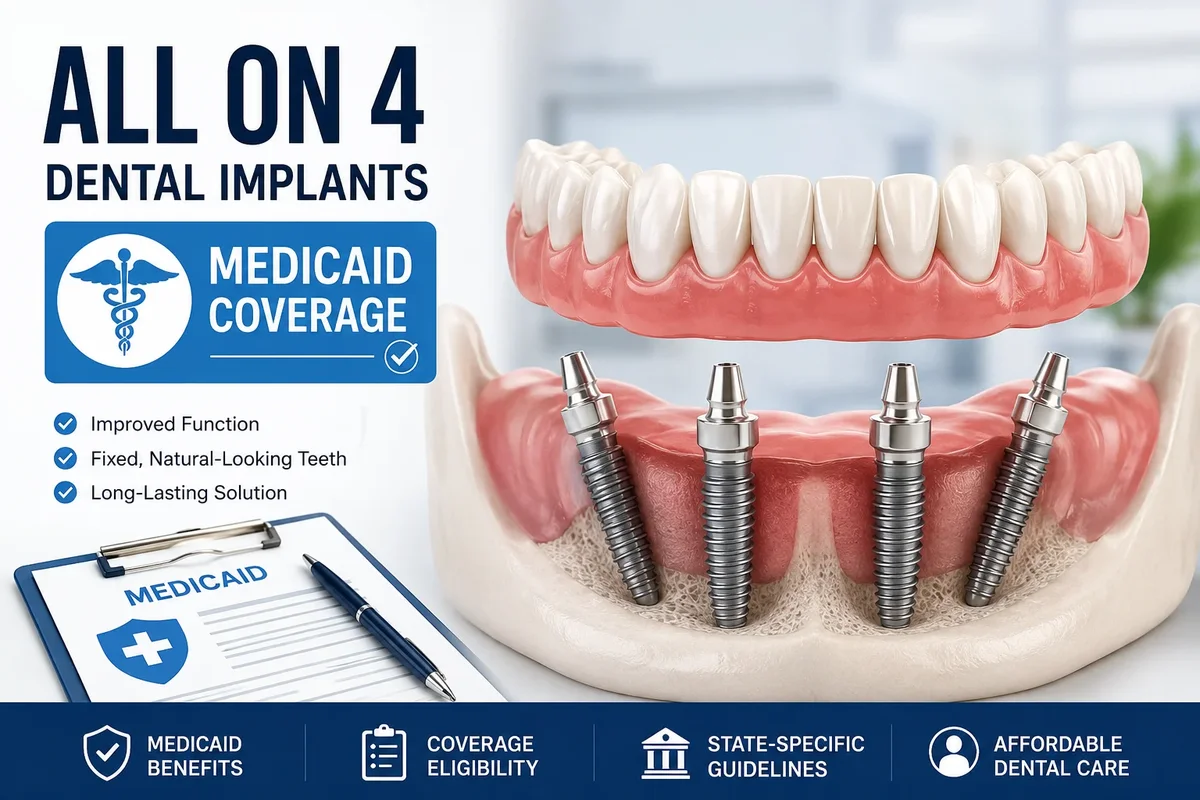
Your Next Step: How to Make the Right Treatment Decision
After learning about all on 4 dental implants medicaid coverage, you may still be wondering what to do next. That is completely understandable. Dental treatment is an important health decision that involves clinical findings, long-term function, financial planning, and personal goals. While researching insurance benefits is valuable, the most effective next step is to combine that information with a professional dental evaluation. Doing so helps you understand not only what your Medicaid plan may cover, but also whether All-on-4 is the most appropriate solution for your specific oral health needs.
Many people spend weeks comparing websites about all on 4 dental implants medicaid coverage before scheduling an appointment. Although online research can provide useful background information, it cannot replace a clinical examination. No article, insurance guide, or online discussion can determine the condition of your teeth, gums, jawbone, or overall oral health. Only a qualified dental professional can evaluate these factors and explain how they influence your treatment options.
Start by Understanding Your Current Oral Health
Before making any financial or treatment decisions, it is important to understand the current condition of your mouth. Patients often assume that missing teeth automatically require full-arch implant treatment, but this is not always the case.
During a comprehensive examination, your dentist will typically assess:
- The health of your remaining teeth.
- The condition of your gums.
- The quantity and quality of jawbone.
- Your bite and chewing function.
- Signs of infection or periodontal disease.
- Your overall medical history.
This information forms the foundation for every treatment recommendation, regardless of whether all on 4 dental implants medicaid coverage is available.
Verify Your Medicaid Benefits Before Committing to Treatment
Do Not Rely on General Information Alone
Because Medicaid programs differ between states, verifying your own benefits is one of the most valuable steps you can take. Even if someone else has received approval—or denial—for implant treatment, that experience may not apply to your situation.
When researching all on 4 dental implants medicaid coverage, consider asking your Medicaid administrator:
- Does my specific plan include adult implant benefits?
- Are implant-supported restorations excluded?
- Is prior authorization required?
- Which services may require additional documentation?
- Are there annual limitations on dental benefits?
Obtaining accurate information early helps you and your dental provider develop an appropriate treatment strategy.
Compare Treatment Options Carefully
Even if all on 4 dental implants medicaid coverage is unavailable, All-on-4 may still be the best long-term solution for some patients. Others may achieve excellent results with implant-supported overdentures, conventional dentures, individual implants, fixed bridges, or phased treatment planning.
Rather than asking only, “What does insurance pay for?” consider asking:
- Which option best restores chewing function?
- Which treatment offers the most predictable long-term result?
- How much maintenance will each option require?
- How will each treatment affect daily comfort?
- Can healthy natural teeth be preserved?
These questions often lead to better long-term decisions than focusing exclusively on immediate treatment costs.
Prepare Financially Without Delaying Necessary Care
Financial planning is an important part of any major dental treatment. However, delaying evaluation simply because you are uncertain about all on 4 dental implants medicaid coverage may allow oral health problems to become more complicated.
Progressive tooth loss, untreated infection, worsening gum disease, and continued bone changes can all influence future treatment possibilities. Even if treatment cannot begin immediately, obtaining an accurate diagnosis allows you to understand your current condition and plan appropriately.
Choose a Provider Who Explains Every Option
The right dental provider should help you understand all appropriate treatment possibilities—not just one procedure. During your consultation, you should feel comfortable asking questions about diagnosis, treatment alternatives, expected maintenance, recovery, insurance verification, and long-term oral health.
Patients considering all on 4 dental implants medicaid coverage benefit from working with clinicians who explain both the advantages and limitations of available treatments in a balanced, evidence-based manner.
Maintain Your Oral Health Regardless of Your Decision
Whether you proceed with All-on-4, another restorative solution, or postpone treatment temporarily, maintaining good oral hygiene remains essential. Daily brushing, cleaning between teeth or prosthetic components, regular dental examinations, and prompt management of new dental problems help preserve oral health over time.
Good preventive care may also reduce the likelihood of additional complications while you continue evaluating your treatment options.
Taking the Next Practical Step
If you would like individualized guidance, you may request a consultation through the Redent Klinik Contact Page. A personalized assessment allows the dental team to evaluate your oral health, discuss whether All-on-4 is clinically appropriate, explain reasonable alternatives when necessary, and help you understand how all on 4 dental implants medicaid coverage may relate to your treatment plan. For additional educational information about oral health, restorative dentistry, and implant care, patients can also consult the American Dental Association.
Final Checklist Before Requesting Professional Advice
Before scheduling treatment, verify your current Medicaid benefits, ask whether prior authorization is required, gather previous dental records and X-rays if available, prepare a list of your medications and medical conditions, and write down any questions about treatment alternatives or expected maintenance. If you have extensive tooth loss, persistent dental pain, loose teeth, repeated infections, difficulty chewing, or dentures that no longer function well, arrange a comprehensive dental consultation as soon as practical. A personalized clinical evaluation remains the most reliable way to determine whether All-on-4 is the right solution for your oral health and how all on 4 dental implants medicaid coverage may apply to your individual circumstances without relying on assumptions or generalized information.
Disclosure: this page may contain affiliate links. We may earn a commission if you use them, at no extra cost to you.