
The all on 4 dental implants process has become one of the most transformative solutions for people who have lost most or all of their teeth. As more patients search for effective full-arch restoration options, this technique stands out because it offers speed, stability, comfort, and natural aesthetics — all while reducing the need for extensive bone grafting. In this comprehensive guide, you will learn every stage of the procedure, from diagnosis to final prosthesis, so you fully understand how the journey unfolds. 😄
Before diving deeper, it’s important to note that the all on 4 dental implants process is designed to restore both function and confidence. Patients who have struggled with loose dentures, gum pain, or failing teeth often report life-changing improvements. This method supports a full arch of prosthetic teeth using just four strategically placed implants, which makes it more cost-efficient and less invasive compared to traditional implants. Because of its predictability and long-term success rate, it is widely endorsed by global dental authorities such as the American Dental Association.
The journey begins with a detailed evaluation using 3D scans, bone density assessments, and digital smile design technology. This diagnostic stage is essential because it helps your dental team determine the ideal placement angles for the implants, ensuring strong anchorage even in cases where bone volume is limited. Many patients are surprised to learn that they can walk out of the clinic on the same day with temporary fixed teeth — one of the major reasons this method is growing in popularity. 🦷✨
A major advantage of the all on 4 dental implants process is its ability to bypass complicated grafting procedures. By tilting the two posterior implants at specific angles, the treatment maximizes contact with available bone and provides excellent structural support. This angulated placement also improves load distribution, which helps prevent strain on the jaw and ensures long-term prosthetic stability. These engineering and biomechanical principles are why this system is often compared to advanced full-arch restoration concepts or “full mouth reconstruction with implants,” one of its LSI-related synonyms.
Once the implants are inserted, the temporary prosthesis is attached almost immediately. This phase is known as “immediate loading,” and it allows patients to enjoy a functional smile on the same day. You can speak, chew, and smile confidently without waiting months for healing. During the next few months, a natural biological process called osseointegration occurs — where the implants fuse securely with the jawbone. This stage is critical for long-term durability and is closely monitored by your clinical team through follow-up appointments.
After osseointegration completes, the temporary set of teeth is replaced with a custom-designed final prosthesis. This final restoration is crafted to match the patient’s facial aesthetics, bite pattern, and functional needs. Materials may include zirconia or high-resin hybrids, providing strength and lifelike appearance. Patients often say that this moment feels like completing a long-awaited transformation, both physically and emotionally.
Another important aspect of the all on 4 dental implants process is maintenance and aftercare. While the new teeth are firmly fixed and resistant to staining, they still require proper home care and regular professional cleaning. Most clinics recommend checkups every six months, along with daily hygiene routines that include brushing, interdental cleaning, and antibacterial rinses. Following these guidelines ensures that your implants remain healthy for decades.
If you are considering this treatment or want to understand whether you are a suitable candidate, you can contact your dental provider or get in touch directly through the Redent Klinik Contact Page. A personalized consultation will help determine your bone quality, medical history, and expectations — essential factors in ensuring a successful full-arch restoration. 🏥
In summary, the all on 4 dental implants process is a predictable, efficient, and highly aesthetic solution for full-arch rehabilitation. By simplifying the surgical pathway, eliminating unnecessary grafts, and providing same-day results, it offers a life-changing opportunity for individuals suffering from significant tooth loss. With proper planning, long-term care, and expert guidance, this treatment delivers both functionality and beauty, restoring patients’ smiles and quality of life.
Why the All on 4 Dental Implants Process Is the Top Choice Today
The all on 4 dental implants process has rapidly become one of the most sought-after full-arch restoration solutions, not only for patients dealing with extensive tooth loss but also for individuals who want a faster, more predictable alternative to traditional implant dentistry. This section explains exactly why this technique stands out, what makes it superior in terms of engineering and clinical outcomes, and why thousands of people choose it as their preferred path to a new smile. 😄
Minimally Invasive Approach with Maximum Stability
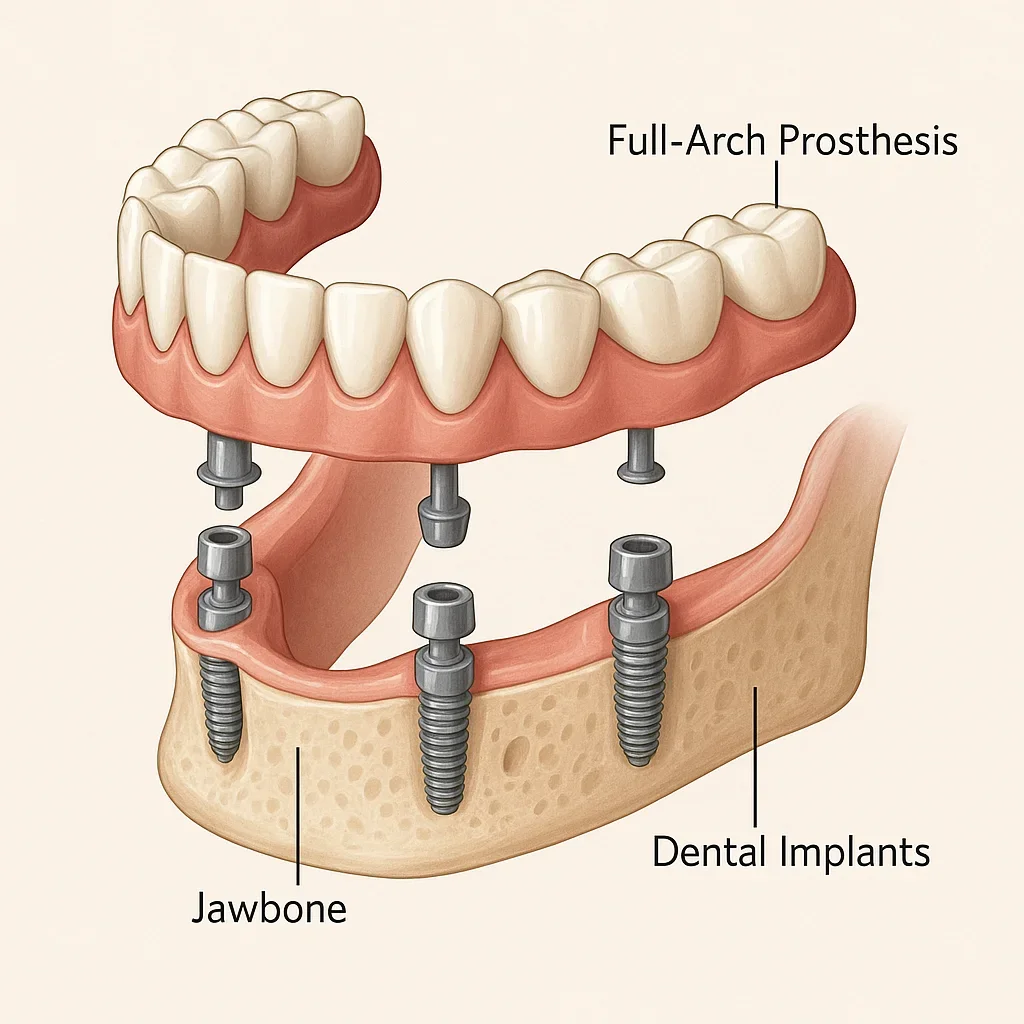
One of the major reasons the all on 4 dental implants process is so popular is its ability to provide long-lasting stability with a minimally invasive surgical approach. Traditional implant treatments may require 6–10 implants per arch and often involve bone grafting or sinus lifting. In contrast, the All-on-4 technique uses only four strategically placed implants — two vertical ones in the front and two angled implants in the back.
The angled posterior implants play a crucial engineering role. By tilting them at 30–45 degrees, dentists can anchor them into dense anatomical areas of the jaw, which eliminates the need for extensive bone grafts. This innovation makes the treatment accessible to many patients who previously were not considered suitable candidates due to low bone volume. This biomechanical optimization is one reason experts consider the method a reliable alternative to full mouth restoration or “teeth-in-a-day,” a common LSI synonym for this procedure.
Reduced Surgical Time and Faster Patient Recovery
Because fewer implants are used and grafting is rarely needed, surgical time is significantly reduced. Many patients complete the entire placement of implants and provisional teeth in a single appointment. Recovery time is also shorter because the body experiences far less trauma compared to traditional multi-implant procedures.
Post-operative discomfort is generally mild, and most individuals can return to normal routines within a few days. The simplicity of the all on 4 dental implants process means a smoother experience overall — particularly beneficial for elderly patients, those with medical concerns, or anyone seeking a time-efficient treatment.
Immediate Function: Walk Out the Same Day with Fixed Teeth
One of the greatest advantages of this treatment is the immediate loading protocol. Within hours of the surgery, you walk out with a fixed temporary prosthesis securely attached to the implants. Unlike removable dentures, these provisional teeth do not shift, click, or cause gum irritation.
This same-day transformation is life-changing for people who have struggled with loose prosthetics or failing natural teeth. The all on 4 dental implants process allows them to smile, speak, and chew more effectively right away, restoring confidence and social comfort. The emotional impact of this immediate improvement cannot be overstated.
Psychological and Lifestyle Benefits
Beyond clinical advantages, the procedure has profound psychological benefits. Patients frequently say they feel “reborn” after the treatment. Being able to eat comfortably, smile freely, and interact confidently often enhances mental well-being, reduces social anxiety, and improves overall quality of life.
The ease of cleaning and maintaining fixed prosthetic teeth also makes them extremely appealing. The prosthesis is stable, does not rely on adhesives, and resembles natural teeth in both appearance and function.
Superior Long-Term Value and Durability
Although the upfront cost of the all on 4 dental implants process is an investment, it offers long-term financial advantages. The design distributes bite force evenly across all implants, reducing the risk of mechanical failure. Advanced materials like zirconia and high-strength hybrid composites ensure the final prosthesis lasts for many years with proper care.
When compared to the repeated relining, replacement, and maintenance required for regular dentures, the All-on-4 system typically saves money over time. Fewer clinic visits, fewer complications, and a longer-lasting result make it a cost-effective choice.
Clinically Proven Success Backed by Research
The technique is backed by over two decades of clinical data, showing high survival rates for implants and long-term patient satisfaction. Numerous research studies and global dental organizations — including trusted bodies referenced by the American Dental Association — acknowledge the success and predictability of this method.
When performed by trained specialists, the all on 4 dental implants process consistently delivers safe, stable, and aesthetic outcomes. It is also compatible with a wide range of cases, including medically complex patients who may need a simplified intervention.
Enhanced Aesthetic Design and Custom Smile Creation
Another reason patients choose this technique is the ability to craft a personalized smile. Digital smile design technology allows dentists to simulate your final results before treatment. The final prosthesis is tailored to your facial proportions, bite, lip movement, and aesthetic preferences.
Because of the procedure’s high predictability and design precision, patients receive a natural-looking result that enhances facial harmony. The new teeth improve lip support, facial profile, and overall youthfulness — making the all on 4 dental implants process not only a functional treatment but also a cosmetic transformation.
If you’re exploring this treatment or want personalized guidance, you can reach out through the Redent Klinik Contact Page for detailed support and case evaluation.
How the All on 4 Dental Implants Process Works Step-by-Step
Understanding the all on 4 dental implants process in detail is essential for anyone considering full-arch restoration. This modern treatment protocol is structured, predictable, and engineered to deliver strong functional and aesthetic outcomes. In this section, we break down every phase of the procedure — from diagnostic planning to the placement of the final prosthesis — so patients know exactly what to expect at each stage. 🦷✨
Step 1: Comprehensive Consultation and Diagnostic Evaluation
The journey begins with a full clinical examination. During this initial visit, your dental team evaluates your oral health, gum condition, bone structure, and medical history. This assessment ensures that you are a suitable candidate for the all on 4 dental implants process and identifies any underlying factors that may require additional attention.
Advanced Imaging and 3D Bone Analysis
One of the most critical components of the diagnostic stage is three-dimensional imaging. Using CBCT (Cone Beam Computed Tomography), dentists obtain high-resolution digital scans of your jawbone. These scans reveal bone density, sinuses, nerve positions, and anatomical structures.
This technology ensures precise implant planning, allowing specialists to determine the ideal angulation and depth for each implant. The 3D model also helps predict long-term stability and reduces surgical complications. Digital dentistry plays a significant role in the modern all on 4 dental implants process, making it highly efficient and safe.
Step 2: Customized Digital Smile Design
Before surgery, your dentist creates a digital blueprint of your new smile. This design takes into account facial proportions, bite alignment, tooth color, and aesthetic preferences. The digital smile design phase ensures that the final prosthesis complements your face and enhances your overall appearance.
This step is particularly exciting for patients because it allows them to visualize their future smile in advance. The smile simulation can even be adjusted in real time until the desired outcome is achieved. This approach is also commonly referred to as “full-arch digital design,” an LSI-related concept to the all on 4 dental implants process.
Step 3: Pre-Surgical Preparation and Treatment Coordination
Once diagnostic information and digital planning are complete, your treatment day is scheduled. The pre-surgical phase includes reviewing the procedure, discussing anesthesia options, and ensuring that any medical concerns are addressed.
Managing Existing Oral Conditions
If necessary, failing teeth, infections, or decayed roots are removed during or before the surgery. These extractions are typically performed at the same appointment as implant placement, making the procedure streamlined and time-efficient.
This consolidated approach is one of the reasons the all on 4 dental implants process is often referred to as the “same-day smile” solution.
Step 4: Implant Placement and Surgical Execution
The surgical phase is the core of the treatment. Dentists follow the pre-planned digital map to place four titanium implants into the jaw: two straight implants in the front and two angled implants in the back.
Why Implant Angulation Matters
The posterior implants are inserted at a 30–45° angle, maximizing bone-to-implant contact and creating an exceptionally stable foundation. This technique eliminates the need for bone grafting in most cases.
The reduced invasiveness lowers healing time and allows for immediate loading, making the all on 4 dental implants process highly efficient and convenient.
Immediate Loading and Temporary Teeth
A temporary fixed prosthesis is attached within hours of implant placement. This step enables patients to walk out of the clinic with a functional and aesthetic set of teeth on the very same day.
The temporary teeth are carefully designed to protect the implants during healing while still allowing patients to chew soft foods and speak comfortably.
Step 5: Healing Phase and Osseointegration
Over the next 3–6 months, the implants integrate naturally with the jawbone through a biological process known as osseointegration. During this period, follow-up appointments ensure stability and proper healing.
Patients experience minimal discomfort, and most report a significant improvement in daily activities such as chewing and speaking. The temporary prosthesis remains securely attached during this time.
Step 6: Fabrication of the Final Prosthesis
Once healing is complete and the implants are fully integrated, the temporary teeth are replaced with a custom-made permanent prosthesis. Materials can include zirconia, high-density PMMA, or hybrid titanium-supported designs.
This final restoration is incredibly durable and crafted to look extremely natural. Bite alignment, shade, and tooth shape are fully customized.
This stage is considered the most rewarding part of the all on 4 dental implants process, as it marks the completion of the transformation.
Step 7: Long-Term Maintenance and Oral Care
Proper aftercare is crucial to maintaining implant health. Patients are advised to brush and floss daily, use water flossers, and attend routine dental checkups.
Clinics recommend professional cleaning every six months to maintain the function and lifespan of the prosthesis.
If you are considering this treatment or want a personalized assessment, you can contact the clinic directly through the Redent Klinik Contact Page.
Benefits of Choosing the All on 4 Dental Implants Process
The all on 4 dental implants process has become a global standard for full-arch rehabilitation thanks to its exceptional blend of speed, durability, patient comfort, and predictable outcomes. People who once relied on unstable dentures or who suffered from severe tooth loss now have access to a life-changing treatment that restores aesthetics, chewing ability, and overall confidence. In this section, we explore in detail every major benefit of this transformative procedure and explain why it consistently outperforms traditional implants and removable prosthetics. 🦷✨
Immediate Transformation and Same-Day Function
One of the most powerful benefits of the all on 4 dental implants process is its ability to deliver immediate results. Patients walk into their appointment with missing or failing teeth and walk out the same day with a fixed, natural-looking temporary prosthesis. This same-day smile feature is a breakthrough in modern dentistry and removes the long waiting periods typically associated with conventional implants.
Boosting Confidence from Day One
Receiving immediate fixed teeth restores not only chewing function but also emotional well-being. Many patients report feeling younger, more socially confident, and relieved from years of dental discomfort. This psychological transformation begins the moment the temporary prosthesis is placed and continues to grow as the treatment progresses.
Excellent Stability with Fewer Implants
Traditional full-arch implant treatments can require 6–10 implants per jaw. In contrast, the all on 4 dental implants process relies on just four precisely placed implants that provide exceptional stability and load distribution. This engineered approach minimizes surgical trauma while maximizing long-term support.
Biomechanical Advantage of Angled Posterior Implants
The posterior implants are inserted at a 30–45° angle, allowing them to anchor into denser bone regions. This eliminates the need for bone grafting in most cases. This angulation increases bone-to-implant contact and significantly reduces mechanical load on the restoration.
This innovative engineering principle contributes to one of the highest long-term success rates in implant dentistry and reduces complications often associated with conventional implant approaches.
Minimized Need for Bone Grafting
Because the technique utilizes available bone and strategically placed angled implants, bone grafting is rarely required. This makes the all on 4 dental implants process more accessible and more affordable compared to traditional methods that require months of graft healing.
Ideal for Patients with Bone Loss
Even individuals with significant jawbone deterioration can often qualify for the procedure. This is one of the reasons why the treatment is often recommended for long-term denture wearers, seniors, or individuals whose bone health has diminished over time.
Natural Aesthetics and Facial Support
Beyond functional benefits, the treatment offers incredible cosmetic advantages. The restoration replaces missing teeth while also supporting facial structures such as lips and cheeks. This improves facial harmony and helps reverse the collapsed appearance associated with long-term tooth loss.
Customized Aesthetic Design
Each final prosthesis is uniquely crafted to match the patient’s facial proportions, smile line, bite pattern, and aesthetic preferences. Digital smile design tools allow patients to visualize and approve their final look before fabrication begins.
Long-Term Durability and High Success Rates
Clinical studies and data from trusted organizations like the American Dental Association show that the all on 4 dental implants process has exceptionally high survival rates. Titanium implants fuse securely with the jawbone, and the final prosthesis — often made of zirconia or hybrid titanium-supported materials — can last for decades with proper care.
Engineered for Strength and Longevity
The full-arch restoration distributes bite forces evenly, reducing the risk of fractures or mechanical failures. This makes it ideal for individuals seeking a long-term solution that performs like natural teeth.
Improved Oral Health and Daily Comfort
Removable dentures can irritate gums, reduce chewing efficiency, and require constant maintenance. In contrast, the all on 4 dental implants process eliminates these issues entirely. Fixed prosthetic teeth do not slip or cause friction and are significantly easier to clean.
Enhanced Chewing and Speech Function
Patients can enjoy a diverse diet again — including nutritious, harder-to-chew foods that dentures often make difficult. Speech also improves dramatically because the prosthesis remains stable and properly aligned.
Cost-Effectiveness Over Time
Although the initial investment is higher than dentures, the long-term cost efficiency is undeniable. Removable dentures require relining, adhesives, replacements, and ongoing adjustments. Meanwhile, the all on 4 dental implants process offers a durable, stable solution that minimizes long-term maintenance costs.
For personalized guidance regarding affordability, treatment options, or medical suitability, you can always reach out through the Redent Klinik Contact Page.
All on 4 Dental Implants Process Timeline: What to Expect
The all on 4 dental implants process follows a carefully structured timeline designed to give patients a smooth, predictable, and efficient path toward full-arch restoration. Understanding this timeline not only reduces anxiety but also helps patients prepare for each stage with clarity and confidence. Although individual cases may vary slightly, the overall sequence remains consistent: assessment, planning, surgery, healing, and final prosthesis delivery. In this extensive guide, we break down the full treatment schedule step-by-step so you know exactly what will happen and when. 🕒🦷
Phase 1: Initial Examination and Consultation
The first step in the all on 4 dental implants process is a comprehensive consultation. During this appointment, your dentist evaluates your oral health, bone structure, medical history, and aesthetic goals. This exam includes digital photographs, panoramic X-rays, and a 3D CBCT scan.
This phase determines whether you are a candidate and identifies any preliminary treatments, such as removing remaining teeth or treating gum disease. Most patients are approved for the procedure during this stage because the All-on-4 method is specifically designed to accommodate individuals with bone loss.
Digital Assessment and Bone Mapping
Your CBCT scan provides a full digital map of your jawbone, nerves, and anatomical details. This imaging ensures accurate implant placement and reduces surgical risks. Digital simulation tools also provide a virtual preview of your future smile, offering both clinical and emotional reassurance.
Phase 2: Custom Treatment Planning (1–7 Days)
Once diagnostic data is collected, the dental team begins designing your personalized treatment plan. This includes virtual implant placement, bite simulation, prosthetic design, and digital smile preparation.
The beauty of the all on 4 dental implants process is that it uses just four implants while maximizing bone support. The planning stage ensures angulation, depth, and implant positions are optimized for long-term function.
Creating Your Temporary and Final Prosthesis Designs
The temporary prosthesis is pre-designed before your surgery to allow same-day installation. At the same time, preliminary designs for your final prosthesis begin forming based on your aesthetic preferences.
Phase 3: Surgery and Immediate Loading (Day 1)
The surgical appointment is the most transformative day of the all on 4 dental implants process. On this day, failing or damaged teeth are removed (if necessary), four implants are placed, and your temporary prosthesis is attached — all in one visit.
Most procedures take between 2 and 4 hours per arch, depending on complexity, sedation preferences, and anatomical considerations.
Surgical Breakdown
- Local anesthesia or IV sedation is administered.
- Any remaining hopeless teeth are extracted.
- Implants are placed — two vertical in the front, two angled in the back.
- Immediate temporary prosthesis is attached.
By the end of the appointment, patients leave the clinic with a stable, fixed set of teeth — one of the hallmark advantages of this treatment model.
Post-Surgery Instructions
Patients must follow a soft-food diet and maintain strict oral hygiene protocol during the initial healing stages. The clinic will schedule follow-up visits for monitoring and adjustments as needed.
Phase 4: Healing & Osseointegration (3–6 Months)
This is the biological stage where the implants fuse with the jawbone — a critical part of the all on 4 dental implants process. Osseointegration ensures your implants become permanently stable and strong enough to support your final prosthesis for decades.
During this time, regular check-ups ensure healthy healing, proper alignment, and implant stability. While the temporary prosthesis remains functional, patients should avoid biting extremely hard foods until full integration is confirmed.
Expected Healing Milestones
- First week: swelling reduces, soft tissue recovery begins.
- 1 month: stabilization of implants improves.
- 3–4 months: osseointegration largely complete.
- 6 months: final verification before prosthetic placement.
Phase 5: Final Prosthesis Placement (Month 3–6)
Once the implants are fully integrated, impressions or digital scans are taken to create your custom permanent prosthesis. This final restoration is far more durable and aesthetically refined than the temporary version.
This step is highly personal — patients choose tooth shade, shape, gum color, and bite pattern. Options often include high-quality zirconia, titanium-reinforced hybrids, or premium composite materials.
Delivery of Your Permanent Smile
When the final prosthesis is ready, it is securely attached to the healed implants. Patients immediately notice the difference — improved comfort, sharper chewing efficiency, and a beautifully natural appearance. This marks the completion of the all on 4 dental implants process.
Phase 6: Long-Term Maintenance and Aftercare
After treatment completion, patients must maintain proper oral hygiene: brushing twice a day, cleaning beneath the prosthesis with floss or a water flosser, and attending routine checkups every six months.
Long-term maintenance ensures decades of implant health, gum protection, and prosthetic durability.
If you’re considering this treatment or need a personalized timeline assessment, you may contact the clinic through the Redent Klinik Contact Page.
Daily Care Tips During the All on 4 Dental Implants Process
Caring for your new smile properly is one of the most important factors influencing the long-term success of the all on 4 dental implants process. While the treatment itself is engineered for stability, durability, and simplicity, patients must follow a structured care routine — especially during the healing months — to ensure the implants integrate correctly and remain healthy for decades. In this detailed section, you will learn exactly how to care for your temporary and final prosthesis, how to protect your implants during osseointegration, and how to maintain impeccable oral hygiene with user-friendly techniques. 🦷✨
The Importance of Early-Stage Care
Immediately after surgery, the implants begin the critical biological process of bonding with the jawbone. This early osseointegration phase determines the long-term strength and stability of your implants. Because of this, following the aftercare guidelines provided by your dental team is essential. Proper care protects the surgical sites, keeps inflammation under control, and promotes smooth healing.
During this period, the temporary prosthesis attached to your implants is designed to be functional but intentionally lighter and less forceful than your final prosthesis. This allows patients to eat, speak, and smile comfortably while ensuring the all on 4 dental implants process progresses without complications.
Daily Oral Hygiene Requirements
Even though your prosthetic teeth are fixed, good oral hygiene remains crucial. Food particles, plaque, and bacteria can accumulate around the gum line if not cleaned properly. This can lead to gum irritation, inflammation, or peri-implant complications.
- Brush your teeth gently twice a day using a soft-bristle toothbrush.
- Use non-abrasive toothpaste to avoid scratching the prosthetic surface.
- Clean along the gum line to prevent bacterial buildup.
- Rinse with an alcohol-free antibacterial mouthwash.
These simple steps significantly contribute to healthy healing during the all on 4 dental implants process.
How to Clean Under the Prosthesis
Since the prosthesis is fixed to your implants, cleaning underneath it is an essential part of your hygiene routine. The goal is to remove trapped debris and prevent inflammation under the bridge.
Recommended Cleaning Tools
- Water flosser: An excellent device for cleaning beneath the prosthesis.
- Interdental brushes: Helps remove food from tight spaces.
- Super floss: Special floss designed for bridges and implants.
- Antibacterial gels: Beneficial for gum health and implant safety.
Regularly using these tools dramatically improves the long-term success of the all on 4 dental implants process, and ensures that gum tissue stays clean and healthy.
Soft Food Diet During Healing
A soft-food diet is not optional — it is mandatory. During the healing stage, your temporary prosthesis is not meant to handle the full force of chewing. This gives your implants the best chance to fuse securely with the jawbone.
Common recommended foods include:
- Mashed potatoes
- Yogurt
- Scrambled eggs
- Soup
- Pasta
- Steamed vegetables
Avoid biting directly on hard or crunchy foods until your dentist confirms that osseointegration is complete. Doing so protects your implants and ensures long-term stability.
Managing Post-Surgery Sensitivity and Discomfort
Mild discomfort is normal during the first few days after the surgery. Over-the-counter pain relievers, cold compresses, and prescribed medications can help manage this.
Expected Symptoms
- Mild swelling
- Sensitivity near surgical sites
- Slight pressure from the temporary prosthesis
These symptoms usually decrease significantly within 72 hours. If discomfort persists or worsens, consult your dental provider immediately.
Follow-Up Appointments and Monitoring
Routine checkups play a vital role throughout the all on 4 dental implants process. These visits allow your dentist to examine implant stability, soft tissue healing, bite alignment, and prosthesis fit.
Typical follow-up schedule:
- 48–72 hours post-surgery: Evaluate initial healing.
- 2–4 weeks: Monitor tissue response.
- Every 4–6 weeks: Assess osseointegration.
- Month 3–6: Determine readiness for final prosthesis.
Long-Term Maintenance After Final Prosthesis Placement
Once the final restoration is placed, daily care becomes even more important. The permanent prosthesis is extremely durable, but it requires consistent cleaning to prevent gum inflammation and maintain oral health. Patients should brush normally, continue using water flossers, and schedule professional cleaning appointments every six months.
Why Professional Cleanings Matter
Dental professionals use special instruments designed for implants that do not scratch the titanium or damage the prosthesis. These cleanings help remove stubborn plaque and ensure implant longevity.
If you need personalized guidance or support during any stage of the all on 4 dental implants process, you can contact your dental provider through the Redent Klinik Contact Page.
Common Challenges During the All on 4 Dental Implants Process and How to Solve Them
Although the all on 4 dental implants process is engineered for high predictability, long-term stability, and immediate functionality, patients may still encounter certain challenges during the healing timeline. These challenges are not signs of failure; rather, they are natural parts of the body’s adjustment to implants and prosthetics. Understanding them — and knowing how to resolve them — ensures a smooth recovery and the long-term success of your new smile.
This comprehensive guide highlights the most common issues patients may face, explains why they occur, and provides practical, dentist-approved solutions. By following these recommendations, you can protect your implants, maximize your comfort, and support the full biological integration of your restoration. 🦷💪
Challenge 1: Mild Pain, Swelling, and Discomfort
In the early days of the all on 4 dental implants process, it is normal to experience mild discomfort. This is your body’s natural inflammatory response to surgery. The level of discomfort varies from patient to patient, but it is generally manageable with prescribed pain relievers and cold compresses.
How to Manage Discomfort
- Apply ice packs for 15–20 minutes during the first 24–48 hours.
- Take anti-inflammatory medications as directed by your dentist.
- Keep your head elevated to reduce swelling.
- Avoid hot foods and drinks during the first 48 hours.
If discomfort increases instead of decreasing, you should schedule a follow-up appointment to ensure the implants are healing properly.
Challenge 2: Difficulty Adapting to Temporary Prosthesis
The temporary prosthesis that accompanies the all on 4 dental implants process is designed to protect your implants while allowing you to speak and eat normally. However, because it is lighter and slightly bulkier than your final prosthesis, some patients may initially feel that it affects their speech or chewing patterns.
Adaptation Tips
- Practice speaking daily — reading aloud can accelerate adaptation.
- Stick to soft foods to avoid placing excessive pressure on implants.
- Follow cleaning routines carefully to maintain comfort.
- Allow your tongue to naturally adjust to the new contours.
By the end of the second week, most patients adapt fully and experience significant functional improvement.
Challenge 3: Gum Sensitivity or Irritation
Some gum irritation may occur due to swelling, sutures, or contact with the temporary prosthesis. This is usually mild and temporary. It can also happen if food debris accumulates under the prosthesis. Maintaining hygiene is essential for preventing infection or inflammation during the all on 4 dental implants process.
Solutions for Gum Irritation
- Rinse with an alcohol-free antibacterial mouthwash.
- Use a water flosser on the lowest setting at first.
- Avoid spicy, acidic, or overly salty foods.
- Keep the area clean using soft interdental brushes.
If irritation does not improve within a few days, your dentist may adjust the prosthesis for comfort.
Challenge 4: Difficulty Cleaning Under the Prosthesis
Because the prosthesis is fixed, some patients initially struggle to clean underneath it. Proper hygiene remains critical to preventing peri-implant inflammation during the all on 4 dental implants process.
Recommended Tools
- Water flosser — ideal for flushing debris.
- Super floss — specially designed for bridges.
- Angled interdental brushes — helpful for tight areas.
- Non-abrasive toothpaste — protects prosthetic surfaces.
Within one to two weeks, most patients become fully accustomed to their new cleaning routine.
Challenge 5: Speech Adjustments
Because the temporary prosthesis changes tongue spacing and airflow, a brief adjustment period is normal. Certain sounds may feel slightly different at first. Fortunately, this is temporary and resolves quickly.
Speech Improvement Tips
- Read aloud for 10–15 minutes a day.
- Practice exaggerating certain sounds (“S,” “T,” “D,” “L”).
- Sip water frequently to keep the mouth hydrated.
Speech usually stabilizes within a week or two as part of the natural adaptation phase of the all on 4 dental implants process.
Challenge 6: Sensation of Bite Changes
Because the new prosthesis alters your bite relationship, your chewing pattern may feel unfamiliar at first. This is completely normal. As your muscles and jaw joints adapt, bite sensations gradually normalize.
How to Manage Bite Adaptation
- Chew slowly and gently during the first few weeks.
- Avoid extremely hard foods.
- Follow dietary recommendations provided by your dentist.
Challenge 7: Anxiety About Healing Progress
It is common for patients to feel anxious about whether the implants are integrating properly. This emotional challenge is part of the healing journey during the all on 4 dental implants process.
How to Stay Reassured
- Attend every scheduled follow-up appointment.
- Communicate openly with your dental provider.
- Track healing milestones using photos or notes.
If any uncertainty arises, patients can always reach out through the Redent Klinik Contact Page for reassurance and support.
Overall, these challenges are manageable and temporary. With proper care, communication, and hygiene, patients successfully navigate the all on 4 dental implants process and enjoy a stable, functional, and beautiful smile for the rest of their lives.
How Much Does the All on 4 Dental Implants Process Cost? Updated Price Overview
The all on 4 dental implants process is a life-changing treatment that combines advanced surgical precision, high-quality materials, and sophisticated prosthetic design. Because it replaces an entire arch of teeth using only four strategically placed implants, it offers significantly better value over the long term compared to dentures or traditional implant methods that require more implants and additional surgeries. This section explains the full cost breakdown, what affects pricing, how the investment compares to alternatives, and provides an updated research-based price range to help patients understand what they can expect financially.
Why Costs Vary Between Clinics and Countries
The price of the all on 4 dental implants process can vary widely based on geography, surgeon experience, implant brand, laboratory materials, and the level of technology used during planning and surgery. Understanding these factors helps patients make informed decisions and avoid unrealistic expectations or misleading low-cost advertising.
Key Factors That Influence Pricing
- Implant Brand: Premium implant systems such as Nobel Biocare or Straumann cost more but offer superior engineering and long-term reliability.
- Prosthetic Material: Final prostheses made of zirconia or titanium-reinforced hybrids are more expensive than acrylic-based options due to durability and aesthetics.
- Surgical Technology: Clinics using CBCT scans, guided surgery, and digital smile design typically have higher prices but superior outcomes.
- Surgeon Expertise: Highly trained implantologists often charge more due to advanced skill and lower complication rates.
- Country and Clinic Location: Prices vary significantly between the U.S., U.K., Europe, and Turkey.
These variables all contribute to the final investment for the all on 4 dental implants process, and understanding them can help you evaluate quotations more effectively.
Updated Global Price Estimates (Based on 2024–2025 Data)
Below is a realistic research-based price overview compiled from multiple reputable online dental sources, industry reports, and major clinic listings. Prices reflect average full-arch costs including consultation, scans, surgery, temporary teeth, and final prosthesis.
Estimated Cost Range by Region
United States: $20,000 – $35,000 per arch
United Kingdom: £13,000 – £18,000 per arch
Canada: $16,000 – $28,000 per arch
Australia: $18,000 – $30,000 per arch
Western Europe: €12,000 – €18,000 per arch
Turkey: $3,500 – $9,000 per arch
Turkey is known for offering the most cost-efficient version of the all on 4 dental implants process due to lower operational costs and the availability of highly skilled implantologists. However, patients should always verify both implant brands and the full scope of treatment to ensure transparency.
What the Cost Typically Includes
To avoid confusion, it is important to understand what comprehensive All-on-4 pricing generally includes. Every part of the treatment contributes to the final cost: surgical planning, materials, laboratory work, and clinical follow-ups.
Full Treatment Package Breakdown
- 3D CBCT scan and diagnostic imaging
- Comprehensive consultation and treatment planning
- Digital smile design
- Surgical implant placement (4 implants per arch)
- Extraction of remaining teeth if necessary
- Temporary same-day prosthesis
- Follow-up appointments and healing supervision
- Fabrication of final zirconia or hybrid prosthesis
- Final prosthesis fitting and bite adjustment
Some clinics also include sedation, antibiotic therapy, and long-term maintenance instructions as part of their package.
Cost Breakdown: Why All-on-4 Is a Long-Term Investment
Although the initial cost may seem high compared to removable dentures, the all on 4 dental implants process offers tremendous long-term value. Dentures require constant relining, replacement, adhesives, and ongoing adjustments — all of which add up significantly over time.
Long-Term Cost Advantages
- No adhesive costs: Fixed prosthesis eliminates denture glue.
- Fewer replacements: Final zirconia restorations can last decades.
- Improved oral health: Implant-supported prosthetics prevent bone loss.
- Greater chewing efficiency: Allows a healthy, high-quality diet.
When viewed as a lifelong solution rather than a temporary fix, the all on 4 dental implants process becomes one of the most cost-effective dental treatments available.
Questions to Ask Before Accepting a Price Quote
Before choosing a clinic, patients should ask detailed questions to understand the full value of what they are paying for.
Checklist for Cost Transparency
- Which implant brand will be used?
- Is the final prosthesis zirconia, titanium-based, or acrylic?
- Are CBCT scans included in the price?
- Does the price include both temporary and final prostheses?
- Are follow-up visits included?
- Is guided surgery used?
- What warranties cover the implants and prosthesis?
A transparent and reliable clinic will answer all of these questions clearly and confidently.
For personalized price guidance or to request a detailed quotation, you can reach out directly through the Redent Klinik Contact Page.
All on 4 Dental Implants Process Success Stories and Real-Life Transformations
The all on 4 dental implants process has transformed millions of smiles worldwide, giving patients renewed confidence, improved functionality, and life-changing comfort. While clinical explanations are essential, nothing showcases the true impact of this treatment better than real-life success stories. These experiences highlight not only the dramatic aesthetic improvements but also the emotional and functional benefits that people gain after undergoing full-arch restoration.
In this section, we explore various patient journeys, common patterns of transformation, and what long-term life improvements look like. These stories help future patients understand what they can expect and provide reassurance that the process is predictable, reliable, and deeply rewarding. 🦷✨
Transformation Story 1: Overcoming Years of Denture Struggles
Many patients who choose the all on 4 dental implants process have endured years — sometimes decades — of wearing removable dentures. One common story involves individuals who struggle with poor fit, embarrassing slippage, difficulty eating, and ongoing gum soreness.
Before the Treatment
One patient, a 68-year-old long-term denture user, experienced constant discomfort and embarrassment during meals. Her dentures would loosen whenever she tried to speak confidently or eat anything firmer than soft foods. She also suffered from bone loss, which made the dentures increasingly unstable.
The Result After All-on-4
Immediately after receiving her fixed temporary prosthesis, she was able to chew comfortably and confidently enjoy meals without worry. By the time her final zirconia prosthesis was placed, her confidence had completely returned, and she no longer needed adhesives or frequent adjustments. The all on 4 dental implants process fully restored her independence.
Transformation Story 2: A Full Smile Rebuild After Tooth Loss
Another frequent case involves individuals who have lost teeth due to gum disease, decay, or trauma. Living without functional teeth can significantly affect confidence, nutrition, and social interaction.
Before the Treatment
A 52-year-old male patient had lost most of his upper teeth and relied on a partial denture that caused frequent gum irritation. He avoided smiling in photos and rarely ate in public because of fear that his denture would come loose.
The Result After All-on-4
After undergoing the all on 4 dental implants process, he received a full set of fixed teeth that restored his ability to chew, speak, and socialize without anxiety. His new smile dramatically improved his facial appearance, particularly lip and cheek support. Three months later, he reported feeling “twenty years younger.”
Transformation Story 3: Complete Oral Rehabilitation After Severe Decay
Some patients have a combination of broken, decayed, or failing teeth that prevent proper biting and chewing. These individuals often believe they have no options other than dentures.
Before the Treatment
A 44-year-old woman had multiple fractured teeth due to prolonged untreated decay. Despite attempting fillings and crowns over the years, her teeth continued to fail. Her chewing ability was compromised, and she suffered from chronic inflammation and self-consciousness.
The Result After All-on-4
The all on 4 dental implants process allowed her dentist to remove the failing teeth and place implants in the same session. She left the clinic with fixed temporary teeth that offered immediate comfort. After completing osseointegration, her final prosthesis provided a flawless and natural appearance. Her quality of life improved drastically, and she regained full oral function.
Common Patterns in All-on-4 Success Stories
1. Improved Chewing Ability
Nearly all patients report dramatic improvements in chewing. Foods they avoided for years — including crunchy vegetables, fruits, nuts, and meats — become easy to enjoy again. The fixed design eliminates instability, offering a level of comfort that dentures cannot match.
2. Enhanced Confidence and Speech
One of the most significant emotional outcomes of the all on 4 dental implants process is the return of confidence. Patients smile more freely and speak more clearly. Without loose dentures or missing teeth, social anxiety often disappears completely.
3. Facial Aesthetic Enhancement
Full-arch implants restore lip and cheek support, preventing the sunken appearance associated with bone loss and dentures. Facial symmetry and profile improve noticeably.
4. Long-Term Stability and Comfort
Patients frequently describe the treatment as “the best decision they ever made.” With long-lasting durability, strong bite force, and minimal maintenance, the results are not just visually impressive — they contribute to enhanced health and daily comfort.
What Patients Say After Several Years
Long-term testimonials offer some of the most compelling proof of the treatment’s success. Across global dental studies and trusted organizations such as the American Dental Association, patients consistently report that they would choose the treatment again without hesitation.
Most say that their lives changed permanently, whether through improved nutrition, restored confidence, or the ability to laugh, eat, and speak freely without thought.
If you’re interested in beginning your own transformation story, you can contact the clinic through the Redent Klinik Contact Page for personalized guidance.
In every case, the all on 4 dental implants process proves to be more than a medical treatment — it is a personal and emotional rebirth that delivers long-term happiness, functionality, and confidence.
How to Choose the Best Dentist or Clinic for the All on 4 Dental Implants Process
Selecting the right dental professional is one of the most important decisions you will make when embarking on the all on 4 dental implants process. Because this treatment involves advanced surgical precision, digital planning, prosthetic expertise, and long-term management, the clinic and dentist you choose will have a direct impact on your results. This comprehensive guide explains exactly what to look for, the questions you should ask, and how to evaluate clinics based on experience, technology, transparency, and patient care.
A highly skilled and experienced team ensures not only a smooth surgical experience but also long-term success and stability. Below, you’ll find a structured breakdown to help you make a confident and informed choice. 🦷🏥
Key Qualities of an Experienced All-on-4 Provider
The all on 4 dental implants process is not a standard dental procedure — it requires specialization. The more experienced a dentist is with full-arch restorations, the more predictable your outcome will be. Patients should carefully evaluate a provider’s background, training, and clinical focus before committing to treatment.
1. Implantology Training and Credentials
A qualified implant specialist will have advanced education in oral surgery, prosthodontics, or implant dentistry. Look for credentials such as:
- Postgraduate implantology certifications
- Membership in recognized dental associations
- Advanced surgical training, including guided implant placement
- Continuing education courses focusing specifically on All-on-4 or full-arch implants
Dentists with these qualifications are more likely to deliver optimal outcomes and handle complex cases.
2. Proven Experience with All-on-4 Cases
Experience matters greatly. Look for a clinic that performs numerous All-on-4 cases annually — ideally 50 or more. This level of experience ensures the team is familiar with the anatomical variations, challenges, and detailed protocols of the all on 4 dental implants process.
Do not hesitate to ask for before-and-after photos, case studies, or references from previous patients.
3. Use of Advanced Diagnostic Technology
Modern technology plays a major role in the accuracy and safety of implant placement. Clinics should have:
- CBCT 3D imaging (Cone Beam Computed Tomography)
- Digital smile design software
- Intraoral scanners
- Guided surgery systems
These tools ensure precision, reduce surgical risk, and enhance the aesthetic quality of the final prosthesis. A clinic that uses advanced technology demonstrates a strong commitment to quality and long-term success.
Evaluating Implant Brands and Materials
Not all implant systems are equal. The brand and quality of materials used will significantly affect the longevity and reliability of the all on 4 dental implants process.
Premium Implant Systems
Leading global brands such as Nobel Biocare, Straumann, and Neodent are backed by decades of research, engineering excellence, and high survival rates. They produce implants specifically designed for full-arch restorations, ensuring stability even with angled placement.
Prosthetic Materials
The material used for the final prosthesis also influences your long-term satisfaction. Options include:
- Zirconia: Highly durable, stain-resistant, and extremely natural looking.
- Titanium-reinforced hybrid prosthesis: Strong, lightweight, and long lasting.
- PMMA (high-density acrylic): Often used for temporary restorations.
Ask your dentist exactly which materials they use and why they recommend them.
What to Look for in a Full-Arch Dental Clinic
A reputable clinic offering the all on 4 dental implants process should provide an integrated, patient-centered approach rather than treating the procedure as a simple surgical task.
Essential Clinic Characteristics
- On-site dental laboratory: Ensures faster prosthesis production and higher aesthetic control.
- Dedicated implant team: Experienced professionals in surgery, prosthodontics, and digital design.
- Transparent communication: Clear explanations of every step, from planning to pricing.
- Long-term follow-up care: A clinic that schedules routine checkups to protect implant health.
These features often separate high-end implant centers from general dental practices.
Questions You Should Ask Before Choosing a Dentist
To verify the expertise of your provider, ask the following questions. A skilled and confident dentist will answer them clearly:
- How many All-on-4 cases have you completed?
- Which implant brand do you use, and why?
- Do you perform guided surgery?
- Can I see before-and-after results of your previous patients?
- Do you have a digital smile design system?
- Is all treatment done in-house, or is part outsourced?
- What warranties do you provide for implants and prosthetics?
The answers to these questions will help determine whether the clinic is genuinely qualified to perform the all on 4 dental implants process.
Red Flags to Avoid
Be cautious of clinics that:
- Advertise extremely low prices without specifying materials
- Use non-branded or generic implants
- Rush consultations or avoid answering questions
- Have no portfolio of previous cases
- Do not provide a clear, written treatment plan
Low-cost clinics may compromise on quality, increasing the risk of failure or complications.
The Importance of Feeling Comfortable with Your Provider
Beyond clinical qualifications, personal comfort matters. Patients should feel heard, respected, and supported throughout the all on 4 dental implants process. A compassionate dental team creates a positive experience and helps reduce anxiety during surgery and follow-up care.
If you need help choosing the right implant clinic or want a full evaluation, you can reach out to specialists through the Redent Klinik Contact Page.
Choosing the right dentist ensures that your journey through the all on 4 dental implants process is smooth, predictable, and transformative — resulting in a long-lasting, functional, and aesthetically beautiful smile.