
When patients search for all on 6 before and after, they are usually looking for real transformation stories, visible results, and clear expectations about the process. Tooth loss can affect far more than appearance — it impacts chewing ability, speech clarity, facial structure, and self-confidence. Understanding the full journey of all on 6 before and after treatment helps patients make informed, confident decisions about restoring their smile.
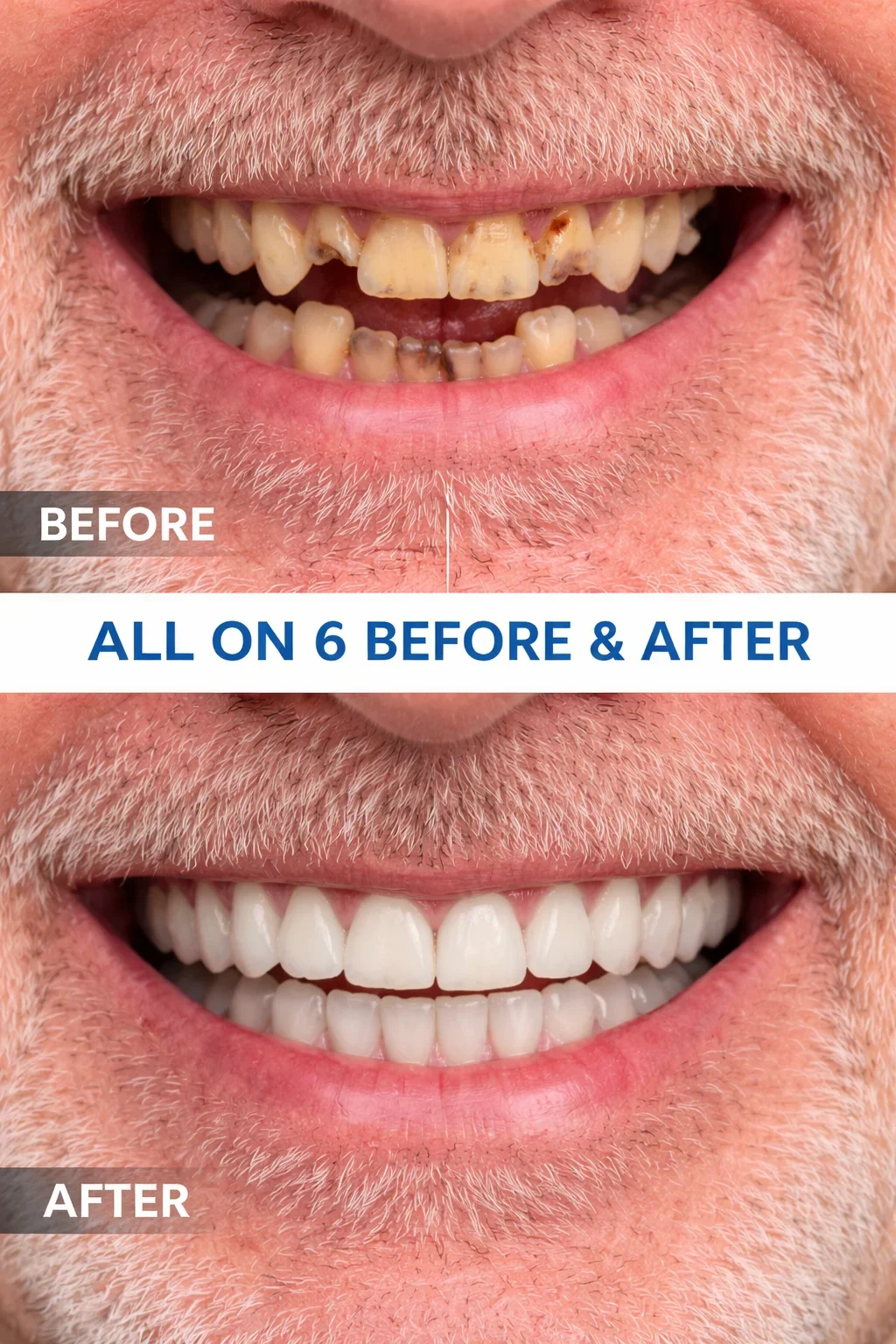
The term all on 6 before and after refers to the complete transformation achieved by placing six strategically positioned dental implants in the upper or lower jaw to support a fixed full-arch prosthesis. “Before” represents the stage where patients may struggle with missing teeth, unstable dentures, bone loss, or chronic discomfort. “After” represents a stable, functional, and aesthetically natural smile supported by modern implant technology. This transformation is not just cosmetic — it is structural and functional as well. 😊
In the all on 6 before and after process, the six implants are placed into the jawbone to act as artificial tooth roots. These implants integrate with the bone through a biological process called osseointegration. Once healed, they provide a solid foundation for a full arch of prosthetic teeth. Unlike removable dentures, this solution is fixed, meaning patients do not remove it daily. The difference between removable dentures and the stability seen in all on 6 before and after cases is dramatic.
Many patients who explore all on 6 before and after images notice improvements in facial structure. Missing teeth often lead to bone resorption, which causes the face to appear sunken or aged. After the procedure, the restored support improves lip fullness and jawline definition. The “after” results often show a rejuvenated, healthier appearance that goes beyond teeth alone.
Functionally, all on 6 before and after outcomes show a major difference in chewing efficiency. Before treatment, patients may avoid certain foods like steak, apples, or nuts due to instability or discomfort. After treatment, chewing strength improves significantly because the implants function similarly to natural tooth roots. Patients regain confidence in eating and speaking without fear of movement or slipping.
Another critical factor in understanding all on 6 before and after is oral health. Chronic infections, advanced decay, and periodontal disease are often present in the “before” stage. Removing compromised teeth and placing implants eliminates infection sources and creates a healthier oral environment. According to the American Dental Association, dental implants are a well-documented and reliable option for replacing missing teeth when properly planned and maintained.
From a psychological standpoint, the emotional impact of all on 6 before and after cannot be overstated. Many patients report feeling embarrassed to smile in photos before treatment. Social situations can become stressful. After completing the procedure, patients often describe renewed self-esteem and social comfort. A confident smile positively affects both personal and professional life. ✨
The consultation stage is essential in planning successful all on 6 before and after treatment. Advanced 3D imaging and digital planning allow dentists to evaluate bone density, nerve positioning, and sinus anatomy. This precise planning ensures that the implants are positioned for optimal strength and longevity. Proper diagnosis is the foundation of predictable all on 6 before and after results.
It is also important to understand that all on 6 before and after treatment is different from the All-on-4 technique. While both are full-arch implant solutions, All-on-6 uses six implants for additional support and load distribution. This can provide greater long-term stability, especially in patients with stronger bite forces or sufficient bone volume.
Patients considering all on 6 before and after treatment should also know that temporary fixed teeth are often placed on the same day as implant surgery. This means patients rarely leave the clinic without teeth. After a healing period of several months, the final prosthetic arch is attached, completing the full all on 6 before and after transformation.
If you are evaluating whether all on 6 before and after treatment is right for you, a personalized consultation is the best first step. Every jaw structure and medical history is unique. For professional evaluation and treatment planning, you can reach out through the Redent Klinik Contact Page.
In summary, all on 6 before and after represents a complete functional and aesthetic rehabilitation. The transformation involves improved chewing ability, restored facial support, enhanced speech, stronger confidence, and long-term oral stability. When performed by experienced implant specialists, all on 6 before and after results are predictable, durable, and life-changing. 🦷
Who Is a Good Candidate for All on 6 Before and After Treatment?
When evaluating all on 6 before and after treatment, one of the most common questions patients ask is: “Am I a suitable candidate?” Understanding candidacy is essential because the success of all on 6 before and after depends heavily on bone quality, general health, and long-term expectations. This full-arch dental implant solution is designed for patients who need comprehensive restoration, not just a single tooth replacement.
The transformation seen in all on 6 before and after cases is dramatic, but it begins with proper assessment. A thorough clinical examination, 3D CBCT imaging, and medical history review help determine whether a patient can safely undergo implant surgery and achieve long-term stability.
Patients with Multiple Missing Teeth
One of the primary groups who benefit from all on 6 before and after treatment includes individuals who have lost most or all of their teeth in one arch. Severe tooth loss can result from advanced decay, periodontal disease, trauma, or genetic conditions. In these situations, replacing teeth individually may not be practical. Instead, all on 6 before and after provides a fixed, full-arch solution supported by six implants.
Patients who currently wear removable dentures often notice instability, discomfort, and difficulty chewing. Comparing dentures with all on 6 before and after results shows a significant difference in bite strength and stability. Because the implants anchor directly into the jawbone, they prevent the slipping and movement that denture wearers frequently experience.
Individuals Experiencing Severe Bone Loss
Bone loss is common after long-term tooth absence. However, many patients are surprised to learn that they may still qualify for all on 6 before and after even with moderate bone resorption. The strategic placement of six implants distributes force evenly across the jaw. In some cases, minor bone grafting may be recommended before beginning all on 6 before and after treatment.
Advanced digital planning allows implant specialists to maximize available bone and avoid anatomical structures such as nerves and sinuses. This precision planning plays a critical role in achieving predictable all on 6 before and after outcomes.
When Bone Grafting Is Needed
If bone density is insufficient, preliminary procedures such as bone grafting or sinus lifting may be necessary. These preparatory treatments improve the foundation for implants and enhance the long-term success of all on 6 before and after. Not every patient requires grafting, but a proper evaluation ensures safety and durability.
Patients with Chronic Dental Problems
People suffering from recurring infections, failing bridges, or severely damaged teeth often find that all on 6 before and after offers a permanent solution. Instead of repeatedly repairing individual teeth, this comprehensive implant-supported prosthesis eliminates the root causes of instability and infection. By removing compromised teeth and placing implants, all on 6 before and after treatment creates a healthier oral environment.
According to guidelines from the American Dental Association, dental implants are considered a safe and effective method for replacing missing teeth when patients maintain good oral hygiene and follow professional care recommendations. This reinforces the reliability of all on 6 before and after as a long-term solution.
Patients in Good General Health
Successful all on 6 before and after treatment requires patients to be in stable overall health. Controlled diabetes, well-managed blood pressure, and non-smoking habits significantly improve healing and osseointegration. While smokers can sometimes undergo all on 6 before and after, they may face higher risks of implant failure due to reduced blood circulation in the gums.
During consultation, dentists carefully review medical conditions and medications. This ensures that all on 6 before and after surgery is performed safely and with predictable healing outcomes.
Patients Seeking a Permanent Fixed Solution
Motivation and expectations are equally important. Ideal candidates for all on 6 before and after are individuals who want a stable, non-removable alternative to dentures. Unlike removable appliances, this implant-supported full-arch restoration remains fixed in the mouth. Patients can eat, speak, and smile confidently without removing their teeth at night.
Many people researching all on 6 before and after are specifically searching for permanent smile rehabilitation rather than temporary solutions. The fixed prosthesis provides improved comfort and a natural feel compared to traditional dentures.
Psychological Readiness and Commitment
The journey to successful all on 6 before and after results requires commitment to oral hygiene and follow-up visits. Patients must be willing to maintain proper cleaning routines and attend regular dental check-ups. This ensures long-term stability and preserves the dramatic transformation seen in all on 6 before and after outcomes. 😊
Who May Not Be an Ideal Candidate?
Although all on 6 before and after is suitable for many individuals, certain conditions may require caution. Uncontrolled systemic diseases, active chemotherapy, severe bruxism without management, or extremely advanced bone loss without grafting options may limit eligibility. A comprehensive clinical evaluation is necessary before confirming candidacy.
If you are unsure whether all on 6 before and after treatment is appropriate for your situation, a professional consultation can clarify your options. Personalized assessment ensures that your treatment plan aligns with your anatomical structure and long-term goals.
For a detailed evaluation and expert guidance on all on 6 before and after, you can schedule a consultation through the Redent Klinik Contact Page. An experienced implant team will analyze your oral health, review your medical history, and design a customized treatment strategy tailored specifically to you.
Ultimately, the best candidates for all on 6 before and after are individuals seeking full-arch restoration, improved function, enhanced aesthetics, and long-term stability. With proper planning, medical assessment, and patient commitment, the life-changing transformation seen in all on 6 before and after cases becomes both achievable and sustainable. 🦷✨
The Step-by-Step Procedure: All on 6 Before and After Explained
Understanding the complete surgical and restorative journey is essential for anyone researching all on 6 before and after. Patients often see impressive transformation photos, but they may not fully understand the carefully planned clinical process that creates those results. The success of all on 6 before and after depends on accurate diagnosis, advanced surgical techniques, and precise prosthetic design. Each stage plays a critical role in delivering stable, long-lasting outcomes.
The all on 6 before and after procedure is not a single appointment solution. While many patients receive temporary teeth on the same day as surgery, the complete process includes consultation, planning, surgery, healing, and final restoration. Let’s break down each phase in detail so you know exactly what to expect.
Initial Consultation and Digital Planning
The first step in achieving successful all on 6 before and after results begins with a comprehensive clinical evaluation. During this stage, the dentist performs a full oral examination, reviews medical history, and takes digital X-rays and 3D CBCT scans. These scans allow the implant specialist to evaluate bone density, nerve positions, and sinus cavities.
Advanced digital planning software is used to map the exact position of the six implants. This technology ensures optimal load distribution and stability in the final all on 6 before and after outcome. Precision planning reduces surgical risks and increases long-term success rates.
Personalized Treatment Planning
No two all on 6 before and after cases are identical. Bone structure, bite alignment, and aesthetic goals vary between patients. A customized surgical guide is often created to ensure the implants are placed with maximum accuracy. This detailed preparation directly influences the quality of the final smile transformation. 😊
Tooth Extraction and Site Preparation
If damaged or failing teeth are present, they are carefully extracted before implant placement. Removing infected or unstable teeth is a critical step in preparing for all on 6 before and after. In some cases, minor bone grafting may be performed simultaneously to strengthen weak areas of the jaw.
This stage is designed to create a clean, healthy foundation for implant integration. Proper preparation significantly improves the predictability of all on 6 before and after healing and long-term durability.
Implant Placement Surgery
The core stage of the all on 6 before and after process is the placement of six titanium implants into the jawbone. These implants function as artificial tooth roots. They are strategically positioned to maximize contact with available bone and distribute chewing forces evenly.
The surgery is typically performed under local anesthesia, often combined with sedation for patient comfort. Modern implant techniques make the all on 6 before and after procedure minimally invasive compared to traditional full-mouth reconstruction methods.
Immediate Temporary Teeth
One of the most appealing aspects of all on 6 before and after treatment is the possibility of immediate loading. In many cases, a temporary fixed prosthesis is attached on the same day as implant surgery. This means patients do not leave the clinic without teeth.
While the temporary teeth are functional and aesthetic, they are designed to protect the implants during the healing phase. They play an important role in shaping the gums and guiding the final all on 6 before and after aesthetic result.
Healing and Osseointegration
After implant placement, the body begins a biological process called osseointegration. During this phase, the bone gradually fuses with the implant surface. This integration is what provides the long-term stability seen in all on 6 before and after cases.
The healing period typically lasts between three to six months. During this time, patients must follow dietary guidelines and maintain excellent oral hygiene to protect the developing implant foundation. According to the American Dental Association, proper post-operative care significantly improves implant success rates.
Final Prosthesis Placement
Once healing is complete, impressions are taken to fabricate the final fixed prosthesis. This permanent arch is custom-designed for optimal function, bite alignment, and natural aesthetics. The difference between the temporary phase and the completed all on 6 before and after result becomes clearly visible at this stage.
The final prosthetic teeth are typically made from durable materials such as zirconia or high-quality acrylic fused to a titanium framework. These materials provide strength, stain resistance, and a natural appearance. The completed all on 6 before and after transformation restores chewing ability, speech clarity, and smile symmetry. ✨
Final Adjustments and Bite Optimization
Minor adjustments are often made to ensure proper bite alignment and comfort. Balanced occlusion is essential for protecting the implants from excessive force. Fine-tuning these details guarantees that the long-term all on 6 before and after outcome remains stable and comfortable.
Long-Term Follow-Up and Maintenance
The final step in maintaining successful all on 6 before and after results is regular follow-up care. Professional cleanings and routine check-ups help monitor implant health and prosthesis integrity. Patients are instructed on specialized cleaning techniques to protect the implant-supported restoration.
For personalized evaluation and expert planning of your all on 6 before and after treatment, you can schedule a consultation through the Redent Klinik Contact Page. A professional implant team will guide you through every stage of the process.
In summary, the journey of all on 6 before and after involves careful planning, precise surgery, structured healing, and expertly crafted restoration. Each step contributes to the life-changing transformation patients see in before-and-after comparisons. When performed by experienced clinicians, all on 6 before and after provides a predictable, durable, and highly satisfying full-arch solution. 🦷
Real Patient Transformations: All on 6 Before and After Results
When people search for all on 6 before and after, they are usually looking for real-life transformations. Patients want to see what truly changes — not only in the smile but also in facial appearance, function, and overall confidence. The visual difference in all on 6 before and after cases is often dramatic, but the deeper transformation goes far beyond aesthetics.
Before treatment, many patients struggle with multiple missing teeth, advanced gum disease, failing bridges, or unstable dentures. After completing all on 6 before and after treatment, they regain a fixed, natural-looking smile supported by six strong implants. Let’s explore what really changes in these transformations.
Smile Aesthetics: From Gaps to a Full, Natural Look
One of the most obvious improvements in all on 6 before and after cases is the visible enhancement of the smile. Before treatment, patients may have visible gaps, broken teeth, discoloration, or collapsed bite alignment. These issues can make smiling uncomfortable and affect first impressions.
After all on 6 before and after treatment, the new full-arch prosthesis is custom-designed to match facial proportions, lip support, and natural tooth shape. Modern materials such as zirconia provide lifelike translucency and strength. The final smile looks balanced, symmetrical, and youthful. 😊
Improved Facial Support
In many all on 6 before and after transformations, patients notice improved facial volume. Tooth loss leads to bone resorption, which can cause sunken cheeks and thin lips. By restoring structural support with implants, all on 6 before and after treatment enhances facial contours and reduces the aged appearance often caused by missing teeth.
Functional Improvements in Daily Life
The difference between dentures and all on 6 before and after results is particularly noticeable when it comes to function. Before treatment, patients may avoid certain foods due to discomfort or instability. Hard or chewy foods can become nearly impossible to eat.
After all on 6 before and after, chewing strength significantly improves because the implants act like natural tooth roots. Bite force is distributed evenly across the six implants, allowing patients to enjoy a wider variety of foods. This functional improvement greatly enhances quality of life.
Speech clarity is another major difference seen in all on 6 before and after cases. Loose dentures can shift while speaking, causing pronunciation difficulties. With a fixed implant-supported prosthesis, speech becomes more natural and stable.
Psychological and Emotional Benefits
The emotional impact of all on 6 before and after is often just as significant as the physical transformation. Many patients report avoiding photos, social gatherings, or professional opportunities because they felt self-conscious about their teeth.
After completing all on 6 before and after treatment, patients frequently describe a renewed sense of confidence. Smiling becomes effortless. Social interactions feel more comfortable. The transformation often extends into personal relationships and career growth. ✨
Confidence in Social Situations
One of the most rewarding aspects of all on 6 before and after is the psychological relief patients experience. The fear of dentures slipping or teeth breaking disappears. Knowing the prosthesis is securely fixed provides daily peace of mind.
Oral Health Improvements
In many all on 6 before and after cases, patients begin treatment with chronic infections or advanced periodontal disease. Removing compromised teeth and placing implants eliminates infection sources and stabilizes oral health.
According to the American Dental Association, dental implants are a reliable solution for tooth replacement when properly maintained. This reinforces the long-term stability observed in successful all on 6 before and after transformations.
Before and After Timeline Comparison
The “before” stage of all on 6 before and after often includes discomfort, limited chewing ability, and low self-esteem. The “after” stage reflects stability, comfort, and improved oral function. While the healing process takes several months, the visible transformation begins immediately after surgery when temporary fixed teeth are placed.
Over time, as osseointegration completes and the final prosthesis is attached, the full all on 6 before and after result becomes permanent. Patients typically report that the final outcome exceeds their expectations.
Longevity of Results
Another key factor in all on 6 before and after transformations is durability. With proper care and regular dental visits, implant-supported full-arch restorations can last many years. The titanium implants fuse with the jawbone, creating a stable foundation that resists movement.
Routine maintenance is essential to protect the long-term success of all on 6 before and after. Professional cleanings and home hygiene practices help maintain healthy gums and preserve implant stability.
Seeing Is Believing
Photographic comparisons of all on 6 before and after cases clearly show the dramatic difference in smile alignment, tooth color, and facial symmetry. However, the true transformation is experienced daily through improved function and confidence.
If you would like to learn how your own all on 6 before and after journey could look, a professional consultation is the best next step. You can request personalized evaluation through the Redent Klinik Contact Page. An experienced implant team will assess your oral health and design a treatment plan tailored to your needs.
In conclusion, all on 6 before and after transformations demonstrate far more than cosmetic improvement. They represent restored health, renewed confidence, enhanced function, and long-term stability. For patients seeking a complete smile rehabilitation, the difference seen in all on 6 before and after cases can truly be life-changing. 🦷
Healing Timeline: All on 6 Before and After Recovery Stages
Understanding the recovery journey is essential for anyone considering all on 6 before and after treatment. While the transformation in all on 6 before and after cases can look immediate in photos, the biological healing process plays a crucial role in achieving stable and long-lasting results. Knowing what happens at each stage helps patients feel confident and prepared.
The healing timeline for all on 6 before and after varies slightly depending on individual health, bone quality, and whether additional procedures such as bone grafting were required. However, most patients follow a predictable pattern from surgery day to final restoration.
First 24–72 Hours After Surgery
The initial stage of all on 6 before and after recovery begins immediately after implant placement. Mild to moderate swelling, minor bleeding, and discomfort are normal responses. These symptoms are usually manageable with prescribed medication and cold compresses.
During this early period, patients are typically fitted with a temporary fixed prosthesis. This is one of the most appealing aspects of all on 6 before and after treatment — you do not leave the clinic without teeth. However, the temporary teeth are designed to protect the implants while the bone begins to heal.
Dietary Adjustments in the First Week
Soft foods are strongly recommended during the first week of all on 6 before and after recovery. Smooth soups, yogurt, mashed vegetables, and soft proteins reduce pressure on the implants. Avoiding hard or chewy foods is critical to protect the healing sites.
Weeks 1–4: Early Healing Phase
During the first month of all on 6 before and after healing, swelling gradually decreases and gum tissues begin stabilizing. Sutures, if placed, are usually removed within 7–14 days. Patients often report improved comfort compared to the first few days after surgery.
At this stage, it is essential to maintain excellent oral hygiene. Gentle brushing and prescribed antimicrobial rinses support healthy healing. Following professional guidelines significantly improves the success rate of all on 6 before and after.
According to the American Dental Association, maintaining oral hygiene around implants is vital to prevent peri-implant inflammation and ensure long-term stability. This applies directly to patients undergoing all on 6 before and after treatment.
Months 2–4: Osseointegration in Progress
The most important biological phase in all on 6 before and after recovery is osseointegration. During this period, the jawbone gradually fuses with the titanium implants. This fusion creates the solid foundation that defines successful all on 6 before and after results.
Although patients may feel comfortable during this time, it is still important to avoid excessive bite pressure. The implants are integrating beneath the surface, even if discomfort has disappeared. Regular follow-up appointments allow the dentist to monitor healing progress.
Why Patience Matters
Many patients feel excited about the visible transformation in all on 6 before and after immediately after surgery. However, true stability depends on full bone integration. Rushing the process could compromise the final outcome. Patience during this stage ensures stronger long-term results.
Month 4–6: Final Prosthesis Placement
Once osseointegration is complete, the final stage of all on 6 before and after begins. The temporary prosthesis is replaced with a custom-designed permanent restoration. This final prosthesis is crafted from durable materials such as zirconia, providing superior aesthetics and strength.
The difference between the temporary and permanent restoration becomes clearly visible in the completed all on 6 before and after transformation. Bite alignment is fine-tuned, and aesthetics are perfected for symmetry and natural appearance. ✨
Long-Term Healing and Adaptation
Even after the final prosthesis is placed, minor adaptation continues. Muscles, bite patterns, and speech adjust to the new fixed structure. Within weeks, most patients report that their all on 6 before and after restoration feels completely natural.
Routine dental visits remain essential. Professional cleaning and monitoring protect the long-term success of all on 6 before and after. Implant-supported restorations are highly durable, but they still require maintenance.
Managing Discomfort and Expectations
One of the most common concerns about all on 6 before and after recovery is pain. Fortunately, most patients describe discomfort as manageable and temporary. Compared to traditional full-mouth reconstruction, modern implant surgery techniques make all on 6 before and after recovery smoother and more predictable.
Swelling typically peaks within 48 hours and gradually subsides. Bruising, if present, resolves within one to two weeks. Following post-operative instructions closely helps accelerate healing.
Signs of Healthy Recovery
Successful all on 6 before and after healing includes reduced swelling, stable temporary teeth, healthy gum appearance, and absence of persistent pain. If unusual symptoms occur, immediate communication with your dental provider is important.
If you would like personalized guidance about your all on 6 before and after recovery expectations, you can contact the professional team through the Redent Klinik Contact Page. A tailored treatment plan ensures that your healing process remains smooth and predictable.
In summary, the healing timeline of all on 6 before and after includes immediate post-surgical care, progressive bone integration, and final restoration placement. Each phase contributes to the durability and stability of the final result. With proper care, patience, and professional monitoring, all on 6 before and after recovery leads to a confident, functional, and long-lasting smile. 🦷
All on 6 Before and After vs. Traditional Dental Implants
Patients researching all on 6 before and after often compare this full-arch solution with traditional dental implants. While both treatments use titanium implants to replace missing teeth, the structure, timeline, cost, and overall transformation can differ significantly. Understanding these differences helps patients choose the most suitable option for their needs.
The transformation seen in all on 6 before and after cases is typically focused on full-mouth rehabilitation, whereas traditional implants are often used to replace single teeth or small gaps. Let’s explore the key differences in detail.
Number of Implants and Structural Design
In all on 6 before and after treatment, six implants are strategically placed in the jaw to support a full arch of prosthetic teeth. These implants work together to distribute bite forces evenly across the jawbone. This design makes all on 6 before and after particularly suitable for patients who have lost most or all teeth in one arch.
Traditional dental implants, on the other hand, typically involve placing one implant per missing tooth. If a patient is missing ten teeth, ten implants may be required. This increases surgical complexity, cost, and healing time compared to all on 6 before and after.
Load Distribution Advantage
The strategic positioning in all on 6 before and after allows angled posterior implants to maximize bone contact. This reduces the need for bone grafting in many cases and provides strong support for a full arch prosthesis.
Treatment Time and Efficiency
One of the biggest differences between all on 6 before and after and traditional implants is efficiency. In many all on 6 before and after cases, patients receive temporary fixed teeth on the same day as surgery. This immediate loading option means patients do not have to wait months without teeth.
With traditional implants, each implant may require individual healing before a crown is attached. When multiple implants are placed, the overall process can extend over several months or even longer. The streamlined approach of all on 6 before and after often makes it more appealing for full-mouth rehabilitation.
Cost Comparison
Cost is another important factor when comparing all on 6 before and after to traditional implants. Because traditional treatment may require one implant per missing tooth, total expenses can increase significantly.
In the United States, a single dental implant can range between $3,000 and $5,000 per tooth, depending on complexity. Replacing an entire arch individually could exceed $30,000–$50,000. In contrast, full-arch all on 6 before and after treatment may range between $20,000 and $35,000 per arch in the U.S., depending on materials and clinical factors.
Internationally, including dental tourism destinations, all on 6 before and after treatment may range between $8,000 and $15,000 per arch, offering significant cost advantages while maintaining high-quality standards. However, patients should always ensure the clinic follows internationally recognized protocols, such as those supported by the American Dental Association.
Bone Preservation and Long-Term Stability
Both traditional implants and all on 6 before and after help preserve jawbone by stimulating bone tissue. However, because all on 6 before and after replaces an entire arch, it provides comprehensive structural support. This can help prevent progressive bone loss that may continue with removable dentures.
Traditional implants are ideal when only a few teeth are missing and surrounding teeth are healthy. But when most teeth are compromised, all on 6 before and after offers a more unified and stable solution.
Maintenance Differences
Maintaining all on 6 before and after involves cleaning under a fixed bridge and attending regular professional check-ups. Traditional implants require care around each individual crown. Both options demand excellent oral hygiene for long-term success.
Aesthetic and Functional Outcomes
The aesthetic transformation in all on 6 before and after cases is often more dramatic because the entire smile is redesigned. Tooth shape, alignment, color, and facial support are customized together for harmony.
With traditional implants, improvements occur tooth by tooth. While this can look natural, it may not provide the same comprehensive facial rejuvenation achieved with all on 6 before and after.
Functionally, both treatments restore chewing ability. However, patients transitioning from complete tooth loss often experience a more life-changing difference with all on 6 before and after because the entire bite system is stabilized at once. 😊
Who Should Choose Which Option?
Patients missing only one or two teeth may benefit more from traditional implants. However, individuals with extensive tooth loss, failing restorations, or advanced periodontal disease are typically better candidates for all on 6 before and after.
A comprehensive evaluation helps determine the most suitable approach. Factors such as bone density, medical history, bite force, and long-term goals all influence the decision between all on 6 before and after and traditional implant treatment.
If you are unsure which option aligns with your needs, you can request a professional assessment through the Redent Klinik Contact Page. A personalized consultation will clarify whether all on 6 before and after or conventional implants are more appropriate for your situation.
In summary, while traditional implants are excellent for single-tooth replacement, all on 6 before and after stands out as a comprehensive full-arch solution. It offers efficiency, structural stability, cost advantages for extensive tooth loss, and a dramatic aesthetic transformation. Understanding these distinctions empowers patients to make confident, informed decisions about their smile restoration journey. 🦷✨
Benefits You’ll Notice in All on 6 Before and After Photos
When patients search online for all on 6 before and after, they are usually drawn to transformation photos. These visual comparisons clearly show dramatic improvements, but the real value lies in understanding what those changes actually represent. All on 6 before and after photos capture more than a cosmetic upgrade — they reflect structural restoration, improved oral health, and renewed confidence.
By carefully examining all on 6 before and after images, patients can identify consistent improvements in smile symmetry, facial support, gum health, and overall appearance. Let’s explore the key benefits you’ll notice when comparing all on 6 before and after results.
Full-Arch Smile Restoration
The most obvious difference in all on 6 before and after photos is the transition from missing or damaged teeth to a complete, uniform smile. Before treatment, patients may have visible gaps, severe discoloration, worn enamel, or broken restorations. These issues create uneven smile lines and aesthetic imbalance.
After all on 6 before and after treatment, the full arch is restored with carefully designed prosthetic teeth. The new teeth are shaped and positioned to complement facial proportions. This creates a natural, symmetrical appearance that enhances overall facial harmony. 😊
Balanced Tooth Proportions
In successful all on 6 before and after outcomes, tooth size and alignment are customized to avoid the “artificial” look that patients fear. Proper digital planning ensures that the prosthesis matches lip curvature and bite alignment, resulting in a realistic, healthy smile.
Improved Gum Line and Soft Tissue Appearance
Another visible improvement in all on 6 before and after photos is healthier-looking gum tissue. Before treatment, patients may suffer from inflamed, receding, or infected gums due to advanced periodontal disease. These conditions can cause discomfort and aesthetic concerns.
During all on 6 before and after treatment, compromised teeth are removed and infection sources are eliminated. The prosthesis is designed to support the gums naturally, creating a smooth and balanced gum line. Healthy soft tissue framing makes the final smile look more natural and stable.
Enhanced Facial Support and Youthful Appearance
One of the most powerful benefits seen in all on 6 before and after transformations is improved facial structure. Tooth loss often leads to bone resorption, which can cause sunken cheeks and thin lips. This creates an aged or tired appearance.
By restoring structural support with implants, all on 6 before and after helps maintain jawbone stimulation and facial volume. Many patients notice fuller lips and improved jawline definition. This rejuvenation effect is often visible immediately in comparison photos. ✨
Prevention of Further Bone Loss
The implants used in all on 6 before and after act like natural tooth roots, stimulating the jawbone and helping prevent additional bone deterioration. This structural support contributes to long-term facial stability, something removable dentures cannot provide.
Improved Bite Alignment and Function
Beyond appearance, all on 6 before and after photos often reveal improvements in bite alignment. Before treatment, patients may have collapsed bites due to missing teeth. This misalignment can lead to jaw discomfort and uneven wear.
After all on 6 before and after, the bite is carefully calibrated to distribute pressure evenly across six implants. This balanced occlusion protects both the prosthesis and the jaw joint. The improved function may not be visible in photos, but it plays a major role in long-term success.
Confidence and Emotional Transformation
While clinical improvements are important, the emotional difference in all on 6 before and after cases is equally powerful. Before treatment, patients often smile with closed lips or avoid smiling entirely. In after photos, open, confident smiles become common.
The renewed confidence seen in all on 6 before and after transformations can positively impact social interactions and professional opportunities. Patients frequently describe feeling more comfortable in conversations and photographs.
Consistency and Durability of Results
Unlike temporary cosmetic solutions, all on 6 before and after results are designed for durability. The titanium implants fuse with the jawbone through osseointegration, providing a stable base for the full-arch prosthesis.
According to the American Dental Association, dental implants are considered a predictable and long-lasting treatment option when properly maintained. This supports the reliability observed in long-term all on 6 before and after cases.
Long-Term Maintenance Benefits
With regular dental visits and proper home care, all on 6 before and after results can last many years. Professional monitoring ensures gum health remains stable and the prosthesis continues to function effectively.
Comprehensive Transformation Compared to Dentures
When comparing denture wearers to all on 6 before and after patients, the difference is striking. Dentures can appear bulky and may shift during speech or eating. In contrast, all on 6 before and after provides a fixed, natural-looking solution that remains securely in place.
This stability is often reflected in posture and facial expression in after photos. Patients appear more relaxed and self-assured.
If you would like to explore how your own all on 6 before and after transformation could look, you can schedule a professional consultation through the Redent Klinik Contact Page. A personalized assessment will help determine your candidacy and expected results.
In conclusion, all on 6 before and after photos reveal improvements in smile symmetry, gum health, facial support, bite alignment, and emotional confidence. These visible changes represent deeper functional and structural restoration. For patients seeking full-arch rehabilitation, the benefits observed in all on 6 before and after comparisons highlight the life-changing potential of this advanced implant solution. 🦷
Cost Breakdown of All on 6 Before and After Treatment
When patients research all on 6 before and after, one of the most important considerations is cost. While transformation photos show dramatic improvements, understanding the financial aspect of all on 6 before and after treatment is essential for making an informed decision. The total investment depends on several factors, including geographic location, materials used, clinical complexity, and whether additional procedures are required.
The price of all on 6 before and after treatment reflects not only the implants themselves but also the advanced planning, surgical expertise, prosthetic fabrication, and long-term stability provided by this full-arch solution. Let’s break down the cost components in detail.
Main Components of All on 6 Before and After Pricing
The total cost of all on 6 before and after typically includes:
- Comprehensive consultation and 3D imaging (CBCT scans)
- Six titanium dental implants
- Surgical placement procedure
- Temporary fixed prosthesis
- Final custom-designed permanent prosthesis
- Follow-up appointments and post-operative care
Each of these elements contributes to the final all on 6 before and after outcome. The materials used for the final prosthesis, such as zirconia or acrylic over titanium framework, significantly influence the overall cost.
Material Differences and Their Impact
Zirconia prostheses are highly durable and offer superior aesthetics. As a result, zirconia-based all on 6 before and after treatments generally cost more than acrylic alternatives. However, zirconia may provide better long-term resistance to staining and wear.
Average Cost in the United States
In the United States, all on 6 before and after treatment for a single arch typically ranges between $20,000 and $35,000 per arch. For patients requiring both upper and lower arches, the total cost may range between $40,000 and $70,000, depending on complexity and material choice.
This price range reflects surgical expertise, advanced technology, and laboratory craftsmanship. According to professional standards supported by the American Dental Association, implant procedures require careful planning and strict clinical protocols, which contribute to overall cost.
Cost in International Dental Clinics
Many patients compare domestic pricing with international options. In countries known for dental tourism, all on 6 before and after treatment may range between $8,000 and $15,000 per arch. This price often includes consultation, surgery, temporary prosthesis, final restoration, and follow-up care.
Lower operational costs in certain countries allow clinics to offer competitive pricing without compromising quality. However, patients should carefully evaluate clinic accreditation, surgeon experience, sterilization standards, and post-treatment support when considering international all on 6 before and after options. 😊
Additional Procedures That May Affect Cost
The total price of all on 6 before and after can increase if additional treatments are necessary. These may include:
- Bone grafting procedures
- Sinus lifting (for upper jaw cases)
- Extraction of remaining teeth
- Management of active infections
While not every patient requires these procedures, they can influence the overall all on 6 before and after investment. A thorough clinical evaluation determines whether additional preparation is necessary.
Why Bone Grafting Adds to Cost
If jawbone density is insufficient, bone grafting strengthens the implant foundation. This ensures stable all on 6 before and after results but may add to treatment time and expense.
Long-Term Value vs. Short-Term Expense
Although the upfront cost of all on 6 before and after may seem high, many patients find it more cost-effective in the long run compared to repeated dental repairs. Traditional dentures may require relining, adjustments, or replacement every few years. Individual crowns and bridges can also fail over time.
With proper care, all on 6 before and after implants can last many years, providing functional stability and aesthetic consistency. The durability of implant-supported prostheses reduces the need for frequent replacement.
Financing and Payment Options
Many clinics offer financing plans to make all on 6 before and after treatment more accessible. Monthly payment structures, third-party financing services, or staged payment plans can help patients manage the investment.
Before committing to all on 6 before and after, patients should request a detailed treatment proposal outlining all included services. Transparent pricing ensures there are no unexpected expenses during the process.
What Determines the Final Price?
The overall cost of all on 6 before and after depends on several variables:
- Surgeon’s experience and specialization
- Geographic location of the clinic
- Type of prosthetic material used
- Need for additional surgical procedures
- Complexity of the patient’s oral condition
Each case is unique, which is why personalized consultation is essential before estimating the final all on 6 before and after cost.
If you would like a customized cost evaluation for your all on 6 before and after treatment, you can request a consultation through the Redent Klinik Contact Page. A professional assessment will provide clarity on pricing, materials, and expected outcomes.
In summary, the cost of all on 6 before and after reflects advanced surgical planning, high-quality materials, and long-term durability. While initial investment may be significant, the functional, aesthetic, and psychological benefits often outweigh the expense. By understanding the pricing structure and evaluating all variables, patients can confidently plan their all on 6 before and after journey toward a stable and lasting smile. 🦷✨
Long-Term Care Tips After Your All on 6 Before and After Procedure
Completing your all on 6 before and after treatment is a major milestone, but maintaining those results requires consistent long-term care. While the transformation seen in all on 6 before and after cases is impressive, the durability and stability of the implants depend heavily on daily hygiene habits and regular professional monitoring. Proper maintenance ensures that your all on 6 before and after outcome remains healthy, functional, and aesthetically pleasing for many years.
Unlike removable dentures, all on 6 before and after restorations are fixed in place. This means patients must learn specific cleaning techniques designed for implant-supported full-arch prostheses. Let’s explore how to protect your investment and maintain long-term success.
Daily Oral Hygiene Routine
One of the most critical aspects of preserving all on 6 before and after results is maintaining excellent daily oral hygiene. Although implants cannot develop cavities like natural teeth, the surrounding gum tissue remains vulnerable to inflammation and infection.
Patients should brush at least twice daily using a soft-bristled toothbrush. Special implant-safe toothpaste is recommended to avoid abrasive damage to the prosthesis. Cleaning under the bridge is especially important in all on 6 before and after care because food particles can accumulate beneath the fixed arch.
Using Interdental Brushes and Water Flossers
To properly clean around implants in all on 6 before and after, interdental brushes and water flossers are highly recommended. These tools help remove plaque and debris from hard-to-reach areas under the prosthetic arch. Consistent use reduces the risk of peri-implant inflammation.
Regular Professional Check-Ups
Even with excellent home care, routine dental visits are essential after all on 6 before and after treatment. Most patients are advised to schedule professional cleanings every 4 to 6 months. During these appointments, the dentist evaluates implant stability, gum health, and bite alignment.
According to the American Dental Association, regular dental examinations are key to maintaining long-term oral health. This applies directly to preserving successful all on 6 before and after outcomes.
Prosthesis Maintenance and Adjustments
Over time, minor adjustments may be necessary to maintain optimal bite balance in all on 6 before and after. Periodic evaluation ensures that chewing forces remain evenly distributed across the six implants, preventing unnecessary stress.
Protecting Your Implants from Damage
Although all on 6 before and after restorations are designed for durability, certain habits can compromise long-term stability. Avoid chewing on extremely hard objects such as ice or hard candy. Patients who grind their teeth at night may require a custom night guard to protect their all on 6 before and after prosthesis.
Smoking is another risk factor that can negatively affect all on 6 before and after results. Nicotine reduces blood flow to the gums and increases the risk of implant complications. Reducing or eliminating smoking significantly improves long-term success rates.
Monitoring Gum Health
Healthy gum tissue is essential for stable all on 6 before and after outcomes. Signs of gum inflammation, such as redness, swelling, or bleeding, should not be ignored. Early intervention can prevent more serious implant-related complications.
Peri-implantitis, an inflammatory condition around implants, can compromise all on 6 before and after stability if left untreated. Maintaining a strict hygiene routine and attending regular check-ups reduces this risk considerably.
Dietary Considerations for Long-Term Success
While all on 6 before and after restores chewing strength, maintaining a balanced diet supports overall oral and systemic health. A diet rich in vitamins, minerals, and protein promotes gum health and bone stability.
Limiting excessive sugar intake also benefits all on 6 before and after maintenance. Although implants themselves do not decay, surrounding tissues can still suffer from plaque buildup if oral hygiene is neglected.
Longevity Expectations
With proper care, all on 6 before and after implants can last many years, often decades. The titanium implants fuse with the jawbone, creating a strong foundation. The prosthetic arch may require maintenance or replacement over time due to natural wear, but the underlying implants are designed for long-term stability.
Patients who commit to professional maintenance and daily hygiene routines often experience exceptional longevity in their all on 6 before and after results. 😊
Recognizing When to Seek Professional Help
Although complications are rare, patients should contact their dentist if they experience persistent discomfort, mobility of the prosthesis, or noticeable changes in bite. Early detection ensures that minor issues do not compromise the overall all on 6 before and after outcome.
If you have questions about maintaining your all on 6 before and after restoration, you can consult directly with experienced professionals through the Redent Klinik Contact Page. Personalized guidance ensures long-term stability and peace of mind.
In summary, protecting your all on 6 before and after investment requires daily cleaning, professional monitoring, healthy lifestyle choices, and proactive care. When patients commit to these long-term maintenance strategies, the functional and aesthetic transformation achieved through all on 6 before and after can remain strong, stable, and beautiful for many years to come. 🦷✨
Frequently Asked Questions About All on 6 Before and After
When patients research all on 6 before and after, they often have detailed and practical questions about the procedure, healing process, durability, and long-term expectations. While transformation photos show impressive results, understanding the clinical realities behind all on 6 before and after helps patients make confident decisions. Below, we answer the most common questions in a clear and comprehensive way.
Is the All on 6 Before and After Procedure Painful?
One of the most common concerns about all on 6 before and after treatment is pain. The procedure is typically performed under local anesthesia, often combined with sedation for additional comfort. During surgery, patients do not feel pain. Mild to moderate discomfort may occur in the days following implant placement, but this is generally manageable with prescribed medication.
Compared to traditional full-mouth reconstruction, all on 6 before and after is considered minimally invasive due to precise digital planning and modern surgical techniques. Most patients report that the recovery is easier than expected. 😊
How Long Do All on 6 Before and After Results Last?
The longevity of all on 6 before and after results depends on proper oral hygiene, regular dental visits, and overall health. The titanium implants themselves are designed to last many years, often decades, because they fuse with the jawbone through osseointegration.
The prosthetic arch may require maintenance or replacement after 10–15 years depending on wear and material choice. However, with good care, all on 6 before and after outcomes can provide long-term stability and function.
What Affects Longevity?
Factors influencing the durability of all on 6 before and after include smoking habits, oral hygiene consistency, medical conditions such as uncontrolled diabetes, and regular professional monitoring.
How Soon Will I See Results?
One of the most attractive aspects of all on 6 before and after is the immediate visual transformation. In many cases, temporary fixed teeth are placed on the same day as implant surgery. This means patients leave the clinic with a functional smile.
However, the final all on 6 before and after result is achieved after the healing phase, typically 3–6 months later, when the permanent prosthesis is attached. The immediate improvement in appearance is noticeable, but the complete transformation develops progressively.
Is All on 6 Before and After Better Than Dentures?
Many patients compare all on 6 before and after with traditional removable dentures. The primary difference lies in stability. Dentures rest on the gums and may shift during eating or speaking. In contrast, all on 6 before and after uses six implants anchored into the jawbone, providing a fixed, non-removable solution.
This stability improves chewing efficiency, speech clarity, and overall comfort. Additionally, implants help preserve jawbone density, which dentures cannot prevent. According to the American Dental Association, implant-supported restorations are a reliable solution for replacing missing teeth when properly maintained.
Who Is Not a Candidate for All on 6 Before and After?
While all on 6 before and after is suitable for many patients with significant tooth loss, certain conditions may require caution. Individuals with uncontrolled systemic diseases, active infections, or severe bone loss without grafting options may not qualify immediately.
A comprehensive evaluation is necessary before confirming eligibility for all on 6 before and after. Advanced imaging and medical review ensure safe and predictable outcomes.
Can Smokers Get All on 6 Before and After?
Smokers can sometimes undergo all on 6 before and after, but smoking increases the risk of implant failure due to reduced blood flow to gum tissues. Quitting or reducing smoking significantly improves healing success.
How Do I Maintain My All on 6 Before and After Results?
Maintaining all on 6 before and after results requires daily brushing, use of water flossers or interdental brushes, and routine professional cleanings. Although implants do not decay like natural teeth, the surrounding gums must remain healthy to prevent complications.
Regular follow-up appointments allow dentists to monitor the stability of all on 6 before and after and make minor adjustments if needed.
Is All on 6 Before and After Worth the Investment?
For patients suffering from extensive tooth loss, the life-changing transformation seen in all on 6 before and after often justifies the cost. Beyond aesthetics, the procedure restores function, confidence, and long-term oral stability.
When comparing repeated dental repairs, failing bridges, or unstable dentures, all on 6 before and after may provide better long-term value and durability.
Where Can I Get a Personalized Evaluation?
If you are considering all on 6 before and after treatment and would like a professional assessment, you can schedule a consultation through the Redent Klinik Contact Page. A personalized treatment plan ensures that your specific needs and goals are addressed carefully.
In conclusion, all on 6 before and after is a comprehensive full-arch solution that addresses both aesthetic and functional concerns. By understanding these frequently asked questions, patients gain clarity about what to expect from consultation to final restoration. With proper planning, professional care, and long-term maintenance, all on 6 before and after can deliver stable, predictable, and highly satisfying results. 🦷✨