
One of the most common questions patients ask before starting treatment is: how fast can dental implants be done? If you are missing one or more teeth, the idea of restoring your smile quickly is incredibly appealing. Modern dentistry has evolved significantly, and today, dental implants can sometimes be completed much faster than people expect. However, the true answer depends on several medical, biological, and procedural factors.
To fully understand how fast can dental implants be done, it is important to know that implant treatment is not just about placing a titanium post into the jawbone. It is a carefully planned medical procedure that involves bone integration, gum healing, and final prosthetic placement. While some patients may qualify for same-day implants, others may require a healing period of several months to ensure long-term success and stability.
In ideal conditions, how fast can dental implants be done may surprise you. In certain cases, an implant can be placed immediately after tooth extraction, and a temporary crown can be attached on the same day. This is often referred to as immediate loading. Patients leave the clinic with a functional and aesthetic tooth in just one appointment. However, this does not mean the implant has fully healed; the integration process continues beneath the surface for several weeks.
On average, when people ask how fast can dental implants be done, the realistic timeline ranges between 3 to 6 months for complete treatment. This includes the healing period known as osseointegration — the biological process where the implant fuses with the jawbone. According to clinical standards supported by the American Dental Association, allowing proper healing time significantly increases the long-term success rate of implants, which can exceed 95% in healthy individuals.
Another key factor in determining how fast can dental implants be done is bone quality. If the jawbone is dense and healthy, the implant may stabilize more quickly. If bone loss has occurred, additional procedures such as bone grafting may extend the timeline by several months. Patients who require sinus lifts or advanced regenerative treatments may experience a longer overall process.
Health conditions also play a major role in how fast can dental implants be done. For example, patients who smoke or have uncontrolled diabetes may heal more slowly. On the other hand, patients with good oral hygiene and strong immune systems often experience faster recovery times. This is why a comprehensive consultation and digital imaging assessment are essential before starting treatment.
Technology has also transformed how fast can dental implants be done. With 3D imaging, computer-guided surgery, and digital impressions, implant placement has become more precise and efficient. These advancements reduce surgical time, improve comfort, and minimize recovery complications. In some advanced clinics, digital workflows allow for same-day temporary restorations with remarkable accuracy.
Emotionally, patients often feel anxious about waiting months for a final result. When discussing how fast can dental implants be done, it is important to separate surgical placement time from total treatment time. The surgical procedure itself usually takes between 30 to 90 minutes per implant. The longer part is the biological healing phase, which cannot be rushed without risking implant stability.
If speed is your top priority, you should openly discuss your expectations with your dentist. A personalized treatment plan can clarify how fast can dental implants be done in your specific case. Clinics that specialize in immediate loading protocols may offer accelerated solutions if you meet the medical criteria.
Ultimately, the answer to how fast can dental implants be done depends on individual anatomy, overall health, and the chosen treatment technique. While some patients complete the visible part of treatment in just one day, full biological integration takes time. The goal is not only speed but long-term durability, comfort, and a natural-looking smile 😊.
If you would like a professional evaluation of your case and a personalized timeline, you can reach out directly through the Redent Klinik Contact Page. A detailed consultation will provide clarity on how fast can dental implants be done for you — safely and effectively.
1. What Determines How Fast Can Dental Implants Be Done?
When patients first ask how fast can dental implants be done, the answer is rarely the same for everyone. Dental implant treatment is highly individualized. The speed of the procedure depends on biological factors, technical planning, oral health status, and the complexity of the case. Understanding these elements helps set realistic expectations and ensures long-term success.
To properly answer how fast can dental implants be done, dentists evaluate bone density, gum condition, infection presence, systemic health, and even lifestyle habits. While some patients may qualify for immediate implant placement, others may require preparatory treatments before implants can safely be inserted.
Bone Quality and Density
The most critical factor in determining how fast can dental implants be done is the quality and quantity of the jawbone. Dental implants rely on a process called osseointegration, where the titanium implant fuses with the surrounding bone. If the bone is dense and strong, the implant can achieve primary stability quickly, allowing for faster healing and possibly immediate loading.
However, if bone loss has occurred due to gum disease, long-term tooth loss, or trauma, additional procedures such as bone grafting may be required. In these cases, the timeline for how fast can dental implants be done can extend by several months, as the graft must heal before implant placement is possible.
How Bone Loss Affects Timing
Patients who have been missing teeth for years often experience bone resorption. Without stimulation from a tooth root, the jawbone gradually shrinks. When evaluating how fast can dental implants be done in these situations, dentists may recommend grafting procedures that require 3–6 months of healing before proceeding.
Gum Health and Infection Control
Healthy gums are essential for implant success. If active periodontal disease or infection is present, treatment must be completed before implant surgery. This can influence how fast can dental implants be done because untreated infection increases the risk of implant failure.
Professional cleaning, antibiotic therapy, or minor surgical procedures may be required to stabilize gum tissue. Once inflammation is controlled, implant placement can proceed more safely and efficiently.
Overall Medical Condition
Systemic health plays a significant role in determining how fast can dental implants be done. Patients with controlled diabetes, autoimmune conditions, or cardiovascular issues may still be candidates for implants, but healing time can vary. Smoking is another major factor that can delay recovery and reduce osseointegration speed.
When discussing how fast can dental implants be done, dentists carefully review medical history. A strong immune response and good blood circulation support faster healing and increase the chances of same-day or early loading options.
Type of Implant Procedure
The chosen implant technique significantly affects how fast can dental implants be done. There are generally three main approaches:
- Immediate implant placement (same-day)
- Early placement (within weeks of extraction)
- Delayed placement (after full healing)
Immediate placement can dramatically shorten visible treatment time. However, it requires sufficient bone stability and absence of infection. If conditions are ideal, patients may receive a temporary crown the same day. In contrast, delayed placement involves waiting 8–12 weeks after extraction, which naturally extends the timeline.
Technology and Digital Planning
Advanced dental technology has improved how fast can dental implants be done. With 3D cone-beam CT scans, digital impressions, and computer-guided surgery, implant placement becomes more precise and efficient. Guided surgery reduces trauma to surrounding tissues, leading to quicker recovery times.
Digital workflows also allow laboratories to prepare temporary crowns in advance. This means that in suitable cases, patients can walk out with a fixed tooth on the same day as implant placement.
Number of Implants Needed
The total number of implants required also influences how fast can dental implants be done. A single implant case is generally quicker than full-mouth rehabilitation. Procedures like All-on-4 may allow full-arch restoration in one day, but healing still continues beneath the surface.
Even if the visible transformation happens quickly, complete biological integration typically takes 3–6 months. Therefore, when evaluating how fast can dental implants be done, it is important to distinguish between surgical time and total healing time.
Patient Compliance and Aftercare
Healing speed is also affected by patient behavior. Following post-operative instructions, maintaining excellent oral hygiene, avoiding smoking, and attending follow-up visits all contribute to successful and timely outcomes.
Patients who strictly follow care guidelines often experience smoother recovery, which can positively influence how fast can dental implants be done in their case.
In conclusion, there is no universal timeline for how fast can dental implants be done. Bone health, gum condition, systemic health, surgical technique, and technology all interact to determine the final schedule. While some patients complete the aesthetic phase in a single day, full integration always requires biological healing time. The goal is not just speed, but stability, durability, and long-term success 😊.
2. Same-Day Dental Implants: Is Immediate Placement Possible?
One of the most exciting advancements in modern implant dentistry is the possibility of same-day treatment. Many patients researching how fast can dental implants be done are specifically interested in whether they can walk into a clinic and leave with a new tooth in just one visit. The answer is: in selected cases, yes — but it depends on strict medical criteria and careful planning.
When discussing how fast can dental implants be done, same-day implants — also known as immediate implants or immediate loading — often come up as the fastest solution available. However, it is important to understand what “same-day” truly means in clinical terms. While the implant and a temporary crown can sometimes be placed within hours, the biological healing process still requires time beneath the surface.
What Are Same-Day Dental Implants?
Same-day dental implants involve placing the titanium implant immediately after tooth extraction and attaching a temporary restoration during the same appointment. For patients wondering how fast can dental implants be done, this approach significantly shortens the visible treatment timeline.
Traditionally, after extraction, patients had to wait several months before implant placement. Today, if there is no active infection and the bone structure is stable, immediate placement can eliminate that waiting period.
Immediate Implant vs. Immediate Loading
It is important not to confuse immediate implant placement with immediate loading. Immediate placement refers to inserting the implant on the same day as extraction. Immediate loading refers to attaching a temporary crown right away. When patients ask how fast can dental implants be done, they are often referring to immediate loading — the ability to leave with a functional tooth.
In many cases, a temporary crown is placed that avoids heavy biting pressure. This protects the implant while it integrates with the bone.
Who Is a Candidate for Same-Day Implants?
Not everyone qualifies for immediate treatment. To determine how fast can dental implants be done safely, dentists evaluate several factors:
- Sufficient bone density and volume
- No active gum infection
- Good overall health
- Non-smoker or light smoker
- Strong primary implant stability during surgery
Patients with strong jawbone support are ideal candidates. If bone is weak or insufficient, attempting to speed up the process may compromise long-term success.
The Procedure Step by Step
For patients eligible for accelerated treatment, here is how the process works when considering how fast can dental implants be done:
1. Digital Planning and 3D Imaging
Advanced cone-beam CT scans allow precise evaluation of bone structure. Digital planning ensures that the implant is placed at the optimal angle and depth.
2. Tooth Extraction (If Needed)
If a damaged tooth is present, it is gently removed while preserving surrounding bone.
3. Immediate Implant Placement
The implant is inserted directly into the extraction socket. Primary stability is crucial at this stage.
4. Temporary Crown Placement
If stability is strong enough, a temporary crown is attached. This is often designed to avoid heavy biting forces.
From a patient’s perspective, this approach dramatically changes expectations regarding how fast can dental implants be done. Instead of waiting months without a tooth, the smile can be restored immediately.
Healing Still Takes Time
Although the visible part of treatment is fast, osseointegration still requires approximately 3–4 months. During this time, the implant fuses with the bone. Patients must follow strict aftercare instructions to protect the healing process.
Even if someone receives same-day restoration, it does not mean the entire treatment is completed in one day. When evaluating how fast can dental implants be done, it is essential to separate aesthetic results from biological healing.
Benefits of Same-Day Implants
- Immediate aesthetic improvement 😊
- Reduced total treatment time
- Fewer surgical appointments
- Preservation of bone structure
- Improved patient confidence
For many individuals, the psychological benefit alone makes this approach attractive when researching how fast can dental implants be done.
Potential Risks and Considerations
While same-day implants are highly successful in properly selected cases, rushing treatment without meeting medical criteria can increase failure risk. Excessive biting pressure, infection, or insufficient bone can compromise integration.
This is why a thorough consultation is critical before determining how fast can dental implants be done in your specific situation.
In conclusion, same-day dental implants represent one of the fastest modern solutions for tooth replacement. However, they are not suitable for everyone. The true answer to how fast can dental implants be done depends on individual anatomy, health status, and careful surgical planning. When performed under ideal conditions, immediate placement offers both speed and long-term reliability — combining modern technology with predictable clinical outcomes.
3. Traditional Implant Timeline: Step-by-Step Healing Process
While many patients are interested in accelerated solutions, the traditional approach remains the gold standard for long-term success. When asking how fast can dental implants be done, it is important to understand the classic multi-stage timeline that dentists have followed for decades. This structured method prioritizes healing, bone integration, and stability over speed.
The traditional process answers the question how fast can dental implants be done with a realistic timeframe of approximately 3 to 6 months, depending on individual healing capacity. Although this may seem long compared to same-day procedures, it offers highly predictable and durable results.
Stage 1: Initial Consultation and Diagnostic Planning
The first step in determining how fast can dental implants be done begins with a comprehensive consultation. During this visit, the dentist evaluates oral health, takes digital X-rays or 3D scans, and assesses bone quality. This planning stage ensures that implant placement will be both safe and effective.
If gum disease or infection is detected, treatment must be completed before moving forward. Addressing these issues early prevents complications that could delay how fast dental implants can be done successfully.
Stage 2: Tooth Extraction (If Necessary)
If a damaged or failing tooth is still present, it must be removed carefully. In the traditional timeline, dentists often allow the extraction site to heal for 6–10 weeks before placing the implant. This healing period reduces inflammation and prepares the bone for stable placement.
For patients evaluating how fast can dental implants be done, this waiting period is often the first major time component. However, proper healing at this stage significantly improves long-term outcomes.
Stage 3: Implant Placement Surgery
Once the site is ready, the titanium implant is surgically inserted into the jawbone. The procedure itself usually takes 30–90 minutes per implant under local anesthesia. From a surgical perspective, the answer to how fast can dental implants be done may seem quick — but the real timeline begins after placement.
Primary Stability and Healing Cap
After insertion, a healing cap may be placed over the implant. The gum tissue is either sutured over the implant (submerged healing) or allowed to heal around the healing abutment (non-submerged healing). Both methods are designed to protect the implant during osseointegration.
Stage 4: Osseointegration (3–4 Months)
This is the most critical phase when discussing how fast can dental implants be done. Osseointegration is the biological process where bone cells attach to the implant surface, creating a stable foundation similar to a natural tooth root.
Typically, this process takes 8–16 weeks in the lower jaw and slightly longer in the upper jaw due to softer bone density. During this time, patients may wear a temporary removable prosthesis if needed.
Although patients may wish to shorten this phase, rushing osseointegration can increase the risk of implant failure. Therefore, when evaluating how fast can dental implants be done, biological healing time must be respected.
Stage 5: Abutment Placement
After successful integration is confirmed through clinical evaluation and imaging, the next step is placing the abutment. This small connector piece links the implant to the final crown. In some cases, this step requires a minor second procedure to expose the implant.
This phase adds a few additional weeks to how fast can dental implants be done, as gum tissue needs time to heal properly around the abutment.
Stage 6: Final Crown Placement
The last step involves attaching the custom-made dental crown. Impressions or digital scans are taken to ensure precise fit, color matching, and bite alignment. Once the crown is secured, the treatment is officially complete.
At this point, patients fully understand how fast can dental implants be done under traditional protocols — typically several months from start to finish.
Why the Traditional Timeline Is Still Highly Recommended
Although modern techniques can shorten visible treatment time, the traditional method offers outstanding reliability. Success rates exceed 95% when proper healing protocols are followed. For patients with complex medical histories or moderate bone loss, this structured approach often provides the safest path.
- Higher predictability
- Reduced mechanical stress during healing
- Strong long-term stability
- Lower risk of early implant failure
Patients who prioritize durability over speed often choose this method after learning how fast can dental implants be done safely within biological limits.
Balancing Speed and Safety
Ultimately, the traditional implant timeline demonstrates that while technology has advanced, the human body still requires time to heal. When asking how fast can dental implants be done, the most responsible answer balances efficiency with long-term health.
In conclusion, the traditional step-by-step healing process may take several months, but it remains one of the most reliable and widely practiced approaches in implant dentistry. Understanding each phase helps patients make informed decisions about their treatment journey 😊.
4. How Fast Can Dental Implants Be Done After Tooth Extraction?
One of the most common clinical scenarios patients face is needing a tooth extraction before implant placement. Naturally, the next question becomes: how fast can dental implants be done after a tooth has been removed? The timeline varies depending on bone condition, infection presence, and healing capacity. Understanding the different approaches available after extraction helps patients make confident, informed decisions.
When evaluating how fast can dental implants be done following extraction, dentists typically consider three main timing strategies: immediate placement, early placement, and delayed placement. Each option has specific medical indications and advantages.
Immediate Implant Placement (Same-Day Extraction and Implant)
In ideal conditions, the fastest answer to how fast can dental implants be done is immediate placement on the same day as extraction. This approach eliminates the waiting period between removal and implant surgery.
When Immediate Placement Is Possible
Immediate implants are suitable when:
- There is no active infection in the socket
- The surrounding bone walls are intact
- Sufficient bone density provides primary stability
- The patient has good overall health
When these conditions are met, the implant is inserted directly into the fresh extraction socket. In some cases, a temporary crown can be attached the same day. For patients focused on how fast can dental implants be done, this method offers the shortest visible treatment timeline.
However, even with same-day placement, osseointegration still requires approximately 3–4 months. The visible tooth may appear immediately, but the biological healing process continues underneath.
Early Implant Placement (4–8 Weeks After Extraction)
If mild infection or minor bone damage is present, dentists may recommend early placement. This involves allowing soft tissue to heal for several weeks before inserting the implant.
For patients wondering how fast can dental implants be done in these cases, the timeline is slightly extended but still relatively efficient. Early placement reduces the risk of infection-related complications and improves implant stability.
This method is often ideal when inflammation needs to subside but significant bone loss has not yet occurred.
Delayed Implant Placement (3–6 Months After Extraction)
In more complex cases — especially when severe infection, bone loss, or trauma is involved — delayed placement may be necessary. Here, the extraction site is allowed to fully heal before implant surgery.
Why Delayed Placement May Be Safer
Although this approach increases the timeline for how fast can dental implants be done, it significantly improves long-term success rates in compromised cases. The bone regenerates naturally during healing, providing a stronger foundation for the implant.
In situations where bone resorption occurs after extraction, a bone graft may be required. This can extend the overall process by several additional months.
Does Bone Grafting Affect Timing?
Yes, bone grafting plays a major role in determining how fast can dental implants be done after extraction. If bone preservation techniques are applied immediately during extraction, implant placement may still proceed within a few months.
If major grafting is necessary, healing can take 3–6 months before implant placement becomes possible. While this may seem lengthy, it ensures the implant has adequate support for decades of function.
Upper Jaw vs. Lower Jaw Healing Speed
Another factor influencing how fast can dental implants be done after extraction is the location of the missing tooth. The lower jaw (mandible) typically has denser bone and faster healing compared to the upper jaw (maxilla), which has softer bone.
This difference may slightly affect integration time, though modern implant surfaces are designed to enhance faster bonding in both areas.
Patient Health and Lifestyle Considerations
Systemic conditions such as diabetes, immune disorders, and smoking habits can delay healing after extraction. These factors directly influence how fast can dental implants be done safely.
Patients who follow post-extraction instructions carefully — including maintaining oral hygiene and avoiding pressure on the area — often experience smoother transitions to implant placement.
Realistic Expectations
While many patients hope for immediate solutions, it is important to balance speed with long-term stability. The safest and most predictable outcome depends on proper healing time.
In summary, the answer to how fast can dental implants be done after tooth extraction ranges from same-day placement to several months, depending on individual conditions. Immediate placement offers the fastest aesthetic result, while early or delayed approaches prioritize safety and integration strength.
Ultimately, the right timing ensures not just a quick transformation, but a durable and healthy smile that lasts for many years 😊.
5. Factors That Can Speed Up or Delay Dental Implant Treatment
When patients ask how fast can dental implants be done, the most honest answer is that treatment speed depends on multiple influencing factors. While modern dentistry offers accelerated techniques, certain biological and lifestyle elements can either shorten or extend the timeline. Understanding these variables helps set realistic expectations and ensures safe, predictable outcomes.
Determining how fast can dental implants be done is not simply about scheduling surgery. It involves evaluating bone condition, gum health, systemic health, habits, and even the technology used during treatment. Each factor plays a measurable role in how efficiently the implant integrates with the jawbone.
Bone Quality and Volume
The single most important determinant of how fast can dental implants be done is bone density. Strong, thick bone allows the implant to achieve primary stability immediately after placement. High primary stability increases the likelihood of immediate or early loading protocols.
Dense Bone vs. Soft Bone
The lower jaw generally contains denser bone than the upper jaw. Patients with dense mandibular bone often experience faster integration times. In contrast, softer maxillary bone may require longer healing periods before final crown placement.
If bone volume is insufficient due to long-term tooth loss, grafting procedures may be required, extending how fast dental implants can be done by several months.
Gum Health and Oral Hygiene
Healthy gum tissue supports stable healing. If periodontal disease is present, treatment must be completed before implants are placed. Inflammation or infection can delay osseointegration and negatively affect how fast can dental implants be done.
Patients who maintain excellent oral hygiene before and after surgery often heal more quickly. Brushing, flossing, and professional cleanings directly influence recovery speed.
Smoking and Lifestyle Habits
Smoking is one of the most significant factors that can delay how fast can dental implants be done successfully. Nicotine restricts blood flow, reduces oxygen supply to tissues, and slows bone healing. Smokers may experience prolonged integration times or increased complication risks.
Reducing or quitting smoking before implant treatment can dramatically improve healing speed and long-term outcomes.
Systemic Health Conditions
Medical conditions such as uncontrolled diabetes, autoimmune disorders, or osteoporosis may slow healing. When evaluating how fast can dental implants be done, dentists carefully review a patient’s medical history to ensure safe timing.
Controlled vs. Uncontrolled Conditions
Patients with well-managed diabetes often heal at near-normal rates. However, uncontrolled blood sugar levels can impair bone regeneration and delay integration.
Maintaining stable health conditions significantly improves how fast dental implants can be done without complications.
Type of Implant Technique Used
The surgical method chosen also influences how fast can dental implants be done. Immediate placement and immediate loading techniques shorten visible treatment time. Traditional staged approaches extend the timeline but may be safer in complex cases.
Additionally, advanced implant surface technologies are designed to promote faster osseointegration by enhancing bone cell attachment.
Digital Technology and Guided Surgery
Modern digital tools play a major role in accelerating treatment. 3D imaging, computer-guided surgery, and CAD/CAM crown fabrication reduce surgical trauma and improve precision.
With these advancements, patients often experience less swelling and faster recovery, positively impacting how fast can dental implants be done.
Number of Implants Required
A single-tooth implant typically requires less surgical time and recovery compared to full-mouth rehabilitation. When multiple implants are placed simultaneously, healing may take slightly longer due to the increased surgical scope.
However, techniques such as full-arch immediate loading can still provide rapid aesthetic results, even if integration continues for several months.
Patient Compliance and Aftercare
One often overlooked factor influencing how fast can dental implants be done is patient behavior after surgery. Following post-operative instructions is critical.
- Avoiding hard foods during early healing
- Taking prescribed medications correctly
- Maintaining proper oral hygiene
- Attending scheduled follow-up visits
Patients who strictly follow aftercare recommendations often experience smoother healing and reduced complication risks.
Age and Healing Capacity
While age alone does not prevent implant success, younger patients generally have faster regenerative capacity. That said, many older adults successfully complete implant treatment without delays.
Overall health matters more than age when determining how fast can dental implants be done.
Balancing Speed and Safety
Although many patients hope to complete treatment as quickly as possible, accelerating the process without proper conditions can compromise success. The safest answer to how fast can dental implants be done balances biological healing with modern efficiency.
In conclusion, bone density, gum health, systemic conditions, lifestyle habits, surgical technique, and patient compliance all influence the timeline. While some cases allow rapid solutions, others require patience to ensure durability and long-term stability 😊.
6. Bone Grafting and Its Impact on Implant Timing
For many patients researching how fast can dental implants be done, bone grafting becomes a crucial part of the discussion. While dental implants are one of the most reliable tooth replacement solutions available today, they require a strong and stable jawbone foundation. If bone volume is insufficient, grafting procedures may be necessary before implant placement can safely occur.
Understanding the relationship between bone grafting and how fast can dental implants be done helps patients prepare for realistic treatment timelines. Although grafting can extend the overall process, it significantly improves long-term implant stability and success rates.
Why Bone Loss Happens
Bone loss commonly occurs after tooth extraction or long-term tooth absence. When a tooth root is no longer present, the jawbone no longer receives stimulation from chewing forces. As a result, the body gradually resorbs the unused bone tissue.
When evaluating how fast can dental implants be done, dentists must first determine whether enough bone exists to securely anchor the implant. Without adequate bone support, the implant cannot achieve primary stability.
What Is Bone Grafting?
Bone grafting is a surgical procedure that adds bone material to areas where volume is insufficient. The graft may be sourced from:
- The patient’s own bone (autograft)
- Donor bone (allograft)
- Animal-derived bone (xenograft)
- Synthetic biomaterials
The purpose of grafting is to regenerate lost bone and create a stable base for implant placement. When discussing how fast can dental implants be done, the need for grafting is often the most significant factor extending treatment duration.
Types of Bone Grafting Procedures
Socket Preservation
This procedure is performed immediately after tooth extraction to prevent bone shrinkage. Socket preservation can minimize delays in how fast can dental implants be done, as it maintains the existing bone structure.
Horizontal or Vertical Ridge Augmentation
If bone loss has already occurred, ridge augmentation rebuilds width or height. Healing from this procedure typically takes 3–6 months before implant placement becomes possible.
Sinus Lift Procedure
In the upper back jaw, bone height may be insufficient due to proximity to the sinus cavity. A sinus lift adds bone beneath the sinus membrane, allowing implants to be placed later. This can extend how fast can dental implants be done by several months, depending on healing speed.
Healing Timeline After Bone Grafting
After graft placement, the body gradually integrates the graft material into natural bone through a process called bone remodeling. This phase is critical and cannot be rushed.
On average:
- Minor grafts: 3–4 months healing
- Major grafts or sinus lifts: 6–9 months healing
This healing stage directly affects how fast can dental implants be done. Attempting implant placement too early increases failure risk.
Can Implants Be Placed at the Same Time as Grafting?
In some cases, simultaneous implant placement and grafting are possible. If primary stability can be achieved despite limited bone, both procedures may be completed during one appointment.
When feasible, this combined approach reduces the total timeline for how fast can dental implants be done. However, it is only recommended when clinical conditions are favorable.
Does Grafting Reduce Implant Success?
Patients often worry that grafting may compromise outcomes. In reality, properly performed grafting improves long-term implant success by creating a stronger foundation. According to clinical studies, implants placed in regenerated bone demonstrate comparable success rates to those placed in natural bone.
Therefore, while grafting may extend how fast can dental implants be done, it ultimately enhances durability and stability.
Patient Experience and Recovery
Bone grafting is typically performed under local anesthesia and is well tolerated. Mild swelling and discomfort may occur for a few days. Most patients resume normal activities quickly.
Strict adherence to post-operative instructions significantly influences healing speed and impacts how fast can dental implants be done afterward.
Balancing Patience with Long-Term Success
Although waiting several months after grafting may feel frustrating, it ensures the implant has sufficient support for decades of function. Rushing treatment could compromise integration and lead to complications.
In summary, bone grafting plays a major role in determining how fast can dental implants be done. While it may extend the timeline, it creates a stable foundation that dramatically increases long-term success. The ultimate goal is not simply speed, but a healthy, secure, and long-lasting smile 😊.
7. How Fast Can Dental Implants Be Done with All-on-4 Technique?
For patients missing most or all of their teeth, the All-on-4 technique has become one of the most revolutionary solutions in modern dentistry. Naturally, one of the first questions people ask is how fast can dental implants be done using this method. The answer is surprisingly encouraging: in many cases, a full arch of teeth can be restored in just one day. However, like all implant procedures, the complete biological healing process still requires time.
Understanding how fast can dental implants be done with the All-on-4 system requires separating visible transformation from internal healing. While patients often leave the clinic with fixed temporary teeth on the same day as surgery, full osseointegration continues over several months.
What Is the All-on-4 Technique?
The All-on-4 concept involves placing four strategically angled dental implants into the jawbone to support a full-arch prosthesis. Instead of replacing each missing tooth individually, this approach uses four implants to anchor an entire row of teeth.
When evaluating how fast can dental implants be done for full-mouth restoration, All-on-4 significantly reduces surgical time compared to placing eight or more individual implants.
Why Only Four Implants?
The posterior implants are placed at an angle, maximizing contact with available bone and avoiding anatomical structures such as the sinus cavity or nerve canal. This strategic positioning often eliminates the need for bone grafting, which directly influences how fast can dental implants be done.
Same-Day Teeth: How Is It Possible?
One of the biggest advantages of All-on-4 is immediate loading. After implant placement, a temporary fixed prosthesis is attached within hours. For patients asking how fast can dental implants be done, this offers one of the quickest aesthetic transformations available.
The temporary teeth are carefully designed to minimize excessive bite pressure, allowing implants to integrate safely during healing.
Healing Timeline Beneath the Surface
Although the visible smile is restored immediately, the biological integration phase still takes approximately 3–6 months. During this time, the implants fuse with the bone through osseointegration.
When considering how fast can dental implants be done with All-on-4, it is essential to understand that the permanent prosthesis is typically placed after this healing period. The final bridge is stronger, more aesthetic, and designed for long-term durability.
Who Is a Good Candidate for All-on-4?
Not every patient qualifies automatically. To determine how fast can dental implants be done using this technique, dentists assess:
- Overall bone density
- Jaw anatomy
- Medical history
- Presence of severe infection
Even patients with moderate bone loss often qualify because angled implant placement maximizes existing bone support.
Advantages That Influence Treatment Speed
Reduced Need for Bone Grafting
Because the implants are tilted strategically, grafting procedures are often unnecessary. This dramatically shortens how fast can dental implants be done compared to traditional full-mouth implant approaches.
Fewer Surgical Sessions
Instead of multiple surgeries spread over months, the All-on-4 method typically consolidates treatment into a single surgical day.
Immediate Functional Teeth
Patients leave the clinic with fixed teeth rather than removable dentures. This immediate functionality significantly enhances comfort and confidence 😊.
Is All-on-4 Truly the Fastest Option?
For full-arch rehabilitation, All-on-4 is among the fastest solutions available. However, speed must always be balanced with proper evaluation and planning. Rushing surgery without thorough assessment may compromise long-term success.
When discussing how fast can dental implants be done, All-on-4 provides one of the most time-efficient answers — often allowing patients to regain a complete smile in a single day while biological healing continues safely in the background.
Long-Term Stability and Success Rates
Clinical studies report high success rates for All-on-4 implants, often exceeding 95% when performed under proper protocols. The key is achieving strong primary stability during placement.
Although patients may initially focus on how fast dental implants can be done, long-term function and durability remain the ultimate goals.
In summary, the All-on-4 technique offers a powerful combination of speed, efficiency, and predictability. While full integration still requires several months, the immediate restoration of function and aesthetics makes it one of the most attractive options for patients seeking rapid transformation without compromising long-term success.
8. Healing Time vs. Final Crown Placement: What to Expect
When patients research how fast can dental implants be done, they often focus on the day of surgery. However, one of the most important distinctions in implant dentistry is the difference between surgical placement, healing time, and final crown attachment. Understanding this separation helps patients develop realistic expectations and reduces confusion about the overall timeline.
To accurately answer how fast can dental implants be done, it is essential to recognize that implant treatment happens in phases. While the implant post may be placed in a single appointment, full healing and final restoration require careful timing to ensure long-term stability.
The Surgical Placement Phase
The actual implant surgery is typically straightforward and relatively quick. In many cases, placing a single implant takes between 30 and 90 minutes. From a procedural standpoint, this might make it seem like how fast can dental implants be done has a simple answer: one day.
However, surgery is only the beginning of the process. What follows is far more critical to the implant’s long-term success.
Osseointegration: The Critical Healing Period
Osseointegration is the biological process where the implant fuses with the surrounding jawbone. This stage is the primary reason why the complete answer to how fast can dental implants be done is measured in months rather than days.
How Long Does Osseointegration Take?
On average:
- Lower jaw: 8–12 weeks
- Upper jaw: 12–16 weeks
Bone density differences explain why healing times vary between arches. During this period, the implant becomes stable enough to support chewing forces.
Attempting to rush this phase may increase the risk of implant failure. Therefore, even when discussing accelerated protocols, dentists prioritize proper healing over speed when evaluating how fast dental implants can be done safely.
Temporary Crowns vs. Permanent Crowns
In some cases, a temporary crown may be placed shortly after implant surgery. This is especially common in immediate loading protocols. Patients often assume this means treatment is complete, but that is not entirely accurate.
Purpose of Temporary Crowns
Temporary crowns are designed to:
- Maintain aesthetics
- Support gum shaping
- Protect the implant site
- Avoid heavy biting pressure
While they improve appearance quickly, they are not the final restoration. When analyzing how fast can dental implants be done, it is important to distinguish between temporary and permanent results.
Final Crown Placement
Once osseointegration is complete, the final crown is fabricated and attached. This restoration is custom-designed to match surrounding teeth in color, shape, and bite alignment.
Digital impressions or traditional molds are used to ensure precision. After placement, the implant functions like a natural tooth root with a stable crown on top.
At this stage, patients finally see the complete answer to how fast can dental implants be done from start to finish.
Why Patience Matters
Although many patients desire immediate solutions, biological processes cannot be rushed. Bone remodeling takes time. Giving the implant sufficient healing time dramatically increases long-term success rates, often exceeding 95% in healthy individuals.
Understanding how fast dental implants can be done requires balancing enthusiasm for quick results with respect for natural healing.
Factors That Influence Healing Duration
- Bone quality and density
- Patient age and overall health
- Smoking habits
- Oral hygiene practices
- Implant surface technology
Patients who follow post-operative care instructions carefully often experience smoother healing and fewer complications.
Managing Expectations
It is natural to want a fast solution when replacing missing teeth. However, the true success of implant treatment lies not in how quickly it is completed, but in how reliably it lasts for decades.
When patients fully understand how fast can dental implants be done, they realize that while the visible transformation can happen rapidly, the foundation of that smile depends on months of biological integration.
In conclusion, the difference between healing time and final crown placement is essential in answering how fast can dental implants be done. Surgery may take a single day, but complete restoration requires careful healing, precision craftsmanship, and patience. The result is a strong, natural-looking smile designed to last for many years 😊.
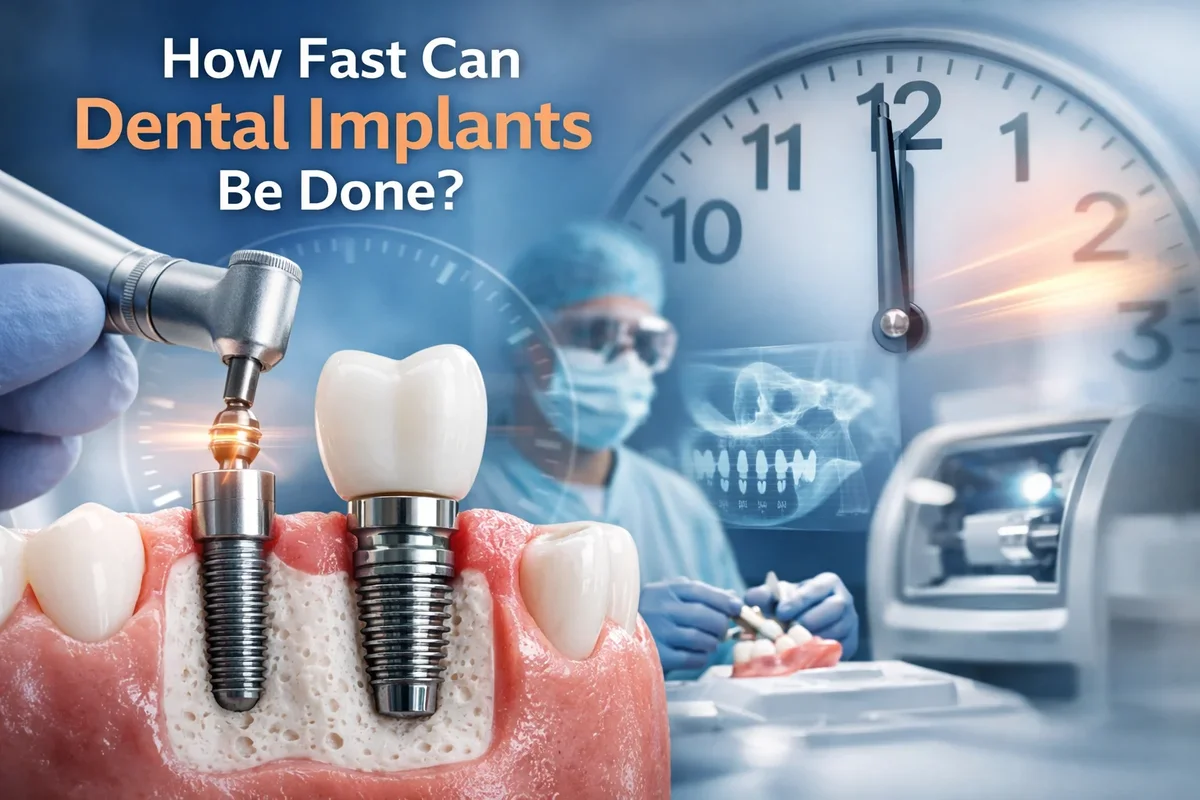
9. How to Prepare for Faster Dental Implant Results
Many patients researching how fast can dental implants be done focus only on surgical techniques, but preparation plays an equally important role. While certain biological healing processes cannot be rushed, proper preparation can significantly improve efficiency, reduce complications, and support faster recovery. If you want to optimize how fast dental implants can be done in your case, preparation begins weeks before the actual procedure.
Understanding how fast can dental implants be done requires recognizing that treatment speed is influenced by your oral health, lifestyle, and commitment to following professional guidance. By preparing properly, you create the ideal environment for successful and efficient healing.
Schedule a Comprehensive Consultation
The first step in accelerating how fast can dental implants be done is a thorough diagnostic evaluation. A detailed consultation typically includes:
- 3D cone-beam CT imaging
- Digital X-rays
- Gum health assessment
- Medical history review
- Bite analysis
Accurate diagnostics allow the dentist to identify potential delays early, such as hidden infections or bone deficiencies. Early detection prevents unexpected interruptions later in the process.
Improve Gum Health Before Surgery
Healthy gums are essential for implant success. If periodontal disease is present, it must be treated before implant placement. Active inflammation can slow healing and negatively impact how fast can dental implants be done.
Professional Cleaning and Maintenance
A deep professional cleaning reduces bacteria and inflammation. Maintaining excellent oral hygiene before surgery improves tissue health and supports faster recovery afterward.
Brushing twice daily, flossing carefully, and using antibacterial mouth rinses as recommended by your dentist can significantly enhance outcomes.
Stop Smoking in Advance
Smoking is one of the most common factors that delay how fast can dental implants be done successfully. Nicotine reduces blood circulation, which is critical for bone regeneration and soft tissue healing.
Quitting smoking at least several weeks before surgery dramatically improves healing speed and reduces complication risk. Even temporary cessation during the healing phase can make a meaningful difference.
Manage Systemic Health Conditions
Chronic conditions such as diabetes must be well controlled prior to implant surgery. Stable blood sugar levels improve immune response and bone healing.
When discussing how fast can dental implants be done, overall health often matters more than age. Patients who actively manage their medical conditions typically experience smoother recovery.
Maintain Proper Nutrition
Nutrition directly affects tissue repair and bone regeneration. A balanced diet rich in:
- Protein
- Calcium
- Vitamin D
- Vitamin C
supports faster healing and improves how fast dental implants can be done without complications.
Hydration and Healing
Staying well-hydrated promotes circulation and cellular repair. Proper hydration is often overlooked but plays a vital role in post-surgical recovery.
Follow Pre-Operative Instructions Carefully
Your dentist may provide specific guidelines before surgery, such as avoiding certain medications or fasting before sedation. Strict adherence prevents surgical delays and supports a smoother procedure.
Patients who follow instructions carefully often minimize swelling and discomfort, which positively influences how fast can dental implants be done from a recovery standpoint.
Plan for Proper Post-Operative Care
Preparation also includes planning for recovery. Arrange time off work if necessary, prepare soft foods in advance, and schedule follow-up appointments promptly.
Good planning ensures you can focus entirely on healing, which indirectly impacts how fast can dental implants be done successfully.
Choose an Experienced Implant Specialist
The skill and experience of the clinician significantly influence treatment efficiency. Advanced techniques, digital planning, and guided surgery reduce trauma and accelerate recovery.
When evaluating how fast can dental implants be done, selecting a qualified implant specialist can make a measurable difference in both speed and long-term success.
Set Realistic Expectations
While preparation can optimize healing, certain biological processes cannot be rushed. Bone integration requires time, and respecting this process ensures durability and stability.
Ultimately, the most effective strategy for improving how fast can dental implants be done is combining medical readiness, strong oral hygiene, healthy lifestyle choices, and professional expertise.
In conclusion, preparing properly before implant treatment plays a crucial role in achieving efficient and predictable results. By optimizing your health, following professional guidance, and maintaining excellent oral care, you can support faster healing while protecting long-term implant success. A well-prepared patient often experiences smoother treatment, reduced complications, and a confident, healthy smile 😊.