
Understanding all on x dental implants cost is one of the most important steps for patients
considering a full-mouth restoration. This treatment has become a global standard for people who want a
permanent, stable, and natural-looking smile 🦷✨. In this comprehensive guide, you’ll learn what determines
the final price, which factors influence the cost, why pricing varies between countries, and what you should
expect during the full treatment journey. Our goal is to give you a clear, transparent view—without
confusion, hidden details, or misleading advertising.
Before diving into numbers, it’s essential to understand why all on x procedures have grown
so quickly in popularity. Traditional dentures often feel loose, uncomfortable, and unstable. In contrast,
the All-on-X technique uses strategically placed implants to support a full arch of teeth, providing a
long-lasting and aesthetic result that looks and functions like natural teeth. Because the procedure
combines advanced materials, surgical precision, and digital planning, the all on x dental implants
cost reflects the quality and complexity behind the treatment.
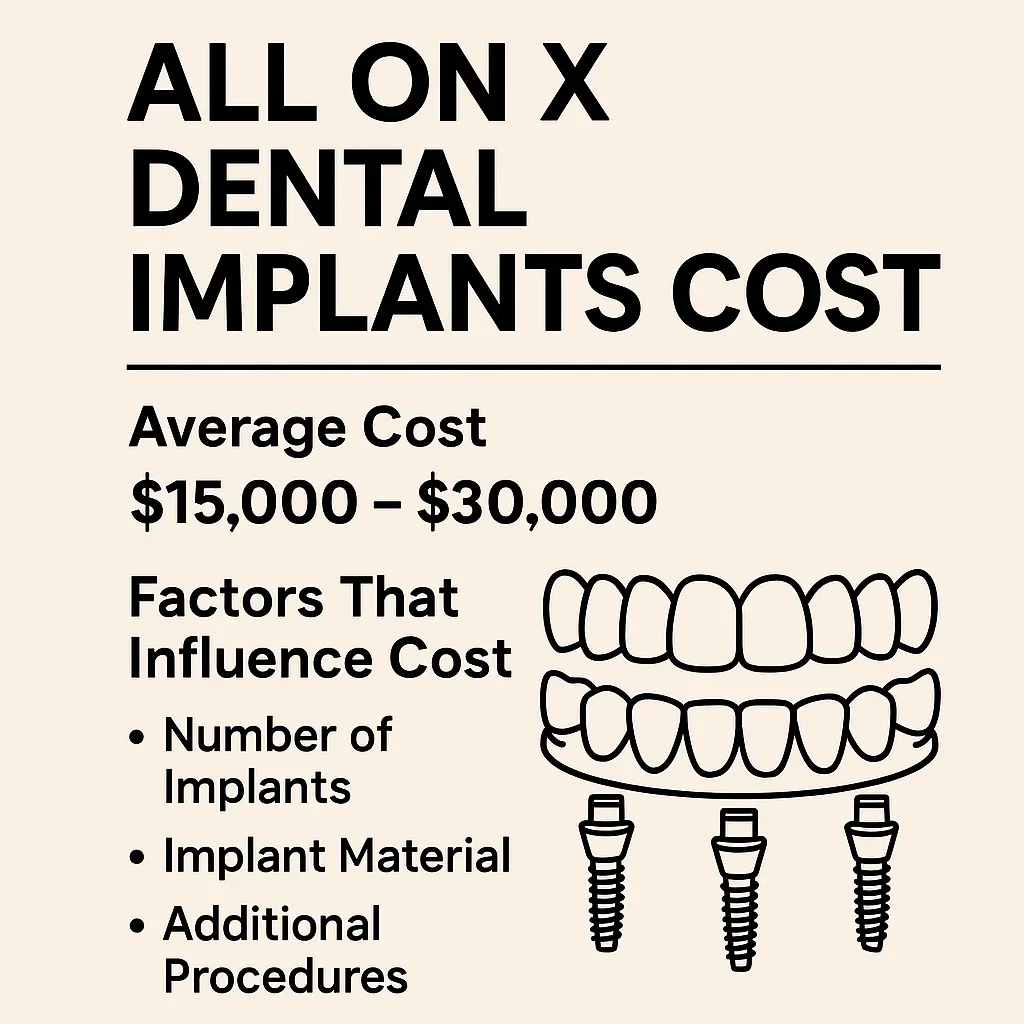
Patients often ask why prices seem so different from one clinic to another. The answer lies in several
cost-driving factors: the implant brand, surgeon expertise, prosthetic quality, required additional
procedures, and the country of treatment. For example, clinics in Europe or the U.S. may have higher
operational expenses, which naturally increases the overall all on x dental implants cost,
while clinics in Turkey often provide the same high-quality treatment with significantly lower overhead.
This is why “all on x treatment price” and “full arch implant cost” (LSI synonyms) vary widely and why
patients should evaluate the value—not only the number.
A complete All-on-X procedure typically includes the consultation, panoramic X-rays, CBCT 3D scanning,
pre-surgical planning, implant placement, temporary teeth, final zirconia or ceramic teeth, and follow-up
appointments. Each stage impacts the all on x dental implants cost. For example, premium implant
brands such as Straumann, Nobel Biocare, or Neodent can raise the price due to their long-term success
rates and advanced engineering. Similarly, digital smile design (DSD), intraoral scanning, and precise
CAD/CAM milling also contribute to the overall investment because they drastically improve the accuracy
and final result.
Another significant part of the all on x dental implants cost comes from the expertise of the oral
and maxillofacial surgeon. A highly experienced implantologist has performed hundreds—sometimes thousands—
of these procedures, ensuring predictable and safe outcomes. As a patient, you’re not simply paying for
the materials; you’re investing in the skill and precision that guarantee long-term success. The
difference between an average and an expert surgeon can influence healing time, implant stability, and
the durability of the final prosthetic teeth.
It’s also important to highlight that All-on-X treatments often reduce the need for bone grafting thanks
to angled implant placement. This technique can help lower the all on x dental implants cost by
eliminating additional surgical steps. However, in some cases—such as severe bone loss—bone grafting or
sinus lifting might still be required, which increases the overall treatment investment.
During your research process, always ensure the clinic provides transparent pricing, detailed treatment
planning, and access to trusted sources. You can review professional standards through organizations like
the American Dental Association, which provides
authoritative guidance on dental procedures and implant safety.
If you are considering getting a quote, consultation, or personalized assessment, you can reach out
directly through the
Redent Klinik Contact Page to receive a tailored plan
based on your needs. This ensures that your specific all on x dental implants cost estimate
includes everything relevant to your oral health, jawbone condition, and aesthetic goals.
Overall, patients should view the all on x dental implants cost as a long-term investment rather
than a simple expense. With proper care, high-quality implants can last decades while delivering superior
comfort, chewing ability, and confidence. For many, this procedure represents a life-changing upgrade in
oral health, physical well-being, and self-esteem. 🌟
What Influences All on X Dental Implants Cost?
When patients begin researching all on x dental implants cost, one of the first questions that comes up is:
“Why can the price vary so much from clinic to clinic and country to country?” The truth is that the total cost is
influenced by multiple interconnected elements—including clinical expertise, implant materials, diagnostic tools,
and even the patient’s own bone structure. In this detailed section, you will learn every factor that shapes the final
treatment fee so you can make an informed, confident decision about your smile restoration journey 🦷✨.
1. Surgeon Expertise and Clinical Experience
A major factor affecting the all on x dental implants cost is the experience of the surgeon performing the
procedure. Highly trained oral and maxillofacial surgeons with hundreds or thousands of successful full-arch implant
cases typically charge more than less experienced practitioners. This cost difference reflects not only their skills
but also their enhanced ability to avoid complications, perform precise angulation for angled implants, and ensure
long-term success. Inexperienced practitioners may offer lower prices, but the risk of implant failure, inflammation,
or uneven bite alignment can be significantly higher.
Expert surgeons also use advanced technologies—such as surgical guides, digital planning, and real-time imaging—to
optimize outcomes. These advanced tools add to the upfront expense but substantially improve accuracy and reduce
healing time. When evaluating your own all on x dental implants cost, always consider the value of
experience-based results, because this is a long-term investment rather than a temporary solution.
2. Implant Brand and Prosthetic Material Quality
Another element that strongly influences the all on x dental implants cost is the quality of the implant
system and prosthetic materials chosen. Premium implant brands such as Straumann, Nobel Biocare, Neodent, and MegaGen
have higher manufacturing standards, exceptional surface technology, and decades of clinical studies proving their
durability and success rates. These brands tend to cost more, but they also provide more predictable outcomes and
longer-lasting functional stability.
On the prosthetic side, options range from acrylic temporaries to final zirconia bridges. Zirconia restorations are
more costly than acrylic because they are stronger, more aesthetic, resistant to staining, and custom milled with
precision CAD/CAM technology. While acrylic may lower the initial all on x dental implants cost, zirconia
offers a far superior long-term value—often lasting decades with proper care.
3. Diagnostic Imaging and Digital Planning Costs
Before any All-on-X surgery, the clinic must perform detailed diagnostic imaging to evaluate bone density, nerve
location, sinus structure, and jaw health. This includes CBCT 3D scans, panoramic X-rays, and intraoral digital
impressions. These advanced diagnostic tools ensure accuracy and safety, but they also add to the total
all on x dental implants cost.
Digital planning is an essential phase in modern dentistry. It determines the ideal implant placement, angulation,
and bite positioning. The more advanced the digital workflow, the more predictable the final aesthetic and functional
result. Clinics that rely solely on outdated manual techniques may offer lower prices, but the risk of implant
misalignment or prosthetic failure increases significantly.
Digital Workflow Enhancements
- Digital smile design (DSD)
- CAD/CAM milling for final restorations
- 3D printing for surgical guides
- Real-time intraoral scanning
These modern technologies improve treatment quality while contributing to the final all on x dental implants cost.
4. Bone Condition, Grafting, and Additional Procedures
One of the greatest advantages of the All-on-X technique is its ability to bypass bone grafting for many patients.
However, if severe bone loss is present—especially in the upper posterior jaw—some additional procedures may be
necessary. These can increase the all on x dental implants cost depending on the severity and type of
intervention needed.
Common Additional Procedures
- Sinus lift (lateral or crestal)
- Bone grafting or ridge augmentation
- Soft tissue grafting
- Tooth extraction and temporary restoration removal
While these procedures add to the initial cost, they are essential for ensuring implant stability and long-term
success. Skipping necessary bone support techniques may lead to implant failure, which ultimately results in higher
expenses in the future.
5. Country and Clinic Location
Geographic location plays a major role in determining the all on x dental implants cost. Clinics in the U.S.,
Canada, or Western Europe often charge significantly more due to higher operating costs, staff wages, and
regulatory expenses. On the other hand, countries like Turkey offer the same high-quality treatment with
internationally certified surgeons and advanced technology at more affordable prices. This cost difference is not
related to lower quality; rather, it reflects differences in economic conditions and operational overhead.
During your research, always look for certified and reputable clinics that offer transparent pricing and
comprehensive treatment plans. You can also review global dental standards through trusted sources such as the
American Dental Association.
If you want a personalized breakdown of your own treatment plan, you can reach out directly through the
Redent Klinik Contact Page. Their specialists can evaluate
your jawbone structure, desired materials, and medical condition to calculate a fully customized
all on x dental implants cost estimation.
In summary, several interconnected factors influence what you ultimately pay—from implant brands and surgeon
expertise to bone conditions and technology used. Understanding these variables ensures that you select the right
clinic with confidence and clarity, knowing exactly how your all on x dental implants cost is determined.
All on X vs. Traditional Implants: Key Cost Differences
When comparing different dental restoration methods, many patients immediately notice that the
all on x dental implants cost is structured differently from traditional single implants or removable
dentures. This is because the All-on-X technique uses a strategic, full-arch approach rather than treating each
missing tooth individually. To fully understand why the pricing differs, it’s essential to examine the functional,
technical, and long-term distinctions between All-on-X and older methods. This section breaks down every important
aspect so you can see exactly where your investment goes and why All-on-X is often the superior long-term solution. 🦷✨
1. Implant Quantity and Structural Design Differences
Traditional dental implants typically require one implant per missing tooth. If a patient is missing an entire arch
(around 12–14 teeth), this could mean placing 10–14 implants, depending on bone density and spacing. Each implant
placement involves surgical time, titanium posts, healing caps, abutments, and individual crowns—dramatically
increasing total cost.
In contrast, the All-on-X method uses four to six implants per arch to support a full set of fixed teeth. This
significantly lowers the number of implants required, which directly reduces the overall
all on x dental implants cost. Even with fewer implants, advanced angulation techniques and high
biomechanical stability allow the prosthetic arch to remain incredibly secure and long-lasting.
Structural Comparison
- Traditional implants: 10–14 implants per arch
- All-on-X: 4–6 implants per arch
- Cost impact: Fewer implants = lower surgical and material costs
This difference alone can reduce treatment fees by thousands, making the All-on-X system far more cost-effective for
full-mouth restoration.
2. Materials and Prosthetic Design Costs
The materials used for traditional implant crowns differ greatly from the materials required for full-arch hybrid
bridges in All-on-X. With traditional implants, each crown is created individually—essentially functioning like a
single-unit restoration. Advanced ceramics, zirconia, or porcelain-fused-to-metal crowns are fabricated separately,
which increases both laboratory and manufacturing costs.
In the All-on-X method, the full arch is designed as a unified prosthetic. This means the prosthetic teeth can be
milled as one solid piece using high-strength zirconia or titanium frameworks. Because fewer components are needed,
the all on x dental implants cost benefits from reduced overall fabrication expenses—yet patients still
receive an extremely durable and natural-looking smile.
Material Differences
- Traditional implants: Multiple porcelain or zirconia crowns
- All-on-X: One-piece zirconia or titanium-supported bridge
- Cost impact: Unified design lowers long-term maintenance costs
3. Surgical Procedures and Required Additional Treatments
Traditional implants often require bone grafting, sinus lifts, and ridge augmentation due to the need for vertical
bone support in each implant location. This significantly increases treatment fees and healing time. In severe bone
loss cases, patients might even need extensive grafting before any implants can be placed.
The All-on-X system was specifically designed to avoid such procedures. By placing implants at strategic angles,
surgeons can use existing bone structure even when vertical bone volume is limited. This reduces surgical complexity
as well as the all on x dental implants cost—while still achieving long-term stability. Many patients who
were once told they lacked sufficient bone for implants can now receive permanent teeth without complicated grafting.
Additional Treatment Comparison
- Traditional implants: High probability of bone grafts and sinus lifts
- All-on-X: Grafting often unnecessary due to angled placement
- Cost impact: Reduced need for grafting lowers surgical expenses
4. Treatment Time and Number of Appointments
Traditional implants often require several months and multiple appointments before the final crowns can be placed.
Patients may have to wait for implants to fully integrate before receiving permanent teeth. This slow process extends
treatment time and increases associated costs such as follow-up visits, temporary teeth, and additional diagnostic
evaluations.
The All-on-X method, however, typically allows for immediate temporary teeth to be placed on the same day as the
surgery. This means patients walk out with a functional smile immediately, significantly improving quality of life.
Shorter treatment times reduce the overall all on x dental implants cost because fewer appointments, fewer
materials, and fewer temporary restorations are required.
5. Long-Term Maintenance and Durability Costs
Each individual crown in a traditional implant setup may require maintenance or replacement over time. Chipped
porcelain, worn occlusion, or gum recession can lead to ongoing expenses. When you multiply these risks across
10–14 implant-supported crowns, long-term maintenance costs can be substantial.
With All-on-X, the full-arch prosthetic is engineered for stability and durability. High-quality zirconia bridges are
resistant to staining, chipping, and wear. Because the entire arch functions as a single unit, maintenance costs are
significantly lower—further increasing the long-term value of the all on x dental implants cost.
6. Overall Cost Comparison Summary
When factoring in the number of implants, surgical requirements, prosthetic design, and long-term maintenance, it
becomes clear why the all on x dental implants cost is generally more affordable and value-driven than
traditional implants for full-arch cases. While traditional implants may offer a good solution for single-tooth
restoration, they become less practical and more expensive when restoring an entire jaw.
If you would like a personalized comparison or need guidance tailored to your dental condition, you can reach out
through the Redent Klinik Contact Page. For general implant
guidelines and safety standards, trusted institutions like the
American Dental Association provide valuable resources for
patients worldwide.
In conclusion, the All-on-X method delivers superior efficiency, reduced surgical demands, and durable long-term
results—making it a more accessible and cost-effective full-mouth restoration option compared to traditional methods.
Understanding these key differences helps you appreciate the true value behind the all on x dental implants
cost and decide which treatment better aligns with your needs and budget.
Full Breakdown: Materials, Lab Fees, and Surgical Costs Explained
Understanding the complete structure behind the all on x dental implants cost is essential for anyone researching full-mouth restoration.
Most patients initially see only a single number on a treatment plan, but that number actually includes multiple layers of materials, surgical stages, dental laboratory processes,
and postoperative care. This section provides a transparent and highly detailed cost breakdown so that you can clearly understand where your investment goes and why the All-on-X method
remains one of the most efficient and long-lasting solutions for complete smile rehabilitation. 🦷💎
1. Surgical Procedure Costs
The surgical phase of the All-on-X procedure is one of the largest contributors to the overall all on x dental implants cost.
This is because the surgery is a multi-step, highly specialized procedure requiring advanced clinical skill. During surgery, four to six titanium implants are inserted into the jawbone
using precise angulation. This strategic implant placement ensures maximum support and stability for the prosthetic arch.
Surgeons who specialize in full-arch reconstruction often use digital surgical guides, 3D imaging, and dynamic navigation systems to improve precision during implant placement.
These technologies improve long-term implant success rates but also contribute to the total treatment fee. Compared to traditional implants, the All-on-X method reduces surgery time
and avoids multiple surgical procedures, making the overall all on x dental implants cost significantly more efficient.
Key Surgical Cost Components
- CBCT and digital imaging used to map nerves and bone structure
- Surgical guides for accurate implant placement
- Intraoperative materials (healing caps, abutments, screws)
- Temporary teeth delivered on the same day
- Local anesthesia or sedation, depending on the patient’s needs
These components ensure safety, accuracy, comfort, and predictable healing—factors that justify the overall value of your investment.
2. Material Costs for Implants and Prosthetics
Material quality has a direct influence on the all on x dental implants cost. The implants themselves are typically made from
high-grade, medical titanium or zirconia. Titanium remains the global standard due to its exceptional osseointegration ability—meaning it can biologically bond with the jawbone.
Premium implant brands such as Nobel Biocare, Straumann, and Neodent use advanced surface technology to increase implant stability and accelerate healing.
The final prosthetic teeth are also made from high-quality materials. Clinics typically offer three main options:
acrylic, hybrid titanium-acrylic, or monolithic zirconia. Zirconia is the most durable, stain-resistant, and natural-looking option,
but it also involves more advanced production methods like CAD/CAM milling, which adds to the final all on x dental implants cost.
Prosthetic Material Options and Their Impact
- Acrylic Bridge: More affordable, lighter, but less durable long-term.
- Titanium-Acrylic Hybrid: Strong internal framework, good durability.
- Monolithic Zirconia: Strongest and most aesthetic option, highest longevity.
Choosing premium materials ensures better aesthetics, improved bite force, and longer-lasting results. While it may increase the initial
all on x dental implants cost, it reduces the need for replacements in the future.
3. Laboratory Fees and Digital Production Costs
Dental laboratory work is one of the most underestimated components of the all on x dental implants cost.
Each prosthetic is custom-designed using digital tools such as intraoral scanners, CAD/CAM software, and 3D printing.
These technologies allow technicians to precisely design teeth that match your facial structure, bite alignment, and aesthetic preferences.
For a high-quality final prosthesis, multiple specialists collaborate: digital designers, ceramists, and implant lab technicians.
Their work involves creating extremely detailed prosthetic teeth that will last for years without discoloration, cracking, or shifting.
Laboratory Steps That Influence Cost
- Digital smile design (DSD)
- Intraoral scanning and bite registration
- CAD/CAM milling or 3D printing
- Shaping, glazing, and shading for natural aesthetics
- Precision fitting and adjustments
High-end laboratory craftsmanship contributes substantially to the final all on x dental implants cost,
but it is vital for achieving a natural, functional, and long-lasting smile.
4. Additional Medical Procedures and Their Costs
Not all patients are ready for implant placement immediately. Some require additional procedures to ensure optimal healing and implant stability.
These procedures, when needed, will influence the total all on x dental implants cost.
Common Additional Procedures
- Tooth extractions
- Bone grafting (when necessary)
- Sinus lifting (especially for upper jaw cases)
- Soft tissue shaping or grafting
While the All-on-X technique often avoids extensive grafting thanks to angled implant placement, some patients still need these enhancements.
Each procedure affects the timeline, complexity, and cost.
5. Postoperative Care and Follow-Up Costs
After surgery, patients receive routine follow-up appointments, adjustments, and maintenance sessions to ensure long-term success.
This ongoing care is an essential part of the all on x dental implants cost because it protects the longevity of the implants and prosthetics.
Follow-up visits may include:
- Healing assessments
- Occlusion adjustments
- Hygiene maintenance and deep cleaning
- Transition from temporary to final prosthesis
Clinics that provide extensive aftercare and monitoring help minimize complications, improving the long-term value of your investment.
If you need a personalized breakdown of your treatment plan—including materials, lab fees, and surgical details—you can contact specialists through the
Redent Klinik Contact Page. For trusted clinical standards, consult reputable sources such as the
American Dental Association.
Overall, the all on x dental implants cost is shaped by multiple factors working together: surgical expertise,
advanced digital technology, premium materials, lab craftsmanship, and comprehensive postoperative care.
Understanding these components helps you evaluate treatment options with clarity, confidence, and realistic expectations.
Country-by-Country Comparison of All on X Dental Implants Cost
One of the most common questions patients ask is why the all on x dental implants cost varies so dramatically from one country to another.
The difference can sometimes be several thousand dollars, and for many patients, this directly influences where they choose to receive treatment.
To understand these variations, it is crucial to look at economic factors, clinical standards, surgeon experience, material availability, and operational expenses
in each region. In this detailed comparison, we analyze the most popular countries for All-on-X treatment and explain how each region’s pricing structure is formed. 🌍🦷
1. United States
In the United States, the all on x dental implants cost is significantly higher compared to other nations due to elevated operational costs,
strict regulatory requirements, expensive malpractice insurance, and higher average salaries for dental staff. Additionally, top-tier implant brands
and advanced surgical technology contribute to this cost. Patients in the U.S. often pay a premium for dental implants because of the country’s
healthcare infrastructure and the high demand for advanced cosmetic procedures.
Average Price Range
- Per Arch: $22,000 – $36,000
- Full Mouth: $45,000 – $72,000
While these prices may seem high, many clinics offer flexible financing options. However, even with financing, the total all on x dental implants cost
in the U.S. remains one of the highest globally.
2. United Kingdom
The United Kingdom also has comparatively high treatment prices due to strict medical regulations, high clinic overhead, and premium-quality materials.
Cities like London tend to have the highest cost because of higher operational expenses and specialist demand. Many patients from the UK travel abroad
to countries like Turkey, Spain, or Portugal to reduce their total all on x dental implants cost without sacrificing quality.
Average Price Range
- Per Arch: £13,000 – £22,000
- Full Mouth: £26,000 – £44,000
Even though the UK offers top-level dental specialists, the cost difference compared to other countries can be significant, motivating many patients
to consider dental tourism.
3. Canada
Canada follows a similar pricing pattern to the United States, with slightly lower averages in some provinces. Dental regulation, high-quality materials,
and highly trained specialists contribute to the overall all on x dental implants cost. Patients in Canada often face long waiting lists
or high upfront prices, prompting them to explore treatment options abroad.
Average Price Range
- Per Arch: $20,000 – $33,000 CAD
- Full Mouth: $40,000 – $66,000 CAD
While clinics in Canada maintain excellent standards, the cost difference between Canada and dental tourism hubs remains substantial.
4. Australia
In Australia, dental implants are generally expensive due to the country’s high labor costs, clinic operating expenses, and strict healthcare compliance standards.
Australian dentists often use premium implant brands and advanced digital planning tools, which further influence the all on x dental implants cost.
Average Price Range
- Per Arch: $18,000 – $30,000 AUD
- Full Mouth: $36,000 – $60,000 AUD
Although the treatment quality is high, many patients still seek more cost-effective solutions overseas.
5. Western Europe (Germany, France, Spain, Portugal)
Western European countries provide excellent dental care, strict standards, and advanced technology. Yet their pricing varies significantly.
Germany and France have higher operational and labor costs, while Spain and Portugal offer more affordable options due to lower overall
clinic expenses. This creates a wide range in the all on x dental implants cost throughout Western Europe.
Average Price Range
- Germany/France Per Arch: €12,000 – €20,000
- Spain/Portugal Per Arch: €6,000 – €10,000
Patients often choose Spain or Portugal for high-quality yet lower-cost All-on-X treatments within Europe.
6. Turkey
Turkey is one of the world’s most popular destinations for All-on-X treatment because it combines internationally trained surgeons,
advanced dental technology, and significantly lower operating costs. The country also benefits from competitive dental tourism pricing,
making the all on x dental implants cost much more accessible without compromising material or clinical standards.
Average Price Range
- Per Arch: $3,500 – $8,000
- Full Mouth: $7,000 – $16,000
Turkey provides some of the best value worldwide for All-on-X procedures, attracting thousands of international patients each year.
If you are considering treatment in Turkey, you can contact specialists through the
Redent Klinik Contact Page for a tailored treatment plan.
Why Costs Differ Between Countries
The primary reasons global all on x dental implants cost figures differ include:
- Local economic conditions (labor, rent, utilities)
- Implant brand preferences (premium vs. economy)
- Surgeon experience and credentials
- Regulatory and licensing compliance costs
- Demand for dental tourism
Regardless of the country you choose, it is essential to verify clinic certifications and ensure proper treatment planning.
You can explore global dental health guidelines through trusted institutions such as the
American Dental Association.
In summary, the all on x dental implants cost varies significantly across countries due to economic, regulatory, and operational differences.
Understanding these variations empowers you to choose a destination that fits your budget without sacrificing quality or safety. 🌟
How Bone Grafting Affects the Final All on X Dental Implants Cost
Bone quality and bone volume are two of the most critical factors influencing the all on x dental implants cost.
Although the All-on-X technique is specifically designed to avoid bone grafting in most cases, not every patient is immediately eligible
for implant placement without additional support. Some individuals have severe bone loss due to long-term tooth loss, periodontal disease,
trauma, or denture wear. In these situations, bone grafting may be required to create a strong foundation for implant stability.
Because bone grafting can significantly influence both treatment complexity and total cost, understanding how it works—and when it is necessary—
is crucial for accurate planning. 🦷✨
1. Understanding Bone Loss and Its Impact on Treatment
When a tooth is lost, the jawbone begins shrinking due to lack of stimulation. This natural process, called resorption, can reduce bone height and width
over months or years. For some patients, this results in insufficient bone density to safely place implants. Since implant success depends heavily
on bone stability, severe resorption can complicate the procedure and increase the all on x dental implants cost.
However, one of the advantages of the All-on-X method is its ability to utilize available bone—even in compromised areas—by placing implants
at strategic angles. This often eliminates the need for bone grafting entirely, which helps keep the total all on x dental implants cost
much more affordable. Nonetheless, certain cases still require intervention.
Common Areas of Bone Loss
- Upper molar region (due to sinus expansion)
- Lower posterior jaw (due to nerve proximity)
- Front jaw areas (from long-term denture use)
- Generalized bone loss from periodontal disease
Understanding the severity and location of bone loss helps determine whether grafting is necessary and how much it may add to your total budget.
2. Types of Bone Grafting Procedures and Their Costs
Bone grafting is not a single procedure—it includes several methods tailored to different levels of bone deficiency.
Each type carries its own cost, healing timeline, and surgical complexity. Below are the most common forms used in All-on-X planning.
Socket Preservation
Socket preservation is performed immediately after tooth extraction to maintain bone volume and reduce future bone loss.
While this adds a small amount to the all on x dental implants cost, it helps avoid larger procedures later.
Ridge Augmentation
If the jaw ridge has lost significant width or height, supplemental bone is added to rebuild the area. This method is more intensive, requires longer healing,
and can increase the total all on x dental implants cost depending on the extent of augmentation needed.
Sinus Lift (Sinus Augmentation)
In the upper molar area, bone loss often coincides with natural sinus expansion. If the sinus floor is too close to the implant site,
a sinus lift may be required to create enough vertical bone. Traditional sinus lifts can significantly increase treatment expenses,
which is why All-on-X angled implants are preferred—minimizing the need for this costly procedure in many patients.
Block Bone Grafting
This advanced procedure involves harvesting bone from another area (or using donor bone) to reconstruct large deficiencies.
It is typically needed in extreme cases and can add considerable cost, healing time, and surgical steps to the
all on x dental implants cost.
3. How Grafting Influences Surgical Planning and Timeline
Bone grafting not only affects cost but also impacts treatment timelines. While All-on-X is often completed in a single visit with immediate temporary teeth,
patients requiring bone grafts may experience longer healing periods before implant placement. This can delay the placement of the final prosthesis
and may require additional appointments, each contributing to the total all on x dental implants cost.
Furthermore, grafting changes the surgical plan. The surgeon must evaluate:
- Bone density through CBCT scans
- The ideal location for implant angulation
- Risk levels associated with graft absorption
- The need for temporary prosthetics during healing
Clinics that use digital planning and 3D diagnostic imaging are able to minimize complications and anticipate grafting needs with greater accuracy,
ensuring safer and more predictable results.
4. Cost Breakdown: How Much Does Bone Grafting Add?
Bone grafting expenses vary depending on the region, materials, and complexity. Below is a general estimate of how grafting can increase the
all on x dental implants cost.
Typical Cost Ranges
- Socket preservation: $200 – $600 per site
- Minor bone graft: $300 – $800
- Ridge augmentation: $800 – $2,500
- Sinus lift: $1,500 – $4,000
- Block graft: $2,000 – $5,000+
These expenses are often added directly to the core treatment plan, increasing the overall all on x dental implants cost.
This is why many patients choose clinics that specialize in graft-free All-on-X procedures when possible.
5. Why Many Patients Avoid Grafting with All-on-X
Modern All-on-X implant systems are specifically engineered to reduce or eliminate the need for bone grafting.
By placing implants at a 30°–45° angle, surgeons can anchor them into denser bone regions, even in cases with severe bone loss.
This helps keep the all on x dental implants cost significantly lower while still delivering stable long-term results.
However, some cases cannot avoid grafting, and patients benefit greatly from professional evaluation.
For personalized planning, you can consult specialists using the
Redent Klinik Contact Page.
For general implant guidelines on grafting and bone reconstruction, review information from
the American Dental Association.
Overall, bone grafting can be a significant factor in the total all on x dental implants cost.
Understanding when it is necessary, how it works, and how it affects treatment outcomes ensures that you are fully prepared for every aspect of the All-on-X journey.
All on X Dental Implants Cost for Upper Jaw vs. Lower Jaw
A major point of confusion for patients researching all on x dental implants cost is why the upper jaw (maxilla)
often costs more than the lower jaw (mandible). Although both arches undergo the same All-on-X procedure, several anatomical,
biomechanical, and surgical differences influence pricing. Understanding these distinctions helps patients plan realistically
and avoid unexpected surprises during treatment. This section provides an in-depth explanation of why upper and lower arch pricing
is not always equal and what factors play the biggest role in shaping these costs 🦷📊.
1. Anatomical Differences Between the Upper and Lower Jaw
The anatomy of the maxilla (upper jaw) is significantly more complex than that of the mandible (lower jaw). The bone in the upper
jaw is typically softer, more porous, and less dense—meaning implants may require more advanced placement techniques to ensure stability.
This difference alone can influence the all on x dental implants cost, especially if the patient requires specialized angulation,
longer implants, or additional support.
In contrast, the lower jaw usually provides denser bone, which allows for easier implant placement and stronger initial stability.
This natural difference often results in lower surgical complexity and, therefore, potentially lower associated costs.
Bone Density Comparison
- Upper Jaw: Softer, more trabecular bone → lower implant stability
- Lower Jaw: Dense cortical bone → higher implant stability
These density variations influence the amount of planning, implant type selection, and technique adjustments required, all of which
impact the overall all on x dental implants cost.
2. Sinus Structure and Its Impact on Pricing
One of the biggest anatomical challenges in the upper jaw is the presence of the maxillary sinus. When the sinus floor is low or
expanded due to bone loss, implant placement becomes more difficult. For traditional implant methods, this often requires a sinus lift—one of the
most expensive bone grafting procedures.
Thankfully, the All-on-X method minimizes the need for sinus lifting by placing implants at a 30°–45° angle, bypassing the sinus and anchoring
into denser zygomatic or anterior bone. However, in severe bone loss cases, sinus lifts may still be necessary, which significantly increases
the all on x dental implants cost for the upper arch.
Sinus Considerations That Influence Cost
- Low sinus position requiring special implant angulation
- Sinus pneumatization due to long-term tooth loss
- Need for possible sinus lift or grafting
- Use of zygomatic implants in complex cases
Because these issues are unique to the upper arch, costs tend to be slightly higher compared to the lower arch.
3. Differences in Implant Placement Strategy
Another reason the all on x dental implants cost varies between arches is the implant distribution strategy.
The upper jaw often requires longer, angled implants to achieve sufficient stability. Additionally, surgeons may need to place implants in
strategic positions due to nerve pathways, sinus cavities, and bone structure limitations.
In the lower jaw, implants typically achieve high initial stability due to denser bone quality, allowing for more straightforward placement
in the anterior region. This requires less time, fewer adjustments, and lower surgical risk.
Placement Challenges by Arch
- Upper Arch: Complex angulation, sinus navigation, softer bone
- Lower Arch: Easier access, stronger bone, minimal anatomical obstacles
The easier the placement, the lower the associated fees—one reason the lower arch is typically less expensive.
4. Prosthetic Design Differences
Prosthetic design also varies between the two arches due to aesthetic and functional requirements. The upper arch plays a major role in
smile visibility, lip support, and speech resonance. Because of this, the prosthetic teeth for the upper jaw often require more detailed design,
shading, digital smile planning, and fine adjustments.
The lower arch, while still important for function and aesthetics, usually demands fewer design adjustments and less visible cosmetic fine-tuning.
This difference in prosthetic complexity influences the all on x dental implants cost for each arch.
Prosthetic Considerations
- Upper jaw designs often require enhanced lip support and aesthetics
- Lower jaw prosthetics focus more on bite strength and alignment
- Zirconia prosthetics for upper arches may require additional layering and shading
Because prosthetic lab work plays a major role in total pricing, these aesthetic differences matter.
5. Cost Summary: Upper Jaw vs. Lower Jaw
Although prices vary by country and clinic, the following summary outlines typical differences:
- Upper Arch: Higher due to sinus complexity, softer bone, aesthetic demands
- Lower Arch: Lower due to stronger bone, easier access, simpler prosthetics
On average, the upper arch may cost 10–20% more than the lower arch, depending on required procedures. This difference is a major component
of the overall all on x dental implants cost when calculating a full-mouth restoration.
6. When Both Arches Are Treated Together
Many clinics offer reduced pricing when both arches are completed in the same treatment plan. This bundled option lowers diagnostic, surgical,
and prosthetic costs compared to completing each arch separately. Patients often save thousands by opting for a full-mouth package—an important
factor when calculating the total all on x dental implants cost.
If you’d like a personalized assessment comparing upper and lower arch treatment options, you can reach out through the
Redent Klinik Contact Page. For clinical safety guidelines regarding implant procedures,
consult reliable sources such as the American Dental Association.
In summary, differences in anatomy, bone density, sinus structure, prosthetic design, and implant strategy all contribute to cost variations
between the upper and lower jaw. Understanding these factors ensures you can evaluate the all on x dental implants cost with clarity and
choose the right treatment plan for your individual needs.
Hidden Fees to Watch Out for in All on X Dental Implant Packages
When researching the all on x dental implants cost, many patients focus exclusively on the headline price advertised by clinics.
However, what appears to be a “complete package” can sometimes include hidden fees that dramatically increase the final amount you pay.
Understanding these potential extra costs is essential for accurate budgeting, transparent decision-making, and avoiding unpleasant surprises
during or after treatment. This section breaks down the most common hidden fees, how to identify them, and what questions to ask during your consultation.
A clear understanding of these factors will help ensure that your All-on-X treatment remains predictable, safe, and financially manageable. 💡🦷
1. Diagnostic Imaging and Preoperative Testing
The first major category of hidden fees relates to preoperative diagnostics. Many clinics advertise a base treatment fee but charge separately
for essential imaging like CBCT 3D scans, panoramic X-rays, and digital impressions. Since these tests are necessary for determining bone quality,
sinus structure, and nerve mapping, they directly influence the overall all on x dental implants cost.
Some clinics include basic imaging in their package but add extra charges for repeat scans if the surgeon needs updated measurements during treatment.
Patients should always confirm whether the initial consultation fee covers all imaging or if additional tests will be billed separately.
Possible Extra Charges
- CBCT 3D scan
- Panoramic X-ray
- Intraoral digital impressions
- Extra scans for surgical revision or correction
These fees may seem minor individually, but combined they can significantly increase the all on x dental implants cost.
2. Bone Grafting, Sinus Lifts, and Unexpected Surgical Procedures
Not all patients will require additional surgical procedures, but when they do, these can quickly become expensive. Many clinics list
the All-on-X procedure as “graft-free,” yet severe bone loss or sinus complications may still necessitate added interventions. These extra procedures
can significantly raise the all on x dental implants cost.
Additional Surgical Costs to Watch For
- Sinus lift (lateral or internal)
- Bone grafting (small or large-scale)
- Soft tissue grafts
- Tooth extractions not included in base pricing
- Temporary denture removal
Some clinics include extractions in their package, while others treat them as add-ons. Always ask whether “all extractions” are included before signing a treatment plan.
3. Temporary Teeth and Upgrade Fees
A crucial part of All-on-X treatment is the immediate temporary prosthesis, which patients receive on the same day as implant placement.
Some clinics advertise this as part of the package, but others offer only basic temporary dentures and charge extra for high-quality acrylic or reinforced temporary teeth.
Upgrading the temporary prosthesis can add hundreds or even thousands to the all on x dental implants cost, depending on the clinic’s policy.
Potential Upgrade Add-Ons
- Premium temporary acrylic teeth
- Reinforced titanium-supported temporaries
- Multiple sets of temporaries during healing
Since the temporary teeth are worn for several months, comfort and durability matter. Patients should verify what type of temporary prosthesis is included.
4. Final Prosthesis Material Upgrades
One of the most common hidden costs in All-on-X treatment is upgrading the final prosthesis material. Many clinics advertise low prices but include only
basic acrylic for the final restoration. Zirconia, however, is the gold standard for long-term durability, aesthetic quality, and stain resistance. Choosing zirconia
instead of acrylic can significantly increase the overall all on x dental implants cost.
Material Choices That Affect Pricing
- Acrylic: Most affordable but prone to staining and wear
- Titanium-Acrylic Hybrid: Stronger internal support
- Monolithic Zirconia: Highest durability and aesthetics
Always ask whether the quoted price includes zirconia or only acrylic. This difference alone can add thousands to your treatment total.
5. Follow-Up Visits and Aftercare Fees
Aftercare is essential for the long-term success of implants, yet not all clinics provide it at no additional charge. Some charge per visit for
adjustments, professional cleanings, prosthetic tightening, or complication management. These can increase the total
all on x dental implants cost over time, especially during the healing period.
Common Aftercare Charges
- Follow-up checkups
- Occlusion adjustments
- Professional cleaning around implant sites
- Screw tightening or prosthetic repairs
Choose a clinic that includes structured postoperative care within the main treatment package whenever possible.
6. Sedation or Anesthesia Fees
Many clinics list their All-on-X price based on local anesthesia only. If you prefer IV sedation or general anesthesia for comfort,
this may be an extra fee. Sedation costs vary widely by region and can add significantly to the all on x dental implants cost.
Ask whether the quoted price includes sedation or if it is an optional add-on. Patients with dental anxiety often choose IV sedation,
so understanding this cost in advance helps avoid last-minute surprises.
7. Why Transparent Pricing Matters
Clinics that provide clear, itemized pricing help patients avoid unexpected financial stress. Transparent clinics clearly explain what is included,
what may cost extra, and how to estimate total fees based on the patient’s unique oral health needs.
You can request a full, customized breakdown of every potential fee by reaching out through the
Redent Klinik Contact Page. For general dental safety standards related to implants, consult the
American Dental Association.
In conclusion, understanding hidden fees is essential for accurately estimating the all on x dental implants cost.
By asking the right questions and reviewing detailed cost breakdowns, you can ensure a smooth, transparent, and financially predictable treatment experience.
Insurance, Financing, and Payment Plans for All on X Dental Implants
A major concern for patients researching the all on x dental implants cost is affordability. While the procedure is one
of the most life-changing dental treatments available, it is also a significant financial investment. Many patients wonder whether
their insurance will cover part of the cost, what financing options exist, and how payment plans work across different clinics.
Because the All-on-X treatment combines surgery, prosthetics, and advanced digital planning, the payment structure can feel complex.
This section breaks everything down clearly so you can navigate insurance, financing, and payment solutions with confidence and
realistic expectations 🦷💳.
1. How Dental Insurance Typically Handles All-on-X Procedures
Unfortunately, most dental insurance providers classify full-arch implant treatments as elective or cosmetic. This means that
insurance rarely covers the complete all on x dental implants cost. However, this does not mean insurance is useless—many plans
offer partial coverage for specific components of the procedure.
Commonly Covered Portions
- Initial exams (consultation, basic X-rays)
- Extractions for unhealthy or severely damaged teeth
- Bone grafting if medically necessary
- Temporary prosthetics in certain policies
Coverage varies widely by provider. Some premium insurance plans may cover a small portion of implant surgery, but it is rare for
any insurer to cover a full-arch prosthesis or the entire All-on-X package. This is why patients should never assume insurance coverage
without checking their policy in detail.
2. Preauthorization and Medical Necessity Documentation
If you hope to use insurance to reduce your all on x dental implants cost, preauthorization is essential. This process involves
submitting diagnostic records, imaging, and clinical notes to demonstrate medical necessity. Insurers are more likely to approve partial
coverage if the patient suffers from:
- Severe periodontal disease
- Oral infections from decayed teeth
- Non-restorable dentition
- Chronic denture irritation
Even when medical necessity is documented, insurers typically only reimburse certain components of the total treatment plan.
Still, any approved amount reduces the out-of-pocket all on x dental implants cost.
3. Dental Savings Plans vs. Insurance
Some clinics accept dental savings plans instead of traditional insurance. Unlike insurance, savings plans are discount membership programs
that offer reduced rates for various dental procedures. These programs do not reimburse fees, but they can lower the
all on x dental implants cost by 10%–25% depending on the clinic.
Key Differences
- Insurance → reimbursement-based
- Savings plan → discount-based
- Insurance has annual limits → savings plans do not
For patients without strong insurance coverage, savings plans can provide meaningful cost reductions.
4. Clinic-Based Payment Plans
Due to the high value and long-term benefits of All-on-X treatment, many clinics offer flexible, in-house payment plans. These allow
patients to divide the all on x dental implants cost into manageable monthly installments rather than paying the full amount at once.
Payment plans typically vary depending on the clinic’s policies, credit requirements, and whether the treatment is performed domestically
or abroad. Some plans require a down payment, while others give patients an interest-free period if paid within a specified timeframe.
Common Payment Plan Structures
- Short-term plans: 3–6 months, often interest-free
- Mid-term plans: 6–18 months with minimal fees
- Long-term plans: 24–60 months (may include interest or financing charges)
These plans allow patients to receive treatment immediately while spreading the investment over time.
5. Third-Party Financing Options
Third-party financial institutions offer dedicated medical financing programs specifically for dental procedures. These companies work
directly with clinics to provide structured loans that cover the total all on x dental implants cost. Many patients prefer this option
when insurance coverage is minimal.
Popular Medical Financing Providers
- CareCredit
- LendingTree
- Sunbit
- Ally Lending
- Proceed Finance
These companies often offer:
- Instant approvals
- Flexible terms
- Low or zero down payment
- Credit-based interest rates
This type of financing is especially helpful when patients seek treatment abroad and need predictable financial planning.
6. Medical Travel Packages for Treatment Abroad
For patients seeking more cost-effective options, countries like Turkey offer complete medical travel packages. These packages include
not only the All-on-X procedure but also:
- Accommodation
- VIP transportation
- Follow-up visits
- Dedicated patient coordinators
Because operating costs are lower overseas, the all on x dental implants cost in these countries can be reduced by 50%–70% compared
to Western nations. This financial advantage motivates many patients to consider dental tourism.
7. How to Avoid Overpaying
A smart approach to budgeting includes:
- Requesting itemized cost breakdowns
- Comparing clinic packages carefully
- Asking what is included—and what is not
- Confirming whether upgrades (e.g., zirconia prosthetics) require extra fees
Clinics with transparent pricing help you avoid unexpected increases in the all on x dental implants cost.
For complete cost assessments, customized estimates, and financing guidance, you can reach out through the
Redent Klinik Contact Page.
For reliable clinical safety and procedural standards, consult trusted sources such as the
American Dental Association.
Overall, understanding insurance limitations, financing structures, and payment options can significantly reduce stress when planning
your total all on x dental implants cost. With the right financial approach, patients can confidently access high-quality,
life-changing dental restoration without compromising their budget.
Long-Term Value: Are All on X Dental Implants Worth the Cost?
One of the most important questions patients ask when evaluating the all on x dental implants cost is whether the
procedure truly delivers long-term value. While the initial investment may seem high, the benefits extend far beyond the price tag.
All-on-X treatment can dramatically improve oral health, restore chewing ability, enhance facial structure, eliminate denture problems,
and significantly boost confidence. When viewed over a lifetime, the value of this procedure becomes even more impressive. In this
comprehensive section, we break down the financial, functional, cosmetic, and emotional benefits that make All-on-X one of the most
worthwhile dental investments available today. 🦷💎
1. Long-Term Durability and Life Expectancy of Implants
Dental implants—especially when supported by full-arch frameworks—are engineered to last decades. High-quality titanium or zirconia implants
bond with the jawbone through a biological process called osseointegration. This ensures stability, strength, and long-term performance that
far surpasses removable dentures. When properly maintained, implants can last 20 years or more, with many lasting a lifetime. Therefore,
the long-term durability significantly enhances the value of the all on x dental implants cost.
In contrast, traditional dentures need replacement every 3–5 years due to wear, bone loss, and changes in facial structure. These ongoing expenses
add up over time and often exceed the one-time investment of All-on-X treatment.
Why Longevity Matters
- Implants provide permanent support for prosthetic teeth
- Zirconia prosthetics resist cracks, stains, and wear
- Implants prevent bone loss, preserving facial structure
When discussing long-term dental investments, lifespan is one of the most compelling arguments in favor of the All-on-X method.
2. Improved Oral Function and Chewing Ability
One of the greatest advantages of full-arch implants is the restoration of proper chewing function. Patients who switch from removable dentures
to All-on-X frequently report a dramatic improvement in bite force, stability, and comfort. This functional upgrade is invaluable because it
restores dietary freedom, nutritional health, and overall quality of life. These improvements form a strong justification for the
all on x dental implants cost.
With dentures, foods like steak, apples, nuts, or crusty bread become difficult to chew and often avoided entirely. All-on-X patients regain the
confidence to enjoy their favorite meals without fear of slipping dentures or discomfort.
Functional Benefits Include:
- Stronger bite force
- No denture adhesives required
- No risk of prosthetic movement
- Better digestion due to improved chewing
3. Prevention of Bone Loss and Facial Aging
Tooth loss triggers bone resorption—a process where the jawbone shrinks due to lack of stimulation. Over time, this affects oral health and changes
the entire facial structure. Patients may experience collapsed cheeks, wrinkles, and an aged appearance. The All-on-X method stops this process by
providing stable implants that stimulate bone tissue, preserving facial shape and maintaining a youthful look.
Considering these benefits, the all on x dental implants cost is actually a long-term investment in facial aesthetics and health, not just
a functional dental procedure.
Benefits of Stopping Bone Loss
- Youthful facial structure is maintained
- Jawbone integrity improves
- Long-term denture instability is prevented
4. Aesthetic Advantages and Smile Transformation
All-on-X produces transformative aesthetic results. With advanced digital design, zirconia prosthetics, and custom shading, patients achieve
a natural-looking smile tailored to their facial symmetry and personal preferences. The psychological and emotional benefits of a confident,
beautiful smile contribute significantly to the value received from the all on x dental implants cost.
Unlike dentures, which may look artificial and shift when speaking or laughing, All-on-X prosthetics remain firmly in place and look indistinguishable
from natural teeth. This alone is a major quality-of-life improvement for many patients.
Aesthetic Benefits Include:
- Natural color shading and translucency
- Enhanced lip support and facial harmony
- Custom-designed smile using digital tools
5. Reduced Long-Term Maintenance Costs
Although the initial all on x dental implants cost is higher than dentures, long-term expenses are significantly lower. Dentures require
regular adjustments, replacements, adhesives, special cleaning products, and frequent repairs. These cumulative expenses can exceed the one-time
investment of implant treatment.
With All-on-X, patients only require routine dental cleanings and occasional checkups. Zirconia prosthetics are exceptionally durable, reducing the
need for maintenance or replacement.
Long-Term Savings
- No adhesives
- No relining costs
- No denture replacements every few years
- Fewer dental emergencies
6. Emotional and Psychological Benefits
A beautiful, stable, functional smile can dramatically improve a person’s emotional well-being. Patients often report increased confidence,
social comfort, improved communication, and enhanced self-esteem. These life-changing benefits make the all on x dental implants cost worth it
for many individuals.
Confidence impacts daily life—from job interviews to social events, relationships, and personal satisfaction. Restoring a full smile can have
positive effects far beyond oral health.
7. Overall Cost-Benefit Conclusion
When evaluating value, it is crucial to consider the benefits gained over years or even decades. The All-on-X method delivers permanent, long-lasting
function, superior aesthetics, and life-enhancing improvements that far outweigh traditional denture solutions.
Patients who want a personalized assessment of long-term value and a transparent cost breakdown can reach out through the
Redent Klinik Contact Page. For official implant guidelines and patient safety information,
refer to trusted organizations like the American Dental Association.
In conclusion, the all on x dental implants cost is not merely a financial figure—it is an investment in lifelong oral health, function, comfort,
confidence, and well-being. For patients seeking a permanent solution with exceptional long-term value, All-on-X consistently proves to be one of the most
rewarding dental treatments available.