
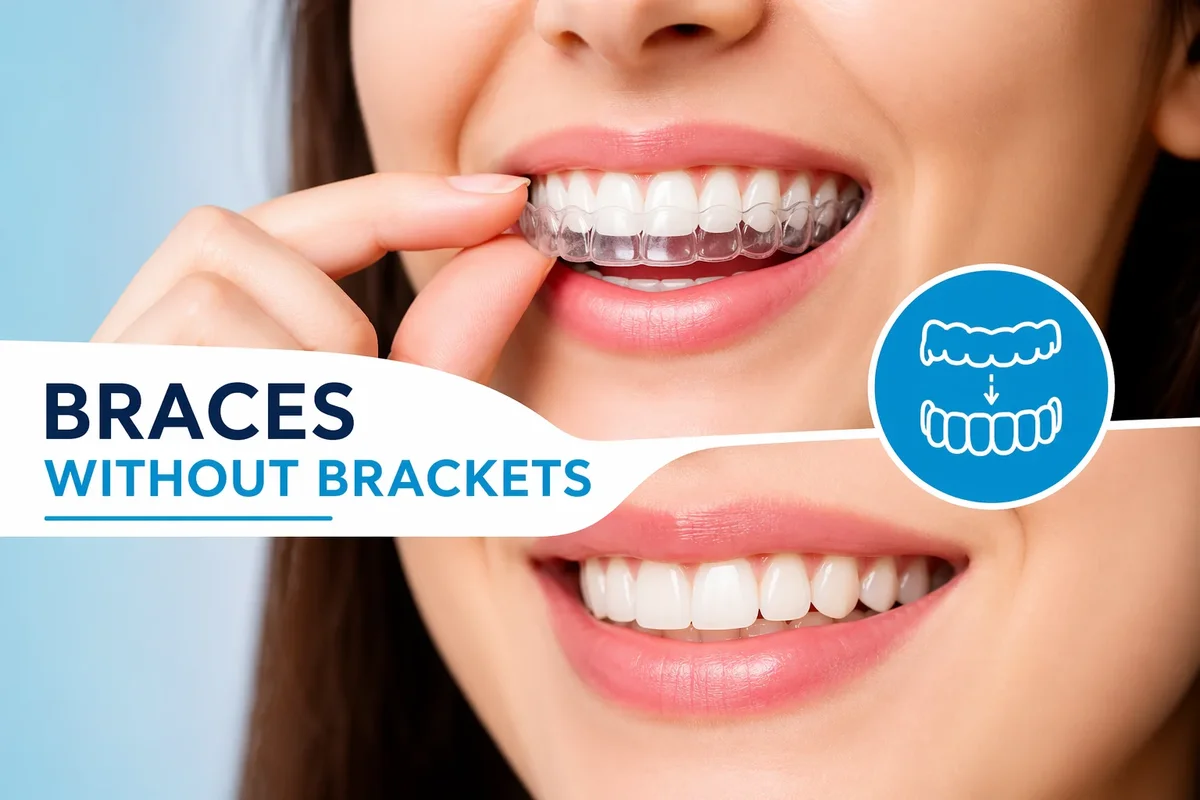
Choosing braces without brackets is one of the most searched modern orthodontic solutions for people who want straighter teeth without the visible look, food restrictions, and cleaning challenges often associated with traditional metal braces. For many adults, teens, and image-conscious patients, the idea of improving the smile discreetly is very attractive. Instead of metal brackets fixed to the front of the teeth, braces without brackets usually refer to clear aligners, removable orthodontic trays, or other discreet systems designed to move teeth gradually and comfortably.
The main purpose of braces without brackets is the same as conventional orthodontic treatment: to guide teeth into healthier, better-aligned positions. However, the experience can feel very different. Traditional braces use brackets, wires, and elastic bands to create controlled pressure. Clear aligner systems and similar bracket-free orthodontic options use a series of custom-made trays that fit closely over the teeth. Each tray applies gentle pressure to specific teeth, helping them move step by step according to a digital treatment plan. 🦷
Patients often search for braces without brackets because they want a treatment that fits into daily life more easily. Clear trays can usually be removed for eating, brushing, and flossing, which may make oral hygiene simpler than with fixed brackets. This can be especially helpful for people who are worried about food getting stuck, plaque buildup, or difficulty cleaning around wires. Still, removable treatment requires discipline. For the best results, most patients must wear their aligners for the number of hours recommended by their dentist or orthodontist each day.
Another reason braces without brackets are popular is appearance. Many people want to correct crowded teeth, gaps, mild bite problems, or shifting teeth after previous orthodontic treatment, but they do not want their treatment to be obvious in photos, work meetings, school, or social situations. Clear aligners are often described as nearly invisible braces or invisible orthodontic treatment because they are designed to be discreet. While they are not completely invisible, they are much less noticeable than metal brackets for many patients.
It is important to understand that braces without brackets are not a one-size-fits-all solution. The right treatment depends on the position of your teeth, your bite, gum health, jaw relationship, age, expectations, and how consistently you can wear removable appliances. A dental clinic will usually begin with an examination, digital scan or impression, photos, and sometimes X-rays. These steps help the dentist evaluate whether bracket-free treatment can safely and effectively achieve the desired result.
For simple to moderate orthodontic concerns, braces without brackets can be a convenient and comfortable choice. They may help with mild crowding, small spaces between teeth, slightly rotated teeth, or relapse after old braces. In more complex cases, such as severe bite problems, major tooth rotations, large gaps, impacted teeth, or significant jaw-related issues, traditional braces or combined orthodontic methods may still be recommended. The best approach is always the one that protects both smile appearance and long-term oral function.
Patients should also know that successful braces without brackets treatment is not only about wearing clear trays. It also includes regular checkups, proper cleaning, careful storage of aligners, and following professional instructions. Aligners should usually be removed before meals and cleaned before being placed back in the mouth. Drinking water while wearing them is generally preferred, while sugary or colored drinks may increase the risk of staining or tooth decay if trapped under the trays.
From a dental health perspective, braces without brackets can support more than cosmetic improvement. Straighter teeth may be easier to clean, and better alignment can sometimes reduce areas where plaque collects. A balanced bite may also help distribute chewing forces more evenly. However, orthodontic treatment should always be planned by a qualified dental professional. For general oral health education, patients can also visit the American Dental Association, which provides trusted dental information for the public.
Before starting braces without brackets, patients should ask clear questions: How long will treatment take? How often are checkups needed? What happens if an aligner is lost? Will attachments be needed? Are retainers required after treatment? Retainers are especially important because teeth can naturally shift after orthodontic movement. Without proper retention, even successful results may gradually change over time.
At a professional dental clinic, the goal is not simply to make teeth look straighter, but to create a healthier, stable, and natural-looking smile. If you are considering braces without brackets and want a personalized evaluation, you can contact the clinic through the Redent Klinik Contact Page. A consultation can help determine whether clear aligners, invisible braces, or another discreet orthodontic method is suitable for your smile goals. 😊
In summary, braces without brackets are a modern orthodontic choice for people who want a discreet, removable, and lifestyle-friendly way to straighten teeth. They can be especially appealing for patients who value comfort, appearance, and easier cleaning. Still, the safest and most effective results come from proper diagnosis, realistic expectations, and consistent cooperation throughout the treatment. With the right planning, braces without brackets can offer a confident path toward a cleaner, straighter, and more attractive smile.
What Are Braces Without Brackets and How Do They Work?
Braces without brackets are orthodontic treatments designed to straighten teeth without using the small metal or ceramic pieces that are traditionally bonded to the front surface of each tooth. Instead of fixed brackets and wires, these treatments usually rely on clear aligners, removable trays, or other discreet orthodontic systems that guide teeth into better positions over time. For patients who want a straighter smile but feel uncomfortable with the appearance of conventional braces, braces without brackets can offer a modern and more lifestyle-friendly alternative.
The most common type of braces without brackets is clear aligner treatment. Clear aligners are custom-made plastic trays that fit closely over the teeth. They are created from a digital or physical impression of the mouth and are designed in a planned sequence. Each aligner makes small, controlled movements. After wearing one set for the recommended period, the patient moves to the next set. This gradual process continues until the teeth reach their planned positions. 🦷
How Braces Without Brackets Move Teeth
Although braces without brackets look very different from traditional braces, the biological principle is similar. Teeth move when gentle, consistent pressure is applied to them. The bone around the tooth root responds to this pressure by slowly remodeling. On one side, bone is resorbed; on the other side, new bone forms. This allows the tooth to shift safely through the jawbone. The key is controlled force. Too much force can be uncomfortable or harmful, while too little force may not create the desired movement.
With traditional braces, wires and brackets create this pressure. With braces without brackets, the clear aligner tray itself applies pressure to selected teeth. The tray is shaped slightly differently from the current tooth position, so when it is worn, it encourages teeth to move into the next planned stage. This is why consistent wear is so important. If aligners are not worn for enough hours each day, the teeth may not move as expected, and the next tray may not fit properly.
The Digital Planning Process
A major advantage of many braces without brackets systems is digital planning. Before treatment begins, the dentist or orthodontist usually examines the mouth, takes photographs, checks the bite, and may use digital scanning technology. The scan creates a detailed 3D model of the teeth. This model helps the dental professional plan how each tooth should move, how many aligners may be needed, and what the final smile could look like.
This planning stage is very important because braces without brackets must be designed carefully for each patient. Tooth movement is not random. Each step must be planned according to the patient’s bite, gum health, tooth shape, jaw relationship, and treatment goals. In some cases, small tooth-colored attachments may be placed on certain teeth. These attachments are not brackets; they are small shapes that help aligners grip the teeth better and create more accurate movement.
Are Attachments the Same as Brackets?
Many patients ask whether attachments mean they are no longer using braces without brackets. The answer is no. Attachments are not the same as traditional brackets. Brackets are connected by wires and stay fixed throughout treatment. Attachments are small, tooth-colored additions that work with clear aligners. They are usually much less noticeable than metal brackets and are used only when extra control is needed for specific tooth movements, such as rotation, lifting, or root positioning.
What Problems Can Braces Without Brackets Help Correct?
Braces without brackets may help correct several common orthodontic concerns, especially mild to moderate cases. These may include crowded teeth, small gaps, slightly rotated teeth, minor bite irregularities, and shifting that happens after previous orthodontic treatment. They can also be helpful for patients who want cosmetic smile alignment before restorative dental treatments, such as veneers, crowns, or implants, when alignment improvement is recommended first.
However, braces without brackets are not always the best solution for every case. Severe crowding, complex bite problems, impacted teeth, major jaw discrepancies, or teeth that need very advanced movement may require traditional braces or a combined treatment plan. This is why a professional consultation is essential. A dentist can assess whether clear aligners, invisible braces, or another orthodontic method will produce a safe and stable result.
Why Patient Cooperation Matters
One of the biggest differences between fixed braces and braces without brackets is patient responsibility. Traditional braces stay on the teeth all the time, so they work continuously. Clear aligners are removable, which is convenient, but this also means the patient must wear them correctly. If aligners are removed too often or forgotten, treatment may slow down or become less predictable.
Most aligner-based braces without brackets treatments require long daily wear, often around 20 to 22 hours depending on the dentist’s instructions. Aligners are generally removed for eating, drinking anything other than water, brushing, and flossing. After meals, teeth should be cleaned before aligners are placed back in the mouth. This helps reduce the risk of trapped food particles, staining, bad breath, and tooth decay.
Comfort and Adjustment Period
Patients often choose braces without brackets because they expect better comfort. In many cases, clear aligners feel smoother than brackets and wires because there are no sharp metal edges. Still, mild pressure or tightness is normal when starting a new aligner. This usually means the tray is working. Some patients may also notice temporary speech changes during the first few days, but many adapt quickly as the tongue becomes used to the aligners.
What Happens After Treatment?
The final stage of braces without brackets is retention. Once teeth have moved into their new positions, they need support to stay there. This usually involves wearing retainers as instructed by the dentist. Retainers may look similar to clear aligners, but their purpose is different. Aligners move teeth; retainers hold teeth in place. Without retention, teeth can gradually shift back, especially during the months after treatment ends.
In simple terms, braces without brackets work by combining careful diagnosis, digital planning, custom aligners, consistent wear, and long-term retention. They are a discreet orthodontic option for patients who want straighter teeth without the appearance of traditional braces. When planned and monitored by a qualified dental professional, bracket-free orthodontic treatment can be an effective way to improve smile alignment, oral hygiene, and confidence while fitting more naturally into everyday life. 😊
Braces Without Brackets vs Traditional Metal Braces
When comparing braces without brackets with traditional metal braces, the biggest difference is the way each treatment applies pressure to the teeth. Traditional braces use small brackets bonded to the teeth, connected by wires that are adjusted over time. These wires guide the teeth into better positions. In contrast, braces without brackets usually use clear aligners or similar removable orthodontic trays that fit over the teeth and create gentle, planned movement without visible metal parts.
Both options can be effective, but they are not identical. Traditional metal braces have been used for decades and can treat a wide range of orthodontic problems, including complex bite issues, severe crowding, major rotations, and difficult tooth movements. Braces without brackets are often preferred by patients who want a more discreet and flexible treatment experience, especially when their case is mild to moderate. The best choice depends on the patient’s dental condition, lifestyle, expectations, and the professional recommendation of the dentist or orthodontist.
Appearance and Daily Confidence
One of the most common reasons patients choose braces without brackets is appearance. Metal braces are visible when speaking, smiling, laughing, or taking photos. For some patients, this is not a problem, but others may feel self-conscious in professional, social, or school environments. Clear aligners are usually much less noticeable, which makes them appealing for adults, teenagers, public-facing professionals, and anyone who wants a more subtle orthodontic solution. 😊
Traditional braces can also be customized with colored elastics, which some younger patients enjoy. However, for patients who want a natural look during treatment, braces without brackets may feel more comfortable emotionally. They allow people to continue daily activities with less concern about how their orthodontic treatment appears to others. This can be especially helpful for weddings, job interviews, presentations, travel, and important social events.
Comfort and Mouth Irritation
Comfort is another important difference between traditional braces and braces without brackets. Metal braces include brackets and wires that may sometimes rub against the cheeks, lips, or tongue. Orthodontic wax can help reduce irritation, but some patients still need time to adjust. Wire ends may occasionally poke soft tissues, especially after adjustments or if a wire shifts.
Clear aligners used in braces without brackets are usually smooth and custom-fitted, so they often cause less rubbing inside the mouth. However, this does not mean treatment is completely free of discomfort. Patients may feel pressure or tightness when starting a new aligner set. This pressure is normal because the teeth are being guided into a new position. The discomfort is usually temporary and often improves after the first few days of each aligner stage.
Is One Option Always More Comfortable?
There is no single answer for every patient. Some people adapt very well to traditional braces, while others strongly prefer braces without brackets. Comfort depends on tooth sensitivity, treatment complexity, appliance design, and personal tolerance. A professional dental examination can help identify which method is likely to be more suitable for the patient’s specific mouth structure and orthodontic needs.
Eating, Drinking, and Food Restrictions
Food habits are a major practical difference. With traditional braces, patients usually need to avoid very hard, sticky, or chewy foods because these can damage brackets or bend wires. Foods like hard candies, sticky sweets, popcorn kernels, and biting directly into very hard items may create problems. If a bracket breaks, treatment can be delayed until it is repaired.
With braces without brackets, patients typically remove the aligners before eating. This means there are usually fewer food restrictions compared with fixed metal braces. Patients can eat many of their normal foods, as long as they remove the trays first and clean their teeth before putting them back in. This flexibility is one of the strongest lifestyle advantages of braces without brackets.
Oral Hygiene and Cleaning
Cleaning teeth with traditional braces can take more time because food and plaque may collect around brackets and wires. Patients need careful brushing, floss threaders, interdental brushes, or water flossers to clean properly. Poor oral hygiene during metal braces treatment may increase the risk of white spots, gum inflammation, bad breath, or cavities.
Braces without brackets can make brushing and flossing easier because the aligners are removable. Patients can clean their teeth normally after taking the trays out. However, this convenience comes with responsibility. Aligners must also be cleaned regularly, and teeth should not be covered by trays while food particles or sugary liquids remain on the enamel. Otherwise, plaque and acids can stay trapped against the teeth.
Which Option Is Better for Hygiene?
For many patients, braces without brackets are easier to manage from a hygiene perspective. Still, success depends on patient habits. A person who removes aligners too often, forgets to brush, or drinks sugary beverages while wearing trays may still develop dental problems. Good oral hygiene is essential with both treatment types.
Treatment Control and Case Complexity
Traditional braces may offer stronger control for complex tooth movements because the appliance is fixed and works continuously. The orthodontist can adjust wires, add elastics, use springs, or create detailed force systems. This makes metal braces a reliable option for more complicated cases.
Braces without brackets can also be highly effective, especially with careful digital planning and patient cooperation. They are commonly used for crowding, spacing, mild bite correction, and relapse after previous orthodontic treatment. However, certain movements may require attachments, refinements, or additional techniques. In some complex cases, traditional braces may still provide a more predictable result.
Patient Responsibility and Compliance
A key advantage of metal braces is that they are fixed to the teeth, so they work all day and night. The patient cannot remove them. This can be helpful for younger patients or anyone who may forget to wear removable appliances. However, fixed braces also require careful eating habits and cleaning routines.
Braces without brackets require strong cooperation. Because aligners are removable, the patient must wear them for the recommended daily time. If they are left out too often, teeth may not move correctly, treatment may take longer, and aligners may stop fitting well. For disciplined patients, this flexibility is a benefit. For inconsistent patients, it can become a disadvantage.
Which Treatment Should You Choose?
The choice between metal braces and braces without brackets should not be based only on appearance. A complete dental evaluation is necessary to check tooth alignment, bite relationship, gum health, jaw structure, and treatment goals. Patients who want a discreet, removable, and lifestyle-friendly option may prefer clear aligners or invisible orthodontic treatment. Patients with severe orthodontic concerns may be better served by traditional braces or a combined approach.
In summary, braces without brackets offer strong advantages in appearance, comfort, food flexibility, and easier daily cleaning. Traditional metal braces remain powerful, reliable, and suitable for many complex cases. The best treatment is the one that creates a healthy, stable, and attractive smile while matching the patient’s needs and habits. A qualified dental clinic can explain both options clearly and help patients choose the safest path toward long-term smile improvement. 🦷
Clear Aligners as the Most Popular Braces Without Brackets Option
Clear aligners are often the first treatment people think of when they search for braces without brackets. They are thin, transparent, removable trays designed to fit closely over the teeth and guide them into better alignment step by step. Unlike traditional braces, clear aligners do not use metal brackets, wires, or colorful elastics. This makes them especially attractive for adults and teens who want a straighter smile without a noticeable orthodontic appliance.
The popularity of braces without brackets has grown because many patients want orthodontic treatment that feels more natural in daily life. Clear aligners can usually be removed for meals, brushing, and flossing, which gives patients more freedom than fixed braces. They are also discreet in appearance, so people can speak, smile, study, work, and attend social events with more confidence. For many patients, this combination of comfort, convenience, and appearance makes clear aligners the preferred form of braces without brackets.
How Clear Aligners Are Designed
Clear aligner treatment usually starts with a detailed dental examination. The dentist checks the teeth, gums, bite, jaw relationship, and overall oral health. Digital scans, photographs, and sometimes X-rays may be taken to create a complete picture of the patient’s mouth. This information is used to design a personalized treatment plan for braces without brackets. The goal is not only to improve the look of the smile but also to create healthier and more stable tooth positions.
After the planning stage, a series of aligners is made. Each aligner is slightly different from the previous one. When worn in the correct order, the trays apply gentle pressure to selected teeth. This pressure encourages gradual movement. Because braces without brackets depend on precise planning, each stage must be carefully designed. Even small tooth movements need to be controlled so the final result looks natural and functions properly.
Why Digital Planning Matters
Digital planning is one of the reasons clear aligners have become such a common choice for braces without brackets. With modern scanning and planning software, the dentist can often preview the intended tooth movements before treatment begins. This helps patients understand the process more clearly. It also allows the dental professional to identify possible challenges, such as teeth that may need extra space, attachments, or refinements during treatment.
Why Patients Prefer Clear Aligners
Many patients prefer clear aligners because they are discreet. Traditional braces are visible when talking and smiling, while clear aligners are designed to be much less noticeable. This is a major reason adults choose braces without brackets, especially if they work in public-facing jobs, attend meetings, or simply want to feel confident during treatment. Teens may also appreciate the subtle appearance, particularly during school, photos, or social activities. 😊
Another important advantage is removability. With clear aligners, patients can take the trays out before eating. This means they do not usually need to avoid the same hard, sticky, or chewy foods that can damage traditional braces. However, patients must remember to put the aligners back in after meals. Braces without brackets are convenient, but they work only when worn consistently according to the dentist’s instructions.
Comfort During Treatment
Clear aligners are usually smooth and custom-made, so they may feel more comfortable against the lips and cheeks than brackets and wires. Patients may still feel pressure when starting a new aligner, but this is normal. That tight feeling often means the aligner is applying controlled force to move the teeth. In most cases, the discomfort is temporary and becomes easier as the mouth adapts. This smoother experience is another reason many people choose braces without brackets.
Some patients may notice a slight change in speech during the first few days of wearing aligners. This usually improves as the tongue gets used to the trays. Saliva flow may also increase briefly at the beginning. These small adjustments are common and do not usually prevent patients from continuing normal daily activities. For many people, braces without brackets quickly become part of their routine.
What Clear Aligners Can Treat
Clear aligners can help with many common orthodontic concerns. These may include mild to moderate crowding, small gaps between teeth, minor rotations, and teeth that have shifted after previous braces. In some cases, braces without brackets may also help improve mild bite issues, depending on the patient’s anatomy and treatment plan. The dentist must decide whether aligners can achieve the required movement safely.
It is important to understand that clear aligners are not suitable for every orthodontic problem. Severe crowding, complex bite correction, impacted teeth, large jaw discrepancies, or major tooth rotations may require fixed braces or a combined approach. A patient may want braces without brackets, but the final recommendation should always be based on diagnosis, not only preference. The best orthodontic plan is the one that produces a healthy, stable, and attractive result.
Attachments and Refinements
Some clear aligner treatments require small tooth-colored attachments. These are bonded to certain teeth to help the aligners grip and move them more effectively. Attachments are not the same as brackets because they are not connected by wires. They are often used to make braces without brackets more predictable for specific movements. Refinements may also be needed near the end of treatment if certain teeth require additional correction.
Daily Wear and Patient Responsibility
The success of clear aligners depends heavily on patient cooperation. Since braces without brackets are removable, the patient must wear them for the recommended number of hours each day. If aligners are left out too often, tooth movement may slow down or become inaccurate. The next aligner may feel too tight or may not fit properly. This can delay treatment and affect the final result.
Patients should remove aligners before eating and before drinking anything that could stain the trays or increase decay risk. Water is usually the safest drink while aligners are in place. After meals, brushing and flossing before reinserting the trays is recommended. Good habits protect the teeth from plaque, trapped food, bad breath, and enamel problems. In this way, braces without brackets can support a cleaner orthodontic experience when patients follow instructions carefully.
Why Clear Aligners Remain a Leading Choice
Clear aligners remain the most popular form of braces without brackets because they match what many modern patients want: a discreet appearance, removable design, easier hygiene, and comfortable daily use. They can be a smart option for people who want to improve their smile without the look of traditional braces. Still, they require commitment, careful planning, and professional supervision.
In summary, clear aligners are a leading choice for braces without brackets because they combine modern dental technology with patient-friendly convenience. They are not simply cosmetic trays; they are planned orthodontic appliances that move teeth gradually and intentionally. When used correctly and monitored by a qualified dental professional, braces without brackets can help patients achieve a straighter, healthier, and more confident smile without the traditional bracket-and-wire appearance. 🦷
Who Is a Good Candidate for Braces Without Brackets?
A good candidate for braces without brackets is someone who wants to improve tooth alignment in a discreet, comfortable, and removable way while still being committed to following professional instructions. Many patients are interested in this treatment because they want straighter teeth without the visible appearance of metal brackets and wires. However, not every orthodontic case is suitable for clear aligners or other bracket-free options. The best candidates are usually people with mild to moderate alignment concerns, healthy gums, stable teeth, and realistic expectations about the treatment process.
In most cases, braces without brackets are recommended after a complete dental examination. A dentist or orthodontist will look at the position of the teeth, the bite relationship, jaw structure, gum condition, previous dental work, and oral hygiene habits. This step is important because orthodontic treatment is not only about cosmetic improvement. Teeth must move safely through healthy bone and gum tissue. If there is active gum disease, untreated cavities, or unstable dental restorations, these issues usually need to be managed before starting braces without brackets.
Patients With Mild to Moderate Crowding
One of the most common reasons people choose braces without brackets is dental crowding. Crowding happens when there is not enough space in the jaw for the teeth to sit in proper alignment. This can cause teeth to overlap, twist, or appear uneven. Mild to moderate crowding may often be corrected with clear aligners, especially when the movements are carefully planned and enough space can be created safely.
For patients with crowded teeth, braces without brackets may offer both cosmetic and hygiene benefits. When teeth overlap, brushing and flossing can become more difficult, and plaque may collect in tight areas. By improving alignment, patients may find it easier to clean between teeth and maintain better oral health. Still, severe crowding may require extractions, fixed braces, or a more advanced orthodontic plan, depending on the case.
Patients With Small Gaps Between Teeth
People with spacing between teeth may also be good candidates for braces without brackets. Small gaps can appear naturally, after gum changes, due to tooth size differences, or after previous orthodontic relapse. Clear aligners can often close minor spaces by gradually guiding teeth closer together. This can make the smile look more balanced and may also help reduce areas where food becomes trapped.
However, gaps should be evaluated carefully. Sometimes spacing is related to missing teeth, gum disease, tongue habits, or bite problems. In these cases, braces without brackets may still be useful, but they may need to be combined with restorative dentistry, periodontal care, or long-term retention. A proper diagnosis helps prevent the gaps from reopening after treatment.
Why the Cause of Spacing Matters
The cause of spacing is just as important as the size of the gap. If the teeth are simply positioned too far apart, braces without brackets may be a straightforward solution. But if spacing is caused by bone loss, missing teeth, or pressure from the tongue, the treatment plan must address the underlying reason. Otherwise, the final result may not remain stable over time.
Patients With Previous Orthodontic Relapse
Another strong candidate group for braces without brackets includes people who had braces in the past but noticed their teeth shifting again. This is called orthodontic relapse, and it often happens when retainers are not worn as instructed. Teeth can move gradually over the years, especially in the front area of the mouth. Many adults who once had straight teeth later search for invisible braces or clear aligners to correct this relapse discreetly.
For relapse cases, braces without brackets can be very appealing because the problem is often mild or moderate. The patient may not need a full traditional braces treatment again. Instead, a clear aligner plan may help restore alignment with less visual impact. After treatment, however, wearing retainers is essential. Without retention, teeth may shift again, even after successful bracket-free treatment.
Patients Who Can Wear Aligners Consistently
A good candidate for braces without brackets must be responsible enough to wear removable aligners as directed. This is one of the most important factors in treatment success. Unlike fixed braces, removable trays only work when they are in the mouth. If a patient frequently forgets to wear them, leaves them out after meals, or removes them for long periods, tooth movement can become slower and less predictable.
Many aligner systems require long daily wear, often around 20 to 22 hours depending on the dentist’s recommendation. This means patients should remove them mainly for eating, drinking anything other than water, brushing, and flossing. People with disciplined routines often do very well with braces without brackets. Patients who know they may struggle with consistency may need to discuss whether fixed orthodontic treatment would be more reliable.
Teen Candidates and Adult Candidates
Both teenagers and adults can be candidates for braces without brackets, but the decision depends on maturity, oral health, and case complexity. Responsible teens who can follow instructions may benefit from clear aligners, especially if they feel self-conscious about metal braces. Adults often appreciate bracket-free treatment because it fits more naturally into work, social life, and professional communication. 😊
Patients With Good Oral Hygiene
Good oral hygiene is essential before and during braces without brackets. Because aligners cover the teeth, any food particles, sugar, or plaque left on the enamel may stay trapped under the tray. This can increase the risk of bad breath, staining, cavities, or gum irritation. Patients should be ready to brush and floss regularly and clean their aligners properly.
People who already maintain healthy brushing and flossing habits are often better suited for braces without brackets. Patients with cavities, bleeding gums, or heavy plaque buildup may need dental cleaning and treatment before orthodontic movement begins. A healthy foundation supports safer tooth movement and better long-term results.
When Braces Without Brackets May Not Be Suitable
Although braces without brackets are a modern and effective option for many patients, they are not ideal for every situation. Severe bite problems, major jaw discrepancies, impacted teeth, advanced rotations, or complex vertical tooth movements may require traditional braces or specialist orthodontic care. Some patients may also need a combined plan that includes aligners, attachments, elastics, or other dental procedures.
The safest way to know whether braces without brackets are right for you is to have a professional consultation. A dentist can examine your smile, explain your options, and create a plan based on your oral health, lifestyle, and goals. In summary, the best candidates are patients with manageable alignment concerns, healthy teeth and gums, strong daily habits, and the motivation to follow the treatment plan from start to finish. With the right case selection, braces without brackets can be a discreet and effective path toward a straighter, healthier smile. 🦷
Benefits of Choosing Braces Without Brackets for Adults and Teens
The benefits of braces without brackets are one of the main reasons this treatment option has become so popular among both adults and teenagers. Many patients want straighter teeth, but they also want orthodontic care that feels discreet, comfortable, and easier to manage in daily life. Instead of using visible metal brackets and wires, braces without brackets often use clear aligners or other modern orthodontic systems that are designed to fit smoothly over the teeth and guide them into better positions over time.
For adults, braces without brackets can be especially appealing because professional and social confidence often matters during treatment. Many adults delay orthodontic care because they do not want the appearance of traditional braces at work, in meetings, during public speaking, or in photos. For teens, the benefit is similar. School life, friendships, sports, and social confidence can all influence how a young patient feels about orthodontic treatment. A less noticeable option can make the process feel easier and more acceptable. 😊
A More Discreet Orthodontic Experience
One of the strongest advantages of braces without brackets is their discreet appearance. Clear aligners are usually transparent and fit closely over the teeth, making them much less noticeable than metal braces. While they are not completely invisible, many people find that others do not easily notice them during normal conversation. This can help patients feel more relaxed while smiling, speaking, or attending important events.
This discreet design is one reason braces without brackets are often described as invisible orthodontic treatment or clear aligner therapy. Adults may appreciate this during job interviews, business meetings, weddings, and daily communication. Teens may feel more confident in school photos, social activities, and classroom situations. When patients feel less self-conscious, they may be more willing to begin and complete orthodontic treatment.
Removable Design for Better Daily Flexibility
Another major benefit of braces without brackets is removability. Traditional braces are fixed to the teeth until treatment is completed, but clear aligners can usually be removed for eating, brushing, and flossing. This gives patients more control over their daily routine. They do not have to eat around brackets or worry as much about damaging wires with certain foods.
With braces without brackets, patients can usually continue enjoying many of the foods they already like, as long as the aligners are removed before eating. This can be a big advantage for teens who eat at school or adults who eat outside the home during workdays. However, patients must remember to clean their teeth before putting the aligners back in. This protects the enamel and helps prevent food particles from becoming trapped under the trays.
Why Removability Requires Responsibility
The removable nature of braces without brackets is a benefit, but it also requires discipline. Aligners only work when they are worn for the recommended amount of time. If a patient removes them too often or forgets to wear them after meals, treatment may slow down. For responsible adults and motivated teens, this flexibility can be extremely convenient. For patients who struggle with routines, fixed braces may sometimes be more predictable.
Easier Brushing and Flossing
Oral hygiene is often easier with braces without brackets because there are no brackets or wires blocking access to the teeth. With traditional braces, food can become stuck around metal parts, and cleaning may require special tools such as floss threaders, interdental brushes, or water flossers. These tools can be very helpful, but they also make the routine longer and more detailed.
When using braces without brackets, patients can remove the aligners and brush and floss normally. This can make it easier to keep the gums healthy and reduce plaque buildup. Cleaner teeth during orthodontic treatment may lower the risk of white spots, gum irritation, cavities, and bad breath. Still, patients must clean both their teeth and aligners carefully. Clear trays should not be placed over dirty teeth, because bacteria and acids can become trapped against the enamel.
Improved Comfort Compared With Fixed Brackets
Many patients choose braces without brackets because they want a smoother and more comfortable orthodontic experience. Traditional braces include brackets, wires, and sometimes elastic hooks that may rub against the lips and cheeks. Although most patients adapt, irritation can occur, especially after adjustments or if a wire becomes loose.
Clear aligners used for braces without brackets are usually made from smooth plastic and custom-shaped to the patient’s teeth. This may reduce rubbing and soft tissue irritation. Patients may still feel pressure when changing to a new aligner, but this is usually a sign that the tray is guiding the teeth. The pressure often becomes easier after the first few days of each stage.
Comfort Does Not Mean No Sensation
It is important to understand that braces without brackets can still create mild soreness or tightness. Orthodontic movement requires controlled pressure. The difference is that the appliance may feel smoother and less bulky for many patients. If pain is severe, if an aligner does not fit, or if sharp edges appear, the patient should contact the dental clinic for advice.
Confidence for Adults and Teens
Confidence is not only about appearance; it is also about feeling comfortable during the treatment journey. Braces without brackets can help patients feel more in control because they are discreet, removable, and easier to include in everyday life. Adults may feel more comfortable continuing treatment while working, traveling, or meeting clients. Teens may feel less embarrassed during school activities and social interactions.
This emotional benefit can make a real difference. Patients who feel confident are often more motivated to follow their treatment plan. They may wear their aligners more consistently, attend checkups regularly, and maintain better hygiene. In this way, the psychological comfort of braces without brackets can support better cooperation and treatment success.
Fewer Emergency Visits for Broken Brackets
Traditional braces can sometimes require emergency visits if a bracket breaks, a wire pokes, or an elastic component becomes loose. These problems are usually manageable, but they can interrupt daily life and may delay treatment if not repaired. With braces without brackets, there are no metal brackets bonded to the teeth, so bracket breakage is not a concern.
However, patients can still lose or damage aligners. This is why aligners should be stored safely in their case when not in use. Leaving trays in napkins, pockets, or bags can lead to accidental loss or bending. The advantage of braces without brackets is that many common fixed-brace problems are avoided, but patients still need to handle their appliances carefully.
A Modern Option for Smile and Oral Health Improvement
The goal of braces without brackets is not only cosmetic. Straighter teeth can be easier to clean, and improved alignment may help create a more balanced bite. When teeth are crowded, rotated, or unevenly spaced, plaque can collect in difficult areas. Improving alignment may support better long-term hygiene and healthier gums when combined with regular dental care.
For both adults and teens, braces without brackets offer a modern balance of appearance, comfort, flexibility, and function. They may be ideal for patients who want a discreet way to improve their smile without the visible look of traditional braces. The best results come from proper diagnosis, personalized planning, consistent wear, and professional monitoring. With the right habits and the right dental guidance, braces without brackets can make orthodontic treatment feel more comfortable, confident, and realistic for everyday life. 🦷
Possible Limitations of Braces Without Brackets
Braces without brackets can be an excellent choice for many patients, but they are not perfect for every smile, every bite problem, or every lifestyle. While clear aligners and other bracket-free orthodontic options offer strong advantages in appearance, comfort, and convenience, patients should also understand their limitations before starting treatment. A realistic understanding helps prevent disappointment and allows the dentist to choose the safest and most effective plan. 🦷
The most important point is that braces without brackets are still orthodontic treatment, not simply cosmetic trays. They move teeth through controlled force, and that movement must be planned carefully. If the case is too complex, if the patient does not wear the aligners consistently, or if oral health problems are present, results may be slower, less predictable, or incomplete. This is why a professional dental examination is essential before choosing braces without brackets.
Not Every Orthodontic Case Is Suitable
One limitation of braces without brackets is that they may not be ideal for severe or highly complex orthodontic problems. Clear aligners can often correct mild to moderate crowding, spacing, and certain bite concerns, but some tooth movements are more difficult without fixed brackets and wires. For example, severely rotated teeth, impacted teeth, major vertical tooth movements, complex bite correction, or significant jaw relationship problems may require traditional braces or specialist orthodontic care.
In some cases, a patient may strongly prefer braces without brackets, but the dentist may recommend another method because it will provide better control. Traditional braces can apply continuous force and allow the orthodontist to use wires, elastics, springs, and other tools for advanced movement. Clear aligners can be very effective, but they must be selected for the right case. Choosing treatment based only on appearance may lead to compromised results.
Why Diagnosis Comes Before Preference
A patient’s preference matters, but diagnosis must come first. Before starting braces without brackets, the dentist should evaluate the teeth, gums, bone support, bite, jaw position, and previous dental restorations. A beautiful smile should also be functional and stable. If the bite is not corrected properly, teeth may wear unevenly, jaw discomfort may continue, or the final result may not last as expected.
Patient Compliance Is Essential
Another major limitation of braces without brackets is that success depends heavily on patient cooperation. Traditional braces are fixed to the teeth, so they work continuously. Clear aligners are removable, which is convenient, but it also means the patient must be responsible. If aligners are not worn for the recommended daily time, the teeth may not move according to the plan.
Many aligner-based braces without brackets treatments require long daily wear, often around 20 to 22 hours depending on the dentist’s instructions. If the trays are removed too often for snacks, drinks, social events, or forgetfulness, treatment can slow down. The next aligner may feel too tight or may not seat fully. This can create delays, require refinements, or reduce the accuracy of the final result.
Removable Does Not Mean Optional
The removable design of braces without brackets is one of its biggest benefits, but it can also become a weakness. Aligners should usually be removed only for eating, drinking anything other than water, brushing, and flossing. Patients who travel often, eat frequently throughout the day, or struggle with routines should consider whether they can follow the wear schedule consistently.
Attachments May Still Be Needed
Some patients expect braces without brackets to mean absolutely nothing will be placed on the teeth. However, many clear aligner cases require small tooth-colored attachments. These attachments help the aligners grip certain teeth and create more accurate movements. They are not traditional brackets, and they are usually less noticeable, but they can still be visible in some lighting or close-up situations.
Attachments can be especially helpful for rotations, tooth lifting, root control, and more complex movement. Without them, braces without brackets may not work as predictably in certain cases. Patients should understand that attachments are not a failure of treatment. Instead, they are often used to improve the precision and effectiveness of bracket-free orthodontic care.
Speech Changes and Adjustment Time
Although many patients adapt quickly, braces without brackets can cause temporary speech changes. Because aligners cover the teeth, the tongue may need a few days to adjust. Some patients notice a slight lisp or changes in pronunciation at the beginning of treatment or when switching to a new tray. This is usually temporary and improves with regular wear and normal speaking practice.
There may also be an adjustment period for comfort. New aligners can feel tight because they are designed to move teeth. Mild soreness or pressure is normal, especially during the first days of a new set. However, severe pain, poor fit, sharp edges, or persistent irritation should be discussed with the dental clinic. Properly fitted braces without brackets should feel snug, but they should not cause serious injury or ongoing discomfort.
Eating and Drinking Require Extra Discipline
With braces without brackets, patients usually remove the aligners before eating. This means there are fewer food restrictions compared with metal braces, but it also creates extra responsibility. After meals, teeth should be cleaned before the aligners are placed back in the mouth. If food particles, sugar, or acidic drinks remain on the teeth, the aligners can trap them against the enamel.
This trapped environment may increase the risk of staining, bad breath, plaque buildup, cavities, or gum irritation. Patients should avoid drinking coffee, tea, colored drinks, or sugary beverages while wearing aligners unless the dentist gives specific guidance. Water is usually the safest drink during aligner wear. Good hygiene habits are essential for successful braces without brackets.
Lost or Damaged Aligners Can Delay Treatment
Because clear aligners are removable, they can be misplaced or damaged. Patients sometimes wrap them in napkins during meals, place them in pockets, or leave them exposed on tables. This can lead to accidental loss, breakage, or contamination. If an aligner is lost, the patient should contact the dental clinic for instructions. Wearing an old aligner or moving ahead too soon may not always be appropriate.
To protect braces without brackets, patients should always use the aligner case when the trays are not in the mouth. Aligners should also be kept away from heat, because hot water or high temperatures can distort the plastic. A distorted tray may no longer fit correctly, which can affect tooth movement and treatment progress.
Results May Require Refinements
Even with careful planning, braces without brackets may require refinements near the end of treatment. Refinement means additional aligners are made to improve details that did not move exactly as planned. This does not necessarily mean something went wrong. Teeth are biological structures, and each patient responds differently to orthodontic force.
Refinements may be needed if small rotations remain, if a tooth has not tracked properly, or if the bite needs extra adjustment. Patients should understand that braces without brackets can be predictable, but no orthodontic method can guarantee perfect movement without monitoring. Regular checkups help the dentist detect issues early and adjust the plan when needed.
Retention Is Still Required After Treatment
A final limitation is that braces without brackets do not eliminate the need for retainers. After teeth are moved, they naturally tend to shift. Retainers help hold the teeth in their corrected positions while the surrounding tissues stabilize. Without retainers, teeth may gradually move back, especially in the front area of the mouth.
Patients should think of retention as part of the treatment, not an optional extra. Whether a person chooses traditional braces, clear aligners, invisible braces, or another discreet orthodontic option, retainers are usually necessary for long-term stability. In summary, braces without brackets can be a highly effective and attractive treatment choice, but they require the right case selection, strong patient cooperation, good hygiene, careful handling, and long-term retention. When patients understand both the benefits and limitations, they can make smarter decisions and achieve healthier, more stable smile results. 😊
How Long Does Treatment With Braces Without Brackets Take?
The treatment time for braces without brackets can vary from patient to patient because every smile has a different starting point, different movement needs, and different treatment goals. Some people may need only a short correction for mild crowding or small gaps, while others may require a longer plan to improve rotations, bite balance, or tooth position after previous orthodontic relapse. In general, braces without brackets may take several months to more than a year, depending on the complexity of the case and how consistently the patient follows the dentist’s instructions.
Many patients search for braces without brackets because they want a discreet and convenient treatment, but it is important to understand that discreet does not always mean instant. Teeth move through a biological process. The bone and tissues around each tooth need time to respond safely to pressure. Moving teeth too quickly can increase discomfort and may affect the stability of the final result. A professional treatment plan for braces without brackets is designed to move teeth gradually, predictably, and safely. 🦷
Average Treatment Time for Braces Without Brackets
For mild cases, braces without brackets may sometimes be completed in a shorter period, especially when only minor front tooth alignment is needed. These cases may involve small spaces, slight crowding, or limited relapse after old braces. Moderate cases usually take longer because more teeth must be moved, and the bite may need more careful adjustment. If the treatment includes both upper and lower arches, rotations, attachments, or refinements, the total time may increase.
Although every case is different, many clear aligner treatments last somewhere between several months and 18 months. Some complex cases can take longer. The exact timeline for braces without brackets should always be explained after a full dental examination, digital scan, and treatment planning process. A dentist cannot accurately estimate the duration only by looking at a smile photo or hearing a general description. The position of the tooth roots, bite relationship, gum health, and jaw structure all affect the final timeline.
What Factors Affect Treatment Duration?
Several factors influence how long braces without brackets will take. The first factor is case complexity. Mild spacing or crowding is usually faster to correct than severe crowding, deep bite, open bite, crossbite, or significant rotations. Teeth that need small tipping movements may move more easily than teeth requiring major root control. The more detailed the movement, the more carefully the dentist must plan each stage.
The second factor is patient cooperation. Because most braces without brackets systems use removable aligners, the patient must wear them for the recommended number of hours each day. If the aligners are worn inconsistently, teeth may not track properly, and treatment may take longer. A tray that is left out too often cannot apply the gentle pressure needed for planned movement. This is one of the most common reasons treatment becomes delayed.
Why Wearing Time Matters So Much
With fixed braces, the appliance works all the time because it is attached to the teeth. With braces without brackets, the aligners only work when they are in the mouth. Many patients are advised to wear aligners for most of the day and night, removing them mainly for eating, drinking anything other than water, brushing, and flossing. If a patient frequently removes the trays for snacks, coffee, social events, or forgets to reinsert them after meals, the teeth may not move according to the digital plan.
How Often Are Aligners Changed?
During treatment with braces without brackets, patients receive a series of aligners. Each aligner is slightly different from the previous one and moves the teeth a small step closer to the planned result. Depending on the case and the dentist’s instructions, aligners may be changed weekly, every ten days, every two weeks, or according to another schedule. Patients should not change trays faster than recommended unless their dentist specifically approves it.
Changing aligners too early may seem like a way to finish braces without brackets faster, but it can create problems. Teeth and bone need time to respond. If the next tray is used before the teeth are ready, the aligner may not fit fully, movements may become inaccurate, and discomfort may increase. Following the prescribed schedule helps protect both comfort and treatment predictability.
What Can Make Treatment Take Longer?
Several situations can extend the length of braces without brackets treatment. Poor aligner wear is one of the biggest causes. Lost or damaged aligners can also create delays, especially if replacement trays are needed. Teeth that do not move exactly as planned may require refinements, which means additional scans and extra aligners are made to improve the result.
Oral health problems can also slow progress. If a patient develops cavities, gum inflammation, or other dental concerns during treatment, the dentist may need to pause or modify the plan. This is why good hygiene is essential with braces without brackets. Patients should brush, floss, clean their aligners, and attend regular dental checkups to keep treatment moving smoothly.
Refinements Are Sometimes Normal
Some patients worry if their dentist recommends refinements during braces without brackets treatment. Refinements do not always mean the treatment failed. Teeth are living structures, and not every tooth responds exactly the same way to planned pressure. A refinement phase can help correct small details, improve bite contact, or polish the final smile alignment. In many cases, refinements are part of achieving a more accurate and stable result.
Can Braces Without Brackets Work Faster Than Metal Braces?
Some patients ask whether braces without brackets are faster than traditional braces. The answer depends on the case. For simple cosmetic alignment, clear aligners may sometimes feel faster because the treatment is highly planned and focused. For complex bite problems or difficult tooth movements, traditional braces may be more efficient because fixed brackets and wires can provide stronger continuous control.
The goal should not be simply to finish quickly. The goal of braces without brackets should be to move teeth safely and create a result that looks good, functions well, and remains stable. Rushing orthodontic treatment may lead to poor tracking, discomfort, gum problems, or relapse after treatment ends. A careful timeline is usually better than an unrealistic promise of very fast results.
What Happens After the Active Treatment Ends?
The timeline for braces without brackets does not end the moment the last aligner is finished. After active tooth movement, patients usually need retainers. Retainers help hold the teeth in their new positions while the bone and surrounding tissues stabilize. Without retainers, teeth can slowly shift back, especially during the first months after treatment.
Retainer instructions vary depending on the patient’s case. Some people may need full-time retainer wear at first, followed by nighttime wear. Others may receive different guidance from their dentist. This retention phase is essential because the long-term success of braces without brackets depends not only on moving teeth but also on keeping them in their corrected positions.
In summary, the length of treatment with braces without brackets depends on case complexity, aligner wear time, oral hygiene, appointment attendance, and how well the teeth respond to planned movement. Mild cases may be quicker, while moderate or complex cases need more time and sometimes refinements. With careful planning, consistent wear, and professional supervision, braces without brackets can provide a discreet and effective path toward a straighter smile without the visible look of traditional metal braces. 😊
Daily Care Tips for Braces Without Brackets
Daily care is one of the most important parts of successful treatment with braces without brackets. Because clear aligners and other removable orthodontic trays sit closely over the teeth, they must be kept clean, fresh, and properly stored. Good habits protect your teeth, gums, aligners, and final smile result. While braces without brackets are often easier to clean around than traditional metal braces, they still require consistent attention every day. A simple routine can help prevent stains, bad breath, cavities, gum irritation, and treatment delays. 🦷
The main rule with braces without brackets is to keep both your teeth and your aligners clean. If food particles, plaque, or sugary liquids remain on the teeth before the aligners are placed back in the mouth, they can become trapped under the trays. This creates an environment where bacteria may grow more easily. Over time, poor hygiene can increase the risk of enamel marks, tooth decay, gum inflammation, and unpleasant odor. That is why daily care is not optional; it is part of the treatment itself.
Brush and Floss Before Reinserting Aligners
One of the best habits during treatment with braces without brackets is brushing and flossing after meals before putting the aligners back in. Since aligners cover the teeth, any leftover food or sugar can stay pressed against the enamel. Brushing helps remove food debris and plaque, while flossing cleans between the teeth where a toothbrush cannot reach. This is especially important for patients who eat several times a day or drink beverages other than water.
If brushing is not possible immediately after a meal, rinse your mouth thoroughly with water and brush as soon as you can. However, rinsing should not replace proper brushing. Patients using braces without brackets should carry a small travel toothbrush, toothpaste, and floss when going to work, school, or travel. This makes it easier to maintain the routine outside the home and prevents long periods of wearing aligners over unclean teeth.
Use Gentle but Thorough Cleaning
Good cleaning does not mean aggressive scrubbing. When caring for your teeth during braces without brackets treatment, use gentle circular motions and clean all tooth surfaces carefully. Pay attention to the gumline, back teeth, and areas where teeth overlap. If your dentist recommends interdental brushes or a water flosser, these tools may also help support better hygiene, especially if you have tight spaces or gum sensitivity.
Clean Your Aligners Every Day
Aligner cleaning is just as important as tooth cleaning. Patients with braces without brackets should rinse their aligners whenever they remove them and clean them daily according to the dentist’s instructions. Clear trays can collect saliva, plaque, and bacteria. If they are not cleaned properly, they may become cloudy, stained, or smelly. Clean aligners also look better, which is important for patients who choose this treatment for its discreet appearance. 😊
Many patients gently brush their aligners with a soft toothbrush and cool or lukewarm water. Hot water should be avoided because heat can distort the plastic and affect the fit. Some dentists may recommend special aligner cleaning crystals or tablets. Patients should avoid harsh chemicals, abrasive toothpaste, or colored mouthwash unless approved by the dental clinic. The goal is to keep braces without brackets fresh and transparent without damaging the appliance.
Remove Aligners Before Eating or Drinking
Another essential care tip for braces without brackets is removing the aligners before eating. Eating with aligners in place can damage the trays, create cracks, or cause staining. It can also push food particles into the aligners and make them harder to clean. Since aligners are not designed for chewing, they should be taken out before meals and snacks.
Drinking water while wearing aligners is usually acceptable, but colored, sugary, acidic, or hot drinks should generally be avoided. Coffee, tea, fruit juice, soda, and sports drinks may stain the trays or increase the risk of enamel problems if trapped underneath. Hot drinks can also change the shape of the aligners. For safer treatment with braces without brackets, remove the trays before drinking anything other than water, then clean your teeth before reinserting them.
Snack Habits Matter
Frequent snacking can make braces without brackets harder to manage because each snack requires removing the aligners, eating, cleaning the teeth, and putting the trays back in. Patients may find it helpful to plan meals and snacks more intentionally. This supports better wear time and reduces the risk of forgetting to reinsert the aligners after eating.
Store Aligners Safely in Their Case
Because braces without brackets are removable, they can easily be lost or damaged if they are not stored correctly. One of the most common mistakes is wrapping aligners in a napkin during meals. They may be accidentally thrown away. Aligners can also be damaged if placed in pockets, bags, or exposed to pets. Always use the storage case when the trays are not in your mouth.
A clean case protects the aligners from bacteria, bending, and accidental loss. The case should also be cleaned regularly. If the case becomes dirty, it can transfer bacteria back onto the trays. Patients using braces without brackets should keep the case nearby at all times, especially at restaurants, school, work, or while traveling.
Follow the Recommended Wear Schedule
Daily care is not only about cleaning; it is also about wearing the aligners correctly. Braces without brackets depend on consistent wear to move teeth as planned. If aligners are left out for too long, tooth movement may slow down or become less predictable. The next tray may not fit properly, which can delay treatment or require additional adjustments.
Your dentist will explain how many hours per day you should wear your aligners and when to change to the next set. Do not change aligners earlier than instructed. Moving too quickly can cause discomfort and poor tracking. Successful treatment with braces without brackets requires patience, consistency, and careful follow-through.
Attend Regular Dental Checkups
Even though braces without brackets are convenient, professional monitoring is still necessary. Regular checkups allow the dentist to confirm that the teeth are moving correctly, the aligners fit well, and the gums remain healthy. If a tray feels loose, too tight, cracked, or uncomfortable, the dental clinic should be contacted for guidance.
In summary, the best daily care routine for braces without brackets includes brushing, flossing, cleaning aligners, removing trays before meals, drinking mainly water while wearing them, storing them safely, and following the recommended wear schedule. These simple habits protect your oral health and help your treatment stay on track. With consistent care and professional guidance, braces without brackets can remain clean, comfortable, and effective throughout your journey toward a straighter smile. ✨
How to Choose the Right Dental Clinic for Braces Without Brackets
Choosing the right dental clinic for braces without brackets is one of the most important decisions you can make before starting treatment. Even though clear aligners and other discreet orthodontic systems may look simple, they require careful diagnosis, detailed planning, professional monitoring, and long-term retention. The clinic you choose should not only focus on creating a straighter smile, but also on protecting your bite, gum health, tooth roots, and overall oral function. 🦷
Many patients search for braces without brackets because they want a modern, comfortable, and less visible alternative to traditional metal braces. However, the quality of the final result depends strongly on the experience of the dental team, the accuracy of the treatment plan, and the patient’s follow-up care. A good clinic will explain what is possible, what is not possible, and which option is safest for your specific smile. This honest guidance is essential because braces without brackets are not suitable for every orthodontic case.
Look for a Complete Orthodontic Evaluation
The first sign of a trustworthy clinic is a detailed examination before recommending braces without brackets. A professional evaluation should include checking the teeth, gums, bite, jaw relationship, facial profile, oral hygiene, and previous dental treatments. In many cases, the clinic may also take digital scans, photographs, and X-rays. These records help the dentist understand how the teeth are positioned and whether clear aligners can move them safely.
A clinic should not promise braces without brackets without examining the full mouth. Tooth alignment is connected to many factors, including gum health, bone support, bite pressure, and root position. If a patient has untreated cavities, gum disease, or unstable dental restorations, these problems may need treatment before orthodontic movement begins. A careful clinic will identify these issues early and create a safe sequence for care.
Why Diagnosis Should Come Before Treatment Choice
Some patients arrive already wanting braces without brackets, but a responsible dentist will first confirm whether this option is appropriate. In mild to moderate cases, clear aligners may be excellent. In severe crowding, complex bite problems, impacted teeth, or major jaw-related issues, another method may be more effective. The right clinic will respect your preference while still giving a medically accurate recommendation.
Check Experience With Clear Aligner Planning
Experience matters when choosing a clinic for braces without brackets. Clear aligner treatment is not only about sending a scan to a laboratory. The dentist must understand tooth movement, bite correction, attachments, refinements, and retention. Small planning decisions can affect comfort, treatment time, and the final smile. A clinic with strong aligner experience can explain how your teeth will move and what challenges may appear during treatment.
Ask whether the clinic has treated cases similar to yours. For example, mild crowding, spacing, relapse after braces, rotated teeth, or bite changes may require different strategies. A good clinic will not use the same plan for every patient. Personalized planning is one of the most important parts of successful braces without brackets treatment.
Ask About Digital Scanning and Treatment Planning
Modern clinics often use digital scanning to plan braces without brackets. A digital scan can create a 3D model of your teeth and help design a sequence of aligners. This may improve comfort compared with traditional impressions and can help patients better understand their treatment journey. While technology is helpful, it should always be combined with professional judgment.
The clinic should explain the expected treatment time, how many aligners may be needed, whether attachments are likely, and whether refinements may be required. Refinements are additional aligners used to improve details near the end of treatment. They are common in many braces without brackets cases and should be discussed clearly before treatment begins.
Do Not Choose Based Only on Speed
Fast treatment may sound attractive, but safe orthodontic movement takes time. A clinic that promises extremely quick braces without brackets treatment without proper evaluation should be approached carefully. Teeth, bone, and gums need time to respond to pressure. The goal should be a stable, healthy, and natural-looking result, not simply the shortest possible timeline.
Understand Follow-Up and Emergency Support
Regular follow-up is essential during treatment with braces without brackets. The dentist must check whether the aligners fit correctly, whether the teeth are tracking as planned, and whether the gums remain healthy. If a tray is lost, cracked, uncomfortable, or does not fit, the clinic should provide clear instructions. Good communication can prevent small problems from becoming treatment delays.
Before choosing a clinic, ask how often checkups are needed and what happens if you have a concern between appointments. A reliable clinic will explain how to handle lost aligners, tight trays, broken attachments, and hygiene problems. This kind of support is especially important because braces without brackets depend on consistent wear and accurate fit.
Review Hygiene, Retention, and Aftercare Guidance
A high-quality clinic will teach you how to care for braces without brackets every day. This includes removing aligners before meals, brushing and flossing before reinserting them, cleaning the trays correctly, and storing them safely in a case. Without proper hygiene, aligners can trap food particles, plaque, and sugar against the teeth, increasing the risk of cavities, staining, and gum irritation.
After active treatment, retainers are usually necessary. A clinic that offers braces without brackets should explain retention before treatment begins. Retainers help keep the teeth in their new positions after movement is complete. Without retainers, teeth may shift again over time. Long-term success depends not only on straightening teeth, but also on keeping them stable.
Choose a Clinic That Gives Clear and Honest Communication
The right clinic should answer your questions clearly. You should understand your diagnosis, treatment options, expected timeline, possible limitations, care instructions, and aftercare plan. If you are considering braces without brackets, ask whether your case is simple, moderate, or complex. Ask if attachments will be needed, how often aligners should be worn, and what results are realistic.
In summary, choosing the best clinic for braces without brackets means looking for professional diagnosis, clear aligner experience, modern planning, honest expectations, regular follow-up, hygiene guidance, and proper retention. A beautiful smile should also be healthy, functional, and stable. With the right dental team, braces without brackets can become a comfortable and confident path toward improved alignment, better oral hygiene, and a smile that feels natural in everyday life. 😊