
Reliable dentistry info helps patients understand how to protect their teeth, gums, and overall oral health before problems become painful, expensive, or difficult to treat. Many people search online when they notice bleeding gums, tooth sensitivity, bad breath, cavities, crooked teeth, or missing teeth, but not every source gives clear and patient-friendly guidance. That is why well-explained dentistry info should focus on prevention, early diagnosis, safe treatment choices, and realistic expectations from professional dental care.
At its simplest, dentistry info includes everything a patient needs to know about oral hygiene, dental checkups, gum health, tooth restoration, cosmetic dentistry, orthodontic care, dental implants, and emergency dental situations. Good dental knowledge does not replace a dentist, but it helps you ask better questions, recognize warning signs earlier, and make confident decisions about your smile. 🦷 A healthy mouth is not only about having white teeth; it is also about strong enamel, healthy gums, comfortable chewing, fresh breath, and a balanced bite.
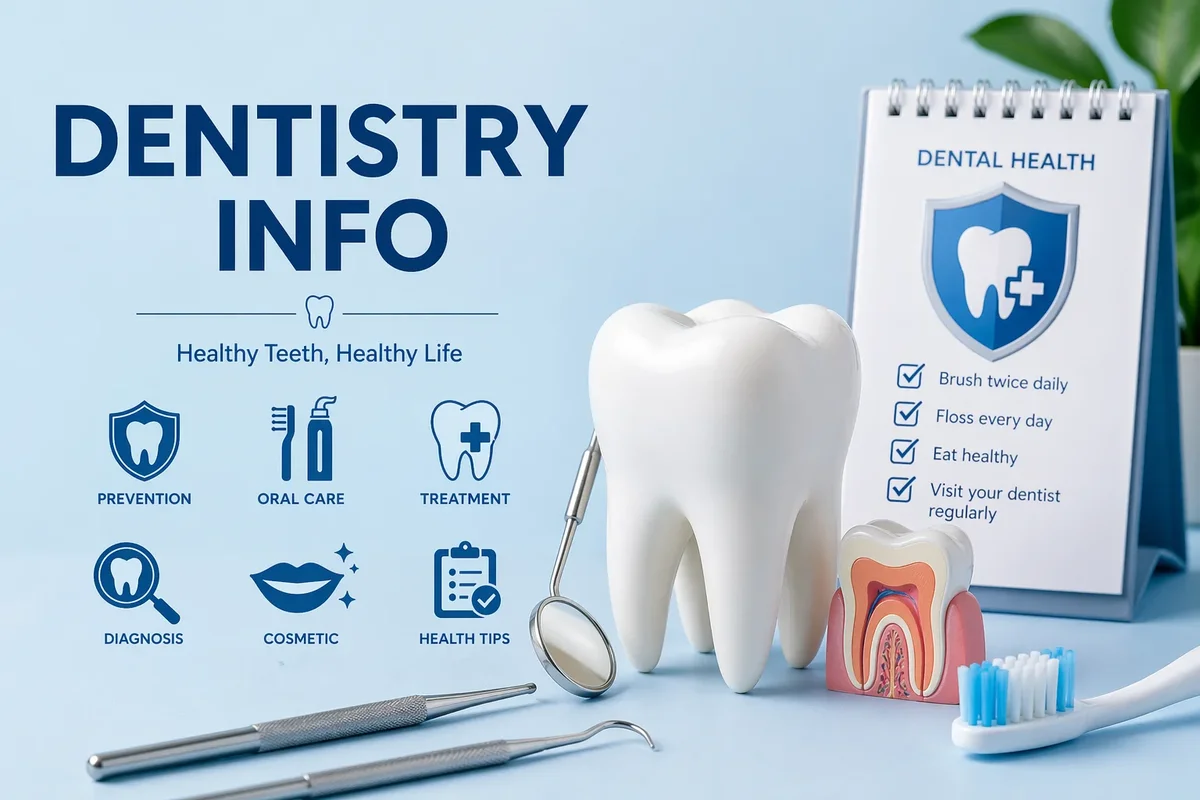
One of the most important parts of dentistry info is prevention. Brushing twice a day with fluoride toothpaste, cleaning between the teeth, limiting sugary snacks, drinking enough water, and visiting a dentist regularly can reduce the risk of cavities and gum disease. Many dental problems begin silently. A small cavity may not hurt at first, and early gum inflammation may only cause mild bleeding. Without proper care, these minor issues can progress into infection, tooth mobility, bone loss, or tooth loss. This is why preventive oral care is always easier than delayed treatment.
Another key area of dentistry info is understanding symptoms. Tooth pain, swelling, bleeding gums, jaw discomfort, loose teeth, sensitivity to hot or cold, persistent bad breath, and mouth sores should not be ignored. Some symptoms may be caused by simple issues, while others may require urgent dental attention. For example, sharp pain when biting may suggest a cracked tooth or deep cavity, while gum bleeding may be a sign of gingivitis or periodontitis. Accurate dental information helps patients understand when to monitor a symptom and when to book an appointment quickly.
Modern dentistry info also includes treatment options. Depending on the patient’s condition, a dentist may recommend a filling, root canal treatment, dental crown, professional cleaning, gum therapy, teeth whitening, veneers, orthodontic aligners, bridges, dentures, or dental implants. Each option has a different purpose. Fillings restore damaged tooth structure, crowns protect weakened teeth, root canal treatment saves infected teeth, and implants replace missing teeth with stable support. A trusted clinic should explain the benefits, limits, healing process, and aftercare of each treatment in simple language.
Patients should also use dentistry info to choose the right dental clinic. A good clinic should provide clear communication, hygienic treatment rooms, detailed examinations, digital imaging when needed, personalized treatment planning, and honest follow-up care. The dentist should listen to your concerns, explain findings clearly, and avoid rushing important decisions. For patients who want to ask questions or plan a visit, the Redent Klinik Contact Page can be used to contact the clinic directly and request guidance based on individual needs.
When reading dentistry info online, it is important to rely on trusted sources. Dental blogs can be helpful, but they should support safe habits and encourage professional evaluation instead of giving risky self-treatment advice. For broader educational guidance, patients can also visit the American Dental Association, which provides authoritative oral health resources. This kind of oral health information can help patients compare what they read online with professional standards and avoid misleading claims.
In summary, dentistry info is valuable because it helps people protect their smile, understand dental symptoms, compare treatment possibilities, and communicate better with their dentist. The best approach is simple: prevent what you can, diagnose problems early, choose evidence-based care, and follow your dentist’s aftercare instructions. With accurate dentistry info, patients can move from confusion to confidence and take practical steps toward a healthier, more comfortable, and more attractive smile. 😊
What Is Dentistry Info and Why Does It Matter?
Dentistry info is the practical knowledge patients need to understand their teeth, gums, mouth, and available dental treatments. It explains how oral health works, why dental problems happen, what symptoms may mean, and when professional care is necessary. For many people, searching for dentistry info is the first step before booking a dental appointment, comparing treatment options, or improving daily oral hygiene habits. Clear and trustworthy guidance can reduce fear, prevent confusion, and help patients make safer decisions about their smile. 🦷
Why Patients Search for Dentistry Info
Most patients look for dentistry info because they want answers to common concerns such as tooth pain, bleeding gums, bad breath, cavities, sensitivity, missing teeth, crooked teeth, or cosmetic smile problems. These concerns can feel stressful, especially when symptoms appear suddenly. A patient may wonder whether tooth sensitivity is normal, whether gum bleeding means serious disease, or whether a missing tooth should be replaced quickly. Good dentistry info helps explain these situations in a simple way, while also reminding readers that a personal dental examination is the safest way to receive an accurate diagnosis.
Another reason people search for dentistry info is to understand treatment choices. Modern dentistry includes preventive care, restorative dentistry, cosmetic dentistry, orthodontics, gum treatments, dental implants, crowns, bridges, veneers, dentures, and emergency services. Each treatment has a different goal. Some treatments protect natural teeth, some restore function, and others improve appearance. When patients understand the basics before visiting a clinic, they can ask better questions and feel more confident during consultation.
The Difference Between General Advice and Professional Diagnosis
One important part of accurate dentistry info is knowing its limits. Online dental guidance can explain possibilities, warning signs, and common treatment methods, but it cannot replace a dentist’s clinical examination. A dentist may need to check the mouth, take digital X-rays, evaluate gum pockets, test tooth vitality, and review the patient’s medical history. Two people may have similar symptoms but completely different causes. For example, tooth pain may come from a cavity, cracked tooth, gum infection, sinus pressure, bite imbalance, or exposed tooth root.
Why Early Dental Evaluation Matters
Reliable dentistry info should always encourage early evaluation. Dental problems often begin quietly. A small cavity may not hurt until it reaches deeper layers of the tooth. Gum disease may start with mild bleeding but later lead to bone loss and loose teeth. A tiny crack may become more serious if chewing pressure continues. Early diagnosis usually means simpler care, better comfort, and a higher chance of saving natural teeth. This is why patients should not wait for severe pain before contacting a dentist.
How Dentistry Info Supports Better Daily Habits
Useful dentistry info also improves daily oral care. Many patients brush every day but still miss important details. Brushing too hard can damage gums and enamel. Brushing too quickly may leave plaque behind. Ignoring the spaces between teeth can increase the risk of cavities and gum inflammation. Patients should learn how to brush gently, clean between teeth, use fluoride toothpaste, replace toothbrushes regularly, and limit frequent sugary snacks. These simple habits are powerful because they reduce plaque, protect enamel, and support healthier gums.
Good oral health education also explains the connection between the mouth and general well-being. Gum inflammation, dental infection, chewing problems, and missing teeth can affect nutrition, confidence, speech, and quality of life. A painful tooth can disturb sleep. Bad breath can affect social comfort. Missing teeth can make chewing harder and may place extra pressure on remaining teeth. For this reason, dentistry info should not be seen as minor information; it is part of a larger health awareness routine.
What Makes Dentistry Info Trustworthy?
Trustworthy dentistry info should be clear, balanced, and patient-centered. It should avoid exaggerated promises, unrealistic results, or fear-based language. A good dental article explains benefits and limitations together. For example, teeth whitening can brighten stains, but it may not change the color of crowns or fillings. Dental implants can replace missing teeth, but patients need healthy bone and gums for long-term success. Orthodontic treatment can improve alignment, but the treatment time depends on the complexity of the case.
In conclusion, dentistry info matters because it helps patients understand symptoms, prevent problems, compare treatments, and communicate clearly with their dentist. The best dental decisions are made when reliable information and professional examination work together. With accurate dentistry info, patients can feel less anxious, act earlier, and protect their smile with more confidence. 😊
Dentistry Info for Preventive Oral Care
Dentistry info for preventive oral care is one of the most important parts of maintaining a healthy smile. Prevention means taking action before pain, infection, cavities, gum disease, or tooth loss develops. Many patients think dental care only begins when something hurts, but the truth is that the best dental results usually come from early protection. With the right dentistry info, patients can understand how daily habits, regular dental visits, nutrition, and professional cleanings work together to keep the mouth healthy. 🦷
Why Preventive Dental Care Is So Important
Preventive care is based on a simple idea: it is easier to protect healthy teeth than to repair damaged teeth later. Accurate dentistry info teaches patients that cavities and gum disease often begin quietly. A small amount of plaque can build up around the gumline or between teeth. If it is not removed properly, it can harden into tartar, irritate the gums, weaken enamel, and increase the risk of decay. Because early dental problems may not cause strong pain, regular prevention is essential even when the mouth feels normal.
Good dentistry info also helps patients understand that oral health affects daily comfort. Healthy teeth allow easier chewing, clearer speech, fresher breath, and more confidence when smiling. Healthy gums help support the teeth and protect the bone around them. When preventive habits are ignored, patients may experience bleeding gums, tooth sensitivity, bad breath, cavities, gum recession, loose teeth, or dental infections. These problems can become more complex over time, which is why prevention should be part of every person’s routine.
Daily Brushing: The Foundation of Prevention
One of the most basic but powerful pieces of dentistry info is the importance of brushing correctly. Brushing should usually be done twice a day with fluoride toothpaste. Fluoride helps strengthen tooth enamel and makes teeth more resistant to acid attacks caused by bacteria and food particles. However, brushing is not only about frequency; technique matters too. Patients should brush gently, cover every surface of the teeth, clean along the gumline, and avoid aggressive scrubbing that may damage enamel or cause gum recession.
Common Brushing Mistakes to Avoid
Helpful dentistry info should also explain what not to do. Many people brush too quickly, use a toothbrush with hard bristles, forget the back teeth, or rinse immediately in a way that removes too much fluoride from the mouth. Others press too hard because they believe stronger brushing means cleaner teeth. In reality, gentle and consistent brushing is usually better than harsh pressure. A soft-bristled toothbrush, small circular movements, and enough brushing time can make daily cleaning more effective and safer for the gums.
Cleaning Between Teeth Matters
Another essential part of dentistry info for prevention is interdental cleaning. A toothbrush cannot fully reach the tight spaces between teeth. When food particles and plaque remain in these areas, cavities can form between teeth and gum inflammation can develop. Dental floss, interdental brushes, or water flossers may be recommended depending on the patient’s mouth structure, gum condition, and dental restorations. The best method is the one the patient can use correctly and consistently.
Patients with braces, bridges, implants, crowns, or crowded teeth may need extra guidance because cleaning around these areas can be more difficult. This is where professional advice becomes valuable. A dentist or dental hygienist can demonstrate the correct technique and recommend suitable tools. Practical dentistry info should always encourage patients to personalize their oral hygiene routine instead of assuming that one method is perfect for everyone.
Nutrition and Oral Health Protection
Preventive dentistry info is not limited to brushing and flossing. What a person eats and drinks also affects oral health. Frequent sugary snacks, acidic drinks, sticky foods, and constant sipping can increase acid exposure in the mouth. This weakens enamel and creates a better environment for cavity-causing bacteria. Water, balanced meals, crunchy vegetables, dairy products, and limited sugar frequency can support healthier teeth. It is not only the amount of sugar that matters, but how often the teeth are exposed to it during the day.
Simple Food Habits That Help Teeth
Patients can protect their smile by drinking water after meals, avoiding constant snacking, choosing tooth-friendly foods, and limiting acidic beverages. Chewing sugar-free gum may help stimulate saliva in some situations, and saliva is important because it helps neutralize acids and wash away food particles. This kind of oral health information gives patients realistic steps they can apply every day without making dental care feel complicated.
Regular Dental Checkups and Cleanings
Professional visits are a key part of preventive care. Even patients with excellent home routines can miss plaque in hard-to-reach areas. Over time, plaque can turn into tartar, which cannot be removed with normal brushing. A professional cleaning removes buildup, polishes the teeth, and helps reduce gum irritation. During a checkup, the dentist can also look for early signs of cavities, gum disease, worn fillings, bite problems, oral lesions, and other concerns.
Reliable dentistry info should remind patients that checkup frequency may vary. Some people may need routine visits every six months, while others with gum disease, high cavity risk, dry mouth, orthodontic appliances, implants, or medical conditions may need more frequent monitoring. Preventive care is most effective when it is personalized. A patient who receives regular evaluations can often treat small issues before they become painful or expensive.
Prevention Builds Long-Term Confidence
In conclusion, dentistry info for preventive oral care helps patients understand that a healthy smile is built through daily habits and regular professional support. Brushing, interdental cleaning, smart nutrition, hydration, dental checkups, and early treatment all work together. Prevention does not require perfection; it requires consistency. With accurate dentistry info, patients can protect their teeth, support their gums, reduce dental anxiety, and enjoy a cleaner, fresher, more confident smile for years to come. 😊
Dentistry Info About Common Dental Problems
Dentistry info about common dental problems helps patients understand what may be happening in their mouth before a condition becomes more serious. Many oral health issues begin with mild signs, such as sensitivity, gum bleeding, bad breath, or small dark spots on the teeth. Because these symptoms can seem minor at first, patients may delay care. However, accurate dentistry info makes it easier to recognize warning signs, take action early, and protect natural teeth for as long as possible. 🦷
Tooth Decay and Cavities
One of the most common dental problems is tooth decay. A cavity forms when bacteria in the mouth produce acids that weaken the enamel, which is the hard outer layer of the tooth. This process often starts with plaque buildup, frequent sugar exposure, poor brushing habits, or difficulty cleaning between teeth. Helpful dentistry info teaches patients that cavities do not always hurt in the beginning. A small cavity may only appear as a white, brown, or black mark, but if it grows deeper, it can cause sensitivity, pain, infection, or the need for more advanced treatment.
Early cavities can often be treated more simply than advanced decay. A dentist may recommend fluoride support, improved cleaning habits, or a dental filling depending on the stage of damage. If decay reaches the inner pulp of the tooth, root canal treatment may be needed to save the tooth. This is why dentistry info should always emphasize early checkups. Treating decay early is usually more comfortable and helps preserve more natural tooth structure.
Gum Disease and Bleeding Gums
Another important topic in dentistry info is gum disease. Healthy gums should usually look firm and should not bleed during gentle brushing or flossing. Bleeding gums may be a sign of gingivitis, which is the early stage of gum inflammation. Gingivitis is commonly caused by plaque buildup around the gumline. If it is treated early with professional cleaning and better daily oral hygiene, it can often be controlled before it becomes more serious.
When Gum Disease Becomes More Serious
If gum inflammation is ignored, it may progress into periodontitis. This advanced gum condition can damage the tissues and bone that support the teeth. Patients may notice gum recession, persistent bad breath, loose teeth, discomfort while chewing, or changes in the way teeth fit together. Reliable dentistry info should explain that gum disease is not only a cosmetic concern. It can affect tooth stability and long-term oral health. A dentist may recommend deep cleaning, periodontal maintenance, improved home care, or specialist treatment depending on severity.
Tooth Sensitivity
Tooth sensitivity is another reason many people search for dentistry info. Sensitivity may feel like a sharp, quick discomfort when eating cold foods, drinking hot beverages, breathing cold air, or consuming sweet items. It can happen because of enamel wear, gum recession, cavities, cracked teeth, teeth grinding, whitening products, or exposed dentin. Since many different causes can create similar symptoms, a dental examination is important for accurate diagnosis.
Some sensitivity may improve with desensitizing toothpaste, fluoride treatment, softer brushing, or dietary changes. However, if sensitivity is caused by a cavity, fracture, infection, or damaged restoration, professional treatment may be needed. Good dentistry info helps patients understand that sensitivity should not be ignored, especially if it becomes stronger, lasts longer, or affects only one specific tooth.
Bad Breath and Dry Mouth
Bad breath can be embarrassing, but it is also a common oral health concern. In many cases, it is linked to plaque buildup, gum disease, tongue coating, cavities, dry mouth, smoking, certain foods, or poor cleaning between teeth. Practical dentistry info should remind patients that mouthwash may temporarily improve breath, but it does not always solve the underlying cause. If bad breath continues despite brushing, tongue cleaning, and flossing, a dentist should check for gum disease, decay, infection, or dry mouth-related problems.
Dry mouth can also increase the risk of cavities because saliva helps wash away food particles and neutralize acids. Some medications, medical conditions, dehydration, mouth breathing, or lifestyle habits can reduce saliva flow. Patients with dry mouth may need special guidance, hydration support, saliva substitutes, fluoride products, or treatment for the cause. This type of dental health guidance is especially useful for seniors and patients taking long-term medications.
Cracked, Chipped, or Worn Teeth
Cracked, chipped, and worn teeth are also important subjects in dentistry info. A tooth can chip from trauma, biting hard foods, weakened enamel, old fillings, or teeth grinding. Some cracks are visible, while others are difficult to see without dental tools. Symptoms may include pain when biting, sensitivity, rough edges, or discomfort that comes and goes. A dentist may recommend bonding, a filling, a crown, root canal treatment, or another option depending on the depth and location of the damage.
Why Teeth Grinding Should Not Be Ignored
Teeth grinding, also called bruxism, can slowly wear down enamel, strain jaw muscles, cause headaches, and damage restorations. Patients may not realize they grind their teeth because it often happens during sleep. Signs can include flattened teeth, jaw soreness, morning headaches, tooth sensitivity, or clicking in the jaw joint. Accurate dentistry info helps patients understand that protecting teeth from grinding may involve a custom night guard, bite evaluation, stress management, or treatment of related jaw issues.
Missing Teeth and Chewing Problems
Missing teeth can affect more than appearance. They may change chewing comfort, speech, bite balance, and the position of nearby teeth. When a tooth is lost, neighboring teeth may shift, and the opposing tooth may move into the empty space. Over time, this can create bite problems and make future treatment more complicated. Good dentistry info should explain that replacement options may include dental implants, bridges, or dentures depending on the patient’s bone health, gum condition, budget, and treatment goals.
In conclusion, dentistry info about common dental problems gives patients the awareness they need to respond early and wisely. Cavities, gum disease, sensitivity, bad breath, dry mouth, cracked teeth, grinding, and missing teeth are easier to manage when they are diagnosed at the right time. With clear dentistry info, patients can understand symptoms better, avoid risky delays, and work with a dentist to protect comfort, function, and smile confidence. 😊
Dentistry Info for Professional Dental Treatments
Dentistry info for professional dental treatments helps patients understand what happens after a dentist examines the mouth and recommends a personalized care plan. While daily brushing, flossing, and healthy eating are essential, some dental problems need clinical treatment to restore comfort, function, appearance, and long-term oral health. Reliable dentistry info explains these treatments clearly so patients do not feel confused, rushed, or anxious when they hear terms like filling, crown, root canal, implant, veneer, bridge, or gum therapy. 🦷
Why Professional Dental Treatments Are Needed
Professional treatment becomes necessary when a dental issue cannot be fully corrected with home care alone. For example, plaque can be removed with daily cleaning, but hardened tartar needs professional scaling. A very small enamel weakness may be monitored, but a cavity usually requires restoration. A mild stain may improve with polishing, while deeper discoloration may need professional whitening or cosmetic dentistry. Good dentistry info helps patients understand that treatment is not only about fixing pain; it is also about preventing damage from spreading.
Many patients delay care because they fear discomfort or worry that treatment will be complicated. Modern dentistry focuses strongly on comfort, planning, and preserving natural tooth structure whenever possible. A dentist will usually examine the teeth and gums, review symptoms, take X-rays if needed, and explain suitable options. This kind of dentistry info gives patients confidence because they know why a treatment is suggested and what result it is designed to achieve.
Dental Fillings for Cavities
One of the most common treatments discussed in dentistry info is the dental filling. A filling is used when decay has damaged part of a tooth. The dentist removes the decayed area, cleans the cavity, and restores the tooth with a suitable filling material. Tooth-colored composite fillings are commonly used because they blend with natural teeth and help restore normal chewing function. Fillings are usually recommended before decay reaches the deeper nerve area of the tooth.
Why Early Fillings Can Protect Teeth
Accurate dentistry info should make one point very clear: early treatment usually protects more natural tooth structure. When a cavity is small, the filling may be simpler. If decay grows deeper, the tooth may need a larger restoration, crown, or root canal treatment. Patients should not wait until pain appears because pain often means the problem has already progressed. Regular checkups help dentists find cavities before they become emergencies.
Root Canal Treatment for Infected Teeth
Root canal treatment is another important subject in dentistry info. Many patients feel nervous when they hear this term, but the purpose of a root canal is actually to save a natural tooth. When bacteria reach the inner pulp of the tooth, infection, swelling, or severe pain may occur. During root canal treatment, the infected or inflamed tissue is removed, the canals are cleaned and shaped, and the tooth is sealed. Afterward, a crown may be recommended to protect the tooth from fracture.
Helpful dentistry info should explain that root canal treatment is often an alternative to extraction. Keeping a natural tooth can help maintain chewing ability, bite balance, and jaw function. If an infected tooth is ignored, the infection may spread and cause swelling, abscess formation, or bone involvement. For this reason, symptoms such as strong toothache, lingering sensitivity, gum swelling, or pain when biting should be evaluated promptly.
Dental Crowns, Bridges, and Restorative Care
Restorative treatments repair weakened, broken, or missing teeth. A dental crown covers and protects a damaged tooth when a simple filling is not enough. Crowns may be recommended after root canal treatment, for cracked teeth, large cavities, worn teeth, or teeth with large old fillings. A bridge may be used to replace one or more missing teeth by using neighboring teeth for support. Good dentistry info helps patients understand that restorative care is not only about appearance; it also supports chewing strength and protects the bite.
How Restorations Support Long-Term Function
When teeth are damaged or missing, the mouth may adapt in unhealthy ways. Patients may chew mostly on one side, nearby teeth may shift, and jaw muscles may become strained. Restorative treatments aim to rebuild balance. Clear dentistry info allows patients to see why replacing missing teeth or strengthening weak teeth can prevent future complications and improve daily comfort.
Dental Implants for Missing Teeth
Dental implants are widely discussed in modern dentistry info because they offer a stable way to replace missing teeth. An implant is placed in the jawbone and acts like an artificial tooth root. After healing, a crown, bridge, or denture can be attached depending on the patient’s needs. Implants may help preserve bone stimulation, improve chewing, and create a natural-looking result. However, not every patient is automatically suitable for implants. Gum health, bone volume, medical history, oral hygiene, and smoking habits may affect planning.
Patients should receive a detailed consultation before implant treatment. Digital imaging, bite evaluation, and gum assessment may be needed. Reliable dentistry info should explain both the benefits and responsibilities of implants. They require excellent cleaning, regular checkups, and professional maintenance to support long-term success.
Cosmetic and Gum Treatments
Professional dental care also includes cosmetic and periodontal treatments. Teeth whitening, veneers, bonding, contouring, and smile design may improve the appearance of teeth. Gum therapy may treat inflammation, bleeding, gum pockets, and early or advanced periodontal disease. This type of dentistry info is valuable because cosmetic goals should always be balanced with health. A beautiful smile should also be stable, clean, and comfortable.
In conclusion, dentistry info for professional dental treatments helps patients understand why dentists recommend certain procedures and how each treatment supports oral health. Fillings repair cavities, root canal treatment saves infected teeth, crowns protect weakened teeth, bridges and implants replace missing teeth, and gum therapy supports the foundation of the smile. With clear dentistry info, patients can make informed decisions, reduce fear, and choose treatment at the right time for a healthier and more confident smile. 😊
Dentistry Info About Dental Checkups and Cleanings
Dentistry info about dental checkups and cleanings helps patients understand why routine visits are one of the strongest foundations of lifelong oral health. Many people think they only need to see a dentist when pain appears, but this approach can allow small problems to grow silently. A professional checkup can detect early cavities, gum inflammation, worn fillings, bite changes, oral lesions, and other concerns before they become serious. With accurate dentistry info, patients can see that checkups are not just quick inspections; they are preventive health appointments designed to protect comfort, function, and confidence. 🦷
What Happens During a Dental Checkup?
A dental checkup usually begins with a conversation about symptoms, medical history, medications, dental habits, and any concerns the patient may have. This part matters because oral health is connected to general health, lifestyle, diet, and daily hygiene routines. Reliable dentistry info should explain that a dentist does not only look for cavities. The dentist also examines the gums, tongue, cheeks, jaw movement, bite, existing restorations, and signs of tooth wear or infection.
During the examination, the dentist may check each tooth surface for decay, cracks, fractures, old fillings, sensitivity, or structural weakness. The gums may be measured or visually evaluated for bleeding, swelling, recession, and pocket depth. If needed, digital X-rays may be taken to see areas that are not visible during a normal visual exam, such as decay between teeth, bone levels around teeth, impacted teeth, infections, or problems under restorations. This kind of dentistry info helps patients understand why a checkup can reveal problems that may not yet hurt.
Why X-Rays May Be Recommended
Dental X-rays are not required at every visit for every patient, but they can be very useful when a dentist needs more detail. For example, a patient may have no pain but still have decay forming between the back teeth. Another patient may have gum disease with bone loss that cannot be fully seen without imaging. Good dentistry info should make it clear that X-rays are recommended based on need, risk level, symptoms, age, treatment history, and clinical findings. They help the dentist plan safer and more accurate care.
What Happens During a Professional Dental Cleaning?
A professional dental cleaning removes plaque and tartar that cannot be fully managed with home care alone. Plaque is a soft bacterial film that forms on teeth every day. If plaque stays too long, it can harden into tartar, also called calculus. Once tartar forms, brushing and flossing cannot remove it effectively. This is why dentistry info about cleanings is so important: even patients who brush regularly may still develop buildup in hard-to-reach areas.
During a cleaning, a dental professional may use special instruments to remove tartar from around the gumline and between teeth. The teeth may then be polished to remove surface stains and smooth the enamel. In some cases, fluoride may be recommended to help strengthen enamel and reduce cavity risk. If the patient has signs of gum disease, a deeper cleaning approach may be needed. Practical dentistry info helps patients understand the difference between a routine cleaning and periodontal treatment, which is used when gum pockets and inflammation require more focused care.
How Often Should Patients Have Checkups and Cleanings?
Many patients are familiar with the idea of visiting the dentist every six months, and this schedule works well for many people. However, accurate dentistry info should explain that visit frequency is not the same for everyone. A patient with healthy gums, low cavity risk, and excellent home care may follow a standard routine schedule. A patient with gum disease, dry mouth, diabetes, frequent cavities, dental implants, orthodontic appliances, or a history of complex dental work may need more frequent visits.
The best schedule should be personalized by the dentist after evaluating the patient’s oral health. Some patients benefit from cleanings every three or four months, especially when gum inflammation or tartar buildup returns quickly. Others may need closer monitoring after implant placement, crown treatment, or periodontal therapy. Good dentistry info encourages patients not to compare their schedule with someone else’s, because oral health needs can vary widely from person to person.
Signs You Should Not Wait for Your Next Routine Visit
Even if a routine appointment is months away, certain symptoms should be checked sooner. These include toothache, swelling, bleeding gums, pus around a tooth, sudden sensitivity, a broken tooth, loose teeth, jaw pain, mouth sores that do not heal, or pain when biting. Helpful dentistry info should always remind patients that early care is safer than waiting for severe discomfort. A dental problem that is treated early may require a simpler solution than one that is ignored for weeks or months.
Why Cleanings Are Important for Gum Health
Gum health is a major reason routine cleanings matter. When plaque and tartar build up near the gumline, the gums may become red, swollen, tender, or likely to bleed. This early inflammation is often called gingivitis. If it progresses, it may become periodontitis, which can damage the bone and tissues that support the teeth. Clear dentistry info helps patients understand that gum disease is not always painful in the beginning, so professional monitoring is essential.
Cleanings help reduce bacteria and inflammation, but home care remains important between visits. Patients should brush gently, clean between teeth, pay attention to the gumline, and follow personalized advice from their dental team. This combination of professional cleaning and daily care gives patients the best chance of maintaining stable gums and fresh breath. In this way, dentistry info supports both prevention and long-term confidence.
How Checkups Support Better Treatment Planning
Routine visits also help dentists track changes over time. A small crack, worn filling, gum recession area, or early enamel weakness can be monitored and treated when necessary. Without regular checkups, these changes may go unnoticed until they cause pain or structural damage. Reliable dentistry info should explain that dental care is not only about solving today’s problem; it is also about planning for future stability.
In conclusion, dentistry info about dental checkups and cleanings shows patients why routine appointments are essential for prevention, early diagnosis, gum health, and confident treatment decisions. Checkups identify hidden problems, cleanings remove harmful buildup, and personalized advice improves daily oral hygiene. With consistent care and accurate dentistry info, patients can protect their natural teeth, avoid unnecessary complications, and enjoy a healthier smile for many years. 😊
Dentistry Info for Children, Adults, and Seniors
Dentistry info for children, adults, and seniors is important because oral health needs change throughout life. A child’s mouth is still developing, an adult’s mouth may face stress from diet, lifestyle, work routines, pregnancy, or dental restorations, and a senior’s mouth may need extra support for gum health, missing teeth, dry mouth, or dentures. Reliable dentistry info helps every age group understand what to expect, what to prevent, and when to visit a dentist for professional care. 🦷
Dentistry Info for Children
Children need early dental guidance because their habits are still forming. Good dentistry info for children should begin with baby teeth. Some parents think baby teeth are not very important because they eventually fall out, but this is not true. Baby teeth help children chew, speak clearly, smile confidently, and hold space for permanent teeth. If baby teeth develop cavities or infection, children may experience pain, eating difficulties, sleep problems, or early tooth loss. Early tooth loss can sometimes affect the alignment of future permanent teeth.
Parents should help children brush until they are old enough to brush effectively on their own. A child may move the toothbrush around but still miss plaque near the gumline or on back teeth. Practical dentistry info should encourage gentle brushing, a child-appropriate amount of fluoride toothpaste, healthy snacks, water instead of frequent sugary drinks, and regular dental checkups. Dental visits should feel calm and positive, not scary. When children become comfortable with the dentist early, they are more likely to continue good oral care as adults.
Common Dental Concerns in Children
Common childhood dental concerns include cavities, thumb sucking, mouth breathing, tooth grinding, dental trauma, early orthodontic signs, and difficulty cleaning around newly erupting permanent teeth. Helpful dentistry info explains that parents should not ignore white spots, dark marks, tooth sensitivity, swollen gums, bad breath, or pain while chewing. A dentist can check whether a child needs preventive treatments such as fluoride support, fissure sealants, hygiene coaching, or orthodontic monitoring. Prevention is especially valuable for children because it can protect both comfort and future dental development.
Dentistry Info for Adults
Adults often need dentistry info that focuses on prevention, maintenance, appearance, and long-term function. Many adults are busy with work, family, travel, and daily responsibilities, so dental appointments may be delayed until a problem becomes painful. However, adult oral health can change gradually. Cavities, gum disease, enamel wear, teeth grinding, sensitivity, old filling damage, and wisdom tooth problems may develop quietly. Routine dental visits allow these concerns to be found earlier and treated before they become more complicated.
Adults may also search for dentistry info about cosmetic and restorative treatments. Teeth whitening, veneers, bonding, crowns, bridges, orthodontic aligners, and dental implants can improve both appearance and function when planned properly. However, cosmetic goals should never ignore oral health. For example, teeth whitening may not be suitable when untreated cavities or gum inflammation are present. Veneers should be planned carefully to protect enamel and bite balance. Implants require healthy gums and good daily cleaning. Accurate dental knowledge helps adults make informed choices instead of rushing into treatment based only on appearance.
Dental Health During Pregnancy and Busy Life Stages
Adult patients may also need special guidance during pregnancy, stress, medication use, or major lifestyle changes. Pregnancy can increase gum sensitivity and inflammation in some patients, so professional advice is helpful. Stress can contribute to teeth grinding, jaw tension, headaches, or cracked teeth. Some medications may cause dry mouth, which increases cavity risk. Clear dentistry info helps adults understand that dental care should be adjusted to real life, not treated as a one-size-fits-all routine.
Dentistry Info for Seniors
Seniors need dentistry info that focuses on comfort, independence, nutrition, and quality of life. Aging does not automatically mean tooth loss, but older adults may face higher risks because of gum disease history, dry mouth, medical conditions, reduced dexterity, old restorations, or missing teeth. Some seniors may find brushing and flossing harder because of arthritis, vision changes, or limited hand movement. In these cases, dentists may recommend easier tools such as electric toothbrushes, interdental brushes, water flossers, or adapted handles.
Dry mouth is a common concern for seniors and can be caused by medications, dehydration, medical treatments, or health conditions. Saliva is important because it helps protect teeth from acid, supports chewing and swallowing, and reduces bacterial buildup. When saliva flow is reduced, cavities can develop faster, especially near the gumline or around crowns. Good dentistry info should remind seniors to report dry mouth symptoms, burning sensations, difficulty swallowing, or frequent mouth discomfort to their dentist.
Dentures, Implants, and Missing Teeth in Seniors
Missing teeth can affect chewing, speech, facial support, and confidence. Seniors may use full dentures, partial dentures, bridges, or dental implants depending on their oral health and treatment goals. Dentures should fit comfortably and should not cause constant sores. Implants may improve stability for some patients, but they require proper planning, bone evaluation, and ongoing maintenance. Reliable dentistry info helps seniors and caregivers understand that tooth replacement is not only cosmetic; it supports nutrition, social comfort, and daily function.
How Families Can Support Oral Health at Every Age
Family support can make dental care easier for children, adults, and seniors. Parents can model good brushing habits for children. Adults can schedule routine checkups before pain appears. Caregivers can help seniors remember appointments, clean dentures correctly, and report changes in eating or speech. Practical dentistry info should encourage open communication because small signs often matter. A child avoiding crunchy food, an adult waking with jaw soreness, or a senior refusing certain meals may all be showing signs of an oral health problem.
In conclusion, dentistry info for children, adults, and seniors helps patients understand that every life stage has different dental priorities. Children need habit-building and development monitoring, adults need maintenance and early treatment, and seniors need comfort, function, and careful management of age-related risks. With accurate dentistry info, families can protect oral health together, reduce dental anxiety, and support confident smiles at every age. 😊
Dentistry Info About Cosmetic Dental Care
Dentistry info about cosmetic dental care helps patients understand how modern dentistry can improve the appearance of a smile while still protecting oral health. Many people search for cosmetic options because they feel unhappy with stained teeth, gaps, uneven edges, worn enamel, small chips, old fillings, crooked teeth, or a smile that does not match their facial features. Reliable dentistry info explains that cosmetic dentistry is not only about beauty; it should also support comfort, function, gum health, and long-term stability. A natural-looking smile should feel healthy, balanced, and easy to maintain. 🦷✨
What Is Cosmetic Dental Care?
Cosmetic dental care includes treatments designed to improve the color, shape, size, alignment, and overall harmony of the teeth. Common options include professional teeth whitening, dental bonding, porcelain veneers, crowns, gum contouring, orthodontic aligners, and smile design planning. Good dentistry info should make it clear that the best treatment depends on the patient’s current oral health, enamel condition, bite, gum line, tooth position, and expectations. A treatment that works well for one person may not be suitable for another.
Before any cosmetic procedure, a dentist should examine the teeth and gums carefully. Cavities, gum inflammation, tooth grinding, infections, or unstable restorations should usually be treated first. This is an essential point in dentistry info because cosmetic treatment placed over unhealthy teeth may not last well. For example, whitening will not solve gum disease, veneers should not cover untreated decay, and bonding may chip quickly if the patient has heavy grinding habits. A healthy foundation gives cosmetic dentistry a better chance of success.
Professional Teeth Whitening
Teeth whitening is one of the most searched cosmetic topics in dentistry info. Professional whitening can help brighten natural tooth enamel by reducing stains caused by coffee, tea, smoking, certain foods, aging, or surface discoloration. However, whitening does not change the color of crowns, veneers, implants, bridges, or tooth-colored fillings. This means patients with visible restorations may need a more detailed plan if they want a uniform smile color.
When Whitening May Not Be Enough
Accurate dentistry info should explain that not every discoloration responds the same way to whitening. Yellow-toned stains often improve more predictably than gray, brown, or internal discoloration. Teeth affected by trauma, medication-related staining, enamel defects, or old restorations may need alternatives such as bonding, veneers, or crowns. A dentist can evaluate the cause of discoloration and recommend the safest approach. Patients should avoid overusing whitening products because this may increase sensitivity or irritate the gums.
Dental Bonding for Small Smile Improvements
Dental bonding is a conservative cosmetic treatment used to repair small chips, close minor gaps, reshape uneven edges, or cover localized discoloration. A tooth-colored resin material is applied to the tooth and shaped to blend with the natural smile. Practical dentistry info helps patients understand that bonding is often less invasive than veneers because it may require little or no enamel removal. It can be a good option for small improvements, especially when the tooth structure is mostly healthy.
However, bonding also has limitations. It may stain over time, chip under heavy pressure, and may not last as long as porcelain restorations in some cases. Patients who bite nails, chew ice, grind their teeth, or use their teeth to open objects may damage bonding more easily. This is why dentistry info should always explain both benefits and responsibilities. Cosmetic results last longer when patients protect their teeth and follow aftercare instructions.
Veneers and Smile Design
Porcelain veneers are thin restorations placed on the front surface of teeth to improve shape, color, size, and symmetry. They are often used for deeper discoloration, worn edges, small gaps, mild misalignment, or teeth that look uneven. Good dentistry info should explain that veneers require careful planning. The dentist must consider facial proportions, lip movement, gum shape, bite forces, tooth color, and the patient’s desired result. A beautiful veneer should not look artificial; it should match the person’s face and smile naturally.
Why Natural Results Matter
Patients sometimes think the brightest shade is always the best choice, but natural harmony is usually more attractive. Teeth that are too white, too large, or too flat may look artificial. Reliable dentistry info encourages patients to choose a balanced result rather than an exaggerated one. Smile design should improve confidence while respecting facial features, speech, chewing comfort, and gum health.
Clear Aligners and Cosmetic Alignment
Cosmetic dental care may also include orthodontic options such as clear aligners. These can help correct mild to moderate crowding, spacing, or alignment concerns. Clear aligners are popular because they are removable and less noticeable than traditional braces. However, dentistry info should make it clear that aligners are still medical dental treatment. They require diagnosis, planning, patient compliance, and retention after treatment. If retainers are not worn as instructed, teeth may shift back over time.
How to Choose the Right Cosmetic Option
The right cosmetic treatment should be chosen after a professional examination, not only from online photos. Patients should ask what problem the treatment solves, how long it may last, whether enamel is removed, what maintenance is needed, and what alternatives exist. Strong dentistry info helps patients understand that cosmetic dentistry should be personalized. Sometimes whitening is enough. Sometimes bonding is suitable. Sometimes veneers, crowns, aligners, or gum treatment may provide a better long-term result.
In conclusion, dentistry info about cosmetic dental care helps patients improve their smile safely and realistically. Cosmetic dentistry can brighten teeth, repair chips, close gaps, improve alignment, and create better smile harmony, but it should always begin with healthy teeth and gums. With accurate dentistry info, patients can choose treatments that look natural, function comfortably, and support long-term confidence. 😊
Dentistry Info for Choosing the Right Dental Clinic
Dentistry info for choosing the right dental clinic helps patients make confident decisions before starting treatment. A dental clinic is not only a place where teeth are repaired; it is where diagnosis, prevention, treatment planning, patient education, hygiene, comfort, and long-term follow-up come together. Many people search for dentistry info because they want to know which clinic they can trust, what questions to ask, and how to recognize professional dental care. Choosing carefully can protect your oral health, your time, your comfort, and your smile confidence. 🦷
Why the Right Dental Clinic Matters
The quality of a dental clinic can affect every part of the patient experience. Reliable dentistry info should explain that good dental care begins with listening. A dentist should take time to understand your symptoms, expectations, medical history, dental anxiety, previous treatments, and personal goals. If a clinic rushes the consultation or recommends treatment without explaining the reason clearly, patients may feel unsure. A good clinic helps patients understand what is happening, why treatment is needed, and what alternatives may be available.
Another reason clinic choice matters is long-term planning. Dental care should not focus only on one tooth if the whole mouth needs evaluation. For example, a patient may ask about whitening, but the dentist may first notice gum inflammation, cavities, enamel wear, or bite problems. Accurate dentistry info helps patients understand that a responsible clinic should consider both appearance and health. A beautiful smile should also be stable, comfortable, and easy to maintain.
Look for Clear Diagnosis and Transparent Explanations
One of the most important signs of a trustworthy clinic is a clear diagnosis. Patients should be shown what the dentist finds whenever possible. This may include mirror examination, digital X-rays, intraoral photos, gum measurements, bite evaluation, or 3D imaging for more complex cases. Good dentistry info encourages patients to ask questions such as: What is the problem? How serious is it? What happens if I wait? What treatment options do I have? What are the benefits and limitations of each option?
Questions Patients Can Ask Before Treatment
Helpful dentistry info should make patients feel prepared, not pressured. Before accepting treatment, it is reasonable to ask how long the procedure may take, whether anesthesia is needed, how recovery works, what aftercare is required, and how the result will be maintained. For treatments such as crowns, veneers, implants, aligners, gum therapy, or root canal treatment, patients should understand the full process before beginning. Clear communication is a sign of patient-centered care.
Check Hygiene, Safety, and Technology
Clinic hygiene is a major part of safe dental care. Professional dental clinics should follow strict sterilization and infection-control protocols. Treatment rooms should look clean and organized, instruments should be properly sterilized, and staff should use protective equipment when appropriate. Reliable dentistry info should remind patients that hygiene is not a luxury feature; it is a basic requirement for safe care. Patients should feel comfortable asking how instruments are cleaned and how the clinic protects patient safety.
Technology can also improve diagnosis and treatment planning. Digital X-rays, intraoral scanners, 3D imaging, magnification tools, and modern treatment equipment can help dentists work more precisely. However, dentistry info should also be balanced: technology is valuable only when combined with skill, experience, and careful planning. A clinic should not rely on technology as a marketing tool alone; it should use it to improve accuracy, comfort, and treatment quality.
Evaluate Treatment Options, Not Just Promises
Patients should be cautious of unrealistic promises. A clinic that guarantees perfect results for every patient may not be giving realistic guidance. Every mouth is different, and treatment results depend on bone health, gum condition, oral hygiene, bite forces, medical history, smoking habits, and follow-up care. Strong dentistry info helps patients understand that honest dentistry explains both benefits and limitations. This is especially important for cosmetic treatments, implants, orthodontics, and full-mouth restorations.
Personalized Planning Is Better Than One-Size-Fits-All Care
A good clinic should personalize treatment instead of offering the same solution to every patient. For example, one person with a missing tooth may be suitable for an implant, while another may need gum treatment or bone evaluation first. One patient may benefit from veneers, while another may get a better result with whitening and bonding. Accurate dentistry info supports personalized care because the safest treatment is the one designed for the patient’s real condition.
Comfort, Communication, and Follow-Up Care
Dental anxiety is common, so the right clinic should make patients feel respected and comfortable. Friendly staff, calm explanations, gentle treatment, and clear appointment planning can make a big difference. Good dentistry info should also highlight follow-up care. Treatment does not always end when the procedure is finished. Crowns, implants, aligners, gum treatments, dentures, and cosmetic restorations all need maintenance. A responsible clinic gives aftercare instructions and encourages regular monitoring.
In conclusion, dentistry info for choosing the right dental clinic helps patients look beyond advertising and focus on what truly matters: diagnosis, hygiene, communication, professional planning, realistic expectations, and long-term support. The right clinic should explain clearly, treat safely, respect patient concerns, and create a plan that protects both health and appearance. With accurate dentistry info, patients can choose dental care with confidence and take an important step toward a healthier, stronger, and more beautiful smile. 😊
Dentistry Info: When Should You Contact a Dentist?
Dentistry info about when to contact a dentist is essential because many patients are unsure whether a symptom is minor, urgent, or something that should be monitored. Dental problems can develop slowly, but they can also become painful very quickly. Some symptoms may seem small at first, such as mild sensitivity or light gum bleeding, yet they may be early signs of tooth decay, gum disease, infection, enamel damage, or bite problems. Reliable dentistry info helps patients know when professional care is needed and why waiting too long can make treatment more difficult.
Contact a Dentist When Tooth Pain Appears
Tooth pain is one of the clearest signs that a dental appointment may be necessary. Helpful dentistry info should explain that pain can have many causes, including cavities, cracked teeth, gum infection, exposed roots, impacted wisdom teeth, bite pressure, or inflammation inside the tooth. A mild ache that comes and goes should still be taken seriously if it continues for more than a short time. Strong, throbbing, or constant pain may indicate a deeper problem that needs prompt attention. 🦷
Patients should contact a dentist quickly if tooth pain becomes worse at night, spreads toward the jaw or ear, causes swelling, or makes chewing difficult. Pain when biting may suggest a cracked tooth, deep cavity, or infection around the root. Accurate dentistry info encourages early evaluation because treating the cause sooner may help save the tooth and reduce the need for more complex procedures later.
Bleeding, Swollen, or Receding Gums Should Not Be Ignored
Another important part of dentistry info is understanding gum symptoms. Healthy gums should not bleed regularly during gentle brushing or flossing. Occasional minor bleeding after changing a cleaning routine may improve, but repeated bleeding, swelling, redness, tenderness, or gum recession should be checked. These signs may indicate gingivitis or periodontitis, which are forms of gum disease.
Why Gum Disease Needs Early Care
Gum disease can progress quietly. In the early stage, the gums may bleed but the teeth may still feel stable. In more advanced stages, the supporting bone may be affected, leading to loose teeth, gum pockets, persistent bad breath, and discomfort while chewing. Clear dentistry info helps patients understand that gum disease is easier to manage when detected early. A dentist may recommend professional cleaning, deeper periodontal therapy, home-care changes, or regular maintenance visits depending on the condition.
Swelling, Abscess, or Pus Requires Prompt Dental Attention
Dental swelling should always be taken seriously. Swelling in the gum, cheek, jaw, or face may be related to infection. A small pimple-like bump on the gum, pus, bad taste, fever, or severe pain may suggest a dental abscess. This type of dentistry info is especially important because dental infections do not usually disappear permanently without treating the source. Pain may temporarily reduce, but the infection can remain active and return later.
If swelling affects breathing, swallowing, eye area, or the floor of the mouth, urgent medical care may be needed. For less severe swelling, patients should still contact a dentist as soon as possible. A dentist may need to examine the tooth, take X-rays, drain infection, prescribe medication when appropriate, perform root canal treatment, or remove a tooth if it cannot be saved. Good dentistry info reminds patients not to rely only on painkillers or home remedies when infection signs are present.
Broken, Loose, or Knocked-Out Teeth Need Fast Action
Dental injuries are another situation where dentistry info can help patients respond correctly. A chipped tooth, broken crown, loose filling, cracked tooth, or knocked-out tooth should be evaluated quickly. Even if there is no strong pain, the inner structure of the tooth may be exposed or weakened. A small chip may only need smoothing or bonding, but a deeper fracture may require a crown, root canal treatment, or another protective restoration.
What to Do After a Knocked-Out Tooth
If a permanent tooth is knocked out, time matters. The tooth should be handled carefully by the crown, not the root. It should not be scrubbed. If possible, it may be placed back in the socket or kept moist in milk or saliva while seeking urgent dental care. This practical dentistry info can improve the chance of saving the tooth, especially when treatment is received quickly. Baby teeth should not be replanted without professional guidance, but a dentist should still check the child’s mouth after injury.
Contact a Dentist for Sensitivity, Bad Breath, or Mouth Sores
Not every dental concern is an emergency, but persistent symptoms still deserve attention. Tooth sensitivity that lasts, affects one tooth, or becomes stronger may be linked to cavities, gum recession, enamel wear, cracked teeth, or old restorations. Bad breath that continues despite brushing, flossing, and tongue cleaning may be connected to gum disease, cavities, dry mouth, or infection. Mouth sores that do not heal within about two weeks should also be examined. Reliable dentistry info helps patients understand that ongoing symptoms are messages from the mouth, not problems to ignore.
Routine Contact Is Also Part of Good Dental Care
Patients should not wait for pain before contacting a dentist. Routine checkups, professional cleanings, preventive advice, and early diagnosis are central parts of oral health. If you are unsure whether a symptom needs attention, it is safer to ask a dental professional than to delay. Patients who want guidance, appointment planning, or clinic communication can use the Redent Klinik Contact Page to reach the dental team and explain their concerns.
In conclusion, dentistry info about when to contact a dentist helps patients act at the right time. Tooth pain, swelling, bleeding gums, broken teeth, sensitivity, mouth sores, bad breath, loose teeth, and dental injuries all deserve proper attention. Early care can protect natural teeth, reduce discomfort, prevent complications, and make treatment more predictable. With accurate dentistry info, patients can stop guessing, recognize warning signs, and take confident steps toward a healthier smile. 😊