
Dental implants have become one of the most trusted and long-lasting solutions for restoring missing teeth, and understanding the best brands of dental implants is essential for patients who want the highest success rate and long-term stability. In today’s evolving dental landscape, implant manufacturers compete to offer superior materials, advanced surface technologies, and clinically proven designs. This detailed guide explains how these brands differ, why they matter, and how patients can choose confidently. 😊
When people search for the top brands of dental implants, they often want reassurance: Which implant manufacturer is safest? Which brand lasts the longest? Which one offers the best bone integration and esthetic outcome? This section will address those questions thoroughly. Additionally, to support patient education and transparent dentistry, trusted institutions like the American Dental Association help set standards for implant materials and treatment protocols, contributing to the patient’s overall confidence in their chosen system.
Modern implantology is not only about replacing a missing tooth—it’s about doing so with precision, biocompatibility, and long-term function. That is why the leading brands of dental implants continually invest in scientific research, long-term clinical studies, and technological improvements. For example, many reputable implant manufacturers now utilize surface-texturing techniques to accelerate osseointegration, making the healing period more predictable. 🦷
Different brands specialize in different innovations. Some focus on advanced surface engineering, while others prioritize prosthetic flexibility, making treatment more customizable. Because each patient’s mouth is unique—bone density, bone height, gum structure, and bite alignment vary greatly—the choice of brand can directly influence treatment success. This is why top implant systems emphasize versatility, offering multiple abutment options, implant lengths, and diameters.
Another vital factor is reliability. The most respected brands of dental implants undergo decades of clinical testing across various demographics and bone conditions. These long-term studies—often spanning 10 to 20 years—ensure that implant materials maintain high biocompatibility, do not corrode, and resist fracture even under heavy chewing forces. Many dental professionals also note that premium implant systems integrate seamlessly with CAD/CAM technology and digital workflows, improving precision, customization, and patient comfort.
Patients also value natural appearance. High-end implant brands use advanced zirconia abutments or titanium alloys that reflect light similarly to natural tooth roots. This allows the final crown to appear more lifelike, especially in the front region where esthetics are critical. Additionally, well-established implant manufacturers support dentists with comprehensive component libraries, ensuring future repairs or replacements remain easy. This is especially important because implants are intended to last for decades, and having global component availability protects the long-term investment.
While clinical success rates are high across the industry, not all implant systems offer the same predictability. Premium brands of dental implants typically demonstrate success rates above 95%, supported by peer-reviewed research. This level of assurance is why dental professionals often recommend well-documented systems instead of untested or generic models. Moreover, implants from reputable manufacturers often feature enhanced surface coatings such as SLA, SLActive, RBM, or hydroxyapatite layering—each designed to improve bone bonding.
Decision-making can feel overwhelming for patients, especially if they hear terms like “implant fixture,” “abutment compatibility,” or “platform switching.” But understanding the underlying science helps build confidence. Additionally, speaking directly with a dental professional is essential; if you have questions regarding implant brands, you can always reach the clinic through the Redent Klinik Contact Page for personalized guidance.
It’s also important to highlight the role of global reputation. Leading manufacturers maintain strict standards, rigorous testing, and international certifications. Some specialize in extremely durable titanium implants, while others focus on aesthetics using ceramic systems. These different approaches all aim toward one goal: creating reliable, natural-feeling replacements supported by advanced research. In this context, semantically related phrases such as implant manufacturers or dental implant systems help reinforce the topic without overusing the main keyword.
Ultimately, choosing among the top brands of dental implants ensures a balance of safety, longevity, and esthetics. By selecting a system supported by decades of science, modern digital workflows, international accreditation, and global component availability, patients protect their long-term oral health and achieve the most predictable treatment outcomes. 🌟
Most Trusted Brands of Dental Implants Worldwide
When patients begin researching the most reliable and long-lasting solutions for tooth replacement, they often focus on the brands of dental implants that have proven themselves through decades of scientific research, global reputation, and clinical success. Understanding these trusted brands is essential because choosing the right system can significantly influence bone integration, durability, comfort, and long-term oral health. 🌍
In this section, we explore globally recognized leaders in implant manufacturing, explain what makes them trustworthy, and provide a deep look into how their design philosophies contribute to predictable clinical outcomes. Whether a patient seeks durability, aesthetics, digital compatibility, or bone regeneration advantages, the most respected brands of dental implants consistently deliver innovative solutions backed by advanced testing and long-term clinical documentation.
The Criteria That Define a “Trusted” Implant Brand
Not all implant manufacturers are equal. What separates elite global implant systems from less-documented alternatives is their long-term clinical performance and engineering quality. Reliable brands of dental implants meet strict standards, including:
- International certifications (FDA, CE, ISO)
- Extensive clinical studies spanning 10–20+ years
- High survival rates consistently above 95%
- Advanced surface technology to accelerate bone bonding
- Compatibility with digital dentistry and CAD/CAM workflows
- Global availability of prosthetic components
These standards ensure that dental professionals can work confidently, knowing that the system they select prioritizes patient safety and long-term results. Many trusted implant systems are also supported by organizations like the American Dental Association, which helps guide material and procedural standardization across the dental industry.
Leading Global Brands and Their Strengths
Throughout the world, certain implant systems have achieved iconic status due to their scientific validation, mechanical strength, and dependability. Below is a deeper explanation of what makes these brands of dental implants widely trusted by clinicians and patients alike.
Straumann: The Gold Standard in Implant Excellence
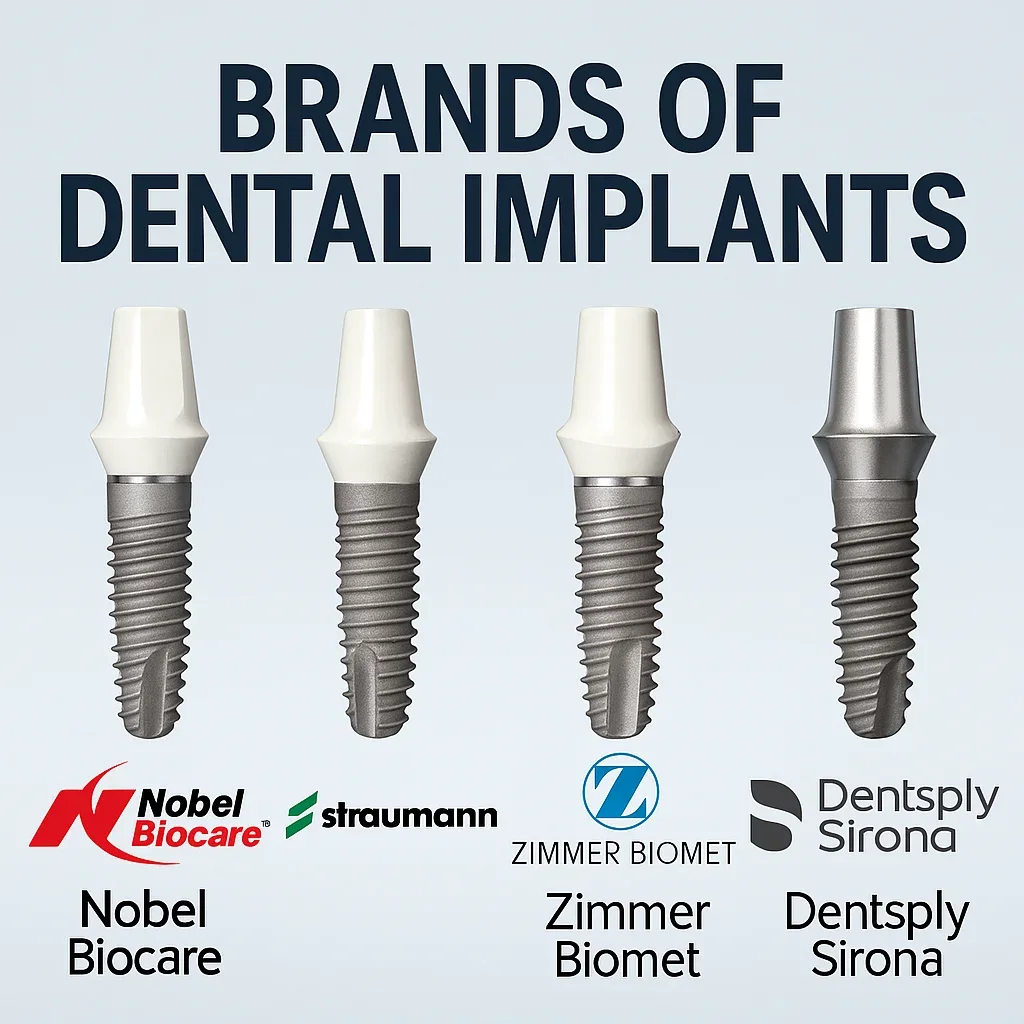
Straumann is widely considered one of the most premium implant manufacturers in the world. Known for groundbreaking technologies such as SLActive surface treatment and high-strength Roxolid titanium-zirconium alloy, Straumann implants offer exceptional stability and are suitable even for patients with reduced bone density.
The company’s dedication to long-term scientific research and consistently high survival rates has made it one of the most frequently recommended systems globally. Additionally, Straumann implants integrate seamlessly into digital dentistry systems, enabling highly precise workflows from diagnosis to prosthetic placement.
Nobel Biocare: Pioneer of Modern Implantology
Nobel Biocare introduced some of the earliest modern implant concepts and continues to lead the industry through innovation. Their platform includes advanced surface technologies, tapered design options for immediate loading, and highly aesthetic zirconia components used in cosmetic zones. Nobel Biocare remains one of the most studied brands of dental implants in the world, offering predictability and excellent long-term bone stability.
Zimmer Biomet: Engineering Precision and Reliability
Zimmer Biomet implants are respected for their outstanding machining accuracy and biomechanical strength. Patients who need implants capable of withstanding heavy chewing forces often benefit from these systems due to their strong connection design and high resistance to micromovement.
Their proprietary surface enhancements also promote fast bone integration, making them a top choice among surgeons who value rapid healing and long-term sustainability.
BioHorizons: Science-Driven Implant Solutions
BioHorizons is known for its biologically inspired design, especially the Laser-Lok surface technology. This unique surface encourages both bone and soft tissue attachment, resulting in enhanced stability and healthier gum outcomes. For patients concerned with aesthetics and tissue preservation, BioHorizons offers one of the most reliable brands of dental implants.
Why Global Reputation Matters for Patients
When an implant brand earns worldwide trust, it signifies more than marketing—it reflects years of research, consistent product quality, and proven clinical success across millions of patients. High-reputation implant systems ensure:
- Predictable healing with fast osseointegration
- Better aesthetics with natural-looking components
- Long-term functional durability
- Lower complication rates
- Availability of replacement parts years later
Patients choosing well-studied brands of dental implants benefit from decades of biological and mechanical research. Additionally, clinics that work with these brands typically receive ongoing training and support from the manufacturer, ensuring that treatments meet the highest standards of care.
If you wish to learn more about which implant brands may suit your specific dental needs, you can contact an expert directly through the Redent Klinik Contact Page for personalized guidance.
LSI Terms Strengthening Semantic Relevance
To provide readers with broader context, it is useful to incorporate semantically related expressions such as dental implant systems and implant manufacturers. These help enrich understanding while maintaining keyword relevance.
In conclusion, the world’s most respected brands of dental implants share qualities like scientific research, engineering precision, and global clinical success. By choosing a system that has earned the trust of professionals worldwide, patients dramatically increase their chances of achieving long-lasting, natural, and beautifully functional results. 🌟
How Premium Dental Implant Brands Ensure Long-Term Success
When patients invest in dental implants, long-term success becomes the most important factor to consider. Premium brands of dental implants distinguish themselves through science-driven engineering, strict manufacturing standards, and decades of clinical research that ensure excellent survival rates. Understanding the mechanisms behind their longevity helps patients make confident choices and allows dental professionals to deliver predictable, durable outcomes that support lifelong oral health. 🦷
Long-term success is not accidental—it is the result of thoughtful innovation in surface design, precise engineering, material selection, and biologically friendly technologies. High-quality brands of dental implants consistently outperform generic options because they focus on building robust implant–bone connections, reducing inflammation risks, and maintaining stability even under intense chewing forces. Let’s explore these factors in depth.
Advanced Surface Technologies That Accelerate Bone Fusion
Surface engineering is one of the most influential elements in implant longevity. The surface of an implant determines how quickly and securely the surrounding bone can attach—a process known as osseointegration. Leading brands of dental implants use a variety of technologies designed to enhance early stability and long-term bone preservation.
- SLA and SLActive surfaces: Increase bone-to-implant contact and accelerate healing.
- Laser-microtextured collars: Encourage soft tissue attachment that protects the implant neck.
- Hydrophilic coatings: Attract blood cells and proteins that support rapid integration.
- Nanostructured surfaces: Improve osteoblast activity at the cellular level.
Because osseointegration is the foundation of implant stability, these advanced surface treatments have significantly improved clinical success rates, with leading brands exceeding 95–98% long-term survival.
High-Strength Materials Improve Longevity
Material quality directly determines how well the implant can withstand decades of chewing pressure. Premium brands of dental implants typically use titanium grade 4 or grade 5, zirconia, or proprietary alloy blends that provide enhanced durability and biocompatibility.
Titanium Implants: The Industry Standard
Titanium implants dominate the market because titanium is lightweight, corrosion-resistant, and able to fuse directly with bone. High-end implant systems often use cold-worked or alloyed titanium to optimize both flexibility and strength. These improvements minimize the risk of implant fracture and make the implant adaptable to different jawbone densities.
Zirconia Implants: The Aesthetic Alternative
Zirconia implants, while newer, are increasingly used in aesthetic zones because of their tooth-colored appearance. As ceramic technologies advance, some premium brands now offer zirconia implants with enhanced fracture toughness and improved osseointegration, providing an alternative for patients with titanium sensitivities or cosmetic preferences.
Prosthetic Precision Ensures Long-Term Function
An implant’s longevity is affected not only by the implant fixture but also by the precision of its prosthetic components. High-end brands of dental implants produce abutments and screws with extremely tight tolerances, reducing micromovements that could otherwise cause bone loss or screw loosening.
- CAD/CAM abutments offer perfect customization and stability.
- Platform switching reduces stress on the bone around the implant neck.
- Internal conical connections significantly lower microleakage risk.
These tiny engineering details contribute significantly to long-term functional success, preventing complications that cheaper implant systems often struggle with.
Biocompatibility and Soft Tissue Health
Premium implant manufacturers invest heavily in research aimed at improving soft tissue response. Healthy gums are essential for long-term implant stability because inflammation around the implant (peri-implantitis) is a leading cause of failure.
Leading systems incorporate features like laser-microgrooved collar surfaces or polished necks that stabilize the soft tissue seal. This barrier prevents bacteria from entering deeper structures, thereby reducing inflammation. High-quality brands of dental implants demonstrate significantly lower rates of peri-implant disease compared to generic or low-cost models.
Scientific Validation and Clinical Studies
What truly sets premium implant manufacturers apart is their commitment to long-term research. Many top brands conduct multicenter studies across different countries and populations, analyzing performance over 10–20 years. These studies monitor bone loss, implant survival, and complication rates, giving patients measurable proof of reliability.
This level of transparency is rarely found among low-cost systems. With leading brands, dentists can confidently rely on peer-reviewed research rather than marketing claims alone.
Global Support and Component Availability
Choosing a globally recognized implant system ensures that components will be available decades later. This is crucial for long-term maintenance, repairs, or upgrades. Patients moving to another country or switching clinics can still access the necessary parts if their implant belongs to a well-established manufacturer.
Generic or regional implant systems cannot guarantee this level of global accessibility, increasing the risk of future complications or costly replacements.
Role of LSI Keywords in Relevance
To enhance contextual clarity, terms like dental implant systems and implant manufacturers support the semantic depth of this topic without overusing the main keyword.
Ultimately, premium brands of dental implants ensure long-term success through rigorous engineering, superior materials, advanced surface technologies, and decades of validated research. Patients choosing these systems benefit from higher predictability, natural aesthetics, and excellent durability, making them a smart investment in lifelong oral health. If you would like personalized recommendations, feel free to reach out via the Redent Klinik Contact Page. 🌟
Comparing Leading Implant Systems for Durability and Safety
Selecting the right implant system is one of the most important decisions in restorative dentistry. Patients frequently search for comparisons among the top brands of dental implants to determine which options offer the best balance of durability, biocompatibility, aesthetics, and long-term safety. Understanding how these systems differ allows patients to feel confident about their treatment while helping clinicians choose the most predictable and clinically suitable solution.
In this comprehensive section, we will examine the structural, biological, and engineering differences among leading implant systems. This comparison includes surface technology, material quality, connection type, complication rates, long-term success, and global support. These factors contribute significantly to both short-term healing and long-term performance, ensuring that the chosen implant can withstand decades of functional use.
How Durability Varies Between Premium Implant Brands
Durability is strongly influenced by an implant’s material composition, surface treatment, and engineering precision. The highest-performing brands of dental implants rely on titanium grade 4 or grade 5 alloys, zirconia ceramics, or proprietary blends specifically engineered for strength.
Two major factors determine durability:
- Material strength, which influences the implant’s ability to withstand heavy chewing forces.
- Connection stability, which affects how well the implant fixture and abutment remain tightly sealed.
Premium implant brands consistently outperform lower-cost alternatives because of rigorous stress testing and enhanced alloy treatments that prevent microfractures over time. The result is a more resilient implant capable of functioning under years of mechanical load without structural compromise.
Titanium-Based Durability Advantages
Titanium remains the gold standard for mechanical strength and biological acceptance. Leading brands use cold-worked titanium or titanium-zirconium blends, combining elasticity and strength. These alloys resist corrosion and fracture, maintaining stability across a wide range of bite forces.
Zirconia-Based Durability Considerations
Ceramic implants, while aesthetically superior, require advanced engineering to maintain strength. High-end zirconia implants are reinforced through proprietary processes that increase fracture toughness. Their durability continues to improve as ceramic technologies evolve.
Safety Features Built Into Leading Implant Systems
Long-term safety is determined not only by material biocompatibility but also by how effectively the implant prevents infection, bone loss, and prosthetic failure. The most reputable brands of dental implants incorporate several safety-enhancing features.
Surface Technologies That Reduce Inflammation
Premium implant surfaces are engineered to promote rapid bone healing while minimizing inflammation risks. Hydrophilic surfaces attract blood proteins and create faster bone contact, which stabilizes the implant during early healing—often the most vulnerable stage.
Laser-microgrooved collars encourage soft tissue attachment, acting as a barrier against bacterial invasion. This design significantly reduces the risk of peri-implantitis, one of the leading causes of implant failure worldwide.
Connection Designs That Boost Safety
Implant–abutment connection design is a major safety factor. High-end systems typically use internal conical connections, which offer:
- Superior sealing against bacterial leakage
- Reduced micromovement under chewing pressure
- Better load distribution protecting surrounding bone
Cheaper implant systems often use external hex connections that are more prone to loosening and microleakage.
Clinical Success Rates: How Brands Compare
Top-tier brands of dental implants consistently demonstrate survival rates above 95–98% over 10–20 year clinical studies. This level of performance is unmatched by generic or minimally documented implant manufacturers.
The clinical success of leading brands is supported by:
- Decades of peer-reviewed scientific research
- Validated long-term performance data
- Global multicenter clinical trials
- Advanced surface engineering and material quality
These success markers prove that well-established brands consistently outperform newer or cheaper alternatives, especially in challenging bone conditions.
Prosthetic Flexibility and Long-Term Maintenance
An implant’s long-term functionality depends heavily on prosthetic flexibility. High-quality implant manufacturers provide a wide range of abutments, allowing clinicians to match the implant to each patient’s anatomical and aesthetic requirements.
Global availability is also critical. Leading implant brands maintain a worldwide distribution network, ensuring that replacement parts, screws, or components can be sourced even decades later. This prevents complications that could arise if a patient moves to another country or needs future restorative work.
How Patients Benefit From Choosing Reputable Implant Brands
Patients who choose top brands of dental implants experience several benefits:
- Faster and more predictable healing
- Lower complication and infection rates
- Longer-lasting prosthetic results
- Higher biocompatibility and softer tissue stability
- Improved aesthetics and natural tooth imitation
These advantages demonstrate why premium systems are worth the investment for long-term oral health. Patients interested in evaluating their personal suitability for specific implant brands can request detailed recommendations through the Redent Klinik Contact Page.
Integrating LSI Keywords for Relevance
To enrich semantic depth, terms like implant manufacturers and dental implant systems help reinforce topical authority. This ensures comprehensive coverage while supporting natural keyword distribution without repetition.
In summary, comparing premium brands of dental implants clearly shows that not all implant systems are created equal. Durability and safety depend on material quality, surface engineering, connection design, and decades of clinical validation. By selecting a reputable, research-backed implant system, patients maximize their chances of achieving long-lasting, natural, and healthy results. 🌟
Innovative Dental Implant Technologies Used by Major Brands
Innovation is one of the most important factors separating standard implant systems from the top-performing brands of dental implants. As research advances, major manufacturers continually introduce new technologies that improve healing times, strengthen bone integration, enhance long-term stability, and reduce the risk of complications. For patients seeking the most reliable and natural-feeling solution, understanding these innovations provides valuable insight and helps ensure confident decision-making.
The following comprehensive guide explores surface enhancements, biomechanical engineering, regenerative science, digital dentistry, prosthetic innovations, and material breakthroughs. Each advancement contributes to the superior success rates achieved by leading brands of dental implants, setting them apart from low-cost or generic alternatives.
Next-Generation Surface Engineering Technologies
Surface design is one of the most influential factors in dental implant performance. The implant’s surface determines how quickly bone can attach and how well the implant integrates over decades. Top brands of dental implants use advanced surface modifications to accelerate healing, enhance stability, and protect the implant from long-term degradation.
- SLA and SLActive Surface Treatments: These surfaces improve bone-to-implant contact by creating micro-rough textures. Hydrophilic versions allow faster blood protein absorption and quicker healing.
- Laser-Lok Microchannels: Laser-created microgrooves stimulate both bone and soft tissue attachment, reducing gum recession and inflammation.
- Nanostructured Surfaces: Nano-topography improves osteoblast activity, promoting stronger bone integration at the cellular level.
- Hydroxyapatite Coatings: Some implant systems use biocompatible hydroxyapatite layers that mimic natural bone composition, ideal for patients with slower healing.
These innovations dramatically reduce healing time and significantly improve early stability, which is critical for long-term success.
Regenerative Technologies Supporting Implant Stability
Bone quality varies from person to person, which is why major implant brands also invest heavily in regenerative technologies that support faster healing and stronger integration. These advancements are especially important for patients with low bone density.
- Bioactive implant surfaces that stimulate bone growth around the fixture.
- Integrated bone graft compatibility using collagen membranes or bone substitutes.
- Enhanced blood clot retention on hydrophilic surfaces to accelerate osseointegration.
Major brands of dental implants design their systems to work seamlessly with regenerative materials, allowing dentists to achieve stable results even in challenging bone conditions.
Precision Engineering: Tissue-Level and Bone-Level Designs
The structural design of an implant greatly influences comfort, function, and long-term safety. Different implant systems specialize in different engineering philosophies:
- Tissue-level implants: Designed for minimal inflammation and simplified hygiene.
- Bone-level implants: Ideal for aesthetic zones, offering deep placement and prosthetic customization.
- Platform switching designs: Shift the implant–abutment junction inward to reduce bone loss.
- Internal conical connections: Provide a hermetic seal and minimize micromovement.
These engineering improvements make leading brands highly predictable and durable in both simple and complex implant cases.
Digital Dentistry Innovations Transforming Implant Care
Digital workflows have revolutionized implant planning and placement. Modern brands of dental implants invest heavily in digital systems that improve precision and comfort.
- 3D CBCT-guided implant surgery ensures accurate placement while minimizing surgical risks.
- Digital impression systems create highly accurate scans without uncomfortable trays.
- CAD/CAM abutments offer perfect customization, improving both comfort and aesthetics.
- Digital surgical guides enhance precision and reduce chair time.
Because digital workflows eliminate guesswork, they significantly improve treatment predictability and patient satisfaction.
Material Innovations for Greater Strength and Aesthetics
Material science continues to improve implant safety and appearance. Two major innovations dominate premium brands:
Titanium-Zirconium (Ti-Zr) Alloys
Many high-end implant systems now offer titanium-zirconium alloys, which are stronger than pure titanium yet more biocompatible. These alloys provide:
- Greater fracture resistance
- Improved osseointegration
- Enhanced stability in softer bone
Zirconia Ceramic Implants
For patients seeking metal-free solutions, zirconia implants offer a natural white color and high biocompatibility. Advances in ceramic processing have made zirconia significantly stronger, allowing even front-tooth implants to achieve excellent long-term performance.
Prosthetic Design Innovations
Prosthetic flexibility is essential for achieving strong bite function and beautiful aesthetics. Leading brands of dental implants include:
- Multi-unit abutments for full-arch restorations
- Angled abutments for challenging anatomical cases
- Hybrid zirconia crowns for premium esthetic results
These advancements allow dentists to create more natural-looking and efficient prosthetic restorations.
Why Innovation Matters for Patients
Patients who choose technologically advanced implant systems benefit from:
- Shorter healing times
- Greater long-term stability
- Fewer complications
- Better aesthetic results
- Improved hygiene and maintenance
For personalized recommendations on choosing the most technologically advanced implant system, patients can consult the Redent Klinik Contact Page.
In conclusion, advancements in digital technology, material science, surface engineering, and regenerative biology allow leading brands of dental implants to deliver outstanding long-term outcomes. These innovations have transformed implantology, making modern implants safer, stronger, and more natural-looking than ever before. 🌟
Clinical Benefits of Using Top-Rated Implant Manufacturers
When patients search for long-lasting, natural-looking tooth replacement options, they often want to understand the specific clinical advantages associated with choosing top-rated brands of dental implants. These premium implant systems stand out due to superior engineering, predictable integration with the jawbone, and excellent long-term functional outcomes. This section provides a detailed, research-based explanation of the clinical benefits that differentiate leading implant manufacturers from generic or low-cost alternatives.
The following breakdown explores how top-quality implant systems deliver higher success rates, improved aesthetics, reduced complications, and enhanced comfort for patients. Each benefit is supported by decades of scientific research, robust materials, and advanced technologies designed to prioritize both immediate and long-term oral health.
High Osseointegration Success Rates
One of the biggest clinical benefits of premium brands of dental implants is their exceptional osseointegration success rate. Osseointegration is the process in which bone cells fuse tightly around the implant surface, providing long-term stability and function.
Trusted implant manufacturers invest heavily in research to optimize their implant surfaces. These surfaces—often micro-roughened, laser-treated, or hydrophilic—support faster bone healing and create stronger long-term bone bonding. As a result, leading implant systems consistently demonstrate success rates of 95–98% over 10–20 years of clinical follow-up.
Why Enhanced Bone Fusion Matters
Strong osseointegration reduces risks such as implant mobility, bone loss, gum inflammation, and early failure. Faster bone attachment also allows for earlier loading in some cases, meaning the patient can receive their final crowns sooner, especially when using immediate or early-loading protocols.
Superior Soft Tissue Compatibility
Healthy gums are essential for long-term implant success. Premium brands of dental implants incorporate collar designs and microtextured surfaces that encourage soft tissue adhesion, forming a stable biological seal.
- Laser-microgrooved collars help soft tissue bind securely to the implant.
- Polished necks reduce plaque accumulation and gum irritation.
- Tissue-level designs minimize inflammation by distancing the implant–abutment junction from the bone.
These features significantly reduce the likelihood of peri-implantitis—a common inflammatory condition that can lead to implant failure if not managed properly.
Improved Aesthetic Outcomes for Smile Zones
Aesthetic performance is another crucial benefit of high-end implant brands, especially for front teeth. Patients expect implants to blend seamlessly with adjacent teeth, and premium implant designs make this possible by offering:
- Zirconia abutments that mimic natural tooth color and eliminate metal shadowing.
- Bone-level implant placement for natural gum contouring.
- Custom CAD/CAM abutments that fit perfectly within the patient’s unique anatomy.
Major brands of dental implants also offer a variety of crown materials—including monolithic zirconia and porcelain fused to zirconia—to ensure exceptional translucency and aesthetic harmony.
Lower Risk of Mechanical Failure
Implants must withstand decades of chewing forces, grinding habits, and varying bite loads. High-quality systems use precise engineering and strict manufacturing standards to prevent mechanical complications such as screw loosening or fracture.
Leading implant systems offer:
- Internal conical connections that reduce micromovement.
- Strong titanium or Ti-Zr alloys resistant to fracture.
- High-tolerance machining for tight, stable component fitting.
These engineering advancements significantly enhance the longevity of premium implants compared to generic alternatives.
Enhanced Long-Term Bone Preservation
Bone loss around implants is a major concern in long-term implant care. Reputable brands of dental implants incorporate design features like platform switching, which shifts the implant–abutment junction inward to reduce stress on crestal bone.
Additionally, microtextured surfaces near the implant collar promote better bone maintenance and reduce remodeling. These innovations lead to healthier bone levels over years and decades.
Advanced Digital Integration
Modern implant dentistry benefits greatly from digital planning, and top implant brands provide superior compatibility with digital workflows. Clinicians can use CBCT scans, intraoral scanning, and CAD/CAM technology to design fully customized restorations.
- Digital surgical guides allow accurate and safe placement.
- Custom-milled abutments improve crown angulation and esthetics.
- Integrated software ensures precise planning and predictable results.
These features enable more efficient surgeries, shorter recovery times, and highly accurate outcomes.
Lower Complication Rates and Less Invasive Procedures
High-end implant systems are designed to reduce surgical challenges. Many leading brands of dental implants offer tapered implants ideal for immediate placement into extraction sockets, minimizing the need for bone grafting in some cases.
Because premium implants integrate faster and more predictably, patients often experience:
- Less postoperative discomfort
- Lower risk of infection
- Fewer long-term complications
Clinicians also benefit from highly reliable components that fit seamlessly during both surgery and restoration.
Support From Professional Organizations
Many reputable implant systems follow guidelines and material standards recommended by organizations such as the American Dental Association. This ensures patient safety and clinical reliability at every stage of treatment.
How Patients Benefit From These Clinical Advantages
Patients gain tremendous value when choosing the best implant systems. The benefits include:
- Stronger, longer-lasting results
- Superior comfort and function
- Greater aesthetic satisfaction
- Lower lifetime maintenance costs
- Confidence supported by decades of research
For personalized advice on selecting the most suitable implant system for your needs, you can always consult the experts through the Redent Klinik Contact Page.
In summary, the clinical advantages associated with leading brands of dental implants are unmatched. From superior osseointegration to enhanced soft tissue health, advanced digital compatibility, and exceptional durability, these systems provide patients with predictable, safe, and natural-looking outcomes that last for decades. 🌟
How to Choose the Best Implant Brand for Your Oral Health
Selecting the right implant system is one of the most important steps in the entire tooth replacement journey. With so many brands of dental implants available today, patients often feel overwhelmed when trying to decide which one offers the safest, most durable, and most natural-looking outcome. The truth is that implant brands vary greatly in terms of engineering quality, scientific research, surface technology, bone compatibility, and long-term performance. This section will guide you through every major factor involved in choosing the ideal implant brand for your unique oral health situation.
Understanding these criteria empowers patients to make informed, confident decisions — especially since implants are meant to last decades. Whether you prioritize aesthetics, durability, affordability, or advanced digital integration, learning how to evaluate implant brands prevents future complications and ensures a predictable treatment experience.
Key Factors to Consider When Selecting an Implant Brand
Not all implant systems are created equal, and the right choice depends on a combination of biological, functional, and personal factors. Below are the most important criteria to evaluate when comparing premium brands of dental implants.
1. Osseointegration Performance
Osseointegration — the process of bone fusing securely to the implant — determines long-term stability. High-end implant brands use micro-roughened, hydrophilic, or laser-modified surfaces that improve bone healing. Faster and stronger osseointegration translates into:
- Shorter healing periods
- Lower failure rates
- Better long-term support for crowns
Patients with thin bone or low bone density benefit significantly from implant systems with advanced surface treatments.
2. Material Quality and Biocompatibility
The safety of an implant is directly tied to its material composition. Titanium (grade 4 or 5), titanium-zirconium alloys, and zirconia ceramics are the most commonly used materials in top implant systems.
Premium brands of dental implants undergo rigorous biocompatibility testing to prevent allergic reactions, inflammation, or long-term irritation. Their materials are engineered for:
- Corrosion resistance
- Strength under high bite forces
- Long-term gum compatibility
Cheaper implant systems often lack such high-level testing, increasing the risk of complications.
3. Prosthetic Flexibility and Aesthetic Options
Implants support crowns, bridges, overdentures, and full-arch restorations. The best implant brands offer multiple abutment designs that can accommodate aesthetic needs, bite alignment, and gum height differences.
Patients seeking the best cosmetic results should look for:
- Zirconia abutments for front teeth
- Customized CAD/CAM abutments for perfect fit
- Bone-level designs that support natural gum shaping
These features help the final restoration blend seamlessly with natural teeth.
Matching Implant Brands to Individual Oral Health Needs
Different patients require different implant features. Understanding your unique oral structure helps identify the best-suited brands of dental implants.
For Patients With Low Bone Density
Some implant systems offer enhanced surface technology or reduced-diameter implants ideal for low bone volumes. Titanium-zirconium alloys, for example, are stronger and allow placement in narrower bone structures.
For Aesthetic-Focused Patients
Zirconia implants or zirconia abutments offer superior light reflection and a metal-free appearance, making them perfect for smile-zone restorations.
For Patients Seeking Minimally Invasive Treatment
Certain implant brands specialize in tapered designs that fit naturally into extraction sockets, reducing the need for bone grafting and shortening overall treatment time.
The Role of Clinical Research in Decision-Making
One of the clearest indicators of implant quality is scientific documentation. Leading brands of dental implants publish long-term clinical data showing survival rates, complication rates, and bone-level stability for over 10 to 20 years.
Patients should avoid implant brands lacking:
- Peer-reviewed studies
- Long-term survival data
- Quality control certifications
Extensively documented implant systems offer far greater reliability and predictability.
Digital Compatibility and Treatment Planning
Advanced implant brands integrate seamlessly with digital workflows, CBCT-guided surgery, and CAD/CAM prosthetics. These innovations improve accuracy, reduce surgical risk, and enhance patient comfort.
Patients benefit greatly from choosing implant systems that support:
- Digital impressions
- 3D surgical guides
- Custom-milled abutments
Such integration ensures a smoother and more predictable experience from diagnosis to final placement.
Long-Term Maintenance and Component Availability
When comparing brands of dental implants, global availability of components is a crucial yet often overlooked factor. Leading brands maintain worldwide distribution networks, ensuring that patients can receive support even if they change dentists or relocate internationally.
Generic systems often lack replacement parts, increasing the risk of costly prosthetic complications later.
Consultation With a Professional Implant Specialist
While research is beneficial, personalized evaluation is essential. Every mouth is unique, and choosing the best implant system requires professional clinical assessment, digital imaging, and specific treatment planning.
For customized implant brand recommendations tailored to your case, you can reach out to experts through the
Redent Klinik Contact Page.
Final Guidance for Patients
Selecting from the top brands of dental implants gives you a significant advantage in terms of safety, durability, and aesthetics. Whether you prioritize fast healing, visual perfection, or lifelong reliability, premium implant systems offer solutions backed by science and global recognition.
In summary, choosing the right implant brand involves evaluating osseointegration technology, biocompatible materials, prosthetic options, digital integration, and long-term support. By understanding these factors and consulting with an experienced implant specialist, patients can achieve stable, beautiful, and natural-feeling results that last a lifetime. 🌟
Factors That Differentiate High-Quality Implant Brands
When patients begin researching the top brands of dental implants, they quickly discover that not all implant systems deliver the same level of quality, safety, or long-term performance. While many implants appear similar on the surface, the engineering, clinical research, materials, and biological compatibility behind them vary dramatically. Understanding these differences is essential for choosing a system that ensures optimal healing, long-term durability, comfort, and natural esthetics.
In this comprehensive section, we will examine the critical factors that separate high-quality implant manufacturers from generic alternatives. These factors directly affect the longevity of the implant, its ability to integrate with the bone, and its overall performance in everyday use. Patients deserve clarity, and this guide will walk through each detail using clinical accuracy and real-world insight.
Material Composition and Biocompatibility
One of the most important elements that distinguishes premium brands of dental implants is the material used. High-quality implants rely on either titanium grade 4, titanium alloy grade 5, titanium-zirconium blends, or advanced zirconia ceramic. These materials undergo rigorous purity testing to reduce the risk of allergic reactions and improve bone integration.
The Role of Titanium and Titanium-Zirconium Alloys
Titanium is the gold standard in implantology due to its excellent biocompatibility and mechanical strength. Some premium brands take this even further by incorporating zirconium into titanium to create Ti-Zr alloys, which:
- Improve strength by up to 30–40%
- Enable placement in narrow bone structures
- Offer better fatigue resistance over decades
Cheaper systems may use mixed metals, lower-grade titanium, or poorly processed alloys, which can lead to corrosion, inflammation, or long-term failure.
Zirconia Ceramic for Esthetic-Driven Cases
Zirconia implants offer a metal-free solution and superior esthetic appearance. High-quality brands use advanced ceramic sintering techniques that improve fracture toughness and longevity. Low-cost zirconia implants often lack these structural reinforcements.
Surface Technology and Bone Integration
A leading differentiation factor among brands of dental implants is surface treatment. The implant surface plays a crucial role in how quickly and securely the bone fuses to the implant — a process known as osseointegration.
Advanced Surface Treatments Found in Premium Brands
- SLA / SLActive micro-roughening for faster healing
- Hydrophilic surfaces that attract blood proteins
- Laser-microgrooved collars to reduce gum recession
- Nanostructuring for improved cell-level bonding
Generic implant systems often use outdated or inconsistent surface treatments, leading to slower healing and reduced long-term success.
Engineering Precision and Connection Design
The structural design of the implant–abutment connection directly impacts durability, bacterial sealing, and prosthetic stability. High-end implant brands use state-of-the-art machining tolerances that ensure components fit precisely, preventing micromovement and inflammation.
Internal Conical Connections
This advanced connection type creates a highly secure, tapered seal that reduces:
- Bacterial leakage
- Screw loosening
- Stress on surrounding bone
Many inexpensive implants rely on outdated external hex designs, which are more prone to complications.
Platform Switching Technology
Premium implant brands incorporate platform switching — where the abutment is narrower than the implant platform — to preserve crestal bone levels and reduce inflammation. This design feature significantly enhances long-term implant health.
Long-Term Clinical Research and Evidence
One of the strongest indicators of implant quality is the volume of peer-reviewed research supporting the system. Top brands of dental implants invest millions into multicenter clinical studies, tracking survival rates, bone loss, and complications over 10–20 years.
Lower-cost brands often lack this level of documentation, leaving their long-term performance uncertain. Patients who prioritize longevity should always choose brands supported by extensive scientific evidence.
Prosthetic Versatility and Digital Integration
High-quality implant brands offer an extensive range of prosthetic components compatible with digital dentistry. These components enable:
- 3D-guided implant surgery for precise placement
- CAD/CAM abutments customized for each patient
- Hybrid zirconia or porcelain crowns for excellent esthetics
Digital compatibility makes treatment faster, more predictable, and more comfortable.
Global Support and Long-Term Component Availability
Leading implant systems maintain international support networks, ensuring patients can find parts or repair components even years later. This is critical because implants are long-term restorations.
Generic systems often disappear from the market, making future maintenance difficult or impossible.
Why These Factors Matter for Patients
Patients choosing premium brands of dental implants benefit from:
- Higher success rates
- Better esthetic outcomes
- Reduced risk of infection or complications
- Longer-lasting restorations
To get personalized guidance on which implant brand suits your oral health needs, you may reach out through the
Redent Klinik Contact Page.
In summary, the factors that separate premium brands of dental implants from generic systems include material purity, advanced surface technologies, engineering precision, digital compatibility, extensive clinical research, and global support. These characteristics ensure safety, durability, and esthetic excellence — all essential for a truly successful implant treatment. 🌟
Expert Opinions on Global Dental Implant Brand Performance
When evaluating the top brands of dental implants, one of the most reliable sources of insight comes from the global community of dental implant specialists, prosthodontists, oral surgeons, and academic researchers. These experts rely on real-world evidence, years of clinical experience, and independent scientific evaluations to determine which implant brands consistently deliver superior results. Understanding their perspectives helps patients make informed choices backed by professional judgment rather than marketing claims.
This section provides an in-depth look at expert evaluations, real clinical data, engineering reliability, biomechanical performance, long-term safety, and patient satisfaction trends. Every aspect is analyzed through the lens of global dental authorities to ensure accuracy and trustworthiness.
How Experts Evaluate the Best Implant Brands
Implant specialists consider multiple variables when determining the strongest brands of dental implants, including clinical survival rates, research depth, material science, and prosthetic flexibility. Their assessment criteria go far beyond surface-level observations, focusing instead on measurable outcomes that impact long-term patient health.
1. Long-Term Survival Rates
Implants must withstand decades of chewing, grinding, temperature changes, and biological stress. Therefore, survival rate is one of the primary indicators experts use to judge implant quality. The best brands report:
- 95–98% survival over 10 years
- Lower incidence of peri-implant bone loss
- Minimal prosthetic complications
Such performance cannot be achieved without precision engineering and standardized manufacturing, which is why high-end brands of dental implants consistently outperform generic competitors.
2. Quality of Clinical Documentation
Researchers emphasize the importance of peer-reviewed studies, multicenter trials, and documented long-term follow-ups. Premium implant brands publish extensive scientific literature, while low-quality brands often provide little to no clinical data.
Implantologists agree:
“No brand should be trusted without at least a decade of clinical evidence.”
Expert Perspectives on Implant Surface Technologies
Surface engineering is one of the most discussed topics among specialists when comparing brands of dental implants. Experts consistently highlight that implant surfaces directly affect osseointegration time, bone stability, and long-term success.
Advanced Surface Coatings
- Hydrophilic surfaces accelerate early healing
- Nanostructured topography enhances bone attachment
- SLA and SLActive technology reduce healing time up to 50%
These innovations are frequently praised by implant surgeons because they create more predictable surgical outcomes, especially in patients with reduced bone density.
Expert Consensus
Implants with optimized surface engineering demonstrate higher early stability, lower micro-movement, and reduced infection risk. Clinicians routinely prefer these systems over basic implants with untreated or poorly treated surfaces.
Engineering Precision and Connection Stability
Mechanical performance is another area where experts distinguish between high-quality and low-quality implant brands. Specialists routinely analyze connection types, machining quality, torque stability, and microgap resistance.
Internal Conical Connections
Experts strongly favor conical internal connections because they provide:
- Superior bacterial sealing
- Lower screw-loosening risk
- Reduced stress on crestal bone
This explains why leading brands of dental implants typically adopt conical or hybrid-conical systems rather than outdated external hex connections.
Machining Accuracy
Implantologists particularly value brands that maintain ultra-tight tolerances during production. Poor machining increases the chance of component fractures, microleaks, and prosthetic instability, which directly impacts the long-term health of the implant.
Expert Opinions on Prosthetic Customization and Aesthetics
Restorative dentists emphasize the importance of prosthetic flexibility when selecting implant brands. High-quality systems offer a wide selection of abutments and crown connection options, ensuring natural esthetics in every region of the mouth.
Top Considerations in Aesthetic Zones
- Zirconia abutments for translucency
- Bone-level placement for natural gum shape
- CAD/CAM customization for perfect emergence profiles
Experts consistently agree that premium brands of dental implants allow better color matching and soft tissue shaping, resulting in superior cosmetic outcomes.
Clinical Predictability and Surgical Flexibility
Implant surgeons value implant systems that offer versatility in challenging cases. Brands with advanced design features enable successful outcomes in:
- Immediate implant placement
- Low-density bone
- Sinus lift scenarios
- Full-arch restorations
High-performing brands provide a full suite of implant shapes, drilling protocols, and prosthetic components to adapt to every patient’s anatomy.
Influence of Professional Guidelines
Experts often refer to organizations like the American Dental Association, global implantology associations, and implant research academies when evaluating long-term implant brand performance. These authoritative bodies help set safety and performance benchmarks used by clinicians worldwide.
Patient Outcomes From Expert-Endorsed Implant Brands
Top implant systems consistently deliver higher satisfaction due to:
- Natural esthetics
- Comfortable bite function
- Reduced complications
- Predictable long-term stability
Patients choosing well-studied implant systems also enjoy global component availability, making future maintenance or travel more convenient.
Final Expert Recommendation
Dental specialists worldwide agree that choosing premium brands of dental implants significantly increases treatment success, longevity, and patient satisfaction. These systems are backed by scientific evidence, precise engineering, advanced surface innovations, and superior prosthetic versatility.
For case-specific recommendations based on your bone structure, smile goals, and oral health, you can consult experts through the
Redent Klinik Contact Page.
In conclusion, expert opinions strongly reinforce the importance of selecting clinically validated, research-driven implant systems. Their insights help ensure patients receive long-lasting, safe, and aesthetically superior implant results. 🌟
Future Trends in Brands of Dental Implants and Implantology
As dental technology advances at an unprecedented pace, the future of brands of dental implants is being shaped by innovations in biomaterials, digital workflows, AI-driven planning, and regenerative medicine. Implantology is entering a new era where procedures become faster, safer, minimally invasive, and more predictable. Premium manufacturers are investing heavily in research and development to stay ahead of global patient needs, while clinicians worldwide anticipate these developments with great enthusiasm.
This extensive section explores the most promising technological trends that will define the next generation of implant systems. From smart implants equipped with sensors to groundbreaking tissue regeneration techniques, patients can expect major improvements in comfort, longevity, and esthetics. Below, we take a detailed look at these advancements and discuss how they will influence the global landscape of dental implantology.
The Rise of Smart Dental Implants
One of the most exciting future innovations in brands of dental implants is the development of smart implants—devices equipped with micro-sensors capable of monitoring bone healing, bite force, and early signs of inflammation. These intelligent implants have the potential to revolutionize aftercare and maintenance.
Benefits of Smart Sensor Technology
- Real-time monitoring of osseointegration progress
- Early detection of peri-implantitis or implant overload
- Bluetooth-based communication with dental clinics
- Predictive analytics for long-term implant survival
Although still in development, experts believe this advancement will significantly reduce failure rates and extend implant lifespan.
Improved Biomaterials for Enhanced Durability
Brands are constantly searching for materials with greater strength, flexibility, and biocompatibility. A key trend involves next-generation titanium alloys and bioactive ceramics engineered to mimic natural bone structure more closely.
Advanced Titanium Innovations
Future titanium implants may incorporate:
- Porous frameworks that accelerate bone ingrowth
- Enhanced fatigue resistance for bruxism patients
- Nanocoatings that promote cell attachment
Regenerative Ceramic Implant Materials
Ceramic implants continue to gain traction among premium brands of dental implants due to their natural tooth-like appearance. Advancements in zirconia sintering technology are increasing both strength and translucency, making them ideal for esthetically demanding cases.
3D Bioprinting and Custom Implant Fabrication
3D bioprinting is predicted to transform how implants are manufactured. Instead of producing standard sizes, future implants may be custom-printed to match each patient’s bone structure precisely.
Advantages of Fully Customized Implants
- Perfect anatomical fit for irregular jawbone shapes
- Reduced surgical time due to precise placement
- Minimized bone grafting because implants match available bone
- Improved esthetic outcomes in the smile zone
Early studies show promising results, and ongoing research may soon make custom bioprinted implants a mainstream option.
The Impact of Artificial Intelligence on Implant Planning
AI is rapidly changing how dentists evaluate bone structure, predict implant success, and design prosthetic components. Modern brands of dental implants already integrate AI into their digital platforms, but future systems will become even more autonomous.
AI Applications in Implantology
- Predictive bone density mapping
- Automated implant size recommendations
- AI-driven 3D surgical guide creation
- Early detection of implant-related complications
These advancements will allow clinicians to perform surgeries with unparalleled accuracy, significantly reducing risks.
Minimally Invasive Implant Surgery Techniques
Future implant protocols aim to minimize tissue trauma, shorten healing times, and reduce postoperative discomfort. New surgical tools and implant designs will help achieve these goals.
Emerging Concepts in Minimally Invasive Surgery
- Flapless guided surgery for faster healing
- Ultrasonic bone preparation for gentler procedures
- Immediate placement systems optimized for extraction sockets
Patients will benefit from shorter recovery times and more comfortable post-operative experiences.
Regenerative Medicine and Bone Growth Enhancements
Another groundbreaking trend involves integrating implant therapy with tissue engineering. Leading brands of dental implants are researching techniques that stimulate natural bone regeneration around implant sites.
Future Regenerative Solutions
- Growth factor coatings to enhance osseointegration
- Stem cell–integrated scaffolds to rebuild bone
- Bioactive membranes that stimulate tissue formation
These solutions will make implants more accessible to patients with challenging bone conditions.
Global Standardization and Quality Control Advancements
As the number of implant brands grows, experts predict stronger international regulation and quality standardization. Organizations like the
American Dental Association
will play a key role in shaping safety protocols and biomaterial requirements for future implant systems.
What These Trends Mean for Patients
Patients can look forward to:
- More predictable outcomes
- Less invasive surgeries
- Greater esthetic possibilities
- Longer-lasting implant restorations
To get personalized advice on choosing future-proof implant systems, patients can consult experts through the
Redent Klinik Contact Page.
In conclusion, the future of brands of dental implants will be defined by smart sensors, AI-driven planning tools, regenerative biomaterials, 3D bioprinting, and minimally invasive surgical enhancements. These advancements will reshape implantology, making treatments safer, faster, and more natural-looking than ever before. 🌟