
Dental implants have transformed modern dentistry, offering patients a permanent and natural-looking solution for missing teeth. However, the success of dental implant treatment depends heavily on precise planning and accurate imaging. One of the most essential tools used by dentists today is a cat scan for dental implants. This advanced imaging method allows dental professionals to see detailed three-dimensional views of your jawbone, nerves, and surrounding structures before placing implants.
A cat scan for dental implants provides far more information than traditional dental X-rays. While regular X-rays give a flat two-dimensional image, a CT scan (Computed Tomography scan) produces a highly detailed 3D model of the patient’s mouth and jaw. This allows dentists to evaluate bone density, determine the safest implant position, and avoid important anatomical structures such as nerves or sinus cavities.
For patients considering dental implants, understanding the role of a cat scan for dental implants is extremely important. This imaging technique not only improves the accuracy of treatment but also significantly increases the long-term success rate of dental implants. In modern implant dentistry, many specialists consider a cat scan for dental implants an essential step before any implant procedure begins.
One of the primary reasons dentists recommend a cat scan for dental implants is to evaluate the amount and quality of bone in the jaw. Dental implants require a strong and healthy bone foundation to integrate successfully with the jaw. Using a cat scan for dental implants, dentists can measure bone thickness, height, and density with incredible precision. If the bone is insufficient, additional procedures such as bone grafting can be planned in advance.
Another critical advantage of performing a cat scan for dental implants is the ability to identify anatomical risks. The jaw contains delicate nerves and sinus structures that must be carefully avoided during implant placement. A detailed cat scan for dental implants enables dentists to locate these structures clearly and plan implant positioning with millimeter-level accuracy.
Modern implant dentistry often uses specialized 3D imaging known as CBCT (Cone Beam Computed Tomography). This technology is commonly used for a cat scan for dental implants because it produces high-resolution images with relatively low radiation exposure. Compared with traditional medical CT scans, CBCT imaging provides exceptional detail specifically designed for dental applications.
When dentists review the results of a cat scan for dental implants, they can create a digital surgical plan. Specialized software converts the scan into a virtual 3D model of the patient’s mouth. This allows the dentist to simulate implant placement before the actual procedure. With the help of a cat scan for dental implants, dentists can determine the ideal angle, depth, and position for each implant.
This digital planning process significantly reduces surgical risks. Because the dentist already understands the patient’s bone structure through the cat scan for dental implants, the procedure becomes safer, faster, and more predictable. In many cases, guided implant surgery can be performed using custom surgical templates designed from the imaging data obtained from a cat scan for dental implants.
Patients also benefit greatly from this imaging method. By using a cat scan for dental implants, dentists can explain the treatment plan visually. Many clinics show patients the 3D images from their scan, helping them understand how implants will be placed and how the final result will look. This transparency increases patient confidence and improves communication between dentist and patient.
If you are considering dental implants and want professional guidance, it is always best to consult a qualified implant specialist. Clinics that prioritize advanced imaging technologies, including a cat scan for dental implants, typically achieve better outcomes and safer procedures. If you would like to discuss your treatment options with experienced professionals, you can visit the Redent Klinik Contact Page to schedule a consultation.
Leading dental organizations also emphasize the importance of proper diagnostics before implant placement. According to guidelines published by the American Dental Association, accurate imaging is a key factor in successful implant therapy. A carefully performed cat scan for dental implants provides the detailed anatomical information necessary to design a safe and effective treatment plan.
Ultimately, a cat scan for dental implants plays a crucial role in modern dental implant treatment. It allows dentists to assess bone structure, protect important nerves, plan implant positioning, and minimize surgical risks. Thanks to this technology, dental implants today are safer, more predictable, and more successful than ever before.
For patients seeking a long-lasting solution for missing teeth, understanding the value of a cat scan for dental implants can make a significant difference. This advanced diagnostic tool ensures that every step of the implant process is guided by precise information, helping both dentists and patients achieve the best possible outcome.
What Is a Cat Scan for Dental Implants and Why Is It Important?
When planning dental implant treatment, one of the most critical diagnostic tools used by dentists today is a cat scan for dental implants. This advanced imaging method provides highly detailed three-dimensional images of the jawbone, teeth, nerves, and surrounding structures. Unlike traditional dental X-rays, which produce flat images, a cat scan for dental implants allows dentists to visualize the entire anatomy of the mouth from multiple angles. This detailed information helps dental professionals make precise decisions before implant placement.
Dental implants require exact positioning within the jawbone to function correctly and last for many years. Without proper imaging, the dentist would have limited information about the patient’s bone structure. A cat scan for dental implants removes this uncertainty by providing accurate measurements of bone density, bone height, and bone width. This information is essential to determine whether the jawbone is strong enough to support implants.
Modern implant dentistry relies heavily on imaging technology, and the cat scan for dental implants has become a standard step in treatment planning. By using this technology, dentists can significantly improve the predictability and safety of implant procedures.
Understanding the Basics of a Cat Scan for Dental Implants
A cat scan for dental implants is a specialized type of computed tomography scan that captures multiple X-ray images from different angles around the patient’s head. These images are then processed by computer software to create a detailed 3D representation of the jaw and oral structures.
In dental clinics, this scan is often performed using Cone Beam Computed Tomography (CBCT). CBCT technology is specifically designed for dental and maxillofacial imaging. Compared with conventional medical CT scans, CBCT used for a cat scan for dental implants delivers detailed images while using lower radiation levels.
Because dental implants must integrate with the jawbone, it is crucial to understand the bone anatomy before surgery. A cat scan for dental implants allows dentists to analyze the thickness and quality of bone, ensuring that implants are placed in the most stable location.
Difference Between Traditional X-Rays and a Cat Scan for Dental Implants
Many patients wonder why dentists recommend a cat scan for dental implants instead of relying only on traditional dental X-rays. The reason is simple: X-rays provide only a limited two-dimensional view of the teeth and jaw.
A cat scan for dental implants provides several advantages over traditional imaging:
- 3D visualization of the jawbone
- Accurate measurement of bone density
- Clear view of nerve pathways
- Precise location of sinus cavities
- Better surgical planning
With a cat scan for dental implants, dentists can see structures that may not appear clearly on standard X-rays. This allows them to avoid complications during implant surgery.
Why Dentists Consider a Cat Scan for Dental Implants Essential
Dental implants must be positioned carefully within the jawbone to function properly. A cat scan for dental implants helps dentists determine the exact angle, depth, and placement location for each implant.
Without this imaging, implant placement would involve more guesswork. By using a cat scan for dental implants, dentists can create a detailed surgical plan before the procedure even begins.
In addition, a cat scan for dental implants helps dentists detect potential problems that could interfere with treatment. For example, the scan may reveal bone loss, hidden infections, cysts, or sinus complications. Identifying these issues early allows the dentist to address them before implant surgery.
How 3D Imaging Improves Implant Accuracy
One of the greatest advantages of a cat scan for dental implants is its ability to guide precise implant placement. With digital planning software, dentists can use the scan data to simulate implant positioning on a computer.
This process allows the dentist to determine:
- The exact location of the implant
- The ideal implant size and length
- The safest angle of placement
- The distance from nearby nerves
Because a cat scan for dental implants provides highly accurate measurements, it reduces the risk of surgical errors and increases implant success rates.
Benefits of a Cat Scan for Dental Implants for Patients
Patients also benefit greatly from having a cat scan for dental implants before their procedure. This imaging technology improves safety and provides a clearer understanding of the treatment plan.
Some important patient benefits include:
- More predictable treatment outcomes
- Reduced surgical risks
- Shorter procedure time
- Better implant stability
- Improved long-term success rates
When dentists rely on a cat scan for dental implants, they can perform implant surgery with greater confidence. This often leads to faster healing and more comfortable recovery for patients.
Additionally, many dentists use the images from a cat scan for dental implants to explain the treatment plan to their patients. Seeing a 3D model of the jaw helps patients understand exactly where the implants will be placed.
How Dental Clinics Use the Scan to Plan Treatment
After performing a cat scan for dental implants, dentists analyze the images using specialized implant planning software. This software converts the scan into a virtual 3D model of the patient’s mouth.
Using this model, dentists can design a customized implant plan that fits the patient’s anatomy perfectly. The data from the cat scan for dental implants can even be used to create surgical guides. These guides help dentists place implants at the exact angle and depth planned during the digital simulation.
This combination of imaging and digital planning has revolutionized implant dentistry. The cat scan for dental implants allows dentists to perform procedures with exceptional accuracy and safety.
Ultimately, a cat scan for dental implants plays a vital role in ensuring successful implant treatment. By providing detailed information about the jawbone and surrounding anatomy, this technology helps dentists plan safer surgeries and deliver long-lasting results for their patients.
How Cat Scan for Dental Implants Improves Implant Planning
Successful dental implant treatment depends heavily on precise planning before the actual procedure begins. One of the most important diagnostic tools that dentists use during this planning stage is a cat scan for dental implants. This advanced imaging technology provides a detailed three-dimensional view of the patient’s jawbone and surrounding oral structures, allowing dentists to make highly accurate treatment decisions.
Without a cat scan for dental implants, dentists would have limited information about bone thickness, nerve locations, and sinus cavities. Traditional dental X-rays provide only flat images, which can make it difficult to determine the safest and most effective position for implants. By contrast, a cat scan for dental implants allows dental professionals to analyze the jawbone from multiple angles and depths.
Thanks to this advanced imaging method, dentists can plan implant placement with exceptional accuracy. The information obtained from a cat scan for dental implants helps reduce surgical risks, improve implant stability, and increase long-term treatment success.
Detailed Bone Assessment with a Cat Scan for Dental Implants
One of the most important roles of a cat scan for dental implants is to evaluate the condition of the patient’s jawbone. Dental implants must be anchored securely in bone tissue, so understanding the quality and quantity of bone is essential before the procedure begins.
A cat scan for dental implants allows dentists to measure bone density, width, and height with great precision. These measurements help determine whether the jawbone can support an implant directly or whether additional treatments such as bone grafting are needed.
Using the information from a cat scan for dental implants, dentists can select the most appropriate implant size and type. This level of planning ensures that the implant integrates properly with the bone, which is crucial for long-term success.
Evaluating Bone Density and Strength
Bone density plays a major role in the stability of dental implants. If the bone is too soft or too thin, the implant may not integrate successfully. A cat scan for dental implants provides highly detailed images that help dentists evaluate the strength of the bone structure.
The scan shows whether the bone has enough density to support an implant immediately. If not, the dentist may recommend treatments such as bone grafting or sinus lifting. These procedures can be planned accurately because the cat scan for dental implants reveals exactly where additional bone support is required.
Identifying Important Anatomical Structures
The jaw contains several important anatomical structures that must be carefully avoided during implant placement. These include nerves, blood vessels, and sinus cavities. A cat scan for dental implants provides clear images of these structures so that dentists can plan safe implant placement.
For example, in the lower jaw there is a major nerve called the inferior alveolar nerve. If an implant is placed too close to this nerve, it could cause numbness or discomfort. A cat scan for dental implants allows dentists to locate this nerve precisely and ensure that implants are placed at a safe distance.
Protecting Sinus Cavities in the Upper Jaw
In the upper jaw, the maxillary sinuses are located above the molar and premolar teeth. If the bone between the sinus and the oral cavity is too thin, placing implants can be challenging. A cat scan for dental implants shows the exact position and size of the sinus cavities.
Using this information, dentists can determine whether a sinus lift procedure is necessary before implant placement. This careful planning made possible by a cat scan for dental implants helps prevent complications and ensures that implants remain stable.
Digital Implant Planning Using 3D Imaging
Modern dental clinics often use advanced planning software together with the data obtained from a cat scan for dental implants. This software converts the scan into a digital 3D model of the patient’s mouth.
With this virtual model, dentists can simulate implant placement on a computer before performing the actual surgery. The data from a cat scan for dental implants allows them to determine the optimal implant position, angle, and depth.
This type of digital planning improves surgical precision and reduces uncertainty during the procedure.
Guided Implant Surgery
One of the most advanced applications of a cat scan for dental implants is guided implant surgery. In this technique, the digital planning data from the scan is used to create a custom surgical guide.
The surgical guide acts like a template that helps the dentist place implants exactly where they were planned during the digital simulation. Because the cat scan for dental implants provides extremely accurate measurements, the guide ensures that implants are inserted with precise angles and depth.
This method improves accuracy, reduces surgery time, and enhances patient safety.
Improving Long-Term Implant Success
The ultimate goal of using a cat scan for dental implants is to improve the long-term success of dental implant treatment. Proper planning ensures that implants are placed in strong bone and at the correct angle for optimal function.
When dentists rely on a cat scan for dental implants, they can avoid many common complications such as nerve damage, sinus perforation, or implant instability. As a result, patients experience better outcomes and longer-lasting implants.
In addition, the detailed information obtained from a cat scan for dental implants allows dentists to create personalized treatment plans tailored to each patient’s unique anatomy.
Ultimately, the use of a cat scan for dental implants has revolutionized implant dentistry. By providing accurate imaging, improved treatment planning, and greater surgical precision, this technology plays a crucial role in helping dentists deliver safe and successful implant procedures.
Step-by-Step Process of Getting a Cat Scan for Dental Implants
For many patients considering implant treatment, understanding the diagnostic process is just as important as the procedure itself. One of the most essential diagnostic steps in modern implant dentistry is the cat scan for dental implants. This imaging procedure allows dentists to gather highly detailed information about the jawbone, surrounding tissues, and anatomical structures before implant placement.
Although the name may sound technical, the process of getting a cat scan for dental implants is actually simple, fast, and comfortable for most patients. In fact, the entire scanning process usually takes only a few minutes. Despite its simplicity, the data produced by a cat scan for dental implants plays a critical role in ensuring safe and successful implant treatment.
This section explains exactly what happens during the scanning procedure, from preparation to image analysis, so patients know what to expect.
Initial Consultation Before the Cat Scan for Dental Implants
The journey toward implant treatment typically begins with a consultation appointment. During this visit, the dentist evaluates the patient’s oral health and determines whether a cat scan for dental implants is necessary. In most implant cases, this scan is recommended because it provides essential information that traditional X-rays cannot show.
During the consultation, the dentist may review the patient’s medical history, check existing dental restorations, and evaluate gum health. If implants appear to be a suitable treatment option, the dentist will schedule a cat scan for dental implants to gather detailed imaging of the jawbone.
This imaging step is especially important when patients have missing teeth for a long time, bone loss, or previous dental surgeries. A cat scan for dental implants helps the dentist determine whether the bone structure can support implants safely.
Why the Scan Is Recommended Before Implant Surgery
Implant placement requires extremely precise positioning within the jawbone. Without a cat scan for dental implants, dentists would not have enough information about bone thickness, nerve locations, or sinus cavities.
The scan helps dentists answer several important questions:
- Is there enough bone to support an implant?
- Where are the nerves located?
- How close are the sinus cavities?
- What size implant should be used?
- What angle should the implant be placed?
By answering these questions, the cat scan for dental implants allows dentists to design a safe and customized treatment plan.
Preparation for a Cat Scan for Dental Implants
One advantage of a cat scan for dental implants is that it requires very little preparation. Unlike some medical imaging procedures, patients typically do not need to fast or follow special instructions.
Before the scan begins, the dental team may ask the patient to remove certain metal objects that could interfere with the imaging process. These may include:
- Jewelry
- Glasses
- Removable dentures
- Hair accessories with metal
Removing these items ensures that the cat scan for dental implants produces clear and accurate images.
Positioning During the Scan
Once preparation is complete, the patient is positioned inside the scanning machine. In most dental clinics, the equipment used for a cat scan for dental implants is a Cone Beam CT (CBCT) scanner designed specifically for dental imaging.
The patient may either sit or stand while the scanner rotates slowly around the head. During this time, the machine captures multiple X-ray images from different angles. These images are later combined to form a detailed 3D model of the jaw.
It is important for the patient to remain still during the cat scan for dental implants so that the images remain clear and accurate. Fortunately, the scanning process usually takes less than one minute.
What Happens During the Cat Scan for Dental Implants
During the scanning process, the CBCT machine rotates around the patient’s head while taking hundreds of small images. These images are collected and processed by computer software to create a full three-dimensional representation of the jaw.
The cat scan for dental implants captures extremely detailed information about the bone structure, including thickness, density, and shape. It also shows the exact location of nerves and sinus cavities.
Because the cat scan for dental implants produces 3D images, dentists can view the jawbone from any angle. This allows them to analyze the bone structure much more thoroughly than traditional X-rays.
Comfort and Safety During the Scan
Many patients worry about discomfort or radiation exposure when hearing about a CT scan. However, a cat scan for dental implants performed using CBCT technology typically involves relatively low radiation levels compared with medical CT scans.
The procedure itself is completely painless. Patients simply remain still while the scanner captures images. There are no injections, no drilling, and no discomfort during the cat scan for dental implants.
Most patients are surprised by how quick and easy the process is.
Analyzing the Results of a Cat Scan for Dental Implants
Once the scan is complete, the images are immediately available on the dentist’s computer. The software converts the raw imaging data into a 3D digital model of the patient’s jaw.
The dentist carefully reviews the results of the cat scan for dental implants to evaluate several important factors:
- Bone density and quality
- Bone height and width
- Location of nerves
- Position of sinus cavities
- Possible infections or abnormalities
Based on this analysis, the dentist can determine the most appropriate implant placement strategy.
Using the Scan for Digital Treatment Planning
Many modern dental clinics use specialized planning software together with the cat scan for dental implants. This technology allows dentists to simulate implant placement digitally.
Using the 3D model created from the cat scan for dental implants, dentists can select the ideal implant size, depth, and angle. They can also create surgical guides that ensure precise implant placement during surgery.
This level of planning significantly improves implant accuracy and reduces the risk of complications.
Ultimately, the step-by-step process of getting a cat scan for dental implants is simple, fast, and highly beneficial for both dentists and patients. The scan provides essential information that allows implant procedures to be performed safely, efficiently, and with excellent long-term success.
Benefits of a Cat Scan for Dental Implants for Patients and Dentists
Modern implant dentistry relies heavily on accurate diagnostic tools to ensure the best possible outcomes for patients. One of the most valuable technologies used today is the cat scan for dental implants. This advanced imaging method provides dentists with highly detailed three-dimensional views of the jawbone and surrounding structures, allowing them to plan implant procedures with exceptional precision.
The use of a cat scan for dental implants offers significant advantages for both patients and dental professionals. By delivering clear, accurate, and comprehensive information about the mouth’s anatomy, this imaging technique helps improve safety, treatment efficiency, and long-term implant success rates.
Understanding the benefits of a cat scan for dental implants can help patients feel more confident about their treatment and appreciate the importance of this diagnostic step in the implant process.
Improved Diagnostic Accuracy with a Cat Scan for Dental Implants
One of the most important benefits of a cat scan for dental implants is the level of diagnostic accuracy it provides. Traditional dental X-rays can show the teeth and bone structure, but they only present two-dimensional images. This limited view makes it difficult to fully understand the complex anatomy of the jaw.
A cat scan for dental implants creates a complete 3D model of the patient’s mouth. Dentists can examine the jawbone from multiple angles, analyze bone density, and measure bone dimensions with exceptional accuracy. This level of detail allows dentists to make more informed treatment decisions.
Precise Bone Measurements
Dental implants require sufficient bone support to remain stable over time. Using a cat scan for dental implants, dentists can measure the exact width, height, and density of the bone where the implant will be placed.
This precision helps determine whether the bone is strong enough for implant placement or if additional procedures such as bone grafting are necessary. Without a cat scan for dental implants, these measurements would be far less accurate.
Enhanced Treatment Planning
Another major benefit of a cat scan for dental implants is the ability to create a highly detailed treatment plan before surgery begins. Implant placement requires careful positioning within the jawbone, and even a small miscalculation can lead to complications.
With the help of a cat scan for dental implants, dentists can analyze the patient’s anatomy and determine the safest and most effective implant placement strategy. The scan reveals critical structures such as nerves, blood vessels, and sinus cavities that must be avoided during surgery.
Digital Implant Simulation
Many dental clinics use advanced planning software together with the data obtained from a cat scan for dental implants. This technology allows dentists to simulate implant placement digitally before performing the actual procedure.
The digital simulation helps dentists determine:
- The ideal implant size and length
- The optimal angle of placement
- The safest depth within the bone
- The exact position relative to surrounding structures
This virtual planning process made possible by a cat scan for dental implants significantly increases the accuracy of implant surgery.
Greater Safety During Implant Surgery
Safety is one of the most important concerns in dental implant treatment. The jaw contains several delicate anatomical structures, including nerves and sinus cavities. Accidentally damaging these structures during surgery can lead to complications such as numbness or sinus problems.
A cat scan for dental implants allows dentists to clearly identify the location of these sensitive structures. With this information, they can plan implant placement in a way that avoids potential risks.
Protecting the Inferior Alveolar Nerve
One of the most important nerves in the lower jaw is the inferior alveolar nerve. This nerve provides sensation to the lower lip and chin. A cat scan for dental implants shows the exact path of this nerve, helping dentists ensure that implants are placed safely away from it.
By identifying the nerve’s location before surgery, the cat scan for dental implants greatly reduces the risk of nerve damage.
Better Outcomes for Patients
Patients also experience several benefits when dentists use a cat scan for dental implants during treatment planning. Because the scan allows for more accurate implant placement, the procedure is often faster and more predictable.
When implants are positioned correctly from the start, they are more likely to integrate successfully with the jawbone. This improves the overall success rate of dental implants.
Shorter Surgical Time
Another advantage of using a cat scan for dental implants is that it can shorten the actual surgery time. Because the dentist already has a detailed treatment plan based on the scan, the procedure can be performed more efficiently.
In some cases, the data from the cat scan for dental implants can be used to create surgical guides. These guides help dentists place implants precisely according to the digital treatment plan.
Improved Patient Communication
The images produced by a cat scan for dental implants can also improve communication between dentists and patients. The 3D images make it easier for patients to understand their oral condition and the proposed treatment plan.
Dentists often show patients the results of the cat scan for dental implants on a computer screen. Seeing the bone structure and implant placement plan helps patients feel more confident about the procedure.
Visualizing the Treatment Plan
When patients view the images from a cat scan for dental implants, they can clearly see how the implants will fit into their jawbone. This transparency helps build trust and allows patients to ask informed questions about their treatment.
Ultimately, the cat scan for dental implants benefits both patients and dental professionals by providing accurate information, improving surgical precision, and increasing treatment success. Thanks to this technology, modern dental implant procedures are safer, more predictable, and more efficient than ever before.
Is a Cat Scan for Dental Implants Safe? Radiation and Safety Explained
When patients hear the term cat scan for dental implants, one of the most common concerns they have relates to safety—particularly radiation exposure. Medical imaging technologies use radiation to produce detailed images of internal structures, and it is natural for patients to wonder whether the procedure is safe. Fortunately, modern dental imaging technology has made a cat scan for dental implants extremely safe, fast, and carefully controlled.
Today, most dental clinics perform a cat scan for dental implants using Cone Beam Computed Tomography (CBCT). This technology is specifically designed for dental and maxillofacial imaging. Compared with traditional hospital CT scans, CBCT machines use significantly lower radiation doses while still producing highly detailed three-dimensional images. Because of this balance between safety and precision, the cat scan for dental implants has become a routine diagnostic tool in implant dentistry.
Dentists recommend a cat scan for dental implants only when the diagnostic benefits clearly outweigh the minimal risks. In most cases, the information obtained from the scan is essential for safe implant placement and helps prevent complications during surgery.
Understanding Radiation Levels in a Cat Scan for Dental Implants
Radiation exposure is measured in units called microsieverts (µSv). The amount of radiation used in a cat scan for dental implants is relatively low, especially when modern CBCT equipment is used. In fact, the radiation dose from a dental CBCT scan is often comparable to everyday environmental exposure.
For example, the approximate radiation levels may look like this:
- Daily natural background radiation: about 8–10 µSv
- Dental X-ray: around 5 µSv
- Panoramic dental X-ray: about 10–30 µSv
- CBCT cat scan for dental implants: approximately 50–200 µSv
- Medical CT scan of the head: about 2000 µSv
As these numbers show, a cat scan for dental implants involves much less radiation than a traditional medical CT scan. The goal of dental imaging is always to use the lowest radiation dose necessary to obtain clear diagnostic images.
Why Low Radiation Is Still Effective
Despite the relatively low radiation levels, a cat scan for dental implants still produces extremely detailed images. CBCT technology captures hundreds of small X-ray images around the head and combines them into a full three-dimensional model of the jaw.
This advanced imaging allows dentists to evaluate bone density, measure bone dimensions, and locate nerves and sinus cavities. Without the detailed information from a cat scan for dental implants, it would be much harder to plan implant placement safely.
Safety Measures Used During a Cat Scan for Dental Implants
Dental professionals follow strict safety guidelines when performing a cat scan for dental implants. These guidelines are designed to minimize radiation exposure while ensuring that the scan provides accurate diagnostic information.
Several protective measures are typically used during the scan.
Protective Equipment
During a cat scan for dental implants, patients may be provided with protective lead aprons or shields. These aprons help block radiation from reaching other parts of the body.
Even though the radiation levels in a cat scan for dental implants are already low, using protective equipment provides an additional layer of safety.
Targeted Imaging Technology
Modern CBCT scanners used for a cat scan for dental implants are designed to focus only on the specific area of the mouth being examined. This targeted imaging approach ensures that the scan captures only the necessary structures.
By limiting the scan area, dentists can reduce radiation exposure while still obtaining detailed diagnostic images.
Who Should Be Careful with a Cat Scan for Dental Implants
Although a cat scan for dental implants is considered safe for most patients, certain groups should always inform their dentist before undergoing the scan.
For example, pregnant patients should notify their dentist immediately. While the radiation exposure from a cat scan for dental implants is very low, dentists generally avoid unnecessary imaging during pregnancy unless it is medically necessary.
Children and adolescents may also receive modified scanning protocols that use even lower radiation doses. However, dental implants are rarely recommended for patients whose jawbones are still developing.
Medical History and Risk Assessment
Before performing a cat scan for dental implants, dentists review the patient’s medical history and evaluate whether the scan is necessary. This careful assessment ensures that imaging is used only when it provides clear benefits for diagnosis and treatment planning.
In most cases, the information obtained from a cat scan for dental implants is essential for ensuring safe implant placement.
Why the Benefits of a Cat Scan for Dental Implants Outweigh the Risks
While any exposure to radiation should be minimized, the benefits of a cat scan for dental implants usually far outweigh the small risks associated with the scan. The detailed images produced by this technology allow dentists to plan implant placement with remarkable accuracy.
Without a cat scan for dental implants, dentists might not be able to detect hidden issues such as bone loss, nerve proximity, or sinus complications. These factors could increase the risk of surgical errors.
By providing a complete three-dimensional view of the jaw, the cat scan for dental implants helps dentists avoid complications and ensures that implants are placed safely and effectively.
Improved Patient Outcomes
Ultimately, the primary goal of performing a cat scan for dental implants is to improve patient outcomes. The scan allows dentists to create precise treatment plans, reduce surgical risks, and increase the long-term success rate of dental implants.
Because the procedure is quick, painless, and involves relatively low radiation exposure, the cat scan for dental implants is widely considered a safe and essential diagnostic tool in modern implant dentistry.
For most patients, the reassurance provided by accurate imaging far outweighs the minimal radiation involved. As dental technology continues to evolve, the safety and efficiency of the cat scan for dental implants will continue to improve, making implant treatment even more predictable and successful.
Cost of a Cat Scan for Dental Implants: What Patients Should Expect
One of the most common questions patients ask before starting implant treatment is about the cost of a cat scan for dental implants. Because dental implants require precise planning, this diagnostic scan is often a necessary step before the implant procedure begins. While the price of a cat scan for dental implants can vary depending on the clinic, country, and technology used, understanding the factors that influence the cost can help patients plan their treatment more confidently.
The main purpose of a cat scan for dental implants is to provide a detailed three-dimensional image of the jawbone and surrounding structures. This information allows dentists to determine whether the patient has sufficient bone density, identify nerve locations, and plan the safest implant placement. Because the scan plays such a crucial role in treatment planning, most implant specialists strongly recommend performing a cat scan for dental implants before surgery.
Although it may add an extra step to the process, the investment in a cat scan for dental implants often prevents complications and improves the long-term success of the implant treatment.
Average Cost of a Cat Scan for Dental Implants
The price of a cat scan for dental implants can vary widely depending on geographic location, clinic technology, and imaging complexity. In general, dental CBCT scans used for implant planning are more affordable than medical CT scans performed in hospitals.
Here is an approximate overview of the cost of a cat scan for dental implants in different regions:
- United States: $200 – $500
- United Kingdom: £150 – £350
- Germany: €150 – €400
- Turkey: $50 – $150
- Canada: $200 – $450
In many cases, the cost of a cat scan for dental implants may already be included in the overall implant treatment package offered by the clinic. Some dental clinics provide the scan at no additional cost if the patient proceeds with implant surgery.
Why Prices Vary Between Clinics
The cost of a cat scan for dental implants depends on several factors. Advanced dental clinics that use the latest CBCT imaging technology may charge slightly higher fees because the equipment itself is expensive to purchase and maintain.
However, this technology also provides extremely accurate images that improve treatment planning. As a result, many patients consider the cost of a cat scan for dental implants a worthwhile investment in safer implant treatment.
What Factors Influence the Cost of a Cat Scan for Dental Implants
Several variables can affect how much a cat scan for dental implants costs. Understanding these factors helps patients better evaluate pricing differences between clinics.
Technology Used
Most dental clinics perform a cat scan for dental implants using Cone Beam Computed Tomography (CBCT). This specialized imaging equipment is designed specifically for dental and facial imaging.
Clinics using newer CBCT machines may charge slightly more for a cat scan for dental implants, but these devices often provide higher image resolution and lower radiation exposure.
Size of the Scan Area
The cost of a cat scan for dental implants can also depend on the size of the scanning area. Some patients may need a small localized scan focusing on a single implant site, while others require a full jaw scan.
A full-mouth cat scan for dental implants generally costs more because it captures a larger area and requires more image processing.
Diagnostic Analysis
In some clinics, the fee for a cat scan for dental implants includes detailed analysis by an implant specialist. The dentist may review the images carefully and use specialized software to plan the implant placement digitally.
This advanced planning process adds value to the cat scan for dental implants because it improves surgical accuracy and reduces the risk of complications.
Is the Cost of a Cat Scan for Dental Implants Worth It?
Although some patients initially hesitate when they hear about the cost of a cat scan for dental implants, most dentists agree that the scan is essential for safe implant placement. The information obtained from the scan can prevent surgical errors, reduce complications, and increase the long-term success of implants.
For example, a cat scan for dental implants helps dentists detect potential problems such as insufficient bone, nerve proximity, or sinus positioning. Without this imaging, these issues might only become apparent during surgery.
By identifying potential challenges early, the cat scan for dental implants allows dentists to adjust the treatment plan accordingly. This careful planning improves patient safety and treatment outcomes.
Saving Costs in the Long Term
In many cases, investing in a cat scan for dental implants actually saves money in the long run. Because the scan allows for precise implant placement, it reduces the likelihood of complications that could require additional treatments.
For instance, improper implant placement could lead to implant failure, nerve damage, or the need for corrective procedures. The detailed planning enabled by a cat scan for dental implants helps avoid these costly complications.
Insurance and Payment Considerations
Some dental insurance plans may partially cover the cost of a cat scan for dental implants, especially if the scan is considered medically necessary for treatment planning. However, coverage policies vary depending on the insurance provider and the patient’s plan.
Patients should always check with their insurance provider to determine whether the cat scan for dental implants is covered under their policy.
Clinic Payment Options
Many dental clinics offer flexible payment options to help patients manage the cost of a cat scan for dental implants. These options may include installment plans or bundled implant treatment packages.
In some cases, the cost of the cat scan for dental implants is included as part of the complete implant treatment fee. Patients should ask their dentist whether the scan is included in their treatment plan.
Ultimately, the cat scan for dental implants is an important investment in safe and successful implant treatment. By providing detailed imaging of the jawbone and surrounding structures, the scan helps dentists design precise treatment plans that improve implant success and patient satisfaction.
Who Needs a Cat Scan for Dental Implants Before Treatment?
Not every dental procedure requires advanced imaging, but when it comes to implant dentistry, a cat scan for dental implants is often considered an essential diagnostic step. Dental implants must be placed with extreme precision inside the jawbone, and accurate imaging helps dentists determine whether a patient is a suitable candidate for the procedure. A cat scan for dental implants allows dentists to evaluate bone structure, identify anatomical risks, and design a personalized treatment plan that maximizes safety and success.
While some straightforward cases may rely on basic X-rays, most implant specialists recommend a cat scan for dental implants for the majority of patients. This scan provides a detailed three-dimensional view of the jaw, allowing the dentist to assess the quality of the bone and detect potential complications before surgery begins. By performing a cat scan for dental implants, dentists can make informed decisions about implant placement, bone grafting needs, and surgical techniques.
Patients with Missing Teeth for a Long Time
One group that particularly benefits from a cat scan for dental implants is patients who have had missing teeth for an extended period. When a tooth is lost, the jawbone in that area gradually begins to shrink due to lack of stimulation. This process, known as bone resorption, can reduce the amount of bone available to support a dental implant.
A cat scan for dental implants helps dentists evaluate how much bone loss has occurred and whether additional treatments are necessary. If the scan reveals insufficient bone volume, the dentist may recommend procedures such as bone grafting before placing implants.
Evaluating Bone Volume After Tooth Loss
The detailed imaging provided by a cat scan for dental implants allows dentists to measure bone height, width, and density with high precision. These measurements are essential for determining whether the jawbone can securely support an implant.
Without a cat scan for dental implants, it would be difficult to fully understand the extent of bone loss. The scan provides a clear picture of the jawbone structure, helping dentists choose the most appropriate treatment approach.
Patients with Complex Dental Conditions
Some patients have more complicated oral conditions that require detailed imaging before implant treatment. In these cases, a cat scan for dental implants becomes even more important.
Examples of complex situations where a cat scan for dental implants is highly recommended include:
- Severe bone loss in the jaw
- Previous dental implant failure
- Jawbone irregularities
- Impacted teeth near the implant area
- History of oral surgery or trauma
The comprehensive information obtained from a cat scan for dental implants allows dentists to carefully evaluate these conditions and create a treatment plan that minimizes risks.
Detecting Hidden Oral Health Issues
A cat scan for dental implants can also reveal hidden oral health problems that may not appear on traditional dental X-rays. These may include cysts, infections, bone defects, or sinus complications.
Identifying these issues before implant surgery is crucial. By performing a cat scan for dental implants, dentists can address underlying problems before proceeding with the implant procedure.
Patients Needing Multiple Dental Implants
When a patient requires several implants or a full-mouth restoration, a cat scan for dental implants becomes especially valuable. Multiple implants require precise placement to ensure proper spacing, alignment, and stability.
The 3D imaging produced by a cat scan for dental implants allows dentists to map out the entire jaw and determine the best locations for each implant. This careful planning helps ensure that the implants work together to support crowns, bridges, or full-arch restorations.
Planning Full-Arch Implant Treatments
Procedures such as All-on-4 or All-on-6 dental implants involve placing multiple implants to support a full set of replacement teeth. In these cases, a cat scan for dental implants is essential for evaluating the entire jawbone.
The scan allows dentists to analyze bone density across the jaw and determine the optimal angles for implant placement. This level of detail helps ensure that the implants provide strong support for the final prosthetic teeth.
Patients with Sinus or Nerve Proximity
In some areas of the jaw, critical anatomical structures are located close to the implant site. For example, the maxillary sinuses are located above the upper back teeth, while important nerves run through the lower jaw.
A cat scan for dental implants clearly shows the location of these structures. This information allows dentists to avoid placing implants too close to sensitive areas.
Preventing Surgical Complications
Without the information provided by a cat scan for dental implants, implant surgery could involve greater risk. Accidentally placing an implant too close to a nerve may cause numbness or discomfort.
The detailed images from a cat scan for dental implants help dentists identify safe implant positions and avoid these complications.
Patients Seeking the Most Accurate Implant Treatment
Even in relatively simple cases, many patients choose to undergo a cat scan for dental implants because it provides the most accurate planning possible. Modern implant dentistry increasingly relies on digital treatment planning and guided surgery, both of which depend on high-quality imaging.
Using the data from a cat scan for dental implants, dentists can create digital models of the patient’s mouth and simulate implant placement before the procedure. This technology allows for highly precise treatment planning and predictable results.
Improving Implant Success Rates
Ultimately, the goal of performing a cat scan for dental implants is to improve treatment success and patient safety. By providing a detailed view of the jawbone and surrounding structures, the scan allows dentists to place implants with greater accuracy.
For many patients, undergoing a cat scan for dental implants before treatment is the best way to ensure that implant placement is safe, effective, and designed specifically for their unique oral anatomy.
Because every patient’s mouth is different, this personalized imaging approach plays a crucial role in modern implant dentistry and helps achieve long-lasting, reliable results.
Tips to Prepare for Your Cat Scan for Dental Implants Appointment
Preparing for a cat scan for dental implants is usually simple, quick, and stress-free. Unlike some medical imaging procedures that require fasting or medication adjustments, most patients can complete a cat scan for dental implants with minimal preparation. However, understanding what to expect before your appointment can make the process even smoother and help ensure that the images produced during the scan are clear and accurate.
The main goal of a cat scan for dental implants is to generate detailed three-dimensional images of the jawbone and surrounding structures. These images allow dentists to evaluate bone density, locate nerves and sinus cavities, and plan implant placement with precision. Because the scan plays such an important role in treatment planning, following a few simple preparation tips can help ensure the best possible results.
Whether you are receiving a single implant or planning a full-mouth restoration, proper preparation for a cat scan for dental implants allows your dentist to obtain the most accurate diagnostic information.
Understand the Purpose of a Cat Scan for Dental Implants
Before your appointment, it can be helpful to understand why your dentist recommended a cat scan for dental implants. This imaging technique provides far more detail than traditional dental X-rays and allows your dentist to view the jawbone in three dimensions.
The cat scan for dental implants enables dentists to measure bone height, width, and density. It also helps identify the exact location of nerves and sinus cavities. This information is essential for planning safe implant placement.
How the Scan Helps Your Dentist
During a cat scan for dental implants, hundreds of small X-ray images are captured and combined into a 3D digital model of the patient’s jaw. With this model, dentists can determine the ideal implant size, angle, and position.
By understanding the importance of a cat scan for dental implants, patients often feel more confident and comfortable during the diagnostic process.
Remove Metal Objects Before the Scan
One of the most important preparation steps before a cat scan for dental implants is removing metal objects from the head and neck area. Metal items can interfere with the imaging process and create distortions in the scan results.
Before your cat scan for dental implants, your dental team will likely ask you to remove items such as:
- Eyeglasses
- Earrings and jewelry
- Hairpins or metal hair accessories
- Removable dentures
- Hearing aids
- Facial piercings
Removing these items helps ensure that the cat scan for dental implants produces clear and accurate images.
Why Clear Imaging Matters
The goal of a cat scan for dental implants is to create a highly detailed image of the jawbone. If metal objects remain in place, they can cause shadows or distortions in the images.
These distortions could make it more difficult for the dentist to evaluate bone structure accurately. Taking a few moments to remove metal objects before your cat scan for dental implants helps avoid this issue.
Follow Your Dentist’s Instructions
Most patients do not need to follow complicated instructions before a cat scan for dental implants. However, your dentist may provide specific recommendations depending on your individual situation.
For example, if you wear removable dental appliances or orthodontic devices, your dentist may ask you to remove them before the cat scan for dental implants. Following these instructions helps ensure that the scan results are accurate.
Inform Your Dentist About Medical Conditions
Before undergoing a cat scan for dental implants, it is important to inform your dentist about your medical history. While the radiation exposure involved in the scan is relatively low, certain patients may require additional precautions.
For example, pregnant patients should notify their dentist before a cat scan for dental implants. In most cases, dentists prefer to postpone non-urgent imaging procedures during pregnancy.
Stay Still During the Cat Scan for Dental Implants
The scanning process itself is very quick and painless. During a cat scan for dental implants, the imaging machine rotates around your head while capturing multiple images.
To ensure the best results, patients should remain as still as possible during the scan. Even small movements can affect image clarity. Fortunately, the entire cat scan for dental implants procedure typically takes less than a minute.
What the Scanning Experience Feels Like
Many patients are pleasantly surprised by how simple the cat scan for dental implants procedure feels. There are no injections, no drilling, and no discomfort involved.
You may be asked to bite gently on a positioning guide while the scanner moves around your head. The equipment will capture the images needed for the cat scan for dental implants quickly and efficiently.
Ask Questions Before the Scan
If you have any concerns about the imaging process, do not hesitate to ask your dental team before your cat scan for dental implants. Understanding what will happen during the appointment can reduce anxiety and help you feel more relaxed.
Dentists and dental technicians are trained to guide patients through the process and ensure that the cat scan for dental implants is performed safely and comfortably.
Reviewing the Results
After the cat scan for dental implants is completed, the images are immediately available for review. Your dentist may show you the 3D images on a computer screen and explain how they will be used to plan implant placement.
These images provide valuable information about bone structure and implant positioning. By using the data from the cat scan for dental implants, dentists can create a highly personalized treatment plan designed to achieve the best possible results.
Ultimately, preparing for a cat scan for dental implants requires only a few simple steps. By following your dentist’s instructions, removing metal objects, and staying still during the scan, you can help ensure that the imaging process provides clear and accurate results.
This preparation allows your dentist to use the cat scan for dental implants effectively, helping ensure safe implant placement and long-lasting treatment success.
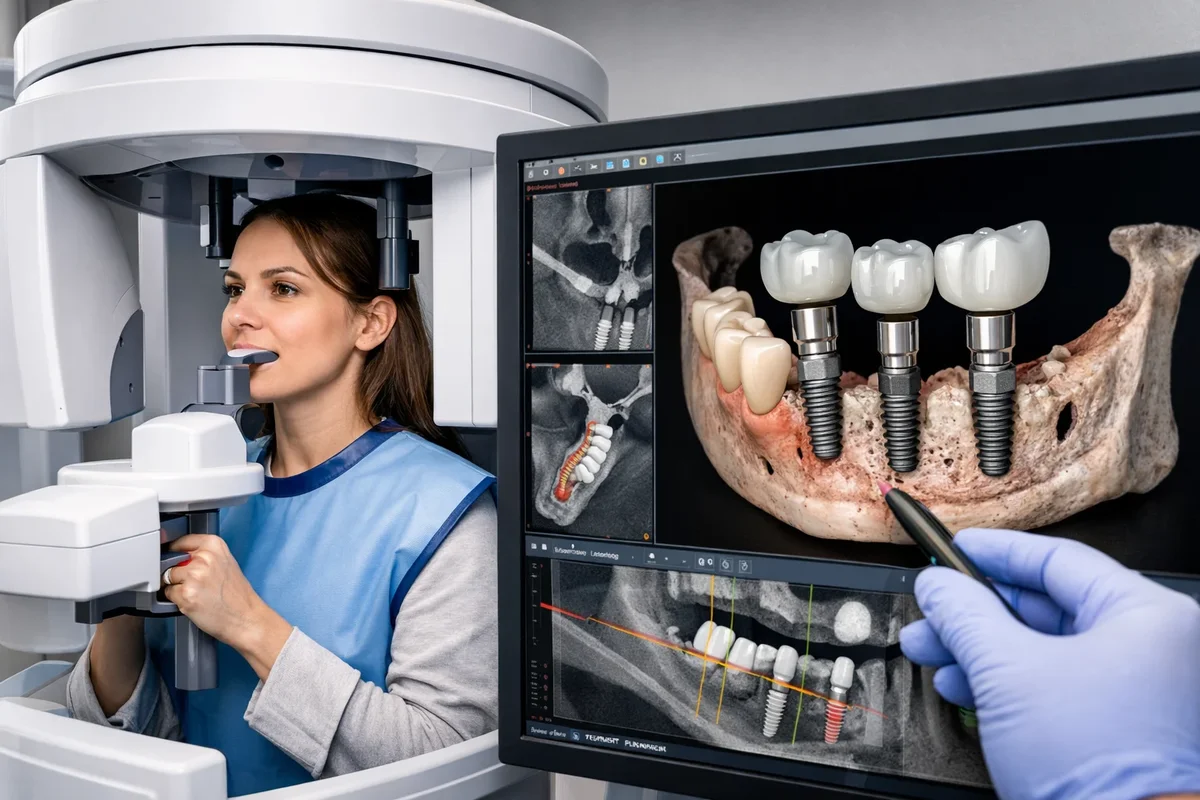
Future of Dental Implant Imaging and 3D Cat Scan Technology
Dental technology has evolved dramatically over the past two decades, and imaging systems have played a crucial role in that transformation. One of the most influential innovations in implant dentistry is the cat scan for dental implants. This advanced imaging method allows dentists to view the jawbone and surrounding anatomical structures in three dimensions, helping them plan procedures with exceptional precision.
As technology continues to advance, the role of the cat scan for dental implants is becoming even more significant. Modern imaging systems are improving accuracy, reducing radiation exposure, and integrating with digital treatment planning tools. These developments are shaping the future of dental implant procedures, making them safer, faster, and more predictable than ever before.
The future of implant dentistry will rely heavily on innovations built around the cat scan for dental implants, including artificial intelligence, digital surgical guides, and real-time treatment simulation. Understanding these developments helps patients and professionals appreciate how imaging technology will continue to improve dental care.
Advancements in 3D Imaging Technology
One of the most exciting developments in implant dentistry is the improvement of three-dimensional imaging systems used in a cat scan for dental implants. Modern Cone Beam Computed Tomography (CBCT) scanners now produce extremely high-resolution images that allow dentists to examine bone structures in remarkable detail.
Compared with earlier imaging systems, today’s cat scan for dental implants machines capture images more quickly and with significantly lower radiation levels. This combination of improved image quality and enhanced safety makes the technology even more valuable in clinical practice.
Higher Image Resolution
New-generation scanners used for a cat scan for dental implants can capture images with much greater clarity than older systems. This improved resolution allows dentists to detect small anatomical details that may influence implant placement.
For example, a high-resolution cat scan for dental implants can reveal subtle variations in bone density, identify tiny nerve branches, and detect minor bone defects that might otherwise go unnoticed. These details help dentists create more precise and reliable treatment plans.
Integration with Digital Implant Planning
Another major advancement in implant dentistry is the integration of digital planning software with the data obtained from a cat scan for dental implants. The images captured during the scan can be converted into a virtual 3D model of the patient’s mouth.
This digital model allows dentists to simulate implant placement before the surgery takes place. Using information from the cat scan for dental implants, the dentist can determine the ideal implant position, depth, and angle.
Computer-Guided Implant Surgery
One of the most promising developments resulting from the cat scan for dental implants is computer-guided implant surgery. In this technique, the digital treatment plan created from the scan is used to produce a custom surgical guide.
The surgical guide acts as a template during the procedure, ensuring that the implant is placed exactly where it was planned in the digital simulation. Because the planning is based on the detailed imaging provided by the cat scan for dental implants, the procedure becomes more accurate and predictable.
The Role of Artificial Intelligence in Cat Scan for Dental Implants
Artificial intelligence (AI) is beginning to play an increasingly important role in dental imaging. In the future, AI-powered software may analyze data from a cat scan for dental implants to automatically detect potential issues such as bone deficiencies, nerve proximity, or sinus complications.
By assisting dentists in interpreting scan results, AI could improve diagnostic accuracy and help streamline the treatment planning process.
Automated Image Analysis
AI systems are being developed to analyze images from a cat scan for dental implants and highlight important anatomical structures automatically. This technology can help dentists quickly identify critical areas that require special attention during implant placement.
Although dentists will always oversee the treatment process, AI-powered tools may provide valuable support in evaluating the data obtained from a cat scan for dental implants.
Reducing Radiation Exposure in Future Scanners
Another important area of innovation is reducing radiation exposure during imaging procedures. While the radiation levels used in a cat scan for dental implants are already relatively low, researchers are continually working to make the technology even safer.
New scanner designs are being developed to capture high-quality images using even smaller radiation doses. These improvements will make the cat scan for dental implants safer for patients while maintaining excellent diagnostic accuracy.
Faster Imaging Systems
Future scanners used for a cat scan for dental implants may also perform scans more quickly than current machines. Faster scanning reduces the chance of movement during imaging and improves patient comfort.
With shorter scan times and lower radiation exposure, the cat scan for dental implants will continue to become more efficient and patient-friendly.
Personalized Implant Treatment with Advanced Imaging
Perhaps the most exciting aspect of future imaging technology is its potential to create highly personalized implant treatments. The data obtained from a cat scan for dental implants allows dentists to tailor each treatment plan to the patient’s unique anatomy.
In the future, advanced imaging systems may combine information from a cat scan for dental implants with digital impressions and facial scanning technology. This integration will allow dentists to design implant restorations that perfectly match the patient’s natural bite and facial structure.
The Next Generation of Implant Dentistry
As imaging technology continues to evolve, the cat scan for dental implants will remain a central component of implant treatment planning. With improvements in artificial intelligence, digital simulation, and imaging safety, the future of implant dentistry looks extremely promising.
For patients considering dental implants, these technological advancements mean more precise diagnoses, safer procedures, and longer-lasting results. The continued development of the cat scan for dental implants ensures that implant dentistry will become even more accurate and reliable in the years ahead.