
Having straight, beautiful teeth is no longer just a dream reserved for the rich or celebrities. Thanks to new dental technologies, achieving a confident smile has become much more accessible 🌟. However, many people still find the cost of Invisalign—a leading clear aligner brand—quite high. That’s where cheaper Invisalign alternatives come into play. These options offer similar results at a fraction of the price, making them attractive for budget-conscious patients who still care about quality and results.
Before diving into the details, let’s clarify what we mean by cheaper Invisalign alternatives. These are clear aligner systems or orthodontic solutions that use advanced 3D scanning and digital planning technology to move your teeth gradually—just like Invisalign—but at a lower cost. They may be offered through dental clinics or direct-to-consumer mail-order services. Both have their pros and cons, which we’ll explore later in this article.
Understanding the Cost Gap 💰
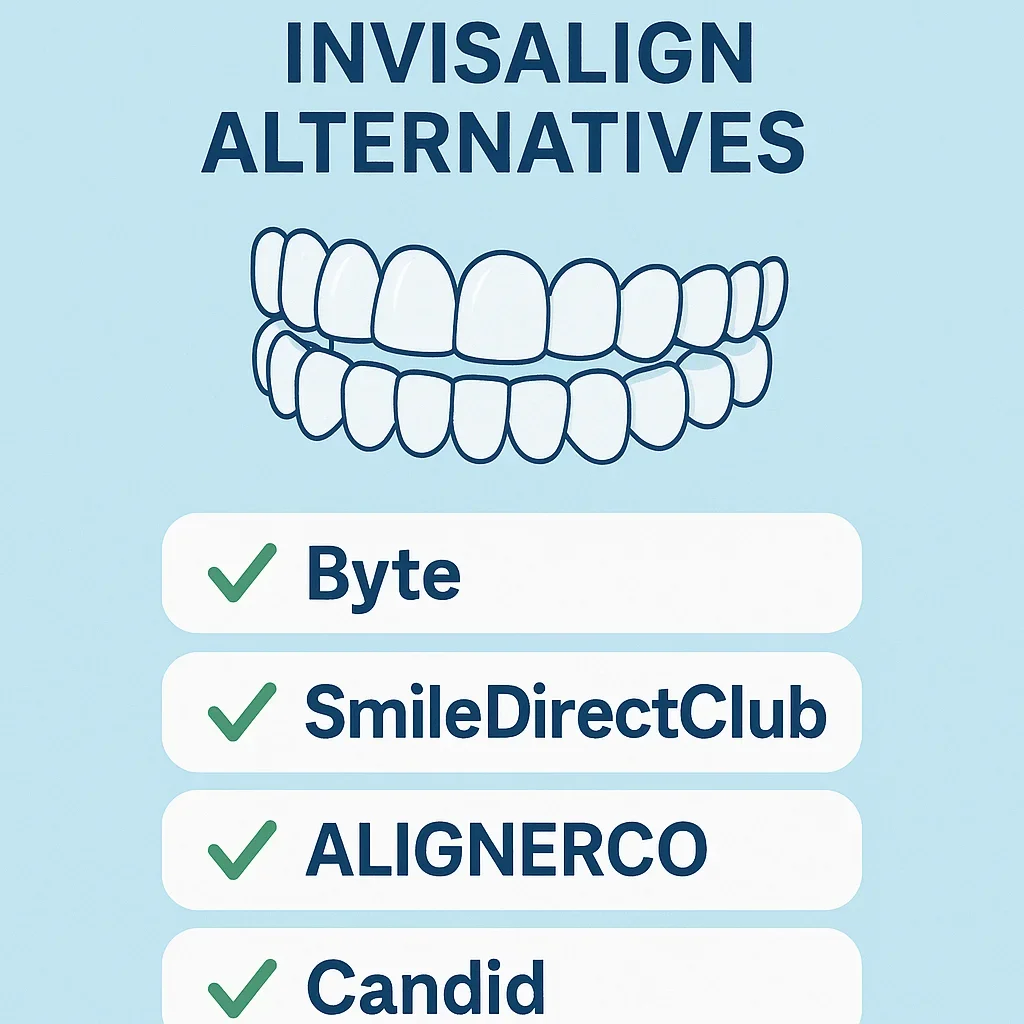
One of the main reasons people search for cheaper Invisalign alternatives is cost. Invisalign treatment can range from $3,500 to $8,000 depending on the complexity of your case, location, and dentist expertise. On the other hand, many alternatives cost between $1,000 and $2,500, providing similar outcomes for mild to moderate misalignments. For example, brands like Byte, SmileDirectClub, and Candid have built reputations as lower-cost options with faster or more convenient treatment processes. These options often appeal to adults who want a subtle and flexible solution without breaking the bank.
Technology and Treatment Process 🔬
It’s important to understand that both Invisalign and its cheaper competitors rely on 3D imaging, computer modeling, and clear plastic aligners that gradually shift your teeth into position. The major difference lies in how the treatment is delivered and supervised. Invisalign treatment is always dentist-led and monitored through in-person visits, while many cheaper Invisalign alternatives rely on remote dental supervision through tele-dentistry platforms. This allows companies to cut costs by reducing overhead and clinical visit expenses—passing those savings directly to you.
Benefits of Choosing Affordable Clear Aligners 🦷
Choosing a budget-friendly aligner doesn’t mean compromising on aesthetics or comfort. Most clear aligners are made from medical-grade, BPA-free plastic that’s smooth, nearly invisible, and comfortable to wear. Some even use faster vibration-based technologies to accelerate tooth movement, such as Byte’s HyperByte system. Additionally, affordable clear aligners can be an excellent option for adults who had braces years ago but have experienced minor relapse and don’t want to spend thousands again on Invisalign.
When Are Cheaper Invisalign Alternatives a Good Fit?
If you have mild crowding, spacing, or alignment issues, you’re likely an ideal candidate for cheaper aligners. However, complex orthodontic cases—like severe bite problems, rotated teeth, or significant jaw misalignment—still require dentist-led treatments such as Invisalign or traditional braces. That said, many users have achieved impressive transformations using at-home aligner kits that come with online progress tracking and dental team support. These solutions balance convenience, aesthetics, and affordability perfectly.
Professional Guidance Still Matters 👩⚕️
Even when opting for cheaper Invisalign alternatives, professional evaluation is essential. Before ordering any aligner kit online, always consult a qualified orthodontist or dentist to ensure you’re a suitable candidate. Neglecting this step can lead to poor results or dental complications. Clinics such as Redent Klinik Contact Page offer professional consultations that can help you decide which clear aligner option best suits your dental structure and financial needs. An expert’s input ensures that your treatment plan is safe, effective, and fully customized.
Insurance and Payment Options 💳
Many dental insurance providers now recognize clear aligner therapy as an orthodontic procedure, and they may cover a portion of the cost—even for cheaper alternatives. Additionally, flexible payment plans, health savings accounts (HSAs), and financing options can make treatment even more affordable. Before you decide, check your insurance coverage carefully and ask your provider which aligner brands qualify for reimbursement.
Clinical Approval and Safety
Not all aligners are created equal. Reputable companies producing cheaper Invisalign alternatives comply with strict safety and quality standards. Some are even endorsed or certified by organizations such as the American Dental Association. Always verify whether the aligner brand you’re considering uses FDA-approved materials and whether licensed orthodontists are reviewing your treatment plan. Safety should never be compromised for cost savings.
Final Thoughts 🌟
In today’s world, it’s entirely possible to get the smile you’ve always wanted without paying a fortune. Whether you choose Invisalign or one of the cheaper Invisalign alternatives, the key lies in finding a reliable provider and following your treatment plan diligently. These affordable clear aligner options are revolutionizing orthodontic care by combining advanced technology with accessibility and cost-effectiveness. With the right choice, you can achieve a radiant smile and newfound confidence—without breaking your budget.
Ultimately, cheaper Invisalign alternatives give patients the freedom to pursue dental perfection affordably, comfortably, and safely. Just remember: research, professional advice, and consistency are your best tools for achieving lasting results that truly make you smile 😁.
Why People Look for Cheaper Invisalign Alternatives 🤑
Orthodontic treatment has come a long way from traditional metal braces. Clear aligners like Invisalign have transformed the industry by offering a nearly invisible, comfortable, and convenient way to straighten teeth. However, while Invisalign has set the gold standard in aligner therapy, its cost can often discourage many people from starting treatment. This is where cheaper Invisalign alternatives enter the picture—offering similar outcomes at a much lower price point. Understanding why people seek out these alternatives requires examining several key factors, including cost, accessibility, lifestyle, and evolving consumer expectations.
The Cost Factor: Why Price Matters More Than Ever 💸
The number one reason patients start searching for cheaper Invisalign alternatives is the high price tag of Invisalign. Depending on the case’s complexity and location, Invisalign treatment can cost anywhere between $3,500 and $8,000. This is a major investment for most people, especially those without orthodontic insurance coverage. In contrast, many clear aligner competitors offer treatment plans starting at around $1,200, with some even offering payment installments as low as $80 per month. For families or young adults on a budget, these differences are significant. The lower costs make teeth straightening more accessible and inclusive for individuals who might otherwise skip orthodontic care entirely.
Many of these budget-friendly brands can afford to offer lower prices because they minimize in-office visits, use centralized manufacturing facilities, and rely on tele-dentistry to connect patients with licensed orthodontists. This streamlined model cuts overhead costs without necessarily compromising quality, especially for mild to moderate alignment issues. As a result, consumers get the same clear, removable aligners that straighten their teeth—just at a reduced cost.
Convenience and Accessibility 🕒
Today’s consumers value convenience just as much as they value affordability. Cheaper Invisalign alternatives often appeal to people with busy lifestyles who can’t commit to multiple dental appointments. Many companies now offer mail-order aligner systems, where patients take impressions at home or visit a partner clinic for a 3D scan, then receive their aligners delivered directly to their doorstep. Progress tracking and communication with orthodontists happen online or through mobile apps.
This model eliminates the need for frequent in-office checkups, saving patients both time and money. Remote monitoring has become especially popular among professionals, students, and parents who prefer managing their treatment privately and conveniently from home. The flexibility of such programs is a key reason behind the massive rise in demand for affordable at-home aligner kits.
Tele-Dentistry Revolution 🌍
Tele-dentistry plays a huge role in the growing popularity of cheaper Invisalign alternatives. Using AI-powered imaging and digital scans, dental professionals can evaluate progress and make adjustments remotely. This approach not only lowers treatment costs but also democratizes access to orthodontic care, especially in areas where dental specialists are limited. Patients from rural regions or those without easy access to orthodontic offices can still enjoy the benefits of advanced teeth straightening solutions.
Transparency and Consumer Awareness 🧠
Modern patients are also more informed and tech-savvy than ever before. Thanks to online reviews, comparison blogs, and video testimonials, they can easily research the pros and cons of Invisalign and its competitors. As consumers learn that several affordable clear aligner brands offer similar materials and treatment technologies, they naturally gravitate toward these cheaper Invisalign alternatives. Transparency in pricing—often displayed clearly on company websites—builds trust and gives people the confidence to invest in lower-cost orthodontic options.
In addition, younger consumers, especially millennials and Gen Z, tend to prioritize value and digital convenience over brand prestige. This generational shift has forced the orthodontic industry to evolve. The demand for personalized, affordable, and flexible dental solutions has encouraged more startups to enter the aligner market, driving competition and innovation. This competition benefits the end-user by offering better products at lower prices.
Insurance and Financial Accessibility 💳
Another major reason people seek cheaper Invisalign alternatives is the challenge of limited insurance coverage. Traditional orthodontic plans often cover only a small portion of Invisalign treatment or exclude it entirely. Meanwhile, some new aligner companies have developed partnerships with insurance providers or offer internal financing options that make treatment easier to manage financially. Many even provide flexible payment plans or lifetime guarantees, further reducing the perceived risk of choosing a more affordable aligner brand.
For example, Byte and SmileDirectClub frequently advertise 100% at-home convenience with low monthly payments. These marketing strategies, combined with transparent cost structures, attract individuals who feel priced out of conventional orthodontics. Even without full insurance coverage, the total out-of-pocket expenses for these cheaper options are manageable for many households.
Desire for Aesthetic and Lifestyle Compatibility 😁
Traditional braces, while effective, can significantly affect self-esteem and comfort. Clear aligners solve this issue by being discreet and removable. However, Invisalign’s premium pricing has historically limited access for some patients. This has motivated people to find cheaper Invisalign alternatives that maintain the same aesthetic appeal. Many patients report that these alternatives fit seamlessly into their professional and social lives, allowing them to smile confidently throughout treatment.
In today’s digital age—where photos, video calls, and social interactions happen daily—looking good while undergoing orthodontic treatment has become more important. Affordable aligners enable this transformation for a wider demographic, empowering people from all walks of life to achieve straight teeth without embarrassment or financial strain.
Social Media Influence 📱
Platforms like TikTok, Instagram, and YouTube are filled with testimonials, unboxing videos, and reviews comparing Invisalign to its budget-friendly counterparts. Influencers often highlight the similarities in treatment quality while emphasizing the cost savings of cheaper Invisalign alternatives. This peer-driven marketing has further amplified consumer confidence, driving the trend toward affordable dental innovation worldwide.
Conclusion: A Shift Toward Affordable Orthodontic Care 🌟
The growing popularity of cheaper Invisalign alternatives is a reflection of changing consumer priorities—affordability, transparency, convenience, and accessibility. People are no longer content with paying premium prices simply for brand recognition when equivalent technology is available at a lower cost. These alternatives are reshaping the orthodontic landscape, making dental perfection achievable for everyone, not just those with deep pockets.
Ultimately, this shift benefits both patients and professionals. Dentists can reach more clients, while patients can finally attain the straight, confident smile they’ve always wanted—without draining their savings. As the clear aligner market continues to expand, competition will likely drive prices even lower while maintaining or even improving quality. That’s excellent news for anyone considering cheaper Invisalign alternatives today.
Top Clear Aligner Brands That Cost Less Than Invisalign
When people start searching for cheaper Invisalign alternatives, they often discover a growing list of companies offering professional-grade clear aligner treatments at a fraction of the price. These innovative brands have reshaped orthodontics by introducing affordable, high-quality products that combine digital technology, professional oversight, and flexible pricing. While Invisalign remains a trusted leader, these budget-friendly options have made straightening teeth more accessible to millions around the world 🌍.
Below, we’ll explore some of the most popular and trusted aligner brands that deliver similar results to Invisalign without the hefty price tag. Each has its unique approach, technology, and service model. By understanding what sets them apart, you can confidently choose the best treatment plan for your smile—and your wallet 💰.
1. SmileDirectClub: The Pioneer in At-Home Aligner Treatment 😁
SmileDirectClub was one of the first companies to bring orthodontic treatment directly to consumers. It offers custom clear aligners that cost between $1,950 and $2,300—less than half the average Invisalign treatment. Patients can start their journey either by ordering an at-home impression kit or visiting a SmileShop for a 3D scan.
SmileDirectClub treatments are overseen remotely by licensed dentists and orthodontists through a tele-dentistry platform. Patients upload progress photos periodically, and the dental team adjusts the treatment plan as needed. This fully remote model drastically reduces costs, making SmileDirectClub one of the leading cheaper Invisalign alternatives.
Pros and Cons
- Pros: Affordable, convenient, and easy to start from home.
- Cons: Limited in treating complex cases; customer service experiences vary.
2. Byte: Fast Treatment with Cutting-Edge Technology ⚡
Byte has gained significant popularity due to its innovative HyperByte technology—a high-frequency vibration device that helps teeth move more efficiently. Byte’s average treatment time is around 4 to 6 months, significantly faster than Invisalign’s 12 to 18 months. Byte offers both day and nighttime aligners, catering to different lifestyles and preferences.
Byte’s pricing typically starts at $1,895 for standard aligners and about $2,295 for nighttime treatment options. It also includes a lifetime guarantee, ensuring free adjustments if teeth ever shift back post-treatment. This makes Byte not only one of the most advanced but also one of the most customer-friendly cheaper Invisalign alternatives.
Pros and Cons
- Pros: Fast results, lifetime guarantee, advanced vibration technology.
- Cons: Remote-only monitoring may not suit everyone; unsuitable for severe cases.
3. Candid: A Hybrid Model That Combines Professional Oversight 🏥
Candid has redefined the mid-range segment of the clear aligner market. Unlike fully remote brands, Candid begins treatment with an in-office scan at a partner dental clinic. Patients are then monitored remotely using the CandidMonitoring app, which transmits high-resolution scans to orthodontists every two weeks. This ensures close supervision without the need for frequent in-person visits.
Candid’s treatment cost averages around $3,000, making it slightly higher than some other cheaper Invisalign alternatives but still far below Invisalign’s pricing. For many patients, the hybrid model offers the perfect balance between affordability and professional care.
Pros and Cons
- Pros: Real orthodontist supervision, excellent technology, and hybrid convenience.
- Cons: More expensive than other at-home systems but still cheaper than Invisalign.
4. ALIGNERCO: The Most Budget-Friendly Option 💵
For those on a very tight budget, ALIGNERCO stands out as one of the most affordable aligner companies in the market. With plans starting as low as $995, it’s easily one of the most affordable cheaper Invisalign alternatives available today. ALIGNERCO also provides interest-free installment plans, making it accessible even to students and families on a strict budget.
Although ALIGNERCO operates completely online, its aligners are FDA-approved and manufactured using high-quality, BPA-free plastic. While it’s best for mild to moderate misalignments, many users have reported excellent results when adhering to the recommended wear time and progress checks.
Pros and Cons
- Pros: Extremely affordable, installment plans, decent results for mild cases.
- Cons: No in-person supervision, limited support for complex orthodontic issues.
5. NewSmile: Comfortable, Clear, and Canadian 🇨🇦
NewSmile is another rising star among cheaper Invisalign alternatives. Known for its ultra-clear aligner design and slim fit, it’s especially popular for users who prioritize comfort and aesthetics. Treatment prices start at around $1,495, and like Byte, NewSmile offers both daytime and nighttime aligners.
NewSmile’s customer service and user-friendly mobile app make treatment progress simple to track. Many customers praise the brand for its transparency, quick response times, and convenient home impression kits. Its strong presence in both the U.S. and Canada helps ensure quality standards and availability of customer support across multiple regions.
Pros and Cons
- Pros: Affordable, comfortable design, excellent support.
- Cons: Limited availability for complex orthodontic cases.
6. SnapCorrect: A Lesser-Known Yet Reliable Option 🦷
SnapCorrect may not have the same brand recognition as SmileDirectClub or Byte, but it’s a legitimate competitor. With aligners starting around $1,749, SnapCorrect offers a reliable, budget-friendly option. Its aligners are made from ultra-clear plastic, making them among the most transparent aligners in the market.
Unlike some cheaper brands, SnapCorrect includes whitening products in its packages and often runs promotions that further lower costs. It’s a great choice for individuals seeking both cosmetic improvement and minor alignment correction without expensive orthodontic visits.
Pros and Cons
- Pros: Clear aesthetic, affordable pricing, free whitening kit included.
- Cons: Fully remote system; fewer partner dentists than competitors.
What These Brands Have in Common 🔍
While these brands differ in technology and price, they all share the same mission—to provide accessible, professional-grade dental alignment at an affordable cost. Most of these cheaper Invisalign alternatives use 3D scanning technology, remote dental monitoring, and FDA-approved materials. They focus on customer convenience, allowing users to manage their treatment digitally while maintaining effective results.
Professional Oversight and Safety
Despite the lower prices, it’s important to ensure that any chosen aligner brand involves licensed dental professionals in the treatment process. Always verify if your treatment plan is reviewed by a certified orthodontist or dentist. For additional guidance, consulting a trusted clinic like Redent Klinik Contact Page can help determine which affordable aligner brand is safest and most effective for your dental needs.
Conclusion: The Market of Affordable Smiles 🌟
Today’s market is filled with reliable cheaper Invisalign alternatives that combine affordability, innovation, and professional oversight. Whether you prioritize speed, comfort, or flexibility, there’s an option tailored to your lifestyle and budget. From Byte’s high-tech approach to ALIGNERCO’s budget-friendly simplicity, these alternatives make achieving a perfect smile more accessible than ever before. Always remember to prioritize dental health and professional supervision—because your smile deserves both quality and care.
Mail-Order Aligners vs. In-Office Treatments: Which Is Better?
As the demand for cheaper Invisalign alternatives continues to grow, one of the most common questions patients face is whether to choose a mail-order aligner or an in-office treatment plan. Both approaches offer unique benefits and drawbacks, and the right choice depends on your dental needs, lifestyle, and budget. Understanding how these two systems differ can help you make an informed decision that protects your oral health while achieving your dream smile 😁.
Understanding the Two Systems 🦷
Let’s start by breaking down the main differences. Traditional in-office treatments, such as Invisalign, involve a series of appointments with a licensed orthodontist or dentist. You get professional scans, customized aligners, and ongoing in-person monitoring. In contrast, mail-order aligners—the foundation of most cheaper Invisalign alternatives—allow you to take impressions at home or visit an affiliated scan center once. After that, everything from aligner delivery to progress tracking happens remotely.
This remote model has opened the door for thousands of people who previously found orthodontic care unaffordable or inconvenient. However, it’s important to remember that not all dental issues can or should be treated without direct supervision from a professional. Below, we’ll explore the key comparisons between these two models in terms of cost, safety, convenience, and results.
1. Cost Comparison 💰
It’s no surprise that cost is the driving force behind the popularity of cheaper Invisalign alternatives. Invisalign treatments can range between $3,500 and $8,000, depending on your dentist, geographic location, and the complexity of your dental alignment. In contrast, mail-order aligner systems like SmileDirectClub, Byte, and ALIGNERCO generally cost between $1,000 and $2,500. The difference comes down to reduced overhead: fewer in-office visits and direct-to-consumer manufacturing help companies pass savings to patients.
However, while the initial price of mail-order aligners is lower, it’s crucial to consider potential long-term costs. Improper alignments or incomplete corrections could lead to further dental problems requiring professional treatment later. Therefore, while the affordability of cheaper Invisalign alternatives is attractive, patients should balance cost with quality and professional oversight.
2. Professional Supervision and Safety 🧑⚕️
One of the biggest advantages of in-office treatments like Invisalign is direct, hands-on care from dental professionals. Orthodontists regularly assess progress and adjust treatment plans as necessary. This ensures that your teeth move safely, evenly, and within healthy biological limits. Mail-order aligners, on the other hand, rely on remote check-ins—often through photos or mobile apps. While many cheaper Invisalign alternatives do employ licensed professionals for treatment planning, the absence of physical examinations can increase the risk of unnoticed complications.
Common Concerns with Mail-Order Systems ⚠️
- Inaccurate impressions: Taking your own dental mold at home can sometimes result in errors that affect the entire treatment plan.
- Limited bite correction: Severe underbites, overbites, or jaw misalignments usually require in-office management.
- Delayed response times: Without physical visits, it might take longer to address discomfort or unexpected tooth movement.
Despite these risks, many patients report successful results with mail-order systems—particularly when dealing with mild alignment issues. Still, the guidance of a licensed orthodontist remains invaluable for ensuring both safety and long-term dental health.
3. Convenience and Time Efficiency ⏰
One undeniable advantage of mail-order aligners is convenience. Patients can complete their entire treatment from home, avoiding frequent dental visits. This setup fits perfectly into modern, busy lifestyles. Companies offering cheaper Invisalign alternatives typically provide mobile apps that allow users to upload progress photos, chat with professionals, and track their aligner schedule. Treatments can also be faster—some lasting only 4–6 months, compared to Invisalign’s 12–18 months for similar cases.
However, in-office systems like Invisalign may actually save time in the long run by minimizing errors. If something goes wrong with a mail-order treatment, resolving it remotely can be slower and more complicated. With in-person visits, adjustments are made immediately, ensuring that treatment stays on track.
4. Treatment Complexity and Effectiveness ⚙️
Mail-order aligners are best suited for mild to moderate alignment issues such as crowding, spacing, and small rotations. For patients with complex orthodontic needs—like deep bites, crossbites, or severe crowding—professional, in-office treatment remains the safest and most effective option. Invisalign and traditional braces allow for attachments, elastics, and precision cuts that guide teeth more effectively in multiple directions.
Patients considering cheaper Invisalign alternatives should undergo a professional evaluation before committing to any treatment. Even if the aligner brand offers remote consultations, getting a dentist’s in-person assessment helps determine whether at-home treatment is suitable or if in-office care is necessary.
When to Choose Each Option 🧐
- Mail-order aligners: Ideal for mild cosmetic corrections and adults with limited time or budget.
- In-office treatments: Essential for complex cases requiring precision and continuous monitoring.
5. Comfort and Lifestyle Impact 😌
Both Invisalign and its cheaper competitors are designed for comfort and discretion. They are nearly invisible and can be removed for eating, brushing, or special occasions. However, Invisalign aligners tend to fit slightly more precisely due to professional 3D scans, while some mail-order aligners rely on less accurate home impressions. This can occasionally cause mild discomfort or imperfect fitting.
That said, for many users, the difference is minimal. Most modern cheaper Invisalign alternatives now offer 3D scanning at partner clinics, improving fit accuracy and comfort. Aligners from reputable companies are made from medical-grade, BPA-free plastic and are just as transparent and durable as Invisalign trays.
6. Customer Experience and Support 💬
Customer support can vary significantly between brands. Invisalign patients have the advantage of face-to-face communication with their dentist, which builds trust and accountability. Mail-order aligner companies rely heavily on email, chat, or app-based communication. While this can be efficient, some users report slower response times. It’s essential to choose a company known for strong customer service—especially if you opt for cheaper Invisalign alternatives that depend on remote guidance.
7. Making the Right Choice ✅
Deciding between mail-order aligners and in-office treatments depends on your unique dental condition, lifestyle, and budget. If you’re looking for affordability and convenience for minor adjustments, remote options like Byte or ALIGNERCO could be excellent. However, for complex dental corrections, nothing replaces the hands-on precision of Invisalign.
Before committing, consider scheduling a consultation with a trusted dental provider such as Redent Klinik Contact Page. Their team can assess your situation and recommend whether professional Invisalign treatment or a lower-cost alternative is best for your goals.
Conclusion: Balance Affordability with Safety ⚖️
Mail-order aligners have revolutionized orthodontics by offering flexible, accessible solutions for people worldwide. Still, professional oversight remains essential for optimal results and oral health. While cheaper Invisalign alternatives can be a great fit for many, patients must weigh cost savings against safety, precision, and the potential need for corrections. In the end, the best choice is one that blends affordability, convenience, and the assurance of expert care—helping you achieve your ideal smile with confidence and peace of mind 😊.
Hidden Costs and Common Pitfalls of Budget Clear Aligners
While cheaper Invisalign alternatives offer an exciting opportunity to straighten teeth affordably, it’s essential to understand that not all that glitters is gold ✨. Behind the appealing price tags and flashy online marketing, there can be hidden costs, potential risks, and pitfalls that might surprise unsuspecting patients. Knowing what to watch out for will help you make an informed decision that protects both your smile and your wallet.
Clear aligners have changed the landscape of orthodontics by making treatment accessible to more people than ever. However, affordability can sometimes come at the expense of professional oversight, material quality, or treatment accuracy. In this section, we’ll uncover the most common hidden expenses and pitfalls associated with budget clear aligners and explore how to avoid them while still enjoying the benefits of cheaper Invisalign alternatives.
1. The Real Price Behind “Low-Cost” Offers 💸
When you see ads promising teeth straightening for under $1,000, it’s natural to feel tempted. However, many of these offers exclude essential elements of treatment, such as initial impressions, replacement aligners, or post-treatment retainers. For instance, while ALIGNERCO and Byte advertise attractive base prices, extra costs for shipping, retainers, and refinements can add up to several hundred dollars more.
Most patients will also need at least one round of refinements after their first treatment to perfect alignment. Some cheaper Invisalign alternatives include this service for free, while others charge additional fees. The fine print often hides these details, so always read terms carefully before committing. If you end up needing more aligners or dental consultations, your total cost could rise to nearly the same as mid-tier Invisalign packages.
Hidden Cost Checklist:
- Impression kits or 3D scans (often $50–$100 extra)
- Post-treatment retainers ($100–$200)
- Refinement aligners for touch-ups ($200–$400)
- Shipping, replacement trays, or insurance add-ons
These additional costs don’t necessarily make cheaper Invisalign alternatives a bad choice, but they highlight the importance of transparency. Companies that clearly outline total costs upfront are generally more trustworthy and patient-focused.
2. Limited Professional Supervision 🧑⚕️
One of the most significant pitfalls of some cheaper Invisalign alternatives is limited or inconsistent professional oversight. Many budget brands rely entirely on tele-dentistry—where licensed dentists or orthodontists review scans remotely. While this can be sufficient for mild cases, it may not catch subtle complications that only an in-person dentist could identify.
Misalignments, bite issues, or gum inflammation can worsen if not monitored properly. In-office Invisalign treatment, by contrast, includes routine checkups where your provider ensures each stage is progressing safely. Without that hands-on supervision, mail-order aligner users may face delays, discomfort, or results that deviate from the plan.
Tip from Dental Experts 🦷
If you choose a mail-order aligner, make sure your treatment plan is designed and reviewed by a licensed orthodontist—not just a general dentist. For peace of mind, consider getting a pre-treatment evaluation at a trusted clinic like Redent Klinik Contact Page to confirm you’re a suitable candidate for remote aligner therapy.
3. Quality and Material Differences 🔬
Another area where hidden issues may arise is aligner material quality. Invisalign uses patented SmartTrack thermoplastic, which is specifically engineered for comfort and consistent tooth movement. Many cheaper Invisalign alternatives use generic BPA-free plastics that vary in rigidity and clarity. While these materials are still safe and effective, they may not fit as precisely, increasing the risk of irritation or uneven pressure distribution.
Some budget aligners may discolor faster, become cloudy, or even warp if exposed to hot liquids or improper cleaning. Reputable companies will always specify the manufacturing standards of their aligners, so make sure to check that information before purchasing. Cheap doesn’t have to mean poor quality—but it does require research and caution.
4. Risk of Inaccurate Impressions or Scans 📏
When using at-home impression kits, it’s easy to make mistakes. Inaccurate dental molds can lead to aligners that don’t fit properly, causing discomfort and ineffective movement. This is one of the most commonly reported pitfalls of at-home systems. Professional 3D scans, on the other hand, are far more accurate but are typically included only in higher-end or hybrid treatment models.
Patients who want to use cheaper Invisalign alternatives should opt for brands offering optional in-person scans at partner clinics. This small investment can make a big difference in treatment accuracy and comfort. Inaccurate impressions can delay progress, increase costs, and potentially cause gum or tooth strain if aligners apply uneven pressure.
Pro Tip:
Before taking your own impressions, watch the company’s tutorial videos carefully or schedule a virtual guidance session with a technician. Accuracy at this step sets the foundation for the entire treatment process.
5. Long-Term Maintenance and Retainer Costs 🦷
Many people forget that aligner treatment doesn’t end when the final tray comes off. Long-term success depends on consistent retainer use to prevent teeth from shifting back. Invisalign includes Vivera retainers designed for durability, but most cheaper Invisalign alternatives only provide a single retainer set—or charge extra for replacements.
Over time, retainers wear out and need replacing every 6 to 12 months. If replacements cost $100–$150 each, this can add up. Not budgeting for maintenance can cause relapse, forcing patients to restart treatment altogether. It’s wise to choose a provider that offers affordable or subscription-based retainer replacement plans.
6. Customer Support and Refund Policies 📞
Customer service quality varies widely among budget aligner companies. Some users report excellent experiences, while others struggle to get timely responses when issues arise. Poor communication can turn a simple fit adjustment into weeks of frustration. Check online reviews, Better Business Bureau ratings, and company refund policies before signing up.
Invisalign, with its established clinical network, offers consistent support through local dentists. Meanwhile, most cheaper Invisalign alternatives operate online, which can limit the speed or depth of help you receive. Always verify whether a company offers a satisfaction guarantee or free refinements if results don’t meet expectations.
7. The Psychological Trap of “Too Cheap” Offers ⚠️
When it comes to dental care, the cheapest option is not always the best. Some low-cost providers may cut corners on treatment planning or professional review to stay competitive. Others may use aggressive marketing claims that oversimplify the complexity of orthodontic treatment. Patients should be cautious of companies promising overnight results or “perfect smiles in weeks.” Orthodontic movement is a biological process that requires time and precision.
Balanced Perspective:
There’s nothing wrong with seeking cheaper Invisalign alternatives, but choose wisely. Prioritize brands that are transparent about pricing, treatment limitations, and medical oversight. Affordable should never mean unsafe or unreliable.
Conclusion: Affordable but Informed Choices Matter 💡
Clear aligners have revolutionized smile correction, but patients must stay informed about the hidden costs and potential pitfalls of budget brands. By understanding where the savings come from—and what may be sacrificed—you can confidently choose a provider that aligns with both your financial situation and dental health goals.
Ultimately, cheaper Invisalign alternatives can be a smart, effective option if approached with research, professional advice, and realistic expectations. A little extra diligence at the start can save you significant time, money, and frustration in the long run—leaving you with a healthier, straighter, and happier smile 😄.
Comparing Invisalign with SmileDirectClub, Byte, and Candid
When considering cheaper Invisalign alternatives, three names almost always appear in the conversation — SmileDirectClub, Byte, and Candid. These brands have changed the orthodontic landscape by offering similar teeth-straightening results to Invisalign at a fraction of the price. But how do they truly compare in terms of cost, technology, comfort, treatment time, and professional supervision? Understanding these differences can help you choose the right aligner system for your needs without compromising your dental health or results 🦷.
Invisalign: The Industry Standard 🌟
Invisalign has been the pioneer in clear aligner treatment for over two decades. It’s backed by extensive clinical research, professional orthodontic oversight, and the use of SmartTrack material—its patented, medical-grade thermoplastic designed for precision and comfort. Invisalign treatments are always conducted under direct supervision by a certified orthodontist or dentist, with regular in-person checkups to monitor progress.
The average cost for Invisalign ranges from $3,500 to $8,000 depending on complexity. The system can treat everything from minor crowding to severe bite issues. However, for patients with mild to moderate alignment concerns, this cost may seem excessive compared to cheaper Invisalign alternatives that offer similar results for less than half the price.
Pros of Invisalign:
- Comprehensive treatment for all levels of misalignment.
- In-person supervision ensures safety and accuracy.
- Uses high-quality, comfortable materials.
Cons of Invisalign:
- Higher cost than most competitors.
- Requires multiple office visits.
SmileDirectClub: The Affordable Mail-Order Option 💰
SmileDirectClub (SDC) is one of the most recognized cheaper Invisalign alternatives. It revolutionized orthodontics by introducing a direct-to-consumer model. Instead of regular dental appointments, patients can start their journey from home using an impression kit or visit a SmileShop for a 3D scan. Licensed dentists then design a customized treatment plan, and aligners are shipped directly to the patient.
The cost for SmileDirectClub treatment is typically around $2,000—a dramatic reduction from Invisalign. Treatment time ranges from 4 to 10 months for mild to moderate cases. SDC’s biggest appeal is convenience: it eliminates most in-person visits and allows people to complete treatment entirely online.
Key Features:
- At-home impressions or free 3D scan appointments.
- Tele-dentistry monitoring through mobile app uploads.
- Transparent aligners designed for comfort and aesthetic appeal.
However, this convenience comes with trade-offs. Without physical dental supervision, issues like gum irritation, poor fit, or unintended tooth movement can go unnoticed. Therefore, while SDC is among the most popular cheaper Invisalign alternatives, it’s best suited for minor cases or patients seeking short-term cosmetic improvements.
Byte: The Fastest Treatment Option ⏱️
Byte is another standout in the world of cheaper Invisalign alternatives, primarily because of its HyperByte technology—a vibration-based device that helps speed up tooth movement. Most Byte users complete treatment in just 4 to 6 months, compared to Invisalign’s typical 12–18 months. This makes Byte particularly appealing for those who want quick, visible results.
Byte’s pricing starts at around $1,895 for the daytime system and $2,295 for nighttime aligners. The brand also offers a lifetime guarantee, meaning if your teeth ever shift back, Byte will provide additional aligners at no extra cost. Each treatment is remotely overseen by licensed orthodontists through a digital monitoring platform.
Advantages of Byte:
- Shorter treatment duration with advanced technology.
- Lifetime guarantee ensures long-term satisfaction.
- Excellent customer support and financing options.
Potential Drawbacks:
- Fully remote process may not suit complex dental cases.
- Some users report discomfort from rapid alignment phases.
Overall, Byte is one of the most efficient and innovative cheaper Invisalign alternatives for mild to moderate corrections—perfect for people looking for both speed and affordability.
Candid: The Hybrid Professional Solution 🏥
Candid sits between Invisalign and fully remote brands like SmileDirectClub or Byte. It offers a hybrid model—combining in-person scanning with remote follow-up. Patients begin by visiting a Candid partner clinic for a professional 3D scan, ensuring accuracy from the start. Progress is then monitored using the CandidMonitoring app, where users send high-resolution images for orthodontist review every two weeks.
Candid’s treatment typically costs between $2,800 and $3,500. Although more expensive than some at-home systems, it’s still far cheaper than Invisalign. This approach provides a balance between affordability and professional oversight, making it one of the most trusted cheaper Invisalign alternatives for those who want clinical precision without excessive cost.
Candid Advantages:
- Professional orthodontist supervision with fewer office visits.
- High-quality aligners and advanced remote tracking technology.
- Excellent for patients wanting safety and affordability combined.
Candid Disadvantages:
- More expensive than fully remote aligner brands.
- Available only in select regions and partner offices.
Side-by-Side Comparison Table 📊
| Brand | Average Cost | Treatment Type | Duration | Professional Oversight |
|---|---|---|---|---|
| Invisalign | $3,500–$8,000 | In-office | 12–18 months | High (in-person visits) |
| SmileDirectClub | $2,000 | Mail-order | 4–10 months | Moderate (remote) |
| Byte | $1,895–$2,295 | Mail-order | 4–6 months | Moderate (remote) |
| Candid | $2,800–$3,500 | Hybrid | 6–10 months | High (remote + in-person scan) |
Choosing the Right Option for You 🧩
Each system has its advantages, but your ideal choice depends on your dental needs, lifestyle, and budget. If you have complex alignment issues, Invisalign remains the safest and most comprehensive option. For moderate misalignments, Candid offers a great balance of cost and professional supervision. If your case is mild and you prioritize convenience and savings, Byte or SmileDirectClub may be the perfect fit.
Professional Recommendation:
Before choosing any aligner system, consult with a qualified dental professional. Clinics such as Redent Klinik Contact Page can evaluate your smile and determine which treatment path ensures both effectiveness and safety. Remember that cheaper Invisalign alternatives can deliver outstanding results—but only when used appropriately and under expert guidance.
Conclusion: The Future of Affordable Orthodontics 🌐
The evolution of clear aligners has made orthodontic care more inclusive than ever. Brands like SmileDirectClub, Byte, and Candid continue to challenge the market leader by providing high-quality results at accessible prices. While Invisalign remains unmatched for complex treatments, today’s cheaper Invisalign alternatives prove that achieving a straight, confident smile no longer requires a luxury budget. With careful selection, research, and professional advice, you can enjoy modern, efficient, and affordable orthodontic care that fits both your lifestyle and your financial comfort zone 💫.
How to Choose the Best Cheaper Invisalign Alternative for Your Needs
With so many cheaper Invisalign alternatives available today, finding the right one can feel overwhelming. Each aligner brand offers unique benefits—some focus on affordability, others on speed, convenience, or professional oversight. Choosing the right clear aligner system is not just about picking the lowest price; it’s about matching your specific dental condition, lifestyle, and expectations to the right provider. In this section, we’ll go through the exact steps and expert tips to help you choose wisely so you can achieve the perfect smile safely, effectively, and affordably 😁.
1. Assess Your Dental Condition First 🦷
The first and most critical step in choosing among cheaper Invisalign alternatives is understanding your current dental health. Not every aligner system is suitable for every case. While Invisalign can treat complex issues like severe crowding, bite misalignments, or rotated teeth, most budget-friendly clear aligner systems are designed for mild to moderate corrections.
Common conditions treatable with affordable aligners include:
- Mild crowding or spacing
- Slight overbites or underbites
- Minor gaps between teeth
- Relapse after braces treatment
However, if your case involves jaw alignment issues or severely crooked teeth, you may need an in-office orthodontic plan instead. Before choosing a provider, consider scheduling a consultation with a trusted dental professional—such as Redent Klinik Contact Page—to evaluate whether you’re a candidate for remote aligner therapy. This ensures you invest in a treatment that truly works for your situation.
2. Compare Treatment Models: At-Home vs. Hybrid vs. In-Office 🏥
There are three main types of clear aligner systems: in-office treatments like Invisalign, mail-order aligners such as Byte or SmileDirectClub, and hybrid systems like Candid. Each has pros and cons depending on your comfort with remote supervision, budget, and desired convenience.
Mail-Order (At-Home) Aligners:
These are the most common cheaper Invisalign alternatives. You take impressions at home or visit a scanning center once, and then everything—from aligner delivery to progress tracking—is done online. Brands like ALIGNERCO and Byte fall into this category. They’re ideal for simple cases and busy adults who prefer minimal dental visits.
Hybrid Aligners:
Hybrid options like Candid combine the benefits of in-office scanning with remote monitoring. You start with a professional scan to ensure accuracy and then receive ongoing supervision via tele-dentistry. This provides a balance between cost efficiency and safety.
In-Office Aligners:
If your condition is complex, in-office aligners like Invisalign remain the best option. Although more expensive, they offer precision and hands-on adjustments that ensure optimal results. For many patients, the peace of mind of professional oversight justifies the higher cost.
3. Evaluate Cost vs. Value 💰
It’s easy to be tempted by the lowest price, but it’s wiser to evaluate overall value. The cheapest brand might not include essential services like retainers, refinement aligners, or follow-up monitoring. To get true value, always check what’s included in the quoted price.
Here’s a simple comparison guideline:
- Byte: Fast results, lifetime guarantee, affordable monthly payments.
- SmileDirectClub: Lower cost upfront, convenient mobile app support.
- Candid: Hybrid system offering professional oversight and accuracy.
- ALIGNERCO: The most budget-friendly option, ideal for minor cases.
Before committing, calculate the total cost of ownership—including impressions, shipping, retainers, and possible refinements. Remember that true affordability isn’t just about paying less now; it’s about avoiding hidden expenses later. Quality and safety are long-term investments that matter far more than short-term savings.
4. Check for Professional Supervision and Credibility 👩⚕️
One of the biggest differences between Invisalign and most cheaper Invisalign alternatives lies in the level of professional involvement. Invisalign cases are always supervised in person by licensed orthodontists. Some affordable aligner brands, however, rely solely on remote dentists who may not have direct oversight of your treatment progress.
Questions to Ask Before Choosing:
- Are the treatment plans reviewed by certified orthodontists or general dentists?
- Does the company provide real-time communication with dental professionals?
- How often are progress photos reviewed during treatment?
Companies that clearly outline their dental supervision process are generally safer choices. Look for transparency and accountability—your oral health depends on it.
5. Review Customer Experiences and Results ⭐
Reading real user reviews is one of the most effective ways to evaluate cheaper Invisalign alternatives. Platforms like Trustpilot, Reddit, and YouTube provide firsthand accounts from patients who share their progress photos, challenges, and results. Pay attention to recurring themes in feedback—such as customer support responsiveness, comfort level, and final smile satisfaction.
Additionally, check if the company showcases verified before-and-after results on its website. Reputable brands are proud to share genuine success stories backed by photographic evidence. Avoid companies that rely heavily on stock photos or vague claims.
6. Consider Treatment Duration and Lifestyle Fit ⏱️
Some people want fast results, while others prioritize gradual, comfortable movement. Treatment time varies significantly across aligner brands:
- Byte: 4–6 months (fastest option, thanks to HyperByte device).
- SmileDirectClub: 6–10 months on average.
- Candid: 6–12 months with hybrid supervision.
- Invisalign: 12–18 months for most cases.
If you have an upcoming wedding, graduation, or special event, a faster system like Byte may suit you. But if you prefer a cautious, dentist-guided approach, Invisalign or Candid might be a better fit. The goal is to balance time, comfort, and professional reliability based on your individual lifestyle.
7. Verify Certification and Safety Standards ⚖️
Not all clear aligners meet the same safety standards. Before choosing, confirm that the aligners are made from FDA-approved, BPA-free, and medical-grade plastic. Trusted providers often mention partnerships or certifications from reputable dental organizations, such as the American Dental Association. These indicators confirm the brand’s commitment to patient safety and ethical standards.
8. Post-Treatment Care and Retainers 🔄
Once your aligner treatment ends, maintaining your new smile requires retainers. Some companies include retainers in the treatment cost, while others charge extra. Consistent retainer use prevents teeth from shifting back—a common issue that could negate months of progress. Always confirm:
- Are retainers included in the initial package?
- How often should they be replaced?
- Is there a lifetime guarantee or discounted replacement plan?
Long-term results depend on disciplined retainer use, so pick a provider with clear guidance and affordable follow-up care options.
9. Customer Service and Refund Policies 📞
Responsive and transparent customer support can make or break your aligner experience. Since most cheaper Invisalign alternatives operate remotely, you’ll depend on email, phone, or chat communication. Before purchasing, test how quickly their team responds to inquiries. Read refund and satisfaction policies carefully—some brands offer free refinements or partial refunds if results fall short of expectations.
Conclusion: Smart Choices Create Beautiful Smiles 🌟
Choosing among the many cheaper Invisalign alternatives requires a balance of research, realistic expectations, and professional input. Start by assessing your dental condition, compare treatment models, and confirm company credibility. Whether you select a fully remote provider like Byte or a hybrid system like Candid, the key is making an informed decision rooted in safety and transparency.
Remember: the best clear aligner is the one that fits your unique dental needs, lifestyle, and budget—without compromising results or health. With proper research and guidance from trusted dental professionals, you can achieve the straight, confident smile you’ve always dreamed of, affordably and effectively 😊.
What Dentists Say About Affordable Teeth Straightening Options
When exploring cheaper Invisalign alternatives, it’s essential to understand what dental professionals actually think about these budget-friendly clear aligners. While many patients are attracted to low prices and convenient at-home treatments, dentists and orthodontists offer valuable insights into the potential benefits, limitations, and long-term implications of using less expensive aligner systems. Their perspectives can help patients balance cost-effectiveness with safety, ensuring results that are both aesthetic and healthy 🦷.
In this section, we’ll break down professional opinions, real-world case studies, and expert recommendations to help you make a fully informed choice. Understanding the dentist’s point of view ensures that affordability doesn’t come at the cost of proper oral care or lasting results.
1. The Dentist’s Perspective on Clear Aligners 🩺
Most dental professionals agree that clear aligner technology—whether Invisalign or its competitors—represents a major advancement in orthodontic treatment. Aligners are less invasive, more comfortable, and easier to maintain than traditional braces. However, dentists often emphasize that not all aligners are created equal. The level of professional oversight plays a crucial role in determining the success and safety of treatment.
According to many orthodontists, cheaper Invisalign alternatives can be a great solution for mild cases, provided that treatment plans are properly supervised by licensed professionals. The concern arises when companies rely solely on remote communication and lack thorough diagnostic tools like X-rays or in-person exams. Without these, certain dental or gum issues could go unnoticed, leading to complications later.
Key Insight:
Dentists recommend that before beginning any aligner treatment—especially an at-home or budget-friendly option—you should get a comprehensive oral evaluation. This includes checking for cavities, gum disease, or jaw alignment issues that might interfere with tooth movement.
2. Professional Supervision: Why It Matters 🧑⚕️
Orthodontic treatment involves biological processes that must be carefully monitored. When teeth are moved too quickly or unevenly, it can lead to root resorption (shortening of tooth roots), gum recession, or bone loss. This is why dentists stress the importance of professional oversight, even with cheaper Invisalign alternatives.
Unlike traditional braces, which require routine visits, many mail-order aligner brands depend entirely on photo submissions. While AI technology has improved remote monitoring, it can’t always detect nuanced issues such as bite pressure or bone stability. Many dentists argue that the safest treatments combine both digital and in-person supervision—like hybrid systems such as Candid, where orthodontists track progress using high-resolution scans.
Expert Quote:
“Clear aligners are a fantastic innovation, but dental supervision should never be optional. It ensures that patients achieve straight teeth without compromising gum health or bite function.” — Dr. Lisa Carmichael, Orthodontist, ADA Member
3. Common Concerns Dentists Have About Budget Aligner Brands ⚠️
Although affordable aligners make smile correction more accessible, dentists frequently highlight several recurring issues among patients who opt for purely at-home systems:
- Inaccurate impressions: Home impression kits may lead to ill-fitting aligners, causing discomfort or ineffective tooth movement.
- Lack of X-rays: Without X-rays, underlying dental or bone issues can go undetected before treatment begins.
- Delayed intervention: If something goes wrong, communication through email or chat can delay proper corrective actions.
- Inconsistent wear times: Without in-person accountability, some patients fail to wear aligners as prescribed, prolonging treatment.
Dental professionals emphasize that while cheaper Invisalign alternatives can deliver good results for straightforward cases, they may fall short for more complex orthodontic needs.
4. Dentists Who Support Affordable Aligners 👍
Not all dentists oppose at-home aligner systems. Many actually appreciate that these brands have democratized access to orthodontic care. Previously, teeth straightening was a luxury limited to those who could afford thousands in treatment fees. Now, millions can enjoy the benefits of an improved smile for as little as $1,200.
Some dental professionals have even partnered with affordable aligner brands to offer hybrid care models—where patients begin with an in-person evaluation and continue monitoring online. These dentists recognize that, when handled responsibly, cheaper Invisalign alternatives can safely serve patients who would otherwise forgo treatment entirely.
Pro Tip from the Experts:
Seek out companies that collaborate with certified orthodontists and use FDA-approved materials. Transparency in manufacturing, pricing, and medical oversight is a strong sign that you’re working with a reputable provider.
5. The Importance of Pre-Treatment Screening 🔬
Dentists repeatedly stress the importance of comprehensive screening before starting any orthodontic treatment. Proper screening involves dental X-rays, 3D scans, and oral health evaluations to ensure the gums and jawbone can handle the planned tooth movement. Unfortunately, many mail-order aligner brands skip these steps to reduce costs.
This omission can be risky. A dentist might detect subtle signs of periodontal disease or bone loss that could worsen if teeth are moved prematurely. When these checks are ignored, patients using cheaper Invisalign alternatives may experience setbacks, discomfort, or even tooth instability.
Dental Safety Tip:
Always request or perform an in-person dental check-up before ordering aligners online. Clinics like Redent Klinik Contact Page can provide initial scans or X-rays, ensuring that your treatment starts on a healthy foundation.
6. What the American Dental Association (ADA) Says 🏛️
The American Dental Association supports clear aligner therapy as a valid orthodontic treatment when properly supervised by licensed dental professionals. However, it has expressed caution regarding unsupervised mail-order aligners. The ADA encourages patients to verify that a licensed dentist or orthodontist is directly involved in their treatment plan, even for online systems.
This official stance doesn’t dismiss cheaper Invisalign alternatives; rather, it urges transparency and accountability. In other words, affordable aligners are fine—as long as safety and oversight aren’t sacrificed in the process.
7. Real Dentist Advice on Choosing the Right Option 💬
When asked for their advice to patients comparing Invisalign and budget aligners, most dentists emphasize balance. Affordability is important, but oral health should always come first. Here’s what experts recommend:
- Consult first, order later: A quick consultation prevents costly mistakes later.
- Check clinical credentials: Ensure your treatment plan is reviewed by a certified orthodontist.
- Don’t ignore discomfort: Pain or pressure could indicate misalignment—contact a dentist immediately.
- Stay consistent: Wear aligners 22 hours daily and follow care instructions closely.
8. Long-Term Dentist Observations 📊
Dentists have noticed that patients who use cheaper Invisalign alternatives successfully often share certain traits: they follow treatment diligently, choose reputable companies, and maintain regular dental checkups. Those who experience problems usually skipped these steps or selected low-quality providers. Consistency, communication, and responsibility are key to ensuring lasting success.
Conclusion: Dentists Endorse Affordability with Accountability ⚖️
Most dental professionals agree that cheaper Invisalign alternatives have made orthodontic care more inclusive and accessible. However, they consistently remind patients that cost should never outweigh clinical supervision and safety. A combination of affordability, professional input, and responsible self-care leads to the best outcomes.
By consulting with trusted dental experts and choosing aligner providers that value transparency and quality, you can enjoy all the advantages of affordable clear aligners—without the risks. In the words of many dentists: “A confident smile is worth it, but a healthy smile is priceless.” 😁
Real-Life Results and Reviews from Patients Using Invisalign Alternatives
When considering cheaper Invisalign alternatives, it’s not enough to rely solely on marketing claims — real-world results and authentic user reviews are crucial in understanding how these treatments perform outside of promotional materials. Thousands of patients have shared their experiences online, revealing both the successes and challenges of using brands such as Byte, SmileDirectClub, ALIGNERCO, and Candid. By examining these firsthand stories, potential users can make more informed decisions about which option best aligns with their dental goals, expectations, and lifestyle 🦷.
In this section, we’ll dive deep into verified patient testimonials, before-and-after results, and detailed comparisons of outcomes from users who chose cheaper Invisalign alternatives instead of traditional Invisalign. We’ll also highlight what patients loved most — and what they wish they had known beforehand.
1. Success Stories: Affordable Aligners That Delivered Beautiful Smiles 😁
Many patients report that their experiences with cheaper Invisalign alternatives exceeded expectations. For individuals with mild to moderate alignment issues, at-home clear aligner systems have produced dramatic improvements in dental appearance within just a few months.
For example, Byte users frequently praise the brand’s short treatment time. With the help of its HyperByte vibration technology, some patients achieved visible results in as little as 4 months. Similarly, Candid patients appreciate the hybrid model, which combines professional orthodontic oversight with remote monitoring. These users often note that their aligners were comfortable, nearly invisible, and easy to remove for eating and brushing — a convenience that traditional braces cannot offer.
Highlighted Positive Results:
- Byte: Noticeable changes within 12–16 weeks; smoother alignment process with minimal pain.
- Candid: Professional remote tracking led to accurate progress and fewer refinements.
- SmileDirectClub: Affordable and convenient for minor gaps or crooked front teeth.
- ALIGNERCO: Budget-friendly and straightforward, perfect for first-time users seeking quick results.
Across reviews, patients consistently describe feeling more confident and satisfied with their smiles after completing treatment — especially given the substantial cost savings compared to Invisalign. Many noted paying less than half the traditional Invisalign price while still achieving results they loved.
2. Common Challenges Reported by Users ⚠️
Despite the many success stories, not all users had flawless experiences. The most frequent complaints about cheaper Invisalign alternatives involve fit issues, delays in shipping, or inconsistent customer support. Some patients reported aligners that felt too tight or too loose during certain phases, often requiring replacement trays. Others mentioned difficulties reaching customer service representatives or obtaining timely guidance when something went wrong.
Additionally, without in-person dental supervision, some users experienced mild discomfort, gum irritation, or slower progress than expected. This reinforces the importance of choosing a reputable company that offers strong customer support and a satisfaction guarantee.
Most Common Complaints:
- Longer-than-promised delivery times or lost shipments.
- Minor discomfort during the first few days of each new tray.
- Difficulty contacting support or getting rapid answers.
- Needing refinements to correct incomplete alignment after initial treatment.
Still, many reviewers emphasize that these inconveniences were manageable and worth the tradeoff for the significant cost savings. As one patient put it: “It wasn’t perfect, but for what I paid, I’d definitely do it again.”
3. Before-and-After Transformations 📸
When it comes to visual proof, thousands of patients have shared their before-and-after photos on social media platforms and review sites like Reddit, Trustpilot, and YouTube. These transformations are often stunning — especially for users who followed their treatment plans diligently. In fact, many of these results rival those of Invisalign users, despite costing thousands less.
Byte and Candid consistently receive praise for delivering natural, symmetrical results with improved bite alignment. SmileDirectClub users often show straighter front teeth and reduced crowding. ALIGNERCO, while less sophisticated, still provides noticeable improvements for patients with simpler cosmetic issues.
Average Treatment Outcome Comparison:
| Brand | Average Duration | Success Rate (User-Reported) | Recommended For |
|---|---|---|---|
| Invisalign | 12–18 months | 95% | Complex misalignments |
| Byte | 4–6 months | 90% | Mild to moderate cases |
| Candid | 6–10 months | 88% | Moderate cases needing oversight |
| SmileDirectClub | 6–9 months | 84% | Minor spacing or crowding |
| ALIGNERCO | 8–12 months | 80% | Simple cosmetic corrections |
4. Verified Reviews from Reputable Platforms 🌐
Let’s look at some excerpts from real reviews shared on trusted platforms:
- Byte (Trustpilot – 4.7/5): “The process was smooth, and my smile changed faster than I thought. The customer service team was helpful every step of the way.”
- Candid (Google Reviews – 4.5/5): “Loved the combination of in-person scans and remote monitoring. I always felt like a real orthodontist was watching my progress.”
- SmileDirectClub (Trustpilot – 3.9/5): “Affordable and easy to use, but communication could be faster.”
- ALIGNERCO (Sitejabber – 4.6/5): “Excellent budget option. I didn’t expect such good results for the price!”
These reviews demonstrate that while experiences vary, a majority of patients are satisfied with their results when expectations are realistic and instructions are followed precisely.
5. Expert Opinions on Patient Outcomes 🧑⚕️
Dentists reviewing patient outcomes agree that cheaper Invisalign alternatives can work very well for mild to moderate alignment problems. However, they also warn that without professional scans and periodic checkups, there’s a risk of small imperfections or relapse. That’s why some professionals suggest hybrid models like Candid, which blend affordability with proper supervision.
Experts also recommend visiting a clinic such as Redent Klinik Contact Page for an initial evaluation and post-treatment follow-up to ensure that teeth remain in their new position. Combining remote aligners with local dental care offers the best of both worlds — affordability and safety.
6. Cost Satisfaction and Long-Term Retention 💸
Many patients say they would happily choose cheaper Invisalign alternatives again, especially after realizing they saved between $3,000 and $5,000 compared to traditional Invisalign. However, some users note that maintaining results with retainers is essential to avoid relapse. Neglecting this step can reverse progress within months.
Brands like Byte and Candid offer lifetime guarantees or affordable retainer subscription plans, ensuring ongoing satisfaction. Patients who stick to retainer use typically report long-lasting, stable results — proof that budget aligners can deliver lasting smiles with proper maintenance.
7. Patient Advice for New Users 💬
Experienced aligner users often share helpful advice for newcomers considering cheaper Invisalign alternatives:
- Follow wear-time instructions religiously (22 hours a day).
- Keep aligners clean to prevent staining or odor.
- Take progress photos weekly to monitor subtle changes.
- Contact support immediately if fit issues arise.
- Be patient — teeth move gradually, not overnight!
This advice underscores the importance of consistency and proactive communication with your aligner provider. Those who treat the process seriously almost always report excellent outcomes.
Conclusion: Real Smiles, Real Savings, Real Results 🌟
Thousands of satisfied patients confirm that cheaper Invisalign alternatives can be just as effective for suitable cases when chosen carefully and used responsibly. While experiences vary, the overwhelming majority of users report improved smiles, greater confidence, and substantial savings. The key takeaway from real-world reviews is clear: affordable aligners can deliver professional-grade results — as long as users remain diligent, follow instructions, and seek professional input when needed.
Whether you choose Byte for its speed, Candid for its hybrid care, or SmileDirectClub for convenience, the outcome ultimately depends on your commitment. By combining affordable innovation with smart oral care habits, you can enjoy a beautifully aligned smile without breaking the bank 😄.
Final Thoughts: Are Cheaper Invisalign Alternatives Worth It?
After examining the pros, cons, and real-world performance of cheaper Invisalign alternatives, one question remains: are these budget-friendly clear aligners truly worth it? The answer depends on several factors — your dental condition, expectations, commitment to treatment, and the brand you choose. In this concluding section, we’ll explore how affordability, technology, and professional oversight combine to determine whether lower-cost aligners can deliver results comparable to Invisalign without compromising safety or long-term success 🦷.
1. Balancing Cost and Quality 💰⚖️
The biggest appeal of cheaper Invisalign alternatives lies in affordability. While Invisalign treatments typically range from $3,500 to $8,000, most at-home or hybrid systems fall between $1,200 and $3,000 — a savings of up to 70%. This cost reduction makes smile correction accessible to a much broader audience, including students, working adults, and anyone on a budget.
However, it’s crucial to recognize that cost savings often come from reduced in-person supervision, simplified aligner design, or streamlined customer support. That doesn’t automatically mean lower quality, but it does mean you’ll need to be proactive in your own treatment journey. Patients who follow instructions carefully and maintain good oral hygiene typically achieve results close to Invisalign-level outcomes at a fraction of the price.
When the Lower Price Is Truly Worth It:
- You have mild to moderate alignment issues (not severe bite problems).
- You’re comfortable following remote instructions without frequent in-person visits.
- You choose a reputable brand like Byte, Candid, or ALIGNERCO with proven track records.
- You commit to consistent aligner wear (20–22 hours per day).
When these conditions are met, cheaper Invisalign alternatives often provide a perfect balance between affordability and effectiveness.
2. The Role of Professional Oversight 👩⚕️
Invisalign’s biggest advantage over low-cost competitors is in-person dental supervision. Your orthodontist monitors every stage, ensuring safety and precision. By contrast, many affordable aligner brands rely on tele-dentistry — remote communication between patients and dental professionals via photos or scans. While modern technology has improved remote accuracy, some nuances (like bite force, gum health, or bone stability) are harder to assess virtually.
That’s why hybrid models like Candid or locally partnered clinics are gaining popularity. They combine initial in-person assessments with remote tracking, ensuring you receive the best of both worlds: affordability and clinical safety. Before starting any aligner program, professionals recommend scheduling a consultation at a trusted dental center like Redent Klinik Contact Page to confirm you’re a good candidate for at-home treatment.
Expert Tip:
Even if you use cheaper Invisalign alternatives, schedule at least one in-person dental check-up during treatment. This ensures your gums and jaw remain healthy as your teeth move.
3. The Importance of Realistic Expectations 🧩
Many patients who are dissatisfied with budget aligners aren’t unhappy with the results — they’re disappointed because they expected Invisalign-level customization for one-third of the price. Understanding what these systems can and cannot do is vital for satisfaction. Most cheaper Invisalign alternatives are designed for mild crowding, small gaps, or minor bite adjustments. They are not intended to fix complex crossbites or skeletal alignment issues.
When used appropriately, however, they can deliver an impressive improvement in both smile appearance and confidence. The key is aligning your goals with what the product is built to achieve.
Expectation Checklist:
- ✔️ Understand your case severity before purchasing.
- ✔️ Expect moderate correction, not orthodontic reconstruction.
- ✔️ Follow the full treatment duration — don’t rush results.
- ✔️ Use retainers post-treatment to maintain progress.
By setting realistic goals, patients often find cheaper Invisalign alternatives deliver more value than expected.
4. Long-Term Maintenance and Retainer Use 🔄
Completing your aligner treatment is only the beginning. The long-term success of any smile correction depends on post-treatment maintenance. Invisalign offers durable Vivera retainers, but most budget brands provide their own cost-effective versions. Patients should wear retainers every night for at least the first year to prevent relapse — where teeth slowly drift back toward their original positions.
Brands like Byte and ALIGNERCO offer lifetime replacement programs or affordable retainer subscriptions, ensuring continued protection. Neglecting retainers is the number-one cause of post-treatment dissatisfaction, so it’s essential to plan for this step regardless of which aligner brand you choose.
Maintenance Tip:
Always include the price of retainers in your total treatment budget when comparing cheaper Invisalign alternatives. That way, you’ll avoid unexpected costs later and preserve your smile investment.
5. Comparing Overall Satisfaction Between Invisalign and Its Alternatives ⭐
Based on aggregated reviews and surveys, overall patient satisfaction with top cheaper Invisalign alternatives like Byte, Candid, and SmileDirectClub ranges from 80–90%, compared to Invisalign’s 95% rate. While Invisalign still leads in clinical precision, the gap is surprisingly small considering the price difference. Most dissatisfaction stems from unrealistic expectations or lack of professional oversight, not from the product’s capability itself.
In short, the majority of users find their smiles significantly improved and express confidence in recommending these affordable options to friends or family. It’s proof that, with commitment and due diligence, cost-effective aligners can produce transformative results.
6. The ADA and Dentist Endorsements 🏥
Organizations such as the American Dental Association acknowledge that clear aligner therapy is an effective treatment when professionally supervised. While the ADA does not endorse specific brands, it encourages patients to ensure that any aligner plan includes oversight from a licensed dentist or orthodontist. This recommendation applies equally to Invisalign and all cheaper Invisalign alternatives.
Dentists also emphasize that patients choosing affordable systems should undergo a pre-treatment oral exam to rule out gum disease or structural concerns. By following this advice, users can safely benefit from modern, cost-efficient orthodontic innovations.
7. Final Recommendation for Patients 🌟
If your goal is to straighten your teeth, enhance your smile, and boost your confidence — but without spending thousands — then yes, cheaper Invisalign alternatives are absolutely worth it. However, they’re not a “one-size-fits-all” solution. You must be disciplined, patient, and informed. Choose a provider that offers transparency, clear communication, and remote or hybrid supervision.
Best for You If:
- You have mild-to-moderate misalignment issues.
- You want a convenient at-home or hybrid treatment model.
- You’re motivated to wear aligners consistently and follow instructions.
- You prefer affordability without sacrificing noticeable results.
On the other hand, if your case involves bite complications, rotated molars, or severe crowding, you’re better off investing in a traditional Invisalign treatment under full orthodontic care.
8. Conclusion: Smart Choices Lead to Lasting Smiles 😄
Ultimately, cheaper Invisalign alternatives have proven to be effective, accessible, and transformative for millions of people worldwide. While Invisalign remains the gold standard, affordable clear aligners have made straight smiles possible for those who once thought it was out of reach. The key is making smart, informed decisions — verifying your eligibility, choosing reputable providers, and committing fully to your treatment plan.
With the right approach, you can enjoy a confident, radiant smile without draining your wallet. Whether you choose Byte, Candid, SmileDirectClub, or another trusted brand, remember that consistency and professional input will always be the foundation of success. Affordable doesn’t have to mean inferior — it can mean empowered, informed, and beautifully effective 🌈.