
Many people dream of having a straight, confident smile without the discomfort and visibility of metal braces. Fortunately, clear aligners for overbite offer a modern, discreet, and highly effective solution to this common dental problem 😁. Overbites are one of the most frequent orthodontic issues, where the upper teeth significantly overlap the lower ones. This condition can affect not only your appearance but also your oral health and jaw alignment. In this comprehensive guide, we’ll explain everything you need to know about clear aligners for overbite, including how they work, their benefits, and why more adults and teens are choosing them than ever before.
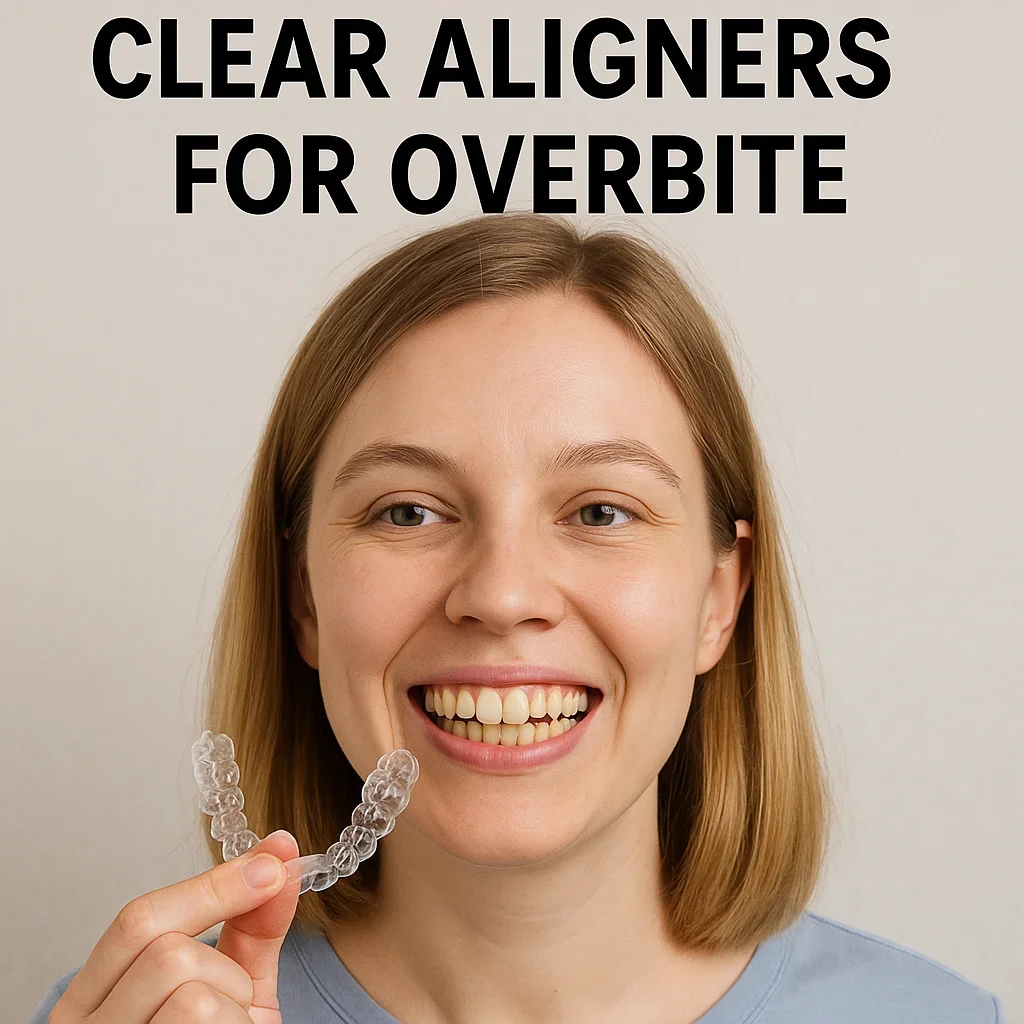
Clear aligners for overbite are a series of transparent, removable trays custom-made to gradually shift your teeth into proper alignment. They are crafted using advanced 3D imaging technology, ensuring precision and comfort. Each set of aligners is worn for about one to two weeks before moving on to the next in the series, progressively correcting the overbite and improving the bite’s balance. Unlike traditional braces that use brackets and wires, clear aligners are nearly invisible and can be removed when eating, brushing, or flossing — giving patients unmatched convenience and confidence throughout the treatment process.
Overbite correction with clear aligners begins with a detailed dental examination. Your dentist or orthodontist scans your teeth to create a personalized digital model of your mouth. Using this model, a treatment plan is designed that maps out how your teeth will move over time. Each stage of movement is carefully planned to ensure both aesthetics and functionality are optimized. The result is a smile that not only looks great but also functions properly, reducing risks like uneven wear, jaw strain, or speech difficulties.
One of the key reasons why clear aligners for overbite have become so popular is their ability to treat various types of overbite — from mild to moderate cases — with incredible precision. For severe overbites, sometimes attachments or small enamel-colored buttons are used to help the aligners grip better and apply additional force. This level of customization allows dentists to tailor the treatment to each patient’s unique dental anatomy. Another advantage is that the aligners are made from smooth, BPA-free plastic, reducing irritation to the gums and inner cheeks, which is a common complaint with metal braces.
From a health perspective, treating an overbite is not just about appearance — it’s also crucial for preventing potential complications. A deep overbite can cause the lower teeth to press into the gums behind the upper front teeth, leading to gum recession or even tooth damage over time. Furthermore, untreated overbites can strain the temporomandibular joint (TMJ), causing headaches, jaw pain, or even difficulty chewing. By using clear aligners for overbite, patients can achieve better occlusion (bite alignment), which supports long-term oral health and helps maintain the integrity of teeth and jaw structures 🦷.
Aside from the physical benefits, clear aligners offer a significant psychological boost. Many adults who were once hesitant to wear braces due to aesthetic concerns now find aligners to be a liberating option. Since they are barely noticeable, patients can attend meetings, social events, or even take photos without feeling self-conscious. This makes the treatment journey much more enjoyable and motivating. Additionally, progress is easy to track through digital imaging, allowing you and your dentist to see visible changes over time.
Compared to other orthodontic treatments, clear aligners for overbite offer flexibility and adaptability. You can remove them while eating, meaning you can still enjoy your favorite foods without worrying about damaging brackets or wires. Cleaning your aligners is also simple—just rinse and brush them gently with a soft toothbrush. This helps maintain hygiene and prevents bacterial buildup. If you ever need guidance or wish to discuss your treatment, you can always reach out through the Redent Klinik Contact Page for professional advice and support.
It’s important to note that clear aligners are designed with scientific precision. According to the American Dental Association, aligner systems have undergone extensive clinical research, proving their effectiveness in treating a wide range of orthodontic issues, including overbite, crossbite, and crowding. This makes them a safe, predictable, and evidence-based treatment option. In most cases, results are visible within a few months, with full correction achieved in 6–18 months depending on the severity of the overbite and the patient’s compliance with wearing the aligners for the recommended 20–22 hours daily.
In summary, clear aligners for overbite combine advanced technology, comfort, and aesthetics into one powerful orthodontic solution. They’re ideal for patients seeking an effective yet invisible way to correct their bite and enhance their smile. By consistently wearing the aligners, maintaining good oral hygiene, and attending regular check-ups, you can achieve lasting results and a smile you’ll love to share 🌟. The future of orthodontics is clear — literally — and it’s transforming the way we approach dental health, one confident smile at a time.
What Are Clear Aligners and How Do They Work for Overbite?
When it comes to achieving a straighter and healthier smile, clear aligners for overbite have revolutionized modern orthodontics. Unlike traditional braces that rely on metal brackets and wires, clear aligners use smooth, transparent trays designed to fit snugly over your teeth. These aligners are custom-made using advanced 3D scanning and digital modeling technologies, ensuring both comfort and precision throughout treatment. The goal is to gradually shift your teeth into their ideal position and correct the overlapping of the upper and lower jaws — the main characteristic of an overbite 🦷.
Understanding Overbite and Why It Matters
An overbite occurs when the upper front teeth extend too far over the lower teeth. While a slight overbite is normal and even beneficial for proper biting and speech, an excessive overbite can cause problems such as tooth wear, jaw pain, speech difficulties, and aesthetic concerns. Severe cases may lead to gum recession or even damage to the lower front teeth. By addressing this misalignment early, patients can avoid potential long-term oral health complications. This is where clear aligners for overbite play a crucial role—they correct the bite gradually, safely, and comfortably without disrupting daily life.
The Science Behind Clear Aligner Technology
The power of clear aligners for overbite lies in digital precision. The process begins with a detailed 3D scan of your mouth, often using intraoral scanners instead of messy traditional impressions. These scans are used to map a personalized treatment plan, which digitally simulates each stage of tooth movement. Using computer algorithms, orthodontists can predict how your teeth will shift over time, ensuring that every aligner set is designed for maximum efficiency and comfort.
Each set of aligners is worn for approximately one to two weeks, applying gentle and controlled pressure to move your teeth incrementally. The aligners are then replaced with the next set, continuing the movement until the ideal bite is achieved. The process is carefully monitored by your dentist or orthodontist, who may make adjustments based on your progress. This step-by-step movement ensures that the correction of your overbite is both effective and safe.
How Clear Aligners Correct Overbite
So, how exactly do clear aligners for overbite fix such a complex alignment issue? The answer lies in biomechanics. Aligners apply controlled forces that not only move teeth but also help reposition the jaw slightly to reduce the excessive overlap of upper and lower teeth. For mild to moderate overbites, aligners are often sufficient on their own. In more severe cases, attachments or elastics may be added to improve anchorage and enhance the aligner’s grip on specific teeth. These small, tooth-colored bumps are barely noticeable but greatly improve the aligner’s ability to guide tooth movement precisely.
By the end of treatment, patients usually notice not just straighter teeth but also improved bite function. The correction helps distribute chewing forces more evenly across all teeth, reducing the risk of uneven wear and enamel damage. Moreover, fixing an overbite can relieve strain on the temporomandibular joint (TMJ), potentially reducing jaw pain, headaches, and clicking sounds that some people experience when chewing or talking.
Advantages of Using Clear Aligners for Overbite
One of the biggest reasons people prefer clear aligners for overbite is aesthetics. Since they are nearly invisible, aligners allow you to undergo orthodontic treatment discreetly. You can smile, talk, and even take pictures without worrying about noticeable hardware on your teeth 😄. But beyond aesthetics, there are functional advantages too:
- Comfort: The aligners are smooth and custom-fitted, reducing irritation to gums and cheeks compared to metal braces.
- Removability: You can take them out while eating, brushing, or flossing, promoting better oral hygiene.
- No food restrictions: Unlike braces, you can still enjoy crunchy or sticky foods — just remove your aligners beforehand.
- Predictable outcomes: Thanks to digital planning, you can preview your expected results before even starting treatment.
Moreover, clear aligners help reduce plaque buildup since they are easy to clean, leading to healthier gums and fresher breath throughout your treatment.
Digital Monitoring and Progress Tracking
Modern clear aligners for overbite systems also incorporate mobile apps and virtual check-ins. Many orthodontists now use digital tracking systems that allow patients to upload progress photos for review, reducing the number of in-person visits. This is especially convenient for busy adults or international patients. The technology ensures you remain on track with your treatment plan while maintaining flexibility in your schedule.
Effectiveness and Limitations
While clear aligners are incredibly effective for most overbite cases, it’s important to acknowledge their limits. For severe skeletal overbites—where jawbones are significantly misaligned—additional treatments such as orthopedic appliances or even minor surgery may be required. However, studies and clinical reports from the American Dental Association show that the majority of mild to moderate overbites can be successfully treated using aligners alone, with high patient satisfaction rates and long-term stability.
Patients who are consistent with wearing their aligners 20–22 hours a day achieve faster and more predictable outcomes. Compliance is key. If the aligners are not worn as prescribed, the movement slows down, and treatment may take longer than expected. To maximize results, regular dental visits and proper hygiene are essential. If you’re considering aligner treatment, you can contact the experts via the Redent Klinik Contact Page for personalized guidance and a professional assessment.
Summary: Why Clear Aligners Are the Smart Choice
In conclusion, clear aligners for overbite offer a modern, science-backed solution for those who wish to correct their bite discreetly and comfortably. They combine digital precision, convenience, and aesthetics into one transformative experience. Patients no longer need to sacrifice appearance for results — they can achieve both at the same time. With consistent wear, proper care, and professional supervision, clear aligners can deliver a beautifully aligned smile and improved bite function that lasts a lifetime 🌟.
Common Causes and Types of Overbite Explained
Understanding the root causes of an overbite is essential for anyone considering clear aligners for overbite. While the condition might appear purely aesthetic, its origins are often biological, developmental, or habitual. A detailed understanding of how and why overbites form allows dentists to design more effective treatment plans and ensures that patients know what to expect from their orthodontic journey. Overbites can vary in severity, and their causes may include genetics, childhood habits, or even skeletal development issues. In this section, we’ll explore the main causes and types of overbite and how they influence your treatment options with clear aligners for overbite.
Genetic and Skeletal Causes of Overbite
Genetics plays a significant role in the development of an overbite. If one or both parents have dental misalignments or jaw irregularities, there’s a higher chance their children will inherit similar traits. For example, some people are born with a smaller lower jaw (mandibular retrognathia), which causes the upper teeth to protrude further than normal. In these cases, the issue is not just with the alignment of the teeth but also the position of the jaws. This type of skeletal overbite requires careful planning, and sometimes, additional treatment alongside clear aligners for overbite may be necessary to achieve full correction.
Moreover, bone structure differences can affect how the teeth erupt and settle over time. For instance, an underdeveloped lower jaw or excessive upper jaw growth can lead to a deep overbite. Even with these structural factors, aligners can still play a vital role in repositioning teeth and improving jaw function. With 3D modeling and precise pressure mapping, aligners help minimize the visible effects of skeletal discrepancies while enhancing bite balance and aesthetics 🦷.
Behavioral and Habitual Causes
Beyond genetics, many cases of overbite develop due to habits formed in childhood. Some of the most common causes include:
- Thumb sucking: Persistent thumb or finger sucking after the age of five can push the upper front teeth forward and the lower teeth backward, resulting in a pronounced overbite.
- Prolonged pacifier use: Extended use of pacifiers beyond infancy can have a similar effect, altering the shape of the dental arch.
- Tongue thrusting: When a person pushes their tongue against their front teeth while swallowing, it gradually forces the upper teeth forward, deepening the overbite.
- Nail biting or chewing objects: These seemingly harmless habits can place continuous pressure on the teeth and contribute to bite misalignment over time.
Breaking these habits early can prevent worsening of the overbite. Once corrected, clear aligners for overbite can be used to reposition the teeth to their ideal positions and prevent the recurrence of bad habits through retention therapy.
Dental and Functional Causes
Sometimes, an overbite isn’t due to genetics or habits but instead develops as a result of tooth positioning or functional problems. For example, when teeth erupt unevenly or when there’s overcrowding, they can tilt forward or backward, leading to bite irregularities. Missing teeth can also disrupt the natural balance of the bite. Without proper contact between upper and lower teeth, others may shift to compensate, creating or exaggerating an overbite.
Another common contributor is poor posture, especially in children who spend long hours leaning forward while using devices or studying. This posture can influence jaw positioning and, over time, alter bite alignment. Clear aligners for overbite are particularly effective in these cases because they can target specific teeth for controlled movement, realigning the bite with both aesthetic and functional precision.
Different Types of Overbite
Not all overbites are the same. Dentists classify them into categories based on their origin and severity. Knowing which type you have helps determine the most effective treatment method, whether it’s clear aligners for overbite, braces, or a combination of therapies.
1. Dental Overbite
A dental overbite is caused by the misalignment of teeth rather than the jaw. This means the bone structure is normal, but the upper front teeth have moved too far forward or the lower teeth have shifted backward. Dental overbites are usually the easiest to treat with clear aligners for overbite, as they focus on repositioning the teeth gradually using precise pressure control. Most adults and teens with mild to moderate overbites fall into this category.
2. Skeletal Overbite
A skeletal overbite results from an imbalance between the upper and lower jaws. The upper jaw might be overdeveloped, or the lower jaw might be smaller than average. In such cases, aligners can help improve the bite by aligning the teeth, but additional orthodontic interventions (such as elastics or jaw expanders) may be required to achieve complete correction. The key advantage of aligners is that they can still enhance appearance and functionality, even when the root cause is skeletal.
3. Deep Bite (Vertical Overlap)
A deep bite occurs when the upper front teeth cover too much of the lower front teeth vertically. This can cause wear on the lower teeth, gum irritation, and even jaw discomfort. Deep bites are among the most common forms of overbite treated with clear aligners for overbite, as aligners are capable of gently intruding or extruding teeth to create a balanced, healthy bite relationship.
4. Horizontal Overbite (Overjet)
Sometimes confused with overbite, an overjet refers to the horizontal distance between the upper and lower front teeth. While it’s often present alongside an overbite, it can also occur independently. Aligners are effective at correcting overjets by moving the front teeth backward while simultaneously adjusting the bite alignment.
Preventing Overbites and Maintaining Alignment
Prevention is always better than correction. Encouraging healthy oral habits from a young age—such as avoiding thumb sucking and maintaining proper oral hygiene—can significantly reduce the risk of developing an overbite. Regular dental checkups ensure that any developing misalignment is caught early. Once treated, retainers or post-aligner retainers help maintain the achieved results and prevent relapse.
For those considering treatment, consulting an orthodontic professional is crucial. You can easily reach experts through the Redent Klinik Contact Page to determine the exact type and cause of your overbite. Understanding this information ensures that your customized clear aligners for overbite plan will deliver long-term, healthy, and visually pleasing results.
In summary, while overbites may arise from various causes—genetic, habitual, or structural—they can be effectively managed and corrected with the right approach. Thanks to the precision of modern orthodontic tools and systems, including clear aligners, patients now have access to safe, aesthetic, and predictable treatment options approved by organizations such as the American Dental Association. With proper diagnosis, care, and compliance, a harmonious bite and a confident smile are within everyone’s reach 🌟.
Why Choose Clear Aligners Over Traditional Braces for Overbite Correction?
Modern orthodontics has evolved tremendously, and patients today have more choices than ever before. When it comes to correcting an overbite, many people find themselves comparing clear aligners for overbite with traditional metal braces. While both methods are effective, clear aligners have revolutionized how people approach orthodontic treatment — offering comfort, aesthetics, and convenience without compromising on results. In this section, we’ll explore the key reasons why clear aligners have become the preferred choice for treating overbite, examining every aspect from functionality to lifestyle benefits.
Comfort and Aesthetics: The Invisible Advantage 😁
One of the most striking benefits of clear aligners for overbite is their nearly invisible design. Unlike traditional braces with metal brackets and wires, clear aligners are made from transparent, medical-grade plastic that blends naturally with your teeth. This makes them ideal for adults and teens who want a discreet orthodontic solution without drawing attention. You can attend professional meetings, take photos, or socialize confidently, knowing your treatment is virtually undetectable.
From a comfort perspective, clear aligners provide a smooth experience. Metal braces can cause irritation due to sharp edges and frequent adjustments, whereas aligners fit snugly over your teeth and exert gentle, controlled pressure. The absence of metal components means no painful wire tightening or emergency visits due to broken brackets. Each aligner is custom-fitted using digital scans, ensuring both precision and comfort throughout your journey.
Functionality and Treatment Efficiency
The technological foundation of clear aligners for overbite lies in computer-aided design and simulation. Before treatment begins, your orthodontist creates a 3D digital model of your teeth. This allows you to visualize your expected results before wearing your first tray. The software calculates each stage of tooth movement, ensuring the most efficient and biologically safe progression. Every new aligner you wear is designed to move your teeth closer to their ideal position with minimal discomfort.
Traditional braces, while effective, often require more frequent in-office adjustments. Patients must visit the dentist every 4–6 weeks for wire tightening or replacements. In contrast, clear aligner patients typically receive several sets of trays at once and only need check-ups every 8–10 weeks. This not only saves time but also allows for a more flexible treatment schedule — ideal for those with busy lifestyles or frequent travel commitments ✈️.
Oral Hygiene and Maintenance Benefits
Maintaining good oral hygiene is easier with clear aligners for overbite because they are completely removable. You can take them out before meals, allowing you to eat without restrictions. Foods that are typically off-limits with braces — like popcorn, nuts, or apples — are perfectly fine to enjoy when aligners are removed. After eating, you simply brush your teeth and rinse the aligners before putting them back in. This reduces the risk of plaque buildup, staining, and cavities, all of which are common issues for patients wearing traditional braces.
Braces, on the other hand, make it harder to clean teeth effectively. Food particles can get trapped between brackets and wires, increasing the risk of decay and gum inflammation. Aligners eliminate this issue, allowing patients to maintain healthy gums and fresh breath throughout their treatment. Moreover, since clear aligners for overbite are made of BPA-free thermoplastic material, they are biocompatible and safe for long-term use.
Lifestyle Flexibility and Confidence Boost
One of the biggest psychological advantages of using clear aligners for overbite is the boost in self-confidence. Patients no longer have to feel self-conscious about wearing braces in public or during important events. Whether you’re at work, school, or on vacation, aligners fit seamlessly into your daily routine. They can also be temporarily removed for short periods during special occasions, as long as they’re worn for the recommended 20–22 hours daily.
This flexibility makes aligners especially appealing to adults who might have postponed orthodontic treatment in the past. For teens, it helps avoid the stigma often associated with metal braces. Aligners also come with built-in compliance indicators for younger users, helping parents and dentists track wear time and ensure effective results.
Speech, Diet, and Lifestyle Considerations
Many people worry that orthodontic treatment might affect their speech or diet. With traditional braces, slight speech difficulties and food restrictions are common. However, clear aligners for overbite are thin and lightweight, making it easier to speak clearly within a few days of adjustment. Because you remove them when eating, there are no restrictions on the types of food you can enjoy. This user-friendly feature encourages better compliance and satisfaction throughout the process.
Fewer Dental Visits and Predictable Results
Clear aligner treatment typically involves fewer dental visits than traditional braces. Once your aligners are fabricated, you can progress through each stage independently, following your dentist’s schedule. Advanced aligner brands often offer digital monitoring systems, allowing you to submit progress photos online. This remote supervision ensures you remain on track without the need for frequent in-office adjustments. It’s a huge time-saver and provides peace of mind knowing your progress is being tracked accurately through digital tools approved by organizations like the American Dental Association.
Predictability is another standout advantage. With clear aligners for overbite, you can see a digital simulation of your treatment plan before starting. This “virtual before-and-after” model helps patients understand the outcome and motivates them to stay consistent. Traditional braces do not offer such a preview, making aligners a more transparent and reassuring option for many.
Cost, Accessibility, and Value
Although some assume that aligners are more expensive, the cost of clear aligners for overbite is often comparable to — or even less than — traditional braces when considering convenience and fewer dental visits. The final price depends on factors like treatment complexity, duration, and brand. However, most patients find the investment worthwhile given the comfort, aesthetics, and confidence boost aligners provide.
Furthermore, many clinics offer flexible payment plans and financing options, making clear aligners accessible to a broader audience. You can consult your dentist through the Redent Klinik Contact Page to learn more about customized pricing and available options tailored to your specific overbite case.
Long-Term Oral Health Benefits
By correcting your bite with clear aligners for overbite, you’re not only improving your smile but also protecting your long-term dental health. A properly aligned bite distributes chewing forces evenly, reducing the risk of tooth wear, gum recession, and TMJ discomfort. Aligners also minimize plaque accumulation, ensuring your teeth remain healthy during and after treatment. The long-term result is a balanced, harmonious smile that enhances both aesthetics and function 🌟.
In conclusion, while traditional braces remain effective, the convenience, comfort, and discretion of clear aligners for overbite make them a superior choice for most patients. They align with modern lifestyles, offer predictable results, and maintain oral health — all while keeping your smile naturally beautiful throughout the treatment journey.
The Step-by-Step Process of Getting Clear Aligners for Overbite
Starting your journey with clear aligners for overbite is both exciting and transformative. The process is designed to be precise, comfortable, and transparent from beginning to end. Unlike traditional braces, where each adjustment requires manual intervention, clear aligner therapy follows a digitally guided plan that shows you every stage of progress in advance. From the initial consultation to your final smile reveal, every step is carefully monitored by dental professionals to ensure predictable and healthy results. Let’s walk through each phase of this process in detail so you know exactly what to expect.
Step 1: Initial Consultation and Dental Evaluation
The first step toward correcting an overbite using clear aligners for overbite is scheduling a consultation with a certified dentist or orthodontist. During this visit, the dentist will perform a full oral examination to evaluate your teeth, gums, and bite alignment. X-rays or digital scans are taken to assess jaw structure and tooth positioning. This diagnostic phase helps determine whether you are a good candidate for aligners. Typically, clear aligners are ideal for mild to moderate overbites, although advanced systems can now address more complex cases with high precision.
At this stage, your provider will discuss your goals and expectations. They may ask questions about your dental history, previous treatments, and any current oral health issues. It’s also the perfect time to inquire about estimated treatment time and cost. For personalized advice and consultation, you can contact the specialists through the Redent Klinik Contact Page.
Step 2: 3D Digital Scanning and Impressions
After confirming your eligibility, the next step involves capturing an accurate 3D image of your mouth. Traditional dental impressions using putty are no longer the norm. Instead, most clinics use intraoral scanners that create high-resolution digital images of your teeth and gums. This scan provides a virtual model that forms the basis of your custom treatment plan. Using these data points, the aligner manufacturer develops a series of trays designed to guide your teeth into optimal alignment and gradually correct the overbite 🦷.
The 3D modeling process ensures that every millimeter of movement is calculated precisely. It also allows your orthodontist to visualize the entire treatment journey from start to finish. Before manufacturing begins, you’ll receive a preview of your projected results—often displayed as a virtual animation showing your teeth’s gradual transformation. This transparency is one of the greatest advantages of clear aligners for overbite over traditional orthodontic methods.
Step 3: Customized Aligner Fabrication
Once your treatment plan is approved, your custom aligners are fabricated in a specialized dental lab. These aligners are made from durable, BPA-free thermoplastic material designed for comfort and longevity. Each aligner is slightly different from the last, applying gentle pressure to move specific teeth in small increments. Typically, you’ll receive a set of several aligners at a time, and you’ll wear each one for about one to two weeks before advancing to the next in the sequence.
Patients receive detailed instructions on how to insert, remove, and clean the aligners properly. Consistent wear—at least 20–22 hours per day—is essential for optimal progress. Skipping aligner wear or not following the schedule can delay treatment results. Most patients find this phase empowering because they can see and feel the changes happening week by week. The aligners are designed to be snug but comfortable, adapting perfectly to your teeth’s movement as your overbite gradually improves.
Step 4: Regular Check-Ups and Progress Monitoring
During treatment, periodic dental check-ups are crucial to monitor your progress and ensure that your teeth are moving as planned. These visits usually occur every 6–10 weeks, depending on the complexity of your case. Many modern clinics now integrate virtual monitoring through smartphone apps, allowing you to submit photos for remote evaluation between visits 📱. This digital approach makes clear aligners for overbite highly convenient, especially for patients with busy schedules or those living abroad.
At each appointment, your dentist may make slight adjustments to your plan, especially if tooth movement is faster or slower than expected. If necessary, new aligners can be created mid-treatment to fine-tune results. Unlike braces, these adjustments are painless and non-invasive—no wire tightening, no bracket replacements, and no discomfort from sharp edges.
Attachments and Elastic Bands (If Needed)
In some cases, your orthodontist may apply small, tooth-colored attachments or elastics to assist with specific tooth movements. These tiny ridges allow the aligners to grip certain teeth more effectively, providing extra control over vertical or rotational adjustments. They’re discreet and removable at the end of treatment. For patients with moderate to severe overbites, this combination approach ensures that clear aligners for overbite deliver precise and stable correction.
Step 5: Maintaining Oral Hygiene During Treatment
Proper oral hygiene is an essential part of aligner therapy. Since aligners cover your teeth for most of the day, it’s important to brush and floss after every meal to prevent plaque buildup. Aligners themselves should be rinsed with lukewarm water and cleaned gently using a soft brush. Avoid using hot water, as it can deform the trays. Keeping both your aligners and mouth clean prevents bacteria growth and ensures a fresh, comfortable fit every day.
Unlike metal braces that trap food around wires, clear aligners for overbite allow for complete access to your teeth and gums. This reduces the risk of cavities, gum irritation, and discoloration. Many patients also report improved oral habits during aligner treatment since the process encourages more mindful dental care routines.
Step 6: Completing Treatment and Retainer Phase
Once your last set of aligners has been worn and your overbite is corrected, your dentist will provide you with retainers to maintain the results. Retainers look similar to aligners but are designed to hold your teeth in their new positions rather than move them. This phase is critical—without it, teeth may gradually shift back to their original alignment.
Most patients wear retainers full-time for the first few months and then transition to nighttime wear. Retention ensures that your beautiful smile and corrected bite remain stable for years to come. According to the American Dental Association, proper post-treatment retention is key to long-term orthodontic success, regardless of the treatment method used.
Step 7: Enjoying Your New Smile and Confidence
After completing the journey with clear aligners for overbite, you’ll notice more than just aesthetic improvements. Your bite will feel more balanced, chewing will become easier, and your facial symmetry may even improve subtly. The confidence that comes from achieving a perfectly aligned smile is truly life-changing 🌟. Many patients also experience better oral health overall, as properly aligned teeth are easier to clean and maintain.
In summary, the process of getting clear aligners for overbite is a seamless blend of technology, precision, and personalized care. From digital scans to final retainers, every step is designed to ensure a healthy, natural, and lasting smile. Whether you’re taking your first step toward orthodontic treatment or upgrading from traditional braces, clear aligners offer a modern, efficient, and comfortable path to a beautiful new you.
Expected Treatment Timeline and Results with Clear Aligners
One of the most common questions patients have when considering clear aligners for overbite is: “How long will it take to see results?” The answer depends on several individual factors such as the severity of the overbite, patient compliance, and overall oral health. However, one of the greatest advantages of aligner-based orthodontics is the predictability and efficiency of the treatment process. With digital planning, each stage is pre-designed for accuracy, ensuring that your smile transformation unfolds smoothly and visibly over time.
Average Treatment Duration
On average, most patients using clear aligners for overbite achieve significant correction within 6 to 18 months. Mild cases may be completed in as little as 4 to 6 months, while more complex overbites could take up to two years. The duration is determined during your initial digital scan and treatment simulation. Your dentist or orthodontist uses 3D modeling software to visualize your teeth’s movement from start to finish. This technology not only estimates the total duration but also provides an interactive preview of your expected results — something traditional braces cannot offer 🦷.
It’s important to remember that consistency is key. Aligners must be worn for at least 20–22 hours daily to achieve timely and predictable results. Removing them too often or skipping wear time can delay progress and extend the treatment timeline. For patients who adhere closely to their schedule, the results are typically faster and more noticeable week by week.
Phases of the Treatment Timeline
The timeline for clear aligners for overbite can be divided into several phases, each playing a vital role in achieving the perfect final outcome:
1. Diagnostic and Planning Phase (1–2 Weeks)
This is where your journey begins. During this phase, your dentist conducts a full evaluation and creates your personalized treatment plan. Digital scans and X-rays are taken, and the aligner manufacturer designs your trays based on the dentist’s specifications. You may also receive a 3D simulation that displays how your teeth will move over time and what your final smile will look like.
2. Active Aligner Phase (6–18 Months)
This is the main stage of treatment, where you’ll wear your clear aligners for overbite daily. Each set is worn for 7–14 days before progressing to the next. The aligners apply controlled pressure to guide your teeth into proper alignment, correcting both the bite and aesthetic issues. Regular dental check-ups — every 8 to 10 weeks — ensure your teeth are moving according to plan. If necessary, your dentist can make refinements or issue additional aligners to fine-tune the results.
3. Refinement Phase (1–3 Months, if needed)
Once you’ve completed your initial series of aligners, your dentist may recommend a refinement phase. This involves taking new digital scans to assess the remaining movement and ensure your teeth are in optimal position. Additional aligners may be ordered to perfect the bite and final alignment. Refinement is common and ensures that the final results are precise, symmetrical, and stable.
4. Retention Phase (Ongoing)
After achieving your desired smile, it’s crucial to maintain the results. Your dentist will provide you with custom retainers that look similar to aligners but are designed to hold your teeth in place. Without them, teeth can gradually shift back toward their original positions. Retainers should be worn full-time initially, then only at night after a few months. According to the American Dental Association, retention is an essential part of every orthodontic treatment to preserve long-term stability and prevent relapse.
What to Expect at Each Stage
During the first few days of each new aligner, you might feel slight pressure or mild soreness. This is a positive sign — it means the aligners are actively moving your teeth. Most patients adapt quickly, and any discomfort usually subsides within a day or two. Unlike braces, there are no metal wires or brackets to cause irritation. The clear plastic material is smooth, biocompatible, and designed for comfort during both daytime and nighttime wear.
Every 4–6 weeks, you’ll start to notice visible changes in your smile. Teeth begin to align more evenly, and the overbite gradually lessens. By mid-treatment, many patients already experience improved facial balance and bite comfort. Clear aligners for overbite work progressively, meaning that even minor daily shifts contribute to a significant transformation over time. This incremental approach ensures that the jaw, muscles, and gums adapt naturally to the new tooth positions.
Factors That Influence Treatment Duration
Several variables can affect how quickly you achieve results with clear aligners for overbite:
- Severity of the Overbite: Mild dental overbites may require fewer aligners, while severe skeletal discrepancies may extend the timeline or require supplemental procedures.
- Age: Younger patients often experience faster tooth movement because bone tissue is more adaptable, though adults can achieve excellent results too.
- Compliance: Wearing aligners consistently for the recommended hours is the single most important factor in achieving timely results.
- Oral Hygiene: Poor hygiene can cause delays due to gum irritation or cavities, which may require temporary pauses in treatment.
- Attachments and Elastics: Some patients may need additional appliances to enhance bite correction, which can slightly lengthen the process but ensures more precise results.
Visible Results and Final Outcomes
Patients using clear aligners for overbite often notice aesthetic improvements within the first few months. Teeth become straighter, the upper and lower arches align better, and the overbite diminishes. By the end of treatment, not only is the bite corrected, but overall facial symmetry and profile are enhanced. Many patients report easier chewing, clearer speech, and improved confidence when smiling 😁.
Clinical research and long-term data from orthodontic organizations confirm that aligners are just as effective as braces for mild to moderate overbite correction. The combination of advanced technology, patient compliance, and professional supervision ensures predictable and lasting outcomes.
Maintaining Long-Term Results
After completing treatment, maintaining your new smile is essential. Retainers, regular dental checkups, and healthy oral habits help preserve the results. You should brush twice a day, floss daily, and schedule routine cleanings to prevent shifting or plaque buildup. Following your dentist’s advice ensures that the improvements achieved with clear aligners for overbite remain for life.
For ongoing guidance and post-treatment care, patients can reach out through the Redent Klinik Contact Page to receive professional advice on maintenance, retainer schedules, and long-term oral wellness. With the right care, your beautifully aligned smile can last a lifetime 🌟.
Cost of Clear Aligners for Overbite and Factors That Influence It
One of the first questions patients ask when considering clear aligners for overbite is about the cost. Understanding what goes into the pricing of aligner therapy helps patients make informed decisions and plan their treatment wisely. While aligners are often viewed as a premium orthodontic solution, their long-term benefits — including comfort, aesthetics, and convenience — make them a valuable investment in your smile and oral health. The total cost can vary depending on factors like treatment complexity, aligner brand, geographic location, and dentist expertise. Let’s break down these factors to provide a clear and accurate picture of what you can expect to pay and why.
Average Cost Range of Clear Aligners
In general, the cost of clear aligners for overbite ranges between $2,000 and $8,000 depending on the severity of the overbite and the number of aligners required. Mild cases involving minor dental movement can fall at the lower end of the range, while complex overbites requiring more extensive correction may be at the higher end. Compared to traditional braces, which often cost between $3,000 and $7,500, clear aligners are competitively priced but offer significantly more comfort and flexibility.
Patients also benefit from fewer dental visits with aligners. Since adjustments are not required as frequently as with braces, ongoing maintenance costs are generally lower. Additionally, some aligner providers offer convenient payment plans, making this advanced orthodontic treatment more accessible for patients of all ages 🦷.
Key Factors That Influence Cost
Several elements affect how much you’ll pay for clear aligners for overbite. Understanding these factors helps you determine the value of your treatment and identify what’s included in your dentist’s estimate.
1. Severity of the Overbite
The more complex your case, the longer and more detailed your treatment will be. Severe overbites often require additional aligners, attachments, or elastics to achieve proper correction. More aligners mean higher production costs, which can increase the total price. In some cases, the dentist may also incorporate refinements — additional sets of aligners made after the main series — to perfect the final bite alignment.
2. Brand and Technology Used
Different aligner brands have different pricing structures. Premium systems such as Invisalign, SureSmile, or ClearCorrect may charge more because of their patented technology, high-quality materials, and advanced 3D planning software. However, newer or local brands can offer competitive pricing without compromising quality. Always ensure your aligners are produced by a reputable manufacturer with proper safety certifications recognized by authorities such as the American Dental Association.
3. Dentist or Orthodontist Expertise
Like any medical treatment, the cost of clear aligners for overbite can vary depending on the experience of your provider. Orthodontists with extensive training and advanced technology may charge slightly more, but they often deliver faster, more accurate, and more stable results. A skilled professional ensures that your treatment is not only cosmetic but also functionally correct — aligning your bite in a way that supports long-term dental health.
4. Geographic Location and Clinic Facilities
Where you live can also influence the total cost. Urban clinics in major cities generally charge more than smaller or suburban dental offices due to higher operational expenses. However, many international clinics — such as those in Turkey or other medical tourism destinations — offer top-quality treatment at a fraction of the price. For example, clinics like Redent Klinik provide world-class aligner therapy at globally competitive rates, making dental travel a cost-effective option for patients abroad. You can contact them directly through the Redent Klinik Contact Page for more details on customized pricing and treatment options.
5. Duration and Number of Aligners
The total number of aligners you need directly affects cost. Mild cases may require 10–15 aligners, while complex cases can need 30 or more. Each aligner is custom-made, and each additional tray adds to manufacturing expenses. Similarly, longer treatments that last over 18 months usually cost more than shorter ones because of increased supervision, refinements, and follow-up visits.
6. Additional Treatments and Retainers
After completing your aligner therapy, you’ll need retainers to maintain the new position of your teeth. Retainers are an essential part of the process and usually cost between $200 and $600 per set. Some dental clinics include the first retainer set in the overall package, while others charge separately. If attachments, tooth polishing (IPR), or professional whitening are added to your plan, these optional services may also influence the final cost.
Insurance Coverage and Payment Options
Many dental insurance plans now cover a portion of orthodontic treatment, including clear aligners for overbite. However, coverage varies by provider and region. Typically, insurance covers up to 50% of the total cost, up to a certain limit. Before starting treatment, it’s best to consult both your dentist and insurance provider to understand your specific benefits.
For patients without insurance, flexible payment plans and installment options are widely available. Some clinics offer monthly financing programs, allowing you to spread payments over 12–24 months with minimal or no interest. This flexibility ensures that cost is no longer a barrier to achieving a healthy, confident smile 😁.
Comparing Clear Aligners with Traditional Braces
While the cost of clear aligners for overbite may appear slightly higher upfront, the long-term savings and advantages often outweigh the difference. With braces, you’ll likely need more frequent visits for wire adjustments and repairs. You may also incur additional expenses for professional cleanings due to difficulty maintaining oral hygiene. Aligners, being removable, eliminate these extra costs and minimize dental complications during treatment.
Moreover, aligners save time and offer superior aesthetics — a priceless benefit for adults in professional or social settings. The convenience of fewer dental visits, combined with the ability to eat freely and clean easily, enhances the overall value of treatment far beyond just cost comparisons.
Long-Term Value of Clear Aligners
Investing in clear aligners for overbite is more than just a cosmetic decision — it’s a health investment. Correcting your bite helps reduce wear on your teeth, alleviates jaw discomfort, and improves overall function. These benefits translate into fewer dental issues and costly restorations later in life. In essence, aligners not only create a beautiful smile but also help maintain it by promoting long-term oral wellness 🌟.
When evaluating cost, consider the full scope of value — precision engineering, digital monitoring, comfort, aesthetics, and predictability. For patients seeking a combination of affordability and quality, scheduling a personalized consultation with trusted professionals through the Redent Klinik Contact Page can help tailor a treatment plan suited to both your dental and financial needs.
In summary, while the price of clear aligners for overbite varies, the benefits — including convenience, comfort, and confidence — make them one of the most rewarding orthodontic solutions available today. With proper planning, transparent pricing, and professional supervision, you can achieve a perfectly aligned smile that’s worth every penny.
Tips for Maintaining Oral Hygiene During Clear Aligner Treatment
Keeping your mouth clean and healthy is essential during any orthodontic journey — especially when using clear aligners for overbite. Since aligners cover your teeth most of the day, they create a closed environment where food particles, plaque, and bacteria can easily accumulate if not properly managed. Good oral hygiene ensures not only a healthier smile but also better treatment results and fresher breath. In this detailed section, we’ll explore the most effective strategies to maintain oral health while wearing clear aligners for overbite, covering everything from cleaning routines to dietary choices and dental check-ups.
Understanding the Importance of Oral Hygiene During Aligner Therapy
Unlike traditional braces, which are fixed, clear aligners for overbite are removable — and this is both an advantage and a responsibility. While you can take them out to eat or brush your teeth, neglecting consistent cleaning can lead to bacterial buildup inside the trays. This not only causes bad breath but may also stain the aligners, reducing their transparency. Furthermore, poor hygiene can interfere with treatment progress by affecting gum health or causing cavities that delay your aligner schedule.
According to the American Dental Association, maintaining a strict oral hygiene routine during orthodontic treatment significantly reduces the risk of gum inflammation, tooth decay, and enamel discoloration. Therefore, integrating good hygiene practices into your daily routine ensures that your investment in clear aligners for overbite delivers both aesthetic and health benefits 🦷.
Daily Cleaning Routine for Aligners
The key to maintaining clean aligners is to treat them like your teeth — they need regular, gentle cleaning. Here’s a step-by-step routine you should follow every day:
- Rinse regularly: Each time you remove your aligners, rinse them under lukewarm water to wash away saliva and debris. Avoid hot water, as it can warp the plastic.
- Brush carefully: Use a soft-bristled toothbrush to gently clean your aligners twice daily. Avoid toothpaste, as some formulas contain abrasives that can scratch or cloud the material.
- Soak aligners daily: Use a specialized aligner cleaning solution or retainer cleaning tablets once a day. This helps disinfect the trays and remove buildup.
- Air dry before reinserting: Let the aligners dry completely before placing them back in your mouth to prevent moisture-based bacteria from multiplying.
Keeping aligners transparent and odor-free also boosts confidence when speaking or smiling during treatment. Clean trays are essential for a seamless and discreet orthodontic experience 🌟.
Oral Hygiene Habits for Aligner Users
1. Brushing and Flossing After Every Meal
Because clear aligners for overbite cover your teeth tightly, any food residue left behind becomes trapped against your enamel. This can quickly lead to plaque buildup, bad breath, and staining. Always brush and floss after every meal or snack before reinserting your aligners. Use fluoride toothpaste and floss gently to remove debris between teeth. For on-the-go situations, keep a portable toothbrush and floss picks in your bag for convenience.
2. Using Mouthwash Wisely
Mouthwash can be an excellent addition to your routine when using clear aligners for overbite. Choose an alcohol-free formula with fluoride to help strengthen enamel and prevent cavities. Avoid colored or alcohol-based mouthwashes, as these can stain the aligners or dry out your mouth. Swish for 30 seconds after brushing and flossing, then rinse your aligners before reinsertion.
3. Drinking Plenty of Water
Water plays a vital role in maintaining oral health during aligner treatment. It rinses away food particles, balances pH levels, and prevents dry mouth — a condition that can increase bacterial growth. Unlike sugary or acidic beverages, plain water keeps your aligners clean and your teeth protected. If you drink coffee, tea, or soda, always remove your aligners first to prevent staining and plaque formation.
Foods and Drinks to Avoid
While clear aligners for overbite allow you to eat whatever you like (since they’re removable), it’s important to be mindful of what you consume and how it affects your teeth. Sugary snacks, acidic beverages, and sticky foods can cling to your teeth and create bacteria-friendly environments. Some examples include:
- Candies, caramels, and chewing gum — these can stick to enamel and cause decay.
- Soda and sports drinks — high acidity erodes enamel and leads to discoloration.
- Coffee, wine, and curry — these can stain both teeth and aligners if not cleaned promptly.
Instead, opt for a diet rich in fresh fruits, crunchy vegetables, lean proteins, and calcium-rich foods to support healthy teeth and gums throughout your treatment journey. These dietary habits also promote better results with clear aligners for overbite by keeping your mouth in optimal condition.
Professional Cleaning and Regular Dental Check-Ups
Even with impeccable daily care, professional dental cleanings remain a crucial part of maintaining oral health. Schedule visits every six months or as recommended by your dentist. During these appointments, plaque and tartar that can’t be removed at home are professionally cleaned away. Your dentist will also examine your gums and enamel for early signs of irritation or decay. Consistent monitoring ensures your treatment stays on track and that your clear aligners for overbite continue fitting properly.
Orthodontic Check-Ins and Aligner Maintenance
In addition to standard dental cleanings, follow your orthodontist’s schedule for progress evaluations. They may adjust your plan or provide additional sets of aligners based on your treatment stage. If you ever notice discomfort, cracks, or discoloration in your trays, contact your clinic immediately for a replacement. For professional assistance, you can reach experts through the Redent Klinik Contact Page.
Common Hygiene Mistakes to Avoid
- Skipping brushing: Reinserting aligners without brushing traps bacteria and accelerates plaque buildup.
- Using toothpaste on aligners: Abrasive particles can scratch and dull the surface, making aligners more visible.
- Drinking with aligners on: Beverages can seep between the trays and teeth, causing discoloration or decay.
- Storing aligners improperly: Always keep them in a ventilated case to prevent contamination and warping.
Avoiding these mistakes ensures your treatment remains hygienic, effective, and comfortable. Remember, aligner hygiene directly affects your results — clean aligners work more efficiently because they fit better and apply pressure evenly.
Maintaining Fresh Breath and Confidence
Nothing boosts confidence like a fresh, clean smile. During your clear aligners for overbite journey, make sure to maintain a healthy oral environment by following these hygiene practices consistently. You can even carry a small dental kit containing your toothbrush, aligner case, and cleaning spray for freshness on the go. Daily discipline ensures your smile remains as radiant as your final results 🌟.
In summary, the success of clear aligners for overbite doesn’t depend solely on wearing them—it also relies on maintaining superior oral hygiene. By brushing after meals, cleaning your trays regularly, staying hydrated, and visiting your dentist as recommended, you’ll ensure a beautiful, healthy, and confident smile that lasts a lifetime.
Long-Term Benefits of Clear Aligners for Overbite Correction
Many people choose clear aligners for overbite for the immediate aesthetic improvement and convenience they offer. However, beyond the short-term transformation of a straighter smile lies a deeper reward: long-term dental health, comfort, and confidence. The benefits of aligner treatment extend well beyond cosmetic appeal — they include better bite function, improved oral hygiene, joint protection, and overall facial harmony. Understanding these long-term advantages helps patients appreciate why aligners are more than a temporary fix; they’re a lasting investment in oral wellness and self-esteem 🌟.
1. Improved Dental and Jaw Function
When you correct an overbite using clear aligners for overbite, you’re not only aligning your teeth — you’re improving how your entire jaw system functions. A misaligned bite places excessive stress on certain teeth and the temporomandibular joint (TMJ). Over time, this imbalance can cause pain, headaches, clicking, and even tooth fractures. By properly aligning your upper and lower jaws, clear aligners help distribute chewing forces evenly, reducing wear and tension across your bite. This functional harmony results in better oral comfort and prevents future dental complications.
Additionally, when the bite is properly balanced, patients often experience less jaw fatigue during speaking or eating. Proper alignment can also improve digestion since efficient chewing leads to better food breakdown. Over the years, this translates into not only healthier teeth but also enhanced overall wellbeing.
2. Reduced Risk of Tooth Damage and Gum Disease
Misaligned teeth from an overbite can lead to premature enamel wear, gum recession, and even tooth mobility. After completing treatment with clear aligners for overbite, the corrected alignment reduces friction and uneven pressure points. Teeth become easier to clean since they’re no longer overlapping or crowding each other. As a result, plaque and tartar accumulation decrease dramatically — minimizing the risk of gum inflammation (gingivitis) and periodontal disease.
Healthy alignment also means fewer cavities, less enamel erosion, and greater protection for your natural teeth over time. When combined with consistent brushing, flossing, and professional checkups, the improvements achieved through aligners can last a lifetime 🦷.
3. Enhanced Facial Aesthetics and Symmetry
How Correcting an Overbite Shapes Facial Balance
One of the overlooked long-term benefits of clear aligners for overbite is the subtle enhancement of facial aesthetics. A severe overbite often causes the upper lip to protrude or the chin to appear recessed. After proper alignment, the facial profile becomes more balanced — resulting in a naturally improved appearance. The correction supports a straighter jawline, balanced lip closure, and a more harmonious smile.
In addition, the psychological impact of a confident smile cannot be overstated. Many patients report increased self-esteem, more willingness to smile in public, and greater ease during social interactions. These emotional benefits can have lasting effects on both personal and professional life, contributing to a stronger overall sense of wellbeing.
4. Long-Term Stability and Retention
Once treatment with clear aligners for overbite is complete, wearing retainers ensures the stability of results. Modern retainers are designed with the same discreet comfort as aligners, and regular use prevents teeth from gradually shifting back. Long-term retention solidifies your investment by maintaining your improved bite alignment for decades. The American Dental Association strongly recommends consistent retainer wear to preserve post-orthodontic corrections and avoid relapse.
Unlike traditional braces, aligners offer better predictability in maintaining long-term results. The digital modeling used in treatment planning helps orthodontists anticipate future changes in your bite, ensuring that the final positioning of your teeth is stable and sustainable. With proper follow-up, most patients retain excellent alignment without the need for future orthodontic intervention.
5. Positive Impact on Speech and Breathing
Overbites can sometimes interfere with speech patterns, causing lisps or pronunciation difficulties. By realigning the teeth and jaw, clear aligners for overbite help restore proper tongue placement during speech. This subtle change can improve articulation and overall clarity of speech. Furthermore, a corrected bite enhances the airway’s natural structure, promoting smoother airflow during breathing. For some patients, this improvement even reduces mild snoring or sleep disturbances caused by misaligned jaw positioning.
6. Ease of Maintenance and Oral Care
One of the most enduring benefits of treating an overbite with aligners is the ease of maintaining your results. Straight, well-aligned teeth are significantly easier to clean. There are fewer crevices for plaque to accumulate, and flossing becomes more effective. The absence of metal brackets or wires also means less irritation and no risk of food particles getting trapped. Patients can continue their regular oral hygiene routine without modification, ensuring the health of both teeth and gums for years to come.
7. Prevention of TMJ and Postural Problems
Chronic jaw misalignment often leads to temporomandibular joint disorders (TMD), which can manifest as pain, clicking, headaches, or even shoulder tension. By using clear aligners for overbite to realign the bite, patients alleviate unnecessary pressure on the TMJ and surrounding muscles. Over time, this reduces inflammation, promotes better jaw posture, and helps prevent related conditions such as neck strain or facial asymmetry. Correcting bite function is not just a dental goal — it contributes to musculoskeletal balance throughout the head and neck region.
8. Better Long-Term Financial Investment
While some may initially view aligners as a higher-cost treatment option, the long-term savings are significant. Proper bite alignment prevents expensive dental repairs caused by wear, cracks, or gum disease. It also reduces the need for future orthodontic interventions. By investing once in clear aligners for overbite, patients often avoid decades of recurring costs for fillings, crowns, or periodontal treatments. This makes aligners a financially sound and health-conscious choice for those seeking sustainable results.
9. Psychological and Lifestyle Benefits
The long-term impact of a confident smile extends far beyond physical health. Studies have shown that people who undergo orthodontic correction, especially with discreet solutions like clear aligners for overbite, report improved self-perception and emotional wellbeing. They smile more often, which triggers positive hormonal responses that boost mood and reduce stress. In social and professional settings, a healthy smile contributes to greater trust, attractiveness, and approachability — intangible but powerful advantages in daily life 😊.
10. Lifelong Support and Maintenance
After completing treatment, many clinics, including Redent Klinik, offer ongoing monitoring and check-ups to ensure that your results last. Patients can schedule follow-up appointments or virtual consultations to review progress and receive advice on maintenance care. If you want expert guidance for preserving your new smile, visit the Redent Klinik Contact Page to connect with dental specialists who provide tailored aftercare solutions.
Conclusion: A Lifetime of Benefits
Choosing clear aligners for overbite is not just about achieving straight teeth; it’s about setting the foundation for a lifetime of improved oral health, balanced facial structure, and lasting confidence. With consistent care, proper retention, and professional follow-up, the results can endure for decades. Aligners offer a perfect harmony of science, aesthetics, and wellness — proving that a healthy smile is indeed the best long-term investment you can make for yourself 🌿.
Choosing the Right Dental Clinic for Clear Aligners Treatment
Finding the right clinic is one of the most important steps when considering clear aligners for overbite. The effectiveness, comfort, and safety of your treatment largely depend on the expertise of the dental professionals who design and supervise it. While clear aligners are advanced tools, their success requires precise planning, experience, and personalized care. In this section, we’ll explore what to look for in a dental clinic, how to evaluate expertise and technology, and why a well-chosen provider ensures both optimal results and long-term satisfaction 🌟.
1. Why Clinic Selection Matters for Aligner Success
Although aligners use sophisticated digital systems, they are only as effective as the professional guiding your treatment. An overbite correction requires not just tooth movement, but also careful adjustment of jaw alignment, bite forces, and facial balance. Choosing a clinic experienced in handling clear aligners for overbite ensures that your treatment is tailored to your individual anatomy and goals. Inexperienced practitioners may overlook subtle alignment issues, leading to incomplete correction or relapse later on.
Moreover, a reputable clinic provides continuous monitoring throughout your treatment, making small but critical adjustments as needed. This hands-on approach minimizes complications and maximizes comfort and predictability — something you can’t achieve with mail-order or unsupervised aligner systems.
2. Key Qualities of a Trustworthy Dental Clinic
Advanced Technology and Equipment
The best clinics use state-of-the-art technology to create precise and comfortable clear aligners for overbite. Digital scanners, 3D imaging, and AI-assisted planning tools ensure that every aligner fits perfectly. Clinics that still rely on traditional impressions may produce less accurate results, leading to discomfort or prolonged treatment. When evaluating a clinic, look for equipment such as iTero or Medit scanners and digital simulation software that can visually demonstrate your expected smile transformation.
Certified and Experienced Orthodontists
Always ensure that your provider is certified to perform orthodontic treatments and has verifiable experience with aligner systems. Specialists who regularly handle overbite cases understand how to balance aesthetics with function. They can anticipate tooth movement behavior and make evidence-based adjustments when necessary. This experience significantly increases the success rate and efficiency of clear aligners for overbite.
Comprehensive Initial Assessment
Before beginning treatment, a thorough evaluation should include X-rays, digital scans, bite analysis, and a discussion of your aesthetic goals. This ensures that your plan addresses both cosmetic and functional aspects of the overbite. Avoid clinics that promise “instant” treatment or skip diagnostic imaging — these shortcuts can compromise accuracy and long-term results.
3. Patient Experience and Support During Treatment
A professional clinic focuses not only on delivering technical excellence but also on providing exceptional patient care. With clear aligners for overbite, communication between the clinic and patient plays a key role. Your dentist should provide clear instructions for aligner use, hygiene maintenance, and what to expect at each phase. A clinic that offers digital follow-ups or tele-orthodontic check-ins is a huge advantage, especially for international patients or those with busy schedules.
At Redent Klinik Contact Page, for instance, patients can access personalized consultations, remote monitoring, and post-treatment care — all under expert supervision. Such continuity of care ensures your treatment remains on track and your comfort is prioritized throughout every step.
4. Transparency in Pricing and Treatment Planning
Clear Communication and No Hidden Costs
A reputable clinic will provide a detailed breakdown of your costs upfront, including diagnostic scans, aligners, check-ups, and retainers. Transparency is essential for building trust. Some less professional providers may attract patients with low initial fees but later charge for “extras” like refinements or follow-ups. Always confirm whether the quoted price covers the entire treatment plan, including post-treatment retainers and monitoring.
Flexible Payment Options
Most top-tier clinics offering clear aligners for overbite now provide flexible payment options, making it easier to manage costs over several months. This not only makes treatment more accessible but also reflects a clinic’s commitment to patient satisfaction rather than short-term profit.
5. Importance of Aftercare and Follow-Up
Aftercare is as crucial as the treatment itself. Once your overbite has been corrected, the clinic should provide guidance on retainer use and long-term maintenance. Regular follow-ups allow your dentist to monitor stability and address any minor shifts early. The American Dental Association emphasizes that post-orthodontic retention is vital for maintaining results. Therefore, always choose a clinic that includes structured aftercare in its treatment plan.
6. Reading Reviews and Verifying Credentials
Before committing, research the clinic’s reputation. Patient testimonials, before-and-after photos, and verified reviews can reveal much about the clinic’s success rates with clear aligners for overbite. Don’t hesitate to ask about professional affiliations or certifications — reputable clinics will proudly share their credentials and case studies. Personal referrals or recommendations from other healthcare providers can also help you make a confident decision.
7. The Red Flags: What to Avoid
- Clinics that advertise “quick fixes” without professional oversight.
- Providers that offer online-only aligners without X-rays or exams.
- Unclear pricing structures or refusal to provide written treatment plans.
- Absence of follow-up appointments or progress tracking tools.
These warning signs suggest that the clinic may prioritize profit over patient health. Choosing an unqualified or poorly equipped provider can lead to complications such as incomplete bite correction, gum irritation, or even long-term tooth movement instability.
8. Benefits of Choosing a Specialized Dental Center
Specialized centers that focus on orthodontics and aesthetic dentistry bring a multidisciplinary approach to clear aligners for overbite. They combine orthodontic precision with restorative and cosmetic expertise, ensuring your bite correction also enhances your smile symmetry and facial balance. These clinics often work with in-house dental labs, ensuring faster turnaround times and better communication between the dentist and technician.
International Dental Tourism and Cost Efficiency
Many patients today choose dental tourism destinations for high-quality yet affordable treatment. Countries like Turkey have become popular due to advanced technology, certified experts, and cost-effective options. Clinics such as Redent Klinik are known for offering world-class service, English-speaking staff, and modern facilities — providing exceptional care for international patients seeking clear aligners for overbite correction.
9. Personalized Consultation: The First Step to Success
The journey to your ideal smile begins with a consultation. During this appointment, your dentist evaluates your bite, takes digital scans, and explains the full process — from treatment length to post-care expectations. This consultation is your opportunity to ask questions, discuss goals, and understand every step of your aligner journey. Always feel comfortable discussing your concerns; an attentive and transparent consultation is a sign of a trustworthy professional.
10. Conclusion: A Smart Choice for Your Smile
Choosing the right clinic for clear aligners for overbite ensures that your treatment is not only successful but also safe, comfortable, and long-lasting. The ideal provider combines advanced technology, experienced orthodontists, transparent communication, and compassionate care. Remember — aligners are tools, but the expertise behind them defines your outcome. If you’re ready to start your journey, contact a qualified team through the Redent Klinik Contact Page for expert guidance and a customized treatment plan that guarantees both aesthetic excellence and functional health for years to come 😁.