
Choosing the right educational path is one of the most important decisions for anyone dreaming of becoming a dentist 🦷. For many students, this journey begins with colleges with pre dentistry, which are specifically designed to prepare undergraduates for the academic and professional demands of dental school. Understanding what these programs offer, how they work, and why they matter can significantly improve your chances of success in the competitive dental field.
Colleges with pre dentistry are undergraduate institutions or academic tracks that focus on building a strong foundation in science, healthcare, and critical thinking. Unlike dental schools, these programs do not award a DDS or DMD degree. Instead, they prepare students to meet dental school prerequisites, perform well on the Dental Admission Test (DAT), and develop the professional mindset required for a long-term dental career. For aspiring dentists, enrolling in one of the best colleges with pre dentistry can be a strategic advantage.
One of the key strengths of colleges with pre dentistry is their structured academic guidance. Students typically receive tailored advising that helps them select the right courses, maintain a competitive GPA, and plan their dental school applications. This guidance is especially valuable because dental schools place heavy emphasis on academic performance, science coursework, and consistency. By choosing colleges with pre dentistry, students reduce the risk of missing critical prerequisites such as general biology, organic chemistry, physics, and biochemistry.
Another important aspect of colleges with pre dentistry is early exposure to the dental profession. Many programs encourage or even require shadowing licensed dentists, volunteering in clinics, or participating in community oral health initiatives 😊. These experiences not only strengthen dental school applications but also help students confirm that dentistry is truly the right career path. Real-world exposure can be transformative, giving students insight into patient care, clinical ethics, and daily dental practice operations.
From an academic perspective, colleges with pre dentistry emphasize science-heavy coursework combined with communication and ethics training. Dental schools are not only looking for strong science students; they also want future dentists who can communicate clearly with patients and colleagues. For this reason, many colleges with pre dentistry encourage classes in psychology, sociology, and public health. This balanced education helps students develop both technical knowledge and interpersonal skills.
It is also important to understand that colleges with pre dentistry are not limited to one specific major. Students can major in biology, chemistry, health sciences, or even non-science fields as long as they complete the required prerequisites. What defines colleges with pre dentistry is not the major itself, but the academic advising, course planning, and dental-focused support systems provided to students. This flexibility allows students to pursue their interests while staying on track for dental school.
For students considering studying abroad or seeking international perspectives, colleges with pre dentistry can also serve as a gateway to global dental opportunities 🌍. A strong undergraduate background makes it easier to compare dental education systems, explore international dental schools, and even consider future clinical practice in different countries. Many students who start in colleges with pre dentistry later explore advanced dental treatments or clinical exposure abroad to broaden their expertise.
At this stage, learning about dentistry is not limited to academics alone. Reputable organizations such as the [American Dental Association](chatgpt://generic-entity?number=0) provide authoritative resources on dental careers, ethics, and education standards. Students in colleges with pre dentistry often rely on such sources to stay informed about industry expectations and evolving professional guidelines.
Interestingly, some students who start their journey in colleges with pre dentistry also research international clinical care standards and patient-focused dental services. Clinics that prioritize modern dentistry, patient safety, and ethical care—such as Redent Klinik—often inspire future dentists by setting real-world benchmarks for excellence. If you are curious about patient-centered dental services or international treatment standards, you can explore the [Redent Klinik](chatgpt://generic-entity?number=1) Contact Page for additional insights.
In summary, colleges with pre dentistry play a foundational role in shaping successful dental careers. They combine academic rigor, professional guidance, and early clinical exposure into a single structured pathway. For students who are serious about dentistry, choosing the right colleges with pre dentistry can make the difference between struggling through the application process and entering dental school with confidence 💡. By understanding what these programs offer and how they align with long-term goals, aspiring dentists can take a decisive first step toward a rewarding and impactful profession.
What Are Colleges with Pre Dentistry Programs?
Colleges with pre dentistry programs are undergraduate institutions or academic pathways designed to prepare students for admission into dental school. These programs are not dental schools themselves; instead, they serve as the essential first stage in a dentist’s educational journey 🦷. Understanding what colleges with pre dentistry truly offer is crucial for students who want to build a strong, competitive foundation before applying to dental school.
At their core, colleges with pre dentistry focus on aligning undergraduate education with dental school expectations. Dental schools require specific prerequisite courses, strong academic performance, clinical exposure, and evidence of commitment to the profession. Colleges with pre dentistry help students meet all of these requirements in a structured, well-guided manner, reducing uncertainty and increasing success rates.
Academic Structure of Colleges with Pre Dentistry
The academic structure within colleges with pre dentistry is carefully designed to support dental school preparation. Students typically complete a rigorous science curriculum that includes general biology, general chemistry, organic chemistry, physics, and biochemistry. These courses form the backbone of dental education and are essential for success on the Dental Admission Test (DAT).
Unlike standard undergraduate tracks, colleges with pre dentistry often provide recommended course sequencing. This means students take the right classes at the right time, ensuring they are academically prepared when it is time to apply to dental school. This structured approach helps students avoid common mistakes such as delaying critical science courses or overloading difficult classes in a single semester.
Required and Recommended Courses
Most colleges with pre dentistry clearly outline both required and recommended courses. Required courses usually include laboratory-based sciences, while recommended courses may cover anatomy, physiology, microbiology, psychology, and statistics. These additional subjects strengthen dental school applications and improve overall readiness for advanced clinical education.
Importantly, colleges with pre dentistry also emphasize maintaining a strong GPA. Dental schools are highly competitive, and even small differences in academic performance can significantly impact admission outcomes. Dedicated academic advising within colleges with pre dentistry helps students stay on track academically and strategically plan lighter semesters during particularly challenging courses.
Pre Dentistry Is a Track, Not a Major
One of the most misunderstood aspects of colleges with pre dentistry is that “pre dentistry” is not usually a standalone major. Instead, it is a track or advising pathway layered on top of a traditional undergraduate major. Students may major in biology, chemistry, health sciences, or even non-science fields such as psychology, as long as they complete dental school prerequisites.
This flexibility is a major advantage of colleges with pre dentistry 😊. It allows students to pursue personal interests while still preparing for dental school. Admissions committees value well-rounded applicants, and students from diverse academic backgrounds often stand out—especially when supported by strong advising from colleges with pre dentistry.
Professional Guidance and Advising
Another defining feature of colleges with pre dentistry is access to specialized advising. Pre-dental advisors are familiar with dental school admissions criteria, DAT preparation strategies, and application timelines. They guide students through course selection, extracurricular planning, and personal statement development.
This level of guidance is particularly important because dental school applications are complex and time-sensitive. Students in colleges with pre dentistry often receive mock interviews, application reviews, and DAT preparation resources that are not readily available to students in general undergraduate programs.
Clinical Exposure and Shadowing Opportunities
Beyond academics, colleges with pre dentistry strongly emphasize early exposure to dentistry. Many programs encourage students to shadow practicing dentists, volunteer in community clinics, or participate in oral health outreach initiatives. These experiences help students understand the realities of dental practice and demonstrate commitment to the profession.
Dental schools expect applicants to have firsthand exposure to patient care environments. Colleges with pre dentistry help students secure these opportunities by leveraging alumni networks, local clinics, and partnerships with healthcare organizations. This practical exposure often becomes a decisive factor in dental school admissions.
Alignment With Professional Standards
Well-established colleges with pre dentistry align their advising and curricula with recognized professional standards. Organizations such as the [American Dental Association](chatgpt://generic-entity?number=0) provide guidance on dental education pathways, ethical practice, and competency expectations. Students who follow structured pre-dentistry tracks are generally better prepared to meet these standards.
By following the framework offered by colleges with pre dentistry, students develop not only academic competence but also professionalism, ethical awareness, and patient-centered thinking—qualities that dental schools increasingly prioritize.
Who Should Consider Colleges with Pre Dentistry?
Colleges with pre dentistry are ideal for students who are confident in their desire to pursue dentistry or are seriously exploring it as a career option. They are especially beneficial for students who value structure, mentorship, and clear academic planning. Even students who are undecided can benefit, as early exposure helps clarify career goals before committing to dental school.
In conclusion, colleges with pre dentistry serve as a critical bridge between undergraduate education and dental school. They combine rigorous academics, expert advising, and real-world exposure into a cohesive pathway that supports long-term success. For aspiring dentists, understanding what colleges with pre dentistry programs truly are—and how they function—can make the journey toward a dental career more focused, confident, and achievable 🚀.
Why Choose Colleges with Pre Dentistry for Your Dental Career?
For students who aspire to become successful dentists, selecting the right undergraduate pathway is a critical decision. Colleges with pre dentistry offer a focused, strategic environment that aligns academic preparation with dental school expectations. Choosing colleges with pre dentistry is not just about completing prerequisites—it is about building a competitive profile, gaining professional clarity, and entering dental school with confidence 🦷.
Unlike general undergraduate programs, colleges with pre dentistry are intentionally structured to support students pursuing dentistry from day one. This targeted approach helps reduce uncertainty, minimizes costly mistakes in course planning, and maximizes long-term career outcomes.
Strong Academic Preparation for Dental School
One of the primary reasons students choose colleges with pre dentistry is the strength of their academic preparation. Dental schools are academically demanding, and admissions committees expect applicants to demonstrate excellence in rigorous science coursework. Colleges with pre dentistry ensure that students complete all required courses while maintaining a competitive GPA.
These programs emphasize mastery of foundational sciences such as biology, chemistry, and physics. Students are guided to take these courses in a logical sequence, preventing academic overload and burnout. As a result, graduates of colleges with pre dentistry are often better prepared for both the Dental Admission Test (DAT) and the intense coursework of dental school.
DAT-Focused Course Planning
Another academic advantage of colleges with pre dentistry is DAT-focused preparation. Advisors help students align coursework with DAT content areas, ensuring that critical subjects are reinforced before exam preparation begins. This integrated approach often leads to stronger DAT scores, which are a key factor in dental school admissions.
Dedicated Advising and Mentorship
Personalized advising is a defining benefit of colleges with pre dentistry. Pre-dental advisors understand the complexities of dental school admissions and guide students through every stage of the process. This includes academic planning, extracurricular selection, application timelines, and interview preparation.
Many students underestimate how competitive dental school admissions can be. Colleges with pre dentistry help students avoid common pitfalls such as weak letters of recommendation, insufficient clinical exposure, or poorly timed applications. Mentorship from experienced advisors can significantly improve acceptance rates 😊.
Early Exposure to the Dental Profession
Choosing colleges with pre dentistry allows students to explore dentistry early in their academic journey. Through shadowing programs, volunteer opportunities, and community outreach, students gain firsthand experience in dental settings. This exposure helps confirm career decisions and builds a strong foundation for professional growth.
Dental schools value applicants who understand the realities of patient care, clinical responsibility, and ethical decision-making. Colleges with pre dentistry actively support students in gaining these experiences, often through partnerships with local dental clinics and healthcare organizations.
Competitive Advantage in Dental School Applications
Applicants from colleges with pre dentistry often stand out during the admissions process. Their applications tend to be more cohesive, with clear academic trajectories, consistent clinical involvement, and strong professional narratives. Admissions committees recognize the value of structured pre-dental preparation.
Additionally, many colleges with pre dentistry offer mock interviews and application workshops. These resources help students articulate their motivations for dentistry, discuss their experiences effectively, and present themselves as mature, committed future professionals.
Professional Standards and Ethical Foundations
Another reason to choose colleges with pre dentistry is their alignment with professional and ethical standards in dentistry. Students are encouraged to stay informed through reputable organizations such as the [American Dental Association](chatgpt://generic-entity?number=0), which provides guidance on ethical practice, patient safety, and educational expectations.
This early exposure to professional values helps students develop a patient-centered mindset long before entering dental school. Colleges with pre dentistry emphasize responsibility, empathy, and lifelong learning—qualities essential for a successful dental career.
Long-Term Career Confidence
Perhaps the most important reason to choose colleges with pre dentistry is the confidence they provide. Students who follow a structured pre-dental path often feel more prepared, less anxious, and more focused when applying to dental school. They understand what is expected of them and how to meet those expectations.
By offering academic rigor, professional guidance, and early clinical exposure, colleges with pre dentistry create a supportive environment where future dentists can thrive 🚀. For students serious about dentistry, these programs are not just helpful—they are transformative.
In summary, choosing colleges with pre dentistry is a strategic investment in your future. These programs provide the tools, structure, and mentorship needed to succeed in one of the most competitive healthcare professions. For aspiring dentists who want clarity, confidence, and a strong competitive edge, colleges with pre dentistry offer an unmatched starting point.
Top Academic Requirements for Colleges with Pre Dentistry
Understanding the academic expectations of colleges with pre dentistry is essential for students who want to build a strong and competitive foundation for dental school. These requirements are not arbitrary; they are carefully aligned with dental school admissions standards and the academic rigor of professional dental education 🦷. Students who clearly understand and plan for these requirements are far more likely to succeed in both admission and long-term academic performance.
Colleges with pre dentistry focus on developing scientific competence, analytical thinking, and academic discipline. Dental schools expect applicants to demonstrate mastery of challenging coursework while maintaining a high GPA. As a result, colleges with pre dentistry emphasize consistency, depth of knowledge, and long-term academic planning rather than short-term performance.
Core Science Coursework Requirements
The backbone of academic preparation in colleges with pre dentistry is rigorous science coursework. Almost all dental schools require a standardized set of science classes, and colleges with pre dentistry are structured to ensure students complete them efficiently and successfully.
Core science courses typically include general biology, general chemistry, organic chemistry, and physics, all with laboratory components. These subjects form the scientific foundation of dentistry, covering topics such as cellular biology, chemical reactions, material properties, and physical principles relevant to dental procedures.
Advanced Science and Supporting Courses
In addition to core requirements, colleges with pre dentistry often strongly recommend advanced science courses. These may include biochemistry, microbiology, anatomy, physiology, and genetics. While not always mandatory, these courses significantly strengthen dental school applications and improve readiness for the demanding curriculum of dental school.
Supporting courses such as statistics, psychology, and sociology are also encouraged. Dentistry is both a scientific and patient-centered profession, and colleges with pre dentistry recognize the importance of understanding human behavior, communication, and public health principles 😊.
Grade Point Average (GPA) Expectations
Maintaining a competitive GPA is one of the most critical academic requirements in colleges with pre dentistry. Dental schools are highly selective, and even small GPA differences can influence admission decisions. Most successful applicants maintain a strong overall GPA as well as a high science GPA.
Colleges with pre dentistry provide structured academic advising to help students manage course difficulty, balance workloads, and recover from academic setbacks. Advisors often help students plan lighter semesters during challenging science sequences to protect GPA without compromising learning quality.
Dental Admission Test (DAT) Preparation
Academic requirements in colleges with pre dentistry extend beyond coursework to include preparation for the Dental Admission Test (DAT). The DAT assesses knowledge in biology, general chemistry, organic chemistry, perceptual ability, reading comprehension, and quantitative reasoning.
Many colleges with pre dentistry intentionally align coursework timelines with DAT preparation schedules. This ensures that students complete key subjects shortly before taking the exam, maximizing retention and performance. Some programs also provide DAT preparation resources, workshops, or practice exams.
Laboratory and Research Experience
Hands-on laboratory experience is a fundamental academic requirement in colleges with pre dentistry. Dental schools expect applicants to be comfortable with laboratory work, scientific observation, and data analysis. Lab-based courses help students develop precision, attention to detail, and critical thinking—skills that directly translate to clinical dentistry.
Research experience, while not mandatory, is increasingly valued. Colleges with pre dentistry often encourage students to participate in undergraduate research projects, especially in biology, chemistry, or health sciences. Research demonstrates intellectual curiosity and the ability to engage with complex scientific questions.
Academic Integrity and Professionalism
Beyond grades and coursework, colleges with pre dentistry emphasize academic integrity and professionalism. Dental schools evaluate applicants holistically, considering ethical behavior, responsibility, and maturity. Any academic misconduct can seriously harm an applicant’s chances.
Students are encouraged to familiarize themselves with professional expectations early by following guidance from reputable organizations such as the [American Dental Association](chatgpt://generic-entity?number=0). Understanding ethical standards and professional responsibilities is a key part of academic preparation.
Long-Term Academic Planning
One of the greatest advantages of colleges with pre dentistry is long-term academic planning. Rather than focusing on individual semesters, students are guided to think strategically about their entire undergraduate career. This includes course sequencing, GPA trends, DAT timing, and application cycles.
In conclusion, the academic requirements of colleges with pre dentistry are comprehensive and demanding, but they are designed with a clear purpose: to prepare students for success in dental school and beyond 🚀. By mastering core sciences, maintaining a strong GPA, preparing effectively for the DAT, and developing professionalism, students in colleges with pre dentistry position themselves for a successful and rewarding dental career.
Best Majors Offered at Colleges with Pre Dentistry Tracks
One of the most common questions among aspiring dentists is which major to choose while studying at colleges with pre dentistry. The good news is that pre-dentistry is not restricted to a single academic major. Instead, colleges with pre dentistry tracks allow flexibility while ensuring that students complete all required dental school prerequisites 🦷. Choosing the right major is about aligning personal interests with academic strengths while meeting professional goals.
Colleges with pre dentistry are designed to support students across a variety of majors, as long as they fulfill the necessary science and preparation requirements. Dental schools value diversity in academic backgrounds, and students who choose majors strategically often stand out during the admissions process.
Biology: The Most Popular Choice
Biology is one of the most common majors among students at colleges with pre dentistry. This is largely because biology naturally overlaps with many dental school prerequisites, such as general biology, microbiology, anatomy, and physiology. Students majoring in biology often find it easier to integrate required coursework into their degree plans.
A biology major provides a strong understanding of human systems, cellular processes, and disease mechanisms. This knowledge directly supports dental education, where understanding oral biology, pathology, and patient health is essential. For many students in colleges with pre dentistry, biology offers both familiarity and academic efficiency 😊.
Chemistry and Biochemistry Majors
Chemistry and biochemistry are also excellent choices at colleges with pre dentistry, particularly for students who enjoy problem-solving and laboratory work. These majors provide deep insight into chemical reactions, molecular structures, and material science—all of which are highly relevant to dentistry.
Dental materials, pharmacology, and biochemical processes play a major role in dental practice. Students from chemistry-focused backgrounds often excel in these areas during dental school. While these majors can be academically demanding, colleges with pre dentistry provide advising support to help students manage workload and maintain a competitive GPA.
Advantages of a Strong Chemistry Background
A strong chemistry background can be a major asset in dental school. Students from chemistry or biochemistry majors often perform well on the Dental Admission Test (DAT), particularly in the general and organic chemistry sections. Colleges with pre dentistry help these students balance advanced coursework with application preparation.
Health Sciences and Biomedical Majors
Health sciences and biomedical science majors are increasingly popular at colleges with pre dentistry. These interdisciplinary programs combine biology, chemistry, public health, and clinical concepts, offering a broad perspective on healthcare delivery.
Students in these majors often gain exposure to healthcare systems, patient communication, and preventive care concepts. This aligns well with modern dentistry, which emphasizes patient-centered care and overall health integration. Colleges with pre dentistry frequently recommend these majors for students who want both scientific depth and clinical relevance.
Psychology and Social Science Majors
Although less traditional, psychology and social science majors can be highly effective choices at colleges with pre dentistry. Dental schools increasingly value applicants who demonstrate strong interpersonal skills, emotional intelligence, and an understanding of patient behavior.
Students who major in psychology while completing pre-dental science requirements often bring a unique perspective to dentistry. They are well-prepared to manage dental anxiety, communicate effectively with patients, and understand behavioral aspects of oral health. Colleges with pre dentistry support these students by ensuring all science prerequisites are completed alongside their major coursework.
Non-Science Majors: A Strategic Option
Some students at colleges with pre dentistry choose non-science majors such as business, education, or even the arts. While this path requires careful planning, it can differentiate applicants in a competitive admissions pool. Dental schools appreciate candidates who bring diverse skills, such as management, creativity, or leadership.
However, students pursuing non-science majors must be disciplined and well-advised. Colleges with pre dentistry play a crucial role here by helping students schedule science courses, laboratory requirements, and DAT preparation without overwhelming their academic load.
How Dental Schools View Majors
Dental schools do not require a specific major; instead, they evaluate how well students performed within their chosen field while completing dental prerequisites. Colleges with pre dentistry emphasize that academic excellence, consistency, and commitment matter more than the title of a major.
Guidelines and expectations outlined by organizations such as the [American Dental Association](chatgpt://generic-entity?number=0) reinforce the idea that successful dentists come from diverse academic backgrounds, united by strong preparation and professionalism.
Choosing the Best Major for You
The best major at colleges with pre dentistry is one that aligns with your strengths, interests, and long-term goals. Students who enjoy their coursework are more likely to excel academically, remain motivated, and present strong dental school applications.
In conclusion, colleges with pre dentistry offer remarkable flexibility when it comes to choosing a major. Whether you pursue biology, chemistry, health sciences, psychology, or a non-science field, the key is strategic planning and strong performance 🚀. With proper advising and commitment, students at colleges with pre dentistry can turn almost any major into a successful pathway toward dental school.
Admission Process for Colleges with Pre Dentistry Programs
The admission process for colleges with pre dentistry programs is often the first formal step toward a future career in dentistry. While these programs are undergraduate-level, they tend to be more competitive and structured than general college admissions because they attract highly motivated students with clear professional goals 🦷. Understanding how the process works allows applicants to prepare strategically and improve their chances of acceptance.
Although requirements vary by institution, colleges with pre dentistry typically evaluate applicants holistically. This means academic performance, standardized test scores, extracurricular involvement, and personal motivation all play important roles. Early preparation is key, especially for students aiming to enter well-known colleges with pre dentistry tracks.
Academic Requirements for Admission
The most important factor in gaining admission to colleges with pre dentistry is a strong academic record. High school coursework should demonstrate readiness for rigorous science classes. Admissions committees look closely at grades in biology, chemistry, physics, and mathematics, as these subjects form the foundation of pre-dental education.
Competitive colleges with pre dentistry often expect above-average GPAs and strong performance in honors or advanced placement science courses. These indicators suggest that applicants can handle the demanding curriculum they will face during undergraduate studies.
Standardized Test Scores
Many colleges with pre dentistry consider standardized test scores such as the SAT or ACT as part of the admission process. While some institutions have adopted test-optional policies, strong scores can still enhance an application—particularly for competitive pre-dental tracks.
High math and science scores are especially valuable, as they reflect quantitative reasoning and analytical skills essential for dentistry. Colleges with pre dentistry may use these scores to assess academic preparedness rather than as the sole admission criterion.
Extracurricular Activities and Early Exposure
Beyond academics, colleges with pre dentistry value applicants who show early interest in healthcare or dentistry-related activities. Shadowing dentists, volunteering in clinics, participating in science clubs, or engaging in community service all strengthen an application.
Admissions teams want to see that applicants understand what dentistry involves and are genuinely committed to the profession 😊. Even limited early exposure can demonstrate curiosity and motivation, which colleges with pre dentistry actively seek.
Personal Statements and Motivation Letters
A personal statement is often a required component of applications to colleges with pre dentistry. This essay gives applicants the opportunity to explain why they are interested in dentistry and how the program aligns with their long-term goals.
Strong personal statements are clear, honest, and reflective. Admissions committees look for maturity, self-awareness, and realistic understanding of the dental profession. Colleges with pre dentistry prefer applicants who demonstrate commitment rather than vague interest.
Letters of Recommendation
Some colleges with pre dentistry request letters of recommendation from teachers, counselors, or mentors. These letters provide insight into an applicant’s work ethic, character, and academic potential.
Recommendations from science teachers are particularly valuable, as they can speak directly to an applicant’s readiness for challenging coursework. Colleges with pre dentistry use these letters to assess qualities that grades alone cannot reveal.
Interviews and Selection Criteria
Highly competitive colleges with pre dentistry may include an interview as part of the admission process. Interviews allow admissions committees to evaluate communication skills, professionalism, and genuine interest in dentistry.
During interviews, applicants may be asked about career goals, ethical scenarios, or academic challenges. Colleges with pre dentistry use this step to ensure that admitted students are not only academically capable but also personally suited for a healthcare profession.
International and Transfer Students
Colleges with pre dentistry also attract international and transfer students. These applicants may face additional requirements such as credential evaluations, language proficiency tests, or prerequisite equivalency reviews.
Transfer students are often evaluated based on college-level coursework and GPA. Colleges with pre dentistry typically require that transferred credits align with their science and laboratory standards to ensure academic continuity.
Alignment With Professional Expectations
The admission process at colleges with pre dentistry is designed to identify students who are likely to succeed in dental school and professional practice. This approach aligns with broader professional standards promoted by organizations such as the [American Dental Association](chatgpt://generic-entity?number=0), which emphasizes academic excellence, ethics, and patient-centered care.
In conclusion, gaining admission to colleges with pre dentistry requires preparation, focus, and clear motivation 🚀. Strong academics, meaningful extracurricular involvement, thoughtful personal statements, and professional demeanor all contribute to success. By understanding the admission process and preparing early, aspiring dentists can position themselves for acceptance into colleges with pre dentistry that support long-term career success.
Curriculum Structure in Colleges with Pre Dentistry
The curriculum structure in colleges with pre dentistry is carefully designed to bridge the gap between undergraduate education and the rigorous demands of dental school. Rather than offering random or loosely connected courses, colleges with pre dentistry follow a strategic, long-term academic model that ensures students gain the knowledge, skills, and discipline required for success in dentistry 🦷. Understanding this structure helps students plan effectively and avoid common academic pitfalls.
At a fundamental level, colleges with pre dentistry combine core science education, skill-building coursework, and professional development components into a cohesive learning pathway. The goal is not only to meet dental school prerequisites but also to prepare students intellectually and mentally for the realities of professional dental education.
Foundational Science Curriculum
The first stage of the curriculum in colleges with pre dentistry focuses heavily on foundational sciences. These courses usually dominate the first two years of undergraduate study and include general biology, general chemistry, organic chemistry, and physics, all with laboratory components.
This phase is critical because it establishes the scientific reasoning skills required in dentistry. Students learn how to analyze data, understand biological systems, and apply chemical and physical principles. Colleges with pre dentistry emphasize consistency and mastery during this stage, as weak foundations can create long-term academic challenges.
Laboratory-Based Learning
Laboratory courses are a defining element of colleges with pre dentistry. Hands-on lab work develops precision, attention to detail, and procedural discipline—skills that directly translate to clinical dentistry. Lab sessions also teach students how to follow protocols, document results accurately, and work responsibly in controlled environments.
Advanced and Upper-Level Coursework
As students progress, colleges with pre dentistry introduce advanced science courses that deepen understanding and improve dental school readiness. These may include biochemistry, microbiology, anatomy, physiology, and immunology.
Upper-level courses often involve complex concepts, case-based learning, and increased academic independence. Colleges with pre dentistry encourage students to take these courses before applying to dental school, as they closely resemble the academic intensity of professional dental education.
Integration of Non-Science Courses
While science is central, the curriculum in colleges with pre dentistry is not limited to laboratory subjects. Non-science courses such as psychology, sociology, ethics, and communication are intentionally integrated into the curriculum.
Dentistry is a patient-centered profession, and colleges with pre dentistry recognize that technical knowledge alone is not enough 😊. Courses in behavioral sciences help students understand patient anxiety, communication barriers, and cultural differences—factors that strongly influence treatment outcomes.
DAT-Oriented Curriculum Alignment
A unique feature of colleges with pre dentistry is alignment with the Dental Admission Test (DAT). Course sequencing is often designed so that major DAT content areas are completed shortly before students begin formal exam preparation.
This alignment improves retention and performance, as students review material they have recently learned. Colleges with pre dentistry may also offer DAT preparation workshops, review sessions, or academic advising focused on exam timing and readiness.
Research and Independent Study Opportunities
Many colleges with pre dentistry encourage or offer undergraduate research opportunities. Research projects help students develop critical thinking, problem-solving skills, and scientific curiosity. These experiences are especially valuable for students considering academic dentistry or specialty training.
Independent study options allow students to explore specific interests within oral biology, materials science, or public health. Colleges with pre dentistry view research as a way to demonstrate intellectual maturity and long-term commitment to learning.
Professional Development Components
Beyond academics, colleges with pre dentistry often include professional development elements within their curriculum. These may involve seminars on dental careers, ethics discussions, application workshops, and guest lectures from practicing dentists.
Students are encouraged to engage with professional standards and lifelong learning concepts early. Guidance from authoritative organizations such as the [American Dental Association](chatgpt://generic-entity?number=0) helps shape students’ understanding of ethical practice, patient safety, and professional responsibility.
Progression and Academic Monitoring
Another key aspect of the curriculum in colleges with pre dentistry is continuous academic monitoring. Advisors regularly review student progress, GPA trends, and course performance. This proactive approach allows early intervention if academic challenges arise.
Rather than reacting to problems late, colleges with pre dentistry emphasize prevention, adjustment, and long-term planning. This structured support system is one of the reasons students from these programs often transition smoothly into dental school.
Preparing for the Next Stage
The ultimate purpose of the curriculum in colleges with pre dentistry is preparation—not just for admission, but for success in dental school itself 🚀. By combining foundational science, advanced coursework, professional skills, and ethical awareness, these programs create well-rounded, resilient future dentists.
In conclusion, the curriculum structure in colleges with pre dentistry is intentionally rigorous, balanced, and strategically designed. Students who understand and fully engage with this structure gain a powerful advantage, entering dental school academically prepared, professionally grounded, and confident in their abilities.
Career Opportunities After Colleges with Pre Dentistry
Completing an undergraduate pathway at colleges with pre dentistry opens the door to a wide range of professional and academic opportunities. While the primary goal for most students is admission to dental school, the skills, knowledge, and experiences gained through colleges with pre dentistry can lead to multiple career directions 🦷. Understanding these opportunities helps students make informed decisions and see the long-term value of their education.
Colleges with pre dentistry are designed to build strong scientific foundations, professional discipline, and healthcare awareness. These qualities are highly transferable and valuable across many health-related and science-based careers, even beyond traditional dental practice.
Dental School and Clinical Dentistry
The most direct and common outcome of studying at colleges with pre dentistry is acceptance into dental school. Graduates who successfully complete pre-dentistry requirements are well-prepared to pursue a Doctor of Dental Surgery (DDS) or Doctor of Dental Medicine (DMD) degree.
Dental school graduates go on to become general dentists, providing preventive, restorative, and cosmetic dental care. Many later pursue specialization in areas such as orthodontics, periodontics, oral and maxillofacial surgery, pediatric dentistry, or prosthodontics. Colleges with pre dentistry play a crucial role in preparing students academically and professionally for this demanding path.
Specialization and Advanced Training
Students from colleges with pre dentistry who enter dental school often continue into specialty programs after graduation. Specialization typically requires additional years of training but offers opportunities for advanced clinical practice, research, and teaching. Early academic rigor helps students remain competitive for these selective programs.
Alternative Careers in Oral Health
Not all students who attend colleges with pre dentistry ultimately choose to become dentists—and that is perfectly valid. The strong science background and healthcare exposure gained through these programs can support alternative careers in oral health and related fields.
Some graduates pursue roles as dental hygienists, dental researchers, oral health educators, or public health professionals. Others work in healthcare administration, dental product development, or clinical research coordination. Colleges with pre dentistry provide flexibility, allowing students to pivot without losing the value of their education.
Research and Academic Careers
Students with strong research interests may use colleges with pre dentistry as a stepping stone toward academic or research-focused careers. Undergraduate research experience in biology, chemistry, or biomedical sciences can lead to graduate programs such as master’s or PhD degrees.
Research-oriented careers may involve studying oral diseases, dental materials, biomaterials, or public health trends. These professionals contribute to advancements in dental science, education, and policy. Colleges with pre dentistry help students develop analytical thinking and scientific writing skills essential for academic success 😊.
Public Health and Community Dentistry
Another meaningful pathway after colleges with pre dentistry is public health. Some students pursue degrees in public health (MPH) with a focus on oral health promotion, disease prevention, and healthcare access.
Community dentistry and public health roles allow professionals to work with underserved populations, design preventive programs, and influence health policy. The patient-centered values emphasized in colleges with pre dentistry align closely with these missions.
Healthcare Management and Industry Roles
The interdisciplinary training provided by colleges with pre dentistry also supports careers in healthcare management, consulting, and the dental industry. Graduates may work in dental practice management, healthcare startups, insurance organizations, or pharmaceutical and dental equipment companies.
These roles benefit from a strong understanding of clinical environments combined with business, communication, and leadership skills. Colleges with pre dentistry often encourage students to develop these complementary skills through electives and extracurricular involvement.
Global and International Opportunities
In an increasingly globalized world, colleges with pre dentistry can lead to international career opportunities 🌍. Graduates may pursue dental education abroad, participate in international research collaborations, or engage in global oral health initiatives.
Some students explore international clinical standards, patient care models, and advanced treatment approaches. Exposure to global dentistry broadens professional perspective and enhances cultural competence—qualities valued in modern healthcare.
Alignment With Professional Standards
Career pathways following colleges with pre dentistry are guided by professional standards and ethical frameworks. Organizations such as the [American Dental Association](chatgpt://generic-entity?number=0) provide resources that inform career development, continuing education, and professional responsibility.
Students who engage with these standards early are better equipped to navigate complex career decisions and long-term professional growth.
Long-Term Career Flexibility
One of the greatest strengths of colleges with pre dentistry is the flexibility they provide. Even students who decide not to pursue dental school retain a valuable, respected educational background that supports multiple career paths.
In conclusion, colleges with pre dentistry offer far more than a single career outcome 🚀. Whether students become dentists, researchers, public health professionals, or healthcare leaders, the preparation gained through these programs creates lasting professional value. Understanding the full range of career opportunities helps students approach their education with confidence, clarity, and long-term vision.
How to Choose the Right College with Pre Dentistry for You
Choosing among colleges with pre dentistry is one of the most personal and impactful decisions in your journey toward becoming a dentist. While many institutions offer pre-dentistry tracks, not all colleges with pre dentistry provide the same level of academic support, clinical exposure, or long-term opportunity. Making the right choice requires careful evaluation of your goals, learning style, and professional expectations 🦷.
Colleges with pre dentistry should not be selected based on reputation alone. Instead, students should focus on how well a program aligns with dental school requirements, personal strengths, and future career plans. A thoughtful decision at this stage can significantly improve both dental school admission outcomes and overall academic satisfaction.
Academic Strength and Advising Quality
The first factor to evaluate when comparing colleges with pre dentistry is academic quality. Strong programs offer rigorous science instruction combined with experienced faculty who understand dental school expectations. Look closely at course offerings, lab facilities, and class sizes.
Equally important is the quality of pre-dental advising. Colleges with pre dentistry that provide dedicated advisors often help students avoid common mistakes, such as improper course sequencing or delayed DAT preparation. Advisors who track dental school admission trends can offer invaluable guidance throughout your undergraduate years 😊.
Dental School Acceptance Track Record
Many colleges with pre dentistry publish statistics on dental school acceptance rates. While these numbers should not be the only deciding factor, they do provide insight into how effectively a program prepares its students. High acceptance rates often reflect strong advising, academic rigor, and institutional support.
Clinical Exposure and Shadowing Opportunities
Another critical consideration when choosing among colleges with pre dentistry is access to clinical exposure. Dental schools expect applicants to have firsthand experience in dental settings, including shadowing licensed dentists and participating in community health initiatives.
Colleges with pre dentistry that maintain partnerships with local clinics, hospitals, or private practices make it easier for students to gain meaningful exposure. These experiences help confirm career choices and strengthen dental school applications.
Research and Enrichment Opportunities
Students interested in academic dentistry or specialization should evaluate research opportunities offered by colleges with pre dentistry. Undergraduate research demonstrates intellectual curiosity and strengthens applications, particularly for competitive dental schools.
Some colleges with pre dentistry offer honors programs, independent study options, or faculty-mentored research projects. These enrichment opportunities help students stand out and develop advanced analytical skills.
Campus Culture and Student Support
Academic success is closely tied to environment. When choosing among colleges with pre dentistry, consider campus culture, student support services, and overall well-being. High-pressure environments without adequate support can lead to burnout, even among strong students.
Look for colleges with pre dentistry that promote collaboration rather than excessive competition. Access to tutoring, mental health resources, and wellness programs can make a significant difference in long-term success.
Location and Cost Considerations
Practical factors such as location and affordability should also influence your choice of colleges with pre dentistry. Consider proximity to dental clinics, cost of living, and availability of scholarships or financial aid.
While attending a prestigious institution may seem appealing, dental schools focus more on performance than name recognition. Many students from affordable colleges with pre dentistry successfully enter top dental schools by maintaining strong GPAs and DAT scores.
Alignment With Professional Standards
The best colleges with pre dentistry align their advising and curriculum with professional expectations in dentistry. Resources and guidance from organizations such as the [American Dental Association](chatgpt://generic-entity?number=0) help ensure students are prepared ethically and academically for the profession.
Colleges that encourage early engagement with professional standards help students develop a mature, patient-centered mindset before entering dental school.
International Perspective and Long-Term Vision
Some students choosing colleges with pre dentistry are also interested in global dentistry or international clinical exposure 🌍. Programs that support study abroad, global health initiatives, or international research can broaden professional perspectives and cultural competence.
Exposure to different healthcare systems and treatment philosophies can enrich education and open doors to diverse career opportunities later on.
Making a Confident Final Decision
Ultimately, the right choice among colleges with pre dentistry is the one that fits your academic profile, learning style, and long-term goals. Visiting campuses, speaking with current students, and consulting advisors can provide valuable insight.
If you are interested in understanding real-world dental care standards and patient-centered practice, exploring professional clinics can also be informative. You may find additional perspective by visiting the Redent Klinik Contact Page, which reflects modern approaches to dental care and patient communication.
In conclusion, choosing the right colleges with pre dentistry requires careful reflection, research, and self-awareness 🚀. By prioritizing academic support, clinical exposure, professional alignment, and personal well-being, aspiring dentists can select colleges with pre dentistry that truly support long-term success and fulfillment in the dental profession.
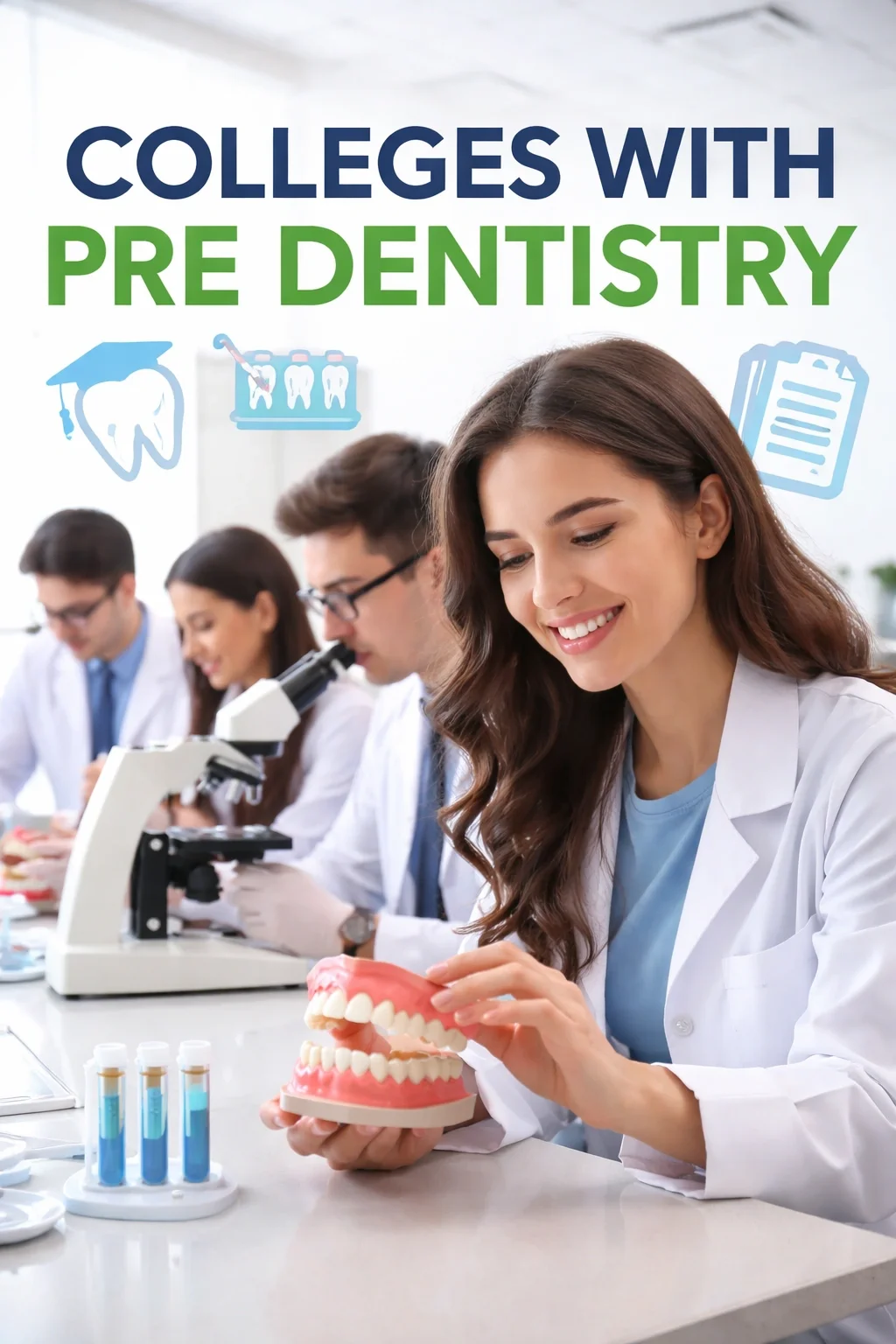
International Students and Colleges with Pre Dentistry
For students from outside the United States, pursuing dentistry often begins with identifying the right colleges with pre dentistry. International students face unique academic, administrative, and cultural challenges, but with the right preparation, colleges with pre dentistry can serve as an excellent gateway to dental school and a successful global dental career 🦷. Understanding how these programs work for international applicants is essential for making informed decisions.
Colleges with pre dentistry increasingly attract international students because they offer structured guidance, clear academic pathways, and strong preparation for dental school admissions. However, international applicants must navigate additional requirements related to admissions, visas, language proficiency, and credential evaluation.
Admission Requirements for International Students
Admission to colleges with pre dentistry as an international student typically involves more documentation than domestic applications. In addition to academic transcripts, students are often required to submit credential evaluations to ensure foreign coursework meets local academic standards.
English language proficiency is another critical factor. Most colleges with pre dentistry require standardized tests such as TOEFL or IELTS to confirm that students can succeed in rigorous science courses taught entirely in English. Strong communication skills are especially important in dentistry, where patient interaction plays a central role 😊.
Academic Equivalency and Science Background
International students applying to colleges with pre dentistry must demonstrate that their previous education included sufficient coursework in biology, chemistry, and mathematics. If gaps exist, colleges may require foundational courses before allowing students to progress into advanced pre-dental classes.
This academic alignment ensures that international students are not disadvantaged when competing for dental school admission later on.
Visa and Immigration Considerations
Most international students attending colleges with pre dentistry study under an F-1 student visa. Maintaining visa status requires full-time enrollment and satisfactory academic progress. Pre-dentistry advisors often help international students understand how course loads and academic planning affect immigration compliance.
While pre-dentistry programs themselves do not guarantee work authorization, the education gained through colleges with pre dentistry can support future applications for Optional Practical Training (OPT) or further study in dental school.
Dental School Eligibility for International Students
One of the most important considerations is whether dental schools accept international applicants. While some dental schools primarily admit domestic students, many accept qualified international candidates—especially those who completed their undergraduate education at recognized colleges with pre dentistry.
Completing prerequisite courses in the same academic system as the dental school significantly improves eligibility. Colleges with pre dentistry help international students align their coursework with dental school expectations, reducing barriers during the application process.
Financial Planning and Tuition Considerations
Financial planning is a major factor for international students considering colleges with pre dentistry. Tuition rates for international students are often higher, and access to financial aid may be limited. As a result, careful budgeting and long-term planning are essential.
Some colleges with pre dentistry offer merit-based scholarships or institutional support for international students. Applicants should research funding opportunities early and consider the total cost of education, including living expenses and application fees.
Cultural Adaptation and Student Support
Adjusting to a new academic and cultural environment can be challenging. Reputable colleges with pre dentistry provide support services such as international student offices, academic tutoring, and mentoring programs to help students adapt.
Successful integration into campus life improves academic performance and overall well-being. Colleges with pre dentistry that foster inclusive, supportive environments help international students thrive both academically and socially 🌍.
Global Perspective and Career Flexibility
One of the greatest advantages for international students attending colleges with pre dentistry is the global perspective they bring to dentistry. Exposure to different healthcare systems, cultural approaches to patient care, and treatment philosophies enriches professional development.
After completing dental education, international graduates may pursue careers in their home countries, the United States, or other regions. The foundational education gained at colleges with pre dentistry supports this flexibility and long-term career mobility.
Professional Standards and Ethical Preparation
International students at colleges with pre dentistry are encouraged to familiarize themselves with professional standards in dentistry. Organizations such as the [American Dental Association](chatgpt://generic-entity?number=0) provide valuable resources on ethical practice, education pathways, and professional expectations.
Early exposure to these standards helps international students transition smoothly into dental school and professional practice.
Learning From International Dental Care Models
Many international students interested in colleges with pre dentistry also explore global dental care models and advanced treatment approaches. Observing patient-centered clinics and modern dental practices can provide real-world inspiration.
For example, students curious about international clinical standards and patient communication may find it useful to explore professional dental environments such as the Redent Klinik Contact Page, which reflects contemporary dental care principles and global patient engagement.
Building a Successful International Pathway
In conclusion, colleges with pre dentistry can be an excellent starting point for international students pursuing dentistry 🚀. While the journey involves additional planning and responsibility, the structured academic support, professional guidance, and global opportunities offered by colleges with pre dentistry make them a powerful foundation.
By understanding admissions requirements, visa considerations, financial planning, and long-term career goals, international students can confidently navigate colleges with pre dentistry and move forward toward a successful, internationally relevant dental career.