
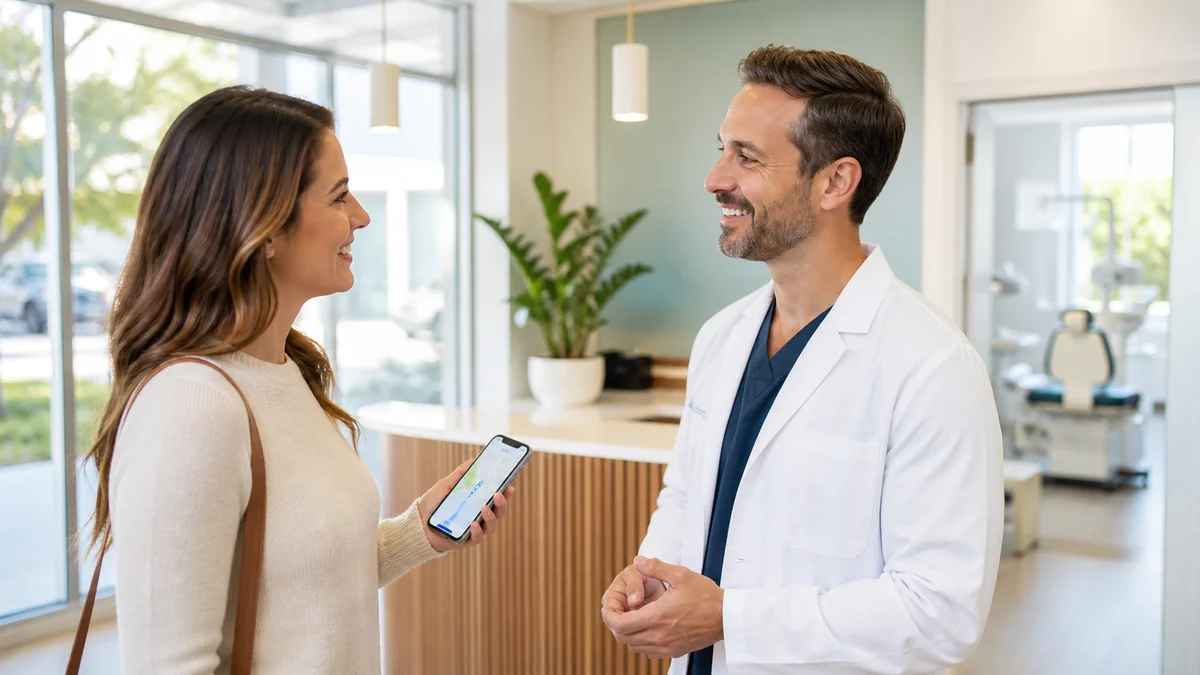
Quick answer: A reliable community dentist near me search starts with the care you need, an official service or professional directory, and direct confirmation from the clinic. Check whether it accepts new patients, provides the relevant treatment, meets accessibility needs, explains fees and urgent-care routes, and can offer continuity. Search rankings alone do not verify suitability or availability.
Typing community dentist near me into a search box feels like a location question, but distance is only the first filter. A clinic can appear nearby yet not accept new patients, participate in your insurance plan, offer the procedure you need or provide an accessible environment. Another service may be slightly farther away but better suited to a child, an anxious patient, someone with complex medical needs or a person who requires wheelchair access or communication support.
The word “community” is also ambiguous. It can mean an independent general dental practice that has served a neighbourhood for years, a nonprofit or publicly supported community health centre, or a formal Community Dental Service for people who cannot use routine general dental care. Those are not interchangeable. A good community dentist near me process identifies which meaning applies before comparing reviews or travel time.
This guide provides a practical, country-aware way to search without claiming that one directory covers every region. It explains how to verify current details, assess accessibility, ask about fees and prepare for a first visit. It does not diagnose oral conditions or guarantee an appointment. If you have severe swelling, uncontrolled bleeding, major facial trauma or difficulty breathing or swallowing, use the emergency route for your location instead of continuing a routine search.
1. What does community dentist near me mean?
For many people, community dentist near me simply means a local general dentist who provides examinations, preventive care and common treatments. The ideal practice is easy enough to reach, communicates clearly and can become a stable “dental home”—a place that knows your health history, monitors changes and coordinates referrals when a specialist is needed.
In the United States, “community dental” may refer to oral health services within a Health Resources and Services Administration-funded health centre. HRSA describes health centres as local, community-based clinics that may address medical, dental, mental health and other needs, and that adjust fees based on income and family size. The services available at a particular site can vary, so use the official locator and then call the site.
In England, “Community Dental Service” often has a more specific meaning: specialist or additional support for children or adults who cannot receive appropriate care in a general dental practice because of disability, complex health conditions or other qualifying needs. Access may require referral and local eligibility assessment. Searching community dentist near me therefore should not assume that a referral-based service is a substitute when a routine NHS appointment is hard to find.
Other countries use different names: public dental clinic, community oral health centre, municipal dental service, university clinic or primary care dental unit. Start with your national or regional health authority rather than treating the wording on a commercial map result as an official category.
That definition check keeps a community dentist near me search aligned with the service you are actually eligible to use.
2. Define the care you need before searching
The most useful community dentist near me results depend on the purpose of the visit. Routine prevention, a broken filling, a child’s first appointment, denture repair, orthodontic consultation and urgent swelling require different scheduling and sometimes different clinicians. You do not need to diagnose yourself; you only need to describe symptoms, timing and practical needs accurately.
Write down the following before calling:
- Whether you need a routine examination, ongoing care, a second opinion or urgent assessment;
- Your main symptom, when it started and whether it is worsening;
- Any recent dental procedure, injury, swelling, fever or bleeding;
- Whether the patient is a child, older adult or someone who may need special care support;
- Accessibility, sensory, language, communication or transfer requirements;
- Insurance, public-benefit or self-pay status, without assuming coverage;
- How far you can travel and which appointment times are realistic.
This short brief prevents a broad community dentist near me search from producing a list of clinics that cannot meet the immediate need. Reception teams can triage more effectively when they receive clear facts rather than a guessed diagnosis.
3. Decide whether the need is routine, urgent or an emergency
A directory is not a triage service. Severe or spreading symptoms should change the search route. NHS guidance, for example, directs people to request an urgent dental appointment or use NHS 111 for problems such as significant tooth or mouth pain, increasing swelling, dental injury, persistent bleeding after extraction, or a broken restoration that requires urgent attention. It directs people to emergency medical care for serious facial injury, uncontrolled heavy mouth bleeding, or severe swelling affecting breathing.
The correct local route varies by country, so use your official health service, emergency number or usual dentist’s out-of-hours instructions. Do not rely on a clinic’s social-media message inbox for urgent symptoms. A routine community dentist near me result may be closed, may not monitor messages continuously and may not provide emergency care.
When you call, describe symptoms rather than demanding a specific procedure. A clinician must assess whether the problem involves decay, the gums, a cracked tooth, infection, trauma or another condition. Antibiotics are not a universal solution to dental pain, and an online article cannot determine whether they are appropriate.
Urgency should be recorded at the top of any community dentist near me shortlist.
4. Use an official locator before commercial listings
Commercial maps are helpful for distance and opening hours, but official tools are better starting points for service status or programme participation. For an evidence-based community dentist near me search, use the most relevant public or professional directory available in your location.
- England: the NHS Find a Dentist service can search by town, city or postcode and can filter for routine, urgent or specialist care. NHS guidance advises contacting practices directly because availability can change.
- United States: HRSA’s Find a Health Center tool searches federally funded health-centre sites by location. Confirm that the chosen site currently provides dental care and the service required.
- United States professional search: the American Dental Association’s MouthHealthy Find-a-Dentist route can help locate ADA member dentists. Membership is one data point, not a guarantee that a practice fits every need.
- Insurance networks: use your insurer’s official directory, then confirm participation with both the clinic and insurer before treatment. Directories can lag behind contract changes.
- Elsewhere: look for a national health ministry, regional health authority, dental regulator or recognised professional association. Verify that the directory is official and current.
Record the directory name and date you checked it. Then call the practice. A community dentist near me listing can identify a possible provider; it cannot confirm an open appointment, exact benefit, current fee or clinical suitability.
5. Community clinic, general practice or special care service?
Different settings solve different access problems. A general practice is often the first point for examinations, prevention, fillings, gum care and coordination. A community health centre may combine dental care with medical, behavioural or social support. A special care or community dental service may have adapted equipment, staff training or sedation pathways for eligible patients whose needs cannot be met safely in a general practice.
Matching setting to need makes community dentist near me results more useful than simply sorting by distance.
Use this decision table to structure a community dentist near me conversation. It is not a referral rule and local criteria may differ.
| Need or situation | Reasonable starting point | What to confirm |
|---|---|---|
| Routine check-up and ongoing prevention | Local general dental practice or eligible public/community clinic | New-patient status, preventive services, recall approach and fees |
| Low income, no insurance or coverage uncertainty in the US | HRSA-funded health centre that provides dental services, plus insurer or Medicaid directory when relevant | Dental scope, sliding-fee application, documents, wait time and outside referrals |
| Disability, complex medical condition or inability to tolerate routine care | General dentist willing and equipped to assess, or formal special/community dental service | Eligibility, referral route, reasonable adjustments, equipment and clinical setting |
| Child needing routine care | General or paediatric-capable practice; public programme route when applicable | Age accepted, preventive approach, caregiver participation and benefit rules |
| Severe or rapidly worsening symptoms | Official urgent dental pathway or emergency medical service when red flags are present | Immediate triage instructions rather than routine registration |
| Treatment beyond the clinic’s scope | General assessment followed by an appropriate specialist referral | Who coordinates records, imaging, follow-up and fees |
A useful community dentist near me plan may involve more than one provider. Continuity still matters: ask who remains responsible for routine reviews and who receives the specialist report.
6. Verify that the clinic currently accepts patients
“Open” on a map does not mean “accepting new routine patients.” A practice may have separate lists for public, insured and private care, or may accept only urgent cases for a period. NHS information explicitly notes that people may need to contact multiple practices or join a waiting list. The official search can help, but the practice confirms the appointment.
When following a community dentist near me result, ask whether the clinic is accepting:
- New patients for routine care;
- Urgent patients who are not already established;
- Your age group or a child of the relevant age;
- Your insurance or public programme for the requested appointment type;
- Patients who need accessible facilities, an interpreter or additional appointment time;
- Referrals for the procedure or special care service you need.
Ask for the earliest assessment date, cancellation-list policy and what to do if symptoms worsen before the visit. Do not send detailed medical records through an unverified messaging channel. Use the clinic’s secure method.
Current capacity is therefore a required verification step for every community dentist near me result.
7. Confirm services, not just the word “dentist”
Most general dentists provide examinations and common preventive or restorative care, but service mix varies. One clinic may not treat very young children; another may not provide oral surgery, implants, complex endodontics, domiciliary care or sedation. A referral is normal when the case falls outside the clinician’s scope.
A focused community dentist near me call should ask, “Do you assess this type of problem?” rather than “Can you guarantee this treatment?” The final plan depends on examination and imaging. For example, a clinic can say it assesses dental pain, but it cannot promise that a tooth needs a filling rather than root canal treatment or extraction before evaluation.
If a specialist may be involved, ask whether the practice refers externally, which records are shared, whether the specialist consult is separately charged, and who completes the final restoration or follow-up. Coordinated care is more important than a long list of services on a website.
Service scope turns a generic community dentist near me listing into a realistic care pathway.
8. Check accessibility and special care support
Accessibility is clinical, physical and communicative. A ramp alone does not establish that a practice can safely support transfers, complex medical histories, sensory needs or severe dental anxiety. Conversely, many people with additional needs can receive excellent care in a general practice when reasonable adjustments and appropriate planning are available.
Before booking from a community dentist near me list, ask specific questions:
- Is there step-free access from arrival to the treatment room?
- Can the dental chair, transfer space and toilet accommodate the patient’s mobility needs?
- Can a support person attend, and how is consent handled?
- Are longer, quieter or familiarisation appointments available?
- Can the clinic arrange language interpretation or communication support?
- Does the team manage the relevant medical complexity, or is referral required?
- If domiciliary care is requested, what eligibility and geographic rules apply?
In formal Community Dental Services, access frequently depends on referral criteria. Provide accurate medical, social and functional information so the service can assess need. Difficulty finding any routine dentist may not by itself meet special-care eligibility.
Ask about eligibility early when special care is the reason for your community dentist near me search.
9. Ask about fees, coverage and sliding discounts
A “community” label does not automatically mean free care. Public systems, insurance contracts, grants and sliding-fee programmes operate differently. Ask for the examination fee, likely imaging charges, payment timing and how a treatment estimate will be provided after assessment. Do not accept a fixed treatment promise before the diagnosis is known.
Fee basis should be confirmed before booking from a community dentist near me list.
For a US community dentist near me search, HRSA states that health centres adjust fees based on income and family size and must not deny service because of inability to pay. The applicable discount schedule can differ by service category, including dental care, and eligibility assessment requires local documentation. Related items such as dentures may have separate out-of-pocket rules, so confirm the exact service.
For Medicaid, federal information states that dental coverage is required for child enrollees, while adult benefits vary by state. Provider participation can also change. Use your state programme or plan directory and ask the clinic to verify current participation. For private insurance, confirm network status, deductibles, waiting periods, frequency limits and preauthorisation requirements with the insurer.
In England, ask whether the appointment is NHS, private or mixed and request the applicable treatment plan. Do not assume that a practice offering both types has current NHS capacity. A transparent community dentist near me result should make the care basis clear before non-urgent treatment begins.
10. Verify professional credentials and safety systems
A polished website and high review score do not verify professional status. Use the official dental regulator or licensing board for the jurisdiction to confirm that the dentist is registered and whether any public restrictions are listed. The exact process varies, and a directory result should link to the official source rather than reproduce stale credential data.
During your community dentist near me evaluation, look for clear consent, medical-history review, privacy practices, infection-prevention procedures and an explanation of alternatives. The dentist should be willing to discuss the diagnosis, benefits, material risks, likely outcome, costs and what happens if the plan changes. You should have an opportunity to ask questions before agreeing to non-emergency care.
Ask who provides each part of treatment and what their role is. Dental hygienists, therapists, nurses, general dentists and specialists contribute within different legal scopes. Team-based care is not a red flag; vague accountability is.
Official credential verification belongs in every community dentist near me comparison.
11. Reviews are useful, but they are not clinical evidence
Reviews can reveal repeated patterns in scheduling, communication, accessibility or billing clarity. They cannot establish diagnostic accuracy, sterilisation quality or the right treatment for you. Extremely positive or negative comments may reflect individual circumstances that are impossible to verify.
Use reviews late in the community dentist near me process, after you have confirmed service scope, credentials and availability. Look for themes across recent comments rather than a single dramatic story. Give more weight to how the clinic responds to reasonable concerns than to marketing language such as “best,” “pain-free” or “permanent.”
Do not share your own sensitive health information in a public review or social-media question. Contact the clinic through a secure channel if your concern requires record access.
Privacy and secure communication are practical community dentist near me selection criteria.
12. Use a five-minute phone checklist
A short call can remove most unsuitable community dentist near me results. Keep the conversation factual and note the staff member’s answer, date and any action required.
- “Are you accepting new patients for routine care, urgent assessment or both?”
- “Do you assess patients with this symptom or service need?”
- “Is this appointment public, insured or private, and what is the initial fee?”
- “Do you currently participate in my plan, and should I confirm with the insurer?”
- “What records, medication list, identification or benefit documents should I bring?”
- “Can you meet these specific access or communication needs?”
- “What is your cancellation policy and what happens if symptoms worsen?”
- “How are after-hours dental problems handled?”
A receptionist can explain logistics but may not be able to answer clinical questions. If needed, ask how a dentist or triage clinician will review the concern. Do not pressure administrative staff to diagnose by phone.
Use the call to verify logistics for each community dentist near me candidate, not to obtain a remote diagnosis.
13. Prepare for the first appointment
Preparation helps the dentist assess risk and reduces repeated visits. Bring an accurate medication list, allergies, relevant diagnoses, previous dental records or radiographs when available, and insurance or benefit information. Tell the team about pregnancy, anticoagulants, immune conditions, diabetes, osteoporosis medicines, previous reactions, implanted medical devices and other material history. Do not stop prescribed medicine unless the relevant clinician advises it.
For a child or patient who needs support, bring information about communication preferences, decision-making support, sensory triggers and successful coping strategies. If legal consent documents or a healthcare proxy may be relevant, ask the clinic what it needs before arrival.
The first visit after a community dentist near me search may be an assessment rather than same-day definitive treatment. Expect history taking, examination and radiographs only when clinically indicated. Ask the dentist to explain findings in understandable language and provide a written plan for non-urgent care.
14. Look for a long-term dental home
The ADA’s patient education describes a dental home as a dependable place for regular care and a trusted point of contact for treatment or emergencies. Continuity lets a clinician compare findings over time, tailor prevention and coordinate referrals. The closest clinic is not necessarily the most sustainable choice if its hours, access or communication do not fit your life.
When comparing community dentist near me options, ask how recalls are personalised rather than assuming everyone needs the same interval. Preventive advice should respond to individual risk and circumstances. The American Dental Association’s evidence-based home-care guidance notes that dentists may tailor recommendations to patient needs; general advice does not replace individual planning.
Consider travel reliability, appointment availability, language, cultural respect, accessibility and how records are handled. A stable relationship can matter more than saving a few minutes of travel. If you move or change providers, request secure transfer of relevant records rather than relying on memory.
Continuity is the final filter in a thoughtful community dentist near me decision.
15. Red flags when choosing a community dentist near me
Pause before booking non-urgent care if a practice guarantees outcomes, prescribes a complex plan without examination, pressures you to pay immediately, will not explain alternatives or refuses to provide an itemised estimate. Be cautious when credentials cannot be verified through the official regulator, the clinic identity is unclear, or payment is requested through an unusual personal account.
Other community dentist near me red flags include:
- Claims that one treatment is right for everyone;
- “Lifetime” or “zero-risk” promises;
- Before-and-after images presented as guaranteed predictions;
- Hidden differences between consultation, imaging, laboratory and treatment fees;
- No clear urgent or after-hours route;
- Dismissal of medical history, allergies or patient questions;
- Inability to identify who will perform the procedure;
- Pressure to skip a second opinion for irreversible or expensive care.
A second opinion can be reasonable when treatment is irreversible, expensive or uncertain. It does not imply that the first dentist acted improperly. Ask for copies of relevant records and images through the appropriate privacy process.
16. What to do when no nearby clinic has capacity
Availability is dynamic. Expand the radius gradually, ask about cancellation lists and contact the official body responsible for local dental access. In England, NHS guidance says people unable to find an NHS dentist can contact their local integrated care board, which manages dental services in the area and may advise where appointments are available. Urgent needs should follow NHS 111 or the local urgent pathway.
In the US, check the HRSA locator, your insurer, state Medicaid programme when relevant, dental schools and local health department resources. Confirm current services directly. A community dentist near me search should distinguish “no routine slot today” from “no urgent pathway,” because those problems require different next steps.
If you are considering planned care away from home, factor in diagnosis, records, travel, follow-up and management of complications. Redent Clinic provides English-language information through the Redent Clinic English homepage, and appointment questions can be submitted on the Redent Clinic contact page. A remote discussion can help organise questions, but definitive recommendations normally require an appropriate clinical assessment.
Whichever route you use, recheck the practical facts behind the community dentist near me result immediately before booking.
17. Frequently asked questions about community dentist near me
How can I find a community dentist near me who accepts new patients?
Start with an official health-service, regulator, professional or insurer directory for your area. Create a short list, then call each clinic to confirm new-patient status, appointment type, service scope and fees. Availability changes, so a current community dentist near me listing is a lead rather than a booking guarantee.
Is a community dentist the same as a free dentist?
No. “Community” may describe location, mission, public funding or a special-care service. Charges depend on the country, programme, clinic and patient’s eligibility. US health centres may use sliding-fee schedules; NHS and private rules differ in the UK. Ask what the first visit costs and which documents support any discount.
Can a community health centre provide all dental treatments?
Not necessarily. Dental scope varies by site and may focus on preventive and primary care, with referrals for complex treatment. Before relying on a community dentist near me result, confirm whether the site provides the relevant assessment, accepts your age group and has a referral pathway when treatment is outside its scope.
Do I need a referral to use a Community Dental Service?
Often, formal special or community dental services use eligibility criteria and referrals, but local rules vary. They are commonly designed for patients whose disability, medical complexity or other needs prevent appropriate care in general practice. Ask the local service or health authority who can refer and what information is required.
How do I know whether a dentist is licensed?
Search the official dental regulator or licensing board for the jurisdiction using the dentist’s full name and location. Check current registration and any publicly listed restrictions. A clinic directory, social profile or review platform does not replace the official register.
Should I choose the closest community dentist near me?
Distance matters, especially for ongoing visits, but it is not the only criterion. Compare access, communication, appropriate services, credentials, transparent fees, appointment reliability and emergency arrangements. A slightly farther clinic may be a better dental home if it can safely meet your needs and provide continuity.
What if I have no dental insurance?
Ask official local services about public programmes, community health centres, dental schools or income-based discounts. In the US, HRSA-funded health centres use sliding-fee policies based on income and family size, though individual dental scope and related item charges vary. Request written information rather than assuming that all care is free.
Can online reviews tell me which dentist is clinically best?
No. Reviews can reveal patterns in communication and logistics, but they cannot validate diagnosis, treatment quality or prognosis. Use official credentials, direct questions and a clinical consultation. Be wary of absolute claims and testimonials presented as predictable outcomes.
What should I do if dental pain becomes severe while I wait?
Contact a dentist or the official urgent dental service for your location and describe the symptoms. Severe swelling affecting breathing or swallowing, uncontrolled bleeding or major facial trauma can require emergency medical care. Do not continue a routine community dentist near me search when urgent red flags are present.
Can a clinic diagnose me from a message or photograph?
A message, photograph or remote conversation may help with preliminary triage, but it may not reveal tooth vitality, crack depth, gum support, bite or findings visible on clinically indicated imaging. Definitive diagnosis and treatment planning usually require a proper assessment. Avoid services that guarantee complex treatment from limited information.
18. Bottom line: use location as the beginning, not the decision
A safe community dentist near me search follows a simple sequence: define the care needed, identify urgency, use an official locator, confirm current availability, verify service scope and credentials, discuss accessibility, and obtain clear fee information. Reviews and distance can help only after those fundamentals are established.
Choose a clinic that can communicate clearly, respect informed consent and coordinate care over time. If special care, public benefits or sliding discounts may apply, ask for the local eligibility and referral process. If symptoms become urgent, switch from directory research to the official urgent-care route. A search result can point to a door; careful verification determines whether it is the right door for you.
This educational article will be clinically reviewed by Dentist Esma Çevrük Çakır. It does not replace an individual examination, diagnosis, emergency assessment or treatment plan.
Sources and official service references
- NHS — How to find an NHS dentist
- NHS — Find a dentist
- NHS — How to find an emergency or urgent dental appointment
- HRSA Bureau of Primary Health Care — What is a Health Center?
- HRSA — Find a Health Center
- Medicaid.gov — Dental care benefits
- American Dental Association MouthHealthy — How to choose a dentist
- American Dental Association — Professional and oral health resources
- World Health Organization — Oral health fact sheet